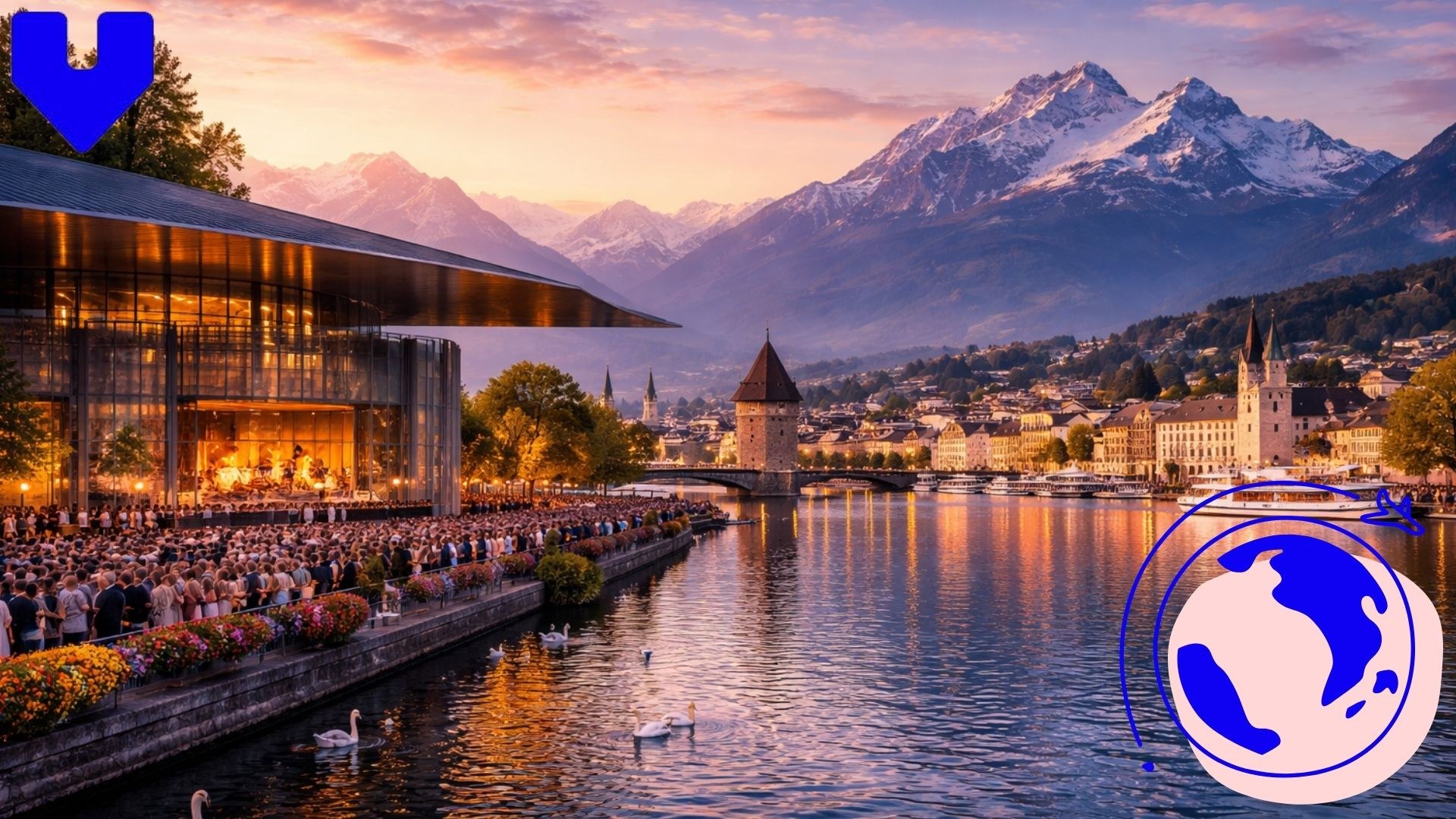
Swiss Lake & Mountain Culture
Lucerne doesn't shout. It sits at the crook of its lake, flanked by Pilatus and Rigi, and lets the water do the talking. The city is compact enough to walk in an afternoon but deep enough — musically, architecturally, gastronomically — to hold you for days. This is a trip built around three of them: one for the city's extraordinary interior spaces, one for the mountains and lake, and one for the cultural performances and quieter corners most visitors walk right past. You'll arrive well, drive when you need to, and sleep in places that face the river.
Fly into Zürich Airport (ZRH), the only gateway that makes sense. It's a clean, efficient hub with excellent connections from North America, the Middle East, and across Europe. Book premium economy — the extra legroom and meal service on a seven-to-ten-hour transatlantic crossing means you land ready to drive, not desperate for a nap. SWISS, Lufthansa, and several alliance partners serve ZRH with solid premium economy cabins. From the terminal, you're roughly an hour's drive south to Lucerne on the A4 and A14 — smooth, well-signed motorways with lake views once you clear the Zürich suburbs.
Premium economy from $1,004 roundtrip from our cheapest gateway — check fares from your home airport →
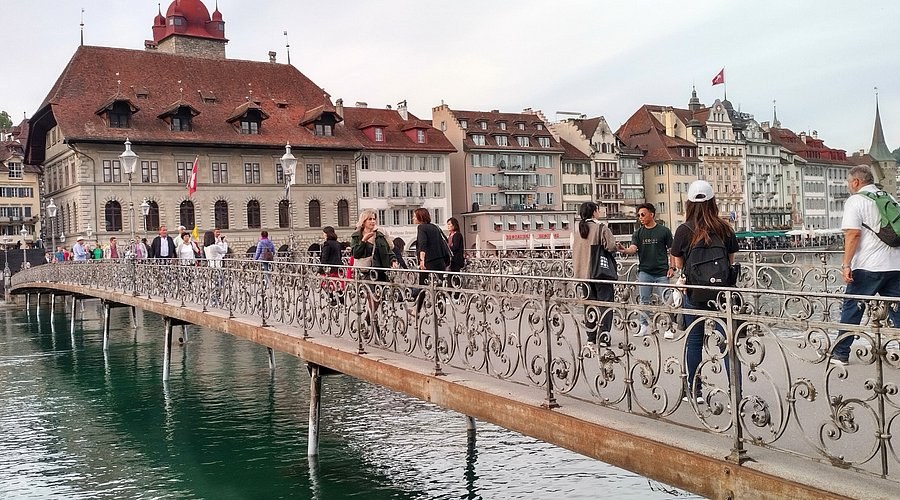
Pick up your rental car at ZRH (more on that below) and drive straight to Lucerne. Drop bags at your hotel, then start on foot. Walk the Rathaussteg and continue to the Spreuerbrücke, the 1408 covered wooden bridge most people skip in favor of the more famous Kapellbrücke. Look up: Kaspar Meglinger's 17th-century "Dance of Death" paintings line the triangular roof panels — 67 of them, haunting and beautiful. Free to cross, and rarely crowded.
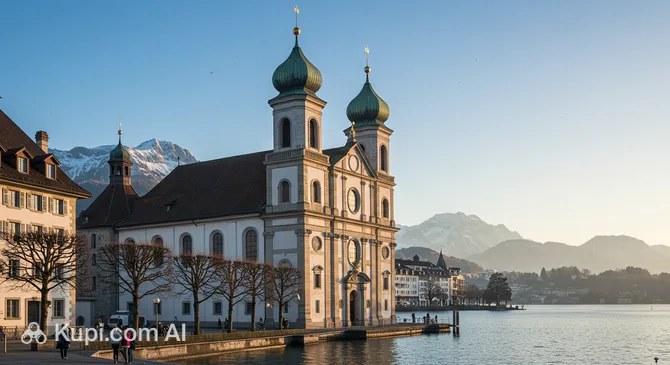
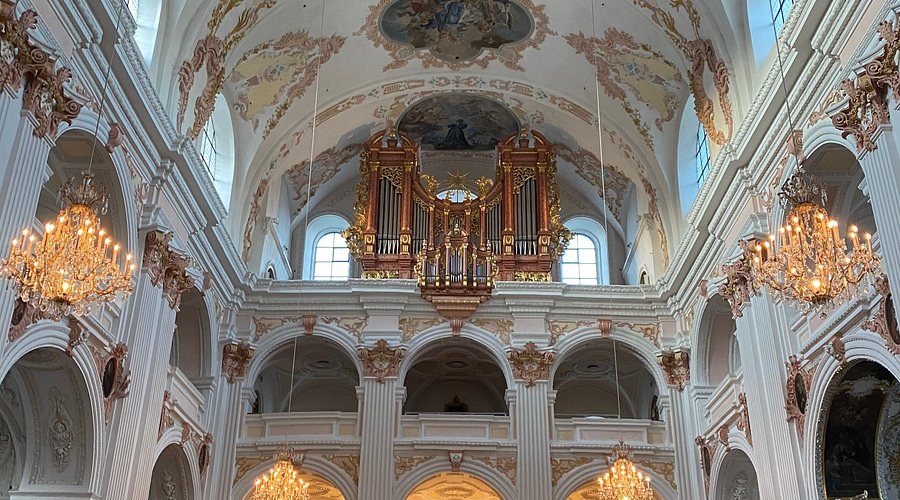
From the bridge, it's a five-minute walk along the Reuss to the Jesuit Church (Jesuitenkirche), the first large Baroque church built in Switzerland north of the Alps. The pale-pink façade is restrained; the interior is not. Stucco, frescoes, side-altar paintings — give it thirty unhurried minutes. Entry is free.
After lunch, head to the Hofkirche (Court Church), a Renaissance rebuild from 1639–1645 with twin towers that survived the original medieval church's fire. The organ here is one of Switzerland's most important Baroque instruments; check the posted schedule for recital times, which often run in summer. Entry is free; organ concerts may carry a small fee (~$15–25, verify when booking).
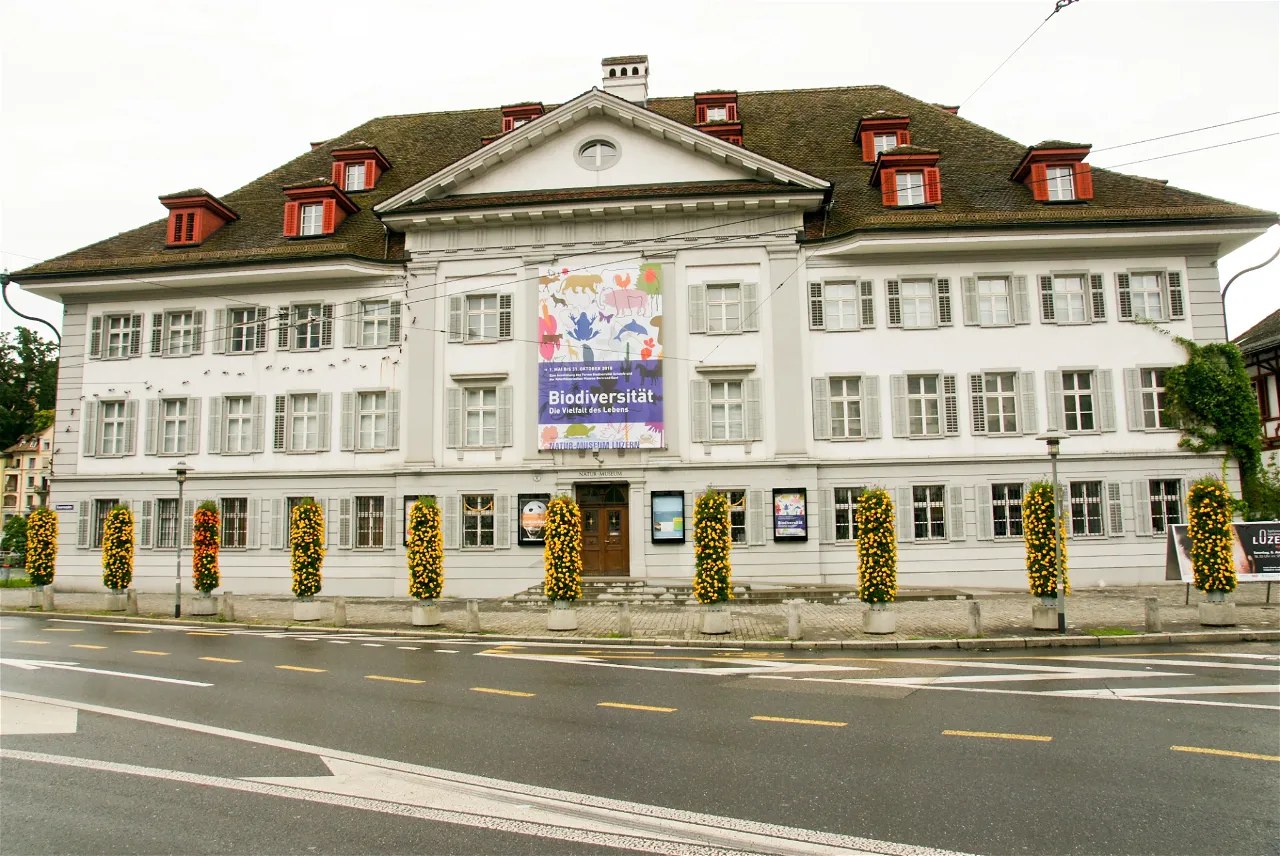
End the afternoon at the Natur-Museum Luzern on Kasernenplatz. Three floors of earth sciences, biology, and insect collections — smartly curated and surprisingly absorbing. Admission runs ~$12–18 for adults, verify when booking.
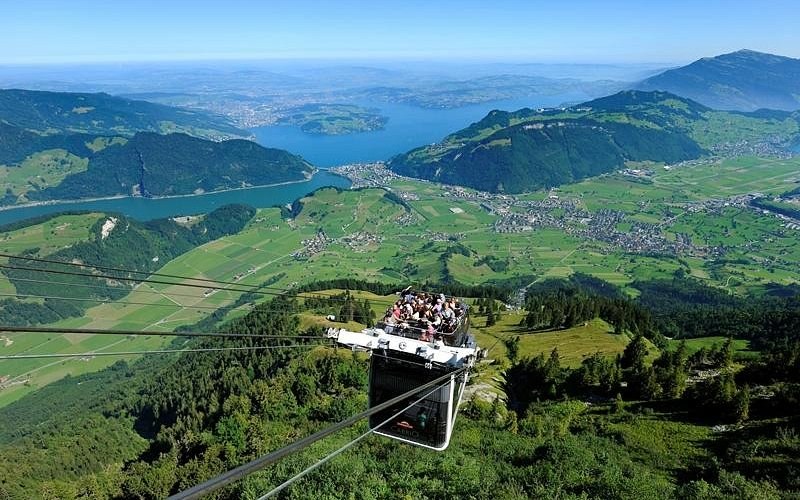
Today belongs to the mountains and the lake. Drive forty minutes south to Stans and board the CabriO cable car up Stanserhorn. The ride itself is the attraction: a two-deck open-top cabin that climbs to 1,900 metres with 360-degree views of the Bernese Alps. At the summit, walk the panoramic trail and eat lunch at the revolving restaurant. Round-trip tickets run ~$75–95, verify when booking.
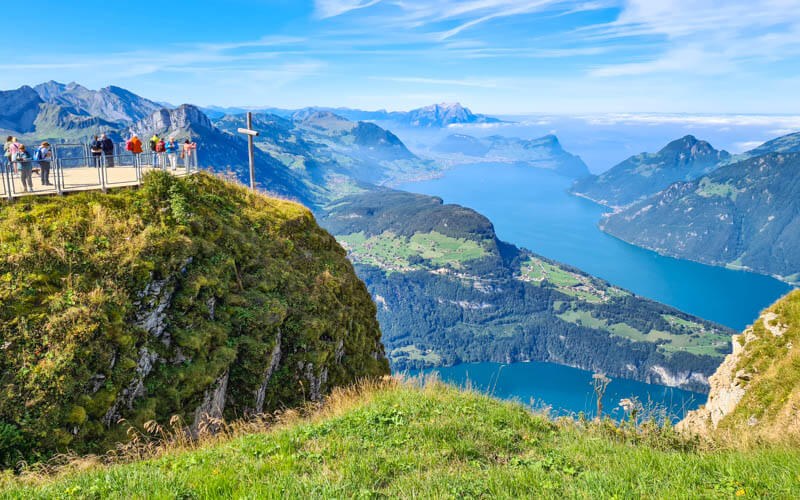
In the afternoon, drive to the Stoos funicular — Switzerland's steepest vertical-axis aerial railway, opened in 2017 — for the ascent to Fronalpstock at 1,922 metres. The infinity slope viewpoint over Lake Lucerne is genuinely vertiginous. Summer hiking trails fan out from the top station. Funicular plus cable car round-trip ~$55–75, verify when booking.
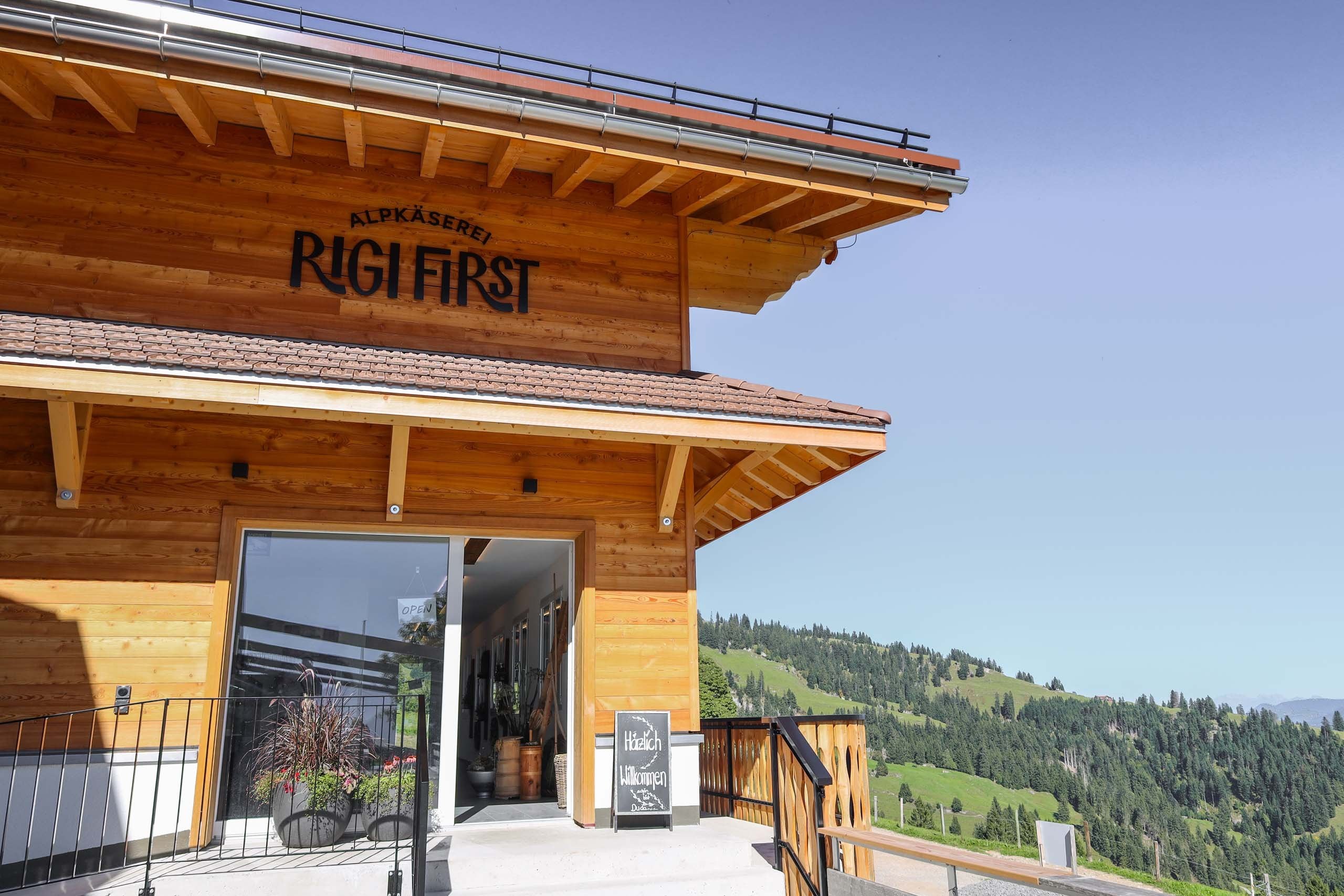
If time allows on the descent, detour to the Rigi Cheese Dairy at Alp Chäserenholz (Kulmweg 19, Rigi Kulm). This small alpine operation produces up to 12,000 kilograms of cheese annually and offers tastings. Expect to spend ~$10–20 on samples and a small wheel to take home, verify when booking.
Start the morning at the Richard Wagner Museum in Villa Tribschen, the lakeside estate where Wagner composed Die Meistersinger and Siegfried Idyll. The rooms preserve original instruments and manuscripts. Admission ~$10–15, verify when booking.
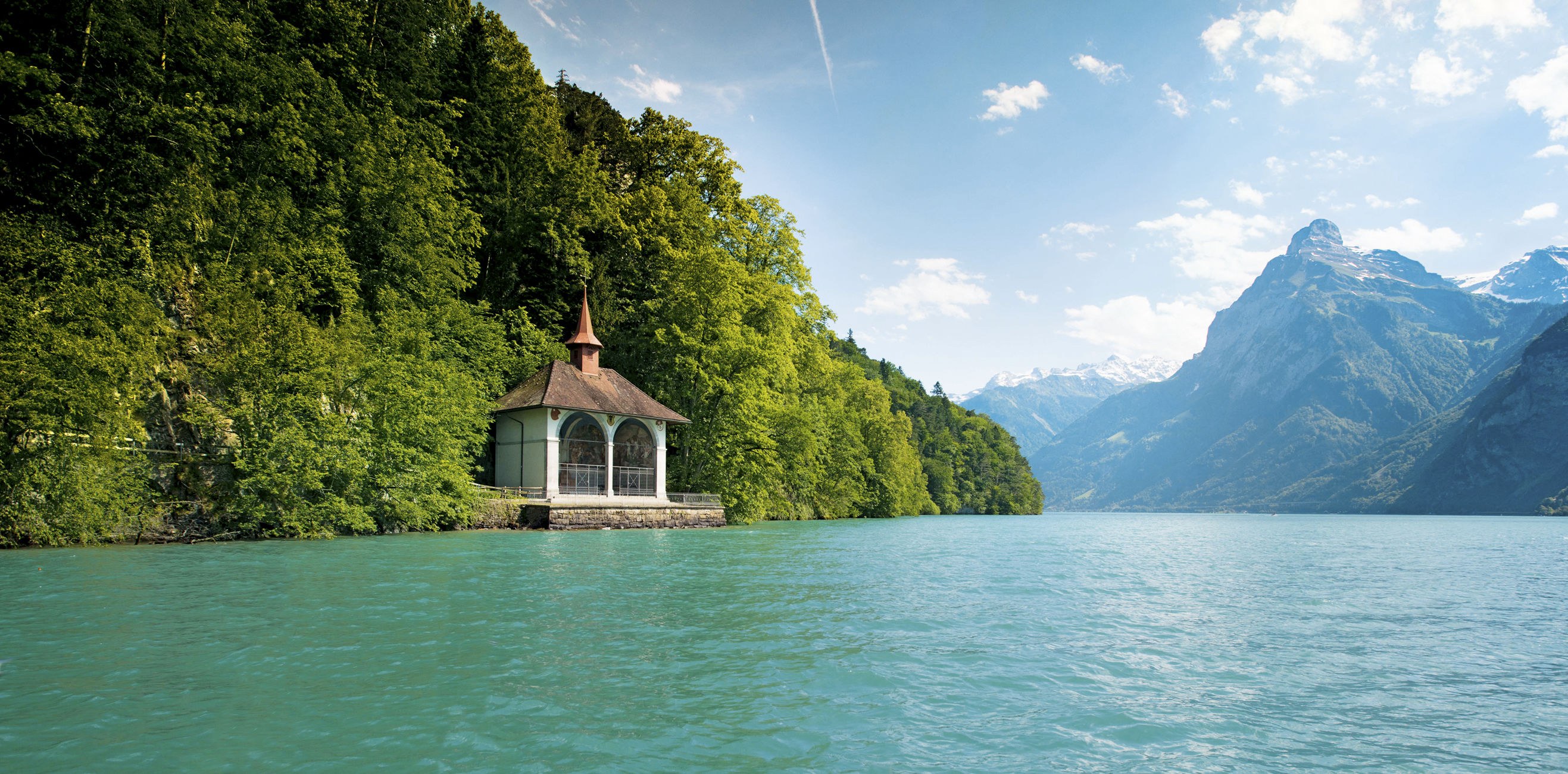
Next, take a lake boat from Lucerne to Tell's Chapel (Tellskapelle), the 17th-century shrine marking the spot where William Tell allegedly leapt from a boat during a storm. Continue by boat to Rütli Meadow, the symbolic birthplace of Switzerland. Lake Lucerne Navigation Company vessels run scheduled routes; a day pass costs ~$60–85, verify when booking.
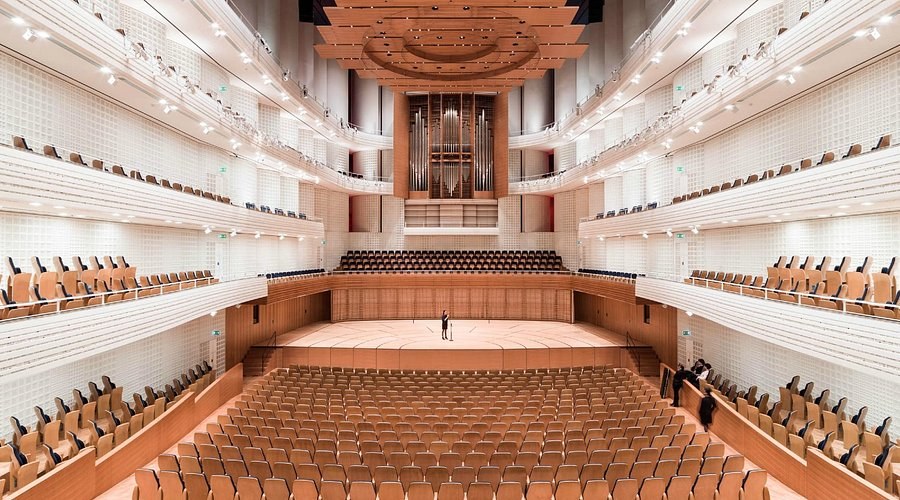
Back in town, walk to the KKL Luzern, Jean Nouvel's 1998 glass-and-steel masterpiece on the lakefront. Even if you're not attending a concert, architecture tours run regularly (~$20–30, verify when booking). If your dates fall during the Lucerne Festival summer season (typically August through mid-September), book tickets to one of the 100-plus classical performances held across the city — the concert hall inside the KKL is acoustically world-class. Festival tickets range from ~$50 to $350 depending on the program, verify when booking.
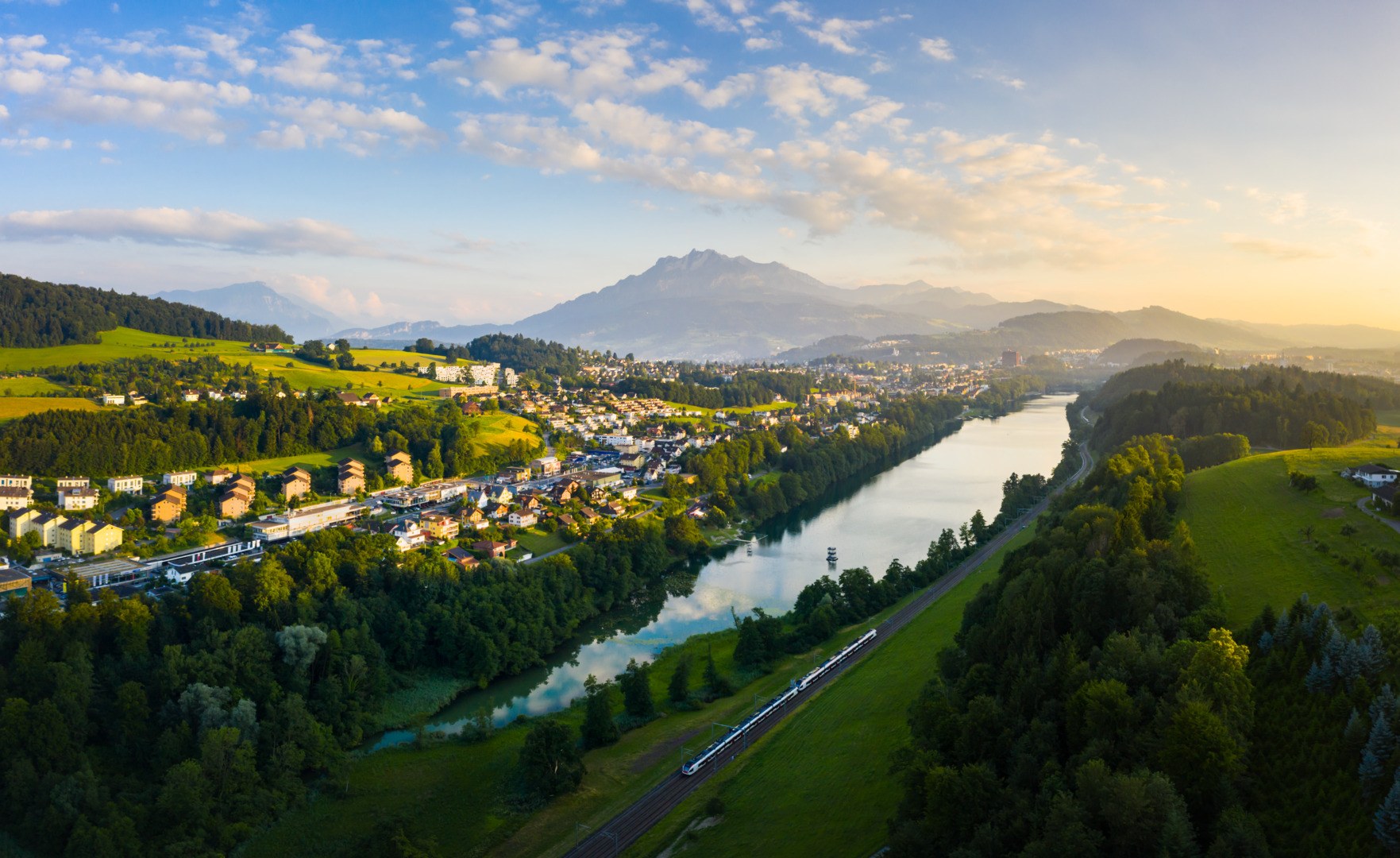
For a quiet final-afternoon option, walk or jog the loop around the Luzerner Rotsee, the natural rowing lake on Lucerne's northern edge. It's one of the world's premier rowing venues — flat, calm, ringed by forest — and gloriously undervisited by tourists.
Three hotels worth the rate. Hotel des Balances sits directly on the Reuss with a terrace restaurant overlooking the old town — classic Lucerne, mid-luxury (~$350–500/night, verify when booking). Hotel Schweizerhof Luzern is the grande dame on the lakefront, recently refreshed, with larger rooms and a spa (~$450–700/night, verify when booking). For a true splurge, the Mandarin Oriental Palace, Luzern delivers the brand's exacting service in a restored Belle Époque landmark (~$800–1,400/night, verify when booking).
Rent a car at ZRH — Hertz, Europcar, and Sixt all have desks in the arrivals hall. A mid-size automatic for three days runs ~$180–280, verify when booking. You'll want the car for Stanserhorn, Stoos, and the Rigi cheese detour; in central Lucerne, park at the hotel and walk. A Swiss motorway vignette (~$42) is required and can be purchased at the border or at the rental desk.
When to go: June through September for hiking and the Lucerne Festival. Shoulder months (May, October) are cooler and cheaper. What to skip: The Lion Monument draws huge crowds for a two-minute look — see it in passing, don't build a morning around it. Avoid driving into the old town; streets are narrow and mostly pedestrianized.
| Flights | 2 × $1,004 Prem. Econ. | $2,008 live |
| Hotels | 3 nights × $1,150 luxury | ~$3,450 |
| Rental car | 3 days × $150 | ~$450 |
| Excursions | this itinerary, entry → guided | $212–$1,994 |
| Food | 3 days, fine dining | ~$840 |
| Trip total | $6,960–$8,742 |
We may earn a commission when you book through these links, at no extra cost to you. Prices and availability are set by each partner.
Cruises that call within reach of Lucerne — each one opens as a full plan of its own: where to fly in, every port, and what the week runs.
Some links are affiliate links — we may earn a commission at no extra cost to you. See our Terms.