American Express has quietly rolled out its highest-ever public welcome offers on business cards: up to 300,000 Membership Rewards points on the Business Platinum after $20,000 spend in three months, and up to 200,000 on the Business Gold after $15,000 in the same window.
These aren't targeted unicorns anymore. They're showing up for applicants who apply and check their personalized offer. The timing is delicious because Chase's business card bonuses have been comparatively sleepy, leaving a gap for those with actual corporate spending to exploit.
Compare that to personal cards. The consumer Platinum is dangling as high as 175,000 points after $12,000 spend in six months. The personal Gold? Around 100,000 after far less spend. Business versions deliver nearly double the points with tighter timelines. If you run real expenses, this is the obvious upgrade path.
The Math That Actually Matters
At a conservative 2.0 cents per point, 300K is worth $6,000. Upgraded Points puts it closer to 2.2 cents when transferred smartly—$6,600. Either way, you're looking at a monster return on $20k of spend that was probably happening anyway.
Historical context: Business Platinum bonuses topped out around 250K recently and hovered in the 150-200K range for years before that. This is the new ceiling. The "as high as" language means not everyone sees 300K, but enough people are reporting it that the window feels real.
Pairing the cards makes even more sense. Grab the Gold for 200K after $15k, then the Platinum for another 300K after $20k. Total outlay around $35k for 500K points. The $375 Gold fee and $895 Platinum fee sting, but the credits on both—especially Platinum's travel and office ones—can offset a good chunk if you're not asleep at the wheel.
What 300K Points Actually Buys in the Sky
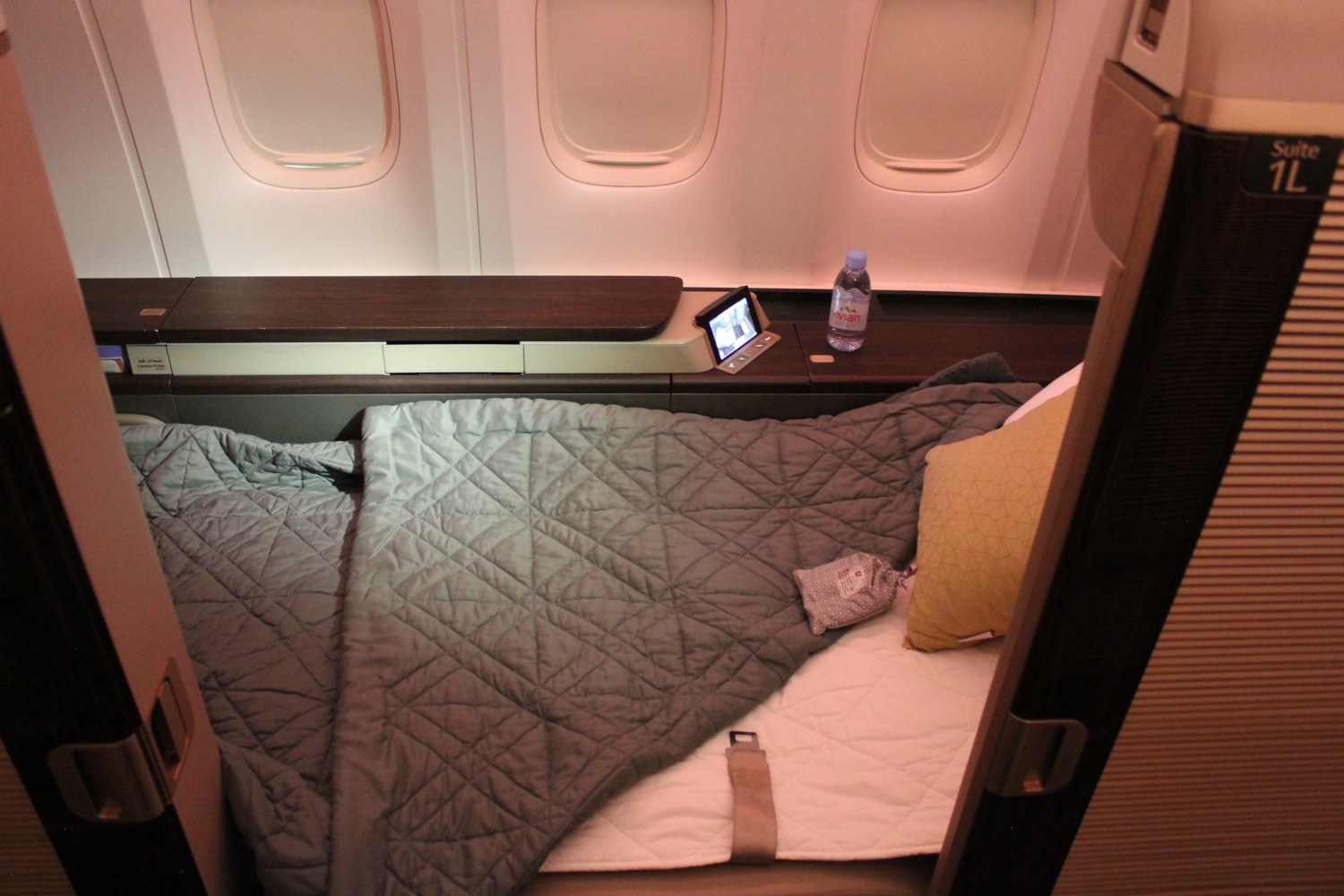
Transfer to Aeroplan and five one-way business class tickets to Europe become realistic at ~60K points each. Or turn the whole pile into multiple nights at Waldorf or Conrad properties via Hilton (2:1 transfer). Singapore Suites across the Pacific? Feasible in one redemption.
These aren't generic economy hauls. Your readers are already in business class. 300K points let you do it without touching cash for several long-haul trips or a serious aspirational first-class ticket. The value beats most personal card bonuses by a mile because the spend requirement aligns with actual business activity instead of manufactured nonsense.
Chase's reduced aggression in the business space only sweetens the deal. Their Ink cards still offer solid value, but nothing matches this points density right now. Amex is handing out the ammunition while the other side reloads.
Who Should Actually Do This
If your business or side hustle clears $20k in three months without heroic effort, stop reading and check the offer. Sole proprietors, freelancers, and consultants qualify—Amex isn't asking for a Fortune 500 letterhead. Just be prepared for the annual fees and have a plan for the credits.
The narrow window is real. These "as high as" offers have a habit of disappearing once Amex fills their pipeline. Don't overthink the lifetime language if this is your first go-round with these products.
Action item: Open an incognito window, head to the American Express business card page, and check your personalized offer on both the Business Platinum and Business Gold today. If you see 250K+ on Platinum or 150K+ on Gold, pull the trigger. The corporate spending sweet spot is open—walk through it before it slams shut.