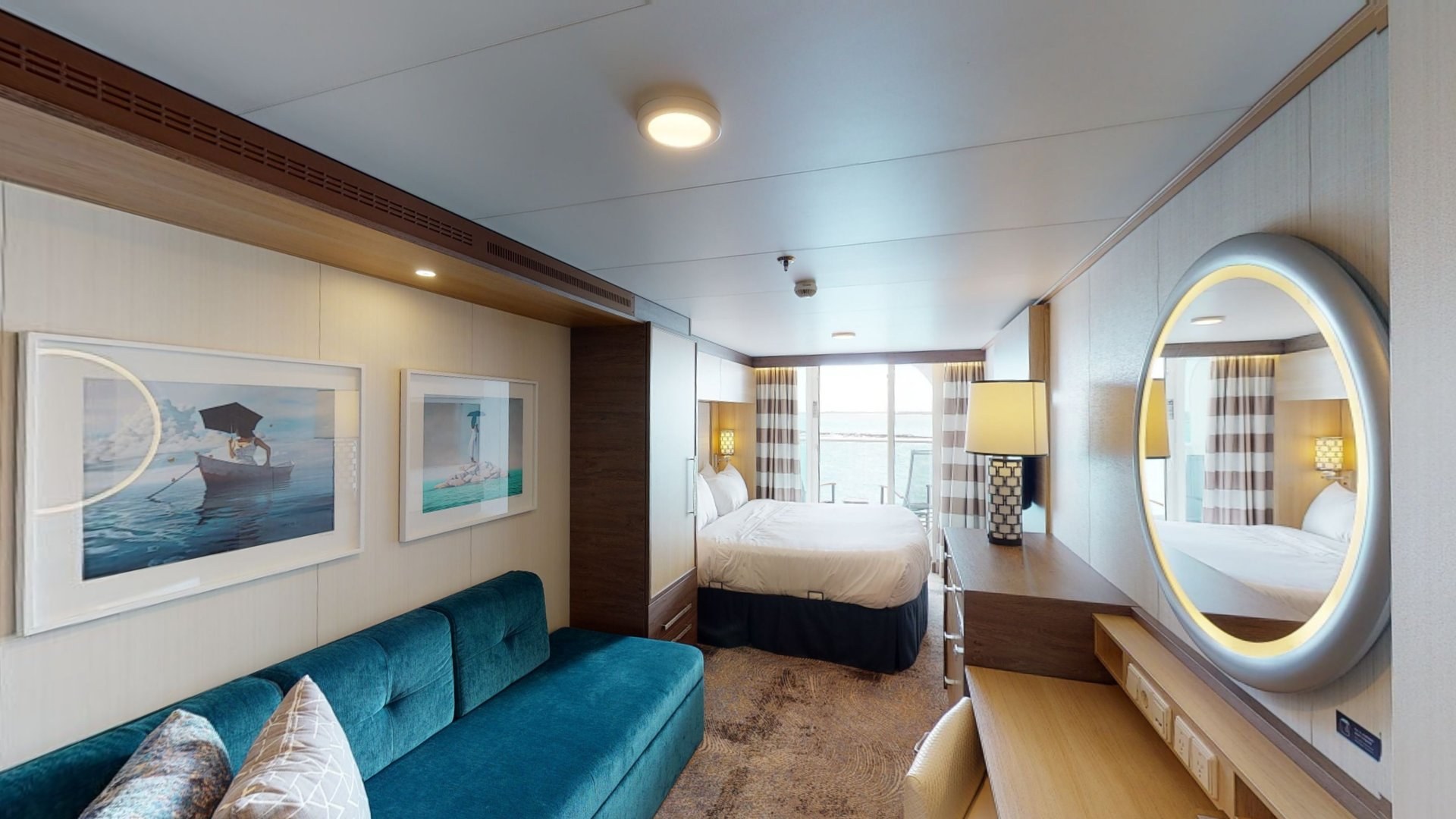
Steel is about to be cut this month on Carnival's unnamed Project Ace vessel—the first in a trio of 230,000-gross-ton behemoths that will dwarf everything else in the Fun Ship fleet. At nearly 8,000 passengers when stuffed to the gills and boasting around 3,200 cabins, it's not just bigger; it's a floating testimony to Carnival's refusal to do anything halfway. For points players, this is the exact moment the early-booking game tilts in your favor.
- Carnival Miracle, 9 nights from Lisbon, May 20, 2027: balcony $1,421 ($158/night), 52% under its usual price
- Carnival Freedom, 5 nights from Port Canaveral, Jan 16, 2027: inside $280 ($56/night), 46% under its usual price
- Carnival Panorama, 8 nights from Long Beach, Jan 30, 2027: balcony $678 ($85/night), 45% under its usual price
- Carnival Panorama, 6 nights from Long Beach, Nov 29, 2026: balcony $420 ($70/night), 43% under its usual price, cut 18% to its lowest price yet
Projected for a 2029 debut (with sisters in 2031 and 2033), these Ace-class ships represent Carnival's leap into truly mega-ship territory. Current Excel-class monsters like Festivale (arriving 2027) top out around 183,000 tons and 6,600 max guests. This new platform, built at Fincantieri, promises innovations we don't even know about yet—because Carnival is keeping the details under wraps until they have to. Smart money says expect more over-the-top venues, expanded suite complexes, and whatever twisted take on a waterpark they dream up next.
Book speculative cabins now with the lowest-risk deposit structure in the industry. Carnival's Early Saver fares require just a modest deposit—often $100–$250 per person depending on sailing length—and it's non-refundable, but cancel before final payment (typically 76–90 days out for most itineraries) and you get a future cruise credit for the deposit amount minus a $50 per person service fee. Use it within 12 months on another sailing. In practice, this means you can lock in a choice balcony or suite on the inaugural wave, ride any price drops via their price protection, and walk away with a credit if life intervenes. Low downside, massive upside when demand pricing inevitably kicks in post-announcement.
The credit card angle here is straightforward and worth exploiting. Chase Sapphire Reserve remains the heavyweight: its $300 annual travel credit applies cleanly to Carnival cruise deposits and final payments when booked directly or via the Chase Travel portal. You earn 3x Ultimate Rewards on the spend (or 1.5 cents per point redemption value through the portal for older accounts), and the card's trip delay/cancellation insurance gives you actual protection Carnival's own doesn't. Amex Platinum isn't far behind—book through Amex Travel for potential Cruise Privileges perks on qualifying sailings (though Carnival isn't always in the top tier for the full $100–$300 OBC), plus the $200 airline fee credit and other travel hacks that stack nicely for getting to Port Canaveral or Galveston.
Neither card is perfect for mass-market cruising. Amex doesn't always code Carnival as the highest bonus category outside the portal, and Chase's 3x is solid but not obscene. Still, pairing the Reserve's credit with transferable points from a Sapphire Preferred or Ink card lets you offset thousands in fare before the masses wake up. Avoid the co-branded Carnival card unless you live for 2% cash back in "Fun Money"—your premium cards already do better.
Opinion: Most loyalty players sleep on speculative new-ship bookings because "what if it sucks?" It won't. Carnival's track record with Excel-class has been strong, and these Ace ships are the logical evolution. By the time itineraries drop and influencers start hyping the maiden voyages, the good cabins will command stupid money. Booking now with Early Saver is like getting options on a hot IPO—cheap entry, easy exit via credit, and bragging rights when your sailing sells out.
The brand pulls 1.8 million monthly searches for a reason. Everyone wants the newest, shiniest thing with the loudest parties and latest slides. Points optimizers who position early don't pay retail. They manufacture the discount using credits, points, and flexible policies while everyone else fights over scraps six months out.
Action item: Monitor Carnival's site and your favorite travel hacker forums for the exact steel-cutting announcement this month. When booking opens for the first Ace ship (likely late 2026 or early 2027 for 2029 sailings), use your Chase Sapphire Reserve to put down the Early Saver deposit on a desirable category. Lock it in, set a calendar reminder six months before final payment, and decide later whether to sail, rebook, or take the credit. The crowd will catch up eventually. Be the one who got there first.