← Back to Fantasize Dakar, Senegal
Long-Haul Adventure

Dakar, Senegal

Business class roundtrip fares from 6 US hubs · Updated daily
$3,698
Lowest fare
$4,157
Average
6
US hubs
2
Below normal
All fares to Dakar, Senegal
JFK $3,698 Typical Book Search →
BOS $3,864 Low Book Search →
DFW $4,038 Typical Book Search →
MIA $4,097 Low Book Search →
ATL $4,270 Typical Book Search →
ORD $4,974 Typical Book Search →
About Dakar, Senegal

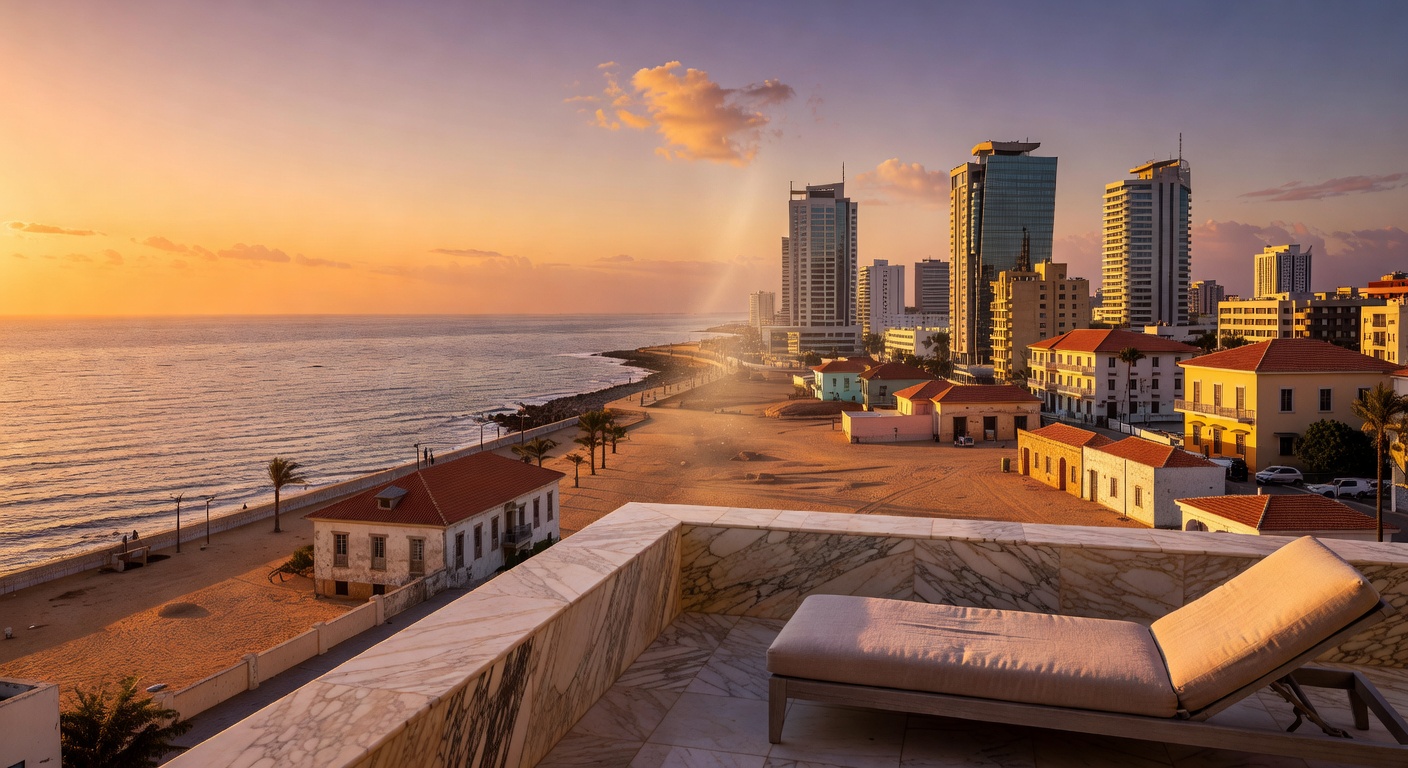
Dakar is the kind of city that recalibrates your entire understanding of West Africa — equal parts raw Atlantic energy, Francophone sophistication, and a creative renaissance that makes Lagos look commercial and Marrakech feel like a theme park. The luxury here isn't marble lobbies and butler service; it's a private rooftop overlooking the Corniche at golden hour, a thiéboudienne prepared by a chef who trained in Paris but came home to honor her grandmother's recipe, and an art scene so blazing that every major gallery in New York and London is quietly scouting here. This is the most electrifying city most luxury travelers have never considered, and that's precisely why you should go now.

6 Experiences Worth Flying Business Class For
1. Sunset Aperitifs on the Corniche Before a Feast at Lakh Bi

The Corniche des Almadies is Dakar's riviera — a dramatic stretch of volcanic cliffs meeting the Atlantic where the light between 5 and 7 PM turns genuinely h...

allucinogenic. Secure a table at Lakh Bi, the refined Senegalese restaurant tucked near Les Almadies that elevates traditional dishes like yassa poulet and mafé into something approaching high art without a shred of pretension. Most visitors default to the overpriced hotel restaurants; this is where Dakar's own creative elite actually eats.

2
A Private Morning at the Museum of Black Civilisations
Inaugurated in 2018 and designed by the Chinese architect Huajian Group with a sweeping bronze exterior that evokes an inverted calabash, this museum is arguably the most important cultural institution built on the African continent this century. The permanent collection spans 50,000 years of Pan-African art, spirituality, and innovation, and with the right concierge — the team at Onomo Hotel Dakar or Radisson Blu can usually arrange it — you can get an early-morning guided visit before the school groups arrive. It will completely reshape how you think about the narrative of civilization.
3
The Île de Gorée Crossing You Should Actually Take
Everyone tells you to visit Gorée Island, and they're right — the Maison des Esclaves is devastating and essential — but most tourists take the crowded mid-morning ferry and rush through in two hours. Instead, take the first chaloupe at 7 AM, walk the bougainvillea-draped colonial streets in near silence, then linger for grilled thiof and cold Gazelle beer at one of the family-run terraces overlooking the turquoise water. The island deserves contemplation, not a checkbox.
4
Gallery Hopping in the Village des Arts and Raw Material Company
Dakar's contemporary art scene is in a full supernova moment — the Dak'Art Biennale has been running since 1992 and is the oldest major art biennial in Africa, but the real discoveries happen between biennale years in the studios. The Village des Arts in the Fann neighborhood is a working collective of over 50 Senegalese artists whose ateliers you can visit unannounced, while Raw Material Company in Sicap Liberté is a cutting-edge kunsthalle with programming that rivals anything at Frieze. Buy something — prices are still shockingly reasonable, and you'll be ahead of every collector in your circle.
5
A Long Saturday Lunch at Le Djembe, Then the Marché Sandaga Dive
Le Djembe in the Plateau district serves the kind of languorous, wine-soaked Senegalese-French lunch that could only exist in a former French colonial capital — think slow-braised lamb with bissap reduction and a carefully chosen Rhône red. Afterwards, walk fifteen minutes to the frenetic chaos of Marché Sandaga (or its temporary relocation market nearby as renovations continue), where you'll find handwoven manjak cloth, tailored boubous, and the kind of sensory overload that makes you feel genuinely alive. Bring cash, bring humor, and let a local guide navigate the vendors.
6
Lac Rose at Dawn with a Driver and Zero Other Tourists
Lac Retba — the pink lake — has become an Instagram cliché, and at midday it's swarming with tour buses and salt harvesters performing for cameras. But hire a private driver to get you there at 6:30 AM when the salt concentration and morning light conspire to turn the water a shade of rose so surreal it looks digitally altered, and you'll have the shore essentially to yourself. Pair it with a stop at the fishing village of Kayar on the return — the beach where hundreds of painted pirogues land their catch simultaneously is one of the most visually staggering scenes in all of Africa.
When to Go Show ↓
Peak Season
November through February
This is Dakar's golden window — dry harmattan air, temperatures in the mid-70s to low 80s, virtually zero rain, and the city buzzing with cultural events and visiting diaspora. Hotels like the Radisson Blu Sea Plaza and Terrou-Bi charge top rates and book out quickly, especially around the holidays and during major cultural festivals. It's peak for a reason and genuinely the best time to experience the city, so book early and don't resent the crowds — they're modest compared to any European capital.
🌴
Shoulder Season
March through May and October
March and April are warm but still dry, with temperatures climbing into the high 80s and early 90s — perfectly manageable if you're disciplined about midday shade and hydration. October marks the tail end of the rains, when everything is impossibly green and the city feels freshly washed. This is the sweet spot for luxury travelers who want favorable hotel rates, uncrowded galleries, and the smug satisfaction of experiencing Dakar without the peak-season markup.
Plan your trip to Dakar, Senegal