← Back to Fantasize Kilimanjaro, Tanzania
Long-Haul Adventure

Kilimanjaro, Tanzania

Business class roundtrip fares from 10 US hubs · Updated daily
$3,504
Lowest fare
$5,309
Average
10
US hubs
4
Below normal
All fares to Kilimanjaro, Tanzania
JFK 15h $3,504 Typical Book Search →
ATL 15h 30m $3,826 Typical Book Search →
BOS 13h $4,451 Low Book Search →
MIA 14h $4,729 Low Book Search →
ORD 15h $5,173 Typical Book Search →
LAX 15h $5,664 Typical Book Search →
DFW 15h $5,669 Typical Book Search →
SEA 14h $5,957 Low Book Search →
SFO 14h $6,392 Typical Book Search →
SNA 13h 30m $7,729 Low Book Search →
About Kilimanjaro, Tanzania

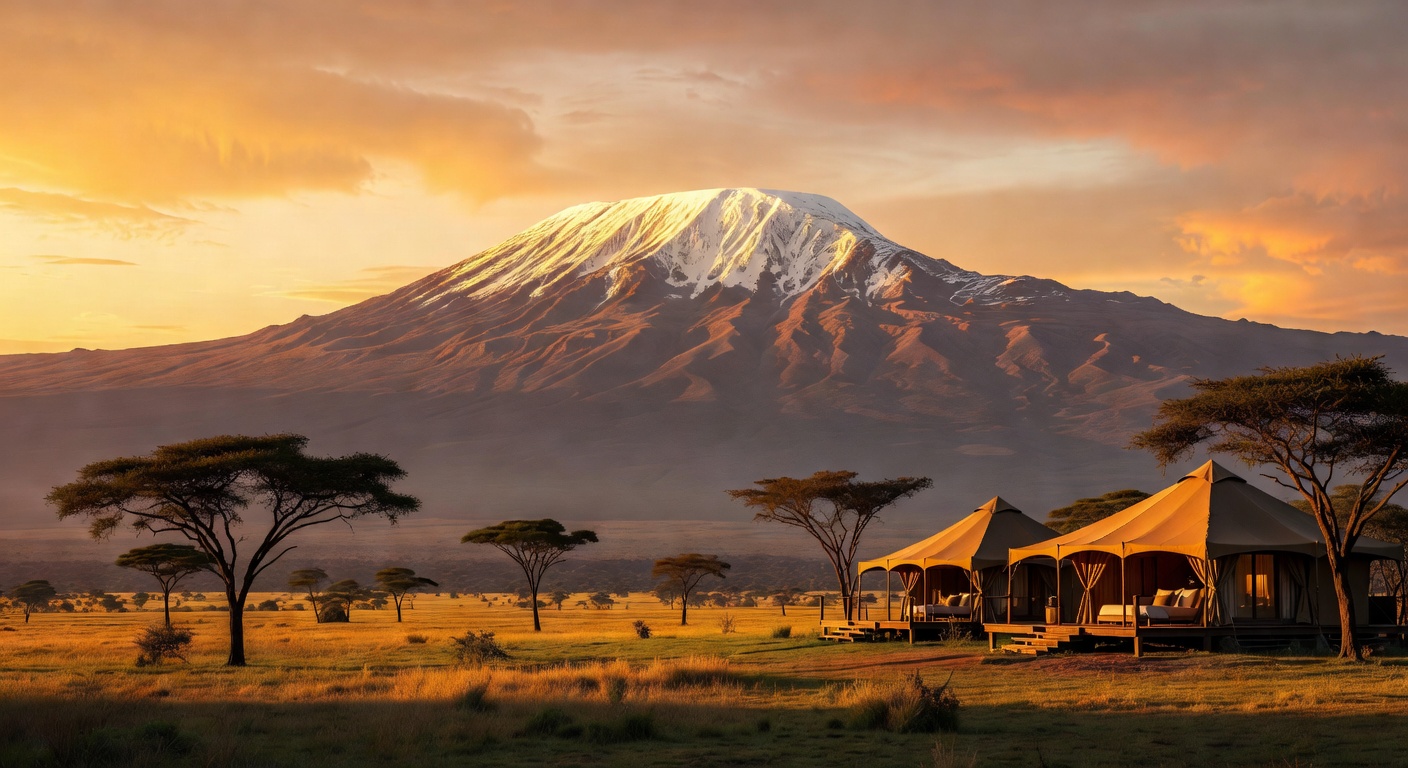
Kilimanjaro is one of those rare destinations where the raw grandeur of nature intersects with genuinely world-class hospitality — and most visitors barely scratch the surface. Beyond the summit bid (which, yes, you should absolutely do at least once), the broader Kilimanjaro region offers coffee plantations, Maasai cultural immersion, and some of East Africa's most exclusive safari lodges within striking distance. This is not a backpacker-only destination; done right, it's one of Africa's most quietly luxurious experiences.

6 Experiences Worth Flying Business Class For
1. Summit Kilimanjaro via the Lemosho Route with a Private Luxury Expedition

Forget the crowded Marangu 'Coca-Cola' route — the Lemosho Route is longer, more scenic, and dramatically less trafficked....

Operators like Ultimate Kilimanjaro and Altezza Travel offer private expeditions with heated dining tents, portable flush toilets, personal chefs preparing multi-course meals at altitude, and sleep systems that actually make camp bearable. Standing on Uhuru Peak at 5,895 meters as the sun breaks over the African continent is one of those experiences that genuinely rewires your perspective on everything.

2
Helicopter Transfer from the Summit Plateau to a Champagne Breakfast at Aishi Machame Hotel
For those who want the summit experience without the grueling multi-day descent, a handful of elite operators can arrange helicopter evacuations from the upper mountain directly to Aishi Machame Hotel or the newly renovated Gran Meliá Arusha, where you'll be sipping champagne in a robe within hours of standing on the roof of Africa. It's absurdly decadent, and it solves the biggest complaint seasoned climbers have: the descent is boring and brutal on the knees.
3
Single-Origin Coffee Tasting on a Working Chagga Farm in Machame Village
The volcanic slopes of Kilimanjaro produce some of the world's most complex Arabica coffee, and almost no tourists realize you can visit the small Chagga family farms where it's grown. Arrange a private tour through Sena Coffee or the Kilimanjaro Coffee Lounge in Moshi to walk the terraced hillsides, learn traditional brewing methods in hand-carved wooden vessels called 'mbege pots,' and taste coffee that has never and will never see the inside of a shipping container. It's the opposite of a Nespresso ad, and it's magnificent.
4
A Night at Elewana Arusha Coffee Lodge Before the Mountain
Most climbers make the mistake of overnighting in a forgettable Moshi hotel before their expedition. Instead, base yourself at Elewana Arusha Coffee Lodge, set on a working coffee plantation just 90 minutes from the Kilimanjaro gates. The plantation-house suites are genuinely beautiful — dark wood, deep soaking tubs, verandas overlooking the shamba — and the kitchen sources almost everything from the estate. It's the civilized bookend your body will thank you for before and especially after the mountain.
5
Fly-Camp Safari in West Kilimanjaro's Enduimet Wildlife Management Area
While everyone stampedes toward the Serengeti or Ngorongoro after their climb, the Enduimet corridor on Kilimanjaro's western flank offers private-concession safari experiences with Kilimanjaro as your backdrop and virtually zero other vehicles. Operators like Legendary Expeditions set up fly-camps here with full silver-service dining under the stars, and you'll encounter elephant herds, Maasai pastoralists, and views of the mountain that put every postcard to shame. This is the Africa you imagined before Instagram commodified it.
6
Materuni Waterfall Hike and Maasai Boma Visit with a Private Cultural Guide
About an hour from Moshi, the Materuni Waterfall cascades 80 meters through lush montane forest that feels impossibly green — and the hike there passes through banana and coffee groves tended by Chagga families who've farmed these slopes for centuries. Combine it with a private visit to a nearby Maasai boma arranged through Zara Tours or Shah Tours, where the engagement is genuine and community-benefiting rather than performative. Do this on your acclimatization day before the climb and you'll understand why people fall in love with this region, not just the peak.
When to Go Show ↓
Peak Season
January to mid-March, and June to October
These are the dry seasons, and for good reason they dominate the climbing calendar — clear skies mean summit-night views that justify every step. June through October is the most popular window, with July and August seeing the heaviest traffic on all routes. January to early March is drier and warmer at lower elevations but slightly less predictable above 4,500 meters. If you must go peak, book Lemosho or Northern Circuit to avoid the crowds, and secure permits at least four months out — the good operators sell out fast.
🌴
Shoulder Season
Late March to May, and November to mid-December
This is the savvy luxury traveler's window, particularly late November through mid-December when the short rains are tapering off and the mountain is dramatically uncrowded. You'll encounter afternoon showers at lower elevations but often clear mornings and summit nights, and you'll have routes practically to yourself. Lodge and operator rates drop noticeably, and you can negotiate upgrades and private departures that would be impossible in August. The rainforest zone is also at its most lush and alive — the birding is extraordinary.
Plan your trip to Kilimanjaro, Tanzania