Your cruise
Costa Pacifica · 3-night Mediterranean cruise, Barcelona to Palermo
Nov 10 – Nov 13 · 3 nights ·
Day 1 Barcelona (board) · Day 1–2 at sea · Day 3 Cagliari · Day 4 Palermo (step off)
What you do Su Nuraxi is the grandest of Sardinia's mysterious Bronze-Age nuraghi — a 3,500-year-old basalt tower-fortress ringed by a turreted bastion and a labyrinth of beehive huts, and the only one inscribed by UNESCO. You don't just look at it; the obligatory guided visit takes you inside the central tower and up onto the ramparts, which is genuinely bucket-list for anyone who cares about a civilization that left no written language, only these astonishing stone machines. Pair it with the Casa Zapata museum, built atop a second buried nuraghe with glass floors over the excavation.
What to expect From the visitor centre a shuttle/short walk brings you to the tower, where a licensed guide leads small groups up and into the structure on uneven, sometimes slick basalt — sturdy shoes matter. The guide narrates the nuragic mystery as you stand inside the corbelled central chamber and look out from the bastion over the Marmilla plain. The Casa Zapata museum and Lilliu Centre add context and the eerie glass-floor view down onto a buried nuraghe. Allow 2.5–3 hours on site total.
Good to know Open every day of the year, continuous hours; tours run every 30 minutes so you rarely wait. It's ~60–70 min each way from the cruise terminal, so budget a 5–6 hour round trip and confirm against your all-aboard. Pre-book the official combined ticket online and reserve your private transfer in advance; bring water, a hat and non-slip shoes (tower access can close in bad weather).
book direct with Fondazione Barumini Sistema Cultura (official) → · the full guide →
What you do Nora is Sardinia's most romantic ruin: a Phoenician, then Punic, then Roman port-city spread across a low peninsula that the Mediterranean now laps on three sides, with a Roman theatre, thermal baths, and intricate floor mosaics still in situ under open sky. The setting — columns and mosaics against turquoise water, with the 16th-century Spanish watchtower of Coltellazzo above — is the kind of place that ends up as the photo people remember from Sardinia. The included guided walk brings the Tanit sanctuary and bath complexes to life.
What to expect You'll walk flat but uneven ancient paving among baths, the forum, and the small Roman theatre right at the water's edge, with the guide pointing out the famous mosaic floors and the Punic-Phoenician layers beneath the Roman city. There's little shade, so morning visits are far more comfortable. The adjacent beach of Nora and the Sant'Efisio church make a lovely add-on. Plan ~1.5–2 hours on site.
Good to know Open from 9:00 (closing extends to ~20:00 in summer). About 35–45 min from the pier by road; no convenient train, so pre-arrange a driver or taxi. Reserve online and ask at the ticket window for the next English guided slot the moment you arrive; bring sun protection and water as the headland is fully exposed.
book direct with Parco Archeologico di Nora — Fondazione Pula Cultura (official) → · the full guide →
What you do Cagliari's Castello is a honey-coloured medieval citadel stacked on the hilltop, ringed by Pisan towers and Aragonese ramparts, and walking it with a licensed local guide turns a pretty old town into a 900-year story of Pisans, Aragonese and Piedmontese. You'll thread silent lanes to the Cathedral of Santa Maria with its dazzling pulpits, climb the Torre dell'Elefante, and finish on the Bastione di Saint Remy terrace for the city's signature panorama over the rooftops, the lagoon and the sea. It's the most walkable, sensory introduction to the city right above the port.
What to expect Expect steep stepped lanes and the panoramic lift up from the Marina quarter, a quiet cathedral interior, glimpses into hidden courtyards, and storytelling that ties the Pisan towers to today. A good guide tailors the pace, ducks into a café for a Sardinian coffee or a slice of seadas, and times the Bastione finish for the light. It's a walking experience — comfortable shoes essential. Roughly 2–3 hours.
Good to know Everything is within a 10–20 minute walk of the pier, so this is the safest choice against a tight all-aboard. Pre-book a named licensed guide (ask that they're registered with the Sardinia regional guides association). Mornings are cooler for the climb; some churches close midday, so confirm timing with your guide when booking.
book direct with Licensed Sardinia regional guides via ToursByLocals (official guide marketplace) → · the full guide →
What you do Cagliari's bay is the Golfo degli Angeli, guarded by the dramatic limestone headland of the Sella del Diavolo (Devil's Saddle), and the only way to truly see it is from the water. A small-boat or sailing day slips you past Calamosca, Cala Fighera and Cala Bernat into clear coves you can't reach by land, with swim and snorkel stops below the cliffs and the long ribbon of Poetto beach as your backdrop. On a luxury catamaran or private gozzo with a skipper and Sardinian wine and cheese aboard, it's the most relaxed bucket-list way to spend a Cagliari port day.
What to expect Boats leave from the marina a short walk or transfer from the cruise terminal. You'll cruise close under the Sella del Diavolo's cliffs, anchor in a cove or two for swimming and snorkelling in glassy water, and graze on Sardinian cold cuts, pecorino and Vermentino as the skipper points out the landmarks. Seas are usually calm in summer; book the morning departure for the best light and water. Half-day is plenty for a port stop.
Good to know Marina departure points are ~10–20 min from the pier — confirm pickup and a return time that clears your all-aboard with margin. Bring swimwear, a towel, reef-safe sunscreen and a light layer. Pre-book, especially for private charters in peak season; rough weather can cancel sailings, so have the Castello walk as a backup.
book direct with Noestrum (licensed local boat operator, Cagliari) → · the full guide →
What you do Argiolas, founded 1938 in Serdiana just 20 minutes inland, is the reference-point winery of modern Sardinia — the house behind Turriga, the island's most celebrated red. A guided cellar visit walks you through the fermentation halls and barrel rooms before a seated tasting of premium wines (Cannonau, Vermentino, the flagship blends) paired with local pecorino, salumi and carasau bread. For wine lovers it's a genuine bucket-list stop, and the new on-site Domu restaurant makes a long lunch possible.
What to expect An English-speaking host leads you through the working winery — stainless tanks, the must, the barrel cellar — then sits you down for a structured tasting of the estate's top wines with a Sardinian cheese-and-charcuterie board. It's unhurried and genuinely educational, not a quick pour. Plan ~1.5–2 hours, longer if you add a Domu restaurant lunch. You'll want a driver so everyone can taste freely.
Good to know About 20–30 min from the pier; pre-book the tasting online (limited 11:00/15:00 slots, closed weekends) and arrange a private car so no one has to abstain. Build in buffer time against all-aboard — inland plus a long tasting can run late. Consider shipping or hand-carrying a bottle of Turriga home.
book direct with Cantine Argiolas — Visit Argiolas (official) → · the full guide →
What you do Right between the city and Poetto beach lies Molentargius-Saline, a former royal saltworks now home to a resident colony of thousands of pink flamingos that breed here — one of very few places in Europe they do — alongside 180-plus bird species. A guided e-bike or boat tour with the park's environmental guides is the only way into the protected core where the flamingos and slender-billed gulls nest, gliding past salt pans, canals and the evocative 'City of Salt'. It's a surprisingly wild, photogenic counterpoint to the ruins and a true Sardinian signature.
What to expect Tours leave from near the port or the park's Edificio Sali Scelti and follow flat canal-side paths and embankments, stopping at a birdwatching hut before the Bellarosa Maggiore basin where flamingos and gulls nest. Guides scope the birds and explain the saltworks history and the lagoon ecology. An e-bike makes the distance to Poetto effortless; bring binoculars or a zoom lens. Allow 2–3 hours.
Good to know The park sits on the city's eastern edge, ~15–20 min from the pier; the official protected-area visits and e-bike tours must be pre-booked through the park guides. Early morning and late afternoon give the best light and bird activity. Bring sun protection, water and a camera — and confirm the return timing against your all-aboard, though this is one of the closer outings.
book direct with Parco di Molentargius — CEAS / Città del Sale (official park guides) → · the full guide →
What you do Step inside the most famous unfinished building on earth, where Gaudi's stone forest of columns explodes into a kaleidoscope of stained-glass light that moves across the floor through the day. Add the tower ticket to ride the lift up a spire and walk back down the dizzying spiral stair with the city at your feet. Buy a strict timed entry slot, go early in your port window, and you'll beat both the queue and the midday glare.
What to expect You'll enter Gaudí's masterpiece and encounter a forest of soaring stone columns that dissolve into kaleidoscopic stained-glass light, shifting across the basilica floor as the sun moves through the day. If you book tower access, you'll ride the lift up a spire and descend the dizzying spiral staircase with Barcelona spreading below you. The unfinished vastness—both earthbound and dreamlike—fills the space in a way photographs cannot capture, and the audioguide walks you through every sculptural detail as you move through the nave.
Good to know Book a strict timed entry slot directly from the official Basilica de la Sagrada Familia site before your port day and go early in your window to beat both queues and harsh midday glare. Basic entry (EUR 26) includes the audioguide app; add EUR 10 for tower access (EUR 36 total) if you want the climb. Get there by taxi, metro, or ship-organized transport—the official tickets skip the reseller markup and save you $40–130 per person versus ship packages. Allow 2–3 hours inside the basilica itself, plus buffer time for entry and return, leaving at least 30–45 minutes to get back to the pier before all-aboard.
book direct with Basilica de la Sagrada Familia (official) → · the full guide →
What you do Ride out of the city to the serrated, otherworldly rock massif of Montserrat, ride the rack railway up the cliff face, and stand before the Black Madonna in the Benedictine basilica. If your day lands on a weekday you may catch the Escolania boys' choir, one of Europe's oldest. A guided coach handles the logistics and the timing so you are not gambling your ship's all-aboard on Spanish regional rail.
What to expect You'll depart Barcelona Nord by guided coach around 9:00am and ride into the otherworldly rock massif of Montserrat, where jagged peaks rise like a serrated fortress. At the foot of the cliffs, you'll board the rack railway that climbs the steep face, delivering you to the Benedictine basilica where the Black Madonna awaits in her shrine. A guide walks you through the sacred basilica, and if your excursion lands on a weekday, you may catch the Escolania boys' choir—one of Europe's oldest—singing in the morning service. The return coach departs mid-afternoon, arriving back at the port by around 4:15pm, giving you time to decompress before all-aboard.
Good to know Book the EUR 68.40 online rate with Catalunya Bus Turistic (Barcelona Turisme) well ahead to lock savings over cruise-line pricing ($25–185 cheaper per person). Confirm your ship's all-aboard time before booking—this ~7.25-hour excursion ends mid-afternoon, and the guided coach is your guaranteed return to port, so no gambling on Spanish regional rail. Wear sturdy walking shoes and bring layers, as the monastery sits at altitude and morning temperatures vary; the rack railway is steep but brief. Meet at Barcelona Nord bus station; your operator handles all transport and timing from city to mountain and back to the pier.
book direct with Catalunya Bus Turistic (Barcelona Turisme) → · the full guide →
What you do Climb to Gaudi's fairytale hillside park where the famous serpentine bench snakes in broken-tile mosaic around a terrace with the whole city and the sea spread below. The gingerbread gatehouses, the mosaic lizard fountain and the columned Hypostyle Hall make this the most photographed open-air Gaudi work in Barcelona. Book a timed slot for the Monumental Zone and arrive within your 30-minute entry grace window.
What to expect You'll arrive at Park Güell's Monumental Zone within a timed 30-minute entry window and climb the hillside into Gaudí's dreamlike landscape of gingerbread gatehouses and winding mosaic pathways. The iconic serpentine bench—snaking in broken-tile mosaics—curves around a terrace with sweeping views of Barcelona and the sea below, a photographer's paradise at every turn. You'll wander through the columned Hypostyle Hall and encounter the whimsical mosaic lizard fountain, experiencing the most photographed open-air Gaudí work in the city. The rhythm builds from initial climb to breathless overlook moment, then the slower, meditative wandering among the ceramic-clad structures and panoramic terraces.
Good to know Book your timed slot for the Monumental Zone well ahead (€18pp includes all Gaudí works and terraces, VAT included). Budget a taxi or bus both ways from the pier—the site is uphill and slightly off the metro—and plan to spend 1.5–2 hours at the park itself, leaving 2–3 hours total for transport buffers in a 6–8 hour port window. Arrive at the pier-side transport with at least 90 minutes before your ship departure to clear the security buffer. Bring sun protection and comfortable climbing shoes; if Sagrada Familia is also on your list, prioritize that cathedral over this one due to time constraints.
book direct with Park Guell (official, Barcelona City Council) → · the full guide →
What you do Slip out of the old harbor under sail on a real catamaran and see Barcelona's skyline, the Barceloneta beaches and the working port from the water, with a full bar aboard if you want a vermouth in hand. It is the rare port-day activity that starts steps from where most ships dock, so there is almost no travel time eating into your clock. Quiet, scenic, and an easy reset between the heavier Gaudi and mountain days.
What to expect You slip out of Port Vell under sail on a real catamaran, watching Barcelona's skyline recede as you glide past the Barceloneta beaches and the working harbor—all from the water, in the rare quiet that comes when most port-goers are queuing for cable cars. The 1.5-hour sail (or longer for Jazz options) unfolds at the pace of the breeze, with an onboard bar letting you nurse a vermouth while the city rises behind you. This is atmosphere and scenery: the kind of reset day that earns its place *between* the heavier Gaudi museum runs and mountain climbs, not as a standalone centerpiece.
Good to know The catamaran departs directly from Colon/Port Vell—steps from where most cruise ships dock—so there is almost no travel time; you can be aboard within 10–15 minutes of leaving the ship. Book the 1.5-hour Catamaran Sail & Skyline (EUR 18.50pp) or upgrade to Jazz & Chill Out (EUR 22.50pp) or Sunset Jazz (EUR 28pp) directly with Catamaran Orsom to save 50–80% versus ship-sold harbor alternatives. Plan to return well within a 6–8 hour port window, leaving ample buffer for any delays; bring sunscreen, sunglasses, and a light layer for wind on the water, and confirm departure times when booking to align with your ship's all-aboard.
What you do Drive into the Penedes vineyards, taste across varieties at the Torreblanca winery, then get hands-on at ArtCava to riddle and cork your own bottle of cava to take home as the rare souvenir you actually made. It is Spain's sparkling-wine heartland and a genuine craft experience rather than a pour-and-go tasting. A real port-day alternative to another church or museum.
What to expect You'll board a coach at Barcelona Nord around 9:00am and drive into the Penedes vineyards, Spain's sparkling-wine heartland, for a vineyard walk and guided tasting across varieties at Torreblanca winery. From there, you'll move to ArtCava for a hands-on workshop where you'll ridge and cork your own bottle of cava—a genuine craft experience, not a pour-and-go tasting—before heading back to the pier by approximately 2:15pm with a bottle you've made yourself as your souvenir.
Good to know The entire excursion runs ~5.25 hours round-trip, departing Barcelona Nord and returning early afternoon, which fits comfortably within most all-aboard windows—but confirm your sailing time and treat the coach's return as your hard deadline. Price is EUR 104pp online (EUR 116 regular) and includes round-trip coach, vineyard walk, tastings at two wineries, the guided ArtCava tour, your make-your-own-cava workshop, and the bottle to take home. Book online in advance to lock in the EUR 104 rate rather than pay the regular price at the port. Bring comfortable walking shoes for the vineyard and ArtCava, stay hydrated between tastings, and allow 15–20 minutes buffer time to clear the coach and return to your ship.
book direct with Catalunya Bus Turistic (Barcelona Turisme) → · the full guide →
What you do Walk the famous La Boqueria market with a chef, then cook a real Catalan paella and a couple of tapas by hand before sitting down to eat what you made with sangria in hand. It's three hours, minutes off La Rambla, and a low-stress way to take Barcelona home in your hands rather than your camera roll. The near-port safety net if a long mountain or vineyard run feels too tight against your all-aboard.
What to expect You'll start at La Boqueria market with a chef guide introducing the vibrant produce and Catalan ingredients, then move to the kitchen to roll up your sleeves and cook a real paella and two tapas by hand under instruction. The rhythm flows from market sensory overload—color, noise, vendors—to focused, measured cooking where you learn technique in a small group. After three hours of chopping, stirring, and tasting, you sit down to eat what you've made with sangria in hand, transforming the morning's market finds into your own meal.
Good to know Sessions run at 10:30, 13:00, 16:00, and 18:45; a 10:30 start gives you a full 6+ hours back on ship before evening all-aboard, while the 13:00 slot works if your port window is shorter. The venue is central, just minutes off La Rambla near Liceu metro—walkable from the pier or a quick taxi, with minimal coach risk. Book ahead through Cook & Taste to secure your time slot and session; the EUR 72 price includes all instruction, equipment, recipes, and beverages, so there are no surprise costs. Plan to return to the ship by your all-aboard time with a 30–45 minute buffer built in; the class ends by its scheduled time (e.g., 13:45 for the 10:30 session), leaving you a safe window to walk or cab back to the pier.
book direct with Cook & Taste (Barcelona Cooking Classes) → · the full guide →
What you do Step into the 12th-century Palatine Chapel, where every inch of wall and ceiling is wrapped in shimmering Byzantine gold mosaics fused with Arab muqarnas woodwork and Norman stone — routinely called one of the most beautiful interiors on earth. It's a UNESCO site and a 10-minute walk or short cab from the cruise berth, so it fits any port day. Go early: the chapel closes for Sunday Mass (9:30-11:30) and the palace also holds the royal apartments and gardens.
What to expect You'll begin with a 10-minute walk or short cab ride from the cruise pier to the Norman Palace, emerging into its courtyards and gardens before stepping into the Palatine Chapel—a 12th-century sanctuary where Byzantine gold mosaics and Arab muqarnas woodwork shimmer across every wall and ceiling surface. After absorbing the chapel's ethereal light and intricate detail, you can linger in the Royal Apartments and explore the gardens and archaeological exhibitions at your own pace. The entire complex unfolds like a walk through crusader-era luxury: each room builds on the last, with the chapel as the crown jewel. Most visitors spend 2–3 hours here before heading back to the ship with time to spare.
Good to know Arrive early to beat crowds and avoid the Sunday Mass closure (9:30–11:30 a.m.); buy your €19 ticket (~$21) on-site or pre-book via Vivaticket to skip queues. Plan for a 2–3 hour visit within a 6–8 hour port window, leaving at least 90 minutes before all-aboard to account for the return cab or walk. The chapel and palace close on Mondays; Tue–Wed tickets are cheaper (€15.50) but exclude the Royal Apartments, so Thursday–Monday is recommended. Bring comfortable walking shoes, sunscreen, and a light layer—the chapel is cool and dark, but the gardens and palace courtyards are fully exposed.
book direct with Fondazione Federico II (official site manager) → · the full guide →
What you do Twenty to thirty minutes uphill from the port, Monreale's cathedral holds the most complete cycle of Byzantine gold mosaics in Italy — 6,000+ square meters culminating in the colossal Christ Pantocrator that fills the apse. Pair it with the adjoining Arab-Norman cloister and its 228 carved twin columns, no two alike. This is the marquee half-day from Palermo and another UNESCO site; a guide genuinely helps decode the mosaic story panels.
What to expect You'll ascend twenty to thirty minutes uphill from the port into Monreale's cathedral, where your guide unfolds the narrative encoded in 6,000+ square meters of Byzantine gold mosaics—a visual bible culminating in the colossal Christ Pantocrator dominating the apse. After absorbing the cathedral's gilded cycles, you'll step into the adjoining Arab-Norman cloister, where 228 twin columns—no two carved alike—frame a serene courtyard and deepen the half-day's arc from spiritual grandeur to intimate craftsmanship. The rhythm is measured: roughly two hours total, with the guide decoding the mosaic story panels that make this UNESCO site genuinely coherent rather than overwhelming. A rooftop visit caps the cathedral portion, granting views that contextualize the vast interior you've just witnessed.
Good to know Book the €45 guided tour with round-trip bus transfer directly through Seecily Tourism Services (Info Point Palermo) to secure a dedicated Monreale guide and eliminate transfer logistics—critical for timing peace of mind within a 6–8 hour port window. The cloister entry (€8 additional) is separate and should be paid on-site; confirm whether it's included in your chosen operator's package before departure. Allocate roughly 2.5–3 hours port-to-port (30 min each direction via bus, 2 hrs on-site), leaving a comfortable one-hour buffer to clear security and rejoin your ship. Wear comfortable walking shoes for the uphill approach and bring sunscreen; the Byzantine mosaics are interior but the rooftop and cloister courtyard expose you to Mediterranean sun.
book direct with Seecily Tourism Services (Info Point Palermo) → · the full guide →
What you do Descend into corridors lined with roughly 8,000 mummified and skeletal Palermitans in period dress — monks, professionals, children — many still hauntingly intact, including the famously lifelike preserved toddler Rosalia Lombardo. There is nothing else like it on a Mediterranean itinerary, and it's about 10-15 minutes from the port. Photography is prohibited and it's not for the squeamish, but first-timers who go never forget it.
What to expect You descend into candlelit stone corridors lined with roughly 8,000 mummified and skeletal figures in period dress — monks, professionals, children — arranged in alcoves along the walls, many preserved with haunting lifelike detail, including the famously intact toddler Rosalia Lombardo. The catacomb unfolds as a walk through centuries of Palermitan death, quiet and meditative, with the physical and emotional weight building as you move deeper. Photography is prohibited, so the experience remains intimate and unmediated. This is singular on any Mediterranean itinerary — nothing else quite prepares you for the scale or the visceral presence of the dead.
Good to know The Capuchin friars sell tickets EXCLUSIVELY on-site (€5 full, €3 reduced) at their official office — do not book through third-party sellers or online aggregators, which the friars explicitly warn against; tickets are first-come basis. From the Palermo port, arrange a taxi directly (~€10–12 each way, 10–15 minutes) or book one in advance if you prefer certainty. Budget 2–3 hours total (taxi + catacombs + return cab), leaving you ample margin in a 6–8 hour port day; aim to be back at the pier 45 minutes before all-ashore. Wear comfortable shoes, bring small cash for the taxi and admission, and be prepared: this excursion is not for the squeamish, and the experience is unforgettable precisely because it is unfiltered.
book direct with Catacombe dei Frati Cappuccini (official Capuchin friars) → · the full guide →
What you do Eat your way through Palermo's raucous Arab-style markets — arancine, panelle, sfincione, crocchè, fresh cannoli — at family-run stalls and old inns you'd never find or order from alone. Palermo ranks among Europe's top street-food cities, and a local guide handling the chaos, the dialect, and the best stalls is the whole point. Small groups, roughly 3 hours, ending you back near the old town and a short walk from the pier.
What to expect You'll plunge into the sensory chaos of three legendary Arab-style markets—Capo, Ballarò, and Vucciria—where a local guide steers you through narrow, raucous stalls bursting with vendors and dialect. Your guide navigates the overwhelming choices and haggling tradition, pulling you into family-run eateries and unmarked inns to taste arancine, panelle, sfincione, crocchè, and fresh cannoli exactly as locals eat them. The walk flows as a tasting journey across roughly 3 hours, with the rhythm built around stopping at the best stalls your guide knows, tasting multiple dishes in rapid, joyful succession. You'll finish back near the old town, steps from a short walk to the pier.
Good to know The morning tour runs 3 hours; budget 5–5.5 hours total with return walk and pier buffer, leaving you 0.5–1.5 hours cushion in a typical 6–8 hour port day. Small groups are capped, so book ahead through the operator Streaty (direct booking beats ship packages and guarantees the dedicated food-specialist experience). The tour starts and ends near the old town within easy walking distance of the cruise pier; confirm exact meeting point when you book. Wear comfortable walking shoes and bring an appetite—multiple tastings are included, but no need to eat beforehand.
book direct with Streaty (Italian street-food tour specialist) → · the full guide →
What you do Cefalù is the postcard of northern Sicily: a honey-stone medieval fishing town with a UNESCO Arab-Norman cathedral and its own glowing Christ Pantocrator mosaic, a golden crescent beach, and the towering La Rocca crag that backdropped 'Cinema Paradiso.' About an hour from Palermo, it's the most rewarding longer trip and pairs naturally with a Monreale stop. A private driver-guide does dockside pickup with a name sign and times the day around your ship.
What to expect Your private driver meets you dockside with a name sign and carries you north along the Sicilian coast toward Cefalù, arriving at this honey-stone medieval fishing village where you'll wander beneath the towering La Rocca crag—the dramatic backdrop from *Cinema Paradiso*—before exploring the UNESCO Arab-Norman cathedral and its luminous Christ Pantocrator mosaic. You'll have time to walk the golden crescent beach and absorb the postcard-perfect harbor, then continue to Monreale (pairing naturally with Cefalù on the same day) before your driver times the return journey to guarantee you're back at the ship on schedule. The rhythm alternates between guided discovery and unhurried wandering, with your English-speaking driver handling all logistics and navigation.
Good to know This is an 8-hour private vehicle tour (roughly one hour each way from Palermo), so confirm the written back-to-ship-on-time guarantee in advance—this operator provides it, which is mandatory for longer excursions. Plan for entry fees to the cathedral and any sites beyond the driver's scope to come separately; pricing starts at ~$82 per person but is per-vehicle (4+ travelers often undercut the ship's per-head rate). Bring sun protection, comfortable walking shoes for medieval streets and beach access, and bring cash or confirm card acceptance for tips and incidental purchases. As a solo traveler or couple, weigh the ship's group option (~$69 for 5 hours) as a safer, cheaper alternative; the private driver's flexibility is the trade-off.
book direct with DriverInRome Tours and Transportation → · the full guide →
What you do If you'd rather swim than sightsee, Mondello has the prettiest white sand and clear, shallow turquoise water near Palermo, framed by Art Nouveau villas and the Monte Pellegrino headland about 20-30 minutes from the city. Rent two sunbeds and an umbrella at a seafront lido and spend the day, or use the free public stretch. It's the classic low-effort, low-risk Palermitan beach escape and an easy bail-out from museum-heavy itineraries.
What to expect You'll arrive at Mondello's white-sand crescent, hemmed by Belle Époque villas and the Monte Pellegrino headland, and claim a sunbed and umbrella at one of the seafront lidos or stake a spot on the free public stretch. The morning rhythm is leisurely—swim in the shallow turquoise water, doze under the umbrella, perhaps grab a casual lunch at a beachside bar—with the only real decision being whether to upgrade your sunbed comfort or embrace the sand. By mid-afternoon the lido energy peaks with families and locals, then mellows as you pack up for the bus ride back to port. It's the antidote to museum fatigue: low-friction, low-stakes beach time that feels authentically Palermitan rather than touristy.
Good to know Book sunbeds directly at Lido Valdesi (or any seafront stabilimento) upon arrival for ~€28–35 per set; after 2 p.m. rates drop to ~€10, ideal if your ship allows a flexible schedule. City bus #806 runs from central Palermo to Mondello in 20–30 minutes (~€1.40); confirm the route from the pier or grab a taxi if timing is tight (cost ~€15–25). Plan a 5.5–6 hour window on-shore to comfortably swim, rest, and return without cutting it close; factor in 20–30 minutes each way for transport. Bring sunscreen, a reusable water bottle, and euros or card for lido fees and food—the beach bars accept both—and always confirm the ship's all-aboard time before leaving the pier.
Before you sail · near Barcelona
Fly in at least a day early — every seasoned cruiser does, so a delay never costs you the ship. This is what is worth that day within reach of the port.
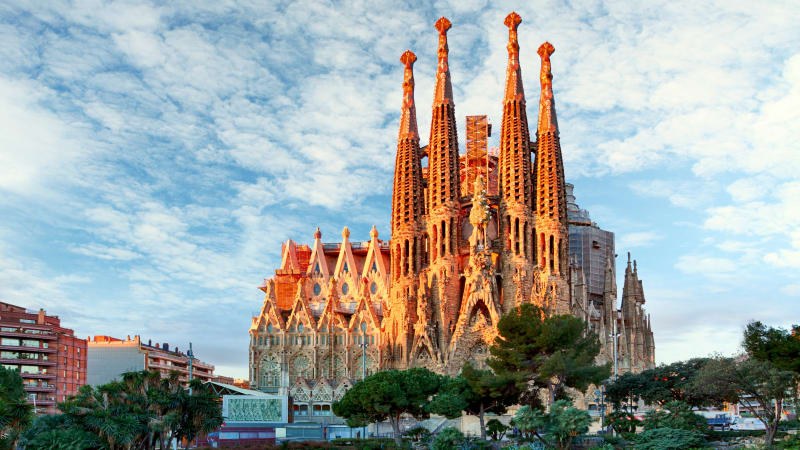 1 mi from BarcelonaSagrada Família
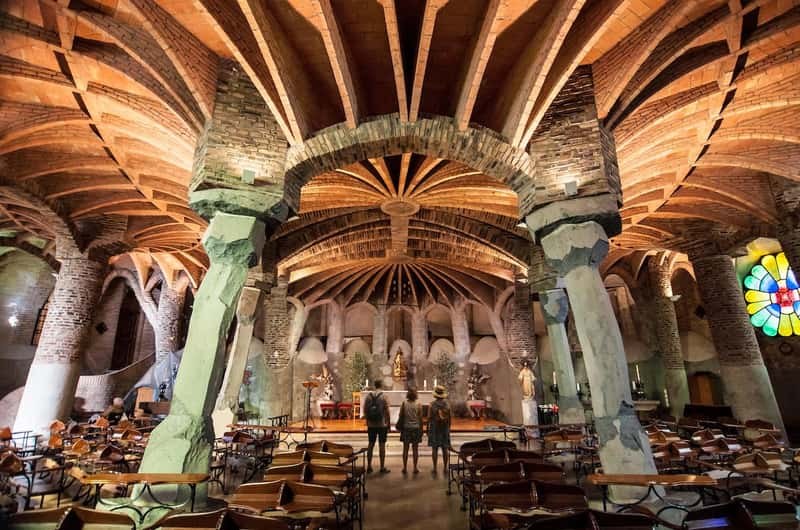
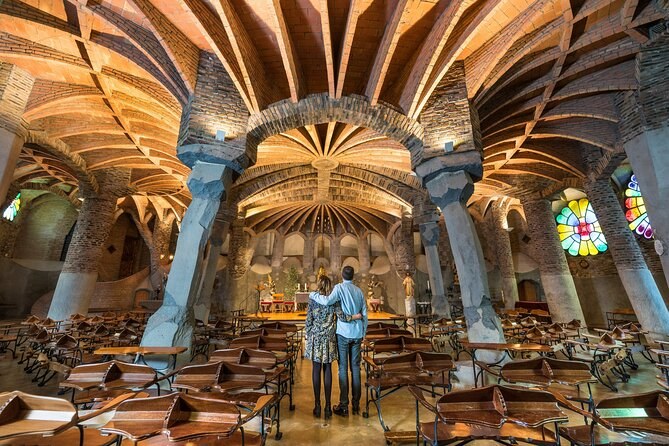 7 mi from BarcelonaColònia Güell Church (Crypt) & Modernist Industrial Site
 8 mi from Barcelona · land adventureBarcelona Beyond the Crowds: Gaudí, Galician Seafood & Montserrat
 210 mi from Barcelona · land adventureProvence by the Senses: Lavender, Truffles, and Roman Stone
The same trip, elevated
The same gateway on a more luxurious line — lead-in fare per person, same fare as booking direct.