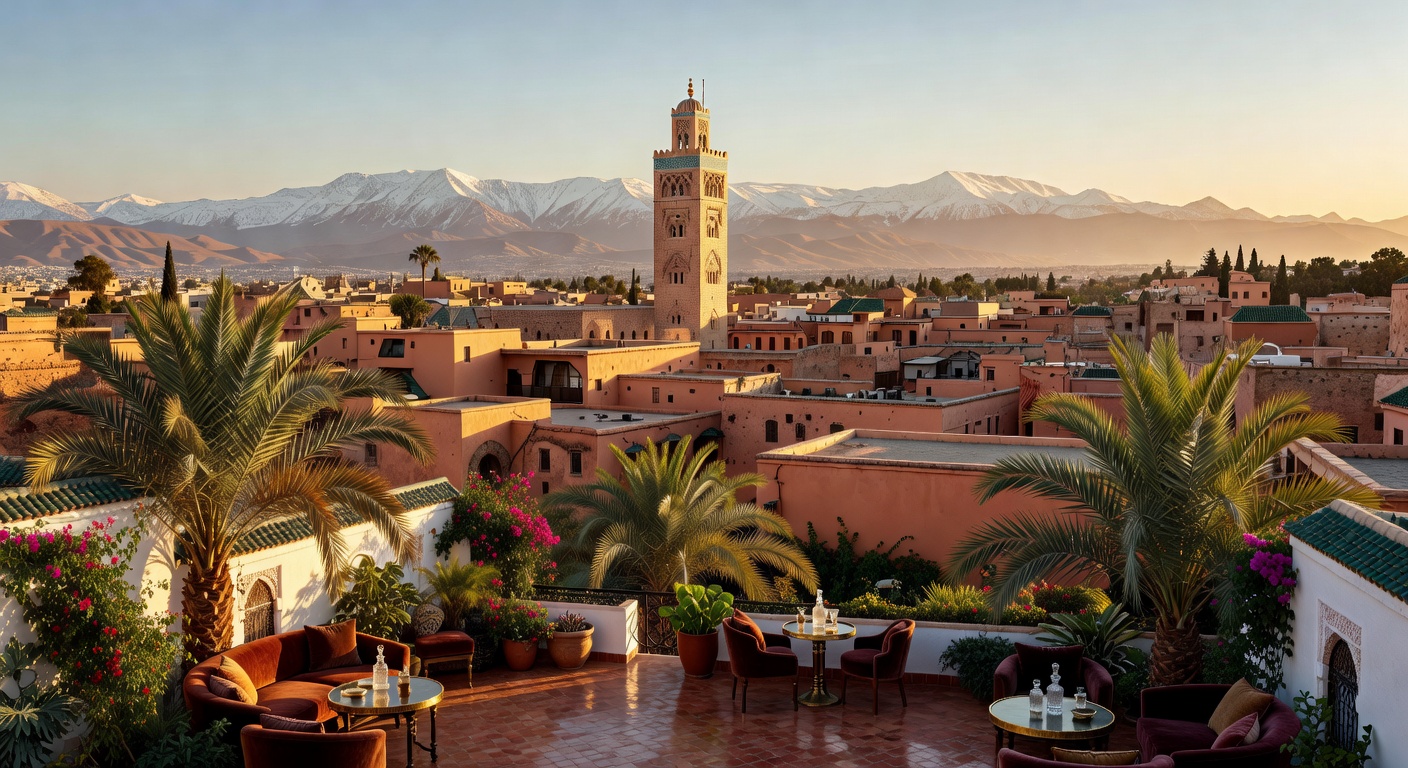
Marrakesh · Morocco
Expect a half-day escape from the medina chaos: you’ll be driven 30-45 minutes into the Haouz plain or towards the foothills where a handful of modern Moroccan wineries sit among olive groves and arid land. Tastings usually cover 4–6 wines (mostly reds, a few rosés, very little white), paired with local cheese, olives, and bread. The experience is low-key and genuinely interesting if you want to understand how Morocco produces decent wine despite the climate and Muslim cultural context. It’s not Tuscany — vineyards are smaller, the setup more functional than romantic — but the wines have improved dramatically in the last decade.
Best time is March to early June or October to mid-November when it’s cooler and the light is beautiful. Avoid July–September; it’s brutally hot and many wineries feel oven-like. Expect to pay around 850–1,600 MAD per person for a half-day private tour including transport from your riad, tasting, and a simple lunch. Shared or group options can drop to 550–750 MAD.
Honest tips: Prioritise wineries that focus on French varietals (Syrah, Grenache, Cabernet) and ask to taste their higher-end bottles if available — the entry-level stuff is often forgettable. Skip any tour that promises a “traditional Moroccan wine lunch” as the food is usually average; you’re better off eating back in the city. If your driver starts pushing hard for a second winery or shop, politely say no — one solid tasting is enough.
Some links are affiliate links — we may earn a commission at no extra cost to you. See our Terms.