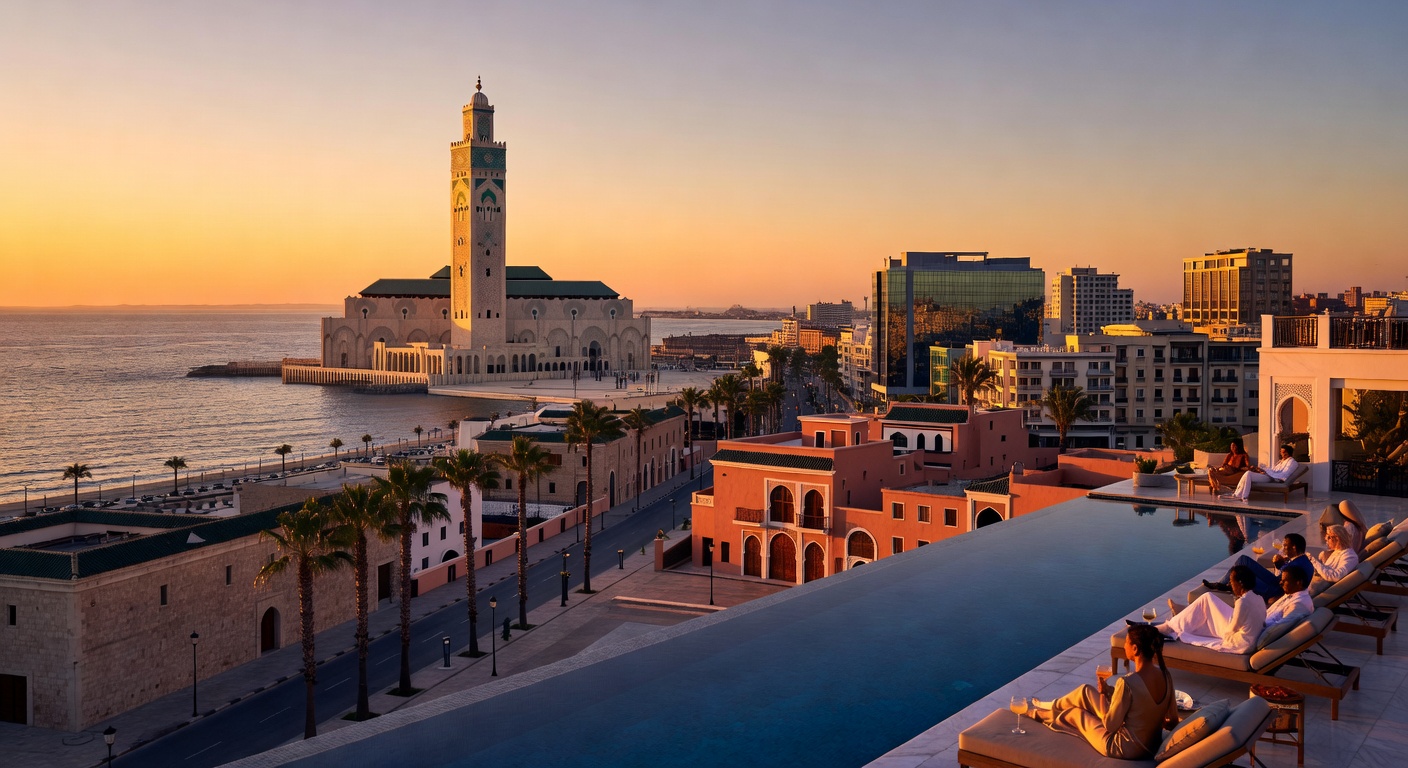
Casablanca · Morocco
Expect a chaotic, sensory overload experience: narrow alleys packed with stalls selling spices, olives, leather goods, knock-off clothing, and fresh produce. The air is thick with cumin, mint, and exhaust fumes. It's genuinely local, not staged for tourists, which means you'll be jostled, occasionally hassled to buy, and immersed in everyday Moroccan commerce. The Habbous quarter (old medina area) and Derb Omar are the main spots. It's authentic but can feel overwhelming if crowds and persistent vendors stress you out.
Go in spring (March-May) or fall (October-November) when it's cooler and less exhausting than the blistering summer. Mornings between 9am and noon are best; markets are freshest and vendors less aggressive before the afternoon slowdown. Expect to pay around $8-25 total for a few small purchases plus snacks and mint tea. A guided shopping tour with transport runs $60-80 per person if you want help with language and haggling.
Buy: saffron, ras el hanout spice blends, argan oil (check the seal), and olives. Skip: cheap leather goods that fall apart quickly, "antique" items that are obviously new, and anything edible that isn't sealed or from a busy stall with turnover. One honest tip: decide your maximum price in advance and walk away the moment bargaining stops being fun. The experience is as much about watching daily life as it is shopping.
Some links are affiliate links — we may earn a commission at no extra cost to you. See our Terms.