Your cruise
EXPLORA II · 11-night Caribbean cruise, San Juan to Manaus
Feb 6 – Feb 17 · 11 nights ·
Day 1 San Juan (board) · Day 2 Little Bay · Day 3 Bridgetown · Day 4 at sea · Day 5 Devils Island · Day 6–7 at sea · Day 8 Macapa · Day 9 Santarem · Day 10 Boca da Valeria · Day 11–12 Manaus (step off)
What you do Soar over the eerie, ash-covered ruins of Plymouth — the Caribbean's only abandoned capital — and the still-steaming Soufrière Hills volcano. This private helicopter flight is the singular, unmissable way to witness Montserrat's dramatic rebirth from above.
What to expect Lift off from Little Bay and within minutes you are banking over the Exclusion Zone, where the skeletal clock tower of Plymouth's church and buried rooftops emerge from metres of volcanic debris. Your pilot narrates the 1995–97 eruption story as sulphur plumes curl from the dome below. The lush northern hills and Rendezvous Bay appear in brilliant contrast to the grey south — a vivid lesson in nature's destructive and restorative power. Flights typically last 20–30 minutes and can be extended by arrangement.
Good to know Book directly and well in advance — helicopter slots fill quickly on port days. Confirm weight limits before sailing. All-aboard times in Little Bay are typically generous but verify with your ship; flights are fast enough to allow ample buffer.
Versus the ship tour A private or small-group helicopter charter means the pilot tailors the flight path to your group, hovering over the ghostly streets of Plymouth and the volcanic crater with no crowding — an intimate, cinematic perspective unavailable any other way.
book direct with Montserrat Aviation Services (MAS) → · the full guide →
What you do Walk the ashen streets of Plymouth, the only capital city buried alive in the modern era, accompanied by a specialist guide who witnessed the eruption firsthand. This is the most haunting, profound history experience in the Eastern Caribbean.
What to expect Your guide, often a former Plymouth resident, leads you through the surreal landscape where church steeples, the old government building, and palm trees protrude from metres of pyroclastic flow. The air carries a faint mineral tang and the stillness is absolute — no traffic, no commerce, only the soft crunch of volcanic ash underfoot. Commentary is deeply personal: family homes, the cricket ground, the market where guides once shopped. The visual and emotional impact is unlike anywhere else on earth.
Good to know Permits are arranged by your guide; book at least two weeks ahead via the Tourism Division. Wear closed-toe shoes and bring water — the ash plain reflects intense heat. Departs and returns to Little Bay pier, typically a 3–4 hour experience.
Versus the ship tour Entry into the Exclusion Zone is strictly controlled by government permit — only licensed, knowledgeable local guides can legally take you inside. A private engagement means you set the pace, ask anything, and absorb the silence of abandoned streets without a crowd.
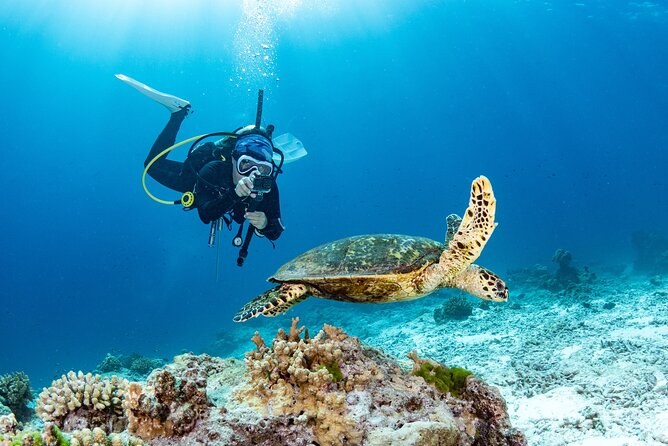
What you do Paddle or sail to Rendezvous Bay — Montserrat's only white-sand beach, accessible solely by sea — and snorkel a pristine, uncrowded reef teeming with sea turtles and colourful reef fish. This is the island's most coveted natural escape.
What to expect You launch from Little Bay and hug the dramatic volcanic cliffs of Montserrat's northwest coast, spotting frigatebirds wheeling overhead, before the arc of white sand at Rendezvous Bay reveals itself. The snorkel is spectacular — visibility often exceeds 20 metres, and hawksbill sea turtles are regular companions. After an unhurried reef exploration, the beach is yours: no vendors, no parasols for hire, no noise. The return paddle at golden hour, with the green hills of Montserrat at your back, is the stuff of travel memory.
Good to know Confirm departure time to ensure comfortable return before all-aboard. Bring reef-safe sunscreen (the only kind permitted). Snorkel equipment is provided; fins recommended. Pre-book directly — operator capacity is intentionally small.
Versus the ship tour Because Rendezvous Bay has no road access, only small-boat and kayak operators can reach it — guaranteeing a near-deserted, pristine beach experience. Small groups of 6–10 keep the reef undisturbed and the vibe genuinely exclusive.
book direct with Montserrat Water Sports (Sea Wolf Diving School) → · the full guide →
What you do Trek into Montserrat's lush Centre Hills rainforest reserve with a specialist naturalist guide to seek out the critically endangered Montserrat Oriole — the national bird found nowhere else on earth. A genuine wildlife encounter in an untouched tropical forest.
What to expect The trailhead is a short drive from Little Bay, and within minutes the volcanic island's extraordinary biodiversity envelops you: tree ferns tower overhead, land crabs scuttle across the path, and the liquid, fluting call of the Montserrat Oriole — a flame-and-black jewel of a bird — pierces the canopy. Your guide interprets the forest ecology, the post-eruption regeneration story, and the island's conservation efforts. Streams cascade through the undergrowth and the air is cool and faintly earthy. Sightings of iguanas, tree frogs, and migratory warblers are common.
Good to know Best wildlife activity before 10 am — coordinate with your guide to depart from Little Bay as early as possible after docking. Wear light, long-sleeve layers and sturdy trail shoes. Half-day duration fits comfortably within a typical port call.
Versus the ship tour A private guide dramatically increases your chance of spotting the oriole and rare montane species — they know precisely where territorial males sing each morning. Moving at your own pace through an UNESCO-designated Important Bird Area with a dedicated expert is a world apart from a group hike.
book direct with Montserrat Tourism Division – Certified Nature Guides → · the full guide →
What you do Discover the soul of Montserrat — the 'Emerald Isle of the Caribbean' — through its Irish-African heritage, historic lime kiln ruins, the legendary AIR Studios legacy, and a convivial lunch of local specialities with a knowledgeable island host.
What to expect Your host begins at the Montserrat National Trust, where Irish shamrocks alongside African drumming traditions tell the island's remarkable dual heritage story. The tour winds through Brades and Salem, past the ruins of colonial-era lime kilns and the rebuilt village of Gerald's that rose from volcanic ash. A stop at the AIR Studios site — where The Rolling Stones, Dire Straits, and Elton John once recorded — reveals Montserrat's unexpected cultural reach. Lunch is at a locally loved restaurant serving goat water (the national dish), saltfish accras, and rum punch.
Good to know Arrange lunch timing to return to Little Bay with at least 90 minutes before all-aboard. The National Trust gift shop stocks excellent local crafts — a more meaningful souvenir than most ports offer. Private vehicle provided throughout.
Versus the ship tour A privately arranged cultural tour with a local storyteller — rather than a narrated bus circuit — unlocks conversations in rum shops, introductions to artisans, and the kind of spontaneous, unhurried moments that define genuine island immersion.
book direct with Montserrat Tourism Division – Cultural Tour Guides → · the full guide →
What you do Cast off from Little Bay aboard a private catamaran, snorkel the volcanic rock formations and vibrant reefs of Montserrat's northwest coast, and drift back to port on a sun-drenched deck as the green hills glow gold at dusk. The ultimate sensory farewell to the Emerald Isle.
What to expect The catamaran glides north from Little Bay along cliffs draped in tropical greenery, the volcanic silhouette of Soufrière Hills visible to the south as a constant, dramatic backdrop. The captain drops anchor at sea-caves and shallow volcanic reef formations where sergeant majors, parrotfish, and the occasional turtle circle curiously around snorkellers. Back on deck, a spread of tropical fruit, freshly made guacamole, and rum punch appears as the afternoon light softens. The sail back into Little Bay with the island turning amber is the kind of moment that makes the whole voyage worthwhile.
Good to know Coordinate the return time carefully with the captain — confirm all-aboard and allow a 60-minute buffer. Private charters can accommodate 2–12 guests. Snorkel gear, towels, and a full bar are typically included; confirm dietary needs when booking.
Versus the ship tour A private catamaran charter for your group means no strangers on the boat, a captain who anchors where the reef is finest, and a bespoke snorkel itinerary — alongside chilled local rum punch and fresh fruit served at your leisure.
What you do Climb through Castillo San Felipe del Morro, the 16th-century Spanish citadel jutting into the Atlantic with its ring of sentry-box garitas and a vast kite-flying esplanade -- the single signature image of San Juan, a UNESCO World Heritage site steps from the pier. Your $10 ticket also gets you into the larger Castillo San Cristobal for 24 hours, so you can pair the two forts with a self-guided wander of the blue-cobblestoned colonial streets and city walls. Open 9am-6pm (last entry 5pm), cashless entry.
What to expect You'll walk directly from the pier into the 16th-century Castillo San Felipe del Morro, climbing through its iconic sentry-box garitas and exploring the vast esplanade where locals fly kites against Atlantic views—the signature postcard image of San Juan. Your $10 ticket unlocks both El Morro and the larger Castillo San Cristobal for 24 hours, so most visitors pair a 90-minute fort crawl with a self-guided wander of the blue-cobblestoned colonial streets and restored city walls, soaking in the UNESCO World Heritage atmosphere steps from where you docked. The rhythm is unhurried: climb, photograph, stroll the old town's narrow plazas and colorful facades, grab lunch at a local café, then loop back. The whole experience—both forts plus wandering—typically fills a relaxed 4–5 hours.
Good to know The site opens at 9am and stops last entry at 5pm; book your pier departure time accordingly to allow a full 4–5 hours ashore (6–8 hour port windows are ideal). El Morro sits a literal 5-minute walk from the cruise terminal, and entry is cashless, so bring a card or mobile payment; the $10 adult ticket covers both forts for 24 hours, making a second-day visit possible if you're in port overnight. Wear comfortable walking shoes, sunscreen, and a hat—the esplanade and city walls offer little shade—and bring water. If you want a guided experience instead of self-guided, hire a licensed walking guide (~$31/person) rather than paying the ship's ~$119 tour for the same forts and streets.
Versus the ship tour Direct wins by a landslide. The ship's guided 'San Juan City Tour' runs ~$92-$119/person (Carnival's verified at $118.99); you get the exact same forts and streets, a 5-minute walk from the pier, for a $10 ticket -- roughly a $100/person saving. If you want a guide, a private licensed walking guide is ~$31/person, still a third of the ship price.
book direct with San Juan National Historic Site (U.S. National Park Service) → · the full guide →
What you do Puerto Rico is the rum capital of the world and Bacardi is its global icon -- and you reach the world's largest premium rum distillery the fun way, riding the cheap Catano public ferry straight across the bay from Pier 2 (about a 20-minute crossing). Pick your depth: the story-driven Legacy Tour with a welcome cocktail, a hands-on Mixology Class, or a seated four-rum tasting. Quick to reach, flexible duration, and easily the most port-day-friendly marquee experience -- just book your time slot online in advance.
What to expect You'll walk from Pier 2 to the Catano ferry terminal and enjoy a breezy 20-minute crossing across San Juan Bay with views of the waterfront and coastline. Once at Casa BACARDI, you'll move through the world's largest premium rum distillery—touring colonial-era buildings, learning the heritage story, and exploring the production process. Your experience deepens based on your choice: the Legacy Tour includes a welcome cocktail; the Mixology Class puts you behind the bar crafting drinks; or the Rum Tasting offers a seated four-rum flight with expert guidance. Most excursions finish within 2-3 hours, leaving you time to explore Old San Juan's colorful streets or relax before returning to the ship.
Good to know Book your time slot online in advance—tours fill quickly on port days. The round-trip Catano ferry costs only $1-$3 per person and departs every 15-20 minutes from near the pier; the 20-minute crossing is straightforward and well-marked. Plan for 3-4 hours total (ferry + tour + return), leaving a 2-3 hour buffer before all-aboard. Bring sun protection, wear comfortable walking shoes for the distillery grounds, and have small bills handy for the ferry; the Legacy Tour ($40) and Mixology/Tasting options ($80) offer far better value than cruise-line packages bundling unnecessary bus tours.
Versus the ship tour Direct wins. Cruise-line Bacardi excursions run ~$80-$100+/person and bundle in a bus 'city sightseeing' filler you don't need. Book the Legacy Tour direct for $40 plus a couple dollars of ferry and you save ~$40-$60/person, while choosing your own pace and slot.
book direct with Casa BACARDI Puerto Rico (Bacardi) → · the full guide →
What you do El Yunque is the only tropical rainforest in the U.S. National Forest system -- misty peaks, cascading waterfalls, natural rock waterslides and cool river pools you can actually swim in, about an hour from the pier. A guided half-day puts roughly 3 hours on the forest floor and fits comfortably inside a normal 6-8 hr port day. Round-trip transport, park entrance, life jackets/helmets for the water spots and water are all included.
What to expect After a roughly one-hour drive from the pier, you'll step into the mist of El Yunque, the only tropical rainforest in the U.S. National Forest system, where a guide leads you across about three hours on the forest floor past misty peaks and cascading waterfalls. You'll strip down for natural rock waterslides and swim in cool river pools (life jackets and helmets provided), alternating between the sensory overload of the jungle and the pure relief of cold water. The rhythm is steady but unhurried—hike, pause to absorb the canopy, splash, breathe—designed to fit snugly inside a standard 6–8 hour port day without feeling rushed.
Good to know Round-trip transport and park entrance are included in the $89 price; departing immediately after tendering and returning well before all-aboard (verify the operator's guarantee) keeps you safe within the port window. Bring water shoes or sandals that won't slip on wet rocks, a towel, and a waterproof bag for phone/wallet; the guide and included water cover basics, but sun protection and a change of clothes are on you. At $89 with hotel transport (or $75 self-driven), you save roughly $14 per person versus Carnival's $102.99 ship tour—the real value is escaping the massive cruise-ship bus rather than the dollar difference.
Versus the ship tour Close to a wash -- book direct mainly for the smaller group, not big savings. Carnival's El Yunque tour is $102.99, so direct at $89 saves ~$14/person; quality independent half-days range ~$45-$120. The real upgrade is escaping a packed cruise-ship bus, not the price. Use an operator that guarantees you back to the ship before all-aboard.
What you do The classic Caribbean postcard day: sail a 65-ft catamaran out to an uninhabited cay of powder-white sand, turquoise shallows and a living reef in the Cordillera Reefs Nature Reserve. Open bar (pina coladas, local beer), buffet lunch, a water slide and snorkel gear are all included, run by Puerto Rico's longest-operating catamaran company (since 1994). Note the clock: it's a 6-hr trip departing Fajardo (~1 hr drive from the pier), so it realistically needs a long port day with an early start or an overnight -- confirm against your ship's all-aboard.
What to expect You'll board a 65-foot catamaran in Fajardo for a sail into the Cordillera Reefs Nature Reserve, where powder-white sand and turquoise shallows rim Icacos Island—an uninhabited cay that looks like a Caribbean postcard. Once anchored, you'll slip into your snorkel gear to explore a living reef system, then surface for an open bar (pina coladas, local beer) and a buffet lunch on deck. A water slide off the boat's platform caps the afternoon before the sail back to port, completing a full immersion in classic Caribbean rhythm.
Good to know The round-trip is 6 hours with a ~1-hour drive from the San Juan pier to Fajardo, so you'll need either a long port day with an early departure or an overnight—confirm your ship's all-aboard time before booking. Secure San Juan round-trip transport separately if the operator doesn't include it; factor 2–2.5 hours for ground travel each way. Bring reef-safe sunscreen, a towel, and a change of dry clothes; snorkel gear is provided but your own mask and fins ensure comfort. Book directly with East Island Excursions ($135/adult, $115/child plus 11.5% tax and $3 DRNA fee) rather than the ship's catamaran option for both price savings and a longer-established vessel.
Versus the ship tour Direct wins on price and quality. The ship's catamaran sail & snorkel runs ~$147-$150/person; booking East Island direct at $135 saves ~$15 and puts you on a longer-established boat. If your port day is short, the cheaper honest play is a $0-entry DIY snorkel at Escambron Beach, a ~10-min taxi from the pier -- skip the open-water sail entirely rather than risk the all-aboard.
book direct with East Island Excursions → · the full guide →
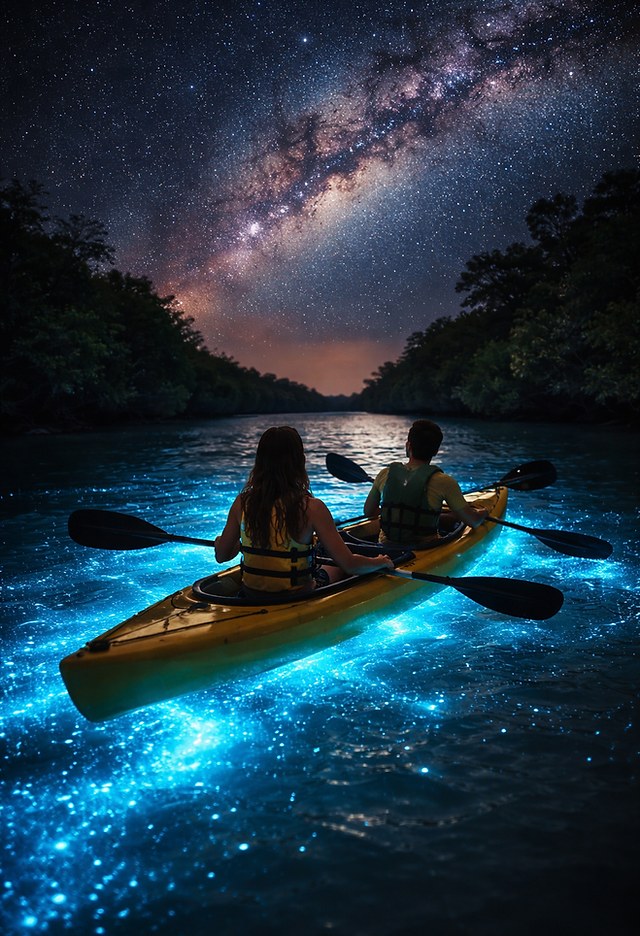
What you do Puerto Rico holds some of the brightest bioluminescent water on Earth: paddle a mangrove channel into Laguna Grande in Fajardo and every stroke ignites a blue-green glow from millions of dinoflagellates -- a genuine once-in-a-lifetime natural wonder. It's a ~2-hr night tour with seasonal check-ins between 5:45 and 8:45pm, about an hour's drive east of the pier. CRUISER CAVEAT: because it runs after dark, it only fits an overnight San Juan call or a pre/post-cruise stay -- and San Juan is a major home port, so many guests do overnight.
What to expect You'll drive roughly an hour east to Fajardo and check in between 5:45–8:45pm for your guided night paddle through mangrove channels into Laguna Grande. As your kayak cuts through the water, each stroke ignites a brilliant blue-green glow from millions of dinoflagellates, creating a living light show beneath your paddle. Over the roughly 2-hour tour, you'll witness one of Earth's brightest bioluminescent displays in real time—a genuine once-in-a-lifetime natural phenomenon where the water itself seems to come alive with every movement.
Good to know This excursion only works for overnight San Juan calls or pre/post-cruise stays since tours run after dark; plan your departure around your check-in window (5:45–8:45pm) and build in an hour's round-trip drive time plus a 30–45 minute buffer to return safely to the ship. There is no shuttle service from the pier, so arrange a rental car, taxi, or Uber in advance—factoring in traffic and return time is critical for an overnight port. Bring a light jacket or sweater for the evening boat, secure any loose items, and wear closed-toe shoes suitable for water; book directly with Kayaking Puerto Rico or call ahead to confirm availability and your specific check-in time.
Versus the ship tour No fair ship comparison -- cruise lines rarely offer the bio bay on a same-day call because it's after dark, so this is an overnight-only, book-direct experience. At $70/person it's one of the best value bucket-list items on the island. Las Tortugas Adventures is an equally reputable direct alternative if dates are sold out.
What you do The low-risk, in-city water option for cruisers who can't reach the far-east bio bay or Icacos: glide a transparent glass-bottom kayak over the seagrass and artificial reefs of Condado Lagoon, spotting sea stars, diving pelicans and the occasional manatee with the city skyline behind you. It's only ~1.5 hrs, right in San Juan with no long drive, and morning departures beat both the heat and the crowds. The single most port-day-proof way to get on the water here.
What to expect You'll board a transparent glass-bottom kayak and glide across the shallow seagrass beds and artificial reefs of Condado Lagoon, spotting sea stars, watching diving pelicans, and if you're lucky, catching sight of a manatee—all with San Juan's skyline framing the scene behind you. The pace is leisurely and guided, designed for cruisers of varying water confidence. The entire experience runs roughly 1.5 hours, keeping you close enough to port that you can be back aboard with time to spare. It's the most accessible way to get on the water during a San Juan port day without a long drive or high-risk logistics.
Good to know Book directly with Glow Kayak Puerto Rico (roughly $49–$59 per person) to avoid ship markup—this tour doesn't run through your cruise line. Morning departures are ideal: they beat both the heat and crowds, and the short 1.5-hour duration means you can depart within 90 minutes of tendering ashore and still have a comfortable 2+ hour buffer before all-aboard. The tour departs from Condado Lagoon, a short ride from the cruise pier (confirm exact transport details with the operator when booking). Bring reef-safe sunscreen, a towel, and water; wear quick-dry clothes and secure any electronics.
Versus the ship tour Direct only -- ships don't sell this in-city clear-kayak trip, so there's no markup to fight. At ~$49-$59 it's the cheapest, lowest-risk on-the-water experience in the bunch and the smart fallback when a short call rules out Fajardo's catamaran or bio-bay drives. Night Kayak from the Condado Ocean Club runs a comparable clear-kayak tour if you prefer.
book direct with Glow Kayak Puerto Rico → · the full guide →
What you do Soar over the eerie, ash-covered ruins of Plymouth — the Caribbean's only abandoned capital — and the still-steaming Soufrière Hills volcano. This private helicopter flight is the singular, unmissable way to witness Montserrat's dramatic rebirth from above.
What to expect Lift off from Little Bay and within minutes you are banking over the Exclusion Zone, where the skeletal clock tower of Plymouth's church and buried rooftops emerge from metres of volcanic debris. Your pilot narrates the 1995–97 eruption story as sulphur plumes curl from the dome below. The lush northern hills and Rendezvous Bay appear in brilliant contrast to the grey south — a vivid lesson in nature's destructive and restorative power. Flights typically last 20–30 minutes and can be extended by arrangement.
Good to know Book directly and well in advance — helicopter slots fill quickly on port days. Confirm weight limits before sailing. All-aboard times in Little Bay are typically generous but verify with your ship; flights are fast enough to allow ample buffer.
Versus the ship tour A private or small-group helicopter charter means the pilot tailors the flight path to your group, hovering over the ghostly streets of Plymouth and the volcanic crater with no crowding — an intimate, cinematic perspective unavailable any other way.
book direct with Montserrat Aviation Services (MAS) → · the full guide →
What you do Walk the ashen streets of Plymouth, the only capital city buried alive in the modern era, accompanied by a specialist guide who witnessed the eruption firsthand. This is the most haunting, profound history experience in the Eastern Caribbean.
What to expect Your guide, often a former Plymouth resident, leads you through the surreal landscape where church steeples, the old government building, and palm trees protrude from metres of pyroclastic flow. The air carries a faint mineral tang and the stillness is absolute — no traffic, no commerce, only the soft crunch of volcanic ash underfoot. Commentary is deeply personal: family homes, the cricket ground, the market where guides once shopped. The visual and emotional impact is unlike anywhere else on earth.
Good to know Permits are arranged by your guide; book at least two weeks ahead via the Tourism Division. Wear closed-toe shoes and bring water — the ash plain reflects intense heat. Departs and returns to Little Bay pier, typically a 3–4 hour experience.
Versus the ship tour Entry into the Exclusion Zone is strictly controlled by government permit — only licensed, knowledgeable local guides can legally take you inside. A private engagement means you set the pace, ask anything, and absorb the silence of abandoned streets without a crowd.
What you do Paddle or sail to Rendezvous Bay — Montserrat's only white-sand beach, accessible solely by sea — and snorkel a pristine, uncrowded reef teeming with sea turtles and colourful reef fish. This is the island's most coveted natural escape.
What to expect You launch from Little Bay and hug the dramatic volcanic cliffs of Montserrat's northwest coast, spotting frigatebirds wheeling overhead, before the arc of white sand at Rendezvous Bay reveals itself. The snorkel is spectacular — visibility often exceeds 20 metres, and hawksbill sea turtles are regular companions. After an unhurried reef exploration, the beach is yours: no vendors, no parasols for hire, no noise. The return paddle at golden hour, with the green hills of Montserrat at your back, is the stuff of travel memory.
Good to know Confirm departure time to ensure comfortable return before all-aboard. Bring reef-safe sunscreen (the only kind permitted). Snorkel equipment is provided; fins recommended. Pre-book directly — operator capacity is intentionally small.
Versus the ship tour Because Rendezvous Bay has no road access, only small-boat and kayak operators can reach it — guaranteeing a near-deserted, pristine beach experience. Small groups of 6–10 keep the reef undisturbed and the vibe genuinely exclusive.
book direct with Montserrat Water Sports (Sea Wolf Diving School) → · the full guide →
What you do Trek into Montserrat's lush Centre Hills rainforest reserve with a specialist naturalist guide to seek out the critically endangered Montserrat Oriole — the national bird found nowhere else on earth. A genuine wildlife encounter in an untouched tropical forest.
What to expect The trailhead is a short drive from Little Bay, and within minutes the volcanic island's extraordinary biodiversity envelops you: tree ferns tower overhead, land crabs scuttle across the path, and the liquid, fluting call of the Montserrat Oriole — a flame-and-black jewel of a bird — pierces the canopy. Your guide interprets the forest ecology, the post-eruption regeneration story, and the island's conservation efforts. Streams cascade through the undergrowth and the air is cool and faintly earthy. Sightings of iguanas, tree frogs, and migratory warblers are common.
Good to know Best wildlife activity before 10 am — coordinate with your guide to depart from Little Bay as early as possible after docking. Wear light, long-sleeve layers and sturdy trail shoes. Half-day duration fits comfortably within a typical port call.
Versus the ship tour A private guide dramatically increases your chance of spotting the oriole and rare montane species — they know precisely where territorial males sing each morning. Moving at your own pace through an UNESCO-designated Important Bird Area with a dedicated expert is a world apart from a group hike.
book direct with Montserrat Tourism Division – Certified Nature Guides → · the full guide →
What you do Discover the soul of Montserrat — the 'Emerald Isle of the Caribbean' — through its Irish-African heritage, historic lime kiln ruins, the legendary AIR Studios legacy, and a convivial lunch of local specialities with a knowledgeable island host.
What to expect Your host begins at the Montserrat National Trust, where Irish shamrocks alongside African drumming traditions tell the island's remarkable dual heritage story. The tour winds through Brades and Salem, past the ruins of colonial-era lime kilns and the rebuilt village of Gerald's that rose from volcanic ash. A stop at the AIR Studios site — where The Rolling Stones, Dire Straits, and Elton John once recorded — reveals Montserrat's unexpected cultural reach. Lunch is at a locally loved restaurant serving goat water (the national dish), saltfish accras, and rum punch.
Good to know Arrange lunch timing to return to Little Bay with at least 90 minutes before all-aboard. The National Trust gift shop stocks excellent local crafts — a more meaningful souvenir than most ports offer. Private vehicle provided throughout.
Versus the ship tour A privately arranged cultural tour with a local storyteller — rather than a narrated bus circuit — unlocks conversations in rum shops, introductions to artisans, and the kind of spontaneous, unhurried moments that define genuine island immersion.
book direct with Montserrat Tourism Division – Cultural Tour Guides → · the full guide →
What you do Cast off from Little Bay aboard a private catamaran, snorkel the volcanic rock formations and vibrant reefs of Montserrat's northwest coast, and drift back to port on a sun-drenched deck as the green hills glow gold at dusk. The ultimate sensory farewell to the Emerald Isle.
What to expect The catamaran glides north from Little Bay along cliffs draped in tropical greenery, the volcanic silhouette of Soufrière Hills visible to the south as a constant, dramatic backdrop. The captain drops anchor at sea-caves and shallow volcanic reef formations where sergeant majors, parrotfish, and the occasional turtle circle curiously around snorkellers. Back on deck, a spread of tropical fruit, freshly made guacamole, and rum punch appears as the afternoon light softens. The sail back into Little Bay with the island turning amber is the kind of moment that makes the whole voyage worthwhile.
Good to know Coordinate the return time carefully with the captain — confirm all-aboard and allow a 60-minute buffer. Private charters can accommodate 2–12 guests. Snorkel gear, towels, and a full bar are typically included; confirm dietary needs when booking.
Versus the ship tour A private catamaran charter for your group means no strangers on the boat, a captain who anchors where the reef is finest, and a bespoke snorkel itinerary — alongside chilled local rum punch and fresh fruit served at your leisure.
What you do Sail out of Carlisle Bay on a sleek 60-foot schooner capped at just 36 guests, then slip into glass-clear water where wild green and hawksbill turtles glide up beneath you, unbothered and close enough to touch the same current. Two protected shipwrecks lie in the same bay, their hulls now reefs swarming with sergeant majors and trumpetfish. This is the single most photographed thing people do in Barbados, and doing it from a small, uncrowded boat instead of a 100-person party barge is what separates a magical morning from a chaotic one.
What to expect You will be met dockside in the Careenage or picked up near the port, handed coconut bread and a breakfast drink, then sailed about 20 minutes down the calm west coast. Crew anchor over the turtle feeding ground first, hand out gear, and stay in the water with weaker swimmers — turtles usually appear within minutes. After the wrecks you cruise back with rum punch flowing and Bajan music on deck. Seas inside the bay are flat and beginner-friendly.
Good to know Pre-book online directly; popular dates sell out in cruise season. Confirm pickup at the Shallow Draught / cruise terminal rather than a hotel so timing is anchored to the ship. The 5-hour sail returns by mid-afternoon — comfortable against a typical 4:30-5:00pm all-aboard, but verify your ship's time and choose the 3-hour option if you are in port only a half day. Bring reef-safe sunscreen, a dry bag, and small USD bills for the crew tip.
Versus the ship tour Cruise lines sell the near-identical Tiami catamaran-and-turtle tour at roughly USD 100-140 per adult, often on a larger, fuller boat. Booking El Tigre direct gives you a smaller 36-guest vessel and a full open bar for USD 110 (or USD 85 for the shorter sail) — direct wins clearly on both price and exclusivity. Carlisle Bay is a 5-minute ride from the pier, so there is no remote-port timing penalty that would justify the ship markup.
book direct with El Tigre Cruises (official) → · the full guide →
What you do Board an electric tram and ride deep into the heart of a vast active limestone cavern, where underground streams tumble over terraces, crystal pools mirror the lights, and stalactites meet stalagmites in 40-foot columns still slowly growing. It is the Caribbean's most spectacular show cave and the one inland sight every first-time visitor to Barbados is told not to miss. The scale of the Great Hall — a domed chamber the size of a cathedral — genuinely stops people mid-sentence.
What to expect After a short orientation film you ride the tram about a mile underground over roughly 45-60 minutes, stopping for the major formations and the waterfall pool. Temperatures inside are cool and humid; the paths are accessible and the tram does the work, so it suits all fitness levels. Above ground there is a nature trail, aviary, rum tasting and grill if you upgrade. Hard hats are provided.
Good to know Pre-book a timed slot online — walk-ups can wait hours on busy ship days. The cave is in St Thomas parish, about 40-45 minutes from the pier; agree a round-trip fare with a licensed 'Z'/'ZM' taxi (roughly USD 60-80 round trip for the car) or book a direct package that includes pickup so your return is guaranteed against all-aboard. Bring a light layer for the cave chill.
Versus the ship tour Ship tours bundling Harrison's Cave with island sightseeing typically run USD 90-130 per person and lock you to a fixed bus schedule. If you only want the cave, booking the Signature Tram direct at USD 57 and taking a taxi up wins decisively on price. Be honest, though: the cave is 40 minutes inland, so if you have no plan for transport and want a guaranteed return before all-aboard, a ship transfer or a combo direct package that includes pickup earns its convenience.
book direct with Harrison's Cave Eco-Adventure Park (official) → · the full guide →
What you do Stand on the ground where rum has been made continuously since 1703 — the oldest running rum distillery on earth — and walk the original great house, well house, fermentation and distillation rooms before tasting four signature blends with a master guide. This is not the in-town gift-shop tasting; it is the real working estate in the rolling north of the island, and for anyone who cares about rum it is a genuine pilgrimage. You taste the same spirit that defined the entire category, in the place it was born.
What to expect At the St Lucy estate you tour open-air grounds and working buildings over about two hours, finishing with a guided tasting of four rums and time to buy bottles unavailable at home. Dress code is enforced: tops must cover the arms and closed protective footwear is required, and you must be 18+. The Bridgetown Visitor Centre version is a tighter, polished hour with a welcome cocktail and film. Both end in a well-stocked shop.
Good to know Book online directly and pick your site deliberately — St Lucy distillery (USD 60, ~45 min north) vs Bridgetown Visitor Centre (USD 27.50, ~10 min from pier). Arrange a round-trip 'Z'-plate taxi for the distillery and confirm a hard return time against all-aboard. Do not drive yourself after tasting. Wear sneakers and a sleeved top for the distillery or you will be turned away.
Versus the ship tour Cruise rum tours generally sell at USD 60-100 per person and most go only to the in-town Visitor Centre, not the historic distillery. Booking direct lets you choose the real St Lucy estate experience for USD 60, or the quick Bridgetown tasting for USD 27.50 — either way direct is cheaper and you control which site you see. The distillery is ~45 minutes north, so if time is tight the Visitor Centre tasting (walkable-distance + short taxi) is the honest pick.
book direct with Mount Gay Rum Distillery (official, Remy Cointreau) → · the full guide →
What you do Climb into an open Land Rover and head off the tourist west coast to wild, windswept Bathsheba, where house-sized mushroom boulders sit in the surf and the Atlantic crashes against a coastline most cruise passengers never see. You crawl up Hackleton's Cliff and Gun Hill for sweeping island views, rumble through cane fields and back-country villages, and stop where the locals eat. It is the antidote to the beach-bar day — the Barbados of dramatic scenery, not just sand.
What to expect Expect a bumpy, fun, dusty ride in an open vehicle with an entertaining local driver-guide who knows the back roads. You photograph Bathsheba's boulders and Soup Bowl surf break, take in cliff-top panoramas, and stop for a Bajan lunch at a local spot before the run home. It is active but not strenuous — you are riding, not hiking. Wind and sun exposure are real, so the open jeep is the whole point.
Good to know Pre-book and specify pickup at the cruise terminal so your return is tied to the ship. The 5.5-hour tour returns by early-to-mid afternoon, comfortable against a standard all-aboard but confirm against your exact time. Wear sunscreen, a hat that won't blow off, sunglasses against dust, and bring a light layer for the breezy east coast. The east coast Atlantic is for looking, not swimming — currents there are dangerous.
Versus the ship tour Cruise-line 4x4 island adventures run very close to this — roughly USD 90-120 per person — for an essentially equivalent product, since the ships often resell the same local operators. Booking Island Safari direct at USD 98 with lunch included is a wash-to-slight-win on price, and you keep the small-group open-jeep experience. This is one case where the ship version is fairly priced if it is more convenient for your timing.
book direct with Island Safari Barbados (official) → · the full guide →
What you do Descend in a real 48-passenger submarine to over 130 feet — deeper than any scuba diver on a recreational dive — and watch the lights of a coral reef and a sunken wreck slide past your own porthole, no swimming, no getting wet. It is one of only a handful of places on the planet where an ordinary traveler can do this, and the sensation of the sub tilting down into the blue is unlike anything a snorkel or glass-bottom boat delivers. Pure bucket-list, and ideal for anyone who can't or won't snorkel.
What to expect You board a surface ferry at the Shallow Draught near the port, ride out to the dive site, then transfer onto the submarine and descend smoothly along the reef wall and a wreck while a pilot narrates the marine life. The cabin is air-conditioned and pressurized — you feel no pressure change. Children love it and it is fully accessible for non-swimmers. You receive a dive certificate at the end.
Good to know Pre-book a specific departure time online; the sub runs limited daily slots and sells out on heavy cruise days. The departure pier is at the Shallow Draught, a short walk or 5-minute taxi from the cruise terminal — very low all-aboard risk. Minimum height/age limits apply for small children; check when booking. Bring a light layer, as the cabin runs cool.
Versus the ship tour Ship excursions for the Atlantis sub usually land around USD 120-150 per adult. Booking direct typically saves USD 10-30 per person and gives you flexibility on departure time — direct wins, and the boarding pier is minutes from the cruise terminal so there is no transport risk that favors the ship. Watch for Atlantis's own seasonal web promo codes that can drop the direct price further.
book direct with Atlantis Submarines Barbados (official) → · the full guide →
What you do Trade the midday crowds for a golden-hour sail along the platinum west coast, swim with the same wild turtles in softer light, and toast the sunset with canapes and tropical cocktails from the deck of one of the island's best-known catamarans. If your ship overnights or has a late departure, this is the most romantic, least crowded way to do the signature turtle swim — fewer boats on the water, warm low light for photos, and an unhurried, genuinely luxurious mood.
What to expect Round-trip transfers are included, so you are collected and returned without logistics stress. The boat makes swim/snorkel stops for turtles and a shipwreck, with gear, guidance and an open bar throughout; the lunch cruise adds a Bajan buffet, the sunset version swaps in canapes and cocktails. Crew are attentive and help nervous swimmers. Carlisle Bay water is calm and clear.
Good to know Book the specific departure directly and confirm transfer pickup at the cruise terminal so timing is locked to your ship. The daytime lunch sail (9:30am-2:30pm) suits a standard port day; only choose the sunset cruise if your ship has a late or overnight departure, and double-check that against all-aboard before booking. Bring reef-safe sunscreen, a towel and small USD bills for tips.
Versus the ship tour Royal Caribbean, Carnival and NCL all resell Tiami's daytime catamaran-and-turtle tour at roughly USD 100-140 per adult. Booking Tiami direct gets you the same boat and crew, usually at the lower end of that range, plus access to the sunset departure the ships rarely sell. Direct wins on price and on the better, quieter sunset slot — only worth the ship version if your in-port window forces a fixed daytime schedule.
book direct with Tiami Catamaran Cruises (official) → · the full guide →
What you do Step ashore the legendary Îles du Salut — Île Royale, Île Saint-Joseph & the forbidden Île du Diable — with a private expert guide decoding the full penal-colony story amid capybaras, agoutis, and howler monkeys. A bucket-list dark-history experience in the raw tropics.
What to expect Your guide meets you at the Kourou or Îles du Salut jetty and leads you through the crumbling cell blocks and colonial hospital ruins on Île Royale, narrating the lives of Dreyfus, Papillon, and thousands of forgotten convicts. You cross to the eerie silence of Île Saint-Joseph, where open-roofed isolation cells let in nothing but sky and bird calls. From the clifftop you look across the 700-metre channel to the truly off-limits Île du Diable — the most forbidden 14 acres in the Americas. The return boat ride skirts dramatic jungle coastline with frigate birds wheeling overhead.
Good to know Book well in advance — boat departures from Kourou are tide-dependent and capacity is strictly limited. Allow a full 5–6 hours minimum; confirm all-aboard time before booking. Wear sturdy closed-toe shoes; paths are steep and uneven. Sun protection and water are essential.
Versus the ship tour A private, expert-led format means you set the pace across all three islands — lingering inside the solitary-confinement cells of Île Saint-Joseph, watching wildlife at dusk, and hearing the unfiltered human stories that group tours rush past.
What you do Arrive at Île Saint-Joseph on the first morning boat to walk its haunting open-roofed solitary-confinement cells in near-total solitude — the most chilling and atmospheric hour in all of French Guiana. Pure bucket-list dark history at its most visceral.
What to expect The small boat skims the Atlantic swell at first light, landing on Île Saint-Joseph's mossy jetty as mist still clings to the canopy. Your guide walks you through the notorious solitary-confinement block, where iron rings, rusted doors, and open sky tell a story words can barely carry. Howler monkeys announce the morning from the surrounding forest while you pace the cell corridors largely alone. You have unhurried time to photograph, reflect, and absorb the silence before the island fills with later arrivals.
Good to know Undiscovered Destinations specialises in bespoke small-group itineraries for this region — contact them directly to build around your ship's schedule. Confirm exact all-aboard time; the island is a 30-minute boat ride from Kourou's port. Bring insect repellent and a light rain layer.
Versus the ship tour By targeting the very first departure, this experience gives you the silent cells and jungle paths before the day-trippers arrive — a profoundly different atmosphere that rewards the early riser with an almost private island.
book direct with Undiscovered Destinations → · the full guide →
What you do Tour the Guiana Space Centre — Europe's spaceport and the most active commercial launch facility on Earth — on a guided visit that takes you to the Ariane 6 launch zone, the Jupiter control room, and the rocket assembly building. Utterly unique on any cruise itinerary.
What to expect A security-cleared guide collects your small group at the CSG visitor entrance and escorts you through the storied complex that has launched everything from Galileo satellites to James Webb Space Telescope components. You stand at the Ariane 6 launch table — one of the most powerful rocket platforms on Earth — and peer into the vast integration hall where boosters are stacked. The Jupiter control room, from which dozens of commercial launches have been directed, provides a theatrical finale. The contrast between this cutting-edge facility and the 19th-century prison ruins just 15 km away is one of travel's great juxtapositions.
Good to know Tours must be pre-booked through the CSG website; passport details are required for security clearance at least 48 hours ahead. The centre is roughly 15 minutes by taxi from the Kourou waterfront. No photography inside certain technical buildings. Check the CSG website for current tour slot availability.
Versus the ship tour Access to the launch pad perimeter and technical areas is strictly quota-controlled by the French space agency — only pre-booked visitors secure these spots, making it one of the genuinely exclusive experiences at this port.
What you do Paddle a traditional pirogue deep into the Amazonian creek systems fringing Kourou with a Creole naturalist guide — spotting caimans, scarlet ibis, giant river otters, and three species of monkey in genuinely wild jungle. Utterly remote, utterly unforgettable.
What to expect Your Creole guide poles the narrow wooden pirogue away from the mangrove fringe into a cathedral of primary jungle, where the tree canopy closes overhead and the sounds of the city vanish within minutes. He reads the waterway like a map — pausing at a still backwater where a spectacled caiman floats motionless, then easing under overhanging branches alive with squirrel monkeys. Kingfishers detonate from perches in flashes of electric blue, and if the tide is right, a roosting colony of scarlet ibis turns the canopy crimson at dusk. You return to the quay with the particular, unhurried satisfaction of wilderness well and truly found.
Good to know Jal Voyage is the established local operator in Cayenne / Kourou — contact them directly and confirm availability against your all-aboard time. Lightweight long sleeves and trousers are recommended against insects. Bring waterproof bags for cameras and valuables.
Versus the ship tour A private pirogue means your naturalist guide steers to where the wildlife actually is, cutting the engine to drift silently past caimans sunning on logs — a pace and intimacy impossible on any larger group outing.
What you do Join Adventures Abroad's intimate small-group expert-led tour of French Guiana's most compelling sites — Devil's Island, jungle waterways, and Creole culture — in a format designed for curious, unhurried travellers who want real depth over highlights.
What to expect The day opens with a briefing from your bilingual guide — a specialist in both the colonial penal history and the extraordinary biodiversity of this Amazonian department of France. You travel by private minibus to Kourou, board the island ferry, and spend the morning on Île Royale and Île Saint-Joseph with exclusive interpretation of the prisoner hierarchy, escape attempts, and the island's post-penal wildlife resurgence. The afternoon pivots to Creole food culture: a stop at a local market in Kourou for tasting rum arrangé, piment végétarien, and bouillon d'awara. Your guide connects every thread — geopolitical oddity, biodiversity hotspot, living Creole culture — into a portrait of one of the world's least-understood places.
Good to know Contact Adventures Abroad directly to arrange a shore-day extension that fits your specific port call. They are specialists in small-group adventure travel and can tailor timing to your all-aboard. Book at minimum 4–6 weeks in advance as French Guiana programmes fill quickly.
Versus the ship tour Adventures Abroad caps group sizes at 18 and uses local expert guides, giving access to context, stories, and side-trips that larger-format tours simply cannot offer — ideal for the traveller who wants French Guiana properly explained.
What you do After touring the ruins, settle into the island's only restaurant — the colonial-era Relais de l'Île Royale — for a leisurely Creole and French lunch on a terrace overlooking the Atlantic and the forbidden Île du Diable. One of the most extraordinary lunch tables on Earth.
What to expect After your morning exploring the cell blocks and hospital ruins, you climb to the colonial hilltop building — once the prison warden's quarters — where the Relais has been serving cold Lorraine beers and Creole accras since the islands reopened to visitors. The terrace catches every Atlantic breeze, and the view across to Île du Diable never loses its frisson. Grilled fresh barracuda, accras de morue (salt-cod fritters), and boudin Créole arrive in unhurried succession, paired with a well-chilled rosé or a local ti'punch. Howler monkeys occasionally serenade from the tree line — and the frigate birds wheel overhead as the dessert arrives.
Good to know The restaurant has limited covers and no advance online reservation system — arrive early or speak to the Société Île Royale boat operator about reserving a table when booking your transfer. Confirm it is open on your call date, as hours are subject to change. Budget at least 90 minutes for a proper lunch before the return boat.
Versus the ship tour There are few restaurants in the world where your table looks directly at one of history's most notorious prison islands. This is not just lunch — it is a layered, atmospheric, once-in-a-lifetime meal in a location that cannot be replicated anywhere else on the planet.
What you do Walk through a living open-air museum where Amazonian riverine communities, indigenous longhouses, and quilombola settlements have been faithfully reconstructed amid real rainforest. Tripadvisor's #1 attraction in Macapá with 522 reviews and a 4.5 rating.
What to expect Set across a forested plot on the city's edge, the museum's winding trails lead through a series of authentic life-size reconstructions depicting the diversity of Amazonian peoples. Expert guides explain ethnobotanical uses of the surrounding vegetation — medicinal plants, food crops, and sacred species — weaving in oral histories of the region's Afro-Brazilian and indigenous communities. Allow 2 hours to explore fully at a leisurely pace. The shaded forest setting makes it one of Macapá's most comfortable daytime experiences.
Good to know Pre-arrange a bilingual private guide for maximum depth (your portside guide can escort you here as part of a broader itinerary). Roughly 20 minutes by car from the pier. Open Tuesday–Sunday; confirm hours on arrival day. Comfortable walking shoes and insect repellent are essential.
Versus the ship tour Unlike passive museum visits, Sacaca places you inside reconstructed Amazonian dwellings — a rubber-tapper's house, a riverside fishing community, an indigenous maloca — guided by experts who bring each tradition alive with sensory storytelling about plants, rituals, and river life.
book direct with Centro de Pesquisas Museológicas Sacaca (Official) → · the full guide →
What you do Board a private lancha (motorboat) and slip into the flooded forest channels of the Amazon delta at dawn, when pink river dolphins surface, macaws cross the canopy, and the equatorial light turns everything amber. The rawest Amazon encounter accessible from Macapá.
What to expect Departing from Macapá's waterfront, your lancha powers into the main Amazon channel before threading into the narrower, mirror-still igarapé creeks of the várzea floodplain. Your guide scans the canopy for toucans, kingfishers, and herons while watching the river surface for the telltale pink flash of boto dolphins. On a private charter, you can anchor at a riverside community to taste fresh açaí or tacacá, before heading back with the current. The round trip takes approximately 3–4 hours.
Good to know Book the private charter directly with the operator for the most flexible itinerary. Rated 5.0 on Tripadvisor. Depart as early as possible (6–7 am) for wildlife activity and cooler temperatures. Sunscreen, a hat, polarised sunglasses, and a light rain jacket are essential kit. Confirm departure point — the Trapiche Eliezer Levy waterfront pier is the standard launch.
Versus the ship tour A private charter means your naturalist guide sets the pace entirely — lingering where dolphins are active, cutting engine to drift silently through flooded igapó forest, and anchoring for a riverside breakfast — an intimacy with the ecosystem that is simply not possible in larger vessels.
book direct with Passeio de Lancha Macapá → · the full guide →
What you do Venture into the Amazonian forest after dark with an expert naturalist guide, discovering the nocturnal world of poison-dart frogs, tree boas, giant spiders, and glowing fungi that most travellers never see. A Tripadvisor top-rated operator with a 4.4 score.
What to expect As the equatorial sun drops, your guide equips you with headlamps and leads you into a forested reserve on Macapá's outskirts. The forest transforms at night: leaf-cutter ant columns march across the path, caimans' eyes reflect in nearby pools, and tree frogs chorus from every branch. Your naturalist interprets every sound and sighting with genuine expertise, making this as educational as it is thrilling. The walk typically lasts 2–3 hours and can be combined with a riverside dinner at the ecocamping facility.
Good to know Long sleeves, long trousers, and closed-toe shoes are mandatory. Apply DEET-based repellent liberally before departure. Confirm logistics with the operator regarding transfer from the pier (approx. 25–30 minutes). Departs after 6:30 pm; check your ship's all-aboard time before booking an evening excursion. Small groups of 6–8 maximum ensure a personal experience.
Versus the ship tour Led by a specialist naturalist who reads the forest by sound, movement, and track, this is a genuine Amazonian night safari — not a manicured walk — where the darkness, the sounds, and the encounters are entirely unscripted and deeply exhilarating.
What you do Glide downriver to Fazendinha, Macapá's beloved white-sand Amazon riverbeach, then visit the towering Samaúma tree — the Amazon's sacred 'Queen of the Forest' — before a sundowner at the waterfront with fresh bacuri juice and grilled river fish.
What to expect A short private boat ride downriver delivers you to Fazendinha's crescent of pale sand, backed by rustling palms and the vast, island-studded Amazon. Swim in warm, tannin-brown river water, or simply settle into a riverside hammock with a cold mate de limão. Nearby, the ancient Samaúma tree — a centuries-old giant whose buttress roots are the size of walls — commands a stop of genuine reverence. As the sun descends, the Flor da Samaúma waterfront terrace serves the region's finest açaí bowls and tucunaré fish, paired with cold Antarctic beer or passion-fruit caipirinhas.
Good to know Best experienced in the late afternoon (depart ~3 pm) for the golden-hour light and cooler swimming conditions. The beach is accessible by road (30 minutes) or faster by private boat. Confirm with your guide that river conditions are calm — the Amazon delta can run a strong current. Wear a swimsuit under your clothes and pack a sarong. Rated 4.3 on Tripadvisor.
Versus the ship tour This is the authentic local ritual — Macapaenses come here every weekend to swim, eat, and watch the river — and with a private boat you arrive before the crowds, claim the best stretch of shore, and stay for the golden hour when the Amazon turns to copper.
What you do Descend onto the 'Caribbean of the Amazon' — a crescent of white-sand freshwater beach fringed by the turquoise Tapajós River. A private guide whisks you 35 km from Santarém for an unhurried, immersive half-day.
What to expect Your guide collects you portside and drives south through Amazonian cerrado to Alter do Chão, a village that feels pulled from a dream. The freshwater 'island' beach — Ilha do Amor — materialises mid-river between June and December, its sand as white as any Caribbean cay. You wade in warm, glassy water, explore the village square, and browse the artisan Mercado do Peixe for handwoven hammocks and ceramic pottery. The return journey passes rubber-tapper settlements and açaí groves, the guide narrating Amazonian ecology with quiet authority.
Good to know Beach appears June–December at low water; still beautiful year-round. Allow 5–6 hours total. Book via WhatsApp well in advance. Confirm all-aboard time with ship and depart no later than 4 hours before.
Versus the ship tour Fully private, English-speaking local expert who has led dozens of Amazon excursions; the pace and itinerary bend entirely to you — no group herding, no fixed departure times, just your party and one of Santarém's most lauded guides.
book direct with Pousada Ximanго (local expert, Santarém) → · the full guide →
What you do Board a private motorboat to witness the Meeting of the Waters — where the ink-dark Amazon collides with the blue-green Tapajós and refuses to mix for miles. One of Earth's most surreal natural phenomena, experienced up close.
What to expect Your private motorboat slips out of Santarém's riverfront dock and heads downstream to the confluence, where the warm, acidic, sediment-free Tapajós draws a vivid blue-green stripe against the chocolate-brown Amazon. The captain cuts the engine and you float the boundary, watching the two rivers swirl but stubbornly refuse to blend for miles. Keep binoculars ready: boto (pink river dolphins) frequently breach here, and giant river otters have been spotted in the bordering igapó flooded forest. Your guide explains the hydrogeological science and Amazonian mythology behind this phenomenon before cruising back past Santarém's colonial waterfront.
Good to know Best light for photography in the morning. Bring sunscreen and a hat — no shade on open water. Typically 2–3 hours. Depart early to allow buffer before all-aboard.
Versus the ship tour A private vessel means you linger precisely at the meeting-line as long as you wish, repositioning for photography, drifting into flooded forest edges for pink river dolphin sightings — moments impossible in a large group launch.
book direct with Pousada Ximango (local expert, Santarém) → · the full guide →
What you do Penetrate the Amazon's lung — a 527,000-hectare protected rainforest — on a private, expert-led trek through primary canopy, past ancient Brazil-nut trees and cacophonous biodiversity that no curated tour can replicate.
What to expect A private transfer takes you west along the Cuiabá-Santarém highway to the forest edge, where your bilingual naturalist guide begins the trek beneath a canopy so dense midday feels like dusk. Ancient Brazil-nut trees (Bertholletia excelsa) tower 50 metres overhead, their buttress roots forming cathedral arches. The guide reads the forest like a text — identifying tapir tracks in the mud, pointing out bullet-ant nests, and decoding the layered symphony of birds. A clearing mid-trail offers a thermos of cold açaí and fresh fruit before the return. Wildlife sightings are not guaranteed, but capuchin monkeys, toucans, and blue morpho butterflies are frequent companions.
Good to know Wear closed-toe shoes and long trousers; bring insect repellent. Trek is moderate — some uneven terrain. Allow 5–6 hours including transfers. Entry to FLONA Tapajós requires registration — guide arranges this.
Versus the ship tour A private naturalist guide sets a pace calibrated to your interest — pausing at medicinal plant clusters, tracking macaw calls, identifying poison-dart frogs — rather than moving a crowd at the lowest common denominator.
book direct with Pousada Ximango (local expert, Santarém) → · the full guide →
What you do Drift the gilded Tapajós at dusk on a curated sunset cruise from Alter do Chão — the sky ignites in amber and violet over the world's widest river while caimans surface along mangrove banks.
What to expect The tour departs Alter do Chão's village dock in the late afternoon, gliding south along the Tapajós as the light turns the river into hammered copper. Your guide points out nesting herons in the riverside vegetation, and the boat idles near mangrove channels where black caiman eyes catch the fading light. Cold drinks and local snacks are served on deck as the sun dips below the forest horizon in a spectacle that rivals any in South America. The return to dock coincides with the village's evening rhythm — lanterns lit, hammocks swinging, locals gathered at waterside bars.
Good to know Tour runs 1–4 hours; confirm exact departure to ensure return to Santarém before all-aboard. Pre-book online as small-group slots fill. Pair with an afternoon beach visit to Ilha do Amor for a full day.
Versus the ship tour Small-group format (typically 6–12 guests) on a purpose-built river craft, with a local guide narrating Amazonian ecology as the day dissolves — an intimate, unhurried finale to any Santarém call.
book direct with Viator (local operator-led, Santarém) → · the full guide →
What you do Uncover Santarém's layered history — from pre-Columbian Tapajó civilisation to Portuguese colonial legacy — with a private guide through the city's colonial waterfront, Mercado Municipal, and the remarkable Museu do Encontro.
What to expect Your guide meets you dockside and leads a walk along the Orla Fluvial, Santarém's restored colonial waterfront, with sweeping views across the Amazon–Tapajós confluence. The itinerary winds through the atmospheric Mercado Municipal, where Brazil-nut oil, artisanal pottery, and tucumã palm products fill stalls run by the same families for generations. The centrepiece is the Museu do Encontro, housed in a Portuguese fort, where an extraordinary collection of Tapajó ceramics — some dating 3,000 years — tells the story of an advanced Amazonian civilisation. Lunch at a riverside restaurant featuring tacacá soup and fresh pirarucu fish rounds out the morning.
Good to know Museum hours: Mon–Fri 9am–5pm; confirm weekend access in advance. City tour is 3–4 hours, easily completed before all-aboard. Lightweight clothing essential — Santarém is hot and humid year-round.
Versus the ship tour Access to the Museu do Encontro's pre-Columbian Tapajó ceramics collection is enriched immeasurably by a private guide who contextualises each artefact within living Amazonian culture — a depth unavailable in any group setting.
book direct with Pousada Ximango (local expert, Santarém) → · the full guide →
What you do For those with extended time, board a private regional river cruise deep into the Amazon basin — sleeping aboard as the forest closes in, spotting pink dolphins, sloths, and macaws at dawn in channels untouched by mass tourism.
What to expect Departing Santarém, a purpose-built river vessel navigates into the Arapiuns and Maró river systems, channels seldom seen by outsiders. Each morning a small skiff departs before sunrise for wildlife transects — sloths draped in cecropia trees, troops of squirrel monkeys, and giant blue morpho butterflies at every bend. Afternoons are spent with riverside ribeirinho communities who demonstrate subsistence fishing, manioc processing, and traditional plant medicine. Nights on the anchored vessel are extraordinary: a silence broken only by the forest's nocturnal orchestra and, if the timing is right, bioluminescent plankton lighting the black water. All meals, guides, and skiff excursions are included.
Good to know This is a pre-/post-cruise add-on for those who arrange independent embarkation/disembarkation at Santarém. Requires advance coordination with your cruise line. Book at least 8 weeks ahead. Fully all-inclusive; bring only personal medications and quality optics.
Versus the ship tour This multi-day private expedition ventures far beyond any day excursion, navigating blackwater tributaries by skiff at dawn, visiting riverside communities, and anchoring under a star canopy so dense it defies description — the definitive Amazon bucket-list experience.
book direct with Viator (regional Amazon operator, Santarém) → · the full guide →
What you do Slip away from the village into the flooded forest aboard a private motorized canoe, gliding down secret tributaries where giant Victoria amazonica lily pads spread like jade platters and pink river dolphins surface at dawn. This is the raw, unhurried Amazon — no crowds, just you and the river.
What to expect Your private guide poles and motors through narrow igarapé channels draped in cathedral-canopy jungle, pointing out caiman, anaconda habitat, and bird species that vanish the moment a larger vessel passes. Giant Victoria amazonica lily pads — some broad enough to support a child — fill backwater pools in a scene that feels prehistoric. The return leg often rewards with a pink river dolphin sighting as the channel widens back toward the main river. Everything is arranged before you step ashore so not a single minute of port time is wasted.
Good to know Pre-book via Tours by Locals at least 2 weeks ahead; the guide meets you at the Boca da Valeria dock. Allow 2–2.5 hours total; confirm your ship's all-aboard time and build in a 30-minute buffer. Wear lightweight, light-coloured long sleeves and bring DEET insect repellent.
Versus the ship tour A fully private canoe with a dedicated naturalist guide — not a shared skiff — means you set the pace, linger at lily-pad lagoons, and push further into flooded-forest channels that group tours never reach.
book direct with Tours by Locals – Amazon River Private Guides → · the full guide →
What you do Board a small local skiff for an intimate exploration of the backwater lakes where the world-famous Victoria amazonica lily pads create a surreal green mosaic across still, mirror-black water. Get close enough to touch them, photograph them, and understand their extraordinary ecology.
What to expect You are afloat within minutes of landing, drifting into a flooded-forest gallery of ancient trees rising straight from the water, their roots submerged in the annual Amazon flood. The lily pads here can exceed 1.5 metres in diameter, their upturned rims and waxy surfaces hosting frogs and insects in a micro-ecosystem. Your boatman cuts the engine so the only sound is birdsong and the occasional plop of a kingfisher diving. The 30-minute circuit feels timeless, and the light on the water in the mid-morning is extraordinary for photography.
Good to know Boats depart from the village dock continuously; arrive early for the calmest water and best light. Bring USD cash in small bills. This is an independent, non-pre-bookable experience; simply negotiate at the dock. The port is tender-based — factor tender queue time into your plan.
Versus the ship tour Arranged privately with a single village boatman, this is a one-family, one-boat experience in which the captain knows precisely where the largest lily-pad colonies are and can position the skiff for photographs impossible from any larger vessel.
book direct with Boca da Valeria Local Riverboat Captains (village dock) → · the full guide →
What you do Step inside the authentic daily life of one of the Amazon's most isolated riverside communities — visit the village schoolhouse, the single-room Catholic church perched on stilts, and share time with local families in their stilt homes above the river. This is community tourism at its most genuine.
What to expect Your guide introduces you to the maestra at the one-room schoolhouse, where children's artwork lines the walls and donated supplies from visiting travellers are put to immediate use — bringing pencils or notebooks is warmly welcomed. The church, impossibly charming on its stilted platform, offers a quiet moment of reflection above the river. A local family then welcomes you onto their veranda for fresh-cut fruit and a conversation — translated by your guide — about fishing seasons, flood cycles, and the rhythms of life 600 kilometres from the nearest city. The pace is contemplative, never rushed.
Good to know Pack a small donation of school supplies (pencils, notebooks, coloured pens) — they are genuinely used. Wear comfortable walking shoes; paths can be muddy. Confirm the all-aboard time and allow 20 minutes to return to the tender dock. Pre-book via Tours by Locals.
Versus the ship tour A private bilingual cultural guide bridges the language gap completely, opening doors — literally — to family compounds and the schoolhouse that independent wanderers never enter, with honest context about Amazonian riverine life.
book direct with Tours by Locals – Amazon River Private Guides → · the full guide →
What you do Trek into the primary rainforest fringing Boca da Valeria with a private Amazonian naturalist, tracking caiman, tracing the calls of scarlet macaws and toucans overhead, and learning to read the jungle floor for signs of pink river dolphins, anacondas, and giant otters in their wild habitat.
What to expect The transition from riverbank to primary forest takes less than five minutes, yet the temperature drops and the soundscape transforms into a layered symphony of insects, frogs, and unseen birds. Your naturalist — fluent in English and the forest — identifies healing plants used by local ribeirinhos, points a torch into hollow logs to reveal tarantulas, and reads the mud at creek crossings for the wide-set tracks of tapir. Caiman are regularly spotted in the creek margins, motionless and magnificent. The walk concludes at the forest edge with a cold coconut and a debrief on everything seen.
Good to know Sturdy closed-toe shoes and long trousers are essential; the forest floor is uneven and insect life is abundant. Apply DEET before disembarking. This excursion is weather-dependent — confirm conditions with your guide the morning of arrival. Pre-book at least 2 weeks in advance via Tours by Locals.
Versus the ship tour A single private naturalist calibrates the walk entirely to your group — slowing for macro photography, identifying medicinal plants by touch and scent, and navigating off-trail to where wildlife actually is rather than where crowds expect it.
book direct with Tours by Locals – Amazon River Private Guides → · the full guide →
What you do Explore Boca da Valeria's vibrant waterfront handicraft market with a private cultural guide who introduces you directly to the artisan families weaving, carving, and painting — so every piece you bring home carries a name, a story, and genuine Amazonian provenance.
What to expect Villagers lay out hand-carved wooden animals, seed jewellery, woven baskets, and painted gourds along the riverbank as soon as the first tender arrives. Your guide navigates past the busiest stalls to the family workshops slightly set back from the water, where a grandmother demonstrates the intricate knotting technique used in Amazonian seed necklaces and a young woodcarver explains how he selects ironwood for its density. Bartering is part of the culture and your guide facilitates it respectfully. You leave with pieces that are genuinely, traceably handmade in the Amazon Basin.
Good to know Bring USD cash in small denominations — no card readers exist in the village. The market is at its fullest in the first 90 minutes after the ship arrives; go early for the best selection. Allow time to return to the tender dock; the queue can build close to all-aboard.
Versus the ship tour Direct introductions to individual artisan families — not a stall-by-stall browse — means you understand the materials (açaí seeds, tucumã palm, wild rubber) and can commission bespoke pieces on the spot rather than selecting from generic tourist stock.
book direct with Tours by Locals – Amazon River Private Guides → · the full guide →
What you do Rise before the first tender with a specialist Amazon birding guide for a private dawn expedition into the forest edge and oxbow lake margins, targeting scarlet macaws, channel-billed toucans, hoatzins, and kingfisher species found nowhere else on Earth. A bucket-list tick for serious wildlife photographers.
What to expect The oxbow lakes and flooded igapó forest at Boca da Valeria sit at the confluence of two migration corridors, making dawn an extraordinary spectacle of flight and sound. Your guide uses a spotting scope positioned at the forest edge to capture hoatzins — ancient, crested, and utterly prehistoric — perched in riverside trees just metres away. Scarlet macaws move in bonded pairs through the upper canopy in a flash of crimson and cobalt, while kingfishers patrol the creek margins with jewel-like precision. The guide's field knowledge transforms what could be a pleasant walk into a masterclass in Amazonian ecology.
Good to know Dawn timing means this tour begins as soon as the first tender reaches the dock — confirm exact departure time with the guide after embarkation. Bring a telephoto lens (300mm+) for best results; binoculars are provided. Light clothing and silence are essential; avoid perfume or strongly scented sunscreen. Pre-book via Tours by Locals at least 3 weeks in advance.
Versus the ship tour A specialist birding guide with a personal life-list of Amazonian species — not a generalist nature guide — means target birds are located by call before they are ever seen, and every sighting is contextualised within the extraordinary Amazonian flyway.
book direct with Tours by Locals – Amazon River Private Guides → · the full guide →
What you do Witness one of nature's greatest spectacles — the black Rio Negro and the sandy-brown Solimões flowing side by side for miles without mixing. A private speedboat puts you right at the confluence for an unforgettable, unrushed encounter with the Amazon's most iconic phenomenon.
What to expect Your private guide collects you dockside and whisks you downriver aboard a sleek, shaded speedboat. At the Meeting of the Waters, you idle in the current watching the two rivers refuse to blend — a phenomenon caused by differences in temperature, speed, and density. Your guide explains the science and mythology behind it, then navigates into the surrounding flooded igapó forest, spotting river dolphins, kingfishers, and exotic birdlife. Cold drinks and light snacks are served on the water.
Good to know Pre-book directly via Amazon Private Tours well in advance — private craft fill up fast on port days. The confluence is roughly 15 km from the Manaus port; the round trip takes approximately 3–4 hours, comfortably within most all-aboard windows. Bring UV-protective clothing, sunscreen, and a camera with a zoom lens.
Versus the ship tour A fully private speedboat means you linger at the confluence as long as you wish, drift into flooded forest channels most large groups never reach, and have your expert naturalist guide entirely to yourself — no queuing, no crowds, pure Amazon immersion.
What you do Step inside the Amazon's most astonishing architectural marvel — a gilt-domed Belle Époque opera house built at the height of the rubber boom, its chandeliers from Murano, its tiles from Alsace, its ironwork from Glasgow. A private expert guide brings the scandal, opulence, and romance of this jungle colosseum to vivid life.
What to expect You enter through the iconic mosaic forecourt — its black-and-white waves evoking the Meeting of the Waters — and pass beneath the soaring 36-metre dome painted to mimic the Eiffel Tower's underside. Your guide leads you through the opulent auditorium, the painted ceiling, the royal boxes, and the backstage wings, recounting stories of Enrico Caruso's rumoured visit and the fortunes squandered to build a world-class venue 1,500 km from the sea. If a rehearsal is underway, the acoustics alone are breathtaking.
Good to know The theatre is a 10-minute taxi ride from the cruise pier. Performances (check the official calendar at teatroamazonas.com.br) occasionally fall on port days — attending even a short concert or ballet is a once-in-a-lifetime experience. Book your private guided slot directly via the theatre's ticketing office or website. Dress smartly for evening performances.
Versus the ship tour A private, expert-led session gives you privileged access to rooms, balconies, and backstage areas off-limits to general visitors, with unhurried storytelling about the rubber barons who financed it — a depth of experience impossible in a group setting.
What you do Swim alongside the legendary boto — the Amazon's mystical pink river dolphin — in the dark waters of the Rio Negro, then disappear into primary rainforest with a specialist naturalist guide for a trek through cathedral-canopy jungle. This is the Amazon as it exists in dreams.
What to expect You depart by motor canoe into the inky black waters of the Rio Negro, arriving at a secluded backwater where boto dolphins are known to congregate. Your naturalist guide eases you into the warm river — life jackets provided — for a face-to-face encounter with these extraordinary pink creatures. You then head ashore into dense primary rainforest, trekking beneath a canopy alive with howler monkeys, toucans, and morpho butterflies. Your guide identifies medicinal plants, points out camouflaged insects, and explains the intricate web of Amazonian ecology. A traditional riverside lunch is included.
Good to know This full-day experience runs approximately 8 hours — confirm departure time against your vessel's all-aboard call. Wear quick-dry swimwear and river-safe sandals. Apply reef-safe, river-safe sunscreen only. Mosquito repellent (DEET-based) is essential. Pre-book as private slots are strictly limited.
Versus the ship tour A small private group with a dedicated naturalist — not a mass-market operator — means genuine wildlife encounters at carefully chosen sites, not crowded feeding platforms. Your guide reads the river and forest in real time, adapting the route to wherever wildlife is most active that morning.
What you do Bait a hook in the piranha-filled blackwater lakes of the Amazon basin, then glide by torchlight through the flooded forest as your guide's beam catches the burning-red eyes of caiman in the dark. Thrilling, primal, and utterly unlike anything else on earth.
What to expect As the afternoon heat softens, your motor canoe slips into a network of blackwater lakes connected to the Rio Negro. Your guide hands you a simple handline baited with raw meat — piranha fishing is technique, not tackle — and within minutes the frenzied tugs begin. You'll likely land several; your guide explains the species and their role in the ecosystem before releasing them. As darkness falls, you move into the flooded forest by torchlight, your guide scanning the shallows for the reflective eyes of spectacled caiman. The sounds of the night Amazon — frogs, nightjars, the splash of unseen creatures — are extraordinary.
Good to know This experience is best scheduled on late port afternoons or when the ship overnights in Manaus. Confirm timing against all-aboard. Wear long sleeves and trousers for the evening portion, and apply insect repellent liberally. All fishing equipment is provided. Children minimum age 10.
Versus the ship tour A private evening departure means your guide can take you deeper into the flooded igapó — away from any other boats — for authentic piranha fishing using traditional handlines, followed by a genuinely suspenseful caiman search by torchlight in channels only locals know.
What you do Explore the world's second-largest river archipelago — more than 400 islands and countless flooded channels set deep within a protected ecological reserve. A private river cruise through Anavilhanas delivers the Amazon's most otherworldly, crowd-free landscape.
What to expect Your private vessel heads upriver from Manaus into the Anavilhanas Ecological Reserve, a UNESCO-protected mosaic of forested islands, white-sand beaches (in low water season), and flooded igapó forest. Your naturalist guide navigates into hidden channels where giant Victoria amazonica water lilies carpet the surface, river otters hunt in the shallows, and scarlet macaws cross overhead in pairs. You disembark on a secluded island for a forest walk, swim in the dark river, and a beautifully prepared Amazonian lunch served aboard. The return journey at golden hour, with the jungle reflected in still black water, is unforgettable.
Good to know Anavilhanas is approximately 60 km upriver from Manaus — allow a full day (8–9 hours). This excursion is best suited to port days when the ship overnights or departs in the late evening. Island beaches are most dramatic between August and November (low water). Pre-book well in advance; private charters are limited.
Versus the ship tour Access to Anavilhanas requires a purpose-built expedition vessel and a knowledgeable guide who knows the labyrinthine channels — a private charter means you set the pace, stop wherever wildlife appears, and experience the archipelago's haunting beauty without another boat in sight.
What you do Travel by private boat to a hauntingly beautiful reconstruction of a 19th-century rubber estate on the banks of the Negro River, where expert guides conjure the brutal, gilded world of the Amazon rubber boom that built the Opera House and briefly made Manaus one of the wealthiest cities on earth.
What to expect A private motor launch carries you across the Rio Negro to a lovingly reconstructed seringal (rubber estate), originally built as a film set and now a remarkable open-air museum. Your guide leads you through the rubber tapper's cottage, the estate owner's grand house, the processing shed, and the company store — a microcosm of the feudal world that made and broke thousands of lives. Exhibits include original tapping tools, latex processing equipment, and period photographs. The contrast between the estate owner's Belle Époque pretensions and the tappers' squalor is vivid and moving. The river crossing itself, with views of the jungle-fringed Negro, is spectacular.
Good to know Coordinate your private boat directly from the Ponta Negra waterfront area, approximately 15 minutes from the cruise pier by taxi. The museum itself takes 1.5–2 hours; allow 4 hours total. Opening hours are typically Tuesday–Sunday 08:00–16:00 — verify before departure. Combine with a visit to Ponta Negra Beach for a perfect half-day.
Versus the ship tour The museum is only reachable by boat across the Negro River — its isolation is part of its power. A private transfer and a locally expert guide transforms this from a simple museum visit into a fully immersive, cinematic journey into one of history's most extraordinary economic obsessions.
book direct with Museu do Seringal Vila Paraíso (Official) → · the full guide →
Before you sail · near San Juan
Fly in at least a day early — every seasoned cruiser does, so a delay never costs you the ship. This is what is worth that day within reach of the port.