Your cruise
Spectrum of the Seas · 5-night Asia round trip from Hong Kong
Dec 1 – Dec 6 · 5 nights ·
Day 1 Hong Kong (board) · Day 2 at sea · Day 3 Okinawa (Naha) · Day 4 Ishigaki · Day 5 at sea · Day 6 Hong Kong (step off)
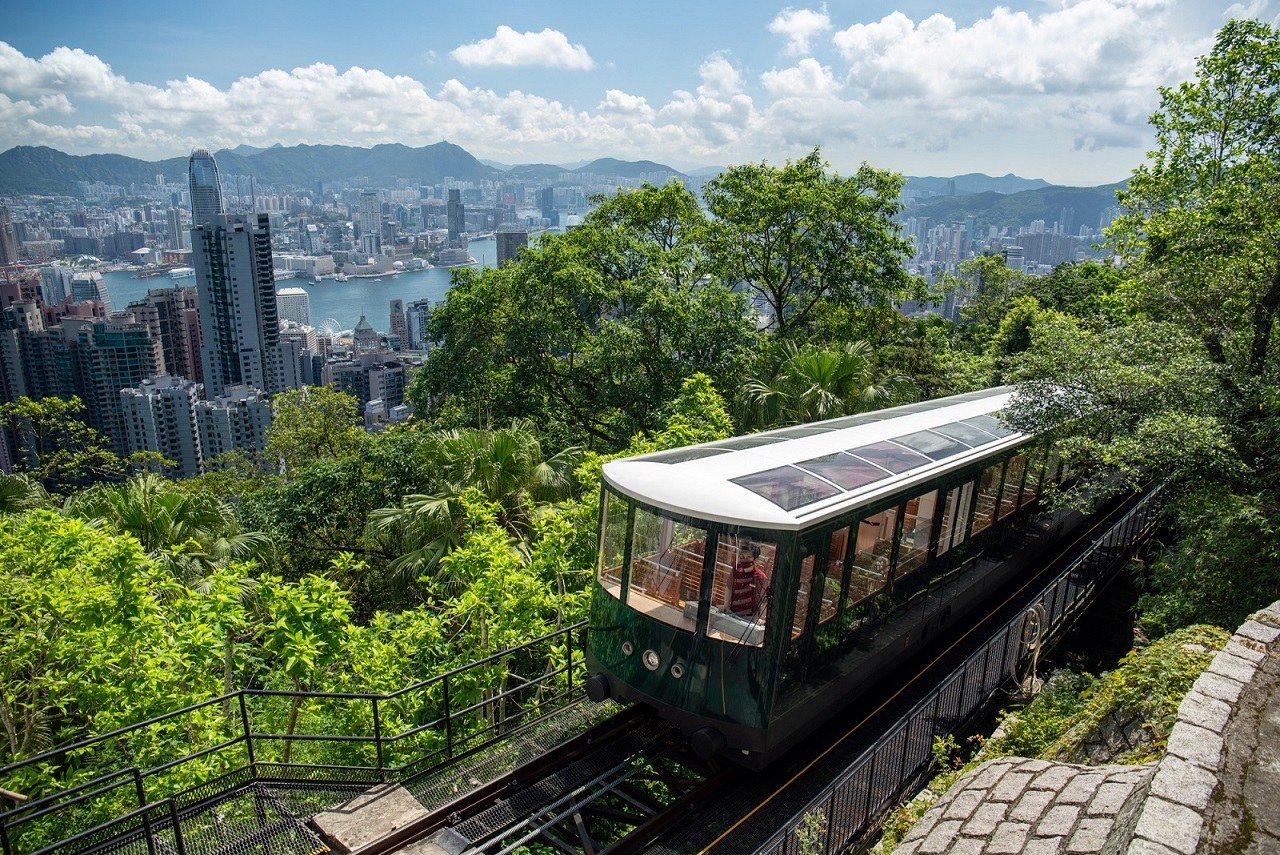
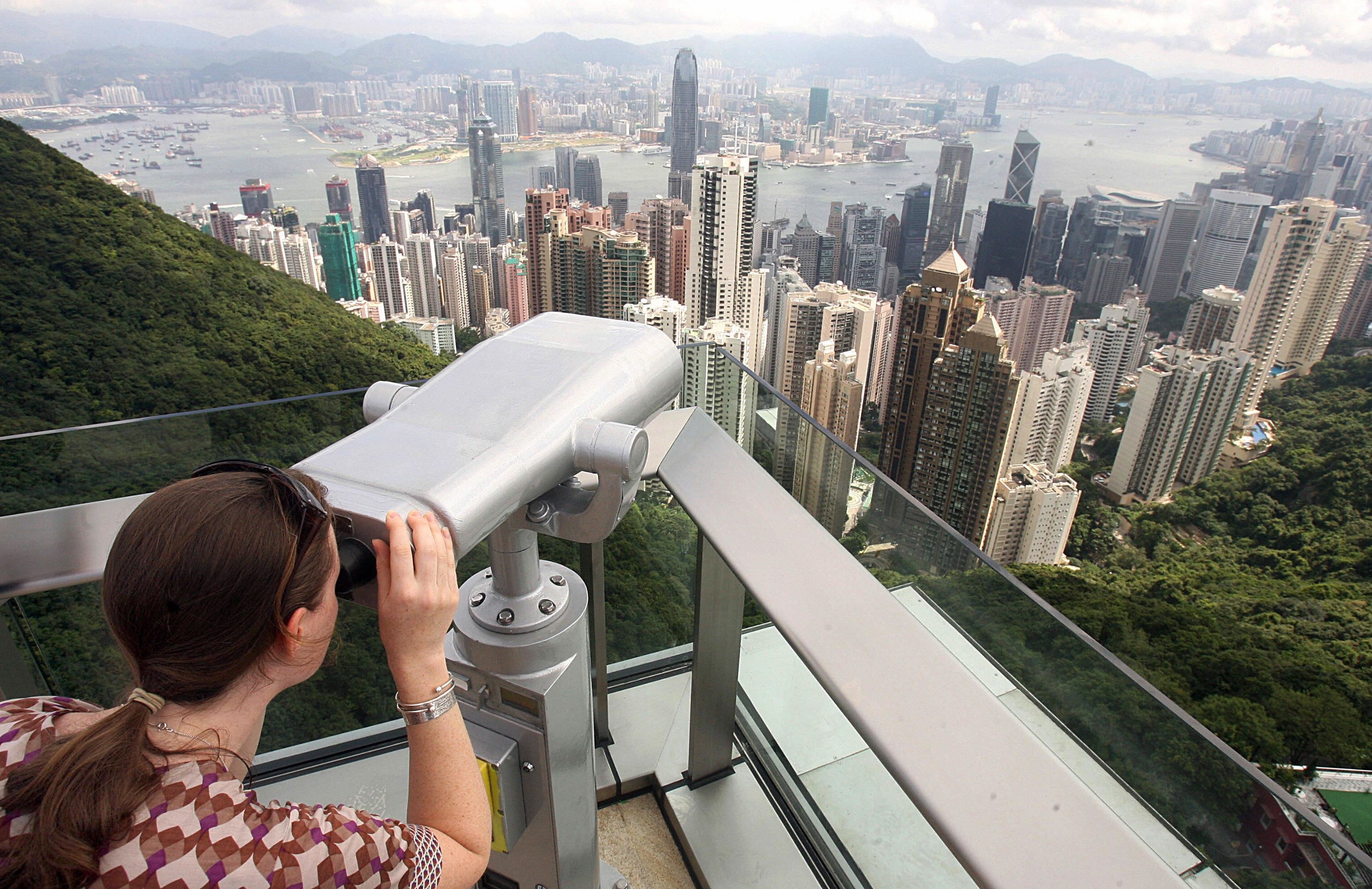
What you do Ride the legendary Peak Tram to Hong Kong's most iconic viewpoint and stand on Sky Terrace 428 as the city's skyline ignites at dusk — a panorama that defines the word 'bucket-list.'
What to expect The 125-year-old funicular climbs at a thrilling 27-degree angle through the Mid-Levels jungle before delivering you to Sky Terrace 428 — the highest viewing platform on the Peak at 428 metres. Victoria Harbour stretches below you in every direction, skyscrapers glinting gold and then neon. Linger for the full colour change from sunset to city-glow before descending to Central for dinner. The Peak Tower complex also houses upscale dining for a post-view sundowner.
Good to know Trams run daily 07:00–23:00; the last return tram is 23:30. Book online in advance to skip the physical ticket queue — walk-up waits can exceed 45 min at peak times. Central Star Ferry pier is a 10-min taxi from the Ocean Terminal (Harbour City), giving you maximum time ashore. Factor ~3 hours return.
Versus the ship tour Booking the priority online ticket lets you bypass queues and time your ascent for the golden hour, so you're on the terrace the moment the harbour lights flicker on — an unhurried, magazine-cover moment impossible on a group coach.
book direct with The Peak Tram (Hong Kong & Shanghai Hotels, official) → · the full guide →
What you do Board a traditional Chinese junk decked in teak and lanterns for a private sunset-to-nightfall voyage across Victoria Harbour, watching the world's largest permanent light show paint 44 skyscrapers in laser and neon.
What to expect Step aboard one of Aqua Luna's iconic red-sailed wooden junks at Tsim Sha Tsui for a private voyage timed to the 20-minute Symphony of Lights show (nightly 20:00). The crew serves Champagne and canapés as the Kowloon and Hong Kong Island skylines synchronise in coloured lights and lasers to a soundtrack. After the show, your junk glides close to the Star Ferry crossing for a final iconic photo. The harbour breeze and zero light pollution at water level make the spectacle vastly more immersive than any shoreside vantage.
Good to know Charter departs from Central Pier 9 or Tsim Sha Tsui Pier; confirm your pickup point at booking. All-aboard times at Hong Kong cruise terminals vary — Symphony of Lights starts at 20:00 sharp, so confirm your ship's overnight schedule before booking an evening charter. Minimum 2 hrs ashore after 19:30 recommended.
Versus the ship tour A private charter means your own deck, your own timeline, and Champagne chilling on the bow — no sharing with 200 strangers. Aqua Luna's scarlet-sailed junks are themselves a living piece of Hong Kong heritage.
What you do Journey to Lantau Island by ferry or cable car, climb 268 steps to the world's largest outdoor seated bronze Buddha, then glide through Tai O — Hong Kong's last stilt-house fishing village — on a sampan boat.
What to expect The Ngong Ping 360 gondola soars above emerald ridges before depositing you at the monastery village. At 34 metres, Tian Tan Buddha commands the hilltop with quiet authority — your guide shares the Buddhist symbolism while the incense smoke curls below. The drive to Tai O feels like stepping back a century: weathered stilts over tidal channels, dried seafood hung like garlands, and pink dolphins sometimes spotted on the sampan. A private seafood lunch in the village rounds out an extraordinary day.
Good to know Lantau is ~45 min by ferry from Central Pier 6 or via MTR to Tung Chung for the cable car. Book the Ngong Ping 360 cable car separately in advance at np360.com.hk (HKD 235 standard return adult). The full circuit takes 7–8 hours; confirm all-aboard time before booking. Closed-toe shoes recommended for the 268 Buddha steps.
Versus the ship tour A private English-speaking guide calibrates every stop to your pace — meditating at Po Lin Monastery without a crowd, tasting fresh shrimp paste at a family stall in Tai O, and riding the cable car with panoramic pods rather than rushing to catch a coach.
book direct with Hello! Hong Kong Private Tours (official) → · the full guide →
What you do Let a private expert guide lead you through Kowloon's layered soul — incense-wreathed Wong Tai Sin Temple, the Jade Market, and hidden dai pai dong alleyways for a chef-curated dim sum and roast goose tasting.
What to expect Begin at the ornate Wong Tai Sin Temple, where fortune-tellers have practised their craft for generations and the air is thick with incense sticks. Wind through the Jade Market's covered stalls where connoisseurs tap rings to test quality. Descend into a Sham Shui Po wet market for a sensory awakening of live seafood and exotic spices. The tour climaxes at a neighbourhood roast-goose specialist and a century-old yum cha teahouse where bamboo steamers arrive in towers — dishes chosen by your guide for genuine authenticity.
Good to know Tsim Sha Tsui (Kowloon) is a 5-min walk or free shuttle from Ocean Terminal — ideal for half-day forays. The tour operates rain or shine; bring a compact umbrella. Confirm dietary restrictions in advance. A half-day tour (4 hrs) leaves ample time for independent exploration of Harbour City or a Star Ferry crossing before all-aboard.
Versus the ship tour Stephen's tours are famously intimate — never more than a private group — and he customises the route around your interests, unlocking local history and flavours that a bus simply cannot access. His decades of local knowledge turn a street corner into a story.
book direct with Hong Kong With Stephen Private Tours (official) → · the full guide →
What you do Cross Victoria Harbour on the legendary Star Ferry, then walk the layered colonial heart of Central — the Court of Final Appeal, Pottinger Street, and Man Mo Temple — guided by a private expert historian.
What to expect The Star Ferry crossing itself is a rite of passage — the 7-minute ride with the skyline bearing down is one of travel's great theatrical moments. On Hong Kong Island, your guide leads you through the granite neo-classical buildings of Central, up the steep stone steps of Pottinger Street to Sheung Wan, and into the incense-blackened interior of Man Mo Temple (1847), one of Hong Kong's oldest. Stories of British governors, Chinese merchant dynasties, and wartime resistance unfold at every corner. The walk ends with a glass of chilled Champagne at a rooftop bar overlooking the harbour.
Good to know Star Ferry departs from Tsim Sha Tsui Pier every 6–10 minutes (HKD 3.40 lower deck — collector's experience). The heritage walk covers ~4 km on gentle gradients with rest stops. Allow 4–5 hours total. Wear comfortable walking shoes. This tour can pair beautifully with a Victoria Peak visit in the same day if you have an overnight call.
Versus the ship tour A private historian-guide unlocks layers invisible to the casual visitor — the bullet holes still visible from WWII, the opium merchants who built Man Mo Temple, the neo-classical facades hiding 21st-century courts. The pace is entirely yours.
book direct with Hello! Hong Kong Private Tours (official) → · the full guide →
What you do Glide across two iconic routes on an open-top double-decker — past the neon-lit temples of Wan Chai, the waterfront of Kowloon, and up through Victoria Peak Road — with hop-on, hop-off freedom and a live commentary.
What to expect The red double-deckers cover both Hong Kong Island and Kowloon on colour-coded routes, with 24 stops including the Star Ferry, Man Mo Temple, the Peak, and the Temple Street Night Market. Live English commentary brings context to every neighbourhood. The optional harbour junk cruise can be added for a water-level contrast. The night route (departs ~18:00) transforms the city into a neon dreamscape viewed from above — one of the most photogenic ways to experience Hong Kong after dark.
Good to know Tickets bought online (bigbustours.com) save ~15% vs. at the kiosk. The nearest stop to the Ocean Terminal cruise port is Tsim Sha Tsui (Star Ferry), a 5-min walk. Day tours start ~09:00; night tours ~18:00. A 1-day pass covers both; ideal if your ship has an evening departure. Download the Big Bus app for live bus tracking and stop audio guides.
Versus the ship tour Big Bus is the city's premium hop-on hop-off operator with air-conditioned lower decks and open-top upper decks — choose your pace and linger at any stop. The night route is the showpiece: neon-drenched streets seen from an open roof are pure cinematic Hong Kong.
book direct with Big Bus Tours Hong Kong (official) → · the full guide →
What you do Step inside the flame-red fortress that was the seat of the Ryukyu Kingdom for 500 years. A private expert guide unlocks the political intrigues, spiritual ceremonies, and architectural genius of a civilization unlike any other in Asia.
What to expect Ascend the stone-paved approach through successive vermilion gates, each marking a shift in rank and ritual. Inside the Seiden main hall, your guide decodes the Chinese-Japanese-Ryukyuan fusion of lacquerwork, textiles, and royal regalia. The panoramic view over Naha from the castle walls is breathtaking. Allow 2–3 hours for a genuinely immersive visit.
Good to know Shuri Castle is 30 min by taxi from Naha Cruise Terminal (approx. JPY 1,500–2,000). Book your private guide in advance through a licensed Okinawa guide association. Restoration of the Seiden is ongoing after the 2019 fire; outer structures and grounds are fully open. All-aboard is typically 5–6 pm — a morning start is ideal.
Versus the ship tour A private licensed Ryukyuan-history guide provides depth impossible in a group setting — including access to inner sanctuaries, ceremonial explanation of the Seiden throne room, and unhurried time in the garden courtyards before crowds arrive.
book direct with Shuri Castle (Official / Japan Heritage Site) → · the full guide →
What you do The Kerama Islands — a UNESCO-recognized marine sanctuary 35 km offshore — hold some of the clearest waters on Earth (Kerama Blue) and coral gardens teeming with manta rays, sea turtles, and tropical fish. A private boat charter puts you there in complete exclusivity.
What to expect Your charter departs early from Tomari Port, reaching the Kerama Shoto in under an hour. Anchor at Nishibama Beach or the outer reef at Zamami for snorkelling in visibility exceeding 30–40 metres. Hawksbill turtles are virtually guaranteed year-round. On deck between dives, cold Orion beer and a bento lunch from a local shokudo are de rigueur.
Good to know Tomari Port is a 10-minute taxi from Naha Cruise Terminal. Book the charter well in advance — summer months fill fast. Confirm your ship's all-aboard time carefully; the ferry schedule is fixed but a private charter offers full flexibility. Best April–October for calm seas.
Versus the ship tour A private charter means you choose your reefs, stay as long as you like, and avoid the snorkel-tour flotillas entirely. The boat crew are Kerama-born marine experts who know every coral head and turtle cleaning station by name.
book direct with Zamami Village Tourism Association (Official Kerama Operator) → · the full guide →
What you do The Okinawa Churaumi Aquarium is home to the world's largest acrylic panel and one of only a handful of places on Earth housing whale sharks in captivity. Pair it with the dramatic coral-limestone cliffs of Cape Manzamo for an iconic Okinawa half-day.
What to expect The drive north through central Okinawa passes sugarcane fields and traditional red-tiled villages. At Churaumi, the Kuroshio Tank's 7.5-metre-deep acrylic wall frames whale sharks, manta rays, and reef species in a single breathtaking panorama. Cape Manzamo's clifftop path delivers sweeping East China Sea views and the scent of subtropical wild herbs underfoot.
Good to know Allow 90 min drive each way from Naha. A full day ashore (8 am–5 pm) is essential. Hire a private English-speaking driver/guide through a licensed Okinawa guiding service. Pre-purchase aquarium tickets online to skip queues. Smart-casual attire; bring a hat and sunscreen.
Versus the ship tour Arriving with a private driver means you reach Churaumi at opening — whale shark feeding (11 am & 3 pm) without the tour-bus crowds — and linger at Cape Manzamo for the golden-hour light on those iconic elephant-trunk cliffs.
book direct with Ocean Expo Park – Churaumi Aquarium (Official) → · the full guide →
What you do Ryukyuan cuisine — shaped by 500 years of trade with China, Japan, and Southeast Asia — is one of Japan's most distinctive food cultures. A private chef-led market tour and hands-on cooking class in a traditional Naha machiya townhouse makes this a deeply personal encounter.
What to expect Begin at Makishi Public Market, Naha's vivid two-story food hall, where your guide navigates the surreal display of purple taro, Okinawan sea grapes (umi-budo), mozuku seaweed, and whole turmeric. Then move to a private kitchen to prepare champuru stir-fry, rafute braised pork belly, and umibudo with ponzu. Sit down to eat what you've made, paired with Okinawan awamori rice spirit.
Good to know Makishi Market is 15 min on foot or 5 min by taxi from Naha Cruise Terminal. Book your private culinary guide at least 2 weeks ahead. Dietary requirements accommodated with advance notice. Session runs approx. 3–4 hours, comfortably fitting a morning ashore.
Versus the ship tour This is an intimate, hands-on session — never more than 6 guests — led by a chef fluent in the medicinal philosophy behind Ryukyuan 'nuchi gusui' (food as medicine). You cook, you eat, you understand the culture.
book direct with Naha City Tsuboya & Makishi Public Market (with licensed private culinary guide) → · the full guide →
What you do Yachimun — Okinawan folk pottery — has been fired in the Tsuboya district of Naha for over 350 years. A private workshop with a master potter offers a hands-on, intimate window into one of Japan's most vibrant regional craft traditions.
What to expect The Tsuboya lane is a living craft district: kilns still smoke, studios open onto the street, and potters throw bowls for daily use. Your private session begins with a brief museum orientation on Ryukyuan glaze traditions (the lion-dog shisa, the bold cobalt-and-cream palette), then moves to a working studio. Throw your own piece on the wheel, glaze it, and arrange to have it shipped home after firing.
Good to know Tsuboya is a 20-minute walk or 5-minute taxi from Naha Cruise Terminal — one of the most walkable excursions from the port. Allow 2.5–3 hours. Wear clothes you don't mind getting clay on. Shipping your finished piece internationally typically costs JPY 2,000–5,000 depending on destination.
Versus the ship tour Working one-on-one (or in a pair) with a fourth-generation Tsuboya potter — not a demonstration, but genuine hands-on instruction — and walking the cobbled kiln lane where craftspeople have worked for centuries is an irreplaceable cultural memory.
What you do Nakagusuku Castle, a hauntingly beautiful UNESCO World Heritage ruin perched above the Pacific, and the vast Gyokusendo stalactite cave system at Okinawa World together reveal 6,000 years of island history in a single magnificent day.
What to expect Begin at Nakagusuku Castle at sunrise — its coral-limestone ramparts glowing orange, the Pacific shimmering below on both sides of the peninsula. Your guide reads the stones: the arrow slits, the sacred utaki grove, the unfinished wall that marks where the kingdom fell. After lunch in a local soba shop, descend into Gyokusendo — 890 metres of illuminated stalactites and underground rivers, the longest cave system in East Asia. Emerge into Okinawa World's traditional village for a private habu-snake show and awamori tasting.
Good to know Both sites are 30–45 min drive from Naha Cruise Terminal. A full day ashore is required; depart no later than 8:30 am. The cave maintains a cool 21°C year-round — bring a light layer. Pre-book your private guide to ensure English-language expertise at both sites.
Versus the ship tour A private guide connects the dots between prehistoric cave dwellers, the Ryukyuan lords who built these stone walls, and the living craftspeople at Okinawa World — turning what could be a tick-box tour into a coherent, moving narrative.
What you do Glide over Kabira Bay's legendary coral gardens in a glass-bottom boat, then snorkel its protected turquoise shallows — home to black pearls and some of Japan's most biodiverse reef life. The bay's swimming ban makes this boat-only access genuinely exclusive.
What to expect You board a low-slung glass-bottom boat and drift over electric-blue water above brain corals, sea turtles, and schools of tropical fish. The bay is legally off-limits to swimmers, so this vessel is your only window into its underwater world. Opt for the snorkel extension at a nearby cove for a hands-on reef encounter. The whole experience unfolds against a backdrop of jungle-draped hills and pearl farm buoys that have graced this bay for centuries.
Good to know Kabira Bay is a 30-min taxi ride from the cruise pier (approx. JPY 3,000 each way). Book the private snorkel slot directly by email or phone at least 48 hours in advance. Confirm your all-aboard time and allow 90 minutes for the return journey.
Versus the ship tour Small, locally-run boats carry just 6–8 guests at a time, giving you unhurried time over the coral with a knowledgeable Okinawan guide — a pace and intimacy impossible on a larger group outing.
What you do A speedboat whisks you to Hamajima — 'Phantom Island' — a sandbar that vanishes with the tide, encircled by coral so vivid it barely looks real. Snorkel its pristine reef with a certified guide in a group of just 8–10.
What to expect Your speedboat skims 20 minutes across the East China Sea to a luminous sandbar that appears only at low tide — an almost surreal arrival. Fins on, you enter water so clear that visibility stretches beyond 30 metres, with coral towers rising from a white sandy floor. Your guide points out nudibranchs and resident sea turtles before you surface to a boxed Okinawan lunch on the sand. The return journey hugs the island coastline for panoramic views of Ishigaki's volcanic peaks.
Good to know Departs from Aza Misakicho pier, a 10-min walk from the cruise terminal. Tour duration is approximately 3.5 hours — confirm your sailing time and build in a comfortable buffer. Wetsuit rental available; reef-safe sunscreen mandatory.
Versus the ship tour Strictly capped at 10 guests per boat, with a bilingual marine biologist on board who names every species — manta rays, Nemo clownfish, hawksbill turtles — turning the reef into a living classroom rather than a spectacle.
book direct with Ishigaki Island Snorkeling Tours (サンゴのいのち) → · the full guide →
What you do Paddle a private kayak through the largest mangrove forest in Japan on neighbouring Iriomote Island, then trek into primary jungle to stand beneath the thundering Pinaisara Falls — Okinawa's tallest. Truly bucket-list wilderness, 30 minutes by ferry.
What to expect The Uehara ferry delivers you to Japan's last great wilderness island in just 40 minutes. You slip into sit-on-top kayaks and glide silently through cathedral mangroves, roots arching into jade-green water alive with fiddler crabs and kingfishers. Pulling ashore, you lace up for a jungle trail that winds past strangler figs to the base of Pinaisara Falls — a 55-metre curtain of white water in a hidden amphitheatre. Lunch is a packed bento on the riverbank, serenaded by subtropical birdsong.
Good to know Ishigaki–Iriomote ferry (Anei Kanko or Yaeyama Kanko Ferry) departs Ishigaki Port; adult return approx. JPY 4,000. Full-day duration means an early departure is essential — verify the first ferry and your all-aboard time carefully. Confirm availability directly with the operator at least one week ahead.
Versus the ship tour Guides here are licensed Iriomote naturalists with deep expertise in the island's endemic Iriomote cat habitat, rare orchids, and tidal ecosystem — a level of ecological storytelling that elevates this beyond any standard nature tour.
book direct with Iriomote Nature Guide Service (西表島ネイチャーガイドサービス) → · the full guide →
What you do Step back 300 years on coral-walled Taketomi Island — 10 minutes by ferry — riding a traditional water-buffalo rickshaw through lanes of bougainvillea and star-sand beaches, then sit with a master weaver at a Minsa textile atelier. A living time capsule.
What to expect The ferry from Ishigaki takes just 10 minutes, depositing you on an island where the loudest sound is the clip of buffalo hooves on coral-stone paths. Your driver-singer narrates in lilting Japanese and English, pausing at the lookout tower for sweeping views over Kondoi Beach and its famous star-shaped sand. Afterwards, at a heritage textile studio, an Okinawan artisan guides your hands on a backstrap loom to create an inch of authentic Minsa fabric — yours to keep. The return ferry leaves plenty of time before all-aboard.
Good to know Yaeyama Kanko Ferry or Anei Kanko serve Taketomi; adult return approx. JPY 1,340. Rickshaw tours run continuously 9 am–5 pm — no advance booking required, but weaving workshops should be reserved 48 hours ahead. Flat terrain, suitable for all mobility levels.
Versus the ship tour The island has no cars and fewer than 350 residents; the rickshaw driver sings traditional Yaeyama folk songs live as you roll through a UNESCO-nominated village — an intimate, acoustically unforgettable moment.
book direct with Taketomi Suikyu (竹富島水牛車観光) → · the full guide →
What you do A dedicated local expert drives you in a private vehicle to Tamatorizaki Observatory, Yonehara Reef, Hirakubo Lighthouse, and Miyara Dunchi samurai residence — the island's greatest hits on your schedule, at your pace, with no crowds.
What to expect You're collected at the pier and immediately whisked north along the coast road to Tamatorizaki, where coral peninsulas fan out below a flower-lined hilltop — a view that defines Ishigaki. Yonehara Beach follows: wade the shallows above a reef that rivals any in Okinawa without lifting a fin. The car swings to the remote Hirakubo cape, where a candy-striped lighthouse overlooks open Pacific and grazing water buffalo. The afternoon brings Miyara Dunchi, a 19th-century samurai garden — the only Ryukyuan aristocratic residence still standing in the Yaeyamas.
Good to know Book directly via GoWithGuide at least 5–7 days ahead; guide profiles show languages and specialisms. Confirm all-aboard and work backwards — most full-day itineraries run 8 hours. The guide will time the return to the pier with a comfortable margin.
Versus the ship tour Your guide is a vetted, English-fluent Ishigaki local who customises every stop on the fly — lingering at the coral-fringed Yonehara tide pools if you love marine life, or diverting to a family-run Orion brewery if you prefer craft beer and conversation.
book direct with GoWithGuide Ishigaki Private Tours → · the full guide →
What you do Paddle a sea kayak into Ishigaki's celebrated Blue Cave, where refracted sunlight turns the water an electric cobalt, then snorkel a sheltered outer reef teeming with Moorish idols and parrotfish — all within a 3-hour small-group adventure from the pier.
What to expect A short boat transfer delivers your group to the cave entrance, where you transition to nimble kayaks and glide single-file into a vaulted sea grotto. Sunlight refracts through the underwater arch, flooding the cavern with an otherworldly sapphire glow that reflects on the limestone ceiling above. Outside, you swap paddle for mask and snorkel a coral garden populated by clouds of sergeant-major fish and the occasional curious octopus. Your bilingual instructor ensures safe cave entry and exits, and the whole adventure wraps in time for a leisurely lunch ashore.
Good to know Meeting point is a 10-min taxi from the cruise pier. Morning departures (9–10 am) catch the optimal light angle inside the cave — book the earliest slot. Wetsuits and reef-safe sunscreen provided. Not suitable for non-swimmers; moderate kayak fitness required.
Versus the ship tour Groups are capped at 8 guests and guided by a certified cave-dive instructor who positions each kayak for the perfect light window — the electric-blue interior glows brightest at mid-morning, and only a small boat can time the entry precisely.
book direct with Ishigaki Blue Cave Diving & Snorkeling (石垣島ブルーケイブ) → · the full guide →
We don't hold nightly rates for Okinawa (Naha), Japan yet, so the stay and the car are links rather than numbers. The flight is priced live.
Before you sail · near Hong Kong
Fly in at least a day early — every seasoned cruiser does, so a delay never costs you the ship. This is what is worth that day within reach of the port.
The same trip, elevated
The same gateway on a more luxurious line — lead-in fare per person, same fare as booking direct.