Your cruise
Spectrum of the Seas · 9-night Asia round trip from Hong Kong
Jan 3 – Jan 12 · 9 nights ·
Day 1 Hong Kong (board) · Day 2 at sea · Day 3 Okinawa (Naha) · Day 4 at sea · Day 5 Osaka (Kyoto and Nara) · Day 6 Kochi · Day 7 Kagoshima · Day 8–9 at sea · Day 10 Hong Kong (step off)
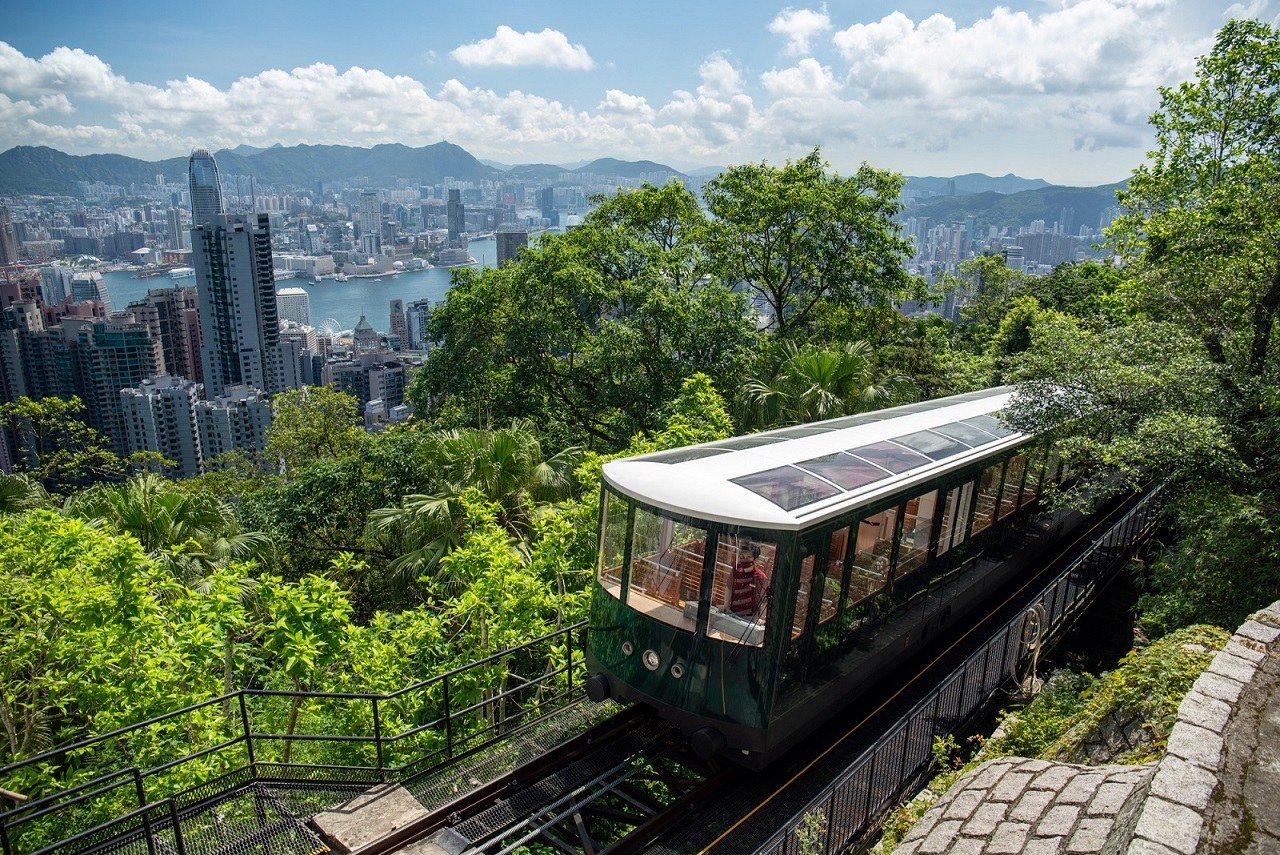
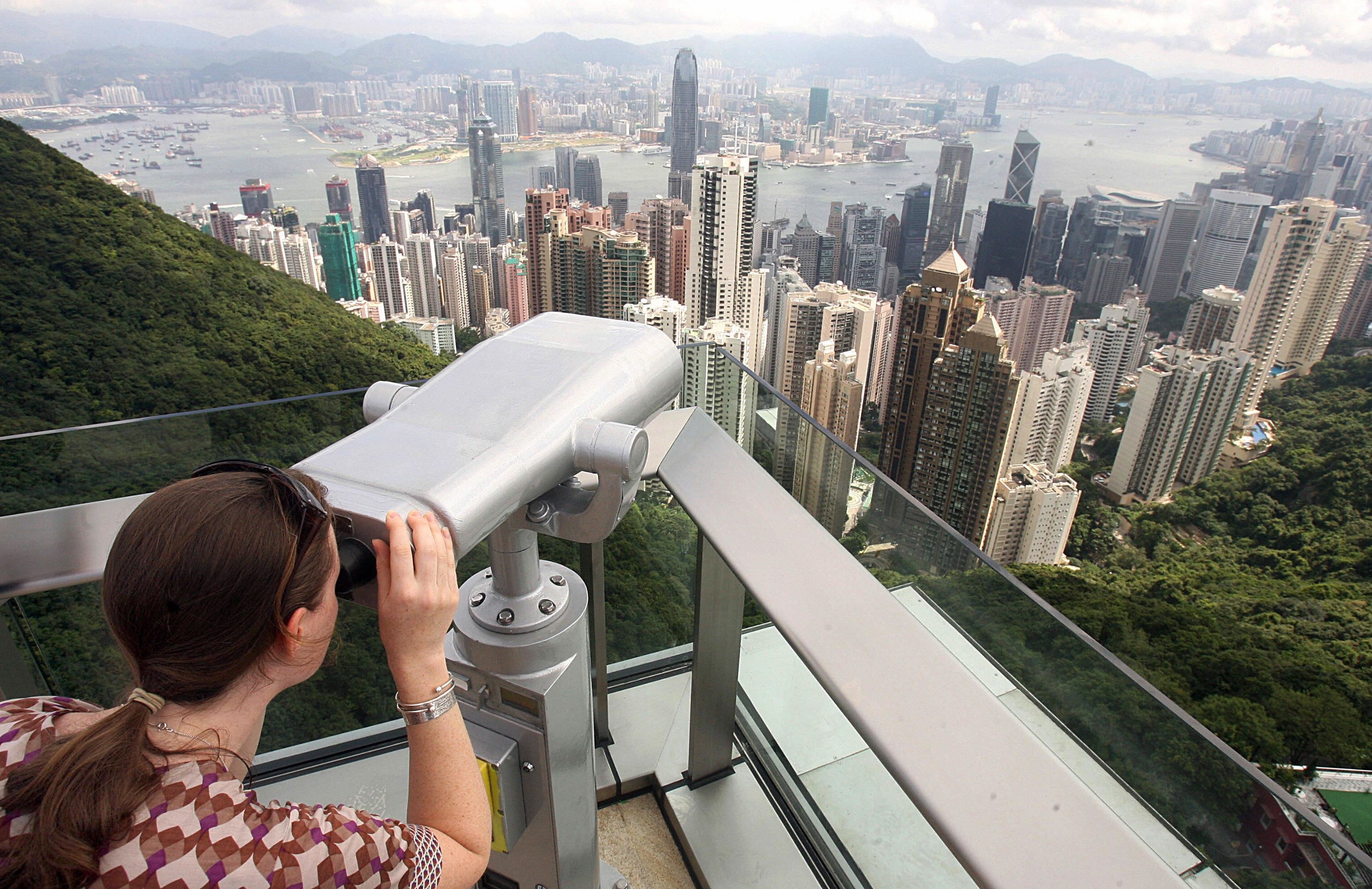
What you do Ride the legendary Peak Tram to Hong Kong's most iconic viewpoint and stand on Sky Terrace 428 as the city's skyline ignites at dusk — a panorama that defines the word 'bucket-list.'
What to expect The 125-year-old funicular climbs at a thrilling 27-degree angle through the Mid-Levels jungle before delivering you to Sky Terrace 428 — the highest viewing platform on the Peak at 428 metres. Victoria Harbour stretches below you in every direction, skyscrapers glinting gold and then neon. Linger for the full colour change from sunset to city-glow before descending to Central for dinner. The Peak Tower complex also houses upscale dining for a post-view sundowner.
Good to know Trams run daily 07:00–23:00; the last return tram is 23:30. Book online in advance to skip the physical ticket queue — walk-up waits can exceed 45 min at peak times. Central Star Ferry pier is a 10-min taxi from the Ocean Terminal (Harbour City), giving you maximum time ashore. Factor ~3 hours return.
Versus the ship tour Booking the priority online ticket lets you bypass queues and time your ascent for the golden hour, so you're on the terrace the moment the harbour lights flicker on — an unhurried, magazine-cover moment impossible on a group coach.
book direct with The Peak Tram (Hong Kong & Shanghai Hotels, official) → · the full guide →
What you do Board a traditional Chinese junk decked in teak and lanterns for a private sunset-to-nightfall voyage across Victoria Harbour, watching the world's largest permanent light show paint 44 skyscrapers in laser and neon.
What to expect Step aboard one of Aqua Luna's iconic red-sailed wooden junks at Tsim Sha Tsui for a private voyage timed to the 20-minute Symphony of Lights show (nightly 20:00). The crew serves Champagne and canapés as the Kowloon and Hong Kong Island skylines synchronise in coloured lights and lasers to a soundtrack. After the show, your junk glides close to the Star Ferry crossing for a final iconic photo. The harbour breeze and zero light pollution at water level make the spectacle vastly more immersive than any shoreside vantage.
Good to know Charter departs from Central Pier 9 or Tsim Sha Tsui Pier; confirm your pickup point at booking. All-aboard times at Hong Kong cruise terminals vary — Symphony of Lights starts at 20:00 sharp, so confirm your ship's overnight schedule before booking an evening charter. Minimum 2 hrs ashore after 19:30 recommended.
Versus the ship tour A private charter means your own deck, your own timeline, and Champagne chilling on the bow — no sharing with 200 strangers. Aqua Luna's scarlet-sailed junks are themselves a living piece of Hong Kong heritage.
What you do Journey to Lantau Island by ferry or cable car, climb 268 steps to the world's largest outdoor seated bronze Buddha, then glide through Tai O — Hong Kong's last stilt-house fishing village — on a sampan boat.
What to expect The Ngong Ping 360 gondola soars above emerald ridges before depositing you at the monastery village. At 34 metres, Tian Tan Buddha commands the hilltop with quiet authority — your guide shares the Buddhist symbolism while the incense smoke curls below. The drive to Tai O feels like stepping back a century: weathered stilts over tidal channels, dried seafood hung like garlands, and pink dolphins sometimes spotted on the sampan. A private seafood lunch in the village rounds out an extraordinary day.
Good to know Lantau is ~45 min by ferry from Central Pier 6 or via MTR to Tung Chung for the cable car. Book the Ngong Ping 360 cable car separately in advance at np360.com.hk (HKD 235 standard return adult). The full circuit takes 7–8 hours; confirm all-aboard time before booking. Closed-toe shoes recommended for the 268 Buddha steps.
Versus the ship tour A private English-speaking guide calibrates every stop to your pace — meditating at Po Lin Monastery without a crowd, tasting fresh shrimp paste at a family stall in Tai O, and riding the cable car with panoramic pods rather than rushing to catch a coach.
book direct with Hello! Hong Kong Private Tours (official) → · the full guide →
What you do Let a private expert guide lead you through Kowloon's layered soul — incense-wreathed Wong Tai Sin Temple, the Jade Market, and hidden dai pai dong alleyways for a chef-curated dim sum and roast goose tasting.
What to expect Begin at the ornate Wong Tai Sin Temple, where fortune-tellers have practised their craft for generations and the air is thick with incense sticks. Wind through the Jade Market's covered stalls where connoisseurs tap rings to test quality. Descend into a Sham Shui Po wet market for a sensory awakening of live seafood and exotic spices. The tour climaxes at a neighbourhood roast-goose specialist and a century-old yum cha teahouse where bamboo steamers arrive in towers — dishes chosen by your guide for genuine authenticity.
Good to know Tsim Sha Tsui (Kowloon) is a 5-min walk or free shuttle from Ocean Terminal — ideal for half-day forays. The tour operates rain or shine; bring a compact umbrella. Confirm dietary restrictions in advance. A half-day tour (4 hrs) leaves ample time for independent exploration of Harbour City or a Star Ferry crossing before all-aboard.
Versus the ship tour Stephen's tours are famously intimate — never more than a private group — and he customises the route around your interests, unlocking local history and flavours that a bus simply cannot access. His decades of local knowledge turn a street corner into a story.
book direct with Hong Kong With Stephen Private Tours (official) → · the full guide →
What you do Cross Victoria Harbour on the legendary Star Ferry, then walk the layered colonial heart of Central — the Court of Final Appeal, Pottinger Street, and Man Mo Temple — guided by a private expert historian.
What to expect The Star Ferry crossing itself is a rite of passage — the 7-minute ride with the skyline bearing down is one of travel's great theatrical moments. On Hong Kong Island, your guide leads you through the granite neo-classical buildings of Central, up the steep stone steps of Pottinger Street to Sheung Wan, and into the incense-blackened interior of Man Mo Temple (1847), one of Hong Kong's oldest. Stories of British governors, Chinese merchant dynasties, and wartime resistance unfold at every corner. The walk ends with a glass of chilled Champagne at a rooftop bar overlooking the harbour.
Good to know Star Ferry departs from Tsim Sha Tsui Pier every 6–10 minutes (HKD 3.40 lower deck — collector's experience). The heritage walk covers ~4 km on gentle gradients with rest stops. Allow 4–5 hours total. Wear comfortable walking shoes. This tour can pair beautifully with a Victoria Peak visit in the same day if you have an overnight call.
Versus the ship tour A private historian-guide unlocks layers invisible to the casual visitor — the bullet holes still visible from WWII, the opium merchants who built Man Mo Temple, the neo-classical facades hiding 21st-century courts. The pace is entirely yours.
book direct with Hello! Hong Kong Private Tours (official) → · the full guide →
What you do Glide across two iconic routes on an open-top double-decker — past the neon-lit temples of Wan Chai, the waterfront of Kowloon, and up through Victoria Peak Road — with hop-on, hop-off freedom and a live commentary.
What to expect The red double-deckers cover both Hong Kong Island and Kowloon on colour-coded routes, with 24 stops including the Star Ferry, Man Mo Temple, the Peak, and the Temple Street Night Market. Live English commentary brings context to every neighbourhood. The optional harbour junk cruise can be added for a water-level contrast. The night route (departs ~18:00) transforms the city into a neon dreamscape viewed from above — one of the most photogenic ways to experience Hong Kong after dark.
Good to know Tickets bought online (bigbustours.com) save ~15% vs. at the kiosk. The nearest stop to the Ocean Terminal cruise port is Tsim Sha Tsui (Star Ferry), a 5-min walk. Day tours start ~09:00; night tours ~18:00. A 1-day pass covers both; ideal if your ship has an evening departure. Download the Big Bus app for live bus tracking and stop audio guides.
Versus the ship tour Big Bus is the city's premium hop-on hop-off operator with air-conditioned lower decks and open-top upper decks — choose your pace and linger at any stop. The night route is the showpiece: neon-drenched streets seen from an open roof are pure cinematic Hong Kong.
book direct with Big Bus Tours Hong Kong (official) → · the full guide →
What you do Step inside the flame-red fortress that was the seat of the Ryukyu Kingdom for 500 years. A private expert guide unlocks the political intrigues, spiritual ceremonies, and architectural genius of a civilization unlike any other in Asia.
What to expect Ascend the stone-paved approach through successive vermilion gates, each marking a shift in rank and ritual. Inside the Seiden main hall, your guide decodes the Chinese-Japanese-Ryukyuan fusion of lacquerwork, textiles, and royal regalia. The panoramic view over Naha from the castle walls is breathtaking. Allow 2–3 hours for a genuinely immersive visit.
Good to know Shuri Castle is 30 min by taxi from Naha Cruise Terminal (approx. JPY 1,500–2,000). Book your private guide in advance through a licensed Okinawa guide association. Restoration of the Seiden is ongoing after the 2019 fire; outer structures and grounds are fully open. All-aboard is typically 5–6 pm — a morning start is ideal.
Versus the ship tour A private licensed Ryukyuan-history guide provides depth impossible in a group setting — including access to inner sanctuaries, ceremonial explanation of the Seiden throne room, and unhurried time in the garden courtyards before crowds arrive.
book direct with Shuri Castle (Official / Japan Heritage Site) → · the full guide →
What you do The Kerama Islands — a UNESCO-recognized marine sanctuary 35 km offshore — hold some of the clearest waters on Earth (Kerama Blue) and coral gardens teeming with manta rays, sea turtles, and tropical fish. A private boat charter puts you there in complete exclusivity.
What to expect Your charter departs early from Tomari Port, reaching the Kerama Shoto in under an hour. Anchor at Nishibama Beach or the outer reef at Zamami for snorkelling in visibility exceeding 30–40 metres. Hawksbill turtles are virtually guaranteed year-round. On deck between dives, cold Orion beer and a bento lunch from a local shokudo are de rigueur.
Good to know Tomari Port is a 10-minute taxi from Naha Cruise Terminal. Book the charter well in advance — summer months fill fast. Confirm your ship's all-aboard time carefully; the ferry schedule is fixed but a private charter offers full flexibility. Best April–October for calm seas.
Versus the ship tour A private charter means you choose your reefs, stay as long as you like, and avoid the snorkel-tour flotillas entirely. The boat crew are Kerama-born marine experts who know every coral head and turtle cleaning station by name.
book direct with Zamami Village Tourism Association (Official Kerama Operator) → · the full guide →
What you do The Okinawa Churaumi Aquarium is home to the world's largest acrylic panel and one of only a handful of places on Earth housing whale sharks in captivity. Pair it with the dramatic coral-limestone cliffs of Cape Manzamo for an iconic Okinawa half-day.
What to expect The drive north through central Okinawa passes sugarcane fields and traditional red-tiled villages. At Churaumi, the Kuroshio Tank's 7.5-metre-deep acrylic wall frames whale sharks, manta rays, and reef species in a single breathtaking panorama. Cape Manzamo's clifftop path delivers sweeping East China Sea views and the scent of subtropical wild herbs underfoot.
Good to know Allow 90 min drive each way from Naha. A full day ashore (8 am–5 pm) is essential. Hire a private English-speaking driver/guide through a licensed Okinawa guiding service. Pre-purchase aquarium tickets online to skip queues. Smart-casual attire; bring a hat and sunscreen.
Versus the ship tour Arriving with a private driver means you reach Churaumi at opening — whale shark feeding (11 am & 3 pm) without the tour-bus crowds — and linger at Cape Manzamo for the golden-hour light on those iconic elephant-trunk cliffs.
book direct with Ocean Expo Park – Churaumi Aquarium (Official) → · the full guide →
What you do Ryukyuan cuisine — shaped by 500 years of trade with China, Japan, and Southeast Asia — is one of Japan's most distinctive food cultures. A private chef-led market tour and hands-on cooking class in a traditional Naha machiya townhouse makes this a deeply personal encounter.
What to expect Begin at Makishi Public Market, Naha's vivid two-story food hall, where your guide navigates the surreal display of purple taro, Okinawan sea grapes (umi-budo), mozuku seaweed, and whole turmeric. Then move to a private kitchen to prepare champuru stir-fry, rafute braised pork belly, and umibudo with ponzu. Sit down to eat what you've made, paired with Okinawan awamori rice spirit.
Good to know Makishi Market is 15 min on foot or 5 min by taxi from Naha Cruise Terminal. Book your private culinary guide at least 2 weeks ahead. Dietary requirements accommodated with advance notice. Session runs approx. 3–4 hours, comfortably fitting a morning ashore.
Versus the ship tour This is an intimate, hands-on session — never more than 6 guests — led by a chef fluent in the medicinal philosophy behind Ryukyuan 'nuchi gusui' (food as medicine). You cook, you eat, you understand the culture.
book direct with Naha City Tsuboya & Makishi Public Market (with licensed private culinary guide) → · the full guide →
What you do Yachimun — Okinawan folk pottery — has been fired in the Tsuboya district of Naha for over 350 years. A private workshop with a master potter offers a hands-on, intimate window into one of Japan's most vibrant regional craft traditions.
What to expect The Tsuboya lane is a living craft district: kilns still smoke, studios open onto the street, and potters throw bowls for daily use. Your private session begins with a brief museum orientation on Ryukyuan glaze traditions (the lion-dog shisa, the bold cobalt-and-cream palette), then moves to a working studio. Throw your own piece on the wheel, glaze it, and arrange to have it shipped home after firing.
Good to know Tsuboya is a 20-minute walk or 5-minute taxi from Naha Cruise Terminal — one of the most walkable excursions from the port. Allow 2.5–3 hours. Wear clothes you don't mind getting clay on. Shipping your finished piece internationally typically costs JPY 2,000–5,000 depending on destination.
Versus the ship tour Working one-on-one (or in a pair) with a fourth-generation Tsuboya potter — not a demonstration, but genuine hands-on instruction — and walking the cobbled kiln lane where craftspeople have worked for centuries is an irreplaceable cultural memory.
What you do Nakagusuku Castle, a hauntingly beautiful UNESCO World Heritage ruin perched above the Pacific, and the vast Gyokusendo stalactite cave system at Okinawa World together reveal 6,000 years of island history in a single magnificent day.
What to expect Begin at Nakagusuku Castle at sunrise — its coral-limestone ramparts glowing orange, the Pacific shimmering below on both sides of the peninsula. Your guide reads the stones: the arrow slits, the sacred utaki grove, the unfinished wall that marks where the kingdom fell. After lunch in a local soba shop, descend into Gyokusendo — 890 metres of illuminated stalactites and underground rivers, the longest cave system in East Asia. Emerge into Okinawa World's traditional village for a private habu-snake show and awamori tasting.
Good to know Both sites are 30–45 min drive from Naha Cruise Terminal. A full day ashore is required; depart no later than 8:30 am. The cave maintains a cool 21°C year-round — bring a light layer. Pre-book your private guide to ensure English-language expertise at both sites.
Versus the ship tour A private guide connects the dots between prehistoric cave dwellers, the Ryukyuan lords who built these stone walls, and the living craftspeople at Okinawa World — turning what could be a tick-box tour into a coherent, moving narrative.
What you do Walk the sacred mountain of 10,000 vermilion torii gates before the crowds arrive. A private licensed guide leads you through misty forest shrines at the most ethereal hour of the day — a truly bucket-list Kyoto moment.
What to expect Your private, government-licensed guide meets you dockside and transfers you by private vehicle to Fushimi Inari Taisha, arriving as lanterns still glow in the pre-dawn light. You ascend the Senbon Torii tunnels at your own pace, pausing at hidden sub-shrines and fox deity altars draped in offerings. The guide weaves Shinto cosmology and personal storytelling into every step. You descend refreshed with time to spare for the rest of Kyoto.
Good to know Pre-book well in advance for early-morning slots. Allow 3–4 hours for Fushimi Inari alone. Confirm your all-aboard time and request a return window when booking — the operator is experienced with cruise schedules.
Versus the ship tour A private guide tailors the pace entirely to your group, departing early enough from Osaka port to reach Fushimi Inari before mass tourism descends — an access and atmosphere that a large coach simply cannot replicate.
book direct with Japan Shore Excursions → · the full guide →
What you do Glide through Kyoto's iconic bamboo cathedral and stroll the UNESCO-listed Zen garden of Tenryu-ji on a fully private tour. The rustling canopy, koi ponds and mountain-framed raked gravel make this one of Japan's most sublime sensory experiences.
What to expect Door-to-door private transfer from Osaka cruise port delivers you to Arashiyama as the morning mist clings to the bamboo. You weave through the grove's emerald tunnels, then enter Tenryu-ji — a 14th-century Zen masterpiece whose 'borrowed scenery' garden frames the Arashiyama mountains. Your guide explains the garden's dry-landscape symbolism before you stroll along the Oi River at leisure. Optional rickshaw ride can be arranged for an extra layer of indulgence.
Good to know Rickshaw rides fill quickly; ask your operator to pre-arrange. The grove is a 75-minute drive from Osaka port — plan departure by 8:00 am for a relaxed morning. Tenryu-ji opens at 8:30 am.
Versus the ship tour A private vehicle and guide mean you arrive at the grove before tour buses, walk at a contemplative pace, and linger in Tenryu-ji's garden without a schedule. The guide's knowledge of Rinzai Zen philosophy transforms a walk into a meditation.
book direct with Japan Shore Excursions → · the full guide →
What you do Command the full sweep of Japan's ancient capitals in a single day: Golden Pavilion, Bamboo Grove, Nara's sacred deer park, and Todai-ji's colossal Buddha — all on your own private itinerary with a licensed expert guide.
What to expect Your guide meets you at the port and whisks you north to Kyoto, where Kinkakuji's gold-leaf reflection shimmers on the mirror pond. The bamboo grove and Fushimi Inari are woven in based on your priorities, before the route sweeps east to Nara. In Nara Park, wild Sika deer bow for rice crackers against the backdrop of Todai-ji, home to Japan's largest bronze Buddha. The guide narrates 1,300 years of capital history with the ease of a storyteller, not a lecturer.
Good to know Confirm all-aboard time upfront — the operator is cruise-savvy and will build a return buffer. All major entry tickets (Kinkakuji, Tenryu-ji, Todai-ji) are typically included; verify at booking. Group size capped at 6 for genuine privacy.
Versus the ship tour Fully customisable itinerary, private vehicle, and a single expert guide who knows your preferences before you step ashore. You choose the sites, the sequence, and the pace — no fixed stops, no strangers, no rush.
book direct with GetYourGuide (Kyoto/Osaka: Kyoto and Nara Customized Private Guided Tour) → · the full guide →
What you do Spend an immersive half-day in Japan's first permanent capital — feeding sacred free-roaming deer, entering the world's largest wooden building, and uncovering 8th-century imperial history with a government-licensed expert guide.
What to expect A licensed guide meets you with private transport and introduces you to Nara's 1,200 wild Sika deer — designated national treasures — who roam freely through parkland and even bow for shika senbei crackers. Inside Todai-ji's Great Buddha Hall, you stand beneath the 15-metre bronze Daibutsu, one of the most awe-inspiring interiors in Asia. The guide contextualises Nara as Japan's first Buddhist capital, tracing the political intrigue behind each monument. A walk through lantern-hung Kasuga Taisha shrine closes the experience in quiet reverence.
Good to know Osaka to Nara is approx. 45 minutes by private car. Book 6-hour window to allow unhurried exploration. Deer crackers sold at park entrances (approx. JPY 200). Wear comfortable shoes — the park path from gate to Todai-ji is 1 km of gentle gravel.
Versus the ship tour Government-licensed guides carry the deepest accreditation in Japan's tourism system. This private format lets you linger at Kasuga Taisha's lantern-lined pathways or Isuien Garden without a clock ticking — a depth of access large groups simply cannot achieve.
book direct with Viator (Nara 6hr Private Tour with Government-Licensed Guide) → · the full guide →
What you do Two of Kyoto's most transcendent UNESCO sites back-to-back on a private tour: the gold-leafed temple floating on its mirror lake, and the world's most contemplated Zen rock garden — 15 stones, infinite interpretation.
What to expect Your private driver delivers you to Kinkakuji as morning light ignites the gold-leaf exterior above its still pond — one of the world's great visual moments. Your guide explains how Shogun Ashikaga Yoshimitsu commissioned this paradise as a retirement villa in 1397. The journey continues to Ryoan-ji, where you sit before 15 rocks arranged in raked white gravel, and your guide invites you to find all 15 from any single vantage point (you cannot). The profound silence of the karesansui garden is deeply restorative before returning to port.
Good to know Kinkakuji opens at 9:00 am — arrive early to beat school groups. Both sites are in northwest Kyoto and pair efficiently. Total time from Osaka port: allow 6–7 hours. Request a bilingual guide specialising in Zen Buddhism for maximum depth.
Versus the ship tour A private expert guide gives each site the dedicated time it deserves, explaining the Muromachi-era shogun's vision for Kinkakuji and the unresolved mystery of Ryoan-ji's rock arrangement — conversations impossible in a 40-person coach.
What you do Explore Kyoto's 400-year-old 'Kitchen of Japan' food market with a culinary guide, tasting tofu, pickles, wagashi sweets and dashi broths stall by stall — then sit down to a refined seasonal kaiseki lunch in a Gion machiya townhouse.
What to expect Your private culinary guide meets you in central Kyoto and leads you into the covered lanes of Nishiki Ichiba, where 100+ vendors have traded since the 1600s. You sample house-made yudofu, brine-cured Kyoto-style tsukemono pickles, freshly pounded mochi, and aged Nishiki miso straight from the barrel. The guide weaves food history and Buddhist dietary philosophy throughout. The morning culminates in a quietly spectacular kaiseki lunch — Japan's most refined culinary tradition — served course by seasonal course in a restored Gion machiya.
Good to know Nishiki Market is busiest after 11:00 am; an early start is ideal. Confirm kaiseki restaurant reservation at time of booking — tables in top Gion establishments require advance notice. Wear comfortable walking shoes; the market is pedestrianised. Allow 5–6 hours total from Osaka port.
Versus the ship tour A food-specialist guide unlocks vendors who don't speak English, translates centuries-old preservation techniques, and has a reserved table at a Gion kaiseki restaurant that requires introduction — a genuine insider experience unavailable to independent visitors.
book direct with Japan Shore Excursions → · the full guide →
What you do A bespoke, fully private full-day journey through Kochi's greatest highlights — Fort Kochi, Mattancherry Palace, spice markets and more — guided by a government-licensed expert who brings the city's layered history to vivid life.
What to expect Your government-licensed guide meets you at the port and whisks you through the atmospheric streets of Fort Kochi, pausing at the iconic Chinese Fishing Nets at their most photogenic hour. You'll explore Mattancherry Palace's stunning Kerala murals, wander the lanes of Jew Town, and browse fragrant spice warehouses that have perfumed this coast for centuries. The pace is entirely yours — linger where you choose, skip what you don't, and enjoy a curated lunch at a heritage restaurant.
Good to know Book directly through Japan Shore Excursions with cruise port pickup included. Confirm all-aboard time with your ship and build in 30 min buffer. Pre-book at least 2 weeks ahead for private guide availability.
Versus the ship tour Entirely private, self-paced, and tailored to your interests — a licensed local expert navigates you beyond the tourist circuit to hidden laneways, authentic tea stalls, and stories no group tour has time to tell.
book direct with Japan Shore Excursions → · the full guide →
What you do Paddle through the impossibly turquoise waters of Japan's Niyodo River on a small-group stand-up paddleboarding adventure — arguably the most pristine and beautiful river in all of Japan, rated a bucket-list natural wonder.
What to expect Kochi Prefecture, Japan's Shikoku island, is home to the Niyodo River — consistently rated Japan's clearest river, its waters an ethereal shade of aquamarine fed by pristine mountain springs. Your certified guide equips you with a paddle board and leads the small group downstream through forested gorges, past mossy boulders and under cedar canopies. Calm stretches invite you to peer through the glass-clear water to the riverbed below; gentle rapids add a pulse of excitement. A riverside bento lunch and post-paddle onsen option complete the experience.
Good to know The Niyodo River is approximately 60–90 minutes from Kochi Port by private car or taxi — factor in travel time and book an early-morning slot to return comfortably before all-aboard. Book directly via Visit Kochi Japan's official tour portal. Suitable for all fitness levels; no prior SUP experience necessary.
Versus the ship tour The Niyodo's water clarity is legendary — a vivid, mineral-rich blue-green that must be seen to be believed — and a small-group SUP tour lets you float through ancient cedar forests and limestone gorges in near-perfect solitude.
book direct with Visit Kochi Japan – Official Tours → · the full guide →
What you do Cross Kagoshima Bay by private ferry to Japan's most active volcano, Sakurajima. Walk the ancient lava fields, stand at the Arimura Lava Observatory, and witness raw volcanic power up close — a bucket-list encounter with living geology.
What to expect The 15-minute ferry crossing delivers your first jaw-dropping view: Sakurajima's cone looming over the bay, often trailing a plume of ash. Your guide leads you through the eerie, obsidian-black lava fields that buried an entire village in 1914. At the Arimura Lava Observatory, panoramic views stretch back across the water to Kagoshima city. End at one of the rim viewpoints for an intimate encounter with an actively rumbling crater.
Good to know Ferries run every 15 minutes from Kagoshima Port (5-min walk from the cruise pier); first departure ~06:30. Pre-book your private guide well in advance for port days. Allow 4–5 hours; confirm your all-aboard time and build in a 45-minute buffer for the return ferry.
Versus the ship tour A licensed private guide tailors every stop — from hidden lava trails to the best ash-cloud viewpoints — at a pace no group tour can match, with a vehicle waiting dockside the moment you disembark.
book direct with GoWithGuide Kagoshima Private Tours → · the full guide →
What you do Explore the stunning 17th-century seaside estate of the Shimadzu clan — feudal lords of Satsuma — with Sakurajima as your dramatic garden backdrop. A masterpiece of Japanese landscape design and aristocratic history.
What to expect Enter through the ancient stone torii and step into a landscape unchanged for 350 years, with Sakurajima's volcanic cone perfectly framed across the bay — the garden was deliberately designed to 'borrow' the volcano as a scenic element. Wander moss-covered paths past koi-filled streams, plum orchards and a 19th-century Shoko Shuseikan industrial complex (a UNESCO World Heritage site). The villa interior reveals lacquerwork, ceramics and personal artefacts of the Shimadzu lords. Your guide brings alive the dramatic Satsuma role in Japan's Meiji Restoration.
Good to know Sengan-en is 5 km north of the cruise pier; a taxi takes ~10 minutes (approx. JPY 1,200). Book timed villa entry online in advance. Allow 2–3 hours; easily combined with a Sakurajima morning for a full-day itinerary.
Versus the ship tour An expert private guide decodes the Shimadzu clan's extraordinary legacy — from Satsuma porcelain to secret 19th-century Westernisation — weaving history into every stone lantern and sculpted pine, far beyond a self-guided stroll.
What you do Journey south through the Satsuma countryside to Chiran — Japan's finest intact samurai town — then pay solemn respects at the Chiran Peace Museum, home to the world's most significant collection of kamikaze pilot artefacts and letters.
What to expect Seven centuries of samurai culture are preserved along Chiran's 700-metre main street, where seven immaculate clan gardens (all registered Special Places of Scenic Beauty) cascade behind white-walled residences. Your guide interprets the dry-stone garden compositions — each a microcosm of Japanese aesthetics. At the Peace Museum, personal letters, photographs and flight suits of the young tokko (special attack) pilots create a profoundly affecting experience; your guide provides essential historical context. The drive through tea fields and cedar forests is scenic in its own right.
Good to know Approximately 50–60 minutes each way from the cruise pier by private vehicle. Chiran gardens open at 09:00; Peace Museum at 09:00. Allow 4–5 hours total. Pre-arrange pickup at the pier and confirm return timing against your all-aboard.
Versus the ship tour Chiran is 40 km from port — a private vehicle is the only dignified way to arrive. A knowledgeable guide contextualises the samurai gardens and the museum's deeply moving exhibits with nuance that a group setting cannot provide.
book direct with GoWithGuide Kagoshima Private Tours → · the full guide →
What you do Surrender to one of Japan's most extraordinary wellness rituals — being buried to the neck in naturally geothermally heated black volcanic sand on the shores of Ibusuki, followed by a refined kaiseki lunch showcasing Kagoshima's black pork and local seafood.
What to expect Ibusuki sits at the southern tip of the Satsuma Peninsula, 50 km from Kagoshima, where geothermal heat warms the beach sand to a perfect 50–55°C. Attendants in traditional dress shovel the fine black sand over your prone body; the warmth penetrates deep into muscles and joints within minutes. The sensation is extraordinarily restorative — a natural onsen unlike any other. Afterwards, a light outdoor shower and the ryokan baths refresh you completely before a beautifully presented kaiseki meal showcasing Kagoshima kurobuta (black Berkshire pork) and locally caught sea bream.
Good to know Approximately 60–70 minutes from the cruise pier by private car. Saraku opens at 08:30; arrive early to avoid midday queues. Bring a change of undergarments; sand gets everywhere. Allow 4–5 hours including lunch. Book the kaiseki restaurant and private vehicle well in advance.
Versus the ship tour Arriving by private car at your chosen time means you bypass crowds and move directly to the beachside bath house. Pairing it with a genuine kaiseki lunch — not a tourist set meal — elevates the day into a full sensory immersion in Satsuma culture.
What you do Discover why Kagoshima's Satsuma warriors were the hidden engine of modern Japan at this world-class, theatrical museum — featuring life-size dioramas, a dramatic wax-figure show and rare Meiji-era artefacts, guided in depth by a licensed local expert.
What to expect Set inside a lovingly restored castle complex in central Kagoshima, the Reimeikan traces the Satsuma domain's extraordinary role in overthrowing the Tokugawa shogunate and launching Japan's modernisation. Life-size wax recreations of the key Meiji figures — Saigo Takamori, Okubo Toshimichi and Kuroda Kiyotaka — are staged in immersive, theatrically lit scenes. The robotic diorama show is surprisingly moving. Your private guide layers context onto every exhibit, from Satsuma's secret overseas student missions to the blood-soaked Seinan War of 1877.
Good to know Located in central Kagoshima, 10 minutes by tram from the port (JPY 170 single, or JPY 1,300 for the CUTE all-day pass). Open Tue–Sun 09:00–18:00. Allow 2–2.5 hours. An ideal half-day option that pairs beautifully with a Sengan-en visit in the afternoon.
Versus the ship tour The museum's centrepiece — a fully staged, dramatically lit theatrical recreation of Saigo Takamori's final stand — is incomprehensible without a guide who can name every figure and explain why Satsuma's rebellion reshaped Japan. A private expert turns spectacle into story.
book direct with Reimeikan / Kagoshima Prefectural Museum of Culture (official) → · the full guide →
What you do Ascend the forested hill of Shiroyama — site of Saigo Takamori's last stand — for the finest panorama in Kagoshima: city, bay, and the smoking cone of Sakurajima at dawn. Follow with an intimate private Satsuma tea ceremony in a hillside garden.
What to expect The forested trail to Shiroyama's 107-metre summit takes just 20 minutes and passes the cave where the Meiji rebel hero Saigo Takamori made his final stand in 1877 — your guide narrates this poignant story as you climb. At the top, the observation deck reveals a sweeping 270-degree panorama: Kagoshima's terracotta rooftops, the glittering arc of the bay, and Sakurajima dramatically punctuating the horizon, often releasing lazy plumes of ash at first light. Descend to a private hillside garden where a practitioner of Urasenke-style tea ceremony prepares matcha with locally grown Satsuma leaves, served with seasonal wagashi confections.
Good to know Shiroyama is a 20-minute walk or 5-minute taxi from the cruise pier. The observation deck is accessible 24/7. Aim for a 07:00–08:00 arrival for the best light and minimal crowds. Pre-book the tea ceremony host with your guide at the time of reservation. Best as a morning excursion before the day warms up.
Versus the ship tour Dawn on Shiroyama — before tour buses and day-trippers arrive — offers an utterly serene, crowd-free encounter with one of Japan's most photogenic volcano-and-city panoramas. The private tea ceremony is conducted by a local practitioner, not a tourist-facing stage performance.
book direct with GoWithGuide Kagoshima Private Tours → · the full guide →
We don't hold nightly rates for Okinawa (Naha), Japan yet, so the stay and the car are links rather than numbers. The flight is priced live.
Before you sail · near Hong Kong
Fly in at least a day early — every seasoned cruiser does, so a delay never costs you the ship. This is what is worth that day within reach of the port.
The same trip, elevated
The same gateway on a more luxurious line — lead-in fare per person, same fare as booking direct.