Your cruise
Avalon Impression · 7-night Europe cruise, Budapest to Vilshofen
Apr 28 – May 5 · 7 nights ·
Day 1 Budapest (board) · Day 2 Visegrad · Day 3–4 Vienna · Day 5 Krems an der Donau · Day 6 Grein · Day 7 Memories and Beer in the Making <SPAN CLASS=active>ACTIVE Bike your way to a local Trappist monastery in Engelhartszell and follow the Danube along the riverbank · Day 8 Vilshofen (step off)
What you do Tear down Central Europe's longest summer bobsled track carved into the forested hillside below Visegrád Castle, then hike the ancient rampart trail to the Citadel for a king's-eye view of the Danube. A rare blend of pure adrenaline and 700-year-old history.
What to expect The 780-metre stainless-steel track plunges through pine forest, banking through curves with the Danube sparkling below — riders control their own speed, making it as thrilling or as gentle as you choose. After your runs, the signed trail to the Citadel takes approximately 30–45 minutes on foot through oak and beech woodland. At the top, the panorama over the Danube Bend — arguably the most photogenic view in Hungary — rewards every step. Descend at leisure and reward yourself at the Renaissance Restaurant at the castle's base.
Good to know The bobsled track is a 10-minute walk from the Visegrad dock, and the castle trail begins directly above it. No pre-booking required for the bobsled; simply pay on-site. Wear trainers or light hiking shoes. The full bobsled-plus-hike loop takes approximately 2.5–3 hours, leaving ample time before all-aboard.
Versus the ship tour The bobsled track is a genuinely rare, exhilarating experience found nowhere else on the Danube — and pairing it with an independent hike to the Citadel turns a single port day into a full adventure itinerary with no crowds and total freedom.
What you do Hike the forested trails above the Danube to the medieval Citadel, then descend to a secluded Danube beach for a swim in the river, followed by a traditional Hungarian wood-fired sauna. The most restorative — and exhilarating — way to experience Visegrad's wild side.
What to expect A local guide leads you up the signed forest path from the town, through oak woodland rich with birdlife, to the Citadel's ramparts where the Danube Bend panorama opens up beneath you. The descent winds to a quieter stretch of Danube shoreline where a natural pebble beach invites a refreshing swim in the clear river water. The sauna option adds a traditional wood-fired Hungarian sauna experience directly on the riverbank — birch whisks, cold river plunge, and all. The whole circuit takes approximately 3–4 hours and is perfectly calibrated for a port-day half-day.
Good to know Wear proper trail shoes and bring a swimsuit if opting for the beach or sauna. The hike is moderately strenuous — approximately 200 m elevation gain. Pre-book through the GetYourGuide listing to secure the sauna slot, as capacity is limited. Confirm all-aboard time with your guide at the start; the hike departs from close to the Visegrad dock.
Versus the ship tour This small-group guided hike takes you off the tourist trail into genuine Danube Bend forest, combining physical adventure, a medieval crown jewel, and a riverside wellness ritual in a single half-day — an entirely different register from any sightseeing tour.
book direct with GetYourGuide – Budapest Hike to Visegrád Castle with Sauna/Danube Beach → · the full guide →
What you do Steam in the open-air pools of Europe's largest medicinal bath, a butter-yellow neo-Baroque palace with 15 indoor and 3 vast outdoor thermal pools fed by natural hot springs. Drifting in the steaming main pool ringed by ornate domes is THE iconic Budapest image, and there is nothing else like it in any cruise port. With the elegant Gellert Bath closed for renovation until ~2028, Szechenyi is unambiguously the marquee choice.
What to expect You arrive at Széchenyi's butter-yellow neo-Baroque palace and step into one of Europe's most surreal thermal landscapes: 18 pools fed by natural hot springs, indoors and out. The iconic sequence unfolds as you move between the elegant 15 indoor thermal pools to ease in, then out to the vast outdoor basins where steaming water meets cool air and ornate domes frame the horizon—this drifting-in-open-air-pools moment is the defining Budapest image for good reason. The rhythm is unhurried; you control your pace entirely, moving between pools, resting in the palatial halls, and soaking in the mineral warmth. Nothing else in any cruise port compares to this sensory immersion.
Good to know Book your full-day ticket online before arrival (~$34 weekday, ~$38 weekend; early-bird pre-9am runs ~$27) and skip the ship's spa transfer option, which costs $49–69 pp and locks you into group timing. Take the M1 metro directly from the pier to Széchenyi fürdő station—door-to-door is roughly 20 minutes and costs a few dollars, saving you $20–35 per person. Bring a locker key, towel, and flip-flops (lockers included with ticket; towel rental available onboard). Plan for a 5–6 hour soak window to truly experience the baths, and aim to be back at the pier 90 minutes before all-aboard to account for metro delays and security lines.
Versus the ship tour Direct wins big. The ship's spa-visit optional runs ~$49-69 pp with transfer; booking direct online and taking the metro (M1 to Szechenyi furdo, door-to-door) is ~$34 -- you save roughly $20-35 pp and keep your own clock instead of a fixed group return.
book direct with Szechenyi Gyogyfurdo (Budapest Spas Co. / Budapest Gyogyfurdoi es Hevizei Zrt.) → · the full guide →
What you do Climb the fairytale white neo-Gothic turrets on the Buda side for the single most famous view in the city: the full sweep of the Danube, the Chain Bridge, and the Parliament dome dead ahead across the river. It is the postcard a first-timer would most regret missing, walkable straight up from the riverfront, and it pairs naturally with adjacent Matthias Church. Go early before the crowds and the light is best.
What to expect You walk or take a short funicular/bus hop from the riverfront directly up to Fisherman's Bastion, where white neo-Gothic turrets frame the single most iconic view in Budapest: the full sweep of the Danube, the Chain Bridge, and the Parliament dome rising across the river. The climb through the fairytale stone terraces is the rhythm itself—arriving early catches the best light before crowds surge in. Matthias Church sits adjacent, naturally pairing with the Bastion for a complete morning on Castle Hill. Whether you pay the ~$4 for upper turrets or stay on the free lower terraces, the postcard view every first-timer regrets missing is within arm's reach.
Good to know Aim for the first 90 minutes after ship arrival to beat crowds and capture optimal light; the upper terrace is free after 7pm Oct-May or 9pm Jun-Sep if you prefer evening light. The walk from the pier is short enough for a 6-8hr port window—budget 30-45 minutes round-trip travel plus 1.5-2 hours on-site to explore both the Bastion and Matthias Church comfortably. Upper-terrace tickets (~HUF 1,700 for adults) are card-only at the on-site office, so bring a payment card; the lower terraces remain free year-round. This direct route costs $0-4 versus $55-75 for the ship's panoramic motorcoach upgrade, making it the strongest-value alternative if you're willing to skip the guide.
Versus the ship tour Direct is essentially free vs the ship's panoramic city motorcoach tour ($55-75 for the upgraded version). You give up the guide and the bus, but the Bastion is a short walk or one funicular/bus hop from the river -- the view costs $0-4 instead of $55+. Most river lines already include a basic city tour, so the paid upgrade is the weakest-value ship buy here.
book direct with Fisherman's Bastion / Budavar Municipality (official upper-terrace ticketing) → · the full guide →
What you do Step inside Europe's third-largest parliament -- and arguably its most beautiful. The 45-minute guided tour climbs the gilded grand staircase into the hexagonal Central Hall and the Old Upper House Chamber, passing the Hungarian Crown Jewels under guard. The neo-Gothic riverfront facade is the city's signature; the gold-leaf interior is the deeper reward. This MUST be pre-booked online -- port-day slots sell out.
What to expect You'll climb the gilded grand staircase into the hexagonal Central Hall, walking beneath soaring neo-Gothic arches that frame the Danube view through the riverfront windows. The 45-minute guided tour moves through the Old Upper House Chamber, where the Hungarian Crown Jewels sit under guard—the gold-leaf interior and intricate stonework reward every step. The exterior facade alone is Budapest's signature, but stepping inside reveals why this is Europe's third-largest parliament and arguably its most beautiful: light plays off gilt surfaces and architectural detail at every turn.
Good to know Pre-booking online via Jegymester is non-negotiable—port-day slots sell out and it is the sole official seller. Plan for the 45-minute tour plus 30–45 minutes of security and entry procedures; budget 2–2.5 hours total from pier to return. The parliament sits on the Pest riverfront; confirm transportation from the dock and allow a 30–45 minute buffer before all-aboard. Bring your passport (required for entry) and dress code is smart casual—no athletic wear or open-toe shoes; book at least 2–3 weeks ahead for non-EEA adults to secure the ~$37 rate and guarantee availability.
Versus the ship tour Direct wins decisively. The ship's marquee 'landmark' optional typically runs ~$69-95 pp; the identical official tour booked direct on Jegymester is ~$37 for a non-EU passport -- a $30-55 pp saving. The only catch is you must self-book early, because Jegymester is the sole official seller and slots vanish.
book direct with Hungarian National Assembly (Orszaggyules) Visitor Centre -- official tickets via Jegymester → · the full guide →
What you do Budapest is the 'Pearl of the Danube,' and the river is the attraction: a glass-roofed Legenda boat glides past Parliament, Buda Castle, the Citadel, and the Chain Bridge from the water -- the exact angle the city was built to be seen from. Legenda is the established premier operator with a modern panoramic fleet departing centrally. It is the lowest-effort, highest-reward use of a port day, and the safe near-river fallback if a marquee slot sells out.
What to expect You board a modern glass-roofed Legenda panoramic boat at a central departure point and settle into a narrated 70-minute glide down the Danube, watching Parliament, Buda Castle, the Citadel, and Chain Bridge frame themselves from the water—the exact sightlines Budapest was architecturally built around. A 30-language audio guide narrates the landmarks as they unfold, and a complimentary drink (your choice of champagne, wine, beer, or soft beverage) plus Duna Bella lemonade arrives at your seat. You have the option to disembark at Margaret Island for an additional 45-minute stop, or remain aboard for the full sightseeing run and return to the pier.
Good to know Legenda departs centrally from Budapest's riverfront and operates the established premier fleet; confirm departure time and location with your ship's shore excursion desk upon arrival, as this direct booking requires no transfers. The full excursion (sightseeing cruise ± Margaret Island option) fits comfortably within a standard 6–8 hour port window, leaving time to return to your ship; plan to be back 45–60 minutes before all-aboard. Book ahead if you want to add the Margaret Island stop, as capacity is limited. Bring sunscreen and sunglasses for the open glass-roofed boat, and a light layer for morning/evening river wind.
Versus the ship tour Mixed, lean direct. Many river lines pass these landmarks free from the ship deck, so do not pay for a daytime cruise you essentially get for free. But for a proper narrated sightseeing run, Legenda direct at ~$22 with a drink beats the ship's ~$35-55 optional illumination cruise by $13-33 pp -- book the evening Legenda sailing if your ship overnights.
book direct with Legenda City Cruises (Legenda Kft.) → · the full guide →
What you do Start beneath the soaring 1897 neo-Gothic Central Market Hall -- a cathedral of paprika, salami, Tokaji wine, langos, and palinka -- then thread a dozen tastings through two markets and the old neighborhoods. Taste Hungary is the city's original food-tour company (est. 2008) with certified-sommelier guides, and this small-group walk is the best way to actually taste Hungary on a tight port day. The market itself is free to wander if you skip the tour.
What to expect You begin beneath the soaring neo-Gothic vaults of Central Market Hall, where paprika, salami, and local wines create an overwhelming sensory welcome. From there, the certified-sommelier guide threads your small group of up to 8 through two markets and the old neighborhoods, pausing for a dozen strategic food and wine tastings—each one a concrete window into Hungarian culinary tradition. The rhythm alternates between walking, tasting, and learning: you're constantly moving through history and flavor, never lingering long enough to lose momentum. By hour four, you've tasted your way from the market's cathedral of spices through langos, palinka, Tokaji wine, and neighborhood specialties.
Good to know The tour departs daily at 10am (except Sundays and holidays) and runs 4 hours, so confirm that start time clears your all-aboard with safe margin on a 6–8 hour port day. Book ahead directly with Taste Hungary—the company has been the city's original food-tour operator since 2008, and the intimate 8-person-max groups fill quickly. Bring cash for incidentals and any additional tastings beyond the 12+ included, and wear comfortable walking shoes for the market and neighborhood stretches. The price of ~$90 per person compares favorably to ship-based culinary options while delivering a longer, expert-guided, small-group experience.
Versus the ship tour Direct wins on quality and price. The ship's culinary optional runs ~$75-110 pp; Taste Hungary direct is ~$90 for a longer 4-hour, 8-max walk with sommelier guides -- comparable-to-cheaper, and a markedly better small-group experience than a bus-fed group tasting. Confirm the 10am start clears your all-aboard with margin.
book direct with Taste Hungary (signature Culinary Walk) → · the full guide →
What you do Budapest is the only capital on earth sitting atop a 30+ km natural cave system, carved by the same thermal waters that feed its baths. On this headlamp-only guided trip you scramble down rock faces and squeeze through tight passages of the Pal-volgyi/Matyas-hegy labyrinth with qualified caving-association guides -- no experience needed, just basic fitness. It is the distinctive, adrenaline alternative to a standard sightseeing day.
What to expect After a ~30-minute transfer from the pier to the Buda Hills, you'll descend into the Pal-volgyi/Matyas-hegy cave labyrinth with a qualified caving-association guide, trading standard sightseeing for scrambling down rock faces and squeezing through tight passages lit only by your headlamp. The 2.5- to 3-hour underground journey unfolds as pure adrenaline—no prior caving experience needed, just the fitness to move your body through narrow, vertical passages carved over millennia by thermal waters that also feed Budapest's famous baths. You'll emerge with a visceral sense of the 30+ km natural cave system lying beneath the city, an experience no cruise-line standard tour touches. Helmet, headlamp, and overalls are provided by the operator.
Good to know Book directly through caving.hu (the operator's site) at ~$50 per person, not through cruise-ship aggregators marking it up to $58–76. Plan for a 6-hour window minimum: 30 minutes each way to Buda Hills, 2.5–3 hours underground, plus buffer time in town—ensure you're back at the pier with at least 60–90 minutes before ship departure. The excursion accepts ages 8–55 and requires reasonable fitness; confirm your age and fitness level when booking. Bring water, wear clothes you don't mind getting dirty, and book ahead directly with the operator rather than waiting for availability on port day.
Versus the ship tour No ship equivalent exists -- this is not on any cruise-line menu, so direct is the only way to do it. Book straight through caving.hu (the operator's own site) rather than an aggregator marking it up to $58-76; the direct rate is ~$50, and budget the ~30-min transfer to the Buda Hills cave entrance into your port-day clock.
book direct with Caving Under Budapest (caving.hu) → · the full guide →
What you do Tear down Central Europe's longest summer bobsled track carved into the forested hillside below Visegrád Castle, then hike the ancient rampart trail to the Citadel for a king's-eye view of the Danube. A rare blend of pure adrenaline and 700-year-old history.
What to expect The 780-metre stainless-steel track plunges through pine forest, banking through curves with the Danube sparkling below — riders control their own speed, making it as thrilling or as gentle as you choose. After your runs, the signed trail to the Citadel takes approximately 30–45 minutes on foot through oak and beech woodland. At the top, the panorama over the Danube Bend — arguably the most photogenic view in Hungary — rewards every step. Descend at leisure and reward yourself at the Renaissance Restaurant at the castle's base.
Good to know The bobsled track is a 10-minute walk from the Visegrad dock, and the castle trail begins directly above it. No pre-booking required for the bobsled; simply pay on-site. Wear trainers or light hiking shoes. The full bobsled-plus-hike loop takes approximately 2.5–3 hours, leaving ample time before all-aboard.
Versus the ship tour The bobsled track is a genuinely rare, exhilarating experience found nowhere else on the Danube — and pairing it with an independent hike to the Citadel turns a single port day into a full adventure itinerary with no crowds and total freedom.
What you do Hike the forested trails above the Danube to the medieval Citadel, then descend to a secluded Danube beach for a swim in the river, followed by a traditional Hungarian wood-fired sauna. The most restorative — and exhilarating — way to experience Visegrad's wild side.
What to expect A local guide leads you up the signed forest path from the town, through oak woodland rich with birdlife, to the Citadel's ramparts where the Danube Bend panorama opens up beneath you. The descent winds to a quieter stretch of Danube shoreline where a natural pebble beach invites a refreshing swim in the clear river water. The sauna option adds a traditional wood-fired Hungarian sauna experience directly on the riverbank — birch whisks, cold river plunge, and all. The whole circuit takes approximately 3–4 hours and is perfectly calibrated for a port-day half-day.
Good to know Wear proper trail shoes and bring a swimsuit if opting for the beach or sauna. The hike is moderately strenuous — approximately 200 m elevation gain. Pre-book through the GetYourGuide listing to secure the sauna slot, as capacity is limited. Confirm all-aboard time with your guide at the start; the hike departs from close to the Visegrad dock.
Versus the ship tour This small-group guided hike takes you off the tourist trail into genuine Danube Bend forest, combining physical adventure, a medieval crown jewel, and a riverside wellness ritual in a single half-day — an entirely different register from any sightseeing tour.
book direct with GetYourGuide – Budapest Hike to Visegrád Castle with Sauna/Danube Beach → · the full guide →
What you do Walk the 1,441-room imperial summer palace of the Habsburgs through the Grand Tour (40 audioguide rooms) — including the Hall of Mirrors where 6-year-old Mozart performed — then climb the Baroque gardens to the hilltop Gloriette for the postcard view back over the palace. This is Vienna's single most famous sight, a UNESCO World Heritage site, and the one 'imperial Vienna' moment a first-timer regrets skipping. Book a timed slot in advance on the official Imperial Tickets shop — it sells out daily.
What to expect You'll spend your morning and early afternoon walking through 40 audioguided rooms of the 1,441-room imperial palace, following the Grand Tour route past gilded ceilings and the Hall of Mirrors where young Mozart once performed. After exploring the palace interiors, you climb the manicured Baroque gardens uphill to the hilltop Gloriette, where you pause for the iconic postcard view back across the entire compound—the moment Vienna reveals why this UNESCO site defines Habsburg grandeur. The rhythm is self-paced: palace rooms flow into one another, then a gradual ascent through formal gardens gives you time to catch your breath and absorb the scale. By afternoon you descend, retracing your steps through the grounds to exit and make your way back to the pier.
Good to know Book your timed slot weeks ahead on the official Imperial Tickets shop (it sells out daily); the €38 Palace Ticket with 40-room audioguide is all you need to see the palace and gardens. From the pier, take the U-Bahn subway (~€2.40 each way, ~25 minutes to the palace) rather than the ship's excursion (which costs $53–$90 and adds only a bus and guide). Plan 3–4 hours inside the palace and gardens, leaving yourself at least 90 minutes to return to the ship via U-Bahn and account for any delays. Bring comfortable walking shoes (the gardens involve uphill climbing) and your phone or mobile device to display your e-ticket at entry.
Versus the ship tour Direct wins. The ship's Schönbrunn excursion runs ~$55-$90 (Viking lists it ~$53; ocean/premium versions push $75-$90). Buy the €38 (~$41) Palace Ticket direct and take the U-Bahn (~€2.40 each way, ~25 min from the center) — you save roughly $15-$50/person and skip nothing but the markup. The only thing the ship adds is the bus and a guide.
book direct with Schloss Schönbrunn Kultur- und Betriebsges.m.b.H. (SKB) → · the full guide →
What you do Watch the snow-white Lipizzaner stallions train under the chandeliers of the Baroque Winter Riding Hall in the Hofburg — the 'ballet on horseback' performed in the very hall where classical dressage was perfected over 450 years. The morning exercise is the real working session set to music, runs ~60 minutes, and fits a port-day window. There is nowhere else on earth you can see this, which is exactly why it tops a music-and-imperial city's bucket list.
What to expect You arrive at the Hofburg's baroque Winter Riding Hall and settle into a seat beneath crystal chandeliers as eight snow-white Lipizzaner stallions emerge for their morning exercise—a 60-minute working session set to classical music where riders perfect the haute école movements that have defined this hall for 450 years. The horses move through their repertoire with balletic precision, from elegant trotting to the famous levade and capriole, in an intimate setting impossible to replicate anywhere else on earth. The morning exercise is the authentic training rhythm, not a performance, giving you an unfiltered view of how these legendary stallions work. You leave with the understanding of why this "ballet on horseback" has topped the bucket lists of Vienna-bound travelers for generations.
Good to know Book your dated time slot directly on srs.at the moment the schedule for your port day posts—the venue is small and fills quickly, and cruise lines rarely offer access, so your booking is your entry. The 60-minute morning exercise fits easily in a 6–8 hour port window; allow 20–30 minutes for transit from the pier to the Hofburg, arrive 15 minutes early, and factor 30 minutes back to the ship. Critical: confirm that Vienna dates align with the stallions' schedule, as they summer at Heldenberg outside the city, so availability is seasonal. Wear comfortable shoes for walking and bring a camera; no special gear required.
Versus the ship tour Direct only — cruise lines rarely offer this, so booking yourself is the access, not just the saving. At €17 (~$18) the morning training is the budget-friendly way in; even the Gala at €26 (~$28) is a fraction of a typical ship cultural upsell. Buy the instant the schedule for your date is posted; it's a small, popular venue.
book direct with Spanische Hofreitschule Wien (Spanish Riding School) → · the full guide →
What you do Step behind the red velvet curtain of one of the world's most prestigious opera houses. The Vienna State Opera's guided backstage tour reveals the gilded auditorium, imperial staircases, and the legendary stage machinery that has hosted Mozart, Mahler, and Karajan.
What to expect You'll enter through the grand foyer with its marble staircases and imperial-era frescoes, then move into the 2,000-seat horseshoe auditorium, resplendent in gold leaf and red velvet. Your guide illuminates the opera house's dramatic history — its near-total destruction in WWII and meticulous postwar reconstruction. If schedules align, a peek at rehearsals or the vast stage machinery is an unforgettable bonus. End in the Schwind Foyer, adorned with scenes from Mozart's 'Magic Flute.'
Good to know Tours run daily and last approximately 40 minutes; book your slot in advance via the webshop. If your ship is overnight in Vienna, consider booking evening performance tickets (from EUR 15 standing; EUR 200+ for premium seats) — a once-in-a-lifetime experience. The Opera House is a 5-minute walk from the Ringstraße tram stops.
Versus the ship tour Direct is EUR 13 (~$14) for the 40-minute guided tour, booked on the opera's own webshop. We have not priced a river line's opera-house excursion, so we are not quoting a saving we did not check. If your ship stays overnight, standing-room performance tickets start around EUR 15.
book direct with Vienna State Opera (Wiener Staatsoper) — official → · the full guide →
What you do Stand in front of 'The Kiss' — Klimt's shimmering gold-leaf masterpiece and Austria's most iconic painting — inside the golden Baroque Upper Belvedere, which holds the world's largest Klimt collection. The palace terrace throws in one of the best skyline views over Vienna's domes and spires. It's a short, genuine pilgrimage moment that pairs naturally with a half-day in the city.
What to expect You'll arrive at the golden Baroque Upper Belvedere and step directly into one of Vienna's most sacred art moments: standing before Gustav Klimt's 'The Kiss,' its shimmering gold-leaf surface commanding the room as Austria's most iconic painting. The permanent collection surrounds you with the world's largest Klimt holdings, each work a meditation in early modernism, before you drift onto the palace terrace to absorb one of Vienna's finest skyline views—domes and spires layered against the horizon. The rhythm is unhurried: you set your own pace through the galleries, linger as long as the light holds, and step outside to breathe in the city's architectural grandeur. It's a genuine pilgrimage moment, brief enough to pair naturally with a half-day wandering Vienna's old town, intimate enough to feel like your own discovery.
Good to know Book your timed-entry slot in advance on belvedere.at (€19.50 online, €21 on-site) to avoid queues and secure your preferred hour—aim for mid-morning to beat crowds. From the pier, take a short taxi or tram into the old town, then a local tram to the Belvedere (roughly 20–30 minutes total depending on port location); an audioguide costs €5 extra and pairs well with Klimt's complexity. Plan for 90 minutes to 2 hours inside the palace itself, leaving a comfortable 6-8 hour window for navigation, viewing, terrace time, and return to the ship—build in at least 45 minutes buffer before all-aboard. Wear comfortable shoes for the tram and palace stairs, bring a camera for the terrace skyline, and skip the ship's marked-up tours; self-navigating direct saves both money and the rigid coach schedule.
Versus the ship tour Direct wins, and ships rarely run this as a dedicated tour. At ~$21 booked direct it's one of Vienna's cheapest marquee experiences; you self-navigate (tram/short taxi from the old town) and pick your own time slot rather than paying any coach markup.
book direct with Österreichische Galerie Belvedere → · the full guide →
What you do Spend the evening with waltzes and arias performed by the Schönbrunn Palace Orchestra in the gilded Orangery where Mozart and Salieri once dueled in music — period-costumed musicians, opera singers and ballet dancers in the city that is the world capital of classical music. A live in-costume orchestra in a historic palace hall is the music-city box every first-timer wants to tick. Concerts start ~8:30 PM and run about two hours.
What to expect You'll spend your late afternoon exploring Vienna at leisure before heading to Schönbrunn Palace's gilded Orangery around 8:00 PM, where a period-costumed orchestra, opera singers, and ballet dancers perform waltzes and arias in the same storied hall where Mozart and Salieri once dueled musically. The two-hour concert (starting ~8:30 PM) immerses you in the Austro-Hungarian classical tradition with live strings, woodwinds, and vocalists in full 18th-century dress, creating an intimate, theatrical experience in one of Vienna's most historic venues. Between ship arrival and concert time, you'll have roughly 5–6 hours to walk the city center, grab dinner (the concert is concert-only; dinner packages are separate), and taxi or take the U-Bahn to the palace grounds on the city's outskirts. It's a refined, music-centric evening that delivers exactly what Vienna promises: Europe's classical music capital, performed live in a palace where emperors once listened.
Good to know Book direct on palaceconcertsvienna.com to save €25–$65 per person versus cruise-line packages (Cat C starts at €58/~$63); cruise lines mark up the identical concert to $90–$130 with a transfer premium. Concerts begin around 8:30 PM and run two hours, so confirm your ship stays docked overnight or departs late—you cannot make a standard 6:00 PM all-aboard on this excursion. From the cruise pier, take a taxi or U-Bahn to Schönbrunn Palace (allow ~20–25 minutes depending on traffic and pier location); the palace grounds are in Vienna's outskirts, not walking distance from the city center. Arrive 20–30 minutes early to collect tickets, find your seat, and soak in the Orangery's gilded atmosphere; bring only essentials as the venue is formal and bag-check policies may apply.
Versus the ship tour Direct wins clearly — this IS the ship's concert. Cruise lines sell the Schönbrunn Orangery concert evening at $90-$130 with a transfer-padded package; the identical orchestra and venue is €58 (~$63) at Cat C direct, so you save ~$25-$65/person and just take a taxi/U-Bahn yourself. Only worth the ship's price if you specifically want the door-to-door transfer handled. Evening timing means confirm a late ship departure or overnight in port.
book direct with Palace Concerts Vienna (Schönbrunn Palace Orchestra) → · the full guide →
What you do Take a slow turn in the vintage wooden gondolas of the red Ferris wheel that has spun since 1897 and starred in 'The Third Man' — one of Vienna's most recognizable silhouettes, with a sweeping view over the city and the Danube. The surrounding old Prater pleasure-ground makes it a relaxed, photogenic counterpoint to a day of palaces, and it's an easy, low-commitment iconic stop. Buy direct on the official site.
What to expect You'll head straight to the Prater grounds and board one of the iconic red Ferris wheel's vintage wooden gondolas, where a leisurely full rotation offers sweeping 360-degree views over Vienna's roofline and the Danube below. The pace is deliberately unhurried—this is a 15-minute spin, not a rush—giving you time to absorb the cityscape, identify landmarks, and take photographs from every angle. After descending, the surrounding old pleasure-ground offers a relaxed, photogenic wander: fairground charm, open air, and breathing room that contrasts sharply with Vienna's formal palaces. It's a low-key, manageable excursion that works as a perfect tonal shift in a palace-heavy port day.
Good to know The Ferris wheel is U-Bahn-accessible via Praterstern station; allow 20–30 minutes total from the pier (transit + walk). Entry costs €14.50 per adult, paid directly at the gate—no advance booking required, though buying online at wienerriesenrad.com avoids any queue. Build in 60–75 minutes for the full experience (travel, rotation, and immediate Prater stroll), leaving a 90-minute buffer back to the ship. Bring comfortable shoes and a camera; no special gear needed.
Versus the ship tour Direct, full stop — ships don't sell this and shouldn't need to. At €14.50 (~$16) it's a walk-up, U-Bahn-accessible (Praterstern) icon; don't pay any packaged 'Prater' upsell when the wheel takes your money at the door.
What you do Explore Vienna's First District on foot with a private historian-guide — from the soaring Gothic vault of St. Stephen's Cathedral to the secret baroque courtyards and imperial passages the guidebooks barely mention. The finest way to read this city like a native.
What to expect Your private scholar-guide meets you in the shadow of the Stephansdom's ornate Gothic spire and leads you through the layered history of the First District — Roman Vindobona beneath your feet, medieval lanes, baroque palaces, and the Ringstraße's imperial ambition all woven into a single coherent story. Duck into the Graben, the Kohlmarkt, the secret passages of the Palais Ferstel, and end with a Viennese coffee ritual at a grand Ringstraße café. Every anecdote is drawn from primary research — this is living history, not a scripted script.
Good to know Book your preferred start time and theme (Imperial Vienna, Fin-de-Siècle Art & Architecture, Jewish Vienna, etc.) directly on the Context Travel website. Tours last 2.5–3 hours and begin in the city centre, approximately 25 minutes from the Danube cruise piers by taxi. Comfortable walking shoes are essential — Viennese cobblestones are beautiful but uneven.
Versus the ship tour This is a premium option, not a cheap one: from USD 90 per person in a small group, or from USD 350 for a private guide for up to six. It buys a credentialled historian rather than a coach and a headset. We have not priced a ship's equivalent - and at this level the comparison is about what you get, not what you save.
What you do Climb the 343 steps of the 'Steffl' South Tower for a panorama over Vienna's dazzling tiled-roof cathedral and the old town below, then take the guided catacombs tour past Habsburg burial urns and plague-era bone chambers. It sits dead-center in the pedestrian old town — a few minutes' walk from where the river boats dock — making it the perfect low-risk anchor for a self-guided port day if your marquee plan falls through.
What to expect You dock steps away from Vienna's pedestrian old town and walk minutes to St. Stephen's Cathedral — the 'Steffl' rises above you immediately, impossible to miss. Climb 343 steps up the South Tower for unobstructed views of the cathedral's famous glazed-tile roof and the medieval rooftops cascading to the city's edges, then descend into the guided catacombs tour, moving past Habsburg burial urns and stark bone chambers from plague centuries. The rhythm is intimate and contained — no rushing between distant sites — leaving you free to linger in the old town's narrow streets, cafés, and shops afterward without time pressure.
Good to know Book the €25 all-inclusive ticket on site (covers South Tower, catacombs, and treasury) to maximize your time inside; allow 2–3 hours total for climbing, catacombs, and exploring the cathedral itself. Plan this for mid-morning to early afternoon within a typical 6–8 hour port window — catacomb tours run on set schedules and fill quickly — leaving at least 90 minutes to walk back to the pier unhurried and clear security. Wear comfortable shoes for the 343 steps and uneven old-town cobblestones; bring water and a small day bag, as the climb is narrow and stairs have no handrails in older sections. The walk from river-boat dock to cathedral is flat and direct with clear signage; verify ship all-aboard time on embarkation and set a personal buffer of 30 minutes before that deadline.
Versus the ship tour Direct and near-port — this is your safety net. Ships fold St. Stephen's into a $60-$80 panoramic city walk; the cathedral and its climbs are €8-€25 (~$9-$27) on your own, and the surrounding old town is genuinely walkable. Skip the guided-walk markup and self-navigate the center; only take the ship tour if you want a guide narrating the Ringstrasse for you.
What you do Vienna's legendary open-air Naschmarkt is a 1.5km sensory feast of Austrian charcuterie, exotic spices, handmade cheeses, and fresh Danube fish — a culinary institution since the 16th century. Pair it with a ritual hour in one of Vienna's grand UNESCO-listed coffee houses for the full Viennese experience.
What to expect Begin at the Naschmarkt's western end as the vendors are at their liveliest, sampling smoked Waldviertel trout, Styrian pumpkin-seed oil drizzled on bread, and Austrian Bergkäse. Your guide reveals the market's history — from imperial court supplier to bohemian Saturday institution — and points out the magnificent Otto Wagner art nouveau apartment buildings opposite. The tour culminates in a traditional Viennese Kaffeehaus for Melange coffee, a slice of Sachertorte, and a reading of the morning papers — a ritual that UNESCO has inscribed as Intangible Cultural Heritage.
Good to know The Naschmarkt is busiest (and best) on Saturday mornings when the flea market joins the food stalls. The market is approximately 20 minutes by taxi from the Danube cruise piers. Book your Insight Cities slot at least a week in advance. Wear comfortable shoes and arrive hungry — this is a grazing tour. Check your all-aboard time: allow 30 minutes return travel to the ship.
Versus the ship tour From EUR 85 (~$92) per person for three hours with a food guide, tastings included. That is more than a ship's walking tour typically costs, and we are not going to pretend otherwise - you are paying for a small group and a specialist, not for a saving.
What you do Climb to a vast ochre-and-gold Benedictine monastery riding a bluff above the river, where a frescoed Imperial Staircase leads to a Marble Hall and a 200,000-volume medieval library that inspired Umberto Eco's 'The Name of the Rose,' all capped by a riotously gilded Baroque church. It's the single most famous interior on the Austrian Danube and the one a first-timer would most regret skipping. From Krems it's ~40 min by road or the classic upriver boat approach — budget a half-day and use an operator that guarantees you back to the ship.
What to expect You'll climb into a sprawling ochre-and-gold Benedictine monastery perched above the Danube, where an ornate frescoed Imperial Staircase draws you upward into the Marble Hall and a 200,000-volume medieval library—the atmospheric interior that inspired Umberto Eco's *The Name of the Rose*. The climax is the riotously gilded Baroque church, a riot of color and gilt that represents the single most celebrated interior on the Austrian Danube. You can move at your own pace through the State Rooms, library, and sanctuary, absorbing the grandeur without the herded rhythm of a group tour. The entire experience unfolds within a half-day window, leaving time to linger or explore the riverside town before returning to the ship.
Good to know Arrange independent transport from the Krems pier—the monastery sits ~40 minutes away by road, or you can take the classic upriver boat approach for a more scenic arrival. Budget a full half-day (4–5 hours on-site) and factor in your transfer time both ways; book your return well ahead to guarantee you're back at the ship with a comfortable buffer. Entry runs €16–20 per person (self-guided or with a guide), a fraction of the $59–$99 per-head cost of ship-bundled premium abbey excursions. Wear comfortable walking shoes for the climb and stairs; the abbey is self-navigable and English signage is available, though a guided tour (€20) adds context to the frescoes and library's historical significance.
Versus the ship tour Direct beats the ship handily. Lines bundle Melk into 'culinary/premium' abbey excursions at $59-$99 pp; door admission is $17-$22 pp. You arrange your own transfer (~40 min), but you save $40-$80 per head and skip the herded group pace.
book direct with Stift Melk (Benedictine Abbey of Melk) → · the full guide →
What you do Ten minutes from Krems, a powder-blue Baroque abbey tower rises over Danube vineyards above a tiny walled wine village of cobbled lanes — the postcard image of the entire Wachau. Climb the free 25-40 min vineyard path to the 12th-century Kuenringer castle ruin where Richard the Lionheart was held captive in 1192-93 for the best panorama in the valley, then step into the abbey's blue-tower terrace. Compact enough to pair with the Krems old town on one port day.
What to expect Start in the walled wine village of Dürnstein, wandering its cobbled lanes beneath the iconic powder-blue Baroque abbey tower rising over Danube vineyards—the quintessential Wachau postcard. Climb the free 25–40 minute vineyard path up to the 12th-century Kuenringer castle ruin where Richard the Lionheart was imprisoned in 1192–93, earning the best panorama in the valley. Descend and step onto the abbey's blue-tower terrace for views back across the village and river. The entire arc—village, castle ruin, terrace—unfolds in a compact footprint, intimate and self-paced.
Good to know Dürnstein sits ten minutes from Krems, reachable by regional transport or taxi from the pier; plan 4–5 hours total (including the uphill hike) to absorb the village, castle ruin, and abbey terrace without rushing. The abbey and terrace cost ~€9/$10; the village and castle-ruin trail are free, making this a high-value self-guide option. Wear comfortable shoes for the vineyard path and bring water; no booking required in advance. Build in a 90-minute buffer before all-aboard to account for transport back to the ship.
Versus the ship tour Direct wins big. The ship's upgraded Dürnstein small-group walk runs $49-$79 pp; the village, the castle-ruin hike and the panorama cost nothing, and the abbey terrace is ~$10. Self-guide here and pocket $40-$70 per person.
book direct with Stift Dürnstein (Augustinian Abbey) → · the full guide →
What you do The Wachau is one of Europe's most beautiful river stretches and is built to be seen from the water — gliding past terraced vineyards, the ruined hilltop castles of Aggstein and Schönbühel, the blue tower of Dürnstein, and the Göttweig and Melk abbeys on their bluffs. Up to four sailings a day leave Krems; a one-way to Dürnstein plus a vineyard walk back is the ideal independent half-day. An abbey ticket earns a 20% DDSG discount.
What to expect You'll board a DDSG Blue Danube ferry at Krems and settle in as the boat glides downstream through the Wachau's terraced vineyards, passing the dramatic silhouettes of ruined castles perched on cliffsides—Aggstein and Schönbühel—before Dürnstein's iconic blue tower comes into view. After disembarking at Dürnstein, you'll walk back upriver through the vineyards on foot, trading river views for hillside perspectives as you make your way gradually back to Krems. The rhythm is leisurely: roughly 40 minutes by water, then a paced vineyard walk of 1–2 hours depending on your pace, giving you time to absorb one of Europe's most storied stretches of river valley.
Good to know Up to four sailings depart Krems daily; plan for a half-day excursion (2.5–3 hours total) within a typical 6–8 hour port window, leaving comfortable buffer time to return before all-aboard. The one-way Krems–Dürnstein fare is approximately €23 (~$25), making this an economical option if your ship is docked at Krems rather than continuing upriver to Melk. Book your vineyard walk in advance if joining a guided version, and note that an abbey ticket qualifies you for a 20% DDSG discount on fares. Wear sturdy walking shoes for the return vineyard path and bring sun protection, as the hillside trek offers little shade.
Versus the ship tour Here the ship wins. If you're on a river cruise this exact scenic stretch is already included free as your sailing leg — you do not need to buy the DDSG boat. Only pay the $25-$53 if your ship is docked at Krems and you specifically want a standalone Dürnstein-and-walk-back loop.
What you do The Wachau is one of the world's great white-wine regions, and Grüner Veltliner is Austria's signature grape. This interactive 8-station 'wine sense' trail walks you through a vineyard hut, the cellar, and a 270° sensory cellar-cinema with scent and wind effects, finishing with three tastings and bread. It sits walkable from central Krems, making it the most reliable way to actually taste the valley on a tight port day without renting a car — request the English tour in advance.
What to expect Walk from central Krems directly to Winzer Krems' interactive wine-sense trail, where you'll move through eight stations—starting in a vineyard hut and descending into the cellar, then into a 270° sensory cinema with scent and wind effects that immerse you in the Wachau terroir. You'll taste three different Grüner Veltliners and Rieslings, each paired with bread, while learning how Austria's signature white wines are made. The entire trail is designed as a self-guided or guided experience (request English in advance), making it accessible even on a tight port day without a car rental. The rhythm is unhurried and sensory—you control the pace through the stations and finish with the tastings at the end.
Good to know Winzer Krems sits walkable from central Krems pier (~15–20 min on foot), making it ideal for a 6–8 hour port day with minimal transfer time. Book the English-language tour in advance to secure a guide and ensure the experience matches your schedule. Cost is roughly €16.50 per person self-guided (€14.50 in groups) including all three tastings and bread—a significant saving versus the ship's $89–$129 wine excursions. Plan to spend 1.5–2 hours on the trail itself, leaving comfortable buffer time to return to the ship without rushing.
Versus the ship tour Direct crushes the ship. The line's 'privileged access' wine-and-culinary excursion is $89-$129 pp; this walkable cooperative tasting trail is ~$18 with three pours included. You save $70-$110 per person, no transfer needed. (Want a working winery instead? Domäne Wachau in Dürnstein books direct from ~€58/$62 and still beats the ship.)
What you do A UNESCO-listed hilltop Benedictine monastery sits directly across the Danube from Krems, crowning the valley with a monumental imperial staircase frescoed by Paul Troger and a terrace café with arguably the finest sweeping view over the Wachau, the river and Krems. It's less mobbed than Melk and only ~15-20 min from the port, making it the low-risk alternate if you'd rather not commit a half-day to Melk. The panorama alone is the payoff.
What to expect You'll ascend a short taxi ride (~15–20 min from the port) to a hilltop Benedictine monastery perched directly across the Danube from Krems, where the real payoff is the terrace café and its sweeping panorama over the Wachau valley, the river, and town below. Inside, you'll walk the monumental imperial staircase—its vault frescoed by Paul Troger in soaring baroque detail—then either wander the abbey-church independently with your audio guide or join a guided museum and church tour for deeper context. The vista from the terrace is the centerpiece: fewer crowds than the larger Melk Abbey, same UNESCO prestige, distilled into a concentrated, high-impact experience. Plan 2–3 hours total to absorb both the interior and the view without rushing.
Good to know Book ahead only if your cruise line offers it as a paid add-on (€14–€17 direct admission vs. $59–$99 shipboard premium); if you're on Viking's Danube Waltz, it's included free—take that. Otherwise, exit the port and arrange a taxi directly uphill (confirm the driver knows Stift Göttweig); the 15–20 minute drive is your only transport. Budget 2–3 hours ashore including transit, leaving 30–45 minutes minimum to return to the pier; this is a near-port excursion with low logistical risk. Bring comfortable walking shoes, sunscreen, and a camera—the terrace café offers refreshment, and the abbey accepts cash and cards for entry and audio guides.
Versus the ship tour Direct wins, modestly. Some lines sell Göttweig as a $59-$99 optional add-on (Viking includes it free on its Danube Waltz — if that's your sailing, take the free version). Otherwise door admission is ~$15 plus a short taxi up the hill: you save $40-$80 per person versus the paid premium.
book direct with Benedictine Abbey Göttweig (Stift Göttweig) → · the full guide →
What you do Step inside the Greinburg, one of Austria's best-preserved Renaissance castles, perched above the Danube. A private guided tour reveals centuries of Habsburg and ducal history through grand halls, painted ceilings, and the largest castle courtyard in Austria.
What to expect Your guide leads you through vaulted state rooms adorned with Habsburg portraits and 16th-century frescoes. The arcaded Renaissance courtyard, the largest of its kind in Austria, is a photographic masterpiece. The castle museum holds one of the finest private collections in the country, including an astonishing ship-model treasury. From the ramparts, panoramic views sweep across the Danube gorge known as the Strudengau.
Good to know The castle sits just a 5-minute walk uphill from the Grein pier — no transfer needed. Book private tours directly via the castle office at least one week ahead. Allow 1.5–2 hours; all-aboard is typically 5–6 hours after docking, leaving ample time.
Versus the ship tour A private or small-group booking grants unhurried access to rooms usually closed to mass visitors, plus a curator-level guide who unlocks the personal stories of the ducal collection — Renaissance armour, rare porcelain, and original furnished apartments.
What you do Glide through the dramatic Strudengau gorge — the wildest, least-tamed stretch of the Austrian Danube — aboard a private chartered vessel. Sheer forested cliffs, medieval watchtowers, and the legendary Strudel whirlpools unfold at your own pace.
What to expect Departing from Grein's historic quay, your vessel noses into the narrowing gorge where the Danube once terrified medieval traders. Your captain points out the ruins of Werfen Castle and the submerged rocks of the Strudel, still visible at low water. Sparkling wine and local charcuterie can be arranged on board. The return journey offers completely different light on the limestone cliffs — golden in the afternoon sun.
Good to know Book the private charter at least two weeks in advance via the Wurm+Köck website. Scheduled day sailings need no pre-booking but fill quickly in summer. Boats depart from the Grein landing stage, steps from the ship. Factor in a 2.5-hour round trip minimum.
Versus the ship tour A private charter means you dictate the pace — linger at the Struden rapids, anchor below the Sarmingstein fortifications, and toast with Austrian Grüner Veltliner while your captain narrates the gorge's mythology. No crowds, no fixed itinerary.
book direct with Wurm+Köck Donauschifffahrt → · the full guide →
What you do The Grein Stadttheater, built in 1791 inside a former granary, is one of the world's smallest and best-preserved Rococo theatres — and it still performs. A guided backstage tour reveals hand-painted scenery, original 18th-century machinery, and a story that most of Europe's cognoscenti have yet to discover.
What to expect Your guide — often a theatre historian or company member — escorts you through the intimate 130-seat auditorium with its painted wooden tiers and gilded boxes. Backstage, original hemp-rope fly systems and hand-cranked machinery that created 18th-century 'special effects' are still intact and demonstrated. The theatre is embedded in the medieval Rathaus complex, so the tour naturally flows into the cobblestone square outside. If a performance coincides with your call, evening tickets (from EUR 22) make for an unforgettable return after dinner.
Good to know Tours run on a fixed schedule; check the website for the day's times and book ahead for private groups. The theatre is a 3-minute walk from the Danube quay, inside the historic town hall building. Tours last approximately 45 minutes.
Versus the ship tour Access to the original 18th-century stage machinery, hand-painted wing flats, and the tiny noble boxes is reserved for guided visits — this is living theatre history that most European travellers never find.
book direct with Stadttheater Grein (official) → · the full guide →
What you do Pedal the legendary Danube Cycle Path through one of UNESCO's great river landscapes, from Grein to the fairy-tale Persenbeug Castle on a guided private e-bike tour. Rolling vineyards, apricot orchards, and medieval villages line a route that is breathtaking in any season.
What to expect The EuroVelo 6 Danube Cycle Path is pancake-flat along this stretch, making e-bikes the perfect luxury for any fitness level. Your guide leads you past riverside meadows and beneath the towering walls of Persenbeug Castle (still inhabited by the Habsburg-Lorraine family) before a local Heuriger lunch of Mostviertler cider and smoked trout. The return is equally scenic, with the afternoon light turning the Danube to hammered gold. Total distance: approximately 20 km round trip.
Good to know Bike hire shops are a 5-minute walk from the quay; private guide bookings require 48 hours' notice. Wear comfortable shoes; helmets are provided. This excursion fits comfortably within a standard 5–6-hour port call. The route is almost entirely flat and paved.
Versus the ship tour A private guide sets the pace to yours — stopping for estate wine tastings, explaining the geology of the Strudengau, and accessing farm-gate apricot distilleries that organised groups never reach.
What you do Perched on a volcanic plug above the Danube just 10 km from Grein, Persenbeug is one of Austria's oldest inhabited castles and still the private seat of Archduke Josef-Arpad of Habsburg-Lorraine. A guided tour of the state apartments is a rare privilege — this is not a museum, it is a home.
What to expect Your guide — a castle staff member with genuine family knowledge — leads you through the chapel, the armoury, and the grand reception rooms filled with Habsburg dynastic portraits dating to the 16th century. The castle's position on a sheer basalt cliff means every window frames a cinematic Danube panorama. The stories are personal: letters, mementos, and artefacts connected to one of Europe's most storied dynasties. The drive from Grein takes just 15 minutes along the river road.
Good to know Guided tours run at set times (check the website); private tours require advance booking by phone or email. A taxi from the Grein quay takes 15 minutes and costs approximately EUR 18–22 each way. Sturdy shoes recommended for cobblestone courtyards. Allow 1.5 hours for the visit.
Versus the ship tour Walking through rooms still used by the Habsburg family — hung with dynastic portraits, armour, and personal memorabilia — offers an intimacy impossible in any state museum. The castle has never been converted for mass tourism.
What you do The Mostviertel — the 'cider quarter' — rolls away from the Danube into Austria's most underrated culinary landscape: hillside farmsteads producing pear cider (Most) as fine as any champagne. A private tasting at a family Heuriger is the most authentic slow-food experience in the region.
What to expect A driver collects you at the Grein quay and winds up into the orchard-covered hills above the Danube valley. At the farm, the producer walks you through the ancient pear orchards before leading a seated tasting of four to six Mosts — from bone-dry and sparkling to amber and aged — paired with house-cured Speck, Mostbrösel sausage, and local cheeses. The views across the valley to the Danube are breathtaking. You return with a curated selection to take on board.
Good to know Book at least one week ahead via the Moststraße network, which connects you directly with vetted family producers. Transfer from Grein quay is 20–30 minutes by taxi or private car (approx. EUR 25–35 each way). Best in September–October during harvest, but available year-round. Allow 2.5–3 hours total.
Versus the ship tour Access to a working family farmstead — not a restaurant — where the fifth-generation producer pours directly from the barrel and explains the orchard-to-glass story in their own dialect-inflected Austrian German, with translation provided.
book direct with Moststraße (official Mostviertel tourism & producer network) → · the full guide →
What you do A chauffeured private journey from the Danube to a UNESCO fairy-tale town and on to golden-spired Prague — the ultimate Central European day in a single sweep. Bucket-list because nowhere else can you tick two world-class destinations off one shore day.
What to expect Your private driver collects you dockside and whisks you through the rolling Šumava hills to Český Krumlov, a UNESCO-listed medieval town draped around a river bend. Spend 90 minutes exploring its castle ramparts, baroque gardens, and honey-coloured alleyways with a local guide. The journey continues to Prague, where your guide leads a curated walking introduction to the Old Town, Charles Bridge, and Prague Castle. You are returned to Vilshofen well ahead of all-aboard, having experienced two countries in one extraordinary day.
Good to know Pre-book well in advance — private vehicles fill fast on busy river-cruise days. The round-trip is roughly 6–7 hours driving combined; confirm exact all-aboard time with the operator when booking. Passport required for the Czech border crossing.
Versus the ship tour Fully private vehicle, your own itinerary pace, and a knowledgeable local guide who unlocks Český Krumlov's cobblestones before the day-trippers arrive — no group herding, no waiting.
book direct with Prague Private Tours (Prague-Extra) → · the full guide →
What you do Bad Füssing — Europe's largest thermal spa resort — is just 30 km from Vilshofen, and Sonnen Therme is its crown jewel: vast radon-mineral pools, saunas, and outdoor thermal lagoons in a serene Bavarian setting. Bucket-list relaxation after days at sea.
What to expect Step into a world of steaming outdoor thermal pools fed by natural radon-mineral springs that have drawn health-seekers since the 1950s. Sonnen Therme offers multiple indoor and outdoor pools at varying temperatures, a generous sauna landscape, and tranquil sun terraces overlooking the Bavarian countryside. The waters are genuinely therapeutic — warm, buoyant, and soothing on every muscle. Arrive mid-morning, luxuriate for three to four hours, enjoy a light lunch at the spa bistro, and return refreshed to the ship.
Good to know Book a private taxi or driver from the dock (approx. 30 min each way) rather than relying on public transport. Bring or rent a towel onsite. Lockers and robes available. Ideal for a relaxed morning port day.
Versus the ship tour A genuinely local, therapeutic spa experience — mineral-rich waters used by Europeans for centuries — at your own pace, with no time pressure beyond a leisurely morning.
What you do Just outside Eging am See, Pullman City is Europe's largest Wild West theme town — a lovingly built frontier settlement complete with saloons, stunt shows, and horseback rides deep in the Bavarian Forest. Bucket-list for its sheer theatrical, only-in-Bavaria absurdity and fun.
What to expect Set across 25 acres of pine forest, Pullman City recreates a 19th-century frontier town with extraordinary detail: hand-built wooden saloons, a working blacksmith, live stunt shows with horse chases and gunfights, and a narrow-gauge steam railway. More than 100 'townspeople' in full period costume go about their business, making it immersive rather than simply a theme park. It's equal parts theatre, craftsmanship, and spectacle — and wildly popular with well-travelled guests who appreciate the eccentric and unexpected. A cold German beer at the saloon bar is non-negotiable.
Good to know Pullman City is about 35 km from Vilshofen (approx. 40 min by private car). Book tickets online to avoid queues. Open seasonally (typically April–October); confirm dates before booking transfer. A half-day excursion fits comfortably before all-aboard.
Versus the ship tour An entirely unique cultural curiosity — no other place on the Danube itinerary offers this eccentric, joyful blend of Americana and Bavarian craftsmanship — and it's genuinely spectacular for those who seek the extraordinary.
book direct with Pullman City Western Town (Official) → · the full guide →
Before you sail · near Budapest
Fly in at least a day early — every seasoned cruiser does, so a delay never costs you the ship. This is what is worth that day within reach of the port.
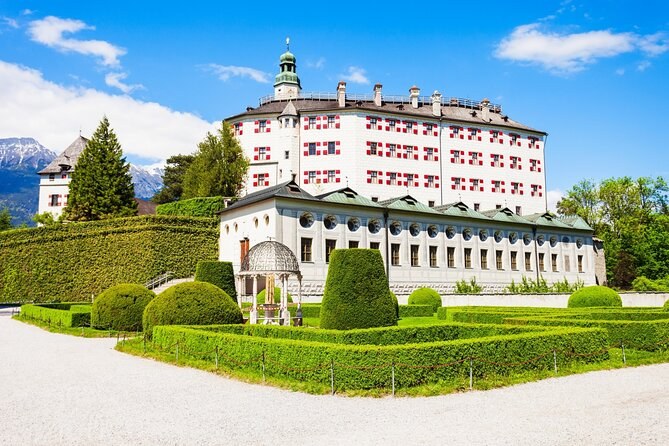 133 mi from BudapestSchloss Ambras
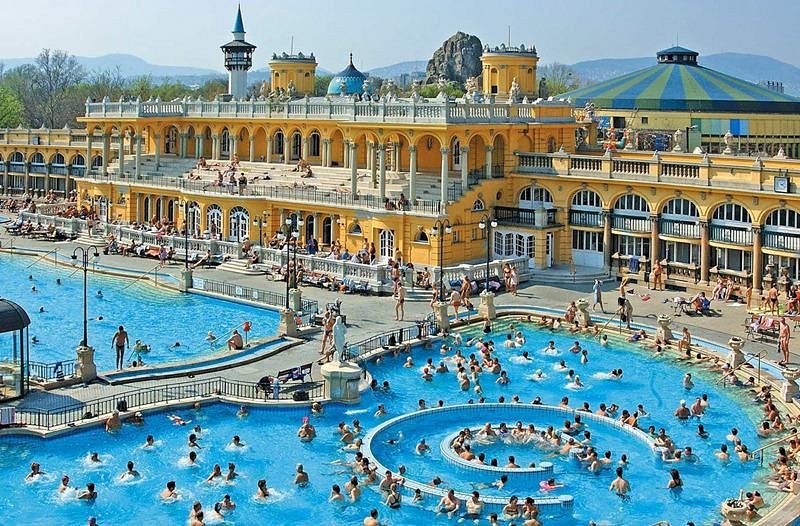 0 mi from BudapestSzéchenyi Thermal Bath
 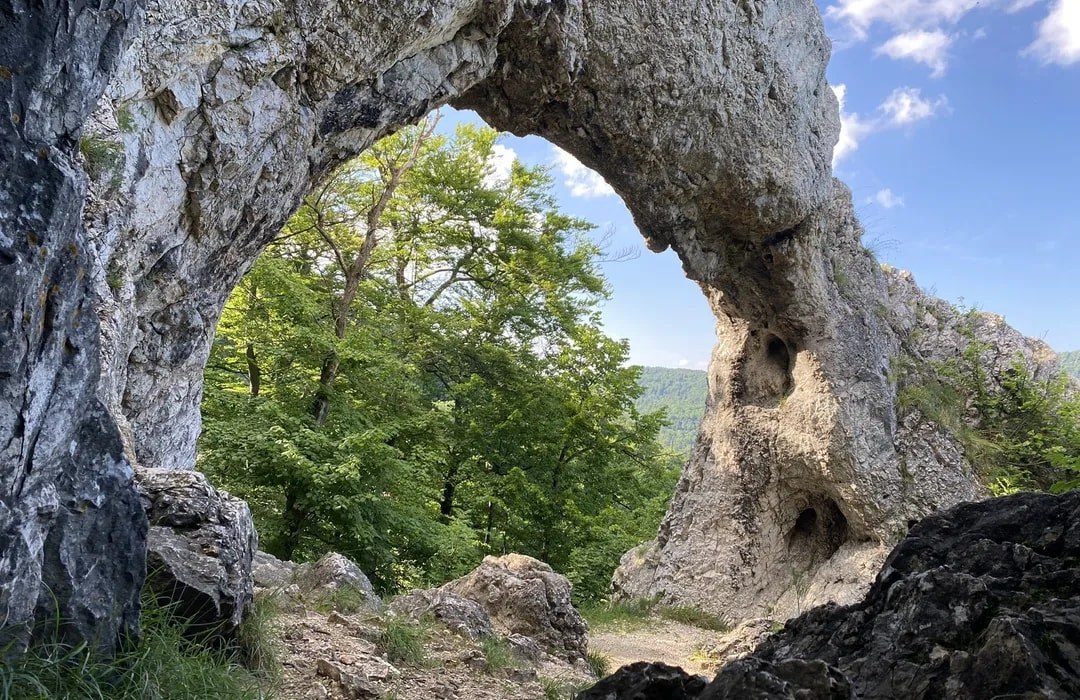 11 mi from Budapest · land adventureBull's Blood, Beech Forests and a Danube Bend Weekend
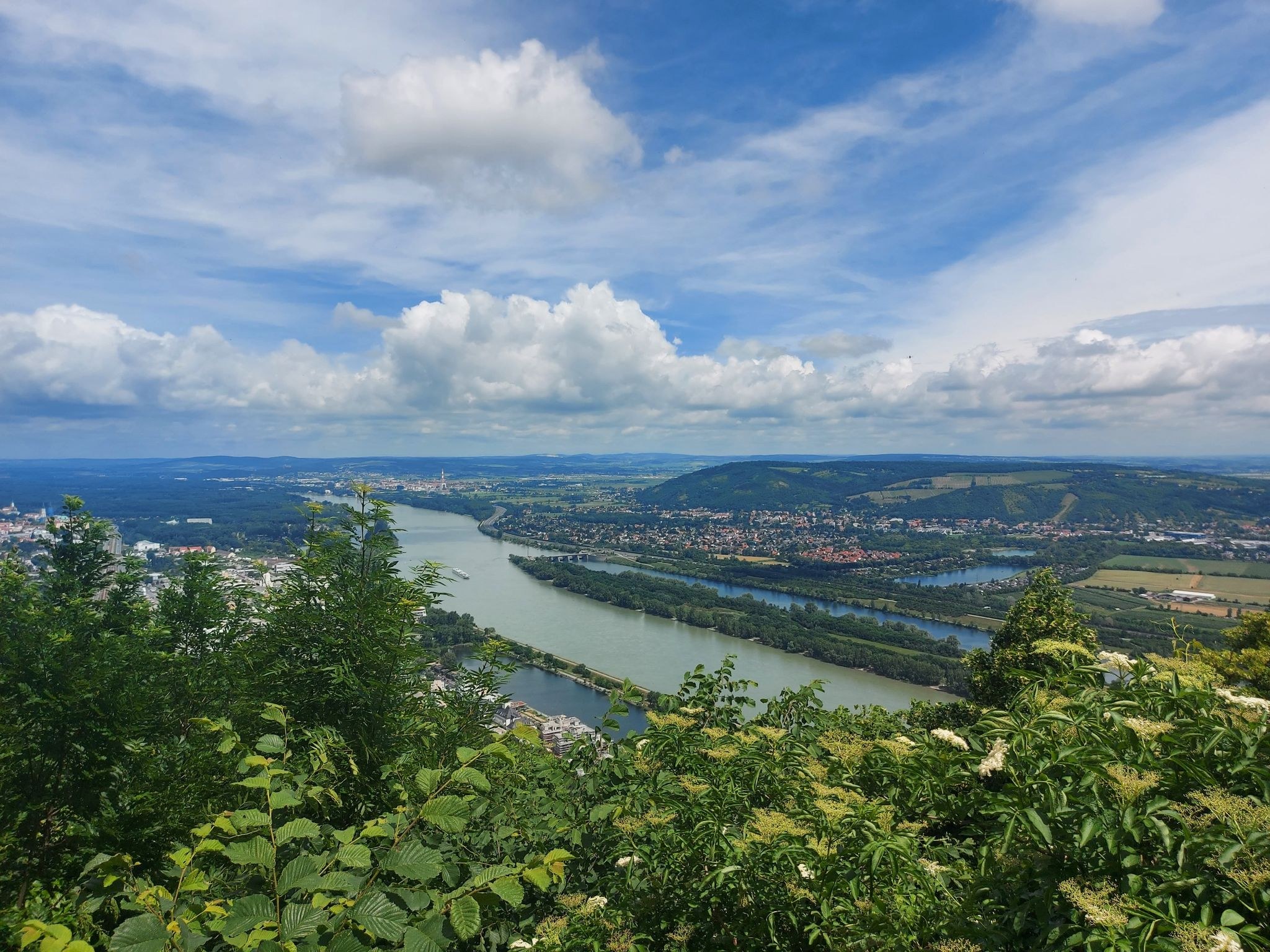 122 mi from Budapest · land adventureVienna Beyond the Ringstrasse: Castles, Caverns, Alpine Air
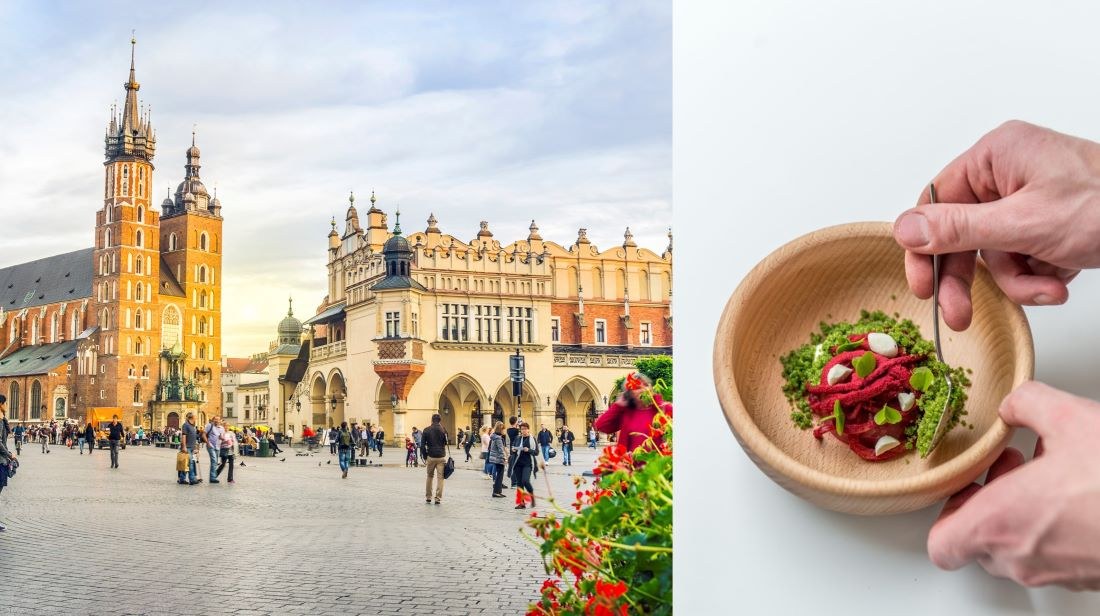 181 mi from Budapest · land adventureKrakow's Salt Mines, Sacred Peaks & Craft Brews: A Road Trip
 After you step off · near Vilshofen
You end in a different port — stay on, and add what is within reach before you fly home.
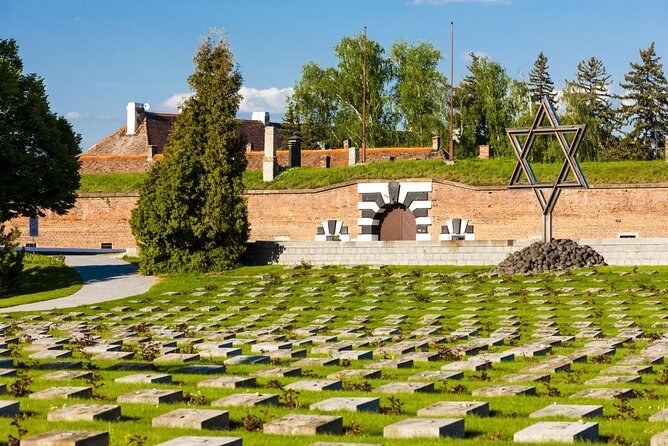 115 mi from VilshofenTerezín Memorial & Fortress Complex149 mi from VilshofenSchloss Ambras
  58 mi from Vilshofen · land adventureSalt, Stone and Grüner Veltliner: Salzburg Beyond Mozart
 113 mi from Vilshofen · land adventurePrague Beyond the Crowds: Garnets, Garrets & Bohemian Wine
 The same trip, elevated
The same gateway on a more luxurious line — lead-in fare per person, same fare as booking direct.