Your cruise
Enchanted Princess · 7-night Mediterranean round trip from Civitavecchia (Rome)
Oct 13 – Oct 20 · 7 nights ·
Day 1 Civitavecchia (Rome) (board) · Day 2 Salerno · Day 3 at sea · Day 4 Santorini (Thira) · Day 5 Kusadasi (Ephesus) · Day 6 Katakolon (Olympia) · Day 7 at sea · Day 8 Civitavecchia (Rome) (step off)
What you do Glide along the world's most dramatic coastline aboard a private luxury vessel, anchoring at Positano's pastel cliffs, swimming in hidden sea caves, and toasting with Aperol spritz as the Tyrrhenian sun sets. The Amalfi Coast from the water is simply unmissable.
What to expect Step aboard a classic wooden gozzo or sleek motorboat from Salerno's marina and trace the jaw-dropping limestone cliffs of the Amalfi Coast. Your skipper navigates into the Grotta dello Smeraldo, stops at secluded coves for snorkeling, and moors at Positano's beach for a long, unhurried lunch. The return sail at golden hour, with the coast glowing amber, is the defining image of any Italy trip.
Good to know Departs from Salerno's Piazza della Concordia ferry dock, a 10-minute walk from the cruise terminal. Full-day charters run 8–9 hours; half-day options available. Book at least 3–4 weeks ahead in peak season. Confirm all-aboard time and build in 30 minutes' buffer for the return.
Versus the ship tour A fully private or intimate small-group charter means you set the pace — linger in a sea cave, anchor for a swim wherever the water glitters, and dine at a harbourside trattoria in Amalfi on your own schedule, with no crowds and no coach transfers.
book direct with Salerno Incoming (official local boat operator) → · the full guide →
What you do Walk the ghostly streets of Pompeii with a practicing archaeologist after the main crowds have left — an extraordinary, almost cinematic encounter with the Roman world frozen in 79 AD. Limited entry makes this the rarest ticket on the Amalfi circuit.
What to expect A private car or minivan collects you from the cruise pier for the 45-minute drive north. Roberto opens the experience with context at the Forum before moving through the Villa of the Mysteries, the Lupanar, and the House of the Faun — sites often rushed on group tours. He reads original Latin inscriptions aloud and reconstructs daily Roman life with vivid, peer-reviewed detail. You return with a completely different understanding of antiquity.
Good to know Pompeii Archaeological Park tickets must be pre-booked online at pompeiisites.org; timed entry slots sell out weeks ahead. Allow 4–5 hours on site plus 1.5 hours' total transfer. Check all-aboard time carefully — depart the site no later than 2 hours before ship departure.
Versus the ship tour Roberto is a practicing archaeologist and Salerno native — he interprets the frescoes, the graffiti, the plaster casts, and the urban layout at a depth that transforms a visit into genuine scholarship. Private access means you linger where you choose, not where a group flag waves.
book direct with Guides of Italia (Roberto, licensed archaeologist-guide) → · the full guide →
What you do Stand before three of the best-preserved Greek temples on Earth — older and more intact than the Parthenon — then retire to a working buffalo farm for a private mozzarella tasting paired with local wines. This is Campania at its most gloriously uncrowded.
What to expect Your private car heads south along the Tyrrhenian coast to the UNESCO-listed ruins of Paestum, arriving early before the heat and day-trip coaches. Roberto brings the Temple of Neptune (c. 450 BC) to life through myth, politics, and architectural analysis. The National Museum of Paestum, with its stunning Tomb of the Diver fresco, follows. Lunch is a private tour of a Mozzarella di Bufala Campana DOP farm — you watch the cheese pulled by hand and taste it warm with local EVOO, prosciutto di Parma, and Fiano di Avellino.
Good to know Half-day excursion, approximately 5–6 hours total. Pre-book the farm visit separately as availability is limited. Comfortable walking shoes essential — the archaeological site has uneven stone paths. Paestum is in the opposite direction from the Amalfi Coast, so this excursion works best for guests who want to avoid the coast-road traffic entirely.
Versus the ship tour Paestum is only 40 minutes south of Salerno — closer than Pompeii, far less visited, and arguably more beautiful. The private buffalo-farm tasting after the temples is an experience outsiders almost never access, arranged only through well-connected local guides.
book direct with Guides of Italia (Roberto, licensed archaeologist-guide) → · the full guide →
What you do Scale the Lombard-era Castello di Arechi for panoramic views over the Gulf of Salerno, then descend into a medieval old town of Norman cathedrals, ancient apothecary gardens, and poetry-lined alleyways. Salerno's own treasures are shockingly underrated.
What to expect Your guide meets you steps from the pier. The morning begins at the Castello di Arechi, a 8th-century hilltop fortress with sweeping Gulf views, reached by a short taxi or private car. You descend into the labyrinthine old town — through the Arco Catalano, past the Museo della Scuola Medica Salernitana, and into the Giardino della Minerva, a terraced hillside garden of medicinal herbs with Gulf vistas. The Duomo di Salerno (Cathedral of St Matthew) crowns the route, its Byzantine mosaics and Norman bronze doors among southern Italy's finest. A coffee stop at a historic bar on Corso Vittorio Emanuele ends the morning on a perfectly Italian note.
Good to know Meeting point is the cruise terminal or Piazza della Concordia — confirm with your guide at booking. Duration: 3.5–4.5 hours. The Giardino della Minerva charges EUR 3 entry; the Duomo is free. Wear comfortable walking shoes; the old town is hilly and cobbled. This excursion is walkable from the ship, making it the lowest-logistics option on port day.
Versus the ship tour A private local guide unlocks access and narrative that no self-guided walk can match — from the hidden Giardino della Minerva (Europe's first botanical-medical garden, dating to the 11th century) to the jewel-encrusted crypt of Salerno Cathedral, with context woven from the city's remarkable medieval medical school heritage.
book direct with GetYourGuide – Salerno Private Custom Tour with a Local Guide → · the full guide →
What you do Attend a chamber concert in the Villa Rufolo's clifftop gardens — inspiration for Wagner's Parsifal — then walk the ancient Marine Republic of Amalfi and explore its Arab-Norman cathedral. Culture, scenery, and music fused in one extraordinary day.
What to expect A private car winds up the vertiginous corniche to Ravello, 350 metres above the sea, arriving at the 11th-century Villa Rufolo in time to stroll the terraced gardens before the concert begins. Strings and piano carry across the Gulf in the open air — one of Italy's most purely cinematic musical experiences. Afterwards, the car descends to Amalfi for a long lunch of sfogliatella and fresh-caught pesce at a harbourside restaurant, followed by the Cathedral of Sant'Andrea with its gilded Byzantine mosaics and dramatic black-and-white striped façade.
Good to know Concerts at Villa Rufolo typically run June–September; check the schedule at ravelloarts.org and book tickets well in advance as they sell out. Drive time from Salerno to Ravello is approximately 45–60 minutes depending on coastal traffic. Allow at least 6 hours for the full combined experience. Evening concerts require careful checking against all-aboard time — afternoon matinée performances are the safer option for cruise guests.
Versus the ship tour The Ravello Concert Society has staged world-class classical performances on Villa Rufolo's belvedere since 1953 — this is not a tourist show but a serious cultural institution. Pairing it with a private car so you dictate the itinerary, not a bus timetable, turns it into an entirely personal grand-tour moment.
What you do Shop Salerno's Mercato del Carmine with a local chef, then cook a four-course Campanian feast in a private kitchen — from hand-rolled pasta to limoncello semifreddo. Eat what you cook over a long, convivial lunch with local wine pairings.
What to expect Your chef-host meets you at Salerno's covered morning market, guiding you through stalls of San Marzano tomatoes, local provola cheese, fresh anchovies from Cetara, and bundles of wild herbs. Back in the kitchen, you make fresh paccheri pasta from scratch, a slow-cooked ragù napoletano, a traditional caprese with buffalo mozzarella, and a lemon dessert using Amalfi Coast sfusato lemons. The meal is eaten together around the family table with a curated selection of Campanian whites and reds, with the chef narrating the history and lore behind every dish.
Good to know Classes typically run 4–5 hours. The kitchen is a short taxi ride or 15-minute walk from the cruise terminal. Book the private option well ahead for a truly bespoke experience — small-group classes fill quickly in summer. Advise the operator of any dietary restrictions at booking. Ideal for morning port calls where you want to be back aboard by mid-afternoon.
Versus the ship tour A small-group or private cooking class in a Salernitano home kitchen is the most intimate way to understand why Campania — the birthplace of pizza and the Mediterranean diet — is considered Italy's greatest food region. You leave with recipes, full, and genuinely connected to the place.
book direct with GetYourGuide – Salerno Cooking Class → · the full guide →
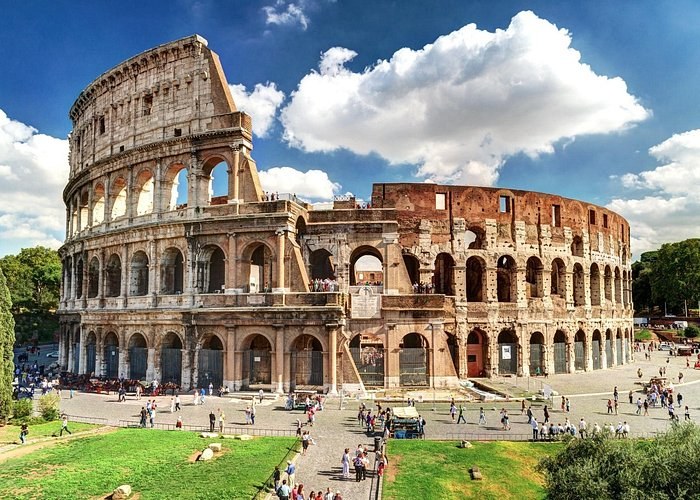
What you do This is the definitive Rome bucket-list day: Michelangelo's Sistine Chapel ceiling and Last Judgment, the Vatican Museums, St. Peter's Square, plus the Colosseum and Roman Forum — all in one 9-hour private run from the pier. Your driver collects you ship-side in a Mercedes and the 'privilege' skip-the-line tickets to both the Vatican and Colosseum mean you walk past the 2-hour queues that would otherwise eat your port day. Note this is a private-driver tour, not a guided one: you explore the interiors at your own pace (audio guides sold inside).
What to expect A private Mercedes collects you pier-side at Civitavecchia and you begin a 9-hour immersion in Rome's iconic landmarks, moving at your own pace rather than a group's rhythm. You skip past the 2-hour queues at the Vatican Museums to explore Michelangelo's Sistine Chapel ceiling and Last Judgment, then wander St. Peter's Square (basilica entry is free but has its own queue). After lunch flexibility, you drive to the Colosseum and Roman Forum, again with skip-the-line privilege tickets that let you move straight inside while standard visitors wait. Throughout, your private driver and personal vehicle—not a 50-person bus—keep you on your schedule, though you explore each site's interiors independently with optional audio guides available for purchase.
Good to know The full excursion runs 9 hours; plan to depart the pier by 8:00 AM at the latest to ensure a comfortable return before your ship's evening departure. Your private driver meets you ship-side at Civitavecchia—confirm the exact return-time guarantee and buffer window when booking, as this operator runs cruisers daily but you'll want that back-to-ship safety net in writing. Bring comfortable walking shoes, sunscreen, and cash or cards for lunch and optional audio guides inside the museums (not included in the EUR 187.50 price). Book skip-the-line tickets in advance as part of your package; they're your main time-saver advantage over the cruise line's group tours, which run $220–$320 per person for the same sites.
Versus the ship tour Direct wins decisively. The cruise lines' marquee 'Best of Rome / Ultimate Rome' Vatican+Colosseum day runs $220-$320 pp, and on premium lines higher — this private, skip-the-line equivalent is ~$205 pp with your own vehicle and no 50-person bus. You save roughly $50-$120 per person and skip the group-pace bottleneck. The one thing the ship guarantees that you're trading away: a step-on licensed guide inside the sites and a back-to-ship promise (this operator runs cruisers daily but confirm the return-time guarantee when booking).
book direct with Discovery Guided Tours → · the full guide →
What you do The reason cruise lines stop here at all: a private deluxe vehicle whisks you from the pier to the Trevi Fountain, Pantheon, Spanish Steps, Piazza Navona, St. Peter's Square and the Colosseum, dropping you as close as Rome's traffic limits allow at each. It's the maximize-a-tight-window play — a first-timer who sails past Rome without standing at the Trevi would genuinely regret it. Be clear-eyed: this is a driver, not a licensed guide, so it's exterior views, photo stops and walk-up landmarks, no museum interiors.
What to expect Your driver collects you pier-side at 8:00 AM in a private deluxe vehicle and begins threading Rome's narrow streets, stopping at the Trevi Fountain, Pantheon, Spanish Steps, Piazza Navona, St. Peter's Square, and Colosseum views—you step out, snap photos, walk up to the exteriors and iconic squares, then move on. This is drive-and-stroll geography, not museum interiors: you'll see Rome's greatest hits from street level and courtyard vistas, with your driver dropping you as close as traffic allows at each landmark. The rhythm is constant but unhurried—a masterclass in first-timer coverage, punctuated by photo moments and the low hum of rolling between sites. You're back at the pier by 5:00–5:30 PM, having touched eight of Rome's most recognizable monuments without boarding a 50-seat coach.
Good to know Pickup is pier-side at 8:00 AM sharp with return by 5:00–5:30 PM, giving you roughly 8 hours door-to-door; factor in Rome's traffic and the driver will optimize stops, so expect less than 30 minutes at each landmark unless you request longer. No entrance tickets, meals, or guide services are included—this is a driver-only arrangement, so museum and basilica interiors are on your own dime and time; bring cash and book ahead if you want to step inside St. Peter's or the Colosseum. All tolls, parking, and taxes are covered in the quoted price (EUR 650–750 per vehicle for up to 7 guests, ~EUR 107–163 per person), and the driver speaks English. Book directly with RomeCabs in advance; a solo traveler or couple may find the ship's motorcoach tour or Trenitalia train equally priced or cheaper per head, so confirm group size before committing.
Versus the ship tour Direct wins on access, ties or beats on price depending on group size. The ship's guided 'City in a Day / Panoramic Rome' coach tour is $110-$170 pp; split a EUR 650-750 car across 4-7 people and you land around $115-$175 pp with door-to-landmark drops a 50-seat bus can't do. For a solo or couple it's a wash on price — but you get a private car and your own timing. If you only want a cheap motorcoach drop-and-roam, the ship's 'Rome On Your Own' transfer ($60-100 pp) or the Trenitalia train (~$11 RT) is far cheaper than any private car — say so and don't overpay for a driver you don't need.
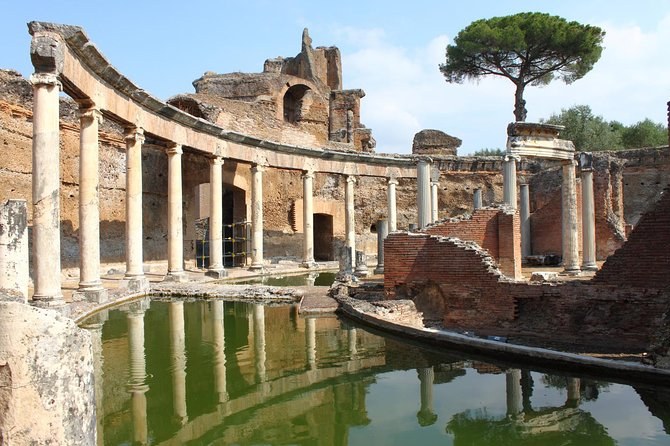
What you do For travelers who've already 'done' central Rome, this is the equally unforgettable alternative: Villa d'Este's 51 fountains, 64 waterfalls and 220 basins — all gravity-fed, not a single pump — paired with Emperor Hadrian's sprawling 2nd-century imperial estate. An expert private guide actually walks the gardens and ruins with you, and the crowds are a fraction of the Vatican's. A 9-hour day, pier to pier.
What to expect You'll spend the morning and early afternoon in two staggered acts: first, Villa d'Este's terraced Renaissance gardens, where your expert guide walks you through cascading fountains, 220 basins, and 64 waterfalls—all fed by gravity alone, no pumps needed—then a private car transfer inland to Emperor Hadrian's 2nd-century sprawl, where crumbling villas, temples, and theaters unfold across 30 acres of archaeological theatre. The rhythm is unhurried; you're with a licensed English-speaking expert, not herded through a coach crowd, so you'll actually absorb the history and architecture as you walk. By late afternoon, your driver returns you to the Civitavecchia pier, completing the 9-hour door-to-door arc.
Good to know Pickup from Civitavecchia pier is included; plan for a private car departure roughly 3–4 hours after ship arrival to allow for disembarkation and meet your guide. Both villas are outdoor, terraced sites with significant walking and uneven ground—wear comfortable shoes and bring sun protection and water. Book at least 48–72 hours ahead; the price (EUR 869 minimum, ~$475 per couple) drops per person as group size grows, and slots are limited to preserve the "expert guide + small party" promise. Confirm your ship's all-aboard time with the concierge and allow a 30–45-minute buffer before boarding to account for Civitavecchia pier return traffic.
Versus the ship tour Mixed verdict, lean ship for small parties. The cruise lines' 'Beauty of Tivoli / Villa d'Este' countryside tour runs $150-$260 pp and other independents (Discovery Guided Tours) sell a Tivoli day from ~$115 pp — so this premium private option is meaningfully pricier per head for a couple (~$475 pp). What you're buying is a genuine licensed guide actually leading you through both UNESCO sites and a private car, versus a coach. If budget is the driver, the ship tour or a cheaper shared independent is the honest call; book this only if private + expert-guided is the point.
book direct with Through Eternity Tours → · the full guide →
What you do Walk intact ancient streets, an amphitheater, taverns, bath-house mosaics and three-story Roman apartment blocks at the buried port city of Ostia Antica — the marquee 'lost Roman city' with a fraction of Rome's crowds. It's far closer to Civitavecchia than the actual Pompeii (which is impractical from this port), and this private full-day pairs it with the Etruscan necropolis at Cerveteri. Pier-side Mercedes pickup, full day, back in time for the ship.
What to expect You'll be picked up pier-side in a private deluxe Mercedes and driven to Ostia Antica, where you'll walk intact ancient streets lined with taverns, bath houses, and remarkably preserved three-story Roman apartment blocks, culminating at the amphitheater — a far less crowded alternative to Pompeii. The day then pivots to Cerveteri's Etruscan necropolis, where you explore burial sites and artifacts from Rome's pre-imperial neighbors. Throughout, you're moving at your own pace in private transport rather than herded with a group, though your driver handles logistics rather than narrating the ruins themselves. The rhythm is unhurried full-day immersion: ancient streets in the morning, a site transition at midday, and Etruscan tombs in the afternoon, returning to the pier in time to reboard.
Good to know Book ahead with Stefano Rome Tours and confirm pier pickup timing to ensure you clear the ship's all-aboard (driver will know the buffer). Entrance tickets to both Ostia Antica and Cerveteri are not included in the EUR 590 vehicle fee—budget ~EUR 18 per site and purchase at the gate or ahead online to save time. Bring a robust audio guide app (like the official Ostia Antica app) or printed site guide, since the driver is not a licensed in-site interpreter. With a full day in the field, wear comfortable walking shoes, sunscreen, and a hat; both sites are largely open-air and can be hot, especially in summer months.
Versus the ship tour Direct wins, with a caveat. Most ships barely offer Ostia Antica, and comparable 'scenic/ruins' ship days run $150-$260 pp — splitting EUR 590 across 4-7 people lands at ~$90-$160 pp plus ~EUR 18 site tickets. You get a near-empty Roman city and a private car well under the ship's countryside price. Trade-off: it's a driver, not a step-on guide inside the ruins, so bring a good audio guide or app if you want the narration the ship's guided tour would include.
What you do Skip the 1.5-hour each-way push to Rome and explore the port town nearly every cruiser blows past: Michelangelo's harbor fortress (Forte Michelangelo), one of Italy's largest open-air markets, fresh Tyrrhenian seafood and the seafront Pirgo promenade. A relaxed small-group walk with local tastings along the way — the low-stress, low-risk safety net when you want to be steps from the ship.
What to expect You'll join a small-group walk that begins steps from the pier and moves at a leisurely pace through Civitavecchia's historic center, anchored by visits to the Renaissance Forte Michelangelo and one of Italy's largest open-air markets alive with local vendors and produce. Along the way, you'll pause for fresh Tyrrhenian seafood tastings and other local bites, absorbing the rhythm of a working port town most cruisers skip. The walk concludes on the waterfront Pirgo promenade, where you'll have absorbed three hours of culture and flavor without the fatigue of a long coach transfer. It's the opposite of the Rome sprint—an immersive, low-pressure exploration of the places locals actually go.
Good to know The entire excursion unfolds within walking distance of your ship, so there's zero transfer time and minimal risk of running late; plan for the three-hour guided walk to fit comfortably in a 6–8 hour port window. Book ahead through DriverInRome to secure your spot in a small group, and wear comfortable walking shoes—you'll be on foot the whole time through cobblestone streets and market areas. Bring cash (EUR) for any additional purchases at the market or for tips, and check departure times with the operator to give yourself at least an hour buffer before all-aboard. The price of approximately EUR 75 per person (€82 USD) includes all tastings, so budget only for optional extras and gratuity.
Versus the ship tour No real ship equivalent, and that's the point. Cruise lines don't sell a Civitavecchia-town tour because they want you on the $60-320 Rome excursions — so this isn't a price-beat, it's a different (and far cheaper) day for travelers who don't want a 3-hour round-trip. At ~$82 pp with food included and zero risk of missing the ship, it's the honest pick for repeat Italy visitors, slow-pace travelers, or anyone who'd rather not gamble a tight Rome turnaround. If it's your first time in Italy, though, do Rome — this is the alternate, not the headline.
What you do Glide along the world's most dramatic coastline aboard a private luxury vessel, anchoring at Positano's pastel cliffs, swimming in hidden sea caves, and toasting with Aperol spritz as the Tyrrhenian sun sets. The Amalfi Coast from the water is simply unmissable.
What to expect Step aboard a classic wooden gozzo or sleek motorboat from Salerno's marina and trace the jaw-dropping limestone cliffs of the Amalfi Coast. Your skipper navigates into the Grotta dello Smeraldo, stops at secluded coves for snorkeling, and moors at Positano's beach for a long, unhurried lunch. The return sail at golden hour, with the coast glowing amber, is the defining image of any Italy trip.
Good to know Departs from Salerno's Piazza della Concordia ferry dock, a 10-minute walk from the cruise terminal. Full-day charters run 8–9 hours; half-day options available. Book at least 3–4 weeks ahead in peak season. Confirm all-aboard time and build in 30 minutes' buffer for the return.
Versus the ship tour A fully private or intimate small-group charter means you set the pace — linger in a sea cave, anchor for a swim wherever the water glitters, and dine at a harbourside trattoria in Amalfi on your own schedule, with no crowds and no coach transfers.
book direct with Salerno Incoming (official local boat operator) → · the full guide →
What you do Walk the ghostly streets of Pompeii with a practicing archaeologist after the main crowds have left — an extraordinary, almost cinematic encounter with the Roman world frozen in 79 AD. Limited entry makes this the rarest ticket on the Amalfi circuit.
What to expect A private car or minivan collects you from the cruise pier for the 45-minute drive north. Roberto opens the experience with context at the Forum before moving through the Villa of the Mysteries, the Lupanar, and the House of the Faun — sites often rushed on group tours. He reads original Latin inscriptions aloud and reconstructs daily Roman life with vivid, peer-reviewed detail. You return with a completely different understanding of antiquity.
Good to know Pompeii Archaeological Park tickets must be pre-booked online at pompeiisites.org; timed entry slots sell out weeks ahead. Allow 4–5 hours on site plus 1.5 hours' total transfer. Check all-aboard time carefully — depart the site no later than 2 hours before ship departure.
Versus the ship tour Roberto is a practicing archaeologist and Salerno native — he interprets the frescoes, the graffiti, the plaster casts, and the urban layout at a depth that transforms a visit into genuine scholarship. Private access means you linger where you choose, not where a group flag waves.
book direct with Guides of Italia (Roberto, licensed archaeologist-guide) → · the full guide →
What you do Stand before three of the best-preserved Greek temples on Earth — older and more intact than the Parthenon — then retire to a working buffalo farm for a private mozzarella tasting paired with local wines. This is Campania at its most gloriously uncrowded.
What to expect Your private car heads south along the Tyrrhenian coast to the UNESCO-listed ruins of Paestum, arriving early before the heat and day-trip coaches. Roberto brings the Temple of Neptune (c. 450 BC) to life through myth, politics, and architectural analysis. The National Museum of Paestum, with its stunning Tomb of the Diver fresco, follows. Lunch is a private tour of a Mozzarella di Bufala Campana DOP farm — you watch the cheese pulled by hand and taste it warm with local EVOO, prosciutto di Parma, and Fiano di Avellino.
Good to know Half-day excursion, approximately 5–6 hours total. Pre-book the farm visit separately as availability is limited. Comfortable walking shoes essential — the archaeological site has uneven stone paths. Paestum is in the opposite direction from the Amalfi Coast, so this excursion works best for guests who want to avoid the coast-road traffic entirely.
Versus the ship tour Paestum is only 40 minutes south of Salerno — closer than Pompeii, far less visited, and arguably more beautiful. The private buffalo-farm tasting after the temples is an experience outsiders almost never access, arranged only through well-connected local guides.
book direct with Guides of Italia (Roberto, licensed archaeologist-guide) → · the full guide →
What you do Scale the Lombard-era Castello di Arechi for panoramic views over the Gulf of Salerno, then descend into a medieval old town of Norman cathedrals, ancient apothecary gardens, and poetry-lined alleyways. Salerno's own treasures are shockingly underrated.
What to expect Your guide meets you steps from the pier. The morning begins at the Castello di Arechi, a 8th-century hilltop fortress with sweeping Gulf views, reached by a short taxi or private car. You descend into the labyrinthine old town — through the Arco Catalano, past the Museo della Scuola Medica Salernitana, and into the Giardino della Minerva, a terraced hillside garden of medicinal herbs with Gulf vistas. The Duomo di Salerno (Cathedral of St Matthew) crowns the route, its Byzantine mosaics and Norman bronze doors among southern Italy's finest. A coffee stop at a historic bar on Corso Vittorio Emanuele ends the morning on a perfectly Italian note.
Good to know Meeting point is the cruise terminal or Piazza della Concordia — confirm with your guide at booking. Duration: 3.5–4.5 hours. The Giardino della Minerva charges EUR 3 entry; the Duomo is free. Wear comfortable walking shoes; the old town is hilly and cobbled. This excursion is walkable from the ship, making it the lowest-logistics option on port day.
Versus the ship tour A private local guide unlocks access and narrative that no self-guided walk can match — from the hidden Giardino della Minerva (Europe's first botanical-medical garden, dating to the 11th century) to the jewel-encrusted crypt of Salerno Cathedral, with context woven from the city's remarkable medieval medical school heritage.
book direct with GetYourGuide – Salerno Private Custom Tour with a Local Guide → · the full guide →
What you do Attend a chamber concert in the Villa Rufolo's clifftop gardens — inspiration for Wagner's Parsifal — then walk the ancient Marine Republic of Amalfi and explore its Arab-Norman cathedral. Culture, scenery, and music fused in one extraordinary day.
What to expect A private car winds up the vertiginous corniche to Ravello, 350 metres above the sea, arriving at the 11th-century Villa Rufolo in time to stroll the terraced gardens before the concert begins. Strings and piano carry across the Gulf in the open air — one of Italy's most purely cinematic musical experiences. Afterwards, the car descends to Amalfi for a long lunch of sfogliatella and fresh-caught pesce at a harbourside restaurant, followed by the Cathedral of Sant'Andrea with its gilded Byzantine mosaics and dramatic black-and-white striped façade.
Good to know Concerts at Villa Rufolo typically run June–September; check the schedule at ravelloarts.org and book tickets well in advance as they sell out. Drive time from Salerno to Ravello is approximately 45–60 minutes depending on coastal traffic. Allow at least 6 hours for the full combined experience. Evening concerts require careful checking against all-aboard time — afternoon matinée performances are the safer option for cruise guests.
Versus the ship tour The Ravello Concert Society has staged world-class classical performances on Villa Rufolo's belvedere since 1953 — this is not a tourist show but a serious cultural institution. Pairing it with a private car so you dictate the itinerary, not a bus timetable, turns it into an entirely personal grand-tour moment.
What you do Shop Salerno's Mercato del Carmine with a local chef, then cook a four-course Campanian feast in a private kitchen — from hand-rolled pasta to limoncello semifreddo. Eat what you cook over a long, convivial lunch with local wine pairings.
What to expect Your chef-host meets you at Salerno's covered morning market, guiding you through stalls of San Marzano tomatoes, local provola cheese, fresh anchovies from Cetara, and bundles of wild herbs. Back in the kitchen, you make fresh paccheri pasta from scratch, a slow-cooked ragù napoletano, a traditional caprese with buffalo mozzarella, and a lemon dessert using Amalfi Coast sfusato lemons. The meal is eaten together around the family table with a curated selection of Campanian whites and reds, with the chef narrating the history and lore behind every dish.
Good to know Classes typically run 4–5 hours. The kitchen is a short taxi ride or 15-minute walk from the cruise terminal. Book the private option well ahead for a truly bespoke experience — small-group classes fill quickly in summer. Advise the operator of any dietary restrictions at booking. Ideal for morning port calls where you want to be back aboard by mid-afternoon.
Versus the ship tour A small-group or private cooking class in a Salernitano home kitchen is the most intimate way to understand why Campania — the birthplace of pizza and the Mediterranean diet — is considered Italy's greatest food region. You leave with recipes, full, and genuinely connected to the place.
book direct with GetYourGuide – Salerno Cooking Class → · the full guide →
What you do Sail the volcanic caldera on a 5-hour semi-private catamaran, the single most iconic way to see Santorini, gliding past the multicolored Red and White beaches before anchoring to swim in the warm sulfur hot springs off Palea Kameni. A fresh BBQ lunch with local Assyrtiko wine is served on deck while the whitewashed cliff-top villages tower 300m above you. This is the angle the island is famous for and the experience first-timers most regret skipping.
What to expect You'll board a semi-private catamaran and sail directly into Santorini's volcanic caldera, gliding past the striking Red and White beaches before anchoring in the warm sulfur hot springs off Palea Kameni for a refreshing swim. As you float in the mineral-rich waters, the whitewashed cliff-top villages loom 300 meters above, framing the iconic postcard view the island is famous for. A fresh BBQ lunch is served on deck with local Assyrtiko wine and drinks, allowing you to experience this dramatic landscape from the water—the angle most first-timers regret missing. The full experience unfolds over 5 hours, combining sailing, swimming, and dining into a seamless rhythm of discovery.
Good to know Book directly with Spiridakos Sailing Cruises (family-run since 1986) to secure the EUR 100–140 per-person rate and semi-private boat; the cruise line's equivalent offering costs $148–$297 per person. The 5-hour excursion fits comfortably within a standard 6–8 hour port window, though you'll need transportation from the pier to the boat departure point—confirm logistics with the operator when booking. Bring swimwear, sun protection, and a towel; the hot springs are swimmable year-round. Book ahead directly rather than through the ship to lock in savings of $40–$145 per person and ensure a smaller group experience.
Versus the ship tour Direct wins big. The cruise line's half-day catamaran runs $148-$297 per person (the premium 'Delightful Half Day Sail' is ~$297) for the same product. Booking Spiridakos direct saves roughly $40-$145 per person, and you get a semi-private boat instead of the ship's larger group.
book direct with Spiridakos Sailing Cruises → · the full guide →
What you do Santorini IS a volcano, and this is the only way to stand on it. A traditional wooden caique departs the Old Port (right below the tender pier) for the still-active crater island of Nea Kameni, where you hike about 90 minutes across steaming red-black lava fields to the summit craters, then sail to Palea Kameni to swim in the iron-rich warm hot springs. It is the lowest-cost, highest-payoff marquee experience on the island and the easiest to slot into a port day.
What to expect You'll board a traditional wooden caique from the Old Port—just steps below the tender pier—and sail to the still-active volcano island of Nea Kameni. There, you'll hike roughly 90 minutes across steaming red-black lava fields to reach the summit craters, walking on the volcano itself and witnessing its raw, otherworldly geology up close. After descending, the boat sails to Palea Kameni, where you'll swim in warm, iron-rich hot springs that feel almost medicinal, turning the excursion from a geological marvel into a complete sensory experience. The entire outing takes about 3 hours, leaving plenty of daylight and margin to return to the ship.
Good to know The caiques depart directly from Fira's Old Port, eliminating the need for a tender or long transfer—critical on a 6–8 hour port day—and Caldera's Boats has been running this route since 1968, so timing is reliable. Book the tour in advance online or grab a spot at the pier if you want to avoid ship-tour markup (~$20–40 per person saved). Wear sturdy, closed-toe hiking boots for the lava-field walk, bring reef-safe sunscreen and a towel for the springs, and plan to be back aboard at least 45 minutes before all-aboard; the low price and proximity to the port make this the safest high-payoff volcano experience if you're wary of committing to a longer inland adventure.
Versus the ship tour This is the closest-priced category, so be honest: the ship's volcano-and-hot-springs boat tour is ~$70-$82 per person, only modestly above the ~$40-$60 all-in you'll pay direct. You still save ~$20-$40 per person booking direct, and because it leaves from the Old Port directly under the tender pier it doubles as the safe, near-port option if you don't want to commit to a long inland tour.
book direct with Caldera's Boats (Santorini Sea Excursions) → · the full guide →
What you do Widely called the best single thing to do on Santorini: a clifftop path tracing the caldera rim from Fira through Imerovigli to Oia, with nonstop postcard views of the blue water 300m below and the white, blue-domed villages. Take the official cable car up from the Old Port, then hike 2.5-4 hours to Oia and finish at the Venetian castle ruins overlooking Ammoudi Bay, the marquee village a first-timer would most regret missing. Best for ships arriving early, to beat the heat and crowds; catch the KTEL public bus back to Fira.
What to expect You'll ascend the caldera via the official cable car from the Old Port—a scenic 4-minute ride gaining 300 meters—then step onto the clifftop path that becomes your view corridor for the next 2.5 to 4 hours. The trail traces the rim from Fira through Imerovigli to Oia, delivering nonstop panoramas of brilliant blue water plunging below white and blue-domed villages that look lifted from a postcard. You'll finish at Oia's Venetian castle ruins overlooking Ammoudi Bay, the marquee village most first-timers regret missing, before catching the KTEL public bus back down to Fira and the port.
Good to know Board early if your ship allows and take the cable car up by mid-morning to beat the crowds and heat; budget 2.5 to 4 hours for the hike itself plus 30–45 minutes for the cable car and bus transit each way. The KTEL bus from Oia back to Fira runs regularly and costs ~EUR 2.20 each way; confirm the schedule at the Oia terminal and allow a 90-minute buffer before all-aboard. Bring sun protection, a hat, sturdy walking shoes for the uneven rim path, and enough water for a mountain hike—there are few facilities on the trail itself.
Versus the ship tour Direct wins overwhelmingly. The cruise line's 'Oia & Fira on your own' transfer is $60-$80 per person to deliver you to the same villages. Riding the cable car and KTEL bus yourself does it for ~$15, saving ~$45-$65 per person, and the rim hike itself, the real attraction, is something no ship tour includes.
book direct with Santorini Cable Car (Municipality of Thera, official operator) → · the full guide →
What you do Walk through a Bronze Age Minoan town buried and preserved under volcanic ash by the cataclysmic ~1600 BC eruption that carved the caldera, often called the 'Greek Pompeii' and tied to the Atlantis legend. Elevated ramps take you over three-story buildings, paved streets, and an ancient drainage system beneath a vast protective roof. This is the deep-history counterpart to the island's scenery and the strongest choice for first-timers who want substance beyond the viewpoints.
What to expect You enter the Bronze Age Minoan town of Akrotiri through a vast protective roof, then walk elevated ramps over three-story buildings, paved streets, and an ancient drainage system—all preserved under volcanic ash from the ~1600 BC eruption that carved Santorini's caldera. The rhythm is unhurried: you move at your own pace through rooms and courtyards, reading the physicality of domestic and commercial life from 3,600 years ago, then ascend to street level to grasp the town's urban layout. The scale is intimate compared to classical Greek sites, and the preservation is startling—frescoes, pottery shards, and architectural detail emerge from the pumice as if the eruption happened yesterday. This is archaeology as visceral experience, not just viewpoints.
Good to know From the pier, take the KTEL bus from Fira (you'll need to change buses at Fira town center; budget 45–60 minutes total for the journey and under €5 cost). Admission is ~€12 per person; hire a licensed guide at the gate for ~€10 if you want context, or self-guide with a site map. Plan 2–3 hours on-site to move through the excavation thoughtfully, and allow 90 minutes to return to the ship (bus journey plus buffer). Bring comfortable walking shoes, sun protection, and water—there is minimal shade under the protective roof structure, and the site involves steady climbing and descending of ramps.
Versus the ship tour Direct wins massively. The cruise line's guided Akrotiri + Oia coach tour runs $130-$185 per person; the actual gate ticket is $13 and a licensed guide at the entrance adds ~$11. Self-guiding the entry plus bus saves roughly $100-$160 per person. If you want a guide and seamless transport, weigh that the ship's all-in convenience may be worth it for the group that doesn't want to navigate the bus change at Fira.
book direct with Hellenic Ministry of Culture (official archaeological site) → · the full guide →
What you do Santorini is one of the world's most distinctive wine regions: ungrafted Assyrtiko vines coiled into ground-level baskets in volcanic ash, yielding a mineral, salt-edged white found nowhere else. Santo Wines, the island's largest co-operative (est. 1911), sits on the caldera rim near Pyrgos with arguably the best view-with-a-glass on Santorini. Book a tasting flight or short guided cellar tour online and you have the definitive Santorini food-and-drink experience, easily inside a port window.
What to expect You'll arrive at Santo Wines perched on the caldera rim with one of Santorini's most commanding views—volcanic cliffs dropping to the Aegean stretched across your tasting table. A guided cellar tour walks you through the island's legendary ungrafted Assyrtiko vines, coiled into ground-level baskets in volcanic ash, before you settle into a flight of 2–6 mineral, salt-edged whites that taste of nowhere else on earth. The rhythm is unhurried: 45–90 minutes on the terrace or in the cool cellar, wine in hand, the Caldera filling the horizon as you taste and linger over the only Santorini experience that matters.
Good to know Book your tasting flight or guided tour directly online at Santo Wines (€18–55 per person) rather than through the ship ($120–175 for the identical experience plus Oia). From the pier, take a taxi or local bus to Santo Wines near Pyrgos—budget 15–20 minutes and a handful of euros, or join a shared 3-winery tour (~$75–110) if you want transport bundled. Plan to spend 2–3 hours total (including transit), leaving a 90-minute buffer before all-aboard; bring sunscreen, a light layer for the cellar, and book ahead in high season to secure your preferred time slot.
Versus the ship tour Direct wins clearly. The cruise line's winery-plus-Oia combo runs $120-$175 per person; the identical winery costs ~EUR 18-55 walk-in/online. Even adding a taxi or bus, you save $60-$100 per person booking direct. (If you specifically want transport plus multiple wineries bundled, a shared independent 3-winery tour at ~$75-$110 still beats the ship.)
What you do Only for ships that overnight or stay late, this is the bucket-list finale: an evening sail from Ammoudi, the harbor below Oia, cruising the caldera as the cliffs glow gold, anchoring at the hot springs and Red/White beaches, then watching Santorini's legendary sunset from the water over a fresh-fish and meat BBQ, Greek mezze, and local wine. Departing from Oia rather than the main port gives the best sunset vantage of any cruise option.
What to expect You'll descend to Ammoudi harbor below Oia and board a semi-private sailing vessel for a 5-hour evening voyage across Santorini's caldera. The sail unfolds in stages: anchoring at the hot springs and Red/White beaches for swimming and exploration, then positioning on the water as the towering cliffs shift from white to burnished gold. As the sun dips toward the horizon, you'll gather on deck with fresh-grilled fish and meat, Greek mezze, and local wine flowing freely—the legendary Santorini sunset framed by your vantage point on the water, unobstructed and intimate.
Good to know This excursion requires your ship to remain in port through sunset; book only if your itinerary confirms a late departure or overnight stay—early-morning departures will cost you the entire payoff. Ammoudi lies below Oia, so factor 15–20 minutes for descent from the pier and transport; arrange this detail with the operator or your concierge beforehand to avoid last-minute confusion. Allow a 90-minute buffer before all-aboard to account for the return journey uphill and any tender delays. Bring sunscreen, a light layer for evening sea breezes, and swimwear for the beach stops; the open bar is included, so plan accordingly for the evening sail.
Versus the ship tour Direct wins, but only book this if your ship is in port past sunset, otherwise you'll miss the gold. The cruise line's evening 'Beautiful Santorini Sunset Cruise' is ~$148 per person; Sunset Oia delivers a longer semi-private sail with dinner and open bar from ~$105, saving up to ~$40 per person, and from the superior Oia sunset side. For an early-departure ship this is the wrong card, take the daytime catamaran instead.
book direct with Sunset Oia Sailing Cruises → · the full guide →
What you do Walk the marble streets of one of antiquity's greatest cities — Library of Celsus, Great Theatre, Temple of Artemis — then ascend to the sacred House of the Virgin Mary, all at your own pace with a licensed private guide.
What to expect Your guide meets you dockside in Kusadasi and escorts you directly into Ephesus before the crowds peak. You'll stroll Curetes Street, enter the awe-inspiring Library of Celsus, and take in the 25,000-seat Great Theatre where St. Paul once preached. The Terrace Houses — Roman mansions with intact frescoes and mosaics under a climate-controlled canopy — are a genuine highlight rarely given enough time on group tours. The morning closes with a serene visit to the hilltop Shrine of the Virgin Mary, where pilgrims have prayed for two millennia.
Good to know Pre-book Terrace Houses separately (EUR 15 pp) — they sell out. Kusadasi port is roughly 3 km from the city centre; transfer is included with most private operators. Confirm your all-aboard time and share it with your guide — they pride themselves on guaranteed returns.
Versus the ship tour A dedicated licensed guide crafts the itinerary entirely around your group — no queuing behind dozens of strangers, no rushed schedule. You linger at the Library of Celsus or the Terrace Houses as long as you wish, and the guide's scholarly depth turns stones into stories.
book direct with Ephesus Travel Guide – Private Ephesus Tours → · the full guide →
What you do Step inside the UNESCO-listed 'Houses on the Slope' — Roman aristocratic villas with floor mosaics, wall frescoes and underfloor heating still intact — with a specialist archaeologist guide for an immersive, unhurried experience.
What to expect The Terrace Houses are a city within the city: six lavish Roman dwellings excavated and covered by a vast modern shelter that lets you walk elevated walkways over intact living rooms, bathing chambers and Byzantine chapels. Your specialist guide reads the frescoes like an open book, pointing out Greco-Roman mythology scenes and ancient graffiti. Light filters theatrically through the canopy, making every photograph extraordinary. You emerge back onto Curetes Street with a far deeper understanding of who actually lived in ancient Ephesus.
Good to know Tickets for the Terrace Houses must be purchased in addition to the main Ephesus ticket; buy both online in advance to avoid queues at the gate. Wear comfortable, flat-soled shoes — the marble walkways can be uneven. Allow at least 90 minutes inside the houses alone.
Versus the ship tour Most visitors spend only minutes in the Terrace Houses because their guide must keep the group moving. A private archaeologist-led session means you examine each room, understand whose home it was, and truly absorb the extraordinary preservation — a bucket-list encounter that demands time.
What you do Join top-rated local expert Levent Solmaz for a bespoke full-day private tour blending Ephesus' ancient grandeur with Kusadasi's Ottoman castle, authentic bazaar, and a Turkish lunch at a family restaurant — the true luxury of insider access.
What to expect Levent greets you at the pier and the day unfolds on your terms: the grandeur of ancient Ephesus, the intimate spirituality of the House of the Virgin Mary, then a wander through Kusadasi's pigeon island castle and the bustling covered bazaar. Lunch is at a carefully chosen local restaurant — expect slow-braised lamb, fresh meze and strong Turkish tea. Levent's storytelling is vivid and scholarly without being academic, making 2,000 years feel immediate and personal.
Good to know Book well in advance — Levent is in high demand during cruise season (April–October). Share your ship's all-aboard time; he guarantees port return. Pre-tour email correspondence to customise the itinerary is part of the service.
Versus the ship tour Levent is consistently rated one of the finest guides in the Aegean — responsive, deeply knowledgeable and personally invested in every guest's experience. The itinerary is yours to shape, and his local relationships open doors — and restaurants — most visitors never find.
book direct with Ephesus Private Tour Guide – Levent Solmaz (TripAdvisor verified) → · the full guide →
What you do Seek out the ghostly single column of one of the Seven Wonders of the Ancient World, then follow St. John's footsteps to his hilltop basilica in charming Selçuk — a deeply moving morning beyond the main Ephesus circuit.
What to expect The Temple of Artemis, once four times the size of the Parthenon, now stands as a single haunting column rising from a marshy field — a poetic, meditative site that rewards quiet contemplation. A short drive uphill brings you to the Byzantine Basilica of St. John, built over the apostle's tomb, where sweeping views of the Selçuk plain unfold below. A stroll through Selçuk's traditional market — figs, olives, handwoven textiles — completes the morning before your private transfer back to port.
Good to know Combine this with an afternoon at Ephesus main site for a full-day itinerary. Selçuk is 3 km from Ephesus — easily done by private vehicle. Early morning is best to avoid heat and crowds at both sites.
Versus the ship tour These two landmarks are frequently skipped or rushed on standard itineraries, yet they are among the most historically resonant sites in the Christian and classical worlds. A private half-day lets you approach both slowly, with context, and explore Selçuk's authentic market town atmosphere.
book direct with Ephesus Travel Guide – Private Ephesus Tours → · the full guide →
What you do Surrender to the centuries-old Ottoman hammam ritual — full-body marble steam, kese exfoliation and foam massage — at one of Kusadasi's finest historic bath houses, emerging renewed before reboarding.
What to expect You enter through a domed stone antechamber and change into a traditional pestemal (cotton wrap) before being led into the warm marble central hall. The tellak (bath attendant) works systematically — steam opens the pores, the kese mitt sloughs away layers of skin, then a cascade of soapy foam and firm massage loosens every joint. The final cool-water rinse is electric. You emerge onto a marble slab for tea and rest, glowing and utterly relaxed — the perfect counterpoint to a morning at ancient ruins.
Good to know Most Kusadasi hammams are within 10 minutes' walk of the pier. Book a 90-minute slot to avoid rushing. Wear or bring a swimsuit underneath; towels and pestemal are provided. Avoid heavy meals immediately before. This pairs beautifully as an afternoon experience after a morning at Ephesus.
Versus the ship tour A hammam is not a spa add-on — it is a living cultural institution practiced in Turkey for 600 years. The combination of heated marble, vigorous scrubbing and skilled massage is transformative, and doing it in a genuine Ottoman-era bath house rather than a hotel spa is the authentic version.
book direct with Kusadasi Kaleiçi Hamamı (local hammam operators in Kusadasi old town) → · the full guide →
What you do Escape to the enchanting hilltop village of Şirince — a Greek-Ottoman gem of whitewashed houses and vine-draped terraces — for private wine tasting, artisan fruit wines, fresh mezze and hand-embroidered treasures.
What to expect The 8 km drive into the hills rewards you with a village that feels like a film set: cobbled lanes, Ottoman-Greek houses draped in bougainvillea, and the smell of baking bread. Local producers offer tastings of peach, pomegranate, blackberry and grape wines — sweet, unusual and utterly regional. Lunch at a terrace taverna means dolma stuffed with herbs, grilled village cheese, lamb köfte and fresh-baked bread. Artisan embroidery, olive oil soaps and handmade ceramics make for meaningful gifts. Return to Kusadasi port with plenty of time to spare.
Good to know Şirince is 8 km from Selçuk and about 30 km from Kusadasi port — allow 35–40 minutes each way by private vehicle. Combine with a morning at Ephesus for a complete full-day itinerary. Village gets busy by 11am in peak season — arrive by 9:30am for the best experience.
Versus the ship tour Şirince is one of the most atmospheric villages in the Aegean and frequently missed by cruise passengers focused solely on Ephesus. A private driver-guide means you arrive when the village is quiet, linger at the family wineries that have made fruit wines for generations, and leave before the day-tripper coaches arrive.
book direct with Turkey Travel Tours – Ephesus & Şirince Private Tours → · the full guide →
What you do Walk the sacred ground where the ancient Games were born, guided by a vetted local expert at your own pace. Stand in the original stadium, explore the Temple of Zeus, and unlock stories no audio guide can tell.
What to expect Your licensed local guide meets you at the port or the site entrance and leads you through the Archaeological Site and Museum of Ancient Olympia with skip-the-line access. You'll stand inside the original 5th-century BC stadium, explore the colossal Temple of Zeus, and view the peerless statue of Hermes of Praxiteles in the museum. The tour moves entirely at your pace — linger where you wish, ask every question that comes to mind, and enjoy a deeply personal connection with one of the ancient world's most sacred places.
Good to know Ancient Olympia is a 35–45 min drive from Katakolon port. Book well in advance for summer sailings as top guides fill quickly. Typical all-aboard times allow for 4–5 hours at the site comfortably; confirm your ship's schedule with your guide when booking. Entrance tickets (EUR 20 pp, combined site & museum) are paid separately on arrival.
Versus the ship tour Fully bespoke itinerary shaped entirely around your interests — no fixed script, no crowded coach, no rush. Your private guide adjusts the depth, pace, and focus to you, turning a sightseeing stop into a genuine scholarly encounter with antiquity.
book direct with ToursByLocals – Private Olympia Guides → · the full guide →
What you do A premium semi-private tour (maximum 25 guests) of Ancient Olympia with skip-the-line tickets included and an official licensed guide — the gold standard for those who want expert depth without going fully private.
What to expect Round-trip transfers from Katakolon port are included, making this seamlessly simple from the moment you step ashore. Your official licensed guide escorts you through the Archaeological Site — the Altis sanctuary, the ruins of the Temple of Hera, the Philippeion, and the ancient stadium — before moving into the outstanding Archaeological Museum to see the Hermes of Praxiteles and the breathtaking Zeus pediment sculptures. The intimate group size means genuine two-way dialogue with your guide throughout. A polished, comprehensive, fuss-free Olympia experience.
Good to know Skip-the-line tickets are pre-included — simply show up. Round-trip transfers from port are bundled in the price. Pre-book online as departures on busy port days sell out. Tour duration is approximately 5 hours, well within standard all-aboard windows.
Versus the ship tour Groups capped at just 25 people ensure an intimate, conversational experience with your guide — far removed from the mass-tour atmosphere. All-inclusive pricing with skip-the-line tickets means zero queuing and zero logistical faff on port day.
What you do Journey into the heart of the Peloponnese olive groves for an immersive agrotourism experience — tasting estate olive oil, local honey, and regional wine amid the ancient landscape that has nourished Greece for millennia.
What to expect After departing Katakolon, your small group is taken to a traditional Peloponnese estate where you'll tour the olive groves and production facilities, learning the art of cold-press extra-virgin olive oil from producers whose families have worked this land for generations. A guided tasting of olive oils, local thyme honey, and regional wines follows — paired with artisan breads and regional produce. The tour combines Ancient Olympia highlights with this authentic agrotourism dimension, giving the day both cultural and gastronomic richness. Approximately 5.5 hours total.
Good to know Departs from Katakolon port; max 19 persons so early booking is essential. Wear comfortable walking shoes for both the estate and the archaeological site. Check the tour's current departure schedule against your ship's all-aboard time when booking.
Versus the ship tour Capped at just 19 participants, this intimate small-group experience takes you off the tourist trail and onto a working estate — a rare sensory encounter with Peloponnesian food culture that most visitors entirely miss.
What you do Explore over 300 fully working reconstructions of ancient Greek machines — from Archimedes' screw to the Antikythera mechanism — in Katakolon's extraordinary, walkable museum. A jaw-dropping intellectual adventure steps from the port.
What to expect Step inside the Museum of Ancient Greek Technology and encounter a world where ancient ingenuity comes to life: functioning reconstructions of automata, musical instruments, astronomical devices, war machines, and domestic tools — all built to the exact ancient specifications documented by Hero of Alexandria, Archimedes, and Ktesibios. Rated 4.7 on TripAdvisor with over 240 reviews, it consistently surprises even seasoned travellers. The adjacent Museum of Ancient Greek Musical Instruments (also rated 4.5) is a perfect companion visit. Both museums together take around 1.5–2 hours and are an effortless, deeply rewarding port-day experience.
Good to know Located right in Katakolon village — a 5-minute walk from the cruise pier, no transfer needed. Open daily during cruise season. A private guided session can be arranged for small groups by contacting the museum directly. Ideal pairing: visit the museum in the morning, then take the scenic TRAINOSE heritage railway to Olympia (departures from Katakolon station).
Versus the ship tour This world-class museum is literally a 5-minute walk from the dock and requires no transfer — yet it contains one of the most intellectually dazzling collections in Greece. Its interactive, working reconstructions make it unlike any other museum experience in the Mediterranean.
book direct with Museum of Ancient Greek Technology (Kostas Kotsanas Museum) → · the full guide →
What you do Board the historic narrow-gauge railway directly from Katakolon port and ride through the olive-grove-carpeted Peloponnese countryside to Ancient Olympia — a scenic, romantic, and utterly unhurried way to reach one of the ancient world's great sites.
What to expect The narrow-gauge Katakolon–Pyrgos–Olympia railway is a living piece of Greek railway heritage, winding through the fertile western Peloponnese with views of olive groves, citrus orchards, and traditional villages. The journey to Olympia takes approximately 45–55 minutes and deposits you close to the archaeological site. Spend several hours exploring the ruins and museum at your own pace before boarding the return service. The leisurely rhythm of train travel gives the day an unhurried, exploratory feel that sets it apart entirely from a coach excursion.
Good to know The station is a short walk from the Katakolon cruise pier. Check the current seasonal timetable carefully — services are limited and coordinating return trains with your ship's all-aboard time is essential. Confirm schedules at the station or via Hellenic Train's website before sailing. Combine with a private licensed guide at the site for maximum depth.
Versus the ship tour Arriving at Olympia by the heritage railway — through rolling groves and quiet villages — is a poetic contrast to arriving by coach. It's one of the most atmospheric and distinctive ways to experience the Peloponnese landscape, beloved by independent travellers in the know.
book direct with Hellenic Train (TRAINOSE) – Katakolon–Pyrgos–Olympia Line → · the full guide →
What you do A rich 5.5-hour guided immersion combining Ancient Olympia's archaeological highlights with a curated tasting of the region's finest honey, wine, and olive oil — direct from the producers in the Peloponnese heartland.
What to expect The tour opens with a guided visit to the Archaeological Site and Museum of Ancient Olympia, covering the sacred Altis precinct, the iconic stadium, and the museum's masterworks. The experience then transitions to a local estate for guided tastings of the region's celebrated products: cold-pressed extra-virgin olive oil from century-old trees, raw thyme and wildflower honeys, and estate-bottled Peloponnese wines. Knowledgeable local guides contextualise each product within the history and geography of the region, making the tasting as educational as it is pleasurable. Duration approximately 5.5 hours.
Good to know At USD 80 all-inclusive this is excellent value for a full-day guided experience with tastings. Book in advance via Expedia's activities portal to secure your place. Comfortable flat shoes recommended for the archaeological site. Duration of 5.5 hours fits comfortably within most Katakolon all-aboard windows — always verify against your specific ship schedule.
Versus the ship tour This all-inclusive format removes every logistical headache — transfers, tastings, and guidance in a single price. The agrotourism element takes guests into a side of the Peloponnese that pure archaeological tours never reach: the living landscape of Greek food production.
book direct with Expedia Local Experiences – Olympia Agrotourism Tour → · the full guide →
Before you sail · near Rome
Fly in at least a day early — every seasoned cruiser does, so a delay never costs you the ship. This is what is worth that day within reach of the port.
After you step off · near Rome
You end in a different port — stay on, and add what is within reach before you fly home.
The same trip, elevated
The same gateway on a more luxurious line — lead-in fare per person, same fare as booking direct.