Your cruise
Seven Seas Explorer · 7-night Alaska cruise, Vancouver to Whittier
Jun 23 – Jun 30 · 7 nights ·
Day 1 Vancouver (board) · Day 2 Willis Island · Day 3 Klawock · Day 4 Juneau · Day 5 Skagway · Day 6 Icy Strait · Day 7 Willis Island · Day 8 Whittier (step off)
What you do Board a rigid inflatable Zodiac for a close-up circumnavigation of one of the Coral Sea's most remote specks of land. Drift alongside vast nesting colonies of red-footed boobies, frigatebirds and brown noddies — a wildlife spectacle almost no traveller on earth ever witnesses.
What to expect Your Zodiac departs the ship's swim platform and skirts the island's entire coastline at water level, giving you eye-to-eye encounters with seabird colonies that number in the tens of thousands. The guide pauses the engine so you can hear the cacophony of calls and photograph birds in undisturbed flight. Shallow coral gardens glow electric beneath the hull as you round each headland. The round trip typically takes 90–120 minutes, leaving ample buffer before all-aboard.
Good to know Pre-book directly via email well in advance — this is a tender-only island and Zodiac capacity is strictly capped. Wear non-marking soles, bring a hat and reef-safe sunscreen. Confirm your ship's all-aboard time and allow 30 minutes' return buffer.
Versus the ship tour An intimate, expert-led small-group Zodiac — never more than 12 guests — means you can idle silently within metres of nesting birds and low reef outcrops that larger vessels simply cannot access, guided by a marine biologist who narrates every species in real time.
What you do Slip beneath the surface of some of the least-dived water on the planet — the Coral Sea surrounding Willis Island, hundreds of kilometres from the nearest coast. Visibility regularly exceeds 30 metres, revealing walls of hard coral, reef sharks, giant trevally and undisturbed sea-turtle feeding grounds.
What to expect Guests kit up in a purpose-equipped dive room and giant-stride into waters of extraordinary clarity. The reef structures here are pristine — no bleaching, no crowds — and the sheer biomass of pelagic life reflects the island's status as a protected marine reserve. Drift snorkelling across shallow coral plateaus, you are likely to encounter hawksbill turtles grazing, schools of chevron barracuda and the flash of a reef whaler in the blue. Safety divers and guides remain in the water throughout.
Good to know Swimming competency is required; full snorkel equipment is provided. Confirm landing and in-water permissions with the Australian Bureau of Meteorology station keeper in advance — access can be subject to weather and conservation protocols. Bring a rash vest for UV protection.
Versus the ship tour Mike Ball operates the definitive liveaboard expeditions to the Coral Sea's outer reefs, with certified dive guides who have logged thousands of hours specifically on these formations. Group size is tightly managed, and every dive brief is site-specific — the antithesis of a mass-market snorkel.
book direct with Mike Ball Dive Expeditions (Townsville/Cairns — Coral Sea specialists) → · the full guide →
What you do Step ashore — one of only a handful of visitors ever permitted — and receive a private briefing inside Australia's most remote operational weather station. The data collected here has guided cyclone warnings across Queensland for over a century; it is a living piece of scientific history.
What to expect After a short Zodiac transfer to the beach, you walk across the coral-rubble islet — the entire thing is barely 400 metres across — to the weatherboard station compound. The duty meteorologist explains the island's role in tracking Coral Sea cyclogenesis, shows you the instrument arrays and balloon launch facilities, and fields questions with refreshing candour. The sense of absolute remoteness — no roads, no shops, just science and sea — is profoundly affecting. Visits are brief (30–45 minutes) out of respect for operations.
Good to know Landing is at the discretion of BOM and sea conditions; it is never guaranteed. Wear closed shoes for the coral-rubble foreshore. Do not touch or enter any instrument enclosures. This is one of cruising's rarest privileges — treat it accordingly.
Versus the ship tour Landing on Willis Island is granted to very few vessels per year and always requires advance coordination with the BOM. The briefing is delivered by the station's resident meteorologist — one of Australia's most isolated postings — lending an authenticity and depth no third-party guide could replicate.
What you do Join a dedicated marine naturalist on a slow, deliberate circuit of Willis Island's offshore waters — prime habitat for dwarf minke whales, spinner dolphins, red-tailed tropicbirds and occasional whale sharks. This is expedition-grade wildlife observation in one of Earth's most intact marine environments.
What to expect The excursion runs in the calm conditions that typically prevail in the lee of the island, with the naturalist briefing the group on cetacean behaviour before departure. Spinner dolphins frequently bow-ride the vessel's wake, while tropicbirds trace lazy arcs overhead trailing their extraordinary white tail streamers. In season (June–September), dwarf minke whales approach curious vessels with remarkable boldness. The naturalist's running identification and ecological commentary transforms an already astonishing scene into a masterclass in Coral Sea ecology.
Good to know Bring image-stabilised binoculars if you own them — loaner binoculars are available but limited. A polarised lens filter dramatically improves underwater wildlife sighting from the deck. Morning cruises yield the best light and the calmest seas.
Versus the ship tour Coral Expeditions' marine naturalists carry years of Coral Sea field experience and use hydrophones and binoculars to locate and interpret marine megafauna well beyond what a casual deck scan achieves. Groups are capped at 20, ensuring every guest has unobstructed sightlines and personalised commentary.
book direct with Coral Expeditions (Australia's premium expedition cruise specialist) → · the full guide →
What you do Combine world-class snorkelling with a dedicated underwater photography tuition session led by a professional marine photographer. The pellucid, undisturbed waters around Willis Island provide a studio backdrop that professionals travel half a year to reach — and you are already here.
What to expect After a 20-minute on-deck briefing covering exposure, buoyancy control for photography and coral-safe positioning, the group enters the water with the lead photographer. Each participant is given real-time feedback via underwater slates and post-dive screen reviews. The reef here hosts nudibranchs, juvenile turtles and extraordinary soft-coral detail that rewards close, patient framing. By the final dive, guests leave with a curated set of images that would pass muster in any travel magazine.
Good to know Bring your own mirrorless or compact camera with an underwater housing if possible; hire housings are limited. Basic snorkel competency required. Maximum group size of 6 is strictly enforced — book your place the moment you board the ship.
Versus the ship tour A professional marine photographer leads groups of no more than six, providing personalised composition coaching in real time — in the water, beside you. The combination of tuition and a location almost nobody else will ever photograph makes every frame genuinely irreplaceable.
What you do Rise before the rest of the ship and join an ornithologist-guide for a dawn landing on Willis Island — arguably the most exclusive birdwatching address in the Southern Hemisphere. The island hosts one of Australia's largest documented seabird colonies, and first light is when it erupts into extraordinary life.
What to expect The Zodiac lands on the coral-rubble beach just as the sky softens to indigo. Within seconds, frigatebirds begin their courtship displays, inflating scarlet throat pouches while brown boobies jostle on nesting scrapes metres from your feet. The ornithologist narrates the scene with infectious expertise, calling species by name as they lift and wheel overhead in their thousands. The island's absolute silence — broken only by wind and wings — produces a meditative quality that experienced travellers consistently describe as one of cruising's most affecting moments.
Good to know Landing is subject to BOM approval and sea-state — pre-register your interest at the expedition desk on day one of the voyage. Wear dark, non-reflective clothing to avoid disturbing nesting birds. Carry a long lens (200mm+ equivalent) for perched-bird shots. Soft-soled shoes protect both the coral-rubble substrate and your footing.
Versus the ship tour A qualified ornithologist leads a structured census-style walk, naming every species, explaining colony dynamics and pointing out nesting behaviours that an untrained eye would miss entirely. The pre-sunrise timing means you experience the island in its rawest, most atmospheric state — long before the day-trippers (there are none) arrive.
book direct with Coral Expeditions (Australia's premium expedition cruise specialist) → · the full guide →
What you do Cross the 137m-long footbridge swaying 70m above the Capilano River canyon, then wander the Treetops Adventure walkways strung between old-growth Douglas firs and the cliff-hugging Cliffwalk. Vancouver's oldest and most iconic attraction (since 1889), it's a rainforest-canyon thrill a first-timer would genuinely regret missing. The park runs its own FREE shuttle from Canada Place roughly every 30 minutes, included with admission, making it an easy independent half-day.
What to expect You'll board the park's complimentary shuttle from Canada Place (running every 30 minutes) and arrive at one of Vancouver's most famous landmarks, where the day unfolds as a sequence of escalating thrills: first, you cross the iconic 137-meter suspension bridge swaying 70 meters above the Capilano River canyon, feeling the deck move beneath your feet while forest walls close in. Next, you navigate the Treetops Adventure walkways strung between ancient Douglas firs, offering an elevated canopy perspective few visitors ever experience. Finally, the Cliffwalk hugs the canyon's edge with vertigo-inducing views before you return to gentler rainforest trails, the whole loop a mix of adrenaline and immersion in old-growth wilderness that's felt genuinely rewarding rather than rushed.
Good to know From Canada Place (steps from the pier), catch the park's free shuttle—no need to book ahead, they run every 30 minutes throughout the day. Budget 4–5 hours on-site (bridge + both adventure areas), then 20–30 minutes shuttle time back, giving you a comfortable 6-hour window if you're off the ship by mid-morning. Wear sturdy, grippy footwear since the bridges and walkways can be wet; a light rain jacket is smart even if it's not raining, as the dense forest drips frequently. Buy admission direct at the gate (~$59 USD) rather than through the ship to cut your cost roughly in half and skip the organized-tour markup.
Versus the ship tour Direct wins big. The ship's 'City Highlights + Capilano' combo runs $129-$167; buy admission direct (~$59) and ride the park's own free Canada Place shuttle and you pay roughly half. Even the City-Tour-bundled version booked elsewhere is ~$129 — the bridge itself is the only piece worth paying for, so go direct.
book direct with Capilano Suspension Bridge Park → · the full guide →
What you do Ride the Skyride aerial tram to a 1,100m alpine summit for a sweeping panorama over the city, harbour and your ship in port. Mountain Admission bundles the only-here experiences: resident grizzlies Grinder and Coola in their refuge, the famous lumberjack show, and the Birds in Motion raptor demos. Grouse runs its own free seasonal shuttle from Canada Place (mid-May to early Sept, ~every 30 min), so it's fully doable independently in a port-day window.
What to expect You'll glide up the Skyride aerial tram through the forest canopy to the 1,100-metre alpine summit, where the city, harbour, and your ship materialize below in a sweeping panorama. Once at the peak, you'll move through the mountain's lineup of resident experiences: watch the famous lumberjack show, meet the refuge grizzlies Grinder and Coola, and catch the Birds in Motion raptor demonstrations. The rhythm is unhurried—you control the pacing between attractions, lingering on the summit views as long as you'd like before descending.
Good to know Grouse Mountain runs a free seasonal shuttle (mid-May to early September, roughly every 30 minutes) directly from Canada Place, so you can skip ship tours entirely; plan 3–4 hours on the mountain itself to hit all included attractions without rushing. Aim to depart the pier by late morning to leave a safe 60–90 minute buffer before all-aboard—mountain weather can shift quickly at elevation, and the Skyride occasionally closes briefly in wind. Bring layers and waterproof jacket; the summit is cool even in summer. Book nothing ahead; admission is straightforward at the gate, and independent travel here costs roughly a third of the ship's bundled North Shore package.
Versus the ship tour Direct is dramatically cheaper. The ship's combined 'Capilano & Grouse North Shore Tour' is $335 — one of the worst markups in this port. DIY both landmarks (~$60 Grouse + ~$59 Capilano) on free operator shuttles totals ~$120, about a third of the ship price. Even a fully guided independent North Shore day runs ~$155-$185.
book direct with Grouse Mountain Resort → · the full guide →
What you do Head out onto the Salish Sea, one of the world's premier spots to see wild orcas and humpbacks, aboard a covered catamaran with 3-4 naturalists narrating the hunt. Prince of Whales is a long-established, licensed operator with a 95%+ sighting rate and a sightings guarantee — no whales, free re-trip. A genuine bucket-list wildlife encounter, though at ~3-3.5 hrs you'll want to book the earliest departure and watch all-aboard time.
What to expect You'll depart Granville Island aboard a covered catamaran and head into the Salish Sea, one of the world's premier whale-watching destinations, guided by 3–4 naturalists who narrate the hunt for wild orcas and humpbacks in real time. The 3–3.5 hour tour is built around live sightings: you watch the water, listen to expert commentary on behavior and ecology, and experience the genuine thrill of encountering these massive marine mammals in their natural habitat. With Prince of Whales' 95%+ sighting rate, most departures deliver the moment—though the covered catamaran keeps you sheltered if conditions turn rough. This is a bucket-list wildlife experience that cruise-line partnerships rarely match.
Good to know Book the earliest departure to ensure your ~3.5-hour tour plus return transit clears your ship's all-aboard time; confirm the operator's return time directly against your ship's schedule before booking. Granville Island is a short ride from Canada Place (where your ship docks), but build in a 30–45 minute margin for transit and unexpected delays. The tour includes the naturalist crew and a sightings guarantee—if no whales are spotted, you get a free re-trip—so there's no hidden cost beyond the ~$190 USD ($257 CAD) fare. Dress in layers and bring binoculars; the Salish Sea can be cold and conditions variable, even under the catamaran's cover.
Versus the ship tour The marquee experience cruise lines don't replicate well — book direct. This is a long item: build in margin and pick the morning departure so the ~3.5-hour tour plus transit clears your all-aboard time. Confirm the operator's return time against the ship before you book.
book direct with Prince of Whales Wildlife Tours → · the full guide →
What you do Lift off the water from the Coal Harbour terminal — steps from Canada Place — on a classic Pacific Northwest floatplane. The Panorama tour banks over the downtown skyline, Stanley Park, English Bay, Lions Gate Bridge and the North Shore Mountains before splashing back down. The water takeoff-and-landing is the bucket-list part, and the terminal's walking-distance proximity to the ship makes it ideal for a tight port-day window.
What to expect You walk steps from Canada Place to the Coal Harbour terminal where a classic Pacific Northwest floatplane awaits. The aircraft lifts off directly from the water, banking steeply over downtown Vancouver's skyline, Stanley Park's dense forests, English Bay, the iconic Lions Gate Bridge, and the snow-capped North Shore Mountains in dramatic succession. The water takeoff and landing—splashing down on the harbor—frame the entire experience, making the flight as thrilling on the ground as in the air. From start to finish, you're aloft roughly 30-45 minutes, witnessing the city's geography unfold in real time before taxiing back to the dock.
Good to know The Coal Harbour terminal sits a 5-minute walk from your ship, making this ideal for tight port windows; plan 90 minutes total (15 min walk + check-in, 30-45 min flight, 15 min return to ship). Book directly with Harbour Air—not through the cruise line—to save $30-60 per person on the same operator and same flight. Arrive 20-30 minutes before your departure time for check-in; bring a valid photo ID and dress in layers since cabin temperature varies and water spray during landing is part of the experience. Confirm your flight time the day before to avoid conflicts with your ship's all-aboard time.
Versus the ship tour Direct wins. The ship sells a seaplane scenic flight from $193 CAD (~$143 USD) and up; booking the same Harbour Air flight direct from ~$110 USD skips a ~$30-60/person markup. Same operator, same downtown terminal beside your ship — there's no upside to the cruise-line version.
What you do Rent a bike at the park gate and ride the ~10km Seawall loop — the totem poles at Brockton Point, the harbour, beaches, Lions Gate Bridge and old-growth forest at your own pace. Cycling one of the world's great urban parks is the definitive Vancouver experience and the lowest-cost marquee on this list. Spokes (operating since 1938) sits at Georgia & Denman, an easy short ride or walk from Canada Place, so it doubles as a low-risk near-port option if a longer tour falls through.
What to expect You'll pick up a rental bike at Spokes (just a short walk or ride from Canada Place) and spend 1.5–2.5 hours cycling the iconic ~10km Seawall loop at your own pace, passing Brockton Point's dramatic totem poles, crossing sight lines to the Lions Gate Bridge, and threading through old-growth forest before emerging onto pristine beaches with unobstructed harbour views. The rhythm is entirely yours—there's no guide or group, just you on two wheels moving through one of the world's great urban parks, with the freedom to linger at viewpoints or speed through familiar stretches. You'll return the bike to Spokes, helmet and lock intact, having experienced the definitive Vancouver experience without a single narration.
Good to know Spokes sits at Georgia & Denman, a 20-minute walk or quick ride from your pier at Canada Place, making this a low-risk near-port option even if you have only 4–5 hours ashore; budget 45 minutes total for transit and rental check-in/out, leaving you 2–3 comfortable hours for the loop and a safety margin. Bike rentals run ~CA$14.50/hr (~$11–22 USD), with helmet and lock included, so total cost is roughly $25–45 USD per person for the full loop—no advance booking required, though arriving early (within the first hour after port arrival) avoids peak rental queues. Wear layers and bring sunscreen; the Seawall is fully exposed in places. No skills or fitness hurdle exists; the route is flat, well-maintained, and designed for mixed ability.
Versus the ship tour Honest verdict: the ship's 'Stanley Park & City Highlights Drive' ($107-$188) is essentially free to replicate — park entry is free and the seawall is a 20-min walk or short ride from Canada Place. A self-guided bike loop for ~$25-45 is the strongest value in the port; only pay for the ship's narrated drive if you can't or won't move under your own power.
book direct with Spokes Bicycle Rentals → · the full guide →
What you do Strap into a 4D 'flying' simulator that suspends you before a giant spherical screen and sweeps you coast-to-coast over Canada with wind, mist and scent effects. It's INSIDE the Canada Place cruise terminal — zero transit, weather-proof, and the whole thing runs ~30 minutes. The perfect family pick or fallback when your off-ship window is tight or the marquee outdoor tours get weathered out.
What to expect You'll walk straight from your cruise pier into Canada Place, bypass security queues, and strap into a suspended 4D flight pod facing a giant spherical screen. The ride sweeps you coast-to-coast over Canada's landscapes—mountains, coastlines, cities—with synchronized wind gusts, mist spray, and scent effects creating the illusion of genuine flight. A pre-show and the main ~30-minute experience form one complete package; you emerge back at ground level in the terminal, fully oriented and ready to return to the ship with time to spare.
Good to know With zero transit required, you can depart the ship 30–60 minutes before all-aboard and complete the entire outing in under an hour, making this ideal for tight port windows. Tickets (~CA$35 adult, CA$25 child) are bought directly at the Canada Place box office with no advance booking needed—walk-up pricing is ~CA$40, so buying on-site is standard. The experience is fully indoors and weather-proof, eliminating cancellation risk; simply head back to your pier when finished, giving yourself a 15–20 minute buffer before final boarding to account for any crowds.
Versus the ship tour Cruise lines rarely sell this since it's inside your own terminal — just walk up and buy direct for ~$26-30. The lowest-friction marquee in Vancouver and the best safety-net card on this list: no transit, no weather risk, back to the ship in under an hour.
book direct with FlyOver (Pursuit) at Canada Place → · the full guide →
What you do Board a rigid inflatable Zodiac for a close-up circumnavigation of one of the Coral Sea's most remote specks of land. Drift alongside vast nesting colonies of red-footed boobies, frigatebirds and brown noddies — a wildlife spectacle almost no traveller on earth ever witnesses.
What to expect Your Zodiac departs the ship's swim platform and skirts the island's entire coastline at water level, giving you eye-to-eye encounters with seabird colonies that number in the tens of thousands. The guide pauses the engine so you can hear the cacophony of calls and photograph birds in undisturbed flight. Shallow coral gardens glow electric beneath the hull as you round each headland. The round trip typically takes 90–120 minutes, leaving ample buffer before all-aboard.
Good to know Pre-book directly via email well in advance — this is a tender-only island and Zodiac capacity is strictly capped. Wear non-marking soles, bring a hat and reef-safe sunscreen. Confirm your ship's all-aboard time and allow 30 minutes' return buffer.
Versus the ship tour An intimate, expert-led small-group Zodiac — never more than 12 guests — means you can idle silently within metres of nesting birds and low reef outcrops that larger vessels simply cannot access, guided by a marine biologist who narrates every species in real time.
What you do Slip beneath the surface of some of the least-dived water on the planet — the Coral Sea surrounding Willis Island, hundreds of kilometres from the nearest coast. Visibility regularly exceeds 30 metres, revealing walls of hard coral, reef sharks, giant trevally and undisturbed sea-turtle feeding grounds.
What to expect Guests kit up in a purpose-equipped dive room and giant-stride into waters of extraordinary clarity. The reef structures here are pristine — no bleaching, no crowds — and the sheer biomass of pelagic life reflects the island's status as a protected marine reserve. Drift snorkelling across shallow coral plateaus, you are likely to encounter hawksbill turtles grazing, schools of chevron barracuda and the flash of a reef whaler in the blue. Safety divers and guides remain in the water throughout.
Good to know Swimming competency is required; full snorkel equipment is provided. Confirm landing and in-water permissions with the Australian Bureau of Meteorology station keeper in advance — access can be subject to weather and conservation protocols. Bring a rash vest for UV protection.
Versus the ship tour Mike Ball operates the definitive liveaboard expeditions to the Coral Sea's outer reefs, with certified dive guides who have logged thousands of hours specifically on these formations. Group size is tightly managed, and every dive brief is site-specific — the antithesis of a mass-market snorkel.
book direct with Mike Ball Dive Expeditions (Townsville/Cairns — Coral Sea specialists) → · the full guide →
What you do Step ashore — one of only a handful of visitors ever permitted — and receive a private briefing inside Australia's most remote operational weather station. The data collected here has guided cyclone warnings across Queensland for over a century; it is a living piece of scientific history.
What to expect After a short Zodiac transfer to the beach, you walk across the coral-rubble islet — the entire thing is barely 400 metres across — to the weatherboard station compound. The duty meteorologist explains the island's role in tracking Coral Sea cyclogenesis, shows you the instrument arrays and balloon launch facilities, and fields questions with refreshing candour. The sense of absolute remoteness — no roads, no shops, just science and sea — is profoundly affecting. Visits are brief (30–45 minutes) out of respect for operations.
Good to know Landing is at the discretion of BOM and sea conditions; it is never guaranteed. Wear closed shoes for the coral-rubble foreshore. Do not touch or enter any instrument enclosures. This is one of cruising's rarest privileges — treat it accordingly.
Versus the ship tour Landing on Willis Island is granted to very few vessels per year and always requires advance coordination with the BOM. The briefing is delivered by the station's resident meteorologist — one of Australia's most isolated postings — lending an authenticity and depth no third-party guide could replicate.
What you do Join a dedicated marine naturalist on a slow, deliberate circuit of Willis Island's offshore waters — prime habitat for dwarf minke whales, spinner dolphins, red-tailed tropicbirds and occasional whale sharks. This is expedition-grade wildlife observation in one of Earth's most intact marine environments.
What to expect The excursion runs in the calm conditions that typically prevail in the lee of the island, with the naturalist briefing the group on cetacean behaviour before departure. Spinner dolphins frequently bow-ride the vessel's wake, while tropicbirds trace lazy arcs overhead trailing their extraordinary white tail streamers. In season (June–September), dwarf minke whales approach curious vessels with remarkable boldness. The naturalist's running identification and ecological commentary transforms an already astonishing scene into a masterclass in Coral Sea ecology.
Good to know Bring image-stabilised binoculars if you own them — loaner binoculars are available but limited. A polarised lens filter dramatically improves underwater wildlife sighting from the deck. Morning cruises yield the best light and the calmest seas.
Versus the ship tour Coral Expeditions' marine naturalists carry years of Coral Sea field experience and use hydrophones and binoculars to locate and interpret marine megafauna well beyond what a casual deck scan achieves. Groups are capped at 20, ensuring every guest has unobstructed sightlines and personalised commentary.
book direct with Coral Expeditions (Australia's premium expedition cruise specialist) → · the full guide →
What you do Combine world-class snorkelling with a dedicated underwater photography tuition session led by a professional marine photographer. The pellucid, undisturbed waters around Willis Island provide a studio backdrop that professionals travel half a year to reach — and you are already here.
What to expect After a 20-minute on-deck briefing covering exposure, buoyancy control for photography and coral-safe positioning, the group enters the water with the lead photographer. Each participant is given real-time feedback via underwater slates and post-dive screen reviews. The reef here hosts nudibranchs, juvenile turtles and extraordinary soft-coral detail that rewards close, patient framing. By the final dive, guests leave with a curated set of images that would pass muster in any travel magazine.
Good to know Bring your own mirrorless or compact camera with an underwater housing if possible; hire housings are limited. Basic snorkel competency required. Maximum group size of 6 is strictly enforced — book your place the moment you board the ship.
Versus the ship tour A professional marine photographer leads groups of no more than six, providing personalised composition coaching in real time — in the water, beside you. The combination of tuition and a location almost nobody else will ever photograph makes every frame genuinely irreplaceable.
What you do Rise before the rest of the ship and join an ornithologist-guide for a dawn landing on Willis Island — arguably the most exclusive birdwatching address in the Southern Hemisphere. The island hosts one of Australia's largest documented seabird colonies, and first light is when it erupts into extraordinary life.
What to expect The Zodiac lands on the coral-rubble beach just as the sky softens to indigo. Within seconds, frigatebirds begin their courtship displays, inflating scarlet throat pouches while brown boobies jostle on nesting scrapes metres from your feet. The ornithologist narrates the scene with infectious expertise, calling species by name as they lift and wheel overhead in their thousands. The island's absolute silence — broken only by wind and wings — produces a meditative quality that experienced travellers consistently describe as one of cruising's most affecting moments.
Good to know Landing is subject to BOM approval and sea-state — pre-register your interest at the expedition desk on day one of the voyage. Wear dark, non-reflective clothing to avoid disturbing nesting birds. Carry a long lens (200mm+ equivalent) for perched-bird shots. Soft-soled shoes protect both the coral-rubble substrate and your footing.
Versus the ship tour A qualified ornithologist leads a structured census-style walk, naming every species, explaining colony dynamics and pointing out nesting behaviours that an untrained eye would miss entirely. The pre-sunrise timing means you experience the island in its rawest, most atmospheric state — long before the day-trippers (there are none) arrive.
book direct with Coral Expeditions (Australia's premium expedition cruise specialist) → · the full guide →
What you do Cruise the rich waters of Prince of Wales Island aboard a dedicated wildlife vessel, scanning for humpback whales, orcas, Steller sea lions, and harbor seals. This is Southeast Alaska's premier marine wildlife experience — raw, unscripted, and utterly unforgettable.
What to expect You board a purpose-rigged wildlife boat and head into the nutrient-rich channels surrounding Prince of Wales Island, where humpback whales feed throughout the summer season. The captain monitors radio reports and knows the feeding grounds intimately, positioning you for eye-level encounters. Steller sea lions haul out on exposed rocks while bald eagles wheel overhead, and the glassy Inner Passage waters make photography effortless. The private format means the pace is entirely yours — stay with a bubble-netting pod of humpbacks as long as you wish.
Good to know Book the full vessel (up to 6 guests) so your party has it exclusively. Typical duration is 3–3.5 hours, well within all-aboard windows. Dress in waterproof layers; the captain supplies binoculars. Pre-book directly via klawockisland.com as summer dates sell out weeks in advance.
Versus the ship tour A maximum of 6 guests per vessel means the captain can chase sightings and linger on your terms — no crowded decks, no rush. The naturalist-level local knowledge transforms every breach and spyhop into a story.
book direct with Klawock Island Excursions → · the full guide →
What you do Walk among one of Alaska's most significant collections of standing totem poles — 21 poles in a park setting overlooking Klawock Lake — guided by a local Tlingit cultural interpreter. Each pole is a chapter of living Indigenous history you won't find anywhere else on earth.
What to expect Your interpreter meets you at the park's entrance and immediately grounds you in the history of the Tlingit people who have called this coastline home for millennia. Each of the 21 poles was either carved here or relocated from the original village of Tuxekan and restored by master carvers. You'll learn to read the stacked figures — ravens, bears, frogs, eagles — as a written language of lineage and legend. The backdrop of Klawock Lake and the spruce-draped hillside makes every photograph magazine-worthy.
Good to know The park is a 5-minute walk or short drive from the dock. Allow 1.5–2 hours. Combine with a visit to the nearby Carving Shed (same tour loop) to watch active carvers at work. Light rain gear recommended — the old-growth canopy provides partial shelter.
Versus the ship tour A private Tlingit-led interpreter — not a generic guide — decodes the clan crests, mortuary poles, and ceremony poles with personal ancestral knowledge. The unhurried small-group format lets you ask questions and absorb the stories that a mass tour glosses over.
book direct with Klawock Island Excursions → · the full guide →
What you do Paddle the glassy, island-dotted waters of Klawock Lake before visiting the Klawock River Hatchery, one of the oldest salmon hatcheries in Alaska. Wild salmon, eagles, and black bears on the riverbanks make this a sensory overload of Alaskan wilderness.
What to expect After a brief kayaking orientation you launch onto Klawock Lake, a stunning freshwater expanse ringed by old-growth Sitka spruce and hemlock. Your guide points out nesting bald eagles and the tell-tale ripples of Dolly Varden trout beneath your hull. The hatchery stop reveals the full life cycle of Pacific salmon — from eggs in incubation trays to silver smolts heading for the sea — presented by staff who manage one of Alaska's most storied fish programs. In season, you may witness the astounding spectacle of thousands of sockeye returning upstream past your feet.
Good to know Runs approximately 3 hours. No prior kayaking experience needed; stable sit-on-top kayaks are used. Waterproof footwear essential — the hatchery riverbanks are wet. Book directly at klawockisland.com and specify your group size for equipment staging.
Versus the ship tour Small-group kayaking on sheltered lake waters — no ocean swells, no experience required — combined with an expert hatchery walk-through that most visitors never access. The pace is contemplative rather than athletic, letting you absorb the landscape.
book direct with Klawock Island Excursions → · the full guide →
What you do Step inside the working studio where Tlingit master carvers shape monumental totem poles from raw Alaska cedar, carrying forward a tradition that defines Northwest Coast art. Private access with direct conversation with the carvers elevates this far beyond any museum visit.
What to expect The Carving Shed sits adjacent to the Totem Park and functions as a fully active atelier, not a demonstration space for tourists. Depending on commissions in progress, you may find carvers working on anything from a 30-foot mortuary pole to a ceremonial feast dish. The smell of fresh cedar fills the space as adzes ring against wood. Carvers welcome thoughtful questions and speak candidly about the cultural resurgence driving new commissions across Alaska. Photographs are welcome with permission — many guests leave with a small carved piece purchased directly from the artist.
Good to know Hours are not guaranteed — the Shed operates on carving schedules, not tourist schedules. A local guide ensures access and context. Combine with the Totem Park walk (same loop, ~2 hours total). Cash or card welcomed for direct artist purchases.
Versus the ship tour Direct, unhurried access to working Indigenous artists in their studio — a privilege rarely offered to outsiders. You may watch a pole in mid-carving, handle an adze, and hear the carver explain the commission behind the work. This is living culture, not a display case.
book direct with Klawock Island Excursions → · the full guide →
What you do Trek a wild Pacific coastal trail through old-growth temperate rainforest, then reward yourself at a local craft brewery pouring ales brewed with Alaskan glacier water. This is the rugged, delicious side of Prince of Wales Island that few cruise passengers ever find.
What to expect Your guide leads you along a coastal trail where the forest meets the sea in a tangle of sea-stack rocks and kelp-draped tidepools. The old-growth canopy is cathedral-scale — Sitka spruce that predate European contact tower overhead — and your naturalist narrates the ecology with infectious enthusiasm. Intertidal zones reveal sea stars, chitons, and the occasional river otter at low tide. The hike concludes at a local craft brewery where you settle in with a pint of Alaskan-brewed IPA or stout, trading trail stories with the brewer. Duration is approximately 3 hours including the brewery visit.
Good to know Moderate fitness required — trail surfaces can be rooted and muddy. Waterproof hiking boots are essential; gaiters recommended in wet weather. Operates May through September. Confirm reservation at klawockisland.com at least 48 hours ahead.
Versus the ship tour A small-group guided hike through genuine backcountry rainforest — not a groomed boardwalk — led by a naturalist who identifies the Sitka spruce, devil's club, and the tracks of black bear. The craft brewery finish is a genuine local institution, not a staged stop.
book direct with Klawock Island Excursions → · the full guide →
What you do Discover the flavours of Prince of Wales Island — fresh-smoked wild salmon, Tlingit berry preparations, and locally foraged ingredients — on a guided culinary and community tour that connects you directly with the people who live and fish here.
What to expect Your guide — a community insider — begins with an orientation walk through Klawock, narrating the town's history as one of Alaska's earliest commercial salmon cannery sites. You visit a local smokehouse where silver and king salmon are cold-smoked over alder the traditional way, and you taste the difference between fresh-caught and commercially processed fish immediately. A community kitchen stop introduces Tlingit berry jams, seaweed preparations, and fry bread made to a grandmother's recipe. The tour closes with a gathered tasting plate that showcases the full pantry of the island — wild, seasonal, and extraordinary.
Good to know Runs approximately 2.5–3 hours, comfortably within all-aboard time. Communicate dietary restrictions at booking. Small groups of 6–8 guests maximum ensure genuine community access. Pre-book at klawockisland.com; availability is limited in peak July–August season.
Versus the ship tour Access to family-run smokehouses, community kitchens, and local producers who would never open their doors to a mass tour group. The food is hyperlocal, the hospitality is genuine, and the stories behind each dish are inseparable from the land and sea outside the window.
book direct with Klawock Island Excursions → · the full guide →
What you do A helicopter lifts you off the airport tarmac near the cruise port, over the green wall of the Tongass rainforest, and sets down on the vast Juneau Icefield, where a guide leads you on foot across living blue ice, meltwater streams, and crevasses you cannot reach any other way. This is the single most iconic Juneau splurge and the one first-timers most regret skipping. TEMSCO has flown these tours since 1958 and is the original, longest-running operator on the field.
What to expect You board a helicopter near the airport tarmac and lift off over the emerald canopy of the Tongass rainforest, ascending toward the vast Juneau Icefield. After touching down on living blue ice, a guide leads you on foot across meltwater streams and around crevasses—terrain unreachable by any other means—while the glacier's scale and ancient formations surround you. The complete experience, door-to-door, takes roughly three hours, with approximately 25 minutes in the air and the remainder spent walking, taking in, and photographing one of Alaska's most iconic landscapes.
Good to know Book an early flight slot directly with TEMSCO Helicopters ($409 per person) rather than through your cruise line ($475–$549) to save $65–$140 and secure time for rebooking if weather causes a scrub. The operation departs from the airport near the cruise port; confirm ground transportation logistics with TEMSCO when booking. With a 6–8 hour port day, an early morning departure leaves a comfortable buffer to return to the ship; glacier boots and safety gear are provided, but bring layers and sun protection for the ice. Book directly ahead of your sailing—do not expect to walk up the morning of—as weather and helicopter availability drive limited daily slots.
Versus the ship tour The cruise lines resell TEMSCO's own glacier-landing flights at roughly $475-$549 for the comparable single-landing tour, so booking direct at $409 saves about $65-$140 per person on the identical aircraft and pilots. Direct wins clearly here; just choose an early slot so weather scrubs still leave time to rebook.
What you do A triple-stacked only-in-Alaska day: a helicopter flight onto the icefield, boots on a glacier, and then driving a real sled-dog team across the snow at a working summer mushing camp run by Iditarod-pedigree kennels. There is nowhere else on a mainstream cruise itinerary where you can mush dogs on a glacier reached only by helicopter. If money is no object, this is the signature regret-if-you-miss-it Juneau experience.
What to expect You'll ride a helicopter out to a pristine icefield, where you'll step directly onto the glacier with boots and flotation gear provided. After instruction from your guide, you'll take the reins of a real sled-dog team and mush them across roughly two miles of snow at an active summer camp run by Iditarod-pedigree kennels—a working operation that exists nowhere else on a cruise itinerary. The experience moves from airborne views of Alaska's wilderness to intimate contact with the glacier beneath your feet to the pure adrenaline of commanding dogs across pack ice.
Good to know The 3.25-hour tour includes roughly 30 minutes of flight time, so plan for a full morning or afternoon window; booking direct with NorthStar Trekking at $739 per person gets you earlier departure slots than the ship's $769–$849 pricing, with guaranteed helicopter seating. Confirm flight departure times in advance—weather delays are common in Southeast Alaska—and allow at least an hour buffer to return to the pier given helicopter scheduling variables. Bring warm layers, a waterproof jacket, and gloves (overboots are provided); the helicopter flight is unheated and winds on the glacier are real even in summer.
Versus the ship tour Cruise lines list the glacier dog-sled flightseeing tour around $769-$849, so direct at $739 saves roughly $30-$110 per person. The savings are modest because the helicopter seat is the cost driver, not the markup; book direct mainly for the early departures and the guaranteed seat the ship blocks may not have.
What you do Juneau sits beside some of the most reliable humpback feeding waters on earth, and from a purpose-built catamaran with an onboard naturalist you'll watch for breaching humpbacks, bubble-net feeding, orcas, Steller sea lions, and bald eagles. Allen Marine is family-owned, Tlingit-affiliated, and has run these waters since 1970, backing the trip with a whale-sighting assurance. This is the near-certain wildlife payoff every Juneau port day should include.
What to expect You'll begin with a one-hour coach ride from downtown Juneau to Auke Bay, then board Allen Marine's purpose-built catamaran for a three-hour wildlife cruise guided by an onboard naturalist. From the deck of this large, stabilized vessel, you'll scan some of Earth's most reliable humpback feeding waters, watching for breaching whales, bubble-net feeding displays, orcas, Steller sea lions, and bald eagles. The rhythm builds from anticipation to genuine wildlife payoff—this tour backs every trip with a whale-sighting assurance, so the animals themselves become the centerpiece of your port day.
Good to know Plan for approximately four hours total (one hour round-trip coach plus three hours on the water); book the 149-per-adult direct rate with Allen Marine rather than through your ship (Carnival charges $205.99 for the identical trip). Arrange your departure time so you clear the Auke Bay dock no earlier than 90 minutes before all-aboard to allow a safe return buffer. Bring layered clothing and a jacket, as Alaska waters are cold even in summer, and the stabilized vessel and naturalist guide are included in your fare.
Versus the ship tour Carnival sells this exact Allen Marine big-boat trip at $205.99 adult / $163.99 child, and other lines run $190-$235 — so direct at $149 saves about $45-$60 per person for the same boat. For an even smaller vessel, Harv & Marv's runs a 49-passenger Outback trip at $159 direct. Either way, do not buy this one from the ship.
What you do A full-day voyage deep inside a sheer-walled glacial fjord, gliding past blue icebergs, ribbon waterfalls, and seals hauled out on the floes to the calving face of an active tidewater glacier. This is the inside-the-Inside-Passage experience your own giant cruise ship physically cannot reach. It is the most immersive 'wild Alaska' option on the list if you want one big scenic day on the water.
What to expect You'll depart the pier for an approximately 8.5-hour immersion into Endicott Arm, a sheer-walled glacial fjord your cruise ship cannot physically access. Expect to glide slowly past blue icebergs, ribbon waterfalls cascading down granite cliffs, and seals resting on ice floes as you voyage deeper into the fjord. The day builds toward the calving face of Dawes Glacier—an active tidewater glacier where you'll witness raw, living Alaska and likely see ice breaking from the glacier face. A boxed lunch and hot beverages are provided onboard, allowing you to stay immersed in the landscape throughout.
Good to know At ~8.5 hours, this excursion consumes nearly your entire Juneau port window—only book with Allen Marine Tours (via True Alaskan Tours), which guarantees return to your gangway, and verify your ship's all-aboard time against the stated return well before departure. Tracy Arm ice conditions may occasionally limit access to Dawes Glacier, so confirm 2026 route plans when booking. Bring layers, rain gear, and binoculars; book directly only if your ship doesn't offer the same tour, since the pricing and operator are comparable to the cruise line's offering. Confirm transportation from the pier when you book, as the tight timing leaves no margin for delays.
Versus the ship tour Comparable to the ship's own offering and priced similarly, so the savings are small; book direct only if your ship doesn't sell it or the timing is better. IMPORTANT: at ~8.5 hrs this eats almost the entire port window — only do it with this operator (which guarantees you back to the gangway) and confirm your ship's all-aboard against the return time before booking.
book direct with Allen Marine Tours (book direct via True Alaskan Tours) → · the full guide →
What you do Steps from the cruise dock, this aerial tram whisks you 1,800 ft up Mount Roberts for sweeping views over Gastineau Channel, your ship, and the Tongass, with summit nature trails, a Tlingit cultural center, eagle viewing, and a nature theater up top. No reservation, no weather-dependent flight, and you can do it in under an hour or linger all day. The best high-value, low-risk safety-net option for anyone short on time, budget, or a heli weather-out.
What to expect From the cruise dock, a brief walk lands you at the base station where the aerial tram launches you 1,800 feet above Gastineau Channel in minutes—trading the bustle below for sweeping alpine views of your ship, the surrounding peaks, and the vast Tongass forest. At the summit, you roam at your own pace: loop the nature trails, stop at the Tlingit cultural center to learn the region's Indigenous heritage, scan the skies and trees for eagles, or settle into the nature theater. The rhythm is entirely yours—dash back down in under an hour if time is tight, or spend the whole port day drifting between the summit's quiet corners and repeat tram rides to catch the light shift across the channel.
Good to know The base station sits a comfortable 5–10 minute walk from the cruise pier, and with an all-day unlimited round-trip pass, you can ride up, explore for 30–45 minutes, descend, and be back aboard with 90+ minutes to spare on a standard 6-hour port call. No reservation needed and no weather-dependent flight risk—the tram operates in conditions that would ground helicopters, making it the safest high-value choice if your day is short or the forecast is iffy. Bring layers and a light jacket for the 1,800-foot elevation; there's no need to book ahead since the gate price ($60 adult) matches or beats most pre-cruise ship rates, and you skip the ship's markup by walking straight to the operator.
Versus the ship tour The ship sells the same tram at roughly $50-$70 as an excursion — and you can simply walk over and buy it at the dock for $60, so there is no real upside to the ship version. One honest exception: a couple of lines pre-sell it around $50, which is a few dollars under the gate price, so if you see a sub-$60 pre-cruise rate, that's the rare case the ship is actually cheaper.
book direct with Goldbelt Tram / Mount Roberts Tramway → · the full guide →
What you do Board a vintage 1898 narrow-gauge train at the dock and climb ~3,000 feet in 20 miles on the original Klondike gold-rush route, hugging cliff edges above Dead Horse Gulch past Bridal Veil Falls, Inspiration Point and steel cantilever trestles. It's a National Historic Civil Engineering Landmark and the one thing a first-timer with a single port day would most regret missing. ~2.5–2.75 hrs round trip, departs steps from the ship.
What to expect Board a vintage 1898 narrow-gauge train directly from the dock and begin a dramatic 20-mile climb gaining ~3,000 feet through high country, pressing against windows as the rails hug cliff edges above Dead Horse Gulch with Bridal Veil Falls and Inspiration Point unfolding below. Steel cantilever trestles carry you across impossible spans while onboard narration traces the Klondike gold-rush route that built this National Historic Civil Engineering Landmark. The summit arrive in crisp alpine air with mountain vistas stretching in all directions, then the same spectacular views reverse course as you descend back to sea level, the entire rhythm contained in a round-trip of just 2.5–2.75 hours—intimate, unhurried, and never leaving sight of ship or dock.
Good to know Book directly with White Pass & Yukon Route Railway ($155 adult / $77.50 child, advance rate) at least 24 hours ahead; the cruise line resells identical railcars for $20–75 more per adult, making direct booking a clear financial win. The excursion departs steps from the ship, eliminating transfer time and allowing a comfortable 6–8 hour port window with a 15–20 minute buffer before all-aboard. Wear layers—summit temperatures are mountain-cold even in season—and bring a camera; there is no shopping, dining, or town time on this route, so plan accordingly if your port day includes multiple activities.
Versus the ship tour The cruise line resells the exact same railcars: $175.99 on Carnival, up to $229 on Norwegian. Book direct and save ~$20–75 per adult for an identical ride — direct wins clearly.
book direct with White Pass & Yukon Route Railway → · the full guide →
What you do Lift off from Skagway and fly over the Chilkat, Ferebee and Meade glaciers before touching down on a remote glacier for a guided walk on ancient blue ice among crevasses and moraines. This is the only way to actually stand on the Juneau Icefield — one of the largest icefields outside the poles — and the aerial perspective is something you simply cannot get from the ground or the ship. Weather-dependent, so it's a genuine do-it-while-you-can.
What to expect You'll lift off from Skagway and gain elevation over the Chilkat, Ferebee, and Meade glaciers—a visual crescendo visible from the air—before touching down on remote ancient blue ice within the Juneau Icefield, one of the largest outside the poles. Once grounded, a guide leads you across the glacier itself, navigating among crevasses and moraines on foot, letting you stand directly on ice thousands of years old rather than view it from a distance. The helicopter flight itself (~20 minutes) captures an aerial perspective impossible from the ship or ground, revealing the true scale and complexity of the landscape. The entire rhythm—lift-off, flight, landing, guided walk, return—unfolds over roughly two hours, with the glacier walk comprising the substantial back half of the experience.
Good to know Book directly with TEMSCO Helicopters Inc. rather than through your cruise line's onboard offerings; doing so saves $150–450 per person on the identical flight and pilot. The excursion is weather-dependent, so treat it as a genuine do-it-while-you-can priority if conditions permit. Plan for the full ~2-hour window within a typical 6–8-hour port day, departing Skagway with a comfortable buffer to return to the ship well before all-aboard. Glacier boots and all technical gear are included with TEMSCO; arrive dressed in warm, layered clothing suitable for high-altitude conditions.
Versus the ship tour The cruise line resells the same TEMSCO flight marked up to roughly $600–900+. Booking direct saves you on the order of $150–450 per person for the identical helicopter and pilot — direct wins decisively here.
book direct with TEMSCO Helicopters Inc. → · the full guide →
What you do Cross the White Pass into Canada's Yukon Territory on the Klondike Highway for a second country and a totally different landscape in one port day: turquoise mineral-streaked Emerald Lake (one of the most photographed spots in the North), the gold-rush town of Carcross, the tiny Carcross Desert, and big-mountain and wildlife viewing past Tutshi Lake. A small-group local guide tells the gold-rush story the whole way. Bring a passport — this is a cross-border, long-day item.
What to expect You'll cross the White Pass into Canada's Yukon Territory on the Klondike Highway, entering a landscape of turquoise mineral-streaked Emerald Lake—one of the North's most photographed spots—and the gold-rush town of Carcross, where you'll explore the tiny Carcross Desert and catch big-mountain and wildlife views past Tutshi Lake. Throughout the ~7-hour journey, a small-group local guide narrates the region's gold-rush history, anchoring the shifting scenery in human story. The full loop is a second country in a single port day: turquoise water, high peaks, and frontier lore in one immersive arc.
Good to know Passport is required for this cross-border excursion—bring it or book nothing. The shared Klondike Tours option ($115 adult) runs roughly 7 hours, so confirm departure time and insist your operator guarantees return to ship with a safety buffer before all-aboard; cruise-line alternatives typically cost $150–230+ for the same route. Pick up is direct from the Skagway pier via guided round-trip transport; private van alternatives (Beyond Skagway, ~$184/pp for groups up to 5) offer flexibility but require your own logistics back to the ship. Dress for Alaska weather and bring a camera—Emerald Lake alone justifies the full frame.
Versus the ship tour A mainland/cross-border day, so insist on an operator that guarantees you back to the ship and build in margin. Cruise-line Yukon coach tours typically run $150–230+; the shared per-person direct rate at $115 beats them by ~$35–115. Direct wins on price; if you want a private guide, expect to pay more than the ship for the upgrade, not less.
What you do Set foot on the legendary Chilkoot Trail — the brutal 'meanest 33 miles in history' that 1898 stampeders climbed — then float the glacial Taiya River through the Dyea valley rainforest, watching for bald eagles, all in a port-sized loop. It's the hands-on, walk-where-the-prospectors-walked counterpart to the train, with none of the cruise crowds. Boots, poles, ponchos and life jackets included; pier pickup available.
What to expect You'll start with pier pickup and guided hiking on the actual Chilkoot Trail route through the Dyea valley, retracing the steps of the 1898 gold-rush stampeders along this legendary "meanest 33 miles in history"—except you'll cover the port-friendly section, not the full multi-day trek. After boots-on-ground exploration, you'll transition to the Taiya River for a 35–45 minute float through glacial waters and temperate rainforest, scanning the shoreline for bald eagles and soaking in the untouched landscape. The entire experience keeps you in a compact loop, delivering both the prospector-era authenticity and the pristine Alaskan scenery in roughly 4–4.25 hours, with none of the cruise-line crowds.
Good to know Pier pickup is included, so no need to arrange your own transport from the dock—Skagway Float Tours will collect you and return you directly. Budget 4–4.25 hours total (2 hours of guided hiking plus the river float), leaving a comfortable 2–3 hour buffer to get back and reboard your ship on a typical 6–8 hour port window. Boots, trekking poles, ponchos, and life jackets are all provided, so bring only weather-appropriate layers, water, and a camera; booking direct with this locally owned operator locks in the $141.75 fixed rate and small-group access rather than paying cruise-line markups on the same tour.
Versus the ship tour This locally owned hike-and-float isn't a standard re-sold ship excursion; the closest cruise-line equivalents are guided Dyea history/float tours that run higher. Booking direct gets you the small-group Chilkoot specialist at a fair fixed rate rather than a marked-up coach version — direct wins on both access and price.
What you do The crowd-pleaser when the heli/train budget is spent: an all-you-can-eat wild-Alaskan-salmon bake grilled over alder wood in a forest camp, a waterfall, a live vaudeville melodrama with sourdoughs and dance-hall girls plus a Robert Service recitation, and real gold panning where you keep what you find. It captures the tall-tale Klondike spirit the town was built on and is the easy, walkable, family-friendly safety net close to town.
What to expect You'll walk into a rustic forest camp to catch a live vaudeville melodrama—complete with sourdoughs, dance-hall girls, and a Robert Service recitation—that brings the Klondike tall-tale spirit to life. Then you'll sit down to an all-you-can-eat wild Alaskan salmon bake grilled over alder wood, with the camp's waterfall as your backdrop. After the meal, you'll pan for real gold in the camp's creek and keep whatever you find. It's a self-contained, family-friendly experience that captures Gold Rush nostalgia without requiring a helicopter or mountain train.
Good to know The excursion is walkable and close to the Skagway pier, making it ideal for the 6–8 hour port window with minimal transit time. Book directly through Alaska Travel Adventures at $79–119 (salmon bake and show included per tier) rather than through the cruise line's ~$130–145 rate—you'll save $40–55 for the identical experience. Wear comfortable walking shoes and bring a light layer for the forest, and book ahead to secure your preferred tier and ensure a spot on the day you dock.
Versus the ship tour The cruise line sells the same Liarsville camp at ~$130–145, with combos running higher. Booking direct at $79–119 saves roughly $40–55 for the identical salmon bake and show — direct wins.
book direct with Alaska Travel Adventures → · the full guide →
What you do Glide through Icy Strait's nutrient-rich waters aboard a private vessel with just six passengers — the gold standard for humpback whale encounters in one of Alaska's most productive marine corridors.
What to expect Depart Icy Strait Point's dock and head into the strait, where humpback whales congregate in extraordinary numbers from May through September. Your captain-naturalist reads the water for spouts and fluke dives, positioning the vessel within breathtaking — and responsible — viewing distance. Expect Steller sea lions hauled out on rocky islets, bald eagles overhead, and the percussion of a breaching humpback landing on glassy water. The intimate group means every question gets a real answer and every guest gets the best seat.
Good to know Tours run approximately 3 hours — well within typical all-aboard windows. Book directly and well in advance as the 6-guest limit sells out quickly. Dress in waterproof layers; bring binoculars. Confirm your ship's all-aboard time with the operator when booking.
Versus the ship tour A maximum of six guests means the captain repositions the boat entirely for your group — you're never competing with 20 strangers for the bow rail. Expert naturalist narration, unhurried stops, and the kind of close-range bubble-net feeding moments that define an Alaska voyage.
book direct with Alaska Shore Excursions → · the full guide →
What you do Board a float- or wheel-plane and soar over Glacier Bay National Park's tidewater glaciers, ice fields, and fjords — a perspective that simply cannot be experienced from the ground or sea.
What to expect Lift off from Hoonah's airstrip and within minutes you're banking over Glacier Bay, a UNESCO World Heritage landscape still rebounding from the Little Ice Age. You'll trace the sinuous blue crevasses of tidewater glaciers, spot mountain goats on cliff faces, and watch meltwater rivers braid across outwash plains far below. On clear days the Fairweather Range crowns the horizon in blinding white. The windows are large, the altitude low, and the views utterly humbling.
Good to know Flights are weather-dependent — book early and ask the operator about their rebooking policy. Hoonah airport is a short drive or shuttle from Icy Strait Point. Duration is typically 60–90 minutes; confirm departure timing relative to your all-aboard. Weight limits apply per aircraft.
Versus the ship tour Flight-seat allocation is tiny by nature — typically four to six passengers — making every flight an intimate, private-feeling experience. The pilot doubles as a naturalist guide, pointing out calving glaciers, wolf tracks in the snow, and the sheer scale of the park's 3.3 million protected acres in real time.
book direct with Hoonah Travel Adventures → · the full guide →
What you do Wade into a remote Alaskan salmon river for world-class fly- or spin-fishing while your guide scans the riverbanks for brown bears doing the very same thing — a true wilderness double-header.
What to expect A short transfer takes you out of the port and into a cathedral of old-growth Sitka spruce and hemlock. You'll reach a wild salmon stream where, in season, sockeye and pink salmon pour upstream — and brown bears know it. Your guide equips you for fishing while maintaining safe, respectful distance from any bears that appear along the bank. The combination of tight fishing lines and wild Alaska bears sharing the same river is a primal, bucket-list moment you'll recount for decades.
Good to know No fishing experience required — guides tailor instruction to your level. Alaska fishing license is typically included; confirm with the operator. Half-day format fits comfortably within port time. Wear sturdy, waterproof footwear and dress in layers. Advance booking is essential; spaces are strictly limited.
Versus the ship tour This is a guided, small-group experience deep in the Tongass National Forest, reaching river stretches inaccessible without a local expert. Your guide's intimate knowledge of bear behavior and salmon runs transforms a fishing trip into a genuine wildlife immersion — the kind of encounter reserved for those willing to go where crowds never reach.
book direct with Alaska Shore Excursions → · the full guide →
What you do Ascend Hoonah Mountain in an iconic red gondola to 1,300 feet of panoramic Southeast Alaska wilderness, then descend on the world's largest ZipRider® — a mile of pure Alaskan exhilaration.
What to expect The gondola glides silently above a dense canopy of old-growth rainforest, opening onto a mountaintop platform with sweeping views across Icy Strait, Port Frederick, and the Alexander Archipelago. Then it's time for the ZipRider®: clipped in side-by-side with a companion, you accelerate to 60+ mph across a mile-long cable, the ocean and forest rushing beneath you in a sustained rush of pure joy. The landing zone returns you gently to the waterfront — exhilarated and already wanting to go again.
Good to know Weight limits apply for the ZipRider® (typically 75–260 lbs); confirm at booking. The gondola alone is spectacular for those who prefer not to zip. Both attractions are operated directly by Icy Strait Point — book at the destination or online in advance to secure your preferred time. Located steps from the ship dock.
Versus the ship tour Icy Strait Point is the exclusive home of this record-breaking ZipRider® — you cannot experience it anywhere else on earth. The gondola itself is a slow, breathtaking reveal of the surrounding fjords, forests, and marine passages, making the ascent as memorable as the descent.
book direct with Icy Strait Point (Official) → · the full guide →
What you do Step inside a century-old salmon cannery turned living museum and the magnificent Huna Tribal House — a rare, authentic window into the Huna Tlingit world that has shaped this coastline for millennia.
What to expect The 1912 Hoonah Packing Company cannery has been preserved with extraordinary care — original iron machinery, hand-painted signage, and the smell of century-old timber tell the story of Alaska's salmon industry and the Tlingit people who worked it. The adjacent Huna Tribal House, one of the largest in Southeast Alaska, hosts master carvers, dancers in regalia, and storytellers who share the oral histories of their clans with warmth and depth. Pair with a stroll into the village of Hoonah itself for an unfiltered encounter with small-town Alaska.
Good to know Both attractions are a short walk from the ship dock. Cultural performances in the Tribal House follow a posted schedule — check the daily program board on arrival. The walk into Hoonah village is flat and paved, approximately 10–15 minutes each way. Allow 2–3 hours to do justice to both sites.
Versus the ship tour Icy Strait Point is itself owned and operated by the Huna Tlingit people of Hoonah — meaning every cultural encounter here is authentic, community-led, and economically beneficial to the tribe. This is living heritage, not a performance designed for tourists.
book direct with Icy Strait Point (Official) → · the full guide →
What you do Command a side-by-side UTV through the ancient trails of Chichagof Island's Tongass National Forest — an off-road wilderness journey through old-growth rainforest, coastal meadows, and eagle country.
What to expect Paired with a co-pilot or guide, you take the wheel of a powerful side-by-side UTV and follow a network of forested trails across Chichagof Island's dramatic terrain. Expect muddy switchbacks through cathedral rainforest, open coastal bluffs where bald eagles ride thermals, and the occasional glimpse of deer or black bear in the undergrowth. Stops for photography and naturalist commentary are built into the route. The combination of off-road thrill and raw Alaskan scenery makes this one of the most viscerally satisfying ways to experience the island.
Good to know A valid driver's license is required. Minimum age restrictions apply for drivers. Closed-toe shoes and weather-appropriate layers are strongly recommended — Tongass rainforest lives up to its name. Tours depart from the Icy Strait Point adventure hub, steps from the dock. Pre-booking online is advised as vehicle numbers are limited.
Versus the ship tour The UTV Expedition penetrates deep into backcountry terrain that no tour bus or walking path reaches — threading through stands of centuries-old Sitka spruce, across mossy forest floors, and up to viewpoints overlooking the strait and its marine wildlife. It's Alaska's wilderness on your own terms, at your own pace.
book direct with Icy Strait Point (Official) → · the full guide →
What you do Board a sleek three-deck catamaran and count glaciers — 26 of them — as you glide deep into Prince William Sound. Thundering calving ice, harbor seals hauled out on floes, and Kittiwake colonies make this the defining Alaskan day on water.
What to expect You depart directly from Whittier's small-boat harbor and within minutes Prince William Sound opens around you — a labyrinth of fjords, hanging glaciers, and snow-capped peaks. The catamaran pushes deep into College Fjord and Blackstone Bay, pausing for close approaches to tidewater glacier faces where you witness house-sized seracs crash into the sea. A narrated glacier count builds delicious anticipation, and a hot lunch is served on board as bald eagles patrol overhead. The return journey feels almost contemplative — the scale of what you've witnessed slowly sinking in.
Good to know The cruise runs approximately 4.5 hours; confirm departure time against your ship's all-aboard. Book directly via phillipscruises.com well in advance — this sells out in peak summer. Upper-deck reserved seating is strongly recommended for unobstructed glacier views.
Versus the ship tour Phillips runs their own purpose-built Klondike Express catamaran — fast, stable, and purpose-designed for glacier viewing with panoramic wraparound windows and open observation decks. The narrated count of all 26 glaciers, with expert on-board naturalists, turns a cruise into a living geography lesson that very few places on earth can rival.
book direct with Phillips Cruises & Tours → · the full guide →
What you do Charter an intimate private vessel exclusively for your group and venture into the wild heart of Prince William Sound — glaciers, sea otters, orcas, mountain goats, and black bears on your own unhurried schedule. This is Prince William Sound the way it should be experienced: yours alone.
What to expect Your captain and guide meets you dockside in Whittier for a quick pre-departure brief, then you slip out past the harbour breakwater into the Sound's glassy waters. Routes are chosen on the day based on recent wildlife activity and ice conditions — expect close drifts past the face of Blackstone or Beloit Glacier, scanning rocky shores for black bear and mountain goat, and lingering over sea otter rafts. The pace is entirely yours: stop for photographs, drop a kayak, or simply anchor in a deserted cove for a picnic. The captain's local knowledge makes every moment feel discovered rather than toured.
Good to know Charters depart directly from Whittier harbour — a two-minute walk from the cruise terminal. Book as far ahead as possible; private dates go quickly in July and August. Confirm charter duration carefully against your all-aboard time and build in a buffer.
Versus the ship tour A fully private charter means your captain goes where you want, stays as long as you like at the glacier face, and tailors the route to wildlife sightings in real time. No crowds, no schedule, no compromises — just your group, an expert local captain, and one of the most spectacular marine wilderness areas on the planet.
What you do Journey through the legendary Anton Anderson Memorial Tunnel — the longest highway tunnel in North America — and emerge into the Portage Valley, where the lake-blue face of Portage Glacier commands the horizon. A profound Alaskan landscape just minutes from port.
What to expect The moment the tunnel opens and Portage Valley's snow-ringed peaks appear is genuinely cinematic. You arrive at Portage Lake with the glacier reflected in milky-blue water and mountains rising sheer on every side. The Begich Boggs Visitor Center provides excellent context on glacial dynamics with ranger-led exhibits, and the short lakeside trail offers extraordinary photographic compositions. If a cruise vessel is running on the lake that day, an optional glacier boat adds another dimension. The drive back through the tunnel — this time knowing what lies on either side — feels like crossing between worlds.
Good to know The tunnel operates on a timed alternating-direction schedule; your guide manages timing. Allow at least 2.5–3 hours for a meaningful visit. Pre-book with Alaska Shore Excursions to secure a confirmed departure slot aligned with your ship's schedule.
Versus the ship tour This tour moves at a pace that allows genuine exploration of the Begich Boggs Visitor Center, including the USGS glacier retreat exhibits — a sobering, beautiful record of one of Alaska's most photographed glaciers. The Portage Valley stop is unhurried, with time for lakeside walks and the tunnel crossing itself — a bucket-list engineering marvel — savoured rather than rushed.
book direct with Alaska Shore Excursions → · the full guide →
What you do Paddle a stable sea kayak through the mirror-calm inlets of Prince William Sound, ghosting past iceberg fragments and otter-draped kelp beds to the face of a tidewater glacier. One of the most viscerally immersive ways to inhabit the Alaskan wilderness.
What to expect After a brief dry-land paddle instruction, you're fitted with a dry suit and launched from Whittier's protected waters. Your guide leads you through a sequence of sheltered bays, pointing out tidal zones, identifying bird species, and reading the ice. Paddling toward a glacier on your own power creates an intimacy with the landscape that no motor vessel can replicate — the creak of ice, the drip of meltwater, the occasional boom of calving are your soundtrack. The return paddle offers a gentle cool-down as you process the scale of what you've seen.
Good to know No kayaking experience is required; the Sound's inner bays are well-sheltered. Dry suits are provided. The tour runs approximately 3–3.5 hours, leaving comfortable time before all-aboard. Layers are essential — temperatures in the Sound feel markedly colder on the water.
Versus the ship tour Small groups — typically 6 to 10 paddlers — ensure your guide can give individual attention and tailor the pace to your group's comfort. The silence of a kayak approach means wildlife is undisturbed: you'll drift within metres of harbour seals and seabirds with no engine noise to scatter them. It is an entirely different scale of encounter with the Sound.
book direct with Alaska Shore Excursions → · the full guide →
What you do Travel the storied Seward Highway — a National Scenic Byway — from Whittier to Anchorage, skirting Turnagain Arm's bore tides, Dall sheep cliffs, and bald eagle perches. A rolling gallery of Alaskan grandeur that doubles as a seamless disembarkation transfer.
What to expect The journey begins by threading the Anton Anderson Tunnel before the road opens onto the tidal flats of Turnagain Arm, where the world's second-largest bore tide can rear up to 10 feet. Dall sheep are frequently spotted on the roadside cliffs at Windy Corner, and bald eagles perch along the cottonwoods near Indian Creek. The Alaska Wildlife Conservation Center stop allows close encounters with brown bear, bison, and moose in a conservation setting. The tour concludes in downtown Anchorage, with guides offering restaurant and hotel recommendations for those continuing their Alaska adventure.
Good to know This is a one-way transfer — ideal for passengers ending their cruise in Whittier and flying home from Anchorage. The full journey takes 5–6 hours. Book directly through Alaska Shore Excursions to align pickup time with disembarkation. The AWCC stop adds approximately 45 minutes and is well worth it.
Versus the ship tour The Seward Highway is ranked among the most spectacular drives in North America, and this guided version transforms it from a transfer into an experience — with stops at Beluga Point for Turnagain Arm wildlife, a visit to the Alaska Wildlife Conservation Center, and a narrated journey through the region's gold-rush and WWII history. It is simultaneously the smartest and most scenic way to travel onward.
book direct with Alaska Shore Excursions → · the full guide →
What you do Peel back the extraordinary, slightly surreal history of Whittier — a former top-secret WWII and Cold War military port where nearly the entire population still lives in a single building. An offbeat, utterly unique slice of American history hiding in plain sight.
What to expect Your guide meets you dockside and immediately begins unpacking the layers of Whittier's bizarre, fascinating past — from its construction as a secret WWII supply port to its Cold War heyday when it housed thousands of soldiers and their families in total isolation. The walk passes the haunting hulk of the Buckner Building, once dubbed 'the city under one roof,' before moving to the still-inhabited Begich Towers where most of Whittier's residents live, work, go to school, and shop without ever needing to go outside. The Whittier Museum adds personal artefacts and photographs that bring the story to life. The scale of the Cold War infrastructure, slowly being reclaimed by the Alaskan forest, is unexpectedly moving.
Good to know This tour runs 1.5–2 hours and is easily completed before all-aboard — ideal as a complement to a morning on the water. Wear waterproof shoes; Whittier receives significant rainfall. The Buckner Building exterior can be viewed but the interior is not publicly accessible for safety reasons.
Versus the ship tour Whittier's story — a secret military installation, a tunnel sealed for decades, and a town where 200 residents share one skyscraper — is one of America's strangest and most compelling hidden histories. A knowledgeable local guide unlocks the Begich Towers, the derelict Buckner Building (the largest building constructed in Alaska), and the tunnel's Cold War engineering, turning an otherwise overlooked port town into a genuinely fascinating destination.
book direct with Alaska Shore Excursions → · the full guide →
Before you sail · near Vancouver
Fly in at least a day early — every seasoned cruiser does, so a delay never costs you the ship. This is what is worth that day within reach of the port.
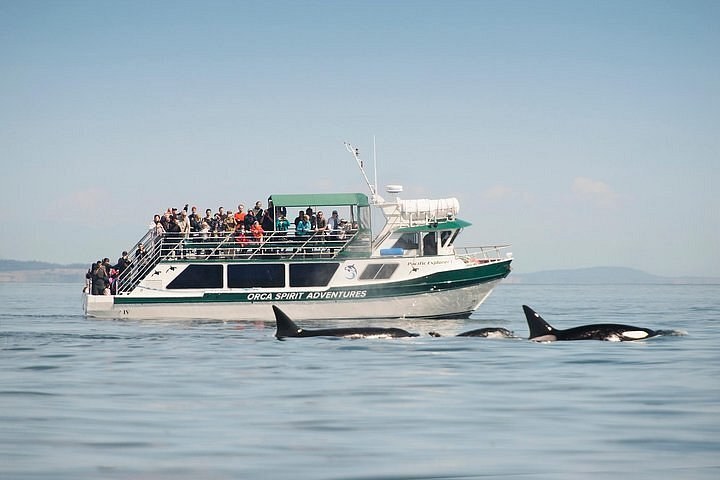 58 mi from VancouverPrivate Whale Watching and Wildlife Tour (Capt. Jim's Whale Watching)
 45 mi from VancouverWestcott Bay Sea Farms & Oyster Shack
  44 mi from Vancouver · land adventureVictoria's Wild Coast: Falconry, Gold Mines, and the Pacific
 130 mi from Vancouver · land adventureTacoma's Wild Side: Puget Sound, Quarries & a Volcano
 130 mi from Vancouver · land adventureSalt Air and Oyster Shells: A San Juan Islands Sailing Guide
 After you step off · near Whittier
You end in a different port — stay on, and add what is within reach before you fly home.