Your cruise
Seven Seas Prestige · 7-night Mediterranean cruise, Civitavecchia (Rome) to Trieste
Jul 22 – Jul 29 · 7 nights ·
Day 1 Civitavecchia (Rome) (board) · Day 2 Salerno · Day 3 Messina · Day 4 Willis Island · Day 5 Kotor · Day 6 Dubrovnik · Day 7 Rijeka · Day 8 Trieste (step off)
What you do Glide along the world's most dramatic coastline aboard a private luxury vessel, anchoring at Positano's pastel cliffs, swimming in hidden sea caves, and toasting with Aperol spritz as the Tyrrhenian sun sets. The Amalfi Coast from the water is simply unmissable.
What to expect Step aboard a classic wooden gozzo or sleek motorboat from Salerno's marina and trace the jaw-dropping limestone cliffs of the Amalfi Coast. Your skipper navigates into the Grotta dello Smeraldo, stops at secluded coves for snorkeling, and moors at Positano's beach for a long, unhurried lunch. The return sail at golden hour, with the coast glowing amber, is the defining image of any Italy trip.
Good to know Departs from Salerno's Piazza della Concordia ferry dock, a 10-minute walk from the cruise terminal. Full-day charters run 8–9 hours; half-day options available. Book at least 3–4 weeks ahead in peak season. Confirm all-aboard time and build in 30 minutes' buffer for the return.
book direct with Salerno Incoming (official local boat operator) → · the full guide →
What you do Walk the ghostly streets of Pompeii with a practicing archaeologist after the main crowds have left — an extraordinary, almost cinematic encounter with the Roman world frozen in 79 AD. Limited entry makes this the rarest ticket on the Amalfi circuit.
What to expect A private car or minivan collects you from the cruise pier for the 45-minute drive north. Roberto opens the experience with context at the Forum before moving through the Villa of the Mysteries, the Lupanar, and the House of the Faun — sites often rushed on group tours. He reads original Latin inscriptions aloud and reconstructs daily Roman life with vivid, peer-reviewed detail. You return with a completely different understanding of antiquity.
Good to know Pompeii Archaeological Park tickets must be pre-booked online at pompeiisites.org; timed entry slots sell out weeks ahead. Allow 4–5 hours on site plus 1.5 hours' total transfer. Check all-aboard time carefully — depart the site no later than 2 hours before ship departure.
book direct with Guides of Italia (Roberto, licensed archaeologist-guide) → · the full guide →
What you do Stand before three of the best-preserved Greek temples on Earth — older and more intact than the Parthenon — then retire to a working buffalo farm for a private mozzarella tasting paired with local wines. This is Campania at its most gloriously uncrowded.
What to expect Your private car heads south along the Tyrrhenian coast to the UNESCO-listed ruins of Paestum, arriving early before the heat and day-trip coaches. Roberto brings the Temple of Neptune (c. 450 BC) to life through myth, politics, and architectural analysis. The National Museum of Paestum, with its stunning Tomb of the Diver fresco, follows. Lunch is a private tour of a Mozzarella di Bufala Campana DOP farm — you watch the cheese pulled by hand and taste it warm with local EVOO, prosciutto di Parma, and Fiano di Avellino.
Good to know Half-day excursion, approximately 5–6 hours total. Pre-book the farm visit separately as availability is limited. Comfortable walking shoes essential — the archaeological site has uneven stone paths. Paestum is in the opposite direction from the Amalfi Coast, so this excursion works best for guests who want to avoid the coast-road traffic entirely.
book direct with Guides of Italia (Roberto, licensed archaeologist-guide) → · the full guide →
What you do Scale the Lombard-era Castello di Arechi for panoramic views over the Gulf of Salerno, then descend into a medieval old town of Norman cathedrals, ancient apothecary gardens, and poetry-lined alleyways. Salerno's own treasures are shockingly underrated.
What to expect Your guide meets you steps from the pier. The morning begins at the Castello di Arechi, a 8th-century hilltop fortress with sweeping Gulf views, reached by a short taxi or private car. You descend into the labyrinthine old town — through the Arco Catalano, past the Museo della Scuola Medica Salernitana, and into the Giardino della Minerva, a terraced hillside garden of medicinal herbs with Gulf vistas. The Duomo di Salerno (Cathedral of St Matthew) crowns the route, its Byzantine mosaics and Norman bronze doors among southern Italy's finest. A coffee stop at a historic bar on Corso Vittorio Emanuele ends the morning on a perfectly Italian note.
Good to know Meeting point is the cruise terminal or Piazza della Concordia — confirm with your guide at booking. Duration: 3.5–4.5 hours. The Giardino della Minerva charges EUR 3 entry; the Duomo is free. Wear comfortable walking shoes; the old town is hilly and cobbled. This excursion is walkable from the ship, making it the lowest-logistics option on port day.
book direct with GetYourGuide – Salerno Private Custom Tour with a Local Guide → · the full guide →
What you do Attend a chamber concert in the Villa Rufolo's clifftop gardens — inspiration for Wagner's Parsifal — then walk the ancient Marine Republic of Amalfi and explore its Arab-Norman cathedral. Culture, scenery, and music fused in one extraordinary day.
What to expect A private car winds up the vertiginous corniche to Ravello, 350 metres above the sea, arriving at the 11th-century Villa Rufolo in time to stroll the terraced gardens before the concert begins. Strings and piano carry across the Gulf in the open air — one of Italy's most purely cinematic musical experiences. Afterwards, the car descends to Amalfi for a long lunch of sfogliatella and fresh-caught pesce at a harbourside restaurant, followed by the Cathedral of Sant'Andrea with its gilded Byzantine mosaics and dramatic black-and-white striped façade.
Good to know Concerts at Villa Rufolo typically run June–September; check the schedule at ravelloarts.org and book tickets well in advance as they sell out. Drive time from Salerno to Ravello is approximately 45–60 minutes depending on coastal traffic. Allow at least 6 hours for the full combined experience. Evening concerts require careful checking against all-aboard time — afternoon matinée performances are the safer option for cruise guests.
What you do Shop Salerno's Mercato del Carmine with a local chef, then cook a four-course Campanian feast in a private kitchen — from hand-rolled pasta to limoncello semifreddo. Eat what you cook over a long, convivial lunch with local wine pairings.
What to expect Your chef-host meets you at Salerno's covered morning market, guiding you through stalls of San Marzano tomatoes, local provola cheese, fresh anchovies from Cetara, and bundles of wild herbs. Back in the kitchen, you make fresh paccheri pasta from scratch, a slow-cooked ragù napoletano, a traditional caprese with buffalo mozzarella, and a lemon dessert using Amalfi Coast sfusato lemons. The meal is eaten together around the family table with a curated selection of Campanian whites and reds, with the chef narrating the history and lore behind every dish.
Good to know Classes typically run 4–5 hours. The kitchen is a short taxi ride or 15-minute walk from the cruise terminal. Book the private option well ahead for a truly bespoke experience — small-group classes fill quickly in summer. Advise the operator of any dietary restrictions at booking. Ideal for morning port calls where you want to be back aboard by mid-afternoon.
book direct with GetYourGuide – Salerno Cooking Class → · the full guide →
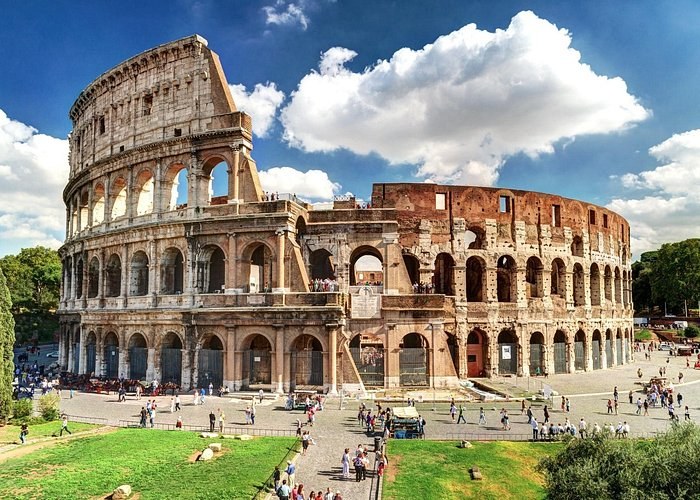
What you do This is the definitive Rome bucket-list day: Michelangelo's Sistine Chapel ceiling and Last Judgment, the Vatican Museums, St. Peter's Square, plus the Colosseum and Roman Forum — all in one 9-hour private run from the pier. Your driver collects you ship-side in a Mercedes and the 'privilege' skip-the-line tickets to both the Vatican and Colosseum mean you walk past the 2-hour queues that would otherwise eat your port day. Note this is a private-driver tour, not a guided one: you explore the interiors at your own pace (audio guides sold inside).
What to expect A private Mercedes collects you pier-side at Civitavecchia and you begin a 9-hour immersion in Rome's iconic landmarks, moving at your own pace rather than a group's rhythm. You skip past the 2-hour queues at the Vatican Museums to explore Michelangelo's Sistine Chapel ceiling and Last Judgment, then wander St. Peter's Square (basilica entry is free but has its own queue). After lunch flexibility, you drive to the Colosseum and Roman Forum, again with skip-the-line privilege tickets that let you move straight inside while standard visitors wait. Throughout, your private driver and personal vehicle—not a 50-person bus—keep you on your schedule, though you explore each site's interiors independently with optional audio guides available for purchase.
Good to know The full excursion runs 9 hours; plan to depart the pier by 8:00 AM at the latest to ensure a comfortable return before your ship's evening departure. Your private driver meets you ship-side at Civitavecchia—confirm the exact return-time guarantee and buffer window when booking, as this operator runs cruisers daily but you'll want that back-to-ship safety net in writing. Bring comfortable walking shoes, sunscreen, and cash or cards for lunch and optional audio guides inside the museums (not included in the EUR 187.50 price). Book skip-the-line tickets in advance as part of your package; they're your main time-saver advantage over the cruise line's group tours, which run $220–$320 per person for the same sites.
book direct with Discovery Guided Tours → · the full guide →
What you do The reason cruise lines stop here at all: a private deluxe vehicle whisks you from the pier to the Trevi Fountain, Pantheon, Spanish Steps, Piazza Navona, St. Peter's Square and the Colosseum, dropping you as close as Rome's traffic limits allow at each. It's the maximize-a-tight-window play — a first-timer who sails past Rome without standing at the Trevi would genuinely regret it. Be clear-eyed: this is a driver, not a licensed guide, so it's exterior views, photo stops and walk-up landmarks, no museum interiors.
What to expect Your driver collects you pier-side at 8:00 AM in a private deluxe vehicle and begins threading Rome's narrow streets, stopping at the Trevi Fountain, Pantheon, Spanish Steps, Piazza Navona, St. Peter's Square, and Colosseum views—you step out, snap photos, walk up to the exteriors and iconic squares, then move on. This is drive-and-stroll geography, not museum interiors: you'll see Rome's greatest hits from street level and courtyard vistas, with your driver dropping you as close as traffic allows at each landmark. The rhythm is constant but unhurried—a masterclass in first-timer coverage, punctuated by photo moments and the low hum of rolling between sites. You're back at the pier by 5:00–5:30 PM, having touched eight of Rome's most recognizable monuments without boarding a 50-seat coach.
Good to know Pickup is pier-side at 8:00 AM sharp with return by 5:00–5:30 PM, giving you roughly 8 hours door-to-door; factor in Rome's traffic and the driver will optimize stops, so expect less than 30 minutes at each landmark unless you request longer. No entrance tickets, meals, or guide services are included—this is a driver-only arrangement, so museum and basilica interiors are on your own dime and time; bring cash and book ahead if you want to step inside St. Peter's or the Colosseum. All tolls, parking, and taxes are covered in the quoted price (EUR 650–750 per vehicle for up to 7 guests, ~EUR 107–163 per person), and the driver speaks English. Book directly with RomeCabs in advance; a solo traveler or couple may find the ship's motorcoach tour or Trenitalia train equally priced or cheaper per head, so confirm group size before committing.
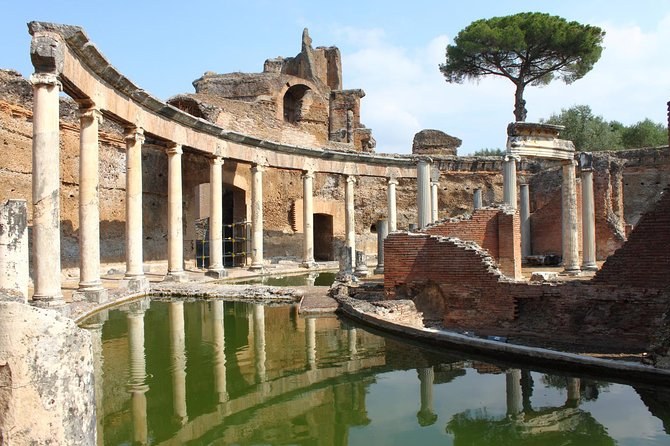
What you do For travelers who've already 'done' central Rome, this is the equally unforgettable alternative: Villa d'Este's 51 fountains, 64 waterfalls and 220 basins — all gravity-fed, not a single pump — paired with Emperor Hadrian's sprawling 2nd-century imperial estate. An expert private guide actually walks the gardens and ruins with you, and the crowds are a fraction of the Vatican's. A 9-hour day, pier to pier.
What to expect You'll spend the morning and early afternoon in two staggered acts: first, Villa d'Este's terraced Renaissance gardens, where your expert guide walks you through cascading fountains, 220 basins, and 64 waterfalls—all fed by gravity alone, no pumps needed—then a private car transfer inland to Emperor Hadrian's 2nd-century sprawl, where crumbling villas, temples, and theaters unfold across 30 acres of archaeological theatre. The rhythm is unhurried; you're with a licensed English-speaking expert, not herded through a coach crowd, so you'll actually absorb the history and architecture as you walk. By late afternoon, your driver returns you to the Civitavecchia pier, completing the 9-hour door-to-door arc.
Good to know Pickup from Civitavecchia pier is included; plan for a private car departure roughly 3–4 hours after ship arrival to allow for disembarkation and meet your guide. Both villas are outdoor, terraced sites with significant walking and uneven ground—wear comfortable shoes and bring sun protection and water. Book at least 48–72 hours ahead; the price (EUR 869 minimum, ~$475 per couple) drops per person as group size grows, and slots are limited to preserve the "expert guide + small party" promise. Confirm your ship's all-aboard time with the concierge and allow a 30–45-minute buffer before boarding to account for Civitavecchia pier return traffic.
book direct with Through Eternity Tours → · the full guide →
What you do Walk intact ancient streets, an amphitheater, taverns, bath-house mosaics and three-story Roman apartment blocks at the buried port city of Ostia Antica — the marquee 'lost Roman city' with a fraction of Rome's crowds. It's far closer to Civitavecchia than the actual Pompeii (which is impractical from this port), and this private full-day pairs it with the Etruscan necropolis at Cerveteri. Pier-side Mercedes pickup, full day, back in time for the ship.
What to expect You'll be picked up pier-side in a private deluxe Mercedes and driven to Ostia Antica, where you'll walk intact ancient streets lined with taverns, bath houses, and remarkably preserved three-story Roman apartment blocks, culminating at the amphitheater — a far less crowded alternative to Pompeii. The day then pivots to Cerveteri's Etruscan necropolis, where you explore burial sites and artifacts from Rome's pre-imperial neighbors. Throughout, you're moving at your own pace in private transport rather than herded with a group, though your driver handles logistics rather than narrating the ruins themselves. The rhythm is unhurried full-day immersion: ancient streets in the morning, a site transition at midday, and Etruscan tombs in the afternoon, returning to the pier in time to reboard.
Good to know Book ahead with Stefano Rome Tours and confirm pier pickup timing to ensure you clear the ship's all-aboard (driver will know the buffer). Entrance tickets to both Ostia Antica and Cerveteri are not included in the EUR 590 vehicle fee—budget ~EUR 18 per site and purchase at the gate or ahead online to save time. Bring a robust audio guide app (like the official Ostia Antica app) or printed site guide, since the driver is not a licensed in-site interpreter. With a full day in the field, wear comfortable walking shoes, sunscreen, and a hat; both sites are largely open-air and can be hot, especially in summer months.
What you do Skip the 1.5-hour each-way push to Rome and explore the port town nearly every cruiser blows past: Michelangelo's harbor fortress (Forte Michelangelo), one of Italy's largest open-air markets, fresh Tyrrhenian seafood and the seafront Pirgo promenade. A relaxed small-group walk with local tastings along the way — the low-stress, low-risk safety net when you want to be steps from the ship.
What to expect You'll join a small-group walk that begins steps from the pier and moves at a leisurely pace through Civitavecchia's historic center, anchored by visits to the Renaissance Forte Michelangelo and one of Italy's largest open-air markets alive with local vendors and produce. Along the way, you'll pause for fresh Tyrrhenian seafood tastings and other local bites, absorbing the rhythm of a working port town most cruisers skip. The walk concludes on the waterfront Pirgo promenade, where you'll have absorbed three hours of culture and flavor without the fatigue of a long coach transfer. It's the opposite of the Rome sprint—an immersive, low-pressure exploration of the places locals actually go.
Good to know The entire excursion unfolds within walking distance of your ship, so there's zero transfer time and minimal risk of running late; plan for the three-hour guided walk to fit comfortably in a 6–8 hour port window. Book ahead through DriverInRome to secure your spot in a small group, and wear comfortable walking shoes—you'll be on foot the whole time through cobblestone streets and market areas. Bring cash (EUR) for any additional purchases at the market or for tips, and check departure times with the operator to give yourself at least an hour buffer before all-aboard. The price of approximately EUR 75 per person (€82 USD) includes all tastings, so budget only for optional extras and gratuity.
What you do Glide along the world's most dramatic coastline aboard a private luxury vessel, anchoring at Positano's pastel cliffs, swimming in hidden sea caves, and toasting with Aperol spritz as the Tyrrhenian sun sets. The Amalfi Coast from the water is simply unmissable.
What to expect Step aboard a classic wooden gozzo or sleek motorboat from Salerno's marina and trace the jaw-dropping limestone cliffs of the Amalfi Coast. Your skipper navigates into the Grotta dello Smeraldo, stops at secluded coves for snorkeling, and moors at Positano's beach for a long, unhurried lunch. The return sail at golden hour, with the coast glowing amber, is the defining image of any Italy trip.
Good to know Departs from Salerno's Piazza della Concordia ferry dock, a 10-minute walk from the cruise terminal. Full-day charters run 8–9 hours; half-day options available. Book at least 3–4 weeks ahead in peak season. Confirm all-aboard time and build in 30 minutes' buffer for the return.
book direct with Salerno Incoming (official local boat operator) → · the full guide →
What you do Walk the ghostly streets of Pompeii with a practicing archaeologist after the main crowds have left — an extraordinary, almost cinematic encounter with the Roman world frozen in 79 AD. Limited entry makes this the rarest ticket on the Amalfi circuit.
What to expect A private car or minivan collects you from the cruise pier for the 45-minute drive north. Roberto opens the experience with context at the Forum before moving through the Villa of the Mysteries, the Lupanar, and the House of the Faun — sites often rushed on group tours. He reads original Latin inscriptions aloud and reconstructs daily Roman life with vivid, peer-reviewed detail. You return with a completely different understanding of antiquity.
Good to know Pompeii Archaeological Park tickets must be pre-booked online at pompeiisites.org; timed entry slots sell out weeks ahead. Allow 4–5 hours on site plus 1.5 hours' total transfer. Check all-aboard time carefully — depart the site no later than 2 hours before ship departure.
book direct with Guides of Italia (Roberto, licensed archaeologist-guide) → · the full guide →
What you do Stand before three of the best-preserved Greek temples on Earth — older and more intact than the Parthenon — then retire to a working buffalo farm for a private mozzarella tasting paired with local wines. This is Campania at its most gloriously uncrowded.
What to expect Your private car heads south along the Tyrrhenian coast to the UNESCO-listed ruins of Paestum, arriving early before the heat and day-trip coaches. Roberto brings the Temple of Neptune (c. 450 BC) to life through myth, politics, and architectural analysis. The National Museum of Paestum, with its stunning Tomb of the Diver fresco, follows. Lunch is a private tour of a Mozzarella di Bufala Campana DOP farm — you watch the cheese pulled by hand and taste it warm with local EVOO, prosciutto di Parma, and Fiano di Avellino.
Good to know Half-day excursion, approximately 5–6 hours total. Pre-book the farm visit separately as availability is limited. Comfortable walking shoes essential — the archaeological site has uneven stone paths. Paestum is in the opposite direction from the Amalfi Coast, so this excursion works best for guests who want to avoid the coast-road traffic entirely.
book direct with Guides of Italia (Roberto, licensed archaeologist-guide) → · the full guide →
What you do Scale the Lombard-era Castello di Arechi for panoramic views over the Gulf of Salerno, then descend into a medieval old town of Norman cathedrals, ancient apothecary gardens, and poetry-lined alleyways. Salerno's own treasures are shockingly underrated.
What to expect Your guide meets you steps from the pier. The morning begins at the Castello di Arechi, a 8th-century hilltop fortress with sweeping Gulf views, reached by a short taxi or private car. You descend into the labyrinthine old town — through the Arco Catalano, past the Museo della Scuola Medica Salernitana, and into the Giardino della Minerva, a terraced hillside garden of medicinal herbs with Gulf vistas. The Duomo di Salerno (Cathedral of St Matthew) crowns the route, its Byzantine mosaics and Norman bronze doors among southern Italy's finest. A coffee stop at a historic bar on Corso Vittorio Emanuele ends the morning on a perfectly Italian note.
Good to know Meeting point is the cruise terminal or Piazza della Concordia — confirm with your guide at booking. Duration: 3.5–4.5 hours. The Giardino della Minerva charges EUR 3 entry; the Duomo is free. Wear comfortable walking shoes; the old town is hilly and cobbled. This excursion is walkable from the ship, making it the lowest-logistics option on port day.
book direct with GetYourGuide – Salerno Private Custom Tour with a Local Guide → · the full guide →
What you do Attend a chamber concert in the Villa Rufolo's clifftop gardens — inspiration for Wagner's Parsifal — then walk the ancient Marine Republic of Amalfi and explore its Arab-Norman cathedral. Culture, scenery, and music fused in one extraordinary day.
What to expect A private car winds up the vertiginous corniche to Ravello, 350 metres above the sea, arriving at the 11th-century Villa Rufolo in time to stroll the terraced gardens before the concert begins. Strings and piano carry across the Gulf in the open air — one of Italy's most purely cinematic musical experiences. Afterwards, the car descends to Amalfi for a long lunch of sfogliatella and fresh-caught pesce at a harbourside restaurant, followed by the Cathedral of Sant'Andrea with its gilded Byzantine mosaics and dramatic black-and-white striped façade.
Good to know Concerts at Villa Rufolo typically run June–September; check the schedule at ravelloarts.org and book tickets well in advance as they sell out. Drive time from Salerno to Ravello is approximately 45–60 minutes depending on coastal traffic. Allow at least 6 hours for the full combined experience. Evening concerts require careful checking against all-aboard time — afternoon matinée performances are the safer option for cruise guests.
What you do Shop Salerno's Mercato del Carmine with a local chef, then cook a four-course Campanian feast in a private kitchen — from hand-rolled pasta to limoncello semifreddo. Eat what you cook over a long, convivial lunch with local wine pairings.
What to expect Your chef-host meets you at Salerno's covered morning market, guiding you through stalls of San Marzano tomatoes, local provola cheese, fresh anchovies from Cetara, and bundles of wild herbs. Back in the kitchen, you make fresh paccheri pasta from scratch, a slow-cooked ragù napoletano, a traditional caprese with buffalo mozzarella, and a lemon dessert using Amalfi Coast sfusato lemons. The meal is eaten together around the family table with a curated selection of Campanian whites and reds, with the chef narrating the history and lore behind every dish.
Good to know Classes typically run 4–5 hours. The kitchen is a short taxi ride or 15-minute walk from the cruise terminal. Book the private option well ahead for a truly bespoke experience — small-group classes fill quickly in summer. Advise the operator of any dietary restrictions at booking. Ideal for morning port calls where you want to be back aboard by mid-afternoon.
book direct with GetYourGuide – Salerno Cooking Class → · the full guide →
What you do Climb to the 3rd-century BC Teatro Antico, carved into the hillside so its broken stage columns frame Etna's smoking cone and the Ionian Sea behind them — the single most photographed view in Sicily and the reason cruise lines stop in Messina at all. Reach it fully independently: ~45-60 min train from Messina Centrale (a flat 10-15 min walk from the pier) to Taormina-Giardini, then the local bus or ASM cable car up the cliff. Buy a timed entry ticket on the official park site to skip the queue, and leave time to walk Corso Umberto to the Piazza IX Aprile terrace.
What to expect Walk flat to Messina Centrale (10–15 min) and board a regional train to Taormina-Giardini (45–60 min), watching the Ionian coast unfold through the windows. From the station, ride the ASM cable car or local bus up the cliff to the ancient hilltop town, then climb into the 3rd-century BC Teatro Antico—a Greek amphitheatre carved into the mountainside where broken stage columns perfectly frame Mount Etna's smoking cone and the sea beyond, the single most photographed view in Sicily. Spend your middle hours walking the elegant Corso Umberto through town and lingering on the Piazza IX Aprile terrace for the same iconic vistas before reversing the journey back to the pier.
Good to know Buy a timed entry ticket (€14 adults, free under 18, €5 EU 18–25) on the official Parco Archeologico di Naxos e Taormina website before departure to skip queues; the site is open 9:00–16:00 daily. Plan for a 6–7 hour window: 10–15 min walk to the train station + 45–60 min train + cable car/bus + 2–3 hours exploring the theatre and town + reverse travel = roughly 5–6 hours, leaving a 1–2 hour buffer to dress, return to the pier, and re-board. Round-trip train costs €10–16; bring small cash or a card accepted in Italy, and wear comfortable shoes for the steep Taormina hillside and the theatre's ancient stone steps. Skip the cruise line's coached tours (€80–160) unless anxious about the train; this DIY route costs ~€30 total and delivers the same iconic experience.
book direct with Parco Archeologico di Naxos e Taormina (official ticket office) → · the full guide →
What you do Stand on the smoking flanks of Europe's most active volcano: a Land Rover collects you at the Messina cruise terminal and grinds across old and new lava flows and ancient forest before you helmet up, flick on a flashlight and walk into a genuine lava cave. It's the visceral, hands-on counterpart to Taormina's man-made wonder — far more memorable than viewing Etna from a coach window, and the natural-wonder bucket-list moment of the whole port.
What to expect A Land Rover collects you directly at Messina cruise terminal and climbs across raw volcanic terrain—weaving through old and new lava flows and ancient forests before you arrive at Mount Etna's flanks. You'll helmet up, switch on a flashlight, and enter an authentic lava cave on foot, exploring the tunnels created by Europe's most active volcano. The experience unfolds as a visceral, hands-on journey across smoking slopes and through geological time, culminating in roughly 45 minutes of easy hiking and genuine cave immersion—far more intimate than viewing Etna from a coach window.
Good to know The full excursion runs 6–7 hours all-inclusive (round-trip pickup, guide, 4x4, helmet, flashlight, cave entry), with lunch not included—pack a snack. Book directly with Go-Etna and request written confirmation of the all-aboard time to ensure the operator commits to your ship's departure schedule. The small-group 4x4 format saves $55–120 per person versus the ship's larger coach tour while delivering superior access to the lava. Allow a 1–2 hour buffer before final ship departure when scheduling your return pickup time.
book direct with Go-Etna (Etna 4x4 Excursions) → · the full guide →
What you do A pilgrimage for any film lover: a minivan runs you from the pier into the medieval hilltop hamlets of Savoca and Forza d'Agro, which stood in for 'Corleone' in Coppola's trilogy. You sit at Bar Vitelli where Michael asks for Apollonia's hand, ride a three-wheeled Ape Calessino through Savoca's lanes, and — distinctively — go inside the privately owned Castello degli Schiavi, the Corleone residence that only a handful of operators are permitted to enter.
What to expect Your minivan departs the pier and climbs into the Sicilian hills toward the medieval stone villages of Savoca and Forza d'Agro, the actual film sets where Coppola shot scenes from *The Godfather* trilogy. You'll stop at Bar Vitelli to sit where Michael proposed to Apollonia, then ride a three-wheeled Ape Calessino through Savoca's narrow lanes before entering Castello degli Schiavi—the privately owned palace that served as the Corleone compound and is accessible only to a select few tour operators. The day unfolds as a blend of film pilgrimage and immersion in authentic medieval hillside hamlets, with a licensed English guide contextualizing each location.
Good to know Book directly with Sicily Active (not through your cruise line) to guarantee access to Castello degli Schiavi's interior; the standard ship version typically excludes the castle. The full excursion runs 8 hours including pier pickup and drop-off, with a stated safety-margin return well before all-aboard. Minivan capacity is small (minimum 4 passengers), so book ahead; the Ape Calessino ride through Savoca's tight streets requires reasonable mobility and comfort in tight spaces. Wear comfortable walking shoes for steep village lanes and bring sun protection and water—the hilltop locations offer limited shade.
What you do Glide around Isola Bella, the WWF-reserve islet known as the 'Pearl of the Ionian,' on a small boat capped at 12 guests — nosing into the Blue Grotto and Lovers' Cave, drink in hand, with a swim stop in glassy turquoise water under the Taormina cliffs. It's the relaxed, postcard counterpoint to a culture-heavy day and an easy add-on after a morning at the Greek Theatre, since it leaves from Giardini Naxos right below town.
What to expect You'll board a small boat (max 12 guests) at Giardini Naxos and spend roughly two hours gliding around Isola Bella, the protected WWF-reserve islet, nuzzling into the Blue Grotto and Lovers' Cave with a drink in hand. The rhythm is leisurely: navigate the sea caves, then drop anchor in glassy turquoise water beneath the Taormina cliffs for a swim stop where you can float under the dramatic limestone face. This is postcard-perfect relaxation, designed as the aesthetic counterweight to a heavier cultural morning—no rushing, no crowds beyond your small group, just the gentle rock of the boat and the Ionian light.
Good to know Departures run every hour from 10:00–18:00 March through November, so you can pair a morning at Taormina's Greek Theatre with a 14:00–16:00 boat slot and still make your ship. Get from the pier to Giardini Naxos by local train (cheap, direct, ~10 min downhill from town), and meet the operator at their departure point near Restaurant La Sirena; book the €25 pp boat segment locally rather than through the ship to save dramatically. Plan a 60–90 minute buffer back to the pier post-swim to account for the train journey and shower time—you'll be wet and sun-soaked.
What you do If you'd rather not leave Messina, build your day around 12:00 noon in Piazza Duomo, a few minutes' walk from the pier. The Cathedral bell tower holds the largest mechanical-astronomical clock in the world (Ungerer of Strasbourg, 1933): on the stroke of noon a golden lion roars, a bronze rooster crows and flaps, and tiers of gilded figures wheel into a 12-minute spectacle set to Schubert's Ave Maria. Watch it free from the square, then climb inside to see the gears and a rooftop view over the Strait.
What to expect Walk straight from the cruise pier to Piazza Duomo in a few minutes and position yourself in the square by 11:45 a.m. to secure a good vantage point. At noon, watch the world's largest mechanical-astronomical clock spring to life: a golden lion roars, a bronze rooster crows and flaps its wings, and gilded figures wheel through a 12-minute spectacle choreographed to Schubert's Ave Maria. After the show concludes, climb the bell tower (€5 pp) to see the intricate gear mechanisms up close and enjoy a rooftop view across the Strait of Messina, or combine the tower with the Cathedral Treasury (€7.50) for deeper historical context.
Good to know The entire excursion is a zero-risk, near-port itinerary: the cathedral and noon show are a 5-minute walk from the cruise terminal, and you can return to the ship within minutes if needed. Arrive at the square by 11:45 a.m.—the free outdoor show requires no tickets or advance booking, but crowds gather quickly. Plan 30–45 minutes for the tower climb and gears viewing, or up to 90 minutes if adding the Treasury visit. Bring comfortable walking shoes, sunscreen, and a camera; no advance reservations are necessary for the free noon show, though groups may contact MessinArte directly if seeking a paid guide narration.
book direct with MessinArte soc. coop. (Cathedral bell tower & treasury) → · the full guide →
What you do Board a rigid inflatable Zodiac for a close-up circumnavigation of one of the Coral Sea's most remote specks of land. Drift alongside vast nesting colonies of red-footed boobies, frigatebirds and brown noddies — a wildlife spectacle almost no traveller on earth ever witnesses.
What to expect Your Zodiac departs the ship's swim platform and skirts the island's entire coastline at water level, giving you eye-to-eye encounters with seabird colonies that number in the tens of thousands. The guide pauses the engine so you can hear the cacophony of calls and photograph birds in undisturbed flight. Shallow coral gardens glow electric beneath the hull as you round each headland. The round trip typically takes 90–120 minutes, leaving ample buffer before all-aboard.
Good to know Pre-book directly via email well in advance — this is a tender-only island and Zodiac capacity is strictly capped. Wear non-marking soles, bring a hat and reef-safe sunscreen. Confirm your ship's all-aboard time and allow 30 minutes' return buffer.
What you do Slip beneath the surface of some of the least-dived water on the planet — the Coral Sea surrounding Willis Island, hundreds of kilometres from the nearest coast. Visibility regularly exceeds 30 metres, revealing walls of hard coral, reef sharks, giant trevally and undisturbed sea-turtle feeding grounds.
What to expect Guests kit up in a purpose-equipped dive room and giant-stride into waters of extraordinary clarity. The reef structures here are pristine — no bleaching, no crowds — and the sheer biomass of pelagic life reflects the island's status as a protected marine reserve. Drift snorkelling across shallow coral plateaus, you are likely to encounter hawksbill turtles grazing, schools of chevron barracuda and the flash of a reef whaler in the blue. Safety divers and guides remain in the water throughout.
Good to know Swimming competency is required; full snorkel equipment is provided. Confirm landing and in-water permissions with the Australian Bureau of Meteorology station keeper in advance — access can be subject to weather and conservation protocols. Bring a rash vest for UV protection.
book direct with Mike Ball Dive Expeditions (Townsville/Cairns — Coral Sea specialists) → · the full guide →
What you do Step ashore — one of only a handful of visitors ever permitted — and receive a private briefing inside Australia's most remote operational weather station. The data collected here has guided cyclone warnings across Queensland for over a century; it is a living piece of scientific history.
What to expect After a short Zodiac transfer to the beach, you walk across the coral-rubble islet — the entire thing is barely 400 metres across — to the weatherboard station compound. The duty meteorologist explains the island's role in tracking Coral Sea cyclogenesis, shows you the instrument arrays and balloon launch facilities, and fields questions with refreshing candour. The sense of absolute remoteness — no roads, no shops, just science and sea — is profoundly affecting. Visits are brief (30–45 minutes) out of respect for operations.
Good to know Landing is at the discretion of BOM and sea conditions; it is never guaranteed. Wear closed shoes for the coral-rubble foreshore. Do not touch or enter any instrument enclosures. This is one of cruising's rarest privileges — treat it accordingly.
What you do Join a dedicated marine naturalist on a slow, deliberate circuit of Willis Island's offshore waters — prime habitat for dwarf minke whales, spinner dolphins, red-tailed tropicbirds and occasional whale sharks. This is expedition-grade wildlife observation in one of Earth's most intact marine environments.
What to expect The excursion runs in the calm conditions that typically prevail in the lee of the island, with the naturalist briefing the group on cetacean behaviour before departure. Spinner dolphins frequently bow-ride the vessel's wake, while tropicbirds trace lazy arcs overhead trailing their extraordinary white tail streamers. In season (June–September), dwarf minke whales approach curious vessels with remarkable boldness. The naturalist's running identification and ecological commentary transforms an already astonishing scene into a masterclass in Coral Sea ecology.
Good to know Bring image-stabilised binoculars if you own them — loaner binoculars are available but limited. A polarised lens filter dramatically improves underwater wildlife sighting from the deck. Morning cruises yield the best light and the calmest seas.
book direct with Coral Expeditions (Australia's premium expedition cruise specialist) → · the full guide →
What you do Combine world-class snorkelling with a dedicated underwater photography tuition session led by a professional marine photographer. The pellucid, undisturbed waters around Willis Island provide a studio backdrop that professionals travel half a year to reach — and you are already here.
What to expect After a 20-minute on-deck briefing covering exposure, buoyancy control for photography and coral-safe positioning, the group enters the water with the lead photographer. Each participant is given real-time feedback via underwater slates and post-dive screen reviews. The reef here hosts nudibranchs, juvenile turtles and extraordinary soft-coral detail that rewards close, patient framing. By the final dive, guests leave with a curated set of images that would pass muster in any travel magazine.
Good to know Bring your own mirrorless or compact camera with an underwater housing if possible; hire housings are limited. Basic snorkel competency required. Maximum group size of 6 is strictly enforced — book your place the moment you board the ship.
What you do Rise before the rest of the ship and join an ornithologist-guide for a dawn landing on Willis Island — arguably the most exclusive birdwatching address in the Southern Hemisphere. The island hosts one of Australia's largest documented seabird colonies, and first light is when it erupts into extraordinary life.
What to expect The Zodiac lands on the coral-rubble beach just as the sky softens to indigo. Within seconds, frigatebirds begin their courtship displays, inflating scarlet throat pouches while brown boobies jostle on nesting scrapes metres from your feet. The ornithologist narrates the scene with infectious expertise, calling species by name as they lift and wheel overhead in their thousands. The island's absolute silence — broken only by wind and wings — produces a meditative quality that experienced travellers consistently describe as one of cruising's most affecting moments.
Good to know Landing is subject to BOM approval and sea-state — pre-register your interest at the expedition desk on day one of the voyage. Wear dark, non-reflective clothing to avoid disturbing nesting birds. Carry a long lens (200mm+ equivalent) for perched-bird shots. Soft-soled shoes protect both the coral-rubble substrate and your footing.
book direct with Coral Expeditions (Australia's premium expedition cruise specialist) → · the full guide →
What you do Hike the ~1,350 ancient stone steps that zig-zag up the mountainside to the fortress at roughly 1,200 ft, where the whole red-roofed UNESCO Old Town and the fjord-like bay open up beneath you. This is THE iconic Kotor image and the single thing first-timers most regret skipping. The trailhead is inside the walled town a few minutes from the ship, so it's fully independent of the cruise line; allow 1.5-2.5 hrs round trip and go early to beat the heat and crowds.
What to expect You'll walk straight out of the pier through the UNESCO Old Town's cobbled streets toward the North Gate, where the ancient stone staircase suddenly reveals itself—1,350 steps zig-zagging steeply up the mountainside. As you climb, the red-roofed town shrinks beneath you and the fjord-like bay opens wider with each switchback, the final push rewarding you with the San Giovanni Fortress at roughly 1,200 feet, where the entire Kotor landscape spreads below in one breathtaking vista. The descent mirrors the ascent in reverse, and the whole circuit—climb, rest at the fortress, descent—flows naturally over 1.5 to 2.5 hours depending on your pace and photography stops.
Good to know Start within the first 90 minutes of docking to beat the heat and crowds on the exposed staircase; the trailhead sits just 5 minutes from the ship inside the walled town, with no booking needed—simply pay 8–15 EUR at the official municipal booths near the North Gate or behind St. Mary's church when you arrive. Bring plenty of water, sunscreen, and sturdy shoes with good grip for the stone steps, and plan to be back at the pier with a comfortable 30-minute buffer before all-aboard. Skip the cruise line's Old Town walking tours ($72–74, which don't even include the walls) and handle this entirely on your own for $9–17 total, walking directly from the ship with no intermediaries.
book direct with Kotor City Walls / San Giovanni Fortress (official municipal ticket booths in the Old Town) → · the full guide →
What you do A fast open-boat run down Boka Bay to swim inside the Blue Cave (Plava Spilja), where sunlight refracts up through the water into an electric glow, with a stop at the islet church of Our Lady of the Rocks. It's the marquee on-water experience of the bay and fits a port-day window easily. Book the early slot to leave buffer before all-aboard.
What to expect You'll board a speedboat at the Central Park dock and make a fast, open-air run down Boka Bay toward the Blue Cave (Plava Spilja), where you'll slip into the grotto and swim in water that glows with an electric blue refracted light from the sun—the signature moment of the bay. From there, the boat carries you to the islet church of Our Lady of the Rocks for a second stop, then completes the circuit with a pass-by of the submarine base. The full loop runs 3 hours, with the rhythm of transit punctuated by two distinct water stops and the maritime scenery of the bay as your constant backdrop.
Good to know Book the early excursion slot to give yourself a comfortable buffer before all-aboard; the 3-hour duration fits easily into a 6–8-hour port day. The dock is a 5-minute walk from the cruise terminal, so you can time your departure independently without waiting for a ship shuttle. Bring swimwear under your clothes, reef shoes or water sandals, sunscreen, and a towel; safety gear is provided. Book directly with Montenegro Submarine ($49 per person) rather than through the ship ($89–100) to save $40–50 per person while controlling your own schedule.
What you do Cruise up the bay to Perast, the most beautiful Baroque village on Boka -- a car-free waterfront of Venetian palazzos -- then hop the short boat out to Our Lady of the Rocks, a man-made island church built by sailors over centuries and lined with votive silver tablets. It's the bay's signature culture-over-swimming outing and a gentler, lower-risk alternative to the full Blue Cave run, with a short, near-port itinerary that's easy to fit before all-aboard.
What to expect You depart from Njegoseva 34 in the Old Town and cruise up the Bay of Kotor to Perast, a car-free waterfront village of honey-colored Venetian palazzos rising from the Adriatic. Once there, you have time to wander the narrow streets and absorb the Baroque architecture before a short boat hop takes you out to Our Lady of the Rocks, a man-made island church where centuries of seafaring tradition manifest in glimmering votive silver tablets lining the walls. The rhythm is unhurried—boat, village stroll, island visit, boat back—making it feel less like a checklist and more like a local's afternoon discovery.
Good to know The entire excursion runs ~3 hours, easily fitting into a 6–8 hour port day; depart early to avoid a tight turnaround. The departure point is walking distance from the Old Town pier, but confirm exact directions with Sea Stars when you book (small groups up to 12 mean you can call ahead). Budget ~3 EUR in cash for island-church entry, paid on-site. Book direct with Sea Stars rather than through the ship—you'll pay $22–35 per person instead of $100–112, saving $70–90 and gaining flexibility with a local licensed skipper.
What you do Paddle the glassy, mountain-walled bay at water level -- past the village of Muo, hidden swim coves and old stone churches -- the most active, low-key-adventurous way to feel the fjord-like setting Kotor is famous for. No experience needed, launches minutes from the Old Town, and easily fits a half-day port window for travelers who'd rather be on the water under their own power than packed into a tour boat.
What to expect You'll launch from the Kotor waterfront minutes from the Old Town and paddle at water level through the glassy, mountain-walled bay—the fjord-like setting Kotor is famous for—passing the village of Muo, hidden swim coves, and old stone churches. The rhythm is deliberate and active: you control the pace under your own power, spotting details and choosing where to linger that a motorboat simply won't allow. No experience is needed; a local guide can lead the way for the full immersion, or go self-guided if you prefer total freedom. It's a low-key adventure that feels intimate with the landscape rather than rushed through it.
Good to know The $44 guided trip or ~$11 self-guided rental fits easily into a half-day port window (6–8 hours); plan 2–3 hours on the water and account for a buffer to return to the pier well before all-aboard. Both options include kayak, paddle, and safety gear provided at launch. Book the guided tour ahead if possible to secure a local guide and avoid wait times during peak cruise arrivals. Wear water shoes or sandals you can paddle in, bring sun protection and a light layer, and expect to get wet—though the protected bay conditions are calm and forgiving for beginners.
What you do The definitive 'see the real Montenegro in one day' loop: up the famous 25-hairpin serpentine for the most dramatic bay panorama in the country, into Lovcen National Park, the old royal capital Cetinje, and the birthplace village of Njegusi for farm-smoked prsut, cheese and rakija. Best for travelers who want mountains, history and a culinary stop over the water -- but it's a long inland day, so this is for ports with a late all-aboard only.
What to expect You'll ascend the famous 25-hairpin serpentine road with jaw-dropping views of Kotor Bay unfolding beneath you, then enter Lovcen National Park to explore Montenegro's dramatic mountain landscape. From there, the tour routes through Cetinje, the old royal capital, before descending into Njegusi—a birthplace village where you'll taste farm-smoked prsut, local cheese, and rakija in their source. The rhythm is mountains-to-history-to-table: a full sensory loop through inland Montenegro that brings the country's geography, heritage, and culinary tradition into sharp focus in a single day.
Good to know Departs Kotor Old Town at 9:00 AM and returns around 7:30 PM (roughly 13 hours total), so book only if your ship's all-aboard is significantly later and the operator guarantees return timing to the pier. Budget ~$18 cash for park and mausoleum entries plus ~€20 for lunch, which are not included in the $76 per-person tour price. Mini-bus transport and English guide are included, as is a Lake Skadar boat ride. This is an inland mountain day—not a casual excursion—so wear sturdy shoes, bring sun protection, and confirm your ship's evening schedule before committing.
book direct with 360 Monte (Gray Line Montenegro) → · the full guide →
What you do Descend into the largest cave system in Europe — 24km of subterranean cathedrals alive with stalactites — then visit a castle literally built into a cliff face. An otherworldly double-bill that simply cannot be replicated anywhere else on earth.
What to expect Board a miniature electric train that whisks you deep into a glittering underworld of 5-metre stalactites and 100,000-year-old formations. Your guide narrates the cave's wartime and scientific history at a pace you set. Emerging back into daylight, a 15-minute drive brings you to Predjama Castle, a Renaissance fortress wedged dramatically into a 123-metre cliff — the world's largest cave castle. Finish with a glass of local Teran wine before the return journey to Rijeka.
Good to know Postojna is approximately 1 hour 15 minutes from Rijeka port by private car. Book the combo ticket online in advance — cave timed-entry slots sell out weeks ahead in summer. Allow 4–5 hours on site; total excursion is 7–8 hours. Check your ship's all-aboard time carefully and build in a 90-minute buffer.
book direct with Postojna Cave Park (official) → · the full guide →
What you do Croatia's crown jewel — 16 turquoise terraced lakes linked by thundering waterfalls and ancient boardwalks through primeval forest. A UNESCO World Heritage Site so impossibly beautiful it feels painted. A non-negotiable bucket-list experience from Rijeka.
What to expect After a scenic 2-hour private transfer through the Lika highlands, you step onto the world-famous boardwalks that skim the surface of electric-blue Jezero Prošćansko. An electric boat glides you silently across the Great Lake as waterfalls cascade on all sides. The panoramic train sweeps you through forest between the upper and lower lake clusters. Your private guide reads the ecosystem — pointing out endemic trout hovering in crystal water, the tufa-building algae that creates new waterfalls over decades. Back in Rijeka by early evening.
Good to know Approximately 2 hours from Rijeka by private transfer. Full excursion is 10 hours — confirm all-aboard time before booking. Park entry tickets must be booked online in advance (summer slots sell out 2–3 weeks ahead). Wear comfortable walking shoes; some sections involve steps and uneven terrain. The Tripadvisor-listed day tour from Rijeka starts from approx. USD 131/person.
book direct with Plitvice Lakes National Park (official) → · the full guide →
What you do Croatia's largest island is a sun-drenched labyrinth of hidden coves, a luminous Blue Cave, and medieval Venetian hilltowns. A private boat excursion weaves through four islands in a single gilded day — the definitive Kvarner Bay experience.
What to expect Your private captain departs Rijeka's waterfront and sets course across the deep blue Kvarner Gulf, pulling into the glowing sea-cave known as the Blue Cave on Krk's coastline — bioluminescent light turns the water an electric cobalt. You anchor in secret pebble bays, snorkel over Posidonia meadows, and dock briefly in Krk Town's Venetian walled harbour for coffee and local honey liqueur. The return leg hugs uninhabited islets where falcons nest in the karst cliffs.
Good to know Departs directly from Rijeka cruise port area — minimal transit time. Private boat tours should be arranged directly with the operator in advance; availability is limited in peak July–August. Confirm exact all-aboard time with your ship; most itineraries run 6–8 hours. Bring sunscreen, a hat and a light layer — sea breeze can be cool even in summer.
book direct with Captain Bobo Private Boat Tours (Rijeka) → · the full guide →
What you do The Venetian-pink hilltop town of Rovinj and the 1st-century Roman arena at Pula — two icons of the Istrian Riviera — in one breathtaking private day. A collision of la dolce vita and ancient empire on the Adriatic.
What to expect Your guide collects you dockside and drives the scenic Istrian coast to Rovinj, where cobblestone lanes scented with lavender wind up to the Church of St Euphemia — panoramas across 14 offshore islands reward the climb. Lunch at a curated konoba features hand-rolled fuži pasta with black truffle and local Malvazija wine. The afternoon pivots to Pula's astonishing 1st-century amphitheatre — sixth largest in the Roman world — where your guide resurrects gladiatorial combat in vivid detail. Return along the Kvarner coast as the Adriatic turns to copper.
Good to know Rovinj is approximately 1.5 hours from Rijeka; Pula adds another 30 minutes. Full day is 9–10 hours — verify all-aboard time. Book ToursByLocals guide at least 2–3 weeks ahead in summer. Pula Arena entry is separate; book timed tickets online at arena-pula.hr to skip queues.
book direct with ToursByLocals – Licensed Istria Guides (Ivana D. & associates) → · the full guide →
What you do Croatia's grandest 19th-century resort town meets wild Kvarner coastline: stroll the imperial Lungomare promenade past Habsburg villas, then paddle kayaks through sea caves and beneath limestone cliffs — all within 20 minutes of the port.
What to expect Begin the morning with a leisurely stroll along Opatija's legendary 12km Lungomare — a Habsburg-era seafront path edged with magnolias, grand hotels and the iconic bronze 'Maiden with the Seagull' sculpture. After coffee at a terrace café overlooking the Kvarner Bay, your certified kayak guide fits you out and leads a small group beneath dramatic limestone cliffs, through sea caves dripping with mineral formations and into hidden emerald bays inaccessible by foot. The return paddle hugs the coastline as yachts glide past the Učka mountain backdrop.
Good to know Opatija is just 15 minutes by taxi or local bus from Rijeka cruise terminal — one of the closest excursions on this list. Kayak tours run approximately 3 hours; pair with the Lungomare walk for a relaxed 5-hour morning. No experience required, but a moderate fitness level is recommended. Book kayak slots in advance via GetYourGuide — summer dates fill quickly.
book direct with GetYourGuide – Opatija Cliffs & Caves Kayak (local operator) → · the full guide →
What you do Plunge into the ancient oak forests of Motovun with a third-generation truffle hunter and trained Lagotto hounds to unearth the 'white diamond' of gastronomy — the Istrian white truffle. End around a farmhouse table with a feast you will talk about for years.
What to expect Your private guide drives you through the rolling Istrian hills to the medieval hilltop village of Motovun, where a truffle-hunting family meets you at the forest edge with their Lagotto Romagnolo hounds. The dogs work the undergrowth with extraordinary focus while your hunter explains centuries of tradition, ecology and the global truffle economy. When the dog freezes and begins to scrape — you kneel, dig and hold a truffle worth its weight in silver. Back at the family farmhouse, the matriarch transforms your finds into a multi-course seasonal lunch paired with Motovun Teran red wine poured freely from a ceramic jug.
Good to know Motovun is approximately 1.5–2 hours from Rijeka by private car. Plan for a full day of 8–9 hours including lunch — confirm all-aboard time before booking. Truffle season peaks October–January (white) and May–November (black), though tours run year-round. Book your ToursByLocals guide at least 3–4 weeks ahead; this experience has very limited private slots.
book direct with ToursByLocals – Licensed Istria Guides (Truffle Experience) → · the full guide →
What you do Step inside the fairy-tale Castello di Miramare perched above the Adriatic, where Archduke Maximilian built his doomed imperial dream. A vetted local guide unlocks the castle's opulent rooms and tragic Habsburg story in a group of no more than 10.
What to expect Your guide meets you at the castle gate and escorts you through the sumptuous royal apartments, each room frozen in 19th-century imperial splendour. The sea-view terraces and romantic English garden surrounding the promontory reward unhurried exploration. You'll hear the extraordinary, melancholy tale of Maximilian and Carlota — ambition, madness, and execution — brought vividly to life. The cliff-top setting above the crystalline Adriatic is one of the most photogenic moments on the entire Adriatic coast.
Good to know Miramare is 8 km from the cruise terminal — take a taxi (≈15 min, EUR 15–20) or the city bus No. 36. Pre-book your small-group slot directly; timed-entry tickets sell out on busy port days. Allow 2.5–3 hrs total including travel. All-aboard friendly on a morning docking.
book direct with Trieste Tickets (official local operator) → · the full guide →
What you do Board a private train deep into the world's most spectacular karst cave system, then scale the cliff to a Renaissance castle built into a sheer rock face. This cross-border day trip to Slovenia is pure bucket-list theatre.
What to expect A vintage electric train whisks you 2 km into the illuminated underworld of Postojna — 24 km of stalactite cathedrals, vast concert halls, and a living olm (the 'human fish') vivarium. Just 9 km away, Predjama Castle clings impossibly to a 123-metre cliff, its secret tunnel system and outlaw-knight legend utterly captivating. The Slovenian countryside drive through the Karst plateau, dotted with vineyards and medieval villages, adds scenic beauty to the journey. A full-day experience that feels like two countries, two worlds.
Good to know Postojna is 50 km from Trieste port (approx. 50 min by private transfer or rental car). Pre-purchase combination tickets online — they include skip-the-queue access. Allow a full 7–8 hrs; confirm all-aboard time before booking. Wear layers — the cave is 10°C year-round.
book direct with Postojna Cave Park (official operator) → · the full guide →
What you do Drift on an iconic pletna wooden boat to the island church on emerald Lake Bled, then explore Ljubljana's baroque old town with a private local guide. Two UNESCO-worthy destinations in one glorious full day.
What to expect Your private driver-guide collects you dockside and heads into Slovenia's Julian Alps, arriving at Lake Bled's impossibly blue glacial waters. A hand-rowed pletna boat ferries you to the baroque Pilgrimage Church of the Assumption on the lake's tiny island — ring the wishing bell and savour the silence. After lunch (your guide knows the best konoba), Ljubljana reveals its pastel old town, dragon bridge, and lively riverside market. The return drive through the vine-striped Karst is a quiet, scenic finale.
Good to know Lake Bled is approx. 90 km from Trieste port (1 hr 20 min). This is a long day — 9–10 hrs — so confirm your ship's all-aboard time carefully. Private vehicle means flexible timing. Book your guide well in advance for summer port days.
book direct with ToursByLocals – Trieste Private Guides → · the full guide →
What you do Descend into the Guinness-certified world's largest tourist cave, just 20 minutes from the port — a colossal cathedral of stalactites that dwarfs St Peter's Basilica. An unforgettable, utterly manageable half-day wonder.
What to expect Stone steps descend 80 metres into a single cavern so vast its ceiling vanishes into darkness above you — the main hall is 98 m high, 167 m long, and home to two of the world's most sensitive seismograph pendulums. Expert guides illuminate the science of stalactite formation and the cave's role as a natural laboratory. The Karst plateau above offers a dramatic, otherworldly landscape of sinkholes and limestone scrub worth a short walk after your visit. Back in Trieste with hours to spare for an espresso on Piazza Unità d'Italia.
Good to know Located in Borgo Grotta Gigante, 13 km from port (20 min by taxi, ≈EUR 20). Guided tours run every 30 min; private tours must be pre-booked. Wear sturdy shoes and a light layer (cave stays at 11°C). Perfect half-day option leaving your afternoon free for Trieste's waterfront.
book direct with Grotta Gigante (official operator) → · the full guide →
What you do Trace Trieste's extraordinary layered identity — Roman, Byzantine, Habsburg, and literary — on a private walking tour with a vetted local historian, from the Roman theatre to the hilltop cathedral where civilisations literally overlap.
What to expect Begin at the atmospheric Piazza Unità d'Italia, Europe's largest sea-facing square, before climbing to the hilltop of San Giusto where a Roman basilica, a medieval castle, and a Venetian-era cathedral occupy the same windswept summit. Your guide brings alive Trieste's golden age as the Habsburg Empire's only seaport — the coffee-house culture, the Jewish merchants, the poets. A detour through the Cavana district uncovers crumbling Venetian alleyways, a functioning Roman theatre embedded in modern buildings, and the Grande Canal lined with Neoclassical palazzi. The city's melancholy beauty — half-Italian, half-Mitteleuropean — is unlike anywhere else in Italy.
Good to know Entirely walkable from the cruise terminal — no transfer needed. A 3-hr private tour fits comfortably within any docking window. Wear comfortable walking shoes; San Giusto hill involves some steep steps. Book the private format for a personalised literary or culinary focus.
book direct with GetYourGuide – Official Private Trieste Walking Tours → · the full guide →
What you do Wind through the UNESCO-listed Prosecco Hills of the Karst plateau to a secret osmizza — a family farmhouse open by law only a few weeks a year — for estate wines, prosciutto, and Karst cheeses poured by the growers themselves.
What to expect Your driver-guide picks you up at the port and climbs into the wild Karst limestone plateau, where the wind-sculpted bora landscape gives way to rows of Vitovska and Terrano vines. At the osmizza, you sit at rough wooden tables in a stone-walled cellar, pouring unlabelled house wine alongside platters of cured meats, hard cheeses, and pickled vegetables — exactly as Triestines have done for 500 years. The guide narrates the Karst's unique terroir, the Habsburg origins of the osmizza law, and the difference between Collio, Carso, and Friuli DOC wines. Return via the scenic Prosecco Hills viewpoint for the iconic vine-terrace panorama above the Adriatic.
Good to know Osmizza locations change weekly — only a local guide knows which is open on your port day. Half-day (4 hrs) fits comfortably within a standard docking window. Includes private vehicle; wine and food at the osmizza typically costs EUR 10–15 pp cash. Book the private tour format and confirm the osmizza visit when reserving.
book direct with ToursByLocals – Trieste Private Guides → · the full guide →
Before you sail · near Rome
Fly in at least a day early — every seasoned cruiser does, so a delay never costs you the ship. This is what is worth that day within reach of the port.
After you step off · near Trieste
You end in a different port — stay on, and add what is within reach before you fly home.