Your cruise
Avalon View · 14-night Mediterranean cruise, Amsterdam to At Sea
May 9 – May 23 · 14 nights ·
Day 1–2 Amsterdam (board) · Day 3 Cologne · Day 4–6 at sea · Day 7 Breisach am Rhein · Day 8 Basel · Day 9 Tournus · Day 10–11 Lyon · Day 12 Tournon · Day 13 Avignon · Day 14–15 at sea
What you do Cologne's two-spired UNESCO Gothic cathedral is the first thing you see from the dock and the one sight no first-timer should skip. The interior (with the gilded Shrine of the Three Kings, the largest reliquary in the Western world) is free; the rite-of-passage is the 533-step spiral climb up the South Tower, squeezing past the colossal St. Peter's Bell — the largest free-swinging church bell on earth — to a platform staring straight down the Rhine. The Dom and the cruise landing stage are a ~5-minute walk apart, so it slots into any port window.
What to expect Walk five minutes from the cruise landing stage and you're at the base of Cologne Cathedral—a UNESCO Gothic landmark with twin spires that dominate the Rhine skyline. Pay EUR 8 at the south tower entrance and begin the 533-step spiral climb, squeezing past St. Peter's Bell, the largest free-swinging church bell on earth, as the stairwell tightens around you. Emerge onto the observation platform to stand directly above the Rhine with a panoramic view that justifies every step. Before or after the climb, explore the cathedral's soaring interior for free—the gilded Shrine of the Three Kings, the largest reliquary in the Western world, is the centerpiece that has drawn pilgrims for centuries.
Good to know The cathedral and pier are only ~5 minutes apart on foot, making this excursion flexible within any 6–8 hour port window; allow 1.5–2 hours total (15 min walk each way, 30–45 min for the tower climb, 30 min for the interior). Tickets for the South Tower climb (EUR 8 adult, EUR 4 child) are purchased on-site at the south tower entrance with no advance booking required. Build in at least 30–45 minutes of buffer before all-aboard to account for queuing at the tower entrance and the walk back to the ship. Wear comfortable shoes—the spiral climb is tight and demanding, and the five-minute walk from the pier crosses cobblestone streets.
Versus the ship tour Direct wins overwhelmingly. Viking's guided 'Top of Cologne' tower tour runs ~$75 pp; doing it yourself for EUR 8 saves ~$66 pp and you skip nothing essential. The free included river-cruise walking tour only shows the cathedral exterior — pay the EUR 8 yourself for the climb the ship charges $75 to escort.
book direct with Hohe Domkirche zu Köln (Cologne Cathedral / Dombauhütte) → · the full guide →
What you do The postcard view of Cologne — the cathedral, the pastel Old Town facades and the lock-draped Hohenzollern Bridge — only assembles itself from the water. KD (Köln-Düsseldorfer) is the 200-year-old local operator whose landing stage sits right in the Old Town, with up to six one-hour departures a day. It's the low-effort, high-reward scenic hit for a port day: a unique river-city silhouette you simply can't get on foot.
What to expect You board at the KD landing stage in the heart of the Old Town and settle in for a one-hour circular panorama cruise along the Rhine. As the boat pushes off, Cologne's iconic cathedral, pastel-hued medieval facades, and the lock-draped Hohenzollern Bridge assemble themselves into the postcard skyline that's impossible to capture from street level—this is the view the city was made for. The rhythm is pure leisure: you glide past the river's full architectural drama, with the boat returning you to the same Old Town quay where you started, leaving the afternoon open for further exploration or a riverside café.
Good to know Departures run up to six times daily, so a one-hour cruise fits easily into a 6–8 hour port window; arrive 10–15 minutes early to secure tickets directly at the KD quay (€18–20 adults, €10 children). The landing stage sits in the Old Town itself, so if your ship is docked at the nearby cruise terminal, it's a 10–15 minute walk—build in 20 minutes buffer before your ship's all-aboard. No advance booking is necessary; tickets are sold on-site and move quickly, though midday departures in peak season may fill. Bring sunscreen and a light layer, as you'll be on the open deck for the full hour with minimal shelter.
Versus the ship tour Direct wins on ocean itineraries: sold as an ocean-line shore excursion this runs ~$38-49 pp, so booking KD directly saves ~$18-29 pp for the identical boat. NOTE FOR RIVER-CRUISE GUESTS: your own ship already sails the Rhine, so this is redundant for you — skip it unless you want the in-town circular loop on a port afternoon.
book direct with Köln-Düsseldorfer (KD) Deutsche Rheinschiffahrt → · the full guide →
What you do Kölsch is a protected designation brewed only in Cologne and served in slim 0.2L 'stange' glasses by blue-aproned Köbes waiters who keep swapping full for empty until you cap your glass with a coaster. The Kölsch Crew's public tour walks you through 3-5 historic Old Town brewhouses (the Früh am Dom / Päffgen / Gaffel orbit) — the city's living culture in a glass, entirely walkable from the dock. This is the most talk-worthy, social port-day experience here.
What to expect You'll walk through Cologne's Old Town brewhouses—typically Früh am Dom, Päffgen, and Gaffel—sampling the city's signature Kölsch beer served in slim 0.2L glasses by blue-aproned Köbes waiters who swap full for empty until you cap your glass with a coaster. The tour moves at a social pace across the historic riverfront quarter, entirely walkable from the dock, with your guide explaining the protected brewing culture behind each stop. You'll taste the same Kölsch in multiple settings, each with its own character—a living masterclass in how one beer defines a city's identity. The rhythm alternates between short walks and brewery stops, with one Kölsch included and the option to order more at your own expense.
Good to know The public tour runs ~2.5 hours and departs from the Old Town near the dock; confirm exact meeting time when booking, as this leaves plenty of buffer within a 6–8 hour port window. The EUR 20 price (~$22 pp) includes one Kölsch, so bring additional cash or a card if you want to sample at other brewhouses—drinks beyond the first are on you. Book directly with The Kölsch Crew rather than through the ship's EUR 95 culinary tour or $96 dinner option unless you specifically want a sit-down meal; the walking public tour delivers the same brewhouse circuit for a fraction of the cost and stays well clear of tight ship-return deadlines. Wear comfortable walking shoes and dress for Cologne's weather—you'll be on your feet moving between venues in the compact Old Town.
Versus the ship tour Direct wins big. Viking's 'Beer Culture & Dinner' version is ~$96 pp (a shorter tasting-only ship option ~$31 pp); the EUR 20 Kölsch Crew public tour delivers the same brewhouse circuit for a fraction, saving ~$74 vs the dinner tour. If you specifically want the guided sit-down dinner, the ship's $96 and the Crew's EUR 95 culinary tour are a wash — pick on schedule.
What you do Fifteen minutes by regional train from Köln Hbf sits Augustusburg, Germany's most lavish Rococo palace and a UNESCO site, famous for Balthasar Neumann's dizzying ceremonial staircase, set in formal French gardens with the intimate Falkenlust hunting lodge a stroll away. It's the one genuine 'bucket-list day-trip' beyond the cathedral skyline. Augustusburg interior is guided-tour only (60 min); Falkenlust you roam yourself.
What to expect You'll board a regional train for a relaxed 15-minute journey from Köln Hbf to Brühl, arriving at Augustusburg—Germany's most opulent Rococo palace, now a UNESCO site. A 60-minute guided tour leads you through the palace interior, crowned by Balthasar Neumann's famed ceremonial staircase with its dizzying trompe-l'oeil ceiling, before you wander the formal French gardens at your own pace. A short stroll brings you to the intimate Falkenlust hunting lodge, where you roam freely through its intimate rooms and manicured grounds. The return train journey lets the experience settle as the Rhine Valley unfolds outside your window.
Good to know Plan for 4 hours door-to-door including the timed 60-minute guided tour at Augustusburg, which may have a wait during peak times—book your visit slot ahead via Schlösser Brühl if possible. Regional trains depart regularly from Köln Hbf (12–16 minutes walk or tram from the cruise pier); round-trip fares run €12–16 and a combined ticket to both palaces costs €17 adult (under-25s free). Unlike the ship's escorted option, you carry your own back-to-ship risk: if your port window is 6–8 hours or tighter, build in a 30–45 minute buffer before departure to account for train delays or tour queues. Bring a printed or screenshot copy of your ticket and wear comfortable shoes for the palace stairs and garden paths.
Versus the ship tour Direct wins ~$30+ pp: Viking's escorted Brühl excursion is ~$64 pp vs ~$33 DIY. PORT-DAY CLOCK: budget ~4 hrs door-to-door (train + the timed 60-min guided tour at Augustusburg can have a wait). With no escort you carry the back-to-ship risk yourself — if your margin is tight, this is the one case where paying the ship for the guaranteed-return coach is the safer call.
book direct with Schlösser Brühl (Augustusburg & Falkenlust / UNESCO Welterbe) → · the full guide →
What you do Set in a glass ship-prow of a building jutting into the Rhine in the Rheinauhafen, the Schokoladenmuseum runs you past a working production line to a 3m golden chocolate fountain where staff hand out fresh-dipped waffle samples. It's a short, scenic riverside walk from the Old Town — Cologne's most beloved family-friendly anchor and the obvious rain-day fallback steps from the dock.
What to expect You'll walk the short scenic riverside path from the dock into the Old Town, then enter the striking glass ship-prow building jutting into the Rhine. Inside, the flow moves you past a working chocolate production line where you see the craft in real time, then culminates at the iconic 3-meter golden chocolate fountain where staff hand you fresh-dipped waffle samples—a sensory climax that justifies the visit. The whole experience runs 1 to 1.5 hours, designed to be tight, focused, and deeply satisfying without the risk of a longer all-day excursion.
Good to know Book directly online or at the gate (EUR 15.50 adult weekday, EUR 17 weekend; EUR 9–10.50 child); the museum is a 10–15 minute walk from the pier, fully weatherproof, and impossible to miss your all-aboard. With a 6–8 hour window, budget 2 hours door-to-door (walk + visit) and return comfortably 2 hours before sailing. Bring comfortable walking shoes for the riverside path; the museum itself is entirely indoors and climate-controlled, making it the ideal rain-day backstop when tighter schedules or weather knock out longer regional day-trips.
Versus the ship tour Not a ship excursion — no comparison needed; book direct. This is the low-risk near-port alternate: fully walkable, weatherproof, and impossible to miss your sailing over. Use it as the backstop if weather or a tight all-aboard kills the Brühl day-trip.
book direct with Schokoladenmuseum Köln (Imhoff Foundation) → · the full guide →
What you do Step through the actual swinging bookcase into the cramped, blacked-out rooms where Anne Frank, her family and four others hid for two years before betrayal. You climb the same steep stairs, see Anne's movie-star magazine clippings still pinned to her bedroom wall, and stand in the very space she wrote the diary in - the single most emotionally powerful 90 minutes anywhere in Amsterdam, and the one site a first-timer regrets missing forever.
What to expect You enter the Anne Frank House through the front door and then step through the actual swinging bookcase that once concealed the hiding place, descending into the cramped, light-blocked rooms where eight people sheltered for two years. You climb the same steep wooden stairs Anne climbed daily, passing her bedroom where her movie-star magazine clippings still cling to the walls, and arrive in the small back room where she wrote her diary—the intimate, confining space that makes the historical weight suddenly visceral. The visit unfolds over 90 minutes of close quarters and emotional intensity, with the physical reality of the hiding place far more powerful than any photograph or film.
Good to know Tickets are released only online every Tuesday at 10am CET for visits exactly six weeks later, and slots sell out quickly—you must book directly at the official annefrank.org the moment your six-week window opens, as the ship cannot secure group slots and lookalike resale sites charge double or deliver nothing. The visit runs 1–1.5 hours, so plan for a 3–4 hour excursion window from the pier including transit time; get there early on port day to avoid the afternoon crowds that build by mid-afternoon. Book any optional 30-minute intro program when you purchase tickets to deepen your understanding of the historical context before entering.
Versus the ship tour Tickets are individual-only, online-only (never sold at the door), released every Tuesday 10am CET for a visit exactly six weeks later. The ship cannot get you a guaranteed group slot here - so direct booking isn't just cheaper, it's the ONLY way in. Book the instant the window opens and use the real annefrank.org; lookalike scam-resale URLs charge double for the same seat or sell nothing.
book direct with Anne Frank House (Anne Frank Stichting) → · the full guide →
What you do Glide the UNESCO-listed 17th-century canal ring on a vintage 1928 electric saloon boat - not a crowded glass-roof barge - with a storytelling local captain narrating the gabled merchant houses, leaning facades, houseboats and 1,500 bridges. Seeing Amsterdam from the water is THE thing the city is famous for, and a small open boat lets you actually hear the stories and slip down canals the big barges can't enter.
What to expect You'll board a intimate 1928 vintage electric saloon boat—never a crowded glass-roofed barge—and glide for 90 minutes through Amsterdam's UNESCO-listed 17th-century canal ring with a local captain who narrates the architecture, history, and waterside life as you pass gabled merchant houses, leaning facades, historic houseboats, and slip under 1,500 bridges. The small boat's open design lets you actually hear the stories and access narrow side canals the mass barges can't fit through, giving you intimate angles on the city that make canal-side Amsterdam real rather than scenic. You'll see why "the water" is what Amsterdam is famous for, moving at the rhythm of the city itself instead of a tour-bus schedule.
Good to know The 90-minute cruise departs from Captain Dave Amsterdam's direct booking site (not the ship); plan to leave the pier 90 minutes before your booked time to allow for transit to the canal dock, with a 45-minute buffer before all-aboard. The early-morning option (EUR 39) includes coffee, tea, and sugar bread; the standard daytime cruise (EUR 42) includes drinks—both max 12 guests, so book directly on their site in advance rather than assuming walk-up availability. Wear layers and bring a camera; Amsterdam's canal breezes cut cooler than on-deck, and the open-boat format means you'll want to move around to find sun or shelter.
Versus the ship tour Direct wins big. The ship sells the canal-boat portion at an effective ~$40-$90/pp - and that's the crowded mass barge. A plain 1-hour walk-up barge is just ~$20 (Stromma/Lovers/Blue Boat leave constantly from Centraal), so if you only want the view, skip the ship and walk up to save 50-75%. For the bucket-list version - tiny historic boat, real local captain - Captain Dave at $46 still beats or matches the ship and is a far better experience.
book direct with Captain Dave Amsterdam → · the full guide →
What you do Pedal an e-bike out of the city through the green polder lowlands of Waterland to Zaanse Schans, where working 17th/18th-century windmills still turn over the river and artisans demo wooden clog-carving and farmhouse cheese-making. It's a double bucket-list hit - the postcard image of Holland plus the iconic 'Dutch travel by bike' experience - all led by a local guide and done comfortably in a half day.
What to expect You'll pedal an e-bike out of Amsterdam's city streets into the serene green polder landscape of Waterland, gliding smoothly through quintessential Dutch countryside before arriving at Zaanse Schans, where 17th and 18th-century windmills still turn over the river in the iconic postcard image of Holland. There you'll watch artisans carve wooden clogs and demonstrate traditional farmhouse cheese-making—dual bucket-list moments—all guided by a local expert who navigates the route and brings the landscape to life. The e-bike does the legwork, making the half-day feel unhurried and immersive rather than rushed, and you'll experience what makes cycling so central to Dutch identity without the fitness barrier of a muscle-powered bike. It's a half-day rhythm: depart, ride, arrive, explore, return—comfortable and compact.
Good to know Book directly with Mike's Bike Tours Amsterdam (operating since 1997) to secure the morning slot and confirm it returns you with a safe margin before all-aboard; the operator will specify exact departure and return times needed for your ship. The tour costs ~€42 including e-bike, guide, ferry, and windmill-village entry, with an additional ~€17.50 site fee (spring 2026 onwards), totaling ~€60–€65 all-in. Wear comfortable clothes and closed-toe shoes suitable for cycling; bring sunscreen and a light layer since the polder winds can be cool even on clear days. Plan for a 6-hour window from pier to pier, departing within 2–3 hours of port arrival to ensure a full experience and safe return buffer before departure.
Versus the ship tour Direct wins. The ship's 'Windmills & Edam' / 'Zaanse Schans, Volendam & Marken' half-day runs ~$125-$160/pp on a coach. The e-bike version direct lands near ~$46 plus the ~$19 site fee (~$65 all-in) - roughly half - and you get the cycling experience the bus tour can't. Cheapest of all if you skip the guide: DIY by train (Centraal to Zaandijk Zaanse Schans, ~17 min, ~EUR 6 each way). Pick a guaranteed-return-time operator since this leaves the port area.
book direct with Mike's Bike Tours Amsterdam → · the full guide →
What you do Tour the original 1867 Heineken brewery on the Amstel - the exact spot this globally famous beer was born - on a self-paced, hands-on journey through the brewing heritage, the immersive motion 'Brew Ride' simulator, tastings, and a rooftop bar overlooking the city. A relaxed, fun, crowd-pleasing port-day icon that pairs perfectly with a canal stroll afterward.
What to expect You'll enter the original 1867 Heineken brewery on the Amstel at your timed slot and move at your own pace through the brewing heritage exhibits, then climb into the immersive motion 'Brew Ride' simulator for a visceral take on the brewing process. Beer tastings punctuate the journey, and if you've booked the rooftop upgrade, you'll finish with a drink in hand overlooking Amsterdam's cityscape. The whole experience unfolds over roughly two hours, giving you time to either linger over another beer or head straight out to pair it with a leisurely canal stroll before returning to the ship.
Good to know Book your timed ticket ahead online during cruise season—it sells out by midday—either direct at Heineken Experience's own site (~€24.95–€29.95) or avoid ship resellers. The brewery is walkable from Amsterdam's port, though confirm the exact pier-to-venue distance with your port agent; allow 15–20 minutes each way plus buffer time. With a 6–8 hour port window, a 2-hour tour leaves comfortable breathing room for transit, a pre-tour coffee, and a 30+ minute canal-side wind-down before heading back; aim to be back at the pier 30 minutes before all-aboard. The experience is fun and photogenic but brand-focused rather than a must-see landmark, so slot it as an add-on around your bigger port plans, not your sole commitment.
Versus the ship tour Direct or nothing - the ship rarely sells this, so booking it yourself at ~$27-$33 is the move (no reseller markup possible). Honest caveat: it's a brand attraction, not a regret-if-you-miss-it landmark, so slot it as a fun add-on around your canal cruise, not your one big port-day commitment. Buy the timed ticket ahead in cruise season; it sells out midday.
What you do Cycle the canals, bridges, Jordaan lanes and Vondelpark with a local guide on the world's premier cycling city's own terms - rolling past the Anne Frank House, Rijksmuseum and hidden courtyards while covering far more ground than walking. It's the most authentic, lowest-stress way to 'get' Amsterdam when you have one port day and don't want to gamble on timed-ticket queues.
What to expect You'll roll through Amsterdam's network of canals and bridges on two wheels with a local guide, pedaling past iconic landmarks—the Anne Frank House, Rijksmuseum, and hidden Jordaan courtyards—at a pace that covers far more ground than walking. The rhythm alternates between gliding along waterfront paths and weaving through narrow lanes, with the guide pointing out the city's authentic character rather than rushing between museum queues. You'll loop through Vondelpark and take in the layered architecture of the city's golden-age buildings reflected in the water. Over ~2.5 hours, you'll experience Amsterdam on its own terms—as locals do—rather than from a coach window.
Good to know Tours depart multiple times daily from the city center near the cruise terminal, a short tram or walk from the pier, allowing you flexibility within a typical 6–8 hour port window; book directly with Mike's Bike Tours Amsterdam (operating since 1997) to secure your spot and bike. The EUR ~37 cost includes the guided tour, bike rental, and local guide—no hidden fees or separate museum-ticket gambles. Plan to return to the ship with at least 90 minutes buffer before all-aboard, giving you time to walk or tram back unhurried. Wear comfortable clothes and flat shoes (cycling in Amsterdam is relaxed), bring a light layer for weather changes, and note that helmets are typically provided or available—confirm when booking if you prefer your own.
Versus the ship tour Direct wins, and it's the safe fallback. The ship's coach 'Panoramic Amsterdam' city orientation runs ~$130-$160/pp (often bundled with a barge cruise); this guided bike tour delivers more of the real city for ~$40 and keeps you a short tram/walk from the ship. If museum tickets sold out before your sailing, this is the no-regret way to still see the headline sights honestly and cheaply.
book direct with Mike's Bike Tours Amsterdam → · the full guide →
What you do Cologne's two-spired UNESCO Gothic cathedral is the first thing you see from the dock and the one sight no first-timer should skip. The interior (with the gilded Shrine of the Three Kings, the largest reliquary in the Western world) is free; the rite-of-passage is the 533-step spiral climb up the South Tower, squeezing past the colossal St. Peter's Bell — the largest free-swinging church bell on earth — to a platform staring straight down the Rhine. The Dom and the cruise landing stage are a ~5-minute walk apart, so it slots into any port window.
What to expect Walk five minutes from the cruise landing stage and you're at the base of Cologne Cathedral—a UNESCO Gothic landmark with twin spires that dominate the Rhine skyline. Pay EUR 8 at the south tower entrance and begin the 533-step spiral climb, squeezing past St. Peter's Bell, the largest free-swinging church bell on earth, as the stairwell tightens around you. Emerge onto the observation platform to stand directly above the Rhine with a panoramic view that justifies every step. Before or after the climb, explore the cathedral's soaring interior for free—the gilded Shrine of the Three Kings, the largest reliquary in the Western world, is the centerpiece that has drawn pilgrims for centuries.
Good to know The cathedral and pier are only ~5 minutes apart on foot, making this excursion flexible within any 6–8 hour port window; allow 1.5–2 hours total (15 min walk each way, 30–45 min for the tower climb, 30 min for the interior). Tickets for the South Tower climb (EUR 8 adult, EUR 4 child) are purchased on-site at the south tower entrance with no advance booking required. Build in at least 30–45 minutes of buffer before all-aboard to account for queuing at the tower entrance and the walk back to the ship. Wear comfortable shoes—the spiral climb is tight and demanding, and the five-minute walk from the pier crosses cobblestone streets.
Versus the ship tour Direct wins overwhelmingly. Viking's guided 'Top of Cologne' tower tour runs ~$75 pp; doing it yourself for EUR 8 saves ~$66 pp and you skip nothing essential. The free included river-cruise walking tour only shows the cathedral exterior — pay the EUR 8 yourself for the climb the ship charges $75 to escort.
book direct with Hohe Domkirche zu Köln (Cologne Cathedral / Dombauhütte) → · the full guide →
What you do The postcard view of Cologne — the cathedral, the pastel Old Town facades and the lock-draped Hohenzollern Bridge — only assembles itself from the water. KD (Köln-Düsseldorfer) is the 200-year-old local operator whose landing stage sits right in the Old Town, with up to six one-hour departures a day. It's the low-effort, high-reward scenic hit for a port day: a unique river-city silhouette you simply can't get on foot.
What to expect You board at the KD landing stage in the heart of the Old Town and settle in for a one-hour circular panorama cruise along the Rhine. As the boat pushes off, Cologne's iconic cathedral, pastel-hued medieval facades, and the lock-draped Hohenzollern Bridge assemble themselves into the postcard skyline that's impossible to capture from street level—this is the view the city was made for. The rhythm is pure leisure: you glide past the river's full architectural drama, with the boat returning you to the same Old Town quay where you started, leaving the afternoon open for further exploration or a riverside café.
Good to know Departures run up to six times daily, so a one-hour cruise fits easily into a 6–8 hour port window; arrive 10–15 minutes early to secure tickets directly at the KD quay (€18–20 adults, €10 children). The landing stage sits in the Old Town itself, so if your ship is docked at the nearby cruise terminal, it's a 10–15 minute walk—build in 20 minutes buffer before your ship's all-aboard. No advance booking is necessary; tickets are sold on-site and move quickly, though midday departures in peak season may fill. Bring sunscreen and a light layer, as you'll be on the open deck for the full hour with minimal shelter.
Versus the ship tour Direct wins on ocean itineraries: sold as an ocean-line shore excursion this runs ~$38-49 pp, so booking KD directly saves ~$18-29 pp for the identical boat. NOTE FOR RIVER-CRUISE GUESTS: your own ship already sails the Rhine, so this is redundant for you — skip it unless you want the in-town circular loop on a port afternoon.
book direct with Köln-Düsseldorfer (KD) Deutsche Rheinschiffahrt → · the full guide →
What you do Kölsch is a protected designation brewed only in Cologne and served in slim 0.2L 'stange' glasses by blue-aproned Köbes waiters who keep swapping full for empty until you cap your glass with a coaster. The Kölsch Crew's public tour walks you through 3-5 historic Old Town brewhouses (the Früh am Dom / Päffgen / Gaffel orbit) — the city's living culture in a glass, entirely walkable from the dock. This is the most talk-worthy, social port-day experience here.
What to expect You'll walk through Cologne's Old Town brewhouses—typically Früh am Dom, Päffgen, and Gaffel—sampling the city's signature Kölsch beer served in slim 0.2L glasses by blue-aproned Köbes waiters who swap full for empty until you cap your glass with a coaster. The tour moves at a social pace across the historic riverfront quarter, entirely walkable from the dock, with your guide explaining the protected brewing culture behind each stop. You'll taste the same Kölsch in multiple settings, each with its own character—a living masterclass in how one beer defines a city's identity. The rhythm alternates between short walks and brewery stops, with one Kölsch included and the option to order more at your own expense.
Good to know The public tour runs ~2.5 hours and departs from the Old Town near the dock; confirm exact meeting time when booking, as this leaves plenty of buffer within a 6–8 hour port window. The EUR 20 price (~$22 pp) includes one Kölsch, so bring additional cash or a card if you want to sample at other brewhouses—drinks beyond the first are on you. Book directly with The Kölsch Crew rather than through the ship's EUR 95 culinary tour or $96 dinner option unless you specifically want a sit-down meal; the walking public tour delivers the same brewhouse circuit for a fraction of the cost and stays well clear of tight ship-return deadlines. Wear comfortable walking shoes and dress for Cologne's weather—you'll be on your feet moving between venues in the compact Old Town.
Versus the ship tour Direct wins big. Viking's 'Beer Culture & Dinner' version is ~$96 pp (a shorter tasting-only ship option ~$31 pp); the EUR 20 Kölsch Crew public tour delivers the same brewhouse circuit for a fraction, saving ~$74 vs the dinner tour. If you specifically want the guided sit-down dinner, the ship's $96 and the Crew's EUR 95 culinary tour are a wash — pick on schedule.
What you do Fifteen minutes by regional train from Köln Hbf sits Augustusburg, Germany's most lavish Rococo palace and a UNESCO site, famous for Balthasar Neumann's dizzying ceremonial staircase, set in formal French gardens with the intimate Falkenlust hunting lodge a stroll away. It's the one genuine 'bucket-list day-trip' beyond the cathedral skyline. Augustusburg interior is guided-tour only (60 min); Falkenlust you roam yourself.
What to expect You'll board a regional train for a relaxed 15-minute journey from Köln Hbf to Brühl, arriving at Augustusburg—Germany's most opulent Rococo palace, now a UNESCO site. A 60-minute guided tour leads you through the palace interior, crowned by Balthasar Neumann's famed ceremonial staircase with its dizzying trompe-l'oeil ceiling, before you wander the formal French gardens at your own pace. A short stroll brings you to the intimate Falkenlust hunting lodge, where you roam freely through its intimate rooms and manicured grounds. The return train journey lets the experience settle as the Rhine Valley unfolds outside your window.
Good to know Plan for 4 hours door-to-door including the timed 60-minute guided tour at Augustusburg, which may have a wait during peak times—book your visit slot ahead via Schlösser Brühl if possible. Regional trains depart regularly from Köln Hbf (12–16 minutes walk or tram from the cruise pier); round-trip fares run €12–16 and a combined ticket to both palaces costs €17 adult (under-25s free). Unlike the ship's escorted option, you carry your own back-to-ship risk: if your port window is 6–8 hours or tighter, build in a 30–45 minute buffer before departure to account for train delays or tour queues. Bring a printed or screenshot copy of your ticket and wear comfortable shoes for the palace stairs and garden paths.
Versus the ship tour Direct wins ~$30+ pp: Viking's escorted Brühl excursion is ~$64 pp vs ~$33 DIY. PORT-DAY CLOCK: budget ~4 hrs door-to-door (train + the timed 60-min guided tour at Augustusburg can have a wait). With no escort you carry the back-to-ship risk yourself — if your margin is tight, this is the one case where paying the ship for the guaranteed-return coach is the safer call.
book direct with Schlösser Brühl (Augustusburg & Falkenlust / UNESCO Welterbe) → · the full guide →
What you do Set in a glass ship-prow of a building jutting into the Rhine in the Rheinauhafen, the Schokoladenmuseum runs you past a working production line to a 3m golden chocolate fountain where staff hand out fresh-dipped waffle samples. It's a short, scenic riverside walk from the Old Town — Cologne's most beloved family-friendly anchor and the obvious rain-day fallback steps from the dock.
What to expect You'll walk the short scenic riverside path from the dock into the Old Town, then enter the striking glass ship-prow building jutting into the Rhine. Inside, the flow moves you past a working chocolate production line where you see the craft in real time, then culminates at the iconic 3-meter golden chocolate fountain where staff hand you fresh-dipped waffle samples—a sensory climax that justifies the visit. The whole experience runs 1 to 1.5 hours, designed to be tight, focused, and deeply satisfying without the risk of a longer all-day excursion.
Good to know Book directly online or at the gate (EUR 15.50 adult weekday, EUR 17 weekend; EUR 9–10.50 child); the museum is a 10–15 minute walk from the pier, fully weatherproof, and impossible to miss your all-aboard. With a 6–8 hour window, budget 2 hours door-to-door (walk + visit) and return comfortably 2 hours before sailing. Bring comfortable walking shoes for the riverside path; the museum itself is entirely indoors and climate-controlled, making it the ideal rain-day backstop when tighter schedules or weather knock out longer regional day-trips.
Versus the ship tour Not a ship excursion — no comparison needed; book direct. This is the low-risk near-port alternate: fully walkable, weatherproof, and impossible to miss your sailing over. Use it as the backstop if weather or a tight all-aboard kills the Brühl day-trip.
book direct with Schokoladenmuseum Köln (Imhoff Foundation) → · the full guide →
What you do Cross the Rhine into France for the single most famous thing you can do from Breisach: Colmar's pastel half-timbered houses and flower-draped canals ('La Petite Venise'), strung together with the storybook wine-route villages of Eguisheim, Riquewihr and Kaysersberg. A private driver-guide meets you at the gangway, watches the all-aboard clock, and lets you skip the coach-herd — this is the fairytale-Alsace day a first-timer would regret trading for a generic bus.
What to expect Your private driver-guide meets you at the Breisach gangway and whisks you across the Rhine into Alsace, starting in Colmar where pastel half-timbered houses line flower-draped canals in La Petite Venise—no coach herds, just your group moving at your own pace. From there you drift through three storybook wine villages: Eguisheim, Riquewihr, and Kaysersberg, each a step deeper into fairytale Alsace, with time to wander, shop, photograph, and explore. Your driver watches the all-aboard clock throughout, so you're never rushed and always back with a buffer. The rhythm is intimate and flexible—village stops, Colmar's canal walks, and vineyard scenery stitched together without the constraint of a fixed bus schedule.
Good to know Your private minivan departs the Breisach dock on a schedule timed to your ship's all-aboard; plan on a full 6–8 hour window for the complete Colmar & villages circuit. Pickup is dock-side and drop-off returns you to the same spot, eliminating any tender or transportation uncertainty. Lunch and wine tastings in the villages are not included and should be booked or budgeted separately. Wear comfortable walking shoes, bring a camera, and confirm your excursion booking in advance with Ophorus Tours—for groups of 2 or more, the per-person cost (~$38–$58 depending on party size) undercuts the ship's per-person rate decisively.
Versus the ship tour Direct wins decisively for any group of 2+. The ship's Colmar coach tour runs ~$99-$169 PER PERSON; Ophorus is ~$230 for the whole van. A party of 2 already roughly breaks even, and a group of 4 pays ~$58/pp vs ~$130/pp on the ship — and you get three villages plus Colmar, not just Colmar. If you're a solo traveler, the ship's per-person price is actually the cheaper way to reach Colmar.
What you do A 12th-century pink-sandstone fortress dramatically rebuilt for Kaiser Wilhelm II, perched on a ridge with drawbridges, ramparts, a great keep and a 360-degree sweep over the vineyards to the Black Forest. It's the most cinematic 'real medieval castle' moment in the region, and pairing it with Colmar and a wine-route village on one private full-day is the marquee France-and-castles combination this port can offer.
What to expect You'll start with a private-van pickup at the Breisach dock and cross into Alsace for an immersive day across three distinct stops: first the fairytale wine-route village of Riquewihr with its half-timbered streets, then the larger medieval town of Colmar to wander and lunch, and finally the showstopper—Château du Haut-Koenigsbourg, a 12th-century pink-sandstone fortress rebuilt for Kaiser Wilhelm II that crowns a ridge with drawbridges, ramparts, and a keep offering 360-degree views over vineyards to the Black Forest. You control how long you linger at the castle itself, unlike a coach tour, and the full routing delivers the quintessential France-and-castles experience this port can offer.
Good to know This is a full-day mainland excursion crossing an international border, so book the Ophorus Alsace Highlights private routing in advance and insist on guaranteed back-to-ship timing—allow a 6–8 hour window and confirm the operator's commitment to get you back for your ship's departure. Bring your passport; castle admission (~€12 per adult) is paid at the gate, not included in the €155/group tour price. Wear comfortable walking shoes for village exploration and the castle grounds, and pack sunscreen and water for exposed ridge-top exposure. A group of four splits costs to roughly €54 per person all-in (tour + admission), versus €130+ per person on a comparable ship-sold coach tour.
Versus the ship tour Lines rarely sell Haut-Koenigsbourg standalone — it's usually bundled into a $99-$169/pp coach. Doing it privately via Ophorus is ~$165/group + ~$13/pp admission, so a group of 4 pays ~$54/pp all-in vs ~$130/pp on a comparable ship tour, and you control the castle dwell time. Note this is a long mainland day across an international border: insist on the operator's guaranteed back-to-ship timing.
book direct with Ophorus Tours (Alsace Highlights private excursion; castle admission paid on site) → · the full guide →
What you do The iconic reason most lines stop at Breisach: a dock-to-dock private day into the real Schwarzwald with Triberg's 163m cascades (Germany's highest waterfalls outside the Alps), an authentic cuckoo-clock workshop, and a slice of genuine Schwarzwälder Kirschtorte in its homeland. Run by native-German, Black-Forest-Park-certified guides who meet you at the ship and bring you back — the quintessential 'I went into the real Black Forest' day.
What to expect Your guide meets you at the Breisach dock and drives your small group straight into the genuine Black Forest. First stop: Triberg's 163-meter cascades—Germany's highest waterfalls outside the Alps—where you walk among misty drops and dense forest canopy. Next, you step into an authentic cuckoo-clock workshop to watch craftspeople at their benches, then settle into a café with a slice of Schwarzwälder Kirschtorte in its birthplace, tasting why this cake defines the region. The rhythm is unhurried: nature, craft, tradition, taste—then your guide brings you back to the ship with time to spare.
Good to know Book your private group price directly with Simone (Black Forest Tours) before committing; confirm whether it beats the ship's full-day upgrade rate for your party size. Plan for a 6-hour minimum; the full-day option gives you more breathing room between stops. Wear waterproof shoes or boots for the waterfall walk and bring a light rain layer—you'll be under spray and among forest mist. Entry to Triberg Waterfalls is ~€9 (~$10) per person; the cuckoo-clock workshop is free to browse, and Schwarzwälder Kirschtorte is ordered à la carte at the café—budget accordingly and confirm all extras are settled before you depart the dock.
Versus the ship tour The ship's short ~4-hr Black Forest drive is often the INCLUDED tour ($0) — if you only want a taste, take it. The full-day upgrade runs ~$99-$159/pp on board. Going private with Simone gets you a customizable small-group day and a real guide for roughly the same per-person money at 4+ guests, with no coach of 40. Confirm her group price before booking; if it lands above the ship's full-day rate for your party size, the ship is the better value.
book direct with Black Forest Tours (owner: Simone) → · the full guide →
What you do Breisach sits right on the edge of the volcanic Kaiserstuhl, Germany's warmest, sunniest growing area and a Spätburgunder (Pinot Noir) powerhouse. Taste world-class Pinot among the terraced volcanic vineyards a 10-minute drive from the gangway, led by the region's official, history-versed local guides with a cellar stop at an Ihringen estate — a distinctly-here experience you cannot replicate anywhere else on a Rhine itinerary.
What to expect You board a short 10-minute drive inland to the volcanic slopes of Kaiserstuhl, where a licensed local guide leads you through terraced vineyards in Germany's warmest, sunniest growing region. You'll walk among the vines that produce world-class Spätburgunder (Pinot Noir), learning the volcanic terroir's history and influence on the wine's character. The excursion culminates at a cellar stop at an Ihringen estate—typically Dr. Heger or a Winzergenossenschaft co-op—where you taste premium Pinot flights (€15–25 per person) in the working winery itself. The half-day rhythm is unhurried and intimate, built around the region's signature varietal rather than a generic tasting menu.
Good to know The guided half-day runs ~3–4 hours from the Breisach gangway; book directly with Freiburg Kultour or via your cruise line to secure an official licensed guide and cellar slot. A party of 4 pays roughly €50–65 per person all-in (guide + tasting), versus €110+ per person for onboard wine excursions—and you'll need to return with a 30–45 minute buffer before all-aboard. Wear comfortable walking shoes for the terraced vineyard slopes, bring sun protection (the region lives up to its sunny reputation), and book your tasting flights ahead if visiting during peak season; a walk-in alternative at the Badischer Winzerkeller in Breisach town itself costs only €10–15 if you prefer to skip the guide.
Versus the ship tour Direct wins. The ship's wine option (Geldermann Sekt cellar or an Alsace wine day) runs ~$79-$149/pp. Freiburg Kultour's guide is ~$145 for the whole group plus ~$15-30/pp for the pours, so a party of 4 pays ~$50-65/pp all-in vs ~$110+/pp on board — and you taste the region's signature volcanic Pinot rather than a generic flight. A walk-in tasting at the Badischer Winzerkeller in Breisach itself is only ~EUR 10-15 if you skip the guide entirely.
book direct with Freiburg Kultour (official licensed guides) + Winzergenossenschaft Ihringen for the cellar/tasting → · the full guide →
What you do Float up Germany's longest circulating cable car for 20 minutes to the 1,284m Schauinsland summit, where on a clear day the panorama opens across the Black Forest to the Rhine plain, the Vosges and even the Alps. It's the easy 'top of the Black Forest' payoff a valley-level tour can only hint at, and it pairs naturally with a half-day in Freiburg just below.
What to expect You'll descend from your ship at Breisach and board a regional train toward Freiburg, then transfer to tram and bus to reach the Schauinslandbahn's valley station nestled below the Black Forest canopy. The 20-minute cable car ascent unfolds as a gentle float upward, the view expanding from forested ridges to the Rhine plain stretching below. At 1,284m, you emerge onto the Schauinsland summit where the panorama opens across the Black Forest, the Alsatian Vosges, and—on a clear day—the Alps distant on the horizon. The return cable car descent mirrors the journey down, delivering you back to the valley with plenty of daylight and time to reverse the transit chain to your ship.
Good to know Allow 3–3.5 hours total for the excursion (30 min train, 20 min ascent, summit time, 20 min descent, 30 min return transit), leaving a comfortable 2.5–3 hour buffer before all-aboard in a 6–8 hour port window. Regional trains run frequently enough that you won't need to book ahead, but confirm the tram/bus connection at Freiburg station upon arrival. Cost is minimal—EUR 15 for the cable car round-trip plus a few euros for train and tram—so carry small bills and coins. Wear layers and bring a camera; summit weather can shift rapidly, and visibility determines whether you see the Alps, so avoid this excursion if morning fog or rain is forecast.
Versus the ship tour No real ship equivalent — scenic/summit views are usually buried inside a $69-$109/pp coach add-on. Doing it yourself is EUR 15 plus a few euros of train/tram, so well under $30/pp total for the marquee panorama. The only catch is logistics: it's DIY public transit, so build in margin and don't attempt it on a short port day with an early all-aboard.
book direct with Schauinslandbahn (operated by VAG Freiburg) → · the full guide →
What you do You don't need a bus for this one: a five-minute climb up the Münsterberg rock right above the dock reaches the Romanesque-Gothic St. Stephen's Minster (12th-13th c.) with its celebrated medieval frescoes and a Martin Schongauer mural, plus a cathedral-square terrace sweeping over the Rhine, the river island, France and the Black Forest. For a first-timer with limited time or an early all-aboard, it's the highest-reward, no-risk way to feel the medieval-frontier character of the town itself.
What to expect Step off the gangway and climb the Münsterberg rock for five minutes to reach the soaring Romanesque-Gothic St. Stephen's Minster, where 12th- and 13th-century frescoes and a Martin Schongauer mural anchor you in medieval history. Pause in the cathedral square to absorb the panoramic sweep of the Rhine valley, the river island, the Alsatian frontier, and the Black Forest beyond—this is the heartland view that defines Breisach's character. Wander the old town's medieval streets at your own pace, or join an official guided walk to deepen the stories behind the architecture and riverside fortifications. The entire rhythm—climb, cathedral, terrace, stroll—unfolds in under an hour, leaving you time to rest at a riverside café before the all-aboard.
Good to know The cathedral and Münsterberg viewpoint are free and lie just a 5-minute walk directly from the ship, making this ideal for a tight all-aboard window or inclement weather. A self-guided digital town tour (~€5.99) extends your exploration if desired, while official guided old-town walks are bookable through Touristik Breisach am Rhein at modest group rates—reserve ahead if you want a guide. With a standard 6–8-hour port call, you can easily complete the cathedral and panorama in 45 minutes and still have 5–6 hours to explore the old town, eat, or simply sit; plan a minimum 30-minute return-to-ship buffer. Bring comfortable walking shoes for the rock climb and cobblestones, and a camera or phone for the Rhine vistas—no special gear or advance bookings are required for the core experience.
Versus the ship tour This is the safety-net alternate and a near-total win on price. Some lines include the Breisach walk free; where it's sold it's ~$45-$60/pp for a 2-hr guided stroll. The cathedral and panorama are free and self-guided in under an hour — keep this in your back pocket if a mainland tour falls through, weather turns, or you simply want a low-stress port day steps from the gangway.
book direct with Touristik Breisach am Rhein (official tourist office) — self-guided & guided walks → · the full guide →
What you do Seal your clothes and phone inside a fish-shaped dry bag, slip into the Rhine upstream by the Tinguely Museum, and let the strong current carry you a gentle ~3 km past the red-sandstone Minster and the Old Town to the Johanniterbrücke. It's the quintessential Basel summer ritual locals do after work, and no other European city lets you swim through its historic core like this. Only do it as a confident swimmer with at least one buddy; the current is fast.
What to expect You'll walk to Basel Tourist Information at Stadtcasino to collect or rent your Wickelfisch—a fish-shaped dry bag that seals your clothes and phone—then make your way upstream to the Tinguely Museum and slip into the Rhine. The current sweeps you gently downstream for roughly 3 kilometers past the medieval red-sandstone Minster and the colorful facades of the Old Town, a view most visitors never see. You float suspended in the cool water, watching historic spires and bridges slide past at the river's pace, until you drift toward the Johanniterbrücke where you exit and recover your gear. It's the quintessential Basel summer ritual—intimate, meditative, and entirely unique to this city.
Good to know Rent or buy your Wickelfisch at Stadtcasino (open Jun–Sep) at least an hour before your swim to avoid queues; the rental costs roughly $12/day with a refundable deposit. Plan a 4–5 hour window from the Schifflände dock: 15 minutes to Stadtcasino, 30 minutes to the Tinguely entry point, 30 minutes of drift time, plus 15 minutes to walk back to the dock from Johanniterbrücke. Bring a buddy and confirm you're a confident swimmer—the Rhine's current is fast and non-negotiable. Pack a small towel and secure any valuables; the Wickelfisch holds phones and essentials, but nothing else needs to float with you.
Versus the ship tour No cruise line sells this, and none ever will -- it's the single most talk-worthy thing you can do in Basel and it costs about $12. Direct wins by default; there is no ship equivalent. Just confirm it back to the boat: the drift ends at Johanniterbrücke, a 15-min walk from the Schifflände dock.
book direct with Wickelfisch AG (rentals via Basel Tourist Information at Stadtcasino, Jun-Sep) → · the full guide →
What you do The red-sandstone Gothic-Romanesque Minster is Basel's defining landmark. Climb the 250 steps up St. George's or St. Martin's tower for a sweeping panorama over the Old Town rooftops, the curving Rhine, and across into both Germany and France. Below, the free Pfalz terrace behind the cathedral is the city's postcard viewpoint, and cathedral entry itself is free.
What to expect You'll start with your ship's included city walk, which typically stops at the cathedral threshold to set the scene—red sandstone Gothic-Romanesque beauty, centuries of history—then splits off. From there, you climb either St. George's or St. Martin's tower: 250 steps up a narrow spiral staircase, each step bringing the views larger until you emerge onto a high terrace overlooking Basel's Old Town rooftops, the Rhine's lazy curve below, and the rolling landscape of Germany and France spreading across the horizon. After catching your breath and taking in the panorama, you can descend and linger on the free Pfalz terrace behind the cathedral—the city's famous postcard viewpoint—before a flat, easy walk of roughly a mile back to the dock.
Good to know The tower climb takes about 10 minutes and costs ~$7 (CHF 6 adult), but tower entry closes roughly 30 minutes before the cathedral itself, so plan your ascent for mid-day to avoid a last-minute squeeze. The dock to Minster is a flat, walkable mile—no shuttle needed unless you prefer one—giving you flexibility to do the ship's included walk first, climb independently after, and still have comfortable breathing room before all-aboard. Bring comfortable walking shoes and small change (CHF preferred for tower admission, though some vendors take cards). The climb requires a minimum of two people, so pair up with another passenger or your travel companion before you start.
Versus the ship tour Most lines fold the Minster into their INCLUDED city walk, but the guided walk usually stops at the cathedral door and skips the paid tower climb. Going up yourself is $7 and 10 minutes -- so do the included ship walk for context, then climb the tower on your own afterward. Don't pay a line $75-95 for an a-la-carte 'city walk' just to reach this; it's a flat, walkable mile from the dock.
book direct with Basler Münster (Münsterbauverein / parish) → · the full guide →
What you do Routinely ranked among the best small museums on earth: a Renzo Piano glass pavilion set among century-old trees and water-lily ponds (echoing the Monets hung inside), holding 400+ masterworks by Picasso, Cézanne, Monet, Rothko and Giacometti, plus a rotating blockbuster show. For an art-loving cruiser it's the one Basel-area collection you'd most regret skipping, and it's open 365 days a year. Budget ~2-3 hours including the 10-minute tram each way.
What to expect You'll ride the free tram 6 for roughly 10 minutes into Riehen, arriving at a serene Renzo Piano glass pavilion nestled among century-old trees and water-lily ponds that mirror the Monets inside. Once through the doors, you're face-to-face with over 400 masterworks—Picasso, Cézanne, Monet, Rothko, Giacometti—arranged in light-flooded galleries that feel less like a museum than a pilgrimage. Between the permanent collection and rotating blockbuster exhibition, plan 2–3 hours to move at a pace that honors the art. The park itself—with its water features and mature landscaping—becomes part of the contemplative experience, a living frame around world-class modern art.
Good to know Get your free BaselCard from the ship if you're an overnight guest, which covers the round-trip tram 6 fare; without it, budget about $5–6 each way. The museum is open 365 days a year, so no closure risk, and ticket prices drop to CHF 20 (roughly $22) all day Tuesday if your port timing allows. Allocate 4–5 hours total port time (10 min tram each way, 2–3 hours in the collection, plus buffer for queues or a café pause); aim to leave the ship within the first two hours to ensure a comfortable return. Bring comfortable shoes and a light layer, as the glass pavilion and surrounding park expose you to weather; no advance booking required, but early morning visit beats afternoon crowds in peak season.
Versus the ship tour Lines almost never offer Beyeler as an excursion, so there's no direct dollar match -- but it's the rare 'museum' that's a genuine marquee, not a skippable town gallery. At ~$28 self-guided it beats any generic art-themed optional, and the tram is free with your overnight BaselCard. Only worth it if you actually love modern art; otherwise spend the day on the river.
book direct with Fondation Beyeler (Beyeler Museum AG), Riehen → · the full guide →
What you do A once-in-a-trip pilgrimage for design and architecture lovers: a single open campus just over the German border holding buildings by Frank Gehry, Zaha Hadid, Tadao Ando, SANAA, Herzog & de Meuron and Álvaro Siza, plus Carsten Höller's 30 m spiral-slide viewing tower. Nowhere else can you walk between this many architectural icons in one afternoon. Take the guided architecture tour to actually get inside the landmark structures.
What to expect You'll take bus 55 from Claraplatz (roughly 20 minutes) across the German border to Weil am Rhein, stepping onto a single open campus where you walk between architectural masterworks by Gehry, Hadid, Ando, Herzog & de Meuron, and others—a sequence of landmark structures impossible to experience anywhere else in one afternoon. Inside the Design Museum and Schaudepot, you'll encounter the stories behind these iconic buildings, their materials and concepts revealed through curated collections. The optional 2-hour guided architecture tour gets you inside the landmark structures themselves, moving from one sculptural vision to the next. Between tours, you can ride Carsten Höller's 30-meter spiral-slide viewing tower for free, descending with a view of the entire campus below.
Good to know The trip requires 5–6 hours minimum to justify the journey; book the 2-hr architecture tour in advance to secure entry into buildings and avoid gaps in your schedule. Pay your own bus 55 fare from Claraplatz (roughly €2–3 each way)—your Basel transit pass doesn't cover German territory. Plan to leave the ship by early afternoon to allow a comfortable return by evening; aim to be back at the pier 45 minutes before all-aboard. Bring comfortable walking shoes, a light layer for the open campus in cool weather, and consider packing a small bag—the campus is spread out and there's limited shelter between buildings.
Versus the ship tour No river line runs this, so direct is the only way. Important: it's in GERMANY, so your free Basel transit pass does NOT cover the trip -- pay the bus 55 fare or taxi over. Genuinely niche; skip it unless design is your thing, in which case nothing on the ship's menu comes close.
book direct with Vitra Design Museum (Weil am Rhein, Germany) → · the full guide →
What you do The relaxed, sit-down counterpoint to the Rhine swim: a local-run boat from the Schifflände dock by the Mittlere Brücke glides past the Old Town houses, the Minster and the futuristic Roche towers on a city-and-harbour loop, or runs a longer trip up to medieval Rheinfelden through a working lock. It's the easiest low-effort way to see Basel's whole riverfront comfortably in a couple of hours, and the dock is steps from where most river ships tie up.
What to expect You board a classic Basel riverboat at the nearby Schifflände dock—just steps from where your ship ties up—and settle in for a leisurely 2-hour glide through the heart of the city. The boat drifts past the timber-framed Old Town mansions lining the riverbank, passes under the iconic Mittlere Brücke, and glides beneath the soaring Gothic spire of the Minster. On longer itineraries, you'll navigate through a working lock en route to the medieval village of Rheinfelden, experiencing the Rhine's industrial pulse alongside its romantic architecture. It's low-effort sightseeing: no walking required, no rushing—just watching Basel unfold from the water.
Good to know The dock is a 5-minute walk from your ship at the Schifflände, making this one of the easiest turnarounds for a standard 6–8 hour port day; book either the city/port loop (about 1.5–2 hours) or the longer Basel-Rheinfelden lock cruise (approximately 2–3 hours) directly with Basler Personenschifffahrt to save $25–40 per person versus cruise-line packages. Bring the BaselCard if offered by your line (25% discount available) and wear layers, as river breezes can cool quickly even in warm months. Because the boat departs and returns from the same dock near your ship, you have a generous safety buffer; plan to be back at the Schifflände 30 minutes before all-aboard.
Versus the ship tour When a line tacks on a short Basel sightseeing-boat add-on it runs ~$40-60 pp; booking BPG directly is ~$18 -- roughly a $25-40 saving per person for the same river view, dropping to ~$13 with the BaselCard discount. Low-risk near-port safety-net: it leaves and returns at the Schifflände, so you're never far from your ship.
What you do A charming Basel institution: wooden ferries with no motor, strung from an overhead cable and driven purely by the river current as the ferryman angles a rudder. The Münster ferry ('Leu') gives the single best on-the-water view of the red-sandstone cathedral rising off the bank. It's under two francs, runs all day, and is the most authentically local way to touch the Rhine in five minutes flat.
What to expect You'll walk from the pier into Basel's Old Town, find your way to the Münster ferry dock, and step aboard the Leu—a wooden cable ferry with no motor. As you push off, the Rhine's current does the work while the ferryman tilts the rudder to angle across; in five minutes of gentle drift, you'll have an unobstructed view of the cathedral's red-sandstone walls rising sheer from the opposite bank, one of the finest vantage points on the water. You can linger on deck, photograph, or simply stand in the current's rhythm—then either cross back or continue exploring the far bank before returning to the ship.
Good to know The ferry runs all day with no booking required; pay the ferryman onboard (CHF 1.60 adults, CHF 0.80 children). Factor 45–60 minutes door-to-door from the pier to the Leu dock, plus 5–10 minutes on the water, leaving comfortable buffer time in a 6–8 hour port window. Bring cash in Swiss francs or euros; no card readers are posted. Pair this with a free Pfalz-terrace walk on either bank above the cathedral for a complete local experience without booking ahead.
Versus the ship tour Here the cheap option flat-out wins -- this is a sub-$2 experience no excursion desk can improve on, and you don't need the boat cruise to feel the river. If you only want a quick, photogenic, genuinely-local Rhine moment between Old Town sights, take the Leu instead of paying for any add-on. Pair it with a free Pfalz-terrace stroll above the cathedral.
book direct with Fähri-Verein Basel (four ferries: Wild Maa, Leu, Vogel Gryff, Ueli) → · the full guide →
What you do Step inside one of Burgundy's most magnificent Romanesque abbeys with your own expert private guide. This 1,000-year-old masterpiece is a bucket-list encounter with medieval France at its most serene and sublime.
What to expect Your guide meets you steps from the port and leads you through the abbey's soaring five-aisled nave, whose pale stone columns glow gold in the morning light. Descend into the hauntingly beautiful Carolingian crypt, one of the oldest in France, before exploring the graceful cloister garden. Expert commentary brings to life the monks of Saint-Philibert, the Viking raids, and the abbey's extraordinary thousand-year survival. The experience closes with a contemplative moment in the upper chapel, rarely appreciated by passing visitors.
Good to know The abbey is a 5-minute walk from the Tournus river quay. Book well in advance as private guides fill quickly on port days. The 2-hour format fits comfortably within a typical morning ashore, leaving time to explore the town before all-aboard.
Versus the ship tour A dedicated private expert guide means you linger in the breathtaking nave, crypt, and cloisters entirely at your own pace — no group schedules, no rushed commentary, just deep, unhurried access to one of France's greatest Romanesque monuments.
What you do Perched on a rocky spur above the Burgundian hills, the 10th-century Brancion Castle and its perfectly preserved medieval village are among France's most atmospheric secret treasures. An unmissable private excursion from Tournus.
What to expect Your private guide collects you at the quay and drives you 15 minutes west into the Mâconnais hills to Brancion, a fortified village so intact it feels frozen in the 12th century. Climb the castle keep for sweeping panoramas over vine-draped valleys, then wander cobbled lanes past the Romanesque church of Saint-Pierre, whose interior shelters remarkable medieval frescoes. Your guide narrates the feudal lords, the Hundred Years' War sieges, and the village's improbable survival. The unhurried pace allows you to photograph, reflect, and simply absorb the beauty.
Good to know Brancion is approximately 15 km from the Tournus quay — a 20-minute private transfer. Castle entry is approximately EUR 5 per person, payable on-site. Book the guide in advance and confirm departure time to guarantee a comfortable return before all-aboard.
Versus the ship tour A private driver-guide whisks you through rolling Burgundian countryside to a feudal fortress most visitors never find — access at your own pace, with expert historical storytelling that transforms ancient stones into vivid living history.
What you do The hills around Tournus are the gateway to the Mâconnais, home to some of Burgundy's most celebrated Chardonnays. A private, expert-led cellar visit and tasting at a prestigious local domaine is the definitive Burgundian luxury experience.
What to expect Your private Ophorus guide collects you at the quay and drives into the golden-stoned Mâconnais villages and vine rows of the Pouilly-Fuissé or Viré-Clessé appellations. At a handpicked family domaine, the winemaker walks you through the cellars, explaining terroir, barrel ageing, and harvest philosophy. You taste four to six wines — whites that are Burgundy at its most expressive — accompanied by local cheeses. The guide curates the visit around your palate and interests, ensuring a genuinely personal encounter with Burgundian wine culture.
Good to know Domaines are 20–35 minutes from the Tournus quay. Arrange shipping for any bottles purchased. Private tours are limited to your group only. Book at least 4–6 weeks ahead; domaine visits require advance coordination. Factor in all-aboard time when confirming return.
Versus the ship tour A private driver-guide with deep regional wine knowledge takes you directly to a family-owned domaine, where you taste with the winemaker in the cellar — not a commercial tasting room — and leave with bottles you cannot buy anywhere else.
book direct with Ophorus – Private Tours in Burgundy & France → · the full guide →
What you do Glide along the tranquil Saône on a private boat, taking in the medieval towers of Tournus from the water and drifting through some of Burgundy's most untouched river scenery. A beautifully slow, utterly luxurious counterpoint to port bustle.
What to expect Board a private boat at the Tournus riverfront and ease out onto the silken Saône, whose broad, mirror-calm waters reflect the abbey towers and medieval roofscape in extraordinary light. Your guide narrates the history of the river as a Roman and medieval trade artery, pointing out riverside villages, ancient mills, and herons fishing in the shallows. Champagne or local Crémant de Bourgogne is served as you drift through willow-lined banks. The return glide into Tournus with the Romanesque skyline ahead is a moment of pure cinematic beauty.
Good to know Embarkation is directly at the Tournus quay — zero transfer time required. Confirm the precise duration with the operator to ensure return before all-aboard. Best in morning or golden-hour afternoon light. Book in advance; private boat availability is limited on port call days.
Versus the ship tour An entirely private waterborne perspective on Tournus and the Saône valley — just your group, a knowledgeable local guide, and the unhurried beauty of one of France's loveliest rivers, seen from an angle most visitors never experience.
What you do Once the most powerful monastery in Christendom, Cluny Abbey is a monumental World Heritage landmark just 25 km from Tournus. A private expert-guided visit to its extraordinary ruins and museum is a profound, bucket-list encounter with medieval Europe.
What to expect Your private guide drives you through Burgundian countryside to the market town of Cluny, whose great abbey once dwarfed even St Peter's in Rome. Walking the surviving south transept and bell towers, your guide conjures the vanished nave with breathtaking scale models and expert narrative, revealing why this place shaped the entire medieval world. The attached museum holds exquisite carved capitals rescued from the demolished church, and the charming town itself rewards a brief stroll. The experience is scholarly yet deeply moving — a highlight of any Burgundian itinerary.
Good to know Cluny is 25 km west of Tournus — approximately 30 minutes by private car. Allow at least 2.5–3 hours on site plus transfer. Confirm all-aboard time with your guide at booking. Pre-purchase site tickets online at the Centre des monuments nationaux to skip queues.
Versus the ship tour A vetted local expert guide unlocks the full intellectual and emotional weight of Cluny — its scale, its medieval power, its catastrophic Revolutionary destruction — turning ruins into revelation in a way a standard visit simply cannot.
book direct with ToursByLocals – Private Guide Shore Excursion from Tournus → · the full guide →
What you do Tournus itself is a jewel of Burgundian gastronomy — its Saturday market, legendary charcutiers, and cave-aged cheeses are among the region's finest pleasures. A private food-and-wine walking tour here is an intimate, sensory immersion into real Burgundian life.
What to expect Your private guide leads you through the ancient lanes of Tournus, pausing at the covered market to select and taste Époisses, Comté, and jambon persillé with expert curation. You visit a local cave where Burgundy's famed wines are aged in perfect cool darkness, tasting a Mâcon Villages white and a Burgundy Pinot Noir poured by the producer. The guide weaves in the town's extraordinary culinary history — Tournus was home to Auguste Point, father of nouvelle cuisine — and points out secret viewpoints over the Saône. It is simultaneously a feast for the palate and a masterclass in Burgundian culture.
Good to know The tour begins steps from the quay — no transfer needed. Ideal on market mornings (Saturday is best; confirm market days for your port call date). Wear comfortable shoes for cobblestones. The 2-hour format is perfectly calibrated for a morning ashore before all-aboard.
Versus the ship tour An expert local guide takes you behind the stalls and into the back rooms of the town's finest producers — the fromager, the charcutier, the cave cooperative — for tastings and encounters that are impossible to arrange independently and invisible to passing tourists.
What you do Explore Lyon's UNESCO-listed Renaissance quarter and the gilded Basilica of Notre-Dame de Fourvière with a passionate expert guide — entirely private, entirely at your pace. Roman ruins, secret traboules, and panoramic city views make this unmissable.
What to expect Your private expert guide meets you in Vieux Lyon, ducking through candlelit traboules — the secret Renaissance passageways connecting courtyards — before ascending Fourvière Hill to the breathtaking Basilica. You'll stand amid Roman theatre ruins dating to 15 BC, then take in a panoramic sweep of the city where the Rhône and Saône meet. The tour closes with an insider's take on Lyon's silk-weaving Croix-Rousse district and its Mur des Canuts mural.
Good to know Tours run 3 hours; book well in advance as private slots fill fast. The Basilica is open 8am–7pm. Fourvière Hill involves some uphill walking — wear comfortable shoes. Easy to combine with a Les Halles market visit before all-aboard.
Versus the ship tour A doctoral-level expert guide leads an intimate group through hidden traboules and private courtyards rarely found on standard tours — the depth of storytelling and unhurried access to the finest Renaissance architecture in France is unmatched.
What you do The cathedral of French gastronomy, Les Halles de Lyon Paul Bocuse is where the city's finest chefs shop daily. A private guided tasting tour through its 48 artisan stalls — charcuterie, quenelles, Mère Richard cheese, praline tarts — is a once-in-a-lifetime edible adventure.
What to expect Your guide leads you through the elegant covered market, pausing at the legendary Mère Richard cheese counter for a Bresse butter and Saint-Marcellin tasting, then on to a charcutier slicing Lyonnais rosette sausage to order. You'll sample warm quenelles de brochet and finish with a slice of the iconic praline tart at a boulangerie stall. The market hums with the energy of professional chefs and passionate locals — a true immersion into why Lyon is France's gastronomic capital.
Good to know Market hours are Tue–Sun, 7am–10:30pm (closed Mon). Located in the 3rd arrondissement, a short taxi or tram ride from the cruise dock. Arrive before noon for the fullest stalls and the most animated atmosphere. Allow 2–2.5 hours.
Versus the ship tour Entry is free to the public, but a private guide unlocks relationships with the stallholders — exclusive tastings, producer stories, and the chance to meet the artisans who supply Lyon's Michelin-starred restaurants are simply not available on a self-guided visit.
book direct with Visit Lyon – Lyon Tourist Office → · the full guide →
What you do Step inside one of France's most perfectly preserved medieval villages — unchanged since the 15th century — on a completely private day trip from Lyon. Cobblestoned lanes, ramparts, and a famous galette de Pérouges paired with local wine await.
What to expect Your private driver-guide collects you dockside and delivers you to Pérouges in under an hour. Inside the ramparts, you'll wander car-free lanes lined with 600-year-old stone houses draped in wisteria, visit the Place de la Halle — one of France's most photographed medieval squares — and enjoy the celebrated galette de Pérouges (a sugar-and-butter tart) with a glass of local Cerdon sparkling wine at the historic Hostellerie du Vieux-Pérouges. The return journey passes through the Ain countryside, with a possible stop at a local artisan producer.
Good to know Pérouges is 35km from Lyon (approx. 40 min by private car). The village is entirely pedestrianised — flat enough for most guests. Book private tours well ahead in peak season (May–Sep). Confirm all-aboard time with your guide to plan return comfortably.
Versus the ship tour A fully private vehicle and guide means you set the pace through the cobblestones at your leisure, with no crowd pressure — and tastings are arranged with local producers, not roadside gift shops. This is medieval France as it should be experienced: quietly, luxuriously, exclusively.
What you do Lyon sits at the crossroads of two of France's greatest wine regions. A private, expert-led wine tour into the Beaujolais hills or Côtes du Rhône vineyards — with cellar access and seated tastings at domaines not open to the public — is a bucket-list experience for any serious oenophile.
What to expect Your sommelier-guide drives you into the rolling Beaujolais hillsides or south toward the granite terraces of Côte-Rôtie, visiting two or three carefully selected, small-production domaines. At each estate, the vigneron walks you through the vines and into the cellar for a barrel tasting before presenting a curated flight of their finest bottles in a private salon. A leisurely regional lunch — perhaps terrine de foies blonds, Charolais beef, and local cheeses — is paired with wines by your expert guide.
Good to know Half-day tours depart morning or afternoon; full-day tours highly recommended for the complete experience. Beaujolais is 40–60 min by car from Lyon's cruise dock. Kanpai tailors tours to your palate profile — communicate preferences at booking. Limit of 6–8 guests per private vehicle.
Versus the ship tour Kanpai's expert sommeliers have cultivated direct relationships with family domaines that do not appear on tourist maps — you taste from the barrel, walk the vines with the vigneron, and sit down to a private table d'hôte lunch paired by the winemaker. This is as close to wine country royalty as it gets.
What you do Lyon is where cinema was born. The magnificent Villa Lumière — family home of Auguste and Louis Lumière, inventors of the Cinématographe — houses the world's finest collection of early cinema artefacts. A private guided visit here is a profound, goosebump-inducing cultural pilgrimage.
What to expect Set in the Lumières' ornate family villa in the Monplaisir district, the museum holds original cameras, production equipment, and a treasure trove of photography from the pioneering era. Your private guide connects the invention of cinema to Lyon's industrial and artistic identity, then takes you into the Hangar du Premier Film — the original factory where the Cinématographe was built — for a spine-tingling moment in the room where it all began. The visit concludes with a curated film screening in the on-site cinema.
Good to know Open Tue–Sun from 10am; allow 2 hours for a full private visit. Located in the 8th arrondissement, 20 min by taxi from the dock. Combine with a stroll through the charming Monplaisir neighbourhood. Pre-book private guide sessions directly via the Institut's booking page.
Versus the ship tour A private expert guide brings the Lumière story to life in the very rooms where it happened — you see the original Cinématographe camera, the first film reels ever shot, and stand in the garden where the world's first public screening took place in 1895. This depth of context simply cannot be conveyed on a self-guided visit.
book direct with Institut Lumière (official) → · the full guide →
What you do Atop Fourvière Hill, ancient Roman Lyon — Lugdunum, capital of the Three Gauls — is magnificently preserved. The 2,000-year-old theatres and the world-class Gallo-Roman Museum, built into the hillside, form one of Europe's most dramatic archaeological experiences.
What to expect Your private guide meets you at the Fourvière funicular and ascends to the hilltop ensemble of Roman monuments. Standing in the Grand Théâtre — still used for concerts today — your guide conjures life in Lugdunum at the height of the Roman Empire: the processions, the performances, the political intrigue. The adjacent Gallo-Roman Museum, designed by architect Bernard Zehrfuss and burrowed into the hillside, presents astonishing finds including the Claudian Tablet, a bronze inscription of Emperor Claudius's speech to the Senate. The panoramic terrace view of Lyon at the end is simply spectacular.
Good to know The funicular runs from Vieux Lyon metro station (line D); the ride takes 3 minutes. Museum open Tue–Sun 10am–6pm; closed Mon. The full private tour runs approx. 3 hours. Combine with the Basilica de Fourvière next door (free entry, 8am–7pm) to complete the Fourvière experience before heading back to the dock.
Versus the ship tour An accredited private guide with deep knowledge of Roman Lyon transforms stones and columns into vivid stories of emperors and gladiators — you'll see the Grand Théâtre (capacity 10,000) and Odéon from vantage points most visitors never find, and gain priority entry to the museum's extraordinary bronzes and mosaics.
book direct with Tours by Locals – Lyon Private Guides → · the full guide →
What you do Board a historic steam locomotive and wind through the breathtaking Doux Gorge into the wild Ardèche heartland. This nostalgic rail journey is the single most iconic experience available from Tournon — pure, cinematic southern France.
What to expect Depart from Tournon station aboard a lovingly preserved 19th-century steam locomotive and chug alongside the Doux river as it carves through spectacular gorges. Tunnels, viaducts, and overhanging cliffs frame every window as the train climbs into the Ardèche highlands. The return journey offers the same dramatic scenery from a fresh angle, and the pace is unhurried enough to photograph every curve. Runs March to November with seasonal themed journeys.
Good to know The station is a short walk from the cruise dock. Book well ahead in summer — departures sell out. Allow 3–4 hours for the round trip; confirm all-aboard time before departing. Pre-book directly on the operator's website.
Versus the ship tour Riding the original Vivarais narrow-gauge steam train — running since 1891 — through sheer basalt gorges inaccessible by road is an experience no modern conveyance can replicate. The intimate carriages, coal smoke, and canyon vistas create a genuinely cinematic moment.
What you do Cross the Rhône to Tain-l'Hermitage and taste among the world's most coveted Syrahs and white Marsannes in the granite-terraced vineyards that inspired legends. Hermitage is a Grand Cru appellation of global renown — this is serious, bucket-list wine country.
What to expect A five-minute walk across the Marc Seguin suspension bridge delivers you into vine country. At Cave de Tain, a sommelier leads you through the appellation's geology and history before pouring structured flights of Crozes-Hermitage and flagship Hermitage Grand Cru. Private sessions include access to library vintages and the barrel cellar. The terrace views across the Rhône to Tournon's château are spectacular. Conclude with the option to purchase bottles shipped to your vessel.
Good to know Book the private 'Prestige Dégustation' session directly on the Cave de Tain website. The cave is a 10-minute walk from the dock via the famous suspension bridge. Allow 1.5–2 hours. Perfectly timed for a morning or early-afternoon port call.
Versus the ship tour Tain-l'Hermitage's terraced granite hillside is one of France's most mythic wine landscapes. A private or small-group session with a sommelier in the historic cellars — tasting flagship Hermitage Rouge and Blanc — offers access and depth that a group tour simply cannot match.
book direct with Cave de Tain (official cave coopérative, Tain-l'Hermitage) → · the full guide →
What you do Step inside the imposing 14th–16th-century château of the Counts of Tournon, perched on a granite cliff above the Rhône, for an expert-guided exploration of its Renaissance apartments, ramparts, and Rhône Valley museum collections.
What to expect Your guide meets you at the château gate and leads you through sun-drenched Renaissance courtyards into lavishly decorated apartments. Tapestries, period furniture, and regional archaeological collections tell the story of 600 years of Rhône Valley history. Climbing the ramparts rewards you with a sweeping view: the river, the Hermitage hill, and the rooftops of Tournon laid out below. The experience is intimate, unhurried, and deeply contextual.
Good to know The château is a 5-minute walk from the dock. Book private guide sessions in advance through the tourism office (Office de Tourisme Ardèche Hermitage). Open daily except Tuesday. Allow 1.5 hours. Ideal for a morning start before the heat builds.
Versus the ship tour A private guide unlocks rooms normally closed to the public and brings to life the château's role as a seat of Renaissance power — home to Cardinal de Tournon, who shaped French history. The panoramic rampart views over the Rhône and the vine-draped hill of Hermitage are among the most photogenic on the river.
book direct with Château-Musée de Tournon-sur-Rhône (official) → · the full guide →
What you do Discover the extraordinary Jardin d'Eden just outside Tournon's old city — a lush, whimsical private garden that surprises even seasoned travellers with its botanical richness and artistic soul. Consistently rated the single unmissable hidden gem of the port.
What to expect Wind through walled garden rooms planted with rare subtropical specimens, ancient roses, and Mediterranean herbs, all framed by views of the Ardèche hills. Whimsical sculptures and water features punctuate the paths, and the owner's passionate curation is evident in every corner. The atmosphere is serene and private even on busy port days. A guided visit reveals the stories behind the rarest plants and the garden's artistic vision.
Good to know Located just outside the historic city centre — a short taxi or leisurely 15-minute walk from the dock. Confirm seasonal opening times directly with the garden; typically open spring through autumn. Allow 1–1.5 hours. Pre-book a private guided visit by emailing the garden directly.
Versus the ship tour The Jardin d'Eden is a genuine discovery — a lovingly curated, owner-run garden that rewards slow, attentive exploration. Its combination of rare plantings, sculptural art, and complete tranquillity make it a counterpoint to the grander sights: intimate, personal, and utterly memorable.
What you do Walk the world's first modern suspension bridge — built in 1825 by engineering pioneer Marc Seguin — then lose yourself in Tournon's medieval labyrinth of seigneurial lanes with an expert local guide. History, architecture, and Rhône views in one elegant morning.
What to expect Your guide meets you dockside and leads you across the iconic Passerelle, explaining how Seguin's cable-tension innovation changed global bridge-building forever. The route weaves into the historic centre's narrow lanes, past Renaissance façades and artisan courtyards, to the Collégiale Saint-Julien with its 16th-century frescoes. The guide contextualises Tournon as a pivotal Rhône trade city and shares stories no guidebook captures. End with a café stop at a local institution the guide knows personally.
Good to know Book at least 48 hours ahead through the Tournon Tourism Office. The walk is entirely flat and accessible. Allow 2 hours; pairs beautifully with a pre-lunch wine tasting in Tain just across the bridge. Departs from the dock or the château entrance.
Versus the ship tour A licensed local guide transforms these streets from a pleasant stroll into a rich narrative — revealing the medieval guild houses, the collegiate church of Saint-Julien, and the engineering genius of Seguin's bridge (a UNESCO-listed monument). The pace is entirely yours, with stops calibrated to your curiosity.
What you do Escape the Rhône Valley floor on a bespoke private chauffeured drive into the dramatic Ardèche and Drôme hinterland — lavender-scented plateaux, perched villages, and river gorges that feel a world away from the cruise route. Pure southern French grandeur.
What to expect A private luxury vehicle collects you dockside and heads into the rolling countryside of the Ardèche, where stone-built villages cling to volcanic ridgelines above river gorges. Your guide curates stops based on your interests — panoramic viewpoints, artisan producers, or the dramatic plateau landscapes of the Drôme Provençale. The return journey is timed precisely to your ship's all-aboard. Lunches, truffle tastings, or lavender farm visits can be pre-arranged. This is the region as its inhabitants experience it.
Good to know Book directly through Ophorus with at least a week's notice for full personalisation. Confirm the exact departure point and all-aboard time when booking. A half-day (4 hours) is ample; full-day options available. Ideal for those who want maximum scenery and flexibility beyond the port town itself.
Versus the ship tour A private vehicle and English-speaking expert guide means the itinerary bends entirely to your interests — whether that's a detour to a hidden Romanesque chapel, an impromptu stop at a truffle market, or a long lunch at a farm table. No group schedule, no compromises.
book direct with Ophorus Private Shore Excursions → · the full guide →
What you do Step inside the greatest Gothic palace on earth — once the seat of Christendom — with a scholar-guide who brings nine popes' worth of intrigue, art, and power to vivid life. An absolute Avignon bucket-list pinnacle.
What to expect Your scholar-guide meets you at the palace gates and steers you through the Grand Tinel, the Papal Bedchamber, and the breathtaking Clementine Chapel, pausing to decode medieval symbolism and political drama at every turn. The intimate group size means you linger wherever curiosity takes you, not wherever a crowd allows. Afterwards the guide walks you along the ramparts to Pont Saint-Bénézet and the Rocher des Doms gardens for sweeping Rhône views. You leave with a mental map of Avignon that no audio-guide can replicate.
Good to know Book at least 2–3 weeks ahead; Context tours fill fast. The palace is a short walk from the Avignon cruise tender/coach drop-off point. Comfortable walking shoes essential — cobblestones throughout. Allow 3 hrs total including the bridge walk; well within any all-aboard window.
Versus the ship tour Context Travel pairs you with a PhD-level local expert (art historian or archaeologist) in a group capped at 6 — giving you genuine conversation, unrestricted pace, and insider access to frescoed rooms most visitors rush past.
book direct with Context Travel – Avignon City Walking Tour → · the full guide →
What you do Marvel at Rome's greatest surviving aqueduct, wander a cliff-top citadel with views to the Alps, and stroll Van Gogh's sun-drenched Saint-Rémy — all in one gloriously curated Provence day. The definitive regional sweep from Avignon.
What to expect The day opens at the Pont du Gard at its most golden-lit, with time to walk the lower bridge and gaze up at three tiers of Roman precision engineering. Next, the rocky fortress village of Les Baux-de-Provence unfolds across a dramatic limestone plateau — crumbling medieval towers, wild lavender, and vertiginous drops. Saint-Rémy brings a charming market town where Van Gogh painted some of his most iconic canvases; your guide knows every lane. The return drive cuts through vineyards and olive groves, with tastings along the way.
Good to know Departs from central Avignon; confirm exact pick-up point on booking. Full day runs ~9 hrs — check your ship's all-aboard time and book accordingly. Wear layers; Les Baux plateau is exposed to the Mistral. Pre-booking essential.
Versus the ship tour ProVans runs genuine small groups (max 8) in a comfortable minivan with a passionate local guide — meaning you arrive at Pont du Gard before the coach crowds, and linger in Les Baux's ruined citadel as long as you like.
book direct with ProVans – Full-Day Small-Group Provence Tour from Avignon → · the full guide →
What you do The most prestigious appellation in the Rhône Valley sits 18 km from Avignon's walls — a landscape of ancient galets roulés (rounded river stones) producing some of France's most celebrated reds. Taste them at source, with a sommelier guide, in the vineyards themselves.
What to expect Your private guide collects you in a chauffeured vehicle and drives through the vines to two or three carefully chosen estates — ranging from historic family domaines to biodynamic boutique producers. At each, the winemaker or estate director hosts a sit-down tasting of four to six wines paired with local charcuterie and cheese. The ruined papal summer castle crowning the village adds a photogenic medieval flourish. The return to Avignon passes through the gorgeous Rhône valley light of late afternoon.
Good to know Half-day format (approx. 4–5 hrs) fits comfortably before most all-aboard times. Wine purchases can be arranged and shipped. Pre-booking with A la Française well in advance is essential for private access to top estates.
Versus the ship tour A la Française arranges bespoke private access to domaines that don't open to walk-ins — cellars, barrel rooms, and the vigneron's own table — curated for guests who drink Châteauneuf seriously.
book direct with A la Française – Private Châteauneuf-du-Pape Wine Tour → · the full guide →
What you do Gordes — perched like a crown over the Luberon — the ochre-painted cliffs of Roussillon, and the lavender-fringed Abbaye de Sénanque: this private full-day circuit is the most visually intoxicating drive in all of Provence.
What to expect The morning begins with the dramatic approach to Gordes — honey-stone houses stacked vertiginously above the valley — where your guide leads you through winding alleys to the Renaissance château. Sénanque Abbey appears below in a fold of hills, its Cistercian silence broken only by bees and the scent of lavender (most intense June–July). Roussillon delivers an artist's palette of 17 shades of ochre across its cliff face and village walls. Lunch at a Provençal auberge is followed by a leisurely meander through Bonnieux or Ménerbes before the golden-hour return to Avignon.
Good to know Full day approx. 8–9 hrs; confirm all-aboard time before booking. Lavender blooms late June to early August — time your visit accordingly for peak colour at Sénanque. Comfortable walking shoes essential for village cobblestones.
Versus the ship tour A private vehicle and guide means you arrive at Gordes at dawn-light before the village wakes, and spend as long as you wish at the violet rows of Sénanque — pace and poetry that a group itinerary simply cannot offer.
book direct with A la Française – Private Luberon & Perched Villages Tour → · the full guide →
What you do Inside Avignon's spectacular covered market — its walls draped in a living herb garden — shop alongside a local chef, taste cave-aged cheeses, truffles, and fresh tapenade, and sit down to a private dégustation lunch. Pure Provençal sensory luxury.
What to expect The tour begins at the iconic Patrick Blanc living-wall façade of Les Halles, where some 40 local producers set up their stalls every morning. Your guide navigates you to the truffle merchant, the fromagerie, the olive oil producer pressing single-estate oils, and the charcutier slicing paper-thin saucisson. Everything is tasted, and everything has a story. A seated dégustation at a market table or nearby bistro closes the morning with wine pairings from the surrounding Rhône appellations. You leave knowing exactly what to pack in your suitcase.
Good to know Les Halles is open Tuesday–Sunday mornings; confirm your port day falls on an open day. The market is a 10-minute walk from the main city gate. Half-day format (3–4 hrs) leaves the afternoon free for the Palais des Papes. Book private chef experiences directly via Avignon Tourisme or request through A la Française.
Versus the ship tour An intimate, slow-paced immersion in Provençal food culture led by a local guide or chef — tasting as you go, asking real questions, and sitting down to dishes made from what you just chose at the stalls.
book direct with Avignon Tourisme – Official Guided Experiences → · the full guide →
What you do Dance on the famous bridge, then ascend to the rose-garden belvedere above the Rhône for a panorama that has inspired painters for centuries. The most atmospheric close to any Avignon day — best savoured in late-afternoon light.
What to expect The Pont Saint-Bénézet — the bridge of the famous French nursery rhyme — stretches four surviving arches into the Rhône from the city walls, offering unimpeded views of the Palais des Papes rising behind you. An audio guide (multilingual, included) narrates the bridge's medieval construction and catastrophic flooding history with surprising drama. Afterwards, the Rocher des Doms garden terrace above the city offers arguably the finest viewpoint in southern France: the Rhône, the Alpilles, Mont Ventoux, and Villeneuve-lès-Avignon's Tour Philippe-le-Bel all in one sweep. End with an aperitif at the garden café as the Mistral drops and the valley turns gold.
Good to know The bridge and gardens are walkable from any city drop-off point. The Avignon City Pass (EUR 68) covers this site plus the Palais des Papes, Musée du Petit Palais, and more — excellent value if you plan a full day in the city. Late afternoon (after 4 pm) offers the best light and thinner crowds.
Versus the ship tour Skip any group itinerary and move at your own refined pace: linger on the bridge's remaining arches over the Rhône, then climb privately to the Rocher des Doms gardens for a champagne-worthy sunset view — the Palais and the river glowing below you.
book direct with Palais des Papes / Pont Saint-Bénézet – Official Site (Avignon Tourisme) → · the full guide →
Before you sail · near Amsterdam
Fly in at least a day early — every seasoned cruiser does, so a delay never costs you the ship. This is what is worth that day within reach of the port.
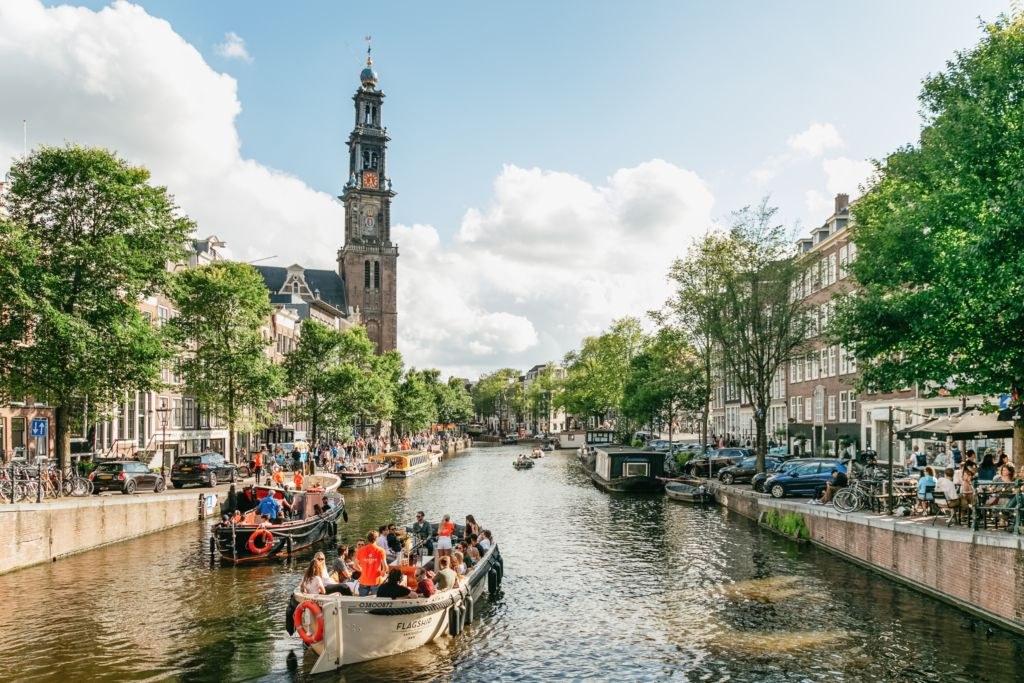 0 mi from AmsterdamAnne Frank House
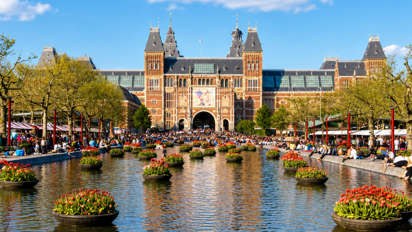 1 mi from AmsterdamRijksmuseum
 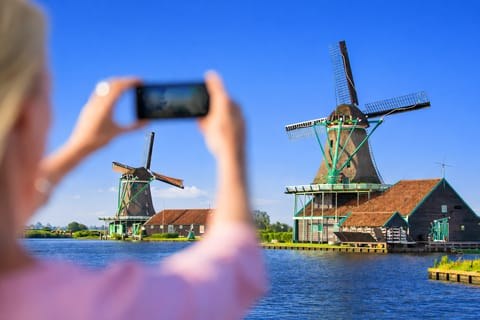 7 mi from Amsterdam · land adventureGolden Age Villages & North Sea Oysters: Amsterdam Done Right
 236 mi from Amsterdam · land adventureChurchill's Kent, Glyndebourne at Dusk & London's Secret Side
 236 mi from Amsterdam · land adventureCornwall's Wild Coast: Tin Mines, Tidal Castles & Beach Bars
 The same trip, elevated
The same gateway on a more luxurious line — lead-in fare per person, same fare as booking direct.