Your cruise
Mariner of the Seas · 14-night Mediterranean cruise, Barcelona to New Orleans
Oct 21 – Nov 4 · 14 nights ·
Day 1 Barcelona (board) · Day 2 Cartagena · Day 3 Gibraltar · Day 4–9 at sea · Day 10 Royal Naval Dockyard · Day 11–14 at sea · Day 15 New Orleans (step off)
What you do Cartagena's first-century-BC Roman theatre lay hidden under the old town until 1988, and the only way in is a brilliant architectural sequence designed by Pritzker laureate Rafael Moneo: you pass through the Palacio Pascual de Riquelme, descend past Carthaginian and Roman strata, then emerge into the vast tiered cavea that once seated 6,000. It is the single most unmissable thing in the city and a five-minute walk from the pier. Few Roman theatres in the world are entered through a museum that tells the full layered story of the stone before you stand in it.
What to expect Allow 60-90 minutes for the full route through the museum's two buildings, the connecting tunnel under Calle Comedias, and out into the theatre itself. Interpretation is excellent and bilingual, with recovered marble, statuary and the reconstructed scaenae frons columns. The cavea is open-air and the pale stone throws heat, so morning light is kinder and better for photos. Wear proper shoes for the worn steps.
Good to know From the cruise terminal walk to Plaza del Ayuntamiento at the foot of Calle Mayor; the museum entrance is right there, about 400 m. Buy online or at the desk; queues are short outside July-August. Easily done independently with hours to spare against any all-aboard. Official tourist guides enter free, so a private guide adds no ticket cost.
Versus the ship tour Cruise lines fold the theatre into a guided 'Roman Cartagena' walking tour at roughly EUR 50-80 per person. The site itself is EUR 7 and a five-minute stroll from the ship, so booking direct is the clear winner; the only thing the ship adds is a guide's narration, which a EUR 7 audio guide or a private guide (below) replaces for a fraction of the group-tour price.
book direct with Museo del Teatro Romano de Cartagena (official) → · the full guide →
What you do Beyond the theatre, Cartagena hides one of Europe's largest urban Roman archaeological parks at Cerro del Molinete, 26,000 sq m where you walk original Roman streets past the Forum, the thermal baths, the banqueting Atrium with surviving wall paintings, and a rare Sanctuary of Isis. Paired with the Punic Wall, this is the only place in Spain telling the Carthaginian-to-Roman story on its own ground. A licensed local guide turns scattered ruins into the living capital of Hannibal's Iberia and Augustus's Carthago Nova.
What to expect The Molinete museum's three floors of 300-plus artefacts set up the open-air park, where elevated walkways let you look down on streets, mosaics and the baths. It is genuinely atmospheric and far quieter than the theatre. A good guide ties Molinete, the Punic Wall and the Decumanus together into one walk of about two hours, mostly flat with some ramps. Shade is limited, so carry water in summer.
Good to know All sites are within the compact old town, 5-10 minutes on foot from the pier. Pre-book a licensed guide in advance (Cartagena's official guide association or a reputable operator such as Mediterranean Cartagena Tours); confirm they hold the regional guide licence so they enter the monuments free. Comfortably finished within a half-day port call.
Versus the ship tour The ship's archaeology-focused walking tours run about EUR 60-80 per person. For a couple or a family a privately hired licensed guide at ~EUR 130 plus EUR 10 of tickets each often costs less per head and is infinitely more flexible on pace and depth; book direct. The ship only earns its markup here for solo travellers who want company.
book direct with Cartagena Puerto de Culturas (official site & ticketing) + a licensed private guide → · the full guide →
What you do Cartagena is one of the Mediterranean's great natural war harbours, ringed by coastal batteries, and the most evocative way to feel that is the official harbour boat out to the Fuerte de Navidad, a beautifully restored 1860s casemated fort guarding the harbour mouth. You cruise past the Spanish Navy arsenal and the gun batteries on the headlands, then disembark to walk the bunkers, handle a period cannon and stand on the terrace where the whole bay opens beneath you. It is the city's military soul, reachable only by water.
What to expect The boat moves at an easy 2.5 knots with multilingual narration, passing castles, lighthouses, the Navy arsenal and the cruise terminal itself from the water. At the fort you get roughly 45 minutes to explore casemates, an interactive artillery display and the panoramic terrace before the return leg. The whole round trip with the fort visit runs about 1.5-2 hours. Sea conditions inside the sheltered bay are usually calm.
Good to know The departure quay on Gisbert Street is a 3-4 minute walk from the cruise terminal. Sailings are roughly hourly in summer (11:00-19:30) and reduced off-season, so check the day's timetable on arrival and reserve via reservas@puertoculturas.com or +34 968 500 093 if your call is short. Confirm a return slot that clears your all-aboard with margin.
Versus the ship tour Cruise-line 'panoramic harbour cruise' excursions are typically EUR 50-70 per person for essentially this same bay loop with commentary. The official boat at EUR 10 including fort entry is one of the best-value bucket-list experiences in any Spanish port; book direct without hesitation.
book direct with Cartagena Puerto de Culturas - Barco Turístico (official) → · the full guide →
What you do When Cartagena's mining wealth peaked around 1900, architect Víctor Beltrí lined Calle Mayor with riotous Art Nouveau facades, and walking it is like strolling a small Barcelona: the Gran Hotel, the Casino, Casa Cervantes, Casa Maestre and the Palacio Aguirre. Pair the architecture with a guided tapas crawl through the historic bars for the region's catch and the famed huerta de Europa produce, and you have the city's living present rather than only its Roman past. This is the elegant, sensory side of Cartagena most cruisers miss.
What to expect Calle Mayor is pedestrianised and flat, an easy 1-2 hour amble past the showpiece facades, with the Gran Hotel's corner dome the standout. A good tapas tour threads emblematic bars near San Francisco square for things like local prawns, marinated fish and the Murcian michirones, paired with Jumilla or Bullas wines. Pace is leisurely and social. Midday is liveliest; some bars rest mid-afternoon.
Good to know Everything is within the old town, a few minutes from the pier; no transport needed. Pick up the free modernista route map at the City Hall tourist office on arrival. Pre-book the tapas tour as small-group slots sell out on cruise days, and confirm the finish time against all-aboard. Cartagena lunches start late by northern standards, so an early-afternoon slot suits a port call best.
Versus the ship tour The ship's 'Taste of Tapas' style tours run roughly EUR 70-90 per person. A direct-booked local gastronomy walk at EUR 45-60 covers the same modernista landmarks with better food stops and smaller groups; book direct. If you only want the architecture, do it free and self-guided and spend the savings on a long lunch.
book direct with Local licensed gastronomy operator (e.g. the Cartagena guided tapas & modernista walk) - book the official tour direct → · the full guide →
What you do The hill above the old town has been fortified since Roman times, and the medieval Castillo de la Concepción crowns it inside the green Parque Torres. A glass-fronted panoramic lift saves the 45-metre climb and delivers you to the single best viewpoint in Cartagena: the Roman theatre below, the modernista rooftops, the Navy arsenal and the whole amphitheatre of the bay laid out at once. It is the photograph that explains why every empire wanted this harbour.
What to expect The panoramic lift rises in a minute from Gisbert Street to a footbridge into Parque Torres, where peacocks roam the gardens. The castle keep houses a compact Interpretation Centre on the city's 13-century military story, with preserved Roman cisterns and capitals. Most visitors spend 45-60 minutes including time on the ramparts for the views. The terraces are open and breezy, ideal near sunset if your ship sails late.
Good to know The lift's lower station on Gisbert Street is a few minutes from the cruise terminal and sits right beside the harbour-boat quay, so the two pair perfectly in one outing. Buy the combined lift-plus-castle ticket. The walk down through the park back to the old town is pleasant and downhill if you'd rather not lift both ways.
Versus the ship tour This is rarely sold as a standalone ship excursion; when bundled into a city tour the lift and castle are a minor add-on to a EUR 50-80 package. Independently it is EUR 6 and a short walk, so there is no reason not to do it direct. No remote-access or timing argument favours the ship here.
book direct with Cartagena Puerto de Culturas - Castillo de la Concepción & Ascensor Panorámico (official) → · the full guide →
What you do Forty minutes north-east of the port lies the Mar Menor, the largest saltwater lagoon in Europe, a warm shallow inland sea fringed by the La Manga sandbar and the wetlands of San Pedro del Pinatar, where for centuries people have coated themselves in the mineral-rich mud said to ease aches and skin. Floating in water so dense and calm it feels otherworldly, with flamingos in the nearby salt pans, is a genuinely different Spanish coast from the cruise-port bustle. It is the one bucket-list experience here that the distance makes worth a ship excursion.
What to expect Expect about 40 minutes each way by road, then time at La Manga's twin seafronts or at the Lo Pagán / San Pedro del Pinatar salt-marsh boardwalks for the mud baths and birdlife. The lagoon water is bath-warm, very shallow and extraordinarily buoyant; the grey mud is smeared on, dried in the sun, then rinsed in the sea. Bring a swimsuit you don't mind staining and water shoes for the muddy shallows. Note the lagoon has faced ecological stress in recent years, so conditions vary by season.
Good to know Because of the drive and tight cruise timing, this is the one excursion to pre-book rather than improvise. If going independent, arrange a private driver-guide in advance and build in a generous return buffer; do not attempt it by taxi-and-hope on a short call. Pack a towel, sun protection and a change of clothes, and combine with the Roman theatre on the way back as the ship itinerary does.
Versus the ship tour This is the honest exception to the book-direct rule. The Mar Menor is 40 minutes out with no quick public-transport link from the pier, so the ship's coach handles the distance and, crucially, guarantees you are back before all-aboard. Take the ship tour for peace of mind, or hire a private licensed driver-guide direct if you want flexibility and there are 3-4 of you to share the car. Either way the transport markup is genuinely earned here.
book direct with Norwegian Cruise Line (and most lines) - 'La Manga & Roman Theatre' shore excursion, or a private licensed driver-guide → · the full guide →
What you do Step inside the most famous unfinished building on earth, where Gaudi's stone forest of columns explodes into a kaleidoscope of stained-glass light that moves across the floor through the day. Add the tower ticket to ride the lift up a spire and walk back down the dizzying spiral stair with the city at your feet. Buy a strict timed entry slot, go early in your port window, and you'll beat both the queue and the midday glare.
What to expect You'll enter Gaudí's masterpiece and encounter a forest of soaring stone columns that dissolve into kaleidoscopic stained-glass light, shifting across the basilica floor as the sun moves through the day. If you book tower access, you'll ride the lift up a spire and descend the dizzying spiral staircase with Barcelona spreading below you. The unfinished vastness—both earthbound and dreamlike—fills the space in a way photographs cannot capture, and the audioguide walks you through every sculptural detail as you move through the nave.
Good to know Book a strict timed entry slot directly from the official Basilica de la Sagrada Familia site before your port day and go early in your window to beat both queues and harsh midday glare. Basic entry (EUR 26) includes the audioguide app; add EUR 10 for tower access (EUR 36 total) if you want the climb. Get there by taxi, metro, or ship-organized transport—the official tickets skip the reseller markup and save you $40–130 per person versus ship packages. Allow 2–3 hours inside the basilica itself, plus buffer time for entry and return, leaving at least 30–45 minutes to get back to the pier before all-aboard.
Versus the ship tour Direct wins overwhelmingly. The ship charges $75-170pp for guided/skip-line Sagrada Familia + Park Guell combos; the official tower ticket is ~$40pp and the basic ~$28pp. Same building, same skip-the-queue timed entry, for a fraction of the price. You save roughly $40-130pp and keep the audioguide. The only thing the ship adds is a bus and a guide reciting what the EUR 26 audioguide already tells you.
book direct with Basilica de la Sagrada Familia (official) → · the full guide →
What you do Ride out of the city to the serrated, otherworldly rock massif of Montserrat, ride the rack railway up the cliff face, and stand before the Black Madonna in the Benedictine basilica. If your day lands on a weekday you may catch the Escolania boys' choir, one of Europe's oldest. A guided coach handles the logistics and the timing so you are not gambling your ship's all-aboard on Spanish regional rail.
What to expect You'll depart Barcelona Nord by guided coach around 9:00am and ride into the otherworldly rock massif of Montserrat, where jagged peaks rise like a serrated fortress. At the foot of the cliffs, you'll board the rack railway that climbs the steep face, delivering you to the Benedictine basilica where the Black Madonna awaits in her shrine. A guide walks you through the sacred basilica, and if your excursion lands on a weekday, you may catch the Escolania boys' choir—one of Europe's oldest—singing in the morning service. The return coach departs mid-afternoon, arriving back at the port by around 4:15pm, giving you time to decompress before all-aboard.
Good to know Book the EUR 68.40 online rate with Catalunya Bus Turistic (Barcelona Turisme) well ahead to lock savings over cruise-line pricing ($25–185 cheaper per person). Confirm your ship's all-aboard time before booking—this ~7.25-hour excursion ends mid-afternoon, and the guided coach is your guaranteed return to port, so no gambling on Spanish regional rail. Wear sturdy walking shoes and bring layers, as the monastery sits at altitude and morning temperatures vary; the rack railway is steep but brief. Meet at Barcelona Nord bus station; your operator handles all transport and timing from city to mountain and back to the pier.
Versus the ship tour Direct wins clearly. Cruise-line Montserrat tours run $98-149pp and one premium-line passenger reported $259pp; this licensed multi-year operator delivers the same mountain, basilica and museum for ~$74pp, saving $25-185pp. PORT-DAY FLAG: this is a half-day, ~7.25hr round trip ending mid-afternoon, so confirm it lands inside your all-aboard. If you want the absolute floor and can self-navigate, the official Tot Montserrat ticket (EUR 71.50, adds the cable-car/lunch buffet and all funiculars) does it DIY by train, but you lose the guide and the guaranteed coach back to the port.
book direct with Catalunya Bus Turistic (Barcelona Turisme) → · the full guide →
What you do Climb to Gaudi's fairytale hillside park where the famous serpentine bench snakes in broken-tile mosaic around a terrace with the whole city and the sea spread below. The gingerbread gatehouses, the mosaic lizard fountain and the columned Hypostyle Hall make this the most photographed open-air Gaudi work in Barcelona. Book a timed slot for the Monumental Zone and arrive within your 30-minute entry grace window.
What to expect You'll arrive at Park Güell's Monumental Zone within a timed 30-minute entry window and climb the hillside into Gaudí's dreamlike landscape of gingerbread gatehouses and winding mosaic pathways. The iconic serpentine bench—snaking in broken-tile mosaics—curves around a terrace with sweeping views of Barcelona and the sea below, a photographer's paradise at every turn. You'll wander through the columned Hypostyle Hall and encounter the whimsical mosaic lizard fountain, experiencing the most photographed open-air Gaudí work in the city. The rhythm builds from initial climb to breathless overlook moment, then the slower, meditative wandering among the ceramic-clad structures and panoramic terraces.
Good to know Book your timed slot for the Monumental Zone well ahead (€18pp includes all Gaudí works and terraces, VAT included). Budget a taxi or bus both ways from the pier—the site is uphill and slightly off the metro—and plan to spend 1.5–2 hours at the park itself, leaving 2–3 hours total for transport buffers in a 6–8 hour port window. Arrive at the pier-side transport with at least 90 minutes before your ship departure to clear the security buffer. Bring sun protection and comfortable climbing shoes; if Sagrada Familia is also on your list, prioritize that cathedral over this one due to time constraints.
Versus the ship tour Direct wins big. The ship folds Park Guell into Gaudi tours priced $75-170pp; the official monument ticket is ~$20pp. Even adding a EUR 13 taxi up the hill you are far under the ship rate, saving $50-150pp. Honest caveat: it's uphill and a bit off the metro, so budget a taxi/bus each way and a firm timed slot. If you only have time for one Gaudi stop, prioritize Sagrada Familia over this one.
book direct with Park Guell (official, Barcelona City Council) → · the full guide →
What you do Slip out of the old harbor under sail on a real catamaran and see Barcelona's skyline, the Barceloneta beaches and the working port from the water, with a full bar aboard if you want a vermouth in hand. It is the rare port-day activity that starts steps from where most ships dock, so there is almost no travel time eating into your clock. Quiet, scenic, and an easy reset between the heavier Gaudi and mountain days.
What to expect You slip out of Port Vell under sail on a real catamaran, watching Barcelona's skyline recede as you glide past the Barceloneta beaches and the working harbor—all from the water, in the rare quiet that comes when most port-goers are queuing for cable cars. The 1.5-hour sail (or longer for Jazz options) unfolds at the pace of the breeze, with an onboard bar letting you nurse a vermouth while the city rises behind you. This is atmosphere and scenery: the kind of reset day that earns its place *between* the heavier Gaudi museum runs and mountain climbs, not as a standalone centerpiece.
Good to know The catamaran departs directly from Colon/Port Vell—steps from where most cruise ships dock—so there is almost no travel time; you can be aboard within 10–15 minutes of leaving the ship. Book the 1.5-hour Catamaran Sail & Skyline (EUR 18.50pp) or upgrade to Jazz & Chill Out (EUR 22.50pp) or Sunset Jazz (EUR 28pp) directly with Catamaran Orsom to save 50–80% versus ship-sold harbor alternatives. Plan to return well within a 6–8 hour port window, leaving ample buffer for any delays; bring sunscreen, sunglasses, and a light layer for wind on the water, and confirm departure times when booking to align with your ship's all-aboard.
Versus the ship tour Direct wins, roughly half price. Ship-sold harbor sails run $60-80pp and multi-element 'land/sea/air' packages hit $214pp; ORSOM's direct sail is ~$20-31pp, a $40-180pp saving. It departs right at Port Vell so you skip the bus shuffle. Honest note: this is scenery and atmosphere, not a bucket-list 'must,' so slot it only after you've locked the marquee sights.
What you do Drive into the Penedes vineyards, taste across varieties at the Torreblanca winery, then get hands-on at ArtCava to riddle and cork your own bottle of cava to take home as the rare souvenir you actually made. It is Spain's sparkling-wine heartland and a genuine craft experience rather than a pour-and-go tasting. A real port-day alternative to another church or museum.
What to expect You'll board a coach at Barcelona Nord around 9:00am and drive into the Penedes vineyards, Spain's sparkling-wine heartland, for a vineyard walk and guided tasting across varieties at Torreblanca winery. From there, you'll move to ArtCava for a hands-on workshop where you'll ridge and cork your own bottle of cava—a genuine craft experience, not a pour-and-go tasting—before heading back to the pier by approximately 2:15pm with a bottle you've made yourself as your souvenir.
Good to know The entire excursion runs ~5.25 hours round-trip, departing Barcelona Nord and returning early afternoon, which fits comfortably within most all-aboard windows—but confirm your sailing time and treat the coach's return as your hard deadline. Price is EUR 104pp online (EUR 116 regular) and includes round-trip coach, vineyard walk, tastings at two wineries, the guided ArtCava tour, your make-your-own-cava workshop, and the bottle to take home. Book online in advance to lock in the EUR 104 rate rather than pay the regular price at the port. Bring comfortable walking shoes for the vineyard and ArtCava, stay hydrated between tastings, and allow 15–20 minutes buffer time to clear the coach and return to your ship.
Versus the ship tour Direct wins, ~$75-80pp. The cruise line's Cava + tapas + vineyard and Familia Torres winery tours run $186-195pp; this is ~$113pp for two wineries plus a hands-on workshop and a bottle, a saving of about $75pp. PORT-DAY FLAG: ~5.25hr round trip returning early afternoon, comfortably inside most all-aboards, but confirm against your sailing time and treat the coach's return as your hard deadline.
book direct with Catalunya Bus Turistic (Barcelona Turisme) → · the full guide →
What you do Walk the famous La Boqueria market with a chef, then cook a real Catalan paella and a couple of tapas by hand before sitting down to eat what you made with sangria in hand. It's three hours, minutes off La Rambla, and a low-stress way to take Barcelona home in your hands rather than your camera roll. The near-port safety net if a long mountain or vineyard run feels too tight against your all-aboard.
What to expect You'll start at La Boqueria market with a chef guide introducing the vibrant produce and Catalan ingredients, then move to the kitchen to roll up your sleeves and cook a real paella and two tapas by hand under instruction. The rhythm flows from market sensory overload—color, noise, vendors—to focused, measured cooking where you learn technique in a small group. After three hours of chopping, stirring, and tasting, you sit down to eat what you've made with sangria in hand, transforming the morning's market finds into your own meal.
Good to know Sessions run at 10:30, 13:00, 16:00, and 18:45; a 10:30 start gives you a full 6+ hours back on ship before evening all-aboard, while the 13:00 slot works if your port window is shorter. The venue is central, just minutes off La Rambla near Liceu metro—walkable from the pier or a quick taxi, with minimal coach risk. Book ahead through Cook & Taste to secure your time slot and session; the EUR 72 price includes all instruction, equipment, recipes, and beverages, so there are no surprise costs. Plan to return to the ship by your all-aboard time with a 30–45 minute buffer built in; the class ends by its scheduled time (e.g., 13:45 for the 10:30 session), leaving you a safe window to walk or cab back to the pier.
Versus the ship tour Direct wins, $50-115pp. The ship's tapas/food/wine tours run $128-195pp; this hands-on class is ~$79pp, a $50-115pp saving, and you actually cook rather than just follow a guide between bars. As a safety-net it is unbeatable for the clock: it's central, short, and books in fixed time slots, so you can pick the session that fits your remaining port hours with zero coach risk.
book direct with Cook & Taste (Barcelona Cooking Classes) → · the full guide →
What you do Cartagena's first-century-BC Roman theatre lay hidden under the old town until 1988, and the only way in is a brilliant architectural sequence designed by Pritzker laureate Rafael Moneo: you pass through the Palacio Pascual de Riquelme, descend past Carthaginian and Roman strata, then emerge into the vast tiered cavea that once seated 6,000. It is the single most unmissable thing in the city and a five-minute walk from the pier. Few Roman theatres in the world are entered through a museum that tells the full layered story of the stone before you stand in it.
What to expect Allow 60-90 minutes for the full route through the museum's two buildings, the connecting tunnel under Calle Comedias, and out into the theatre itself. Interpretation is excellent and bilingual, with recovered marble, statuary and the reconstructed scaenae frons columns. The cavea is open-air and the pale stone throws heat, so morning light is kinder and better for photos. Wear proper shoes for the worn steps.
Good to know From the cruise terminal walk to Plaza del Ayuntamiento at the foot of Calle Mayor; the museum entrance is right there, about 400 m. Buy online or at the desk; queues are short outside July-August. Easily done independently with hours to spare against any all-aboard. Official tourist guides enter free, so a private guide adds no ticket cost.
Versus the ship tour Cruise lines fold the theatre into a guided 'Roman Cartagena' walking tour at roughly EUR 50-80 per person. The site itself is EUR 7 and a five-minute stroll from the ship, so booking direct is the clear winner; the only thing the ship adds is a guide's narration, which a EUR 7 audio guide or a private guide (below) replaces for a fraction of the group-tour price.
book direct with Museo del Teatro Romano de Cartagena (official) → · the full guide →
What you do Beyond the theatre, Cartagena hides one of Europe's largest urban Roman archaeological parks at Cerro del Molinete, 26,000 sq m where you walk original Roman streets past the Forum, the thermal baths, the banqueting Atrium with surviving wall paintings, and a rare Sanctuary of Isis. Paired with the Punic Wall, this is the only place in Spain telling the Carthaginian-to-Roman story on its own ground. A licensed local guide turns scattered ruins into the living capital of Hannibal's Iberia and Augustus's Carthago Nova.
What to expect The Molinete museum's three floors of 300-plus artefacts set up the open-air park, where elevated walkways let you look down on streets, mosaics and the baths. It is genuinely atmospheric and far quieter than the theatre. A good guide ties Molinete, the Punic Wall and the Decumanus together into one walk of about two hours, mostly flat with some ramps. Shade is limited, so carry water in summer.
Good to know All sites are within the compact old town, 5-10 minutes on foot from the pier. Pre-book a licensed guide in advance (Cartagena's official guide association or a reputable operator such as Mediterranean Cartagena Tours); confirm they hold the regional guide licence so they enter the monuments free. Comfortably finished within a half-day port call.
Versus the ship tour The ship's archaeology-focused walking tours run about EUR 60-80 per person. For a couple or a family a privately hired licensed guide at ~EUR 130 plus EUR 10 of tickets each often costs less per head and is infinitely more flexible on pace and depth; book direct. The ship only earns its markup here for solo travellers who want company.
book direct with Cartagena Puerto de Culturas (official site & ticketing) + a licensed private guide → · the full guide →
What you do Cartagena is one of the Mediterranean's great natural war harbours, ringed by coastal batteries, and the most evocative way to feel that is the official harbour boat out to the Fuerte de Navidad, a beautifully restored 1860s casemated fort guarding the harbour mouth. You cruise past the Spanish Navy arsenal and the gun batteries on the headlands, then disembark to walk the bunkers, handle a period cannon and stand on the terrace where the whole bay opens beneath you. It is the city's military soul, reachable only by water.
What to expect The boat moves at an easy 2.5 knots with multilingual narration, passing castles, lighthouses, the Navy arsenal and the cruise terminal itself from the water. At the fort you get roughly 45 minutes to explore casemates, an interactive artillery display and the panoramic terrace before the return leg. The whole round trip with the fort visit runs about 1.5-2 hours. Sea conditions inside the sheltered bay are usually calm.
Good to know The departure quay on Gisbert Street is a 3-4 minute walk from the cruise terminal. Sailings are roughly hourly in summer (11:00-19:30) and reduced off-season, so check the day's timetable on arrival and reserve via reservas@puertoculturas.com or +34 968 500 093 if your call is short. Confirm a return slot that clears your all-aboard with margin.
Versus the ship tour Cruise-line 'panoramic harbour cruise' excursions are typically EUR 50-70 per person for essentially this same bay loop with commentary. The official boat at EUR 10 including fort entry is one of the best-value bucket-list experiences in any Spanish port; book direct without hesitation.
book direct with Cartagena Puerto de Culturas - Barco Turístico (official) → · the full guide →
What you do When Cartagena's mining wealth peaked around 1900, architect Víctor Beltrí lined Calle Mayor with riotous Art Nouveau facades, and walking it is like strolling a small Barcelona: the Gran Hotel, the Casino, Casa Cervantes, Casa Maestre and the Palacio Aguirre. Pair the architecture with a guided tapas crawl through the historic bars for the region's catch and the famed huerta de Europa produce, and you have the city's living present rather than only its Roman past. This is the elegant, sensory side of Cartagena most cruisers miss.
What to expect Calle Mayor is pedestrianised and flat, an easy 1-2 hour amble past the showpiece facades, with the Gran Hotel's corner dome the standout. A good tapas tour threads emblematic bars near San Francisco square for things like local prawns, marinated fish and the Murcian michirones, paired with Jumilla or Bullas wines. Pace is leisurely and social. Midday is liveliest; some bars rest mid-afternoon.
Good to know Everything is within the old town, a few minutes from the pier; no transport needed. Pick up the free modernista route map at the City Hall tourist office on arrival. Pre-book the tapas tour as small-group slots sell out on cruise days, and confirm the finish time against all-aboard. Cartagena lunches start late by northern standards, so an early-afternoon slot suits a port call best.
Versus the ship tour The ship's 'Taste of Tapas' style tours run roughly EUR 70-90 per person. A direct-booked local gastronomy walk at EUR 45-60 covers the same modernista landmarks with better food stops and smaller groups; book direct. If you only want the architecture, do it free and self-guided and spend the savings on a long lunch.
book direct with Local licensed gastronomy operator (e.g. the Cartagena guided tapas & modernista walk) - book the official tour direct → · the full guide →
What you do The hill above the old town has been fortified since Roman times, and the medieval Castillo de la Concepción crowns it inside the green Parque Torres. A glass-fronted panoramic lift saves the 45-metre climb and delivers you to the single best viewpoint in Cartagena: the Roman theatre below, the modernista rooftops, the Navy arsenal and the whole amphitheatre of the bay laid out at once. It is the photograph that explains why every empire wanted this harbour.
What to expect The panoramic lift rises in a minute from Gisbert Street to a footbridge into Parque Torres, where peacocks roam the gardens. The castle keep houses a compact Interpretation Centre on the city's 13-century military story, with preserved Roman cisterns and capitals. Most visitors spend 45-60 minutes including time on the ramparts for the views. The terraces are open and breezy, ideal near sunset if your ship sails late.
Good to know The lift's lower station on Gisbert Street is a few minutes from the cruise terminal and sits right beside the harbour-boat quay, so the two pair perfectly in one outing. Buy the combined lift-plus-castle ticket. The walk down through the park back to the old town is pleasant and downhill if you'd rather not lift both ways.
Versus the ship tour This is rarely sold as a standalone ship excursion; when bundled into a city tour the lift and castle are a minor add-on to a EUR 50-80 package. Independently it is EUR 6 and a short walk, so there is no reason not to do it direct. No remote-access or timing argument favours the ship here.
book direct with Cartagena Puerto de Culturas - Castillo de la Concepción & Ascensor Panorámico (official) → · the full guide →
What you do Forty minutes north-east of the port lies the Mar Menor, the largest saltwater lagoon in Europe, a warm shallow inland sea fringed by the La Manga sandbar and the wetlands of San Pedro del Pinatar, where for centuries people have coated themselves in the mineral-rich mud said to ease aches and skin. Floating in water so dense and calm it feels otherworldly, with flamingos in the nearby salt pans, is a genuinely different Spanish coast from the cruise-port bustle. It is the one bucket-list experience here that the distance makes worth a ship excursion.
What to expect Expect about 40 minutes each way by road, then time at La Manga's twin seafronts or at the Lo Pagán / San Pedro del Pinatar salt-marsh boardwalks for the mud baths and birdlife. The lagoon water is bath-warm, very shallow and extraordinarily buoyant; the grey mud is smeared on, dried in the sun, then rinsed in the sea. Bring a swimsuit you don't mind staining and water shoes for the muddy shallows. Note the lagoon has faced ecological stress in recent years, so conditions vary by season.
Good to know Because of the drive and tight cruise timing, this is the one excursion to pre-book rather than improvise. If going independent, arrange a private driver-guide in advance and build in a generous return buffer; do not attempt it by taxi-and-hope on a short call. Pack a towel, sun protection and a change of clothes, and combine with the Roman theatre on the way back as the ship itinerary does.
Versus the ship tour This is the honest exception to the book-direct rule. The Mar Menor is 40 minutes out with no quick public-transport link from the pier, so the ship's coach handles the distance and, crucially, guarantees you are back before all-aboard. Take the ship tour for peace of mind, or hire a private licensed driver-guide direct if you want flexibility and there are 3-4 of you to share the car. Either way the transport markup is genuinely earned here.
book direct with Norwegian Cruise Line (and most lines) - 'La Manga & Roman Theatre' shore excursion, or a private licensed driver-guide → · the full guide →
What you do A private licensed-guide taxi whisks you to every iconic summit stop — St. Michael's Cave, the Ape's Den, the Great Siege Tunnels, and a sweeping panorama spanning two continents. Gibraltar's legendary Rock, explored in total comfort at your own pace.
What to expect Your driver-guide collects you at the port and pilots you in a private air-conditioned taxi to the Upper Rock's headline attractions. At St. Michael's Cave you descend into a cathedral of stalactites lit in spectral colours; at the Ape's Den you come face-to-face with Europe's only wild primates. The Great Siege Tunnels reveal 18th-century military ingenuity carved into living rock. Every viewpoint — Africa visible across just 14 kilometres of shimmering Strait — feels personal rather than packaged.
Good to know Pre-book directly via toursofgibraltar.com to secure your preferred departure time. The Upper Rock opens at 09:00; aim for an early slot to beat the midday heat. Nature Reserve entry is included in the taxi-tour rate. The full circuit takes roughly 2.5–3 hours, leaving ample time before all-aboard.
Versus the ship tour A fully private, licensed local driver-guide means zero crowds, spontaneous stops, and insider commentary you simply cannot get on a group coach. The taxi pauses exactly where you want — for the perfect photograph of the Strait or an unhurried conversation with a Barbary macaque.
book direct with Tours of Gibraltar (official licensed operators) → · the full guide →
What you do Glide 412 metres above sea level in a modern cable car, then stand on the Rock's summit with Spain behind you and Morocco ahead — a perspective that has awed explorers for centuries. Europe and Africa, framed in one extraordinary viewpoint.
What to expect The sleek gondola lifts you from the town centre terminus in just six minutes, trading the bustle of Main Street for 360-degree silence at the summit. On a clear day the Atlas Mountains of Morocco hang on the horizon and the Costa del Sol curves away to the north-east. Barbary macaques roam freely near the top station — calm, curious, and utterly memorable. Descend on foot via the Nature Reserve paths or ride back down and explore the cable car's mid-station Ape's Den.
Good to know The cable car operates from approximately 09:30; first cars fill quickly on cruise days, so arrive early. Buy tickets in advance at naturereserve.gi to skip the queue. The summit can be breezy — bring a light layer. Allow at least 1.5–2 hours for the full experience.
Versus the ship tour Riding the cable car independently gives you as long as you wish at the summit — no timed group departure, no waiting. Pair it with a walk through the wild Upper Rock trails for a sensory experience that is genuinely unrepeatable.
book direct with Gibraltar Cable Car (official operator) → · the full guide →
What you do Venture deep into 50+ km of tunnels blasted through the Rock — used in both the Great Siege of Gibraltar (1779–83) and WWII — with a private expert guide illuminating stories of strategy, courage, and engineering genius.
What to expect You enter the Upper Rock's military network through passages that feel unchanged since 1782, the cool darkness broken only by period artillery still trained on phantom siege lines. Your guide connects the 18th-century Great Siege galleries to the vast WWII extension — 50 km of secret infrastructure that housed an entire underground garrison. The infamous WWII 'Fortress Gibraltar' command rooms, bakeries, and hospitals carved into solid limestone make this one of the most astonishing subterranean sites in Europe. Emerge blinking into sunlight with a profoundly different sense of why this tiny territory has been contested for three centuries.
Good to know Wear comfortable, enclosed shoes — the rock floor is uneven. The tunnels maintain a constant cool temperature (~18°C), so a light jacket is worthwhile. Book a morning slot to beat tour groups; toursofgibraltar.com allows customisation of the full itinerary around the tunnels.
Versus the ship tour A private licensed historian-guide turns the tunnels from a self-guided walk into a gripping narrative — identifying original cannon emplacements, explaining the wartime ops rooms, and sharing the little-known WWII role that historians argue helped turn the tide in the Mediterranean.
book direct with Tours of Gibraltar (official licensed operators) → · the full guide →
What you do The Strait of Gibraltar is home to three resident dolphin species year-round — join a small-boat safari into the Bay of Algeciras for intimate, unhurried encounters with common, bottlenose, and striped dolphins in their open-water habitat.
What to expect Departing from Gibraltar's marina, the boat crosses into the protected waters of the Strait — one of the world's most reliable dolphin corridors. Common and bottlenose dolphins regularly bow-ride and leap alongside; on lucky days striped and pilot whales are also spotted. The naturalist on board provides live commentary on dolphin behaviour, feeding strategies, and the extraordinary oceanography of the Strait. The return journey offers superb sea-level views of the Rock's southern face, rarely seen from land.
Good to know Departure times vary by cruise call; pre-book via naturereserve.gi as soon as your itinerary is confirmed — these small-boat safaris sell out quickly on busy port days. Bring sunscreen and a windproof layer; the Strait can be brisk even in summer. Duration approximately 1.5 hours.
Versus the ship tour Small specialist vessels carry far fewer passengers than the large whale-watching catamarans, meaning every guest has unobstructed rail access and the captain can position the boat precisely where the dolphins are active — not where the schedule dictates.
book direct with Gibraltar Nature Reserve (official dolphin safari partner) → · the full guide →
What you do Conquer Gibraltar's legendary terrain on a premium electric bike — sweeping from sea-level fortifications to Upper Rock viewpoints, through the Nature Reserve and down to Europa Point, Africa shimmering just across the water.
What to expect Premium Bosch-motor e-bikes are fitted and briefed at the start point before your small group sets off with a knowledgeable local guide. The route threads through Gibraltar's historic fortifications, climbs into the Nature Reserve past Barbary macaque territory, and rolls out to Europa Point — the southernmost tip of Europe — with its red-and-white lighthouse and mesmerising strait panorama. The electric assist means even the steep rock roads feel effortless, leaving energy to absorb every detail of this extraordinary microstate. The three-hour circuit covers the island's greatest hits without the crowds.
Good to know Tours operate in small groups; book directly at buytickets.gi to secure your slot. Wear comfortable clothing and closed-toe shoes. Helmets are provided. A reasonable level of fitness is helpful but the e-assist makes this accessible for most travellers. Departs from the town centre — a short walk or taxi from the port.
Versus the ship tour The e-bike format gives active, discerning travellers access to corners of the Rock that coaches can never reach — hidden sea-battery ramparts, the fragrant upper scrubland, and the dramatic southern face — all at a pace that allows genuine discovery rather than a tickbox circuit.
book direct with Gibraltar EBike Tours (official operator) → · the full guide →
What you do From the ancient Moorish Castle — a Berber watchtower guarding Gibraltar since the 8th century — to Europa Point's lighthouse at the edge of the known world, this private guided journey weaves 1,400 years of Phoenician, Moorish, Spanish, and British history into one unforgettable afternoon.
What to expect The tour opens at the Moorish Castle, whose Tower of Homage has dominated Gibraltar's skyline since 711 AD — your guide unpacks the Reconquista sieges, the Ottoman threat, and the remarkable preservation story. The route continues south through the winding streets of the Upper Town before arriving at Europa Point, where the Ibrahim-al-Ibrahim Mosque (a gift from King Fahd of Saudi Arabia) and the striped Trinity Lighthouse stand side by side — an extraordinary tableau of faith and navigation. Your guide closes with the view: on a clear day Morocco is close enough to feel touchable across the cobalt Strait. Few experiences in the Mediterranean deliver this density of living history in under three hours.
Good to know Request a morning departure to enjoy Europa Point before the southerly wind picks up. The Moorish Castle exterior is always accessible; interior access is subject to opening hours — your guide will confirm. Tours of Gibraltar can combine this cultural circuit with the Great Siege Tunnels or St. Michael's Cave for a full-day private programme.
Versus the ship tour A private licensed guide — not a coach narrator — walks with you inside the Moorish Castle's Tower of Homage, interprets the Arabic inscriptions, and then drives you to Europa Point to stand at the precise spot where the Mediterranean meets the Atlantic. The pace, the depth, and the access are yours alone.
book direct with Tours of Gibraltar (official licensed operators) → · the full guide →
What you do A fully private, customised van tour circling the entire island — pink-sand beaches, historic parishes, hidden overlooks, and the real Bermuda beyond the port gates. This is the definitive bucket-list way to see it all in a single day.
What to expect Your expert local guide collects you steps from the ship and drives you through all nine parishes, narrating 400 years of history with genuine insider knowledge. Signature stops include the sweeping pink-sand arc of Horseshoe Bay, the pastel streetscapes of St. George's (a UNESCO World Heritage town), and the dramatic South Shore cliffs. The pace is yours — guests routinely describe this as the single best decision of their Bermuda visit. Seven full hours leaves room for a proper sit-down lunch at a restaurant of your choice, included in the experience.
Good to know Departs directly from Royal Naval Dockyard — no ferry or taxi needed. Seven hours gives generous buffer before all-aboard. Pre-book well in advance as private departures fill quickly; confirm your all-aboard time when booking.
Versus the ship tour A small-group or private departure from the Dockyard gate means a completely personalised pace — linger at Somerset Bridge, steal an uncrowded moment at Horseshoe Bay, and detour to hidden gems a coach tour would never stop for.
book direct with Island Tour Centre Bermuda → · the full guide →
What you do Descend into one of the world's most spectacular cave systems — crystalline stalactites reflected in a 55-ft-deep underground lake of ethereal clarity. A private or small-group guide transforms a geological wonder into an unforgettable luxury experience.
What to expect A winding descent through lush Bermudian gardens leads to the cave mouth, where the temperature drops instantly to a refreshing cool. Your guide illuminates the history of the caves' 1907 discovery by two boys chasing a cricket ball, and points out the extraordinary 'cave pearls' and mirror-still underground lake. The neighbouring Fantasy Cave, included on the combo ticket, offers an even more intimate low-ceilinged grotto of pure wonder. Allow 45–60 minutes per cave. The setting is serene, the photography potential extraordinary.
Good to know Caves are in Hamilton Parish — a 25–30 min taxi or private transfer from the Dockyard (approx. USD 30–35 each way). Book the combo ticket directly on the caves' website. Wear flat, non-slip shoes. Comfortable year-round at ~68 °F inside.
Versus the ship tour Arriving on your own schedule — not with a coach queue — means the guide's full attention, unhurried photography time on the pontoon walkway, and the rare chance to simply stand in silence inside a 30-million-year-old cathedral.
What you do Board an exclusive private catamaran from the Dockyard marina and sail Bermuda's turquoise Sound to world-class coral reefs and eerie shipwrecks — some of the clearest, warmest snorkelling waters in the Atlantic. Pure bucket-list luxury on the water.
What to expect Restless Native's sleek catamaran departs the Dockyard and glides out across the impossibly clear Great Sound. Certified guides lead you over Bermuda's living coral gardens — brain coral, sea fans, parrotfish — and then down to the haunting hulks of centuries-old shipwrecks encrusted with marine life. All snorkel gear, wetsuits, and flotation is provided; paddleboarding is available between swim stops. Chilled drinks, rum swizzles, and local snacks are served on deck. The return sail back through the Sound, with the Dockyard's limestone walls glowing in the afternoon light, is a moment you won't forget.
Good to know Departures are from the Royal Naval Dockyard marina — walk off the ship. Pre-book private charters well in advance, especially in peak season (May–October). Confirm swim locations with the captain on the day depending on conditions.
Versus the ship tour A private charter means you choose the wrecks and reefs, set the music, control the swim stops, and sip rum swizzles at anchor with no strangers in sight — a world apart from crowded group snorkel boats.
book direct with Restless Native Catamaran Cruises → · the full guide →
What you do Horseshoe Bay — Bermuda's most celebrated beach — stuns with its crescent of blush-pink sand, turquoise waves, and rose-hued limestone cliffs. A half-day escape here is simply unmissable for any discerning traveller calling at Bermuda.
What to expect The pink colour comes from crushed coral and shell fragments mixed into the sand — a phenomenon unique to a handful of beaches on Earth, and Horseshoe Bay is the finest expression of it. The main bay is framed by dramatic wind-sculpted limestone outcrops; walking the cliff path to either side reveals a string of smaller, quieter coves ideal for a private swim. The water is calm, crystal-clear, and warm from late spring through autumn. A small beach bar and equipment rental concession make it effortlessly comfortable. Arrive before 10 am for the most serene experience.
Good to know About 25–30 minutes by taxi from the Dockyard (approx. USD 28–32 each way). No direct ferry. Allow at least 3 hours to do it justice, and build in transfer time against your all-aboard. Sun protection and reef-safe sunscreen are essential.
Versus the ship tour Going independently — by taxi or private transfer — means arriving early before the midday heat, choosing your own secluded cove along the South Shore cliff path, and lingering on your own schedule.
What you do Set inside the massive 19th-century fortifications of the Royal Naval Dockyard itself, this is one of the finest maritime museums in the Atlantic — and uniquely, it's on your doorstep the moment you step off the ship.
What to expect The museum sprawls across six acres of fortified Victorian masonry and includes the extraordinary Commissioner's House — the oldest cast-iron framed building in the western hemisphere, with panoramic harbour views from its veranda. Galleries trace Bermuda's role in the Age of Sail, the transatlantic slave trade, and both World Wars with remarkable artefacts and scholarship. The Bermuda Underwater Exploration Institute (BUEI) annex covers the island's unique shipwreck heritage. Audio guides are excellent; allow 2–3 hours to truly absorb it. The setting inside the fortress walls is dramatic and photogenic at every turn.
Good to know A 5-minute walk from the cruise terminal — perfect for an early-morning visit before the island tours depart. Open daily. Combine with a lunch at the Frog & Onion Pub inside the Dockyard for a full, relaxed morning ashore.
Versus the ship tour As the only world-class cultural institution within walking distance of the ship, this is the rare bucket-list cultural experience that rewards those who look deeper — the Commissioner's House alone, as the oldest cast-iron building in the western hemisphere, justifies the visit.
book direct with National Museum of Bermuda (official) → · the full guide →
What you do Glide along the historic ramparts, waterfront promenades, and hidden bastions of the Royal Naval Dockyard on a guided Segway — the most exhilarating (and surprisingly graceful) way to unlock the fort's 200-year-old secrets.
What to expect After a brief, intuitive training session, you're gliding effortlessly along the limestone waterfront paths of one of Britain's greatest 19th-century naval fortresses. Your guide brings the history to life — the Dockyard was built by convict labour and once serviced the Royal Navy's entire Western Atlantic fleet. The route winds past the iconic Clocktower Mall, along the sea-wall with sweeping views of the Great Sound, and through the Keep's stone archways. Groups are small (typically 6–8), the pace is convivial, and the photo opportunities are superb. A genuinely joyful way to start a Bermuda day.
Good to know Departs from within the Dockyard — no transfer needed. Ideal as a first activity right after disembarkation, or to fill a couple of hours elegantly. Weight restrictions apply (typically 100–260 lbs / 45–118 kg); closed-toe shoes required. Pre-book online.
Versus the ship tour A small-group, expert-led Segway tour covers angles of the Dockyard's fortifications — sea-facing cannon emplacements, the Clocktower, hidden archways — that walkers simply miss, delivered with lively local history commentary.
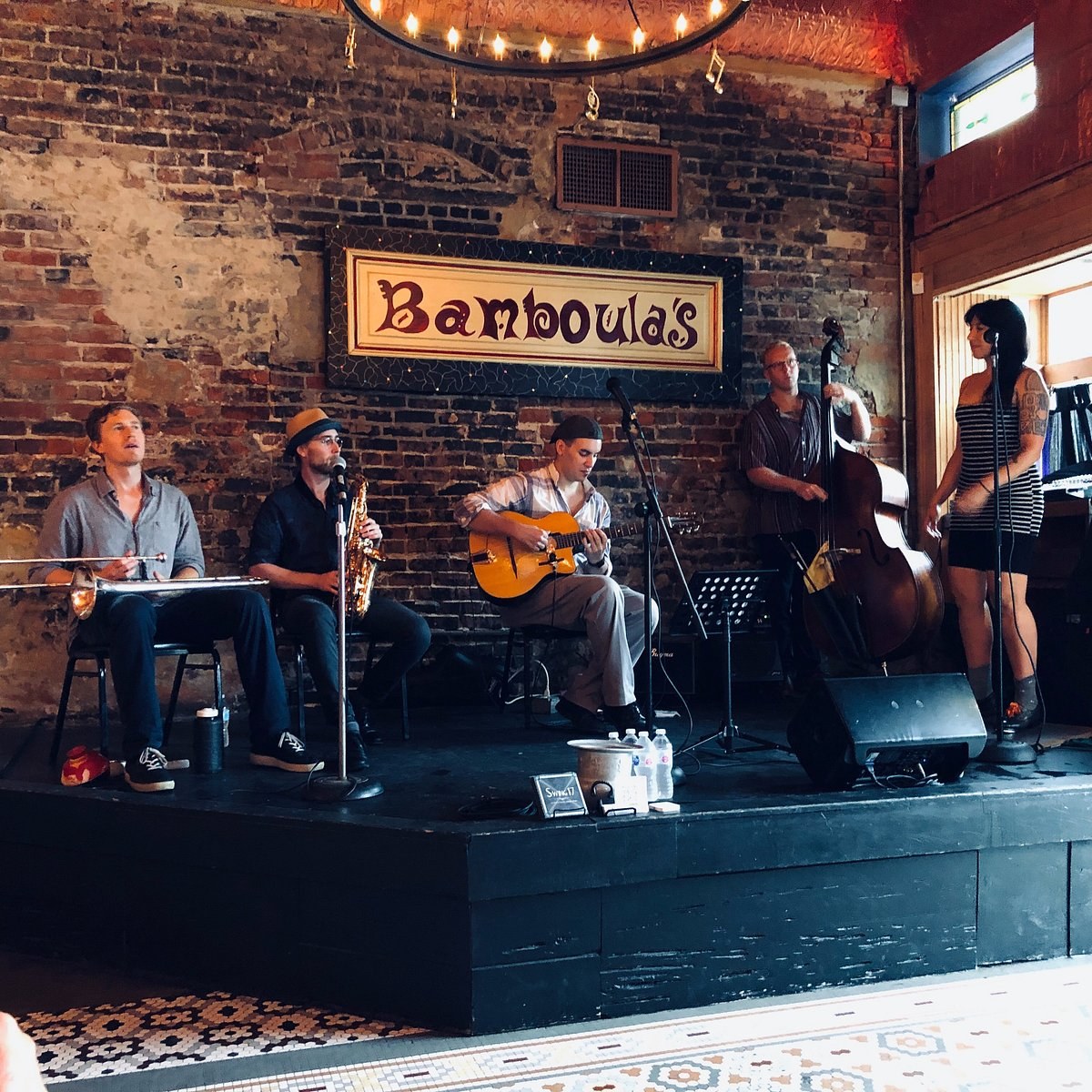
What you do Board the last authentic steam-powered sternwheeler on the Mississippi for a living-history cruise. Jazz musicians serenade you as New Orleans' iconic skyline drifts past — a bucket-list moment unique to this city.
What to expect Step aboard the magnificent triple-deck vessel at the Toulouse Street Wharf, just steps from the French Quarter. Live New Orleans jazz fills the grand saloon as you dine on Southern classics — shrimp étouffée, bread pudding, and Creole-spiced eggs Benedict. The two-hour cruise sweeps past the French Quarter waterfront, historical wharves, and the Crescent City Connection bridge. The working steam engine is open for viewing below deck — a thundering mechanical marvel that makes this feel like 1870.
Good to know Brunch cruise departs at 11:30 am; harbour jazz cruise at 2:30 pm. Book directly on the Steamboat Natchez website well in advance — weekend brunch slots sell out fast. The Toulouse Street Wharf is approximately a 10-minute taxi or rideshare from the Julia Street Cruise Terminal. All-aboard is typically 10 pm; ample time for either sailing.
Versus the ship tour The Steamboat Natchez is the last true steam-powered sternwheeler on the Mississippi — a genuine piece of living history. The Jazz Brunch offers white-linen dining with live traditional jazz in a setting no land tour can replicate, all while the city's skyline glides past from the water.
book direct with New Orleans Steamboat Company (Steamboat Natchez) → · the full guide →
What you do Explore the French Quarter's hidden courtyards, Creole architecture, and storied cocktail dens with an award-winning expert guide and a maximum of nine guests. This is NOLA at its most intimate and insightful.
What to expect Your expert local guide — a storyteller with deep roots in NOLA history and culture — leads you through the Quarter's iron-lace balconies, hidden Creole courtyards, and gas-lit alleyways that most visitors never find. The cocktail history route weaves in the birthplace of the Sazerac at the Roosevelt Hotel Bar, the century-old tiles of the Carousel Bar, and the legendary Arnaud's French 75 Bar. Conversation is unhurried; every question gets a real answer. The group is tiny enough to duck into spaces no bus tour ever could.
Good to know Tours depart morning through early afternoon; select a start time that leaves a comfortable buffer before all-aboard. Book directly via nosecretstours.com — tours sell out, especially on weekends. Wear comfortable walking shoes; the Quarter's cobblestones are charming but uneven. The French Quarter is an easy 15-minute walk or short rideshare from the Julia Street Cruise Terminal.
Versus the ship tour New Orleans Secrets Tours is an award-winning, nine-guests-maximum operation — meaning you receive genuine one-on-one dialogue with a specialist guide rather than following a flag through a crowd. Their cocktail history tour takes you inside the very bars where the Sazerac and the Ramos Gin Fizz were invented, with tastings at each stop.
book direct with New Orleans Secrets Tours → · the full guide →
What you do Step inside America's most storied above-ground necropolis with an authorised guide from Save Our Cemeteries. Stroll the labyrinthine 'cities of the dead', learn Creole burial traditions, and stand before the tomb of Marie Laveau.
What to expect St. Louis Cemetery No. 1, founded in 1789, is a world of gleaming whitewashed tombs stacked like streets of marble houses — the inspiration behind the term 'cities of the dead.' Your licensed guide navigates the labyrinthine passages, pausing at the elaborate society tombs, the resting place of chess champion Paul Morphy, and the legendary tomb of Voodoo Queen Marie Laveau, still adorned with offerings. The guide unpacks the city's extraordinary Catholic, African, and Creole burial traditions — a 45-minute walk that rewrites what you thought you knew about New Orleans.
Good to know Tours run multiple times daily; morning slots are cooler and less crowded. Book in advance at saveourcemeteries.org as group sizes are capped. The cemetery is located at the edge of the French Quarter — a 20-minute walk from Jackson Square or a short rideshare. Closed-toe shoes and modest clothing are respectfully requested.
Versus the ship tour Save Our Cemeteries holds the exclusive official licence to guide inside St. Louis Cemetery No. 1 — entry without an authorised guide is not permitted. Their guides are historians and preservationists who bring the buried stories of New Orleans' most extraordinary residents vividly to life.
book direct with Save Our Cemeteries (Official Tour Operator, St. Louis Cemetery No. 1) → · the full guide →
What you do Glide deep into the primeval Honey Island Swamp aboard a flat-bottomed boat with a naturalist Cajun guide. Encounter wild alligators, ancient cypress forests draped in Spanish moss, and exotic Louisiana birdlife just an hour from the city.
What to expect The tour launches from Slidell, about an hour east of New Orleans, plunging into one of the least-altered river swamps in America. Your Cajun guide navigates narrow waterways beneath a canopy of ancient cypress trees dripping with Spanish moss, pausing whenever an alligator surfaces or a Great Blue Heron lands nearby. Expert commentary on local ecology, folklore, and Cajun swamp culture makes this far more than a wildlife sighting. On a private charter, the boat lingers wherever you like — utterly unhurried.
Good to know Round-trip transport from New Orleans can be arranged; book directly with Dr. Wagner's for the most current transport options. Allow roughly 5–6 hours including travel — confirm with the operator against your ship's all-aboard time. Bring insect repellent, a hat, and a light layer; mornings offer the best alligator activity. Book private charters well in advance at honeyislandswamp.com.
Versus the ship tour Dr. Wagner's is the original, family-run Honey Island Swamp operator — founded by a wildlife biologist who studied this very ecosystem for decades. Small, intimate boats mean you glide quietly enough to see alligators basking feet away, not from a distance aboard an oversized vessel.
book direct with Dr. Wagner's Honey Island Swamp Tours → · the full guide →
What you do Ride privately through the stately Garden District mansions, then journey upriver to walk beneath the legendary 300-year-old oak canopy at Oak Alley Plantation. Lavish architecture, dark history, and Southern grandeur in one unforgettable day.
What to expect Your private guide collects you and whisks you through the Garden District's grand avenues — past the mansions of Anne Rice, Archie Manning, and former Louisiana governors — with architectural and social history that brings each portico to life. The route then heads upriver along the Great River Road to Oak Alley, where 28 ancient live oaks form a cathedral canopy stretching a quarter-mile to an antebellum Greek Revival mansion. Soul of NOLA's guides present the full, honest story — the opulence and the enslaved community who sustained it — making this visit as meaningful as it is magnificent.
Good to know Oak Alley Plantation charges a separate admission of USD 30 per person (mansion tour included); budget for this in addition to the guide fee. The full excursion runs approximately 6–7 hours — confirm your ship's all-aboard time with Soul of NOLA when booking so the itinerary is tailored accordingly. Book directly at neworleansprivatetours.net to customise the experience.
Versus the ship tour Soul of NOLA crafts fully bespoke private itineraries — your guide, your pace, your interests. The combination of Garden District architecture and Oak Alley's iconic oak alley is curated for those who want depth: a historian's narrative of Antebellum splendour and the lives of the enslaved people who built it, not a surface-level photo stop.
book direct with Soul of NOLA Private Tours → · the full guide →
What you do Go inside the working warehouse where Mardi Gras magic is created year-round. Walk among colossal parade floats in progress, meet master artisans, and understand the Crescent City's most extraordinary cultural obsession from the inside out.
What to expect Located right on the river just minutes from the cruise terminal, Mardi Gras World opens its vast warehouses to visitors year-round. A costumed guide leads you through the studios where Blaine Kern's artisans — the 'float builders to the world' — are actively sculpting, painting, and assembling the next season's parade floats. You'll pose with enormous prop heads, learn the hierarchy of Carnival krewes, and sample a piece of traditional Mardi Gras King Cake while watching craftspeople at work. The private event option transforms the warehouse into an exclusive cocktail experience surrounded by the floats after hours.
Good to know Mardi Gras World is approximately a 10-minute walk or 5-minute rideshare from the Julia Street Cruise Terminal — one of the most convenient excursions of all. Tours run throughout the day; 10 am–2 pm slots are least crowded. Book tickets directly at mardigrasworld.com. If travelling as a group and interested in a private after-hours event, contact their events team well in advance.
Versus the ship tour Mardi Gras World is the only place on earth where you can walk among the actual floats being built for the world's greatest free party — enormous, hand-painted papier-mâché sculptures of kings, mythical creatures, and Carnival characters towering three stories high. It is a working studio, not a museum, and the scale is genuinely breathtaking.
book direct with Mardi Gras World (Blaine Kern Studios) → · the full guide →
Before you sail · near Barcelona
Fly in at least a day early — every seasoned cruiser does, so a delay never costs you the ship. This is what is worth that day within reach of the port.
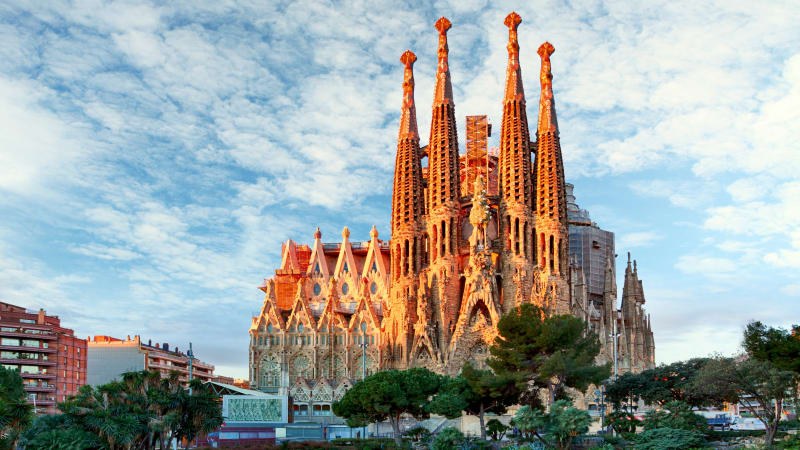 1 mi from BarcelonaSagrada Família
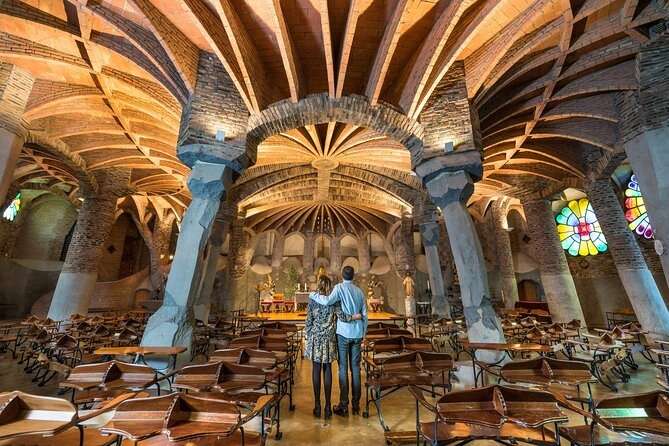 7 mi from BarcelonaColònia Güell Church (Crypt) & Modernist Industrial Site
 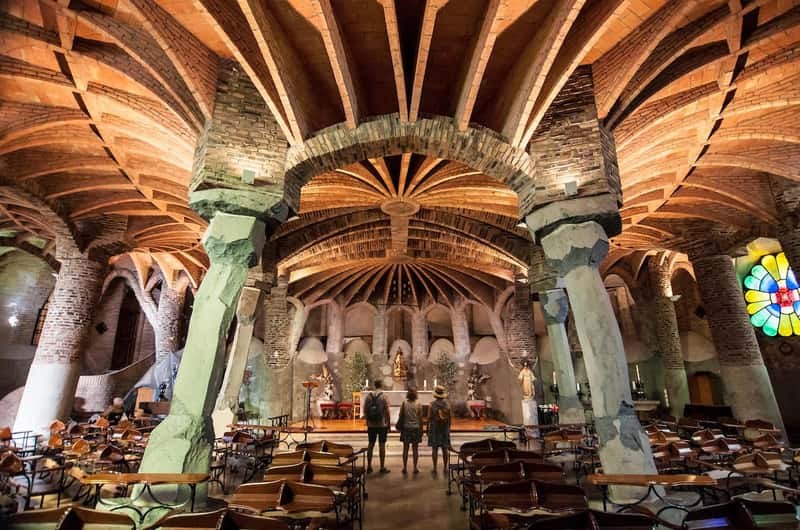 8 mi from Barcelona · land adventureBarcelona Beyond the Crowds: Gaudí, Galician Seafood & Montserrat
 210 mi from Barcelona · land adventureProvence by the Senses: Lavender, Truffles, and Roman Stone
 After you step off · near New Orleans
You end in a different port — stay on, and add what is within reach before you fly home.
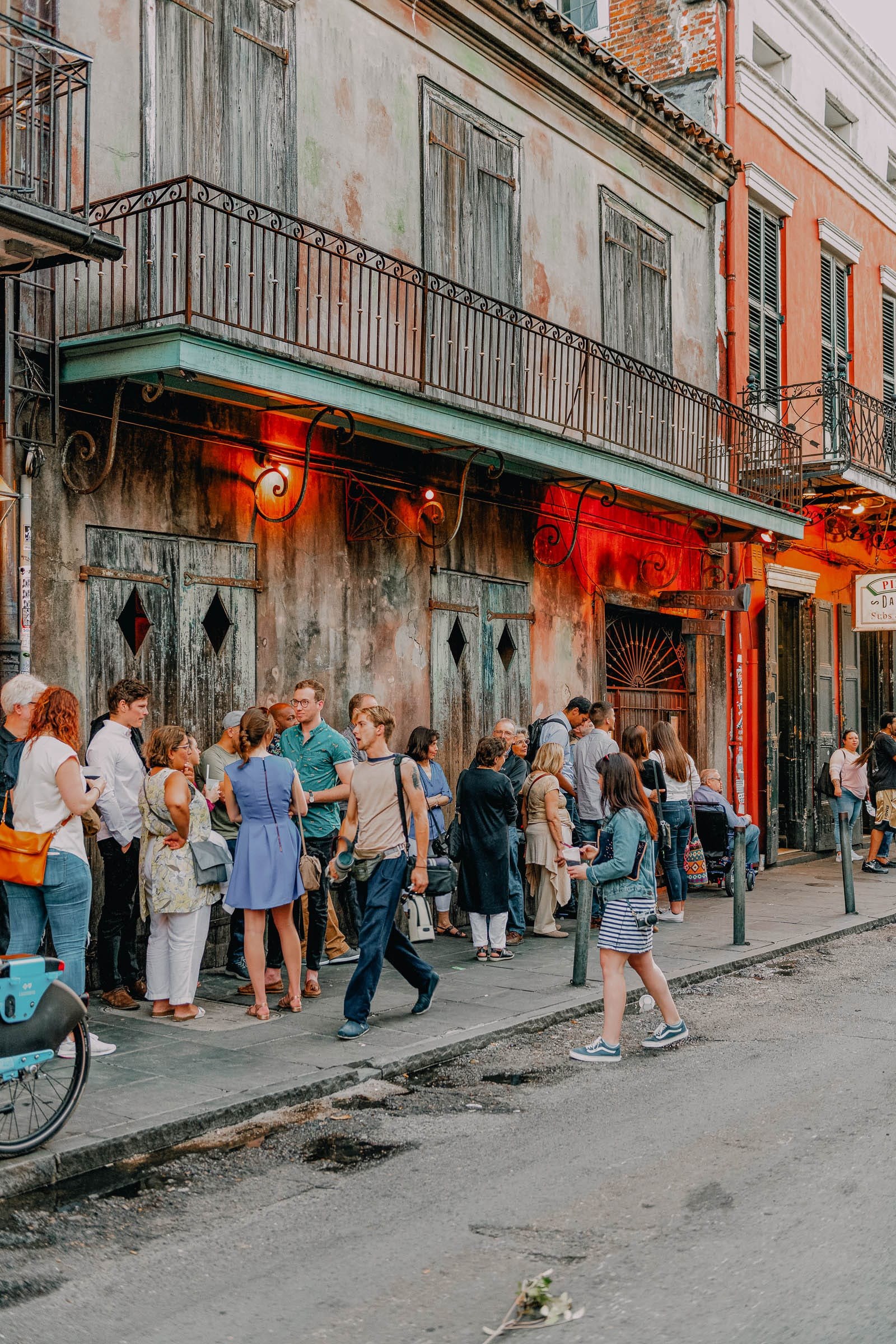
The same trip, elevated
The same gateway on a more luxurious line — lead-in fare per person, same fare as booking direct.