Your cruise
Star Explorer · 8-night Mediterranean cruise, Piraeus (Athens) to Civitavecchia (Rome)
Mar 9 – Mar 16 · 7 nights ·
Day 1 Piraeus (Athens) (board) · Day 2 Delphi · Day 2 Corinth · Day 3–4 Corfu · Day 5 Crotone · Day 6–7 Catania · Day 8 Naples · Day 9 Civitavecchia (Rome) (step off)
What you do Walk the Sacred Way with Georgia Hasioti — Delphi's most celebrated licensed guide — through the Sanctuary of Apollo, the Ancient Theatre, and the world-class museum. The navel of the ancient world, unlocked by its finest storyteller.
What to expect Georgia meets you at the site entrance and leads you up the Sacred Way past the Treasury of the Athenians and the Rock of the Sibyl to the Temple of Apollo — the very spot ancient Greeks believed was the centre of the world. Inside the museum, she contextualises the magnificent Charioteer of Delphi and the Sphinx of Naxos as primary sources, not museum labels. The tour is entirely private, paced to your curiosity, with no other groups crowding your sightlines or your questions.
Good to know Delphi archaeological site is a 20-minute drive from Itea port — taxi or pre-arranged driver recommended. Site opens 08:00; arrive early before coach groups. Book Georgia via TripAdvisor message well in advance. Confirm all-aboard time with your ship and allow 30 min return drive to Itea.
Versus the ship tour Georgia Hasioti is Delphi-born, Ministry of Culture–licensed, and commands 5-star reviews across hundreds of private bookings — she brings the Oracle's sanctuary to life in a way no group tour can replicate, at your own pace, with exclusive focus on your party.
book direct with Georgia Hasioti Licensed Guide, Delphi → · the full guide →
What you do A seamless private full-day journey from the port at Itea directly to Ancient Delphi, then on to the stone-cobbled mountain village of Arachova for lunch and boutique shopping — ancient grandeur paired with authentic Greek highland life.
What to expect Your driver-guide collects you dockside at Itea and whisks you up the dramatic mountain road to Delphi's archaeological precinct, narrating the landscape and mythology en route. After a thorough visit to the sanctuary and museum, you continue to Arachova — a clifftop village of tavernas, local wine, hand-woven textiles, and staggering Parnassus views. Lunch is at a village taverna with local lamb and Arachova's prized foritsa cheese. Return to Itea is timed precisely to your ship's schedule.
Good to know Itea is the cruise port for Delphi — transfers are short and straightforward. Arachova is 10 minutes beyond Delphi. Pre-book the private vehicle to guarantee dockside pickup. The combined site + museum ticket (EUR 20) covers both the archaeological precinct and the museum.
Versus the ship tour Fully private vehicle and local expert guide departing directly from Itea pier — no assembly points, no waiting, no shared coaches. The Arachova extension transforms the day into a true insider cultural immersion most visitors never experience.
book direct with Delphi Tours (delphi-tours.com) → · the full guide →
What you do A skip-the-line private guided tour of the UNESCO-listed Delphi archaeological site and its legendary museum — home to the Bronze Charioteer and the Omphalos Stone — led by a Ministry of Culture–licensed archaeologist-guide.
What to expect A dedicated licensed guide and private air-conditioned vehicle meet you at Itea port. You ascend to the Sanctuary of Apollo along the Sacred Way, pausing at the Athenian Treasury, the Stoa of the Athenians, and the Temple of Apollo's dramatic clifftop platform with views across the olive-silvered Pleistos valley. The afternoon is devoted to the museum's masterpieces, including the life-size Bronze Charioteer — one of antiquity's greatest surviving bronzes. The guide curates the experience around you, not a script.
Good to know Book directly through athensshoreexcursion.com and specify your Itea port call date and all-aboard time. Private tours allow flexible start times — request an early morning start to beat the heat and the crowds. Museum and site are adjacent; combined ticket purchased on arrival or online at hhticket.gr.
Versus the ship tour Entirely private, licensed expert-led, and designed specifically for cruise passengers calling at Itea — the itinerary is reverse-engineered from your all-aboard time so you never feel rushed, and every moment is tailored to your group's interests.
book direct with Athens Shore Excursion (athensshoreexcursion.com) → · the full guide →
What you do Hike the full length of the Sacred Way from the sanctuary gates to Delphi's remarkably preserved Ancient Stadium — the highest point of the precinct — where Panhellenic athletes once competed in the Pythian Games with the gods as their audience.
What to expect Departing Itea at dawn, you arrive at the site before the gates fill with day-trippers. Your guide leads you up through the terraces — the Treasury, the theatre, the altar — continuing the steep final ascent to the stadium, carved into the mountain at 570 metres altitude. The 177-metre limestone track is almost entirely intact, and the views across two mountain ranges to the Gulf of Corinth are breathtaking. Descend at leisure, finishing with the museum before the midday crowds arrive.
Good to know Wear sturdy walking shoes — the Sacred Way is cobbled and steep. The stadium is included in the standard EUR 20 combined ticket. Allow at least 3.5 hours for site + museum. Itea is 20 min by car; arrange a private driver for the return to meet your all-aboard deadline.
Versus the ship tour Most visitors never make it to the stadium — the hike requires time and a guide who knows the precinct's full topography. A private early-morning visit means you stand alone on the ancient track in near-total silence, exactly as Pindar's victors once did.
book direct with Delphi Tours (delphi-tours.com) → · the full guide →
What you do Discover the Sanctuary of Athena Pronaia — the hauntingly beautiful precinct below the main site, anchored by the iconic circular Tholos temple — with a private licenced guide who reveals why ancient pilgrims considered this their first sacred stop at Delphi.
What to expect Georgia walks you down to the Marmaria precinct, below the main sanctuary, where the circular 4th-century BC Tholos rises against a backdrop of olive groves and sheer cliff face — a composition so perfect it has defined the image of Delphi for two centuries. She explains the Tholos's still-debated purpose, the adjacent Temple of Athena, and the Castalian Spring nearby, where pilgrims ritually purified themselves before consulting the Oracle. The atmosphere at this lower sanctuary, especially in early morning light, is quietly overwhelming.
Good to know The Marmaria/Athena Pronaia sanctuary is a short walk from the main Apollo sanctuary — your guide can seamlessly combine both in one visit. The Castalian Spring is en route between the two precincts. Combine with the museum for a complete Delphi experience. Book Georgia well in advance via TripAdvisor.
Versus the ship tour The Tholos is the most photographed monument in Delphi yet the least explained — Georgia Hasioti delivers the full religious, architectural, and political context that transforms three standing columns into one of antiquity's most resonant mysteries. Visited privately, without the crowds.
book direct with Georgia Hasioti Licensed Guide, Delphi → · the full guide →
What you do Escape to Arachova — the dramatic clifftop village draped over Mount Parnassus above Delphi — for a private culinary and cultural afternoon: local wine, aged foritsa cheese, slow-roasted lamb, hand-woven kilims, and views that drop 800 metres to the olive groves below.
What to expect The village clings to a limestone ridge above Delphi, its stone-paved lanes lined with shops selling local Arachova pasta, hand-embroidered textiles, and the prized local red wine. Your private driver drops you at the village square and you explore at leisure — the clocktower lane, the terrace tavernas with panoramic valley views, and the cheese shops where foritsa and formaela are aged on-site. Lunch on a terrace with a carafe of local wine as the valley glitters 800 metres below is one of Greece's great quiet pleasures.
Good to know Arachova is 10 minutes by car above Delphi — ideally combined on the same day after your archaeological visit. Allow 2 hours minimum to do it justice. Shops and tavernas are open midday. Factor Arachova into your overall return-to-Itea timeline; total drive Arachova–Itea is approx. 35 minutes.
Versus the ship tour Arachova is where the Greeks go — not the tourists. A private afternoon here, after the main Delphi visit, allows unhurried browsing of family-run shops, a long lunch at a terrace taverna, and a genuine sense of mountain Greek life that no scheduled group excursion can afford.
book direct with Delphi Tours (delphi-tours.com) → · the full guide →
What you do Climb the Sacred Rock with a licensed Athens guide and stand beneath the Parthenon, the single most iconic monument of Western civilization, while the marble turns into the living story of Pericles, Athena and the birth of democracy. Skip-the-line entry is the whole game on a port day, sparing you the brutal midday ticket queue. Pair it with the Bernard Tschumi-designed Acropolis Museum at the foot of the hill, where the original Caryatids and Parthenon frieze sit under glass with the temple in view.
What to expect You arrive at the Acropolis via a 30–45 minute metro or taxi ride from Piraeus and walk straight past the ticket queues with your skip-the-line pass—a critical edge on a port day. Your licensed guide leads you up the Sacred Rock, the marble facades shifting beneath your feet as the Parthenon rises above you, the physical anchor of Western democracy. You stand beneath the temple while its architects, Athena's priests, and Pericles become tangible; the tour typically runs 2–2.5 hours on the hill. If time permits, descend to the Bernard Tschumi-designed Acropolis Museum at the foot, where the original Caryatids and Parthenon frieze rest under glass with the temple framed in the window behind them—the monument visible from the artifact's own display case.
Good to know Book your skip-the-line guided tour (EUR 110–119 all-in) or self-guided entry (EUR 30 site pass only) in advance to lock pace and avoid midday queues. From Piraeus, allow 45 minutes each way by taxi (EUR ~30) or metro; budget 2.5–3 hours on the Acropolis itself, plus museum time if included, leaving a 1.5–2 hour safety buffer before all-aboard. Wear sun protection and comfortable shoes on marble stone; bring water and consider a light jacket if museum time is planned. Confirm your tour operator's meeting point and boarding time the evening before to eliminate port-day confusion.
Versus the ship tour DIRECT WINS. The ship's 'Acropolis & Plaka' half-day runs ~$159.99 pp (Carnival; RCI/Celebrity $150-180). A guided skip-the-line tour books direct at ~$110-119 all-in, and a self-guided half-day (taxi ~EUR 30 each way + EUR 30 entry) lands under $70. Savings of roughly $40-50 pp guided, ~$90 if you DIY the entry and just want the rock.
What you do Drive the turquoise Athens Riviera south to the very tip of Attica, where a gleaming white 5th-century-BC Doric temple stands on a cliff dropping straight into the Aegean. Lord Byron carved his name into a column here; the columns framing the open sea are one of Greece's signature images and the best 'escape the city crowds' move that still fits a half-day. About 4 hours door to door.
What to expect You drive south along the turquoise Athens Riviera, the coastal sprawl gradually giving way to open sea views as you approach the tip of Attica. At Cape Sounion, a gleaming white 5th-century-BC Doric temple materializes on a cliff edge, its columns framing a sheer drop into the Aegean—the view that inspired Lord Byron to carve his name into the stone. You'll have time to walk among those iconic columns, absorb the wind and the signature Greek light, and understand why this is the escape-the-city move that doesn't require a full day. The whole experience moves door-to-door in approximately 4 hours, with the bulk of time at the temple itself.
Good to know Book transfers direct with Athens Walking Tours (~EUR 46 pp) and add temple entry separately (~EUR 10) to avoid cruise-line bundling that inflates the cost to $209–240 for a half-day outing. Aim for a departure within the first 2 hours of your port window to secure the 4-hour round trip plus buffer time before all-aboard. Temple entry is not included in transfer pricing, so bring cash or be prepared to purchase on-site. The coastal drive means no special gear required, but bring sunscreen and a hat—you'll be exposed on the cliff top, with few shade options at the temple itself.
Versus the ship tour DIRECT WINS BIG. Cruise lines almost never sell Sounion standalone, burying it inside a $209-240 full-day package. Booked direct the coastal half-day is ~$61 all-in (group versions elsewhere ~$77). If your ship only offers it bundled, you're paying a $130+ premium for the convenience of one bus.
What you do Trade marble and crowds for the Aegean blue: a half-day catamaran along the Athens Riviera and Saronic coast with swim-and-snorkel stops, a meal and wine aboard. Boats leave from Alimos and Flisvos marinas close to Piraeus, making this the rare genuinely premium on-the-water experience that comfortably fits a port-day clock. Pick an operator that guarantees you back before all-aboard.
What to expect You'll board a semi-private catamaran at Alimos or Flisvos marina—a short ride from Piraeus—and spend your half-day gliding along the Aegean's brilliant blue coastline, pausing at protected swim-and-snorkel spots where the water is clear and calm. Between swims, you'll lounge on deck with wine and a meal included, absorbing the Athens Riviera and Saronic coast views at a pace only a small catamaran allows. Unlike the ship's mega-boat island circuit, this is genuinely intimate: no crowds, no forced itinerary, just the rhythm of the sea. You'll be back at the pier with time to spare before all-aboard.
Good to know Departures are half-day sails (check your operator's exact schedule to confirm return time fits your ship's all-aboard). Alimos and Flisvos marinas are close to Piraeus but you'll need a quick taxi or arranged transfer from the port—factor 15–20 minutes each way. Book semi-private slots ahead, especially June–August, as they fill quickly and pricing rises (EUR 125–135 pp depending on season). Bring reef-safe sunscreen, water shoes, and a light layer; snorkel gear is provided, and meal + wine are aboard.
Versus the ship tour DIRECT-ONLY niche. Cruise lines rarely offer a small-catamaran sail here; their on-water option is the big Saronic island bus-boat. At ~$135 pp semi-private this is a premium experience, not a savings play, but it's the only way to get the relaxed Aegean-blue day, and it beats the ship's ~$180-200 mega-boat island cruise on quality if not headline price.
What you do Thread the historic Plaka backstreets into the roaring Varvakios Agora meat-and-fish market, stopping for spanakopita, loukoumades, Greek coffee, cheeses, olive oil, honey and wine. Repeatedly rated among Europe's best culinary experiences, it delivers the flavors-and-neighborhood immersion a first-timer remembers as vividly as the ruins, all on foot in the old town. ~4 hrs, small group, tastings included.
What to expect You'll spend roughly 4 hours threading through the narrow, winding backstreets of historic Plaka on foot, pausing at local favorites for spanakopita, loukoumades, Greek coffee, and tastings of cheeses, olive oil, honey, and wine. The real anchor is the Varvakios Agora—the roaring central meat-and-fish market—where vendors call out their wares and you'll sample directly in the chaos of neighborhood commerce. Rather than stand-and-listen, you move continuously through old-town streets, tasting as you go, absorbing the rhythm of daily Athenian life in a small group setting. It's the kind of immersive, on-foot culinary walk that stays vivid in memory alongside the ruins.
Good to know Book directly with Athens Walks before the port day to secure your spot in the small group and confirm start time—all tastings are included in the ~$75 pp price, so no hidden costs. Plan on a 4-hour window starting within 1–2 hours of disembark to leave a comfortable buffer (the Plaka walk is entirely walkable from Piraeus pier, though confirm exact meeting point when you book). Wear comfortable walking shoes and bring a small daypack or crossbody bag for any purchases or water; the market and Plaka streets are pedestrian-only and shaded, but summer heat can build. Return to the pier with at least 90 minutes before all-aboard to account for the walk back and any lingering in the market.
Versus the ship tour DIRECT WINS. The ship's food/wine tour runs ~$134.99 pp (Carnival) and independent group food walks elsewhere run $135-183. This direct small-group market-and-Plaka walk at ~$75 pp undercuts the ship by roughly $60 for a far more authentic, on-foot experience. (If you only want a quick pour, a basic Piraeus wine tasting is ~$30-35 and beats everything on price alone.)
What you do Three classic Saronic Gulf islands in one day, including car-free, donkey-and-cobblestone Hydra, one of the most photogenic harbors in Greece. Swimming, Greek music and a buffet lunch aboard deliver the 'Greek islands' taste without flying to the Cyclades. CLOCK WARNING: this is an ~11-hour day departing ~08:15 from Piraeus, so it only works if your ship has a very long call or overnights, and only with an operator that guarantees you back to the ship.
What to expect You'll depart Piraeus around 08:15 on a full-day voyage across the Saronic Gulf, visiting three islands in succession: first the car-free, donkey-cobbled harbor of Hydra, one of Greece's most photogenic ports, where narrow whitewashed streets climb steeply from the waterfront; then Poros, where you'll have time to explore; and finally Aegina. The day anchors around a leisurely Greek buffet lunch served aboard the boat, punctuated by swimming stops and live Greek music that delivers the classic island experience without the flight to the Cyclades. You'll return to Piraeus in late afternoon, having absorbed the full sensory rhythm of island life—water, light, local flavor, and Greek hospitality—all from a single excursion boat.
Good to know This is an ~11-hour commitment departing ~08:15, so it only works if your ship has a very long port call or overnight stay; on a standard 8-hour call, the risk of missing the ship outweighs the ~$40–70 savings versus booking through your cruise line. Book ahead with Athens One Day Cruise (direct ~EUR 131/$142 pp with lunch, versus ship ~$179–199) or confirm your operator guarantees return to the pier with time to spare. Bring sun protection, swimwear, and cash for any extras; wear comfortable walking shoes for Hydra's steep cobblestones. The departure point is directly from Piraeus; allow buffer time to clear the pier and reach the boat dock, and verify exact embarkation details with your chosen operator 24 hours before.
Versus the ship tour DIRECT WINS on price, SHIP WINS on safety. Booked direct this is ~$142 pp with lunch (some local operators ~$99-130) versus the ship's ~$179-199 for the identical boat and islands - a ~$40-70 saving. BUT on a standard port call the 11-hour runtime risks missing the ship; if you're not overnighting, the cruise line's version (or skipping it) is the safer call despite the markup.
What you do The low-risk fallback if a long excursion feels too tight: a fixed-fare taxi or the metro straight to the Acropolis, self-guided entry to the Parthenon, then an easy downhill wander through Plaka's old-town lanes. No tour commitment, no fixed return time, and you control exactly when you head back to Piraeus, which is the safest play for a short port call.
What to expect You'll take a fixed-fare taxi or the metro from Piraeus straight to the Acropolis, where you'll climb through the ancient Parthenon and surrounding monuments at your own pace with a self-guided audio tool or printed map. From the summit, you'll head downhill into Plaka's narrow, winding old-town lanes—a maze of tavernas, neoclassical townhouses, and small shops—wandering for as long as you'd like before strolling back to the port on your own timeline. The whole rhythm is yours: no group delays, no narrated patter, just you, 2,500-year-old stone, and the freedom to linger or move on whenever you choose.
Good to know For a 6–8 hour port call, budget ~45 minutes each way for transit (taxi or metro), 2–2.5 hours at the Acropolis, and 1.5–2 hours wandering Plaka, leaving a 60–90 minute buffer to return to Piraeus before all-aboard. Book your taxi in advance or use the metro (€4 round trip); Acropolis entry is €30 (expect a queue, especially mid-morning). Wear comfortable walking shoes, bring water, and download a self-guided audio app or grab a printed site map beforehand. Plan to be back at the pier at least an hour before your ship's departure time—this is not a ship-sponsored excursion, so you alone are responsible for making the sailing.
Versus the ship tour DIRECT WINS on price and flexibility. The ship's escorted Acropolis & Plaka half-day is ~$159.99 pp; doing it yourself is ~$50-70 pp and you keep full control of your return time. Trade-off: no guide narration and you carry your own clock - acceptable for the Acropolis, which is straightforward to navigate solo.
book direct with Athens Half-Day Sightseeing (Athens Walking Tours - audio/self-guided) → · the full guide →
What you do Walk the Sacred Way with Georgia Hasioti — Delphi's most celebrated licensed guide — through the Sanctuary of Apollo, the Ancient Theatre, and the world-class museum. The navel of the ancient world, unlocked by its finest storyteller.
What to expect Georgia meets you at the site entrance and leads you up the Sacred Way past the Treasury of the Athenians and the Rock of the Sibyl to the Temple of Apollo — the very spot ancient Greeks believed was the centre of the world. Inside the museum, she contextualises the magnificent Charioteer of Delphi and the Sphinx of Naxos as primary sources, not museum labels. The tour is entirely private, paced to your curiosity, with no other groups crowding your sightlines or your questions.
Good to know Delphi archaeological site is a 20-minute drive from Itea port — taxi or pre-arranged driver recommended. Site opens 08:00; arrive early before coach groups. Book Georgia via TripAdvisor message well in advance. Confirm all-aboard time with your ship and allow 30 min return drive to Itea.
Versus the ship tour Georgia Hasioti is Delphi-born, Ministry of Culture–licensed, and commands 5-star reviews across hundreds of private bookings — she brings the Oracle's sanctuary to life in a way no group tour can replicate, at your own pace, with exclusive focus on your party.
book direct with Georgia Hasioti Licensed Guide, Delphi → · the full guide →
What you do A seamless private full-day journey from the port at Itea directly to Ancient Delphi, then on to the stone-cobbled mountain village of Arachova for lunch and boutique shopping — ancient grandeur paired with authentic Greek highland life.
What to expect Your driver-guide collects you dockside at Itea and whisks you up the dramatic mountain road to Delphi's archaeological precinct, narrating the landscape and mythology en route. After a thorough visit to the sanctuary and museum, you continue to Arachova — a clifftop village of tavernas, local wine, hand-woven textiles, and staggering Parnassus views. Lunch is at a village taverna with local lamb and Arachova's prized foritsa cheese. Return to Itea is timed precisely to your ship's schedule.
Good to know Itea is the cruise port for Delphi — transfers are short and straightforward. Arachova is 10 minutes beyond Delphi. Pre-book the private vehicle to guarantee dockside pickup. The combined site + museum ticket (EUR 20) covers both the archaeological precinct and the museum.
Versus the ship tour Fully private vehicle and local expert guide departing directly from Itea pier — no assembly points, no waiting, no shared coaches. The Arachova extension transforms the day into a true insider cultural immersion most visitors never experience.
book direct with Delphi Tours (delphi-tours.com) → · the full guide →
What you do A skip-the-line private guided tour of the UNESCO-listed Delphi archaeological site and its legendary museum — home to the Bronze Charioteer and the Omphalos Stone — led by a Ministry of Culture–licensed archaeologist-guide.
What to expect A dedicated licensed guide and private air-conditioned vehicle meet you at Itea port. You ascend to the Sanctuary of Apollo along the Sacred Way, pausing at the Athenian Treasury, the Stoa of the Athenians, and the Temple of Apollo's dramatic clifftop platform with views across the olive-silvered Pleistos valley. The afternoon is devoted to the museum's masterpieces, including the life-size Bronze Charioteer — one of antiquity's greatest surviving bronzes. The guide curates the experience around you, not a script.
Good to know Book directly through athensshoreexcursion.com and specify your Itea port call date and all-aboard time. Private tours allow flexible start times — request an early morning start to beat the heat and the crowds. Museum and site are adjacent; combined ticket purchased on arrival or online at hhticket.gr.
Versus the ship tour Entirely private, licensed expert-led, and designed specifically for cruise passengers calling at Itea — the itinerary is reverse-engineered from your all-aboard time so you never feel rushed, and every moment is tailored to your group's interests.
book direct with Athens Shore Excursion (athensshoreexcursion.com) → · the full guide →
What you do Hike the full length of the Sacred Way from the sanctuary gates to Delphi's remarkably preserved Ancient Stadium — the highest point of the precinct — where Panhellenic athletes once competed in the Pythian Games with the gods as their audience.
What to expect Departing Itea at dawn, you arrive at the site before the gates fill with day-trippers. Your guide leads you up through the terraces — the Treasury, the theatre, the altar — continuing the steep final ascent to the stadium, carved into the mountain at 570 metres altitude. The 177-metre limestone track is almost entirely intact, and the views across two mountain ranges to the Gulf of Corinth are breathtaking. Descend at leisure, finishing with the museum before the midday crowds arrive.
Good to know Wear sturdy walking shoes — the Sacred Way is cobbled and steep. The stadium is included in the standard EUR 20 combined ticket. Allow at least 3.5 hours for site + museum. Itea is 20 min by car; arrange a private driver for the return to meet your all-aboard deadline.
Versus the ship tour Most visitors never make it to the stadium — the hike requires time and a guide who knows the precinct's full topography. A private early-morning visit means you stand alone on the ancient track in near-total silence, exactly as Pindar's victors once did.
book direct with Delphi Tours (delphi-tours.com) → · the full guide →
What you do Discover the Sanctuary of Athena Pronaia — the hauntingly beautiful precinct below the main site, anchored by the iconic circular Tholos temple — with a private licenced guide who reveals why ancient pilgrims considered this their first sacred stop at Delphi.
What to expect Georgia walks you down to the Marmaria precinct, below the main sanctuary, where the circular 4th-century BC Tholos rises against a backdrop of olive groves and sheer cliff face — a composition so perfect it has defined the image of Delphi for two centuries. She explains the Tholos's still-debated purpose, the adjacent Temple of Athena, and the Castalian Spring nearby, where pilgrims ritually purified themselves before consulting the Oracle. The atmosphere at this lower sanctuary, especially in early morning light, is quietly overwhelming.
Good to know The Marmaria/Athena Pronaia sanctuary is a short walk from the main Apollo sanctuary — your guide can seamlessly combine both in one visit. The Castalian Spring is en route between the two precincts. Combine with the museum for a complete Delphi experience. Book Georgia well in advance via TripAdvisor.
Versus the ship tour The Tholos is the most photographed monument in Delphi yet the least explained — Georgia Hasioti delivers the full religious, architectural, and political context that transforms three standing columns into one of antiquity's most resonant mysteries. Visited privately, without the crowds.
book direct with Georgia Hasioti Licensed Guide, Delphi → · the full guide →
What you do Escape to Arachova — the dramatic clifftop village draped over Mount Parnassus above Delphi — for a private culinary and cultural afternoon: local wine, aged foritsa cheese, slow-roasted lamb, hand-woven kilims, and views that drop 800 metres to the olive groves below.
What to expect The village clings to a limestone ridge above Delphi, its stone-paved lanes lined with shops selling local Arachova pasta, hand-embroidered textiles, and the prized local red wine. Your private driver drops you at the village square and you explore at leisure — the clocktower lane, the terrace tavernas with panoramic valley views, and the cheese shops where foritsa and formaela are aged on-site. Lunch on a terrace with a carafe of local wine as the valley glitters 800 metres below is one of Greece's great quiet pleasures.
Good to know Arachova is 10 minutes by car above Delphi — ideally combined on the same day after your archaeological visit. Allow 2 hours minimum to do it justice. Shops and tavernas are open midday. Factor Arachova into your overall return-to-Itea timeline; total drive Arachova–Itea is approx. 35 minutes.
Versus the ship tour Arachova is where the Greeks go — not the tourists. A private afternoon here, after the main Delphi visit, allows unhurried browsing of family-run shops, a long lunch at a terrace taverna, and a genuine sense of mountain Greek life that no scheduled group excursion can afford.
book direct with Delphi Tours (delphi-tours.com) → · the full guide →
What you do A licensed guide walks you through the greatest medieval fortress in Greece before tour buses arrive, when the light and silence make its scale sink in.
What to expect You drive up the switchback road to 575m as the site opens, well ahead of coach groups still finishing breakfast in Athens. Your guide traces the fortress's changing hands from antiquity through the Ottomans using the actual walls as the text. You wander the upper citadel's chapel ruins and cisterns at your own pace, then descend before the midday heat and crowds arrive.
Good to know Wear real shoes — the terrain is uneven rock and loose gravel. Best done as the very first stop of the day, before Ancient Corinth below, and allow 2-2.5 hours including drive time.
Versus the ship tour You're inside the triple gatehouses and Byzantine, Frankish, Venetian and Ottoman layers with one expert and nobody else, timed for empty ramparts and Corinthian Gulf views.
book direct with Olympic Tours (licensed private guiding services) → · the full guide →
What you do Walk the Roman agora, the Fountain of Peirene and the seven surviving Doric columns of Apollo's temple with a private archaeologist-guide as the site unlocks.
What to expect Your guide meets you at the site gate right at opening and threads through the agora before heat and tour groups build. You stand at the Bema, the elevated speaker's platform tied to the Apostle Paul's trial before Gallio, and hear it in context rather than as a footnote. The seven Doric columns of the 6th-century-BC Temple of Apollo anchor the visit, and the small on-site museum rounds it out with sculpture straight from the excavation.
Good to know Site opens 8:00 (winter) or 8:30, closes mid-afternoon — go first, not last. Combine with the Archaeological Museum ticket, included in general admission.
Versus the ship tour A guide who reads the stones fluently — the Bema where Paul stood trial, the shops of the ancient market — rather than a laminated map and a crowd of forty.
book direct with TourHQ Private Local Guides, Ancient Corinth → · the full guide →
What you do See the 6.4km cut sea-level canal from the sinking road bridge, then actually pass through it on a small chartered boat rather than just photographing it from above.
What to expect You start at the submersible road bridge and watch it lower into the seabed for a passing vessel — a genuinely strange piece of engineering. Then you board a small boat at Isthmia and motor the full length of the canal, walls rising vertically on either side, built in the 1890s on a route Nero himself once tried to dig. It's a 45-60 minute transit, quiet and dramatic in a way no viewing platform captures.
Good to know Canal transits depend on shipping traffic and sea conditions — book with flexibility built in. Time this early or mid-morning; it pairs well before or after Ancient Corinth.
Versus the ship tour Almost everyone stops at the bridge for five minutes and leaves; almost nobody actually transits the canal's sheer 90-metre limestone walls by water.
book direct with Corinth Canal Cruises (local canal-transit boat operators, Isthmia harbor) → · the full guide →
What you do Enter the Lion Gate and Grave Circle A of Agamemnon's citadel with a specialist guide who separates Homeric legend from what Schliemann's dig actually found.
What to expect Roughly 90 minutes from Corinth, you pass beneath the famous Lion Gate relief into a Bronze Age citadel that predates classical Greece by a millennium. Your guide walks you through Grave Circle A, where Schliemann found the gold mask he wrongly attributed to Agamemnon, then down into the corbel-vaulted Treasury of Atreus. It's dense, layered history delivered by someone who can field real questions rather than recite a script.
Good to know This is a full-day add-on (6-8 hours total with Corinth) — confirm it fits your ship's all-aboard time before booking. Bring water and a hat; the site has little shade.
Versus the ship tour A single expert taking you from the Lion Gate through the beehive Treasury of Atreus at a pace built around your questions, not a coach schedule.
book direct with Athens Tours (Viator-affiliated licensed guide network) — Ancient Corinth & Mycenae Private Tour → · the full guide →
What you do Skip the tourist tavernas near the port and taste Agiorgitiko reds in the vineyards of Nemea, with a temple to Zeus as your backdrop.
What to expect You drive south into rolling vine country that most cruise days never reach at all. A host walks you through the estate's Agiorgitiko and Assyrtiko, explaining Nemea's particular terroir and its ancient reputation — the valley is named for the site of Heracles' first labor. Lunch is simple, local, and unhurried: grilled meats, regional cheese, olive oil pressed nearby.
Good to know Best paired as an afternoon stop after a morning at Ancient Corinth/Acrocorinth. Roughly 45 minutes each way from the port — build in drive time against your return.
Versus the ship tour A working family estate, not a bus-tour buffet — you taste wine actually grown on the slopes you're standing on, twenty minutes from Ancient Corinth.
book direct with Semeli Estate (Nemea, family-run winery) → · the full guide →
What you do Cross the canal to Loutraki, the spa town locals actually go to — a palm-lined promenade, warm mineral springs, and zero cruise crowds.
What to expect A short drive over the canal brings you to a proper Greek resort town with a long palm-fringed seafront where locals walk, swim, and drink coffee. The municipal thermal baths draw on natural mineral springs long reputed for their restorative properties. It's a low-key, restorative hour or two that shows you how Corinthians actually spend a weekend, rather than another checklist ruin.
Good to know Good as a decompression stop after a morning of ruins and heat. The promenade and beach need no booking; the baths are walk-in with modest entry fees.
Versus the ship tour This is the place a Corinthian would actually send you for an unhurried hour — a genuine seaside town, not a curated attraction, fifteen minutes from the canal.
book direct with Municipal Thermal Baths of Loutraki → · the full guide →
What you do Climb into a small 9-seat speedboat and skim the emerald cliffs of Paleokastritsa, Corfu's most celebrated coastline, nosing into the glowing Blue Caves and sea grottoes before swim stops at Paradise and Yali beaches. Cliffs, a 13th-century clifftop monastery overhead, and water so clear it looks lit from below — this is the island's single most photogenic stretch of sea. Two hours on the water; pair with a port taxi to fit a 6-8 hr window.
What to expect You'll board a sleek 9-seat speedboat and glide along Paleokastritsa's emerald cliffs for roughly two hours, with the 13th-century clifftop monastery framing the skyline overhead. The boat noses directly into the glowing Blue Caves and hidden sea grottoes—the water so clear it appears to glow from within—before the skipper drops anchor at Paradise and Yali beaches for swim stops where you can slip straight into the crystalline water. Between the cave passages and beach swims, you'll have plenty of time to photograph Corfu's most celebrated and photogenic coastline. The experience feels intimate and unhurried in a small boat rather than crowded into a wooden tour barge.
Good to know Book a departure time (10:00, 12:30, 15:00, or sunset) that allows 2 hours on the water plus a port taxi transfer each way—doable within a 6–8 hour window if you arrange transport immediately upon disembarking. The operator charges only €50 (~$54) per adult versus $104–166 on the cruise line's Paleokastritsa trip, but you must budget separately for a taxi from the pier to the speedboat dock. Bring swimwear, sunscreen, and a waterproof camera or phone case; the onboard shower and WC are basic but available if needed. Confirm your departure time and meet the operator on time, as this is a small private-feel boat with no backup tour slots.
Versus the ship tour Direct wins big. The cruise line's Paleokastritsa caves boat trip runs $104-166; Vive Corfu's private-feel speedboat into the same caves is ~$54 — roughly $50-110 less per person, in a 9-seat boat instead of a packed wooden tour barge. Honest caveat: if you only want the cave glimpse and not the swim, a walk-up wooden cave boat at Paleokastritsa beach is ~15 EUR ($16) — cheapest of all, but you'd need your own transport to the beach and there's no guaranteed seat.
What you do Walk the largest living medieval town in Greece: a UNESCO-listed warren of Venetian 'kantounia' lanes opening onto the French-built Liston arcade and the Spianada, the biggest square in the Balkans. Duck into the gold-and-silver St. Spyridon church holding the island's patron saint, then climb the Venetian Old Fortress on its sea-promontory for the postcard panorama back over the red roofs. The port is ~2 miles out; the #15 bus or a short taxi drops you in the heart of it.
What to expect You'll walk into a time-locked Venetian maze: narrow 'kantounia' lanes suddenly open onto the grand French-built Liston arcade and the Spianada—the Balkans' largest square. Step inside the glittering St. Spyridon church to see the relics of the island's patron saint gleaming in gold and silver. Climb the stone ramparts of the Venetian Old Fortress perched on its sea-promontory for postcard views back over the terracotta roofs and harbour. It's intimate, flat, and walkable in 2–3 hours, with no queues or crowds.
Good to know The port sits ~2 miles from the Old Town; catch the #15 bus or a 10-minute taxi to drop you in the heart of it. Most visitors skip guides entirely and self-navigate the compact, well-signposted lanes for free; if you want local history, Corfu Walking Tours offers a 2-hour cultural walk for ~EUR 35–50 (about half the ship's tour desk price). Old Fortress entry is EUR 6–10, paid at the gate. Budget 3–4 hours total to enjoy the town and fortress; allow 45 minutes to taxi back and clear the pier before all-aboard.
Versus the ship tour The honest answer: skip the tour desk entirely. The ship sells a Corfu Old Town walking tour for $79-99; the Old Town is compact, signposted and a flat 10-minute taxi from the pier, so most first-timers do it free and self-guided. If you want a licensed local guide for the history, Corfu Walking Tours is ~$40-55 — still about half the ship's price and not a bus-herd of 40.
What you do Stand at the tip of the Kanoni peninsula for the single most-photographed scene on Corfu: the tiny whitewashed 17th-century Vlacherna Monastery on its own islet at the end of a slim stone causeway, with cypress-covered Mouse Island (Pontikonisi) and its 13th-century chapel floating just beyond. Walk the causeway to the monastery for free, and a little shuttle boat ferries across to Mouse Island in about five minutes. It's only ~20 minutes from the port — an easy, low-risk independent stop.
What to expect You'll arrive at Kanoni's viewpoint and find yourself face-to-face with Corfu's most iconic postcard scene: the whitewashed 17th-century Vlacherna Monastery perched on its own islet, connected by a narrow stone causeway you can walk across for free. From there, a short shuttle boat ferries you out across calm blue water to Mouse Island in about five minutes, where a 13th-century chapel sits among cypress trees—a journey that feels suspended between sky and sea. The rhythm is unhurried: wander the monastery, take your photos, ferry out and back, then either taxi straight back to port or extend the morning into Old Town or an olive-grove tasting with a private guide. It's a low-intensity, high-reward stop that reads in photographs as though you've traveled far deeper into Greece than you actually have.
Good to know From the port, a taxi to Kanoni costs EUR 10–15 each way and takes roughly 20 minutes—budget 45 minutes to an hour round-trip for transport alone. The causeway walk and monastery are free; Mouse Island shuttle runs a few euros. If booking a private half-day through The Corfu Experience (€80–130 pp), include Old Town and oil tasting, and request pickup directly from your ship—this compresses your logistics and undercuts the ship's longer panoramic coach tour. Plan to depart port 2–2.5 hours into your port day and return by the 4–5 hour mark, leaving a safe 90-minute buffer before all-aboard.
Versus the ship tour Both directions matter. As a standalone view, do it yourself by taxi for the price of the fare — the ship folds Kanoni into a $79-139 panoramic bus tour where you get a brief photo stop. But if you want a guided half-day that also covers Old Town and a tasting with port pickup, The Corfu Experience's private tour (~$80-130) undercuts the ship's panoramic coach and you're in a private car, not a 40-seat bus.
What you do Sail south from Corfu to its sister islands: into the dramatic Ipapanti and Ahai sea caves of Paxos, a long swim stop off Antipaxos in some of the most luminous turquoise water in Greece, and free time in the pretty harbor village of Gaios. The boat leaves straight from the main Port of Corfu, so cruise passengers can walk on independently. This is the definitive Ionian-blue bucket-list day — but it's a full 9 hours, only viable on a long port call.
What to expect Depart Corfu Main Port at 08:20 and sail south to Paxos, entering the cathedral-like Ipapanti and Ahai sea caves—dramatic rock formations rising straight from the Ionian. You'll swim in luminous turquoise water off Antipaxos, one of the clearest bathing stops in Greece, with time to float and drift in the mineral-bright shallows. The rhythm then shifts to the pretty harbor village of Gaios for free time to explore tavernas, cafés, and waterfront shops. Return to port by 18:00, nine hours of island-hopping with an onboard multilingual guide and two cave-entry fees included.
Good to know This is a 9-hour commitment (08:20–18:00), so only book if your ship's all-aboard time is safely after 18:30; confirm the return time the morning of departure since it's an independent day cruise with no ship-side buffer. Walk straight from Corfu Main Port to the Ionian Cruises vessel—no coach transfer needed, though one is available for EUR 8 extra. Bring swimwear, sunscreen, a towel, and water; the boat provides the guide and cave access, but you'll want cash or cards for lunch and drinks in Gaios. Since this is a local operator, double-check your ship's phone number the night before so you can call if the boat runs late—you are entirely responsible for getting back in time.
Versus the ship tour Direct and cheap, with a clock warning. No cruise line sells this exact southern-islands day at a comparable price — Ionian Cruises departs the port itself at ~$49, and it's the biggest, longest-running local fleet. The catch: 08:20-18:00 is a 9-hour commitment. ONLY book this if your ship's all-aboard is comfortably after 18:30, and confirm the return time the day-of; a day cruise is independent, so there's no ship to hold the gangway for you.
What you do Thread the UNESCO Old Town's open market and family-run shops on a small-group tasting walk built around the flavors that make Corfu distinct from mainland Greece — above all the kumquat, the little citrus turned into liqueur and sweets you'll find nowhere else in Greece quite like this. Along the way: spinach-and-cheese pies, olive oil and honey, traditional butter pudding, halva and a Corfiot meze with ouzo, each stop chosen for its community story. It doubles as a cultural walk, so you get the Old Town and the island's taste in one outing.
What to expect You'll thread the UNESCO-listed Old Town's narrow streets and open market with your English-speaking local guide and up to 7 other guests, stopping at family-run shops to taste kumquat liqueur and sweets—the island's signature flavor you won't find elsewhere in Greece. At each stop you'll discover the community story: spinach-and-cheese pies, single-estate olive oils, local honey, traditional butter pudding, halva, and a Corfiot meze paired with ouzo. The rhythm alternates between walking and lingering—sensory pauses in intimate, heritage-listed shops rather than a rushed circuit. Over 2.5 hours, the Old Town's layered history and Corfu's distinct culinary identity unfold side by side.
Good to know Corfu Walking Tours operates this excursion daily; book ahead to secure a spot in the small semi-private group, as the 2.5-hour window fills quickly. The walk departs from the Old Town (a short walk or taxi ride from the cruise pier); plan to be back at the ship 30–45 minutes before departure to account for any delays. Wear comfortable walking shoes suitable for uneven Old Town cobblestones and narrow lanes, and bring a small bag if you plan to purchase kumquat liqueur or local products at the shops. The EUR 90 price includes all listed tastings; no additional spending is required during the tour itself.
Versus the ship tour The rare case where the gap is small. Old Town food-tasting walks run high on both sides — the ship's tasting/food tour is $87-139, and quality independent food walks land ~$97-125. So you're saving modestly (and getting a max-8 group instead of a larger ship party) rather than slashing the price. If saving money is the priority, do a free self-guided Old Town walk and buy kumquat liqueur at a market shop yourself; book this only if you specifically want a guided tasting.
What you do Corfu's most famous palace is the 1890 neoclassical summer villa of Empress Elisabeth ('Sissi') of Austria, set on a hill ~10 km south of the Old Town with the celebrated 'Dying Achilles' statue and gardens sweeping out over the Ionian. It's the classic first-timer marquee — but see the big caveat before you commit a half-day. Reachable by taxi or local bus as a short add-on rather than a destination in itself right now.
What to expect You'll take a taxi or hop the green local bus south from the Old Town, arriving at the hilltop palace within 15–20 minutes to explore the celebrated Imperial Gardens and the iconic 'Dying Achilles' statue overlooking the Ionian Sea. The palace itself—a neoclassical 1890 Austro-Hungarian retreat of Empress Sissi—remains closed for restoration with no confirmed reopening, so you're walking the grounds and exterior with sweeping views rather than touring interiors. Most visitors spend 45 minutes to an hour here before heading back to town, making this a quick, scenic add-on rather than a full half-day commitment. It's the marquee Corfu landmark, but best treated as a low-risk supplement to exploring the Old Town itself.
Good to know Gardens entry costs around EUR 8 per adult (roughly $9) at the gate; hours are daily 08:00–16:00. Taxi from the port runs EUR 25–35 round trip, or take the local green bus from the Old Town for less. Verify the palace interior is actually open before booking any ship excursion claiming "Achilleion Palace" tours (the flagship ship tours at $99–159 sell the same gardens-only experience)—independent operators run identical Old Town + gardens combos for EUR 46–75, making a DIY approach far cheaper. Build in at least 2–2.5 hours total (transit, entry, walk-around, return) to stay comfortably ahead of all-aboard.
Versus the ship tour Use this as the low-risk alternate, not the headliner. IMPORTANT 2026 CAVEAT: the palace interior has been closed for restoration since 2021 with no confirmed reopening date — currently only the Imperial Gardens, exterior and statues are open. The ship's flagship 'Achilleion & Corfu Town' tour ($99-159) is the single most-sold Corfu excursion, but it's selling you a palace whose inside you can't enter; independent operators run the same gardens-plus-Old-Town combo for ~$46-75. Verify the interior is actually open before paying anyone for it — otherwise treat it as a quick EUR 8 gardens stop, not a half-day.
book direct with Achilleion Palace (state museum) → · the full guide →
What you do Stand before Magna Graecia's last surviving column at the Temple of Hera Lacinia, then ascend to the fairy-tale hilltop fortress of Santa Severina — two of Calabria's most stirring sights, entirely privately guided from the port.
What to expect Your guide meets you dockside and whisks you first to the Capo Colonna Archaeological Park, where the lone Doric column of Hera Lacinia rises against the Ionian Sea — once a landmark for ancient Greek sailors. The park's on-site museum holds exquisite votive offerings and statuary excavated from the sanctuary. After lunch, you continue inland to medieval Santa Severina: its Norman-Byzantine castle, Byzantine baptistery, and cobbled piazza feel utterly removed from the modern world. The return is timed carefully to your all-aboard.
Good to know Capo Colonna is ~20 min drive from port; Santa Severina ~45 min. Pre-book directly and confirm your ship's all-aboard time so the guide can plan accordingly. Comfortable walking shoes essential — cobblestones throughout Santa Severina.
Versus the ship tour Port pickup included, professional local guide exclusively yours all day, and a full refund guarantee if your vessel can't berth — rare peace of mind for a private experience of this depth.
What you do Unlock the secrets of ancient Kroton — one of the mightiest cities of Magna Graecia — with a private archaeologist guide in a world-class museum steps from the port. Home to the famed Hera Lacinia votive treasure, this is antiquity at its most visceral.
What to expect The National Archaeological Museum of Crotone (rated 4.4 on TripAdvisor with 205 reviews) holds the finest collection of Magna Graecia antiquities in Calabria. Your private expert leads you through gold votive offerings, bronze statuettes, and painted ceramics recovered from the Temple of Hera Lacinia, explaining Kroton's extraordinary athletic and philosophical legacy. The pacing is entirely yours — no group to chase. After the museum, stroll the adjacent Lungomare Cristoforo Colombo with your guide for sweeping Ionian Sea views.
Good to know The museum is a short walk or taxi from the cruise terminal. Pre-arrange your private guide via TourHQ before sailing. Museum typically open 9:00–20:00; verify seasonal hours. All-aboard timing is comfortable for a half-day.
Versus the ship tour A specialist archaeologist — not a generalist guide — narrates the collection with scholarly depth, connecting each artifact to the city Pythagoras called home and the athletes who dominated the ancient Olympics.
book direct with TourHQ Crotone Local Guides → · the full guide →
What you do Set sail from Crotone aboard a private yacht along one of Italy's most unspoiled coastlines, dropping anchor in turquoise Ionian coves invisible from shore. The light here — crystalline, golden — is unlike anywhere else in the Mediterranean.
What to expect Crotone's harbour opens directly onto the Ionian Sea, and a private morning or afternoon sail reveals a coast of chalk-white cliffs, hidden sea caves, and gin-clear water teeming with marine life. Your skipper navigates to secluded anchoring spots for swimming and snorkelling, and a cooler stocked with local wine, 'nduja-laced snacks, and Calabrian cheese comes standard on luxury charters. The Capo Colonna headland, crowned by its ancient column, is dramatically visible from the water — a perspective no land tour can replicate.
Good to know Confirm departure and return times align with your all-aboard. Half-day charters (3–4 hours) comfortably fit a port day. Bring reef-safe sunscreen and a hat; the Ionian sun is intense. Pre-book at least two weeks ahead in peak season (June–September).
Versus the ship tour A small private vessel means you choose the pace — swim when you want, anchor where you want, sip Calabrian wine on deck with the Temple of Hera Lacinia's silhouette on the horizon.
book direct with GetYourGuide Crotone Sailing Experiences → · the full guide →
What you do Peer through glass-bottom panels into the Capo Rizzuto Marine Protected Area — one of Italy's largest — then slip into the water to snorkel above Posidonia meadows and ancient amphora fragments. A bucket-list encounter with the Ionian's living seabed.
What to expect The Capo Rizzuto Marine Reserve stretches south of Crotone and encompasses dramatic underwater rock formations, Posidonia oceanica beds, and — thrillingly — ancient Greek and Roman amphorae lying exactly where they sank. The glass-bottom boat glides silently above these seabeds before mooring at a prime snorkelling spot, where guides point out resident marine life. The water clarity here regularly exceeds 20 metres. On board, a naturalist provides context on the reserve's extraordinary biodiversity.
Good to know Isola Capo Rizzuto is ~30 min drive or direct boat transfer from Crotone port. Excursions typically run 2.5–3 hours. All equipment provided. Non-swimmers can enjoy the full experience via the glass-bottom viewing panels. Pre-book; places are strictly limited by the marine reserve.
Versus the ship tour Access to a marine protected area means wildlife density — octopus, sea bream, starfish — that unprotected coastline simply cannot match. Small boats carry very few passengers, so the underwater viewing is intimate and unhurried.
book direct with GetYourGuide Crotone Marine Excursions → · the full guide →
What you do Walk in the footsteps of Pythagoras through the historic center of one of Magna Graecia's greatest cities — from the brooding Castle of Charles V to the glittering Cathedral of Santa Maria Assunta — with a private local guide who brings every stone to life.
What to expect Your guide meets you at the port and leads you up through the atmospheric medieval quarter to the Castle of Charles V, whose bastions survey the entire Gulf of Taranto. Inside, the city's layered history — Greek, Roman, Byzantine, Norman, Spanish — unfolds through expert storytelling. The Cathedral of Santa Maria Assunta conceals a breathtaking Madonna icon venerated since the Byzantine era. Piazza Pitagora, the elegant heart of the modern city, makes a perfect final stop for an espresso before returning dockside.
Good to know The historic center is walkable from the cruise terminal (~10 min on foot). Tour duration 2–3 hours. Cathedral entry is free; dress modestly (shoulders and knees covered). Book the private option to guarantee your preferred departure time.
Versus the ship tour Entirely private, set at your pace, with a guide whose family roots are in Crotone — the anecdotes about Pythagoras's school, the city's Olympic champions, and the Spanish fortifications are simply not in any guidebook.
book direct with GetYourGuide – Crotone Private Guided Walking Tour → · the full guide →
What you do Pair Calabria's most dramatic hilltop medieval village with an exclusive tasting at Ceraudo — the celebrated estate whose Dattilo restaurant holds a Michelin star. A private, unhurried immersion in the flavours and history of this extraordinary corner of the deep south.
What to expect A private driver-guide collects you from the port and winds inland through olive groves and sunflower fields to Santa Severina, a Byzantine-Norman hilltop citadel of almost hallucinatory beauty. Your guide narrates its layered history — Greek, Byzantine, Norman, Aragonese — as you explore the castle and domed baptistery. The afternoon moves to the Ceraudo estate in the Strongoli hills, where the Gaglioppo and Pecorello grapes produce wines of genuine international distinction. A guided cellar tour leads to a structured tasting paired with estate-cured charcuterie and local cheeses.
Good to know Santa Severina is ~45 min from port; Ceraudo Winery (Strongoli) is ~30 min from Crotone. Confirm tasting times directly with Ceraudo (+39 0962 865613) as slots are limited. Full refund available if ship cannot dock. Ideal for a full port day of 8+ hours.
Versus the ship tour Access to Ceraudo — Calabria's most lauded wine estate and home to a Michelin-starred restaurant — is an insider connection that transforms a scenic country drive into a genuinely rare gastronomic event.
book direct with Top Private Tours – Crotone Shore Excursion: Santa Severina & Wine Tasting → · the full guide →
What you do Ascend Europe's most active volcano in a private 4×4 Jeep, traversing ancient lava flows and reaching heights of 2,900 m. This is raw, elemental Sicily at its most dramatic — a bucket-list encounter with a living, breathing giant.
What to expect Your guide collects you directly at Catania cruise port and transfers you by private 4×4 deep into Etna's volcanic landscape. You'll walk across hardened lava fields dating back centuries, peer into secondary craters, and breathe air tinged with sulphur at the edge of the world. The guide narrates the volcano's mythology, geology, and living science with genuine authority. On clear days, the panorama stretches from the Ionian coast to the Aeolian Islands — utterly unforgettable.
Good to know Tours are port-to-port and timed to all-aboard. Book directly via Go-Etna and specify your vessel's departure time. Etna's upper reaches can be cool even in summer — bring a light layer. Activity on the summit craters is subject to INGV volcanic monitoring; your guide will have the latest conditions.
Versus the ship tour A private Jeep gives you access to backcountry lava trails and remote craters that larger group transport simply cannot reach. Your expert volcanologist guide adjusts the route in real time based on volcanic activity — an intimate, thrilling experience impossible to replicate at scale.
book direct with Go-Etna (Official Etna Excursions) → · the full guide →
What you do Spend a full day in Sicily's most glamorous hilltop town, Taormina, and the eagle's-nest village of Castelmola above it — with a private guide and car at your disposal. The ancient Greek theatre with Etna as its backdrop is among the most sublime views on Earth.
What to expect Your private driver-guide meets you portside and whisks you up the Sicilian coastline to Taormina. At the Greek-Roman Theatre, a 3rd-century BC masterpiece, you'll hear the history of the civilisations that built and rebuilt it, all while Etna smokes theatrically on the horizon. A leisurely walk through Via Teatro Greco leads to Corso Umberto's boutiques and flower-draped balconies. After lunch at a terrace restaurant, the road climbs further to Castelmola, a fortified village where the views silence even the most seasoned traveller.
Good to know Book early — private cars fill fast on busy port days. Confirm your ship's all-aboard time when booking so the guide can plan the return. Taormina is largely pedestrianised; comfortable walking shoes are essential. Teatro Greco tickets (approx. EUR 10) are purchased on arrival.
Versus the ship tour A private car and guide means you arrive at Taormina's Teatro Greco before the day-tripper crowds, linger in Castelmola's timeless piazza over almond wine, and depart on your own schedule — not a bus timetable.
book direct with Discover Messina (Official Shore Excursions Operator) → · the full guide →
What you do Explore Catania's UNESCO-listed Baroque heart and descend beneath the city into a 15,000-seat Roman amphitheatre buried under the streets — with a private licensed guide who makes the layers of history viscerally real.
What to expect Begin at the iconic Piazza del Duomo, where the Fontana dell'Elefante — Catania's beloved lava-stone elephant — presides over the Baroque skyline. Your guide leads you through the Cathedral of Sant'Agata, Palazzo Biscari, and the fish market (A' Piscaria) before you descend into the Roman underground: a vast, half-excavated amphitheatre that once rivalled the Colosseum. The subterranean tour reveals volcanic tunnels, ancient latrines, and gladiatorial passageways that few visitors ever reach. Above ground, the Benedictine Monastery of San Nicolò l'Arena — Europe's second-largest Benedictine complex — provides a breathtaking final flourish.
Good to know The port is a flat 15-minute walk or short taxi from Piazza del Duomo. Pre-book the Underground Catania entry ticket separately to avoid queues. The monastery's museum tickets start at EUR 6. Wear flat, non-slip shoes for the underground sections. Tours can be timed precisely to your all-aboard.
Versus the ship tour A true local expert like Mirco reveals Catania's hidden narratives — the earthquake of 1693 that buried a Roman city, the lava flows that entombed whole neighbourhoods, the Baroque phoenix that rose from the rubble — stories no group tour has time to tell properly.
book direct with Guides of Italia – Mirco, Local Expert Guide → · the full guide →
What you do Plunge into Catania's legendary A' Piscaria fish market and baroque backstreets for a guided tasting odyssey of arancini, horse-meat sandwiches, fresh sea urchin, and cannoli — Sicily's most honest and thrilling food culture, live and unfiltered.
What to expect Your guide meets you at the port and leads you on foot into the sensory theatre of A' Piscaria — swordfish, sea urchin, mountains of olives, and vendors calling out in Sicilian dialect. You'll taste your way through the city: a warm arancino from a historic friggitoria, a glass of local Etna DOC nero d'Avola, freshly grilled stigghiola, and a perfect cannolo filled to order. The tour weaves through the baroque Piazza del Duomo and the hidden courtyards of the old city, ending with espresso and granite at a century-old café.
Good to know The fish market is at its most spectacular and fragrant in the morning — aim for a 9–10 AM start. Advise your operator of any dietary restrictions when booking. The tour is walkable from the cruise port (approx. 1.2 km). Allow 3–3.5 hours; well within most port-day schedules.
Versus the ship tour Small-group format (never more than 8–10 guests) means you shop alongside locals at market stalls rather than watching from a distance, and tastings are at the vendors the guide personally vouches for — the real places Catanesi eat, not tourist-facing restaurants.
book direct with Discover Messina (Official Shore Excursions Operator) → · the full guide →
What you do Step inside one of Europe's grandest Benedictine complexes — a UNESCO World Heritage baroque masterpiece concealing Roman ruins, secret gardens, and a jaw-dropping frescoed library — on an expert-led private visit that goes far beyond the public tour.
What to expect The monastery's sheer scale — 30,000 square metres of cloisters, chapels, libraries, and gardens — is staggering, yet most visitors only skim the surface. With a private guide, you'll descend into the Greek and Roman layers buried beneath the complex by Etna's 1669 eruption, marvel at the magnificently frescoed refectory, and climb to a rooftop terrace with sweeping views across Catania's baroque skyline to the volcano. The Università degli Studi di Catania now occupies the complex, lending it a wonderful living energy.
Good to know The monastery is a 20-minute walk or short taxi from the cruise port. Book the private guide through Guides of Italia or Discover Messina; museum entry tickets (EUR 6 full, EUR 4 student/youth) are purchased directly at the monastery. Dress modestly — shoulders and knees covered. Plan 2–2.5 hours.
Versus the ship tour A private guide with advance access unlocks rooms and courtyards closed to general visitors — the monks' pharmacy, the observatory, and the hidden hanging garden — revealing a story of volcanic destruction and baroque ambition that spans 500 years.
book direct with Monastero di San Benedetto Catania (Official Booking) → · the full guide →
What you do Set sail from Catania's Blu Marina pier along the mythic Ionian coastline, gliding past the volcanic sea stacks of the Faraglioni di Aci Trezza — Homer's 'Rocks of the Cyclops' — and into secret sea caves accessible only by boat.
What to expect Departing from Catania's Blu Marina pier, your vessel hugs the dramatic Ionian coastline northward, passing the Norman castle of Aci Castello perched on its black lava promontory. The Faraglioni di Aci Trezza — the basalt sea stacks Odysseus supposedly hurled at the blinded Cyclops — rise dramatically from the sea, and your guide brings the mythology to life. You'll anchor in a transparent cove for swimming and snorkelling over volcanic rock formations, then drift back to port with Etna framed against the afternoon sky, a cold glass of Etna Bianco in hand.
Good to know Departs from Blu Marina pier, Catania — approximately 1 km from the cruise terminal; a short taxi or pleasant walk. Morning departures are best for calm seas. Confirm private charter availability directly with Sicily Touring. Bring sunscreen, a hat, and a swimsuit. Allow 3–4 hours; check all-aboard time before booking.
Versus the ship tour A private or small-group sailing vessel lets you anchor in secluded coves for a swim in crystalline volcanic waters, explore the sea caves up close by dinghy, and enjoy an antipasto spread and chilled local white wine on deck — a pace and intimacy impossible on any larger craft.
book direct with Sicily Touring (Official Hop-On / Boat Tours Operator) → · the full guide →
What you do Walk the stone streets of a complete Roman city flash-frozen by Vesuvius in 79 AD: the forum, frescoed villas, the brothel, and the haunting plaster casts of the dead. This is the single reason this port exists, and a licensed archaeologist is what turns acres of rubble into a vivid murder-mystery of the ancient world. Pompeii is ~30-40 min from the terminal by direct Circumvesuviana train or transfer, so it fits a 6-8 hr window with margin; the 2-hr guided slot leaves time for the train both ways.
What to expect You'll walk the stone streets of Pompeii as they were in 79 AD—through the forum, past frescoed villas, the brothel, and the haunting plaster casts of bodies caught mid-life when Vesuvius erupted. Your licensed archaeologist guide transforms acres of rubble into a vivid forensic narrative, making the ancient world click into place over two focused hours. The group stays small (max 20 people), and if you're 10 or more, everyone gets a headset so even the back rows catch every detail. You'll move at the pace of someone who understands what you're seeing, not rushing—the difference between walking through a ruin and reading a murder mystery written in stone.
Good to know Book directly on Askos's FareHarbor site and meet at Porta Marina Superiore; the Pompeii Express skip-the-line ticket is included in the €49.50 price, saving you entry fees. Allow 30–40 minutes by direct Circumvesuviana train each way from the terminal (~€3 return), plus the 2-hour guided tour, leaving comfortable margin in a 6–8 hour port window. Your only logistical job is booking the train or arranging a private transfer yourself—the ship's Pompeii tours cost $100–160 pp for the same archaeologist experience, making direct booking roughly half the price and worth the self-transfer effort. Build in at least a 30-minute buffer before all-aboard; trains are frequent and reliable, but the walk back to the pier matters.
Versus the ship tour Direct wins big. The cruise line's guided Pompeii tour runs $100-160 pp; Askos delivers the same licensed-archaeologist, skip-the-line experience for ~$54 all-in -- roughly half. Even the ship's no-guide 'Pompeii on your own' transfer is $60-80 and still makes you pay the ~EUR 18 entry separately. Only catch: you arrange your own train/transfer (~EUR 3 each way), which is the trade for saving $50-100 per person.
What you do Climb the only active volcano on mainland Europe and look straight down into the steaming crater, with the whole Bay of Naples spread out behind you. Pair it with Pompeii and you see the killer and its victim in a single day -- the definitive Naples story. The walk from the bus drop-off to the crater rim is a moderate 20-40 min on a well-graded gravel path; entry is a fixed timed slot that genuinely sells out.
What to expect You'll shuttle from Ercolano or Pompeii up the volcanic slope to the Parco Nazionale del Vesuvio trailhead, then walk a moderate 20–40 minutes on a well-graded gravel path toward the crater rim. As you climb, the Bay of Naples spreads out behind you; when you reach the rim at your assigned timed slot, you'll stand on the edge and gaze straight down into the steaming crater of mainland Europe's only active volcano. The view backward anchors the entire Naples story—the killer and its victim in one frame, Vesuvius and the cities it buried now visible in a single glance.
Good to know Pre-booking on the official Vivaticket system is COMPULSORY—slots cap at 60 people per 10 minutes and routinely sell out; do not rely on gate sales. The EUR 10 official Gran Cono crater-trail ticket plus booking fee (~EUR 11.68 total) is far cheaper than ship bundled excursions at $150+, but add ~EUR 22 for the shuttle from Ercolano/Pompeii station. Plan arrival at your assigned timed slot with at least 2–3 hours buffer before all-aboard; shuttle transit and the 20–40 minute walk must fit within a realistic 6–8 hour port window. Wear sturdy shoes suitable for gravel paths and bring water and sun protection—the crater rim is fully exposed.
Versus the ship tour No real ship equivalent sells Vesuvius alone -- it's bundled into $150+ combo drives. Buying the EUR 10 official timed ticket direct and adding a ~EUR 22 shuttle is the cheapest serious bucket-list item at this port. Critical: book on the National Park's official Vivaticket system in advance, NOT at the gate -- slots cap at 60 people per 10 minutes and routinely sell out.
book direct with Parco Nazionale del Vesuvio (official ticket via Vivaticket) → · the full guide →
What you do Circle the Bay's glamour island by boat -- past the towering Faraglioni rock stacks, with swim stops in impossibly blue water -- then slip into the Blue Grotto, a sea cave where light refracts through an underwater opening to glow electric blue. It's a genuine once-in-a-lifetime sight, plus free time in Capri town. Honest caveat: the Grotto is the most weather-dependent thing on this list and can close on rough seas; tours run from Sorrento (hydrofoil from Naples), so this is a fuller-day commitment with a tighter return.
What to expect You'll board a small boat from Sorrento (accessible by hydrofoil from Naples) and cruise the Bay of Naples past the dramatic Faraglioni rock stacks rising from impossibly blue water, with planned swim stops to snorkel in those electric-colored seas. The journey culminates in a slip into the Blue Grotto, a sea cave where refracted light transforms the water into an otherworldly glow—a sight rarely forgotten. After the grotto, you'll have free time to explore the charming piazzas and boutiques of Capri town before returning. The rhythm is unhurried but full: roughly 7–8 hours door-to-door, with the boat's English-speaking skipper setting the pace and prosecco or soft drinks on hand.
Good to know Depart early enough to catch the hydrofoil from Naples to Sorrento (book this leg yourself or confirm timing with MBS directly), as the excursion is a full-day commitment with a tight return window to your ship. Budget EUR 18 for Blue Grotto entry and EUR 15 for an assistance fee—both paid on-site upon arrival, not upfront. Book directly through mbsblucharter.com rather than third-party portals: you'll save roughly EUR 50 per person compared to capri.com or cruise-line intermediaries. Essential caveat: the Blue Grotto closes on rough seas, so confirm weather and grotto access 24 hours before departure; bring a light layer, reef-safe sunscreen, and a waterproof phone pouch for snorkel stops.
Versus the ship tour Direct wins, and booking the operator's own page beats the middleman too. The cruise line's Capri boat excursion is $160-260 pp; MBS direct is ~$108 + ~$36 in on-site fees. Worth noting: the SAME MBS tour is listed at EUR 151 on the capri.com booking portal -- going to mbsblucharter.com directly saves ~EUR 50 per person over the portal price.
What you do Ride one of the world's most spectacular roads: cliffside hairpins above the Tyrrhenian Sea, the pastel cascade of Positano, the cathedral square of Amalfi, the gardens of Ravello. A licensed local driver who specializes in cruisers is the right way to do this independently -- they guarantee you back to the ship on time, which the public SITA bus cannot. Best for travelers who prize scenery and photo stops over deep on-foot exploration, since road time is significant.
What to expect Your private driver collects you from the Naples pier in a comfortable vehicle and navigates the Amalfi Coast's famous cliffside hairpins—a white-knuckle ribbon of road hugging the Tyrrhenian Sea—stopping as you choose in pastel-tiered Positano for photos, the cathedral square of Amalfi for wandering, and the terraced gardens of Ravello for views that justify every hairpin turn. Road time is substantial, so the rhythm favors scenic pauses and photo stops over lengthy on-foot exploration; you're trading deep walking for the thrill of one of the world's most visually spectacular drives, with a licensed local specialist handling every curve. The day unfolds at your pace: pick villages, pick lunch spots, linger where the light is best—then your driver guarantees you back at the ship on time, a promise the public SITA buses cannot make.
Good to know Book directly with AmalfiDriver.com (Josef, +39 338 545 3310 or booking@amalfidriver.com) well ahead of your Naples port day; a full-day (8-hour) private vehicle runs approximately €600–750 (~$90–130 per person for a family or small group), split among your party. Expect pickup within 30–45 minutes of your pier arrival; budget your return to the ship with a 90-minute buffer before departure to account for Naples traffic. Bring sun protection, comfortable walking shoes for the village stops (though less critical than on a hiking excursion), and cash or cards for lunch and café stops—the operator handles only the car and driving. Explicitly confirm the on-time-return guarantee when you book; this cruise-specialist operator's promise to land you back on schedule is the competitive edge over cheaper or ad-hoc options.
Versus the ship tour Direct wins on both price and flexibility. The ship's Amalfi/Sorrento panoramic drive is $150-250 pp on a big motorcoach; a private car split across 4 people lands near $90-130 pp and goes where YOU want. Use a cruise-specialist operator that explicitly guarantees the on-time return -- that on-time promise is the whole reason to pay for private over the bus on a port day.
book direct with AmalfiDriver.com (Taurino Transfer Tour) → · the full guide →
What you do Drop 40 meters beneath the chaos of the old city into 2,400 years of hidden Naples: Greco-Roman aqueducts and cisterns, a buried Roman theater, and WWII bomb shelters, explored by narrow candle-lit passages. It's the city's signature 'secret,' completely weather-proof, and pairs perfectly with a pizza lunch above ground. Fully walkable from the port -- no transfer, no train, hard to mess up your all-aboard time.
What to expect You descend 40 meters into candlelit passages beneath Naples' old city, moving through 2,400 years of layered history: Greco-Roman aqueducts and cisterns that still hold their original stone, a buried Roman theater emerging from the dark, and concrete WWII bomb shelters where locals sheltered during air raids. The roughly 90-minute guided walk is fully navigable—narrow but walkable—and afterward you resurface into the modern chaos of the centro storico, ideally heading straight to a nearby pizzeria while the underground air still clings to your clothes. It's completely weather-proof, so rain or scorching sun above ground doesn't matter; the temperature below stays stable year-round.
Good to know Book directly with Associazione Napoli Sotterranea (official state concession No. 2524) rather than street resellers, as other "underground" tickets offer inferior or duplicate routes; departures run roughly hourly in English and Italian, so you can flexibly slip away from the pier for a 90-minute visit and still have time for lunch and shopping. The meeting point—Piazza San Gaetano 68-69, Via dei Tribunali, beside Basilica di San Paolo Maggiore—is a five-minute walk from the cruise port with zero transfers or trains needed. At ~EUR 15 per person, plan for a 2.5–3 hour total absence from the ship (visit + walk back + buffer), leaving you 3–4 hours for the surface city if your port window is 6–8 hours; wear comfortable, flat shoes suitable for narrow stone passages and carry a light layer, as the underground is cool and damp even in summer.
Versus the ship tour This is your low-risk safety net, not a ship line item -- cruise excursions don't sell it, so the only comparison is to look-alikes on the street. Several other 'underground' tickets resell a different or inferior route; book the OFFICIAL Associazione Napoli Sotterranea (state concession No. 2524) on the URL above. At ~$16 and a five-minute walk from the ship, it's the most foolproof culture hit in Naples.
book direct with Associazione Napoli Sotterranea (official, Concession No. 2524) → · the full guide →
What you do Naples invented pizza, and this is the one place on Earth you can eat a true wood-fired Margherita in the city UNESCO honored for the art of the 'pizzaiuolo.' A local guide leads a crawl through the UNESCO historic center -- Piazza Bellini, Piazza Dante, family-run Pizzeria Attanasio -- with six-plus pizza styles and drinks along the way. Zero transfer, fully walkable from the port: the highest-reward, lowest-logistics option for cruisers who want to stay in the city.
What to expect You'll walk through the UNESCO-designated historic center of Naples with a local guide, moving between family-run pizzerias and piazzas—Piazza Bellini, Piazza Dante, Pizzeria Attanasio—stopping to eat and drink your way through six-plus authentic wood-fired pizza styles. Between stops, you're immersed in the streets where pizza was invented, learning the tradition of the 'pizzaiuolo' while tasting each pie fresh from the oven. Along the way you'll drink two cocktails (limoncello spritz and classic spritz) plus wine or beer and finish with chocolate dessert—this is a full seated meal, not a tasting crawl. The entire experience is fully walkable from the port with zero transfers, keeping logistics simple and time in the city unbroken.
Good to know The standard departure is 5:00 pm, so confirm this clears your all-aboard time before booking—if your ship's final boarding is tight, choose the cruise line's daytime food tour instead. The tour is 3.5 hours, meaning you'll return to the port around 8:30 pm; plan your port day accordingly and allow buffer time for the walk back to the pier. Direct booking is required through Eating Europe's website, not the ship; groups max out at 12 people, so book early if traveling with others. Bring only what you need (light wallet, phone, comfortable walking shoes) since you'll be navigating narrow historic streets and stopping frequently to eat and drink.
Versus the ship tour Roughly a wash on price, with direct winning on authenticity. The cruise line's food/wine experience is ~$90-150 pp (Carnival's verified at $99.99); Eating Europe is ~$75 for a real guided meal through the actual birthplace. ONE WARNING that overrides the savings: the standard departure is 5:00 pm -- only book if that clears your all-aboard time, otherwise take the ship's daytime food tour or skip it.
What you do This is the definitive Rome bucket-list day: Michelangelo's Sistine Chapel ceiling and Last Judgment, the Vatican Museums, St. Peter's Square, plus the Colosseum and Roman Forum — all in one 9-hour private run from the pier. Your driver collects you ship-side in a Mercedes and the 'privilege' skip-the-line tickets to both the Vatican and Colosseum mean you walk past the 2-hour queues that would otherwise eat your port day. Note this is a private-driver tour, not a guided one: you explore the interiors at your own pace (audio guides sold inside).
What to expect A private Mercedes collects you pier-side at Civitavecchia and you begin a 9-hour immersion in Rome's iconic landmarks, moving at your own pace rather than a group's rhythm. You skip past the 2-hour queues at the Vatican Museums to explore Michelangelo's Sistine Chapel ceiling and Last Judgment, then wander St. Peter's Square (basilica entry is free but has its own queue). After lunch flexibility, you drive to the Colosseum and Roman Forum, again with skip-the-line privilege tickets that let you move straight inside while standard visitors wait. Throughout, your private driver and personal vehicle—not a 50-person bus—keep you on your schedule, though you explore each site's interiors independently with optional audio guides available for purchase.
Good to know The full excursion runs 9 hours; plan to depart the pier by 8:00 AM at the latest to ensure a comfortable return before your ship's evening departure. Your private driver meets you ship-side at Civitavecchia—confirm the exact return-time guarantee and buffer window when booking, as this operator runs cruisers daily but you'll want that back-to-ship safety net in writing. Bring comfortable walking shoes, sunscreen, and cash or cards for lunch and optional audio guides inside the museums (not included in the EUR 187.50 price). Book skip-the-line tickets in advance as part of your package; they're your main time-saver advantage over the cruise line's group tours, which run $220–$320 per person for the same sites.
Versus the ship tour Direct wins decisively. The cruise lines' marquee 'Best of Rome / Ultimate Rome' Vatican+Colosseum day runs $220-$320 pp, and on premium lines higher — this private, skip-the-line equivalent is ~$205 pp with your own vehicle and no 50-person bus. You save roughly $50-$120 per person and skip the group-pace bottleneck. The one thing the ship guarantees that you're trading away: a step-on licensed guide inside the sites and a back-to-ship promise (this operator runs cruisers daily but confirm the return-time guarantee when booking).
book direct with Discovery Guided Tours → · the full guide →
What you do The reason cruise lines stop here at all: a private deluxe vehicle whisks you from the pier to the Trevi Fountain, Pantheon, Spanish Steps, Piazza Navona, St. Peter's Square and the Colosseum, dropping you as close as Rome's traffic limits allow at each. It's the maximize-a-tight-window play — a first-timer who sails past Rome without standing at the Trevi would genuinely regret it. Be clear-eyed: this is a driver, not a licensed guide, so it's exterior views, photo stops and walk-up landmarks, no museum interiors.
What to expect Your driver collects you pier-side at 8:00 AM in a private deluxe vehicle and begins threading Rome's narrow streets, stopping at the Trevi Fountain, Pantheon, Spanish Steps, Piazza Navona, St. Peter's Square, and Colosseum views—you step out, snap photos, walk up to the exteriors and iconic squares, then move on. This is drive-and-stroll geography, not museum interiors: you'll see Rome's greatest hits from street level and courtyard vistas, with your driver dropping you as close as traffic allows at each landmark. The rhythm is constant but unhurried—a masterclass in first-timer coverage, punctuated by photo moments and the low hum of rolling between sites. You're back at the pier by 5:00–5:30 PM, having touched eight of Rome's most recognizable monuments without boarding a 50-seat coach.
Good to know Pickup is pier-side at 8:00 AM sharp with return by 5:00–5:30 PM, giving you roughly 8 hours door-to-door; factor in Rome's traffic and the driver will optimize stops, so expect less than 30 minutes at each landmark unless you request longer. No entrance tickets, meals, or guide services are included—this is a driver-only arrangement, so museum and basilica interiors are on your own dime and time; bring cash and book ahead if you want to step inside St. Peter's or the Colosseum. All tolls, parking, and taxes are covered in the quoted price (EUR 650–750 per vehicle for up to 7 guests, ~EUR 107–163 per person), and the driver speaks English. Book directly with RomeCabs in advance; a solo traveler or couple may find the ship's motorcoach tour or Trenitalia train equally priced or cheaper per head, so confirm group size before committing.
Versus the ship tour Direct wins on access, ties or beats on price depending on group size. The ship's guided 'City in a Day / Panoramic Rome' coach tour is $110-$170 pp; split a EUR 650-750 car across 4-7 people and you land around $115-$175 pp with door-to-landmark drops a 50-seat bus can't do. For a solo or couple it's a wash on price — but you get a private car and your own timing. If you only want a cheap motorcoach drop-and-roam, the ship's 'Rome On Your Own' transfer ($60-100 pp) or the Trenitalia train (~$11 RT) is far cheaper than any private car — say so and don't overpay for a driver you don't need.
What you do For travelers who've already 'done' central Rome, this is the equally unforgettable alternative: Villa d'Este's 51 fountains, 64 waterfalls and 220 basins — all gravity-fed, not a single pump — paired with Emperor Hadrian's sprawling 2nd-century imperial estate. An expert private guide actually walks the gardens and ruins with you, and the crowds are a fraction of the Vatican's. A 9-hour day, pier to pier.
What to expect You'll spend the morning and early afternoon in two staggered acts: first, Villa d'Este's terraced Renaissance gardens, where your expert guide walks you through cascading fountains, 220 basins, and 64 waterfalls—all fed by gravity alone, no pumps needed—then a private car transfer inland to Emperor Hadrian's 2nd-century sprawl, where crumbling villas, temples, and theaters unfold across 30 acres of archaeological theatre. The rhythm is unhurried; you're with a licensed English-speaking expert, not herded through a coach crowd, so you'll actually absorb the history and architecture as you walk. By late afternoon, your driver returns you to the Civitavecchia pier, completing the 9-hour door-to-door arc.
Good to know Pickup from Civitavecchia pier is included; plan for a private car departure roughly 3–4 hours after ship arrival to allow for disembarkation and meet your guide. Both villas are outdoor, terraced sites with significant walking and uneven ground—wear comfortable shoes and bring sun protection and water. Book at least 48–72 hours ahead; the price (EUR 869 minimum, ~$475 per couple) drops per person as group size grows, and slots are limited to preserve the "expert guide + small party" promise. Confirm your ship's all-aboard time with the concierge and allow a 30–45-minute buffer before boarding to account for Civitavecchia pier return traffic.
Versus the ship tour Mixed verdict, lean ship for small parties. The cruise lines' 'Beauty of Tivoli / Villa d'Este' countryside tour runs $150-$260 pp and other independents (Discovery Guided Tours) sell a Tivoli day from ~$115 pp — so this premium private option is meaningfully pricier per head for a couple (~$475 pp). What you're buying is a genuine licensed guide actually leading you through both UNESCO sites and a private car, versus a coach. If budget is the driver, the ship tour or a cheaper shared independent is the honest call; book this only if private + expert-guided is the point.
book direct with Through Eternity Tours → · the full guide →
What you do Walk intact ancient streets, an amphitheater, taverns, bath-house mosaics and three-story Roman apartment blocks at the buried port city of Ostia Antica — the marquee 'lost Roman city' with a fraction of Rome's crowds. It's far closer to Civitavecchia than the actual Pompeii (which is impractical from this port), and this private full-day pairs it with the Etruscan necropolis at Cerveteri. Pier-side Mercedes pickup, full day, back in time for the ship.
What to expect You'll be picked up pier-side in a private deluxe Mercedes and driven to Ostia Antica, where you'll walk intact ancient streets lined with taverns, bath houses, and remarkably preserved three-story Roman apartment blocks, culminating at the amphitheater — a far less crowded alternative to Pompeii. The day then pivots to Cerveteri's Etruscan necropolis, where you explore burial sites and artifacts from Rome's pre-imperial neighbors. Throughout, you're moving at your own pace in private transport rather than herded with a group, though your driver handles logistics rather than narrating the ruins themselves. The rhythm is unhurried full-day immersion: ancient streets in the morning, a site transition at midday, and Etruscan tombs in the afternoon, returning to the pier in time to reboard.
Good to know Book ahead with Stefano Rome Tours and confirm pier pickup timing to ensure you clear the ship's all-aboard (driver will know the buffer). Entrance tickets to both Ostia Antica and Cerveteri are not included in the EUR 590 vehicle fee—budget ~EUR 18 per site and purchase at the gate or ahead online to save time. Bring a robust audio guide app (like the official Ostia Antica app) or printed site guide, since the driver is not a licensed in-site interpreter. With a full day in the field, wear comfortable walking shoes, sunscreen, and a hat; both sites are largely open-air and can be hot, especially in summer months.
Versus the ship tour Direct wins, with a caveat. Most ships barely offer Ostia Antica, and comparable 'scenic/ruins' ship days run $150-$260 pp — splitting EUR 590 across 4-7 people lands at ~$90-$160 pp plus ~EUR 18 site tickets. You get a near-empty Roman city and a private car well under the ship's countryside price. Trade-off: it's a driver, not a step-on guide inside the ruins, so bring a good audio guide or app if you want the narration the ship's guided tour would include.
What you do Skip the 1.5-hour each-way push to Rome and explore the port town nearly every cruiser blows past: Michelangelo's harbor fortress (Forte Michelangelo), one of Italy's largest open-air markets, fresh Tyrrhenian seafood and the seafront Pirgo promenade. A relaxed small-group walk with local tastings along the way — the low-stress, low-risk safety net when you want to be steps from the ship.
What to expect You'll join a small-group walk that begins steps from the pier and moves at a leisurely pace through Civitavecchia's historic center, anchored by visits to the Renaissance Forte Michelangelo and one of Italy's largest open-air markets alive with local vendors and produce. Along the way, you'll pause for fresh Tyrrhenian seafood tastings and other local bites, absorbing the rhythm of a working port town most cruisers skip. The walk concludes on the waterfront Pirgo promenade, where you'll have absorbed three hours of culture and flavor without the fatigue of a long coach transfer. It's the opposite of the Rome sprint—an immersive, low-pressure exploration of the places locals actually go.
Good to know The entire excursion unfolds within walking distance of your ship, so there's zero transfer time and minimal risk of running late; plan for the three-hour guided walk to fit comfortably in a 6–8 hour port window. Book ahead through DriverInRome to secure your spot in a small group, and wear comfortable walking shoes—you'll be on foot the whole time through cobblestone streets and market areas. Bring cash (EUR) for any additional purchases at the market or for tips, and check departure times with the operator to give yourself at least an hour buffer before all-aboard. The price of approximately EUR 75 per person (€82 USD) includes all tastings, so budget only for optional extras and gratuity.
Versus the ship tour No real ship equivalent, and that's the point. Cruise lines don't sell a Civitavecchia-town tour because they want you on the $60-320 Rome excursions — so this isn't a price-beat, it's a different (and far cheaper) day for travelers who don't want a 3-hour round-trip. At ~$82 pp with food included and zero risk of missing the ship, it's the honest pick for repeat Italy visitors, slow-pace travelers, or anyone who'd rather not gamble a tight Rome turnaround. If it's your first time in Italy, though, do Rome — this is the alternate, not the headline.
Before you sail · near Athens
Fly in at least a day early — every seasoned cruiser does, so a delay never costs you the ship. This is what is worth that day within reach of the port.
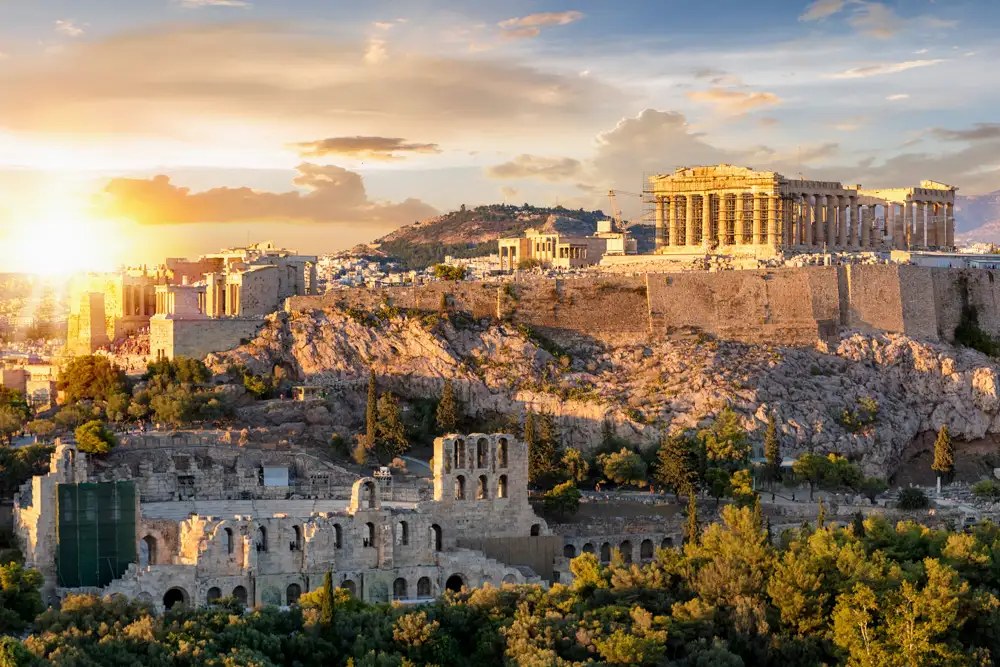
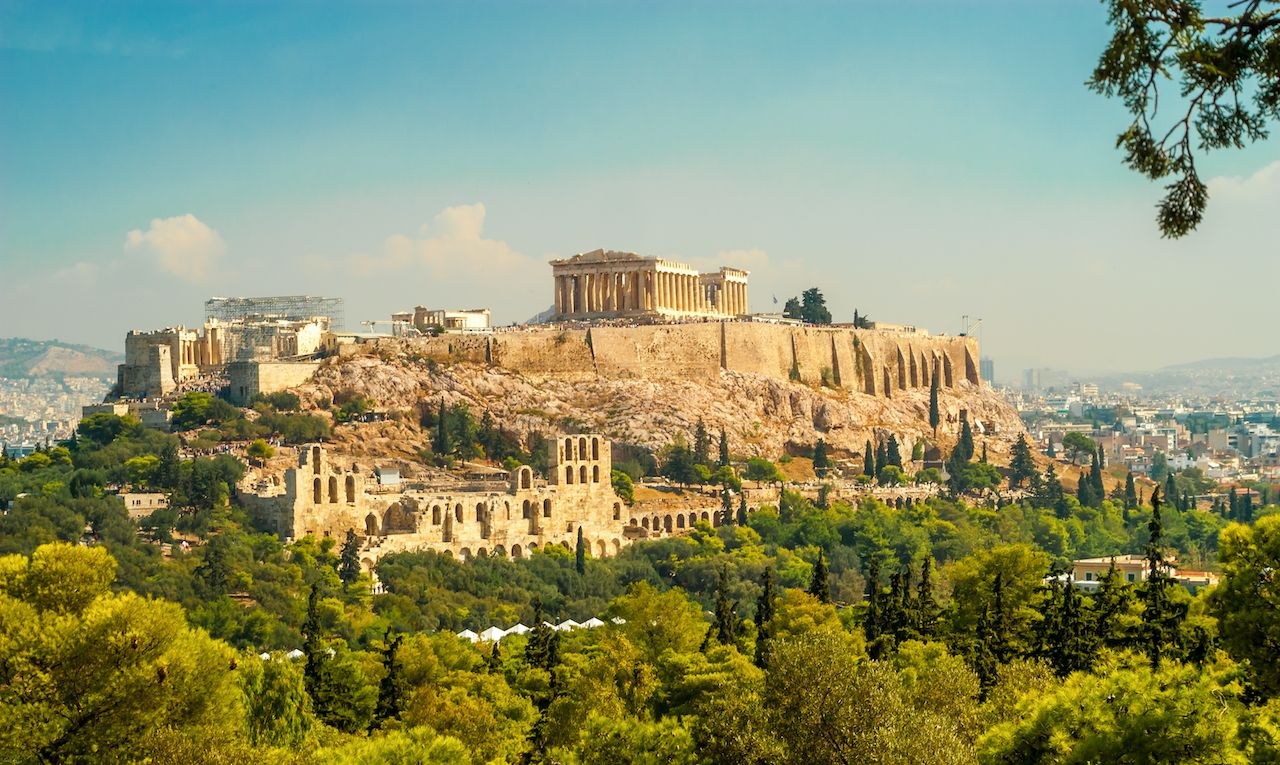
After you step off · near Rome
You end in a different port — stay on, and add what is within reach before you fly home.