Your cruise
Azamara Quest · 11-night Mediterranean round trip from Piraeus (Athens)
Oct 3 – Oct 14 · 11 nights ·
Day 1 Piraeus (Athens) (board) · Day 2 Chios · Day 3–4 Istanbul · Day 5 Canakkale · Day 6–7 Thessaloniki · Day 8 Volos · Day 9 Syros · Day 10 Patmos · Day 11 Nafplion · Day 12 Piraeus (Athens) (step off)
What you do A bespoke, private full-day journey across Chios with a vetted local guide — mastic villages, Byzantine monasteries, medieval ghost towns, and hidden beaches woven into one seamless, unhurried day.
What to expect Your guide picks you up at the port and tailors the route to your passions — whether that means lingering in the geometric streets of Pyrgi, stepping inside Nea Moni's glittering mosaics, or descending to a volcanic black-pebble beach. Every stop is unhurried and explained with the depth only a lifelong local can offer. Lunch is taken at a family-run taverna the guide knows personally, far from tourist crowds. The day ends back at the pier with time to spare, leaving you genuinely transformed by the island.
Good to know Book well in advance — top private guides on Chios fill quickly on port days. Confirm your vessel's all-aboard time with the guide so the itinerary is tailored accordingly. Private car/minivan is included in the experience.
Versus the ship tour Fully private itinerary shaped around your interests, with a local who knows every back road and gatekeeper on the island — no fixed groups, no rushed stops, just genuine insider access at a luxury pace.
book direct with ToursByLocals – Karlos N. (Chios Private Guide) → · the full guide →
What you do Ascend into the forested mountains of Chios to the 11th-century Nea Moni Monastery — a UNESCO World Heritage Site sheltering some of the finest Byzantine mosaics in the entire Greek world.
What to expect The monastery complex dates to 1042 AD and was commissioned by Byzantine Emperor Constantine IX Monomachos. Its katholikon (main church) is adorned with exquisite marble revetments and golden mosaics that survived earthquakes and Ottoman conquest. A charnel house on-site holds the bones of the 3,000 Chiots massacred in 1822, a profoundly moving encounter with history. The mountain setting, surrounded by cypress and pine, is serene and utterly removed from the tourist trail. Pair with a private guide for the full narrative arc.
Good to know Located ~15 km from Chios Town; a taxi or private car is recommended. Modest dress is required (shoulders and knees covered — wraps available at the gate). Best visited in the morning when light floods the apse mosaics. Allow 1.5–2 hrs.
Versus the ship tour Access to a living, working monastery perched in mountain pine forest — the mosaics here rival those of Ravenna and Istanbul, yet rarely seen at the depth a private guide unlocks, narrating the theological meaning panel by panel.
book direct with Nea Moni Monastery (official site) / Chios.gr Official Tourism → · the full guide →
What you do Journey deep into the UNESCO-recognised Mastichochoria — the medieval mastic-producing villages of Pyrgi, Mesta, and Olympi — tasting the island's legendary 'tears of Chios' at source, guided by a passionate local expert.
What to expect Pyrgi's facades are painted in extraordinary black-and-white geometric sgraffito patterns that look like a Cubist dream — a UNESCO-protected art form found nowhere else on Earth. In Mesta, the medieval alleyways were deliberately labyrinthine to confuse pirates; your guide decodes its secret architecture. At a family mastic farm, you witness the scoring of the trees and taste the raw resin alongside mastic-infused spirits, sweets, and cosmetics. The tour culminates in a long, convivial lunch built entirely around mastic-flavoured Chiot cuisine.
Good to know The mastic villages are ~25–35 km from the port; private transfer recommended. The best light for photographing Pyrgi's sgraffito facades is mid-morning. Book the private option to avoid being merged with other groups. Confirm all-aboard time when booking.
Versus the ship tour Small-group or private format means you actually enter village homes and family workshops — not a staged demonstration. The guide's personal relationships with mastic producers unlock tastings and stories no standard itinerary offers.
book direct with Chios Town Authentic Foodie Experience / Local Guides via TripAdvisor Experiences → · the full guide →
What you do Discover Mavra Volia, Chios's hauntingly beautiful volcanic black-pebble beach near Emporios — one of the most visually dramatic coastlines in the Aegean, with crystalline turquoise water lapping obsidian shores.
What to expect The beach's black and deep-red pebbles — forged by ancient volcanic eruptions — create a colour contrast with the Aegean that feels almost unreal, and the water is extraordinarily clear. Just above the beach sits the ancient Sanctuary of Aphrodite at Emporios, a 7th-century BC site where myth and geology collide. The nearby second cove, Mavra Volia II, is even more secluded and reached by a short cliff path. Your private guide frames the landscape with the island's mythological and geological story, making this far more than a swim stop. A chilled bottle of local wine or mastiha liqueur can be arranged for the beach.
Good to know Located ~42 km south of Chios Town — a private car is essential. Allow 2.5–3 hrs including travel. Water shoes recommended for the pebble entry. Go in the morning for calm, glassy water and soft light. Combine with the mastic village tour for a perfect full day.
Versus the ship tour TripAdvisor's #1 attraction on Chios, yet almost entirely crowd-free on a port day — a private transfer gets you there and back at exactly the right moment, with a guide who can add geological and mythological context to the otherworldly landscape.
book direct with Chios Private Tours via ToursByLocals → · the full guide →
What you do Step inside the Chios Mastic Museum in Pyrgi — the world's only museum dedicated to the island's extraordinary mastic resin — and unravel 3,000 years of cultivation, trade, and cultural significance in a masterfully designed space.
What to expect The museum, designed by award-winning architects, uses immersive installations, historical artefacts, and aromatic exhibits to tell the full story of Chios mastic — the only natural resin in the world that solidifies in teardrop shapes and was once so prized it funded the Ottoman Empire. You trace the cultivation cycle from tree-scoring through to the global trade routes that made Chios an imperial treasure. The gift shop carries premium mastic products — from liqueurs and cosmetics to cooking-grade resin — sourced directly from the Chios Gum Mastic Growers Association. The museum is located in Pyrgi village, so the visit integrates naturally with exploring the sgraffito-painted streets.
Good to know Open daily; confirm hours at peak season as they vary. Combine with the mastic villages walking tour for a full half-day in the south of the island. Located ~30 km from the port — arrange private transport. The museum shop is an exceptional place to purchase authentic, regulated mastic products.
Versus the ship tour An intimate, world-class museum experience in the heart of the mastic-producing villages — the exhibits are sensory and deeply engaging, and pairing the visit with a tasting session in the adjacent shop elevates it into a true connoisseur's encounter.
book direct with Chios Mastic Museum (official) → · the full guide →
What you do Explore Anavatos — Chios's haunting, near-deserted medieval cliff village — then descend to the island's Byzantine-Genoese castle in Chios Town for a vivid two-act encounter with the island's turbulent, layered history.
What to expect Anavatos clings to a sheer 300-metre cliff above the island's interior — the villagers chose the height as their final refuge during the 1822 Ottoman massacre, and the eerie, almost-abandoned village has barely changed since. Walking its silent stone lanes with a knowledgeable guide is profoundly moving and visually extraordinary. The Castle of Chios in the island's capital is a beautifully preserved Genoese fortress enclosing an entire neighbourhood of Ottoman-era homes, a Turkish cemetery, and a Byzantine church — layers of civilisation compressed into one walled city. Together, these two sites tell the complete story of Chios's extraordinary — and often tragic — place in Mediterranean history.
Good to know Anavatos is ~28 km from the port; the Castle of Chios is walkable from the cruise pier. A private car is needed for Anavatos. Wear sturdy shoes — both sites involve uneven stone surfaces. Morning visits to Anavatos are magical in early light with low mist in the valleys. Allow a full half-day for both sites combined.
Versus the ship tour Two of the most dramatically atmospheric historical sites in the entire Aegean, combined in one private half-day — a local expert transforms ruins into vivid human stories, from Genoese merchant dynasties to the island's darkest hours in 1822.
book direct with Chios.gr Official Tourism / Private Guide via ToursByLocals → · the full guide →
What you do Climb the Sacred Rock with a licensed Athens guide and stand beneath the Parthenon, the single most iconic monument of Western civilization, while the marble turns into the living story of Pericles, Athena and the birth of democracy. Skip-the-line entry is the whole game on a port day, sparing you the brutal midday ticket queue. Pair it with the Bernard Tschumi-designed Acropolis Museum at the foot of the hill, where the original Caryatids and Parthenon frieze sit under glass with the temple in view.
What to expect You arrive at the Acropolis via a 30–45 minute metro or taxi ride from Piraeus and walk straight past the ticket queues with your skip-the-line pass—a critical edge on a port day. Your licensed guide leads you up the Sacred Rock, the marble facades shifting beneath your feet as the Parthenon rises above you, the physical anchor of Western democracy. You stand beneath the temple while its architects, Athena's priests, and Pericles become tangible; the tour typically runs 2–2.5 hours on the hill. If time permits, descend to the Bernard Tschumi-designed Acropolis Museum at the foot, where the original Caryatids and Parthenon frieze rest under glass with the temple framed in the window behind them—the monument visible from the artifact's own display case.
Good to know Book your skip-the-line guided tour (EUR 110–119 all-in) or self-guided entry (EUR 30 site pass only) in advance to lock pace and avoid midday queues. From Piraeus, allow 45 minutes each way by taxi (EUR ~30) or metro; budget 2.5–3 hours on the Acropolis itself, plus museum time if included, leaving a 1.5–2 hour safety buffer before all-aboard. Wear sun protection and comfortable shoes on marble stone; bring water and consider a light jacket if museum time is planned. Confirm your tour operator's meeting point and boarding time the evening before to eliminate port-day confusion.
Versus the ship tour DIRECT WINS. The ship's 'Acropolis & Plaka' half-day runs ~$159.99 pp (Carnival; RCI/Celebrity $150-180). A guided skip-the-line tour books direct at ~$110-119 all-in, and a self-guided half-day (taxi ~EUR 30 each way + EUR 30 entry) lands under $70. Savings of roughly $40-50 pp guided, ~$90 if you DIY the entry and just want the rock.
What you do Drive the turquoise Athens Riviera south to the very tip of Attica, where a gleaming white 5th-century-BC Doric temple stands on a cliff dropping straight into the Aegean. Lord Byron carved his name into a column here; the columns framing the open sea are one of Greece's signature images and the best 'escape the city crowds' move that still fits a half-day. About 4 hours door to door.
What to expect You drive south along the turquoise Athens Riviera, the coastal sprawl gradually giving way to open sea views as you approach the tip of Attica. At Cape Sounion, a gleaming white 5th-century-BC Doric temple materializes on a cliff edge, its columns framing a sheer drop into the Aegean—the view that inspired Lord Byron to carve his name into the stone. You'll have time to walk among those iconic columns, absorb the wind and the signature Greek light, and understand why this is the escape-the-city move that doesn't require a full day. The whole experience moves door-to-door in approximately 4 hours, with the bulk of time at the temple itself.
Good to know Book transfers direct with Athens Walking Tours (~EUR 46 pp) and add temple entry separately (~EUR 10) to avoid cruise-line bundling that inflates the cost to $209–240 for a half-day outing. Aim for a departure within the first 2 hours of your port window to secure the 4-hour round trip plus buffer time before all-aboard. Temple entry is not included in transfer pricing, so bring cash or be prepared to purchase on-site. The coastal drive means no special gear required, but bring sunscreen and a hat—you'll be exposed on the cliff top, with few shade options at the temple itself.
Versus the ship tour DIRECT WINS BIG. Cruise lines almost never sell Sounion standalone, burying it inside a $209-240 full-day package. Booked direct the coastal half-day is ~$61 all-in (group versions elsewhere ~$77). If your ship only offers it bundled, you're paying a $130+ premium for the convenience of one bus.
What you do Trade marble and crowds for the Aegean blue: a half-day catamaran along the Athens Riviera and Saronic coast with swim-and-snorkel stops, a meal and wine aboard. Boats leave from Alimos and Flisvos marinas close to Piraeus, making this the rare genuinely premium on-the-water experience that comfortably fits a port-day clock. Pick an operator that guarantees you back before all-aboard.
What to expect You'll board a semi-private catamaran at Alimos or Flisvos marina—a short ride from Piraeus—and spend your half-day gliding along the Aegean's brilliant blue coastline, pausing at protected swim-and-snorkel spots where the water is clear and calm. Between swims, you'll lounge on deck with wine and a meal included, absorbing the Athens Riviera and Saronic coast views at a pace only a small catamaran allows. Unlike the ship's mega-boat island circuit, this is genuinely intimate: no crowds, no forced itinerary, just the rhythm of the sea. You'll be back at the pier with time to spare before all-aboard.
Good to know Departures are half-day sails (check your operator's exact schedule to confirm return time fits your ship's all-aboard). Alimos and Flisvos marinas are close to Piraeus but you'll need a quick taxi or arranged transfer from the port—factor 15–20 minutes each way. Book semi-private slots ahead, especially June–August, as they fill quickly and pricing rises (EUR 125–135 pp depending on season). Bring reef-safe sunscreen, water shoes, and a light layer; snorkel gear is provided, and meal + wine are aboard.
Versus the ship tour DIRECT-ONLY niche. Cruise lines rarely offer a small-catamaran sail here; their on-water option is the big Saronic island bus-boat. At ~$135 pp semi-private this is a premium experience, not a savings play, but it's the only way to get the relaxed Aegean-blue day, and it beats the ship's ~$180-200 mega-boat island cruise on quality if not headline price.
What you do Thread the historic Plaka backstreets into the roaring Varvakios Agora meat-and-fish market, stopping for spanakopita, loukoumades, Greek coffee, cheeses, olive oil, honey and wine. Repeatedly rated among Europe's best culinary experiences, it delivers the flavors-and-neighborhood immersion a first-timer remembers as vividly as the ruins, all on foot in the old town. ~4 hrs, small group, tastings included.
What to expect You'll spend roughly 4 hours threading through the narrow, winding backstreets of historic Plaka on foot, pausing at local favorites for spanakopita, loukoumades, Greek coffee, and tastings of cheeses, olive oil, honey, and wine. The real anchor is the Varvakios Agora—the roaring central meat-and-fish market—where vendors call out their wares and you'll sample directly in the chaos of neighborhood commerce. Rather than stand-and-listen, you move continuously through old-town streets, tasting as you go, absorbing the rhythm of daily Athenian life in a small group setting. It's the kind of immersive, on-foot culinary walk that stays vivid in memory alongside the ruins.
Good to know Book directly with Athens Walks before the port day to secure your spot in the small group and confirm start time—all tastings are included in the ~$75 pp price, so no hidden costs. Plan on a 4-hour window starting within 1–2 hours of disembark to leave a comfortable buffer (the Plaka walk is entirely walkable from Piraeus pier, though confirm exact meeting point when you book). Wear comfortable walking shoes and bring a small daypack or crossbody bag for any purchases or water; the market and Plaka streets are pedestrian-only and shaded, but summer heat can build. Return to the pier with at least 90 minutes before all-aboard to account for the walk back and any lingering in the market.
Versus the ship tour DIRECT WINS. The ship's food/wine tour runs ~$134.99 pp (Carnival) and independent group food walks elsewhere run $135-183. This direct small-group market-and-Plaka walk at ~$75 pp undercuts the ship by roughly $60 for a far more authentic, on-foot experience. (If you only want a quick pour, a basic Piraeus wine tasting is ~$30-35 and beats everything on price alone.)
What you do Three classic Saronic Gulf islands in one day, including car-free, donkey-and-cobblestone Hydra, one of the most photogenic harbors in Greece. Swimming, Greek music and a buffet lunch aboard deliver the 'Greek islands' taste without flying to the Cyclades. CLOCK WARNING: this is an ~11-hour day departing ~08:15 from Piraeus, so it only works if your ship has a very long call or overnights, and only with an operator that guarantees you back to the ship.
What to expect You'll depart Piraeus around 08:15 on a full-day voyage across the Saronic Gulf, visiting three islands in succession: first the car-free, donkey-cobbled harbor of Hydra, one of Greece's most photogenic ports, where narrow whitewashed streets climb steeply from the waterfront; then Poros, where you'll have time to explore; and finally Aegina. The day anchors around a leisurely Greek buffet lunch served aboard the boat, punctuated by swimming stops and live Greek music that delivers the classic island experience without the flight to the Cyclades. You'll return to Piraeus in late afternoon, having absorbed the full sensory rhythm of island life—water, light, local flavor, and Greek hospitality—all from a single excursion boat.
Good to know This is an ~11-hour commitment departing ~08:15, so it only works if your ship has a very long port call or overnight stay; on a standard 8-hour call, the risk of missing the ship outweighs the ~$40–70 savings versus booking through your cruise line. Book ahead with Athens One Day Cruise (direct ~EUR 131/$142 pp with lunch, versus ship ~$179–199) or confirm your operator guarantees return to the pier with time to spare. Bring sun protection, swimwear, and cash for any extras; wear comfortable walking shoes for Hydra's steep cobblestones. The departure point is directly from Piraeus; allow buffer time to clear the pier and reach the boat dock, and verify exact embarkation details with your chosen operator 24 hours before.
Versus the ship tour DIRECT WINS on price, SHIP WINS on safety. Booked direct this is ~$142 pp with lunch (some local operators ~$99-130) versus the ship's ~$179-199 for the identical boat and islands - a ~$40-70 saving. BUT on a standard port call the 11-hour runtime risks missing the ship; if you're not overnighting, the cruise line's version (or skipping it) is the safer call despite the markup.
What you do The low-risk fallback if a long excursion feels too tight: a fixed-fare taxi or the metro straight to the Acropolis, self-guided entry to the Parthenon, then an easy downhill wander through Plaka's old-town lanes. No tour commitment, no fixed return time, and you control exactly when you head back to Piraeus, which is the safest play for a short port call.
What to expect You'll take a fixed-fare taxi or the metro from Piraeus straight to the Acropolis, where you'll climb through the ancient Parthenon and surrounding monuments at your own pace with a self-guided audio tool or printed map. From the summit, you'll head downhill into Plaka's narrow, winding old-town lanes—a maze of tavernas, neoclassical townhouses, and small shops—wandering for as long as you'd like before strolling back to the port on your own timeline. The whole rhythm is yours: no group delays, no narrated patter, just you, 2,500-year-old stone, and the freedom to linger or move on whenever you choose.
Good to know For a 6–8 hour port call, budget ~45 minutes each way for transit (taxi or metro), 2–2.5 hours at the Acropolis, and 1.5–2 hours wandering Plaka, leaving a 60–90 minute buffer to return to Piraeus before all-aboard. Book your taxi in advance or use the metro (€4 round trip); Acropolis entry is €30 (expect a queue, especially mid-morning). Wear comfortable walking shoes, bring water, and download a self-guided audio app or grab a printed site map beforehand. Plan to be back at the pier at least an hour before your ship's departure time—this is not a ship-sponsored excursion, so you alone are responsible for making the sailing.
Versus the ship tour DIRECT WINS on price and flexibility. The ship's escorted Acropolis & Plaka half-day is ~$159.99 pp; doing it yourself is ~$50-70 pp and you keep full control of your return time. Trade-off: no guide narration and you carry your own clock - acceptable for the Acropolis, which is straightforward to navigate solo.
book direct with Athens Half-Day Sightseeing (Athens Walking Tours - audio/self-guided) → · the full guide →
What you do A bespoke, private full-day journey across Chios with a vetted local guide — mastic villages, Byzantine monasteries, medieval ghost towns, and hidden beaches woven into one seamless, unhurried day.
What to expect Your guide picks you up at the port and tailors the route to your passions — whether that means lingering in the geometric streets of Pyrgi, stepping inside Nea Moni's glittering mosaics, or descending to a volcanic black-pebble beach. Every stop is unhurried and explained with the depth only a lifelong local can offer. Lunch is taken at a family-run taverna the guide knows personally, far from tourist crowds. The day ends back at the pier with time to spare, leaving you genuinely transformed by the island.
Good to know Book well in advance — top private guides on Chios fill quickly on port days. Confirm your vessel's all-aboard time with the guide so the itinerary is tailored accordingly. Private car/minivan is included in the experience.
Versus the ship tour Fully private itinerary shaped around your interests, with a local who knows every back road and gatekeeper on the island — no fixed groups, no rushed stops, just genuine insider access at a luxury pace.
book direct with ToursByLocals – Karlos N. (Chios Private Guide) → · the full guide →
What you do Ascend into the forested mountains of Chios to the 11th-century Nea Moni Monastery — a UNESCO World Heritage Site sheltering some of the finest Byzantine mosaics in the entire Greek world.
What to expect The monastery complex dates to 1042 AD and was commissioned by Byzantine Emperor Constantine IX Monomachos. Its katholikon (main church) is adorned with exquisite marble revetments and golden mosaics that survived earthquakes and Ottoman conquest. A charnel house on-site holds the bones of the 3,000 Chiots massacred in 1822, a profoundly moving encounter with history. The mountain setting, surrounded by cypress and pine, is serene and utterly removed from the tourist trail. Pair with a private guide for the full narrative arc.
Good to know Located ~15 km from Chios Town; a taxi or private car is recommended. Modest dress is required (shoulders and knees covered — wraps available at the gate). Best visited in the morning when light floods the apse mosaics. Allow 1.5–2 hrs.
Versus the ship tour Access to a living, working monastery perched in mountain pine forest — the mosaics here rival those of Ravenna and Istanbul, yet rarely seen at the depth a private guide unlocks, narrating the theological meaning panel by panel.
book direct with Nea Moni Monastery (official site) / Chios.gr Official Tourism → · the full guide →
What you do Journey deep into the UNESCO-recognised Mastichochoria — the medieval mastic-producing villages of Pyrgi, Mesta, and Olympi — tasting the island's legendary 'tears of Chios' at source, guided by a passionate local expert.
What to expect Pyrgi's facades are painted in extraordinary black-and-white geometric sgraffito patterns that look like a Cubist dream — a UNESCO-protected art form found nowhere else on Earth. In Mesta, the medieval alleyways were deliberately labyrinthine to confuse pirates; your guide decodes its secret architecture. At a family mastic farm, you witness the scoring of the trees and taste the raw resin alongside mastic-infused spirits, sweets, and cosmetics. The tour culminates in a long, convivial lunch built entirely around mastic-flavoured Chiot cuisine.
Good to know The mastic villages are ~25–35 km from the port; private transfer recommended. The best light for photographing Pyrgi's sgraffito facades is mid-morning. Book the private option to avoid being merged with other groups. Confirm all-aboard time when booking.
Versus the ship tour Small-group or private format means you actually enter village homes and family workshops — not a staged demonstration. The guide's personal relationships with mastic producers unlock tastings and stories no standard itinerary offers.
book direct with Chios Town Authentic Foodie Experience / Local Guides via TripAdvisor Experiences → · the full guide →
What you do Discover Mavra Volia, Chios's hauntingly beautiful volcanic black-pebble beach near Emporios — one of the most visually dramatic coastlines in the Aegean, with crystalline turquoise water lapping obsidian shores.
What to expect The beach's black and deep-red pebbles — forged by ancient volcanic eruptions — create a colour contrast with the Aegean that feels almost unreal, and the water is extraordinarily clear. Just above the beach sits the ancient Sanctuary of Aphrodite at Emporios, a 7th-century BC site where myth and geology collide. The nearby second cove, Mavra Volia II, is even more secluded and reached by a short cliff path. Your private guide frames the landscape with the island's mythological and geological story, making this far more than a swim stop. A chilled bottle of local wine or mastiha liqueur can be arranged for the beach.
Good to know Located ~42 km south of Chios Town — a private car is essential. Allow 2.5–3 hrs including travel. Water shoes recommended for the pebble entry. Go in the morning for calm, glassy water and soft light. Combine with the mastic village tour for a perfect full day.
Versus the ship tour TripAdvisor's #1 attraction on Chios, yet almost entirely crowd-free on a port day — a private transfer gets you there and back at exactly the right moment, with a guide who can add geological and mythological context to the otherworldly landscape.
book direct with Chios Private Tours via ToursByLocals → · the full guide →
What you do Step inside the Chios Mastic Museum in Pyrgi — the world's only museum dedicated to the island's extraordinary mastic resin — and unravel 3,000 years of cultivation, trade, and cultural significance in a masterfully designed space.
What to expect The museum, designed by award-winning architects, uses immersive installations, historical artefacts, and aromatic exhibits to tell the full story of Chios mastic — the only natural resin in the world that solidifies in teardrop shapes and was once so prized it funded the Ottoman Empire. You trace the cultivation cycle from tree-scoring through to the global trade routes that made Chios an imperial treasure. The gift shop carries premium mastic products — from liqueurs and cosmetics to cooking-grade resin — sourced directly from the Chios Gum Mastic Growers Association. The museum is located in Pyrgi village, so the visit integrates naturally with exploring the sgraffito-painted streets.
Good to know Open daily; confirm hours at peak season as they vary. Combine with the mastic villages walking tour for a full half-day in the south of the island. Located ~30 km from the port — arrange private transport. The museum shop is an exceptional place to purchase authentic, regulated mastic products.
Versus the ship tour An intimate, world-class museum experience in the heart of the mastic-producing villages — the exhibits are sensory and deeply engaging, and pairing the visit with a tasting session in the adjacent shop elevates it into a true connoisseur's encounter.
book direct with Chios Mastic Museum (official) → · the full guide →
What you do Explore Anavatos — Chios's haunting, near-deserted medieval cliff village — then descend to the island's Byzantine-Genoese castle in Chios Town for a vivid two-act encounter with the island's turbulent, layered history.
What to expect Anavatos clings to a sheer 300-metre cliff above the island's interior — the villagers chose the height as their final refuge during the 1822 Ottoman massacre, and the eerie, almost-abandoned village has barely changed since. Walking its silent stone lanes with a knowledgeable guide is profoundly moving and visually extraordinary. The Castle of Chios in the island's capital is a beautifully preserved Genoese fortress enclosing an entire neighbourhood of Ottoman-era homes, a Turkish cemetery, and a Byzantine church — layers of civilisation compressed into one walled city. Together, these two sites tell the complete story of Chios's extraordinary — and often tragic — place in Mediterranean history.
Good to know Anavatos is ~28 km from the port; the Castle of Chios is walkable from the cruise pier. A private car is needed for Anavatos. Wear sturdy shoes — both sites involve uneven stone surfaces. Morning visits to Anavatos are magical in early light with low mist in the valleys. Allow a full half-day for both sites combined.
Versus the ship tour Two of the most dramatically atmospheric historical sites in the entire Aegean, combined in one private half-day — a local expert transforms ruins into vivid human stories, from Genoese merchant dynasties to the island's darkest hours in 1822.
book direct with Chios.gr Official Tourism / Private Guide via ToursByLocals → · the full guide →
What you do Stand beneath the largest free-standing dome of the ancient world inside a building that served as the planet's grandest cathedral for 900 years and its grandest mosque for 500 more. A licensed guide unlocks what the average visitor walks past: the 9th-century apse mosaics, the marble Omphalion where Byzantine emperors were crowned, and the layered Christian-and-Islamic iconography that exists nowhere else on earth. This is the single most consequential building in Istanbul and arguably in the eastern Mediterranean.
What to expect Foreign visitors use a dedicated tourist entrance separate from worshippers and pass through mandatory security screening. The main prayer floor is carpeted and partly screened for prayer; tourists are routed to the upper gallery for the famous Deesis and imperial mosaics. Shoulders and knees must be covered and women need a headscarf (free scarves are available at the door). Allow 60-90 minutes inside.
Good to know From Galataport the T1 tram from Tophane reaches Sultanahmet in ~15-20 minutes; Hagia Sophia is a 3-minute walk from the Sultanahmet stop. Buy the timed entry online in advance to avoid the queue. Closed to tourists during the five daily prayer windows and Friday midday prayer, so a licensed guide who times your visit around them is worth it. Comfortably back aboard for any all-aboard after ~16:00.
Versus the ship tour Cruise lines bundle Hagia Sophia into a full-day 'Classic Istanbul' tour at roughly USD 150-200 per person. Booking direct is dramatically cheaper: the EUR 25 entry plus a shared private guide for your party costs a fraction of that, and you skip the 40-person coach. Book direct here unless your ship's tender timing is unusually tight.
book direct with Hagia Sophia Grand Mosque (official ticketing, muze.gen.tr) → · the full guide →
What you do Cruise the only strait on earth that splits a city across two continents, gliding past the marble Dolmabahce Palace, the Ottoman waterfront mansions (yali), the fortress of Rumeli Hisari, and beneath two intercontinental bridges. On a private yacht you set the pace, the route and the soundtrack, with tea or champagne in hand as the minarets of the skyline drift by. Doing this on your own chartered boat rather than a packed 200-seat tour ferry is the difference between a postcard and a memory.
What to expect You board at a marina near the European shore; the captain runs the classic strait route and can pause for photos at the bridges and palaces. Crew serve refreshments; many operators allow you to bring your own champagne or arrange catering. Sunset departures are the prized slot and book out first. Two hours is enough to reach Rumeli Hisari and back at an unhurried pace.
Good to know Confirm the boarding marina relative to Galataport when you book; some launch points are a short taxi from the cruise terminal. Pre-book the exact departure time and request a sunset slot if your ship overnights. Bring layers, the strait is breezy even in summer. Galataport itself sits right at the mouth of the Bosphorus, so transfer times are short.
Versus the ship tour Cruise lines sell a shared Bosphorus 'cruise' as part of a coach tour, typically USD 80-120 per person on a large group boat. For a couple or a family, a private charter direct is a clear luxury upgrade and, split across your party, competitive per head while giving you the whole boat. Book direct.
book direct with Bosphorus Yacht (Zoe Yacht, official) → · the full guide →
What you do Walk the ceremonial spine of imperial Istanbul: the Sultanahmet (Blue) Mosque with its cascade of domes and 20,000 hand-painted Iznik tiles, the ancient Hippodrome where Byzantine chariots once raced around a 3,500-year-old Egyptian obelisk, and then descend into the Basilica Cistern, a sunken sixth-century forest of 336 columns lit like an underground cathedral with two enigmatic Medusa heads at its feet. Three civilizations, Roman, Byzantine and Ottoman, layered within a 10-minute walk.
What to expect The Blue Mosque is an active place of worship: shoes off, modest dress, headscarf for women, and it closes to tourists during the five daily prayers, so timing matters. The Basilica Cistern's atmospheric Night Shift (after 19:30) is the connoisseur's slot, quieter and more theatrically lit, but tickets are sold only same-day at the door. The Hippodrome is open public space between the two.
Good to know All three sit within a few minutes of each other in Sultanahmet, a 15-20 minute tram ride from Galataport via the Tophane T1 stop. Cistern accepts card or Istanbulkart only, no cash. Carry a scarf for the mosque. If your ship overnights, the Cistern Night Shift is a standout; otherwise do the cluster mid-morning before the mosque's midday prayer closure.
Versus the ship tour These exact sites form the backbone of the ship's USD 150-200 'Highlights of Istanbul' coach day. On your own the hard costs are tiny (the mosque is free, the cistern under EUR 40) and the walking distances are minimal, so book direct and pocket the difference. The ship tour only earns its markup if you have a very short port call and want the door-to-door coach.
What you do Walk the seat of Ottoman power for nearly 400 years, set on the point where the Bosphorus meets the Golden Horn. Beyond the four courtyards lie the two rooms that make it bucket-list: the Harem, the labyrinth of tiled private chambers where the sultan, his mother and his concubines lived, and the Imperial Treasury, home to the 86-carat Spoonmaker's Diamond and the emerald-studded Topkapi Dagger. The terrace views over the strait are the finest in the old city.
What to expect The palace is large and the Harem and Treasury draw the longest lines, so go early. Crucially, Topkapi is closed on Tuesdays, a frequent trap for cruise passengers, so check your port day. The Harem requires the combined ticket; don't assume your Museum Pass covers it (it doesn't). Budget 2-3 hours to do it justice.
Good to know Topkapi sits beside Hagia Sophia in Sultanahmet, so pair them in one morning, 15-20 minutes from Galataport by T1 tram. Pre-book the timed combined ticket online to skip the queue. Wear comfortable shoes; the courtyards are cobbled and spread out. Be back at the tram with a buffer for all-aboard.
Versus the ship tour Topkapi is the costliest single entry of the Sultanahmet sites, and ship tours fold it into the same USD 150-200 day. Buying direct at ~EUR 54 with the Harem included is far better value, and a private guide for the palace helps you prioritize in the limited port window. Book direct; only default to the ship tour in a very tight call.
book direct with Topkapi Palace Museum (official ticketing, muze.gen.tr) → · the full guide →
What you do Take the full hammam ritual in a 1556 bathhouse designed by the great Ottoman architect Mimar Sinan and commissioned by Suleiman the Magnificent's queen, Hurrem Sultan, on the ancient site of the Baths of Zeuxippus, steps from Hagia Sophia. You are scrubbed on a heated marble platform (gobektasi) beneath a star-pierced dome, foam-washed, and massaged in a 470-year-old monument. It is the single most sensory, most distinctly Ottoman experience in the city, and a sublime antidote to a day on your feet.
What to expect You're given a pestemal (cotton wrap) and slippers; the ritual moves from the warm dome to the heated marble slab where an attendant performs the kese exfoliation and an olive-oil-soap foam massage, finishing with a rinse and tea in the cool room. Separate men's and women's sections, same-sex attendants. The experience runs roughly 60-90 minutes depending on package. It is touristy but the building and the ritual are genuinely historic.
Good to know Located in Sultanahmet directly between Hagia Sophia and the Blue Mosque, easy to slot after morning sightseeing, 15-20 minutes from Galataport by tram. Book your time slot online in advance, especially on overnight port days. Bring nothing; towels, wrap and slippers are provided. Allow drying/relaxing time before heading back to the ship.
Versus the ship tour Cruise lines rarely offer a historic hammam as a standalone excursion, and when bundled it carries a steep per-person markup over the spa's own rates. Book direct with the bathhouse: you choose your ritual tier and time, and the heritage of this specific Sinan-built hamam is the whole point. There is no equivalent the ship can sell you better.
book direct with Ayasofya Hurrem Sultan Hamami (official) → · the full guide →
What you do Eat your way through Istanbul with the company that wrote the book on its food, tracing the Grand Bazaar and Spice Bazaar and then ferrying across the Bosphorus to the Asian-side market streets of Kadikoy. You meet the masters behind the counters, the kokorec grillers, the pickle makers, the borek bakers, and eat roughly a dozen specialties most cruise passengers never find. Crossing between continents for lunch is a bucket-list flourish only Istanbul can offer.
What to expect Expect a 6-hour-plus walk with a serious eater's pace, plenty of standing and walking, and a small group of fellow food travelers. The route weaves through the Grand Bazaar's 4,000 shops and the Spice Bazaar before a public-ferry hop to Kadikoy's market lanes. You will eat a lot; come hungry and wear walking shoes. Tours sell out, so book well ahead.
Good to know Confirm the meeting point relative to Galataport; the Grand Bazaar end is a short tram ride away. This is a full-day commitment, so it suits an overnight call or a long port day; check it fits inside your all-aboard before booking. Cancel up to 24 hours ahead for a full refund. The Grand Bazaar is closed Sundays, which affects scheduling.
Versus the ship tour Ship 'taste of Istanbul' excursions are large-group, lighter on access, and typically priced USD 120-180 per person. Culinary Backstreets caps groups at seven and delivers genuine local access, so booking direct buys you a smaller, deeper, better experience for a similar or lower price. Book direct.
book direct with Culinary Backstreets (official) → · the full guide →
What you do Walk the hallowed ground of Anzac Cove, Chunuk Bair, and Lone Pine Cemetery with a dedicated expert guide. This is one of the most emotionally powerful historical sites on earth — a bucket-list pilgrimage for anyone who values courage and sacrifice.
What to expect A short ferry crossing over the Dardanelles delivers you to the Gallipoli Peninsula, where rolling green hills belie the ferocity of the 1915 battles. Your expert historian-guide walks you through Anzac Cove's pebbled shore, the moving rows of Lone Pine Cemetery, and panoramic Chunuk Bair. Kabatepe Museum's vivid dioramas set the campaign in unforgettable context before you return to port.
Good to know The ferry crossing takes about 25 minutes each way; allow a full day (6–8 hours) for justice to the site. Pre-book your private guide to secure availability, as this is the most in-demand excursion from Canakkale. All-aboard times in Canakkale are typically early evening — confirm with your ship and communicate this to your guide when booking.
Versus the ship tour A private guide means you linger at the memorials that move you most, hear deeply personal stories of the 1915 campaign, and avoid the crowds entirely — a contemplative, unhurried pace impossible in a large group.
book direct with Fez Travel – Private Shore Excursion → · the full guide →
What you do Stand inside the legendary walls of Homer's Troy — nine layered cities spanning 4,000 years of civilization. With a private archaeologist-guide, myth and history fuse into one unforgettable encounter at one of the ancient world's most storied sites.
What to expect Just 30 km south of the cruise port, Troy (Truva) sits on a commanding ridge above the Troad plain. Your guide navigates the site's complex excavations, revealing walls, temples, and the legendary Scaean Gate while weaving in the Iliad's dramatic narrative. The on-site museum houses stunning finds — gold jewellery, ceramics and weaponry — that bring Schliemann's excavations to vivid life. The half-day format pairs perfectly with an afternoon in Canakkale's waterfront bazaar.
Good to know Site entry is approximately TRY 500–600 (around USD 15–18); confirm current rate at booking. Troy is a 30-minute drive from the cruise pier — your private guide arranges transfers. Combine with the Canakkale Archaeological Museum for a full-day Troy immersion if time allows.
Versus the ship tour Your private local expert decodes the stratigraphic layers — from Bronze Age Troy II to Hellenistic Troy VIII — in a way no group tour can, pausing at the famous wooden horse replica and the ancient ramp for unhurried photography and genuine discovery.
book direct with Tours by Locals – Private Ancient Troy Half-Day Tour, Canakkale → · the full guide →
What you do The ultimate Canakkale day: ancient Troy in the morning, Gallipoli's ANZAC battlefields in the afternoon — two of the world's most significant historical sites, back to back, with a single expert private guide threading the entire narrative together.
What to expect The day opens at the layered ruins of ancient Troy, where your historian-guide deciphers myth from archaeology among 4,000-year-old walls. After a traditional Turkish lunch, a scenic ferry crossing over the Dardanelles takes you to Gallipoli, where Anzac Cove, Chunuk Bair, and Lone Pine Cemetery deliver profound emotional resonance. The return journey to port as the sun descends over the strait is an image you will carry forever.
Good to know This is a long, full day (10–11 hours); wear comfortable shoes and bring sun protection. Pre-book well in advance — private full-day itineraries sell out fast in port-call season (April–October). Confirm your ship's all-aboard time when booking to ensure a comfortable return buffer.
Versus the ship tour Combining both sites in one private journey — with a guide who links Homer's Bronze Age world to 20th-century warfare across the same legendary strait — creates a depth of understanding that is genuinely transformative.
book direct with Fez Travel – Private Shore Excursion (Troy & Gallipoli) → · the full guide →
What you do Cross the narrowest point of the Dardanelles by private ferry to the Ottoman fortress of Kilitbahir — 'Lock of the Sea' — whose star-shaped towers have guarded the strait since 1463. A dramatic, crowd-free alternative to the region's headline sites.
What to expect The ferry crossing from Canakkale takes just 10 minutes and is a scenic thrill in itself, with warships and tankers threading the legendary strait. Kilitbahir's triple-towered keep and outer walls date to Sultan Mehmed II and were strengthened for WWI — your guide layers Ottoman, Byzantine, and 20th-century history into an absorbing narrative. The village below the fortress is charmingly unhurried, with a handful of waterfront cafés for a perfect çay (tea) break after your exploration.
Good to know Entry to Kilitbahir Castle is approximately TRY 100–150 (around USD 3–5). The ferry departs regularly from Canakkale's central dock and takes 10–15 minutes. This half-day excursion pairs beautifully with a waterfront lunch and bazaar stroll in Canakkale city centre — ideal if you have an early all-aboard.
Versus the ship tour The castle sees a fraction of the visitors of Troy or Gallipoli, meaning your private guide has the battlements entirely to yourself — panoramic views of the Dardanelles, the Canakkale waterfront, and the Aegean beyond are yours in total serenity.
book direct with TourHQ – Private Local Guides, Canakkale → · the full guide →
What you do Discover the story of how a single Ottoman minelayer changed the course of WWI. The Nusret replica and the Canakkale Naval Museum's extraordinary collection reveal the naval campaign of 1915 with museum-quality depth — and near-zero queues.
What to expect The museum's centrepiece is the full-scale replica of the Nusret minelayer, restored to its 1915 configuration and open for boarding — a hauntingly atmospheric experience. Inside, original naval artillery, submarine models, and detailed tactical maps narrate the Allied fleet's catastrophic attempt to force the Dardanelles. The adjacent Çimenlik Castle adds a medieval Ottoman layer to the visit, with cannon emplacements overlooking the strait where history was made.
Good to know The museum is a 10-minute walk from the cruise pier along the waterfront promenade — no transfer required. Open daily; check for seasonal hours. Combine with a stroll to the iconic Trojan Horse statue on the waterfront and a coffee in the charming city centre for a leisurely, culturally rich half-day.
Versus the ship tour The museum sits just minutes from the cruise pier, making it effortlessly port-friendly, yet it is frequently overlooked — a private historian-guide unlocks the full drama of how Nusret's 26 mines sank three Allied battleships on 18 March 1915 and halted the naval assault on Constantinople.
What you do Plunge into the aromas and flavours of Canakkale's ancient bazaar with a private culinary guide — sampling hand-rolled gözleme, local Ezine white cheese, Dardanelles sardines, and freshly brewed Turkish tea in the hidden lanes of the city's most authentic quarter.
What to expect Your guide leads you through the cobbled streets of the old bazaar quarter, introducing you to fourth-generation tradespeople whose families have worked the same stalls for decades. Tastings are generous and genuine — think freshly pressed pomegranate juice, local olive oils, and slow-cooked breakfast pastries. The tour culminates at a waterfront lokanta (tavern) for a traditional Turkish lunch with Dardanelles views, sealing the experience with a glass of raki if desired.
Good to know This is a half-day excursion (3–4 hours) perfectly timed for a late-morning start after arrival, leaving the afternoon free for Troy or the Naval Museum. The bazaar is a short walk from the cruise pier. Inform your guide of any dietary requirements when booking — Turkish cuisine is naturally abundant in vegetarian and seafood options.
Versus the ship tour A private food-and-culture specialist opens doors to family-run stalls and purveyors that tourists never find alone — Ezine's world-class aged sheep's cheese, the waterfront fish market, spice merchants, and the city's beloved künefe pastry shop — all woven into a vivid, spontaneous narrative of daily Aegean-Turkish life.
book direct with Tours by Locals – Private Canakkale Food & Culture Tour → · the full guide →
What you do Descend into the burial mound of Philip II of Macedon — Alexander the Great's father — and stand before gold-leaf crowns, priceless armour, and intact royal treasures in the Museum of the Royal Tombs at Aegae, the first capital of the Macedonian Kingdom.
What to expect Your guide collects you at the port and transfers you in a private air-conditioned vehicle to Vergina, roughly 75 km south-west of Thessaloniki. Inside the Great Tumulus you enter the subterranean museum — one of Greece's most atmospheric — where royal tombs remain exactly as discovered by archaeologist Manolis Andronikos in 1977. Gold larnakes (caskets), an ivory-and-gold ceremonial shield, and a golden oak-leaf wreath command the space in near-reverent silence. Your guide contextualises Alexander's lineage and the Macedonian kingdom with scholarship that transforms artefacts into vivid narrative. The return journey allows a stop in Pella, the later Macedonian capital, to view its breathtaking floor mosaics before heading back to port.
Good to know Vergina is approximately 75 km (about 1 hr) from Thessaloniki port; a full day excursion runs 7–8 hours comfortably within a typical all-aboard window. Pre-book your private guide at least 2 weeks in advance. Museum entry fees (approx. EUR 12 per person) are additional to the guide fee. Confirm your ship's all-aboard time with your guide when booking.
Versus the ship tour A licensed expert guide with 15+ years in Macedonian history leads you in a private vehicle, allowing total flexibility at the tombs without crowds; you linger in the burial chamber as long as you wish and receive in-depth interpretation unavailable in group settings.
book direct with Alexandros – Licensed Private Guide, Thessaloniki (WithLocals) → · the full guide →
What you do Witness medieval monasteries balanced impossibly atop towering sandstone pinnacles — a UNESCO World Heritage Site and one of the most otherworldly landscapes on Earth. A private expert-led journey from Thessaloniki makes this a once-in-a-lifetime shore day.
What to expect Meteora is roughly 230 km south-west of Thessaloniki — a scenic 2.5-hour drive through Thessalian plains that your guide narrates as living landscape. You arrive at the rock complex to discover six active monasteries, four of which are open to visitors on any given day. Your guide leads you through the 14th-century frescoes of Varlaam Monastery and the sheer-drop terraces of Great Meteoron, explaining the ascetic monks who were originally hauled up in rope nets. The light on the pinnacles shifts dramatically through the day; late afternoon, the golden-hour glow on the rocks is simply extraordinary. The return to Thessaloniki port is timed precisely around your all-aboard.
Good to know Meteora is a 2.5 hr drive each way; this is a full-day commitment of 9–10 hours — confirm your ship's all-aboard time is 7 pm or later before booking. Modest dress is mandatory inside monasteries (shoulders and knees covered; sarongs provided). Monastery entry fees (approx. EUR 3 per site) are additional. Book at least 3 weeks ahead as private guides fill quickly on port days.
Versus the ship tour A private licensed guide and dedicated luxury vehicle mean you choose which monasteries to enter, set your own pace on the viewing terraces, and avoid entirely the convoy of coaches that descend on Meteora mid-morning.
book direct with GoWithGuide – Private Licensed Guides, Thessaloniki → · the full guide →
What you do Walk the layered history of one of Europe's oldest continuously inhabited cities — from the Roman Arch of Galerius and the awe-inspiring Rotunda to Byzantine basilicas and the White Tower — with a scholar-guide who brings 2,300 years of civilisation alive.
What to expect You begin at Aristotelous Square, Thessaloniki's grand 20th-century urban stage, before stepping into the Roman Via Egnatia quarter where the triumphal Arch of Galerius still spans the ancient road. The Rotunda — originally a mausoleum for Emperor Galerius, later a church, later a mosque — stuns with its vast dome and fragmentary gold mosaics. Your guide navigates the UNESCO-listed Early Christian monuments: the Agia Sofia basilica, the Acheiropoietos church, and the old Roman Forum. The tour concludes at the White Tower on the waterfront, where you ascend for panoramic views over the Thermaic Gulf. Every monument is interpreted with stories, not just dates.
Good to know The port is within walking distance or a short 5-minute taxi ride (approx. EUR 5) to Aristotelous Square. The 3-hour walking tour leaves ample time for lunch in Ladadika district before returning to ship. Most monuments have no entry fee; White Tower entry is EUR 4. Wear comfortable walking shoes — cobblestones throughout the old city.
Versus the ship tour Alexandros is a licensed guide with 15+ years' experience who tailors every route to your interests — art history, early Christianity, Roman urbanism — and grants the intimacy of a private conversation rather than a group lecture.
book direct with Alexandros – Licensed Private Guide, Thessaloniki (WithLocals) → · the full guide →
What you do Thessaloniki is Greece's undisputed culinary capital — its bougatsa, pastourmas, and mezze culture are legendary. A private food-focused walking tour through the Modiano and Kapani markets, Ladadika tavernas, and a rooftop mezze table is pure sensory indulgence.
What to expect Your guide meets you near the Modiano Market, a magnificent 1920s covered hall where traders sell mountain herbs, aged cheeses, cured meats, and honey directly from their producers. You taste freshly made bougatsa (warm custard pastry) at a century-old pastry shop before crossing into the Kapani bazaar, one of Greece's most authentic working markets. Midway, a stop at a traditional deli introduces you to pastourmas (spiced cured beef) and loukanika sausages unique to Macedonia. The tour concludes with a seated mezze spread at a Ladadika taverna — a parade of small plates paired with tsipouro, northern Greece's answer to grappa.
Good to know The Modiano Market is a 10-minute walk or short taxi from the port. Tours typically run 9 am–12 pm or 11 am–2 pm, well within port hours. Inform your guide of any dietary restrictions when booking. The Ladadika district is also a beautiful area to explore independently after the guided portion ends.
Versus the ship tour A private food-focused local guide steers you away from tourist traps directly to the stalls, delis, and hole-in-the-wall kitchens that Thessalonikans themselves frequent — an access and intimacy impossible in any group format.
book direct with GoWithGuide – Private Licensed Guides, Thessaloniki → · the full guide →
What you do Glide effortlessly on a premium e-bike from the seafront promenade and the iconic Umbrellas sculpture to the fortress walls of the Upper City (Ana Poli), taking in Byzantine churches, Sephardic Jewish heritage, and panoramic bay views most visitors never reach.
What to expect After a brief fitting and safety introduction, you roll along the magnificent 3-km waterfront promenade past Alexander the Great's equestrian statue and George Zongolopoulos's celebrated steel Umbrellas installation before the route climbs gently (the electric assist handles the gradient effortlessly) to the Ano Poli upper city. Here, cobbled lanes wind between restored Ottoman mansions, tiny Byzantine chapels, and the intact Byzantine city walls with sweeping views across the gulf toward Mount Olympus on clear days. The return route passes through the Jewish Quarter, where your guide narrates the remarkable 500-year history of Thessaloniki's once-thriving Sephardic community. The entire experience moves at a pace that allows spontaneous stops for photos and questions.
Good to know Meeting point is typically near the White Tower, approximately a 10-minute walk from the port. Tours last 3–3.5 hours, allowing comfortable time before all-aboard. No cycling experience required — the e-bikes are intuitive. Helmets are provided. Book directly through the Tripadvisor listing to confirm a small-group or private slot on your port date.
Versus the ship tour The e-bike format covers three times the ground of a walking tour at a leisurely pace, reaching the hilltop Byzantine walls and panoramic terraces of Ana Poli — a neighbourhood of Ottoman-era timber mansions inaccessible to coaches and rarely seen by cruise visitors.
book direct with Thessaloniki e-Bike Tours (Tripadvisor-verified local operator) → · the full guide →
What you do Stand at the foot of the mythological home of the Greek gods and walk the sacred sanctuary of Dion — the ancient Macedonians' holy city where Alexander the Great sacrificed before his Persian campaign — in one extraordinary full-day private journey.
What to expect Departing Thessaloniki port, your private vehicle heads south along the coast toward the Pierian foothills where the silhouette of Mount Olympus — at 2,918 m Greece's highest peak — dominates the horizon. First stop is the Archaeological Park of Dion, the sanctuary where Macedonian kings worshipped Zeus and Artemis; excavated streets, a remarkably intact mosaic floor, and temples half-submerged in crystal-clear spring water create an atmosphere of genuine mystery. Your guide brings Alexander's pre-battle rituals and Macedonian religion vividly to life. After lunch at a local taverna in Litochoro village, you ascend by vehicle to the lower slopes of Olympus for a short scenic walk through black pine forest with views up to the Plateau of the Muses — no technical climbing required. The light on the peak on a clear day is breathtaking.
Good to know Dion is approximately 90 km (1 hr) south of Thessaloniki; the full circuit runs 8–9 hours — a late all-aboard of 6 pm or later is recommended. The lower Olympus walk is gentle (30–60 min, flat to moderate trail); sturdy shoes advised. Pre-book at least 2 weeks ahead. Confirm all-aboard time with your guide so the return is timed with a buffer.
Versus the ship tour A private vehicle and expert archaeologist-guide allow you to walk the waterlogged ruins of Dion — with its still-standing temple columns reflected in sacred pools — without the constraint of a group schedule, and to choose your own viewpoint hike on Olympus's lower slopes.
book direct with GoWithGuide – Private Licensed Guides, Thessaloniki → · the full guide →
What you do Soar into one of the world's most surreal landscapes — colossal rock pillars crowned by medieval monasteries suspended between earth and sky. A UNESCO World Heritage marvel, Meteora is the single most jaw-dropping day trip from Volos, best savoured privately at your own pace.
What to expect A comfortable private transfer winds through the Thessalian plain before the rock pillars of Meteora rise impossibly from the flatlands. You'll enter two or three monasteries still inhabited by monks and nuns, ascending ancient stone stairways to frescoed interiors and terrace views that stretch to the horizon. Your guide contextualises six centuries of monastic life, hermit caves and the audacious original rope-and-net ascents. Return to port with the late-afternoon light gilding the pinnacles — an image you will never forget.
Good to know Round trip from Volos port is approximately 3.5 hours driving; total excursion 7–9 hours. Pre-book well in advance — private slots fill quickly in summer. Dress code: covered shoulders and knees required inside monasteries (wraps often provided). Confirm your all-aboard time with the guide to ensure a comfortable return.
Versus the ship tour A private vehicle and dedicated local expert means monastery selection, pacing and stops are entirely yours — no coach crowds, no fixed itinerary. Your guide weaves in the Byzantine spiritual history and the jaw-dropping geology in equal measure, turning a sightseeing day into a profound personal encounter.
book direct with Tours by Locals – Volos Local Guide → · the full guide →
What you do Ride through Pelion's mythic centaur country — chestnut-forested mountain paths descending to turquoise Aegean coves, and stone-cobbled villages dripping in wisteria. This is the landscape that inspired Jason and the Argonauts, explored privately at a privileged pace.
What to expect Your driver-guide collects you dockside and ascends into the cool, shaded forests of Mount Pelion, arriving at the UNESCO-listed village of Makrinitsa perched above the Pagasetic Gulf with views that rivals any Greek island panorama. Stone mansions, Byzantine churches and honey-amber shops line the cobbled lanes. The route then crosses to the wilder Aegean side of the peninsula, dropping to the crystalline waters of Mylopotamos Beach — one of Greece's most photogenic coves, accessible only on foot through a short forested path. Tsagkarada village and its ancient plane tree round out an incomparably varied day.
Good to know Full day runs approximately 7–8 hours from port. Mylopotamos requires a 10-minute walk down a stepped path — wear comfortable shoes. Pack swimwear and a light layer for the mountain villages, which sit at altitude and can be breezy. Book directly to lock in your preferred itinerary sequence.
Versus the ship tour A private vehicle with a knowledgeable local guide means you stop wherever the view or the taverna calls — no timed crowds. The itinerary flexes around your interests, whether that is Tsagkarada's thousand-year-old plane tree, a dip at Mylopotamos Beach, or lingering over tsipouro and mezedes in Makrinitsa.
book direct with Shore Excursions Group – Volos Pelion Full Day Private Tour → · the full guide →
What you do Set sail from Volos into the mythic waters of the Pagasetic Gulf — the very sea that carried the Argo — to discover sea caves, secret coves and the dramatic coastal caverns locals call Poseidon's Caves. An aquatic adventure that is utterly unlike anything accessible by road.
What to expect Departing from Volos harbour, your wooden caïque or RIB hugs the dramatic Pelion coastline, the captain threading into low-ceilinged sea caves where turquoise light ripples across ancient rock. Multiple swimming stops in bottle-green coves allow snorkelling over Posidonia meadows. A simple spread of local cheeses, olives, and chilled white wine is served on deck as you drift between grottos. The return across the open Gulf frames Mount Pelion's forested spine in golden hour light.
Good to know Departures typically from Volos Old Port (Palios Stathmos pier); confirm exact meet point at booking. Morning departures recommended to avoid afternoon wind. Bring reef-safe sunscreen, a towel and light footwear. Check duration against your all-aboard time — typical tours run 4–5 hours.
Versus the ship tour A small, nimble vessel slips into sea grottos and hidden beaches that no road reaches, offering swimming stops in coves of impossible clarity. The intimate group size — never more than a dozen guests — creates a convivial, unhurried atmosphere that feels more like a private yacht charter.
book direct with GetYourGuide – Volos Pelion Boat Experience → · the full guide →
What you do Unlock one of Greece's richest but least-visited archaeological collections in the company of a specialist guide who brings Neolithic settlers, Mycenaean warriors and Jason's mythic Argonaut quest to vivid life — all within 15 minutes' walk of the pier.
What to expect Your private guide meets you at the museum's neoclassical entrance and steers you past the ochre-and-crimson painted stelae — uniquely preserved grave markers whose colours have survived two millennia — explaining the everyday lives, beliefs and deaths of Magnesia's ancient inhabitants. Mycenaean gold jewellery, Bronze Age figurines and artefacts from ancient Pagasae (Volos's ancient predecessor, from which the Argonauts allegedly sailed) fill the rooms. The guide concludes with a vivid retelling of the Argonaut myth rooted in real geography and archaeology, sending you back to port with an entirely new understanding of the landscape around you.
Good to know The museum is an easy 10-minute walk or 5-minute taxi from the cruise pier. Pre-book your private guide directly through TourHQ to secure a specialist (not a general city guide). Tour runs approximately 1 hour; combine with a waterfront tsipouro tasting lunch afterward for a perfect half-day. Museum closed Mondays.
Versus the ship tour A one-on-one storytelling session with an expert archaeologist-guide transforms display cases into living theatre. The pacing is entirely yours — linger over the world's finest collection of painted ancient Greek grave stelae or dive deep into the Neolithic settlements of Sesklo and Dimini with no group to hurry you along.
book direct with TourHQ – Volos Local Expert Private Guide → · the full guide →
What you do The 'Balcony of Pelion' — the stone-paved mountain village of Makrinitsa — rewards with staggering views over Volos and the Pagasetic Gulf, followed by a leisurely introduction to the city's legendary tsipouro culture along the lively paralia waterfront.
What to expect A short 30-minute private drive from the port spirals up into the verdant Pelion foothills, depositing you at the cobbled entrance of Makrinitsa, where mule tracks and Byzantine fountains give the village a perfectly preserved medieval character. From the main plateia the entire Gulf of Volos unfolds below you — arguably the finest viewpoint in Thessaly. Your guide leads you through honey and herb shops, the Church of Agios Ioannis Prodromos with its folklore museum, and a coffee or loukoumades stop at a village kafeneion. The afternoon descends to the Volos paralia for a civilised tsipouro-and-mezedes session overlooking the water.
Good to know Makrinitsa is approximately 15 km (30 min) from the port; a private taxi costs around EUR 35–50 return. The village lanes are uneven stone — wear supportive flat shoes. This excursion works beautifully as a morning half-day, leaving the afternoon free for independent waterfront exploration. Pre-book your guide via TourHQ to confirm availability.
Versus the ship tour A private car and local guide lets you bypass the village square crowds, slipping into artisan workshops, honey producers and the less-visited Byzantine church interiors that coach groups race past. The waterfront tsipouro session is guided by a local who knows exactly which tsipouradiko pours the finest barrel-aged spirit.
book direct with TourHQ – Volos Local Expert Private Guide → · the full guide →
What you do Trek the ancient kalderimi stone-paved mule paths of Mount Pelion — the mythological home of the wise centaur Chiron who tutored Achilles — through chestnut forest, cascading streams and traditional villages, guided by a local mountain expert.
What to expect A private transfer from the port drops you at the trailhead above Portaria or Tsagkarada, where the air cools immediately under the canopy of centuries-old chestnut and plane trees. Your guide navigates the beautifully preserved kalderimi — flat-stone mule trails engineered by the Ottomans — through steep forested gorges punctuated by the sound of running water and birdsong. The path opens onto a traditional village square in time for a restorative lunch of local pies and mountain greens at a family-run taverna. The descent threads through terraced orchards of apple, pear and olive before your transfer returns you to port refreshed and slightly awed.
Good to know Suitable for guests with a moderate fitness level; trails are well-maintained but involve elevation gain of 300–500 m. Wear proper walking shoes — not sandals. Transfer from port to trailhead is approximately 40 minutes. Route and distance are tailored to your group on the day; confirm the itinerary with your guide at booking. Carry a light layer — mountain temperatures can be 6–8°C cooler than the port.
Versus the ship tour A small private group with a certified mountain guide means an unhurried, deeply personal immersion in the ancient footpaths that have connected Pelion's villages for centuries — a world away from coach tours. The pace, the route and the narrative are calibrated entirely for you.
book direct with GetYourGuide – Volos Pelion Hiking & Nature Tour → · the full guide →
What you do Explore the twin-crowned capital of the Cyclades — neoclassical Hermoupolis below and medieval Ano Syros above — with a private local expert who unlocks hidden courtyards, rooftop panoramas, and the Catholic Baroque gems of the island's Venetian quarter.
What to expect Your guide meets you dockside and leads you through the magnificent marble-paved Miaouli Square, the grandest in the Cyclades. You ascend through the layered history of Ano Syros — a Frankish medieval town still home to a Capuchin monastery. The contrast between Catholic Ano Syros and Orthodox Hermoupolis is extraordinary and rarely understood without a knowledgeable escort. The tour ends at a rooftop overlooking the Aegean with a cold glass of Assyrtiko in hand.
Good to know Tours typically run 3–4 hours; all-aboard times are usually respected with a 30-minute buffer. Pre-book at least 48 hours in advance. Wear comfortable walking shoes — the cobblestones of Ano Syros are steep.
Versus the ship tour A private guide means you linger at Apollo Theatre, slip into the Orthodox cathedral of Agios Nikolaos, and climb the cobbled lanes of Ano Syros at your own pace — no crowds, no rush, just intimate storytelling in one of Greece's most underrated capitals.
What you do Sail the sapphire waters encircling Syros aboard a private luxury catamaran, anchoring in crystalline coves, swimming off deserted beaches, and toasting a flaming Cycladic sunset with local wine and fresh mezze.
What to expect Step aboard a fully crewed sailing catamaran from Hermoupolis marina and skim west toward the wild, wind-sculpted coast of Syros. Swim in impossibly clear water off uninhabited islets before the crew sets a generous mezze table. As the sun dips toward the Aegean horizon, the light turns the white Cycladic hills gold — a moment that defines the Greek islands at their most cinematic. Return to port refreshed and unhurried.
Good to know Sunset cruises depart approximately 3 hours before sunset; confirm timing against your all-aboard. Private charters can be tailored to your port schedule. Snorkeling gear and towels are included.
Versus the ship tour Private charter means you choose the pace and the anchorages — from the turquoise bay at Kini to hidden sea caves on the island's western coast. The onboard spread of local cheeses, smoked fish, and chilled Assyrtiko is prepared fresh, not pre-packaged.
What you do Paddle pristine sea kayaks along Syros's dramatic limestone coastline, discovering sea arches, electric-blue grottos, and deserted pebble beaches that are simply unreachable by larger boats.
What to expect Your ACUK-certified guide briefs you at Galissas beach, and within minutes you're gliding past volcanic rock formations into caves where the water glows electric turquoise. The guide points out rare seabirds nesting in the cliffs and shares the mythology woven into these shorelines. A mid-paddle snorkel stop above a shallow reef reveals sea urchins, octopus, and darting wrasse. You return exhilarated, sun-kissed, and with photos no one else on your ship will have.
Good to know Half-day tours run approx. 3.5 hours; suitable for beginners. Departs Galissas (15-min taxi from port). Pre-book at least 24 hours ahead. Reef shoes, waterproof bags, and all equipment provided.
Versus the ship tour With a maximum of 8 paddlers and a certified local guide, you access sea caves and micro-coves invisible from any road or tour boat — the kind of raw, unmediated encounter with the Aegean that most visitors never find.
What you do Dive deep into Syros's extraordinary culinary identity — the island that gave Greece loukoumades, halvadopita, and the finest smoked sausage in the Cyclades — on a small-group tasting journey through market stalls, family workshops, and a boutique island winery.
What to expect Your guide leads you through Hermoupolis's animated central market, where the stalls overflow with Cycladic produce. You visit a traditional sweet workshop to watch halvadopita (nougat) being pulled and cut by hand, then sample rose-water loukoumades at a bakery unchanged since the 1930s. The journey continues to a small winery on the island's hillside for a seated tasting of four estate wines paired with smoked loukaniko and aged graviera cheese, with sweeping views of the port below.
Good to know Tours run 3.5–4 hours; departs from Miaouli Square. Inform the operator of dietary restrictions at booking. Market visits are best on weekday mornings — confirm timing with your itinerary.
Versus the ship tour Access to producers who do not advertise — a third-generation halvadopita family workshop, a butcher renowned across Greece for loukaniko, and a micro-winery pouring indigenous Malagousia that never leaves the island. This is insider access, not a market walk.
What you do Step behind the velvet curtain of the Apollo Theatre — a miniature La Scala built in 1864 and the oldest municipal theatre in Greece — on an exclusive guided visit that includes the ornate auditorium, the stage, and the private royal box.
What to expect Enter through the grand colonnaded façade and allow a local cultural historian to narrate how Hermoupolis was, in the 1850s, the most prosperous city in all of Greece. Inside, the five-tier gilded auditorium — modeled directly on La Scala in Milan — is breathtaking in its scale and craftsmanship. You are shown the stage machinery, the original painted backdrops, and the private royal box reserved for King Otto. The tour continues to the Town Hall and the Vaporia quarter, where shipping magnates built their marble mansions overlooking the sea.
Good to know The theatre is a short walk from the cruise pier. Opening hours vary by season; confirm in advance. Private group tours must be arranged directly with the municipality. Allow 2 hours for the full landmark circuit.
Versus the ship tour The Apollo is one of the greatest secrets in the Aegean — a full neoclassical opera house in a Cycladic port town, built by Italian architects at the height of Syros's 19th-century mercantile glory. A private guided visit opens parts of the building closed to casual visitors.
What you do Canter through fragrant Cycladic hillsides — wild thyme, prickly pear, and dry-stone walls — on a private horseback excursion that ends at a secluded beach cove where you swim with your horse in the clear Aegean.
What to expect Your guide assigns you a well-tempered Andalusian-cross horse and briefs you at the family stable near Vari village. The route winds upward through terraced hillsides with panoramic views of the Aegean and neighboring Cycladic islands before descending to a cove accessible only on horseback or by sea. Dismount and wade into the crystalline water alongside your horse — a memory that outlasts any museum visit. A cold drink and fresh fruit await your return to the stable.
Good to know Suitable for beginners and intermediate riders; weight limit 100 kg. Departs Vari (approx. 20-min taxi from port). Rides run 2.5–3 hours. Helmets provided; closed-toe shoes required. Pre-book at least 48 hours ahead.
Versus the ship tour With a maximum of six riders and a bilingual equestrian guide, this is as far from a tourist trail ride as it gets — a genuine slow-travel encounter with Syros's interior, its shepherd paths, and its hidden coastline, culminating in a moment (swimming with your horse) that is purely bucket-list.
What you do Step inside the sacred grotto where St. John dictated the Book of Revelation, then ascend to the fortress-monastery that crowns Patmos — all in a private vehicle with a licensed scholar-guide. The ultimate pilgrimage on the holiest island in the Aegean.
What to expect Your guide meets you at the cruise pier in Skala and whisks you by private a/c vehicle up to the UNESCO-listed Cave of the Apocalypse, where a fissure in the rock is said to be where the voice of God spoke to St. John. From there you climb to the 11th-century Monastery of St. John the Theologian, whose medieval ramparts command a panoramic sweep of the entire Dodecanese. The monastery's treasury — illuminated manuscripts, jewelled vestments, and rare icons — is revealed in full by your guide. The return drive back to Skala gives you time to browse the port before all-aboard.
Good to know Book directly via patmostours.com well in advance of your port call — private slots fill fast on busy cruise days. The cave and monastery are uphill from Skala; the private vehicle handles all transfers. Modest dress (shoulders and knees covered) is mandatory inside both sacred sites. Allow 3–4 hours total.
Versus the ship tour Fully private — your group only, your pace. Your expert guide unlocks the theological and Byzantine history layer by layer, lingering as long as you wish in the cave's candlelit interior before the crowds arrive.
book direct with Patmos Tours (patmostours.com) → · the full guide →
What you do Explore the medieval whitewashed labyrinth of Chora, Patmos's hilltop capital, alongside the island's two great monasteries — a rare combination that reveals the full spiritual and architectural soul of this UNESCO World Heritage island.
What to expect After collecting you from the cruise terminal, your guide leads the group through the UNESCO-protected hilltop village of Chora: a dazzling maze of sugar-cube mansions, bougainvillea-draped archways and over 40 miniature chapels. You then visit the Cave of the Apocalypse and the Monastery of St. John, whose 900-year-old walls enclose priceless Byzantine art. The pace is unhurried — time is built in for a coffee at a traditional kafeneion overlooking the Aegean before the drive back to Skala. Duration is 3–4 hours, comfortably within most port schedules.
Good to know Pre-book directly via tours-greece.gr; they specialise in cruise-timed shore excursions and will track your ship's all-aboard time. Wear comfortable walking shoes — Chora's cobbles are uneven. Shoulder-covering layers required at religious sites.
Versus the ship tour Small private groups mean you slip through Chora's narrow kalderimi alleys at your own rhythm — pausing at hidden Byzantine chapels and grand captain's mansions invisible to larger tours — with an expert local guide who knows every doorstep.
book direct with Tours Greece (tours-greece.gr) → · the full guide →
What you do A bespoke full-island private tour combining Patmos's spiritual crown jewels with its astonishing coastline — turquoise coves, volcanic rock formations, and the serene bay of Grikos — crafted entirely around your group's interests and pace.
What to expect Your private guide and air-conditioned vehicle are entirely at your disposal for a half or full day. Beyond the monastery and cave, the tour ventures down to the photogenic bay of Grikos, the tranquil Convent of Evangelismos (home to silk-embroidering nuns), and hidden coastal viewpoints that few visitors ever reach. Stops are flexible — linger over a swim at a secluded cove, or seek out a family-run taverna for a spontaneous Aegean lunch. Every moment is tailored to your group, never shared with strangers.
Good to know Contact Meander Travel directly to build your custom itinerary before embarkation. Confirm your ship's all-aboard time so the guide can plan accordingly. Full-day options available for ships with extended port stays. Entrance fees and transfers included.
Versus the ship tour Completely bespoke itinerary — go where you want, stop as long as you like. Meander's licensed local guides carry deep knowledge of Patmos's geography, mythology and sacred history, transforming a scenic drive into a masterclass.
book direct with Meander Travel – Patmos Private Tours → · the full guide →
What you do A small-group guided journey through every layer of Patmos's extraordinary sacred heritage — the living monastery, the mystical cave, and the Byzantine streets of Chora — with a specialist guide who brings 2,000 years of theology to vivid life.
What to expect The experience opens at the Cave of the Apocalypse, where your guide narrates the extraordinary story of St. John's divine visions in the flickering lamplight of the sacred grotto. You then ascend on foot or by vehicle to the Monastery of St. John, exploring its medieval courtyard, frescoed chapel and treasure-filled museum. The final act is a guided stroll through Chora: whitewashed walls, flowering archways, and rooftop Aegean vistas that feel entirely removed from the modern world. The group size is kept intimate throughout, ensuring a genuine connection with every site.
Good to know Bookable via GetYourGuide with free cancellation. Confirm shore-excursion timing filter when booking to ensure the tour aligns with your ship's port schedule. Duration: approximately 3 hours. Modest dress required; layers provided at site entrances if needed.
Versus the ship tour Strictly small-group format means personal attention from a certified guide — you ask questions, revisit highlights, and experience the cave's ethereal atmosphere without the anonymity of a large coach group.
book direct with GetYourGuide (local licensed Patmos guide via platform) → · the full guide →
What you do Escape the port entirely on a private crewed boat charter, gliding to Patmos's most inaccessible sea caves, luminous blue coves and deserted islets — a luxury Aegean escape that simply cannot be reached by foot or road.
What to expect Your private crewed vessel departs directly from Skala harbour, heading for the sapphire waters surrounding Patmos and its neighbouring islets. The captain anchors in hidden coves — Vagia, Livadi Geranou, Lambi — where the water shifts from turquoise to deep cobalt and the only sound is the sea. Snorkelling equipment is on board, and a spread of local cheeses, olives, and chilled white wine is served on deck. The pace is entirely yours: the boat returns to Skala in ample time for all-aboard.
Good to know Book directly via patmostours.com and specify your ship's all-aboard time. Morning departures offer the calmest seas and best light for photography. Maximum 8 guests per charter — ideal for families or small groups of friends. Bring reef-safe sunscreen, a hat, and a light cover-up.
Versus the ship tour Entirely private — no shared decks, no fixed itinerary. Your captain navigates to whichever coves and anchorages your group desires, dropping anchor for swimming, snorkelling and sundowners in absolute seclusion.
book direct with Patmos Tours – Boat Excursions (patmostours.com) → · the full guide →
What you do Discover Patmos beyond the monasteries — a guided tasting walk through the port village of Skala, sampling artisan honey, local cheese, octopus meze and Aegean wines at family producers who have supplied the island for generations.
What to expect Starting at Skala's pretty harbour, your local guide leads a leisurely walk through the port's backstreets, stopping at a traditional bakery for warm bread drizzled in Patmian thyme honey, then to a local deli for aged graviera cheese and marinated olives. A harborside kafeneion provides a masterclass in Greek coffee culture before you reach a family taverna for a tasting of slow-grilled octopus and chilled Dodecanese white wine. The walk weaves in the human story of the island — fishing dynasties, monastic influence on local cuisine, and the rhythms of island life — leaving you with as vivid a sense of Patmos as any monastery visit.
Good to know Book via tours-greece.gr and advise of any dietary requirements in advance. The walk covers flat harbour terrain and gentle backstreets — comfortable sandals are fine. Duration: approximately 2.5–3 hours, easily fitting within a standard port call. Skala is walkable from the cruise tender/pier.
Versus the ship tour A deeply local, ground-level experience — visiting producers and family-run spots that receive no coach groups. Your guide's personal relationships open doors (and kitchens) that independent visitors simply cannot access.
book direct with Tours Greece – Private Patmos Cultural Tours → · the full guide →
What you do Walk the sacred ground of Agamemnon's citadel with a licensed archaeologist-guide. The Bronze Age walls, the Lion Gate, and the Treasury of Atreus are among the most stirring ancient sites on earth — and a private tour lets you linger without the crowds.
What to expect Your expert guide collects you at the port and drives you 30 minutes to Mycenae, narrating the Argolid landscape en route. Inside the citadel, you descend into the beehive-domed Treasury of Atreus — a feat of engineering that predates the Parthenon by 500 years. The guide brings the Iliad to life at every turn, from the royal grave circles to the secret cistern. Back in Nafplio with time to spare for an espresso on Syntagma Square.
Good to know Mycenae is 30 min from the port. Book private transport through the operator to control your return time. Wear sturdy shoes — the citadel paths are uneven. Site opens 08:00; aim for an early departure to beat midday heat and tour buses.
Versus the ship tour A fully private itinerary with a local licensed guide means you set the pace, ask every question, and stand alone at the Lion Gate while larger groups queue elsewhere.
book direct with Tours Greece – Private Shore Excursions Nafplio → · the full guide →
What you do Climb — or drive — to the Venetian fortress that crowns Nafplio's skyline at 216 m, with sweeping views over the gulf, the old town, and the sea castle of Bourtzi. An icon of the Greek War of Independence and one of the finest baroque military complexes in the Mediterranean.
What to expect The legendary 999 steps (a stiff 20-minute climb) reward you with a fortress sprawling across eight linked bastions, each with its own courtyard and cannon embrasures. Photography is extraordinary — the sweep from the highest bastion takes in the entire Argolic Gulf, the old town's terracotta rooftops, and Bourtzi sitting jewel-like in the water below. The fortress itself held a pivotal role in the 1821 revolution, and the solitary cell of the hero Kolokotronis is still intact. Sunset visit in summer is particularly magical.
Good to know The fortress is a 10-minute walk from the port, or take a taxi to the top gate to save your knees for the interior. Allow 1.5–2 hours. Open daily from 08:00. Purchase tickets on-site or through the official Hellenic Ministry portal.
Versus the ship tour Go independently, on your own timetable, and enjoy the summit with a glass of chilled water and total freedom — no flag to follow, no headcount.
book direct with Hellenic Ministry of Culture – Fortress of Palamidi (official tickets) → · the full guide →
What you do Float across the harbour to the 15th-century Venetian sea castle perched on its own tiny island — one of Greece's most photographed fortresses and a near-mythical silhouette against the Argolic Gulf. Few experiences in the Peloponnese are as romantic or as exclusive.
What to expect The short, scenic crossing takes just five minutes, and the approach to the three-towered castle rising straight from the sea is breathtaking. Once ashore, you explore the Venetian battlements, the inner courtyard, and the cannon terraces that once controlled the entire harbour. The blue-green water surrounding the island invites a quick swim from the rocks on a warm day. Return boats run to your schedule, leaving the rest of your port day free.
Good to know Boat transfers depart from the main harbour quay, a 5-minute walk from the cruise tender/dock. Most boats run 09:00–18:00 in season. The island itself is compact — allow 45–60 min. Combine with a Syntagma Square coffee before or after.
Versus the ship tour Arriving by private or small-group caïque rather than a crowded ferry means you step off the boat to a virtually empty island fortress — the Instagram moment is entirely yours.
book direct with Nafplio Sun Sail Cruises → · the full guide →
What you do Glide over crystal Saronic waters and peer down through the surface at the submerged ruins of the ancient city of Epidaurus — a truly rare, off-the-beaten-track encounter with antiquity that no land tour can replicate.
What to expect After a brief paddle lesson, you launch from a quiet cove and follow your expert guide along the coastline, reading the landscape for the submerged harbour walls and building foundations just beneath the surface. Snorkelling stops let you hover above mosaic floors and column bases in gin-clear water. The guide narrates the history of ancient Epidaurus — not to be confused with the famous theatre — as a once-thriving harbour city swallowed by seismic activity. The return paddle hugs dramatic limestone cliffs dotted with sea caves.
Good to know A 30-minute transfer from Nafplio port is required — arrange a taxi or rental car. Tours typically run in the morning (ideal for calm seas). Moderate fitness required; no kayaking experience necessary. Confirm tour departure time vs. your all-aboard time carefully.
Versus the ship tour A small group of maximum 8 paddlers means genuinely personal guiding, undisturbed snorkelling above submerged ruins, and a sense of discovery that a coach tour simply cannot offer.
book direct with Sea Kayak Epidavros (official operator) → · the full guide →
What you do Stand in the 4th-century BC theatre where a whispered word carries to the very last of its 14,000 seats — widely considered the most perfect ancient theatre in the world. The surrounding Sanctuary of Asklepios is a UNESCO World Heritage Site of rare, unhurried beauty.
What to expect Your guide meets you at the port and accompanies you to Epidaurus (45 min drive), setting the scene with stories of ancient pilgrims who came here to be healed by the god Asklepios. Inside the theatre, the acoustics demonstration is a genuine jaw-dropper — a coin dropped at the orchestra pit is heard clearly at the top tier. You then explore the sanctuary ruins: the abaton (healing dormitory), the tholos rotunda, and the fascinating museum housing original surgical instruments. The pace is entirely yours, with time to sit in the cavea and simply absorb the silence.
Good to know Epidaurus is 45 min from Nafplio port by car. Pre-book your private guide well in advance — licensed Argolid specialists fill quickly. Allow 2.5–3 hours on site. Check your all-aboard time: a morning departure is recommended.
Versus the ship tour A private licensed guide who specialises in the Argolid means you hear the mythology, medicine, and drama of Epidaurus in depth, with the freedom to linger in the *cavea* and try the acoustics yourself — not possible in a timed group.
book direct with Elias Papadopoulos – Licensed Tour Guide, Argolis → · the full guide →
What you do Journey into the Nemea valley — Greece's most celebrated red-wine appellation — for an intimate tasting of the noble Agiorgitiko grape guided by a local oenologist, paired with regional mezedes at an estate winery. Ancient ruins and world-class wine in a single, sun-soaked morning.
What to expect A 40-minute drive through olive groves and orange orchards brings you to the rolling vineyards of Nemea, framed by Mount Kyllini. Your oenologist traces the Agiorgitiko grape from vine to glass, then leads a structured tasting of four to five estate wines, from young rosé to aged single-vineyard reds. Each wine is matched with local charcuterie, olives, and cheese — a true Peloponnesian table. A brief detour to the Temple of Nemean Zeus adds a glorious ancient counterpoint before the drive back to port.
Good to know Nemea is approximately 40–50 min from Nafplio port. Book early: small-group oenologist tours sell out in peak season (May–Oct). Confirm the tour returns with at least 1 hour before all-aboard. A light jacket is wise for cellar visits even in summer.
Versus the ship tour Led by a qualified oenologist — not a generalist driver-guide — this is a proper deep-dive into Nemea's terroir, with access to cellar and barrel room usually reserved for trade visitors, and a convivial table of no more than 8 guests.
book direct with Cruisesheet / Nemea Wine Tour (oenologist-led, from Nafplio) → · the full guide →
Before you sail · near Athens
Fly in at least a day early — every seasoned cruiser does, so a delay never costs you the ship. This is what is worth that day within reach of the port.
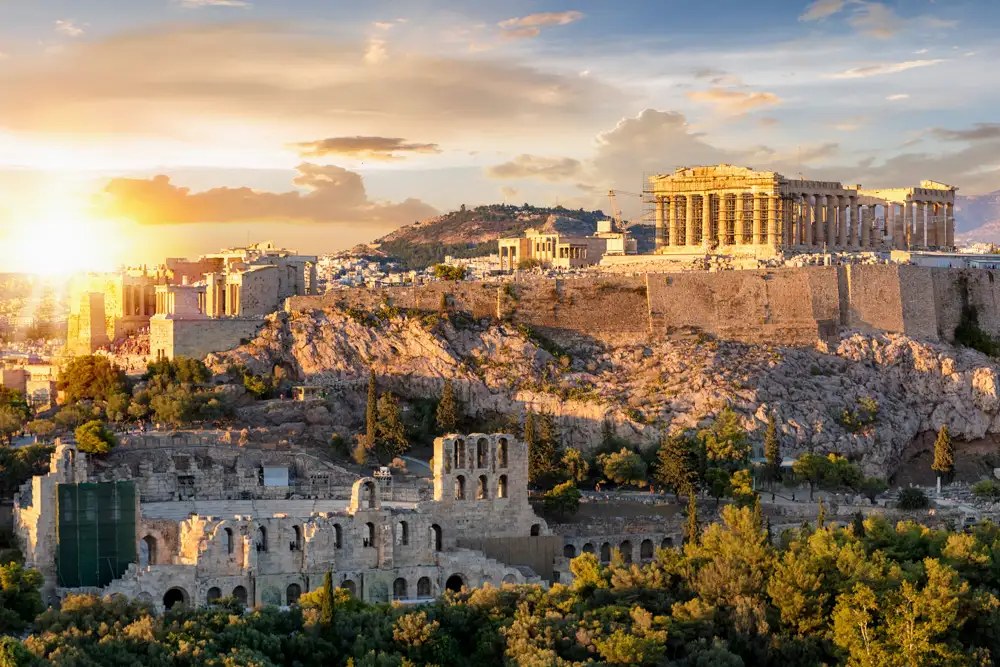
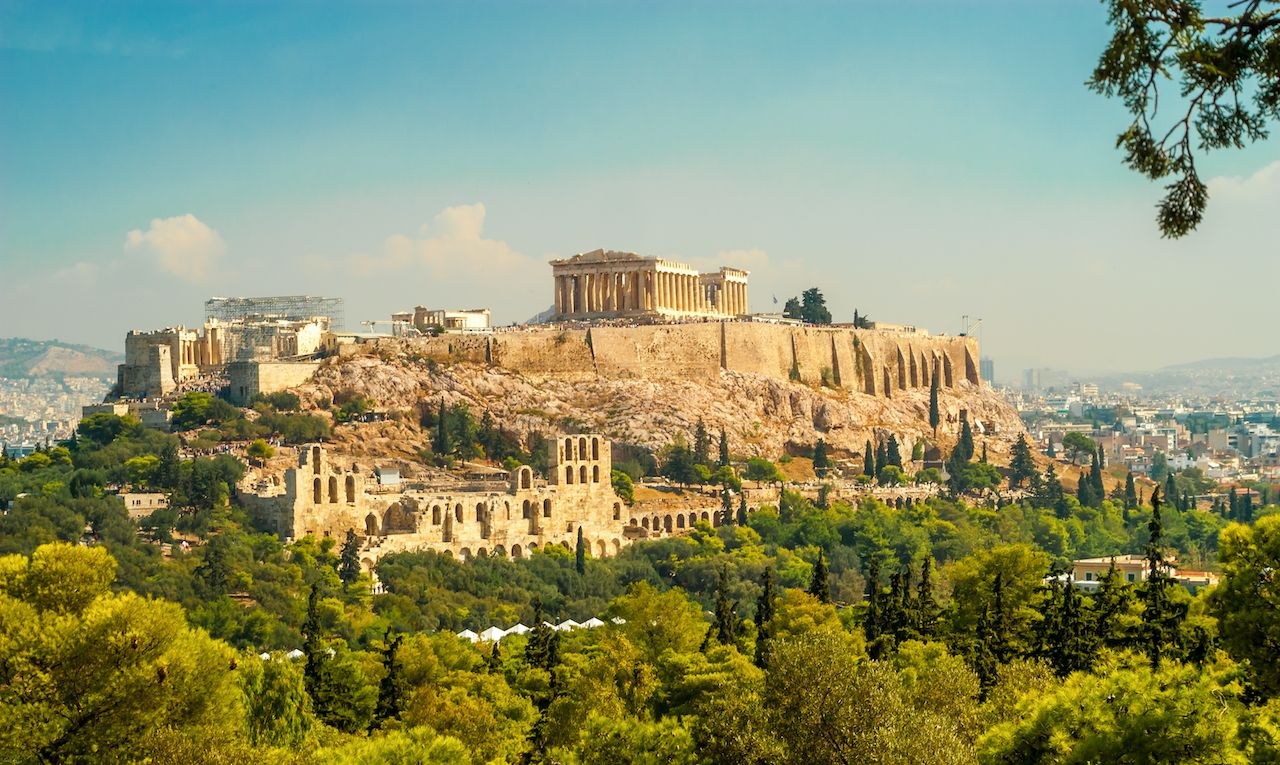
After you step off · near Athens
You end in a different port — stay on, and add what is within reach before you fly home.