Your cruise
Silver Wind · 10-night Mediterranean cruise, Valletta to Piraeus (Athens)
Apr 27 – May 7 · 10 nights ·
Day 1 Valletta (board) · Day 2 at sea · Day 3 Monopoli · Day 4 Sarande · Day 5 Kefalonia · Day 6 Monemvasia · Day 7 Milos · Day 8 Naxos · Day 9 Delos · Day 9 Mykonos · Day 10 Amorgos Island · Day 11 Piraeus (Athens) (step off)
What you do Glide by private boat past the limestone cliffs and hidden coves of Polignano from the water, timed for golden hour. This is the view of Puglia that no road can give you.
What to expect You'll board at Monopoli's old port and cruise past sea caves, the Lama Monachile inlet, and the cliffside houses of Polignano, with time to swim off the boat in secluded water. The skipper narrates the coastline's geology and history informally as you go. Sunset departures turn the limestone gold and empty the water of day-trippers.
Good to know Book directly with the operator at least a week ahead in summer; confirm return time against your ship's all-aboard, as sea conditions can shift timing by 30-60 minutes.
Versus the ship tour A private skipper and boat means you set the route and the pace — swimming stops in empty coves, no shared deck, no fixed schedule.
book direct with Kiss From Italy Private Boat Tours → · the full guide →
What you do Walk the whitewashed old town's maze of alleys, courtyards, and the fishing port before tour groups arrive, led by a guide who actually grew up here. This is how Monopoli reveals its real, unpolished character.
What to expect Starting at the Porto Antico, you'll wind through narrow lanes lined with laundry and bougainvillea, pausing at the Cathedral of Monopoli and lesser-known baroque churches. The guide weaves in family stories and local history rather than a rehearsed itinerary. It ends near the harbor with time to linger over coffee.
Good to know Request the earliest available slot (8-9am) to beat both heat and cruise crowds; the tour starts a short walk from the cruise tender/dock area.
Versus the ship tour A hyper-local guide (not a script-reading escort) takes you into working courtyards and points out details — carved doorways, fishermen's routines — that guidebooks miss entirely.
book direct with Tinggly Local Guide — Private Walking Tour Monopoli → · the full guide →
What you do Descend into one of Europe's most dramatic cave systems, a subterranean world of stalactites and chasms carved over millions of years. It's genuinely awe-inducing, not just a bus-stop photo op.
What to expect You'll descend roughly 60 meters underground through a series of caverns, ending in the luminous White Cave, one of the most striking natural chambers in Italy. The temperature drops noticeably, and the acoustics and lighting make it feel otherworldly. A guide explains the formations and the caves' 20th-century discovery.
Good to know About 40 minutes' drive from Monopoli by private car; pre-book the earliest tour to avoid midday tour-bus crowds and to leave buffer time for the return to port.
Versus the ship tour Booking the private small-group slot means you're not shuffled through with fifty strangers — you move at your own pace through the Grave and the famous 'White Cave'.
book direct with Castellana Grotte (official site) → · the full guide →
What you do Spend a few unhurried hours tasting orecchiette, burrata, and Primitivo with a local expert who curates stops based on what's fresh that day, not a fixed script.
What to expect Your guide, a Puglia native, takes you to a masseria or family-run producer for cheese and olive oil tastings, then into Monopoli or a nearby village for a relaxed multi-course lunch paired with regional wine. Conversation and detours (a market stop, a particular baker) shape the day. It ends with espresso and local sweets.
Good to know Specify dietary preferences and pace when booking; this can be trimmed to 4 hours to comfortably match a ship's afternoon departure.
Versus the ship tour Fully custom pacing and stops — this is a private local host curating small producers and trattorie, not a set-menu group lunch.
book direct with ToursByLocals — Taste the Best of Central Puglia → · the full guide →
What you do See the UNESCO trulli district's conical stone houses without the midday cruise-bus crush, arriving via private driver at first light or late afternoon.
What to expect You'll wander the Rione Monti district's whitewashed trulli, many still lived in or run as small shops, and can duck into a trullo interior open to visitors. Your driver waits and can add a stop in Locorotondo or a countryside masseria on the way back. The light in early morning or late afternoon on the limestone roofs is the real payoff.
Good to know Roughly 45 minutes each way from Monopoli; aim for a 7:30am departure or a post-4pm one to avoid tour-bus gridlock in the historic center.
Versus the ship tour A private driver lets you hit Alberobello at the hours the big coach groups avoid, when the alleys are actually walkable and photographable.
book direct with Private driver arranged via GetYourGuide-listed local operators (Monopoli & Bari-based) → · the full guide →
What you do Take an unhurried hour on Monopoli's seafront promenade with a spritz in hand, watching fishermen mend nets against the old town's medieval walls — free, and the most honest way to feel the town's rhythm.
What to expect You'll stroll the Lungomare from the old port past the Castle of Carlo V, then settle at a harborside table as the light turns the water gold. Locals do the same walk in the early evening, making it feel lived-in rather than staged. It's a low-key, unscripted pause that captures the town's actual pace.
Good to know Best in the late afternoon before an evening reboarding; the walk itself takes 20-30 minutes end to end, easy to fit around any other excursion.
Versus the ship tour No booking, no guide — just claiming the best seat on the harbor wall at the hour locals actually do this themselves.
book direct with None — self-guided, any lungomare bar (e.g. Bar Centrale or similar harborside spots) → · the full guide →
What you do A 5-10 minute walk from the cruise terminal opens onto the most gob-smacking high-Baroque interior in the Mediterranean: every surface drips carved gold, the floor is a carpet of 400 inlaid-marble knight tombs, and the Oratory holds the only painting Caravaggio ever signed -- the monumental 'Beheading of Saint John the Baptist.' Skipping this is effectively skipping Valletta. Buy the timed ticket online to skip the line; closed Sundays, last admission ~16:15, no flip-flops or sleeveless tops.
What to expect A 5–10 minute walk from the cruise terminal deposits you directly into the Mediterranean's most opulent high-Baroque interior, where every wall surface glows with carved gilt and the floor unfolds as a 400-tomb marble knight cemetery beneath your feet. The Oratory—the cathedral's crown jewel—holds Caravaggio's only signed painting, the monumental 'Beheading of Saint John the Baptist,' a work of such scale and darkness it stops visitors mid-breath. You'll move through the museum galleries and side chapels at your own pace (audio guide included), absorbing gold, frescoed vaults, and religious devotion rendered in stone and paint. Total immersion time is typically 90 minutes to 2.5 hours, depending on your appetite for the collections and crowds.
Good to know Buy your timed-entry ticket online via showshappening.com before the ship docks to skip queues; the cathedral closes Sundays and stops admissions around 16:15, so morning visits are safest. Allow 3–4 hours round-trip including the walk and 90–150 minutes inside; you'll be back aboard with a comfortable buffer in a standard 6–8 hour port window. Dress code: no flip-flops or sleeveless tops (bring a light cover-up). At EUR 15 (~USD 16) per adult with audio guide and Oratory entry included, this self-guided option saves USD 45–75 per person versus the ship's bundled walking tour.
Versus the ship tour The ship sells a 3-4 hr 'Best of Malta'/Valletta walking tour at $60-$90pp that bundles this EUR 15 entry with the free Upper Barrakka Gardens. Buy the cathedral ticket yourself for ~$16 and walk the rest free -- you save roughly $45-$75pp. This is also the low-risk safety net: minutes from the gangway, no transfer risk, back aboard easily.
book direct with St John's Co-Cathedral Foundation (official, books direct via its showshappening.com ticketing) → · the full guide →
What you do Glide beneath the colossal honey-coloured bastions of Valletta and the Three Cities in a brightly painted, gondola-like dghajsa -- a boat design tracing to Phoenician times. The Grand Harbour is one of the world's great natural deep-water harbours and the stage of the 1565 Great Siege; seeing it from the water at the foot of the fortifications, with the Three Cities marina and Fort St Angelo sliding past, is the single image the port is famous for.
What to expect You board a brightly painted dghajsa—a traditional gondola-like boat whose design traces back to Phoenician times—and glide slowly beneath the colossal honey-coloured bastions of Valletta and the Three Cities. The Grand Harbour unfolds around you: Fort St Angelo and the Three Cities marina slide past as you see the very stage of the 1565 Great Siege from the water, at the foot of the fortifications. The ~35-minute private tour captures the single image the port is famous for—the world's great natural deep-water harbour seen from the intimate vantage of a traditional wooden boat, not a modern tour launch. If you extend with the EUR 8 water-taxi crossing, you can drift across to Birgu or Senglea and wander the quieter Three Cities on your own pace.
Good to know Book the dghajsa direct with Grand Harbour Tours Malta (family-run operator based in Senglea) to save ~$20–$50pp versus the ship's 'Two Harbours' cruise, and budget ~EUR 25–28 (~USD 28–31pp) for the full private 35-minute tour, or ~EUR 8pp for the heritage water-taxi crossing alone. The operator is walkable from the cruise pier; confirm exact meeting point and departure time when booking to ensure a 30–45 minute buffer before all-aboard. Wear sun protection and bring cash (EUR preferred) as the family-run operator may not accept cards; the boat is open-air and the harbour crossing takes 35 minutes, so plan accordingly for your 6–8 hour port window.
Versus the ship tour The ship's 'Two Harbours' scenic boat cruise runs $50-$80pp. Booking the same authentic dghajsa direct is ~$28-$31pp -- you save roughly $20-$50pp, get a more iconic traditional boat (not a tour launch), and can tack on the cheap EUR 8 water-taxi to wander the quieter Three Cities on your own.
book direct with Grand Harbour Tours Malta (family-run dghajsa operator, Senglea) → · the full guide →
What you do A small traditional fishing boat threads into a string of natural sea caves on the south coast where sunlight refracts off the white sandy seabed and turns the water an electric, almost luminous blue. It's one of Malta's signature natural wonders; pair the ~20-25 min ride with the clifftop Blue Grotto viewpoint for the classic photo. Go in the morning for the best light and calmest sea -- about 25-30 min from the port, easy to combine with Hagar Qim temples or Marsaxlokk.
What to expect You'll board a small traditional fishing boat and thread into a succession of natural sea caves along Malta's south coast, where sunlight refracts off the white sandy seabed and transforms the water into an almost luminous electric blue—one of Malta's signature sights. The boat ride lasts 20–25 minutes and moves at a gentle pace that lets you absorb the strange, otherworldly light show as it bounces off the cave walls. After returning to the harbor, climb to the clifftop Blue Grotto viewpoint for the classic postcard perspective of the same caves from above. The whole experience unfolds in roughly an hour, leaving time to either relax at the harbor kiosk or combine it with nearby Hagar Qim temples or the Marsaxlokk fishing village.
Good to know Depart the pier early in the morning for the best sunlight and calmest sea conditions; the boat ride takes about 25–30 minutes to reach from the port. Buy tickets on-site at the Wied iz-Zurrieq harbor kiosk in cash only (€10 per adult, €5–6 for children)—do not pre-book, as weather can cancel departures without refund. Allow 2–2.50 euros for a public bus return to the port if doing this independently, and factor in a comfortable 90-minute buffer before ship departure to account for buses and harbor congestion. Bring cash, sunscreen, and a light waterproof layer if sensitive to spray; the boat has no canopy.
Versus the ship tour The ship's 'Blue Grotto & Marsaxlokk' scenic tour is $90-$130pp -- and the heart of it is this exact EUR 10 boat ride reached by a public bus. A $70pp independent group tour exists, but if you're comfortable on the bus (~EUR 2-2.50) the DIY version costs about $13 all-in. Honest flag: weather can cancel the boats, so don't book a no-refund private transfer around it; the ship tour's one merit is it guarantees you back aboard.
book direct with Licensed fishermen's boat co-operative at Wied iz-Zurrieq (tickets at the harbour kiosk) → · the full guide →
What you do Malta's spell-binding former capital is a walled, car-free medieval-and-Baroque hilltown of golden limestone, hushed alleys, and a dramatic bastion belvedere looking out over half the island (the Game of Thrones gate is here too). About 30 min from the port; a local guide unlocks the Knights' history, the cathedral, and neighbouring Rabat with St Paul's Catacombs. Unforgettable in the early evening once the coach crowds clear -- which suits a cruise day perfectly.
What to expect You'll ascend into Malta's former capital through narrow, hushed alleyways of golden limestone, passing the iconic Game of Thrones gate as your guide unlocks centuries of Knights' history within cathedral walls. The rhythm builds toward the dramatic bastion belvedere—a sudden opening where half the island spreads beneath you. You'll drift into neighbouring Rabat to explore St Paul's Catacombs, then drift back through medieval streets that empty of coach crowds by evening, giving you that magical "Silent City" moment the tour is named for. The whole flow is unhurried walking and history, ideally timed for late afternoon when day-trippers thin out.
Good to know From the port, a EUR 2–2.50 public bus reaches Mdina in about 30 minutes; book a local guide like Colour my Travel (€25–35pp) ahead to guarantee unlocked sites and context, or navigate free. Cathedral entry runs about €10, St Paul's Catacombs costs extra, but the walled town itself is free to roam. Plan for 4–5 hours in Mdina and Rabat to avoid rushing the experience, leaving 90 minutes to return to the ship. Wear comfortable walking shoes (medieval streets are cobbled and hilly) and bring water; the ship's guided tour costs nearly triple the DIY approach but includes door-to-door transport if schedule is tight.
Versus the ship tour The ship's 'Silent City'/Mdina & Rabat tour is $79.99-$110pp. A direct local guided walk is ~$27-$38pp (save ~$45-$75pp), or go fully DIY by the EUR 2-2.50 public bus for under $20 since the old town is free to wander. Verdict: clear direct win unless you specifically want door-to-door coach transfer.
book direct with Colour my Travel (award-winning local walking-tour operator) → · the full guide →
What you do Descend into a 5,000-year-old underground temple and necropolis carved out of solid rock -- a UNESCO World Heritage site and one of the rarest things you can do on Earth, including the eerie acoustic 'Oracle Room.' Just outside Valletta in Paola; flat closed shoes required. Only 80 visitors are admitted per day to protect the microclimate, so it is genuinely once-in-a-lifetime.
What to expect You descend into a 5,000-year-old underground temple carved from solid rock, moving through passages and chambers of a UNESCO World Heritage site while the acoustic properties of the "Oracle Room" envelope you in an eerie, almost sacred silence. The Hypogeum functions as both temple and necropolis, and the layered stone walls, shaped entirely by hand millennia ago, create an intimate sense of stepping directly into Neolithic history. With only 80 visitors admitted daily, the experience avoids the crush of mass tourism—you move at a measured pace with a small group, absorbing the raw power of one of Earth's rarest archaeological spaces. Paola lies just outside Valletta, making the journey short, but the psychological weight of standing underground in a 5,000-year-old chamber lingers long after you ascend back into daylight.
Good to know Book immediately once your itinerary is confirmed through Heritage Malta directly (the sole authorised seller); standard admission is EUR 35 per adult, but same-day last-minute tickets (EUR 50) are sold from Fort St Elmo on arrival if advance slots are sold out. Wear flat, closed shoes with good grip, as the carved stone floors can be uneven and damp; the site is climate-controlled to preserve the microclimate, so layers are useful despite the Mediterranean setting. Allow 2–2.5 hours at the site itself, but factor in 30–45 minutes each way for transport from the cruise pier to Paola, plus 30 minutes arrival buffer—aim to depart the ship no more than 5–6 hours before your return time. Do not rely on cruise-line excursions; no ship operator can secure tickets due to the 80-per-day cap, making this a direct-book-only experience.
Versus the ship tour No ship excursion offers the Hypogeum -- the 80-per-day cap makes it impossible to block-book, so this is a direct-only experience with no cruise-line equivalent. The catch is scarcity, not price: tours sell out weeks to months ahead, so reserve the instant your itinerary is fixed, or chase the few same-day last-minute tickets (EUR 50) sold from Fort St Elmo on arrival.
book direct with Heritage Malta (national agency; the ONLY authorised seller -- book direct, never via resellers) → · the full guide →
What you do The Caribbean-in-the-Med: a sheltered cove off tiny Comino with blindingly white sand and surreal turquoise shallows -- the most photographed swim spot in the Maltese islands and the bucket-list snorkel for anyone who wants beach-paradise scenery. A full-fleet day cruise sails you out, anchors for swimming, and brings you back.
What to expect You'll join Captain Morgan Cruises' full-fleet day boat for a scenic sail to tiny Comino, where the ship anchors in the sheltered cove of the Blue Lagoon—a postcard-perfect swim spot with blindingly white sand and surreal turquoise shallows that look more Caribbean than Mediterranean. The rhythm is unhurried: board in Valletta, sail out (long transfer), anchor and swim or snorkel among the most photographed waters in the Maltese islands, then sail back. Bring an underwater camera; this is the bucket-list snorkel stop, and the clarity and color are surreal. Lunch and bar service are available onboard depending on your package tier.
Good to know This excursion requires a long in-port window (8+ hours minimum) because Comino is a lengthy transfer and the lagoon becomes crushingly crowded by midday. Book direct with Captain Morgan (roughly EUR 30–50 / USD 33–55 per person) rather than through the ship's organized tour (USD 120–180pp) for significant savings, but confirm return timing to ensure you're back well before all-aboard. Bring reef-safe sunscreen, a rash guard or wetsuit, and secure any valuables in your cabin; the boat has an onboard bar but limited shade. If your ship's port window is under 8 hours or tight for timing, consider the Grand Harbour dghajsa or Blue Grotto instead, with an operator that guarantees your return before departure.
Versus the ship tour The ship's full-day Gozo/Comino tour is $120-$180pp; a direct Comino day cruise is ~$33-$55pp -- a large saving. But be honest about the clock: Comino is a long transfer and gets crushed at midday, so this only fits ships with a long in-port window (8+ hrs). If your day is tight, take the Grand Harbour dghajsa or Blue Grotto instead, and use an operator that guarantees you back before all-aboard.
What you do Glide by private boat past the limestone cliffs and hidden coves of Polignano from the water, timed for golden hour. This is the view of Puglia that no road can give you.
What to expect You'll board at Monopoli's old port and cruise past sea caves, the Lama Monachile inlet, and the cliffside houses of Polignano, with time to swim off the boat in secluded water. The skipper narrates the coastline's geology and history informally as you go. Sunset departures turn the limestone gold and empty the water of day-trippers.
Good to know Book directly with the operator at least a week ahead in summer; confirm return time against your ship's all-aboard, as sea conditions can shift timing by 30-60 minutes.
Versus the ship tour A private skipper and boat means you set the route and the pace — swimming stops in empty coves, no shared deck, no fixed schedule.
book direct with Kiss From Italy Private Boat Tours → · the full guide →
What you do Walk the whitewashed old town's maze of alleys, courtyards, and the fishing port before tour groups arrive, led by a guide who actually grew up here. This is how Monopoli reveals its real, unpolished character.
What to expect Starting at the Porto Antico, you'll wind through narrow lanes lined with laundry and bougainvillea, pausing at the Cathedral of Monopoli and lesser-known baroque churches. The guide weaves in family stories and local history rather than a rehearsed itinerary. It ends near the harbor with time to linger over coffee.
Good to know Request the earliest available slot (8-9am) to beat both heat and cruise crowds; the tour starts a short walk from the cruise tender/dock area.
Versus the ship tour A hyper-local guide (not a script-reading escort) takes you into working courtyards and points out details — carved doorways, fishermen's routines — that guidebooks miss entirely.
book direct with Tinggly Local Guide — Private Walking Tour Monopoli → · the full guide →
What you do Descend into one of Europe's most dramatic cave systems, a subterranean world of stalactites and chasms carved over millions of years. It's genuinely awe-inducing, not just a bus-stop photo op.
What to expect You'll descend roughly 60 meters underground through a series of caverns, ending in the luminous White Cave, one of the most striking natural chambers in Italy. The temperature drops noticeably, and the acoustics and lighting make it feel otherworldly. A guide explains the formations and the caves' 20th-century discovery.
Good to know About 40 minutes' drive from Monopoli by private car; pre-book the earliest tour to avoid midday tour-bus crowds and to leave buffer time for the return to port.
Versus the ship tour Booking the private small-group slot means you're not shuffled through with fifty strangers — you move at your own pace through the Grave and the famous 'White Cave'.
book direct with Castellana Grotte (official site) → · the full guide →
What you do Spend a few unhurried hours tasting orecchiette, burrata, and Primitivo with a local expert who curates stops based on what's fresh that day, not a fixed script.
What to expect Your guide, a Puglia native, takes you to a masseria or family-run producer for cheese and olive oil tastings, then into Monopoli or a nearby village for a relaxed multi-course lunch paired with regional wine. Conversation and detours (a market stop, a particular baker) shape the day. It ends with espresso and local sweets.
Good to know Specify dietary preferences and pace when booking; this can be trimmed to 4 hours to comfortably match a ship's afternoon departure.
Versus the ship tour Fully custom pacing and stops — this is a private local host curating small producers and trattorie, not a set-menu group lunch.
book direct with ToursByLocals — Taste the Best of Central Puglia → · the full guide →
What you do See the UNESCO trulli district's conical stone houses without the midday cruise-bus crush, arriving via private driver at first light or late afternoon.
What to expect You'll wander the Rione Monti district's whitewashed trulli, many still lived in or run as small shops, and can duck into a trullo interior open to visitors. Your driver waits and can add a stop in Locorotondo or a countryside masseria on the way back. The light in early morning or late afternoon on the limestone roofs is the real payoff.
Good to know Roughly 45 minutes each way from Monopoli; aim for a 7:30am departure or a post-4pm one to avoid tour-bus gridlock in the historic center.
Versus the ship tour A private driver lets you hit Alberobello at the hours the big coach groups avoid, when the alleys are actually walkable and photographable.
book direct with Private driver arranged via GetYourGuide-listed local operators (Monopoli & Bari-based) → · the full guide →
What you do Take an unhurried hour on Monopoli's seafront promenade with a spritz in hand, watching fishermen mend nets against the old town's medieval walls — free, and the most honest way to feel the town's rhythm.
What to expect You'll stroll the Lungomare from the old port past the Castle of Carlo V, then settle at a harborside table as the light turns the water gold. Locals do the same walk in the early evening, making it feel lived-in rather than staged. It's a low-key, unscripted pause that captures the town's actual pace.
Good to know Best in the late afternoon before an evening reboarding; the walk itself takes 20-30 minutes end to end, easy to fit around any other excursion.
Versus the ship tour No booking, no guide — just claiming the best seat on the harbor wall at the hour locals actually do this themselves.
book direct with None — self-guided, any lungomare bar (e.g. Bar Centrale or similar harborside spots) → · the full guide →
What you do Walk through 2,500 years of layered civilisation — Greek, Roman, Byzantine, Venetian — at Albania's most magnificent UNESCO World Heritage site, just 18 km from Sarande's pier. With a private licensed archaeologist-guide, this is as close to time travel as travel gets.
What to expect Your private vehicle meets you dockside and whisks you south along the olive-lined Ionian coast to Butrint National Park. A licensed guide leads you through the Greek theatre, Roman baths, baptistery mosaics, and Venetian castle at your own pace. The site sits inside a lush nature reserve — birdsong, lake reflections, and virtually no mass-tourism crowds. Return transfer is timed precisely to your all-aboard.
Good to know Butrint is approx. 20 min from the port — easily doable even on shorter port calls. Pre-book the private guide directly through Shore Emotion to lock in your preferred time slot. Wear comfortable walking shoes; some terrain is uneven. UNESCO site entry is included in most private packages.
Versus the ship tour Fully private, expert archaeologist-guide tailors the pace and narrative to your group — no herding through the ruins with a megaphone. You linger where it matters, skip what doesn't, and leave with a genuine understanding of one of the Mediterranean's most layered ancient cities.
book direct with Shore Emotion – Private Sarande Shore Excursions → · the full guide →
What you do Witness the hypnotic electric-blue karst spring of Syri i Kaltër — one of Europe's most surreal natural phenomena — then ascend to Lekursi Castle for panoramic Ionian sunset views, paired with a tasting of traditional Albanian wine and raki. Pure bucket-list Albania in a single day.
What to expect You depart the port into the mountainous hinterland, winding through Albanian countryside to the Blue Eye Spring — a 50-metre-deep karst pool that bubbles an otherworldly shade of electric blue. The natural sound, colour, and cool forest air make it one of Albania's most memorable moments. Next, you ascend to Lekursi Castle where the entire Ionian coastline and the Greek island of Corfu spread out before you, best enjoyed at golden hour with a glass of Kallmet or aged raki in hand.
Good to know This 4-hour format is well-suited to afternoon port calls; confirm departure time against your all-aboard. The Blue Eye area can be muddy after rain — bring light closed-toe shoes. Book directly via the Tripadvisor listing to contact the local operator and arrange private pickup from the pier.
Versus the ship tour A small-group or fully private format means you arrive at Blue Eye before the midday surge — the spring's vivid cobalt colour is most intense in calm morning light. The wine and raki tasting is hosted by a local expert, not poured from a hospitality trolley, giving you genuine cultural immersion.
book direct with Tripadvisor-verified local private operator (Experience Blue Eye, Lekuresi Castle & Albanian Wine) → · the full guide →
What you do Carve across the crystal Ionian in a private speedboat to secret sea caves, hidden bays, and turquoise coves inaccessible by land — the Albanian Riviera at its most raw and cinematic. Snorkel, swim, and sunbathe on beaches that barely appear on any map.
What to expect Departing directly from Sarande's harbour, your captain navigates north along a coastline of dramatic limestone cliffs plunging into water so clear it reads turquoise over white sand and deep blue over rock. Multiple swim and snorkel stops are made at hidden coves and an extraordinary sea cave where the interior glows with refracted light. Chilled drinks and snorkelling gear are provided on most private charters. The tour typically covers 7 distinct coastal highlights.
Good to know Depart from Sarande harbour — a short walk from the pier. Confirm the exact itinerary and all-aboard logistics with the operator before booking. Morning departures offer the calmest seas and best light inside the caves. Bring reef-safe sun cream, a dry bag for valuables, and a light cover-up.
Versus the ship tour A private or small-group speedboat is a fundamentally different experience to a larger vessel — you access caves and coves that bigger boats cannot enter, you choose your swim stops, and you set the pace entirely. The Albanian coastline here is among the least-developed in the Mediterranean, making every cove feel genuinely discovered.
book direct with Local Sarande boat operators (Sarandë: Speedboat Tour to Hidden Bays, Sea Caves & Crystal Waters) → · the full guide →
What you do Sail the full sweep of the Albanian Riviera northward to the dramatic cape of Himara — a voyage past some of Europe's most untouched coastline, with multiple swimming stops in jade-green bays that rarely see tourist crowds. Lunch is typically included, served onboard or at a local seaside taverna.
What to expect Your vessel departs Sarande and heads north along a coastline where the Ceraunian Mountains tumble directly into the Ionian Sea. The water transitions through impossible shades of green and blue as you pass sea-stacks, isolated beaches, and ancient clifftop villages. Two or three swimming stops are made in secluded bays where you might be the only boat in sight. A freshly prepared Albanian lunch — grilled fish, local vegetables, cold local beer — is served either aboard or at a family-run waterfront taverna in Himara. The return journey is timed to your all-aboard.
Good to know This is a full-day excursion (approx. 7 hours) — confirm it suits your port schedule before booking. Sea conditions can affect the northern reach of the route; ask your operator about alternative swim stops if the sea is choppy. Book directly through Shore Emotion and specify your ship's all-aboard time.
Versus the ship tour The Himara coastline is raw, undeveloped, and staggeringly beautiful — the kind of scenery that defined the Mediterranean before mass tourism arrived. A small-group boat keeps it intimate and allows genuine off-the-beaten-track swim stops that larger vessels simply cannot access.
book direct with Shore Emotion – Private Sarande Shore Excursions → · the full guide →
What you do Sail from Sarande to the crystalline lagoon waters of Ksamil aboard a traditional wooden sailing vessel, anchoring above mussel beds for a hands-on harvesting experience followed by the freshest seafood feast afloat — mussels, grilled catch, local wine, and cold Albanian beer under the Ionian sun.
What to expect You board a traditional wooden sailing boat in Sarande harbour and cruise south to the shallow, jewel-bright lagoon around the Ksamil islands, where Albania's best mussels are farmed in the clean Ionian waters. The crew pulls the lines, you get involved in the harvest, and within minutes a generous feast is laid out — mussels steamed with garlic and local herbs, grilled fish, Albanian salad, fresh bread, and cold local wine or beer. Swimming stops in the extraordinary clarity of Ksamil's water follow lunch. The whole experience is unhurried, sociable, and utterly delicious.
Good to know Ksamil is approx. 15–20 min south of Sarande — the boat typically departs from the main harbour. Check the duration (usually 4–5 hours) against your all-aboard time. Spaces on authentic mussel tours are genuinely limited — pre-book well in advance, particularly in high season (July–August).
Versus the ship tour This is one of those experiences impossible to replicate anywhere else — the waters around Ksamil's islands are uniquely suited to mussel farming, and eating them moments after harvest, aboard a wooden boat anchored in a turquoise lagoon, is as authentic and sensory as Albanian food culture gets.
book direct with Ksamil Mussel Sailing Tour local operator (via GetYourGuide & TUI Musement listings) → · the full guide →
What you do Journey inland to Gjirokastra, Albania's breathtaking UNESCO-listed 'City of Stone' — a perfectly preserved Ottoman hilltop citadel of silver-slate rooftops, towering castle, and cobbled bazaars. Birthplace of Enver Hoxha and novelist Ismail Kadare, this is one of the Balkans' most dramatic and least-visited heritage cities.
What to expect Your private vehicle heads north-east from Sarande through the dramatic Drino River valley, arriving at Gjirokastra after approximately 90 minutes. A licensed local guide leads you up through the old bazaar — all hand-cut stone, wooden balconies, and artisan workshops — to the colossal hilltop castle, which houses captured American Cold War aircraft in its courtyard. Traditional Albanian lunch is taken in a restored Ottoman house-restaurant with views across the valley. The pace is entirely yours; the guide brings the city's layered Ottoman, fascist, and communist history to vivid life. Return to Sarande in time for all-aboard.
Good to know Gjirokastra requires a minimum of 6–7 hours — this excursion is best suited to longer port calls (all-aboard of 18:00 or later). Pre-book your private guide and confirm the departure time to allow sufficient buffer. Comfortable walking shoes are essential — the old city's cobblestones are steep and uneven. Book directly through Shore Emotion specifying your ship's all-aboard time.
Versus the ship tour Gjirokastra rewards those who go beyond the cruise-port horizon — and a private guide unlocks layers of Ottoman, communist, and literary history that a self-guided visit cannot touch. The drive through the Drino Valley is itself spectacular, and the city's castle houses one of the most unusual military museums in Europe.
book direct with Shore Emotion – Private Sarande Shore Excursions → · the full guide →
What you do Drift by rowboat through Kefalonia's legendary underground sea cave, where a collapsed roof floods the cavern in surreal turquoise light. One of the world's most otherworldly natural wonders — utterly unmissable.
What to expect Your private guide collects you dockside and whisks you north to the Melissani Cave near Sami. You board a traditional wooden rowboat as your oarsman glides you across the sapphire-lit subterranean lake, where shafts of sunlight pierce the collapsed ceiling and paint the water an electric cobalt. The geology is staggering — a tidal sea cave fed by waters that travel underground across the entire island. Your guide weaves in ancient mythology linking the cave to the god Pan, adding a layer of wonder that transforms a scenic moment into a full story.
Good to know Pre-book directly with Kefalonia Tours (kefaloniatours.gr) to guarantee private departure timing. The cave is busiest 11am–2pm; request an early slot. Argostoli's all-aboard is typically 6pm — this excursion fits comfortably in a 5-hour window. Wear non-slip shoes; the cave entrance steps can be wet.
Versus the ship tour A private booking means you arrive at golden hour — before or after the main crowds — with a dedicated local expert who narrates the cave's mythology and geology. Unhurried, intimate, and genuinely awe-inspiring.
What you do Stand at the cliff-edge viewpoint above Myrtos — Greece's most photographed beach — then wind down to the ivory pebbles and luminous cyan sea below. Pair it with enchanting Assos village for a day that defines Kefalonia.
What to expect The dramatic hairpin descent to Myrtos rewards you with one of the Mediterranean's great beach arrivals — a crescent of chalk-white pebbles lapped by water in a dozen shades of blue-green. After a long, unhurried swim, your guide drives the coastal road north to Assos, a tiny peninsula village framed by a ruined Venetian fortress. Lunch at a harbour taverna with fresh catch and local Robola wine is the perfect intermission before the return drive through Kefalonia's wild, cedar-forested interior.
Good to know Book direct at kefaloniaexcursions.com. The Myrtos viewpoint is best before 11am (light and crowds). Bring a beach towel and reef-safe sunscreen. The road to Myrtos has sharp bends — motion-sickness patches recommended for sensitive travellers. Typical full-day duration: 7–8 hours, well within port day.
Versus the ship tour Small expert-led groups mean you linger at Myrtos' viewpoint for the money shot without the bus-tour stampede, and you have genuine free time to swim in waters so clear they look photoshopped. Assos' Venetian castle and pastel harbour are explored at your own leisurely pace.
What you do Two of Kefalonia's greatest natural wonders back-to-back — the cathedral-like Drogarati stalactite cave and the ethereal underground Melissani Lake — on one seamless private excursion. An island highlight reel in half a day.
What to expect Drogarati greets you with a vast, vaulted chamber dripping with 150-million-year-old stalactites and stalagmites — the acoustics are so perfect that Maria Callas once performed here. Your guide explains the seismic history that shaped the cave before you move to nearby Melissani, where a rowboat takes you across an underground tidal lake lit by a hole in the cave's ceiling. The two experiences together form one of the most memorable natural-history double-bills in the entire Ionian. The return to Argostoli takes under 30 minutes.
Good to know Pre-book at kefaloniatours.gr. Combined cave entry is included in the private tour rate. Drogarati maintains a cool 18°C year-round — bring a light layer. Comfortable walking shoes essential for uneven cave paths. Half-day format (5 hrs) allows afternoon leisure time before all-aboard.
Versus the ship tour With a private guide, both caves are framed with genuine geological and mythological context rather than a rushed commentary. You control the pace — spend longer inside Drogarati's vast chamber, which has hosted full orchestral concerts, before gliding onto Melissani's underground lake.
What you do Explore Fiscardo, Kefalonia's only village untouched by the 1953 earthquake, with its Venetian architecture and superyacht harbour. Continue to cliff-top Assos for views that belong on a painting. Quintessential Ionian elegance.
What to expect The scenic drive north passes Kefalonia's rugged spine before the road tumbles into Fiscardo's jewel-like harbour, ringed by 18th-century Venetian mansions painted in faded terracotta and ochre. Your guide walks you through the village's remarkable survival story and the Norman lighthouse ruins on the headland. Lunch is at leisure at the quayside — the grilled fresh fish and chilled Assyrtiko are non-negotiable. The afternoon stop at Assos delivers a postcard panorama of a turquoise bay wrapped around a Venetian fortress peninsula that is as dramatic as anything in Greece.
Good to know Book at kefaloniaexcursions.com. Fiscardo restaurants fill by 1pm in peak season — your guide can recommend and assist with reservations. Wear comfortable walking shoes for cobbled streets. Tour runs approximately 7 hours. Confirm all-aboard time when booking — Argostoli port is roughly 40 min from Fiscardo.
Versus the ship tour The small-group, expert-led format means you discover Fiscardo's back lanes and lesser-known Byzantine chapel — the insider detail that separates a real cultural encounter from a photo-stop tour. Ample time for a long, civilised lunch at one of the harbour's acclaimed seafood restaurants.
What you do A private day cruise along Kefalonia's wild coastline — secret sea caves, deserted swimming coves, and the elegant village of Fiscardo reached by sea as it was always meant to be. The ultimate Ionian luxury afloat.
What to expect Departing Argostoli harbour, your private vessel hugs the rugged northern coastline, pausing at sea-carved grottos where the water shifts from jade to deep sapphire inside the caverns. The captain anchors in secluded bays unreachable by road, perfect for swimming and snorkelling over posidonia meadows teeming with sea life. Arriving in Fiscardo by sea — the superyachts nodding at anchor, the Venetian facades shimmering in the afternoon light — is one of those travel moments that stays with you. The return cruise at golden hour, with Kefalonia's mountains flushing pink, is the finishing touch.
Good to know Book directly at kefaloniantours.com and specify a private boat charter for your group size. Vessels typically accommodate 2–12 guests. Depart early (8–9am) to maximise daylight and secure a Fiscardo anchorage before the afternoon rush. Bring sun protection, a hat, and non-slip deck shoes. Confirm all-aboard logistics — the operator will return you to Argostoli port.
Versus the ship tour A private charter means the itinerary is yours — linger in a hidden cove, snorkel a sea cave, anchor for lunch in Fiscardo's harbour. No shared deck, no fixed schedule, just your group and the Ionian Sea stretching to the horizon.
What you do Descend into the Omala Valley to visit Kefalonia's patron saint monastery and then taste the island's legendary Robola white wine at its source — a deeply local, sensory experience that few cruise visitors ever discover.
What to expect The ornate Monastery of St. Gerasimos, Kefalonia's most venerated religious site, is a place of genuine pilgrimage — your guide explains the island's deep spiritual traditions and the extraordinary annual festival that draws thousands. From there, the valley road leads to the Robola Cooperative Winery, where the crisp, mineral-driven Robola grape thrives at altitude in the rocky Ainos foothills. A guided tasting of the estate's flagship whites — with local cheese and honey accompaniments — is a refined, unhurried hour that any serious food-and-wine traveller will treasure. The drive back through the cedar-scented Ainos National Park is a bonus.
Good to know Book directly at unexplored.gr and request the private cultural and wine itinerary. The monastery requires shoulders and knees to be covered — bring a wrap. Robola Cooperative (robola-kefalonia.gr) is open daily in summer; your guide manages access and tasting arrangements. Half-day format fits neatly into a port day, leaving afternoon time for Argostoli's harbourfront.
Versus the ship tour This is insider Kefalonia — a contemplative monastery visit followed by a winery tasting with a guide who knows the producers personally. Far removed from the standard sightseeing circuit, it delivers the authentic cultural and culinary soul of the island.
What you do Step into Greece's most perfectly preserved Byzantine fortress-town on a private guided walk through vaulted alleys, the clifftop Agia Sofia church, and the panoramic Upper Town. A true bucket-list immersion into 13th-century Byzantium.
What to expect Your private guide meets you at the causeway gate and leads you through the Lower Town's labyrinthine cobblestone lanes, past the magnificent 13th-century Cathedral of Christ Elkomenos and its Byzantine icons. You then climb the steep zigzag path to the abandoned Upper Town, arriving at the iconic Agia Sofia church perched on the cliff edge with vertiginous views over the Aegean. The guide weaves in Venetian, Byzantine and Ottoman history, transforming the ruins into a living story. The tour ends with time to browse Anastasia Livieratou's handcrafted jewellery studio before you return at your own leisure.
Good to know Monemvasia's causeway is a short walk or taxi from the tender pier. The Upper Town climb involves uneven ancient steps — wear sturdy footwear. Book well in advance as this operator's private slots fill quickly. Allow 3–4 hours; easily back for all-aboard.
Versus the ship tour Fully private, just your party and an expert local historian-guide. You set the pace — linger at the clifftop Agia Sofia while others rush past, and access the Upper Town's hidden viewpoints that larger groups never reach.
What you do Combine a guided tour of Monemvasia Castle with an exclusive visit to the Liotrivi Historical Estate — an 18th-century olive press estate — finishing with a lavish Peloponnesian feast and local Malvasia wine. The ultimate land-to-table luxury day.
What to expect A private vehicle collects you at the pier for a guided walkthrough of the medieval castle town, including the Cathedral of Christ Elkomenos and the Byzantine streets of the Lower Town. You then transfer to the Liotrivi Historical Estate, a beautifully restored 18th-century complex set among olive groves and vineyards. Your host explains the estate's centuries of olive oil and wine production before guiding you through a tasting of estate Malvasia wines. The day culminates in a generous Peloponnesian lunch — local cheeses, grilled meats, seasonal vegetables — served al fresco with sweeping countryside views. A leisurely 9-hour programme with private car throughout.
Good to know Pick-up is arranged directly from the tender/cruise pier. The 9-hour duration fits most port calls — confirm your all-aboard time with the operator at booking. Dietary requirements accommodated on request. Book at least 2–3 weeks ahead.
Versus the ship tour This is the rare experience that pairs genuine heritage access — a working historical estate rarely open to casual visitors — with a private guide and a sit-down gourmet lunch using estate-grown produce and the region's celebrated Malvasia wine.
book direct with Liotrivi Historical Estate (via Expedia direct activity) → · the full guide →
What you do Lace up for a private 3-hour guided hiking adventure along ancient cobbled paths to the forgotten watermills hidden in the valley above Monemvasia. Raw Peloponnesian wilderness with a knowledgeable local guide all to yourself.
What to expect Your private guide meets you at the causeway and leads you along a traditional cobbled kalderimi path that winds up through wild thyme and olive groves above the fortress rock. You pass through terraced hillsides before arriving at a series of centuries-old stone watermills, some still partially intact, hidden in a lush creek valley. The guide explains the mills' role in the medieval town's grain economy as you rest at the water's edge. The return descent offers stunning aerial perspectives of the 'Gibraltar of Greece' emerging from the sea — one of the most photogenic views in the Peloponnese.
Good to know Sturdy hiking shoes are essential; the trail is uneven and moderately strenuous. The 3-hour duration is well-suited to most port schedules. Departs from the causeway entrance. Pre-book directly through KimKim to secure your private guide slot.
Versus the ship tour A completely private off-the-beaten-path experience that goes beyond the castle walls into the unspoiled natural landscape — the ancient watermill trail is unknown to most visitors and inaccessible without a local expert.
book direct with KimKim – Private Monemvasia Watermill Hiking Tour → · the full guide →
What you do Journey by private car to Mystras, the hauntingly beautiful UNESCO-listed Byzantine ghost city built on a mountain spur near ancient Sparta — a once-in-a-lifetime immersion into frescoed churches and crumbling palace ruins that shaped the Renaissance.
What to expect A private air-conditioned vehicle collects you at the pier and transfers you through dramatic Laconian mountain scenery to the fortified ghost city of Mystras. Your historian guide unlocks the layers of this extraordinary site — Byzantine emperor's palaces, frescoed churches rivalling those of Ravenna, and the ruined city that Goethe immortalised in Faust. You explore at a thoughtful, unhurried pace, ending at the working Pantanassa Convent for a moment of rare tranquillity. The drive back via the olive-clad Eurotas valley allows a stop for traditional loukoumades (honey fritters) at a local kafeneio before returning to the ship.
Good to know Mystras is approximately 90 km from Monemvasia (c. 90 min drive). Confirm your all-aboard time carefully — a full-day excursion. Modest dress required at the convent (shoulders and knees covered). Site entry fee: EUR 12 per adult. Book well in advance as private slots are limited.
Versus the ship tour Access to Mystras is by private vehicle from Monemvasia — roughly 90 minutes each way. A private expert historian-guide ensures you see the Pantanassa Convent (still inhabited by nuns), the Despot's Palace and the finest frescoes without the pressure of a group schedule.
What you do Reserve a terrace table at Matoula, the oldest taverna in Monemvasia (since 1950), perched on the main street with a breathtaking terrace overlooking the Aegean. Savouring slow-cooked Laconian cuisine here is one of the most atmospheric meals in all of Greece.
What to expect You walk the medieval main street of the Lower Town and arrive at Matoula, its whitewashed façade unchanged for decades. The terrace tables hang over the edge of the rock with unobstructed views of the shimmering Laconian Gulf — one of the most dramatic restaurant settings in Greece. The menu reads like a Peloponnesian grandmother's repertoire: slow-braised lamb, grilled fresh-caught fish, giant beans in tomato, and the region's legendary honey-drizzled cheeses. Pair it with a carafe of chilled local Malvasia and let the afternoon light do its work.
Good to know Matoula is on the main street of the Lower Town, roughly a 10-minute walk from the causeway gate. Arrive early (12:30–13:00) to secure a terrace seat — they are not reservable. Dress smart-casual. Closed some winter months; confirm hours if visiting off-season.
Versus the ship tour A living institution with 70+ years of history, Matoula is where locals and discerning travellers eat — not a tourist trap. The terrace tables are coveted, the recipes unchanged for generations, and the Malvasia wine poured here is the real Peloponnesian article.
book direct with Matoula Restaurant Monemvasia → · the full guide →
What you do Explore Monemvasia's intimate Archaeological Collection with a private expert guide, uncovering Byzantine sculptures, ceramics and coins recovered from the fortress rock — the perfect intellectual complement to wandering the ruins outside.
What to expect Your private guide leads you into the restored 16th-century mosque that houses Monemvasia's archaeological treasures — a deliberate architectural counterpoint to the Byzantine churches outside. The collection spans the Hellenistic, Byzantine and Venetian periods, with carved marble reliefs, intricate glazed pottery, and Byzantine coins that trace Monemvasia's role as the Peloponnese's most important medieval trading port. Your guide contextualises each piece against the architecture you've seen in the town, making the stones speak. The visit takes about 45–60 minutes, leaving ample time to continue through the Lower Town.
Good to know The museum is inside the Lower Town, a short walk from the main gate. Winter hours: 08:30–15:30, closed Tuesdays. Summer hours are extended — check the official site before your visit. Combine with the Castle walk for a seamless full morning. Book your private guide through The Travel Insiders or KimKim.
Versus the ship tour The collection is housed in a beautifully restored medieval mosque — one of the few surviving in Greece — and most visitors walk past without entering. A private guide transforms this tiny, gem-like museum into a profound hour of Byzantine and Venetian storytelling.
book direct with Archaeological Collection of Monemvasia (Official) → · the full guide →
What you do A 30-minute boat from the Old Port lands you on uninhabited Delos, an entire UNESCO World Heritage island that is one vast archaeological site -- the mythological birthplace of Apollo and the sacred heart of the ancient Cyclades. You walk the Terrace of the Lions, mosaic-floored merchant villas, the theatre and temples with the Aegean all around, led by a certified archaeologist on a wireless headset. This is the single regret-if-you-miss-it thing in Mykonos, and the ~10:00 departure returning ~13:30 fits a port window with margin.
What to expect A 30-minute boat ride from Mykonos's Old Port delivers you to the uninhabited island of Delos, where you step directly into an open-air museum spanning temples, the iconic Terrace of the Lions, and mosaic-floored merchant villas—all set against the Aegean backdrop. Your certified archaeologist guide, reachable via wireless headset, walks you through the birthplace of Apollo and the sacred heart of the ancient Cyclades, making the scattered stone and marble come alive with myth and trade-route history. The rhythm is unhurried: excavated streets reveal theatres and sanctuaries in layers, with time to linger at the most striking mosaics and sculptures. You return by approximately 13:30, leaving the afternoon for Mykonos town or the ship.
Good to know Depart around 10:00 from the Old Port to fit comfortably within a typical 6–8 hour port window with a safety margin back to the ship. Book directly with Delos Tours (not the ship's concierge desk) for €79 adult tickets—a savings of roughly $49 per person versus the ship's €134 option, and the certified guide justifies the cost over a DIY boat-only visit. The round-trip boat and UNESCO site entry with museum access and skip-the-line access are all included; bring sun protection, water, and comfortable walking shoes for uneven archaeological terrain. Plan to be back at the Old Port by 13:30, allowing 45 minutes to return to the ship before a typical 14:00–14:30 departure buffer.
Versus the ship tour The ship charges $134 for the same guided Delos boat (its private version up to $225). Book direct for ~$85 -- a ~$49/head saving -- or DIY the round-trip boat + entry for ~EUR 45 if you skip the guide. Direct wins clearly; the guide is genuinely worth it here, so the guided direct ticket is the call.
book direct with Delos Tours (Passenger Vessels of Mykonos-Delos JV) → · the full guide →
What you do A half-day catamaran (roughly 09:30-14:30) that swims and snorkels the empty turquoise coves of uninhabited Rhenia, sails scenically past Delos with captain commentary, and serves a cooked lunch on deck. Semi-private (small group) keeps the deep-blue Cycladic sailing-day feeling that no land tour delivers, with port pickup included. This is the quintessential Greek-islands-on-the-water day if you'd rather sail and swim than walk ruins.
What to expect You'll board a semi-private catamaran at 09:30 for a half-day sailing adventure across the Cycladic waters. The boat glides scenically past the ancient ruins of Delos while the captain shares its history, then anchors in the turquoise coves of uninhabited Rhenia for swimming and snorkeling in crystalline water—far from the crowds at Mykonos's shore beaches. Around midday, the crew serves a cooked lunch on deck as you sail back, giving you the deep-blue Greek-islands-on-the-water experience that land tours simply cannot match. You'll return to port by 14:30, having swum pristine waters and absorbed the rhythm of a traditional sailing day.
Good to know Departure is 09:30, so plan port pickup from the pier (transfer included) with a buffer of at least 30 minutes before departure to reach the operator's location in Mykonos town. The half-day duration wraps by 14:30, giving you a 6–8 hour window and a comfortable margin before the ship's all-aboard; confirm exact return time with the operator. Bring swimwear, a towel, sunscreen, and water shoes for rocky cove entry; a waterproof bag for valuables is practical since you'll be in the water. Email Mykonos Dolphin directly to verify the specifics of lunch and any open-bar inclusions, as these details vary by boat size (Lagoon 38/40 at €120 or Lagoon 44 at €140 per person).
Versus the ship tour The ship's South Coast Cruise is $147 and stays on the south beaches; this direct semi-private adds Rhenia swimming and a Delos sail-by for ~$130 -- about $17 cheaper with more inclusions. Confirm lunch/open-bar specifics by email, since the site lists them per-boat. Direct wins on both price and access.
book direct with Mykonos Dolphin (Dolphin Navigation) → · the full guide →
What you do Mykonos's south coast is the famous beach scene -- Paradise and Super Paradise's legendary party sands, the calmer golden bays of Elia and Agrari -- and the scenic local way to reach them is the little wooden caiques, not a road taxi. One flat all-day pass hops you boat-to-boat between Ornos, Platis Gialos, Paraga, Paradise, Super Paradise, Agrari and Elia, boarding every 10-15 minutes with no booking needed. Base yourself at the Platis Gialos dock (easy bus from town).
What to expect You'll arrive at the Platis Gialos dock via a short local bus ride from town and board one of Mykonos's iconic wooden caiques—small, characterful water taxis that have ferried island-goers since 1968. With your all-day pass, you become the architect of your own beach day: hop on every 10-15 minutes to island-hop between seven legendary south-coast stops, from the party sands of Paradise and Super Paradise to the serene golden bays of Elia and Agrari. Each caique crossing is brief and scenic, letting you spend as little or as long as you want at each beach—working your way through multiple swimming spots, tavernas, and coastal moods all in one day. The rhythm is entirely yours: swim, move, explore, repeat, with no tour guide clock dictating when you leave.
Good to know Catch a local bus from the ship's town drop-off to Platis Gialos dock (the main hub and easiest boarding point) and buy your EUR 20 all-day pass directly at the pier—no advance booking needed. Plan to depart the dock with at least 90 minutes before all-aboard to account for the return bus ride and any final swim. Bring cash (euros) for the pass, sunscreen, a lightweight cover-up, and a waterproof bag, as the wooden boats are open-air and direct sun exposure is relentless between stops. The caiques run on local rhythm, so confirm the last return departure from your final beach to avoid cutting the buffer too close.
Versus the ship tour The ship's town-plus-beach combo runs $78 and pins you to one beach on its clock. At ~$22 for unlimited beach-hopping all day, the water taxi is the highest-value experience at this port by a wide margin -- direct wins overwhelmingly. The only catch is you arrange your own bus to the dock.
book direct with Mykonos Sea Transfer (the island's original sea-taxi family, since 1968) → · the full guide →
What you do Out in Ano Mera, VIOMA is Mykonos's organic farm-and-vineyard (since 1994), where you sit among vine-covered fields for a guided tasting of the house wines paired with aged Gruyere, olives and bread. A free guided vineyard walk at 14:15 takes you through the aromatic gardens, wood-fired oven house and animal pens before the tasting. It's the calm, rooted, food-and-wine counterpoint to the beach-club scene.
What to expect You'll head out to Ano Mera and step into a working Cycladic vineyard where the pace slows immediately—walk through aromatic gardens and past the wood-fired oven house and animal pens on a guided tour at 14:15, then settle among the vine-covered fields for a guided tasting of three house wines paired with aged Gruyere, olives, and bread. The experience is rooted and unhurried, a deliberate contrast to Mykonos's beach-club energy. You're tasting wines in the place they're grown, with the vines and the terroir physically around you.
Good to know VIOMA is open May–October except Wednesdays, 12:00–17:00; call or book ahead to confirm the per-person tasting price and secure your spot. Arrange a taxi from the pier to Ano Mera (roughly 15–20 minutes); plan to arrive by 14:00 to join the guided vineyard walk at 14:15, then allow 90 minutes for the tasting and meze. Budget 5–6 hours total if using SeaBus + self-guided town exploration to round out your port day, leaving a 2-hour buffer before all-aboard. For larger groups (up to 6), private farm tours are available from EUR 100—confirm when you call.
Versus the ship tour The ship's Walking Tour with Wine Tasting is $175 (private cooking version up to $276) -- a free town walk plus a ~EUR 22 tasting, marked up hard. Book the VIOMA tasting direct and the same wine experience lands well under $100/head; pair it with the free SeaBus + self-guided Chora and you replicate the whole ship tour for roughly half. Direct wins, but call ahead to lock the price and a taxi out to Ano Mera.
book direct with Mykonos Vioma Organic Farm → · the full guide →
What you do The irreducible Mykonos that lives on every postcard -- the 16th-century Kato Mili windmills on the hill, the colorful overhanging houses of Little Venice, the sculptural white Panagia Paraportiani church, and the bougainvillea maze of Chora. From the Tourlos cruise terminal the SeaBus drops you at the Old Port in about 8-12 minutes, and the wandering itself is free. This is the low-risk near-port fallback that fits any clock and never leaves you stranded from the ship.
What to expect You'll ride the SeaBus from Tourlos cruise terminal to Mykonos's Old Port in 8-12 minutes, arriving in the heart of Chora. From there, the wandering is yours: climb toward the iconic Kato Mili windmills on the hill, lose yourself in the narrow whitewashed lanes lined with bougainvillea, pause at the sculptural white Panagia Paraportiani church, and absorb the candy-colored overhanging houses of Little Venice that define every postcard image of the island. The rhythm is entirely self-directed—there are no admission fees to Chora itself, so you move at your own pace, lingering where the light hits or the mood strikes.
Good to know The SeaBus departs every 15 minutes on ship arrival and costs just EUR 2 (~$2.20) each way, making a round trip roughly EUR 4; budget 4-5 hours total to explore Chora without rushing, leaving comfortable buffer time to catch a return bus back to Tourlos before all-aboard. Wear sturdy walking shoes for the steep hill to the windmills and narrow, uneven Venetian streets; bring sun protection and water, as the white stone reflects intense midday heat and there's little shade in the maze. Skip the ship's $57 Old Town walking tour—you'll see the same landmarks independently for a fraction of the cost, and a guide adds negligible value in a town with no paid entry and straightforward navigation.
Versus the ship tour The ship's Old Town walking tour is $57 for a town that has no admission and sits a short SeaBus hop from the pier. A guide adds little here -- skip it: take the EUR 2 SeaBus and wander for free, or add the VIOMA tasting above. This is the rare card where independent isn't just cheaper, it's effectively free; the ship's only edge is a guided narration most first-timers won't miss.
What you do Step inside an 11th-century monastery impossibly fused into a 300-metre sheer cliff face — one of the most dramatic sacred sites in the entire Mediterranean. A white-robed monk personally welcomes you, shares the icon of the Virgin, and offers traditional loukoumades and Amorgian wine.
What to expect The approach is a steep 300-step staircase cut into the ochre cliff, rewarded by one of the most jaw-dropping architectural visions in Greece — eight storeys of blinding white built directly into the rock. Inside, treasures include Byzantine manuscripts, rare icons and gold-threaded vestments. A resident monk hosts you in the reception room with lokum, ouzo and a blessing. The panorama over the Aegean from the entry terrace alone justifies the climb.
Good to know No advance booking required — arrive early (opens 08:00, closes ~14:00) to beat midday heat and secure the most serene visit. Shoulders and knees must be covered; wraps are provided at the gate. Allow 1.5 hrs including the climb. From Katapola port, hire a private taxi (approx. EUR 20–25 one-way) or a scooter.
Versus the ship tour The monastery receives visitors in intimate groups — no crowds, no rush. The monk-guided welcome with sweets and wine inside the whitewashed cells is a private, unrepeatable ritual that no organised bus tour can replicate at scale.
What you do Trek the ancient Palia Strata cobblestone mule path — the island's original spine road — through terraced hillsides, abandoned windmills and Byzantine chapels, culminating at Hozoviotissa Monastery clinging to its cliff. An eight-hour expert-led journey through Amorgos at its most raw and cinematic.
What to expect The trail descends through dramatic Cycladic scenery — dry-stone walls, blue-domed chapels and the scent of wild thyme — before opening onto vertiginous coastal clifftops. Your guide contextualises every ruin and ridge with stories of Amorgian farmers and seafarers. The reward is arriving at Hozoviotissa with the knowledge of every kilometre walked to reach it. A traditional meze lunch is typically included at a family-run taverna mid-route.
Good to know Confirm all-aboard time carefully; an 8-hour excursion requires an early start (depart port by 08:30). Wear broken-in trail shoes; the path is uneven limestone. Book directly via Eskapas well in advance in peak season (June–September). Bring sun protection and 2L of water per person.
Versus the ship tour Limited to a small group of discerning hikers, with a local naturalist-guide who reads the landscape — naming wildflowers, pointing out Byzantine trail markers and sharing oral histories that no commentary track can deliver. The pace is yours to set.
What you do Wander the labyrinthine alleys of one of the best-preserved Cycladic villages in Greece — a cascade of sugar-cube houses, medieval kastro walls, 40 miniature chapels and vibrant bougainvillea — with a private local guide who grew up here. Utterly unhurried, deeply personal.
What to expect Begin at the base of the village and wind upward through lanes barely wide enough for two, past cats asleep on sun-warmed steps and elderly islanders tending flower pots. The kastro crowns the hill with sweeping 360-degree views over the Aegean and the island's spine. Your guide narrates Chora's Venetian occupation, pirate raids and modern reinvention. End with a tasting of psimeni rakí — the island's aromatic spiced spirit — at a traditional kafeneion.
Good to know Chora sits 6 km from Katapola port; pre-arrange a private taxi transfer (EUR 15–20 one-way) with your guide or locally on arrival. Morning visits (before 11:00) offer cooler temperatures and golden light for photography. Wear comfortable flat-soled shoes — the cobblestones are polished smooth.
Versus the ship tour A private local guide opens doors — literally. Hidden courtyards, the 13th-century Venetian kastro, a century-old icon painter's studio — these are not on any group itinerary. The pace is conversational, the access is personal.
book direct with TourHQ Amorgos Local Guides → · the full guide →
What you do Join a local Amorgian host in a traditional stone kitchen to master the island's heirloom recipes — hand-rolled pasta, slow-braised lamb with wild capers, and the legendary honey-walnut pasteli. A deeply intimate, hands-on feast anchored in Cycladic culinary tradition.
What to expect Your host greets you with fresh-pressed olive oil and local cheese before guiding you through a three-course menu built on whatever the morning market and garden offered. You knead, season, stir and taste at every stage. The meal is eaten together at a flower-draped table, paired with Amorgian wines and the host's stories of island life across generations. Recipes are sent to you afterward to recreate at home.
Good to know Sessions typically run 3–4 hours; confirm morning timing to clear all-aboard comfortably. Book as early as possible — capacity is strictly 6–8 guests. Dietary requirements accommodated with advance notice. Located in or near Chora; private taxi from port recommended.
Versus the ship tour Hosted in a private home kitchen rather than a commercial setting, with a maximum of 8 guests. The recipes are genuine family heirlooms — island dishes that never appear on restaurant menus — shared over a long, wine-poured table lunch.
book direct with Amorgos Cooking Experience (via Tripadvisor Experiences — local operator) → · the full guide →
What you do Plunge into some of the clearest, most biodiverse waters in the Aegean — dramatic underwater rock arches, sea caves and meadows of Posidonia seagrass teeming with octopus, grouper and nudibranchs. Guided by a certified PADI instructor in a pristine marine environment with visibility exceeding 30 metres.
What to expect Transfer by small RIB to the chosen site — typically the rock formations off Agia Anna or the submerged cliffs near Nikouria islet. Your PADI guide briefs you thoroughly before you slip beneath a surface that turns instantly from turquoise to cobalt. Walls of rock encrusted with red and yellow sponge drop away below you; moray eels peer from crevices; a sea turtle is a not-uncommon sighting. Surfacing, chilled fruit and water await on the boat deck.
Good to know Try-dive options available for non-certified divers; certified divers should bring certification card. Runs approximately 3 hours door-to-door. Confirm session start time carefully against all-aboard. Best sea conditions typically before early afternoon winds (meltemi). Book several days in advance in July–August.
Versus the ship tour Small boat, maximum 6 divers per guide — an intimacy and safety standard that translates into an unhurried dive at your own pace, with a guide who knows every cavern and current. The Aegean's legendary visibility makes every descent feel like flying.
book direct with Amorgos Diving (local PADI dive centre) → · the full guide →
What you do Settle onto two of the Aegean's most hauntingly beautiful pebble coves — Agia Anna, the filming location of Luc Besson's The Big Blue, and neighbouring Mouros — backed by cliffs so sheer they cast cathedral shadows. Crystal water in every shade of blue, near-total solitude, utter luxury of place.
What to expect The road to Agia Anna ends at a clifftop car park; a short, vertiginous staircase delivers you to a pebble beach of impossible beauty — the cliff of Hozoviotissa soaring immediately overhead. The water is so clear you can count the pebbles at five metres depth. Mouros, a five-minute walk further, is even quieter, with a seasonal cantina for cold drinks and simple grilled fish. Spend the afternoon swimming, snorkelling or simply watching the light change on the cliff face.
Good to know Pre-arrange a private taxi from Katapola port (20–25 min drive); the road is narrow and thrilling — not for the faint-hearted but perfectly safe. Bring your own snorkelling gear for the best experience. A modest beach taverna operates in season at Agia Anna. Leave well before all-aboard to allow for the return drive.
Versus the ship tour These beaches are reachable only by a winding cliff road — most visitors never make it. Arriving by private transfer with a pre-packed gourmet picnic or a reservation at the tiny clifftop taverna above Agia Anna puts you in a world apart, with the monastery cliff rising behind you and The Big Blue's sea below.
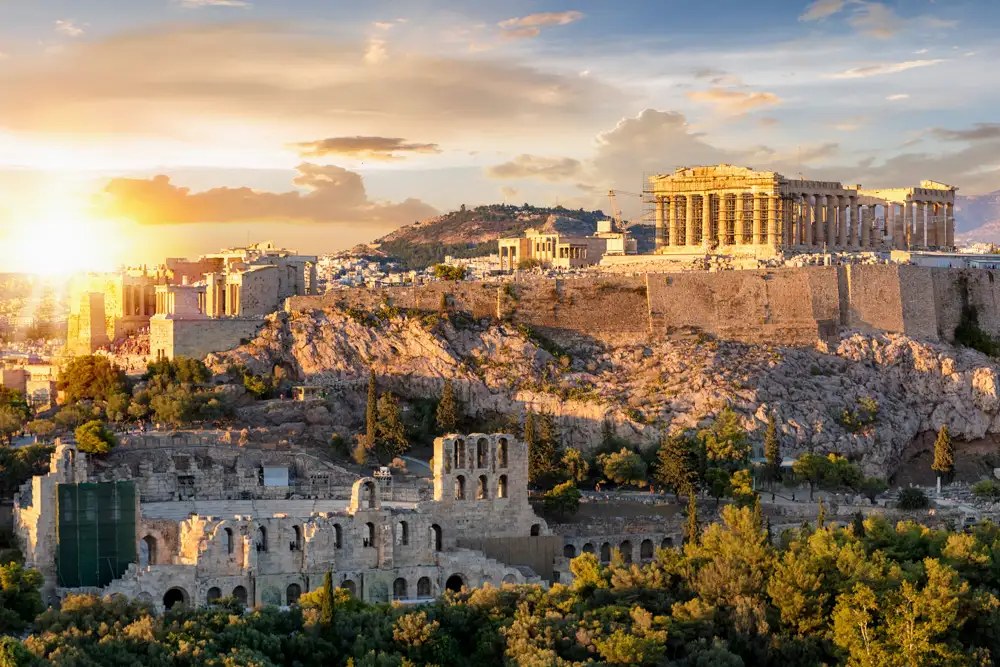
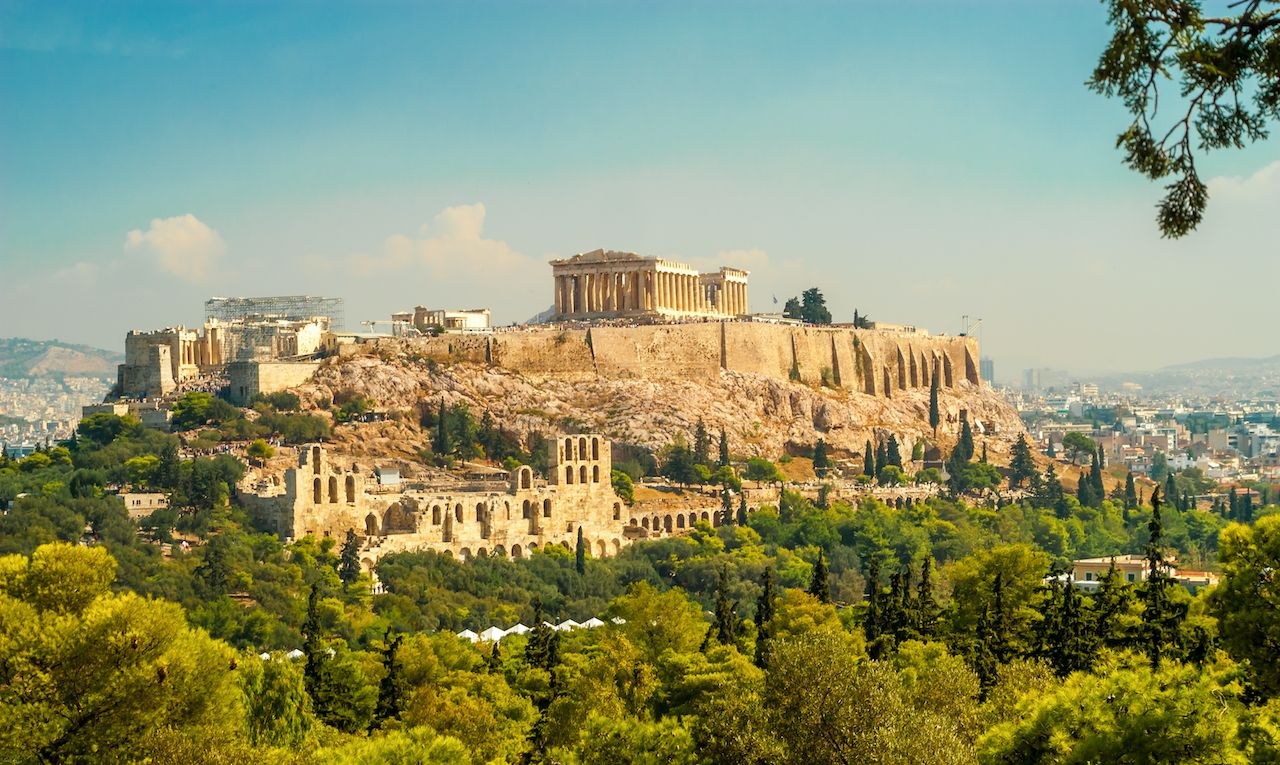
What you do Climb the Sacred Rock with a licensed Athens guide and stand beneath the Parthenon, the single most iconic monument of Western civilization, while the marble turns into the living story of Pericles, Athena and the birth of democracy. Skip-the-line entry is the whole game on a port day, sparing you the brutal midday ticket queue. Pair it with the Bernard Tschumi-designed Acropolis Museum at the foot of the hill, where the original Caryatids and Parthenon frieze sit under glass with the temple in view.
What to expect You arrive at the Acropolis via a 30–45 minute metro or taxi ride from Piraeus and walk straight past the ticket queues with your skip-the-line pass—a critical edge on a port day. Your licensed guide leads you up the Sacred Rock, the marble facades shifting beneath your feet as the Parthenon rises above you, the physical anchor of Western democracy. You stand beneath the temple while its architects, Athena's priests, and Pericles become tangible; the tour typically runs 2–2.5 hours on the hill. If time permits, descend to the Bernard Tschumi-designed Acropolis Museum at the foot, where the original Caryatids and Parthenon frieze rest under glass with the temple framed in the window behind them—the monument visible from the artifact's own display case.
Good to know Book your skip-the-line guided tour (EUR 110–119 all-in) or self-guided entry (EUR 30 site pass only) in advance to lock pace and avoid midday queues. From Piraeus, allow 45 minutes each way by taxi (EUR ~30) or metro; budget 2.5–3 hours on the Acropolis itself, plus museum time if included, leaving a 1.5–2 hour safety buffer before all-aboard. Wear sun protection and comfortable shoes on marble stone; bring water and consider a light jacket if museum time is planned. Confirm your tour operator's meeting point and boarding time the evening before to eliminate port-day confusion.
Versus the ship tour DIRECT WINS. The ship's 'Acropolis & Plaka' half-day runs ~$159.99 pp (Carnival; RCI/Celebrity $150-180). A guided skip-the-line tour books direct at ~$110-119 all-in, and a self-guided half-day (taxi ~EUR 30 each way + EUR 30 entry) lands under $70. Savings of roughly $40-50 pp guided, ~$90 if you DIY the entry and just want the rock.
What you do Drive the turquoise Athens Riviera south to the very tip of Attica, where a gleaming white 5th-century-BC Doric temple stands on a cliff dropping straight into the Aegean. Lord Byron carved his name into a column here; the columns framing the open sea are one of Greece's signature images and the best 'escape the city crowds' move that still fits a half-day. About 4 hours door to door.
What to expect You drive south along the turquoise Athens Riviera, the coastal sprawl gradually giving way to open sea views as you approach the tip of Attica. At Cape Sounion, a gleaming white 5th-century-BC Doric temple materializes on a cliff edge, its columns framing a sheer drop into the Aegean—the view that inspired Lord Byron to carve his name into the stone. You'll have time to walk among those iconic columns, absorb the wind and the signature Greek light, and understand why this is the escape-the-city move that doesn't require a full day. The whole experience moves door-to-door in approximately 4 hours, with the bulk of time at the temple itself.
Good to know Book transfers direct with Athens Walking Tours (~EUR 46 pp) and add temple entry separately (~EUR 10) to avoid cruise-line bundling that inflates the cost to $209–240 for a half-day outing. Aim for a departure within the first 2 hours of your port window to secure the 4-hour round trip plus buffer time before all-aboard. Temple entry is not included in transfer pricing, so bring cash or be prepared to purchase on-site. The coastal drive means no special gear required, but bring sunscreen and a hat—you'll be exposed on the cliff top, with few shade options at the temple itself.
Versus the ship tour DIRECT WINS BIG. Cruise lines almost never sell Sounion standalone, burying it inside a $209-240 full-day package. Booked direct the coastal half-day is ~$61 all-in (group versions elsewhere ~$77). If your ship only offers it bundled, you're paying a $130+ premium for the convenience of one bus.
What you do Trade marble and crowds for the Aegean blue: a half-day catamaran along the Athens Riviera and Saronic coast with swim-and-snorkel stops, a meal and wine aboard. Boats leave from Alimos and Flisvos marinas close to Piraeus, making this the rare genuinely premium on-the-water experience that comfortably fits a port-day clock. Pick an operator that guarantees you back before all-aboard.
What to expect You'll board a semi-private catamaran at Alimos or Flisvos marina—a short ride from Piraeus—and spend your half-day gliding along the Aegean's brilliant blue coastline, pausing at protected swim-and-snorkel spots where the water is clear and calm. Between swims, you'll lounge on deck with wine and a meal included, absorbing the Athens Riviera and Saronic coast views at a pace only a small catamaran allows. Unlike the ship's mega-boat island circuit, this is genuinely intimate: no crowds, no forced itinerary, just the rhythm of the sea. You'll be back at the pier with time to spare before all-aboard.
Good to know Departures are half-day sails (check your operator's exact schedule to confirm return time fits your ship's all-aboard). Alimos and Flisvos marinas are close to Piraeus but you'll need a quick taxi or arranged transfer from the port—factor 15–20 minutes each way. Book semi-private slots ahead, especially June–August, as they fill quickly and pricing rises (EUR 125–135 pp depending on season). Bring reef-safe sunscreen, water shoes, and a light layer; snorkel gear is provided, and meal + wine are aboard.
Versus the ship tour DIRECT-ONLY niche. Cruise lines rarely offer a small-catamaran sail here; their on-water option is the big Saronic island bus-boat. At ~$135 pp semi-private this is a premium experience, not a savings play, but it's the only way to get the relaxed Aegean-blue day, and it beats the ship's ~$180-200 mega-boat island cruise on quality if not headline price.
What you do Thread the historic Plaka backstreets into the roaring Varvakios Agora meat-and-fish market, stopping for spanakopita, loukoumades, Greek coffee, cheeses, olive oil, honey and wine. Repeatedly rated among Europe's best culinary experiences, it delivers the flavors-and-neighborhood immersion a first-timer remembers as vividly as the ruins, all on foot in the old town. ~4 hrs, small group, tastings included.
What to expect You'll spend roughly 4 hours threading through the narrow, winding backstreets of historic Plaka on foot, pausing at local favorites for spanakopita, loukoumades, Greek coffee, and tastings of cheeses, olive oil, honey, and wine. The real anchor is the Varvakios Agora—the roaring central meat-and-fish market—where vendors call out their wares and you'll sample directly in the chaos of neighborhood commerce. Rather than stand-and-listen, you move continuously through old-town streets, tasting as you go, absorbing the rhythm of daily Athenian life in a small group setting. It's the kind of immersive, on-foot culinary walk that stays vivid in memory alongside the ruins.
Good to know Book directly with Athens Walks before the port day to secure your spot in the small group and confirm start time—all tastings are included in the ~$75 pp price, so no hidden costs. Plan on a 4-hour window starting within 1–2 hours of disembark to leave a comfortable buffer (the Plaka walk is entirely walkable from Piraeus pier, though confirm exact meeting point when you book). Wear comfortable walking shoes and bring a small daypack or crossbody bag for any purchases or water; the market and Plaka streets are pedestrian-only and shaded, but summer heat can build. Return to the pier with at least 90 minutes before all-aboard to account for the walk back and any lingering in the market.
Versus the ship tour DIRECT WINS. The ship's food/wine tour runs ~$134.99 pp (Carnival) and independent group food walks elsewhere run $135-183. This direct small-group market-and-Plaka walk at ~$75 pp undercuts the ship by roughly $60 for a far more authentic, on-foot experience. (If you only want a quick pour, a basic Piraeus wine tasting is ~$30-35 and beats everything on price alone.)
What you do Three classic Saronic Gulf islands in one day, including car-free, donkey-and-cobblestone Hydra, one of the most photogenic harbors in Greece. Swimming, Greek music and a buffet lunch aboard deliver the 'Greek islands' taste without flying to the Cyclades. CLOCK WARNING: this is an ~11-hour day departing ~08:15 from Piraeus, so it only works if your ship has a very long call or overnights, and only with an operator that guarantees you back to the ship.
What to expect You'll depart Piraeus around 08:15 on a full-day voyage across the Saronic Gulf, visiting three islands in succession: first the car-free, donkey-cobbled harbor of Hydra, one of Greece's most photogenic ports, where narrow whitewashed streets climb steeply from the waterfront; then Poros, where you'll have time to explore; and finally Aegina. The day anchors around a leisurely Greek buffet lunch served aboard the boat, punctuated by swimming stops and live Greek music that delivers the classic island experience without the flight to the Cyclades. You'll return to Piraeus in late afternoon, having absorbed the full sensory rhythm of island life—water, light, local flavor, and Greek hospitality—all from a single excursion boat.
Good to know This is an ~11-hour commitment departing ~08:15, so it only works if your ship has a very long port call or overnight stay; on a standard 8-hour call, the risk of missing the ship outweighs the ~$40–70 savings versus booking through your cruise line. Book ahead with Athens One Day Cruise (direct ~EUR 131/$142 pp with lunch, versus ship ~$179–199) or confirm your operator guarantees return to the pier with time to spare. Bring sun protection, swimwear, and cash for any extras; wear comfortable walking shoes for Hydra's steep cobblestones. The departure point is directly from Piraeus; allow buffer time to clear the pier and reach the boat dock, and verify exact embarkation details with your chosen operator 24 hours before.
Versus the ship tour DIRECT WINS on price, SHIP WINS on safety. Booked direct this is ~$142 pp with lunch (some local operators ~$99-130) versus the ship's ~$179-199 for the identical boat and islands - a ~$40-70 saving. BUT on a standard port call the 11-hour runtime risks missing the ship; if you're not overnighting, the cruise line's version (or skipping it) is the safer call despite the markup.
What you do The low-risk fallback if a long excursion feels too tight: a fixed-fare taxi or the metro straight to the Acropolis, self-guided entry to the Parthenon, then an easy downhill wander through Plaka's old-town lanes. No tour commitment, no fixed return time, and you control exactly when you head back to Piraeus, which is the safest play for a short port call.
What to expect You'll take a fixed-fare taxi or the metro from Piraeus straight to the Acropolis, where you'll climb through the ancient Parthenon and surrounding monuments at your own pace with a self-guided audio tool or printed map. From the summit, you'll head downhill into Plaka's narrow, winding old-town lanes—a maze of tavernas, neoclassical townhouses, and small shops—wandering for as long as you'd like before strolling back to the port on your own timeline. The whole rhythm is yours: no group delays, no narrated patter, just you, 2,500-year-old stone, and the freedom to linger or move on whenever you choose.
Good to know For a 6–8 hour port call, budget ~45 minutes each way for transit (taxi or metro), 2–2.5 hours at the Acropolis, and 1.5–2 hours wandering Plaka, leaving a 60–90 minute buffer to return to Piraeus before all-aboard. Book your taxi in advance or use the metro (€4 round trip); Acropolis entry is €30 (expect a queue, especially mid-morning). Wear comfortable walking shoes, bring water, and download a self-guided audio app or grab a printed site map beforehand. Plan to be back at the pier at least an hour before your ship's departure time—this is not a ship-sponsored excursion, so you alone are responsible for making the sailing.
Versus the ship tour DIRECT WINS on price and flexibility. The ship's escorted Acropolis & Plaka half-day is ~$159.99 pp; doing it yourself is ~$50-70 pp and you keep full control of your return time. Trade-off: no guide narration and you carry your own clock - acceptable for the Acropolis, which is straightforward to navigate solo.
book direct with Athens Half-Day Sightseeing (Athens Walking Tours - audio/self-guided) → · the full guide →
After you step off · near Athens
You end in a different port — stay on, and add what is within reach before you fly home.