Your cruise
Oceania Allura · 10-night Mediterranean cruise, Barcelona to Civitavecchia (Rome)
Apr 5 – Apr 15 · 10 nights ·
Day 1 Barcelona (board) · Day 2 Valencia · Day 3 Palma de Mallorca · Day 4 at sea · Day 5 Porto Torres(sardinia) · Day 6 Ajaccio · Day 7 Marseille · Day 8 Monte Carlo · Day 9 La Spezia (Cinque Terre) · Day 10 Florence · Day 11 Civitavecchia (Rome) (step off)
What you do Step inside Santiago Calatrava's blinding-white, sci-fi City of Arts and Sciences and into the Oceanografic, the biggest aquarium in Europe, where a glass tunnel puts sharks and rays gliding over your head and beluga whales, sea lions and a dolphin lagoon fill nine themed marine worlds. It is the single most photographed image of Valencia and the closest marquee sight to the cruise terminal, about 12-20 minutes by bus line 95 or a ~12-15 euro taxi. For a first-timer with one port day, this is the regret-if-you-miss-it stop.
What to expect You arrive at Santiago Calatrava's gleaming City of Arts and Sciences and step into the Oceanografic, Europe's largest aquarium, where a glass tunnel frames sharks and rays gliding silently overhead. From there you move through nine themed marine worlds—beluga whales, sea lions, and a dolphin lagoon punctuate the journey—each zone a deeper plunge into underwater spectacle. The dolphin and sea-lion shows provide the natural rhythm breaks and peak photo moments. It's an immersive, self-paced flow from zone to zone, capped by the single most photographed image Valencia offers.
Good to know Book your ticket direct online (EUR 35.90–43.05 adult; combo packages with Hemisferic IMAX and Science Museum run EUR 44–51.25) and allow 2.5–4 hours inside the aquarium to cover all zones and catch both shows comfortably. From the cruise terminal, take line 95 bus (12–20 minutes) or a taxi (~EUR 12–15) directly to the City of Arts and Sciences; the walk from either drop-off to Oceanografic is short and self-evident. Plan to be back at the pier 90 minutes before all-aboard, and bring a camera—the underwater glass tunnels and Calatrava architecture demand it.
Versus the ship tour DIRECT WINS BIG. Lines like Celebrity and Royal Caribbean sell a city-visit-plus-Oceanografic tour at $95-130 pp; the aquarium ticket booked direct is only ~$39-46, so even with a taxi you save roughly $50-80 pp and skip the bus-herd pacing. The only thing the ship adds is guided transfer, which the line-95 bus or a short cab replaces for a few euros.
book direct with Oceanografic Valencia (Ciutat de les Arts i les Ciencies) → · the full guide →
What you do Glide out across the mirror-still freshwater lagoon in a traditional flat-bottomed albuferenc wooden boat, poled and motored past herons, reed beds and the rice paddies that actually gave the world paella, best at the golden-hour light Valencia is famous for. This is the postcard the cathedral and aquarium can't replicate, and at roughly 25 minutes from the port it pairs perfectly with an authentic paella lunch in the El Palmar village beside the dock.
What to expect You'll travel roughly 25 minutes from the port to El Palmar village and board a traditional flat-bottomed wooden boat, poled and motored across the mirror-still freshwater Albufera Lagoon. As you glide past herons, reed beds, and the rice paddies that gave paella to the world, golden-hour light transforms the landscape into postcard perfection—a natural experience the cathedral and aquarium cannot match. The shared lagoon ride lasts about 45 minutes, immersing you in the serene working wetlands that define this region. Pair it seamlessly with an authentic paella lunch at a village restaurant beside the dock, creating a complete sensory journey of Valencia's most authentic culinary and natural heritage.
Good to know Book directly with Paseos en Barca El Besso (WhatsApp/phone +34 678 336 181 or their website) for a standard ~45-minute ride at EUR 5 adult/EUR 3 child, or opt for a sunset/longer ride at EUR 7—a fraction of cruise-line bundled tour pricing. From the pier, take a taxi to El Palmar dock (roughly 25 minutes); consider hiring the same taxi to wait, or arrange round-trip transport through an independent port-gate operator for ~€75–85 to include boat and paella. Book your boat slot and paella restaurant reservation in advance to secure timing, and budget 4–5 hours total (transport, boat, meal, return) to maintain a safe buffer before all-aboard. Bring sun protection and a camera for golden-hour shots, and note that the boat is weather-dependent; confirm departures the morning of your port day.
Versus the ship tour DIRECT IS A FRACTION OF THE PRICE. The boat ride itself is ~5 euros booked directly with the barquero; cruise lines bundle it into 'Old Quarter and Albufera with paella' tours at $90-130 pp. If you want the whole package handled, an independent port-gate operator does boat + paella + round-trip transport for ~$82-92 pp and still beats the ship by $20-50. But the boat alone, self-driven by taxi, is the budget bucket-list steal of the port.
book direct with Paseos en Barca El Besso → · the full guide →
What you do Shop for ingredients at the 1928 Modernista Central Market with a Valencian chef, then learn to build the genuine article over fire, rice, chicken, rabbit and garrofo beans, never chorizo, and eat your own creation with regional wine and tapas. It is a hands-on, take-home-a-skill experience run by a real local operator, and the ~3.5-hour morning format slots cleanly inside a 6-8 hour port day for foodies who want to do more than sightsee.
What to expect You'll start with a guided walk through the soaring Modernista halls of the 1928 Central Market, learning to spot authentic paella ingredients alongside your Valencian chef before heading to the cooking space. There you'll work hands-on—building genuine paella over fire with rice, chicken, rabbit, and garrofo beans (never the tourist shortcut of chorizo). As the dish comes together, you'll taste regional wine and tapas, then sit down to eat the paella you've just made. The morning format flows as a natural arc from market discovery to skill-building to meal, completing in roughly 3.5 hours.
Good to know The ~3.5-hour morning class fits neatly into a 6–8 hour port day, leaving buffer time for tender queues and the walk back to the pier. Book directly with Sea Saffron (not the cruise line) to confirm pickup logistics from the Valencia port and confirm whether transportation is included. Wear closed-toe shoes suitable for standing in a market and near an open fire, and bring an appetite—you'll finish with your own cooked paella plus wine service. Reserve ahead, especially for weekend calls, since local operators fill faster than ship-sponsored alternatives.
Versus the ship tour DIRECT WINS. Cruise-line culinary excursions run $130-225 pp (tapas-and-wine city tours up to $221-226, cooking classes ~$139); Sea Saffron's hands-on class with market tour is ~$80 booked direct, saving $50-145 pp, and you deal with a genuinely Valencian operator instead of a contracted group bus.
What you do In its own Gothic side chapel the cathedral guards the agate cup the Vatican recognizes as the most credible candidate for the Holy Grail of the Last Supper, the spiritual heart of the Old Town. Then climb the 207 spiraling steps of the Miguelete bell tower for the definitive 360-degree panorama over Valencia's terracotta rooftops and domes. Compact, walkable and self-paced, it anchors any Old Town port-day plan.
What to expect You'll start in Valencia's compact Old Town, entering the Gothic cathedral to view the agate Holy Grail cup in its own chapel—a profound, quieter moment amid the architectural grandeur—before moving through the Treasury and museum at your own pace with an audioguide. Then you'll face the decision: take the 207 spiraling steps of the Miguelete bell tower for an unobstructed 360-degree panorama of terracotta rooftops and domes, or linger in the historic center's walkable streets. The rhythm is entirely self-directed; you move when you want, rest when you want, and the compact geography keeps you anchored without feeling rushed.
Good to know The cathedral and tower entry (~$12–14 total) should be booked direct at the official site or purchased at the door to avoid ship markups. Budget 2.5–3 hours for the full cathedral experience plus the tower climb; the Old Town is a flat, easy 10–15 minute walk from the cruise pier, leaving you 2–3 hours for additional wandering or a cafe stop. Build in a 30-minute buffer to return to the ship; bring comfortable walking shoes, sunscreen, and a small day bag, as the tower climb is tight and steep. Book ahead online only if you're visiting during peak season (May–September) to guarantee entry slots.
Versus the ship tour DIRECT WINS, AND IT'S SELF-GUIDED. Lines sell a Valencia City Highlights / panoramic Old Town tour at $70-95 pp; the cathedral and tower booked direct total ~$12-14 pp, and the historic center is an easy self-guided walk. The ship only adds a guide and coach transfer, worth it solely if you want zero logistics, otherwise you're paying $60+ extra for narration.
book direct with Catedral de Valencia (Basilica Metropolitana) → · the full guide →
What you do After a 1957 flood Valencia rerouted its river and turned the 9 km dry riverbed into one of Europe's great urban parks, a green ribbon winding under the city's historic stone bridges from the Old Town all the way to the City of Arts and Sciences. Rent a bike and ride the traffic-free corridor to string nearly every major sight together, the smartest, most local way to cover a lot of Valencia on a short port day.
What to expect You'll rent a bike at Valencia Bikes and pedal the 9 km traffic-free ribbon of the Turia Gardens, a green corridor that winds under historic stone bridges from the Old Town through the city's lush heart straight to the City of Arts and Sciences. Along the way you'll string together nearly every major sight—medieval plazas, arched architecture, and Calatrava's futuristic complex—without fighting traffic or crowds. The route flows as a seamless scenic loop, each landmark appearing naturally as you glide beneath centuries-old bridges and through sun-dappled parks. It's the closest thing to a personal-guided tour you'll get without paying for one, but entirely at your own pace and on your own discovery.
Good to know Rent your bike early to maximize daylight and give yourself 4–5 hours to ride the gardens, explore the Old Town, and visit the City of Arts and Sciences without rushing. The rental fee (~$13–16 including helmet and lock) is non-negotiable, so budget that upfront; guided tours are available at higher rates if you prefer narration. Allow at least 90 minutes buffer to return the bike, walk back to the pier, and clear security before all-aboard. Bring water, sunscreen, and check that the bike's brakes and tires work before leaving the rental shop—the route is flat and safe, but you'll be exposed to Valencia's sun for hours.
Versus the ship tour DIRECT WINS for the self-reliant. The ship's panoramic city tours run $70-110 pp; a half-day bike for ~$15 lets you self-connect the Old Town, Turia park and the Calatrava complex in one scenic loop, saving $55+ pp. Choose the ship only if you can't ride or want a guided narrative; otherwise the bike is the better-value, more memorable way to see the city.
What you do When you want an easy, low-stress port day, Malvarrosa and Las Arenas beaches sit minutes from the cruise terminal: a wide golden-sand strip backed by a palm-lined promenade of paella-and-seafood chiringuitos, with the America's Cup marina alongside. It is the closest open-water relaxation to the ship, no operator or booking needed, and you can be back aboard fast if the clock gets tight.
What to expect You arrive at a wide, palm-lined golden-sand beach moments from the cruise terminal, where the shoreline stretches lazily between the chiringuitos (casual seafood bars) lining the promenade and the sleek white yachts of the America's Cup marina. The rhythm is unhurried: claim a spot on the sand or rent a sunbed, order fresh paella or grilled fish from one of the beachfront shacks, and drift between the water and a cold horchata as the Mediterranean wind dries your shoulders. The Malvarrosa and Las Arenas beaches feel both Mediterranean-postcard authentic and entirely low-key—no crowds, no tours, just sand, salt water, and the gentle hum of port-city life just behind you.
Good to know A taxi from the terminal costs $12–15 each way, or take the city tram for a few euros—both get you beachside in minutes, leaving a full 5–6 hours to swim, eat, and lounge within a 6–8 hour port window. Sunbed and parasol rentals (around $5–10) are available on-site and require no advance booking. Build in a 30–45 minute buffer before all-aboard to account for a taxi queue or tram wait on the return trip, and bring cash or a card accepted at the chiringuitos if you plan to eat; sunscreen and a light cover-up are essential, as the beach offers limited shade beyond parasol rentals.
Versus the ship tour SKIP THE SHIP HERE. Cruise lines sell a Valencia Beaches / scenic coastal drive at $70-110 pp, but Malvarrosa is essentially in the port's backyard and free to enjoy; a taxi or tram gets you there for under $20 round trip. This is the no-regret fallback if a marquee tour sells out or you simply want sand and a cold horchata without spending a cent on an excursion.
What you do Step inside the most famous unfinished building on earth, where Gaudi's stone forest of columns explodes into a kaleidoscope of stained-glass light that moves across the floor through the day. Add the tower ticket to ride the lift up a spire and walk back down the dizzying spiral stair with the city at your feet. Buy a strict timed entry slot, go early in your port window, and you'll beat both the queue and the midday glare.
What to expect You'll enter Gaudí's masterpiece and encounter a forest of soaring stone columns that dissolve into kaleidoscopic stained-glass light, shifting across the basilica floor as the sun moves through the day. If you book tower access, you'll ride the lift up a spire and descend the dizzying spiral staircase with Barcelona spreading below you. The unfinished vastness—both earthbound and dreamlike—fills the space in a way photographs cannot capture, and the audioguide walks you through every sculptural detail as you move through the nave.
Good to know Book a strict timed entry slot directly from the official Basilica de la Sagrada Familia site before your port day and go early in your window to beat both queues and harsh midday glare. Basic entry (EUR 26) includes the audioguide app; add EUR 10 for tower access (EUR 36 total) if you want the climb. Get there by taxi, metro, or ship-organized transport—the official tickets skip the reseller markup and save you $40–130 per person versus ship packages. Allow 2–3 hours inside the basilica itself, plus buffer time for entry and return, leaving at least 30–45 minutes to get back to the pier before all-aboard.
Versus the ship tour Direct wins overwhelmingly. The ship charges $75-170pp for guided/skip-line Sagrada Familia + Park Guell combos; the official tower ticket is ~$40pp and the basic ~$28pp. Same building, same skip-the-queue timed entry, for a fraction of the price. You save roughly $40-130pp and keep the audioguide. The only thing the ship adds is a bus and a guide reciting what the EUR 26 audioguide already tells you.
book direct with Basilica de la Sagrada Familia (official) → · the full guide →
What you do Ride out of the city to the serrated, otherworldly rock massif of Montserrat, ride the rack railway up the cliff face, and stand before the Black Madonna in the Benedictine basilica. If your day lands on a weekday you may catch the Escolania boys' choir, one of Europe's oldest. A guided coach handles the logistics and the timing so you are not gambling your ship's all-aboard on Spanish regional rail.
What to expect You'll depart Barcelona Nord by guided coach around 9:00am and ride into the otherworldly rock massif of Montserrat, where jagged peaks rise like a serrated fortress. At the foot of the cliffs, you'll board the rack railway that climbs the steep face, delivering you to the Benedictine basilica where the Black Madonna awaits in her shrine. A guide walks you through the sacred basilica, and if your excursion lands on a weekday, you may catch the Escolania boys' choir—one of Europe's oldest—singing in the morning service. The return coach departs mid-afternoon, arriving back at the port by around 4:15pm, giving you time to decompress before all-aboard.
Good to know Book the EUR 68.40 online rate with Catalunya Bus Turistic (Barcelona Turisme) well ahead to lock savings over cruise-line pricing ($25–185 cheaper per person). Confirm your ship's all-aboard time before booking—this ~7.25-hour excursion ends mid-afternoon, and the guided coach is your guaranteed return to port, so no gambling on Spanish regional rail. Wear sturdy walking shoes and bring layers, as the monastery sits at altitude and morning temperatures vary; the rack railway is steep but brief. Meet at Barcelona Nord bus station; your operator handles all transport and timing from city to mountain and back to the pier.
Versus the ship tour Direct wins clearly. Cruise-line Montserrat tours run $98-149pp and one premium-line passenger reported $259pp; this licensed multi-year operator delivers the same mountain, basilica and museum for ~$74pp, saving $25-185pp. PORT-DAY FLAG: this is a half-day, ~7.25hr round trip ending mid-afternoon, so confirm it lands inside your all-aboard. If you want the absolute floor and can self-navigate, the official Tot Montserrat ticket (EUR 71.50, adds the cable-car/lunch buffet and all funiculars) does it DIY by train, but you lose the guide and the guaranteed coach back to the port.
book direct with Catalunya Bus Turistic (Barcelona Turisme) → · the full guide →
What you do Climb to Gaudi's fairytale hillside park where the famous serpentine bench snakes in broken-tile mosaic around a terrace with the whole city and the sea spread below. The gingerbread gatehouses, the mosaic lizard fountain and the columned Hypostyle Hall make this the most photographed open-air Gaudi work in Barcelona. Book a timed slot for the Monumental Zone and arrive within your 30-minute entry grace window.
What to expect You'll arrive at Park Güell's Monumental Zone within a timed 30-minute entry window and climb the hillside into Gaudí's dreamlike landscape of gingerbread gatehouses and winding mosaic pathways. The iconic serpentine bench—snaking in broken-tile mosaics—curves around a terrace with sweeping views of Barcelona and the sea below, a photographer's paradise at every turn. You'll wander through the columned Hypostyle Hall and encounter the whimsical mosaic lizard fountain, experiencing the most photographed open-air Gaudí work in the city. The rhythm builds from initial climb to breathless overlook moment, then the slower, meditative wandering among the ceramic-clad structures and panoramic terraces.
Good to know Book your timed slot for the Monumental Zone well ahead (€18pp includes all Gaudí works and terraces, VAT included). Budget a taxi or bus both ways from the pier—the site is uphill and slightly off the metro—and plan to spend 1.5–2 hours at the park itself, leaving 2–3 hours total for transport buffers in a 6–8 hour port window. Arrive at the pier-side transport with at least 90 minutes before your ship departure to clear the security buffer. Bring sun protection and comfortable climbing shoes; if Sagrada Familia is also on your list, prioritize that cathedral over this one due to time constraints.
Versus the ship tour Direct wins big. The ship folds Park Guell into Gaudi tours priced $75-170pp; the official monument ticket is ~$20pp. Even adding a EUR 13 taxi up the hill you are far under the ship rate, saving $50-150pp. Honest caveat: it's uphill and a bit off the metro, so budget a taxi/bus each way and a firm timed slot. If you only have time for one Gaudi stop, prioritize Sagrada Familia over this one.
book direct with Park Guell (official, Barcelona City Council) → · the full guide →
What you do Slip out of the old harbor under sail on a real catamaran and see Barcelona's skyline, the Barceloneta beaches and the working port from the water, with a full bar aboard if you want a vermouth in hand. It is the rare port-day activity that starts steps from where most ships dock, so there is almost no travel time eating into your clock. Quiet, scenic, and an easy reset between the heavier Gaudi and mountain days.
What to expect You slip out of Port Vell under sail on a real catamaran, watching Barcelona's skyline recede as you glide past the Barceloneta beaches and the working harbor—all from the water, in the rare quiet that comes when most port-goers are queuing for cable cars. The 1.5-hour sail (or longer for Jazz options) unfolds at the pace of the breeze, with an onboard bar letting you nurse a vermouth while the city rises behind you. This is atmosphere and scenery: the kind of reset day that earns its place *between* the heavier Gaudi museum runs and mountain climbs, not as a standalone centerpiece.
Good to know The catamaran departs directly from Colon/Port Vell—steps from where most cruise ships dock—so there is almost no travel time; you can be aboard within 10–15 minutes of leaving the ship. Book the 1.5-hour Catamaran Sail & Skyline (EUR 18.50pp) or upgrade to Jazz & Chill Out (EUR 22.50pp) or Sunset Jazz (EUR 28pp) directly with Catamaran Orsom to save 50–80% versus ship-sold harbor alternatives. Plan to return well within a 6–8 hour port window, leaving ample buffer for any delays; bring sunscreen, sunglasses, and a light layer for wind on the water, and confirm departure times when booking to align with your ship's all-aboard.
Versus the ship tour Direct wins, roughly half price. Ship-sold harbor sails run $60-80pp and multi-element 'land/sea/air' packages hit $214pp; ORSOM's direct sail is ~$20-31pp, a $40-180pp saving. It departs right at Port Vell so you skip the bus shuffle. Honest note: this is scenery and atmosphere, not a bucket-list 'must,' so slot it only after you've locked the marquee sights.
What you do Drive into the Penedes vineyards, taste across varieties at the Torreblanca winery, then get hands-on at ArtCava to riddle and cork your own bottle of cava to take home as the rare souvenir you actually made. It is Spain's sparkling-wine heartland and a genuine craft experience rather than a pour-and-go tasting. A real port-day alternative to another church or museum.
What to expect You'll board a coach at Barcelona Nord around 9:00am and drive into the Penedes vineyards, Spain's sparkling-wine heartland, for a vineyard walk and guided tasting across varieties at Torreblanca winery. From there, you'll move to ArtCava for a hands-on workshop where you'll ridge and cork your own bottle of cava—a genuine craft experience, not a pour-and-go tasting—before heading back to the pier by approximately 2:15pm with a bottle you've made yourself as your souvenir.
Good to know The entire excursion runs ~5.25 hours round-trip, departing Barcelona Nord and returning early afternoon, which fits comfortably within most all-aboard windows—but confirm your sailing time and treat the coach's return as your hard deadline. Price is EUR 104pp online (EUR 116 regular) and includes round-trip coach, vineyard walk, tastings at two wineries, the guided ArtCava tour, your make-your-own-cava workshop, and the bottle to take home. Book online in advance to lock in the EUR 104 rate rather than pay the regular price at the port. Bring comfortable walking shoes for the vineyard and ArtCava, stay hydrated between tastings, and allow 15–20 minutes buffer time to clear the coach and return to your ship.
Versus the ship tour Direct wins, ~$75-80pp. The cruise line's Cava + tapas + vineyard and Familia Torres winery tours run $186-195pp; this is ~$113pp for two wineries plus a hands-on workshop and a bottle, a saving of about $75pp. PORT-DAY FLAG: ~5.25hr round trip returning early afternoon, comfortably inside most all-aboards, but confirm against your sailing time and treat the coach's return as your hard deadline.
book direct with Catalunya Bus Turistic (Barcelona Turisme) → · the full guide →
What you do Walk the famous La Boqueria market with a chef, then cook a real Catalan paella and a couple of tapas by hand before sitting down to eat what you made with sangria in hand. It's three hours, minutes off La Rambla, and a low-stress way to take Barcelona home in your hands rather than your camera roll. The near-port safety net if a long mountain or vineyard run feels too tight against your all-aboard.
What to expect You'll start at La Boqueria market with a chef guide introducing the vibrant produce and Catalan ingredients, then move to the kitchen to roll up your sleeves and cook a real paella and two tapas by hand under instruction. The rhythm flows from market sensory overload—color, noise, vendors—to focused, measured cooking where you learn technique in a small group. After three hours of chopping, stirring, and tasting, you sit down to eat what you've made with sangria in hand, transforming the morning's market finds into your own meal.
Good to know Sessions run at 10:30, 13:00, 16:00, and 18:45; a 10:30 start gives you a full 6+ hours back on ship before evening all-aboard, while the 13:00 slot works if your port window is shorter. The venue is central, just minutes off La Rambla near Liceu metro—walkable from the pier or a quick taxi, with minimal coach risk. Book ahead through Cook & Taste to secure your time slot and session; the EUR 72 price includes all instruction, equipment, recipes, and beverages, so there are no surprise costs. Plan to return to the ship by your all-aboard time with a 30–45 minute buffer built in; the class ends by its scheduled time (e.g., 13:45 for the 10:30 session), leaving you a safe window to walk or cab back to the pier.
Versus the ship tour Direct wins, $50-115pp. The ship's tapas/food/wine tours run $128-195pp; this hands-on class is ~$79pp, a $50-115pp saving, and you actually cook rather than just follow a guide between bars. As a safety-net it is unbeatable for the clock: it's central, short, and books in fixed time slots, so you can pick the session that fits your remaining port hours with zero coach risk.
book direct with Cook & Taste (Barcelona Cooking Classes) → · the full guide →
What you do Step inside Santiago Calatrava's blinding-white, sci-fi City of Arts and Sciences and into the Oceanografic, the biggest aquarium in Europe, where a glass tunnel puts sharks and rays gliding over your head and beluga whales, sea lions and a dolphin lagoon fill nine themed marine worlds. It is the single most photographed image of Valencia and the closest marquee sight to the cruise terminal, about 12-20 minutes by bus line 95 or a ~12-15 euro taxi. For a first-timer with one port day, this is the regret-if-you-miss-it stop.
What to expect You arrive at Santiago Calatrava's gleaming City of Arts and Sciences and step into the Oceanografic, Europe's largest aquarium, where a glass tunnel frames sharks and rays gliding silently overhead. From there you move through nine themed marine worlds—beluga whales, sea lions, and a dolphin lagoon punctuate the journey—each zone a deeper plunge into underwater spectacle. The dolphin and sea-lion shows provide the natural rhythm breaks and peak photo moments. It's an immersive, self-paced flow from zone to zone, capped by the single most photographed image Valencia offers.
Good to know Book your ticket direct online (EUR 35.90–43.05 adult; combo packages with Hemisferic IMAX and Science Museum run EUR 44–51.25) and allow 2.5–4 hours inside the aquarium to cover all zones and catch both shows comfortably. From the cruise terminal, take line 95 bus (12–20 minutes) or a taxi (~EUR 12–15) directly to the City of Arts and Sciences; the walk from either drop-off to Oceanografic is short and self-evident. Plan to be back at the pier 90 minutes before all-aboard, and bring a camera—the underwater glass tunnels and Calatrava architecture demand it.
Versus the ship tour DIRECT WINS BIG. Lines like Celebrity and Royal Caribbean sell a city-visit-plus-Oceanografic tour at $95-130 pp; the aquarium ticket booked direct is only ~$39-46, so even with a taxi you save roughly $50-80 pp and skip the bus-herd pacing. The only thing the ship adds is guided transfer, which the line-95 bus or a short cab replaces for a few euros.
book direct with Oceanografic Valencia (Ciutat de les Arts i les Ciencies) → · the full guide →
What you do Glide out across the mirror-still freshwater lagoon in a traditional flat-bottomed albuferenc wooden boat, poled and motored past herons, reed beds and the rice paddies that actually gave the world paella, best at the golden-hour light Valencia is famous for. This is the postcard the cathedral and aquarium can't replicate, and at roughly 25 minutes from the port it pairs perfectly with an authentic paella lunch in the El Palmar village beside the dock.
What to expect You'll travel roughly 25 minutes from the port to El Palmar village and board a traditional flat-bottomed wooden boat, poled and motored across the mirror-still freshwater Albufera Lagoon. As you glide past herons, reed beds, and the rice paddies that gave paella to the world, golden-hour light transforms the landscape into postcard perfection—a natural experience the cathedral and aquarium cannot match. The shared lagoon ride lasts about 45 minutes, immersing you in the serene working wetlands that define this region. Pair it seamlessly with an authentic paella lunch at a village restaurant beside the dock, creating a complete sensory journey of Valencia's most authentic culinary and natural heritage.
Good to know Book directly with Paseos en Barca El Besso (WhatsApp/phone +34 678 336 181 or their website) for a standard ~45-minute ride at EUR 5 adult/EUR 3 child, or opt for a sunset/longer ride at EUR 7—a fraction of cruise-line bundled tour pricing. From the pier, take a taxi to El Palmar dock (roughly 25 minutes); consider hiring the same taxi to wait, or arrange round-trip transport through an independent port-gate operator for ~€75–85 to include boat and paella. Book your boat slot and paella restaurant reservation in advance to secure timing, and budget 4–5 hours total (transport, boat, meal, return) to maintain a safe buffer before all-aboard. Bring sun protection and a camera for golden-hour shots, and note that the boat is weather-dependent; confirm departures the morning of your port day.
Versus the ship tour DIRECT IS A FRACTION OF THE PRICE. The boat ride itself is ~5 euros booked directly with the barquero; cruise lines bundle it into 'Old Quarter and Albufera with paella' tours at $90-130 pp. If you want the whole package handled, an independent port-gate operator does boat + paella + round-trip transport for ~$82-92 pp and still beats the ship by $20-50. But the boat alone, self-driven by taxi, is the budget bucket-list steal of the port.
book direct with Paseos en Barca El Besso → · the full guide →
What you do Shop for ingredients at the 1928 Modernista Central Market with a Valencian chef, then learn to build the genuine article over fire, rice, chicken, rabbit and garrofo beans, never chorizo, and eat your own creation with regional wine and tapas. It is a hands-on, take-home-a-skill experience run by a real local operator, and the ~3.5-hour morning format slots cleanly inside a 6-8 hour port day for foodies who want to do more than sightsee.
What to expect You'll start with a guided walk through the soaring Modernista halls of the 1928 Central Market, learning to spot authentic paella ingredients alongside your Valencian chef before heading to the cooking space. There you'll work hands-on—building genuine paella over fire with rice, chicken, rabbit, and garrofo beans (never the tourist shortcut of chorizo). As the dish comes together, you'll taste regional wine and tapas, then sit down to eat the paella you've just made. The morning format flows as a natural arc from market discovery to skill-building to meal, completing in roughly 3.5 hours.
Good to know The ~3.5-hour morning class fits neatly into a 6–8 hour port day, leaving buffer time for tender queues and the walk back to the pier. Book directly with Sea Saffron (not the cruise line) to confirm pickup logistics from the Valencia port and confirm whether transportation is included. Wear closed-toe shoes suitable for standing in a market and near an open fire, and bring an appetite—you'll finish with your own cooked paella plus wine service. Reserve ahead, especially for weekend calls, since local operators fill faster than ship-sponsored alternatives.
Versus the ship tour DIRECT WINS. Cruise-line culinary excursions run $130-225 pp (tapas-and-wine city tours up to $221-226, cooking classes ~$139); Sea Saffron's hands-on class with market tour is ~$80 booked direct, saving $50-145 pp, and you deal with a genuinely Valencian operator instead of a contracted group bus.
What you do In its own Gothic side chapel the cathedral guards the agate cup the Vatican recognizes as the most credible candidate for the Holy Grail of the Last Supper, the spiritual heart of the Old Town. Then climb the 207 spiraling steps of the Miguelete bell tower for the definitive 360-degree panorama over Valencia's terracotta rooftops and domes. Compact, walkable and self-paced, it anchors any Old Town port-day plan.
What to expect You'll start in Valencia's compact Old Town, entering the Gothic cathedral to view the agate Holy Grail cup in its own chapel—a profound, quieter moment amid the architectural grandeur—before moving through the Treasury and museum at your own pace with an audioguide. Then you'll face the decision: take the 207 spiraling steps of the Miguelete bell tower for an unobstructed 360-degree panorama of terracotta rooftops and domes, or linger in the historic center's walkable streets. The rhythm is entirely self-directed; you move when you want, rest when you want, and the compact geography keeps you anchored without feeling rushed.
Good to know The cathedral and tower entry (~$12–14 total) should be booked direct at the official site or purchased at the door to avoid ship markups. Budget 2.5–3 hours for the full cathedral experience plus the tower climb; the Old Town is a flat, easy 10–15 minute walk from the cruise pier, leaving you 2–3 hours for additional wandering or a cafe stop. Build in a 30-minute buffer to return to the ship; bring comfortable walking shoes, sunscreen, and a small day bag, as the tower climb is tight and steep. Book ahead online only if you're visiting during peak season (May–September) to guarantee entry slots.
Versus the ship tour DIRECT WINS, AND IT'S SELF-GUIDED. Lines sell a Valencia City Highlights / panoramic Old Town tour at $70-95 pp; the cathedral and tower booked direct total ~$12-14 pp, and the historic center is an easy self-guided walk. The ship only adds a guide and coach transfer, worth it solely if you want zero logistics, otherwise you're paying $60+ extra for narration.
book direct with Catedral de Valencia (Basilica Metropolitana) → · the full guide →
What you do After a 1957 flood Valencia rerouted its river and turned the 9 km dry riverbed into one of Europe's great urban parks, a green ribbon winding under the city's historic stone bridges from the Old Town all the way to the City of Arts and Sciences. Rent a bike and ride the traffic-free corridor to string nearly every major sight together, the smartest, most local way to cover a lot of Valencia on a short port day.
What to expect You'll rent a bike at Valencia Bikes and pedal the 9 km traffic-free ribbon of the Turia Gardens, a green corridor that winds under historic stone bridges from the Old Town through the city's lush heart straight to the City of Arts and Sciences. Along the way you'll string together nearly every major sight—medieval plazas, arched architecture, and Calatrava's futuristic complex—without fighting traffic or crowds. The route flows as a seamless scenic loop, each landmark appearing naturally as you glide beneath centuries-old bridges and through sun-dappled parks. It's the closest thing to a personal-guided tour you'll get without paying for one, but entirely at your own pace and on your own discovery.
Good to know Rent your bike early to maximize daylight and give yourself 4–5 hours to ride the gardens, explore the Old Town, and visit the City of Arts and Sciences without rushing. The rental fee (~$13–16 including helmet and lock) is non-negotiable, so budget that upfront; guided tours are available at higher rates if you prefer narration. Allow at least 90 minutes buffer to return the bike, walk back to the pier, and clear security before all-aboard. Bring water, sunscreen, and check that the bike's brakes and tires work before leaving the rental shop—the route is flat and safe, but you'll be exposed to Valencia's sun for hours.
Versus the ship tour DIRECT WINS for the self-reliant. The ship's panoramic city tours run $70-110 pp; a half-day bike for ~$15 lets you self-connect the Old Town, Turia park and the Calatrava complex in one scenic loop, saving $55+ pp. Choose the ship only if you can't ride or want a guided narrative; otherwise the bike is the better-value, more memorable way to see the city.
What you do When you want an easy, low-stress port day, Malvarrosa and Las Arenas beaches sit minutes from the cruise terminal: a wide golden-sand strip backed by a palm-lined promenade of paella-and-seafood chiringuitos, with the America's Cup marina alongside. It is the closest open-water relaxation to the ship, no operator or booking needed, and you can be back aboard fast if the clock gets tight.
What to expect You arrive at a wide, palm-lined golden-sand beach moments from the cruise terminal, where the shoreline stretches lazily between the chiringuitos (casual seafood bars) lining the promenade and the sleek white yachts of the America's Cup marina. The rhythm is unhurried: claim a spot on the sand or rent a sunbed, order fresh paella or grilled fish from one of the beachfront shacks, and drift between the water and a cold horchata as the Mediterranean wind dries your shoulders. The Malvarrosa and Las Arenas beaches feel both Mediterranean-postcard authentic and entirely low-key—no crowds, no tours, just sand, salt water, and the gentle hum of port-city life just behind you.
Good to know A taxi from the terminal costs $12–15 each way, or take the city tram for a few euros—both get you beachside in minutes, leaving a full 5–6 hours to swim, eat, and lounge within a 6–8 hour port window. Sunbed and parasol rentals (around $5–10) are available on-site and require no advance booking. Build in a 30–45 minute buffer before all-aboard to account for a taxi queue or tram wait on the return trip, and bring cash or a card accepted at the chiringuitos if you plan to eat; sunscreen and a light cover-up are essential, as the beach offers limited shade beyond parasol rentals.
Versus the ship tour SKIP THE SHIP HERE. Cruise lines sell a Valencia Beaches / scenic coastal drive at $70-110 pp, but Malvarrosa is essentially in the port's backyard and free to enjoy; a taxi or tram gets you there for under $20 round trip. This is the no-regret fallback if a marquee tour sells out or you simply want sand and a cold horchata without spending a cent on an excursion.
What you do Palma's defining sight: a colossal Gothic sandstone cathedral right on the waterfront, with one of the world's largest rose windows that throws a famous color-and-light show across the nave (Gaudi reworked the interior). The seasonal rooftop terrace tour (May-Oct, ~215 steps) walks you out among the flying buttresses and bells with the whole Bay of Palma spread below — the first-timer's signature Palma photo. It's a flat 10-15 min walk from the cruise shuttle drop.
What to expect You walk 10–15 minutes from the cruise shuttle drop straight to the waterfront cathedral, its colossal Gothic sandstone facade dominating the harbor view. Inside, Gaudí's reworked interior unfolds beneath one of the world's largest rose windows, which bathes the nave in a famous color-and-light show. If you've booked the rooftop terraces tour, you climb ~215 steps out among the flying buttresses and bells, with the entire Bay of Palma spreading below in that signature first-timer's photograph. A leisurely pace—cathedral interior plus rooftop—takes 1.5–2 hours total.
Good to know Book the rooftop terrace tour (EUR 20–30, May–Oct only) on the Cathedral of Mallorca's official website before sailing; summer slots sell out 2–3 weeks ahead. Standard cathedral admission alone is EUR 10 (plus museum access). The round trip walk from pier to cathedral and back is 20–30 minutes; allow 2–3 hours total for a full visit, leaving a comfortable 2-hour buffer before all-aboard. Bring water, sunscreen, and comfortable shoes for the 215 rooftop steps; the terraces are exposed, so dress for strong Mediterranean sun and occasional wind off the bay.
Versus the ship tour The ship's 'City of Palma' coach+walk tour runs $70-85 pp and mostly drops you at this same cathedral. Walk it yourself in 15 min and pay EUR10-30 direct — you save ~$50-70 pp and get the rooftop the bus tour skips. Direct wins decisively.
book direct with Cathedral of Mallorca (Catedral de Mallorca / La Seu) → · the full guide →
What you do Mallorca's most celebrated cavern near Porto Cristo: a vast illuminated forest of stalactites that opens onto Lake Martel, one of the largest underground lakes on earth. Every visit includes a live classical concert played by musicians on lantern-lit boats gliding across the water in the dark, then your own short boat ride. It's genuinely unlike anything else in the Med.
What to expect You'll journey to Porto Cristo on Mallorca's east coast to enter a cathedral of stone—a vast cavern ringed with illuminated stalactites that descend like a petrified forest. The experience pivots on an unforgettable moment: classical musicians glide across Lake Martel, one of earth's largest underground lakes, performing by lantern light while you watch from the cavern floor in near-total darkness. After their concert, you board your own small boat for a short float across the glassy black water, surrounded by the otherworldly glow of the cave's own geology. It is genuinely unlike anything else in the Mediterranean.
Good to know The cave is 1+ hour each way from Palma's port by taxi or transfer (EUR130–160 round trip split among your group, or ~EUR48–60pp via an independent transfer tour like No Frills); book entry online up to 30 days ahead to secure your time slot and lock in the EUR18 door price (~$20 adult). Budget 6–8 hours total: travel time both ways plus 45–60 minutes inside the cave itself. Bring a light jacket or sweater—underground caves run cool year-round. Skip the ship's tour ($89–108pp) unless you cannot gather a group for independent transport; the EUR18 entry fee means the ship charges ~5x markup, and even with a private transfer you'll save ~$40 per person.
Versus the ship tour The ship's 'Caves of Drach' tour is $89-108 pp; the cave door price is only EUR18 (~$20), so the ship charges ~5x. BUT the cave is ~1 hr+ each way on the east coast — factor a taxi/transfer (~EUR130-160 round trip split among your group, or ~EUR48-60 pp on an independent transfer tour like No Frills). Net: independent transfer tour still beats the ship by ~$40 pp; only take the ship version if you can't assemble a group and want the back-to-ship guarantee for a far-side-of-the-island drive.
What you do The signature scenic ride Mallorca is famous for: a polished-wood electric train running since 1912, climbing north out of Palma through almond and olive groves, 13 tunnels and the Serra de Tramuntana mountains into the orange-grove valley of Soller in about an hour. Connect to the open-sided vintage tram that rattles down to seaside Port de Soller. It boards at Plaza de Espana, a short taxi from the pier.
What to expect You'll board the polished-wood electric train at Plaza de Espana and climb north for roughly an hour through a dramatic landscape of almond and olive groves, threading through 13 mountain tunnels as you ascend toward the Serra de Tramuntana peaks. The train opens into the bright orange-grove valley of Soller, where you'll switch to an open-sided vintage tram—a delightful rattle downhill toward the glittering Mediterranean. After time to explore Port de Soller's seaside charm and perhaps a café break, you'll reverse the journey: tram back up, train back down through the tunnels into Palma. The rhythm is unhurried and picturesque, with natural breaks built in for photos and wandering.
Good to know Buy tickets online up to 7 days ahead to secure your preferred departure, ideally an early morning slot to maximize your Soller dwell time within a 6–8 hour port window. Take a taxi from the cruise pier to Plaza de Espana (a short ride), allowing 15–20 minutes to clear the ship and reach the station. The round-trip train alone takes roughly 2 hours; add 45 minutes for the tram and 1.5–2 hours in Port de Soller for a comfortable margin back to the ship. Off-peak pricing (EUR32, ~$35) may offer savings if your schedule allows; the combo ticket for train + Port de Soller tram is EUR40 (~$43).
Versus the ship tour The ship's 'Island Tour by Train, Tram & Boat' is $149-172 pp. Doing the train+tram tickets yourself is ~EUR40 (~$43) — roughly 4x cheaper, saving ~$110-130 pp. The only thing the ship buys you is a guaranteed return; with an early start the DIY round trip has ample margin. Direct/DIY wins big.
book direct with Ferrocarril de Soller (Tren de Soller) → · the full guide →
What you do The Serra de Tramuntana is a UNESCO World Heritage landscape, and this is the classic Mallorca road trip a first-timer regrets skipping: Valldemossa (the honey-stone village where Chopin and George Sand wintered), the artists' clifftop hamlet of Deia, and citrus-scented Soller, strung along a dramatic coastal mountain road. A private guide with door-to-door Palma pickup makes the whole loop port-day-safe.
What to expect You'll be picked up at the pier or your hotel and driven into the Serra de Tramuntana, a UNESCO World Heritage landscape, beginning in Valldemossa—the honey-stone village where Chopin and George Sand once wintered. From there you'll wind a dramatic coastal mountain road to Deia, a clifftop artists' hamlet, then descend to citrus-scented Soller where the road flattens and the pace eases. The excursion strings these three villages together in one classic Mallorca loop, moving at your own rhythm in a private vehicle rather than jostling 40 others on a coach.
Good to know The excursion runs 6–6.5 hours total; book the private operator (not the ship's coach option) only if your ship guarantees return time, since you cannot afford delays on this length of tour. Door-to-door Palma pickup from the pier means no separate transport hassle, but confirm your exact pickup time and location with Premier Tours Mallorca the morning of departure. Optional lunch costs an additional €30 and should be arranged ahead. Bring sun protection and comfortable walking shoes for village exploration, and plan to be back at the pier with at least a 30–45 minute buffer before all-aboard.
Versus the ship tour The ship's premium 'Exclusive Soller and Valldemossa' runs up to $169 pp and its basic version $60 pp. This private door-to-door tour (~$180 pp solo, ~$145 in a group of 4) is at rough parity with the ship's premium tour but gets you a private vehicle and your own pace instead of a 40-seat coach. Honest call: if you're price-sensitive and don't mind a coach, the ship's $60 mid-tier version is the value play here — this card wins on experience, not on dollars.
book direct with Premier Tours Mallorca → · the full guide →
What you do Mallorca's turquoise coves and glass-clear water are the reason many people come, and the easiest way to reach them is by sea. This small-group sailing catamaran (max 12) departs La Lonja marina, a short walk from the cruise area — welcome drink, Mallorcan tapas, snorkel gear and SUP boards included — with swim stops in coves like Portals Vells that you can't reach on foot. A relaxed, scenic counterpoint to the city sights.
What to expect After a short walk from the cruise pier to La Lonja marina, you'll board an intimate catamaran with no more than 12 guests. The four-hour sail drifts you through Mallorca's turquoise coves with a welcome drink in hand and Mallorcan tapas to graze on—the boat becomes a floating social space as much as a vessel. The rhythm centers on swim and snorkel stops at secluded spots like Portals Vells, unreachable by foot, where you'll slip into glass-clear water with included snorkel gear or paddle out on a SUP board. It's a leisurely, scenic counterpoint to city exploration—more floating than rushing.
Good to know Book directly with SailPalma by Omare Yachting to confirm the exact rate (~$70–120 pp) and your back-aboard time before committing. The marina is a short walk from the cruise area, but allow buffer time to locate La Lonja and be on the boat 15 minutes early. A four-hour sail fits comfortably into a typical 6–8 hour port window; confirm your ship's all-aboard time and plan for at least 30–45 minutes to return to the pier. Bring reef-safe sunscreen, a light layer for the wind at sea, and a water shoe or sandal—snorkel gear and SUP boards are supplied.
Versus the ship tour The ship's 'Catamaran Coastal Cruise & Swim' is $90-130 pp on a large packed boat. This direct small-group sail (max 12) lands at roughly $70-120 pp — similar-to-cheaper price but far fewer people and food/SUP included. Direct wins on both price and quality; confirm the exact rate and your back-aboard timing when you book direct.
book direct with SailPalma by Omare Yachting → · the full guide →
What you do A 14th-century hilltop fortress (begun 1300 by King Jaume II) that's unique in Spain for being entirely circular, ringed by a moat on a pine-covered hill above the bay. The rooftop walkway gives arguably the best panorama in Palma — old town, cathedral and harbor laid out below — and the inner two-tier arcaded courtyard is a striking medieval set piece. Cheap, quick (60-90 min), and a short taxi from the port.
What to expect You'll taxi up a pine-covered hill to a strikingly circular 14th-century fortress ringed by a moat, then climb to the rooftop walkway where the panorama unfolds: the old town, the cathedral, and the entire bay spread below. The inner courtyard—a two-tier arcaded medieval space—is a striking photogenic set piece worth lingering in. The visit itself is intimate and self-paced, rarely crowded, taking 60–90 minutes total. Finish at the City History Museum inside the castle to deepen the context before heading back to port.
Good to know Taxi from the cruise pier costs EUR 12–15 each way; the EUR 4 adult ticket requires no advance booking. Plan to leave the ship 3–3.5 hours before all-aboard to give yourself 90 minutes on-site plus travel buffer—the round trip taxi time is roughly 30–40 minutes total. Bring comfortable walking shoes for the hill and stairs, sunscreen for the rooftop, and small change or a card for the ticket window. Free admission on Sunday afternoons (EU citizens pay EUR 2 year-round), so timing your port day accordingly is a money-saver if available.
Versus the ship tour No ship tour sells this as a standalone — it usually appears only as a brief photo-stop on a $70-85 pp coach tour. Self-driving by taxi (~EUR12-15 each way) plus a EUR4 ticket is the low-risk, near-port safety net if you want a marquee view and the cathedral on the same day without committing to a long mainland excursion. Direct/DIY wins overwhelmingly.
What you do Sail to Sardinia's wildest, most protected island — a former supermax prison turned pristine national park — aboard a private yacht with lunch on deck and snorkelling in crystalline waters teeming with rare albino donkeys ashore.
What to expect Depart Stintino marina (30 min taxi/transfer from Porto Torres port) aboard a crewed private sailboat, gliding past the turquoise straits of Bocche di Bonifacio. Drop anchor at hidden coves for snorkelling, then land on Asinara to meet the island's famous wild albino donkeys roaming freely along bleached limestone tracks. A Sardinian gourmet lunch — fresh-caught seafood, local cheeses, Vermentino wine — is served on deck under a canvas shade sail as the boat drifts back to port in the late afternoon.
Good to know Stintino is ~30 min from Porto Torres by taxi (approx. EUR 30–35 one-way). Sailboat tours typically depart 09:00–09:30 and return by 17:00–17:30 — confirm all-aboard time carefully and allow 45 min for the return transfer. Pre-book the tour directly well in advance; summer departures sell out weeks ahead. Bring reef-safe sunscreen, a hat, and water shoes for the rocky coves.
Versus the ship tour Small-group sailing keeps the experience intimate; you anchor in secret coves inaccessible to larger vessels, enjoy a locally sourced antipasto and seafood lunch on board, and have unhurried time ashore with a park naturalist guide — a pace impossible on a group coach tour.
book direct with Asinara Sail Experience (Stintino-based sailing operator) → · the full guide →
What you do Stintino's La Pelosa is consistently rated among Europe's most beautiful beaches — a shallow, luminous turquoise lagoon ringed by white sand and a 16th-century Aragonese tower. A private guided experience adds snorkelling and a seaside aperitivo.
What to expect Your private guide collects you at the port and drives the scenic coastal road to Stintino (30 min). At La Pelosa, the gin-clear waters are barely waist-deep and kaleidoscopically vivid — mask and fins reveal parrotfish, sea bream and octopus beneath the surface. The adjacent Aragonese watchtower provides a photogenic backdrop and a short cultural detour. As the midday sun peaks, your guide arranges a shaded aperitivo table with local Vermentino, bottarga-topped bruschetta and Sardinian almond pastries.
Good to know La Pelosa now operates a daily entry cap (reserve the timed entry ticket in advance via the Comune di Stintino — approx. EUR 3.50 Apr–Oct). The beach gets very busy Jul–Aug; arrive by 09:30 to secure the best water. Porto Torres port to Stintino is 30 min by car. Confirm your guide's return time allows 45 min buffer before all-aboard.
Versus the ship tour A private local guide with maximum 6 guests means you arrive before the crowds, receive expert commentary on the marine reserve's Posidonia seagrass meadows, and enjoy a curated aperitivo of local Sardinian produce — an experience that lingers long after the ship sets sail.
book direct with ScopriSardegna Day Tour (local Sardinian expert) → · the full guide →
What you do Just 11 km from port stands one of the most enigmatic prehistoric monuments in the Mediterranean — a 4,000 BCE stepped altar platform unique to Sardinia, compared by archaeologists to Mesopotamian ziggurats. A private expert-led visit is genuinely unmissable.
What to expect Your private guide meets you dockside and drives the short 15-minute journey inland to Monte d'Accoddi, where a trapezoidal earthen ramp leads to a raised ceremonial platform unlike anything else in Europe. The guide narrates the Ozieri culture's rituals, the meaning of the carved phallic menhir standing sentinel nearby, and the site's rediscovery by Ercole Contu. The surrounding landscape — olive groves, prickly pear and distant sea — adds a painterly beauty to the historical weight. The excursion pairs naturally with a stop at the Basilica di San Gavino in Porto Torres itself.
Good to know Monte d'Accoddi is just 11 km from the port — roughly 15 min by taxi or private car (EUR 20–25). Opening hours are typically 09:00–19:00 Apr–Oct. The site is partially exposed; wear a sun hat. Combine with the Basilica di San Gavino (walkable from the port, free entry) for a seamless sweep of Sardinian history from prehistory to medieval Christianity — achievable in a relaxed half-day.
Versus the ship tour With a specialist archaeology guide and a tiny group, you gain context that transforms stones into stories — the sacred menhirs, the sacrificial altar stone, and the civilisation that pre-dates nuraghi are decoded in depth, without the noise and time pressure of a large group.
book direct with ScopriSardegna Day Tour (local Sardinian expert) → · the full guide →
What you do Porto Torres conceals one of Sardinia's greatest Romanesque churches and the ruins of a thriving Roman colony beneath its streets. A private expert walking tour unlocks the ancient forum, the Roman bridge and the magnificent 11th-century basilica in a single immersive morning.
What to expect Begin at the Ponte Romano, Porto Torres's intact Roman bridge still spanning the Rio Mannu after 2,000 years, then explore the excavated forum and thermal baths at the Antiquarium Turritano museum where mosaics and sculptures surface from Turris Libisonis, one of Sardinia's most important Roman cities. The walk culminates at the Basilica di San Gavino — Sardinia's largest and finest Romanesque church — where your guide illuminates the legend of the martyred Roman soldiers San Gavino, Proto and Gianuario entombed beneath. The whole circuit is walkable from the ship.
Good to know Everything is within easy walking distance of the cruise pier — no transport needed. The Antiquarium Turritano museum is typically open 09:00–19:00 (confirm seasonal hours). This is an excellent option if your port call is short or weather makes coastal excursions impractical. Book your private guide via ScopriSardegna in advance; the guide Chiara is especially highly rated. Pair with a post-tour espresso and bottarga-laced pasta at a waterfront trattoria.
Versus the ship tour Guided by a passionate local expert — praised by Tripadvisor reviewers for transporting guests 'on a real journey through nature, history and identity of Sardinia' — this is an intellectually rich, small-group experience that reveals layers invisible to independent visitors.
book direct with ScopriSardegna Day Tour (local Sardinian expert) → · the full guide →
What you do The Grotta di Nettuno at Capo Caccia is one of the Mediterranean's most spectacular sea caves — a cathedral of stalactites and underground lakes accessible only by boat or via the legendary 654-step 'Escala del Cabirol' cliff staircase carved into the headland.
What to expect A private transfer from Porto Torres takes you 45 minutes along the scenic coastal road to Alghero, a Catalan-flavoured medieval walled town worth a brief wander. From Alghero's port, Navisarda's boat rounds the wild Riviera del Corallo, passing flamingo-pink lagoons and dramatic cliffs to reach Capo Caccia. Inside the Grotta di Nettuno, your guide narrates the subterranean formations — stalactite columns, mirror-still underground lakes, caverns vast enough to swallow palaces — discovered by local fishermen in the 18th century. The return boat journey at golden hour is breathtaking.
Good to know Porto Torres to Alghero is approx. 45 min by private car/taxi (EUR 45–55 one-way). Navisarda boats depart Alghero roughly hourly in peak season (Apr–Oct), first departure ~09:00. Cave entry requires a 30–40 min timed slot — book ahead online. Total excursion time from ship: 6–7 hrs; check all-aboard carefully. The alternative 654-step cliff staircase (if the sea is rough and boats suspend) is strenuous but spectacular.
Versus the ship tour Arriving by boat beneath the towering limestone cliffs of Capo Caccia — the headland plunging 170 metres straight into the sea — is one of Sardinia's great dramatic arrivals. A small private group means you enter the cave with a specialist guide before the main crowds, savouring the silence of the underground lagoon.
book direct with Navisarda (official Alghero–Capo Caccia boat service) → · the full guide →
What you do Sassari, Sardinia's cultured second city just 20 km inland, shelters a magnificent baroque cathedral, a medieval quarter of crumbling palazzi and a vibrant daily market overflowing with bottarga, pecorino, mirto and handmade fregola — best explored with a local chef guide.
What to expect Your private guide meets you dockside for the 25-minute drive to Sassari, arriving at the Mercato Civico as it hums with the morning's best produce. Your chef-guide steers you to the essential stalls — aged Fiore Sardo pecorino, translucent slices of prosciutto from free-ranging pigs, jars of amber Corbezzolo honey — with tastings at every turn. A short walk reveals the spectacular baroque façade of the Cattedrale di San Nicola before you settle into a handpicked family trattoria for a leisurely multi-course Sassarese lunch paired with local Cannonau. The afternoon winds through the medieval Corso Vittorio Emanuele, past Aragonese and Pisan architectural layers, back to your waiting car.
Good to know Sassari is just 20–25 min from Porto Torres port by taxi or private car (EUR 25–35 one-way). The Mercato Civico is liveliest 08:00–13:00 Mon–Sat — a morning port call is ideal. Book the private guide via Classic Sardinia in advance and specify any dietary requirements so the lunch menu is curated accordingly. Allow 5–6 hours total; easily back in port with time to spare for most itineraries.
Versus the ship tour A private chef-guide takes you behind the market stalls to meet the artisan producers — the woman who still hand-rolls carasau bread, the fishmonger curing his own bottarga — and tailors a sit-down lunch at a family trattoria serving dishes tourists rarely encounter: malloreddus with sausage ragù, seadas drizzled in bitter honey.
book direct with Classic Sardinia by Bellarome Travel (local private guide specialists) → · the full guide →
What you do Pierce the turquoise Gulf of Ajaccio aboard a private speedboat to the wild Sanguinaires archipelago and the legendary Calanques de Piana — Corsica's most jaw-dropping seascape. This is the definitive coastal experience, seen as nature intended: from the water.
What to expect Depart Ajaccio harbour and race past the Sanguinaires archipelago's rust-red granite towers, stopping for a swim in an isolated turquoise cove. The speedboat then powers north toward the rose-pink cliffs of the Calanques de Piana, a UNESCO World Heritage landscape. Your guide narrates Corsican geology, legend, and marine life as osprey wheel overhead. The return leg skirts the Citadel and the Tino Rossi waterfront — the full panorama of Ajaccio seen from the sea.
Good to know Departures typically from the Vieux Port (Ajaccio port), steps from the cruise pier. Full-day tours run 6–7 hours; half-day options available. Pre-book directly with Ajaccio Vision as summer slots fill weeks in advance. Confirm all-aboard time and allow 30 min buffer.
Versus the ship tour A private or semi-rigid small-group speedboat hugs sea cliffs and hidden coves that no large vessel can reach — you anchor in secret bays, swim in gin-clear water, and photograph the Torra di a Parata lighthouse at golden hour, entirely at your own pace.
book direct with Ajaccio Vision (Visit Corsica Official Operator) → · the full guide →
What you do Dine inside a granite grotto on the Corsican hillside where a young Napoleon Bonaparte once played — a candlelit Corsican feast of charcuterie, chestnut polenta, and local AOC wines beneath the stars. Bucket-list history meets extraordinary gastronomy.
What to expect A local guide leads you into the fragrant maquis scrubland above Ajaccio to the granite cave that Bonaparte family lore immortalised as Napoleon's childhood hideaway. As the sun dips over the Gulf, the cave is lit by lanterns and you settle into a long, convivial Corsican table. Dishes are hyper-local: wild boar figatellu, brocciu cheese, chestnut beer, and aged Nielluccio red. The guide weaves stories of Napoleon's Corsican roots throughout the meal.
Good to know Usually an evening experience; confirm timing carefully against your ship's all-aboard. The cave is a short drive or taxi from the port (~15 min). Wear comfortable walking shoes and a light layer — the maquis is breezy after sunset. Book well in advance for summer sailings.
Versus the ship tour This intimate small-group experience — capped at a handful of guests — combines a genuine historic site with a curated Corsican meal prepared by a local host, creating a living, sensory connection to the island that no standard sightseeing tour can replicate.
book direct with Expedia Experiences / Local Corsican Operator (Napoleon's Cave Experience) → · the full guide →
What you do Enter one of France's most underrated art museums with a private art-historian guide — Cardinal Fesch's staggering haul of Flemish, Dutch, and Italian Old Masters, including works by Botticelli, Titian, and Bellini, housed in Napoleon's uncle's neoclassical palace.
What to expect You move through gilded rooms of the Second Empire palace as your guide traces Cardinal Fesch's extraordinary life as diplomat, cardinal, and obsessive collector. Highlights include an early Botticelli Madonna, a luminous Bellini portrait, and an entire gallery of Napoleonic iconography that places Corsica at the very centre of European history. The pace is leisurely — no crowds, no rushing — leaving time to linger before a canvas. The palace's neoclassical courtyard makes a beautiful final stop.
Good to know The museum is a 10-minute walk from the cruise port along Rue Cardinal Fesch. Book the official guided tour directly with Ajaccio Tourisme. Tuesday closures apply — confirm on booking. Allow 2.5 hours total including independent browsing after the guided session.
Versus the ship tour An official art-historian guide unlocks context that a self-guided visit cannot — the political intrigue behind Fesch's collecting obsession, the Napoleon family portraits, and the hidden gems overshadowed by the headline works. Intimate, unhurried, and deeply cultured.
book direct with Ajaccio Tourisme (Official Guided Tours) → · the full guide →
What you do A private vehicle and expert local guide whisk you along Corsica's most spectacular coastal road to the Calanques de Piana and Scandola UNESCO Nature Reserve — two of the Mediterranean's greatest natural wonders in a single, seamlessly curated day.
What to expect Your private air-conditioned vehicle collects you dockside and heads north along the coastal corniche, the Gulf of Porto unfolding in shades of cobalt. At Piana your guide leads you along clifftop paths between the otherworldly red-granite pillars — each formation named, each legend told. A terrace lunch in the village square features Corsican charcuterie and a rosé from the Nielluccio grape. The afternoon is spent at viewpoints over the Scandola Reserve, Europe's first UNESCO marine reserve, its volcanic cliffs plunging into improbably clear water.
Good to know Full-day (approximately 7–8 hours); confirm your ship's all-aboard time at booking. Your guide picks you up and drops you at the pier. The route involves some walking on uneven cliff paths — sturdy footwear essential. Pre-book as private guides are in high demand June–September.
Versus the ship tour Every stop is yours alone to decide — your guide adapts the route to your interests, pausing at panoramic belvederes the crowds miss, arranging a village lunch in Piana, and timing the Calanques light for photography. Total flexibility, zero compromise.
book direct with Tours by Locals – Ajaccio Private Guides → · the full guide →
What you do Walk the cobbled streets of Ajaccio with an official historian guide — visiting Napoleon's birthplace, the Cathedral where he was baptised, Place Foch, and the labyrinthine old quarter — the most intimate way to absorb the city's extraordinary Napoleonic soul.
What to expect The tour opens at the Maison Bonaparte — Napoleon's actual birthplace, now a national museum — where you walk the very rooms in which Europe's most consequential general was born and raised. The guide then leads you through Place Foch to the statue of Napoleon dressed as a Roman emperor, past the Cathedral of Notre-Dame de l'Assomption where he was baptised, and into the fragrant, narrow lanes of the Genoese old town. The session closes on Rue Cardinal Fesch, perfectly positioned for independent exploration of boutiques and espresso bars.
Good to know Tours depart from the Ajaccio Tourism Office — a short 5-minute walk from the cruise pier. The 2-hour tour fits comfortably within any port call. Maison Bonaparte charges a separate entry fee (~EUR 7); pre-book the guided tour online or directly at the tourism office. Morning tours avoid midday heat.
Versus the ship tour The official city historian brings an insider's depth — personal anecdotes about the Bonaparte family, the political tensions of 18th-century Corsica, and the hidden architectural details on every facade that even knowledgeable visitors walk straight past.
book direct with Ajaccio Tourisme (Official Guided Tours) → · the full guide →
What you do Taste your way through the island's soul — chestnut honey, wild boar charcuterie, aged brocciu cheese, and Corsican AOC wines — on a private gourmet tour of Ajaccio's market and artisan producers with a passionate local food guide.
What to expect The morning begins at the Marché du Cours Napoléon, Ajaccio's vibrant covered market, where your guide navigates the stalls — selecting the finest lonzu (smoked loin), prisuttu (cured ham), and brocciu frais. You move to a specialist wine merchant for a guided tasting of Patrimonio and Ajaccio AOC whites and reds, learning why Corsican terroir produces flavours found nowhere else in France. The tour concludes with a sit-down dégustation at a trusted address on Rue Cardinal Fesch — Corsican cheese board, fig preserve, and a glass of Cap Corse aperitif.
Good to know Market is most vibrant 8am–1pm — ideal for morning port calls. The entire experience is within easy walking distance of the cruise pier. Confirm your private itinerary with your Guydeez guide in advance so tastings are pre-arranged. A cooler bag for purchases is recommended.
Versus the ship tour Your private local guide has relationships with the stallholders and artisan producers — you taste things that aren't on public display, hear the family stories behind the charcuterie, and leave with a curated selection of Corsican products chosen specifically for travelling well.
book direct with Guydeez – Private Custom Tour with Local Guide (Ajaccio) → · the full guide →
What you do Walk off the ship to Quai des Belges and board a National-Park-authorized boat that threads the 12-mile wall of blinding-white limestone cliffs plunging into fjord-like turquoise inlets: Sormiou, Morgiou, Sugiton, En-Vau, Port-Pin and Port-Miou. This is the one signature landscape Marseille is built around, and the boat departs the Vieux-Port itself, so there is no need to bus over to Cassis first. On a warm port day, pick the version with a swim stop and float in a cove no road reaches.
What to expect You walk straight off the ship to Quai des Belges and board a National-Park-authorized boat that launches directly from the Vieux-Port into one of Europe's most stunning seascapes. For the next three to three-and-a-half hours, you glide beneath a 12-mile chain of blinding-white limestone cliffs plunging into fjord-like turquoise inlets—Sormiou, Morgiou, Sugiton, En-Vau, Port-Pin, and Port-Miou—with panoramic deck commentary unfolding the geology and history. On warm days, the summer "Calanques & Baignade" version anchors in a pristine cove reachable only by water, where you float in crystalline turquoise that no road can touch.
Good to know Book Icard Maritime directly at the pier rather than through the cruise line—you'll pay €33–40 ($36–44) instead of $130–170, saving $90+ per person while skipping a Cassis coach transfer. The 3h15 and 3h30 cruises depart Quai des Belges (a five-minute walk from most ships) multiple times daily; confirm the final return slot leaves at least 90 minutes before your ship's all-aboard time. Bring sunscreen, a hat, and a swimsuit if opting for the baignade version; no need to book ahead—just show up at the departure quay and purchase tickets on-site.
Versus the ship tour Biggest markup of the day, direct wins decisively. The cruise line's Cassis/Calanques boat excursion runs $130-170 pp (RCI's was reported at $133) for essentially this same boat ride after a coach transfer to Cassis. Booking Icard direct from the Old Port is ~$36-44 pp: you save roughly $90-130 per person AND skip the Cassis bus. Just confirm the last return slot leaves you 90+ min of margin before all-aboard.
book direct with Icard Maritime (Croisieres Marseille Calanques) → · the full guide →
What you do The gold-crowned Neo-Byzantine basilica 'La Bonne Mere' crowns the city's highest point at 162m, its Virgin statue the very symbol of Marseille you see from the sea sailing in. The open tourist train leaves the Vieux-Port, runs the seafront corniche past Vallon des Auffes and the Palais du Pharo, then grinds up to the summit for the definitive 360 panorama over the Old Port, the islands and Chateau d'If, with a ~20-min stop at the top. The steep climb on foot would eat half your port-day energy; the train is the smart cruiser move and the basilica itself is free to enter.
What to expect You board the open-air tourist train at Vieux-Port near Quai des Belges and glide past the seafront corniche, with views of Vallon des Auffes and the Palais du Pharo unfolding as you travel. The train then climbs steeply to the 162-meter summit where Notre-Dame de la Garde—the gold-crowned Neo-Byzantine basilica and Marseille's iconic symbol—crowns the highest point of the city. You'll have roughly 20 minutes at the summit to explore the basilica (free entry) and soak in the definitive 360-degree panorama: the Old Port, the islands, and Château d'If spread below you. The entire loop takes the physical toll out of what would otherwise be an exhausting uphill walk, letting you conserve energy for other port activities.
Good to know The €10 Circuit 1 ticket ($11 pp) departs directly from Vieux-Port near Quai des Belges—no need to book ahead, just walk over from the pier and queue; the journey and summit stop total roughly 45 minutes to 1 hour. Plan this excursion early in your port day (aim for the first 2–3 hours) to avoid afternoon crowds and ensure a comfortable buffer back to the ship. Bring water and sunscreen; the open train offers no shade and the summit stop is fully exposed. If you want historical context the train won't provide, pair this with a quick read on Notre-Dame's backstory beforehand, or combine it with a guided e-bike tour for deeper narrative.
Versus the ship tour Direct wins big. The ship's 'Marseille & Notre-Dame de la Garde' coach excursion is $90-120 pp, and it is mostly charging you for a bus to a free church. The Euro 10 tourist train (or local bus 60 for a couple euros) gets you the same basilica and the corniche drive for a fraction of the price, saving ~$80-110 pp. Only downside vs the ship: no live guide narration, so read up first or pair it with the e-bike tour.
book direct with Le Petit Train de Marseille → · the full guide →
What you do A 20-minute ferry from the Old Port lands you on the 16th-century island fortress made immortal as the inescapable prison in Dumas's 'The Count of Monte Cristo.' Walk the cells, the ramparts and the dungeon, then turn around for the one view you get nowhere else: Marseille and Notre-Dame seen from the open water. The fast, frequent ferry leaves straight from the Vieux-Port, making this a tidy half-day even on a short call.
What to expect You board the Frioul If Express ferry directly from the Vieux-Port—a brisk 20-minute crossing—and step onto a 16th-century island fortress that Dumas immortalized as the inescapable prison in *The Count of Monte Cristo*. Once ashore, you move at your own pace through the stark cells, walk the ramparts, and descend into the dungeon, each space thick with literary and historical weight. The payoff arrives when you turn toward the water: a view of Marseille and Notre-Dame receding across the open Mediterranean that you cannot get from anywhere else. The ferry rhythm is tight and frequent, making this a cleanly contained half-day even if your ship's call is short.
Good to know Depart the pier directly to Quai des Belges at the Vieux-Port (walk-on, no pre-booking required); confirm you board the Frioul If Express, as two competing ferry operators dock there with different timetables. Factor in €10.80–16.20 for the round-trip ferry plus €6 fortress entry (~$19–25 total pp), and note that the fortress closes mid-afternoon—check the last return departure and build in a 30-minute buffer before that boat to avoid being stranded. Bring sun protection and wear sturdy shoes for uneven rampart surfaces; the island has minimal facilities, so eat or drink before you go.
Versus the ship tour Direct is the only sane way, the cruise lines rarely package this well and a guided version isn't worth it for a self-explanatory island. All-in you're at ~$19-25 pp. Heads-up: two competing ferry companies dock at the Old Port with different boats and timetables, so confirm you're on the Frioul If Express vessel and note the last return time, the fortress closes mid-afternoon and you do not want to miss the boat back.
What you do For a single 6-8 hour port day this is the best 'see everything' move: one electric-bike loop strings together the Vieux-Port fish market, the lace-concrete MuCEM and Fort Saint-Jean, the Major cathedral, the ochre lanes of Le Panier, the Palais du Pharo, the seafront corniche and Vallon des Auffes, and the hard climb to Notre-Dame de la Garde, which the e-bike motor flattens to nothing. A local guide gives the context a self-guided wander misses, and the group caps at eight. It is the most efficient way to compress the whole bucket list into one very Marseillais experience.
What to expect Your morning departs from the Fada Bike Cafe near the Old Port on a guided e-bike loop through Marseille's essential sights: you'll glide through the Vieux-Port fish market and ochre lanes of Le Panier, visit the striking concrete MuCEM and Fort Saint-Jean, explore the Major cathedral, ride the seafront corniche and intimate Vallon des Auffes, then cruise up to Notre-Dame de la Garde—where the e-bike motor flattens what would be a brutal climb into an effortless ascent. A licensed local guide strings these landmarks together with context and stories, keeping your group intimate at just eight riders, so you absorb far more than a self-guided wander or a 40-person coach tour ever could.
Good to know The 3.5-hour, 23 km tour fits comfortably into a 6–8 hour port day; book directly with Fada Bike Cafe to secure your spot and confirm departure time from the cafe, a short walk from the Old Port pier. The ~€49 price includes the e-bike, helmet, and guide, so budget only for lunch or café stops. Allow a 90-minute buffer before all-aboard to account for the ride back to port and any unforeseen delays; the e-bike and guided pace are leisurely enough that you won't feel rushed, but maritime schedules demand respect.
Versus the ship tour Direct wins on both price and quality. The ship's half-day 'Marseille City Highlights' walking tour is $80-110 pp and covers far less ground on foot. Fada's ~$53 e-bike loop is cheaper, reaches Notre-Dame and the corniche the walking tour can't, and keeps you in a group of 8 instead of a coach of 40, saving ~$30-55 pp for a markedly better experience.
book direct with Fada Bike Cafe, Tours & Rentals → · the full guide →
What you do If the Old Port boats are sold out or you'd rather pair the cliffs with the pastel fishing town of Cassis, take the bus or train out and buy a walk-up Calanques boat ticket at the harbor. The local boatmen's cooperative runs short circuits past 3 to 9 calanques (En-Vau, Port-Pin, Port-Miou and more) from 45 minutes to 2+ hours, and you can wander Cassis's quay before or after. It's a flexible, no-reservation fallback that still delivers the signature turquoise-cove scenery.
What to expect You'll take the M8 bus or train from central Marseille out to the pastel-painted fishing village of Cassis, where you walk directly to the harbor and join a walk-up boat tour. From there, a local boatman steers you through a circuit of 3–9 crystalline turquoise calanques—narrow limestone coves with names like En-Vau and Port-Pin—the boat cutting past dramatic cliff faces and rocky inlets for 45 minutes to 2+ hours depending on your ticket. Between or after the boat ride, you wander Cassis's waterfront quay, browsing the shuttered houses and harborside cafés before making the return journey back to the ship.
Good to know Plan for a 6–8 hour window: budget 30–45 minutes each way for the M8 bus (~€6) or train plus connection, 45 minutes to 2+ hours on the water, and 30–60 minutes to explore Cassis village. Walk-up boat tickets (€19–33 per person) are sold directly at the Cassis harbor by the local cooperative—no advance booking required, but availability is not guaranteed during peak hours. Plan a generous 90–120 minute return buffer to get back to the ship, as this DIY route involves two transfers with no guarantee of quick connections; on a tight port call, the ship-organized Cassis excursion or direct Old Port boats are lower-risk options. Bring euros for the bus, boat ticket, and harbor cafés, and wear slip-on shoes and a hat for sun exposure on the water.
Versus the ship tour Direct wins on price; the ship's Cassis/Calanques excursion is $130-170 pp. Buying the ~$21-36 boat ticket at the dock plus a ~$6 bus saves ~$90-130 pp. BUT be honest about the trade-off: this is the DIY route with two transfers and no guaranteed return, so on a tight port call the ship-organized version (or the direct Old-Port boat above) is the lower-risk choice. Use this as your backup, not your first pick, and leave generous margin to get back to the ship.
What you do Step inside the gilded heart of the Belle Époque, where European royalty and screen legends have staked fortunes. The Casino de Monte-Carlo is the definitive Monte Carlo icon — opulent, theatrical, and utterly bucket-list.
What to expect The ornate atrium sets the tone immediately: gilded ceiling mosaics, sculpted nymphs, and the faint click of chips. The Grands Salons Européens open for daytime tours, revealing neoclassical interiors unchanged since Charles Garnier's era. From 2 PM the roulette wheels spin, and the Salons Privés — reserved for serious players — provide an atmosphere of hushed, high-stakes theatre. Dress code is strictly smart-elegant; jackets are the norm after dusk.
Good to know The Casino is a short walk from Port Hercule up the hill via Casino Square. Daytime visits require a passport (no Monaco residents admitted). Pre-book private salon access via SBM concierge. All-aboard times in Monaco are typically early evening, giving ample time for a pre-dinner session.
Versus the ship tour Entering through the same bronze doors as Grace Kelly and James Bond, then lingering in the jewel-box Salle Médecin with a private croupier, is something no group coach tour can replicate — here you set the pace entirely.
book direct with Casino de Monte-Carlo (Société des Bains de Mer — official) → · the full guide →
What you do Ascend the Rock of Monaco to the Grimaldi family's fortress-palace, inhabited for seven centuries. Tour the gilded State Apartments, gaze across the harbour, and witness the daily Changing of the Guard — a living piece of royal pageantry.
What to expect A cobbled lane leads you through the medieval fortifications to the sun-drenched Palace Square, where the principality's flag snaps above cannon mounts and a panorama of terracotta rooftops meets the glittering Mediterranean. At 11:55 AM sharp, the Carabiniers du Prince perform the colour-change in full dress uniform — a genuinely moving ceremony. Inside, the Grand Apartments reveal Flemish tapestries, Louis XV furniture, and the ornate throne canopied in crimson velvet used by Prince Albert II today. The Napoleon Museum wing displays personal relics of the Emperor, donated by Prince Louis II.
Good to know Arrive by 11:30 AM to secure a good vantage point for the guard change. The Rock is a short taxi or shuttle ride from port — roughly 10 minutes. State Apartments are open April–October only; book timed entry online to avoid queues. Allow 2 hours total for palace + museum.
Versus the ship tour Access to the actual throne room, the frescoed Hall of Mirrors, and the gallery of Grimaldi portraits — combined with the drama of the guard ceremony on the palace square — gives you an intimate encounter with 700 years of living monarchy.
book direct with Palais Princier de Monaco (official) → · the full guide →
What you do Prince Albert I built this cliff-edge citadel of marine science in 1910, and Jacques Cousteau once directed it. Spectacular aquariums, a shark lagoon, and a rooftop terrace commanding the entire Riviera make this a world-class, bucket-list institution.
What to expect You enter through monumental bronze doors engraved with marine motifs into halls where real deep-sea submersibles hang from the rafters beside whale skeletons. Below, the basement aquarium holds 6,000 specimens — including a purpose-built shark lagoon circled by black-tip reef sharks. Restored historic galleries upstairs showcase Prince Albert I's original oceanographic instruments and rare specimens from his pioneering expeditions. The rooftop terrace rewards visitors with a 360-degree panorama: the Rock of Monaco below, Cap Ferrat in the distance, and the Alps still snow-capped on the horizon in spring.
Good to know Located at the foot of the Palace on the Rock — combine with a palace visit for a perfect morning on the Rock. Allow 2.5 to 3 hours. Timed tickets bookable online; weekends fill quickly in summer. The museum's clifftop café is perfect for a mid-visit espresso with a sea view.
Versus the ship tour The sheer scale — a 100-metre clifftop façade plunging straight into the sea — is breathtaking, and the rooftop terrace offers arguably the finest panoramic view in all of Monaco. The living coral lagoon and touch pools bring rare intimacy with marine life.
What you do Perched 430 metres above the Med on a near-vertical crag, Èze is the most dramatically beautiful medieval village on the entire Côte d'Azur. Combine cobblestone lanes, a cacti garden with panoramic views, and an artisan perfume creation at the legendary Fragonard distillery.
What to expect The drive up the Moyenne Corniche alone is cinematic — hairpin bends, limestone cliffs, and sudden flashes of cobalt sea. In the village, your private guide leads you through vaulted passageways lined with honey-coloured stone, past art galleries and artisan workshops, to the summit Jardin Exotique where towering cacti frame a view that stretches from Corsica to the Italian Alps on a clear day. At Fragonard's Èze distillery, a guided tour reveals the ancient art of Grasse-style perfumery, and a personalised 'nose test' lets you identify the floral and citrus notes in the house's signature Riviera scents.
Good to know Èze is approximately 15 km from Monaco port — around 25 minutes by private car. The village is pedestrian only and involves steep cobblestone climbs; flat shoes essential. Book the private guide well in advance in high season. Half-day tour easily returns before a 6 PM all-aboard.
Versus the ship tour A private vehicle means you linger where you like — at the château garden belvedere as the light turns golden, inside the perfumer's laboratory where a master 'nose' explains how Riviera botanicals become fragrance — rather than being shepherded to a photo stop.
book direct with Provence Private Tour (official local guide, Monaco-based) → · the full guide →
What you do One of the world's finest private automobile collections, amassed by Prince Rainier III — over 100 vehicles from an 1896 De Dion-Bouton to Grace Kelly's personal Rolls-Royce. For any automotive enthusiast, this is a pilgrimage site unlike any other.
What to expect The collection unfolds chronologically across a purpose-built gallery just below the palace, beginning with spindly Edwardian motor-cars that look closer to bicycles than automobiles. Mid-century highlights include a 1929 Bugatti Type 35 and a 1955 Lancia D24 — the very model Fangio raced on these very streets during the Monaco Grand Prix. Grace Kelly's 1963 Rolls-Royce Silver Cloud occupies its own glass case, complete with the royal family's monogram on the doors. Racing cars used in the Monaco Grand Prix itself — including a 1984 McLaren MP4/2 — are displayed alongside the grandstand photographs from the race, adding extraordinary context.
Good to know Located at Terrasses de Fontvieille, a short taxi ride from port. Rarely crowded — even in peak season, most visitors head straight to the casino. Allow 1.5 hours. Buy the combined ticket for the Palace State Apartments for outstanding value. Audio guides available in 8 languages.
Versus the ship tour This is not a curated 'best of' selection — it is the entire, obsessive, deeply personal royal collection: Formula 1 cars that raced the streets outside, early horseless carriages, and Hollywood glamour all under one roof, with almost no crowds.
book direct with Collection de Voitures Anciennes de S.A.S. le Prince de Monaco (official) → · the full guide →
What you do See Monaco as billionaires see it — from the water. A private half-day motor yacht charter reveals the principality's extraordinary cliff-hugging skyline, the Grand Prix circuit from the harbour, and the hidden sea caves and beaches of Cap Martin and Cap Ferrat.
What to expect Your charter departs from Port Hercule itself, meaning zero transfer time. The captain navigates east along the coastline toward Roquebrune and Cap Martin, revealing secluded limestone coves inaccessible from land, before swinging west past Nice's Belle Époque promenade and the lighthouse at Cap Ferrat. On the return, the captain circles Monaco's harbour so you can appreciate the full, improbable drama of the principality — 2 km² of skyscrapers, gardens, and royal palace crammed onto a cliff face. A chilled bottle of Provençal rosé, a cheese and charcuterie platter, and the warm Riviera sun complete the picture.
Good to know Book well in advance — particularly during the Monaco Grand Prix week (May) and Monaco Yacht Show (September) when charter slots are extremely scarce. Confirm your ship's all-aboard time carefully; plan to return to port 90 minutes before departure. All charters include a licensed captain; no sailing experience required.
Versus the ship tour Arriving back into Monaco's port on a private yacht — passing the Grand Prix circuit's harbourside barriers, the superyacht quays, and the Palace Rock in golden afternoon light — is a perspective that is simply unavailable any other way.
book direct with Monaco Yacht Charter (Yacht Club de Monaco partner operators) → · the full guide →
What you do A fully private, door-to-dock experience combining a scenic minivan transfer with a classic wooden ferryboat gliding past all five cliff-hugging villages. The ultimate unhurried way to absorb Cinque Terre's colour and drama in one golden day.
What to expect Your private driver-guide collects you steps from the ship and whisks you by air-conditioned minivan to the first village. You then board a traditional ferryboat to drift along the coastline, stopping at Riomaggiore, Manarola, Vernazza, and Monterosso. Each village stop is timed around you — linger over a glass of Sciacchetrà at a harbour-front enoteca or pick up locally made pesto without clock-watching. Return transfer to the ship is included, keeping all-aboard stress firmly at bay.
Good to know Book well in advance in peak season (May–Sep); private groups sell out weeks ahead. Ferryboat service can be weather-dependent — the operator will adapt the itinerary. Allow a full day; confirm the exact all-aboard time with the operator when booking.
Versus the ship tour Fully private — just your group, a dedicated English-speaking guide, and a minivan that picks up directly at the cruise terminal. The ferryboat leg gives you the only perspective of Cinque Terre that hikers never see: the sheer painted cliffs from the sea.
What you do Walk the jewel villages of Vernazza and Manarola with a local expert guide, uncovering medieval watchtowers, secret viewpoints, and the living culture of Ligurian fishing life. Widely regarded as the two most photogenic villages in all of Italy.
What to expect Begin in Vernazza, arguably the most stunning of the five villages, climbing to the Doria Castle belvedere for a panorama that stops conversations mid-sentence. Descend through cobblestone lanes to the little harbour for an espresso at a seafront café. Travel by train to Manarola — one stop, three minutes — and wind along the main caruggio to the famous clifftop viewpoint above the marina, painted houses tumbling into the turquoise sea below. Your guide weaves in the history of the Cinque Terre National Park, the terraced viticulture, and the anchovy-fishing traditions that shaped this coastline.
Good to know Wear comfortable flat-soled shoes; some cobbled lanes are steep. Trains run every 20–30 min and the Cinque Terre Train Card (EUR 17.30/adult, 1-day) covers all inter-village journeys. Book at least 2 weeks ahead for summer dates.
Versus the ship tour Led by Umberto Cattani — a professional licensed guide and Cinque Terre native — this is pure insider knowledge: the hidden belvedere above Vernazza's castle that crowds never find, the best hour to visit Manarola for that iconic sunset-palette photograph, and the trattorias reserved for locals.
book direct with CTTours – Cinque Terre Private Tours (Umberto Cattani) → · the full guide →
What you do Trek the legendary Sentiero Azzurro — Cinque Terre's iconic coastal Blue Trail — with an expert naturalist guide. Dramatic clifftop paths, wild macchia, and postcard sea views stitch all five villages together in one unforgettable traverse.
What to expect Set out early from Riomaggiore and follow the cliff-edge path northward, the Ligurian Sea shimmering hundreds of metres below. The trail between Corniglia and Vernazza is among the most breathtaking in the Mediterranean — fragrant with rosemary and sea salt, punctuated by ancient dry-stone walls draped in cactus and wild capers. Your guide paces the group to allow time in each village: a focaccia stop in Corniglia, a swim break at Monterosso's sandy beach. The Train Card ensures a comfortable return by rail when legs are ready to rest.
Good to know Some trail sections (notably Riomaggiore–Manarola Via dell'Amore) may require advance timed-entry booking; check the park website before departure. Wear proper hiking shoes and carry water. The full traverse is approximately 12 km; a guide can tailor a shorter section if preferred. Cards purchased online at cinqueterre.eu.com.
Versus the ship tour Access to the Sentiero Azzurro requires the official Cinque Terre Card issued by the National Park — this is the authentic, park-managed experience, not a repackaged product. A park-approved naturalist guide reveals the endemic flora, terraced vineyard history, and the ecology of this UNESCO World Heritage coastline.
book direct with Cinque Terre National Park (Official) → · the full guide →
What you do An elegantly paced private tour from La Spezia cruise port combining train travel, a scenic boat ride along the Riviera di Levante, and free time to savour the villages at leisure — with a dedicated guide managing every logistics detail.
What to expect Your private guide meets you at the La Spezia cruise terminal and leads you to the regional train for a short scenic ride to Riomaggiore. Explore the marina and the colourful stacked houses before boarding a classic wooden ferryboat that glides up the coast past Manarola and Corniglia. Disembark at Vernazza for a guided walk to the castle lookout and time for lunch at a harbour trattoria. The guide handles all tickets and connections, and ensures you return to the ship with time to spare.
Good to know Boat services are seasonal (typically Apr–Oct) and weather-dependent; the operator will substitute a train leg if needed. Trains from La Spezia Centrale to Riomaggiore take approximately 12 minutes. Pre-book online; private tours require at least 48 hours' notice.
Versus the ship tour The tour is built specifically for cruise passengers — the guide times every village visit and boat departure against your all-aboard, so you never feel rushed. The inclusion of a boat ride adds a cinematic dimension: Cinque Terre seen from the water, its pastel towers rising above sea cliffs, is the image that defines the Italian Riviera.
What you do Spend a morning in the kitchen of a Ligurian chef, hand-crafting the region's three legendary sauces — pesto Genovese, salsa di noci, and trofie al pesto — using fragrant local basil, olive oil, and Ligurian pine nuts. A hands-on, delicious immersion.
What to expect Conveniently hosted near the La Spezia port, the class begins with a market walk to select the day's ingredients — ultra-fragrant Ligurian basil, aged Parmigiano, and extra-virgin olive oil cold-pressed from local Taggiasca olives. Back in the kitchen, the chef guides you through pounding pesto by hand in the traditional marble mortar, rolling trofie pasta, and preparing a focaccia al formaggio. The session concludes with a convivial lunch at a laid table, local white wine flowing freely. You return to the ship with a full stomach, a new skill, and a jar of your own pesto.
Good to know Classes typically run 3–4 hours, comfortably fitting a morning port call. Confirm start time aligns with your all-aboard; the cooking school is within 15 minutes of the cruise terminal. Small groups of 6–10 ensure personal attention. Book at least one week in advance.
Versus the ship tour A small-group or private kitchen experience with a professional Ligurian cook — not a demonstration, but a true hands-on class where you use a marble mortar and pestle as generations have before you. You sit down to eat what you've made, paired with regional Vermentino, and leave with the recipe and a jar of your own pesto.
book direct with Bella Italia Tour – Cooking Classes from La Spezia → · the full guide →
What you do Board a private motor yacht and cruise the storied Gulf of Poets to the UNESCO-listed village of Portovenere, the sea caves of Lord Byron, and the island of Palmaria — the Cinque Terre coast's most exclusive and least-crowded alternative.
What to expect Your private captain navigates out of La Spezia harbour into the glittering Gulf of Poets, the Apuan Alps snow-capped on the horizon. Drop anchor off Palmaria for a private swim in crystalline water before cruising to Portovenere's extraordinary coloured tower-houses, stacked like dominoes along the promontory. Walk to the Church of San Pietro — perched on a wind-scoured headland above crashing surf — then descend to the harbour for grilled branzino and Ligurian white wine at a seafront restaurant. The captain returns you to La Spezia with the timing you choose.
Good to know Charter the vessel directly through Navigazione Golfo dei Poeti or arrange a private motor boat via the La Spezia harbour office. Budget travellers can take the public ferry (EUR 12 return) and do Portovenere independently — but the private charter is the luxury choice. Portovenere is approximately 20 minutes by boat from La Spezia.
Versus the ship tour Portovenere is where poets — Byron, Shelley, D.H. Lawrence — sought inspiration, and it remains serenely uncrowded compared to the Cinque Terre villages. A private charter means you set the pace: swim in the sapphire water off Palmaria Island, explore the sea cave (Grotta Arpaia) that Byron reportedly swam to, and arrive at Portovenere's striped medieval church of San Pietro when the tour buses have gone.
book direct with Navigazione Golfo dei Poeti (Ferry & Charter – La Spezia) → · the full guide →
What you do Step inside the world's greatest Renaissance art collection with a private expert guide who unlocks the stories behind Botticelli, Leonardo, and Michelangelo. Skip every queue and experience the Uffizi at a discerning, unhurried pace.
What to expect Your guide meets you at the Uffizi's private entrance and leads you through masterpieces including Botticelli's Birth of Venus and Primavera, Caravaggio's shadowy dramas, and Raphael's luminous portraits. The narrative goes deep into Renaissance patronage, politics, and technique — context that transforms paintings into stories. With a small private group, you choose the pace and can ask anything. The exit drops you onto the Piazzale degli Uffizi steps for a perfect Arno view.
Good to know Florence is about 80 km from Livorno cruise port — allow 1.5 hrs each way by private transfer. Pre-book the private transfer and museum entry simultaneously; last entry must be at least 2.5 hrs before your all-aboard time. The Uffizi is closed on Mondays.
Versus the ship tour A licensed art historian leads a fully private group — no strangers, no rushing — with pre-booked priority access that bypasses queues entirely, and the flexibility to linger in front of the works that move you most.
book direct with Avventure Bellissime (Tours Italy) → · the full guide →
What you do Ascend Brunelleschi's impossible dome — the engineering marvel that defined the Renaissance — and emerge 463 steps later above the Florence skyline. One of the most visceral, bucket-list moments in all of Italy.
What to expect Begin at the Baptistery's gilded bronze doors — Michelangelo called them the 'Gates of Paradise' — before stepping inside the cathedral to tilt your head back at the Last Judgment fresco ringing the dome's interior. The climb winds through narrow double-shell passages Brunelleschi designed in 1420, with jaw-dropping close-up views of the frescoes before you emerge onto the lantern balcony. The 360° panorama of Florence's terracotta rooftops, the Arno, and the Tuscan hills is utterly unforgettable.
Good to know Timed-entry slots for the Dome sell out weeks in advance — book the moment your itinerary is confirmed. The PassePartout ticket covers the Baptistery, Museum, and Santa Reparata as well. Wear comfortable shoes; the spiral staircase is narrow. The Baptistery is a short walk from the Dome.
Versus the ship tour Booking direct with the official Opera di Santa Maria del Fiore secures a timed entry slot to the Dome — the single most in-demand ticket in Florence — ensuring you ascend at the exact window that fits your port day, with no wasted waiting time.
book direct with Opera di Santa Maria del Fiore (Official Duomo) → · the full guide →
What you do Stand before Michelangelo's David — the most celebrated sculpture in Western art — with a private guide who reveals what tourist crowds miss entirely. An intimate, deeply moving experience that justifies the voyage.
What to expect Pre-booked timed entry means you walk straight past the queue into the Accademia's barrel-vaulted Tribune, where David presides at the far end — the theatre of the approach is intentional and breathtaking. Your guide walks you around the full 360°, explaining the impossible technical feat of carving a 5-metre figure from a single 'ruined' block, and points to the details — the oversized hands, the taut neck veins — that signal imminent action. The unfinished 'Prisoners' lining the corridor provide unforgettable context: figures struggling to emerge from marble, as if Michelangelo left them as a philosophical statement.
Good to know The Accademia is closed on Mondays. Entry tickets must be pre-booked separately at tickets.uffizi.it; timed slots go fast in high season. Combine with Uffizi or the Duomo for a full Florence art day — the two are a 10-minute walk apart.
Versus the ship tour Silvia Segoni is a licensed Florentine guide whose deep specialism in Renaissance sculpture transforms a visit to the David from a photo stop into a life-changing encounter. Completely private, at your own pace, with intellectual depth that group tours cannot match.
book direct with Silvia Segoni — Unconventional Florence Private Guide → · the full guide →
What you do The ultimate Tuscany port day: a private chauffeured tour that takes in Florence's Renaissance heart and Pisa's miraculous Campo dei Miracoli — two UNESCO World Heritage Sites in one extraordinary day.
What to expect Your private driver collects you dockside at Livorno and heads first to Pisa, arriving before the day-tripper crowds to see the Leaning Tower, the Duomo, and the ethereally beautiful Baptistery on the emerald lawn of the Campo dei Miracoli. Then it's on to Florence for a curated walk: Piazza della Signoria, Ponte Vecchio's medieval goldsmith shops, and the Duomo's façade, with time to enter a gallery of your choice. A stop for a proper Florentine lunch — ribollita, bistecca, Chianti Classico — is woven into the day at your guide's trusted local trattoria.
Good to know This is a full-day excursion — depart Livorno by 8:00 am and return by 6:00 pm. Confirm your all-aboard time before booking. All transfers are door-to-port, so there is zero risk of missing the ship. Pre-book Leaning Tower of Pisa entry (opapisa.it) if you wish to climb it.
Versus the ship tour A fully private vehicle and licensed local expert means your group sets the pace, chooses the stops, and is never absorbed into a large coach. The itinerary is tailored to your interests on the day — a luxury impossible in any group setting.
book direct with Avventure Bellissime (Tours Italy) → · the full guide →
What you do Explore Florence's fortress-palace with a private guide through its secret corridors, then climb the medieval tower for a rooftop panorama that rivals the Duomo. The insider Medici experience that most visitors never discover.
What to expect Your licensed guide opens the door to Palazzo Vecchio's lesser-known story: the secret studiolo of Francesco I, the hidden staircase behind a painted wall panel, and the Medici's private apartments that were deliberately concealed from public view. The Salone dei Cinquecento — the vast hall decorated with Vasari's battle frescoes — is among the grandest interior spaces in Italy. The tower climb (200 steps) delivers a sensational close-up view over Piazza della Signoria and across the Florentine roofline, all the way to Fiesole's hills. Descend into the Piazza to admire the outdoor sculpture gallery — including a copy of David — at your leisure.
Good to know Palazzo Vecchio is open daily; the tower has restricted capacity so pre-book. Located in Piazza della Signoria, it is perfectly positioned as part of a broader Florence walking day. Combine with a Uffizi visit just steps away.
Versus the ship tour The 'Secret Passages' route — through hidden staircases and concealed rooms used by the Medici — is only accessible with a pre-booked private guide, making this an experience entirely unavailable to independent walk-in visitors.
What you do Escape Florence for the vine-covered hills of Chianti Classico — a private estate visit with barrel-cellar tour, extra-virgin olive oil tasting, and a long Tuscan lunch paired with outstanding estate-bottled wines.
What to expect Your private vehicle glides through the postcard scenery of the Chianti Classico DOCG zone — cypress avenues, golden wheat fields, ancient stone farmhouses — to arrive at a storied estate where Sangiovese vines have been cultivated for generations. A guided cellar walk reveals the craft behind Chianti Classico, Riserva, and Gran Selezione designations, with comparative tastings straight from the barrel and bottle. The estate's olive press produces some of Tuscany's finest DOP extra-virgin oil, tasted alongside house-made bruschetta. Lunch is a leisurely, convivial affair: house-cured salumi, fresh pici pasta, and slow-roasted meats, paired with three or four estate wines. You leave with a very different understanding of — and palate for — Tuscany.
Good to know Half-day from Florence or full-day from Livorno port. If departing from Livorno, combine with a morning in Florence and head to Chianti for the afternoon. Confirm return timing against your all-aboard. Guests should advise dietary restrictions at booking; the estate accommodates gracefully.
Versus the ship tour Access to a working family-owned Chianti Classico estate — not a tourist facility — where the winemaker or estate owner personally hosts the tasting. Small private groups only, with a sit-down multi-course Tuscan lunch and wines chosen to match each dish.
book direct with Avventure Bellissime (Tours Italy) → · the full guide →
What you do This is the definitive Rome bucket-list day: Michelangelo's Sistine Chapel ceiling and Last Judgment, the Vatican Museums, St. Peter's Square, plus the Colosseum and Roman Forum — all in one 9-hour private run from the pier. Your driver collects you ship-side in a Mercedes and the 'privilege' skip-the-line tickets to both the Vatican and Colosseum mean you walk past the 2-hour queues that would otherwise eat your port day. Note this is a private-driver tour, not a guided one: you explore the interiors at your own pace (audio guides sold inside).
What to expect A private Mercedes collects you pier-side at Civitavecchia and you begin a 9-hour immersion in Rome's iconic landmarks, moving at your own pace rather than a group's rhythm. You skip past the 2-hour queues at the Vatican Museums to explore Michelangelo's Sistine Chapel ceiling and Last Judgment, then wander St. Peter's Square (basilica entry is free but has its own queue). After lunch flexibility, you drive to the Colosseum and Roman Forum, again with skip-the-line privilege tickets that let you move straight inside while standard visitors wait. Throughout, your private driver and personal vehicle—not a 50-person bus—keep you on your schedule, though you explore each site's interiors independently with optional audio guides available for purchase.
Good to know The full excursion runs 9 hours; plan to depart the pier by 8:00 AM at the latest to ensure a comfortable return before your ship's evening departure. Your private driver meets you ship-side at Civitavecchia—confirm the exact return-time guarantee and buffer window when booking, as this operator runs cruisers daily but you'll want that back-to-ship safety net in writing. Bring comfortable walking shoes, sunscreen, and cash or cards for lunch and optional audio guides inside the museums (not included in the EUR 187.50 price). Book skip-the-line tickets in advance as part of your package; they're your main time-saver advantage over the cruise line's group tours, which run $220–$320 per person for the same sites.
Versus the ship tour Direct wins decisively. The cruise lines' marquee 'Best of Rome / Ultimate Rome' Vatican+Colosseum day runs $220-$320 pp, and on premium lines higher — this private, skip-the-line equivalent is ~$205 pp with your own vehicle and no 50-person bus. You save roughly $50-$120 per person and skip the group-pace bottleneck. The one thing the ship guarantees that you're trading away: a step-on licensed guide inside the sites and a back-to-ship promise (this operator runs cruisers daily but confirm the return-time guarantee when booking).
book direct with Discovery Guided Tours → · the full guide →
What you do The reason cruise lines stop here at all: a private deluxe vehicle whisks you from the pier to the Trevi Fountain, Pantheon, Spanish Steps, Piazza Navona, St. Peter's Square and the Colosseum, dropping you as close as Rome's traffic limits allow at each. It's the maximize-a-tight-window play — a first-timer who sails past Rome without standing at the Trevi would genuinely regret it. Be clear-eyed: this is a driver, not a licensed guide, so it's exterior views, photo stops and walk-up landmarks, no museum interiors.
What to expect Your driver collects you pier-side at 8:00 AM in a private deluxe vehicle and begins threading Rome's narrow streets, stopping at the Trevi Fountain, Pantheon, Spanish Steps, Piazza Navona, St. Peter's Square, and Colosseum views—you step out, snap photos, walk up to the exteriors and iconic squares, then move on. This is drive-and-stroll geography, not museum interiors: you'll see Rome's greatest hits from street level and courtyard vistas, with your driver dropping you as close as traffic allows at each landmark. The rhythm is constant but unhurried—a masterclass in first-timer coverage, punctuated by photo moments and the low hum of rolling between sites. You're back at the pier by 5:00–5:30 PM, having touched eight of Rome's most recognizable monuments without boarding a 50-seat coach.
Good to know Pickup is pier-side at 8:00 AM sharp with return by 5:00–5:30 PM, giving you roughly 8 hours door-to-door; factor in Rome's traffic and the driver will optimize stops, so expect less than 30 minutes at each landmark unless you request longer. No entrance tickets, meals, or guide services are included—this is a driver-only arrangement, so museum and basilica interiors are on your own dime and time; bring cash and book ahead if you want to step inside St. Peter's or the Colosseum. All tolls, parking, and taxes are covered in the quoted price (EUR 650–750 per vehicle for up to 7 guests, ~EUR 107–163 per person), and the driver speaks English. Book directly with RomeCabs in advance; a solo traveler or couple may find the ship's motorcoach tour or Trenitalia train equally priced or cheaper per head, so confirm group size before committing.
Versus the ship tour Direct wins on access, ties or beats on price depending on group size. The ship's guided 'City in a Day / Panoramic Rome' coach tour is $110-$170 pp; split a EUR 650-750 car across 4-7 people and you land around $115-$175 pp with door-to-landmark drops a 50-seat bus can't do. For a solo or couple it's a wash on price — but you get a private car and your own timing. If you only want a cheap motorcoach drop-and-roam, the ship's 'Rome On Your Own' transfer ($60-100 pp) or the Trenitalia train (~$11 RT) is far cheaper than any private car — say so and don't overpay for a driver you don't need.
What you do For travelers who've already 'done' central Rome, this is the equally unforgettable alternative: Villa d'Este's 51 fountains, 64 waterfalls and 220 basins — all gravity-fed, not a single pump — paired with Emperor Hadrian's sprawling 2nd-century imperial estate. An expert private guide actually walks the gardens and ruins with you, and the crowds are a fraction of the Vatican's. A 9-hour day, pier to pier.
What to expect You'll spend the morning and early afternoon in two staggered acts: first, Villa d'Este's terraced Renaissance gardens, where your expert guide walks you through cascading fountains, 220 basins, and 64 waterfalls—all fed by gravity alone, no pumps needed—then a private car transfer inland to Emperor Hadrian's 2nd-century sprawl, where crumbling villas, temples, and theaters unfold across 30 acres of archaeological theatre. The rhythm is unhurried; you're with a licensed English-speaking expert, not herded through a coach crowd, so you'll actually absorb the history and architecture as you walk. By late afternoon, your driver returns you to the Civitavecchia pier, completing the 9-hour door-to-door arc.
Good to know Pickup from Civitavecchia pier is included; plan for a private car departure roughly 3–4 hours after ship arrival to allow for disembarkation and meet your guide. Both villas are outdoor, terraced sites with significant walking and uneven ground—wear comfortable shoes and bring sun protection and water. Book at least 48–72 hours ahead; the price (EUR 869 minimum, ~$475 per couple) drops per person as group size grows, and slots are limited to preserve the "expert guide + small party" promise. Confirm your ship's all-aboard time with the concierge and allow a 30–45-minute buffer before boarding to account for Civitavecchia pier return traffic.
Versus the ship tour Mixed verdict, lean ship for small parties. The cruise lines' 'Beauty of Tivoli / Villa d'Este' countryside tour runs $150-$260 pp and other independents (Discovery Guided Tours) sell a Tivoli day from ~$115 pp — so this premium private option is meaningfully pricier per head for a couple (~$475 pp). What you're buying is a genuine licensed guide actually leading you through both UNESCO sites and a private car, versus a coach. If budget is the driver, the ship tour or a cheaper shared independent is the honest call; book this only if private + expert-guided is the point.
book direct with Through Eternity Tours → · the full guide →
What you do Walk intact ancient streets, an amphitheater, taverns, bath-house mosaics and three-story Roman apartment blocks at the buried port city of Ostia Antica — the marquee 'lost Roman city' with a fraction of Rome's crowds. It's far closer to Civitavecchia than the actual Pompeii (which is impractical from this port), and this private full-day pairs it with the Etruscan necropolis at Cerveteri. Pier-side Mercedes pickup, full day, back in time for the ship.
What to expect You'll be picked up pier-side in a private deluxe Mercedes and driven to Ostia Antica, where you'll walk intact ancient streets lined with taverns, bath houses, and remarkably preserved three-story Roman apartment blocks, culminating at the amphitheater — a far less crowded alternative to Pompeii. The day then pivots to Cerveteri's Etruscan necropolis, where you explore burial sites and artifacts from Rome's pre-imperial neighbors. Throughout, you're moving at your own pace in private transport rather than herded with a group, though your driver handles logistics rather than narrating the ruins themselves. The rhythm is unhurried full-day immersion: ancient streets in the morning, a site transition at midday, and Etruscan tombs in the afternoon, returning to the pier in time to reboard.
Good to know Book ahead with Stefano Rome Tours and confirm pier pickup timing to ensure you clear the ship's all-aboard (driver will know the buffer). Entrance tickets to both Ostia Antica and Cerveteri are not included in the EUR 590 vehicle fee—budget ~EUR 18 per site and purchase at the gate or ahead online to save time. Bring a robust audio guide app (like the official Ostia Antica app) or printed site guide, since the driver is not a licensed in-site interpreter. With a full day in the field, wear comfortable walking shoes, sunscreen, and a hat; both sites are largely open-air and can be hot, especially in summer months.
Versus the ship tour Direct wins, with a caveat. Most ships barely offer Ostia Antica, and comparable 'scenic/ruins' ship days run $150-$260 pp — splitting EUR 590 across 4-7 people lands at ~$90-$160 pp plus ~EUR 18 site tickets. You get a near-empty Roman city and a private car well under the ship's countryside price. Trade-off: it's a driver, not a step-on guide inside the ruins, so bring a good audio guide or app if you want the narration the ship's guided tour would include.
What you do Skip the 1.5-hour each-way push to Rome and explore the port town nearly every cruiser blows past: Michelangelo's harbor fortress (Forte Michelangelo), one of Italy's largest open-air markets, fresh Tyrrhenian seafood and the seafront Pirgo promenade. A relaxed small-group walk with local tastings along the way — the low-stress, low-risk safety net when you want to be steps from the ship.
What to expect You'll join a small-group walk that begins steps from the pier and moves at a leisurely pace through Civitavecchia's historic center, anchored by visits to the Renaissance Forte Michelangelo and one of Italy's largest open-air markets alive with local vendors and produce. Along the way, you'll pause for fresh Tyrrhenian seafood tastings and other local bites, absorbing the rhythm of a working port town most cruisers skip. The walk concludes on the waterfront Pirgo promenade, where you'll have absorbed three hours of culture and flavor without the fatigue of a long coach transfer. It's the opposite of the Rome sprint—an immersive, low-pressure exploration of the places locals actually go.
Good to know The entire excursion unfolds within walking distance of your ship, so there's zero transfer time and minimal risk of running late; plan for the three-hour guided walk to fit comfortably in a 6–8 hour port window. Book ahead through DriverInRome to secure your spot in a small group, and wear comfortable walking shoes—you'll be on foot the whole time through cobblestone streets and market areas. Bring cash (EUR) for any additional purchases at the market or for tips, and check departure times with the operator to give yourself at least an hour buffer before all-aboard. The price of approximately EUR 75 per person (€82 USD) includes all tastings, so budget only for optional extras and gratuity.
Versus the ship tour No real ship equivalent, and that's the point. Cruise lines don't sell a Civitavecchia-town tour because they want you on the $60-320 Rome excursions — so this isn't a price-beat, it's a different (and far cheaper) day for travelers who don't want a 3-hour round-trip. At ~$82 pp with food included and zero risk of missing the ship, it's the honest pick for repeat Italy visitors, slow-pace travelers, or anyone who'd rather not gamble a tight Rome turnaround. If it's your first time in Italy, though, do Rome — this is the alternate, not the headline.
Before you sail · near Barcelona
Fly in at least a day early — every seasoned cruiser does, so a delay never costs you the ship. This is what is worth that day within reach of the port.
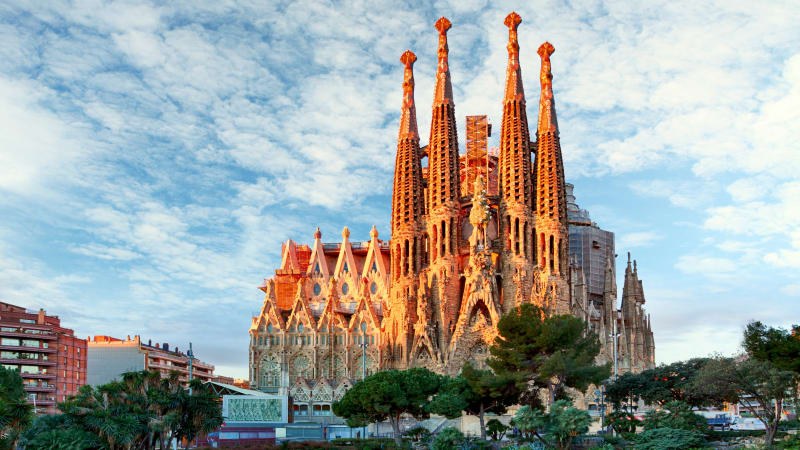 1 mi from BarcelonaSagrada Família
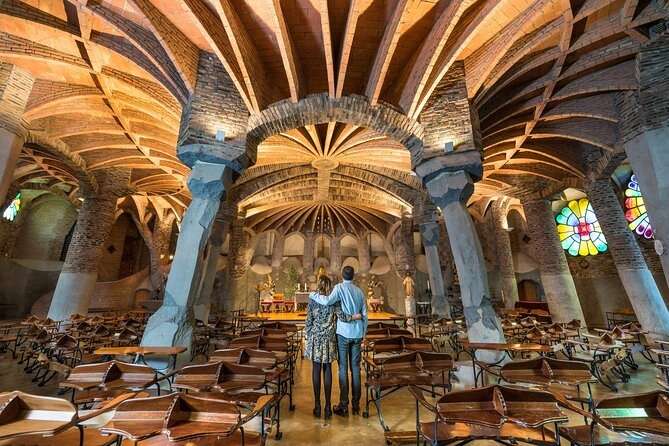 7 mi from BarcelonaColònia Güell Church (Crypt) & Modernist Industrial Site
 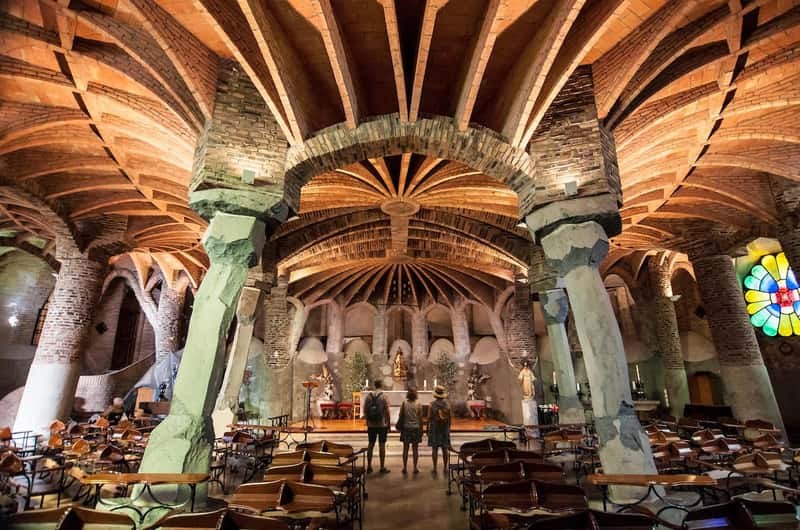 8 mi from Barcelona · land adventureBarcelona Beyond the Crowds: Gaudí, Galician Seafood & Montserrat
 210 mi from Barcelona · land adventureProvence by the Senses: Lavender, Truffles, and Roman Stone
 After you step off · near Rome
You end in a different port — stay on, and add what is within reach before you fly home.