Your cruise
Seven Seas Explorer · 14-night Asia cruise, Tokyo to Singapore
Mar 31 – Apr 14 · 14 nights ·
Day 1 Tokyo (board) · Day 2 Willis Island · Day 3 Kagoshima · Day 4 Willis Island · Day 5 Ishigaki · Day 6 Keelung (Taipei) · Day 7 Willis Island · Day 8 Hong Kong · Day 9–10 Willis Island · Day 11 Ho Chi Minh City (Saigon) · Day 12 Willis Island · Day 13 Ko Samui · Day 14 Willis Island · Day 15 Singapore (step off)
What you do Board a rigid inflatable Zodiac for a close-up circumnavigation of one of the Coral Sea's most remote specks of land. Drift alongside vast nesting colonies of red-footed boobies, frigatebirds and brown noddies — a wildlife spectacle almost no traveller on earth ever witnesses.
What to expect Your Zodiac departs the ship's swim platform and skirts the island's entire coastline at water level, giving you eye-to-eye encounters with seabird colonies that number in the tens of thousands. The guide pauses the engine so you can hear the cacophony of calls and photograph birds in undisturbed flight. Shallow coral gardens glow electric beneath the hull as you round each headland. The round trip typically takes 90–120 minutes, leaving ample buffer before all-aboard.
Good to know Pre-book directly via email well in advance — this is a tender-only island and Zodiac capacity is strictly capped. Wear non-marking soles, bring a hat and reef-safe sunscreen. Confirm your ship's all-aboard time and allow 30 minutes' return buffer.
Versus the ship tour An intimate, expert-led small-group Zodiac — never more than 12 guests — means you can idle silently within metres of nesting birds and low reef outcrops that larger vessels simply cannot access, guided by a marine biologist who narrates every species in real time.
What you do Slip beneath the surface of some of the least-dived water on the planet — the Coral Sea surrounding Willis Island, hundreds of kilometres from the nearest coast. Visibility regularly exceeds 30 metres, revealing walls of hard coral, reef sharks, giant trevally and undisturbed sea-turtle feeding grounds.
What to expect Guests kit up in a purpose-equipped dive room and giant-stride into waters of extraordinary clarity. The reef structures here are pristine — no bleaching, no crowds — and the sheer biomass of pelagic life reflects the island's status as a protected marine reserve. Drift snorkelling across shallow coral plateaus, you are likely to encounter hawksbill turtles grazing, schools of chevron barracuda and the flash of a reef whaler in the blue. Safety divers and guides remain in the water throughout.
Good to know Swimming competency is required; full snorkel equipment is provided. Confirm landing and in-water permissions with the Australian Bureau of Meteorology station keeper in advance — access can be subject to weather and conservation protocols. Bring a rash vest for UV protection.
Versus the ship tour Mike Ball operates the definitive liveaboard expeditions to the Coral Sea's outer reefs, with certified dive guides who have logged thousands of hours specifically on these formations. Group size is tightly managed, and every dive brief is site-specific — the antithesis of a mass-market snorkel.
book direct with Mike Ball Dive Expeditions (Townsville/Cairns — Coral Sea specialists) → · the full guide →
What you do Step ashore — one of only a handful of visitors ever permitted — and receive a private briefing inside Australia's most remote operational weather station. The data collected here has guided cyclone warnings across Queensland for over a century; it is a living piece of scientific history.
What to expect After a short Zodiac transfer to the beach, you walk across the coral-rubble islet — the entire thing is barely 400 metres across — to the weatherboard station compound. The duty meteorologist explains the island's role in tracking Coral Sea cyclogenesis, shows you the instrument arrays and balloon launch facilities, and fields questions with refreshing candour. The sense of absolute remoteness — no roads, no shops, just science and sea — is profoundly affecting. Visits are brief (30–45 minutes) out of respect for operations.
Good to know Landing is at the discretion of BOM and sea conditions; it is never guaranteed. Wear closed shoes for the coral-rubble foreshore. Do not touch or enter any instrument enclosures. This is one of cruising's rarest privileges — treat it accordingly.
Versus the ship tour Landing on Willis Island is granted to very few vessels per year and always requires advance coordination with the BOM. The briefing is delivered by the station's resident meteorologist — one of Australia's most isolated postings — lending an authenticity and depth no third-party guide could replicate.
What you do Join a dedicated marine naturalist on a slow, deliberate circuit of Willis Island's offshore waters — prime habitat for dwarf minke whales, spinner dolphins, red-tailed tropicbirds and occasional whale sharks. This is expedition-grade wildlife observation in one of Earth's most intact marine environments.
What to expect The excursion runs in the calm conditions that typically prevail in the lee of the island, with the naturalist briefing the group on cetacean behaviour before departure. Spinner dolphins frequently bow-ride the vessel's wake, while tropicbirds trace lazy arcs overhead trailing their extraordinary white tail streamers. In season (June–September), dwarf minke whales approach curious vessels with remarkable boldness. The naturalist's running identification and ecological commentary transforms an already astonishing scene into a masterclass in Coral Sea ecology.
Good to know Bring image-stabilised binoculars if you own them — loaner binoculars are available but limited. A polarised lens filter dramatically improves underwater wildlife sighting from the deck. Morning cruises yield the best light and the calmest seas.
Versus the ship tour Coral Expeditions' marine naturalists carry years of Coral Sea field experience and use hydrophones and binoculars to locate and interpret marine megafauna well beyond what a casual deck scan achieves. Groups are capped at 20, ensuring every guest has unobstructed sightlines and personalised commentary.
book direct with Coral Expeditions (Australia's premium expedition cruise specialist) → · the full guide →
What you do Combine world-class snorkelling with a dedicated underwater photography tuition session led by a professional marine photographer. The pellucid, undisturbed waters around Willis Island provide a studio backdrop that professionals travel half a year to reach — and you are already here.
What to expect After a 20-minute on-deck briefing covering exposure, buoyancy control for photography and coral-safe positioning, the group enters the water with the lead photographer. Each participant is given real-time feedback via underwater slates and post-dive screen reviews. The reef here hosts nudibranchs, juvenile turtles and extraordinary soft-coral detail that rewards close, patient framing. By the final dive, guests leave with a curated set of images that would pass muster in any travel magazine.
Good to know Bring your own mirrorless or compact camera with an underwater housing if possible; hire housings are limited. Basic snorkel competency required. Maximum group size of 6 is strictly enforced — book your place the moment you board the ship.
Versus the ship tour A professional marine photographer leads groups of no more than six, providing personalised composition coaching in real time — in the water, beside you. The combination of tuition and a location almost nobody else will ever photograph makes every frame genuinely irreplaceable.
What you do Rise before the rest of the ship and join an ornithologist-guide for a dawn landing on Willis Island — arguably the most exclusive birdwatching address in the Southern Hemisphere. The island hosts one of Australia's largest documented seabird colonies, and first light is when it erupts into extraordinary life.
What to expect The Zodiac lands on the coral-rubble beach just as the sky softens to indigo. Within seconds, frigatebirds begin their courtship displays, inflating scarlet throat pouches while brown boobies jostle on nesting scrapes metres from your feet. The ornithologist narrates the scene with infectious expertise, calling species by name as they lift and wheel overhead in their thousands. The island's absolute silence — broken only by wind and wings — produces a meditative quality that experienced travellers consistently describe as one of cruising's most affecting moments.
Good to know Landing is subject to BOM approval and sea-state — pre-register your interest at the expedition desk on day one of the voyage. Wear dark, non-reflective clothing to avoid disturbing nesting birds. Carry a long lens (200mm+ equivalent) for perched-bird shots. Soft-soled shoes protect both the coral-rubble substrate and your footing.
Versus the ship tour A qualified ornithologist leads a structured census-style walk, naming every species, explaining colony dynamics and pointing out nesting behaviours that an untrained eye would miss entirely. The pre-sunrise timing means you experience the island in its rawest, most atmospheric state — long before the day-trippers (there are none) arrive.
book direct with Coral Expeditions (Australia's premium expedition cruise specialist) → · the full guide →
What you do Explore Tokyo's most iconic districts — Asakusa, Shibuya, Shinjuku and the Imperial Palace — guided by a nationally licensed, multilingual expert on an entirely private itinerary tailored to you. This is Tokyo at your pace, through a connoisseur's eyes.
What to expect Your guide meets you at the terminal and whisks you into Tokyo's layered world: the incense haze of Sensō-ji, the electric scramble at Shibuya Crossing, the raked gravel calm of Imperial Palace East Gardens. Lunch is arranged at a chef-selected restaurant befitting your taste. The day is a seamless private narrative rather than a checklist, ending with enough time to return comfortably before all-aboard.
Good to know Book well in advance — licensed private guides are in high demand. Confirm your ship's all-aboard time so your guide can plan the return; Tokyo International Cruise Terminal (Ariake) is roughly 30–40 min by taxi or direct Yurikamome rail from central Tokyo.
Versus the ship tour A nationally licensed guide — not a megaphone-and-flag group leader — curates every hour around your interests, from Sensō-ji temple rituals at dawn to an omakase lunch in a hidden alley. The group is yours alone, pace is entirely flexible, and the depth of cultural insight is unmatched.
book direct with Japan Guide Association (JGA) – Official Licensed Guides → · the full guide →
What you do Ascend the world's second-tallest structure to 634 metres for a panorama stretching from Mount Fuji to Tokyo Bay. On a clear day the view is simply one of the great urban spectacles on earth.
What to expect A high-speed elevator whisks you to the Tembo Deck at 350 m in under 60 seconds. A second ascent takes you to the Tembo Galleria, a glass-walled spiral walkway at 450 m where the floor disappears beneath your feet over the Tokyo skyline. The adjacent Solamachi shopping and dining complex adds a refined post-visit option before heading back.
Good to know Pre-purchase timed-entry tickets online — they sell out days ahead, especially on weekends. From Tokyo International Cruise Terminal, take the Yurikamome line to Asakusa, then the Tobu Skytree Line — allow 50 min total. Allow 2 hrs for both decks. Confirm weather forecast: Mount Fuji views require clear skies.
Versus the ship tour Skip the intermediary and book direct on the official site for guaranteed timed-entry tickets — the queue for walk-ups can swallow an hour. Pairing both decks gives you the full 634-metre summit glass-floored walkway, a genuinely vertiginous bucket-list moment inaccessible on a standard visit.
book direct with Tokyo Skytree (Official) → · the full guide →
What you do Step inside teamLab Borderless — the world's most visited single-artist museum — where thousands of laser projections dissolve boundaries between art and visitor. There are no maps; every room is a living, breathing, bucket-list spectacle.
What to expect You wander freely through interconnected rooms where waterfalls, forests, and koi ponds exist entirely as light and projection — and shift when you touch them. The 'Athletic Forest' zone challenges the body as much as the mind. No two visits are identical; the art evolves in real time. Budget at least two hours, though most guests lose track of time entirely.
Good to know The new Azabudai Hills venue is a taxi/subway ride from the cruise terminal — allow 40 min. Wear comfortable shoes (some zones involve steps and uneven surfaces). Timed-entry tickets are date- and time-specific; book the earliest slot to leave the afternoon free for other stops. Avoid white clothing as projections can stain perception.
Versus the ship tour teamLab Borderless is the most talked-about cultural experience in Tokyo and tickets routinely sell out weeks ahead — direct booking guarantees your slot. The experience is entirely self-paced and intimate in scale despite the venue's size; no group itinerary can replicate the personal sense of wonder as the art responds to your movement.
book direct with teamLab Borderless Tokyo (Official) → · the full guide →
What you do Explore the legendary Tsukiji Outer Market with a private chef guide who navigates the stalls, sources the finest morning catch, and explains the art of Edomae sushi — ending at a reserved counter for an unforgettable omakase breakfast.
What to expect The morning begins in the alley labyrinth of Tsukiji Outer Market as vendors arrange glistening tuna, sea urchin, and seasonal shellfish. Your chef-guide explains provenance, seasonality, and the knife traditions behind each cut. A tamagoyaki (rolled omelette) master lets you watch the craft up close. The tour culminates at a reserved sushi counter where the chef orders on your behalf — a succession of impossibly fresh nigiri paired with explanations of each piece.
Good to know Tsukiji Outer Market is most vibrant 7–10 am; an early start is essential and pairs well with an early all-aboard schedule. The market is approximately 30 min by taxi from Tokyo International Cruise Terminal. Confirm any dietary restrictions with Context Travel at booking. Sturdy shoes are advised — the alleys are narrow and sometimes wet.
Versus the ship tour Context Travel pairs you with a culinary scholar or professional chef — not a generic guide — for an intellectually rich deep-dive into Japan's seafood culture. The private format means you linger at the stalls that captivate you, taste what the guide selects, and sit down to sushi chosen that morning, not a set tourist menu.
book direct with Context Travel Tokyo – Expert-Led Food Tours → · the full guide →
What you do Walk the ancient cedar-forested approach to Tokyo's most sacred Shinto shrine, then emerge into Harajuku's kaleidoscopic street culture — a single morning that captures the full spiritual and creative soul of Tokyo.
What to expect The 700-metre forested gravel path to Meiji Jingu feels remote despite being at the heart of 14-million-person Tokyo — a genuine hush descends. Your guide explains the daily rituals, points out the sake-barrel wall offered by French wineries, and arranges a quiet moment at the inner shrine. The short walk to Harajuku delivers the visual shock of kawaii fashion and the understated elegance of Omotesandō boutiques — Dior, Louis Vuitton, and local ateliers alike.
Good to know Shoulders and knees should be covered or a scarf carried for the shrine approach. From the cruise terminal, take the Yurikamome to Shimbashi then JR Yamanote Line to Harajuku — approx. 50 min. The combined experience takes 3–4 hours; pairs perfectly with a lunch reservation on Omotesandō. Book your GoWithGuide guide at least 2 weeks ahead.
Versus the ship tour A private local guide from GoWithGuide provides personal context for Shinto ritual — the purification ceremony, the prayer technique, the symbolism of the torii gate — that transforms a walk through a forest into a deeply moving cultural encounter. The segue into Harajuku's Takeshita Street and Omotesandō's luxury flagship stores is seamlessly curated.
book direct with GoWithGuide – Private Tokyo Local Guides → · the full guide →
What you do Ascend the beloved iron icon of Tokyo at golden hour for the exclusive Diamond Tour — access to both the Main Deck at 150 m and the Top Deck at 250 m, limited to just 70 guests per day. A sunset over the Tokyo skyline from here is a memory for life.
What to expect Tokyo Tower glows tangerine and crimson at dusk — a deliberate nod to the Eiffel Tower's evening palette — and from the glass-floor panels of the Top Deck, the city grid fans out to Tokyo Bay and beyond. The Diamond Tour guide explains the tower's 1958 construction story and its role as Tokyo's emotional heartbeat. The lounge offers premium refreshments as the city lights ignite below you.
Good to know Book online the moment your itinerary is confirmed — the 70-person cap sells out fast, especially on weekends and holidays. Tokyo Tower is in Minato, roughly 40 min by taxi from the cruise terminal. Plan to arrive at least 30 min before your slot. A sunset slot (approximately 5–6 pm) is spectacular but confirm your ship's all-aboard time allows for it.
Versus the ship tour The Diamond Tour's 70-person daily cap makes this one of the most exclusive urban viewpoints in Asia. Unlike the open-access main deck, the Top Deck tour includes a dedicated lounge, unhurried time at each level, and a guide — transforming a landmark tick into a genuinely rarefied experience.
book direct with Tokyo Tower (Official) → · the full guide →
What you do Board a rigid inflatable Zodiac for a close-up circumnavigation of one of the Coral Sea's most remote specks of land. Drift alongside vast nesting colonies of red-footed boobies, frigatebirds and brown noddies — a wildlife spectacle almost no traveller on earth ever witnesses.
What to expect Your Zodiac departs the ship's swim platform and skirts the island's entire coastline at water level, giving you eye-to-eye encounters with seabird colonies that number in the tens of thousands. The guide pauses the engine so you can hear the cacophony of calls and photograph birds in undisturbed flight. Shallow coral gardens glow electric beneath the hull as you round each headland. The round trip typically takes 90–120 minutes, leaving ample buffer before all-aboard.
Good to know Pre-book directly via email well in advance — this is a tender-only island and Zodiac capacity is strictly capped. Wear non-marking soles, bring a hat and reef-safe sunscreen. Confirm your ship's all-aboard time and allow 30 minutes' return buffer.
Versus the ship tour An intimate, expert-led small-group Zodiac — never more than 12 guests — means you can idle silently within metres of nesting birds and low reef outcrops that larger vessels simply cannot access, guided by a marine biologist who narrates every species in real time.
What you do Slip beneath the surface of some of the least-dived water on the planet — the Coral Sea surrounding Willis Island, hundreds of kilometres from the nearest coast. Visibility regularly exceeds 30 metres, revealing walls of hard coral, reef sharks, giant trevally and undisturbed sea-turtle feeding grounds.
What to expect Guests kit up in a purpose-equipped dive room and giant-stride into waters of extraordinary clarity. The reef structures here are pristine — no bleaching, no crowds — and the sheer biomass of pelagic life reflects the island's status as a protected marine reserve. Drift snorkelling across shallow coral plateaus, you are likely to encounter hawksbill turtles grazing, schools of chevron barracuda and the flash of a reef whaler in the blue. Safety divers and guides remain in the water throughout.
Good to know Swimming competency is required; full snorkel equipment is provided. Confirm landing and in-water permissions with the Australian Bureau of Meteorology station keeper in advance — access can be subject to weather and conservation protocols. Bring a rash vest for UV protection.
Versus the ship tour Mike Ball operates the definitive liveaboard expeditions to the Coral Sea's outer reefs, with certified dive guides who have logged thousands of hours specifically on these formations. Group size is tightly managed, and every dive brief is site-specific — the antithesis of a mass-market snorkel.
book direct with Mike Ball Dive Expeditions (Townsville/Cairns — Coral Sea specialists) → · the full guide →
What you do Step ashore — one of only a handful of visitors ever permitted — and receive a private briefing inside Australia's most remote operational weather station. The data collected here has guided cyclone warnings across Queensland for over a century; it is a living piece of scientific history.
What to expect After a short Zodiac transfer to the beach, you walk across the coral-rubble islet — the entire thing is barely 400 metres across — to the weatherboard station compound. The duty meteorologist explains the island's role in tracking Coral Sea cyclogenesis, shows you the instrument arrays and balloon launch facilities, and fields questions with refreshing candour. The sense of absolute remoteness — no roads, no shops, just science and sea — is profoundly affecting. Visits are brief (30–45 minutes) out of respect for operations.
Good to know Landing is at the discretion of BOM and sea conditions; it is never guaranteed. Wear closed shoes for the coral-rubble foreshore. Do not touch or enter any instrument enclosures. This is one of cruising's rarest privileges — treat it accordingly.
Versus the ship tour Landing on Willis Island is granted to very few vessels per year and always requires advance coordination with the BOM. The briefing is delivered by the station's resident meteorologist — one of Australia's most isolated postings — lending an authenticity and depth no third-party guide could replicate.
What you do Join a dedicated marine naturalist on a slow, deliberate circuit of Willis Island's offshore waters — prime habitat for dwarf minke whales, spinner dolphins, red-tailed tropicbirds and occasional whale sharks. This is expedition-grade wildlife observation in one of Earth's most intact marine environments.
What to expect The excursion runs in the calm conditions that typically prevail in the lee of the island, with the naturalist briefing the group on cetacean behaviour before departure. Spinner dolphins frequently bow-ride the vessel's wake, while tropicbirds trace lazy arcs overhead trailing their extraordinary white tail streamers. In season (June–September), dwarf minke whales approach curious vessels with remarkable boldness. The naturalist's running identification and ecological commentary transforms an already astonishing scene into a masterclass in Coral Sea ecology.
Good to know Bring image-stabilised binoculars if you own them — loaner binoculars are available but limited. A polarised lens filter dramatically improves underwater wildlife sighting from the deck. Morning cruises yield the best light and the calmest seas.
Versus the ship tour Coral Expeditions' marine naturalists carry years of Coral Sea field experience and use hydrophones and binoculars to locate and interpret marine megafauna well beyond what a casual deck scan achieves. Groups are capped at 20, ensuring every guest has unobstructed sightlines and personalised commentary.
book direct with Coral Expeditions (Australia's premium expedition cruise specialist) → · the full guide →
What you do Combine world-class snorkelling with a dedicated underwater photography tuition session led by a professional marine photographer. The pellucid, undisturbed waters around Willis Island provide a studio backdrop that professionals travel half a year to reach — and you are already here.
What to expect After a 20-minute on-deck briefing covering exposure, buoyancy control for photography and coral-safe positioning, the group enters the water with the lead photographer. Each participant is given real-time feedback via underwater slates and post-dive screen reviews. The reef here hosts nudibranchs, juvenile turtles and extraordinary soft-coral detail that rewards close, patient framing. By the final dive, guests leave with a curated set of images that would pass muster in any travel magazine.
Good to know Bring your own mirrorless or compact camera with an underwater housing if possible; hire housings are limited. Basic snorkel competency required. Maximum group size of 6 is strictly enforced — book your place the moment you board the ship.
Versus the ship tour A professional marine photographer leads groups of no more than six, providing personalised composition coaching in real time — in the water, beside you. The combination of tuition and a location almost nobody else will ever photograph makes every frame genuinely irreplaceable.
What you do Rise before the rest of the ship and join an ornithologist-guide for a dawn landing on Willis Island — arguably the most exclusive birdwatching address in the Southern Hemisphere. The island hosts one of Australia's largest documented seabird colonies, and first light is when it erupts into extraordinary life.
What to expect The Zodiac lands on the coral-rubble beach just as the sky softens to indigo. Within seconds, frigatebirds begin their courtship displays, inflating scarlet throat pouches while brown boobies jostle on nesting scrapes metres from your feet. The ornithologist narrates the scene with infectious expertise, calling species by name as they lift and wheel overhead in their thousands. The island's absolute silence — broken only by wind and wings — produces a meditative quality that experienced travellers consistently describe as one of cruising's most affecting moments.
Good to know Landing is subject to BOM approval and sea-state — pre-register your interest at the expedition desk on day one of the voyage. Wear dark, non-reflective clothing to avoid disturbing nesting birds. Carry a long lens (200mm+ equivalent) for perched-bird shots. Soft-soled shoes protect both the coral-rubble substrate and your footing.
Versus the ship tour A qualified ornithologist leads a structured census-style walk, naming every species, explaining colony dynamics and pointing out nesting behaviours that an untrained eye would miss entirely. The pre-sunrise timing means you experience the island in its rawest, most atmospheric state — long before the day-trippers (there are none) arrive.
book direct with Coral Expeditions (Australia's premium expedition cruise specialist) → · the full guide →
What you do Cross Kagoshima Bay by private ferry to Japan's most active volcano, Sakurajima. Walk the ancient lava fields, stand at the Arimura Lava Observatory, and witness raw volcanic power up close — a bucket-list encounter with living geology.
What to expect The 15-minute ferry crossing delivers your first jaw-dropping view: Sakurajima's cone looming over the bay, often trailing a plume of ash. Your guide leads you through the eerie, obsidian-black lava fields that buried an entire village in 1914. At the Arimura Lava Observatory, panoramic views stretch back across the water to Kagoshima city. End at one of the rim viewpoints for an intimate encounter with an actively rumbling crater.
Good to know Ferries run every 15 minutes from Kagoshima Port (5-min walk from the cruise pier); first departure ~06:30. Pre-book your private guide well in advance for port days. Allow 4–5 hours; confirm your all-aboard time and build in a 45-minute buffer for the return ferry.
Versus the ship tour A licensed private guide tailors every stop — from hidden lava trails to the best ash-cloud viewpoints — at a pace no group tour can match, with a vehicle waiting dockside the moment you disembark.
book direct with GoWithGuide Kagoshima Private Tours → · the full guide →
What you do Explore the stunning 17th-century seaside estate of the Shimadzu clan — feudal lords of Satsuma — with Sakurajima as your dramatic garden backdrop. A masterpiece of Japanese landscape design and aristocratic history.
What to expect Enter through the ancient stone torii and step into a landscape unchanged for 350 years, with Sakurajima's volcanic cone perfectly framed across the bay — the garden was deliberately designed to 'borrow' the volcano as a scenic element. Wander moss-covered paths past koi-filled streams, plum orchards and a 19th-century Shoko Shuseikan industrial complex (a UNESCO World Heritage site). The villa interior reveals lacquerwork, ceramics and personal artefacts of the Shimadzu lords. Your guide brings alive the dramatic Satsuma role in Japan's Meiji Restoration.
Good to know Sengan-en is 5 km north of the cruise pier; a taxi takes ~10 minutes (approx. JPY 1,200). Book timed villa entry online in advance. Allow 2–3 hours; easily combined with a Sakurajima morning for a full-day itinerary.
Versus the ship tour An expert private guide decodes the Shimadzu clan's extraordinary legacy — from Satsuma porcelain to secret 19th-century Westernisation — weaving history into every stone lantern and sculpted pine, far beyond a self-guided stroll.
What you do Journey south through the Satsuma countryside to Chiran — Japan's finest intact samurai town — then pay solemn respects at the Chiran Peace Museum, home to the world's most significant collection of kamikaze pilot artefacts and letters.
What to expect Seven centuries of samurai culture are preserved along Chiran's 700-metre main street, where seven immaculate clan gardens (all registered Special Places of Scenic Beauty) cascade behind white-walled residences. Your guide interprets the dry-stone garden compositions — each a microcosm of Japanese aesthetics. At the Peace Museum, personal letters, photographs and flight suits of the young tokko (special attack) pilots create a profoundly affecting experience; your guide provides essential historical context. The drive through tea fields and cedar forests is scenic in its own right.
Good to know Approximately 50–60 minutes each way from the cruise pier by private vehicle. Chiran gardens open at 09:00; Peace Museum at 09:00. Allow 4–5 hours total. Pre-arrange pickup at the pier and confirm return timing against your all-aboard.
Versus the ship tour Chiran is 40 km from port — a private vehicle is the only dignified way to arrive. A knowledgeable guide contextualises the samurai gardens and the museum's deeply moving exhibits with nuance that a group setting cannot provide.
book direct with GoWithGuide Kagoshima Private Tours → · the full guide →
What you do Surrender to one of Japan's most extraordinary wellness rituals — being buried to the neck in naturally geothermally heated black volcanic sand on the shores of Ibusuki, followed by a refined kaiseki lunch showcasing Kagoshima's black pork and local seafood.
What to expect Ibusuki sits at the southern tip of the Satsuma Peninsula, 50 km from Kagoshima, where geothermal heat warms the beach sand to a perfect 50–55°C. Attendants in traditional dress shovel the fine black sand over your prone body; the warmth penetrates deep into muscles and joints within minutes. The sensation is extraordinarily restorative — a natural onsen unlike any other. Afterwards, a light outdoor shower and the ryokan baths refresh you completely before a beautifully presented kaiseki meal showcasing Kagoshima kurobuta (black Berkshire pork) and locally caught sea bream.
Good to know Approximately 60–70 minutes from the cruise pier by private car. Saraku opens at 08:30; arrive early to avoid midday queues. Bring a change of undergarments; sand gets everywhere. Allow 4–5 hours including lunch. Book the kaiseki restaurant and private vehicle well in advance.
Versus the ship tour Arriving by private car at your chosen time means you bypass crowds and move directly to the beachside bath house. Pairing it with a genuine kaiseki lunch — not a tourist set meal — elevates the day into a full sensory immersion in Satsuma culture.
What you do Discover why Kagoshima's Satsuma warriors were the hidden engine of modern Japan at this world-class, theatrical museum — featuring life-size dioramas, a dramatic wax-figure show and rare Meiji-era artefacts, guided in depth by a licensed local expert.
What to expect Set inside a lovingly restored castle complex in central Kagoshima, the Reimeikan traces the Satsuma domain's extraordinary role in overthrowing the Tokugawa shogunate and launching Japan's modernisation. Life-size wax recreations of the key Meiji figures — Saigo Takamori, Okubo Toshimichi and Kuroda Kiyotaka — are staged in immersive, theatrically lit scenes. The robotic diorama show is surprisingly moving. Your private guide layers context onto every exhibit, from Satsuma's secret overseas student missions to the blood-soaked Seinan War of 1877.
Good to know Located in central Kagoshima, 10 minutes by tram from the port (JPY 170 single, or JPY 1,300 for the CUTE all-day pass). Open Tue–Sun 09:00–18:00. Allow 2–2.5 hours. An ideal half-day option that pairs beautifully with a Sengan-en visit in the afternoon.
Versus the ship tour The museum's centrepiece — a fully staged, dramatically lit theatrical recreation of Saigo Takamori's final stand — is incomprehensible without a guide who can name every figure and explain why Satsuma's rebellion reshaped Japan. A private expert turns spectacle into story.
book direct with Reimeikan / Kagoshima Prefectural Museum of Culture (official) → · the full guide →
What you do Ascend the forested hill of Shiroyama — site of Saigo Takamori's last stand — for the finest panorama in Kagoshima: city, bay, and the smoking cone of Sakurajima at dawn. Follow with an intimate private Satsuma tea ceremony in a hillside garden.
What to expect The forested trail to Shiroyama's 107-metre summit takes just 20 minutes and passes the cave where the Meiji rebel hero Saigo Takamori made his final stand in 1877 — your guide narrates this poignant story as you climb. At the top, the observation deck reveals a sweeping 270-degree panorama: Kagoshima's terracotta rooftops, the glittering arc of the bay, and Sakurajima dramatically punctuating the horizon, often releasing lazy plumes of ash at first light. Descend to a private hillside garden where a practitioner of Urasenke-style tea ceremony prepares matcha with locally grown Satsuma leaves, served with seasonal wagashi confections.
Good to know Shiroyama is a 20-minute walk or 5-minute taxi from the cruise pier. The observation deck is accessible 24/7. Aim for a 07:00–08:00 arrival for the best light and minimal crowds. Pre-book the tea ceremony host with your guide at the time of reservation. Best as a morning excursion before the day warms up.
Versus the ship tour Dawn on Shiroyama — before tour buses and day-trippers arrive — offers an utterly serene, crowd-free encounter with one of Japan's most photogenic volcano-and-city panoramas. The private tea ceremony is conducted by a local practitioner, not a tourist-facing stage performance.
book direct with GoWithGuide Kagoshima Private Tours → · the full guide →
What you do Glide over Kabira Bay's legendary coral gardens in a glass-bottom boat, then snorkel its protected turquoise shallows — home to black pearls and some of Japan's most biodiverse reef life. The bay's swimming ban makes this boat-only access genuinely exclusive.
What to expect You board a low-slung glass-bottom boat and drift over electric-blue water above brain corals, sea turtles, and schools of tropical fish. The bay is legally off-limits to swimmers, so this vessel is your only window into its underwater world. Opt for the snorkel extension at a nearby cove for a hands-on reef encounter. The whole experience unfolds against a backdrop of jungle-draped hills and pearl farm buoys that have graced this bay for centuries.
Good to know Kabira Bay is a 30-min taxi ride from the cruise pier (approx. JPY 3,000 each way). Book the private snorkel slot directly by email or phone at least 48 hours in advance. Confirm your all-aboard time and allow 90 minutes for the return journey.
Versus the ship tour Small, locally-run boats carry just 6–8 guests at a time, giving you unhurried time over the coral with a knowledgeable Okinawan guide — a pace and intimacy impossible on a larger group outing.
What you do A speedboat whisks you to Hamajima — 'Phantom Island' — a sandbar that vanishes with the tide, encircled by coral so vivid it barely looks real. Snorkel its pristine reef with a certified guide in a group of just 8–10.
What to expect Your speedboat skims 20 minutes across the East China Sea to a luminous sandbar that appears only at low tide — an almost surreal arrival. Fins on, you enter water so clear that visibility stretches beyond 30 metres, with coral towers rising from a white sandy floor. Your guide points out nudibranchs and resident sea turtles before you surface to a boxed Okinawan lunch on the sand. The return journey hugs the island coastline for panoramic views of Ishigaki's volcanic peaks.
Good to know Departs from Aza Misakicho pier, a 10-min walk from the cruise terminal. Tour duration is approximately 3.5 hours — confirm your sailing time and build in a comfortable buffer. Wetsuit rental available; reef-safe sunscreen mandatory.
Versus the ship tour Strictly capped at 10 guests per boat, with a bilingual marine biologist on board who names every species — manta rays, Nemo clownfish, hawksbill turtles — turning the reef into a living classroom rather than a spectacle.
book direct with Ishigaki Island Snorkeling Tours (サンゴのいのち) → · the full guide →
What you do Paddle a private kayak through the largest mangrove forest in Japan on neighbouring Iriomote Island, then trek into primary jungle to stand beneath the thundering Pinaisara Falls — Okinawa's tallest. Truly bucket-list wilderness, 30 minutes by ferry.
What to expect The Uehara ferry delivers you to Japan's last great wilderness island in just 40 minutes. You slip into sit-on-top kayaks and glide silently through cathedral mangroves, roots arching into jade-green water alive with fiddler crabs and kingfishers. Pulling ashore, you lace up for a jungle trail that winds past strangler figs to the base of Pinaisara Falls — a 55-metre curtain of white water in a hidden amphitheatre. Lunch is a packed bento on the riverbank, serenaded by subtropical birdsong.
Good to know Ishigaki–Iriomote ferry (Anei Kanko or Yaeyama Kanko Ferry) departs Ishigaki Port; adult return approx. JPY 4,000. Full-day duration means an early departure is essential — verify the first ferry and your all-aboard time carefully. Confirm availability directly with the operator at least one week ahead.
Versus the ship tour Guides here are licensed Iriomote naturalists with deep expertise in the island's endemic Iriomote cat habitat, rare orchids, and tidal ecosystem — a level of ecological storytelling that elevates this beyond any standard nature tour.
book direct with Iriomote Nature Guide Service (西表島ネイチャーガイドサービス) → · the full guide →
What you do Step back 300 years on coral-walled Taketomi Island — 10 minutes by ferry — riding a traditional water-buffalo rickshaw through lanes of bougainvillea and star-sand beaches, then sit with a master weaver at a Minsa textile atelier. A living time capsule.
What to expect The ferry from Ishigaki takes just 10 minutes, depositing you on an island where the loudest sound is the clip of buffalo hooves on coral-stone paths. Your driver-singer narrates in lilting Japanese and English, pausing at the lookout tower for sweeping views over Kondoi Beach and its famous star-shaped sand. Afterwards, at a heritage textile studio, an Okinawan artisan guides your hands on a backstrap loom to create an inch of authentic Minsa fabric — yours to keep. The return ferry leaves plenty of time before all-aboard.
Good to know Yaeyama Kanko Ferry or Anei Kanko serve Taketomi; adult return approx. JPY 1,340. Rickshaw tours run continuously 9 am–5 pm — no advance booking required, but weaving workshops should be reserved 48 hours ahead. Flat terrain, suitable for all mobility levels.
Versus the ship tour The island has no cars and fewer than 350 residents; the rickshaw driver sings traditional Yaeyama folk songs live as you roll through a UNESCO-nominated village — an intimate, acoustically unforgettable moment.
book direct with Taketomi Suikyu (竹富島水牛車観光) → · the full guide →
What you do A dedicated local expert drives you in a private vehicle to Tamatorizaki Observatory, Yonehara Reef, Hirakubo Lighthouse, and Miyara Dunchi samurai residence — the island's greatest hits on your schedule, at your pace, with no crowds.
What to expect You're collected at the pier and immediately whisked north along the coast road to Tamatorizaki, where coral peninsulas fan out below a flower-lined hilltop — a view that defines Ishigaki. Yonehara Beach follows: wade the shallows above a reef that rivals any in Okinawa without lifting a fin. The car swings to the remote Hirakubo cape, where a candy-striped lighthouse overlooks open Pacific and grazing water buffalo. The afternoon brings Miyara Dunchi, a 19th-century samurai garden — the only Ryukyuan aristocratic residence still standing in the Yaeyamas.
Good to know Book directly via GoWithGuide at least 5–7 days ahead; guide profiles show languages and specialisms. Confirm all-aboard and work backwards — most full-day itineraries run 8 hours. The guide will time the return to the pier with a comfortable margin.
Versus the ship tour Your guide is a vetted, English-fluent Ishigaki local who customises every stop on the fly — lingering at the coral-fringed Yonehara tide pools if you love marine life, or diverting to a family-run Orion brewery if you prefer craft beer and conversation.
book direct with GoWithGuide Ishigaki Private Tours → · the full guide →
What you do Paddle a sea kayak into Ishigaki's celebrated Blue Cave, where refracted sunlight turns the water an electric cobalt, then snorkel a sheltered outer reef teeming with Moorish idols and parrotfish — all within a 3-hour small-group adventure from the pier.
What to expect A short boat transfer delivers your group to the cave entrance, where you transition to nimble kayaks and glide single-file into a vaulted sea grotto. Sunlight refracts through the underwater arch, flooding the cavern with an otherworldly sapphire glow that reflects on the limestone ceiling above. Outside, you swap paddle for mask and snorkel a coral garden populated by clouds of sergeant-major fish and the occasional curious octopus. Your bilingual instructor ensures safe cave entry and exits, and the whole adventure wraps in time for a leisurely lunch ashore.
Good to know Meeting point is a 10-min taxi from the cruise pier. Morning departures (9–10 am) catch the optimal light angle inside the cave — book the earliest slot. Wetsuits and reef-safe sunscreen provided. Not suitable for non-swimmers; moderate kayak fitness required.
Versus the ship tour Groups are capped at 8 guests and guided by a certified cave-dive instructor who positions each kayak for the perfect light window — the electric-blue interior glows brightest at mid-morning, and only a small boat can time the entry precisely.
book direct with Ishigaki Blue Cave Diving & Snorkeling (石垣島ブルーケイブ) → · the full guide →
What you do Wander the lantern-lit stone alleyways of Jiufen — the hillside village that inspired Studio Ghibli's aesthetic — then descend to the surreal golden cascade of the Gold Waterfall. A private car and guide mean your pace, your photos, your Taiwan.
What to expect Your driver meets you dockside at Keelung and whisks you 45 minutes into the mountains to Jiufen, arriving before the midday crowds. Explore the cascading red lantern-strewn alleyways and sip oolong in a clifftop teahouse with panoramic sea views. From there, continue to the ethereal Gold Waterfall at Jinguashi, where mineral-rich waters stain the rocks vivid amber. Finish with a stroll around the haunting ruins of the Crown Prince Chalet before returning to port.
Good to know Allow 6–7 hours; Jiufen is 45 min from Keelung port. Book the teahouse (A-MEI Tea House) in advance on weekends. Confirm all-aboard time with your ship and ask your guide to track it — most private drivers are expert at port timings.
Versus the ship tour Private car and English-speaking guide means you linger at the teahouses, skip the crowds with strategic timing, and reach the Gold Waterfall — a site most group tours skip — for a near-exclusive experience.
book direct with Taiwan Private Tours (local licensed guide service) → · the full guide →
What you do Home to the world's greatest collection of Chinese imperial art — over 700,000 artifacts — the National Palace Museum is one of Asia's true cultural crown jewels. A private expert guide transforms it from overwhelming to utterly absorbing.
What to expect Your private guide meets you at the museum entrance in Shilin and immediately navigates you past the queues to the Northern Court's most treasured galleries. You'll spend unhurried time with the famous Jadeite Cabbage and marvel at the astronomical precision of Qing-dynasty enamelware. The guide weaves stories of imperial intrigue, wartime evacuation from Beijing, and the cultural stakes of these objects that no audio guide can match. End with a refined lunch at the museum's Palace Café overlooking the classical gardens.
Good to know Keelung to NPM is about 50 min by taxi or private car (approx. TWD 800 one-way). Museum opens at 09:00; book guide at least 1 week ahead. Allow 4.5–5 hours door-to-door. Online ticket booking at npm.gov.tw reduces queuing.
Versus the ship tour A private art historian-level guide focuses your 3 hours on the 20 masterpieces that matter — the Jadeite Cabbage, the Meat-Shaped Stone, Song dynasty ceramics — rather than rushing a vast floor plan. Access to the rarely-visited Southern Branch galleries on request.
What you do Combine a spectacular helicopter flight over the marble-walled Taroko Gorge with a private guided walk through its jade-green river canyons — one of Asia's most dramatic natural wonders, seen from above and within on the same day.
What to expect An early-morning high-speed train or private car (2.5 hrs) delivers you to Hualien, gateway to Taroko. A short helicopter transfer lifts you above the sheer 1,000-metre marble cliffs and turquoise Liwu River — a jaw-dropping 15-minute panorama. On the valley floor, your naturalist guide leads you through the Shakadang Trail and Swallow Grotto, pointing out marble formations millions of years in the making and sharing the heritage of the Truku aboriginal people. Return by train to Keelung in the late afternoon.
Good to know This is a FULL-DAY commitment — depart port by 07:00, return by 19:00; confirm ship's all-aboard carefully. Book helicopter well in advance (weather cancellations possible; have a backup plan). Taroko Park entry is free. Train: Keelung→Hualien approx. TWD 340.
Versus the ship tour Virtually no group tour offers the helicopter-plus-gorge-walk combination. The aerial perspective of the 19-km marble canyon is transformative — and the valley floor walk with a licensed park naturalist delivers expert geological and indigenous Truku cultural context.
book direct with Formosa Airlines Helicopter Tours / Taroko National Park licensed guide → · the full guide →
What you do Taiwan is Asia's undisputed street-food capital AND a Michelin destination. This private evening food journey pairs a reservation at a starred or Bib Gourmand restaurant with an insider's tour of Ningxia or Shilin Night Market, guided by a passionate local food expert.
What to expect Your guide meets you in central Taipei and begins with an orientation over freshly brewed oolong at a century-old tea merchant. You're escorted to a pre-booked lunch — perhaps the legendary Din Tai Fung on Xinyi Road for its benchmark xiao long bao, or the innovative tasting menu at RAW by chef André Chiang. As dusk falls, Ningxia Night Market comes alive: oyster vermicelli, pineapple cake sampling, bubble tea at its birthplace, and stinky tofu for the brave. The guide curates every bite with cultural context, history, and perfect Mandarin ordering.
Good to know Keelung to central Taipei is 40 min by Taiwan Railways (TRA) from Keelung Station — very convenient. Evening tours suit ships with late all-aboard; confirm timing. Book Din Tai Fung (Xinyi) or RAW well in advance — weeks ahead in peak season. Tasting Taiwan recommends groups of 2–8.
Versus the ship tour A dedicated food guide with pre-booked tables at sought-after spots (Din Tai Fung flagship, Michelin-starred RAW, or Bib Gourmand beef noodle institutions) — impossible to replicate independently in a single port day.
What you do Soak in the world-renowned radium-rich hot springs of Beitou in a private onsen suite at a Japanese-era luxury ryokan — a rare geothermal phenomenon found in only two places on earth, right on Taipei's doorstep.
What to expect A 40-minute taxi or MRT ride from Keelung delivers you to Beitou, a leafy thermal valley where Japanese colonial spa culture survives beautifully intact. Check into a private tatami-floored suite at Spring City Resort, where milky jade-green spring water flows directly into your stone soaking tub. Between soaks, stroll to the stunning 1913 Beitou Hot Spring Museum — a Hokkaido-style wooden library built over a stream — and browse the preserved Japanese-era Bathhouse District. Emerge glowing for an unhurried lunch of Taiwanese bento at a valley teahouse before returning to port.
Good to know Private suite bookings at Spring City Resort fill fast on weekends — book at least 1–2 weeks ahead online. Keelung to Beitou: ~40 min by taxi (TWD 500–600) or TRA + MRT (TWD 50). Allow 4–5 hours. Bring a swimsuit for public areas; private suites require no swimwear.
Versus the ship tour Spring City Resort's private spring-fed suites use the rare green-sulphur 'Radium Spring' water (pH 1.2–1.6) — one of only three such springs globally. The setting, in a forested valley with Japanese Meiji-era architecture, is deeply serene and entirely exclusive.
What you do Stand amid the alien moonscape of Yehliu Geopark's wind-sculpted sandstone 'mushroom rocks' and Queen's Head formation, then sail the golden-hour waterfront of historic Tamsui — Taiwan's two most photogenic coastal icons in one elegant half-day.
What to expect Departing Keelung port, your private driver heads 30 minutes up the rugged Northeast Coast to Yehliu, where millennia of sea erosion have carved sandstone into extraordinary organic forms. Your guide navigates the restricted inner zone where the Queen's Head and Fairy's Shoe await — dramatic formations most visitors photograph from afar. After Yehliu, the scenic coastal road leads 45 minutes to Tamsui's colonial waterfront: Fort San Domingo (1629), the Customs Officer's House, and the legendary 'a-gei' fish cake at old street vendors. Watch the sun dip behind the mountains over the Tamsui River estuary before your 30-minute return to port.
Good to know Yehliu is just 30 min from Keelung port — the closest bucket-list site to the ship. Arrive at Yehliu before 09:30 to beat crowds. Tamsui Fort entry TWD 80. Easy half-day (4–5 hrs total); suitable for guests who prefer a lighter pace. Pre-book the private car to avoid taxi queues at port.
Versus the ship tour A private guide explains the 4,000-year geological story of these formations — information missing from every sign — and times your visit to reach the famous Queen's Head before the coach groups arrive. Tamsui's sunset waterfront, with its Dutch-era Fort and night market, is a perfect finale at your own pace.
What you do Ride the legendary Peak Tram to Hong Kong's most iconic viewpoint and stand on Sky Terrace 428 as the city's skyline ignites at dusk — a panorama that defines the word 'bucket-list.'
What to expect The 125-year-old funicular climbs at a thrilling 27-degree angle through the Mid-Levels jungle before delivering you to Sky Terrace 428 — the highest viewing platform on the Peak at 428 metres. Victoria Harbour stretches below you in every direction, skyscrapers glinting gold and then neon. Linger for the full colour change from sunset to city-glow before descending to Central for dinner. The Peak Tower complex also houses upscale dining for a post-view sundowner.
Good to know Trams run daily 07:00–23:00; the last return tram is 23:30. Book online in advance to skip the physical ticket queue — walk-up waits can exceed 45 min at peak times. Central Star Ferry pier is a 10-min taxi from the Ocean Terminal (Harbour City), giving you maximum time ashore. Factor ~3 hours return.
Versus the ship tour Booking the priority online ticket lets you bypass queues and time your ascent for the golden hour, so you're on the terrace the moment the harbour lights flicker on — an unhurried, magazine-cover moment impossible on a group coach.
book direct with The Peak Tram (Hong Kong & Shanghai Hotels, official) → · the full guide →
What you do Board a traditional Chinese junk decked in teak and lanterns for a private sunset-to-nightfall voyage across Victoria Harbour, watching the world's largest permanent light show paint 44 skyscrapers in laser and neon.
What to expect Step aboard one of Aqua Luna's iconic red-sailed wooden junks at Tsim Sha Tsui for a private voyage timed to the 20-minute Symphony of Lights show (nightly 20:00). The crew serves Champagne and canapés as the Kowloon and Hong Kong Island skylines synchronise in coloured lights and lasers to a soundtrack. After the show, your junk glides close to the Star Ferry crossing for a final iconic photo. The harbour breeze and zero light pollution at water level make the spectacle vastly more immersive than any shoreside vantage.
Good to know Charter departs from Central Pier 9 or Tsim Sha Tsui Pier; confirm your pickup point at booking. All-aboard times at Hong Kong cruise terminals vary — Symphony of Lights starts at 20:00 sharp, so confirm your ship's overnight schedule before booking an evening charter. Minimum 2 hrs ashore after 19:30 recommended.
Versus the ship tour A private charter means your own deck, your own timeline, and Champagne chilling on the bow — no sharing with 200 strangers. Aqua Luna's scarlet-sailed junks are themselves a living piece of Hong Kong heritage.
What you do Journey to Lantau Island by ferry or cable car, climb 268 steps to the world's largest outdoor seated bronze Buddha, then glide through Tai O — Hong Kong's last stilt-house fishing village — on a sampan boat.
What to expect The Ngong Ping 360 gondola soars above emerald ridges before depositing you at the monastery village. At 34 metres, Tian Tan Buddha commands the hilltop with quiet authority — your guide shares the Buddhist symbolism while the incense smoke curls below. The drive to Tai O feels like stepping back a century: weathered stilts over tidal channels, dried seafood hung like garlands, and pink dolphins sometimes spotted on the sampan. A private seafood lunch in the village rounds out an extraordinary day.
Good to know Lantau is ~45 min by ferry from Central Pier 6 or via MTR to Tung Chung for the cable car. Book the Ngong Ping 360 cable car separately in advance at np360.com.hk (HKD 235 standard return adult). The full circuit takes 7–8 hours; confirm all-aboard time before booking. Closed-toe shoes recommended for the 268 Buddha steps.
Versus the ship tour A private English-speaking guide calibrates every stop to your pace — meditating at Po Lin Monastery without a crowd, tasting fresh shrimp paste at a family stall in Tai O, and riding the cable car with panoramic pods rather than rushing to catch a coach.
book direct with Hello! Hong Kong Private Tours (official) → · the full guide →
What you do Let a private expert guide lead you through Kowloon's layered soul — incense-wreathed Wong Tai Sin Temple, the Jade Market, and hidden dai pai dong alleyways for a chef-curated dim sum and roast goose tasting.
What to expect Begin at the ornate Wong Tai Sin Temple, where fortune-tellers have practised their craft for generations and the air is thick with incense sticks. Wind through the Jade Market's covered stalls where connoisseurs tap rings to test quality. Descend into a Sham Shui Po wet market for a sensory awakening of live seafood and exotic spices. The tour climaxes at a neighbourhood roast-goose specialist and a century-old yum cha teahouse where bamboo steamers arrive in towers — dishes chosen by your guide for genuine authenticity.
Good to know Tsim Sha Tsui (Kowloon) is a 5-min walk or free shuttle from Ocean Terminal — ideal for half-day forays. The tour operates rain or shine; bring a compact umbrella. Confirm dietary restrictions in advance. A half-day tour (4 hrs) leaves ample time for independent exploration of Harbour City or a Star Ferry crossing before all-aboard.
Versus the ship tour Stephen's tours are famously intimate — never more than a private group — and he customises the route around your interests, unlocking local history and flavours that a bus simply cannot access. His decades of local knowledge turn a street corner into a story.
book direct with Hong Kong With Stephen Private Tours (official) → · the full guide →
What you do Cross Victoria Harbour on the legendary Star Ferry, then walk the layered colonial heart of Central — the Court of Final Appeal, Pottinger Street, and Man Mo Temple — guided by a private expert historian.
What to expect The Star Ferry crossing itself is a rite of passage — the 7-minute ride with the skyline bearing down is one of travel's great theatrical moments. On Hong Kong Island, your guide leads you through the granite neo-classical buildings of Central, up the steep stone steps of Pottinger Street to Sheung Wan, and into the incense-blackened interior of Man Mo Temple (1847), one of Hong Kong's oldest. Stories of British governors, Chinese merchant dynasties, and wartime resistance unfold at every corner. The walk ends with a glass of chilled Champagne at a rooftop bar overlooking the harbour.
Good to know Star Ferry departs from Tsim Sha Tsui Pier every 6–10 minutes (HKD 3.40 lower deck — collector's experience). The heritage walk covers ~4 km on gentle gradients with rest stops. Allow 4–5 hours total. Wear comfortable walking shoes. This tour can pair beautifully with a Victoria Peak visit in the same day if you have an overnight call.
Versus the ship tour A private historian-guide unlocks layers invisible to the casual visitor — the bullet holes still visible from WWII, the opium merchants who built Man Mo Temple, the neo-classical facades hiding 21st-century courts. The pace is entirely yours.
book direct with Hello! Hong Kong Private Tours (official) → · the full guide →
What you do Glide across two iconic routes on an open-top double-decker — past the neon-lit temples of Wan Chai, the waterfront of Kowloon, and up through Victoria Peak Road — with hop-on, hop-off freedom and a live commentary.
What to expect The red double-deckers cover both Hong Kong Island and Kowloon on colour-coded routes, with 24 stops including the Star Ferry, Man Mo Temple, the Peak, and the Temple Street Night Market. Live English commentary brings context to every neighbourhood. The optional harbour junk cruise can be added for a water-level contrast. The night route (departs ~18:00) transforms the city into a neon dreamscape viewed from above — one of the most photogenic ways to experience Hong Kong after dark.
Good to know Tickets bought online (bigbustours.com) save ~15% vs. at the kiosk. The nearest stop to the Ocean Terminal cruise port is Tsim Sha Tsui (Star Ferry), a 5-min walk. Day tours start ~09:00; night tours ~18:00. A 1-day pass covers both; ideal if your ship has an evening departure. Download the Big Bus app for live bus tracking and stop audio guides.
Versus the ship tour Big Bus is the city's premium hop-on hop-off operator with air-conditioned lower decks and open-top upper decks — choose your pace and linger at any stop. The night route is the showpiece: neon-drenched streets seen from an open roof are pure cinematic Hong Kong.
book direct with Big Bus Tours Hong Kong (official) → · the full guide →
What you do Descend into the legendary 250km Viet Cong tunnel network used during the Vietnam War. A private guide brings the claustrophobic history alive at the less-crowded Ben Duoc section — bucket-list, visceral, and profoundly moving.
What to expect Your private guide collects you at the port and briefs you on the war-era context during the drive. At the tunnels, you crawl through widened (but still narrow) passages, inspect booby-trap displays, and fire period weapons at the shooting range if you wish. The guide weaves personal family narratives into the history, making it far more than a textbook lesson. Return transfer to the ship is included, timed precisely to all-aboard.
Good to know Phu My port is roughly 90 minutes from Cu Chi — allow a full day (8–9 hours). Book private transport that picks up dockside. Wear light, dark-coloured clothing (tunnels are dusty) and closed-toe shoes. Pre-book well in advance as private slots fill quickly on port days.
Versus the ship tour Fully private, pace-your-own experience with a vetted local historian guide; access to the quieter Ben Duoc section avoids mass-tour crowds; personalized storytelling you simply cannot get in a group setting.
book direct with Tours by Locals – Ho Chi Minh City Private Guides → · the full guide →
What you do Trade the city for the lush, labyrinthine waterways of the Mekong Delta. A private boat whisks you past floating markets, coconut candy workshops, and rice-paddy villages — a sensory world that feels a universe away from modern Saigon.
What to expect After a scenic drive south from Phu My, your private guide boards a covered speedboat at My Tho. You weave through narrow canals shaded by banana palms, stopping at a working coconut-candy factory, a honey-bee farm, and a hand-woven mat workshop. A leisurely lunch of fresh river fish, morning-glory stir-fry, and tropical fruits is served in a local family's garden. The final leg is a cyclo ride through a riverside village before your return transfer to the ship.
Good to know Full-day commitment — plan for 9–10 hours from Phu My. Confirm your operator accounts for drive time from the port (approx. 2 hours each way) so all-aboard is not a concern. Light clothing and insect repellent essential. Pre-book private transport dockside.
Versus the ship tour Private speedboat rather than a slow group barge means you reach deeper, tourist-free canals; lunch is at a family homestay, not a tourist restaurant; pace is entirely yours — linger at the fruit orchards or the rice-paper maker as long as you like.
book direct with Shore Excursions Asia – Vietnam Private Tours → · the full guide →
What you do Climb onto the back of a vintage Honda and tear through Saigon's neon-lit back alleys with a passionate local foodie guide. Bánh mì, bún bò Huế, bánh xèo, and craft bia hơi at hidden gems the tourist trail never finds — utterly unforgettable.
What to expect Your guide meets you in District 1 at dusk and fits you with a helmet before weaving into the electric chaos of Saigon's evening rush. You stop at six to eight street-food stalls across multiple districts — from steaming phở stalls lit by bare bulbs to hidden rooftop bars overlooking the Saigon River. Each guide shares personal stories of growing up in the city alongside culinary context. The tour ends in the heart of District 1, a short taxi ride from Phu My port.
Good to know Tour runs from approximately 6 PM to 10 PM — ideal for ships with a late all-aboard or overnight stay in Ho Chi Minh City. Confirm the ship's schedule before booking. Modest attire recommended (long trousers advised on the bike). Book via xotours.vn at least 2–3 weeks ahead for weekend port days.
Versus the ship tour XO Tours' all-female team of local guide-riders is an institution in itself; small group of max 8 ensures intimacy and access to tiny neighbourhood joints; the motorbike format unlocks streets and timings impossible on foot or by minibus.
book direct with XO Tours – Saigon Motorbike Food Tours → · the full guide →
What you do Walk the corridors of the palace where the Vietnam War ended — intact war rooms, rooftop helicopter pads, underground bunkers — then confront the war's human cost at the globally acclaimed War Remnants Museum with a private expert guide.
What to expect Your guide meets you at the palace gates and leads you through the preserved 1960s state rooms, the rooftop where tanks famously broke through the gates in April 1975, and the subterranean command bunkers. The mood shifts profoundly at the War Remnants Museum — graphic, honest, and essential. Your guide contextualises both perspectives of the conflict with nuance and personal family history. The half-day format leaves afternoon time free for the city.
Good to know Reunification Palace entry: VND 40,000 (~USD 1.60); War Remnants Museum entry: VND 40,000 (~USD 1.60) — both are included when booking via Withlocals private packages. Open daily from 7:30 AM. Phu My to District 1 is a 1.5–2 hour drive; book a dockside private transfer to maximise time. Wear comfortable walking shoes.
Versus the ship tour One-to-one or small-family pace with a guide who can adjust depth of commentary to your knowledge level; the combination of Reunification Palace plus War Remnants Museum in a single, privately curated narrative arc is a far richer experience than either site alone.
book direct with Withlocals – Private Ho Chi Minh City Guides → · the full guide →
What you do Three of Southeast Asia's most photogenic landmarks in one private-guided morning — French colonial Notre Dame Cathedral, the ornate Central Post Office designed by Gustave Eiffel's studio, and the incense-wreathed Jade Emperor Pagoda, still an active place of worship.
What to expect Your air-conditioned private vehicle collects you at the port and delivers you to the red-brick Notre Dame Cathedral for an exterior exploration (interior currently under restoration). Steps away, the Central Post Office dazzles with its vaulted ironwork ceiling and vintage Ho Chi Minh portraits — still a working post office where you can send a postcard home. The finale is the smoky, lantern-hung Jade Emperor Pagoda, where worshippers burn offerings and the carved deity galleries feel centuries removed from the modern city outside.
Good to know This half-day (4–5 hours) pairs well with an afternoon food or river tour. Modest dress is required at the Jade Pagoda — shoulders and knees covered. Notre Dame Cathedral exterior only (restoration ongoing as of 2025–2026). Port transfer roughly 1.5 hours each way — factor into timing.
Versus the ship tour A private guide delivers deep architectural and religious context at each site; visits are timed to avoid peak tour-bus crowds; the Jade Emperor Pagoda is rarely included on standard tours yet is the most atmospheric of the three.
book direct with Shore Excursions Asia – Vietnam Private Tours → · the full guide →
What you do Board a chartered traditional sampan at golden hour and drift along the Saigon River as the city's skyline — from colonial spires to the gleaming Landmark 81 tower — ignites in the sunset. Champagne, fresh spring rolls, and zero crowds: pure luxury.
What to expect Your boat departs from the central Saigon River quay at dusk, gliding past the colonial customs house, working cargo barges, and the glittering Ben Nghe canal mouth. Cold-pressed Vietnamese fruit juices and Champagne are poured as the sun drops behind the cityscape. Your guide points out landmarks from the water — a completely different vantage point from street level. As night falls, the river lights up and the energy of the city hums from the banks; you return to the dock refreshed and unhurried.
Good to know Ideal for ships with an evening departure or overnight stay in Ho Chi Minh City — best departures are 5–6 PM. Quay is in central District 1, roughly 1.5 hours from Phu My port by private car. Pre-book the return transfer before boarding. Secure reservations 2–3 weeks ahead as private charters are limited.
Versus the ship tour A fully private, chartered wooden vessel rather than a shared dinner cruise; the intimate format and curated food-and-drink pairing elevate it to a genuine luxury event; the guide narrates the river's history from the French colonial port era to today's mega-development.
book direct with Les Rives Experience – Saigon River Cruises → · the full guide →
What you do Glide by private speedboat through 42 emerald islands of Ang Thong National Marine Park — a UNESCO-protected archipelago of limestone karsts, hidden lagoons, and electric-blue waters that inspired 'The Beach.' This is Ko Samui's single most spectacular natural escape.
What to expect Your private speedboat departs early from the pier, skimming past dozens of uninhabited karst islands draped in jungle. Kayak into the famous emerald lagoon of Ko Mae Ko, hike to the panoramic viewpoint for that iconic horizon shot, and snorkel pristine coral gardens teeming with tropical fish. A fresh Thai lunch is served on board or at the park's beach, and the crew handles all park permits so you simply arrive and explore. Back on Ko Samui well before all-aboard.
Good to know The park is roughly 30 km northwest of Ko Samui — about 45 minutes by speedboat. Book the earliest departure (7–8 AM) to beat day-trippers and maximise time. Pre-book directly; the park requires advance permits in peak season. All-aboard is typically 5–6 PM; full-day tours return by 4 PM.
Versus the ship tour A private or small-group speedboat means you arrive at each island before the crowds, linger at the secret inner saltwater lake (Talay Nai), kayak sea caves at your own pace, and have the captain adjust the itinerary to your wishes — an entirely different experience from a packed ferry.
book direct with Koh Samui Tours (kohsamui.tours) → · the full guide →
What you do Spend a meaningful half-day at Ko Samui's most acclaimed ethical elephant sanctuary — feeding, bathing, and walking alongside rescued elephants in their natural forested habitat. Rated 4.9 stars with over 1,500 reviews, this is the island's most emotionally unforgettable experience.
What to expect A naturalist guide introduces you to the sanctuary's rescued herd and explains each elephant's journey to freedom. You prepare and hand-feed fruit baskets, then walk beside the elephants through tropical forest as they forage naturally. The experience culminates in a supervised mud bath and river splash — one of those rare wildlife moments that stays with you for life. A traditional Thai snack and refreshments are included.
Good to know Located in the island's lush interior, approximately 20 minutes from the cruise pier. Morning sessions (starting ~9 AM) are recommended for cooler temperatures and the most active elephants. Wear clothes you don't mind getting muddy. Pre-book well in advance — sessions sell out weeks ahead, especially when multiple ships are in port. Returns well within a standard all-aboard window.
Versus the ship tour Groups are strictly limited to a handful of guests per session, ensuring intimate, unhurried time with each elephant. No riding, no performances — just genuine interaction guided by the mahouts who know every animal's story, giving you access and connection that large groups simply cannot replicate.
book direct with Samui Elephant Sanctuary → · the full guide →
What you do Explore Ko Samui's most iconic spiritual landmarks and its most atmospheric neighbourhood on a fully private guided tour — the golden 12-metre Big Buddha, the kaleidoscopic Wat Plai Laem temple, and the charming Sino-Portuguese shophouses of Fisherman's Village in Bophut.
What to expect Your air-conditioned private vehicle collects you from the pier and whisks you first to the serene Big Buddha complex on its own island causeway, where you receive a personal briefing on Theravada Buddhism from your guide. Next, the flamboyant Wat Plai Laem dazzles with its 18-armed goddess statue rising from a lotus pond ringed by lucky fish. The morning closes in Fisherman's Village — one of Samui's most photogenic streets — with time to browse boutiques, sip Thai iced coffee, and absorb the relaxed coastal atmosphere. A tailored lunch stop can be arranged on request.
Good to know Modest dress required at both temples (shoulders and knees covered); lightweight scarves can be borrowed at the entrance. The full circuit takes around 4–5 hours. Request an 8 AM pickup for the calmest temple crowds. Confirm your all-aboard time with the operator when booking so the itinerary is timed precisely.
Versus the ship tour A dedicated local guide brings history, mythology, and personal stories to each temple — far beyond a plaque or audio guide. The private format means you set the pace, stay as long as you wish at each site, and enjoy Fisherman's Village's cafés and galleries without a group itinerary pulling you away.
What you do Venture into Ko Samui's lush interior to the spectacular Na Muang Waterfalls — the island's most dramatic natural landmark — on a private guided tour that weaves in panoramic viewpoints, tropical orchid gardens, and hidden local gems most visitors never find.
What to expect The tour heads inland through coconut groves and rubber plantations to Na Muang 1, a 30-metre cascade tumbling into a violet-hued natural pool framed by ancient rock. A short jungle hike leads to the more secluded Na Muang 2 — a reward of cool mist, golden light, and near-solitude. Your guide shares stories of the island's agricultural heritage along the way. The return leg winds through Samui's rolling viewpoints, with stops calibrated to catch the most photogenic light and vistas over the Gulf of Thailand.
Good to know Wear light grip footwear — the waterfall path can be slippery after rain. Insects are present; bring repellent. The full tour runs approximately 4–5 hours. Morning departure recommended; Na Muang fills with day visitors after 11 AM. Your guide will plan the route to have you back at the pier with time to spare.
Versus the ship tour A private local guide navigates you to both Na Muang falls (the upper fall is often skipped by larger groups), chooses the quietest trails, and customises the route — adding a coconut plantation, a local market, or a hilltop panorama depending on your interests and energy.
What you do Fly above Ko Samui's jungle canopy on the island's longest and most acclaimed zipline circuit — a high-adrenaline series of platforms, cables, and sky bridges through pristine rainforest with breathtaking Gulf of Thailand views. Rated top adventure activity on the island.
What to expect After a thorough safety briefing and harness fitting by certified instructors, you ascend into the forest canopy for a multi-platform circuit featuring Samui's longest individual zip run — over 400 metres of pure freefall flight above the treetops. Sky bridges and rappelling sections add variety between the big runs. Guides are stationed at every platform, sharing knowledge of the jungle ecosystem and keeping the energy high. The finale offers a sweeping panorama over the island and sea — an extraordinary perspective on Ko Samui available no other way.
Good to know Minimum weight 30 kg, maximum 120 kg; closed-toe shoes required. The course takes approximately 2–3 hours. Located in central Samui's highlands — around 20–25 minutes from the pier by taxi or tuk-tuk. Book directly via their website to confirm a morning slot; afternoon tropical showers are common. Leaves ample time to return for all-aboard.
Versus the ship tour Hawk Adventure is the island's premier zipline specialist — not a generic activity centre — with internationally certified guides, top-tier safety equipment, and a course that takes you through genuinely wild jungle terrain. Small groups keep it personal and the guides adjust the experience for thrill-seekers and first-timers alike.
What you do Immerse yourself in southern Thai cuisine with a hands-on cooking class at one of Ko Samui's most acclaimed five-star beachfront resorts — mastering aromatic curries, fragrant soups, and traditional Thai techniques guided by the resort's expert culinary team. The flavours of Thailand, recreated in your own kitchen forever.
What to expect The session begins with a guided visit to the resort's herb garden and an introduction to Thailand's foundational flavour principles — sweet, sour, salty, spicy, and umami in perfect balance. Under the guidance of the head chef, you prepare three to four dishes: typically a green or red curry paste from scratch, Tom Kha Gai, a stir-fry, and a classic Thai dessert. The class is intimate (maximum 8–10 guests), allowing one-on-one coaching at every step. The grand finale is sitting down to enjoy the full spread you've created, paired with fresh tropical juices, overlooking Chaweng Noi Bay.
Good to know Classes typically run for 3–4 hours including the meal. Morning sessions are most popular and align perfectly with cruise schedules — confirm the start time when booking. The resort is approximately 15–20 minutes from the main pier; the resort can arrange a private transfer. Wear comfortable, heat-appropriate clothing. Advance booking is essential.
Versus the ship tour This class is held within a genuine luxury resort, not a tourist kitchen — meaning you cook in a professional environment, use the finest local ingredients sourced from Samui's morning market that day, and enjoy your creations in a stunning beachfront setting with a full resort experience around you.
book direct with Nora Beach Resort & Spa Koh Samui → · the full guide →
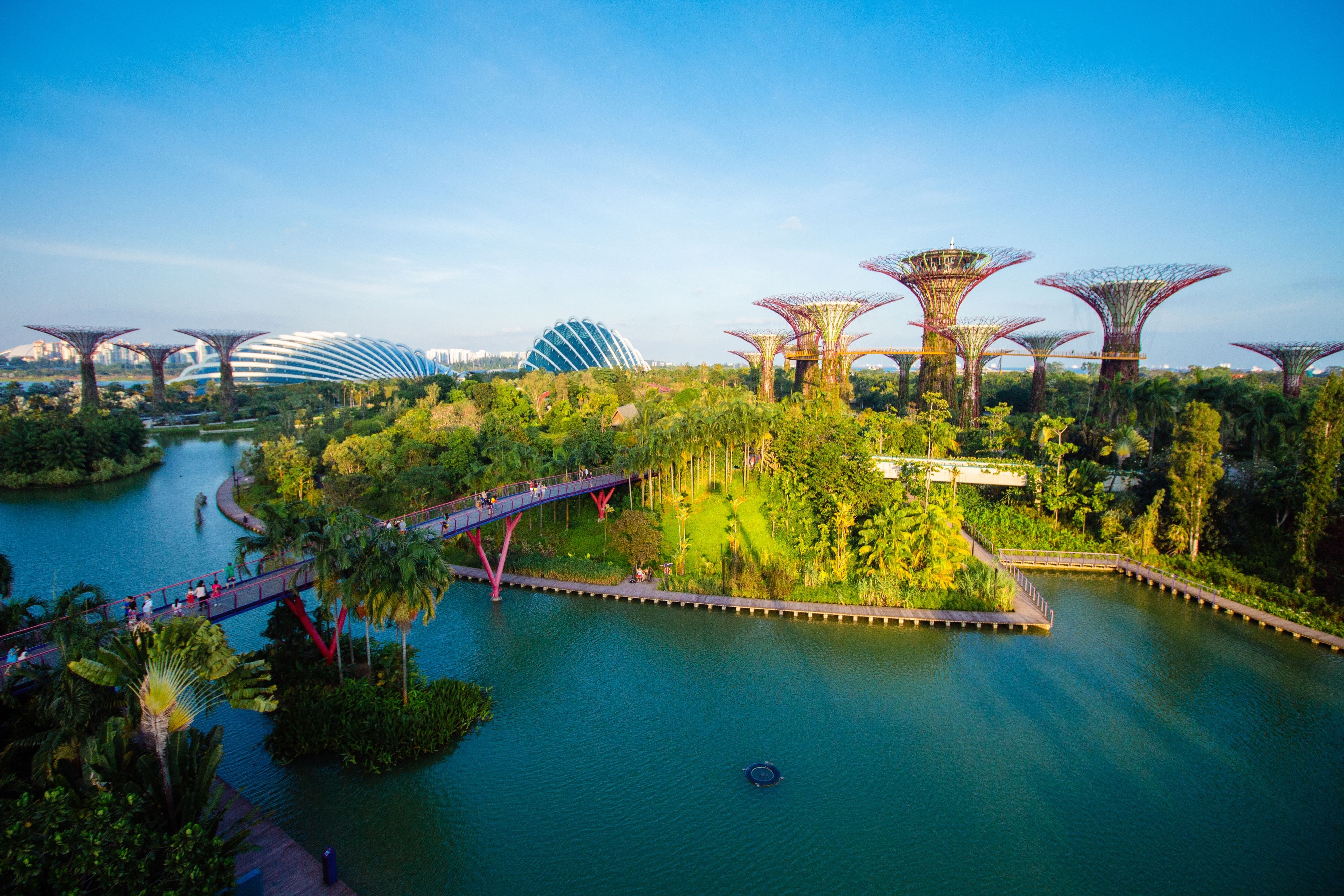
What you do Step into the surreal world of Gardens by the Bay — marvel at the towering Supertrees, walk the aerial OCBC Skyway, and lose yourself in the Cloud Forest's misty 35m indoor waterfall. As dusk falls, the Supertrees ignite in a breathtaking light-and-music spectacular.
What to expect Enter the Cloud Forest and be engulfed by a wall of tropical mist cascading down the world's tallest indoor waterfall. Wind your way up walkways draped in exotic orchids and carnivorous plants with jaw-dropping views of Marina Bay. As evening arrives, settle on the lawn below the 50-metre Supertrees and watch the grove erupt in choreographed colour and music. The juxtaposition of futuristic architecture and lush biodiversity is unlike anything else on earth.
Good to know Gardens by the Bay is a 10-min taxi from Marina Bay Cruise Centre (approx SGD 12–15). Pre-book timed-entry tickets online to avoid queues. Last Cloud Forest entry is 8 pm; Garden Rhapsody shows at 7:45 pm & 8:45 pm. Check ship's all-aboard time — most evening departures allow this comfortably.
Versus the ship tour Booking direct gives you the flexibility to time your Cloud Forest visit in the cool of morning and linger for the famous Garden Rhapsody light show at 7:45 pm — a magical payoff that pre-packaged tours routinely miss. The Supertree Observatory at sunset is a bucket-list moment in itself.
What you do Ascend to the iconic SkyPark atop Marina Bay Sands — 200 metres above the city — for the most photographed panorama in Asia. Hotel guests can take a dip in the infinity pool seemingly suspended over the skyline; non-guests access the observation deck for equally staggering views.
What to expect Ride the express lift to the 57th floor and step out onto the ship-shaped SkyPark. The city unfurls in every direction — the glittering bay, the green lung of Gardens by the Bay, the colonial CBD, and the Strait of Malacca beyond. Sunset here turns the skyline amber and gold. Hotel guests can slip into the infinity pool at the sky's edge and float above one of the world's great city panoramas. The attached bar serves Singapore Slings 200 metres in the air.
Good to know Observation deck is open daily 11 am–9 pm (last entry 8:30 pm). Marina Bay Sands is a 10-min taxi from Marina Bay Cruise Centre. Book observation deck tickets online at marinabaysands.com. If overnighting, book well in advance — rooms sell out fast on cruise-call dates.
Versus the ship tour There is no other vantage point in Singapore — or arguably Asia — quite like this. The 360-degree cantilevered deck stretches 340 metres across three towers, framing the entire Marina Bay skyline, Sentosa Island, and on a clear day, the Indonesian islands. For those who book a room, the world-famous infinity pool is simply one of travel's great bucket-list swims.
What you do Guided by a passionate local expert, eat your way through Singapore's legendary hawker culture — UNESCO-listed and utterly irreplaceable. Taste laksa, char kway teow, Hainanese chicken rice and chilli crab across Maxwell Food Centre and the lanes of Chinatown and Tanjong Pagar.
What to expect Begin at Maxwell Food Centre, one of Singapore's most storied hawker complexes, where Tian Tian Chicken Rice has a legendary queue. Your guide explains the fascinating immigrant heritage behind each dish — Hokkien, Teochew, Malay, Tamil. Wind through the shophouse lanes of Chinatown, stop for a traditional kopi (coffee) in a century-old kopitiam, and finish with Singapore's greatest controversy: which laksa is best. Every bite is backed by a story.
Good to know Tours depart from central Singapore and can be customised by Hello! Singapore Tours. Book directly via their website and mention your cruise all-aboard time so the guide tailors the pace. Most food tours run 3–4 hours. Maxwell Food Centre is a short taxi ride from Marina Bay Cruise Centre.
Versus the ship tour Hello! Singapore Tours is an award-winning, guide-led specialist — not a bus-tour operator. Your expert knows exactly which hawker stall has the 30-year-old wok hei technique and which kopitiam has been serving the same Hainanese breakfast since 1965. Group sizes are kept small so you eat like a local, not a tourist.
book direct with Hello! Singapore Tours → · the full guide →
What you do Plunge into the riot of marigolds, incense, and vibrant street art of Little India, then cross to the bougainvillea-draped lanes of Arab Street and Kampong Glam. A private local guide unlocks the spiritual, artistic, and culinary soul of Singapore's most colourful precincts.
What to expect Arrive in Little India and immediately sense the sensory shift — jasmine garlands, Tamil film music, and the copper glow of temple gopurams. Enter Sri Veeramakaliamman Temple, one of Singapore's holiest Hindu shrines, and hear its 19th-century founding story. Stroll the candy-coloured shophouses of Haji Lane, where indie boutiques and striking murals fill every wall. At the Sultan Mosque, your guide contextualises Singapore's extraordinary multicultural governance. A short detour to a family-run spice merchant completes the portrait.
Good to know Culture Curious tours are fully private and customisable — email directly to tailor the itinerary to your interests and ship schedule. Dress modestly for temple and mosque visits (covered shoulders and knees). Little India is 15–20 minutes by taxi from Marina Bay Cruise Centre.
Versus the ship tour Culture Curious specialises exclusively in private, expert-led cultural tours with deep knowledge of Singapore's ethnic enclaves, urban planning, and living heritage. You set the pace — linger at Sri Veeramakaliamman Temple, browse the perfumeries of Arab Street, or step inside the Sultan Mosque at the guide's invitation. This is not a highlight reel; it is genuine cultural access.
book direct with Culture Curious Singapore Tours → · the full guide →
What you do Wander 160 years of living botanical history at the Singapore Botanic Gardens — a UNESCO World Heritage Site — culminating in the National Orchid Garden, home to over 1,000 species including the rare black orchid and hybrid orchids named for visiting royalty.
What to expect Enter through the grand Tanglin Gate and immediately shed the city's pace. Heritage rain trees form a cathedral canopy over meandering paths through themed gardens — the Swan Lake, the Evolution Garden, the fragrant Ginger Garden. In the National Orchid Garden, colour saturates every sightline: cascading purple Dendrobiums, blazing orange Arantheras, and the pale, ethereal Vanda Miss Joaquim, Singapore's national flower. Benches, birdsong, and cool shade make this a rare moment of genuine tranquillity.
Good to know Gardens open daily 5 am–midnight (free); National Orchid Garden 8:30 am–7 pm (last entry 6 pm). Roughly 20 minutes by taxi from Marina Bay Cruise Centre (SGD 18–22). Pre-purchase Orchid Garden tickets at the gates or online via nparks.gov.sg. Allow 2–3 hours minimum.
Versus the ship tour The National Orchid Garden is the world's largest tropical orchid collection and one of the few places on earth where you can see VIP Orchids — rare hybrid blooms created to honour heads of state, from Queen Elizabeth II to Nelson Mandela. The heritage Ginger Garden and Swan Lake add layers of beauty found nowhere else. This is botanical luxury at its finest.
What you do Board a converted WWII-style DUKW amphibious craft for Singapore's only land-and-water city tour — rolling past the colonial CBD, Esplanade, and Marina Bay before dramatically splashing into the Singapore River for a unique skyline perspective from the water.
What to expect Your guide narrates Singapore's dramatic transformation from colonial trading port to futuristic metropolis as you roll past the Padang, St Andrew's Cathedral, and the glittering towers of Marina Bay. Then — with a roar and a splash — the DUCK powers into the Singapore River, and the skyline rearranges itself into a postcard. From the water you drift past the Merlion statue, under the Cavenagh Bridge, and along the rejuvenated banks of Boat Quay. The combination of history, humour, and spectacle makes this a genuinely joyful 60 minutes.
Good to know DUCKtours depart from Suntec City (central Singapore), approx 15-min taxi from Marina Bay Cruise Centre. Tours run daily; book direct at bigducktours.com to secure your preferred time slot. Duration approx 60 minutes. Ideal as a morning orientation before exploring on your own.
Versus the ship tour No other city tour in Singapore offers the double perspective of both street level and the waterway — in the same vehicle, with no transfers. The dramatic water entry beside Suntec City draws gasps every time, and the river approach to the Merlion and Esplanade Theatres (the 'Durians') is a genuinely unique photo angle. It's theatrical, expert-narrated, and accessible to all ages.
book direct with Singapore DUCKtours (official) → · the full guide →
Before you sail · near Tokyo
Fly in at least a day early — every seasoned cruiser does, so a delay never costs you the ship. This is what is worth that day within reach of the port.
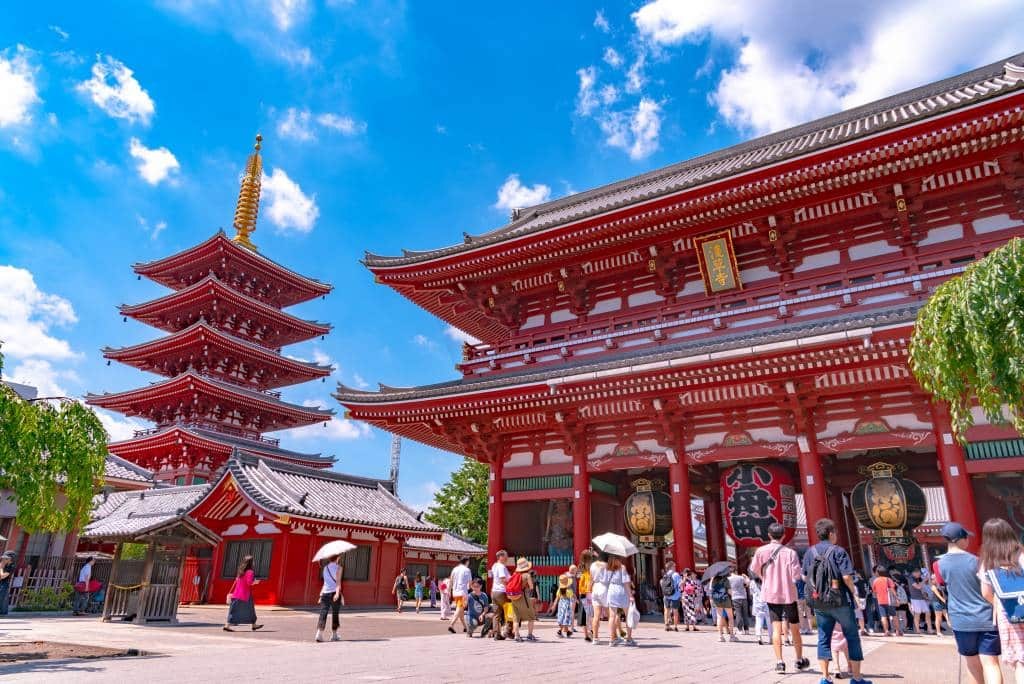 6 mi from TokyoSenso-ji Temple
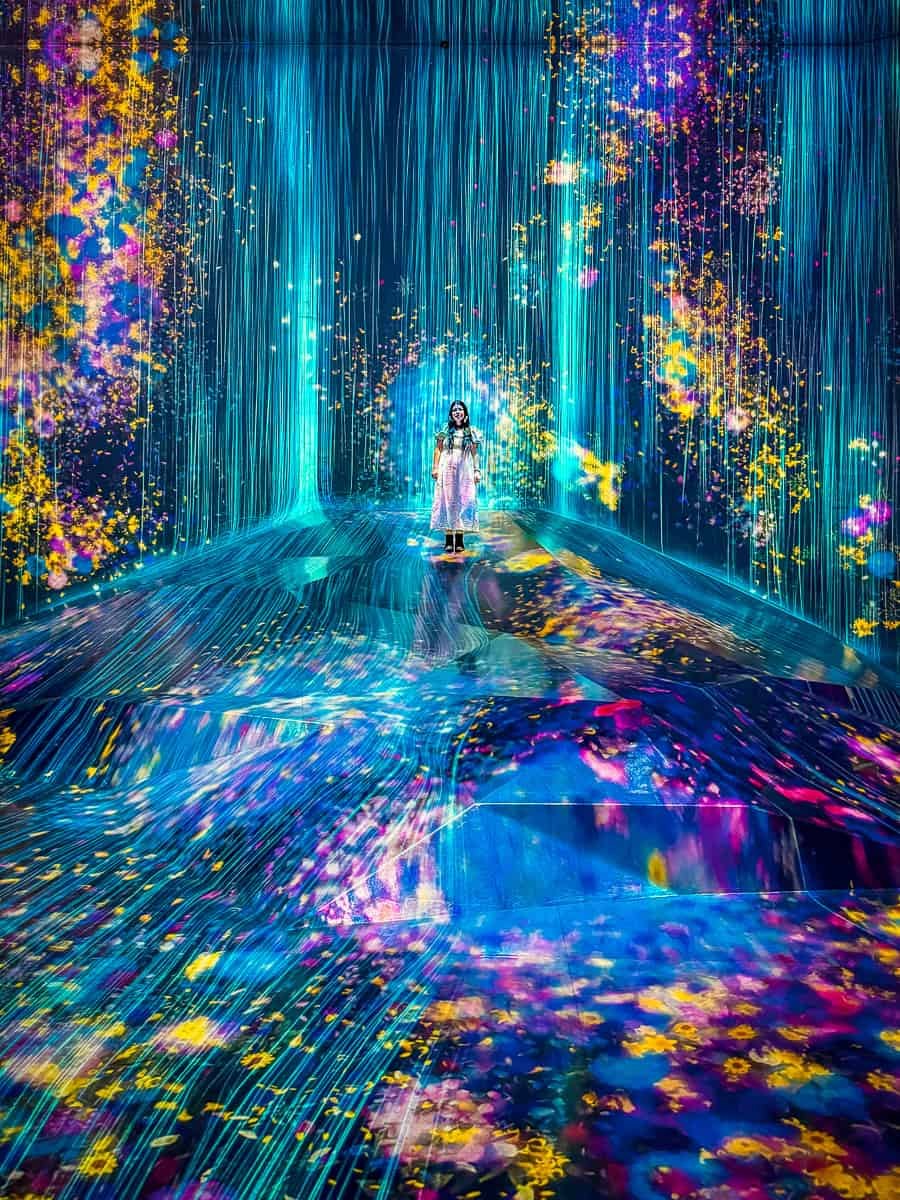 0 mi from TokyoteamLab Borderless
 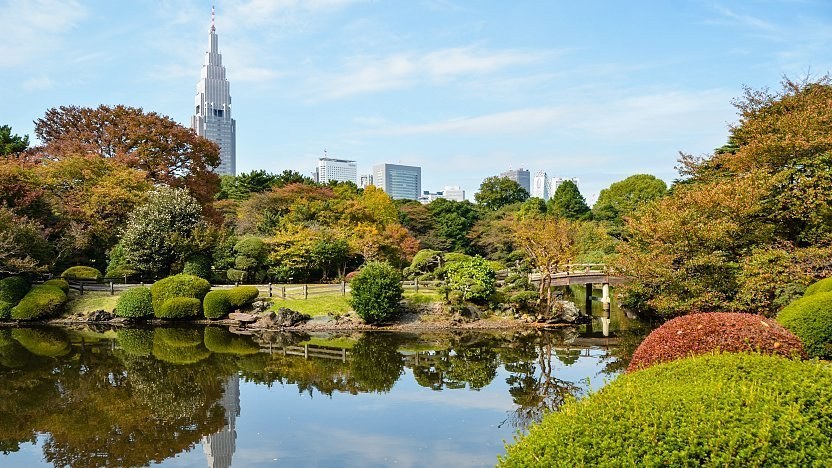 39 mi from Tokyo · land adventureTokyo's Secret Layers: Samurai Houses, Sunrise Crossings & Sake
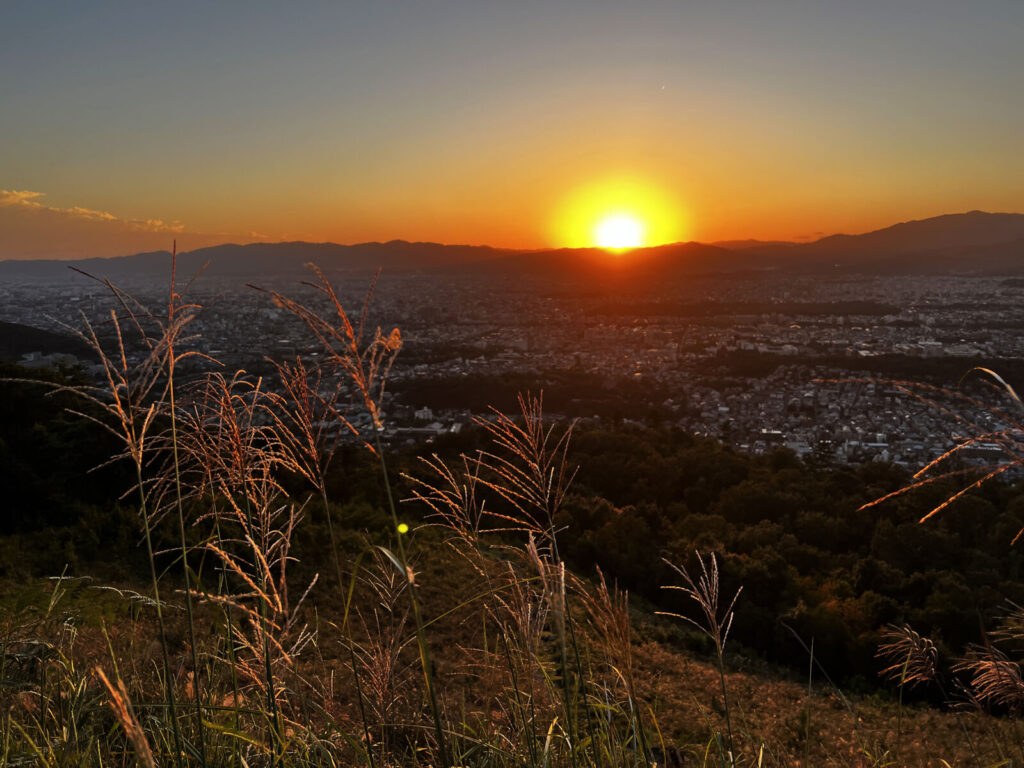 266 mi from Tokyo · land adventureKyoto After Dark: Firelight, Forest Paths & Ancient Craft
 After you step off · near Singapore
You end in a different port — stay on, and add what is within reach before you fly home.