Your cruise
Seven Seas Mariner · 18-night South America cruise, Buenos Aires to Lima
Feb 20 – Mar 10 · 18 nights ·
Day 1 Buenos Aires (board) · Day 2–3 Willis Island · Day 4 Port Stanley · Day 5–8 Willis Island · Day 9 Ushuaia · Day 10 Punta Arenas · Day 11–12 Willis Island · Day 13 Puerto Montt · Day 14 Willis Island · Day 15 Santiago · Day 16–17 Willis Island · Day 18–19 Lima (step off)
What you do Board a rigid inflatable Zodiac for a close-up circumnavigation of one of the Coral Sea's most remote specks of land. Drift alongside vast nesting colonies of red-footed boobies, frigatebirds and brown noddies — a wildlife spectacle almost no traveller on earth ever witnesses.
What to expect Your Zodiac departs the ship's swim platform and skirts the island's entire coastline at water level, giving you eye-to-eye encounters with seabird colonies that number in the tens of thousands. The guide pauses the engine so you can hear the cacophony of calls and photograph birds in undisturbed flight. Shallow coral gardens glow electric beneath the hull as you round each headland. The round trip typically takes 90–120 minutes, leaving ample buffer before all-aboard.
Good to know Pre-book directly via email well in advance — this is a tender-only island and Zodiac capacity is strictly capped. Wear non-marking soles, bring a hat and reef-safe sunscreen. Confirm your ship's all-aboard time and allow 30 minutes' return buffer.
Versus the ship tour An intimate, expert-led small-group Zodiac — never more than 12 guests — means you can idle silently within metres of nesting birds and low reef outcrops that larger vessels simply cannot access, guided by a marine biologist who narrates every species in real time.
What you do Slip beneath the surface of some of the least-dived water on the planet — the Coral Sea surrounding Willis Island, hundreds of kilometres from the nearest coast. Visibility regularly exceeds 30 metres, revealing walls of hard coral, reef sharks, giant trevally and undisturbed sea-turtle feeding grounds.
What to expect Guests kit up in a purpose-equipped dive room and giant-stride into waters of extraordinary clarity. The reef structures here are pristine — no bleaching, no crowds — and the sheer biomass of pelagic life reflects the island's status as a protected marine reserve. Drift snorkelling across shallow coral plateaus, you are likely to encounter hawksbill turtles grazing, schools of chevron barracuda and the flash of a reef whaler in the blue. Safety divers and guides remain in the water throughout.
Good to know Swimming competency is required; full snorkel equipment is provided. Confirm landing and in-water permissions with the Australian Bureau of Meteorology station keeper in advance — access can be subject to weather and conservation protocols. Bring a rash vest for UV protection.
Versus the ship tour Mike Ball operates the definitive liveaboard expeditions to the Coral Sea's outer reefs, with certified dive guides who have logged thousands of hours specifically on these formations. Group size is tightly managed, and every dive brief is site-specific — the antithesis of a mass-market snorkel.
book direct with Mike Ball Dive Expeditions (Townsville/Cairns — Coral Sea specialists) → · the full guide →
What you do Step ashore — one of only a handful of visitors ever permitted — and receive a private briefing inside Australia's most remote operational weather station. The data collected here has guided cyclone warnings across Queensland for over a century; it is a living piece of scientific history.
What to expect After a short Zodiac transfer to the beach, you walk across the coral-rubble islet — the entire thing is barely 400 metres across — to the weatherboard station compound. The duty meteorologist explains the island's role in tracking Coral Sea cyclogenesis, shows you the instrument arrays and balloon launch facilities, and fields questions with refreshing candour. The sense of absolute remoteness — no roads, no shops, just science and sea — is profoundly affecting. Visits are brief (30–45 minutes) out of respect for operations.
Good to know Landing is at the discretion of BOM and sea conditions; it is never guaranteed. Wear closed shoes for the coral-rubble foreshore. Do not touch or enter any instrument enclosures. This is one of cruising's rarest privileges — treat it accordingly.
Versus the ship tour Landing on Willis Island is granted to very few vessels per year and always requires advance coordination with the BOM. The briefing is delivered by the station's resident meteorologist — one of Australia's most isolated postings — lending an authenticity and depth no third-party guide could replicate.
What you do Join a dedicated marine naturalist on a slow, deliberate circuit of Willis Island's offshore waters — prime habitat for dwarf minke whales, spinner dolphins, red-tailed tropicbirds and occasional whale sharks. This is expedition-grade wildlife observation in one of Earth's most intact marine environments.
What to expect The excursion runs in the calm conditions that typically prevail in the lee of the island, with the naturalist briefing the group on cetacean behaviour before departure. Spinner dolphins frequently bow-ride the vessel's wake, while tropicbirds trace lazy arcs overhead trailing their extraordinary white tail streamers. In season (June–September), dwarf minke whales approach curious vessels with remarkable boldness. The naturalist's running identification and ecological commentary transforms an already astonishing scene into a masterclass in Coral Sea ecology.
Good to know Bring image-stabilised binoculars if you own them — loaner binoculars are available but limited. A polarised lens filter dramatically improves underwater wildlife sighting from the deck. Morning cruises yield the best light and the calmest seas.
Versus the ship tour Coral Expeditions' marine naturalists carry years of Coral Sea field experience and use hydrophones and binoculars to locate and interpret marine megafauna well beyond what a casual deck scan achieves. Groups are capped at 20, ensuring every guest has unobstructed sightlines and personalised commentary.
book direct with Coral Expeditions (Australia's premium expedition cruise specialist) → · the full guide →
What you do Combine world-class snorkelling with a dedicated underwater photography tuition session led by a professional marine photographer. The pellucid, undisturbed waters around Willis Island provide a studio backdrop that professionals travel half a year to reach — and you are already here.
What to expect After a 20-minute on-deck briefing covering exposure, buoyancy control for photography and coral-safe positioning, the group enters the water with the lead photographer. Each participant is given real-time feedback via underwater slates and post-dive screen reviews. The reef here hosts nudibranchs, juvenile turtles and extraordinary soft-coral detail that rewards close, patient framing. By the final dive, guests leave with a curated set of images that would pass muster in any travel magazine.
Good to know Bring your own mirrorless or compact camera with an underwater housing if possible; hire housings are limited. Basic snorkel competency required. Maximum group size of 6 is strictly enforced — book your place the moment you board the ship.
Versus the ship tour A professional marine photographer leads groups of no more than six, providing personalised composition coaching in real time — in the water, beside you. The combination of tuition and a location almost nobody else will ever photograph makes every frame genuinely irreplaceable.
What you do Rise before the rest of the ship and join an ornithologist-guide for a dawn landing on Willis Island — arguably the most exclusive birdwatching address in the Southern Hemisphere. The island hosts one of Australia's largest documented seabird colonies, and first light is when it erupts into extraordinary life.
What to expect The Zodiac lands on the coral-rubble beach just as the sky softens to indigo. Within seconds, frigatebirds begin their courtship displays, inflating scarlet throat pouches while brown boobies jostle on nesting scrapes metres from your feet. The ornithologist narrates the scene with infectious expertise, calling species by name as they lift and wheel overhead in their thousands. The island's absolute silence — broken only by wind and wings — produces a meditative quality that experienced travellers consistently describe as one of cruising's most affecting moments.
Good to know Landing is subject to BOM approval and sea-state — pre-register your interest at the expedition desk on day one of the voyage. Wear dark, non-reflective clothing to avoid disturbing nesting birds. Carry a long lens (200mm+ equivalent) for perched-bird shots. Soft-soled shoes protect both the coral-rubble substrate and your footing.
Versus the ship tour A qualified ornithologist leads a structured census-style walk, naming every species, explaining colony dynamics and pointing out nesting behaviours that an untrained eye would miss entirely. The pre-sunrise timing means you experience the island in its rawest, most atmospheric state — long before the day-trippers (there are none) arrive.
book direct with Coral Expeditions (Australia's premium expedition cruise specialist) → · the full guide →
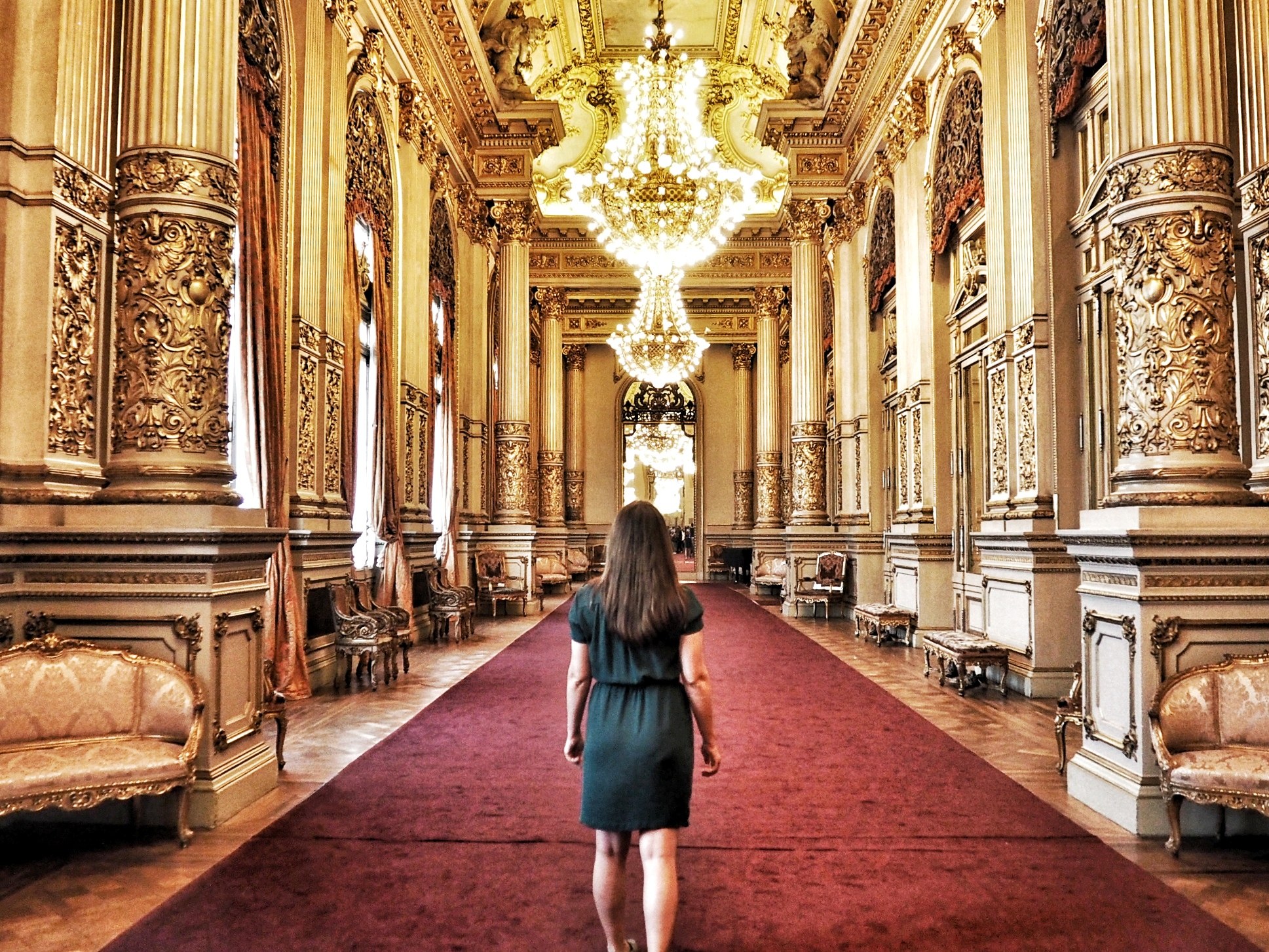
What you do Step inside one of the world's top five opera houses, where gilded tiers, a sky-blue ceiling and acoustics second to none have awed audiences since 1908. A private guided tour reveals backstage secrets before you take your seat for a world-class performance.
What to expect Your bilingual expert guide leads you through the ornate foyers, the seven-tier auditorium dripping in red velvet and gold leaf, and the vast underground workshops where set designers and seamstresses craft every production by hand. You'll hear fascinating stories of the divas, scandals and triumphant premieres that shaped Argentina's cultural identity. In the evening, take your premium seat and let a world-class company perform beneath the magnificent painted dome. The standing ovation will give you goosebumps.
Good to know Book guided tours and performance tickets directly on the official website well in advance — top performances sell out months ahead. The theatre is a 20-minute taxi or Uber from the Puerto Madero cruise terminal. Check all-aboard time carefully; a daytime tour works easily for a port day, while an evening performance suits overnight calls.
Versus the ship tour Exclusive behind-the-scenes access to rehearsal halls, costume workshops and the main stage — a perspective almost no visitor secures — followed by a live ballet, opera or orchestral concert in one of the planet's most breathtaking acoustic spaces.
book direct with Teatro Colón (official) → · the full guide →
What you do Learn the languid drama of the tango with a private maestro before a gourmet Argentine dinner and a world-class milonga show at Buenos Aires' most storied venue. This is tango as a living art form, not a tourist spectacle.
What to expect Arrive early for a private or semi-private tango lesson in a mirrored studio, where a professional dancer breaks down the embrace, the pause, the pivoting drama of each step. The colonial-stone main hall fills with candlelight as a full orchestra of bandoneons, violins and piano strikes up the first compás. Six to eight elite dancers command the floor in a two-hour show of classic and contemporary tango, followed by a three-course asado-inspired dinner with premium Malbec. The intimacy of the venue means every table has a front-row feel.
Good to know Book dinner + show directly on the website; request a private lesson by emailing the venue. The San Telmo location is a 15-minute taxi from the cruise terminal. Evening shows suit overnight or late-departure port calls — confirm all-aboard time before booking.
Versus the ship tour El Viejo Almacén is the authentic 1860s colonial warehouse where tango was born — one of the very few venues where dancers, bandoneonists and singers are career artists, not performers on a circuit. A private lesson with an in-house maestro before the show transforms you from spectator to participant.
book direct with El Viejo Almacén (official) → · the full guide →
What you do Wander the marble city of the dead alongside a local historian who unlocks the stories of Argentina's oligarchs, generals and one legendary First Lady. Continue into elegant Palermo for boutique-lined streets and a table at a celebrated wine bar.
What to expect Your guide meets you at the ornate entrance to Recoleta Cemetery and navigates its labyrinthine avenues of mausoleums — grand neo-Gothic chapels and Art Deco tombs jostling for eternity. You'll pause at Evita Perón's understated tomb and hear the full, complex story that Hollywood simplified. Strolling into Palermo, the city transforms: jacaranda-shaded streets, independent design boutiques, and a curated stop at a wine bar for an Argentine varietal tasting paired with local charcuterie. The pace is entirely yours — nothing is rushed.
Good to know Book directly on the BuenosTours website and specify private if you prefer a solo-group experience. Wear comfortable walking shoes; the cemetery's cobblestone lanes are uneven. The route is roughly 4–5 hours and easily completed before a late-afternoon all-aboard.
Versus the ship tour BuenosTours' expert-led small-group and private walks are conversational and unhurried — guides are historians and cultural insiders who read the city's architecture, social tensions and politics with the fluency of a native novel. This is Buenos Aires understood, not just seen.
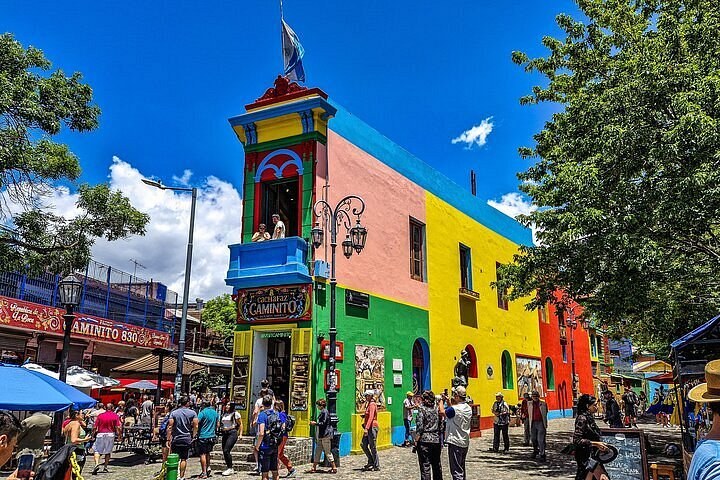
What you do Lose yourself in the kaleidoscopic corrugated-iron streetscape of Caminito before weaving through the cobblestoned artisan stalls and tango buskers of San Telmo's legendary Sunday fair — curated with a private guide who knows every back alley.
What to expect You arrive at Caminito as the morning light floods the vivid zigzag of zinc facades — Maria positions you for the photographs that don't appear on postcards. She introduces you to local artists selling in the street-level galleries and explains how this working-class barrio became Argentina's most painted neighbourhood. In San Telmo, the Sunday fair's hundreds of stalls overflow with silverwork, Art Deco porcelain and vintage leather; Maria steers you away from tourist trinkets to the antique dealers serious collectors frequent. The tour ends with a cortado and medialunas at a corner café that has served the neighbourhood for decades.
Good to know The Sunday San Telmo Fair operates 10:00–17:00 — this excursion is best on Sundays. Book directly via the Go Ask a Local website. La Boca has a concentrated tourist zone; staying with a local guide is both the safest and richest way to explore. Allow 4–5 hours; taxis back to the cruise terminal take approximately 15 minutes.
Versus the ship tour Maria is a lifelong Porteña whose insider knowledge transforms a walk through La Boca and San Telmo into a layered cultural narrative — from immigrant Italian dock workers painting their houses in leftover ship paint, to the milongas where tango evolved in tenement courtyards. You move at your own pace, off the tourist current.
book direct with Go Ask a Local – Maria's Private Buenos Aires Tours → · the full guide →
What you do Escape the city entirely on a private launch into the Paraná Delta — an Amazonian labyrinth of willow-shaded waterways, weekend villas and rowing clubs just 30 km from the capital. Lunch aboard or at a delta restaurant as the current does the work.
What to expect A private transfer north from Puerto Madero delivers you to the Tigre waterfront in under an hour. Your boat glides into channels shaded by ceibo trees and trailing willows, past brightly painted weekend houses accessible only by water. The captain points out native birds — kingfishers, herons, monk parakeets — as you drift deeper into the labyrinth. Lunch at a riverside restaurant means grilled river fish, provoleta and cold Torrontés as speedboats and kayakers pass in the dappled light. The return journey offers a completely different perspective of the channels as the afternoon light turns amber.
Good to know The Tigre Delta excursion takes approximately 6–7 hours return including transfer; confirm all-aboard time before booking. Apply sunscreen and bring a light layer — the delta breeze on the water can be cool even in summer. Book the private boat option directly by contacting Shore Excursions Group or a local Tigre operator for the most exclusive experience.
Versus the ship tour A private launch gives you total control of pace and itinerary — your captain navigates narrow channels the larger excursion boats cannot reach, and you stop where you choose: a riverside fruit vendor, a 19th-century rowing club, a vine-covered restaurant on stilts. The delta reveals an Argentina almost no cruise passenger sees.
book direct with Shore Excursions Group – Tigre Delta & River Cruise → · the full guide →
What you do Ride out to a working Pampas estancia for a full-day immersion in gaucho culture: watch expert horsemen perform, try a polo lesson, and feast on a traditional wood-fired asado with unlimited Malbec beneath an open sky.
What to expect A private transfer (approx. 90 minutes) delivers you through the flat, endless horizon of the Pampas to La Mimosa's white-painted colonial ranch house. Gauchos in traditional bombachas and berets demonstrate horsemanship with staggering precision, and guests are warmly invited to ride alongside. A polo introduction on gentle horses is led by an estancia instructor. The centrepiece is the asado: whole ribs, chorizo, morcilla and sweetbreads char-grilled over quebracho embers, served with chimichurri, salads and flowing Malbec at long communal tables. The afternoon slows to the rhythm of the Pampas — folk music, mate, and the longest horizon you've ever seen.
Good to know Transfer to La Mimosa takes approximately 90 minutes each way — this is a full-day excursion best suited to port days with a late-evening all-aboard. Book directly on the La Mimosa website and arrange private transfers through your concierge for maximum comfort. Wear closed-toe shoes for riding; bring sunscreen and a hat.
Versus the ship tour La Mimosa is a genuine working estancia — not a theatrical set piece — where third-generation gauchos demonstrate real skills honed over lifetimes: lazo work, doma (horse-breaking), and the intricate footwork of malambo. The wood-fired asado served in the open air under ombú trees is the finest meal most guests eat in Argentina.
book direct with Estancia La Mimosa (official) → · the full guide →
What you do Board a rigid inflatable Zodiac for a close-up circumnavigation of one of the Coral Sea's most remote specks of land. Drift alongside vast nesting colonies of red-footed boobies, frigatebirds and brown noddies — a wildlife spectacle almost no traveller on earth ever witnesses.
What to expect Your Zodiac departs the ship's swim platform and skirts the island's entire coastline at water level, giving you eye-to-eye encounters with seabird colonies that number in the tens of thousands. The guide pauses the engine so you can hear the cacophony of calls and photograph birds in undisturbed flight. Shallow coral gardens glow electric beneath the hull as you round each headland. The round trip typically takes 90–120 minutes, leaving ample buffer before all-aboard.
Good to know Pre-book directly via email well in advance — this is a tender-only island and Zodiac capacity is strictly capped. Wear non-marking soles, bring a hat and reef-safe sunscreen. Confirm your ship's all-aboard time and allow 30 minutes' return buffer.
Versus the ship tour An intimate, expert-led small-group Zodiac — never more than 12 guests — means you can idle silently within metres of nesting birds and low reef outcrops that larger vessels simply cannot access, guided by a marine biologist who narrates every species in real time.
What you do Slip beneath the surface of some of the least-dived water on the planet — the Coral Sea surrounding Willis Island, hundreds of kilometres from the nearest coast. Visibility regularly exceeds 30 metres, revealing walls of hard coral, reef sharks, giant trevally and undisturbed sea-turtle feeding grounds.
What to expect Guests kit up in a purpose-equipped dive room and giant-stride into waters of extraordinary clarity. The reef structures here are pristine — no bleaching, no crowds — and the sheer biomass of pelagic life reflects the island's status as a protected marine reserve. Drift snorkelling across shallow coral plateaus, you are likely to encounter hawksbill turtles grazing, schools of chevron barracuda and the flash of a reef whaler in the blue. Safety divers and guides remain in the water throughout.
Good to know Swimming competency is required; full snorkel equipment is provided. Confirm landing and in-water permissions with the Australian Bureau of Meteorology station keeper in advance — access can be subject to weather and conservation protocols. Bring a rash vest for UV protection.
Versus the ship tour Mike Ball operates the definitive liveaboard expeditions to the Coral Sea's outer reefs, with certified dive guides who have logged thousands of hours specifically on these formations. Group size is tightly managed, and every dive brief is site-specific — the antithesis of a mass-market snorkel.
book direct with Mike Ball Dive Expeditions (Townsville/Cairns — Coral Sea specialists) → · the full guide →
What you do Step ashore — one of only a handful of visitors ever permitted — and receive a private briefing inside Australia's most remote operational weather station. The data collected here has guided cyclone warnings across Queensland for over a century; it is a living piece of scientific history.
What to expect After a short Zodiac transfer to the beach, you walk across the coral-rubble islet — the entire thing is barely 400 metres across — to the weatherboard station compound. The duty meteorologist explains the island's role in tracking Coral Sea cyclogenesis, shows you the instrument arrays and balloon launch facilities, and fields questions with refreshing candour. The sense of absolute remoteness — no roads, no shops, just science and sea — is profoundly affecting. Visits are brief (30–45 minutes) out of respect for operations.
Good to know Landing is at the discretion of BOM and sea conditions; it is never guaranteed. Wear closed shoes for the coral-rubble foreshore. Do not touch or enter any instrument enclosures. This is one of cruising's rarest privileges — treat it accordingly.
Versus the ship tour Landing on Willis Island is granted to very few vessels per year and always requires advance coordination with the BOM. The briefing is delivered by the station's resident meteorologist — one of Australia's most isolated postings — lending an authenticity and depth no third-party guide could replicate.
What you do Join a dedicated marine naturalist on a slow, deliberate circuit of Willis Island's offshore waters — prime habitat for dwarf minke whales, spinner dolphins, red-tailed tropicbirds and occasional whale sharks. This is expedition-grade wildlife observation in one of Earth's most intact marine environments.
What to expect The excursion runs in the calm conditions that typically prevail in the lee of the island, with the naturalist briefing the group on cetacean behaviour before departure. Spinner dolphins frequently bow-ride the vessel's wake, while tropicbirds trace lazy arcs overhead trailing their extraordinary white tail streamers. In season (June–September), dwarf minke whales approach curious vessels with remarkable boldness. The naturalist's running identification and ecological commentary transforms an already astonishing scene into a masterclass in Coral Sea ecology.
Good to know Bring image-stabilised binoculars if you own them — loaner binoculars are available but limited. A polarised lens filter dramatically improves underwater wildlife sighting from the deck. Morning cruises yield the best light and the calmest seas.
Versus the ship tour Coral Expeditions' marine naturalists carry years of Coral Sea field experience and use hydrophones and binoculars to locate and interpret marine megafauna well beyond what a casual deck scan achieves. Groups are capped at 20, ensuring every guest has unobstructed sightlines and personalised commentary.
book direct with Coral Expeditions (Australia's premium expedition cruise specialist) → · the full guide →
What you do Combine world-class snorkelling with a dedicated underwater photography tuition session led by a professional marine photographer. The pellucid, undisturbed waters around Willis Island provide a studio backdrop that professionals travel half a year to reach — and you are already here.
What to expect After a 20-minute on-deck briefing covering exposure, buoyancy control for photography and coral-safe positioning, the group enters the water with the lead photographer. Each participant is given real-time feedback via underwater slates and post-dive screen reviews. The reef here hosts nudibranchs, juvenile turtles and extraordinary soft-coral detail that rewards close, patient framing. By the final dive, guests leave with a curated set of images that would pass muster in any travel magazine.
Good to know Bring your own mirrorless or compact camera with an underwater housing if possible; hire housings are limited. Basic snorkel competency required. Maximum group size of 6 is strictly enforced — book your place the moment you board the ship.
Versus the ship tour A professional marine photographer leads groups of no more than six, providing personalised composition coaching in real time — in the water, beside you. The combination of tuition and a location almost nobody else will ever photograph makes every frame genuinely irreplaceable.
What you do Rise before the rest of the ship and join an ornithologist-guide for a dawn landing on Willis Island — arguably the most exclusive birdwatching address in the Southern Hemisphere. The island hosts one of Australia's largest documented seabird colonies, and first light is when it erupts into extraordinary life.
What to expect The Zodiac lands on the coral-rubble beach just as the sky softens to indigo. Within seconds, frigatebirds begin their courtship displays, inflating scarlet throat pouches while brown boobies jostle on nesting scrapes metres from your feet. The ornithologist narrates the scene with infectious expertise, calling species by name as they lift and wheel overhead in their thousands. The island's absolute silence — broken only by wind and wings — produces a meditative quality that experienced travellers consistently describe as one of cruising's most affecting moments.
Good to know Landing is subject to BOM approval and sea-state — pre-register your interest at the expedition desk on day one of the voyage. Wear dark, non-reflective clothing to avoid disturbing nesting birds. Carry a long lens (200mm+ equivalent) for perched-bird shots. Soft-soled shoes protect both the coral-rubble substrate and your footing.
Versus the ship tour A qualified ornithologist leads a structured census-style walk, naming every species, explaining colony dynamics and pointing out nesting behaviours that an untrained eye would miss entirely. The pre-sunrise timing means you experience the island in its rawest, most atmospheric state — long before the day-trippers (there are none) arrive.
book direct with Coral Expeditions (Australia's premium expedition cruise specialist) → · the full guide →
What you do Ride deep into the Falklands' wild coastline in a private 4×4 to reach Bertha's Beach — a pristine arc of white sand hosting the Falklands' most accessible, photogenic Gentoo penguin colony. A bucket-list wildlife encounter at the end of the world.
What to expect Your guide collects you at the port in a dedicated 4×4 and navigates a mix of tarmac and rugged off-road tracks to reach Bertha's Beach, named for a historic shipwreck visible at low tide. On the wide, wind-sculpted strand you'll walk among hundreds of Gentoo penguins — curious, fearless, and utterly unhurried. Your guide provides naturalist commentary on behaviour, breeding cycles, and Falklands ecology. Snacks and water are included; the return journey follows the scenic coastline back to Stanley in time for all-aboard.
Good to know Pre-book directly before your ship arrives — private slots sell out fast on busy port days. Allow 4–5 hours. Wear waterproof layers and sturdy footwear; the beach can be boggy. Snack and water provided; port pick-up and drop-off included.
Versus the ship tour Fully private 4×4 vehicle with a professional English-speaking local guide means you set the pace — linger with the penguins as long as you wish, with no coach group crowding the beach around you.
book direct with Top Private Tours Falklands (Local Expert) → · the full guide →
What you do Walk a legendary minefield-turned-wildlife-sanctuary to encounter Magellanic penguins burrowing in the dunes at Gypsy Cove, then continue to Yorke Bay's bone-white beach for close-up encounters with Gentoo colonies — two species, one extraordinary morning.
What to expect You depart Stanley in a private van and reach Gypsy Cove within minutes — a sheltered bay where Magellanic penguins nest in grass-covered burrows just metres from the path, indifferent to onlookers. Your guide explains how the surrounding beach, still off-limits due to Argentine mines from 1982, has accidentally become a perfect wildlife sanctuary. The convoy then rolls on to Yorke Bay for Gentoos on a spectacular white-sand beach, with the chance to spot upland geese, steamer ducks, and black-crowned night herons en route. The return offers panoramic views across Stanley Harbour and the rusting hulks of historic sailing ships.
Good to know Book well ahead via Tripadvisor message or email — Lucky Private Tour operates in small groups only and fills quickly on ship-call days. Tours typically run 3–4 hours. Minefield perimeter fencing is clearly marked and safe; stay on designated paths. Dress in windproof layers.
Versus the ship tour Small private group with Glenn and team — veteran local guides who share intimate knowledge of Falklands wildlife, history, and landscape, moving at your pace rather than a timed group itinerary.
book direct with Lucky Private Tour Falklands → · the full guide →
What you do Journey across the dramatic moorland battlefields of Goose Green, Mount Longdon, and Tumbledown with a specialist local guide whose family lived through the 1982 conflict — a deeply moving, once-in-a-lifetime immersion into modern military history.
What to expect Leaving Stanley by 4×4, you cross rolling Camp landscape to Goose Green and Darwin, site of the first major land battle of the war. Your guide shares first-hand community accounts of the Argentine occupation and the British Task Force's advance, standing on the very ridgelines where paratroopers fought. Memorial crosses, rusting materiel, and Argentine cemeteries provide sombre, powerful context. You return via the outskirts of Stanley to view the Liberation Monument and 1982 Mine Clearance memorial before arriving back at the pier. A full-day commitment, but the most historically resonant experience in the South Atlantic.
Good to know Full-day tours (7–8 hours) require an early departure — confirm all-aboard time with your ship and communicate it to your operator. Some tracks are rough; 4×4 essential. Book via the official Falkland Islands Tourism operator directory at falklandislands.com well in advance.
Versus the ship tour Access to Darwin and Goose Green — well beyond Stanley town — is only possible by private vehicle. A guide with personal and family ties to the conflict brings history alive in a way no standard group tour can replicate.
book direct with Falkland Islands Tour Guides (Official Local Operators) → · the full guide →
What you do Explore the remarkably intact Victorian capital of the Falklands on foot with a local historian — a colourful mile of painted iron-clad houses, the world's most southerly Anglican cathedral, and the iconic rusting iron sailing ships rotting majestically in the harbour.
What to expect Beginning at the historic Government Pier, your guide leads you along Ross Road — the heart of Stanley — past colourful corrugated-iron homes and the landmark Whalebone Arch (formed from two blue whale jawbones). You step inside Christ Church Cathedral, the world's southernmost Anglican cathedral, before reaching the museum where Falklands War artefacts and natural history exhibits provide rich context. The walk ends at the harbour's edge where the iron hulks of 19th-century sailing ships — including SS Great Britain's sister vessels — list in the shallows, slowly becoming part of the landscape. Allow time for Stanley's independent boutiques and a warming cup of tea.
Good to know Walking tours typically run 2–3 hours and operate in nearly all weather — dress in windproof, waterproof layers regardless of forecasts. The route is mostly flat and paved. Book via falklandislands.com's local operator directory before your port call.
Versus the ship tour An intimate, on-foot exploration led by a local resident who can unlock the stories behind every facade — the whaling era, the wool trade, and the quiet daily life of one of the world's most remote communities.
book direct with Falkland Islands Tour Guides (Official Local Operators) → · the full guide →
What you do Fly by light aircraft to Sea Lion Island — the Falklands' premier wildlife destination — to witness Southern elephant seals, sea lions, five penguin species, and nesting black-browed albatross on a single pristine island. The ultimate Falklands wildlife day.
What to expect A short transfer takes you to Stanley Airport where you board a FIGAS Islander aircraft for the flight south over tussac grass islands and sapphire channels. Landing on the grass airstrip, a lodge guide meets you for a full circuit of the island — elephant seals hauled out by the hundred on kelp-strewn beaches, Rockhopper, Magellanic, Gentoo, King, and Macaroni penguins within walking distance of each other, and black-browed albatross gliding on permanent six-foot wingspans overhead. Lunch at the Sea Lion Island Lodge is included. The return flight completes an utterly extraordinary day at the southern edge of the world.
Good to know This excursion requires early coordination with FIGAS (falklandislands.com) and Sea Lion Island Lodge well before your cruise departs — flight seats are very limited. Weather can delay small aircraft; confirm all-aboard time with your ship and allow a generous buffer. Not suitable for guests with severe mobility limitations.
Versus the ship tour Sea Lion Island is unreachable overland — the 20-minute flight in a small Islander aircraft is itself a bucket-list experience, offering aerial views of the archipelago. Visitor numbers are strictly limited, ensuring utterly crowd-free encounters with mega-fauna.
book direct with FIGAS – Falkland Islands Government Air Service → · the full guide →
What you do Drive to the wind-scoured eastern tip of East Falkland to stand at Cape Pembroke Lighthouse — the most easterly point of the Falklands, with the Atlantic stretching unbroken to South Georgia — and explore dramatic coastal scenery teeming with birds and marine wildlife.
What to expect Your private van departs Stanley and rolls east along a mix of sealed and gravel tracks through open moorland carpeted in white grass and cushion plant. Arriving at Cape Pembroke, the 1855 lighthouse stands sentinel above dramatic quartzite ridges tumbling into a cold, green sea. Your guide explains the lighthouse's role in guiding vessels around the treacherous eastern approaches to Stanley, and the extraordinary ornithology of the headland — giant petrels, rock shags, and Falkland thrushes are common sightings. On clear days, views extend south along the coastline past Yorke Bay to distant hills still marked on maps by the names of 1982 battles. A shorter half-day option that pairs beautifully with an afternoon in Stanley town.
Good to know A 2–3 hour half-day excursion — ideal as a morning or afternoon addition alongside a Stanley town walk. Tracks to the lighthouse can be muddy; wear waterproof footwear. Wind at the cape is often fierce — bring a windproof jacket regardless of sunshine in the harbour. Book via Lucky Private Tour on Tripadvisor.
Versus the ship tour The drive out to Cape Pembroke is through open Camp — the vast, treeless Falklands interior — with knowledgeable local guides pointing out upland geese, Falklands skuas, and peregrine falcons that most visitors never notice from a coach window.
book direct with Lucky Private Tour Falklands → · the full guide →
What you do Wade ashore on a wild island inhabited by thousands of Magellanic and Gentoo penguins — one of the rarest wildlife landings in the Southern Hemisphere. A private catamaran transfer and expert naturalist guide make this utterly bucket-list.
What to expect A private catamaran glides through the Beagle Channel past sea-lion colonies and cormorant rookeries before anchoring off Isla Martillo. Guests don waterproof boots and wade the shallows onto the beach, where Magellanic and Gentoo penguins are utterly unbothered by visitors. Your naturalist explains breeding behaviour, conservation challenges and the island's ecology. The return journey takes in the iconic Les Eclaireurs Lighthouse, perfectly golden in the afternoon light.
Good to know Landings are permit-controlled and close out weeks in advance — book the moment your itinerary is confirmed. Waterproof boots and splash pants are provided; bring layers. Typical duration is 4–5 hours; check your ship's all-aboard time and allow 30 minutes to return to the pier from the dock.
Versus the ship tour Martillo Island landings are strictly limited by permit — only small groups may wade ashore rather than view from a boat. A specialist naturalist guide narrates every step among the colony, giving you an intimate, unhurried encounter that large-group operators simply cannot provide.
What you do Sail the legendary Beagle Channel on a private or small-group catamaran, drifting past sea-lion haul-outs and the flame-red Les Eclaireurs Lighthouse — the iconic 'Lighthouse at the End of the World'. Raw Patagonian scenery at its most cinematic.
What to expect You board a sleek, well-appointed catamaran at the Ushuaia pier and ease into the steel-blue waters of the Beagle Channel, framed by snow-capped Fuegian peaks on both shores. The boat idles beside a vast sea-lion colony on a rocky islet where bulls bellow and pups play in the kelp. Rounding toward Les Eclaireurs, the red-and-white lighthouse emerges from mist — a genuinely spine-tingling moment. Steaming cormorant colonies and Imperial shags round out the wildlife count before you glide back to port.
Good to know The full navigation lasts approximately 2.5–3 hours, making it ideal for calls with a tighter schedule. Book private charter well in advance for peak season (November–March). Dress in serious windproof and waterproof layers — conditions on the Channel can change in minutes.
Versus the ship tour Tres Marias runs intimate vessels with a maximum of 12 passengers, allowing you to move freely on deck, linger at each wildlife stop, and enjoy unhurried commentary from a bilingual naturalist — a world away from crowded catamaran decks.
book direct with Tres Marias Excursiones → · the full guide →
What you do Explore the southernmost national park on Earth — ancient lenga-beech forests, beaver-dammed rivers and the raw shore of Lapataia Bay — in total privacy with a dedicated Fuegian naturalist. Darwin walked these same trails in 1833.
What to expect Your private guide collects you dockside and drives the 12 km into the park, stopping first at Laguna Verde where flamingos occasionally feed in season. Ancient southern-beech forest closes over the trail as you hike to the río Lapataia delta, carpeted in wildflowers. Lunch is taken overlooking Lago Roca — still, mirror-calm and ringed by mountains. The afternoon leads to Lapataia Bay, where the famous 'Fin del Mundo' sign marks the absolute southern end of the Pan-American Highway — a photograph worth crossing an ocean for.
Good to know Park entry (approx. ARS 5,000 / USD 5–7) is typically included in guided rates — confirm with operator. Full day runs 6–7 hours; verify your all-aboard time and book a private transfer for flexibility. November–March is peak season; book at least 4–6 weeks ahead.
Versus the ship tour A private vehicle and expert naturalist means you set the pace — lingering on a beaver dam, watching a Magellanic woodpecker, or simply standing in silence at Lapataia Bay where Route 3, the longest road in Argentina, ends at the edge of the ocean.
What you do Board the Tren del Fin del Mundo, the world's southernmost steam railway, chugging through pristine sub-Antarctic wilderness along the same route once used by Fuegian prisoners to haul timber. History, steam and scenery in one unforgettable ride.
What to expect The vintage steam locomotive departs from the station at the park entrance and winds 7 km through lenga-beech forests and over the Río Pipo gorge, with a bilingual on-board commentary narrating the haunting history of the Presidio prisoners who built this line. Stops include a reproduction of the original prisoner camp, where guides explain the brutal penal colony era. The final arrival inside Tierra del Fuego National Park drops you at the trailhead for Lapataia Bay — combine with a park exploration for a perfect full day.
Good to know First Class and private carriages sell out weeks ahead in high season — book directly via the official site. Round-trip journey is approximately 1 hour 30 minutes; one-way ticket (ending inside the park) saves time if combining with a park hike. Transfer from the Ushuaia pier to the station is approximately 20 minutes by private car.
Versus the ship tour Booking First Class or a private carriage directly with the railway grants access to a dedicated panoramic coach with wider seats, waiter service for hot drinks, and priority boarding — a markedly different experience from a crowded tourist wagon.
book direct with Tren del Fin del Mundo (Official) → · the full guide →
What you do Hike through peat bogs and wind-sculpted lenga-beech forest to a breathtaking emerald-green glacial lake — one of Patagonia's most photogenic hidden gems, virtually unknown to mass tourism. A private guide turns every step into a lesson in Fuegian ecology.
What to expect Your guide leads you across a wooden boardwalk over quaking peat bogs before the trail climbs gently into primeval beech forest draped in old-man's-beard lichen. After roughly 90 minutes of moderate hiking the trees part to reveal Laguna Esmeralda — a glacier-fed lake of impossible turquoise set against a wall of hanging ice and granite. You'll pause here for a hot Thermos of mate and medialunas as the glacier calves quietly overhead. The return through forest feels entirely different in the afternoon light.
Good to know The round-trip hike is approximately 9 km (5.5 miles) with 200 m elevation gain — suitable for moderately active travellers. Allow 4–5 hours total including transfers. Waterproof hiking boots are essential; operator provides trekking poles. Depart port early to maximise time and beat any afternoon weather.
Versus the ship tour Laguna Esmeralda sits outside the National Park and is rarely offered by large group operators — a private guide keeps the group small (2–6 people), moving at your own pace and stopping to examine native flora, peat formations and Andean condor sightings.
What you do Venture deep into the Fuegian Andes aboard a luxury 4×4, tracing a dramatic off-road pass to two remote glacial lakes invisible from any public road — Lago Escondido (Hidden Lake) and vast Lago Fagnano, straddling the Argentine-Chilean border.
What to expect Your private 4×4 leaves Ushuaia and climbs immediately onto a rough mountain track through dense southern-beech forest, cresting a rocky ridge for a jaw-dropping panorama of Lago Escondido shimmering 400 metres below. The descent brings you to a private lakeside lodge for a long, indulgent lunch of king crab, lamb asado and Patagonian wine. The afternoon continues east to the vast blue expanse of Lago Fagnano — 100 km long and flanked by Andean peaks — where condors soar on thermals above the shore. The return at dusk, with the Beagle Channel glittering below Ushuaia, is simply unforgettable.
Good to know Allow a full day — this excursion runs 7–8 hours. Confirm your ship's all-aboard time before booking; private 4×4 gives maximum flexibility to adjust timing. Roads can be muddy post-rain; the 4×4 handles it but wear sturdy shoes. Book 4–6 weeks ahead in peak season (December–February).
Versus the ship tour The unpaved off-road pass to Lago Escondido is inaccessible to standard coaches — only high-clearance 4×4 vehicles make the climb. A private vehicle means your group alone reaches the secret overlook above the Hidden Lake, one of the most dramatic viewpoints in all of Patagonia.
What you do Journey deep into Chilean Tierra del Fuego to stand among the world's southernmost King Penguin colony — thousands of iridescent birds nesting in raw Patagonian wilderness. A true once-in-a-lifetime encounter at the end of the Earth.
What to expect Depart early by private vehicle through the dramatic landscapes of Chilean Tierra del Fuego, crossing grasslands and ancient lenga beech forests. Arrive at the King Penguin Park where a resident naturalist leads you through the colony at a leisurely pace, explaining the ecology and extraordinary life cycle of these regal birds. The journey back includes stops at scenic Patagonian viewpoints, often with condor sightings. A gourmet picnic lunch featuring local Patagonian produce is typically included.
Good to know Full-day tour runs approximately 10–12 hours; confirm all-aboard time with ship and book this as a priority — the round-trip to Tierra del Fuego is only feasible on a full-day port call. Pre-book at least 4–6 weeks in advance as spaces are strictly limited.
Versus the ship tour Small-group expedition format with expert Patagonian naturalist guides ensures intimate access to the colony — no crowds, no rushing, with time to observe mating displays and chick-rearing up close.
book direct with Tangol Tours Punta Arenas → · the full guide →
What you do Sail across the fabled Strait of Magellan to Isla Magdalena, home to over 120,000 Magellanic penguins — one of the densest colonies in South America. Walk freely among thousands of waddling birds utterly unbothered by human presence.
What to expect Board a dedicated expedition vessel at Punta Arenas port and cross the legendary Strait of Magellan — the same waters Magellan himself navigated in 1520. The 90-minute crossing delivers spectacular sea views and frequent dolphin and seabird sightings. On Magdalena, a marked trail winds through the colony where penguins nest right at your feet; a CONAF ranger provides fascinating ecological commentary. The return journey at golden-hour light is simply magical.
Good to know Tours run approximately 4–5 hours total; departures are weather-dependent on the strait. Book direct well in advance for the November–March nesting season. Dress in warm, windproof layers — the strait can be brisk even in summer.
Versus the ship tour The private small-group boat experience gives you maximum time ashore on the island — linger at burrow level with nesting pairs, photograph chicks at close range, and savour the haunting beauty of the strait without a regimented group timeline.
book direct with Tangol Tours Punta Arenas → · the full guide →
What you do Witness one of the planet's most jaw-dropping landscapes — the soaring granite towers, electric-blue lakes, and sweeping Patagonian steppe of Torres del Paine — on a private, chauffeur-driven full-day expedition from Punta Arenas.
What to expect Your private guide and luxury vehicle collect you from the pier for the 2.5-hour scenic transfer north through Patagonian steppe under vast open skies. Inside the park, the day is yours to design — classic stops include the emerald waters of Lago Pehoé, the turquoise Río Serrano, and the iconic silhouette of the three granite Torres. Wildlife encounters — guanacos, rheas, Andean condors, and pumas if fortune smiles — are a constant companion. A gourmet picnic or estancia lunch can be arranged on request.
Good to know The round trip is approximately 5 hours of driving total; confirm your ship's all-aboard time carefully and communicate it to Swoop to build your itinerary accordingly. This is only viable on full-day port calls. Book months in advance — bespoke private days fill early in the austral summer.
Versus the ship tour A fully bespoke private itinerary with an ex-guide expedition leader means stops are tailored entirely to your interests — whether that's wildlife photography at Lago Grey, a short hike to the Base of the Towers, or a private lakeside lunch. Zero compromise, total flexibility.
What you do Hike to the hauntingly beautiful San Isidro Lighthouse — a historic beacon perched at the very tip of the Brunswick Peninsula where the Strait of Magellan meets the wild Patagonian sky. One of the most atmospheric walks at the bottom of the world.
What to expect Transfer from the port through the outskirts of Punta Arenas and into the raw wilderness of the Brunswick Peninsula. The guided coastal trek winds through wind-sculpted native forest and open headlands, with the strait glittering below and, on clear days, the mountains of Tierra del Fuego visible across the water. Arriving at the red-and-white striped San Isidro Lighthouse — still operational — feels like reaching the edge of the Earth itself. The guide shares tales of maritime disasters, early settlers, and the lighthouse keepers who lived in total isolation here for years.
Good to know Trek duration is approximately 3–4 hours including transfers; suitable for moderate fitness levels. Wear sturdy, waterproof hiking boots and wind-proof layers. Generally compatible with a half-day port call, but confirm your all-aboard time. Ideal for late October through March.
Versus the ship tour Expert local naturalist guides bring the extraordinary history of Magellan's passage and the lighthouse keepers' isolated existence to vivid life, while leading you along coastal trails teeming with black-necked swans, Patagonian foxes, and endemic flora that no bus tour ever reaches.
book direct with Tangol Tours Punta Arenas → · the full guide →
What you do Step aboard full-scale replicas of the ships that changed world history — Magellan's Victoria, Darwin's Beagle, and Shackleton's James Caird — then explore Punta Arenas's extraordinary Salesian Museum chronicling the lost cultures of Patagonia's indigenous peoples.
What to expect Begin at the Nao Victoria Museum on the Punta Arenas waterfront, where you board three meticulously crafted full-scale ship replicas at anchor. Your historian guide narrates the voyages with cinematic detail — the terror of the strait, the survival of Shackleton's crew. A short transfer brings you to the Salesian Museum, whose vaulted halls hold natural history collections, indigenous textiles, ceremonial objects, and photographic archives of the now-vanished Fuegian peoples. The final stop is the iconic Plaza de Armas and the gilded Braun-Menéndez mansion, testament to the extraordinary wool-baron wealth that built this city.
Good to know Easily achievable in 3–4 hours, making it perfect for shorter port calls. The Nao Victoria Museum is a short walk or taxi from the pier. Book a private guide through a local operator such as Tangol or tourHQ for a curated narrative experience rather than self-guided. Open daily in the austral summer season.
Versus the ship tour A private expert historian guide transforms these museums from sightseeing stops into profound immersive experiences — boarding the replica Victoria, you feel viscerally the audacity of the first circumnavigation; the Salesian collections of Selknam and Kawésqar artefacts are among the most important in the southern hemisphere.
What you do Discover the bold, singular flavours of Patagonian cuisine — king crab, centolla, lamb slow-roasted asado-style, and wild calafate berry sweets — through a hands-on cooking class led by a local chef, preceded by a guided tour of the city's vivid municipal market.
What to expect Your local guide leads you through the Mercado Municipal, introducing you to the fishmongers hauling in the morning's centolla (Patagonian king crab) catch and the butchers preparing grass-fed Magallanes lamb. Moving to the kitchen, a professional Patagonian chef guides you through preparing two or three signature regional dishes — typically including a centolla starter, a lamb main, and a calafate berry dessert. The class concludes with a convivial shared meal accompanied by Chilean wine, and recipes to take home.
Good to know Classes typically run 3–3.5 hours and can be scheduled to fit morning or early-afternoon port calls. Private group bookings are recommended for a fully bespoke menu — contact Nomades or a local culinary operator directly to arrange. The market is at its most vibrant before midday.
Versus the ship tour This intimate, small-group culinary experience with a local chef and market guide offers the kind of genuine human connection and flavour revelation that defines luxury travel — you leave not just fed, but genuinely understanding what makes Patagonian food culture so distinctive and irreplaceable.
book direct with Nomades Travel Punta Arenas → · the full guide →
What you do Ascend the flanks of the iconic snow-capped Osorno Volcano and stand beside the thundering turquoise cascades of Petrohué Falls inside Vicente Pérez Rosales National Park — Chile's oldest. A private guided day that distills the raw Andean drama of the Lake District into one unforgettable journey.
What to expect Your private guide collects you dockside and whisks you along the shores of Lake Llanquihue with Osorno's perfect cone as your constant companion. At the national park, you hike the short trail to Petrohué Falls where the Petrohué River churns through ancient black-lava channels into brilliant aquamarine pools. The ascent toward the Osorno ski station rewards you with vertiginous views across multiple Andean lakes. Midday, pause for a lakeside picnic or artisan lunch before returning in time for all-aboard.
Good to know Pre-book well in advance for port days — this is the single most sought-after private excursion in Puerto Montt. The drive is ~1.5 hrs each way; all-aboard is typically 18:00. Wear waterproof layers — the falls generate considerable mist and the volcano elevation can be cool even in summer.
Versus the ship tour Fully private vehicle and guide — your timetable, your pace. You linger at the falls or the volcano viewpoint as long as you wish, with no coach crowds obscuring the glacial blue water and volcanic cones that define this landscape.
book direct with Ports of Call Tours (Puerto Montt local specialist) → · the full guide →
What you do Cross to the mythical Chiloé Archipelago — a UNESCO-studded world of stilted palafito houses, painted wooden churches, and shamanic folklore unlike anywhere else in South America. A full-day immersion into one of Chile's most distinctive living cultures.
What to expect A short ferry crossing to Chiloé sets the adventurous tone before you reach Castro, the island's colourful capital, where palafito stilt-houses glow in ochre, indigo, and coral above the tidal flats. The Jesuit church of San Francisco — one of 16 UNESCO World Heritage wooden churches — rises dramatically over the central plaza. In Dalcahue's artisan market, browse intricate Chiloé wool weavings directly from the makers. Lunch features the legendary curanto, a slow-cooked feast of shellfish, smoked meats, and potato bread unique to the island.
Good to know Departs from Puerto Montt pier; the ferry crossing at Pargua takes ~30 min. Full-day tour runs ~10–11 hours — confirm all-aboard time with your ship and choose a morning-departure option. Bring Chilean pesos for the market.
Versus the ship tour Small-group format keeps the experience intimate — you explore Castro's famous waterfront palafitos and the polychrome UNESCO church at human scale, with a knowledgeable guide who weaves Huilliche mythology and island gastronomy into every stop.
book direct with GetYourGuide (local Chiloé operator via direct platform) → · the full guide →
What you do Trace the emerald shore of Lake Llanquihue through two of Chile's most beautiful lakeside towns — the Germanic rose-garden village of Frutillar and the sophisticated 'City of Roses,' Puerto Varas — with Osorno and Calbuco volcanoes perfectly mirrored in the water. A refined circuit through Chile's Lake District at its most photogenic.
What to expect The journey hugs the western shore of Lake Llanquihue, where 19th-century German colonists built timber houses that still stand beneath permanent Andean snow caps. In Frutillar, the open-air German Colonial Museum and lakeside promenade command unobstructed views of Osorno Volcano. Puerto Varas's casas alemanas, artisan chocolate shops, and café culture give the tour a deliciously unhurried afternoon rhythm. Your guide curates the route to your pace, ensuring you're back dockside with time to spare.
Good to know Puerto Varas is just 20 km from Puerto Montt — the drive is easy and direct. The tour runs ~5–6 hours comfortably. Ask your guide to include the Plaza de Armas rose gardens and a stop at a local craft chocolatier for a memorable souvenir.
Versus the ship tour Private vehicle and vetted local guide means spontaneous detours — a lakefront café in Puerto Varas, a hidden volcanic-ash beach, or extended time at Frutillar's Teatro del Lago — without the rigidity of a group coach. Pricing is per tour, not per person, making it exceptional value for couples and small families.
book direct with ToursByLocals – Puerto Montt Private Guides → · the full guide →
What you do Trek deep into a primeval rainforest of alerce trees — the 'redwoods of the Andes' — some living for over 3,000 years and among the oldest living organisms on Earth, protected inside a CONAF national park just 45 minutes from port. For the discerning traveller who wants a genuine wilderness encounter, not a viewpoint.
What to expect The park's trail network winds through dense Valdivian temperate rainforest where the humidity is palpable and silence is broken only by rushing streams and birdcall. Ancient alerce trunks — some over 4 metres in diameter — tower overhead in cathedral-like groves; your guide reveals their growth rings and the conservation battles that saved them. Emerald lagoons and suspension bridges add drama to the trail, and the cloud-forest light makes for extraordinary photography. This is one of the least-visited gems near Puerto Montt, delivering genuine solitude.
Good to know Park is ~45 km from the port (~45-min drive). Wear proper waterproof hiking boots and layers — the Valdivian rainforest is lush because it is wet. A half-day option (4–5 hrs total) fits comfortably within most all-aboard windows. CONAF park entry fee is payable at the gate in cash.
Versus the ship tour A private naturalist guide brings the forest alive — pointing out the moss-draped millennia-old alerce trunks, Andean kingfishers, and endemic Valdivian flora that a standard group tour walks past. You set the hiking pace and depth.
book direct with ToursByLocals – Puerto Montt Private Guides → · the full guide →
What you do Combine the waterfall spectacle of Petrohué with a curated tasting of southern Chilean wines and smoked regional delicacies in the lakeside towns of Puerto Varas and Frutillar — a gourmet and scenic fusion that is the definitive Lake District experience for the food-forward traveller.
What to expect The morning begins at Petrohué Falls, where you walk the lava-rock trail to the rushing turquoise cascades inside Vicente Pérez Rosales National Park. The afternoon shifts to the cultured lakeside world of Puerto Varas, where German-heritage architecture and a thriving artisan food scene intersect. A hosted tasting introduces you to the under-the-radar wines of the Los Lagos region alongside house-smoked meats, artisan cheeses, and freshly baked küchen. The guide's bilingual narrative weaves together geology, immigration history, and terroir seamlessly.
Good to know Available as a small-group shared tour or private upgrade — choose private for the most immersive experience. Tour duration is approximately 8 hours; confirm your ship's all-aboard before booking. Dietary requirements can usually be accommodated with advance notice.
Versus the ship tour The wine-and-gastronomy layer elevates this beyond a standard falls trip — tastings are hosted at a lakeside venue with Osorno Volcano framed in the window, pairing Patagonian pinot noir and cold-smoked salmon with the dramatic scenery outside.
book direct with Viator – Local Puerto Montt Operator (Shore Excursion: Petrohué Falls, German Cities & Wine) → · the full guide →
What you do Dive into the sensory theatre of Angelmo — Puerto Montt's legendary waterfront fish market and artisan stall quarter — on a guided walking immersion that reveals the smoked meats, giant barnacles, sea urchin ceviche, and handwoven crafts that define southern Chilean coastal culture. The port's most authentic half-day experience.
What to expect Angelmo's wooden pier is lined with boats unloading the morning catch as vendors lay out centolla king crab, locos (abalone), and baskets of sea urchin — a photographer's and gastronome's paradise in equal measure. Your guide leads you through the covered market's smoky interior, explaining preparations and introducing you to the women who have run stalls for generations. A short walk inland reveals the Av. Angelmó handicraft corridor, where Mapuche weavings, lapis lazuli jewellery, and Chiloé wooden sculptures make for meaningful, locally-made souvenirs. The half-day format leaves the afternoon free for a longer excursion or leisurely exploration.
Good to know Angelmo is within walking distance (~2 km) of the cruise pier — no transfer needed. The market is liveliest before midday; aim for a 09:00 start. Bring small bills in Chilean pesos for tastings and craft purchases. This pairs beautifully as a morning warm-up before an afternoon excursion to Petrohué or Chiloé.
Versus the ship tour A private local guide navigates you past the tourist-facing stalls to the fishermen's own tables, introducing you by name to vendors and ensuring you taste the real thing — picorocos (giant barnacles), curanto, and milcao — rather than the sanitised version.
book direct with GoWithGuide – Local Puerto Montt Private Guides → · the full guide →
What you do A bespoke, chauffeured private tour of Santiago's most iconic landmarks — Plaza de Armas, Cerro San Cristóbal, Bellavista & La Moneda — curated entirely around your pace and passions. This is Santiago distilled to its finest, with no crowds, no rushing, and a vetted local expert who knows every hidden corner.
What to expect Your private guide and driver collect you portside and whisk you into Santiago in a premium, air-conditioned vehicle. Ride the funicular to the summit of Cerro San Cristóbal for panoramic Andean views, then descend into bohemian Bellavista for street art and a pisco sour at a terrace café. Explore the grand Plaza de Armas and the neoclassical Palacio de La Moneda before the guide tailors the afternoon to whatever has captivated you most. The entire day moves at exactly your speed.
Good to know San Antonio port is approximately 100 km from central Santiago — factor roughly 90 minutes each way. Confirm your all-aboard time and communicate it to your guide upfront; reputable private guides build in a guaranteed return buffer. Book well in advance for peak season (Dec–Feb).
Versus the ship tour Fully private vehicle and guide, itinerary shaped entirely around your interests — no fixed script, no mass-tourism bus stops. Your guide is a vetted local specialist who unlocks neighbourhoods, viewpoints and stories that group tours simply never reach.
book direct with ToursByLocals – Private Santiago Guides → · the full guide →
What you do Journey into Chile's most celebrated wine valley for an exclusive estate visit, barrel-room tour and sommelier-led tasting of premium Carménère and Cabernet at one of Maipo's legendary bodegas — paired with a refined lunch. This is Chilean viticulture at its most aristocratic.
What to expect The Maipo Valley lies just 35 km south of Santiago, making it one of the most port-accessible wine experiences in South America. At Viña Santa Rita you'll walk through medieval-style cellars carved into hillside rock, taste library-reserve vintages the public rarely encounters, and sit down to a seasonal Chilean menu prepared by the estate kitchen. The surrounding gardens — where independence hero Bernardo O'Higgins once sheltered — add a fascinating layer of history to every sip.
Good to know Arrange private transfers from San Antonio port (approx. 100 km). Book the premium private tasting package directly via the estate's tourism page to secure a dedicated sommelier and the gourmet lunch pairing. Allow at least 4 hours at the estate; depart port by 8:00 am to be comfortable with all-aboard.
Versus the ship tour Visits are conducted on the historic 1880 estate — a national monument — with small, intimate groups and a dedicated sommelier. The private tasting rooms, century-old cellars and manicured gardens create an atmosphere of genuine Chilean elegance far removed from any tourist circuit.
What you do Valparaíso's labyrinthine hillside neighbourhoods, UNESCO-listed historic quarter and world-famous open-air murals are best navigated with a private local guide who can decode every painted alley and Victorian mansion. Ride the legendary Ascensor Concepción and sip cortado in a clifftop café with infinite Pacific views.
What to expect Valparaíso sits just 20 km from San Antonio port, making it the closest bucket-list destination to your ship. Board the iconic Ascensor Concepción funicular — operating since 1883 — and emerge into Cerro Alegre, where every wall is a gallery. Your guide weaves through cobblestone alleys painted with epic murals, past Victorian merchant houses and bohemian wine bars clinging to the cliffs. Lunch at a cerro restaurant with sweeping Pacific views completes the picture before a leisurely stroll back through the UNESCO-listed port district.
Good to know Valparaíso is the most time-efficient destination from San Antonio port — just 20–30 minutes by car. Wear comfortable shoes; the hillside neighbourhoods involve steps and uneven cobblestones. The Ascensor Concepción costs CLP 300 (under USD 1) each way — have small change ready. Book your private guide at least two weeks ahead.
Versus the ship tour Private and unhurried, with a guide who actually lives on the cerros. You access the intimate residential lanes and hidden miradóres that large groups can never enter, and the pacing allows genuine interaction with local artists and shopkeepers.
book direct with GoWithGuide – Valparaíso Private Tours → · the full guide →
What you do Follow the Maipo River deep into the Andes along one of South America's most dramatic canyon roads, culminating at the impossibly turquoise El Yeso Reservoir at 2,500 m elevation. This private full-day adventure delivers Patagonia-calibre landscapes without a flight — just raw Andean grandeur at your fingertips.
What to expect Your private vehicle climbs steadily from the valley floor into a corridor of volcanic rock, condor-patrolled ridges and crystalline river rapids. Stops at the hot-spring village of Baños Morales and the ancient thermal pools allow you to soak in Andean mineral waters with snow-capped peaks as your backdrop. The final reveal — El Yeso's electric-blue waters perfectly mirroring the surrounding 5,000 m peaks — is among the most photogenic moments in all of South America. A gourmet picnic lunch is set out at the reservoir's edge.
Good to know This is a full-day commitment — plan for 10–11 hours including transit from San Antonio. Altitude at El Yeso reaches 2,500 m; those sensitive to elevation should take it easy and stay hydrated. Confirm your all-aboard time and choose an operator who guarantees a timed return. Best visited Oct–Apr when the road is fully open.
Versus the ship tour Small-group or fully private departures with expert naturalist guides who interpret the geology, flora and Andean ecosystems en route. The turquoise reservoir at journey's end is a moment of almost surreal beauty that photographs cannot prepare you for.
book direct with Cascada Expediciones (Official) → · the full guide →
What you do Ascend Santiago's beloved Cerro San Cristóbal aboard its 1925 funicular railway to the summit statue of the Virgin Mary, where the entire city spreads below and the snow-capped Andes fill the horizon. Time it for golden hour and toast with a perfectly made pisco sour at the hillside terrace bar.
What to expect The historic wooden funicular cars creak and sway charmingly as they climb through native Chilean forest to the 880 m summit, where a 22-metre-tall statue of the Virgin Mary stands sentinel over the city. At the top, the full sweep of the Andes — including peaks topping 6,000 m — lines the eastern horizon in almost impossible clarity on a clear day. Settle into the hilltop Terraza Bar for a sommelier-crafted pisco sour as the afternoon sun gilds the mountain snow. The descent through the park as evening falls is magical.
Good to know Pair this with your private Santiago city tour as a late-afternoon finale. The funicular runs daily; arrive at least 30 minutes before closing. The summit can be breezy — bring a light layer. A clear morning after overnight rain offers the best Andean visibility. Pre-purchase funicular tickets online via the Parque Metropolitano website to avoid queues.
Versus the ship tour The funicular is Santiago's most atmospheric ascent — a genuine heritage experience on original 1925 cars. The summit panorama at golden hour, with the Andes glowing pink and the city lighting up below, is the defining image of a Santiago visit and impossible to replicate from any other vantage point.
What you do Drive the spectacular Ruta 60 through the High Andes to the legendary Portillo ski resort and the Argentine border at 3,832 m — a road-trip through snow tunnels, switchback hairpins and glacier-carved valleys that rivals any mountain drive on earth. Out of ski season, you'll have the epic landscape virtually to yourself.
What to expect From Santiago (or directly from San Antonio port), your route climbs through the Los Andes valley and into the high cordillera via a series of audacious switchbacks — the same road that challenged generations of Andean travellers before the modern tunnel was built. At Portillo, Laguna del Inca glimmers in colours shifting from jade to cobalt depending on the light, backdropped by sheer peaks rising more than 2,000 m above the water. Your guide shares the geology, the local legends of the Inca lake and the history of this legendary ski circuit. A hot lunch at the Portillo hotel restaurant, with its lake-facing windows, is a sublime finale.
Good to know A long day — factor 10+ hours from San Antonio port. The road is fully open in summer (Nov–Apr) and may be subject to snow closures in winter; confirm road conditions with your operator. Altitude exceeds 3,800 m at the lake — acclimatise the previous day if possible, and avoid alcohol until you descend. Pre-book the Portillo hotel restaurant for lunch, as non-guest access can be limited.
Versus the ship tour Portillo is one of the most storied ski resorts in the Americas — its canary-yellow hotel perched on Laguna del Inca is an icon. A private vehicle and mountain-specialist guide means you set the pace, stop for dramatic photography at every bend, and arrive at the famous lake with no one else around.
book direct with Cascada Expediciones (Official) → · the full guide →
Before you sail · near Buenos Aires
Fly in at least a day early — every seasoned cruiser does, so a delay never costs you the ship. This is what is worth that day within reach of the port.