Your cruise
Silver Moon · 16-night Asia cruise, Singapore to Tokyo
Mar 4 – Mar 20 · 16 nights ·
Day 1 Singapore (board) · Day 2–3 at sea · Day 4–5 Ho Chi Minh City (Saigon) · Day 6–7 at sea · Day 8–9 Hong Kong · Day 10–12 at sea · Day 13 Busan (Kyongju) · Day 14 Hiroshima · Day 14 Shimonoseki · Day 15 Kochi · Day 16 at sea · Day 17 Tokyo (step off)
What you do Descend into the legendary 250km Viet Cong tunnel network used during the Vietnam War. A private guide brings the claustrophobic history alive at the less-crowded Ben Duoc section — bucket-list, visceral, and profoundly moving.
What to expect Your private guide collects you at the port and briefs you on the war-era context during the drive. At the tunnels, you crawl through widened (but still narrow) passages, inspect booby-trap displays, and fire period weapons at the shooting range if you wish. The guide weaves personal family narratives into the history, making it far more than a textbook lesson. Return transfer to the ship is included, timed precisely to all-aboard.
Good to know Phu My port is roughly 90 minutes from Cu Chi — allow a full day (8–9 hours). Book private transport that picks up dockside. Wear light, dark-coloured clothing (tunnels are dusty) and closed-toe shoes. Pre-book well in advance as private slots fill quickly on port days.
Versus the ship tour Fully private, pace-your-own experience with a vetted local historian guide; access to the quieter Ben Duoc section avoids mass-tour crowds; personalized storytelling you simply cannot get in a group setting.
book direct with Tours by Locals – Ho Chi Minh City Private Guides → · the full guide →
What you do Trade the city for the lush, labyrinthine waterways of the Mekong Delta. A private boat whisks you past floating markets, coconut candy workshops, and rice-paddy villages — a sensory world that feels a universe away from modern Saigon.
What to expect After a scenic drive south from Phu My, your private guide boards a covered speedboat at My Tho. You weave through narrow canals shaded by banana palms, stopping at a working coconut-candy factory, a honey-bee farm, and a hand-woven mat workshop. A leisurely lunch of fresh river fish, morning-glory stir-fry, and tropical fruits is served in a local family's garden. The final leg is a cyclo ride through a riverside village before your return transfer to the ship.
Good to know Full-day commitment — plan for 9–10 hours from Phu My. Confirm your operator accounts for drive time from the port (approx. 2 hours each way) so all-aboard is not a concern. Light clothing and insect repellent essential. Pre-book private transport dockside.
Versus the ship tour Private speedboat rather than a slow group barge means you reach deeper, tourist-free canals; lunch is at a family homestay, not a tourist restaurant; pace is entirely yours — linger at the fruit orchards or the rice-paper maker as long as you like.
book direct with Shore Excursions Asia – Vietnam Private Tours → · the full guide →
What you do Climb onto the back of a vintage Honda and tear through Saigon's neon-lit back alleys with a passionate local foodie guide. Bánh mì, bún bò Huế, bánh xèo, and craft bia hơi at hidden gems the tourist trail never finds — utterly unforgettable.
What to expect Your guide meets you in District 1 at dusk and fits you with a helmet before weaving into the electric chaos of Saigon's evening rush. You stop at six to eight street-food stalls across multiple districts — from steaming phở stalls lit by bare bulbs to hidden rooftop bars overlooking the Saigon River. Each guide shares personal stories of growing up in the city alongside culinary context. The tour ends in the heart of District 1, a short taxi ride from Phu My port.
Good to know Tour runs from approximately 6 PM to 10 PM — ideal for ships with a late all-aboard or overnight stay in Ho Chi Minh City. Confirm the ship's schedule before booking. Modest attire recommended (long trousers advised on the bike). Book via xotours.vn at least 2–3 weeks ahead for weekend port days.
Versus the ship tour XO Tours' all-female team of local guide-riders is an institution in itself; small group of max 8 ensures intimacy and access to tiny neighbourhood joints; the motorbike format unlocks streets and timings impossible on foot or by minibus.
book direct with XO Tours – Saigon Motorbike Food Tours → · the full guide →
What you do Walk the corridors of the palace where the Vietnam War ended — intact war rooms, rooftop helicopter pads, underground bunkers — then confront the war's human cost at the globally acclaimed War Remnants Museum with a private expert guide.
What to expect Your guide meets you at the palace gates and leads you through the preserved 1960s state rooms, the rooftop where tanks famously broke through the gates in April 1975, and the subterranean command bunkers. The mood shifts profoundly at the War Remnants Museum — graphic, honest, and essential. Your guide contextualises both perspectives of the conflict with nuance and personal family history. The half-day format leaves afternoon time free for the city.
Good to know Reunification Palace entry: VND 40,000 (~USD 1.60); War Remnants Museum entry: VND 40,000 (~USD 1.60) — both are included when booking via Withlocals private packages. Open daily from 7:30 AM. Phu My to District 1 is a 1.5–2 hour drive; book a dockside private transfer to maximise time. Wear comfortable walking shoes.
Versus the ship tour One-to-one or small-family pace with a guide who can adjust depth of commentary to your knowledge level; the combination of Reunification Palace plus War Remnants Museum in a single, privately curated narrative arc is a far richer experience than either site alone.
book direct with Withlocals – Private Ho Chi Minh City Guides → · the full guide →
What you do Three of Southeast Asia's most photogenic landmarks in one private-guided morning — French colonial Notre Dame Cathedral, the ornate Central Post Office designed by Gustave Eiffel's studio, and the incense-wreathed Jade Emperor Pagoda, still an active place of worship.
What to expect Your air-conditioned private vehicle collects you at the port and delivers you to the red-brick Notre Dame Cathedral for an exterior exploration (interior currently under restoration). Steps away, the Central Post Office dazzles with its vaulted ironwork ceiling and vintage Ho Chi Minh portraits — still a working post office where you can send a postcard home. The finale is the smoky, lantern-hung Jade Emperor Pagoda, where worshippers burn offerings and the carved deity galleries feel centuries removed from the modern city outside.
Good to know This half-day (4–5 hours) pairs well with an afternoon food or river tour. Modest dress is required at the Jade Pagoda — shoulders and knees covered. Notre Dame Cathedral exterior only (restoration ongoing as of 2025–2026). Port transfer roughly 1.5 hours each way — factor into timing.
Versus the ship tour A private guide delivers deep architectural and religious context at each site; visits are timed to avoid peak tour-bus crowds; the Jade Emperor Pagoda is rarely included on standard tours yet is the most atmospheric of the three.
book direct with Shore Excursions Asia – Vietnam Private Tours → · the full guide →
What you do Board a chartered traditional sampan at golden hour and drift along the Saigon River as the city's skyline — from colonial spires to the gleaming Landmark 81 tower — ignites in the sunset. Champagne, fresh spring rolls, and zero crowds: pure luxury.
What to expect Your boat departs from the central Saigon River quay at dusk, gliding past the colonial customs house, working cargo barges, and the glittering Ben Nghe canal mouth. Cold-pressed Vietnamese fruit juices and Champagne are poured as the sun drops behind the cityscape. Your guide points out landmarks from the water — a completely different vantage point from street level. As night falls, the river lights up and the energy of the city hums from the banks; you return to the dock refreshed and unhurried.
Good to know Ideal for ships with an evening departure or overnight stay in Ho Chi Minh City — best departures are 5–6 PM. Quay is in central District 1, roughly 1.5 hours from Phu My port by private car. Pre-book the return transfer before boarding. Secure reservations 2–3 weeks ahead as private charters are limited.
Versus the ship tour A fully private, chartered wooden vessel rather than a shared dinner cruise; the intimate format and curated food-and-drink pairing elevate it to a genuine luxury event; the guide narrates the river's history from the French colonial port era to today's mega-development.
book direct with Les Rives Experience – Saigon River Cruises → · the full guide →
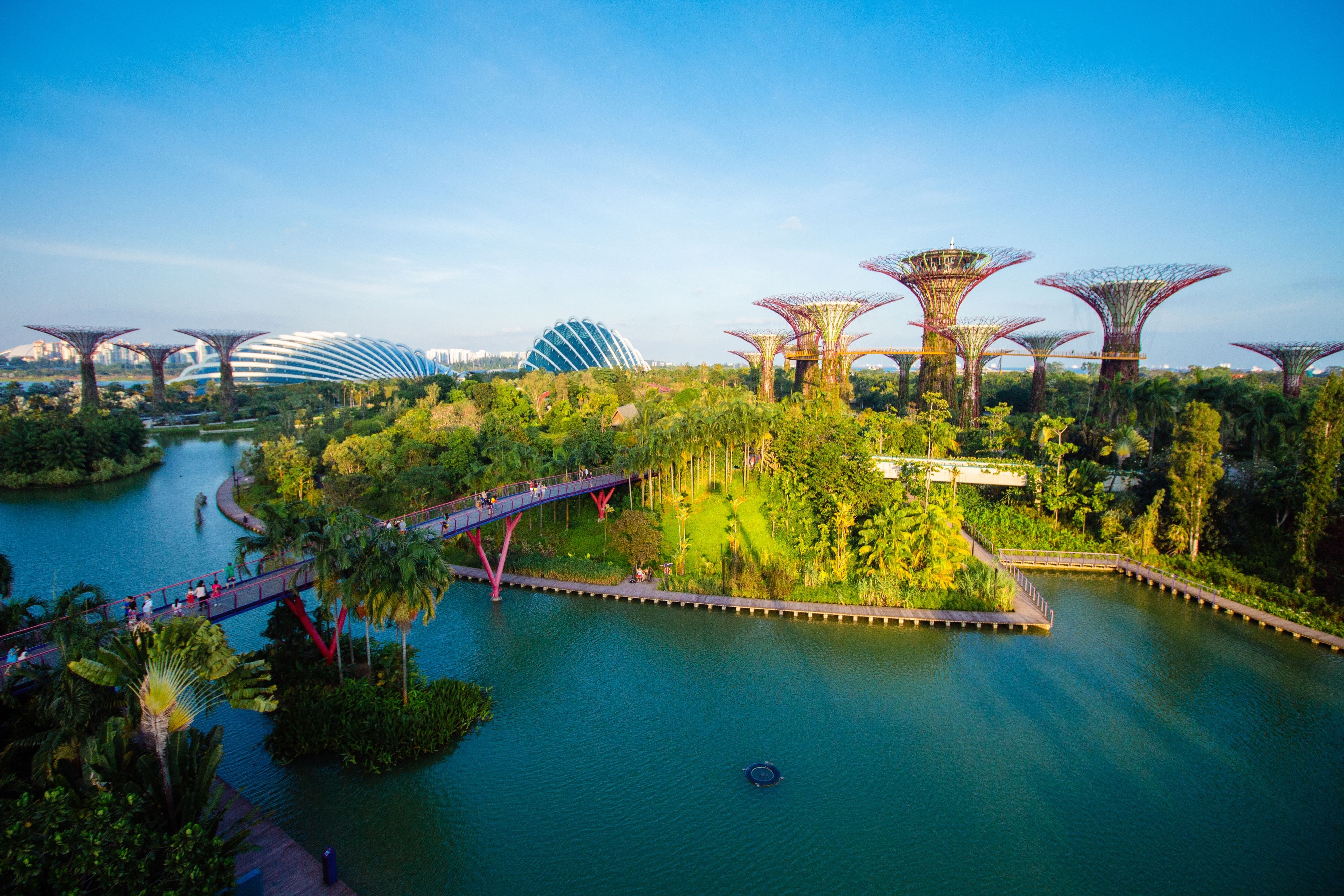
What you do Step into the surreal world of Gardens by the Bay — marvel at the towering Supertrees, walk the aerial OCBC Skyway, and lose yourself in the Cloud Forest's misty 35m indoor waterfall. As dusk falls, the Supertrees ignite in a breathtaking light-and-music spectacular.
What to expect Enter the Cloud Forest and be engulfed by a wall of tropical mist cascading down the world's tallest indoor waterfall. Wind your way up walkways draped in exotic orchids and carnivorous plants with jaw-dropping views of Marina Bay. As evening arrives, settle on the lawn below the 50-metre Supertrees and watch the grove erupt in choreographed colour and music. The juxtaposition of futuristic architecture and lush biodiversity is unlike anything else on earth.
Good to know Gardens by the Bay is a 10-min taxi from Marina Bay Cruise Centre (approx SGD 12–15). Pre-book timed-entry tickets online to avoid queues. Last Cloud Forest entry is 8 pm; Garden Rhapsody shows at 7:45 pm & 8:45 pm. Check ship's all-aboard time — most evening departures allow this comfortably.
Versus the ship tour Booking direct gives you the flexibility to time your Cloud Forest visit in the cool of morning and linger for the famous Garden Rhapsody light show at 7:45 pm — a magical payoff that pre-packaged tours routinely miss. The Supertree Observatory at sunset is a bucket-list moment in itself.
What you do Ascend to the iconic SkyPark atop Marina Bay Sands — 200 metres above the city — for the most photographed panorama in Asia. Hotel guests can take a dip in the infinity pool seemingly suspended over the skyline; non-guests access the observation deck for equally staggering views.
What to expect Ride the express lift to the 57th floor and step out onto the ship-shaped SkyPark. The city unfurls in every direction — the glittering bay, the green lung of Gardens by the Bay, the colonial CBD, and the Strait of Malacca beyond. Sunset here turns the skyline amber and gold. Hotel guests can slip into the infinity pool at the sky's edge and float above one of the world's great city panoramas. The attached bar serves Singapore Slings 200 metres in the air.
Good to know Observation deck is open daily 11 am–9 pm (last entry 8:30 pm). Marina Bay Sands is a 10-min taxi from Marina Bay Cruise Centre. Book observation deck tickets online at marinabaysands.com. If overnighting, book well in advance — rooms sell out fast on cruise-call dates.
Versus the ship tour There is no other vantage point in Singapore — or arguably Asia — quite like this. The 360-degree cantilevered deck stretches 340 metres across three towers, framing the entire Marina Bay skyline, Sentosa Island, and on a clear day, the Indonesian islands. For those who book a room, the world-famous infinity pool is simply one of travel's great bucket-list swims.
What you do Guided by a passionate local expert, eat your way through Singapore's legendary hawker culture — UNESCO-listed and utterly irreplaceable. Taste laksa, char kway teow, Hainanese chicken rice and chilli crab across Maxwell Food Centre and the lanes of Chinatown and Tanjong Pagar.
What to expect Begin at Maxwell Food Centre, one of Singapore's most storied hawker complexes, where Tian Tian Chicken Rice has a legendary queue. Your guide explains the fascinating immigrant heritage behind each dish — Hokkien, Teochew, Malay, Tamil. Wind through the shophouse lanes of Chinatown, stop for a traditional kopi (coffee) in a century-old kopitiam, and finish with Singapore's greatest controversy: which laksa is best. Every bite is backed by a story.
Good to know Tours depart from central Singapore and can be customised by Hello! Singapore Tours. Book directly via their website and mention your cruise all-aboard time so the guide tailors the pace. Most food tours run 3–4 hours. Maxwell Food Centre is a short taxi ride from Marina Bay Cruise Centre.
Versus the ship tour Hello! Singapore Tours is an award-winning, guide-led specialist — not a bus-tour operator. Your expert knows exactly which hawker stall has the 30-year-old wok hei technique and which kopitiam has been serving the same Hainanese breakfast since 1965. Group sizes are kept small so you eat like a local, not a tourist.
book direct with Hello! Singapore Tours → · the full guide →
What you do Plunge into the riot of marigolds, incense, and vibrant street art of Little India, then cross to the bougainvillea-draped lanes of Arab Street and Kampong Glam. A private local guide unlocks the spiritual, artistic, and culinary soul of Singapore's most colourful precincts.
What to expect Arrive in Little India and immediately sense the sensory shift — jasmine garlands, Tamil film music, and the copper glow of temple gopurams. Enter Sri Veeramakaliamman Temple, one of Singapore's holiest Hindu shrines, and hear its 19th-century founding story. Stroll the candy-coloured shophouses of Haji Lane, where indie boutiques and striking murals fill every wall. At the Sultan Mosque, your guide contextualises Singapore's extraordinary multicultural governance. A short detour to a family-run spice merchant completes the portrait.
Good to know Culture Curious tours are fully private and customisable — email directly to tailor the itinerary to your interests and ship schedule. Dress modestly for temple and mosque visits (covered shoulders and knees). Little India is 15–20 minutes by taxi from Marina Bay Cruise Centre.
Versus the ship tour Culture Curious specialises exclusively in private, expert-led cultural tours with deep knowledge of Singapore's ethnic enclaves, urban planning, and living heritage. You set the pace — linger at Sri Veeramakaliamman Temple, browse the perfumeries of Arab Street, or step inside the Sultan Mosque at the guide's invitation. This is not a highlight reel; it is genuine cultural access.
book direct with Culture Curious Singapore Tours → · the full guide →
What you do Wander 160 years of living botanical history at the Singapore Botanic Gardens — a UNESCO World Heritage Site — culminating in the National Orchid Garden, home to over 1,000 species including the rare black orchid and hybrid orchids named for visiting royalty.
What to expect Enter through the grand Tanglin Gate and immediately shed the city's pace. Heritage rain trees form a cathedral canopy over meandering paths through themed gardens — the Swan Lake, the Evolution Garden, the fragrant Ginger Garden. In the National Orchid Garden, colour saturates every sightline: cascading purple Dendrobiums, blazing orange Arantheras, and the pale, ethereal Vanda Miss Joaquim, Singapore's national flower. Benches, birdsong, and cool shade make this a rare moment of genuine tranquillity.
Good to know Gardens open daily 5 am–midnight (free); National Orchid Garden 8:30 am–7 pm (last entry 6 pm). Roughly 20 minutes by taxi from Marina Bay Cruise Centre (SGD 18–22). Pre-purchase Orchid Garden tickets at the gates or online via nparks.gov.sg. Allow 2–3 hours minimum.
Versus the ship tour The National Orchid Garden is the world's largest tropical orchid collection and one of the few places on earth where you can see VIP Orchids — rare hybrid blooms created to honour heads of state, from Queen Elizabeth II to Nelson Mandela. The heritage Ginger Garden and Swan Lake add layers of beauty found nowhere else. This is botanical luxury at its finest.
What you do Board a converted WWII-style DUKW amphibious craft for Singapore's only land-and-water city tour — rolling past the colonial CBD, Esplanade, and Marina Bay before dramatically splashing into the Singapore River for a unique skyline perspective from the water.
What to expect Your guide narrates Singapore's dramatic transformation from colonial trading port to futuristic metropolis as you roll past the Padang, St Andrew's Cathedral, and the glittering towers of Marina Bay. Then — with a roar and a splash — the DUCK powers into the Singapore River, and the skyline rearranges itself into a postcard. From the water you drift past the Merlion statue, under the Cavenagh Bridge, and along the rejuvenated banks of Boat Quay. The combination of history, humour, and spectacle makes this a genuinely joyful 60 minutes.
Good to know DUCKtours depart from Suntec City (central Singapore), approx 15-min taxi from Marina Bay Cruise Centre. Tours run daily; book direct at bigducktours.com to secure your preferred time slot. Duration approx 60 minutes. Ideal as a morning orientation before exploring on your own.
Versus the ship tour No other city tour in Singapore offers the double perspective of both street level and the waterway — in the same vehicle, with no transfers. The dramatic water entry beside Suntec City draws gasps every time, and the river approach to the Merlion and Esplanade Theatres (the 'Durians') is a genuinely unique photo angle. It's theatrical, expert-narrated, and accessible to all ages.
book direct with Singapore DUCKtours (official) → · the full guide →
What you do Descend into the legendary 250km Viet Cong tunnel network used during the Vietnam War. A private guide brings the claustrophobic history alive at the less-crowded Ben Duoc section — bucket-list, visceral, and profoundly moving.
What to expect Your private guide collects you at the port and briefs you on the war-era context during the drive. At the tunnels, you crawl through widened (but still narrow) passages, inspect booby-trap displays, and fire period weapons at the shooting range if you wish. The guide weaves personal family narratives into the history, making it far more than a textbook lesson. Return transfer to the ship is included, timed precisely to all-aboard.
Good to know Phu My port is roughly 90 minutes from Cu Chi — allow a full day (8–9 hours). Book private transport that picks up dockside. Wear light, dark-coloured clothing (tunnels are dusty) and closed-toe shoes. Pre-book well in advance as private slots fill quickly on port days.
Versus the ship tour Fully private, pace-your-own experience with a vetted local historian guide; access to the quieter Ben Duoc section avoids mass-tour crowds; personalized storytelling you simply cannot get in a group setting.
book direct with Tours by Locals – Ho Chi Minh City Private Guides → · the full guide →
What you do Trade the city for the lush, labyrinthine waterways of the Mekong Delta. A private boat whisks you past floating markets, coconut candy workshops, and rice-paddy villages — a sensory world that feels a universe away from modern Saigon.
What to expect After a scenic drive south from Phu My, your private guide boards a covered speedboat at My Tho. You weave through narrow canals shaded by banana palms, stopping at a working coconut-candy factory, a honey-bee farm, and a hand-woven mat workshop. A leisurely lunch of fresh river fish, morning-glory stir-fry, and tropical fruits is served in a local family's garden. The final leg is a cyclo ride through a riverside village before your return transfer to the ship.
Good to know Full-day commitment — plan for 9–10 hours from Phu My. Confirm your operator accounts for drive time from the port (approx. 2 hours each way) so all-aboard is not a concern. Light clothing and insect repellent essential. Pre-book private transport dockside.
Versus the ship tour Private speedboat rather than a slow group barge means you reach deeper, tourist-free canals; lunch is at a family homestay, not a tourist restaurant; pace is entirely yours — linger at the fruit orchards or the rice-paper maker as long as you like.
book direct with Shore Excursions Asia – Vietnam Private Tours → · the full guide →
What you do Climb onto the back of a vintage Honda and tear through Saigon's neon-lit back alleys with a passionate local foodie guide. Bánh mì, bún bò Huế, bánh xèo, and craft bia hơi at hidden gems the tourist trail never finds — utterly unforgettable.
What to expect Your guide meets you in District 1 at dusk and fits you with a helmet before weaving into the electric chaos of Saigon's evening rush. You stop at six to eight street-food stalls across multiple districts — from steaming phở stalls lit by bare bulbs to hidden rooftop bars overlooking the Saigon River. Each guide shares personal stories of growing up in the city alongside culinary context. The tour ends in the heart of District 1, a short taxi ride from Phu My port.
Good to know Tour runs from approximately 6 PM to 10 PM — ideal for ships with a late all-aboard or overnight stay in Ho Chi Minh City. Confirm the ship's schedule before booking. Modest attire recommended (long trousers advised on the bike). Book via xotours.vn at least 2–3 weeks ahead for weekend port days.
Versus the ship tour XO Tours' all-female team of local guide-riders is an institution in itself; small group of max 8 ensures intimacy and access to tiny neighbourhood joints; the motorbike format unlocks streets and timings impossible on foot or by minibus.
book direct with XO Tours – Saigon Motorbike Food Tours → · the full guide →
What you do Walk the corridors of the palace where the Vietnam War ended — intact war rooms, rooftop helicopter pads, underground bunkers — then confront the war's human cost at the globally acclaimed War Remnants Museum with a private expert guide.
What to expect Your guide meets you at the palace gates and leads you through the preserved 1960s state rooms, the rooftop where tanks famously broke through the gates in April 1975, and the subterranean command bunkers. The mood shifts profoundly at the War Remnants Museum — graphic, honest, and essential. Your guide contextualises both perspectives of the conflict with nuance and personal family history. The half-day format leaves afternoon time free for the city.
Good to know Reunification Palace entry: VND 40,000 (~USD 1.60); War Remnants Museum entry: VND 40,000 (~USD 1.60) — both are included when booking via Withlocals private packages. Open daily from 7:30 AM. Phu My to District 1 is a 1.5–2 hour drive; book a dockside private transfer to maximise time. Wear comfortable walking shoes.
Versus the ship tour One-to-one or small-family pace with a guide who can adjust depth of commentary to your knowledge level; the combination of Reunification Palace plus War Remnants Museum in a single, privately curated narrative arc is a far richer experience than either site alone.
book direct with Withlocals – Private Ho Chi Minh City Guides → · the full guide →
What you do Three of Southeast Asia's most photogenic landmarks in one private-guided morning — French colonial Notre Dame Cathedral, the ornate Central Post Office designed by Gustave Eiffel's studio, and the incense-wreathed Jade Emperor Pagoda, still an active place of worship.
What to expect Your air-conditioned private vehicle collects you at the port and delivers you to the red-brick Notre Dame Cathedral for an exterior exploration (interior currently under restoration). Steps away, the Central Post Office dazzles with its vaulted ironwork ceiling and vintage Ho Chi Minh portraits — still a working post office where you can send a postcard home. The finale is the smoky, lantern-hung Jade Emperor Pagoda, where worshippers burn offerings and the carved deity galleries feel centuries removed from the modern city outside.
Good to know This half-day (4–5 hours) pairs well with an afternoon food or river tour. Modest dress is required at the Jade Pagoda — shoulders and knees covered. Notre Dame Cathedral exterior only (restoration ongoing as of 2025–2026). Port transfer roughly 1.5 hours each way — factor into timing.
Versus the ship tour A private guide delivers deep architectural and religious context at each site; visits are timed to avoid peak tour-bus crowds; the Jade Emperor Pagoda is rarely included on standard tours yet is the most atmospheric of the three.
book direct with Shore Excursions Asia – Vietnam Private Tours → · the full guide →
What you do Board a chartered traditional sampan at golden hour and drift along the Saigon River as the city's skyline — from colonial spires to the gleaming Landmark 81 tower — ignites in the sunset. Champagne, fresh spring rolls, and zero crowds: pure luxury.
What to expect Your boat departs from the central Saigon River quay at dusk, gliding past the colonial customs house, working cargo barges, and the glittering Ben Nghe canal mouth. Cold-pressed Vietnamese fruit juices and Champagne are poured as the sun drops behind the cityscape. Your guide points out landmarks from the water — a completely different vantage point from street level. As night falls, the river lights up and the energy of the city hums from the banks; you return to the dock refreshed and unhurried.
Good to know Ideal for ships with an evening departure or overnight stay in Ho Chi Minh City — best departures are 5–6 PM. Quay is in central District 1, roughly 1.5 hours from Phu My port by private car. Pre-book the return transfer before boarding. Secure reservations 2–3 weeks ahead as private charters are limited.
Versus the ship tour A fully private, chartered wooden vessel rather than a shared dinner cruise; the intimate format and curated food-and-drink pairing elevate it to a genuine luxury event; the guide narrates the river's history from the French colonial port era to today's mega-development.
book direct with Les Rives Experience – Saigon River Cruises → · the full guide →
What you do Ride the legendary Peak Tram to Hong Kong's most iconic viewpoint and stand on Sky Terrace 428 as the city's skyline ignites at dusk — a panorama that defines the word 'bucket-list.'
What to expect The 125-year-old funicular climbs at a thrilling 27-degree angle through the Mid-Levels jungle before delivering you to Sky Terrace 428 — the highest viewing platform on the Peak at 428 metres. Victoria Harbour stretches below you in every direction, skyscrapers glinting gold and then neon. Linger for the full colour change from sunset to city-glow before descending to Central for dinner. The Peak Tower complex also houses upscale dining for a post-view sundowner.
Good to know Trams run daily 07:00–23:00; the last return tram is 23:30. Book online in advance to skip the physical ticket queue — walk-up waits can exceed 45 min at peak times. Central Star Ferry pier is a 10-min taxi from the Ocean Terminal (Harbour City), giving you maximum time ashore. Factor ~3 hours return.
Versus the ship tour Booking the priority online ticket lets you bypass queues and time your ascent for the golden hour, so you're on the terrace the moment the harbour lights flicker on — an unhurried, magazine-cover moment impossible on a group coach.
book direct with The Peak Tram (Hong Kong & Shanghai Hotels, official) → · the full guide →
What you do Board a traditional Chinese junk decked in teak and lanterns for a private sunset-to-nightfall voyage across Victoria Harbour, watching the world's largest permanent light show paint 44 skyscrapers in laser and neon.
What to expect Step aboard one of Aqua Luna's iconic red-sailed wooden junks at Tsim Sha Tsui for a private voyage timed to the 20-minute Symphony of Lights show (nightly 20:00). The crew serves Champagne and canapés as the Kowloon and Hong Kong Island skylines synchronise in coloured lights and lasers to a soundtrack. After the show, your junk glides close to the Star Ferry crossing for a final iconic photo. The harbour breeze and zero light pollution at water level make the spectacle vastly more immersive than any shoreside vantage.
Good to know Charter departs from Central Pier 9 or Tsim Sha Tsui Pier; confirm your pickup point at booking. All-aboard times at Hong Kong cruise terminals vary — Symphony of Lights starts at 20:00 sharp, so confirm your ship's overnight schedule before booking an evening charter. Minimum 2 hrs ashore after 19:30 recommended.
Versus the ship tour A private charter means your own deck, your own timeline, and Champagne chilling on the bow — no sharing with 200 strangers. Aqua Luna's scarlet-sailed junks are themselves a living piece of Hong Kong heritage.
What you do Journey to Lantau Island by ferry or cable car, climb 268 steps to the world's largest outdoor seated bronze Buddha, then glide through Tai O — Hong Kong's last stilt-house fishing village — on a sampan boat.
What to expect The Ngong Ping 360 gondola soars above emerald ridges before depositing you at the monastery village. At 34 metres, Tian Tan Buddha commands the hilltop with quiet authority — your guide shares the Buddhist symbolism while the incense smoke curls below. The drive to Tai O feels like stepping back a century: weathered stilts over tidal channels, dried seafood hung like garlands, and pink dolphins sometimes spotted on the sampan. A private seafood lunch in the village rounds out an extraordinary day.
Good to know Lantau is ~45 min by ferry from Central Pier 6 or via MTR to Tung Chung for the cable car. Book the Ngong Ping 360 cable car separately in advance at np360.com.hk (HKD 235 standard return adult). The full circuit takes 7–8 hours; confirm all-aboard time before booking. Closed-toe shoes recommended for the 268 Buddha steps.
Versus the ship tour A private English-speaking guide calibrates every stop to your pace — meditating at Po Lin Monastery without a crowd, tasting fresh shrimp paste at a family stall in Tai O, and riding the cable car with panoramic pods rather than rushing to catch a coach.
book direct with Hello! Hong Kong Private Tours (official) → · the full guide →
What you do Let a private expert guide lead you through Kowloon's layered soul — incense-wreathed Wong Tai Sin Temple, the Jade Market, and hidden dai pai dong alleyways for a chef-curated dim sum and roast goose tasting.
What to expect Begin at the ornate Wong Tai Sin Temple, where fortune-tellers have practised their craft for generations and the air is thick with incense sticks. Wind through the Jade Market's covered stalls where connoisseurs tap rings to test quality. Descend into a Sham Shui Po wet market for a sensory awakening of live seafood and exotic spices. The tour climaxes at a neighbourhood roast-goose specialist and a century-old yum cha teahouse where bamboo steamers arrive in towers — dishes chosen by your guide for genuine authenticity.
Good to know Tsim Sha Tsui (Kowloon) is a 5-min walk or free shuttle from Ocean Terminal — ideal for half-day forays. The tour operates rain or shine; bring a compact umbrella. Confirm dietary restrictions in advance. A half-day tour (4 hrs) leaves ample time for independent exploration of Harbour City or a Star Ferry crossing before all-aboard.
Versus the ship tour Stephen's tours are famously intimate — never more than a private group — and he customises the route around your interests, unlocking local history and flavours that a bus simply cannot access. His decades of local knowledge turn a street corner into a story.
book direct with Hong Kong With Stephen Private Tours (official) → · the full guide →
What you do Cross Victoria Harbour on the legendary Star Ferry, then walk the layered colonial heart of Central — the Court of Final Appeal, Pottinger Street, and Man Mo Temple — guided by a private expert historian.
What to expect The Star Ferry crossing itself is a rite of passage — the 7-minute ride with the skyline bearing down is one of travel's great theatrical moments. On Hong Kong Island, your guide leads you through the granite neo-classical buildings of Central, up the steep stone steps of Pottinger Street to Sheung Wan, and into the incense-blackened interior of Man Mo Temple (1847), one of Hong Kong's oldest. Stories of British governors, Chinese merchant dynasties, and wartime resistance unfold at every corner. The walk ends with a glass of chilled Champagne at a rooftop bar overlooking the harbour.
Good to know Star Ferry departs from Tsim Sha Tsui Pier every 6–10 minutes (HKD 3.40 lower deck — collector's experience). The heritage walk covers ~4 km on gentle gradients with rest stops. Allow 4–5 hours total. Wear comfortable walking shoes. This tour can pair beautifully with a Victoria Peak visit in the same day if you have an overnight call.
Versus the ship tour A private historian-guide unlocks layers invisible to the casual visitor — the bullet holes still visible from WWII, the opium merchants who built Man Mo Temple, the neo-classical facades hiding 21st-century courts. The pace is entirely yours.
book direct with Hello! Hong Kong Private Tours (official) → · the full guide →
What you do Glide across two iconic routes on an open-top double-decker — past the neon-lit temples of Wan Chai, the waterfront of Kowloon, and up through Victoria Peak Road — with hop-on, hop-off freedom and a live commentary.
What to expect The red double-deckers cover both Hong Kong Island and Kowloon on colour-coded routes, with 24 stops including the Star Ferry, Man Mo Temple, the Peak, and the Temple Street Night Market. Live English commentary brings context to every neighbourhood. The optional harbour junk cruise can be added for a water-level contrast. The night route (departs ~18:00) transforms the city into a neon dreamscape viewed from above — one of the most photogenic ways to experience Hong Kong after dark.
Good to know Tickets bought online (bigbustours.com) save ~15% vs. at the kiosk. The nearest stop to the Ocean Terminal cruise port is Tsim Sha Tsui (Star Ferry), a 5-min walk. Day tours start ~09:00; night tours ~18:00. A 1-day pass covers both; ideal if your ship has an evening departure. Download the Big Bus app for live bus tracking and stop audio guides.
Versus the ship tour Big Bus is the city's premium hop-on hop-off operator with air-conditioned lower decks and open-top upper decks — choose your pace and linger at any stop. The night route is the showpiece: neon-drenched streets seen from an open roof are pure cinematic Hong Kong.
book direct with Big Bus Tours Hong Kong (official) → · the full guide →
What you do Journey to Korea's ancient capital — the 'museum without walls' — exploring royal Silla tombs, Bulguksa Temple, and the Seokguram Grotto in total privacy. A bucket-list immersion into 1,000 years of dynasty, art, and spiritual wonder.
What to expect Your guide collects you from the port and drives through rolling hills to Gyeongju, once the radiant capital of the Silla Kingdom. Stand inside Bulguksa Temple's stone pagodas — a masterwork of Buddhist architecture — then ascend to the Seokguram Grotto, where a granite Buddha gazes serenely over the East Sea. Stroll the Daereungwon Royal Tomb Park, a dreamlike landscape of grassy burial mounds, before visiting Cheomseongdae, Asia's oldest surviving observatory. The pace is unhurried, the storytelling rich, and every stop feels genuinely discovered.
Good to know Gyeongju is 1.5 hours from Busan port — confirm your all-aboard time and choose the earliest departure. Pre-book directly; the tour departs daily and sells out in peak season. Allow a full 8–9 hours for the complete itinerary.
Versus the ship tour Small-group departures capped for an intimate experience, led by expert English-speaking local guides who go deep into dynastic history — with unhurried time at each UNESCO site rather than a rushed group sweep.
What you do Visit Busan's most dramatic coastal temple — Haedong Yonggungsa — built directly on seaside cliffs above crashing waves, then unwind on legendary Haeundae Beach. A singular fusion of spiritual grandeur and Korea's most glamorous shoreline.
What to expect Step through stone dragon gates as Haedong Yonggungsa Temple reveals itself perched on wave-lashed granite — one of Korea's only coastal Buddhist temples, and breathtakingly photogenic at any hour. Your guide explains the 600-year-old history and the rituals still practised here daily. Continue to Haeundae Beach, Busan's iconic 1.5 km crescent of white sand framed by a glittering high-rise skyline, for a leisurely stroll, fresh seafood at the nearby market, and a panoramic coffee stop. The afternoon is yours to savour at whatever pace feels right.
Good to know The temple is busiest mid-morning; aim to arrive before 10 am for the best light and fewer visitors. Haeundae is 30 minutes from port by private car. Comfortable walking shoes essential — temple steps are steep and uneven.
Versus the ship tour A licensed local expert curates the pacing — sunrise light at the temple, private transport between sites, and genuine insider commentary on Korean Buddhist tradition that no large-group format can replicate.
What you do Wander Busan's 'Machu Picchu of Korea' — the pastel-painted hillside labyrinth of Gamcheon Culture Village — then dive into the raw theatre of Jagalchi Fish Market, Korea's largest. Colour, creativity, and culinary adventure in one unforgettable morning.
What to expect Gamcheon was born from a 1950s refugee settlement that artists and community groups transformed into a warren of vivid murals, sculpture, and tiny galleries spilling down a hillside above the harbour — it rewards slow, curious wandering. Your guide leads you to the best viewpoints and quieter corners before the day-trip crowds arrive. Then it's down to Jagalchi, a vast covered market buzzing with halmeoni (grandmothers) in rubber aprons, tanks of live octopus, and the salty perfume of the sea. Sample freshly shucked oysters, watch the expert filleting, and choose your own catch for a same-table lunch upstairs.
Good to know Gamcheon is a 15-minute taxi ride from port; arrive early (before 9:30 am) for the best light and quiet lanes. The market is open from 5 am daily — a morning visit is ideal. Wear comfortable shoes; the village involves significant uphill walking.
Versus the ship tour A private local guide navigates the village's hidden alleys and rooftop murals that no map reveals, then negotiates the market's vendors on your behalf — ensuring genuine tastings and zero tourist-trap moments.
book direct with GoWithGuide – Local Busan Expert → · the full guide →
What you do Glide above the East Sea in a sky-blue glass capsule on the Haeundae Blueline Park — the most Instagrammable 4.8 km coastal rail in Korea. Transparent cabins float over cliffs and turquoise water for views that stop time.
What to expect Board your glass Sky Capsule at Mipo Station and glide south along a clifftop rail line, hovering above dramatic rocky coastline and brilliant blue water with the city skyline dissolving behind you. The 30-minute ride passes hidden coves, fishing villages, and pine-forested bluffs inaccessible by road. Disembark at Cheongsapo — a charming traditional fishing port with twin lighthouses — for coffee and fresh donut-shaped hotteok from a harbourside stall. Return via the vintage-style Beach Train for a completely different coastal perspective. Tickets book out weeks ahead in peak season.
Good to know Pre-book Sky Capsule tickets online well in advance — they sell out fast, especially on weekends. The park is 30 minutes from port by taxi. Allow 2–3 hours for the full experience including time at Cheongsapo. Last capsule is early evening.
Versus the ship tour The Sky Capsule is a private four-seat glass pod — no guides, no crowds, just your group suspended above the sea. An utterly unique Korean experience that exists nowhere else on earth.
book direct with Haeundae Blueline Park (Official) → · the full guide →
What you do Ascend Mount Toham to Bulguksa — Korea's most revered Buddhist temple complex and a UNESCO World Heritage Site — then discover the Seokguram Grotto's sublime stone Buddha above the clouds. The spiritual and artistic pinnacle of Korean civilisation.
What to expect Bulguksa's stone staircases — the Cheongungyo and Baegungyo bridges — have been photographed a million times, yet nothing prepares you for the hush of the inner courtyard at first light, where two treasured pagodas face each other across polished granite. Your licensed guide unpacks eight centuries of Silla-era symbolism encoded in every carved lotus and bronze bell. Then wind up through birch forest to Seokguram, where a perfectly proportioned granite Buddha sits inside a domed grotto — positioned to greet the first rays of the rising sun over the East Sea. It is one of the most quietly moving sights in all of Asia.
Good to know Bulguksa is 1.5 hours from Busan port — essential to confirm your all-aboard time. A private guide is strongly recommended to decode the UNESCO significance. Combine with a Gyeongju half-day for maximum depth. Temple open daily from 7 am.
Versus the ship tour Arriving independently with a private guide means lingering in the Blue Bridge courtyard at dawn, before tour groups arrive — a moment of genuinely rare serenity at one of Asia's most iconic sacred sites.
What you do The definitive Busan day in a maximum six-person group — Gamcheon, the coastal temples, Gwangalli Beach, and a panoramic sky-high finale — led by an expert local who treats every stop as a genuine discovery. The perfect introduction to Korea's second city.
What to expect Begin in the colourful alleys of Gamcheon Culture Village before the crowds arrive, your guide narrating its remarkable community art story. Continue to the cliff-top Haedong Yonggungsa Sea Temple, then sweep along the coast to the shimmering arc of Gwangalli Beach with its steel-cable bridge views. A fresh seafood lunch at a locally loved restaurant follows, then ascend to BUSAN X the SKY — one of Korea's highest observation decks — for a 360° panorama across the harbour, mountains, and coastline. Your guide is available throughout for questions, restaurant recommendations, and spontaneous detours.
Good to know Maximum 6 guests ensures a genuinely private feel — book well ahead as these spots go fast. Full-day tours run 8–9 hours; confirm your all-aboard time before booking. Pickup directly from the cruise terminal available on request.
Versus the ship tour Capped at six guests — genuinely small-group — with a licensed local guide who adapts the itinerary to your pace and interests, pausing at viewpoints and markets that larger groups simply bypass.
book direct with GoWithGuide – Local Busan Expert → · the full guide →
What you do A fully private, expert-led day uniting Hiroshima's two UNESCO World Heritage sites — the Peace Memorial Park & Atomic Bomb Dome and the iconic floating Torii Gate of Itsukushima Shrine on Miyajima Island. The ultimate bucket-list pairing in a single shore day.
What to expect Your licensed private guide meets you at the port and whisks you first to the Peace Memorial Park, where you linger at the Cenotaph, Children's Peace Monument and the haunting Atomic Bomb Dome at your own pace. A focused visit to the Peace Memorial Museum follows — your guide provides layered historical context that transforms exhibits from information into lived understanding. You then ferry across to Miyajima Island, walking the ancient cedar-lined path to the vermilion Itsukushima Shrine and its legendary floating Torii at the water's edge. The day ends with a quiet moment on the island before your private transfer back to port.
Good to know Full-day tours run approximately 8–9 hours — confirm your ship's all-aboard time and communicate it to Michi Travel at booking to ensure a tailored return schedule. Pre-book as far in advance as possible; private licensed guides fill quickly on port days. Ferry to Miyajima takes ~10 min from Miyajima-guchi; included in most private tour packages. Book direct via michitravel.com.
Versus the ship tour Completely private and customisable itinerary — your guide adjusts pace, depth and focus to you. No coach, no crowds, no compromise. Licensed government guide with deep contextual knowledge of both World Heritage sites.
book direct with Michi Travel Japan (Private Licensed Guides) → · the full guide →
What you do Walk the epicentre of 6 August 1945 with a Hiroshima Peace Volunteer guide through the Park and Museum, then stand face-to-face with the Atomic Bomb Dome — the only structure left standing at the hypocentre. Profoundly moving and utterly irreplaceable.
What to expect Certified Hiroshima Peace Volunteers lead a 90-minute English walking tour of the Peace Memorial Park, pausing at each monument to explain its significance with striking personal anecdotes and historical precision. Inside the museum, the East Building's timeline and West Building's human-scale testimonies — melted watches stopped at 8:15 a.m., a child's scorched tricycle — are given meaning far beyond what signage alone conveys. The reconstructed Atomic Bomb Dome, designated a UNESCO World Heritage Site, is approached last, its skeletal iron dome reflected in the Motoyasu River — a moment of absolute stillness. Allow a minimum of three to four hours for the full experience.
Good to know Peace Volunteer tours depart from the museum front at set times (typically 10:00 & 14:00); no advance booking required but arrive early. Museum opens 08:30 (Mar–Jul & Sep–Nov), 08:00 (Aug). Closed the last Mon of Dec. From the cruise port, take the Hiroshima Electric Railway (tram) to Genbaku-dome-mae — approx. 30–40 min, JPY 190. Allow ample buffer before all-aboard.
Versus the ship tour The Peace Volunteers are local citizens — many with direct family connections to the bombing — who give deeply personal, nuanced tours unavailable anywhere else. The combination of expert human storytelling and unhurried time in the museum's most powerful galleries is what makes this genuinely unmissable.
book direct with Hiroshima Peace Memorial Museum (Official) → · the full guide →
What you do Ride the ropeway to the summit of sacred Mt. Misen (535 m) for panoramic Seto Inland Sea views, then descend to the water-lapped Itsukushima Shrine and its legendary floating Torii Gate — a single excursion that delivers both spiritual grandeur and breathtaking natural beauty.
What to expect A short JR ferry crossing (included in JR Pass or JPY 180 one-way) brings you to the island, where free-roaming sika deer greet you on the stone-paved lanes. The ropeway whisks you up through dense forest to獅子岩 (Shishi-iwa) Station and a short trail leads to Misen's summit — commanding views across the island-studded Seto Sea reward every step. Back at sea level, Itsukushima Shrine's vermilion corridors appear to float on the tidal flats, and at high tide the great Torii Gate rises from open water in one of Japan's most iconic vistas. Oysters grilled on the waterfront and freshly made momiji-manju (maple-leaf cakes) make the perfect island farewell.
Good to know Check tide tables before departure — the floating Torii effect is best at high tide (check visit-miyajima.com). The ropeway can have queues on busy port days; arrive by 09:00–09:30 to beat the midday rush. From Hiroshima port, take a taxi or tram to Hiroden-Miyajima-guchi and board the JR Ferry (~50 min total travel). Allow at least 5–6 hours on the island. Pre-purchase ropeway tickets online to save time.
Versus the ship tour Going independently by JR ferry and ropeway lets you linger on the summit at sunrise or golden hour — timing that mass groups never achieve. The combination of the World Heritage shrine at water level and the 360° panorama from Misen is the kind of double reward that defines a bucket-list day.
book direct with Miyajima Ropeway (Hiroshima Prefecture Official) → · the full guide →
What you do Explore the beautifully restored 16th-century 'Carp Castle' — Hiroshima's feudal centrepiece — with its five-storey keep housing immersive samurai-era exhibits, then ascend to the top floor for sweeping views over the city and distant Inland Sea.
What to expect Originally built in 1589 by feudal lord Mori Terumoto and faithfully reconstructed after 1945, the castle keep contains five floors of absorbing exhibits tracing Hiroshima's samurai heritage — armour, swords, maps and scale models bring the Edo period vividly to life. The top floor observation deck frames the Peace Memorial Park and Chugoku mountains in a single vista that is surprisingly affecting given the city's history. Immediately adjacent, the 400-year-old Shukkei-en strolling garden offers tea-pavilion tranquillity beside a miniature lake — a moment of calm between landmarks. Local volunteers occasionally offer free English commentary at the garden.
Good to know Hiroshima Castle is a 15-minute tram ride (Hiroden Line 9) from Hiroshima Station, or a short taxi from the Peace Park area. Opening hours 09:00–18:00 (Mar–Nov), 09:00–17:00 (Dec–Feb). Combine with Peace Memorial Park for an efficient cultural full morning — they are just 1.5 km apart. No advance booking required; buy tickets at the gate.
Versus the ship tour Pairing the castle with the serene Shukkei-en Garden next door creates an elegantly paced cultural half-day that is self-guided yet deeply rewarding — no bus, no group, just Hiroshima's feudal soul at your own rhythm.
book direct with Hiroshima Castle (Official City Museum) → · the full guide →
What you do Learn to make Hiroshima-style okonomiyaki — the city's beloved layered savoury pancake, wildly different from Osaka's version — in a hands-on class at Okonomi-mura, the legendary three-storey 'village' of 25 competing family stalls that has fed locals since 1945.
What to expect Your class begins with a briefing on how Hiroshima-style okonomiyaki differs from all others — the layers of cabbage, pork belly, yakisoba noodles and egg are built on a flat teppan griddle with the precision of a craft. Under a local chef's guidance, you master the technique yourself, flipping and layering until your own perfect version is ready to eat. The class wraps with sake or Japanese craft beer pairing and recommendations for the city's best street-food. Afterwards, Okonomi-mura's atmospheric stalls — each a tiny, smoky theatre of cast-iron — beckon for a second course or a Hiroshima lemon chuhai.
Good to know Classes are small-group (typically 6–10 people) and run in English; book at least 2 weeks ahead as they sell out on port days. Okonomi-mura is in central Hiroshima — a 10-min tram ride from the Peace Park area. The experience takes 2–2.5 hours, making it an ideal complement to a morning at the Peace Memorial. Vegetarian and gluten-free adaptations available on request.
Versus the ship tour A small-group cooking class with a local instructor who explains the dish's post-war origins — okonomiyaki stalls were some of the first businesses to reopen after the bombing — gives this humble pancake extraordinary cultural weight. You eat what you make, then explore the stalls of Okonomi-mura independently.
What you do Step inside the beating heart of Hiroshima's greatest industrial legacy on an exclusive factory floor tour at the MAZDA Museum — tracing the brand's rise from near-atomic-bomb destruction to global automotive icon, with live assembly-line access unavailable to the general public.
What to expect Your guided tour (approximately 90 minutes, English available) opens in the heritage showroom where the original three-wheeled Mazda-Go of 1931 stands alongside rotary-engine legends and concept vehicles. You then step onto the Ujina Plant assembly floor — robots and humans working in choreographed precision building the latest models in real time, a spectacle of engineering that even non-car enthusiasts find mesmerising. The tour concludes with the brand's powerful post-war narrative: MAZDA's Ujina plant was one of only a handful of Hiroshima buildings to survive the blast, and the company became a cornerstone of the city's remarkable reconstruction. A visit to the showroom boutique rounds out the experience.
Good to know Reservations are mandatory and must be made in advance via the MAZDA Museum website (mazda.com/en/about/museum/). English tours are offered on select days — check the calendar carefully. The factory is in Fuchu-cho, approximately 20–25 min by taxi from the city centre or Hiroshima port. Photography is restricted on the factory floor. Tours fill weeks in advance on cruise port days; book the moment your itinerary is confirmed.
Versus the ship tour Access to a live automobile assembly line inside a world-class factory is extraordinarily rare — and the MAZDA Museum's bilingual guided tour includes it. Combine that with the brand's deeply personal story of rebuilding Hiroshima after 1945, and this is a genuinely unique industrial and human story told from the inside.
book direct with MAZDA Motor Corporation (Official Museum Tours) → · the full guide →
What you do A fully private, government-licensed guided journey spanning two iconic port cities — Shimonoseki and Moji — unlocking samurai history, retro Meiji-era architecture, and the thundering Kanmon Strait in one extraordinary day.
What to expect Your private guide meets you at the pier and whisks you across the Kanmon Strait to Moji Port, a treasure trove of Meiji-era red-brick warehouses, colonnaded avenues, and harbour views. Back in Shimonoseki, the guide navigates you through the Akama Shrine — a vermilion jewel dedicated to the child emperor Antoku — and along the sweeping Kanmon Bridge overlook. The day moves at your pace, with insider commentary turning every site into a story. Lunch at a curated local restaurant is woven naturally into the schedule.
Good to know Book directly and confirm the all-aboard time with your guide at the start — 6-hour tours leave ample buffer. Comfortable walking shoes essential; some Moji sites involve cobbled streets.
Versus the ship tour A bespoke itinerary shaped entirely around your interests, led by a government-licensed English-speaking local expert — unhurried, deeply informed, and tailored to discerning travelers who want more than surface-level sightseeing.
book direct with Japan Shore Excursions → · the full guide →
What you do Dive into Japan's most celebrated seafood market where Shimonoseki's legendary fugu (puffer fish) is served fresh to order — a once-in-a-lifetime culinary ritual just 10 minutes from the pier.
What to expect Karato Market is the undisputed capital of fugu in Japan — Shimonoseki supplies over 80% of the nation's puffer fish, and this market is where the finest specimens are auctioned and sold. On weekends and holidays the market transforms into a buzzing open-air sushi fest, with stalls laden with tuna, sea bream, and the prized blowfish. Savor paper-thin fugu sashimi (tessa) and the collagen-rich fugu skin salad (yubiki) while gazing across the Kanmon Strait to Kyushu. Pair it with a glass of local Yamaguchi sake for a full sensory experience.
Good to know Market is liveliest Fri–Sun and on public holidays (10:00–15:00). A 10-minute taxi from the pier costs approx. JPY 1,000. Pre-book premium fugu kaiseki at adjacent restaurants for an elevated sit-down experience.
Versus the ship tour No middleman, no group queues — you walk the stalls yourself, choosing the freshest cuts directly from the fishermen who landed them that morning, with the freedom to linger over a seasonal sashimi platter beside the open-air waterfront.
book direct with Karato Market (唐戸市場) — Official Market → · the full guide →
What you do Chase one of Japan's most photogenic panoramas — a 1.7 km emerald-water causeway linking Tsunoshima Island to the mainland — on a private chauffeur-guided excursion to Yamaguchi's hidden coastal gem.
What to expect The drive north from Shimonoseki reveals increasingly dramatic Sea of Japan coastline before the Tsunoshima Ohashi Bridge — consistently ranked among Japan's most beautiful — comes into view, its white concrete arc floating above water that shifts from jade to deep turquoise. On the island, a short walk leads to the 1876 Tsunoshima Lighthouse perched on volcanic rock, offering sweeping 360° views across the Korean Strait. The island's beaches are famously clear, and a private stop for photographs at the bridge's viewing point is the defining Instagram moment of any Shimonoseki call. Return via a coastal scenic route.
Good to know Approximately 60–70 km from port (about 75 min each way). Best light is mid-morning. Confirm departure time allows at least 90 minutes on island. Wear wind-appropriate layers — the clifftop is exposed.
Versus the ship tour A fully private vehicle and guide means you stop for photographs exactly when the light is perfect, linger at the lighthouse bluff, and have the island's quieter corners entirely to yourselves.
book direct with Japan Shore Excursions → · the full guide →
What you do Encounter the world's largest collection of live fugu and walk through a tunnel beneath circling sharks at Kaikyokan — Shimonoseki's landmark aquarium built into the dramatic Kanmon Strait shoreline.
What to expect Step into the Kanmon Strait Tunnel Tank and watch rays and sharks glide overhead as container ships thunder past above on the water outside — a surreal juxtaposition of the natural and maritime worlds. The fugu gallery showcases dozens of species of puffer fish in elaborate species-specific tanks, from the thumbnail-sized to the basketball-sized, their inflated forms absurdly majestic. The penguin zone and Irrawaddy dolphin pool delight at every age, while the panoramic observation deck frames one of Japan's busiest sea lanes against the Kyushu hills. Allow two to three hours to do it proper justice.
Good to know 15-minute walk or 5-minute taxi from the pier. Opens 09:30 daily. Arrive early on port days to beat any group visits. The rooftop terrace is an exceptional spot to watch the Kanmon Strait traffic over a coffee.
Versus the ship tour Kaikyokan is the only aquarium in the world to dedicate an entire gallery to live fugu in all their species diversity — a genuinely rare and otherworldly marine spectacle that no other port can offer.
book direct with Kaikyokan (海響館) — Official Aquarium → · the full guide →
What you do Step inside one of Japan's most poignant and visually arresting shrines — built to appease the spirit of an eight-year-old emperor — with a private guide who brings the epic Battle of Dan-no-ura to vivid life.
What to expect Akama Shrine blazes in vermilion and white against the Kanmon Strait, its ornate Momoyama-style gate reflected in the jade water below — a photograph that alone justifies the detour. Your private guide recounts the 1185 Battle of Dan-no-ura, the decisive naval clash that ended the Genpei War and saw the Taira (Heike) clan perish with the infant Emperor Antoku. The shrine's seven stone lanterns and the moss-softened graves of Heike warriors are deeply atmospheric. The guide also decodes the legend of Hoichi the Earless — one of Japan's greatest ghost stories — which unfolds within these very walls.
Good to know 10-minute taxi from the pier (approx. JPY 900). Combine with Karato Market for a perfect morning — both sit within easy walking distance of each other along the waterfront. Book guide well in advance of port day.
Versus the ship tour A government-licensed private guide transforms this shrine from a beautiful landmark into a living history lesson — decoding the Noh masks, the Heike clan graves, and the legendary blind biwa monk Hoichi in ways a self-guided visit simply cannot.
book direct with Japan Guide Agency (Private Licensed Guides) → · the full guide →
What you do Descend 58 meters beneath the Kanmon Strait and walk across the invisible line where Honshu meets Kyushu — one of the world's most extraordinary pedestrian crossings, timed perfectly for a luxury port stop.
What to expect An elevator drops you beneath the strait's surface to a 780-metre tunnel that connects Honshu (Shimonoseki) to Kyushu (Kitakyushu) entirely on foot. At the midpoint, a painted line on the floor marks the prefectural boundary — one foot in Yamaguchi, one foot in Fukuoka — where every visitor stops for the obligatory photograph. The tunnel is cool, quiet, and strikingly well-lit, its curved white walls carrying a gentle hum of the shipping lanes above. Emerge in Kitakyushu and explore the retro Mojiko district before returning on foot or by ferry. The whole crossing takes under 20 minutes each way.
Good to know Tunnel entrance is 15 min on foot or 8 min by taxi from the pier. Open 06:00–22:00 daily. Combine with a Mojiko Retro district stroll on the Kyushu side for a seamless half-day. Bring a light jacket — the tunnel is noticeably cooler than outside.
Versus the ship tour The sheer audacity of the experience — walking under an active international shipping lane to set foot on a different island of Japan — is the definition of bucket-list. Nothing else in world cruising offers this for twenty yen.
book direct with Kanmon Tunnel for Pedestrians — Official (Shimonoseki City) → · the full guide →
What you do A bespoke, fully private full-day journey through Kochi's greatest highlights — Fort Kochi, Mattancherry Palace, spice markets and more — guided by a government-licensed expert who brings the city's layered history to vivid life.
What to expect Your government-licensed guide meets you at the port and whisks you through the atmospheric streets of Fort Kochi, pausing at the iconic Chinese Fishing Nets at their most photogenic hour. You'll explore Mattancherry Palace's stunning Kerala murals, wander the lanes of Jew Town, and browse fragrant spice warehouses that have perfumed this coast for centuries. The pace is entirely yours — linger where you choose, skip what you don't, and enjoy a curated lunch at a heritage restaurant.
Good to know Book directly through Japan Shore Excursions with cruise port pickup included. Confirm all-aboard time with your ship and build in 30 min buffer. Pre-book at least 2 weeks ahead for private guide availability.
Versus the ship tour Entirely private, self-paced, and tailored to your interests — a licensed local expert navigates you beyond the tourist circuit to hidden laneways, authentic tea stalls, and stories no group tour has time to tell.
book direct with Japan Shore Excursions → · the full guide →
What you do Paddle through the impossibly turquoise waters of Japan's Niyodo River on a small-group stand-up paddleboarding adventure — arguably the most pristine and beautiful river in all of Japan, rated a bucket-list natural wonder.
What to expect Kochi Prefecture, Japan's Shikoku island, is home to the Niyodo River — consistently rated Japan's clearest river, its waters an ethereal shade of aquamarine fed by pristine mountain springs. Your certified guide equips you with a paddle board and leads the small group downstream through forested gorges, past mossy boulders and under cedar canopies. Calm stretches invite you to peer through the glass-clear water to the riverbed below; gentle rapids add a pulse of excitement. A riverside bento lunch and post-paddle onsen option complete the experience.
Good to know The Niyodo River is approximately 60–90 minutes from Kochi Port by private car or taxi — factor in travel time and book an early-morning slot to return comfortably before all-aboard. Book directly via Visit Kochi Japan's official tour portal. Suitable for all fitness levels; no prior SUP experience necessary.
Versus the ship tour The Niyodo's water clarity is legendary — a vivid, mineral-rich blue-green that must be seen to be believed — and a small-group SUP tour lets you float through ancient cedar forests and limestone gorges in near-perfect solitude.
book direct with Visit Kochi Japan – Official Tours → · the full guide →
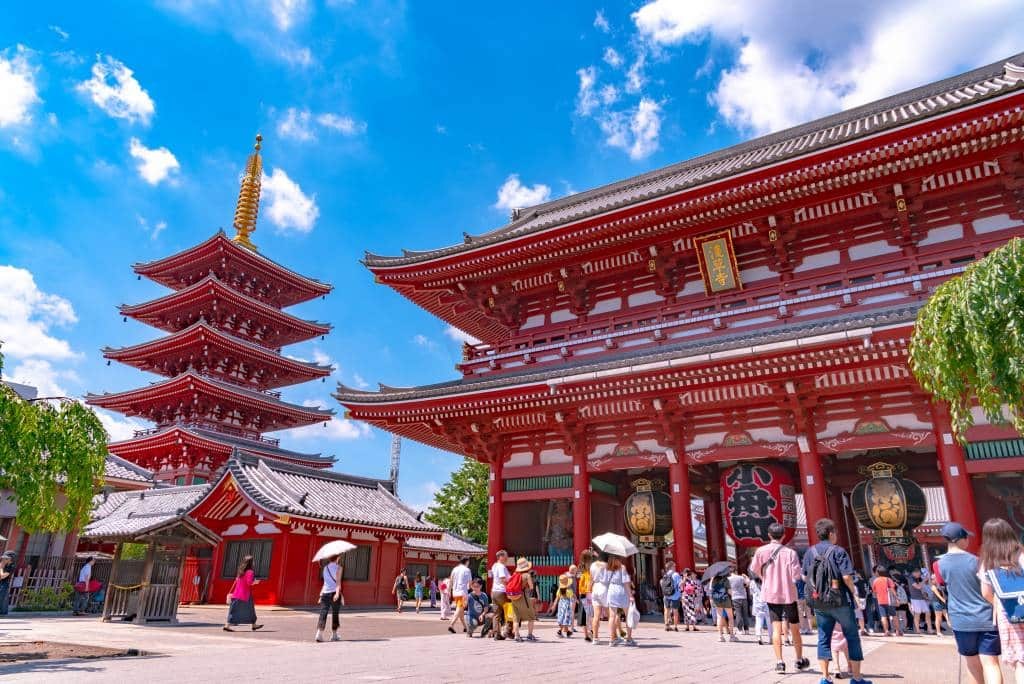
What you do Explore Tokyo's most iconic districts — Asakusa, Shibuya, Shinjuku and the Imperial Palace — guided by a nationally licensed, multilingual expert on an entirely private itinerary tailored to you. This is Tokyo at your pace, through a connoisseur's eyes.
What to expect Your guide meets you at the terminal and whisks you into Tokyo's layered world: the incense haze of Sensō-ji, the electric scramble at Shibuya Crossing, the raked gravel calm of Imperial Palace East Gardens. Lunch is arranged at a chef-selected restaurant befitting your taste. The day is a seamless private narrative rather than a checklist, ending with enough time to return comfortably before all-aboard.
Good to know Book well in advance — licensed private guides are in high demand. Confirm your ship's all-aboard time so your guide can plan the return; Tokyo International Cruise Terminal (Ariake) is roughly 30–40 min by taxi or direct Yurikamome rail from central Tokyo.
Versus the ship tour A nationally licensed guide — not a megaphone-and-flag group leader — curates every hour around your interests, from Sensō-ji temple rituals at dawn to an omakase lunch in a hidden alley. The group is yours alone, pace is entirely flexible, and the depth of cultural insight is unmatched.
book direct with Japan Guide Association (JGA) – Official Licensed Guides → · the full guide →
What you do Ascend the world's second-tallest structure to 634 metres for a panorama stretching from Mount Fuji to Tokyo Bay. On a clear day the view is simply one of the great urban spectacles on earth.
What to expect A high-speed elevator whisks you to the Tembo Deck at 350 m in under 60 seconds. A second ascent takes you to the Tembo Galleria, a glass-walled spiral walkway at 450 m where the floor disappears beneath your feet over the Tokyo skyline. The adjacent Solamachi shopping and dining complex adds a refined post-visit option before heading back.
Good to know Pre-purchase timed-entry tickets online — they sell out days ahead, especially on weekends. From Tokyo International Cruise Terminal, take the Yurikamome line to Asakusa, then the Tobu Skytree Line — allow 50 min total. Allow 2 hrs for both decks. Confirm weather forecast: Mount Fuji views require clear skies.
Versus the ship tour Skip the intermediary and book direct on the official site for guaranteed timed-entry tickets — the queue for walk-ups can swallow an hour. Pairing both decks gives you the full 634-metre summit glass-floored walkway, a genuinely vertiginous bucket-list moment inaccessible on a standard visit.
book direct with Tokyo Skytree (Official) → · the full guide →
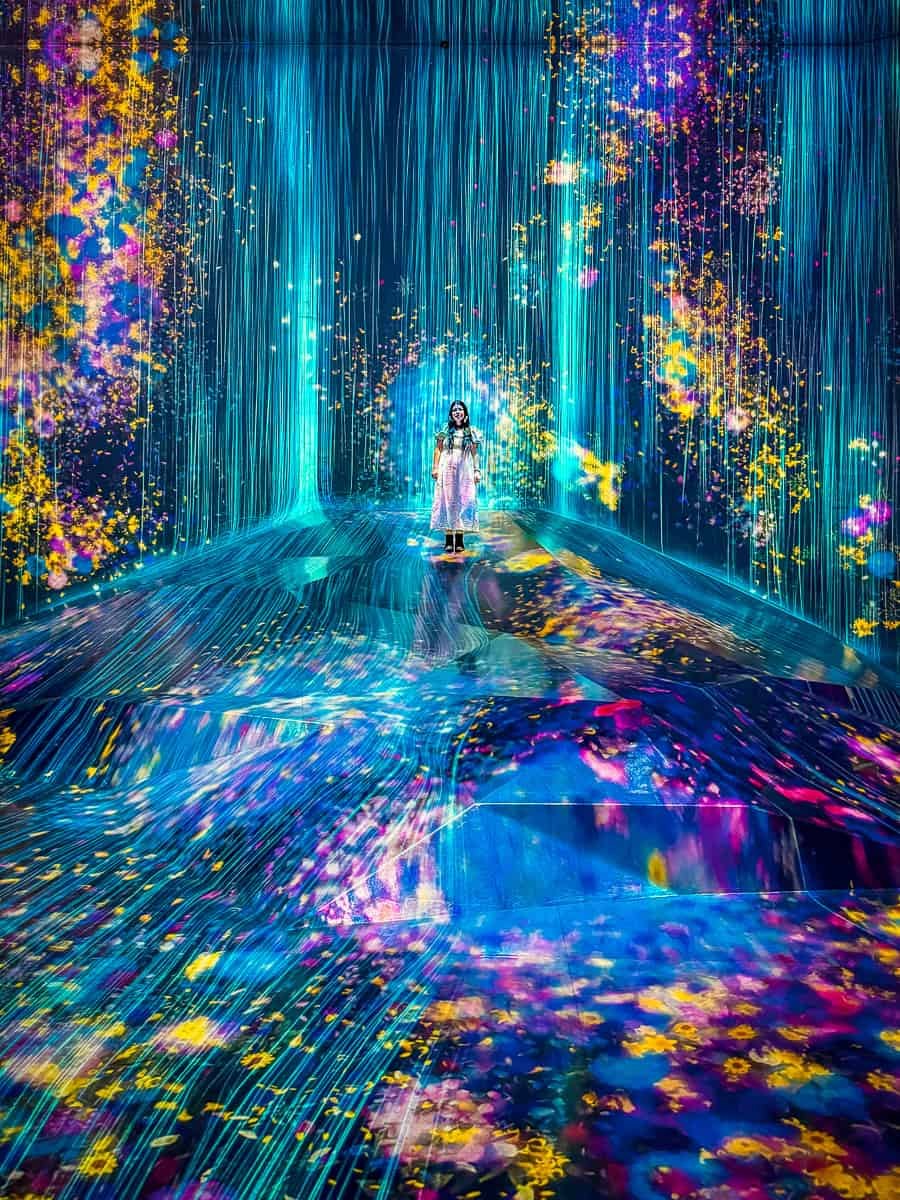
What you do Step inside teamLab Borderless — the world's most visited single-artist museum — where thousands of laser projections dissolve boundaries between art and visitor. There are no maps; every room is a living, breathing, bucket-list spectacle.
What to expect You wander freely through interconnected rooms where waterfalls, forests, and koi ponds exist entirely as light and projection — and shift when you touch them. The 'Athletic Forest' zone challenges the body as much as the mind. No two visits are identical; the art evolves in real time. Budget at least two hours, though most guests lose track of time entirely.
Good to know The new Azabudai Hills venue is a taxi/subway ride from the cruise terminal — allow 40 min. Wear comfortable shoes (some zones involve steps and uneven surfaces). Timed-entry tickets are date- and time-specific; book the earliest slot to leave the afternoon free for other stops. Avoid white clothing as projections can stain perception.
Versus the ship tour teamLab Borderless is the most talked-about cultural experience in Tokyo and tickets routinely sell out weeks ahead — direct booking guarantees your slot. The experience is entirely self-paced and intimate in scale despite the venue's size; no group itinerary can replicate the personal sense of wonder as the art responds to your movement.
book direct with teamLab Borderless Tokyo (Official) → · the full guide →
What you do Explore the legendary Tsukiji Outer Market with a private chef guide who navigates the stalls, sources the finest morning catch, and explains the art of Edomae sushi — ending at a reserved counter for an unforgettable omakase breakfast.
What to expect The morning begins in the alley labyrinth of Tsukiji Outer Market as vendors arrange glistening tuna, sea urchin, and seasonal shellfish. Your chef-guide explains provenance, seasonality, and the knife traditions behind each cut. A tamagoyaki (rolled omelette) master lets you watch the craft up close. The tour culminates at a reserved sushi counter where the chef orders on your behalf — a succession of impossibly fresh nigiri paired with explanations of each piece.
Good to know Tsukiji Outer Market is most vibrant 7–10 am; an early start is essential and pairs well with an early all-aboard schedule. The market is approximately 30 min by taxi from Tokyo International Cruise Terminal. Confirm any dietary restrictions with Context Travel at booking. Sturdy shoes are advised — the alleys are narrow and sometimes wet.
Versus the ship tour Context Travel pairs you with a culinary scholar or professional chef — not a generic guide — for an intellectually rich deep-dive into Japan's seafood culture. The private format means you linger at the stalls that captivate you, taste what the guide selects, and sit down to sushi chosen that morning, not a set tourist menu.
book direct with Context Travel Tokyo – Expert-Led Food Tours → · the full guide →
What you do Walk the ancient cedar-forested approach to Tokyo's most sacred Shinto shrine, then emerge into Harajuku's kaleidoscopic street culture — a single morning that captures the full spiritual and creative soul of Tokyo.
What to expect The 700-metre forested gravel path to Meiji Jingu feels remote despite being at the heart of 14-million-person Tokyo — a genuine hush descends. Your guide explains the daily rituals, points out the sake-barrel wall offered by French wineries, and arranges a quiet moment at the inner shrine. The short walk to Harajuku delivers the visual shock of kawaii fashion and the understated elegance of Omotesandō boutiques — Dior, Louis Vuitton, and local ateliers alike.
Good to know Shoulders and knees should be covered or a scarf carried for the shrine approach. From the cruise terminal, take the Yurikamome to Shimbashi then JR Yamanote Line to Harajuku — approx. 50 min. The combined experience takes 3–4 hours; pairs perfectly with a lunch reservation on Omotesandō. Book your GoWithGuide guide at least 2 weeks ahead.
Versus the ship tour A private local guide from GoWithGuide provides personal context for Shinto ritual — the purification ceremony, the prayer technique, the symbolism of the torii gate — that transforms a walk through a forest into a deeply moving cultural encounter. The segue into Harajuku's Takeshita Street and Omotesandō's luxury flagship stores is seamlessly curated.
book direct with GoWithGuide – Private Tokyo Local Guides → · the full guide →
What you do Ascend the beloved iron icon of Tokyo at golden hour for the exclusive Diamond Tour — access to both the Main Deck at 150 m and the Top Deck at 250 m, limited to just 70 guests per day. A sunset over the Tokyo skyline from here is a memory for life.
What to expect Tokyo Tower glows tangerine and crimson at dusk — a deliberate nod to the Eiffel Tower's evening palette — and from the glass-floor panels of the Top Deck, the city grid fans out to Tokyo Bay and beyond. The Diamond Tour guide explains the tower's 1958 construction story and its role as Tokyo's emotional heartbeat. The lounge offers premium refreshments as the city lights ignite below you.
Good to know Book online the moment your itinerary is confirmed — the 70-person cap sells out fast, especially on weekends and holidays. Tokyo Tower is in Minato, roughly 40 min by taxi from the cruise terminal. Plan to arrive at least 30 min before your slot. A sunset slot (approximately 5–6 pm) is spectacular but confirm your ship's all-aboard time allows for it.
Versus the ship tour The Diamond Tour's 70-person daily cap makes this one of the most exclusive urban viewpoints in Asia. Unlike the open-access main deck, the Top Deck tour includes a dedicated lounge, unhurried time at each level, and a guide — transforming a landmark tick into a genuinely rarefied experience.
book direct with Tokyo Tower (Official) → · the full guide →
Before you sail · near Singapore
Fly in at least a day early — every seasoned cruiser does, so a delay never costs you the ship. This is what is worth that day within reach of the port.
After you step off · near Tokyo
You end in a different port — stay on, and add what is within reach before you fly home.