Your cruise
Silver Dawn · 19-night Africa cruise, Cape Town to Dakar
Apr 11 – Apr 30 · 19 nights ·
Day 1 Cape Town (board) · Day 2 Cape Town · Day 3 at sea · Day 4 Luderitz · Day 5–6 Walvis Bay · Day 7–8 at sea · Day 9 Luanda · Day 10–12 at sea · Day 13 Tema (Accra) · Day 14 Takoradi · Day 15 Abidjan · Day 16–18 at sea · Day 19 Banjul · Day 20 Dakar (step off)
What you do Step inside Namibia's most hauntingly beautiful ruin — a once-opulent diamond-mining town now swallowed by the Namib. Sand dunes reclaim ballrooms and billiard halls in slow motion, creating one of Africa's most surreal and photogenic scenes.
What to expect Your guide leads you through the restored manager's villa, the casino, the skittle alley and the haunting family homes where dunes have risen waist-high through doorways. Every room is a perfectly preserved time capsule of 1920s colonial wealth. The contrast between German Art Nouveau interiors and the encroaching desert is viscerally unforgettable. Guided tours depart at 09:30 and 11:00; the site is open Monday–Friday 08:00–15:00.
Good to know Kolmanskop is 10 km from the Lüderitz pier — a short taxi or private transfer ride. Book tickets online in advance at kolmanskuppe.com to secure your slot. All-aboard times vary by ship; confirm with your concierge, but the 09:30 tour comfortably fits most itineraries. Bring a wide-angle lens and a hat — the desert sun is fierce.
Versus the ship tour Arrange an early-morning photography slot before the day-tripper crowds arrive — golden light floods the sand-drifted rooms at a pace no group tour can match. The official operator's guides are historians of the diamond era, unlocking stories of baronial excess in the middle of the desert.
book direct with Kolmanskuppe (Official Ghost Town) → · the full guide →
What you do Penetrate the legendary Sperrgebiet — the 'Forbidden Diamond Area' — to reach the 55-metre natural rock arch of Bogenfels and the eerie ruins of Pomona, a ghost diamond town even more remote than Kolmanskop. Fewer than a handful of operators hold the rare permits to enter.
What to expect A rugged but luxuriously guided 4x4 journey skirts the wild Atlantic coastline and plunges into the Namib's forbidden interior. At Bogenfels, the colossal freestanding arch rises from the desert floor in near-total silence — no crowds, no fences, just raw geological wonder. Pomona's abandoned ore-processing plant and crumbling workers' quarters tell a story of diamond-rush boom and bust. Expert guides narrate the extraordinary history of the Sperrgebiet throughout.
Good to know This is a full-day excursion — confirm all-aboard time with your ship's schedule and allow a full 8–9 hours. Wear sturdy closed-toe shoes and sun protection. Limited group sizes mean spaces sell out quickly — pre-book well before your port call. Transfer from the pier is included in most packages.
Versus the ship tour This is one of the most restricted land areas in Africa — the Sperrgebiet was closed to the public for over a century. Coastways holds specialist permits that grant access very few tour operators can offer, making this a genuinely once-in-a-lifetime excursion for discerning travellers.
What you do Sail the icy, wildlife-rich waters of Lüderitz Bay aboard a private catamaran to encounter African penguins, Cape fur seals, cormorants and — seasonally — dolphins and whales, all against the backdrop of a pristine desert coastline.
What to expect The catamaran glides out of the sheltered harbour into the cold, turquoise Atlantic, where African penguins — an endangered species — bob and porpoise around the bow. Cape fur seals haul out on rocky outcrops in their thousands, filling the air with their distinctive bark. Your skipper and naturalist guide narrate the ecology of the Benguela upwelling, one of the world's most productive marine systems. Oysters and Namibian sparkling wine are typically served on deck.
Good to know Tours depart from the Lüderitz waterfront, a short walk from the cruise pier. Bring a warm windproof layer — even on sunny days the Atlantic breeze is brisk. Morning departures offer the calmest seas and best light. Book directly with the operator and confirm availability against your all-aboard time.
Versus the ship tour The Benguela Current makes these waters extravagantly rich in marine life. Small-boat access gets you close to penguin colonies on offshore islands that larger vessels cannot reach — you are at eye-level with the wildlife, not photographing it from a distance.
book direct with Penguin Catamaran Tours Lüderitz → · the full guide →
What you do Explore one of Africa's most unexpected architectural treasures — a perfectly preserved German colonial town perched above the wild South Atlantic, crowned by the landmark Felsenkirche, whose stained-glass windows were a personal gift from Kaiser Wilhelm II.
What to expect Wander the pastel-coloured Jugendstil (German Art Nouveau) villas of Diamantberg, each one a statement of colonial-era diamond wealth. The Felsenkirche (Rock Church, 1912) commands the highest point in town, its soaring nave flooded with jewel-coloured light from the Kaiser's windows. Your guide brings the history vividly alive — from the diamond rush to the South African mandate to independence. Finish at the waterfront for panoramic views across the bay to the offshore islands.
Good to know The entire old town is walkable from the pier in under 10 minutes. The Felsenkirche is open to visitors most mornings — confirm current opening hours on arrival. The tour easily fits within a half-day, leaving time for lunch at a local restaurant. Sturdy flat shoes are recommended for the granite cobblestones.
Versus the ship tour A private local expert guide — such as the acclaimed Heinz, noted by travellers for his encyclopaedic knowledge of Lüderitz's colonial and diamond history — tailors the pace entirely to your interests, lingering in the spots that matter and bypassing the generic.
book direct with Namib Offroad Excursions → · the full guide →
What you do Journey to the wild tip of the Lüderitz Peninsula to stand beside the replica of Bartolomeu Dias's 1488 cross — the furthest point of European exploration at the time — while scanning the sea for African penguins on Halifax Island directly below.
What to expect A 4x4 vehicle navigates the dramatic, boulder-strewn peninsula road, passing Agate Beach — where semi-precious stones litter the shoreline — and Shark Island with its sobering colonial history. At Diaz Point, the Atlantic hurls itself against the rocks with extraordinary force, and the padrao cross marks a pivotal moment in world exploration history. Halifax Island, just offshore, hosts one of Namibia's most accessible African penguin colonies, visible through binoculars from the clifftops.
Good to know Diaz Point is approximately 22 km from the pier — a private vehicle is the only practical option. The road is unmade in parts; a 4x4 is recommended, especially after rain. The site is always open and free to access once at the point. Allow 3–4 hours for the full peninsula loop. Kali Tours is best reached via the Cruise Critic contact thread for the most current pricing.
Versus the ship tour Kali Tours is celebrated by cruise passengers as a standout local expert — rated 10/10 on Cruise Critic community boards — offering a deeply personal, knowledgeable experience that goes far beyond standard sightseeing. The peninsula's wind-sculpted geology and colony-fringed coastline reward those who venture beyond the town centre.
What you do As the Namib's light drains to crimson and then to ink, settle into the world's oldest desert for a private sundowner and expert-guided stargazing session under one of Earth's darkest, most pristine night skies — far from any city glow.
What to expect Your private guide drives you into the desert interior as the sun dips, the sand turning from gold to ember to violet. Chilled Namibian wine, local canapés and warm blankets are laid out as darkness falls with astonishing speed. The guide sets up high-powered telescopes and narrates the southern hemisphere constellations — the Southern Cross, the Magellanic Clouds — with genuine expertise. The silence and the scale of the star-canopy overhead is a profoundly moving experience.
Good to know This excursion is evening-dependent — ideal for ships with a late all-aboard or overnight call in Lüderitz. Confirm departure time carefully against your ship's schedule. Temperatures drop sharply after sunset; bring or request a warm layer. The experience is best on moonless nights — your operator can advise on optimal dates. Private transfers from the pier are included.
Versus the ship tour The Namib is the world's oldest desert and one of the few places on Earth where virtually zero light pollution meets crystalline dry-air skies — the Milky Way is not a smudge but a blazing river overhead. A private operator provides telescopes, expert narration and fine sundowner drinks in total silence, miles from anyone else.
What you do Ascend one of the Seven Natural Wonders of the World with a private guide, ride the revolving cable car, and survey 1,000 km of coastline from the summit plateau. This is Cape Town's defining bucket-list moment.
What to expect Your guide collects you portside and drives via the scenic lower cable station approach. At the top, spend up to 90 minutes exploring the plateau's lunar rock formations and indigenous proteas, with Table Bay and Robben Island spread below. The revolving cable car provides 360° views on the descent. The whole experience is unhurried and entirely at your own pace.
Good to know Cable car operates weather-permitting — confirm on the morning. Book cable car tickets at tablemountain.net to avoid queues. Allow 3–4 hours total. The V&A Waterfront is a short drive back to port.
Versus the ship tour A private guide tailors the summit walk to your pace, shares the geology, fynbos ecology, and panoramic lore that a group tour rushes past — and knows exactly when to position you for the iconic Atlantic-and-City shot.
book direct with Cape Town Tour Guide (official private guide service) → · the full guide →
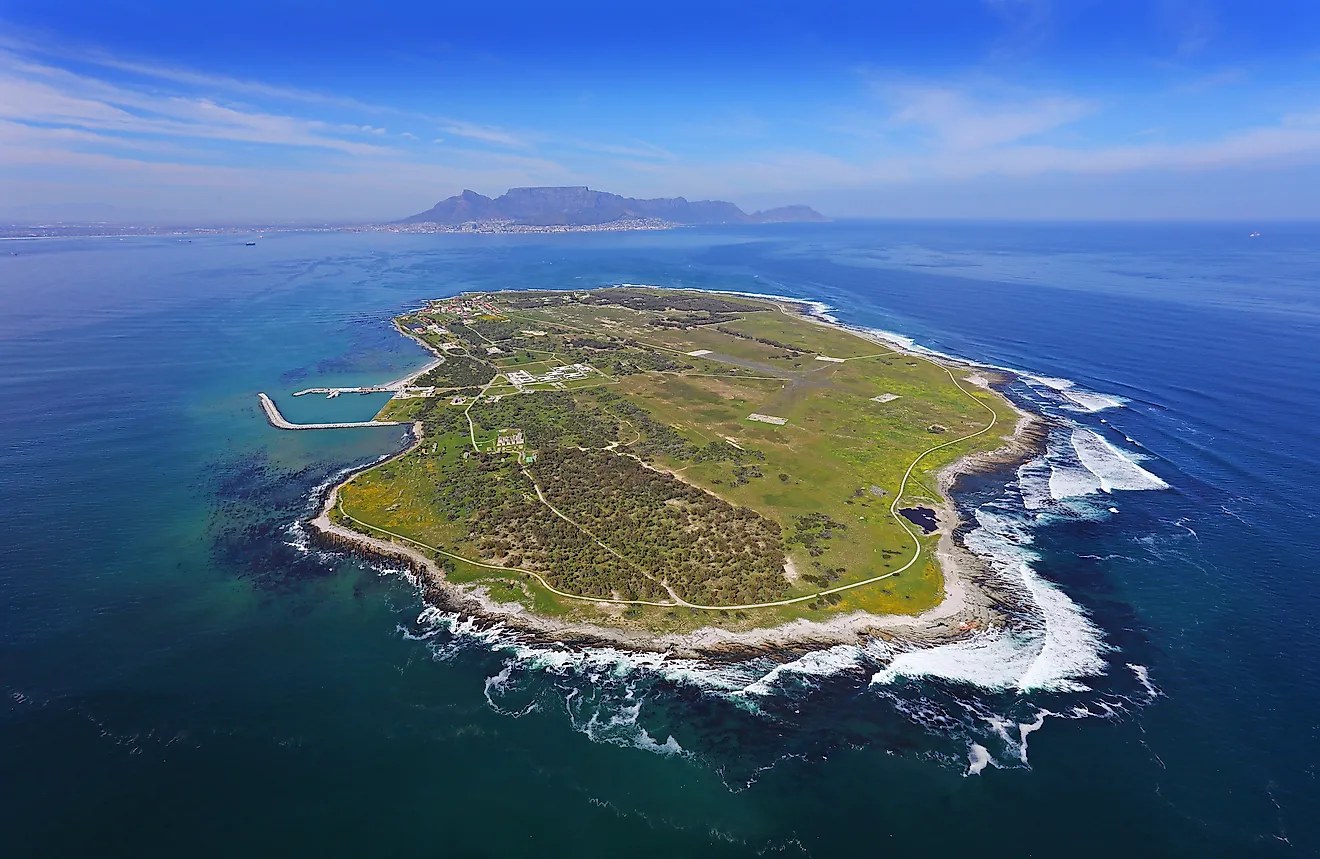
What you do Cross Table Bay to the island where Nelson Mandela was imprisoned for 18 years. A former political prisoner leads you through the maximum-security cellblock — one of the most profoundly moving experiences on the planet.
What to expect The 30-minute ferry departs the V&A Waterfront (a 10-minute walk from the cruise terminal) and crosses to the island. A bus tour covers the island's lime quarry and political exile sites before an ex-prisoner leads the cellblock tour, pausing at Nelson Mandela's actual cell. The emotional resonance is unlike anywhere else in Africa. The return ferry gives views of the full Cape Town mountain backdrop.
Good to know Ferries depart at set times (09:00, 11:00, 13:00); pre-book well in advance as tours sell out weeks ahead, especially on cruise days. Total duration is approximately 3.5 hours. Confirm your ship's all-aboard time — the 09:00 departure is safest.
Versus the ship tour The guides here are survivors, not historians — their personal testimony in Mandela's cell block transforms a museum visit into a living, breathing witness to the triumph of the human spirit.
book direct with Robben Island Museum (official operator) → · the full guide →
What you do A full-day private odyssey along one of the world's great coastal drives — Chapman's Peak, the Cape of Good Hope, and a penguin colony at Boulders Beach. This is the definitive Cape Town bucket-list route.
What to expect Depart the V&A Waterfront and wind south along the Atlantic Seaboard past Clifton's white-sand coves. Chapman's Peak Drive — a cliff-carved corniche — delivers jaw-dropping ocean panoramas. At Cape Point, hike to the lighthouse perch where two oceans meet. Then on to Simon's Town's Boulders Beach, where 3,000 African penguins waddle within arm's reach. The return leg traces the False Bay coastline through charming fishing villages.
Good to know Full-day tour — allow 8–9 hours. Cape Point entry is additional. Pre-book Boulders Beach (SANParks) online. Depart by 08:00 to make the most of the light and return comfortably before all-aboard.
Versus the ship tour Private vehicle means you linger at Chapman's Peak as long as the light is golden, skip the crowds at Boulders Beach, and stop spontaneously at Kalk Bay Harbour for a freshly grilled fish lunch — a pace no group coach can match.
book direct with Cape Town Tour Guide (official private guide service) → · the full guide →
What you do Journey 45 minutes into the Cape Winelands' UNESCO-listed landscape of oak-lined streets, Cape Dutch manor houses, and world-class Chenin Blanc and Pinotage estates — a sensory masterpiece for the discerning palate.
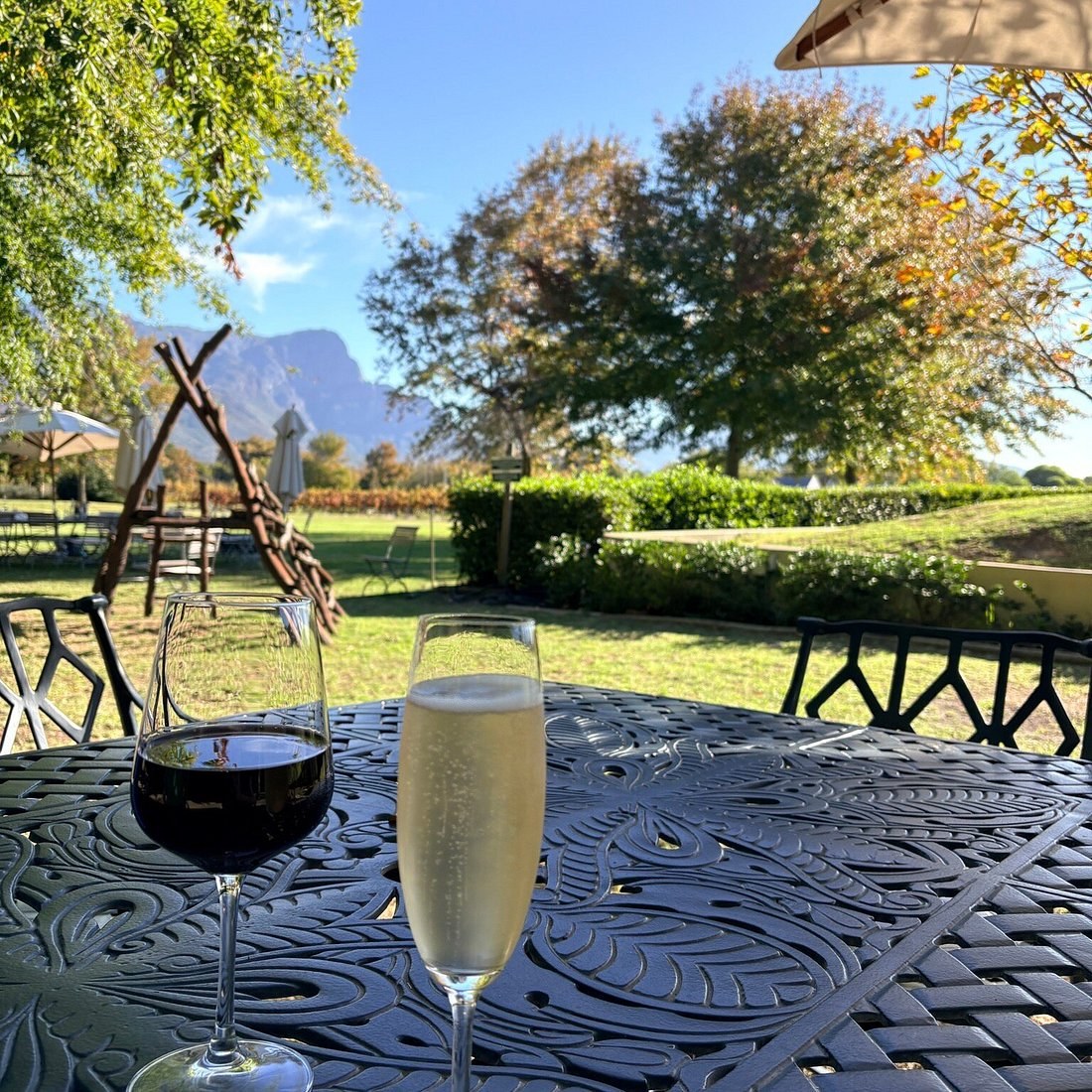
What to expect Your driver-guide whisks you through the Helshoogte Pass into Stellenbosch, where whitewashed Cape Dutch gables frame centuries of viticulture. Visit two to three handpicked estates — perhaps Meerlust, Rust en Vrede, or Delaire Graff — for tutored tastings of benchmark South African wines. Pair with artisan cheeseboards or a light estate lunch. The drive through vine-quilted valleys is as intoxicating as the wine itself.
Good to know A half-day tour (5 hours) fits comfortably within a port call. Pre-book estate tastings directly to secure a slot — Delaire Graff and Rust en Vrede are particularly sought-after. Stellenbosch is 50 km from the cruise terminal.
Versus the ship tour A private guide accesses first-growth estates not open to bus groups — think cellar-door tastings with the winemaker present, shaded terraces overlooking the Drakenstein Mountains, and itineraries built entirely around your wine preferences.
book direct with Cape Town Tour Guide (official private guide service) → · the full guide →
What you do The smartest independent way to see Cape Town's iconic landmarks — from the V&A Waterfront and Bo-Kaap to Kirstenbosch Gardens — with a premium combo ticket that includes the Table Mountain cable car ascent.
What to expect Buses depart the V&A Waterfront (a 10-minute walk from the cruise terminal) every 20 minutes on two routes covering 26 stops. The premium open-top double-decker comes with audio commentary in 16 languages. Hop off at the lower cable station for the Table Mountain ascent included in your combo ticket, then reboard for the Camps Bay and Sea Point route back. The Bo-Kaap stop delivers some of Cape Town's most photogenic streetscapes.
Good to know Buy tickets online in advance at citysightseeing.co.za to skip the queue. Cable car is weather-dependent — check the morning of. A full loop without stopping takes 2.5 hours; plan 5–6 hours for 4–5 hop-offs. Buses run until approximately 17:00.
Versus the ship tour Complete freedom to set your own agenda — step off at Bo-Kaap's cobblestoned rainbow houses for as long as you wish, linger over the Company's Garden's squirrels and roses, or spend an extra hour at Kirstenbosch. No fixed itinerary, no waiting for others.
book direct with City Sightseeing Cape Town (official operator) → · the full guide →
What you do Face the ocean's apex predator from inside a submerged cage off the world's most celebrated Great White hotspot, Dyer Island — a raw, adrenaline-charged bucket-list encounter that redefines your relationship with the sea.
What to expect A 2-hour transfer from Cape Town brings you to the small fishing harbour of Gansbaai. After a marine biologist briefing aboard a purpose-built shark vessel, you anchor at Shark Alley — a narrow channel between Dyer Island and Geyser Rock, home to 60,000 Cape fur seals. Wetsuits on, the cage is lowered, and Great Whites glide past within metres. Even observers on deck experience extraordinary close encounters. A warm lunch and debrief complete the expedition.
Good to know Full-day commitment: depart port by 06:00, return by 17:00 — verify against your ship's all-aboard time. Transfer from Cape Town adds ~2 hours each way. Pre-book directly with Marine Dynamics as capacity is strictly limited. No diving experience required; cage diving is surface-level.
Versus the ship tour Marine Dynamics is the scientific and conservation leader in Gansbaai — a team of researchers and marine biologists who turn the boat briefing into a masterclass on Great White behaviour, shark ID, and ocean ecology. The 45-person maximum boat keeps the experience intimate.
book direct with Marine Dynamics Shark Tours (official operator) → · the full guide →
What you do Step inside Namibia's most hauntingly beautiful ruin — a once-opulent diamond-mining town now swallowed by the Namib. Sand dunes reclaim ballrooms and billiard halls in slow motion, creating one of Africa's most surreal and photogenic scenes.
What to expect Your guide leads you through the restored manager's villa, the casino, the skittle alley and the haunting family homes where dunes have risen waist-high through doorways. Every room is a perfectly preserved time capsule of 1920s colonial wealth. The contrast between German Art Nouveau interiors and the encroaching desert is viscerally unforgettable. Guided tours depart at 09:30 and 11:00; the site is open Monday–Friday 08:00–15:00.
Good to know Kolmanskop is 10 km from the Lüderitz pier — a short taxi or private transfer ride. Book tickets online in advance at kolmanskuppe.com to secure your slot. All-aboard times vary by ship; confirm with your concierge, but the 09:30 tour comfortably fits most itineraries. Bring a wide-angle lens and a hat — the desert sun is fierce.
Versus the ship tour Arrange an early-morning photography slot before the day-tripper crowds arrive — golden light floods the sand-drifted rooms at a pace no group tour can match. The official operator's guides are historians of the diamond era, unlocking stories of baronial excess in the middle of the desert.
book direct with Kolmanskuppe (Official Ghost Town) → · the full guide →
What you do Penetrate the legendary Sperrgebiet — the 'Forbidden Diamond Area' — to reach the 55-metre natural rock arch of Bogenfels and the eerie ruins of Pomona, a ghost diamond town even more remote than Kolmanskop. Fewer than a handful of operators hold the rare permits to enter.
What to expect A rugged but luxuriously guided 4x4 journey skirts the wild Atlantic coastline and plunges into the Namib's forbidden interior. At Bogenfels, the colossal freestanding arch rises from the desert floor in near-total silence — no crowds, no fences, just raw geological wonder. Pomona's abandoned ore-processing plant and crumbling workers' quarters tell a story of diamond-rush boom and bust. Expert guides narrate the extraordinary history of the Sperrgebiet throughout.
Good to know This is a full-day excursion — confirm all-aboard time with your ship's schedule and allow a full 8–9 hours. Wear sturdy closed-toe shoes and sun protection. Limited group sizes mean spaces sell out quickly — pre-book well before your port call. Transfer from the pier is included in most packages.
Versus the ship tour This is one of the most restricted land areas in Africa — the Sperrgebiet was closed to the public for over a century. Coastways holds specialist permits that grant access very few tour operators can offer, making this a genuinely once-in-a-lifetime excursion for discerning travellers.
What you do Sail the icy, wildlife-rich waters of Lüderitz Bay aboard a private catamaran to encounter African penguins, Cape fur seals, cormorants and — seasonally — dolphins and whales, all against the backdrop of a pristine desert coastline.
What to expect The catamaran glides out of the sheltered harbour into the cold, turquoise Atlantic, where African penguins — an endangered species — bob and porpoise around the bow. Cape fur seals haul out on rocky outcrops in their thousands, filling the air with their distinctive bark. Your skipper and naturalist guide narrate the ecology of the Benguela upwelling, one of the world's most productive marine systems. Oysters and Namibian sparkling wine are typically served on deck.
Good to know Tours depart from the Lüderitz waterfront, a short walk from the cruise pier. Bring a warm windproof layer — even on sunny days the Atlantic breeze is brisk. Morning departures offer the calmest seas and best light. Book directly with the operator and confirm availability against your all-aboard time.
Versus the ship tour The Benguela Current makes these waters extravagantly rich in marine life. Small-boat access gets you close to penguin colonies on offshore islands that larger vessels cannot reach — you are at eye-level with the wildlife, not photographing it from a distance.
book direct with Penguin Catamaran Tours Lüderitz → · the full guide →
What you do Explore one of Africa's most unexpected architectural treasures — a perfectly preserved German colonial town perched above the wild South Atlantic, crowned by the landmark Felsenkirche, whose stained-glass windows were a personal gift from Kaiser Wilhelm II.
What to expect Wander the pastel-coloured Jugendstil (German Art Nouveau) villas of Diamantberg, each one a statement of colonial-era diamond wealth. The Felsenkirche (Rock Church, 1912) commands the highest point in town, its soaring nave flooded with jewel-coloured light from the Kaiser's windows. Your guide brings the history vividly alive — from the diamond rush to the South African mandate to independence. Finish at the waterfront for panoramic views across the bay to the offshore islands.
Good to know The entire old town is walkable from the pier in under 10 minutes. The Felsenkirche is open to visitors most mornings — confirm current opening hours on arrival. The tour easily fits within a half-day, leaving time for lunch at a local restaurant. Sturdy flat shoes are recommended for the granite cobblestones.
Versus the ship tour A private local expert guide — such as the acclaimed Heinz, noted by travellers for his encyclopaedic knowledge of Lüderitz's colonial and diamond history — tailors the pace entirely to your interests, lingering in the spots that matter and bypassing the generic.
book direct with Namib Offroad Excursions → · the full guide →
What you do Journey to the wild tip of the Lüderitz Peninsula to stand beside the replica of Bartolomeu Dias's 1488 cross — the furthest point of European exploration at the time — while scanning the sea for African penguins on Halifax Island directly below.
What to expect A 4x4 vehicle navigates the dramatic, boulder-strewn peninsula road, passing Agate Beach — where semi-precious stones litter the shoreline — and Shark Island with its sobering colonial history. At Diaz Point, the Atlantic hurls itself against the rocks with extraordinary force, and the padrao cross marks a pivotal moment in world exploration history. Halifax Island, just offshore, hosts one of Namibia's most accessible African penguin colonies, visible through binoculars from the clifftops.
Good to know Diaz Point is approximately 22 km from the pier — a private vehicle is the only practical option. The road is unmade in parts; a 4x4 is recommended, especially after rain. The site is always open and free to access once at the point. Allow 3–4 hours for the full peninsula loop. Kali Tours is best reached via the Cruise Critic contact thread for the most current pricing.
Versus the ship tour Kali Tours is celebrated by cruise passengers as a standout local expert — rated 10/10 on Cruise Critic community boards — offering a deeply personal, knowledgeable experience that goes far beyond standard sightseeing. The peninsula's wind-sculpted geology and colony-fringed coastline reward those who venture beyond the town centre.
What you do As the Namib's light drains to crimson and then to ink, settle into the world's oldest desert for a private sundowner and expert-guided stargazing session under one of Earth's darkest, most pristine night skies — far from any city glow.
What to expect Your private guide drives you into the desert interior as the sun dips, the sand turning from gold to ember to violet. Chilled Namibian wine, local canapés and warm blankets are laid out as darkness falls with astonishing speed. The guide sets up high-powered telescopes and narrates the southern hemisphere constellations — the Southern Cross, the Magellanic Clouds — with genuine expertise. The silence and the scale of the star-canopy overhead is a profoundly moving experience.
Good to know This excursion is evening-dependent — ideal for ships with a late all-aboard or overnight call in Lüderitz. Confirm departure time carefully against your ship's schedule. Temperatures drop sharply after sunset; bring or request a warm layer. The experience is best on moonless nights — your operator can advise on optimal dates. Private transfers from the pier are included.
Versus the ship tour The Namib is the world's oldest desert and one of the few places on Earth where virtually zero light pollution meets crystalline dry-air skies — the Milky Way is not a smudge but a blazing river overhead. A private operator provides telescopes, expert narration and fine sundowner drinks in total silence, miles from anyone else.
What you do Plunge into one of Africa's most surreal landscapes where 100-metre Namib dunes collapse directly into the Atlantic surf. A private 4x4 takes you deep into Sandwich Harbour, a UNESCO-listed wetland with no roads, no crowds — just you and the raw edge of the world.
What to expect Your private 4x4 deflates its tyres at the beach and powers over shifting dune faces that drop sheer into the ocean — a spectacle found nowhere else on Earth. The guide interprets the Benguela Current ecosystem, the endemic Welwitschia plants, and the birdlife of the lagoon. A gourmet picnic with local snacks and cold drinks is served on a dune with panoramic views. You return to port along the shore just as the golden-hour light ignites the sand.
Good to know Tours depart from the cruise terminal and take approximately 4–5 hours; confirm your ship's all-aboard time and request early-departure slots. Pre-book directly to secure the private vehicle. Bring a windproof layer — the sea breeze on the dunes is fierce.
Versus the ship tour Fully private vehicle with an expert desert ecologist guide; the pace is entirely yours — linger on a dune crest for champagne sundowners while flamingos feed in the shallows below.
book direct with Alter Action Sandwich Harbour Tours → · the full guide →
What you do Board a sleek catamaran to encounter Namibia's Marine Big 5 — Cape fur seals, bottlenose dolphins, leatherback turtles, African penguins, and flamingos — all within Walvis Bay's extraordinary lagoon. Oysters and sparkling wine are served as the wildlife comes to you.
What to expect The catamaran glides out of Walvis Bay harbour into the Benguela Current-rich lagoon, one of Africa's most productive marine ecosystems. Thousands of Cape fur seals loll on the jetty pontoons and often haul themselves onto the boat's stern. Oysters are shucked fresh from local beds and paired with Namibian sparkling wine mid-cruise. Bottlenose dolphins frequently surf the bow wave just metres from where you stand.
Good to know Cruises run approximately 2.5–3 hours and depart from Walvis Bay Waterfront — a short taxi ride from the cruise terminal. Book the morning departure to maximise dolphin activity. Dress in layers; the Benguela Current keeps the bay brisk even on sunny days.
Versus the ship tour A small-vessel, intimate experience where wild dolphins bow-ride alongside and Cape fur seals clamber aboard the swim platform — wildlife encounters of startling closeness that feel genuinely unscripted.
What you do Paddle a sea kayak alongside 80,000 Cape fur seals at Pelican Point, where a Victorian-era lighthouse stands guard over a bone-white beach strewn with shipwreck ribs. This is the most intimate way to meet Namibia's marine wildlife — eye-to-eye at water level.
What to expect After a short transfer along the Walvis Bay spit, you launch your tandem sea kayak into the calm inner lagoon. Within minutes, inquisitive juvenile seals bob around your paddle blades, occasionally leaping clean over the bow. Your guide narrates the ecology of the Benguela upwelling and points out flamingo flocks feeding in the shallows nearby. The paddle rounds Pelican Point itself, where the 1910 lighthouse and skeletal shipwreck frames make for extraordinary photographs.
Good to know No kayaking experience necessary; the lagoon is sheltered and calm. The excursion runs approximately 2.5 hours. Combine it with an afternoon Sandwich Harbour 4x4 for the ultimate dual-landscape day — operators on both sides support the combo. Wear a swimsuit under your clothes; curious seals will splash you.
Versus the ship tour A maximum small-group experience led by a qualified sea-kayak guide; you are in the water with the seals, not looking down at them from a boat deck, and the lighthouse at the tip of the spit is accessible only by kayak or foot.
What you do Step into Namibia's most atmospheric colonial-era town — a place of German-Wilhelmine architecture, crisp ocean air, and extraordinary dune-backed streets. A private guided tour unlocks the hidden history of this improbable desert port, from German colonial rule to the uranium-boom present.
What to expect Your private guide collects you dockside and drives the coast road to Swakopmund, narrating the astonishing story of how Germany built a functioning colonial port in the middle of the world's oldest desert. The walk through the town centre takes in the Kaiserliches Bezirksgericht (the Old German courthouse), the Lighthouse, the Kristall Galerie, and the landmark Hotel Swakopmund. Lunch at a quayside restaurant — local yellowtail or Namibian oysters — is built into the itinerary. The return skirts the vast salt pans, often pink with flamingos.
Good to know Walvis Bay to Swakopmund is approximately 30 km (30-minute drive). Allow 4–5 hours minimum; confirm the all-aboard time before booking. The Kristall Galerie houses the world's largest known single quartz crystal cluster — entry is NAD 50 (~USD 3). Book private transfer in advance to guarantee port pick-up.
Versus the ship tour A private, unhurried drive from Walvis Bay (30 min) with a local expert who grew up here; the guide opens doors — the Swakopmund Museum's colonial-era artefacts, the jetty at sunset, the local fishmonger for fresh smoked fish — that a group tour rushes past.
What you do Watch the Namib go molten gold as the sun drops behind 100-metre dunes inches from the open Atlantic — one of the most dramatic sunsets on the planet, enjoyed with chilled champagne on a private dune crest with your own guide and vehicle.
What to expect Departing Walvis Bay mid-afternoon, the 4x4 tackles the tidal beach corridor as the light softens to amber. The guide reads the dune faces like a pilot, climbing to a private vantage point above the surf line just as the sun descends. Sundowners are served from a cool-box while flamingos glow pink in the lagoon below. The return drive by starlight — the Milky Way ablaze over the Namib — is an experience unto itself.
Good to know Sunset timing varies by season; confirm departure time against your ship's all-aboard. This tour is only viable if your ship overnights or has a late (post-20:00) departure from Walvis Bay — verify with the bridge before booking. A warm layer is essential after sunset on the dunes.
Versus the ship tour The sunset departure means virtually no other visitors in the reserve; your guide positions the vehicle on the highest accessible dune face for a 360° horizon — Atlantic west, Namib south, lagoon flamingos north — with chilled Namibian sparkling wine and local charcuterie.
book direct with Alter Action Sandwich Harbour Tours → · the full guide →
What you do The Walvis Bay Lagoon hosts the largest congregation of greater and lesser flamingos in southern Africa — up to 150,000 birds turning the shallows cerise. A specialist bird guide leads an intimate small-group exploration of this Ramsar-listed wetland, the ecological crown jewel of the Namibian coast.
What to expect The guide drives the levee roads between the industrial salt pans and the tidal lagoon, where vast flamingo flocks feed in the pink-tinged brine. A short kayak section allows you to drift soundlessly to within metres of roosting birds; the silence is broken only by the collective murmur of 50,000 wingbeats. The guide identifies species with a spotting scope — from chestnut-banded plovers to Damara terns — and explains the extraordinary Benguela ecosystem that sustains this abundance. Fresh Namibian oysters and local sparkling wine conclude the morning at the lagoon edge.
Good to know Morning departures (07:00–08:00) are essential for flamingo feeding activity and the best photographic light. The excursion runs approximately 3 hours. Wear neutral-coloured clothing; bright colours disturb the birds. Long lens cameras (200mm+) are highly recommended. Bookings fill fast — reserve well before your cruise date.
Versus the ship tour A certified ornithologist-guide leads a maximum six-guest group through restricted-access sections of the lagoon, using a low-profile vehicle and kayaks to approach flamingo flocks without disturbance — intimate, silent, and utterly unlike any boat-from-a-distance experience.
book direct with Eco Marine Kayak Tours → · the full guide →
What you do Embark on a private full-day safari to Angola's flagship national park, 75 km south of Luanda. Spot elephants, zebras, buffalo and rare giant sable antelope across a vast wilderness that is one of Africa's great conservation comeback stories.
What to expect Your private 4×4 departs Luanda's port at dawn, crossing the Kwanza River by ferry into Kissama. Spend the morning game-driving through miombo woodland and open savannah, scanning for elephants, eland and hippos along river banks. A gourmet bush picnic is served in the shade before an afternoon of deeper exploration. Your guide returns you to port with time to spare before all-aboard.
Good to know The park is roughly a 90-minute drive from the cruise terminal. Pre-book the private vehicle to guarantee your slot — walk-in access is unreliable. Allow at least 8 hours in port; confirm your ship's all-aboard time and communicate it to the operator at booking. Bring high-SPF sunscreen, binoculars and a zoom lens.
Versus the ship tour A fully private vehicle and guide means you set the pace — lingering at waterholes, tracking on foot-accessible trails, and experiencing the park with none of the crowd. Expert naturalist guides unlock the ecological story behind Angola's rewilding project, which reintroduced wildlife from South Africa and Zimbabwe.
What you do Paddle and cruise the legendary Kwanza River — Angola's longest waterway — through papyrus-lined channels, past fishing villages and beneath cathedral-canopy forest. A bucket-list blend of adventure, wildlife and authentic Angolan riverside culture.
What to expect Transfer to Calumbo, where traditional wooden boats and optional kayaks await on the Kwanza's calm upper reaches. Glide through narrow papyrus channels alive with birdlife, stopping to visit a riverside fishing community for a taste of freshly smoked catfish and palm wine. The experience closes with a sundowner aboard a larger vessel as the African sun melts into the river. Return transfer to the cruise terminal is included.
Good to know The Calumbo departure point is approximately 40 minutes from the port. Book the half-day morning session to comfortably clear all-aboard. Lightweight, quick-dry clothing and water shoes are strongly recommended. Bring insect repellent for the papyrus sections.
Versus the ship tour Small-group format — never more than eight guests — ensures intimate river access that large boats simply cannot achieve. Your bilingual guide is a certified naturalist who narrates the river's role in Angolan history and points out kingfishers, fish eagles and crocodiles from a position of safe proximity.
book direct with FindMyExcursions – Kwanza River (local expert operator) → · the full guide →
What you do Step inside Angola's most storied colonial fortress — built by the Portuguese in 1576 — for a private, expert-guided tour of Luanda's dramatic founding story. Pair it with a walk through Cidade Alta, the elevated old city, for panoramic bay views and hidden architectural gems.
What to expect Your guide meets you dockside and escorts you up to the Fortress of São Miguel, now home to the Museum of the Armed Forces. Wander the ramparts where Portuguese cannons once defended Atlantic trade routes, hearing tales of the slave trade, independence and modern Angola. Continue into Cidade Alta for Independence Square, the Agostinho Neto Mausoleum and the ornate Palácio de Ferro. The tour closes with espresso at a terrace café overlooking the bay before a smooth return to port.
Good to know The fortress is approximately 15 minutes by car from the cruise terminal. A private vehicle is included. Allow 4–5 hours. Some areas of the fortress require modest dress — covered shoulders and knees — bring a lightweight layer. Pre-book at least two weeks ahead, as private guide slots fill quickly on port days.
Versus the ship tour A hand-picked local historian guide — not a generalist driver — delivers the kind of layered storytelling that transforms colonial stonework into a living narrative. Private access means you linger in the fortress's cannon terraces and climb to the highest rampart for an unobstructed panorama over the Bay of Luanda.
book direct with ToursByLocals – Luanda Private Guides → · the full guide →
What you do The narrow Ilha de Luanda peninsula — a ribbon of white sand separating the bay from the Atlantic — is where Luanda's elite eat, sail and unwind. A private half-day of fresh lobster, Angolan craft beer and hammock time on the city's most glamorous strip.
What to expect Your private driver crosses the causeway to Ilha, stopping first at the lively Roque Santeiro promenade to absorb the local rhythm. A pre-reserved table at a top-tier seafood terrace restaurant awaits — expect grilled lobster, piri-piri prawns and Angolan mussels. After lunch, retreat to a quiet beach section with arranged sun loungers. Your guide then whisks you back through the Marginal waterfront boulevard to port, with time for a stroll along Avenida 4 de Fevereiro.
Good to know Ilha is a 10-minute drive from the port across the causeway. Book the morning departure to capture both lunch and beach time before all-aboard. Bring swimwear, sunscreen and cash in Angolan Kwanza (AOA) for tips — USD is widely accepted at restaurants. Pre-book the restaurant table through your operator.
Versus the ship tour Rather than a coach stop for a photo, this is a lingering private table at one of Ilha's lauded seafood restaurants, with a guide who knows the owners, secures the best terrace seats and curates the menu around the morning's catch. Time on a private stretch of beach with sun loungers and cold drinks is included.
book direct with GetYourGuide – Luanda Full-Day Tour (local operator) → · the full guide →
What you do From the eerie rusted hulks of Shipwreck Beach to the otherworldly lunar landscape of the Viewpoint of the Moon (Miradouro da Lua), this is Luanda's most cinematically dramatic private drive — a full-day sweep of the capital's most iconic and least-visited extremes.
What to expect Depart the port heading north to the atmospheric Ship Graveyard, where skeletal hulls of decommissioned vessels lean dramatically into the Atlantic breakers — an utterly unique landscape. Your photographer-friendly guide allows ample time before heading south through Luanda's Marginal waterfront and into the rust-red badlands of the Miradouro da Lua, where eroded sandstone pillars cascade to the sea. The return route passes the National Slavery Museum for an optional 30-minute cultural stop. You are back at the port with time to freshen up before all-aboard.
Good to know The full loop covers roughly 100 km and takes 9–10 hours; confirm your all-aboard time with the operator before booking. Mobile ticket accepted — no printing needed. The Miradouro da Lua path can be uneven; wear sturdy flat shoes. Camera batteries should be fully charged — both sites are exceptionally photogenic.
Versus the ship tour The Miradouro da Lua — 40 km south of the city — is a UNESCO-tentative site of eroded ochre cliffs that look lifted from a science-fiction film set; virtually no independent traveller reaches it on a port day. The Ship Graveyard at the northern tip offers rusted Cold War-era vessels half-submerged in surf — extraordinary for photographers. A single private vehicle links both in one seamless arc.
book direct with Viator – Full-Day Luanda Tour (local expert operator) → · the full guide →
What you do Two of Luanda's most remarkable and undervisited museums — the Museu da Moeda (a 17th-century coin and monetary history museum) and the deeply moving National Slavery Museum — in a private, expert-guided half-day that reveals Angola's profound and complex Atlantic history.
What to expect Begin at the Museu da Moeda, housed in a beautifully restored colonial building, where centuries of Angolan monetary history — from cowrie shells to Portuguese escudos — are displayed in elegant galleries. Your guide animates the economic machinery of the Atlantic slave trade through the artefacts. Transfer to the National Slavery Museum, set above the original slave pens, for an experience that is both sobering and profoundly illuminating. The morning closes with a private coffee and debrief at a nearby café before your driver returns you to the port.
Good to know Both museums are within 20 minutes of the cruise terminal by private car. The half-day format (4–5 hours) fits comfortably around most all-aboard times. Dress modestly — the Slavery Museum in particular commands a respectful tone. Pre-book your private guide slot as English-speaking specialist guides are limited in Luanda.
Versus the ship tour A specialist cultural guide — fluent in both the Portuguese colonial archive and Angolan oral tradition — contextualises these collections in ways a standard audio guide never could. The Slavery Museum, built on the original slave-holding site, is one of the most significant Atlantic history sites in sub-Saharan Africa and is rarely featured on mainstream itineraries.
book direct with GetYourGuide – Museu da Moeda Luanda → · the full guide →
What you do Walk the same dungeons where millions of enslaved Africans took their last steps on home soil, then soar above ancient rainforest on Kakum's famous canopy walkway. A profound, unmissable day on Ghana's 'Slave Coast.'
What to expect Your licensed guide meets you at Tema port with a private air-conditioned vehicle for the ~3-hour drive west along the coast. At Cape Coast Castle — a UNESCO World Heritage Site — you pass through the 'Door of No Return' with a moving, expert-led narrative. Elmina Castle, the oldest European building in sub-Saharan Africa, adds Portuguese and Dutch colonial layers. Kakum National Park's seven suspension bridges, strung 30–40 metres above the forest floor, close the day with a breath-taking canopy perspective.
Good to know Full day: depart by 07:00, return by 19:30 — confirm all-aboard time carefully. Cape Coast Castle entry: GHS 100 (~USD 7); Elmina: GHS 80 (~USD 5.50); Kakum: GHS 100 (~USD 7). Pre-book the private vehicle and guide directly. Wear comfortable walking shoes and bring insect repellent for Kakum.
Versus the ship tour A private, expert-led journey with a deeply knowledgeable local historian guide who can give full, unhurried time in each castle — no crowds, no rush — plus the rare combination of both castles and the canopy walk in a single curated day.
What you do Stand at the epicentre of African independence — Nkrumah's mausoleum and museum — then climb the colonial-era Jamestown Lighthouse over old Accra's rooftops and fishing harbour. Two of Ghana's most iconic landmarks, curated into one elegant morning.
What to expect Your guide collects you dockside in Tema (30 minutes from central Accra). At the Kwame Nkrumah Memorial Park you tour the marble mausoleum, the well-curated museum of independence-era artefacts and the striking modernist grounds. Jamestown follows: the red-and-white lighthouse offers sweeping views over the Atlantic and the chaotic, colourful fishing canoes below — one of Accra's great panoramas. Optional stop at the Accra Arts Centre for Kente and Adinkra craft shopping rounds out the morning.
Good to know Half-day (4–5 hours); easily back for any all-aboard time. Tema port to Accra is 25–35 minutes by private car. Book a guide fluent in the political history of the independence era for the fullest experience. Lightweight clothing; the lighthouse climb involves a narrow spiral stair.
Versus the ship tour A private guide who specialises in Ghana's political and cultural history transforms these sites from photo stops into living stories — from the moment of independence in 1957 to the layered life of Jamestown's fishing community, photographed and savoured at your own pace.
What you do Escape the heat into Ghana's cool Akuapem Hills: stroll a Victorian-era botanical garden alive with exotic palms, then trek to the twin curtains of Boti Falls and scramble atop the dramatic natural arch of Umbrella Rock for panoramic views.
What to expect The road winds steeply into the Akuapem ridge, offering sweeping views back toward Accra and the Gulf of Guinea. Aburi Botanical Gardens — established 1890 — is a serene world of giant silk-cotton trees, bamboo groves and manicured lawns. The trail to Boti Falls leads through dense forest to twin cascades that merge in the wet season; a dugout canoe trip is possible at the base. Umbrella Rock, a natural stone arch perched on the hillside, rewards the short scramble with extraordinary views across the Eastern Region.
Good to know Full day: ~8 hours. Aburi is ~1 hour from Tema port. Aburi Gardens entry: GHS 30 (~USD 2); Boti Falls: GHS 30 (~USD 2). Wear sturdy trainers/hiking shoes; the trail to Boti can be slippery. Confirm departure time to allow comfortable return before all-aboard.
Versus the ship tour Small-group or fully private format at an unhurried pace, with a naturalist guide explaining 650+ species of tropical flora in Aburi's living collection and leading the forest trail to Boti Falls — a scene rarely reached without a knowledgeable local to navigate the paths.
book direct with GetYourGuide (Accra Local Expert – Aburi Eco & Cocoa Experience) → · the full guide →
What you do Just 45 minutes from the port, Shai Hills is Ghana's closest wildlife reserve — baboons, kob antelopes and rare Chandler's reedbuck roam sacred Dangme cave systems and open savannah. A genuine wild Africa experience with almost no other visitors.
What to expect A private 4WD with a Ghana Wildlife Society ranger takes you into the reserve's mix of rocky outcrops, dry savannah and forest patches. Olive baboon families are near-guaranteed sightings; look also for green vervet monkeys, oribi and the reserve's striking bird life including hornbills and rollers. The Dangme sacred caves — once used as shelter and spiritual sites — add a cultural dimension unique to this reserve. The open savannah sections offer sweeping vistas rarely photographed.
Good to know Half-day: depart by 08:00, back by early afternoon. Shai Hills is ~45 km north of Tema on the Accra–Akosombo road — one of the closest wildlife areas to the port. Book a private ranger guide directly through the reserve or via a licensed Accra operator. Binoculars strongly recommended.
Versus the ship tour Shai Hills is consistently overlooked yet delivers authentic wildlife encounters within an easy half-day of the port — a private guided drive and cave walk with a ranger who knows each troop of baboons and the sacred history of the Dangme caves intimately.
book direct with Ghana Wildlife Society / Shai Hills Resource Reserve (GWS Official) → · the full guide →
What you do Board a scenic cruise on the world's largest man-made lake — Volta Lake — stopping at the idyllic Dodi Island, then stand at the base of the mighty Akosombo Dam. A rare, otherworldly landscape of still water, fishing villages and forested islands.
What to expect Your private transfer from Tema (~1.5 hrs) delivers you to Akosombo, where you board the Dodi Princess. The lake stretches to the horizon in every direction — an inland sea fringed by green hills and dotted with dugout canoes. Dodi Island itself is a peaceful, forested retreat where you disembark to explore and lunch. A stop at the Akosombo Dam viewpoint on the return leg contextualises the sheer engineering ambition of Nkrumah's post-independence Ghana.
Good to know Cruises typically depart Akosombo at 10:00 and return ~15:00; factor in the 1.5-hour drive each way from Tema — a full day. Pre-book VIP/upper deck seats for the best experience. The lake can be breezy; bring a light layer. Check the cruise schedule and book in advance as weekend departures fill quickly.
Versus the ship tour The Dodi Princess is a fully equipped passenger vessel with open decks, a bar and a live Ghanaian cultural performance — afrobeats drumming, traditional dance — making the 2-hour lake journey a celebration as much as a scenic excursion. Arriving at Dodi Island by boat feels genuinely exploratory.
What you do Plunge into the sensory theatre of Makola Market — Accra's beating commercial heart — then eat your way through Ghana's boldest flavours: kelewele, grilled tilapia, jollof rice, fresh coconut and more, guided by a private local culinary expert.
What to expect Your guide meets you in central Accra and leads you through Makola Market's dizzying corridors of spices, batik fabrics, fresh produce and Ghanaian craftsmanship. Tastings begin immediately: street-fried plantain with pepper, skewered grilled meat, fresh pineapple and pawpaw, and eventually a sit-down lunch of authentic Ghanaian jollof rice or banku with tilapia at a trusted local spot. The tour closes with a visit to the Accra Arts Centre for Kente, Adinkra prints and handcrafted jewellery at artisan-direct prices.
Good to know Half-day: 4–5 hours; very manageable before any all-aboard. Accra city centre is 25–35 minutes from Tema port by private car. Wear comfortable shoes; markets are busy and uneven underfoot. Inform your guide of any dietary restrictions in advance. Best experienced on weekday mornings when the market is at full vibrant life.
Versus the ship tour A private, small-group tour with a culinary-specialist local guide who navigates Makola's labyrinthine lanes with confidence, introducing you to vendors and explaining the cultural story behind every dish — from the spice traders to the fabric sellers — at a pace that feels immersive, not overwhelming.
book direct with Airbnb Experiences Accra – Local Food & Culture Guides → · the full guide →
What you do Stand inside the haunting slave dungeons of Cape Coast Castle and Elmina Castle — two UNESCO World Heritage Sites that defined the Atlantic slave trade. A private guide brings the weight of history alive with expert storytelling and unhurried access.
What to expect Your private air-conditioned vehicle collects you at the Takoradi cruise terminal and heads east along Ghana's Cape Coast. At Elmina Castle — the oldest European building in sub-Saharan Africa — your guide narrates the Portuguese, Dutch, and British chapters etched into every stone. Cape Coast Castle follows, with its underground dungeons and the infamous 'Door of No Return' opening directly onto the Atlantic. The dual-castle visit is emotionally profound and historically irreplaceable.
Good to know The round trip is approximately 3 hrs driving; allow 6–8 hrs total. Pre-book well in advance as private slots fill quickly. All-aboard time: confirm your ship's schedule and build in a 90-min buffer. Entrance fees are typically included in the tour price.
Versus the ship tour A fully private vehicle, a dedicated expert guide, and a pace set entirely by you — linger in the Door of No Return or request a quiet moment in the chapel without a crowd behind you.
book direct with Viator – Private Takoradi Castles Shore Excursion (local operator-led) → · the full guide →
What you do Walk seven rope-and-plank bridges suspended 30 m above the rainforest canopy in Kakum National Park, then pivot to the 15th-century slave fort at Elmina — Ghana's most dramatic nature-to-history pairing, all in one private day.
What to expect Depart Takoradi port in an air-conditioned vehicle heading toward Kakum, Ghana's most celebrated rainforest reserve. The canopy walkway — a world-class engineering feat — sways gently above a cathedral of tropical hardwoods; trogons, hornbills, and black-and-white colobus monkeys are regular sightings. After descending, the itinerary pivots to Elmina Castle for a guided tour of its UNESCO-listed battlements and dungeons. The juxtaposition of natural wonder and colonial history makes this one of West Africa's most complete single-day experiences.
Good to know Wear sturdy, closed-toe shoes for the canopy walk; the bridges can be narrow. Arrive at Kakum early (gates open 08:00) to avoid school groups. Canopy walk entry is approx. GHS 80 (≈ USD 5) if not bundled. Confirm the full itinerary and guide credentials when booking.
Versus the ship tour Small-group exclusivity means you reach the canopy walkway early, before day-trippers arrive, when the forest is alive with birds and the mist hasn't yet lifted.
book direct with Viator – Ghana Cultural and Wildlife Adventure Exclusive Shore Excursion → · the full guide →
What you do Paddle a traditional dugout canoe through the Amansuri Wetlands to reach Nzulezo — a living village built entirely on stilts above Lake Tadane, listed as a UNESCO tentative World Heritage Site. One of West Africa's most surreal and intimate encounters.
What to expect Your guide drives you west along Ghana's coastal highway to Beyin, gateway to the Amansuri Wetlands. Local paddlers pole narrow wooden canoes through papyrus-lined channels — a 45-minute glide alive with kingfishers and weaverbirds. Nzulezo emerges from the water like a mirage: raised boardwalks connect homes, a primary school, a bar, and a traditional chief's palace, all afloat. The community chief often grants a brief audience, and the experience is as far from a tourist attraction as Ghana gets.
Good to know Distance from Takoradi port: approx. 1.5 hrs each way. Allow a full day (8–9 hrs total). Wear light, quick-dry clothing; canoes are low to the water. Pre-arrange with the operator to confirm the canoe is reserved. No photography of residents without permission — your guide will brief you.
Versus the ship tour A private arrangement means you glide into the village before the midday rush, spending genuine time with residents, photographing the water-level school, church, and market at your own unhurried pace.
What you do Explore the twin-city character of Sekondi's colonial-era hilltop quarter and Takoradi's vibrant Market Circle, fishing harbour, and Fort Orange in a single curated private half-day — the port city through a local expert's eyes.
What to expect Your guide meets you at the port gate and leads you first to Sekondi's old town, where British colonial architecture rises above the Atlantic on a breezy promontory — Fort Orange's cannons still point seaward. Descending into Takoradi, the Market Circle delivers a full sensory overload: bolts of kente cloth, pyramids of tropical spice, and grilled plantain smoke in the air. The Albert Bosomtwi-Sam fishing harbour reveals the city's working soul — hundreds of wooden pirogues, fishermen mending nets, and a genuine, unscripted slice of Ghanaian daily life.
Good to know This excursion is ideal if your ship's all-aboard time is early afternoon. The 4-hr format keeps you comfortably close to port. Dress modestly for the market. Bring small GHS bills for artisan purchases — your guide can advise on fair pricing.
Versus the ship tour An entirely private vehicle and guide means you dictate the stops — spend longer at the chaotic, colourful Market Circle or linger at the harbour watching the night's catch being landed, rather than moving at a group's pace.
book direct with Viator – 4 Hours Sekondi-Takoradi Twin City Private Shore Excursion → · the full guide →
What you do Escape to Busua — Ghana's finest beach — for a morning of Atlantic surf, golden sand, and fresh coconut under a palapa, just 35 km from Takoradi port. Arrange a private lesson with a local surf instructor for a bucket-list West African wave.
What to expect The 45-minute private drive west along Ghana's coast delivers you to a sweeping bay of fine brown sand backed by palms, with a consistent shore break that has made Busua a quiet legend among West Africa's surf community. Local instructors — several trained at international surf schools — run patient, encouraging lessons for all levels. Between sets, the beach reveals its quieter pleasures: hammocks, fresh grilled barracuda, and cold Club beer. It is the effortless, unhurried afternoon that perfectly counterbalances a morning of history.
Good to know Busua is approx. 35–40 km (45 min) from Takoradi port — allow 3–4 hrs minimum on the beach. Pre-arrange your private return transfer before you leave the ship. Surf conditions are best October–March. Confirm swim safety with your instructor; the shore break can be powerful.
Versus the ship tour A private transfer drops you directly on the sand — no shared coach, no fixed group schedule. Pair it with a pre-arranged surf lesson and a fresh-seafood lunch at a beachfront restaurant for a fully personal coastal day.
book direct with GetYourGuide – Takoradi Local Guide & Coastal Experience → · the full guide →
What you do Forage for plantain, tilapia, and native spices at Takoradi Market Circle with a local chef, then cook — and feast on — an authentic Ghanaian spread: jollof rice, kontomire stew, and kelewele. The most delicious two hours in port.
What to expect Your chef-guide walks you through Takoradi Market Circle at a connoisseur's pace — identifying smoked herrings, garden eggs, dawadawa, and fresh cocoyam while explaining how each ingredient anchors Ghanaian cuisine. Back in a local kitchen, you'll learn the technique behind the perfect one-pot jollof, the patience of a slow kontomire stew, and the art of frying kelewele (spiced plantain). The meal that follows is communal, generous, and genuinely home-cooked. Cold bissap (hibiscus juice) seals the afternoon beautifully.
Good to know Advise of any dietary restrictions when booking — Ghanaian cuisine is naturally abundant in vegetables and fish, easily adapted. Allow 3–4 hrs. The market is liveliest before noon; a morning departure from port is ideal. Wear clothes you don't mind getting a little smoky and fragrant.
Versus the ship tour A hands-on private cooking session with a local culinary expert in a real Ghanaian kitchen — not a demonstration, but a working collaboration where you grind palm spices, season the pot, and sit down together to eat what you made.
What you do Stand inside the world's largest basilica — a gilded, air-conditioned marvel rising from the Ivorian savanna. A private guide unlocks the rooftop terraces and papal suite that most visitors never see, making this a genuine once-in-a-lifetime encounter.
What to expect A three-hour drive from the port brings you to Yamoussoukro, where Félix Houphouët-Boigny's extraordinary basilica — consecrated by Pope John Paul II — looms into view. Your guide narrates the political ambition and spiritual grandeur behind the structure as you explore its 7,400 square metres of Italian stained glass and its subterranean crypts. The scale is almost incomprehensible from inside; standing beneath the 158-metre dome in near-silence is quietly overwhelming. The return drive allows time to observe the transition from lagoon city to savanna heartland.
Good to know The round-trip drive is roughly 3 hours each way from the port; allow a full day (8–9 hours total). Pre-book directly with Ashanti, confirming your all-aboard time so the itinerary is timed precisely. Smart-casual dress required inside the basilica; shoulders and knees must be covered.
Versus the ship tour Fully private vehicle and expert Anglophone guide, with privileged access to the stained-glass nave, dome terraces, and the rarely-visited papal apartments — at your own unhurried pace.
What you do Wander the sun-bleached arcades of Grand Bassam — Ivory Coast's first colonial capital and a UNESCO World Heritage Site — then unwind on its legendary palm-fringed Atlantic beach. History, architecture, and West African coastal life in one seamless half-day.
What to expect The 45-minute drive east from Abidjan delivers you to the atmospheric Ancien Bassam quarter, where pastel-painted colonial facades, a haunting cemetery, and the Musée National du Costume tell the story of Ivory Coast's colonial and independence eras. Your guide introduces you to the weavers and woodcarvers who have made their studios in the old merchant houses. After the historical circuit, you cross to the beach village side for a leisurely lunch of fresh grilled barracuda at one of the chic beachfront restaurants. The afternoon light on the white-sand Atlantic shore, with fishermen drawing in nets in the distance, is postcard-perfect.
Good to know Grand Bassam is approximately 40 km from the Abidjan port — about 45–60 minutes by private car. A full-day booking comfortably fits within a standard port call; confirm your all-aboard time with your guide at the outset. Sunscreen, a hat, and a light cover-up for the museum are recommended.
Versus the ship tour A private car and a knowledgeable local guide mean you linger in the historic quarter's crumbling French-colonial mansions, meet resident artisans, and choose your own beach club — no group itinerary to follow.
book direct with GetYourGuide (Abidjan City & Grand Bassam Private Tour) → · the full guide →
What you do Discover why Abidjan is called 'the Paris of West Africa' — from the glittering skyline of Le Plateau to the pulsating market streets of Treichville. A private expert guide reveals the city's contradictions, creativity, and warmth in a single unforgettable morning.
What to expect Begin in Le Plateau, Abidjan's gleaming business district, where modernist towers and the striking St. Paul's Cathedral — designed by Aldo Spirito with its soaring sculptural facade — set a tone of architectural ambition. Cross the lagoon bridge into Treichville, the historic beating heart of Ivorian popular culture, where the covered market overflows with indigo-dyed textiles, kola nuts, and carved masks. Your guide narrates the city's extraordinary post-independence boom years and its resilient cultural renaissance. End with an optional stop at the craft village of La Pyramide for high-quality Ivorian souvenirs.
Good to know This tour operates from the Abidjan cruise terminal and is easily timed for a half-day port call. Book a private car (not shared group) for the most flexible experience. Carry small CFA Franc notes if you wish to make market purchases; your guide can advise on fair pricing.
Versus the ship tour Entirely private, at your own tempo — your guide adapts the route to your interests, whether that's architecture, street food, contemporary art, or artisan craft, with no fixed group timetable.
book direct with GetYourGuide (Abidjan City Tour – Private Car) → · the full guide →
What you do Step into the world's second-largest urban primary rainforest — a UNESCO-listed green cathedral just minutes from Abidjan's skyscrapers. Expert naturalist guides lead you through ancient hardwood canopy alive with monkeys, hornbills, and rare forest flora.
What to expect Just 8 km from the city centre, Banco's 3,000 hectares of primary rainforest feel impossibly remote. Your naturalist guide leads you along shaded trails where Diana monkeys crash through the canopy overhead and great blue turacos blaze between the fig trees. The forest floor is a pharmacy of traditional medicinal plants, each with a story your guide brings vividly to life. Crossing the small Banco River on foot, you pass the famous 'laundry village' where Abidjan's historic open-air washing tradition continues — a remarkable social tableau inside a national park.
Good to know Banco is a 20-minute drive from the port — ideal for a half-day excursion that still leaves time for lunch in Abidjan. Wear closed-toe shoes and light long trousers; bring insect repellent. Entry fees are included when pre-arranged with a private operator. The trails are gentle and suitable for most fitness levels.
Versus the ship tour A private naturalist guide — rather than a general city driver — leads you deep into trails rarely walked by visitors, with the time and expertise to identify wildlife, medicinal plants, and the remarkable ecology of a primary forest surviving inside a megacity.
What you do Dive into the bold, aromatic soul of Ivorian cuisine — from a guided market foray selecting fresh plantain, smoked fish, and attiéké, to a hands-on cook-along and a decadent lunch at a legendary local maquis restaurant. West Africa's most vibrant food culture, on a plate.
What to expect Your morning begins at a neighbourhood market where your guide introduces the staples of Ivorian cooking: cassava, plantain, palm nut, fresh lagoon fish, and the fierce piment d'Abidjan. A short drive brings you to a local kitchen where you participate in preparing aloco (fried plantain), kedjenou (slow-cooked chicken), and the national dish, attiéké poisson braisé. The aromas alone are transformative. Lunch is taken at a celebrated maquis under a mango tree, where cold Bock beer or fresh ginger juice accompanies a lavish spread — the kind of meal Abidjanais return to week after week.
Good to know This half-day experience is well suited to a port call, running approximately 4–5 hours. Pre-book with Ashanti specifying any dietary restrictions. The market portion involves some walking on uneven surfaces; comfortable flat shoes are recommended. All food is freshly prepared and hygiene standards are closely managed by your operator.
Versus the ship tour A private culinary experience led by a local food expert — not a generic sightseeing guide — who opens doors to family-run kitchens and the authentic maquis (open-air restaurants) that form the true social fabric of Abidjan life.
What you do Glide across the shimmering Ébrié Lagoon — Abidjan's liquid soul — on a private chartered boat as the city's skyline turns gold at dusk. Isolated fishing villages, stilted communities, and the dramatic Plateau towers reflected in calm water: an Abidjan panorama like no other.
What to expect Departing from a private jetty near the port, your sleek chartered craft moves out across the Ébrié Lagoon, the vast coastal lagoon system that defines Abidjan's geography and character. Your guide narrates the history of the city as its extraordinary skyline — Africa's most dramatic outside South Africa — rises behind you. The route winds past the stilted fishing community of Adjouffou, where daily life unfolds on wooden platforms above the water, and past mangrove channels alive with kingfishers. Cold Côtes de Provence rosé or fresh coconut water is served as you drift into the golden hour, the Plateau towers blazing copper against the equatorial sky.
Good to know Schedule this as a late-afternoon excursion for the best light; confirm exact timing against your ship's all-aboard with Ashanti at booking. The lagoon is sheltered and calm — suitable for all guests. Light layers are recommended as the breeze on the water can be refreshing. Private charters can be arranged for 2–12 guests.
Versus the ship tour An entirely private boat charter — just your group, a knowledgeable skipper-guide, and 30 km of open lagoon — with the flexibility to stop at a floating village, watch pirogue fishermen at work, and time your return perfectly to the port.
What you do Sail the River Gambia to UNESCO-listed Kunta Kinteh Island — the haunting slave fort that inspired Alex Haley's 'Roots.' A deeply moving, once-in-a-lifetime encounter with the transatlantic slave trade's human story.
What to expect Board a private river boat from Banjul and glide upriver past mangroves and fishing pirogues to Kunta Kinteh Island. A certified heritage guide leads you through the ruined Portuguese and British fort, the slave holding cells, and the poignant memorial site. The return journey includes a stop at the riverine village of Albreda, where you meet local griot storytellers. Expect quiet reflection, extraordinary narrative, and panoramic river views.
Good to know The island is a full-day commitment — depart by 8 am to allow comfortable return before all-aboard. Pre-book directly with Arch-Tours to secure a private boat; river crossings depend on tides so morning departures are essential. Wear light, breathable layers and bring sun protection for the open boat.
Versus the ship tour Arch-Tours is a Gambian-owned, internationally certified operator whose expert heritage guides deliver deeply personal, scholarly context on the slave trade and the Kinte clan — a level of emotional and historical depth impossible in a large-group setting.
book direct with Arch-Tours Gambia (Gambian-owned, internationally certified) → · the full guide →
What you do Cross into Senegal for a private open-vehicle safari through Fathala Reserve — white rhinos, giraffes, buffaloes, and rare western Derby elands roaming free on 6,000 hectares of West African bush. Utterly bucket-list.
What to expect A private 4×4 transfers you south across The Gambia–Senegal border (ensure your passport is onboard) into Fathala's vast reserve. Your resident naturalist guide tracks rhino, giraffe, buffalo, and antelope at a leisurely, expert pace. A bush lunch beneath acacia shade is a signature moment. The late-afternoon golden light on the savanna is extraordinary for photography.
Good to know A valid passport is required for the Senegal border crossing — confirm this with your guide at booking. Allow a full day: depart by 7:30 am for maximum wildlife activity at dawn. Book the private vehicle option for the most exclusive experience; confirm with the reserve directly for current private rates.
Versus the ship tour Fathala is one of the only places in West Africa where you can encounter white rhinos in the wild. A private vehicle means your guide sets the pace entirely around your sightings — no timed stops, no crowds, just you and the bush.
book direct with Fathala Wildlife Reserve (official) → · the full guide →
What you do Explore Makasutu — 'Sacred Forest' in Mandinka — a 1,000-acre private forest reserve of palms, mangroves, and ancient woodland. Encounter Gambian wildlife, traditional Jola ceremonies, and a landscape unchanged for centuries.
What to expect Glide by dugout canoe through mirror-still mangrove creeks before disembarking to walk shaded forest trails with your expert guide. Vervet monkeys and monitor lizards are regular companions. A traditional Jola cultural demonstration — drumming, dancing, and palm-wine tapping — is performed intimately for your group. Sundowner refreshments by the river complete the experience.
Good to know Located near Brikama, roughly 30–40 minutes from Banjul port by private transfer. Half-day format fits comfortably within a port call; depart by 9 am. Closed-toe shoes recommended for forest trails. Pre-book a private guide to bypass any group queues and receive the full ceremonial experience.
Versus the ship tour Makasutu is a truly private wilderness — not a national park but an intimate, family-managed reserve near Brikama. A private guide adjusts the trail to your interests, from birding (over 180 species recorded) to cultural ceremony, at a pace that feels like personal discovery.
book direct with Makasutu Culture Forest (official) → · the full guide →
What you do A curated private tour of Banjul's landmark sites: the triumphal Arch 22 gateway, the National Museum's colonial and pre-colonial collections, and the sacred Kachikally Crocodile Pool, alive with Nile crocodiles and Mandinka ritual.
What to expect Your private air-conditioned vehicle collects you dockside. Arch 22 offers panoramic views over Banjul from its rooftop platform — your guide explains the 1994 coup it commemorates with candid local perspective. The National Museum's exhibits span the Senegambian stone circles to British colonial rule. At Kachikally, you may touch a sacred crocodile — a potent Mandinka fertility blessing that few visitors elsewhere in the world can claim.
Good to know This half-day tour (3–4 hours) fits easily within most port calls. Arch 22 tower access requires a small additional fee — factor this in. Albert Market is a natural add-on for the finale; Arch-Tours can arrange this on request. Smart-casual dress is respectful at the crocodile pool shrine.
Versus the ship tour Arch-Tours' certified Gambian guides are storytellers first — they weave the political history of Arch 22, the ethnographic depth of the National Museum, and the living spiritual tradition of Kachikally into a seamless narrative that transforms sightseeing into genuine cultural understanding.
book direct with Arch-Tours Gambia (Gambian-owned, internationally certified) → · the full guide →
What you do Cruise the River Gambia by private boat to spot wild hippos at close range, then visit the Chimpanzee Rehabilitation Project on River Gambia National Park islands — the only place in West Africa to see chimps reintroduced to wild island habitats.
What to expect Depart Banjul's waterfront at dawn on a private river craft, the mist still lifting off the water. Your naturalist guide identifies hippo family groups in shallow river bends — extraordinary for photography at close range from the water. At the chimp sanctuary islands, rescued and rehabilitated chimpanzees range freely; guides explain each animal's history and the conservation programme in detail. Return upriver as the light turns golden.
Good to know This is a full-day excursion — essential to depart by 7 am. The national park is upstream and requires approximately 2–3 hours' river travel; confirm current access and permits with the operator at booking. Bring binoculars, a telephoto lens, and reef-safe insect repellent. Park entry fees are included in most private packages — confirm when booking.
Versus the ship tour The Chimpanzee Rehabilitation Project is a conservation-led encounter — not a zoo or park attraction. A private boat means you linger at hippo pods and chimp islands on your own schedule, guided by a naturalist with intimate knowledge of individual animals and their stories.
book direct with Gambia Experience / River Gambia National Park (official) → · the full guide →
What you do Journey south along the Atlantic coast to Tanji — Africa's busiest artisanal fishing beach — then retreat to a pristine stretch of Paradise Beach for a private, unhurried afternoon on one of West Africa's most spectacular shorelines.
What to expect Your private guide leads you through Tanji's fishing beach at peak activity — hundreds of brightly painted pirogues returning with the morning catch, women smoking fish over open fires, pelicans jostling for scraps in extraordinary numbers. A visit to Tanji Bird Reserve adds scarlet bee-eaters and kingfishers to the itinerary. Paradise Beach delivers a long, empty Atlantic strand for a private lunch, a swim, and the kind of unhurried stillness that is genuinely rare.
Good to know Located approximately 30 km south of Banjul — 45 minutes by private vehicle. A half-day version (fishing village and beach only) returns comfortably by mid-afternoon; add the bird reserve for a full day. Tanji is most vivid between 8–11 am when boats return. Wear light layers; the Atlantic breeze is deceptive and sunburn is quick.
Versus the ship tour A private Tours By Locals guide means you move through Tanji's vivid, chaotic fishing beach entirely at your own pace — no timed group stops. The transition from raw, working Africa to the deserted, palm-fringed Paradise Beach is a contrast that genuinely stays with you.
book direct with Tours By Locals – Gambia Expert Guides (official) → · the full guide →
What you do Step onto UNESCO-listed Gorée Island, the most haunting and historically significant site in West Africa. Walk through the Door of No Return at the House of Slaves and absorb centuries of human history with a private expert guide.
What to expect Board the government ferry from Dakar's port for the short 20-minute crossing to Gorée. Your private guide leads you through the cobblestone lanes, the Gorée Castle, the History Museum, and finally the House of Slaves — pausing at the Door of No Return for a moment of profound reflection. Afternoons on Gorée are magical: hibiscus-pink colonial facades, cannonball-smooth boulders, and local artists selling work in open courtyards. The island is car-free, gloriously quiet, and utterly unlike anywhere else on earth.
Good to know Ferry departs from the pier adjacent to Dakar cruise terminal — a short walk. Crossings run frequently; the last return ferry is well before any standard all-aboard. Pre-book your private guide in advance; the island can be busy mid-morning. Wear comfortable walking shoes — cobblestones throughout.
Versus the ship tour A private or small-group guide unlocks the island's deeper narrative — from the colourful bougainvillea-draped mansions to the harrowing slave dungeons — at a contemplative pace impossible in a crowd. Your guide brings personal, scholarly context to the Door of No Return that transforms a visit into a genuinely moving, bucket-list experience.
book direct with Teranga Tour Guide (Blek Niang – local expert) → · the full guide →
What you do Ascend the tallest statue in Africa — taller than the Statue of Liberty — for a private guided summit visit and sweeping panoramas across Dakar, the Atlantic, and the Cape Verde Peninsula. An unmissable architectural marvel and cultural statement.
What to expect Rising 49 metres from the top of one of Dakar's twin volcanic hills (Les Mamelles), the bronze monument depicts an African family striding boldly into the future. Your guide interprets the iconography and the political context as you ascend via internal stairs and lift to the crown viewing platform. The 360° view takes in the Atlantic Ocean, the lighthouse of Phare des Mamelles, and Dakar's entire sprawling skyline. On clear days you can see across to Gorée Island. Allow time to photograph the monument from below at the ornamental plaza.
Good to know Located approximately 15 minutes by private car from the cruise terminal. Best visited in the morning for clear skies and cooler temperatures. The climb inside the statue involves narrow stairs — not suitable for those with mobility concerns. Combine with a lunch at the nearby Phare des Mamelles restaurant for a seamless luxury half-day.
Versus the ship tour Pairing an official entry ticket with a pre-arranged private cultural guide means you receive the full ideological and artistic story behind Senegalese President Wade's extraordinary commission — the symbolism, the controversy, and the triumph — rather than a surface-level photo stop. The rooftop panorama at sunset is a true bucket-list moment.
What you do Witness one of nature's most surreal palettes — a bubblegum-pink lake whose salinity rivals the Dead Sea — on a private full-day excursion to Lac Rose. Swim in the hyper-saline waters, meet salt harvesters, and explore a Serer fishing village.
What to expect Your air-conditioned private vehicle collects you at the cruise terminal and heads northeast along the Dakar Peninsula, passing through traditional Lebou fishing villages en route (approx. 45 minutes). At the lake, your guide introduces you to the Serer salt workers who wade chest-deep, their skin coated in shea butter as protection. You can float in the extraordinary saline water yourself — a weightless, otherworldly experience. A freshwater rinse, a traditional lunch of thiéboudienne (Senegalese fish rice) at a lakeside restaurant, and a short walk through the adjacent Serer village complete the day.
Good to know Full-day excursion — confirm your ship's all-aboard time and allow at least 90 minutes for the return drive. The lake's pinkest hues appear in dry season (November–June) when salinity peaks. Bring a swimsuit, sunscreen, and sandals you don't mind getting salty. Do not wear jewellery into the water — high salinity is corrosive.
Versus the ship tour A private full-day transfer ensures you arrive at Lac Rose before the day-tripper crowds turn the shore busy, and your guide connects you with the actual salt harvesters — a community whose traditions stretch back generations. Floating effortlessly in the pink water, surrounded by salt pyramids and baobab trees, is a once-in-a-lifetime image.
book direct with Teranga Tour Guide (Blek Niang – local expert) → · the full guide →
What you do Immerse yourself in Dakar's vibrant creative soul on a private guided walk through the legendary Soumbedioune artisan market and the city's thriving gallery district, meeting master craftspeople and contemporary Senegalese artists in their studios.
What to expect Begin at the Soumbedioune beachside market, where fishermen haul in the morning catch alongside stalls heaped with bronze sculptures, indigo textiles, carved baobab wood, and glittering jewellery. Your guide steers you to the authentic craftspeople — and away from the tourist hustle — explaining the cultural provenance of each tradition. The route continues to Dakar's gallery strip, stopping at the celebrated Sand Painting Gallery (a Dakar institution) and a contemporary art space in the Plateau neighbourhood. Finish with a café touba — Senegal's spiced coffee — at a local terrace café.
Good to know Half-day excursion — easily paired with the African Renaissance Monument for a full day ashore. Market mornings (before noon) are liveliest. Bring CFA francs in small denominations for purchases. Wear light clothing — Dakar's humidity can be high. Your guide will handle any overzealous vendors diplomatically.
Versus the ship tour Your private local guide has personal relationships with the artists and artisans — bypassing the tourist-facing stalls to take you inside working studios where sculptors, sand painters, and weavers create extraordinary pieces. You shop (if you choose) at genuine local prices with cultural context, not from a curated gift shop.
book direct with ToursByLocals – Dakar Local Experts → · the full guide →
What you do Glide silently through the UNESCO Saloum Delta's labyrinthine mangrove channels aboard a traditional wooden pirogue, spotting flamingos, pelicans, and dolphins, then step ashore to walk among the delta's ancient, cathedral-like baobab forests.
What to expect Transfer by private vehicle south from Dakar (approx. 2 hours) to the delta embarkation point, where your hand-crafted wooden pirogue and expert naturalist await. The two-hour cruise weaves through channels flanked by ancient mangrove roots, with sightings of pink-backed pelicans, African spoonbills, and — if the season favours — bottlenose dolphins riding the bow. You step ashore on a shell-mound island (created over millennia by the Serer people) for a guided walk among giant baobabs, some over 800 years old. A fresh seafood lunch at a riverside eco-lodge precedes the return journey.
Good to know This is a full-day excursion (approx. 8 hours including transfers). It is best suited to ships with a late afternoon all-aboard. Confirm departure time with your operator. Bring binoculars, insect repellent, a sun hat, and a light layer for the pirogue. Wildlife sightings are most abundant November–April. Advance booking is essential.
Versus the ship tour The Saloum Delta is one of West Africa's last great wilderness secrets — a private pirogue with a specialist naturalist guide means you slip into channels where larger craft cannot go, arriving at shell-mound islands and mangrove bird rookeries in near-total silence. Lunch at a boutique delta lodge elevates this to a genuine luxury safari experience.
What you do Gain rare privileged access to one of Africa's most important new museums — the Museum of Black Civilisations — with a private curator-led tour through 14,000 square metres of Pan-African art, artefacts, and civilisational heritage spanning 5,000 years.
What to expect Your private vehicle delivers you to the museum's striking circular facade — modelled on a traditional African hut writ monumental — in central Dakar. The curator opens collections across six permanent thematic wings: African origins of humanity, ancient Egyptian civilisation, the trans-Saharan trade world, the Diaspora, resistance and liberation, and contemporary African expression. Highlights include original artefacts repatriated from European collections, rare Dogon ceremonial masks, and an extraordinary photographic archive of 20th-century African independence movements. The visit concludes in the museum's rooftop café with views over Dakar's Plateau.
Good to know Located in the Plateau district, approximately 10 minutes by private car from the cruise terminal. Allow 2–3 hours for a thorough private tour. The museum is air-conditioned throughout — a welcome retreat on hot days. Photography is permitted in most galleries. Advance contact with the museum's education department is recommended to arrange a private curator; allow at least one week's notice.
Versus the ship tour Opened in 2018 and still little-known on international circuits, this pan-African museum rivals the British Museum in ambition and the Smithsonian in scale — but with a fraction of the crowds. A private curator delivers a scholarly yet passionate interpretation of exhibits impossible to access through a standard group visit, from ancient Malian manuscripts to contemporary Afrofuturist installations.
Before you sail · near Cape Town
Fly in at least a day early — every seasoned cruiser does, so a delay never costs you the ship. This is what is worth that day within reach of the port.