Your cruise
Viking Star · 14-night Mediterranean cruise, Piraeus (Athens) to Civitavecchia (Rome)
Feb 2 – Feb 16 · 14 nights ·
Day 1–2 Piraeus (Athens) (board) · Day 3 Crete · Day 4 Kalamata · Day 5 Corfu · Day 6 Dubrovnik · Day 7 Ancona · Day 8 Fusina (Venice) · Day 9 Zadar · Day 10 Split · Day 11 Bari · Day 12 Sail the Mediterranean Sea · Day 13 Sicily (syracuse) · Day 14 Naples · Day 15 Civitavecchia (Rome) (step off)
What you do Sail to Crete's most iconic, otherworldly lagoon — a shallow turquoise crescent flanked by wild dunes and the fortified isle of Gramvousa. A true once-in-a-lifetime seascape that belongs on every bucket list.
What to expect Board the sleek catamaran from Kissamos port and sail north along Crete's dramatic cape. Dock at the craggy Gramvousa islet and climb to the Venetian castle for jaw-dropping panoramas. Descend back to the boat, cruise into the lagoon, and wade through knee-deep, bath-warm water over white sand. A generous Greek lunch with local wine is served onboard on the return sail.
Good to know Kissamos port is approximately 40 km west of Chania port — allow 45 minutes by taxi or pre-arranged transfer. The ferry departs at 10:30; confirm all-aboard time with the ship and pre-book online well in advance, especially May–September. Bring water shoes for the lagoon and reef-safe sunscreen.
Versus the ship tour Arriving by sea — not overland coach — means you step onto the lagoon's peacock-blue shallows before the day-trip crowds, with a dedicated lunch and drinks served aboard. The combination of a Venetian fortress, flamingos, and sandbar wading in a single day is unmatched anywhere in Greece.
What you do Walk the throne room, grand staircase, and labyrinthine courtyards of Europe's oldest palace — the 3,700-year-old Minoan seat of King Minos — with a specialist archaeologist guide who brings mythology to vivid life.
What to expect Your expert guide meets you at Heraklion port and walks you through 4,000 years of Minoan civilisation before you enter the site. Inside Knossos, marvel at the reconstructed red columns and the eerily intact throne of Minos — the oldest throne in Europe. The tour continues into Heraklion's Archaeological Museum, where the originals of the Knossos frescoes and the Bull-Leaper bronze are displayed. Finish with a stroll through the atmospheric Venetian old town.
Good to know Knossos is 5 km south of Heraklion port — a short taxi ride. Tours run from 09:00; factor in a 2.5–3 hour experience and confirm return timing against all-aboard. Pre-book at least 48 hours ahead in summer. Comfortable walking shoes and a sun hat are essential.
Versus the ship tour A licensed archaeologist-guide (not a generalist) leads a small group of no more than 8, pausing inside the Royal Apartments and the restored frescoes at a pace that allows genuine questions. Skip-the-line access means no waiting in the vast general queue at peak season.
book direct with Keytours Greece (Direct Operator) → · the full guide →
What you do Journey to Crete's most celebrated beach — a rose-tinted sandbar at the island's wild southwestern tip, where a shallow tidal lagoon of improbably clear water separates the shore from a tiny islet. Consistently ranked among Europe's finest beaches.
What to expect Your air-conditioned coach winds through the dramatic Sfakia mountain villages, stopping for a coffee and a glimpse of gorge views en route. Arriving at Elafonissi, you have 3–4 free hours: wade across the pink-tinged sandbar to the islet, snorkel in crystalline shallows, or simply settle into a sunbed with a chilled Cretan rosé. The guide is on hand throughout for recommendations. The return route offers a different perspective of western Crete's rugged coastline.
Good to know Elafonissi is approximately 76 km southwest of Chania — around 1.5 hours each way. Depart early (09:00) to arrive before peak midday crowds. Confirm all-aboard time is no earlier than 19:00 when calling at Chania. Bring cash for sunbeds, snacks, and drinks at the beach kiosks.
Versus the ship tour The scenic mountain road through the White Mountains gorges is half the experience — a route most visitors never see. Arriving with a local guide who explains the rare endemic flora of the protected lagoon and knows the quietest wading spots elevates this far beyond a simple beach transfer.
book direct with Keytours Greece (Direct Operator) → · the full guide →
What you do Hike one of Europe's longest and most spectacular gorges — 16 km of towering limestone walls, ancient kri-kri ibex, wildflower meadows, and the legendary Iron Gates narrows that close to just 3 metres wide. A physical adventure with mythic scenery.
What to expect Transfer by coach to the Omalos plateau (1,230 m altitude) at dawn, where the cool mountain air and silence are immediately arresting. The trail descends steadily through ancient cypress forests before entering the gorge proper. At the legendary Iron Gates, sheer rock faces close around you in near-darkness. Emerge at the Libyan Sea village of Agia Roumeli for a well-earned swim and a plate of fresh grilled fish before the ferry to Sfakia. The pace is comfortable but the full route is 16 km — this is an active adventure.
Good to know The gorge is open May–October (weather dependent). Allow 5–7 hours for the full trek; this is a full-day excursion departing 06:30 from Chania. Sturdy closed-toe walking shoes (not sandals) are mandatory — the trail is rocky. Maximum comfort requires trekking poles. Calling at Chania port is ideal; confirm all-aboard is no earlier than 20:00.
Versus the ship tour A local mountain guide leads a maximum of 10 guests, sharing knowledge of Cretan endemic plants, the deserted village of Samaria, and the geology of the gorge's 600-metre cliffs — detail impossible in a large group. The ferry return from the gorge's sea-exit at Agia Roumeli adds a dramatic, scenic finale.
What you do Explore the honey-coloured Venetian harbour, Ottoman minarets, and covered market of Crete's most beautiful city — tasting your way through the island's extraordinary larder of aged graviera, thyme honey, Cretan olive oil, and dakos bruschetta with a local culinary insider.
What to expect Begin at the 1911 Municipal Market — a neo-classical iron hall overflowing with spices, olives, and Cretan herbs. Your host introduces you to family producers: taste barrel-aged olive oil, hand-rolled myzithra, and wild-herb honey direct from the beekeeper. Stroll the Venetian harbour lane for a masterclass in Cretan wine, then settle at a hidden courtyard taverna for a small mezze plate. The tour ends at the lighthouse waterfront — the most photographed spot in Crete. Unhurried, convivial, and deeply delicious.
Good to know Chania port (Souda) is 7 km from the Old Town — a 15-minute taxi ride. The tour runs approximately 3.5 hours and is available morning or midday. Pre-book directly with Crete Insiders at least 1 week ahead in summer. Wear comfortable shoes; the old town's cobblestones are charming but uneven.
Versus the ship tour This is an intimate experience capped at 6 guests with a local host who grew up in Chania, personally selects the producers, and speaks the language of the market stallholders. You enter the private back rooms of a fourth-generation cheese-maker and taste reserve-aged graviera that never appears on a menu — moments simply not available on a coach excursion.
book direct with Crete Insiders (Nikos & Martina) → · the full guide →
What you do Escape to the uninhabited nature reserve of Dia Island — a shimmering, car-free marine sanctuary just off Heraklion — aboard a sleek catamaran, with snorkelling over Posidonia meadows, cliff jumping, and a full Cretan feast served at anchor.
What to expect Board the catamaran at Heraklion's old Venetian harbour and sail north across the deep Aegean towards Dia's limestone cliffs. Anchor in a jewel-green cove and slip into water with 25-metre visibility over intact Posidonia sea-grass. The crew sets up a snorkel trail and optional cliff-jump platform while the chef prepares a spread of grilled octopus, fresh salad, local cheese, and chilled Assyrtiko white wine. Afternoon sailing back is relaxed — sip cocktails on the nets and watch Crete's mountains recede into the haze.
Good to know Departures are from Heraklion Old Port, a 10-minute walk from the cruise terminal. Boats depart at 09:30 and return by 16:30 — well within typical all-aboard windows. Confirm availability directly with Nostos Cruises and book at least 1 week in advance in high season. Reef-safe sunscreen is requested in the marine reserve.
Versus the ship tour Dia is a protected wildlife reserve — home to the rare Cretan wild goat and nesting falcons — accessible only by private vessel, ensuring near-solitude compared with any mainland beach. The catamaran's twin-hull design provides exceptional stability and a spacious deck; the all-inclusive format means nothing is withheld once aboard.
What you do Climb the Sacred Rock with a licensed Athens guide and stand beneath the Parthenon, the single most iconic monument of Western civilization, while the marble turns into the living story of Pericles, Athena and the birth of democracy. Skip-the-line entry is the whole game on a port day, sparing you the brutal midday ticket queue. Pair it with the Bernard Tschumi-designed Acropolis Museum at the foot of the hill, where the original Caryatids and Parthenon frieze sit under glass with the temple in view.
What to expect You arrive at the Acropolis via a 30–45 minute metro or taxi ride from Piraeus and walk straight past the ticket queues with your skip-the-line pass—a critical edge on a port day. Your licensed guide leads you up the Sacred Rock, the marble facades shifting beneath your feet as the Parthenon rises above you, the physical anchor of Western democracy. You stand beneath the temple while its architects, Athena's priests, and Pericles become tangible; the tour typically runs 2–2.5 hours on the hill. If time permits, descend to the Bernard Tschumi-designed Acropolis Museum at the foot, where the original Caryatids and Parthenon frieze rest under glass with the temple framed in the window behind them—the monument visible from the artifact's own display case.
Good to know Book your skip-the-line guided tour (EUR 110–119 all-in) or self-guided entry (EUR 30 site pass only) in advance to lock pace and avoid midday queues. From Piraeus, allow 45 minutes each way by taxi (EUR ~30) or metro; budget 2.5–3 hours on the Acropolis itself, plus museum time if included, leaving a 1.5–2 hour safety buffer before all-aboard. Wear sun protection and comfortable shoes on marble stone; bring water and consider a light jacket if museum time is planned. Confirm your tour operator's meeting point and boarding time the evening before to eliminate port-day confusion.
Versus the ship tour DIRECT WINS. The ship's 'Acropolis & Plaka' half-day runs ~$159.99 pp (Carnival; RCI/Celebrity $150-180). A guided skip-the-line tour books direct at ~$110-119 all-in, and a self-guided half-day (taxi ~EUR 30 each way + EUR 30 entry) lands under $70. Savings of roughly $40-50 pp guided, ~$90 if you DIY the entry and just want the rock.
What you do Drive the turquoise Athens Riviera south to the very tip of Attica, where a gleaming white 5th-century-BC Doric temple stands on a cliff dropping straight into the Aegean. Lord Byron carved his name into a column here; the columns framing the open sea are one of Greece's signature images and the best 'escape the city crowds' move that still fits a half-day. About 4 hours door to door.
What to expect You drive south along the turquoise Athens Riviera, the coastal sprawl gradually giving way to open sea views as you approach the tip of Attica. At Cape Sounion, a gleaming white 5th-century-BC Doric temple materializes on a cliff edge, its columns framing a sheer drop into the Aegean—the view that inspired Lord Byron to carve his name into the stone. You'll have time to walk among those iconic columns, absorb the wind and the signature Greek light, and understand why this is the escape-the-city move that doesn't require a full day. The whole experience moves door-to-door in approximately 4 hours, with the bulk of time at the temple itself.
Good to know Book transfers direct with Athens Walking Tours (~EUR 46 pp) and add temple entry separately (~EUR 10) to avoid cruise-line bundling that inflates the cost to $209–240 for a half-day outing. Aim for a departure within the first 2 hours of your port window to secure the 4-hour round trip plus buffer time before all-aboard. Temple entry is not included in transfer pricing, so bring cash or be prepared to purchase on-site. The coastal drive means no special gear required, but bring sunscreen and a hat—you'll be exposed on the cliff top, with few shade options at the temple itself.
Versus the ship tour DIRECT WINS BIG. Cruise lines almost never sell Sounion standalone, burying it inside a $209-240 full-day package. Booked direct the coastal half-day is ~$61 all-in (group versions elsewhere ~$77). If your ship only offers it bundled, you're paying a $130+ premium for the convenience of one bus.
What you do Trade marble and crowds for the Aegean blue: a half-day catamaran along the Athens Riviera and Saronic coast with swim-and-snorkel stops, a meal and wine aboard. Boats leave from Alimos and Flisvos marinas close to Piraeus, making this the rare genuinely premium on-the-water experience that comfortably fits a port-day clock. Pick an operator that guarantees you back before all-aboard.
What to expect You'll board a semi-private catamaran at Alimos or Flisvos marina—a short ride from Piraeus—and spend your half-day gliding along the Aegean's brilliant blue coastline, pausing at protected swim-and-snorkel spots where the water is clear and calm. Between swims, you'll lounge on deck with wine and a meal included, absorbing the Athens Riviera and Saronic coast views at a pace only a small catamaran allows. Unlike the ship's mega-boat island circuit, this is genuinely intimate: no crowds, no forced itinerary, just the rhythm of the sea. You'll be back at the pier with time to spare before all-aboard.
Good to know Departures are half-day sails (check your operator's exact schedule to confirm return time fits your ship's all-aboard). Alimos and Flisvos marinas are close to Piraeus but you'll need a quick taxi or arranged transfer from the port—factor 15–20 minutes each way. Book semi-private slots ahead, especially June–August, as they fill quickly and pricing rises (EUR 125–135 pp depending on season). Bring reef-safe sunscreen, water shoes, and a light layer; snorkel gear is provided, and meal + wine are aboard.
Versus the ship tour DIRECT-ONLY niche. Cruise lines rarely offer a small-catamaran sail here; their on-water option is the big Saronic island bus-boat. At ~$135 pp semi-private this is a premium experience, not a savings play, but it's the only way to get the relaxed Aegean-blue day, and it beats the ship's ~$180-200 mega-boat island cruise on quality if not headline price.
What you do Thread the historic Plaka backstreets into the roaring Varvakios Agora meat-and-fish market, stopping for spanakopita, loukoumades, Greek coffee, cheeses, olive oil, honey and wine. Repeatedly rated among Europe's best culinary experiences, it delivers the flavors-and-neighborhood immersion a first-timer remembers as vividly as the ruins, all on foot in the old town. ~4 hrs, small group, tastings included.
What to expect You'll spend roughly 4 hours threading through the narrow, winding backstreets of historic Plaka on foot, pausing at local favorites for spanakopita, loukoumades, Greek coffee, and tastings of cheeses, olive oil, honey, and wine. The real anchor is the Varvakios Agora—the roaring central meat-and-fish market—where vendors call out their wares and you'll sample directly in the chaos of neighborhood commerce. Rather than stand-and-listen, you move continuously through old-town streets, tasting as you go, absorbing the rhythm of daily Athenian life in a small group setting. It's the kind of immersive, on-foot culinary walk that stays vivid in memory alongside the ruins.
Good to know Book directly with Athens Walks before the port day to secure your spot in the small group and confirm start time—all tastings are included in the ~$75 pp price, so no hidden costs. Plan on a 4-hour window starting within 1–2 hours of disembark to leave a comfortable buffer (the Plaka walk is entirely walkable from Piraeus pier, though confirm exact meeting point when you book). Wear comfortable walking shoes and bring a small daypack or crossbody bag for any purchases or water; the market and Plaka streets are pedestrian-only and shaded, but summer heat can build. Return to the pier with at least 90 minutes before all-aboard to account for the walk back and any lingering in the market.
Versus the ship tour DIRECT WINS. The ship's food/wine tour runs ~$134.99 pp (Carnival) and independent group food walks elsewhere run $135-183. This direct small-group market-and-Plaka walk at ~$75 pp undercuts the ship by roughly $60 for a far more authentic, on-foot experience. (If you only want a quick pour, a basic Piraeus wine tasting is ~$30-35 and beats everything on price alone.)
What you do Three classic Saronic Gulf islands in one day, including car-free, donkey-and-cobblestone Hydra, one of the most photogenic harbors in Greece. Swimming, Greek music and a buffet lunch aboard deliver the 'Greek islands' taste without flying to the Cyclades. CLOCK WARNING: this is an ~11-hour day departing ~08:15 from Piraeus, so it only works if your ship has a very long call or overnights, and only with an operator that guarantees you back to the ship.
What to expect You'll depart Piraeus around 08:15 on a full-day voyage across the Saronic Gulf, visiting three islands in succession: first the car-free, donkey-cobbled harbor of Hydra, one of Greece's most photogenic ports, where narrow whitewashed streets climb steeply from the waterfront; then Poros, where you'll have time to explore; and finally Aegina. The day anchors around a leisurely Greek buffet lunch served aboard the boat, punctuated by swimming stops and live Greek music that delivers the classic island experience without the flight to the Cyclades. You'll return to Piraeus in late afternoon, having absorbed the full sensory rhythm of island life—water, light, local flavor, and Greek hospitality—all from a single excursion boat.
Good to know This is an ~11-hour commitment departing ~08:15, so it only works if your ship has a very long port call or overnight stay; on a standard 8-hour call, the risk of missing the ship outweighs the ~$40–70 savings versus booking through your cruise line. Book ahead with Athens One Day Cruise (direct ~EUR 131/$142 pp with lunch, versus ship ~$179–199) or confirm your operator guarantees return to the pier with time to spare. Bring sun protection, swimwear, and cash for any extras; wear comfortable walking shoes for Hydra's steep cobblestones. The departure point is directly from Piraeus; allow buffer time to clear the pier and reach the boat dock, and verify exact embarkation details with your chosen operator 24 hours before.
Versus the ship tour DIRECT WINS on price, SHIP WINS on safety. Booked direct this is ~$142 pp with lunch (some local operators ~$99-130) versus the ship's ~$179-199 for the identical boat and islands - a ~$40-70 saving. BUT on a standard port call the 11-hour runtime risks missing the ship; if you're not overnighting, the cruise line's version (or skipping it) is the safer call despite the markup.
What you do The low-risk fallback if a long excursion feels too tight: a fixed-fare taxi or the metro straight to the Acropolis, self-guided entry to the Parthenon, then an easy downhill wander through Plaka's old-town lanes. No tour commitment, no fixed return time, and you control exactly when you head back to Piraeus, which is the safest play for a short port call.
What to expect You'll take a fixed-fare taxi or the metro from Piraeus straight to the Acropolis, where you'll climb through the ancient Parthenon and surrounding monuments at your own pace with a self-guided audio tool or printed map. From the summit, you'll head downhill into Plaka's narrow, winding old-town lanes—a maze of tavernas, neoclassical townhouses, and small shops—wandering for as long as you'd like before strolling back to the port on your own timeline. The whole rhythm is yours: no group delays, no narrated patter, just you, 2,500-year-old stone, and the freedom to linger or move on whenever you choose.
Good to know For a 6–8 hour port call, budget ~45 minutes each way for transit (taxi or metro), 2–2.5 hours at the Acropolis, and 1.5–2 hours wandering Plaka, leaving a 60–90 minute buffer to return to Piraeus before all-aboard. Book your taxi in advance or use the metro (€4 round trip); Acropolis entry is €30 (expect a queue, especially mid-morning). Wear comfortable walking shoes, bring water, and download a self-guided audio app or grab a printed site map beforehand. Plan to be back at the pier at least an hour before your ship's departure time—this is not a ship-sponsored excursion, so you alone are responsible for making the sailing.
Versus the ship tour DIRECT WINS on price and flexibility. The ship's escorted Acropolis & Plaka half-day is ~$159.99 pp; doing it yourself is ~$50-70 pp and you keep full control of your return time. Trade-off: no guide narration and you carry your own clock - acceptable for the Acropolis, which is straightforward to navigate solo.
book direct with Athens Half-Day Sightseeing (Athens Walking Tours - audio/self-guided) → · the full guide →
What you do Sail to Crete's most iconic, otherworldly lagoon — a shallow turquoise crescent flanked by wild dunes and the fortified isle of Gramvousa. A true once-in-a-lifetime seascape that belongs on every bucket list.
What to expect Board the sleek catamaran from Kissamos port and sail north along Crete's dramatic cape. Dock at the craggy Gramvousa islet and climb to the Venetian castle for jaw-dropping panoramas. Descend back to the boat, cruise into the lagoon, and wade through knee-deep, bath-warm water over white sand. A generous Greek lunch with local wine is served onboard on the return sail.
Good to know Kissamos port is approximately 40 km west of Chania port — allow 45 minutes by taxi or pre-arranged transfer. The ferry departs at 10:30; confirm all-aboard time with the ship and pre-book online well in advance, especially May–September. Bring water shoes for the lagoon and reef-safe sunscreen.
Versus the ship tour Arriving by sea — not overland coach — means you step onto the lagoon's peacock-blue shallows before the day-trip crowds, with a dedicated lunch and drinks served aboard. The combination of a Venetian fortress, flamingos, and sandbar wading in a single day is unmatched anywhere in Greece.
What you do Walk the throne room, grand staircase, and labyrinthine courtyards of Europe's oldest palace — the 3,700-year-old Minoan seat of King Minos — with a specialist archaeologist guide who brings mythology to vivid life.
What to expect Your expert guide meets you at Heraklion port and walks you through 4,000 years of Minoan civilisation before you enter the site. Inside Knossos, marvel at the reconstructed red columns and the eerily intact throne of Minos — the oldest throne in Europe. The tour continues into Heraklion's Archaeological Museum, where the originals of the Knossos frescoes and the Bull-Leaper bronze are displayed. Finish with a stroll through the atmospheric Venetian old town.
Good to know Knossos is 5 km south of Heraklion port — a short taxi ride. Tours run from 09:00; factor in a 2.5–3 hour experience and confirm return timing against all-aboard. Pre-book at least 48 hours ahead in summer. Comfortable walking shoes and a sun hat are essential.
Versus the ship tour A licensed archaeologist-guide (not a generalist) leads a small group of no more than 8, pausing inside the Royal Apartments and the restored frescoes at a pace that allows genuine questions. Skip-the-line access means no waiting in the vast general queue at peak season.
book direct with Keytours Greece (Direct Operator) → · the full guide →
What you do Journey to Crete's most celebrated beach — a rose-tinted sandbar at the island's wild southwestern tip, where a shallow tidal lagoon of improbably clear water separates the shore from a tiny islet. Consistently ranked among Europe's finest beaches.
What to expect Your air-conditioned coach winds through the dramatic Sfakia mountain villages, stopping for a coffee and a glimpse of gorge views en route. Arriving at Elafonissi, you have 3–4 free hours: wade across the pink-tinged sandbar to the islet, snorkel in crystalline shallows, or simply settle into a sunbed with a chilled Cretan rosé. The guide is on hand throughout for recommendations. The return route offers a different perspective of western Crete's rugged coastline.
Good to know Elafonissi is approximately 76 km southwest of Chania — around 1.5 hours each way. Depart early (09:00) to arrive before peak midday crowds. Confirm all-aboard time is no earlier than 19:00 when calling at Chania. Bring cash for sunbeds, snacks, and drinks at the beach kiosks.
Versus the ship tour The scenic mountain road through the White Mountains gorges is half the experience — a route most visitors never see. Arriving with a local guide who explains the rare endemic flora of the protected lagoon and knows the quietest wading spots elevates this far beyond a simple beach transfer.
book direct with Keytours Greece (Direct Operator) → · the full guide →
What you do Hike one of Europe's longest and most spectacular gorges — 16 km of towering limestone walls, ancient kri-kri ibex, wildflower meadows, and the legendary Iron Gates narrows that close to just 3 metres wide. A physical adventure with mythic scenery.
What to expect Transfer by coach to the Omalos plateau (1,230 m altitude) at dawn, where the cool mountain air and silence are immediately arresting. The trail descends steadily through ancient cypress forests before entering the gorge proper. At the legendary Iron Gates, sheer rock faces close around you in near-darkness. Emerge at the Libyan Sea village of Agia Roumeli for a well-earned swim and a plate of fresh grilled fish before the ferry to Sfakia. The pace is comfortable but the full route is 16 km — this is an active adventure.
Good to know The gorge is open May–October (weather dependent). Allow 5–7 hours for the full trek; this is a full-day excursion departing 06:30 from Chania. Sturdy closed-toe walking shoes (not sandals) are mandatory — the trail is rocky. Maximum comfort requires trekking poles. Calling at Chania port is ideal; confirm all-aboard is no earlier than 20:00.
Versus the ship tour A local mountain guide leads a maximum of 10 guests, sharing knowledge of Cretan endemic plants, the deserted village of Samaria, and the geology of the gorge's 600-metre cliffs — detail impossible in a large group. The ferry return from the gorge's sea-exit at Agia Roumeli adds a dramatic, scenic finale.
What you do Explore the honey-coloured Venetian harbour, Ottoman minarets, and covered market of Crete's most beautiful city — tasting your way through the island's extraordinary larder of aged graviera, thyme honey, Cretan olive oil, and dakos bruschetta with a local culinary insider.
What to expect Begin at the 1911 Municipal Market — a neo-classical iron hall overflowing with spices, olives, and Cretan herbs. Your host introduces you to family producers: taste barrel-aged olive oil, hand-rolled myzithra, and wild-herb honey direct from the beekeeper. Stroll the Venetian harbour lane for a masterclass in Cretan wine, then settle at a hidden courtyard taverna for a small mezze plate. The tour ends at the lighthouse waterfront — the most photographed spot in Crete. Unhurried, convivial, and deeply delicious.
Good to know Chania port (Souda) is 7 km from the Old Town — a 15-minute taxi ride. The tour runs approximately 3.5 hours and is available morning or midday. Pre-book directly with Crete Insiders at least 1 week ahead in summer. Wear comfortable shoes; the old town's cobblestones are charming but uneven.
Versus the ship tour This is an intimate experience capped at 6 guests with a local host who grew up in Chania, personally selects the producers, and speaks the language of the market stallholders. You enter the private back rooms of a fourth-generation cheese-maker and taste reserve-aged graviera that never appears on a menu — moments simply not available on a coach excursion.
book direct with Crete Insiders (Nikos & Martina) → · the full guide →
What you do Escape to the uninhabited nature reserve of Dia Island — a shimmering, car-free marine sanctuary just off Heraklion — aboard a sleek catamaran, with snorkelling over Posidonia meadows, cliff jumping, and a full Cretan feast served at anchor.
What to expect Board the catamaran at Heraklion's old Venetian harbour and sail north across the deep Aegean towards Dia's limestone cliffs. Anchor in a jewel-green cove and slip into water with 25-metre visibility over intact Posidonia sea-grass. The crew sets up a snorkel trail and optional cliff-jump platform while the chef prepares a spread of grilled octopus, fresh salad, local cheese, and chilled Assyrtiko white wine. Afternoon sailing back is relaxed — sip cocktails on the nets and watch Crete's mountains recede into the haze.
Good to know Departures are from Heraklion Old Port, a 10-minute walk from the cruise terminal. Boats depart at 09:30 and return by 16:30 — well within typical all-aboard windows. Confirm availability directly with Nostos Cruises and book at least 1 week in advance in high season. Reef-safe sunscreen is requested in the marine reserve.
Versus the ship tour Dia is a protected wildlife reserve — home to the rare Cretan wild goat and nesting falcons — accessible only by private vessel, ensuring near-solitude compared with any mainland beach. The catamaran's twin-hull design provides exceptional stability and a spacious deck; the all-inclusive format means nothing is withheld once aboard.
What you do Step inside one of antiquity's best-preserved yet least-crowded cities — Ancient Messene — with a private archaeologist guide who brings its stadiums, temples, and sanctuaries to vivid life. A true bucket-list encounter with Greek civilisation at an unhurried, luxury pace.
What to expect Your English-speaking archaeologist guide meets you dockside and whisks you 45 minutes into the Messinian countryside to the walled city of Ancient Messene, founded 369 BC. You'll walk the vast Arcadian Gate, the nearly complete stadium, the Asklepieion sanctuary and the agora — all while hearing the stories of the Messenian helots and their liberation. The site is rarely crowded, giving the impression of having an entire ancient city to yourself. Return to port with time to spare before all-aboard.
Good to know Drive from port is approximately 45 minutes each way. A half-day excursion fits comfortably within a typical port call. Wear comfortable walking shoes; the site is partly uneven. Pre-book private transfer via privateshoretrips.com to guarantee a guide fluent in your language.
Versus the ship tour Fully private transport and a specialist guide means you set the pace through ruins that most visitors only skim — no shared coach, no rush, pure immersion in one of the Peloponnese's greatest archaeological secrets.
book direct with Private Shore Trips (Kalamata Shore Excursions) → · the full guide →
What you do Paddle into the perfect horseshoe lagoon of Voidokilia — one of Greece's most photographed beaches — on a small-group sea-kayaking journey through the Gulf of Navarino, finishing with a fresh taverna lunch at the water's edge. Utterly bucket-list.
What to expect The excursion launches from the shores of the Gulf of Navarino, where the 1827 naval battle that secured Greek independence was fought — history visible in the bay itself. Small groups paddle along pristine coastline to arrive at Voidokilia's shimmering crescent from the sea, a perspective most visitors never experience. A certified guide leads the route and narrates both the ecology and mythology of the area. After paddling, a relaxed lunch of local Messenian flavours is served before the return journey.
Good to know Transfer from Kalamata port to the launch point is approximately 45–50 minutes; plan for a full-day port call. Minimum basic fitness required. Book directly with Navarino Outdoors to confirm the sea-kayaking-with-lunch package and availability. Bring reef-safe sunscreen and a change of clothes.
Versus the ship tour Small-group, expert-guided kayaking on a UNESCO-candidate lagoon shores — access that no large-coach itinerary can replicate. The pace is entirely set by the water and the guide, not a schedule.
book direct with Navarino Outdoors (Costa Navarino) → · the full guide →
What you do Discover why Kalamata is Greece's culinary capital — from its legendary black olives and PDO olive oil to Mavrodaphne wine and local cheeses — on an intimate small-group food tour led by passionate local experts through the city's markets and tavernas.
What to expect Your local guide leads you on a three-hour walk through Kalamata's vibrant central market, the historic old town, and hand-picked tasting spots. You'll sample extra-virgin PDO Kalamata olive oil straight from small-estate producers, taste the famous Kalamata olive in its many forms, sip regional wine, and graze on honey, cheese, and pastries. Guides are expert storytellers who weave food history, Greek culture, and personal anecdotes into every stop. The tour is conveniently compact, departing from close to the port.
Good to know Tours last approximately 3 hours — ideal for a morning port call with time left to explore independently. Groups are kept small for an intimate experience. Book in advance via kalamata.tours to secure your spot, especially in peak season (June–September). Arrive hungry.
Versus the ship tour Locally owned and operated with guides who are genuine food experts and storytellers, this tour accesses producers, market stalls, and neighbourhood spots that no generic sightseeing itinerary reaches — a sensory, insider portrait of Messenian cuisine.
What you do Journey into the raw, tower-house landscape of the Mani Peninsula — one of Greece's most dramatic and least-touched regions — with a private driver-guide who knows every stone of Kardamyli's cobbled lanes and the ancient warrior villages beyond.
What to expect Your private driver-guide collects you at the port and winds south along the stunning Messinian Riviera to Kardamyli, the stone village where Patrick Leigh Fermor lived and wrote. You'll stroll its labyrinthine lanes, visit the historic church of Agios Spyridon, and look out over a coastline of extraordinary beauty. Deeper into Mani, medieval tower houses rise against a landscape that feels entirely untouched by modernity. Your guide provides rich context on the Mani clans, Byzantine history, and local folklore at every stop.
Good to know Kardamyli is approximately 35–40 minutes from the port. Factor in return journey for all-aboard timing — a half-day is feasible for most port calls. Wear comfortable shoes for cobblestone walking. Pre-book well in advance; private vehicles with specialist guides are in high demand in summer.
Versus the ship tour A private expert guide unlocks the real Mani — the feuding tower villages, the hidden Byzantine chapels, the rocky coastline paths — at your own rhythm, without a coach or a crowd. This is the Greece that most visitors never reach.
What you do Set sail on a private or small-group luxury catamaran as the sun melts into the Messinian Bay — sipping chilled local wine, swimming in crystalline waters, and watching the Taygetos mountains turn amber in the golden hour. A memory that lasts a lifetime.
What to expect Step aboard a sleek catamaran in Kalamata's marina as the afternoon softens into evening. The captain navigates the shimmering Messinian Bay, anchoring at secluded coves where you can slip into impossibly clear water. On deck, chilled Assyrtiko wine, local mezze, and the sound of the sea set the tone. As the Taygetos mountain range turns rose-gold in the fading light, the experience transcends a typical boat trip — this is Greece at its most intoxicatingly beautiful. A crew member is on hand throughout to ensure every detail is perfect.
Good to know Departure is typically late afternoon — best for port calls with an evening or overnight stay in Kalamata. Check your all-aboard time carefully and discuss this with the operator when booking. Book the private charter for the ultimate luxury experience. Sunscreen, swimwear, and a light layer for the return journey are recommended.
Versus the ship tour Fully private or boutique small-group charter means the deck is yours — your pace, your music, your anchorage. Swim stops, chilled wine, and a front-row seat to one of Greece's most spectacular sunsets with no crowds whatsoever.
book direct with GetYourGuide (Kalamata Catamaran Sunset Cruise – local operator) → · the full guide →
What you do Conquer the legendary Taygetos massif — the mythological spine of the Peloponnese, rising to 2,404 m — on a guided ascent that rewards the effort with panoramas stretching from the Messinian Gulf to the distant Ionian Sea. Epic, raw, and utterly unforgettable.
What to expect Your certified mountain guide meets you at the port and transfers you to the trailhead on the flanks of Taygetos. The ascent follows well-marked trails through pine forests and rocky ridgelines, with the guide narrating the mountain's role in Spartan mythology and natural history. At the higher elevations, the view opens dramatically — the Messinian Gulf glistening far below, the Mani Peninsula stretching south, and on clear days, the peaks of the Aegean islands on the horizon. The descent returns through aromatic scrubland and wildflower meadows. A full-day hike reaches the Profitis Ilias summit; a half-day option covers the spectacular middle ridges.
Good to know Best suited to guests with a reasonable fitness level and experience of mountain walking. Full hiking boots, layered clothing, and sun protection are essential — temperatures drop sharply at altitude even in summer. A full-day port call is required for the summit attempt; confirm all-aboard time before booking. Private guided options can be arranged for a fully tailored experience.
Versus the ship tour An expert mountain guide navigates the ancient Menalon and E4 trails with knowledge of the geology, flora, and mythology of Taygetos — the mountain the Spartans revered — offering a physical and spiritual encounter with Greece that goes far beyond any sightseeing itinerary.
book direct with Kalamata Trekking & Outdoor Club (EOS Kalamatas) → · the full guide →
What you do Climb into a small 9-seat speedboat and skim the emerald cliffs of Paleokastritsa, Corfu's most celebrated coastline, nosing into the glowing Blue Caves and sea grottoes before swim stops at Paradise and Yali beaches. Cliffs, a 13th-century clifftop monastery overhead, and water so clear it looks lit from below — this is the island's single most photogenic stretch of sea. Two hours on the water; pair with a port taxi to fit a 6-8 hr window.
What to expect You'll board a sleek 9-seat speedboat and glide along Paleokastritsa's emerald cliffs for roughly two hours, with the 13th-century clifftop monastery framing the skyline overhead. The boat noses directly into the glowing Blue Caves and hidden sea grottoes—the water so clear it appears to glow from within—before the skipper drops anchor at Paradise and Yali beaches for swim stops where you can slip straight into the crystalline water. Between the cave passages and beach swims, you'll have plenty of time to photograph Corfu's most celebrated and photogenic coastline. The experience feels intimate and unhurried in a small boat rather than crowded into a wooden tour barge.
Good to know Book a departure time (10:00, 12:30, 15:00, or sunset) that allows 2 hours on the water plus a port taxi transfer each way—doable within a 6–8 hour window if you arrange transport immediately upon disembarking. The operator charges only €50 (~$54) per adult versus $104–166 on the cruise line's Paleokastritsa trip, but you must budget separately for a taxi from the pier to the speedboat dock. Bring swimwear, sunscreen, and a waterproof camera or phone case; the onboard shower and WC are basic but available if needed. Confirm your departure time and meet the operator on time, as this is a small private-feel boat with no backup tour slots.
Versus the ship tour Direct wins big. The cruise line's Paleokastritsa caves boat trip runs $104-166; Vive Corfu's private-feel speedboat into the same caves is ~$54 — roughly $50-110 less per person, in a 9-seat boat instead of a packed wooden tour barge. Honest caveat: if you only want the cave glimpse and not the swim, a walk-up wooden cave boat at Paleokastritsa beach is ~15 EUR ($16) — cheapest of all, but you'd need your own transport to the beach and there's no guaranteed seat.
What you do Walk the largest living medieval town in Greece: a UNESCO-listed warren of Venetian 'kantounia' lanes opening onto the French-built Liston arcade and the Spianada, the biggest square in the Balkans. Duck into the gold-and-silver St. Spyridon church holding the island's patron saint, then climb the Venetian Old Fortress on its sea-promontory for the postcard panorama back over the red roofs. The port is ~2 miles out; the #15 bus or a short taxi drops you in the heart of it.
What to expect You'll walk into a time-locked Venetian maze: narrow 'kantounia' lanes suddenly open onto the grand French-built Liston arcade and the Spianada—the Balkans' largest square. Step inside the glittering St. Spyridon church to see the relics of the island's patron saint gleaming in gold and silver. Climb the stone ramparts of the Venetian Old Fortress perched on its sea-promontory for postcard views back over the terracotta roofs and harbour. It's intimate, flat, and walkable in 2–3 hours, with no queues or crowds.
Good to know The port sits ~2 miles from the Old Town; catch the #15 bus or a 10-minute taxi to drop you in the heart of it. Most visitors skip guides entirely and self-navigate the compact, well-signposted lanes for free; if you want local history, Corfu Walking Tours offers a 2-hour cultural walk for ~EUR 35–50 (about half the ship's tour desk price). Old Fortress entry is EUR 6–10, paid at the gate. Budget 3–4 hours total to enjoy the town and fortress; allow 45 minutes to taxi back and clear the pier before all-aboard.
Versus the ship tour The honest answer: skip the tour desk entirely. The ship sells a Corfu Old Town walking tour for $79-99; the Old Town is compact, signposted and a flat 10-minute taxi from the pier, so most first-timers do it free and self-guided. If you want a licensed local guide for the history, Corfu Walking Tours is ~$40-55 — still about half the ship's price and not a bus-herd of 40.
What you do Stand at the tip of the Kanoni peninsula for the single most-photographed scene on Corfu: the tiny whitewashed 17th-century Vlacherna Monastery on its own islet at the end of a slim stone causeway, with cypress-covered Mouse Island (Pontikonisi) and its 13th-century chapel floating just beyond. Walk the causeway to the monastery for free, and a little shuttle boat ferries across to Mouse Island in about five minutes. It's only ~20 minutes from the port — an easy, low-risk independent stop.
What to expect You'll arrive at Kanoni's viewpoint and find yourself face-to-face with Corfu's most iconic postcard scene: the whitewashed 17th-century Vlacherna Monastery perched on its own islet, connected by a narrow stone causeway you can walk across for free. From there, a short shuttle boat ferries you out across calm blue water to Mouse Island in about five minutes, where a 13th-century chapel sits among cypress trees—a journey that feels suspended between sky and sea. The rhythm is unhurried: wander the monastery, take your photos, ferry out and back, then either taxi straight back to port or extend the morning into Old Town or an olive-grove tasting with a private guide. It's a low-intensity, high-reward stop that reads in photographs as though you've traveled far deeper into Greece than you actually have.
Good to know From the port, a taxi to Kanoni costs EUR 10–15 each way and takes roughly 20 minutes—budget 45 minutes to an hour round-trip for transport alone. The causeway walk and monastery are free; Mouse Island shuttle runs a few euros. If booking a private half-day through The Corfu Experience (€80–130 pp), include Old Town and oil tasting, and request pickup directly from your ship—this compresses your logistics and undercuts the ship's longer panoramic coach tour. Plan to depart port 2–2.5 hours into your port day and return by the 4–5 hour mark, leaving a safe 90-minute buffer before all-aboard.
Versus the ship tour Both directions matter. As a standalone view, do it yourself by taxi for the price of the fare — the ship folds Kanoni into a $79-139 panoramic bus tour where you get a brief photo stop. But if you want a guided half-day that also covers Old Town and a tasting with port pickup, The Corfu Experience's private tour (~$80-130) undercuts the ship's panoramic coach and you're in a private car, not a 40-seat bus.
What you do Sail south from Corfu to its sister islands: into the dramatic Ipapanti and Ahai sea caves of Paxos, a long swim stop off Antipaxos in some of the most luminous turquoise water in Greece, and free time in the pretty harbor village of Gaios. The boat leaves straight from the main Port of Corfu, so cruise passengers can walk on independently. This is the definitive Ionian-blue bucket-list day — but it's a full 9 hours, only viable on a long port call.
What to expect Depart Corfu Main Port at 08:20 and sail south to Paxos, entering the cathedral-like Ipapanti and Ahai sea caves—dramatic rock formations rising straight from the Ionian. You'll swim in luminous turquoise water off Antipaxos, one of the clearest bathing stops in Greece, with time to float and drift in the mineral-bright shallows. The rhythm then shifts to the pretty harbor village of Gaios for free time to explore tavernas, cafés, and waterfront shops. Return to port by 18:00, nine hours of island-hopping with an onboard multilingual guide and two cave-entry fees included.
Good to know This is a 9-hour commitment (08:20–18:00), so only book if your ship's all-aboard time is safely after 18:30; confirm the return time the morning of departure since it's an independent day cruise with no ship-side buffer. Walk straight from Corfu Main Port to the Ionian Cruises vessel—no coach transfer needed, though one is available for EUR 8 extra. Bring swimwear, sunscreen, a towel, and water; the boat provides the guide and cave access, but you'll want cash or cards for lunch and drinks in Gaios. Since this is a local operator, double-check your ship's phone number the night before so you can call if the boat runs late—you are entirely responsible for getting back in time.
Versus the ship tour Direct and cheap, with a clock warning. No cruise line sells this exact southern-islands day at a comparable price — Ionian Cruises departs the port itself at ~$49, and it's the biggest, longest-running local fleet. The catch: 08:20-18:00 is a 9-hour commitment. ONLY book this if your ship's all-aboard is comfortably after 18:30, and confirm the return time the day-of; a day cruise is independent, so there's no ship to hold the gangway for you.
What you do Thread the UNESCO Old Town's open market and family-run shops on a small-group tasting walk built around the flavors that make Corfu distinct from mainland Greece — above all the kumquat, the little citrus turned into liqueur and sweets you'll find nowhere else in Greece quite like this. Along the way: spinach-and-cheese pies, olive oil and honey, traditional butter pudding, halva and a Corfiot meze with ouzo, each stop chosen for its community story. It doubles as a cultural walk, so you get the Old Town and the island's taste in one outing.
What to expect You'll thread the UNESCO-listed Old Town's narrow streets and open market with your English-speaking local guide and up to 7 other guests, stopping at family-run shops to taste kumquat liqueur and sweets—the island's signature flavor you won't find elsewhere in Greece. At each stop you'll discover the community story: spinach-and-cheese pies, single-estate olive oils, local honey, traditional butter pudding, halva, and a Corfiot meze paired with ouzo. The rhythm alternates between walking and lingering—sensory pauses in intimate, heritage-listed shops rather than a rushed circuit. Over 2.5 hours, the Old Town's layered history and Corfu's distinct culinary identity unfold side by side.
Good to know Corfu Walking Tours operates this excursion daily; book ahead to secure a spot in the small semi-private group, as the 2.5-hour window fills quickly. The walk departs from the Old Town (a short walk or taxi ride from the cruise pier); plan to be back at the ship 30–45 minutes before departure to account for any delays. Wear comfortable walking shoes suitable for uneven Old Town cobblestones and narrow lanes, and bring a small bag if you plan to purchase kumquat liqueur or local products at the shops. The EUR 90 price includes all listed tastings; no additional spending is required during the tour itself.
Versus the ship tour The rare case where the gap is small. Old Town food-tasting walks run high on both sides — the ship's tasting/food tour is $87-139, and quality independent food walks land ~$97-125. So you're saving modestly (and getting a max-8 group instead of a larger ship party) rather than slashing the price. If saving money is the priority, do a free self-guided Old Town walk and buy kumquat liqueur at a market shop yourself; book this only if you specifically want a guided tasting.
What you do Corfu's most famous palace is the 1890 neoclassical summer villa of Empress Elisabeth ('Sissi') of Austria, set on a hill ~10 km south of the Old Town with the celebrated 'Dying Achilles' statue and gardens sweeping out over the Ionian. It's the classic first-timer marquee — but see the big caveat before you commit a half-day. Reachable by taxi or local bus as a short add-on rather than a destination in itself right now.
What to expect You'll take a taxi or hop the green local bus south from the Old Town, arriving at the hilltop palace within 15–20 minutes to explore the celebrated Imperial Gardens and the iconic 'Dying Achilles' statue overlooking the Ionian Sea. The palace itself—a neoclassical 1890 Austro-Hungarian retreat of Empress Sissi—remains closed for restoration with no confirmed reopening, so you're walking the grounds and exterior with sweeping views rather than touring interiors. Most visitors spend 45 minutes to an hour here before heading back to town, making this a quick, scenic add-on rather than a full half-day commitment. It's the marquee Corfu landmark, but best treated as a low-risk supplement to exploring the Old Town itself.
Good to know Gardens entry costs around EUR 8 per adult (roughly $9) at the gate; hours are daily 08:00–16:00. Taxi from the port runs EUR 25–35 round trip, or take the local green bus from the Old Town for less. Verify the palace interior is actually open before booking any ship excursion claiming "Achilleion Palace" tours (the flagship ship tours at $99–159 sell the same gardens-only experience)—independent operators run identical Old Town + gardens combos for EUR 46–75, making a DIY approach far cheaper. Build in at least 2–2.5 hours total (transit, entry, walk-around, return) to stay comfortably ahead of all-aboard.
Versus the ship tour Use this as the low-risk alternate, not the headliner. IMPORTANT 2026 CAVEAT: the palace interior has been closed for restoration since 2021 with no confirmed reopening date — currently only the Imperial Gardens, exterior and statues are open. The ship's flagship 'Achilleion & Corfu Town' tour ($99-159) is the single most-sold Corfu excursion, but it's selling you a palace whose inside you can't enter; independent operators run the same gardens-plus-Old-Town combo for ~$46-75. Verify the interior is actually open before paying anyone for it — otherwise treat it as a quick EUR 8 gardens stop, not a half-day.
book direct with Achilleion Palace (state museum) → · the full guide →
What you do Descend into one of Europe's largest cave systems — a cathedral of stalactites and stalagmites carved over five million years. This private guided experience from the port is utterly unforgettable and totally unique to the Marche region.
What to expect A licensed geologist-guide leads you through 1.4 km of illuminated galleries past the Ancona Abyss — a 240m-deep chasm — and the breathtaking Sala delle Candeline, where calcite formations resemble a frozen forest. The cave maintains a constant 14°C, so a light layer is essential. Private transfers from Ancona port take approximately 75 minutes through rolling Marche countryside, and the experience runs roughly 4–5 hours door-to-door. The adventure upgrade pairs you with specialist guides who take you beyond the tourist route into raw, unlit chambers.
Good to know Pre-book timed entry online; the cave sells out on summer weekends. Allow 75 min each way from port. Wear closed-toe shoes and bring a light jacket. Check all-aboard time carefully — a 5-hour return trip is tight on a short port call; confirm departure before booking.
Versus the ship tour The official site offers intimate small-group guided tours in multiple languages, with the option to upgrade to an adventure speleological experience deep into unlit passages — far beyond what any large-group coach visit can access.
book direct with Grotte di Frasassi (Official Visitor Centre) → · the full guide →
What you do Step inside one of the world's best-preserved Renaissance cities, birthplace of Raphael and Bramante, with a private local expert guiding you through ducal palaces and galleries few tourists fully appreciate. A UNESCO World Heritage Site that rewards an unhurried, expert eye.
What to expect Your private guide meets you at the port for the 90-minute scenic drive west through the Apennine foothills to Urbino. Inside the magnificent Palazzo Ducale, you'll stand before Piero della Francesca's 'Ideal City' and Federico da Montefeltro's extraordinary studiolo — an inlaid wood masterpiece of perspective. The medieval streets are virtually traffic-free, so you wander at will between Raphael's birth house and the panoramic Fortezza Albornoz ramparts. Lunch at a white-tablecloth osteria within the city walls is easily arranged by your guide.
Good to know Urbino is approximately 90 minutes from Ancona port. A full excursion runs 7–8 hours; confirm all-aboard time allows this. Palazzo Ducale closes Mondays — verify opening days before booking. Private guide and private car/minivan strongly recommended for this distance.
Versus the ship tour A vetted, art-historian guide who lives and breathes the Renaissance gives you privileged context — Raphael's childhood home, the studiolo's trompe-l'oeil marquetry, the Galleria Nazionale delle Marche — at a pace that allows genuine contemplation rather than a rushed group sweep.
book direct with Guides of Italia (Private Licensed Guides) → · the full guide →
What you do Sail the dazzling white limestone cliffs of the Conero Riviera aboard a traditional wooden sailboat, dropping anchor in turquoise coves inaccessible by land. The Adriatic's most dramatic coastline, yours alone on a private charter.
What to expect Cast off from Portonovo, just 12 km south of Ancona port, and glide beneath the sheer white cliffs of Monte Conero — a landscape more Amalfi than Adriatic. The skipper navigates to the Due Sorelle beach, accessible only by sea, where the water is a vivid cerulean blue. Onboard, a cold antipasto spread and chilled Verdicchio dei Castelli di Jesi white wine await. Swimming and snorkelling stops in the marine reserve complete a deeply restorative half-day. The pace is entirely yours to set.
Good to know Portonovo is about 20 minutes by taxi from Ancona cruise terminal. Book a private charter directly for maximum flexibility. Half-day charters (4 hours) work well for a port day; confirm all-aboard time. Bring sunscreen, a towel, and a change of clothes. Sailboats operate weather-permitting.
Versus the ship tour A private charter means no crowds, no schedule beyond your own — you choose which sea caves and secret beaches to anchor in. The captain-guide is a local mariner with decades of knowledge of the Conero Marine Protected Area's most hidden inlets.
What you do Visit the Santuario della Santa Casa — one of Catholicism's most venerated sites — where the Holy House of Nazareth is said to rest inside a sumptuous basilica. With a private art-historian guide, the spiritual and artistic layers of this extraordinary place are fully revealed.
What to expect The hilltop town of Loreto is just 25 km south of Ancona — a 30-minute drive through gentle Marche countryside. Your guide leads you inside the Renaissance basilica to stand within the Holy House itself, enclosed in its extraordinary carved marble 'wrapper' designed by Bramante. The Museo Antico Tesoro preserves papal gifts spanning five centuries, from Byzantine reliquaries to Flemish tapestries. The Piazza della Madonna, framed by Sangallo's arcaded palazzo, is one of the most harmonious squares in Italy. The excursion runs 5–6 hours comfortably, leaving time for an espresso in the piazza.
Good to know Modest dress required (shoulders and knees covered) inside the basilica; scarves available at the entrance. Loreto is 30 minutes from port. Easily combined with a Recanati visit (birthplace of poet Leopardi) for a full cultural day. Pre-book your private guide.
Versus the ship tour A private expert guide unlocks the political, artistic, and spiritual narrative behind Bramante's marble screen, Sangallo's architecture, and the votive offerings of kings and popes — context that transforms a beautiful church visit into a profound cultural experience.
book direct with Guides of Italia (Private Licensed Guides) → · the full guide →
What you do Ride a private car to the dramatic clifftop citadel of San Marino — the world's oldest surviving republic, founded in 301 AD — and explore its three medieval towers with a local expert above a sea of clouds. A genuinely other-worldly UNESCO destination.
What to expect The 90-minute drive southwest from Ancona rises through Romagna's rolling hills before the three medieval towers of San Marino appear, impossibly perched on the sheer limestone pinnacle of Monte Titano. Your guide leads you through the Città di San Marino's cobbled streets to the Guaita fortress — the oldest, dating to the 11th century — where panoramic views stretch to the Adriatic on one side and the Apennines on the other. The Cesta tower houses a remarkable museum of medieval arms. Lunch in a family-run restaurant inside the walls caps a genuinely fairy-tale morning. The full excursion runs approximately 7–8 hours.
Good to know San Marino is about 90 minutes from Ancona port — this is a full-day excursion; verify all-aboard time carefully. San Marino has its own currency (euro accepted) and duty-free status. Avoid midday in peak summer — arrive at opening (8:30 am) with a private guide to beat crowds. Book your private guide and car well in advance.
Versus the ship tour A private local guide navigates the labyrinthine alleys and fortifications with deep historical knowledge, gets you to the towers at opening to beat the coach-tour crowds, and ensures a leisurely lunch at a proper San Marinese restaurant — not a tourist trap.
book direct with tourHQ Private Guides — Ancona & San Marino → · the full guide →
What you do Uncover Roman arches, Byzantine mosaics, and medieval hilltop cathedrals in the intimate company of a private local art historian, finishing with a curated tasting of Marche's finest wines and cured meats. The ideal immersive introduction to a city most travellers completely overlook.
What to expect Begin at the majestic Arch of Trajan on the ancient harbour mole — one of the Roman Empire's finest surviving triumphal arches — before ascending through the Parco del Cardeto to the Cathedral of San Ciriaco, whose rose window commands one of the Adriatic's most sweeping panoramas. Your guide threads in stories of Ancona's Greek founders, its Crusader-era role, and its WWII scars. The tour concludes in a historic enoteca in the Piazza del Plebiscito, where a curated flight of Verdicchio and Rosso Conero wines arrives alongside local salumi and pecorino. The whole experience runs 4–5 hours — perfectly calibrated for a port day.
Good to know The port is walking distance from the Arch of Trajan — no transfer needed. Book your private guide directly via tourHQ to guarantee an English-speaking art historian. The Cathedral of San Ciriaco may have restricted access during Mass (mornings). Wear comfortable walking shoes — the old city is hilly.
Versus the ship tour A private art historian moves at your pace through layers of history — the Arch of Trajan, the Romanesque-Byzantine Cathedral of San Ciriaco, the Mole Vanvitelliana — with time for questions, detours, and genuine discovery rather than a timed group march.
book direct with tourHQ Private Guides — Ancona → · the full guide →
What you do Glide through Venice's labyrinthine backwater canals in your own private gondola — the single most iconic, romantic, and irreplaceable way to experience La Serenissima. Your gondolier serenades you through passages no vaporetto can reach.
What to expect Your gondolier, trained for years in the ancient craft, steers you through narrow canals draped in wisteria and washing lines, past gothic palazzos and secret garden walls. You'll drift beneath low stone bridges with barely an inch to spare — a thrill no road or water bus replicates. Depending on your route, you may glide past the back façade of the Rialto market or through the achingly quiet Cannaregio neighbourhood. The 40-minute private experience feels completely unhurried and utterly cinematic.
Good to know Fusina to Venice by ferry is ~20 minutes (Line 16 vaporetto). Book your gondola slot directly via the official association website; golden-hour and evening slots sell out weeks ahead. Allow 2.5–3 hours total from the port, well within most all-aboard windows. Gondolas depart from multiple traghetto stations across the city.
Versus the ship tour A fully private gondola — just your group and your gondolier — navigating hidden rio altane (rooftop canals) and sotto-portego passages that large-group boats cannot enter. The pace is entirely yours; linger, photograph, savour.
What you do Slip beyond the velvet rope into the Doge's Palace's hidden chambers — the torture rooms, the Council of Ten's secret offices, and the infamous Piombi prison where Casanova made his legendary escape. Reserved for small groups only.
What to expect A specialist museum guide leads your intimate group through a concealed door behind the main hall and into the administrative nerve-centre of the Venetian Republic — rooms dripping with political intrigue. You'll climb into the lead-roofed Piombi prison, where Casanova was held in 1755 before his audacious escape through the roof. The guide narrates trials, torture, and statecraft with theatrical expertise. The perspective from the attic over the Doge's Courtyard is breathtaking and completely private.
Good to know Tours depart at 09:55, 10:45 and 11:35 daily — the 09:55 slot is ideal for Fusina passengers. Ferry from Fusina (Line 16) drops at Zattere; walk or take vaporetto Line 1 to San Zaccaria. Book the Secret Itineraries tour months in advance — it routinely sells out. All-aboard permitting, plan for a 5–6 hour excursion in total.
Versus the ship tour Limited to just 25 guests per tour, this is the only way to access the Piombi attic prison, the Inquisitors' Chamber, and the hidden stairways that weave through the walls of power. Standard visitors never see these spaces.
What you do Enter the golden Basilica di San Marco before the public crowds arrive, guided by a licensed art historian through 8,000 sq metres of Byzantine mosaics, the Pala d'Oro altarpiece, and the Treasury — a privilege unavailable to ordinary visitors.
What to expect You arrive at a private entrance as the morning light catches the gold tessera mosaics above the narthex, igniting them in amber and ochre. Your expert guide narrates Venice's Byzantine obsession, from the theft of St. Mark's relics from Alexandria in 828 AD to the 500-year mosaic project. You'll access the Museo Marciano upstairs for the original bronze horses and a jaw-dropping terrace view over Piazza San Marco — empty and luminous. The Pala d'Oro, encrusted with 1,927 gemstones, is examined up close without the usual scrum.
Good to know Early-access tours typically begin at 07:45–08:15. Fusina ferry (Line 16) reaches Venice in ~20 minutes; a short vaporetto or water-taxi hop to San Marco completes the transfer. Shoulders and knees must be covered — scarves are provided. Book at least 4–6 weeks ahead; private group options available by request directly with the operator.
Versus the ship tour Early-access entry — before the Basilica opens to the general public — means you stand beneath the golden vaults in near silence. Your art historian guide decodes iconographic programmes that most visitors walk past without a second glance.
What you do Board a private water taxi directly from Fusina and spend a bespoke day with a fifth-generation glassblowing maestro on Murano, then cross the lagoon to colour-soaked Burano for handmade lace and the finest seafood risotto of your life.
What to expect Your private launch skims the northern lagoon, arriving at Murano's legendary glassblowing district. Inside the furnace room, a maestro works at 1,400°C, pulling and shaping a molten gather into a swan or vase before your eyes — the heat on your face is visceral. You'll browse the atelier's signed collection at leisure and may commission a personalised piece shipped to your home. Crossing to Burano, the island's improbably vivid houses — cobalt, vermilion, canary yellow — line the fondamenta. Lunch at a lagoon trattoria on seafood straight from the morning catch is an unmissable coda.
Good to know Arrange your private water taxi directly from Terminal Fusina pier; reputable private launch operators include Venezia Taxi Boat (veneziataxiboat.com). Confirm Nason Moretti furnace hours (typically 09:00–17:00, Mon–Fri) and book the maestro demonstration by email in advance. Allow a full day — 7–8 hours — for both islands comfortably. Murano glass purchases can be shipped internationally.
Versus the ship tour A private water taxi departs on your schedule, taking you directly from the cruise pier to the furnace floor of a real Murano atelier — not a tourist showroom. You watch a maestro shape molten glass with bare hands, then commission a bespoke piece. Burano is explored at your own pace, not a timed group march.
book direct with Vetreria Nason Moretti (Murano — Official Furnace & Atelier) → · the full guide →
What you do Commission a sleek wooden water taxi for an exclusive private cruise the length of the Grand Canal — Venice's liquid main street — past 200 palazzos, beneath the Rialto Bridge, and out to the glittering open lagoon at sunset with Prosecco in hand.
What to expect Your polished wooden launch collects you directly from the Fusina pier and sweeps into the Grand Canal, the driver narrating palazzos — Ca' Rezzonico, Ca' d'Oro, the Peggy Guggenheim — as you wish. You pass beneath the Rialto Bridge with barely a metre to spare on each side, the market stalls vivid above. At sunset, the boat idles in the lagoon basin facing the Salute church as the sky turns rose-gold; a bottle of chilled Prosecco appears. The return to Fusina is timed precisely to your all-aboard.
Good to know Book the private charter directly by email or phone with Consorzio Motoscafi Venezia. Specify your Fusina pier number and all-aboard time so the skipper plans the return precisely. A 2-hour charter covers the full Grand Canal round trip with stops; 3 hours allows island detours. Venetian water taxi fares are metered and regulated — confirm the hourly charter rate in writing before departure.
Versus the ship tour A fully private, licensed mahogany taxi — just your party, your driver-guide, and the canal. You set the pace, choose your stops, and sip chilled Prosecco on the open stern as gothic, baroque, and Renaissance façades glide past. No shared boats, no narrated commentary for 40 strangers.
What you do Step inside Teatro La Fenice — the gilded jewel of European opera, rebuilt twice from ashes — on an expert-guided private tour of its rococo auditorium, royal boxes, and backstage world. If your call aligns with a performance, attend an evening of world-class opera.
What to expect Your art historian guide leads you through the opulent gold-and-crimson horseshoe auditorium, rebuilt in meticulous 18th-century style after the catastrophic 1996 arson fire. You'll see the royal boxes draped in silk, the painted ceiling allegories, and the backstage machinery that raises entire sets from below stage. The guide narrates the house's dramatic history — the fires, the feuds, the world premieres — with the passion of someone who loves opera as much as Venice. If you hold evening performance tickets, nothing rivals the experience of hearing a soprano hit a top C in this intimate, perfectly resonant hall.
Good to know Teatro La Fenice is a 15-minute walk from the San Marco vaporetto stop — easy from the Fusina ferry. Guided tours run throughout the day; book online in advance. For evening performances, check the season schedule on the official website well before your cruise date and book tickets directly — premium seats sell out quickly. Formal or smart attire is expected for performances. Confirm your all-aboard time before booking an evening show.
Versus the ship tour La Fenice is one of the most storied opera houses on earth — where Verdi's La Traviata and Rigoletto premiered. A guided tour or live performance here is a once-in-a-lifetime cultural encounter available only to those who seek it out independently.
What you do Sail through 89 otherworldly limestone islands of Kornati National Park and anchor in the dramatic cliffs of Telašćica Nature Park. This is Croatia's most spectacular seascape — raw, silent, and utterly bucket-list.
What to expect Depart Zadar's harbour on a sleek wooden or motor yacht and cruise south into the Kornati archipelago, a UNESCO-recognised chain of bare, sculpted islands rising from electric-blue water. Drop anchor at will in secret coves for swimming and snorkelling over Posidonia meadows. Continue to Telašćica to see the sheer 160-metre cliffs and the famous saltwater lake warmed to near-spa temperature. Return with local wine and grilled fish on deck as the sun drops toward the Adriatic.
Good to know Full-day tours run 8–10 hours; confirm all-aboard time and allow 30 minutes to return to the ship. Pre-book a private charter weeks in advance in peak season (July–August). National Park entrance fee ~EUR 17 pp is usually included — confirm when booking.
Versus the ship tour Small-group or fully private charter means you anchor where you choose, swim in turquoise coves in total silence, and spend as long as you like in the salt lake at Telašćica — with no crowds and a skipper who knows every hidden bay.
book direct with Zadar Tourist Board Licensed Excursion Operators → · the full guide →
What you do Walk the legendary boardwalks above and behind sixteen cascading turquoise lakes deep in Croatia's karst interior. Plitvice is a UNESCO World Heritage site and one of Europe's most breathtaking natural wonders — unmissable from Zadar.
What to expect A comfortable 1.5-hour drive through Dalmatian highlands brings you to the park entrance. Your expert guide leads you across the iconic wooden boardwalks suspended just above milky-turquoise water, past Veliki Slap — Croatia's tallest waterfall at 78 metres — and through beech forest alive with birdsong. A short boat ride crosses the largest lake before looping back through the upper terraces. Lunch at a local restaurant near the park is typically included on full-day private tours.
Good to know Round trip from Zadar is ~3 hrs driving; allow a full day (10–11 hrs total). Park entry is EUR 27 pp in peak season (June–Sept) — confirm inclusion. Book private transfers well in advance; this is Croatia's single most visited site.
Versus the ship tour A private or small-group transfer (max 8 guests) means a licensed naturalist guide walks every boardwalk with you, explains the living travertine formations, and keeps you away from the massed tour-bus crowds that flood the site midday.
book direct with Tour Travel & More (Private Zadar Excursions) → · the full guide →
What you do Unravel 3,000 years of layered history — Roman forum, Romanesque cathedrals, Venetian gates and Hitchcock's 'most beautiful sunset' — on a private walk through Zadar's extraordinary peninsula old town.
What to expect Begin at the magnificent Land Gate — Zadar's Venetian triumphal arch — and weave through marble-paved lanes past the 9th-century Church of St Donat, built directly atop Roman columns still visible inside. Your guide reveals the Forum's 2,000-year-old stones, the soaring bell tower of St Anastasia's Cathedral (climb for Adriatic panoramas), and the hidden squares locals love. End at the waterfront promenade where the Sea Organ plays its hauntingly beautiful wind-powered notes and the solar-powered Greeting to the Sun pulses with light.
Good to know The port is a 10-minute walk from the old town gate; no transfers needed. Cathedral tower climb ~EUR 3 extra. Morning start recommended to avoid midday heat. The tour is entirely flexible — tell your guide your interests in advance.
Versus the ship tour A fully private licensed guide tailors the pace, depth, and stories to you — ducking into the medieval church of St Donat, lingering at the Roman Forum, and timing the Sea Organ and Greeting to the Sun at the golden hour that Alfred Hitchcock famously called the world's finest sunset.
book direct with Tour Travel & More (Private Zadar Excursions) → · the full guide →
What you do Glide between the unspoiled islands of Ugljan, Osljak, and Pašman on a premium small-group yacht, snorkelling crystalline Adriatic coves and sipping unlimited local Croatian wine. Pure Dalmatian dolce vita.
What to expect Cast off from Zadar's old harbour and skim across the channel to the green island of Ugljan, stopping at a secluded cove for a first snorkel in gin-clear water over sea grass and colourful wrasse. Continue to tiny Osljak — Croatia's smallest inhabited island — for a stroll through its single village. Anchor again at a sheltered bay off Pašman for a long swim and an unhurried spread of local cheese, prosciutto, and as much Croatian white wine as you care to enjoy. Return to Zadar sun-warmed and deeply relaxed.
Good to know Typically 5–6 hours; confirm exact all-aboard time. Bring reef-safe sunscreen, a hat, and a light cover-up. Snorkelling gear is included; fins available on request. Book 2–3 weeks ahead in July and August.
Versus the ship tour With a maximum of 12 guests on a sleek private-style vessel, you get the intimate pace of a private charter: hidden coves the big boats can't reach, gear provided, and a skipper-guide who pours the local wine and tells you which underwater spot has the clearest vis.
book direct with Zadar Tourist Board Licensed Excursion Operators → · the full guide →
What you do Visit Croatia's oldest royal city — tiny, walled Nin — its miraculous white-sand beach, therapeutic salt pans, and Europe's smallest cathedral, then return through Zadar on an exclusive private tour steeped in early Croatian history.
What to expect Cross the historic stone bridge into walled Nin, a jewel-box island town encircled by glassy lagoons. Your guide walks you through the pre-Romanesque Church of the Holy Cross — 9th century and just 24 metres long, yet precisely aligned with the solstice sun — and the remains of a Roman temple. Wade barefoot through the healing salt-mud of Nin's lagoon, a tradition dating back centuries. Then continue into Zadar's old town for the Roman Forum, St Donat's Church, and the Sea Organ before returning to the ship.
Good to know Nin is 15 km north of Zadar — a 20-minute private transfer. Combine seamlessly with a Zadar old town walk in a single half-day. Bring a swimsuit if you want to try the salt-mud therapy. Allow 5–6 hours total.
Versus the ship tour A private expert guide connects Nin's status as Croatia's first royal city with the Zadar story — context and depth impossible in a group setting — and includes the therapeutic salt-mud lagoon, a stop that larger tours skip entirely.
book direct with Tour Travel & More (Private Zadar & Nin Tour) → · the full guide →
What you do Raft through the stunning limestone gorge of the Zrmanja River — one of Dalmatia's best-kept secrets — where emerald waterfalls, canyon walls, and total wilderness create a once-in-a-lifetime adrenaline experience.
What to expect A scenic 1-hour drive north of Zadar delivers you to the put-in point on the Zrmanja, where your expert river guide fits you with a wetsuit, helmet, and paddle. The river winds through soaring limestone walls draped in greenery, past the famous Bergud waterfall where you can leap into the pool below. Sections of gentle floating alternate with exhilarating small rapids, and the translucent turquoise water reveals the river bed metres below. A barbecue lunch on the canyon bank caps the experience before the drive back to Zadar.
Good to know Suitable for fit adults and teenagers; no prior rafting experience needed. Transfer + activity is approx. 6–7 hours total — check all-aboard time carefully. All equipment (wetsuit, helmet, paddle, life jacket) is included. Minimum age typically 12.
Versus the ship tour A small-group adventure with certified guides means you navigate wild canyon sections and hidden waterfalls entirely off the mass-tourism trail — Zrmanja is consistently rated Croatia's most dramatic river landscape and rarely visited by cruise passengers.
book direct with Zadar Tourist Board Licensed Excursion Operators → · the full guide →
What you do An hour's drive inland from Bari sits one of the oldest continuously inhabited settlements on Earth: a honey-colored amphitheater of cave-dwellings, rock churches and tumbling staircases carved into a ravine, used as a stand-in for ancient Jerusalem in Mel Gibson's Passion and the Bond film No Time To Die. Once a national shame, the Sassi are now a UNESCO World Heritage Site and were European Capital of Culture in 2019, and walking them at golden hour with a guide who can read the strata of 9,000 years is the single most extraordinary thing you can do from this port. This is the bucket-list anchor of any Bari call.
What to expect Expect steep, uneven stone steps and a lot of climbing between the two Sassi districts (Caveoso and Barisano), so proper shoes matter. Your guide leads you through a furnished cave-house (Casa Grotta) showing how families lived alongside their animals until the 1950s, plus the frescoed rupestrian churches of Madonna de Idris and San Giovanni Monterrone. The light on the tufa stone is unforgettable at any hour. Most door-to-door tours give you a couple of free hours for lunch overlooking the ravine.
Good to know Matera is ~66 km / 1 hour by road from Bari port; there is no quick walk-back option, so this is a full-day commitment. Pre-book the round-trip tour the moment your itinerary is confirmed (small minibuses sell out on cruise days). Wear flat, grippy shoes, bring water and a sun layer, and confirm your operator's return time has a comfortable buffer before all-aboard. If you'd prefer your own pace, prestige operators run private Matera days from Bari with archaeologist guides for ~EUR 180-250/person.
Versus the ship tour Cruise lines typically run a combined Matera + Alberobello full-day shore excursion at roughly USD 230-270/person. For Matera alone, booking the Pugliamare door-to-door tour direct at ~EUR 100 wins clearly on both price and intimacy (small minibus vs. full motorcoach). Honest caveat: Matera is a 1-hour drive each way and timing against all-aboard is tight, so if you only sail in for a short day, the ship's escorted transport does remove the risk of a missed-train scramble. With a normal 8-10 hour port day, book direct.
book direct with Pugliamare (round-trip from Bari w/ guide) or Sassi di Matera (official licensed guides, once in town) → · the full guide →
What you do Alberobello is a fairy-tale UNESCO World Heritage hillside of over 1,500 trulli — whitewashed conical drystone houses topped with grey limestone cones and painted with mysterious symbols, found nowhere else on the planet at this density. Wandering the Rione Monti and the quieter, more authentic Rione Aia Piccola with a guide who can explain the mortarless drystone craft and the tax-dodging origins of the roofs is genuinely one-of-a-kind. It pairs naturally with Matera on a single inland day, making for the ultimate double-UNESCO Puglia bucket-list run.
What to expect Rione Monti is the photogenic, busier zone with trulli now housing boutiques and ceramics shops; cross to Rione Aia Piccola for the lived-in, residential trulli that feel untouched. You'll see the two-story Trullo Sovrano and the trullo-shaped Church of Sant'Antonio. The cobbled lanes are charming but uneven. Mornings are noticeably calmer than mid-afternoon when day-trippers peak.
Good to know Alberobello is ~55 km / ~1 hour from Bari port and ~45 min from Matera, which is why the two are so commonly combined into one inland day. Pre-book the combined tour to lock your transport. Bring cash for the small ceramics and food artisans, wear flat shoes for cobbles, and keep one eye on the clock — combined days are long, so confirm a generous return buffer before all-aboard.
Versus the ship tour The cruise line's combined Matera+Alberobello day runs ~USD 230-270/person; the equivalent direct combined tour (Pugliamare) is roughly half that. Book direct unless you want zero logistical responsibility on a short call. Alberobello alone is also a doable self-guided stop, but a licensed guide is what turns a pretty photo-op into an understanding of why these roofs exist — well worth the modest direct fee.
book direct with Alberobello.com (official town tourism portal, licensed local guides) / Pugliamare combined UNESCO tour → · the full guide →
What you do Polignano a Mare is the cliff-top jewel of the Adriatic — whitewashed houses balanced on a sheer limestone bluff above impossibly turquoise water, including the famous Grotta Palazzese sea cave beneath the legendary cliff-side restaurant. Boarding a small skippered boat at San Vito and threading the coastal grottoes — Grotta Palazzese, Grotta delle Rondinelle and more — then dropping anchor for a swim in the clearest water in Puglia and a Prosecco-and-taralli aperitivo on deck, is the most purely joyful, luxurious thing to do near Bari. It is the Puglia of the postcards.
What to expect Departure is from the small harbor at San Vito, about 10 minutes from Polignano's center, beneath a 10th-century Benedictine abbey. The skipper noses the open boat into the sea caves, the water shifting from sapphire to glassy aqua, and on calm days you'll anchor for a swim. The onboard aperitivo of taralli and Prosecco is the signature touch. Allow extra time afterward to walk Polignano's old town and the Lama Monachile cove viewpoint.
Good to know Polignano is ~36 km / 30-40 min south of Bari port; you'll need a pre-arranged transfer or driver to reach the San Vito launch, so factor that into your all-aboard math. Boats run roughly March-October and are weather-dependent — confirm the morning of. Bring a swimsuit, towel, reef-safe sunscreen and a light cover-up. Pre-book the slot; cruise-day boats fill fast.
Versus the ship tour Lines like MSC sell a Polignano caves boat excursion (often bundled with the Castellana Caves) at a meaningful premium per person. Booking the same caves-and-aperitivo boat direct with Pugliamare at EUR 35/person — or splurging on a private boat at ~EUR 300 for your group — is both cheaper and far more intimate (10-person open boat vs. a packed party vessel). Book direct; just leave yourself transfer time, as Polignano is a 30-40 min drive from the port.
book direct with Pugliamare (official local maritime operator) → · the full guide →
What you do The one bucket-list experience that needs no transfer: Bari's medieval old town begins barely 300 m from the cruise terminal. Behind its labyrinth of whitewashed lanes you'll find the Basilica di San Nicola (holding the relics of the original Saint Nicholas, a major Orthodox and Catholic pilgrimage site), the Norman-Swabian castle, and the unmissable Strada delle Orecchiette (Strada Arco Basso), where local nonne sit outside their doorways hand-shaping the region's signature 'little ear' pasta all day long. A licensed street-food walk turns it into a feast.
What to expect The old town is a genuine working neighborhood — laundry overhead, kids playing, and the pasta-makers at Strada Arco Basso shaping orecchiette on wooden boards outside their homes (buy a bag, and note tourist-facing stalls aren't always the real deal). Inside San Nicola, the crypt holding the saint's relics is moving and quietly grand. Food tours typically fold in panzerotti, focaccia barese, burrata, taralli and a gelato finish. Lanes are flat but cobbled.
Good to know Bari Vecchia is a 10-min walk from the terminal; the Basilica di San Nicola is ~20 min on foot. No transport needed, making this the safest pick if your call is short or tenders are slow. Dress modestly to enter the basilica (shoulders/knees covered). Carry small cash for street food. Food tours often start late afternoon, so confirm timing fits a daytime port call, or do the old town self-guided in the morning.
Versus the ship tour Cruise lines rarely sell a strong Bari-city walking tour because the old town is so close, and any ship transfer here is pure markup for a 10-minute walk. Skip the ship entirely for this one: stroll in yourself, or book a licensed local food guide direct for the orecchiette street and the basilica. This is the easy, low-risk, high-reward excursion to pair with a half-day elsewhere.
book direct with Velo Service / Do Eat Better Experience (licensed Bari Vecchia food walks) → · the full guide →
What you do Rising alone on a hilltop in the Murge, Castel del Monte is the enigmatic 13th-century octagonal castle built by Emperor Frederick II — eight sides, eight octagonal towers, eight rooms per floor, its geometry so deliberate it appears on the Italian one-cent coin and is a UNESCO World Heritage Site. There's no other medieval building like it in Europe: part hunting lodge, part mathematical riddle, with no clear military or residential purpose. For travelers drawn to history and mystery over crowds, it's a haunting, uncrowded alternative to the Matera-Alberobello circuit.
What to expect The castle sits ~18 km from Andria with no town around it — just the stark octagonal silhouette against open countryside. Inside, the proportions and the way light moves through the eight rooms are the whole experience; bring curiosity about the symbolism rather than expecting furnishings. A mandatory shuttle runs from the lower parking area up to the castle itself. Crowds are light compared with Puglia's headline sites.
Good to know Castel del Monte is ~60 km / ~1 hour northwest of Bari port, so you'll need a private transfer or driver-guide for the day. Buy timed entry in advance via the official Aditus site, especially on free-entry dates (it gets busy). Wear sturdy shoes for the hilltop approach, and confirm your driver's return timing against all-aboard. First Sunday of the month is free entry but markedly busier.
Versus the ship tour Cruise lines seldom feature Castel del Monte (it loses out to the headline Matera/Alberobello combo), so there's usually no ship equivalent — which is exactly its appeal. Book the EUR 7 ticket direct through the official Aditus office and arrange a private driver-guide; you'll trade a few euros of convenience for a near-empty UNESCO monument. Best for repeat visitors or history lovers who've already done the Sassi.
book direct with Aditus Culture (official ticket office) / Andria tourism licensed guides → · the full guide →
What you do Walk the stone streets of a complete Roman city flash-frozen by Vesuvius in 79 AD: the forum, frescoed villas, the brothel, and the haunting plaster casts of the dead. This is the single reason this port exists, and a licensed archaeologist is what turns acres of rubble into a vivid murder-mystery of the ancient world. Pompeii is ~30-40 min from the terminal by direct Circumvesuviana train or transfer, so it fits a 6-8 hr window with margin; the 2-hr guided slot leaves time for the train both ways.
What to expect You'll walk the stone streets of Pompeii as they were in 79 AD—through the forum, past frescoed villas, the brothel, and the haunting plaster casts of bodies caught mid-life when Vesuvius erupted. Your licensed archaeologist guide transforms acres of rubble into a vivid forensic narrative, making the ancient world click into place over two focused hours. The group stays small (max 20 people), and if you're 10 or more, everyone gets a headset so even the back rows catch every detail. You'll move at the pace of someone who understands what you're seeing, not rushing—the difference between walking through a ruin and reading a murder mystery written in stone.
Good to know Book directly on Askos's FareHarbor site and meet at Porta Marina Superiore; the Pompeii Express skip-the-line ticket is included in the €49.50 price, saving you entry fees. Allow 30–40 minutes by direct Circumvesuviana train each way from the terminal (~€3 return), plus the 2-hour guided tour, leaving comfortable margin in a 6–8 hour port window. Your only logistical job is booking the train or arranging a private transfer yourself—the ship's Pompeii tours cost $100–160 pp for the same archaeologist experience, making direct booking roughly half the price and worth the self-transfer effort. Build in at least a 30-minute buffer before all-aboard; trains are frequent and reliable, but the walk back to the pier matters.
Versus the ship tour Direct wins big. The cruise line's guided Pompeii tour runs $100-160 pp; Askos delivers the same licensed-archaeologist, skip-the-line experience for ~$54 all-in -- roughly half. Even the ship's no-guide 'Pompeii on your own' transfer is $60-80 and still makes you pay the ~EUR 18 entry separately. Only catch: you arrange your own train/transfer (~EUR 3 each way), which is the trade for saving $50-100 per person.
What you do Climb the only active volcano on mainland Europe and look straight down into the steaming crater, with the whole Bay of Naples spread out behind you. Pair it with Pompeii and you see the killer and its victim in a single day -- the definitive Naples story. The walk from the bus drop-off to the crater rim is a moderate 20-40 min on a well-graded gravel path; entry is a fixed timed slot that genuinely sells out.
What to expect You'll shuttle from Ercolano or Pompeii up the volcanic slope to the Parco Nazionale del Vesuvio trailhead, then walk a moderate 20–40 minutes on a well-graded gravel path toward the crater rim. As you climb, the Bay of Naples spreads out behind you; when you reach the rim at your assigned timed slot, you'll stand on the edge and gaze straight down into the steaming crater of mainland Europe's only active volcano. The view backward anchors the entire Naples story—the killer and its victim in one frame, Vesuvius and the cities it buried now visible in a single glance.
Good to know Pre-booking on the official Vivaticket system is COMPULSORY—slots cap at 60 people per 10 minutes and routinely sell out; do not rely on gate sales. The EUR 10 official Gran Cono crater-trail ticket plus booking fee (~EUR 11.68 total) is far cheaper than ship bundled excursions at $150+, but add ~EUR 22 for the shuttle from Ercolano/Pompeii station. Plan arrival at your assigned timed slot with at least 2–3 hours buffer before all-aboard; shuttle transit and the 20–40 minute walk must fit within a realistic 6–8 hour port window. Wear sturdy shoes suitable for gravel paths and bring water and sun protection—the crater rim is fully exposed.
Versus the ship tour No real ship equivalent sells Vesuvius alone -- it's bundled into $150+ combo drives. Buying the EUR 10 official timed ticket direct and adding a ~EUR 22 shuttle is the cheapest serious bucket-list item at this port. Critical: book on the National Park's official Vivaticket system in advance, NOT at the gate -- slots cap at 60 people per 10 minutes and routinely sell out.
book direct with Parco Nazionale del Vesuvio (official ticket via Vivaticket) → · the full guide →
What you do Circle the Bay's glamour island by boat -- past the towering Faraglioni rock stacks, with swim stops in impossibly blue water -- then slip into the Blue Grotto, a sea cave where light refracts through an underwater opening to glow electric blue. It's a genuine once-in-a-lifetime sight, plus free time in Capri town. Honest caveat: the Grotto is the most weather-dependent thing on this list and can close on rough seas; tours run from Sorrento (hydrofoil from Naples), so this is a fuller-day commitment with a tighter return.
What to expect You'll board a small boat from Sorrento (accessible by hydrofoil from Naples) and cruise the Bay of Naples past the dramatic Faraglioni rock stacks rising from impossibly blue water, with planned swim stops to snorkel in those electric-colored seas. The journey culminates in a slip into the Blue Grotto, a sea cave where refracted light transforms the water into an otherworldly glow—a sight rarely forgotten. After the grotto, you'll have free time to explore the charming piazzas and boutiques of Capri town before returning. The rhythm is unhurried but full: roughly 7–8 hours door-to-door, with the boat's English-speaking skipper setting the pace and prosecco or soft drinks on hand.
Good to know Depart early enough to catch the hydrofoil from Naples to Sorrento (book this leg yourself or confirm timing with MBS directly), as the excursion is a full-day commitment with a tight return window to your ship. Budget EUR 18 for Blue Grotto entry and EUR 15 for an assistance fee—both paid on-site upon arrival, not upfront. Book directly through mbsblucharter.com rather than third-party portals: you'll save roughly EUR 50 per person compared to capri.com or cruise-line intermediaries. Essential caveat: the Blue Grotto closes on rough seas, so confirm weather and grotto access 24 hours before departure; bring a light layer, reef-safe sunscreen, and a waterproof phone pouch for snorkel stops.
Versus the ship tour Direct wins, and booking the operator's own page beats the middleman too. The cruise line's Capri boat excursion is $160-260 pp; MBS direct is ~$108 + ~$36 in on-site fees. Worth noting: the SAME MBS tour is listed at EUR 151 on the capri.com booking portal -- going to mbsblucharter.com directly saves ~EUR 50 per person over the portal price.
What you do Ride one of the world's most spectacular roads: cliffside hairpins above the Tyrrhenian Sea, the pastel cascade of Positano, the cathedral square of Amalfi, the gardens of Ravello. A licensed local driver who specializes in cruisers is the right way to do this independently -- they guarantee you back to the ship on time, which the public SITA bus cannot. Best for travelers who prize scenery and photo stops over deep on-foot exploration, since road time is significant.
What to expect Your private driver collects you from the Naples pier in a comfortable vehicle and navigates the Amalfi Coast's famous cliffside hairpins—a white-knuckle ribbon of road hugging the Tyrrhenian Sea—stopping as you choose in pastel-tiered Positano for photos, the cathedral square of Amalfi for wandering, and the terraced gardens of Ravello for views that justify every hairpin turn. Road time is substantial, so the rhythm favors scenic pauses and photo stops over lengthy on-foot exploration; you're trading deep walking for the thrill of one of the world's most visually spectacular drives, with a licensed local specialist handling every curve. The day unfolds at your pace: pick villages, pick lunch spots, linger where the light is best—then your driver guarantees you back at the ship on time, a promise the public SITA buses cannot make.
Good to know Book directly with AmalfiDriver.com (Josef, +39 338 545 3310 or booking@amalfidriver.com) well ahead of your Naples port day; a full-day (8-hour) private vehicle runs approximately €600–750 (~$90–130 per person for a family or small group), split among your party. Expect pickup within 30–45 minutes of your pier arrival; budget your return to the ship with a 90-minute buffer before departure to account for Naples traffic. Bring sun protection, comfortable walking shoes for the village stops (though less critical than on a hiking excursion), and cash or cards for lunch and café stops—the operator handles only the car and driving. Explicitly confirm the on-time-return guarantee when you book; this cruise-specialist operator's promise to land you back on schedule is the competitive edge over cheaper or ad-hoc options.
Versus the ship tour Direct wins on both price and flexibility. The ship's Amalfi/Sorrento panoramic drive is $150-250 pp on a big motorcoach; a private car split across 4 people lands near $90-130 pp and goes where YOU want. Use a cruise-specialist operator that explicitly guarantees the on-time return -- that on-time promise is the whole reason to pay for private over the bus on a port day.
book direct with AmalfiDriver.com (Taurino Transfer Tour) → · the full guide →
What you do Drop 40 meters beneath the chaos of the old city into 2,400 years of hidden Naples: Greco-Roman aqueducts and cisterns, a buried Roman theater, and WWII bomb shelters, explored by narrow candle-lit passages. It's the city's signature 'secret,' completely weather-proof, and pairs perfectly with a pizza lunch above ground. Fully walkable from the port -- no transfer, no train, hard to mess up your all-aboard time.
What to expect You descend 40 meters into candlelit passages beneath Naples' old city, moving through 2,400 years of layered history: Greco-Roman aqueducts and cisterns that still hold their original stone, a buried Roman theater emerging from the dark, and concrete WWII bomb shelters where locals sheltered during air raids. The roughly 90-minute guided walk is fully navigable—narrow but walkable—and afterward you resurface into the modern chaos of the centro storico, ideally heading straight to a nearby pizzeria while the underground air still clings to your clothes. It's completely weather-proof, so rain or scorching sun above ground doesn't matter; the temperature below stays stable year-round.
Good to know Book directly with Associazione Napoli Sotterranea (official state concession No. 2524) rather than street resellers, as other "underground" tickets offer inferior or duplicate routes; departures run roughly hourly in English and Italian, so you can flexibly slip away from the pier for a 90-minute visit and still have time for lunch and shopping. The meeting point—Piazza San Gaetano 68-69, Via dei Tribunali, beside Basilica di San Paolo Maggiore—is a five-minute walk from the cruise port with zero transfers or trains needed. At ~EUR 15 per person, plan for a 2.5–3 hour total absence from the ship (visit + walk back + buffer), leaving you 3–4 hours for the surface city if your port window is 6–8 hours; wear comfortable, flat shoes suitable for narrow stone passages and carry a light layer, as the underground is cool and damp even in summer.
Versus the ship tour This is your low-risk safety net, not a ship line item -- cruise excursions don't sell it, so the only comparison is to look-alikes on the street. Several other 'underground' tickets resell a different or inferior route; book the OFFICIAL Associazione Napoli Sotterranea (state concession No. 2524) on the URL above. At ~$16 and a five-minute walk from the ship, it's the most foolproof culture hit in Naples.
book direct with Associazione Napoli Sotterranea (official, Concession No. 2524) → · the full guide →
What you do Naples invented pizza, and this is the one place on Earth you can eat a true wood-fired Margherita in the city UNESCO honored for the art of the 'pizzaiuolo.' A local guide leads a crawl through the UNESCO historic center -- Piazza Bellini, Piazza Dante, family-run Pizzeria Attanasio -- with six-plus pizza styles and drinks along the way. Zero transfer, fully walkable from the port: the highest-reward, lowest-logistics option for cruisers who want to stay in the city.
What to expect You'll walk through the UNESCO-designated historic center of Naples with a local guide, moving between family-run pizzerias and piazzas—Piazza Bellini, Piazza Dante, Pizzeria Attanasio—stopping to eat and drink your way through six-plus authentic wood-fired pizza styles. Between stops, you're immersed in the streets where pizza was invented, learning the tradition of the 'pizzaiuolo' while tasting each pie fresh from the oven. Along the way you'll drink two cocktails (limoncello spritz and classic spritz) plus wine or beer and finish with chocolate dessert—this is a full seated meal, not a tasting crawl. The entire experience is fully walkable from the port with zero transfers, keeping logistics simple and time in the city unbroken.
Good to know The standard departure is 5:00 pm, so confirm this clears your all-aboard time before booking—if your ship's final boarding is tight, choose the cruise line's daytime food tour instead. The tour is 3.5 hours, meaning you'll return to the port around 8:30 pm; plan your port day accordingly and allow buffer time for the walk back to the pier. Direct booking is required through Eating Europe's website, not the ship; groups max out at 12 people, so book early if traveling with others. Bring only what you need (light wallet, phone, comfortable walking shoes) since you'll be navigating narrow historic streets and stopping frequently to eat and drink.
Versus the ship tour Roughly a wash on price, with direct winning on authenticity. The cruise line's food/wine experience is ~$90-150 pp (Carnival's verified at $99.99); Eating Europe is ~$75 for a real guided meal through the actual birthplace. ONE WARNING that overrides the savings: the standard departure is 5:00 pm -- only book if that clears your all-aboard time, otherwise take the ship's daytime food tour or skip it.
What you do This is the definitive Rome bucket-list day: Michelangelo's Sistine Chapel ceiling and Last Judgment, the Vatican Museums, St. Peter's Square, plus the Colosseum and Roman Forum — all in one 9-hour private run from the pier. Your driver collects you ship-side in a Mercedes and the 'privilege' skip-the-line tickets to both the Vatican and Colosseum mean you walk past the 2-hour queues that would otherwise eat your port day. Note this is a private-driver tour, not a guided one: you explore the interiors at your own pace (audio guides sold inside).
What to expect A private Mercedes collects you pier-side at Civitavecchia and you begin a 9-hour immersion in Rome's iconic landmarks, moving at your own pace rather than a group's rhythm. You skip past the 2-hour queues at the Vatican Museums to explore Michelangelo's Sistine Chapel ceiling and Last Judgment, then wander St. Peter's Square (basilica entry is free but has its own queue). After lunch flexibility, you drive to the Colosseum and Roman Forum, again with skip-the-line privilege tickets that let you move straight inside while standard visitors wait. Throughout, your private driver and personal vehicle—not a 50-person bus—keep you on your schedule, though you explore each site's interiors independently with optional audio guides available for purchase.
Good to know The full excursion runs 9 hours; plan to depart the pier by 8:00 AM at the latest to ensure a comfortable return before your ship's evening departure. Your private driver meets you ship-side at Civitavecchia—confirm the exact return-time guarantee and buffer window when booking, as this operator runs cruisers daily but you'll want that back-to-ship safety net in writing. Bring comfortable walking shoes, sunscreen, and cash or cards for lunch and optional audio guides inside the museums (not included in the EUR 187.50 price). Book skip-the-line tickets in advance as part of your package; they're your main time-saver advantage over the cruise line's group tours, which run $220–$320 per person for the same sites.
Versus the ship tour Direct wins decisively. The cruise lines' marquee 'Best of Rome / Ultimate Rome' Vatican+Colosseum day runs $220-$320 pp, and on premium lines higher — this private, skip-the-line equivalent is ~$205 pp with your own vehicle and no 50-person bus. You save roughly $50-$120 per person and skip the group-pace bottleneck. The one thing the ship guarantees that you're trading away: a step-on licensed guide inside the sites and a back-to-ship promise (this operator runs cruisers daily but confirm the return-time guarantee when booking).
book direct with Discovery Guided Tours → · the full guide →
What you do The reason cruise lines stop here at all: a private deluxe vehicle whisks you from the pier to the Trevi Fountain, Pantheon, Spanish Steps, Piazza Navona, St. Peter's Square and the Colosseum, dropping you as close as Rome's traffic limits allow at each. It's the maximize-a-tight-window play — a first-timer who sails past Rome without standing at the Trevi would genuinely regret it. Be clear-eyed: this is a driver, not a licensed guide, so it's exterior views, photo stops and walk-up landmarks, no museum interiors.
What to expect Your driver collects you pier-side at 8:00 AM in a private deluxe vehicle and begins threading Rome's narrow streets, stopping at the Trevi Fountain, Pantheon, Spanish Steps, Piazza Navona, St. Peter's Square, and Colosseum views—you step out, snap photos, walk up to the exteriors and iconic squares, then move on. This is drive-and-stroll geography, not museum interiors: you'll see Rome's greatest hits from street level and courtyard vistas, with your driver dropping you as close as traffic allows at each landmark. The rhythm is constant but unhurried—a masterclass in first-timer coverage, punctuated by photo moments and the low hum of rolling between sites. You're back at the pier by 5:00–5:30 PM, having touched eight of Rome's most recognizable monuments without boarding a 50-seat coach.
Good to know Pickup is pier-side at 8:00 AM sharp with return by 5:00–5:30 PM, giving you roughly 8 hours door-to-door; factor in Rome's traffic and the driver will optimize stops, so expect less than 30 minutes at each landmark unless you request longer. No entrance tickets, meals, or guide services are included—this is a driver-only arrangement, so museum and basilica interiors are on your own dime and time; bring cash and book ahead if you want to step inside St. Peter's or the Colosseum. All tolls, parking, and taxes are covered in the quoted price (EUR 650–750 per vehicle for up to 7 guests, ~EUR 107–163 per person), and the driver speaks English. Book directly with RomeCabs in advance; a solo traveler or couple may find the ship's motorcoach tour or Trenitalia train equally priced or cheaper per head, so confirm group size before committing.
Versus the ship tour Direct wins on access, ties or beats on price depending on group size. The ship's guided 'City in a Day / Panoramic Rome' coach tour is $110-$170 pp; split a EUR 650-750 car across 4-7 people and you land around $115-$175 pp with door-to-landmark drops a 50-seat bus can't do. For a solo or couple it's a wash on price — but you get a private car and your own timing. If you only want a cheap motorcoach drop-and-roam, the ship's 'Rome On Your Own' transfer ($60-100 pp) or the Trenitalia train (~$11 RT) is far cheaper than any private car — say so and don't overpay for a driver you don't need.
What you do For travelers who've already 'done' central Rome, this is the equally unforgettable alternative: Villa d'Este's 51 fountains, 64 waterfalls and 220 basins — all gravity-fed, not a single pump — paired with Emperor Hadrian's sprawling 2nd-century imperial estate. An expert private guide actually walks the gardens and ruins with you, and the crowds are a fraction of the Vatican's. A 9-hour day, pier to pier.
What to expect You'll spend the morning and early afternoon in two staggered acts: first, Villa d'Este's terraced Renaissance gardens, where your expert guide walks you through cascading fountains, 220 basins, and 64 waterfalls—all fed by gravity alone, no pumps needed—then a private car transfer inland to Emperor Hadrian's 2nd-century sprawl, where crumbling villas, temples, and theaters unfold across 30 acres of archaeological theatre. The rhythm is unhurried; you're with a licensed English-speaking expert, not herded through a coach crowd, so you'll actually absorb the history and architecture as you walk. By late afternoon, your driver returns you to the Civitavecchia pier, completing the 9-hour door-to-door arc.
Good to know Pickup from Civitavecchia pier is included; plan for a private car departure roughly 3–4 hours after ship arrival to allow for disembarkation and meet your guide. Both villas are outdoor, terraced sites with significant walking and uneven ground—wear comfortable shoes and bring sun protection and water. Book at least 48–72 hours ahead; the price (EUR 869 minimum, ~$475 per couple) drops per person as group size grows, and slots are limited to preserve the "expert guide + small party" promise. Confirm your ship's all-aboard time with the concierge and allow a 30–45-minute buffer before boarding to account for Civitavecchia pier return traffic.
Versus the ship tour Mixed verdict, lean ship for small parties. The cruise lines' 'Beauty of Tivoli / Villa d'Este' countryside tour runs $150-$260 pp and other independents (Discovery Guided Tours) sell a Tivoli day from ~$115 pp — so this premium private option is meaningfully pricier per head for a couple (~$475 pp). What you're buying is a genuine licensed guide actually leading you through both UNESCO sites and a private car, versus a coach. If budget is the driver, the ship tour or a cheaper shared independent is the honest call; book this only if private + expert-guided is the point.
book direct with Through Eternity Tours → · the full guide →
What you do Walk intact ancient streets, an amphitheater, taverns, bath-house mosaics and three-story Roman apartment blocks at the buried port city of Ostia Antica — the marquee 'lost Roman city' with a fraction of Rome's crowds. It's far closer to Civitavecchia than the actual Pompeii (which is impractical from this port), and this private full-day pairs it with the Etruscan necropolis at Cerveteri. Pier-side Mercedes pickup, full day, back in time for the ship.
What to expect You'll be picked up pier-side in a private deluxe Mercedes and driven to Ostia Antica, where you'll walk intact ancient streets lined with taverns, bath houses, and remarkably preserved three-story Roman apartment blocks, culminating at the amphitheater — a far less crowded alternative to Pompeii. The day then pivots to Cerveteri's Etruscan necropolis, where you explore burial sites and artifacts from Rome's pre-imperial neighbors. Throughout, you're moving at your own pace in private transport rather than herded with a group, though your driver handles logistics rather than narrating the ruins themselves. The rhythm is unhurried full-day immersion: ancient streets in the morning, a site transition at midday, and Etruscan tombs in the afternoon, returning to the pier in time to reboard.
Good to know Book ahead with Stefano Rome Tours and confirm pier pickup timing to ensure you clear the ship's all-aboard (driver will know the buffer). Entrance tickets to both Ostia Antica and Cerveteri are not included in the EUR 590 vehicle fee—budget ~EUR 18 per site and purchase at the gate or ahead online to save time. Bring a robust audio guide app (like the official Ostia Antica app) or printed site guide, since the driver is not a licensed in-site interpreter. With a full day in the field, wear comfortable walking shoes, sunscreen, and a hat; both sites are largely open-air and can be hot, especially in summer months.
Versus the ship tour Direct wins, with a caveat. Most ships barely offer Ostia Antica, and comparable 'scenic/ruins' ship days run $150-$260 pp — splitting EUR 590 across 4-7 people lands at ~$90-$160 pp plus ~EUR 18 site tickets. You get a near-empty Roman city and a private car well under the ship's countryside price. Trade-off: it's a driver, not a step-on guide inside the ruins, so bring a good audio guide or app if you want the narration the ship's guided tour would include.
What you do Skip the 1.5-hour each-way push to Rome and explore the port town nearly every cruiser blows past: Michelangelo's harbor fortress (Forte Michelangelo), one of Italy's largest open-air markets, fresh Tyrrhenian seafood and the seafront Pirgo promenade. A relaxed small-group walk with local tastings along the way — the low-stress, low-risk safety net when you want to be steps from the ship.
What to expect You'll join a small-group walk that begins steps from the pier and moves at a leisurely pace through Civitavecchia's historic center, anchored by visits to the Renaissance Forte Michelangelo and one of Italy's largest open-air markets alive with local vendors and produce. Along the way, you'll pause for fresh Tyrrhenian seafood tastings and other local bites, absorbing the rhythm of a working port town most cruisers skip. The walk concludes on the waterfront Pirgo promenade, where you'll have absorbed three hours of culture and flavor without the fatigue of a long coach transfer. It's the opposite of the Rome sprint—an immersive, low-pressure exploration of the places locals actually go.
Good to know The entire excursion unfolds within walking distance of your ship, so there's zero transfer time and minimal risk of running late; plan for the three-hour guided walk to fit comfortably in a 6–8 hour port window. Book ahead through DriverInRome to secure your spot in a small group, and wear comfortable walking shoes—you'll be on foot the whole time through cobblestone streets and market areas. Bring cash (EUR) for any additional purchases at the market or for tips, and check departure times with the operator to give yourself at least an hour buffer before all-aboard. The price of approximately EUR 75 per person (€82 USD) includes all tastings, so budget only for optional extras and gratuity.
Versus the ship tour No real ship equivalent, and that's the point. Cruise lines don't sell a Civitavecchia-town tour because they want you on the $60-320 Rome excursions — so this isn't a price-beat, it's a different (and far cheaper) day for travelers who don't want a 3-hour round-trip. At ~$82 pp with food included and zero risk of missing the ship, it's the honest pick for repeat Italy visitors, slow-pace travelers, or anyone who'd rather not gamble a tight Rome turnaround. If it's your first time in Italy, though, do Rome — this is the alternate, not the headline.
Before you sail · near Athens
Fly in at least a day early — every seasoned cruiser does, so a delay never costs you the ship. This is what is worth that day within reach of the port.

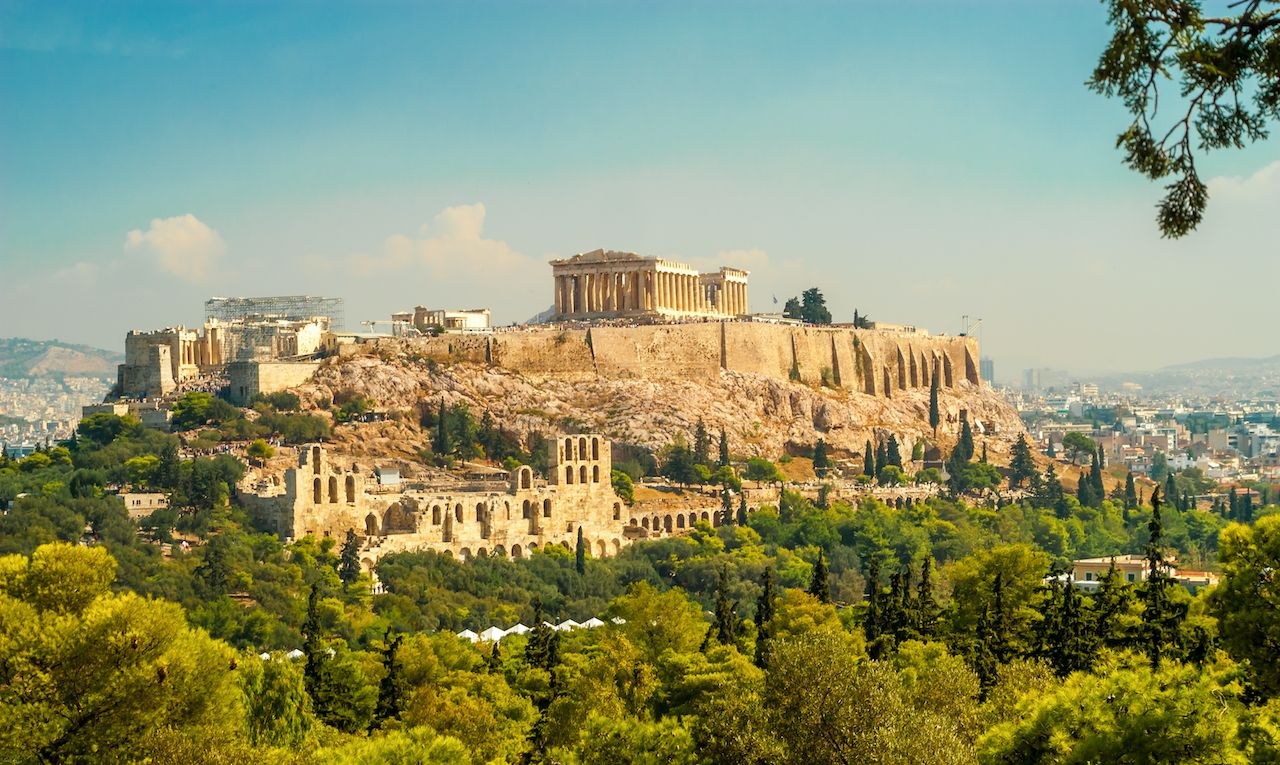
After you step off · near Rome
You end in a different port — stay on, and add what is within reach before you fly home.