Your cruise
Azamara Journey · 13-night Middle East cruise, Piraeus (Athens) to Civitavecchia (Rome)
Nov 21 – Dec 4 · 13 nights ·
Day 1 Piraeus (Athens) (board) · Day 2 Ephesus · Day 3 Bodrum · Day 4 Agios Nikolaos · Day 5 at sea · Day 6–7 Alexandria · Day 8–9 at sea · Day 10 Syracuse · Day 11 Catania · Day 12–13 Salerno · Day 14 Civitavecchia (Rome) (step off)
What you do Walk the marble streets of one of antiquity's greatest cities — Library of Celsus, Great Theatre, Temple of Artemis — then ascend to the sacred House of the Virgin Mary, all at your own pace with a licensed private guide.
What to expect Your guide meets you dockside in Kusadasi and escorts you directly into Ephesus before the crowds peak. You'll stroll Curetes Street, enter the awe-inspiring Library of Celsus, and take in the 25,000-seat Great Theatre where St. Paul once preached. The Terrace Houses — Roman mansions with intact frescoes and mosaics under a climate-controlled canopy — are a genuine highlight rarely given enough time on group tours. The morning closes with a serene visit to the hilltop Shrine of the Virgin Mary, where pilgrims have prayed for two millennia.
Good to know Pre-book Terrace Houses separately (EUR 15 pp) — they sell out. Kusadasi port is roughly 3 km from the city centre; transfer is included with most private operators. Confirm your all-aboard time and share it with your guide — they pride themselves on guaranteed returns.
Versus the ship tour A dedicated licensed guide crafts the itinerary entirely around your group — no queuing behind dozens of strangers, no rushed schedule. You linger at the Library of Celsus or the Terrace Houses as long as you wish, and the guide's scholarly depth turns stones into stories.
book direct with Ephesus Travel Guide – Private Ephesus Tours → · the full guide →
What you do Step inside the UNESCO-listed 'Houses on the Slope' — Roman aristocratic villas with floor mosaics, wall frescoes and underfloor heating still intact — with a specialist archaeologist guide for an immersive, unhurried experience.
What to expect The Terrace Houses are a city within the city: six lavish Roman dwellings excavated and covered by a vast modern shelter that lets you walk elevated walkways over intact living rooms, bathing chambers and Byzantine chapels. Your specialist guide reads the frescoes like an open book, pointing out Greco-Roman mythology scenes and ancient graffiti. Light filters theatrically through the canopy, making every photograph extraordinary. You emerge back onto Curetes Street with a far deeper understanding of who actually lived in ancient Ephesus.
Good to know Tickets for the Terrace Houses must be purchased in addition to the main Ephesus ticket; buy both online in advance to avoid queues at the gate. Wear comfortable, flat-soled shoes — the marble walkways can be uneven. Allow at least 90 minutes inside the houses alone.
Versus the ship tour Most visitors spend only minutes in the Terrace Houses because their guide must keep the group moving. A private archaeologist-led session means you examine each room, understand whose home it was, and truly absorb the extraordinary preservation — a bucket-list encounter that demands time.
What you do Join top-rated local expert Levent Solmaz for a bespoke full-day private tour blending Ephesus' ancient grandeur with Kusadasi's Ottoman castle, authentic bazaar, and a Turkish lunch at a family restaurant — the true luxury of insider access.
What to expect Levent greets you at the pier and the day unfolds on your terms: the grandeur of ancient Ephesus, the intimate spirituality of the House of the Virgin Mary, then a wander through Kusadasi's pigeon island castle and the bustling covered bazaar. Lunch is at a carefully chosen local restaurant — expect slow-braised lamb, fresh meze and strong Turkish tea. Levent's storytelling is vivid and scholarly without being academic, making 2,000 years feel immediate and personal.
Good to know Book well in advance — Levent is in high demand during cruise season (April–October). Share your ship's all-aboard time; he guarantees port return. Pre-tour email correspondence to customise the itinerary is part of the service.
Versus the ship tour Levent is consistently rated one of the finest guides in the Aegean — responsive, deeply knowledgeable and personally invested in every guest's experience. The itinerary is yours to shape, and his local relationships open doors — and restaurants — most visitors never find.
book direct with Ephesus Private Tour Guide – Levent Solmaz (TripAdvisor verified) → · the full guide →
What you do Seek out the ghostly single column of one of the Seven Wonders of the Ancient World, then follow St. John's footsteps to his hilltop basilica in charming Selçuk — a deeply moving morning beyond the main Ephesus circuit.
What to expect The Temple of Artemis, once four times the size of the Parthenon, now stands as a single haunting column rising from a marshy field — a poetic, meditative site that rewards quiet contemplation. A short drive uphill brings you to the Byzantine Basilica of St. John, built over the apostle's tomb, where sweeping views of the Selçuk plain unfold below. A stroll through Selçuk's traditional market — figs, olives, handwoven textiles — completes the morning before your private transfer back to port.
Good to know Combine this with an afternoon at Ephesus main site for a full-day itinerary. Selçuk is 3 km from Ephesus — easily done by private vehicle. Early morning is best to avoid heat and crowds at both sites.
Versus the ship tour These two landmarks are frequently skipped or rushed on standard itineraries, yet they are among the most historically resonant sites in the Christian and classical worlds. A private half-day lets you approach both slowly, with context, and explore Selçuk's authentic market town atmosphere.
book direct with Ephesus Travel Guide – Private Ephesus Tours → · the full guide →
What you do Surrender to the centuries-old Ottoman hammam ritual — full-body marble steam, kese exfoliation and foam massage — at one of Kusadasi's finest historic bath houses, emerging renewed before reboarding.
What to expect You enter through a domed stone antechamber and change into a traditional pestemal (cotton wrap) before being led into the warm marble central hall. The tellak (bath attendant) works systematically — steam opens the pores, the kese mitt sloughs away layers of skin, then a cascade of soapy foam and firm massage loosens every joint. The final cool-water rinse is electric. You emerge onto a marble slab for tea and rest, glowing and utterly relaxed — the perfect counterpoint to a morning at ancient ruins.
Good to know Most Kusadasi hammams are within 10 minutes' walk of the pier. Book a 90-minute slot to avoid rushing. Wear or bring a swimsuit underneath; towels and pestemal are provided. Avoid heavy meals immediately before. This pairs beautifully as an afternoon experience after a morning at Ephesus.
Versus the ship tour A hammam is not a spa add-on — it is a living cultural institution practiced in Turkey for 600 years. The combination of heated marble, vigorous scrubbing and skilled massage is transformative, and doing it in a genuine Ottoman-era bath house rather than a hotel spa is the authentic version.
book direct with Kusadasi Kaleiçi Hamamı (local hammam operators in Kusadasi old town) → · the full guide →
What you do Escape to the enchanting hilltop village of Şirince — a Greek-Ottoman gem of whitewashed houses and vine-draped terraces — for private wine tasting, artisan fruit wines, fresh mezze and hand-embroidered treasures.
What to expect The 8 km drive into the hills rewards you with a village that feels like a film set: cobbled lanes, Ottoman-Greek houses draped in bougainvillea, and the smell of baking bread. Local producers offer tastings of peach, pomegranate, blackberry and grape wines — sweet, unusual and utterly regional. Lunch at a terrace taverna means dolma stuffed with herbs, grilled village cheese, lamb köfte and fresh-baked bread. Artisan embroidery, olive oil soaps and handmade ceramics make for meaningful gifts. Return to Kusadasi port with plenty of time to spare.
Good to know Şirince is 8 km from Selçuk and about 30 km from Kusadasi port — allow 35–40 minutes each way by private vehicle. Combine with a morning at Ephesus for a complete full-day itinerary. Village gets busy by 11am in peak season — arrive by 9:30am for the best experience.
Versus the ship tour Şirince is one of the most atmospheric villages in the Aegean and frequently missed by cruise passengers focused solely on Ephesus. A private driver-guide means you arrive when the village is quiet, linger at the family wineries that have made fruit wines for generations, and leave before the day-tripper coaches arrive.
book direct with Turkey Travel Tours – Ephesus & Şirince Private Tours → · the full guide →
What you do Climb the Sacred Rock with a licensed Athens guide and stand beneath the Parthenon, the single most iconic monument of Western civilization, while the marble turns into the living story of Pericles, Athena and the birth of democracy. Skip-the-line entry is the whole game on a port day, sparing you the brutal midday ticket queue. Pair it with the Bernard Tschumi-designed Acropolis Museum at the foot of the hill, where the original Caryatids and Parthenon frieze sit under glass with the temple in view.
What to expect You arrive at the Acropolis via a 30–45 minute metro or taxi ride from Piraeus and walk straight past the ticket queues with your skip-the-line pass—a critical edge on a port day. Your licensed guide leads you up the Sacred Rock, the marble facades shifting beneath your feet as the Parthenon rises above you, the physical anchor of Western democracy. You stand beneath the temple while its architects, Athena's priests, and Pericles become tangible; the tour typically runs 2–2.5 hours on the hill. If time permits, descend to the Bernard Tschumi-designed Acropolis Museum at the foot, where the original Caryatids and Parthenon frieze rest under glass with the temple framed in the window behind them—the monument visible from the artifact's own display case.
Good to know Book your skip-the-line guided tour (EUR 110–119 all-in) or self-guided entry (EUR 30 site pass only) in advance to lock pace and avoid midday queues. From Piraeus, allow 45 minutes each way by taxi (EUR ~30) or metro; budget 2.5–3 hours on the Acropolis itself, plus museum time if included, leaving a 1.5–2 hour safety buffer before all-aboard. Wear sun protection and comfortable shoes on marble stone; bring water and consider a light jacket if museum time is planned. Confirm your tour operator's meeting point and boarding time the evening before to eliminate port-day confusion.
Versus the ship tour DIRECT WINS. The ship's 'Acropolis & Plaka' half-day runs ~$159.99 pp (Carnival; RCI/Celebrity $150-180). A guided skip-the-line tour books direct at ~$110-119 all-in, and a self-guided half-day (taxi ~EUR 30 each way + EUR 30 entry) lands under $70. Savings of roughly $40-50 pp guided, ~$90 if you DIY the entry and just want the rock.
What you do Drive the turquoise Athens Riviera south to the very tip of Attica, where a gleaming white 5th-century-BC Doric temple stands on a cliff dropping straight into the Aegean. Lord Byron carved his name into a column here; the columns framing the open sea are one of Greece's signature images and the best 'escape the city crowds' move that still fits a half-day. About 4 hours door to door.
What to expect You drive south along the turquoise Athens Riviera, the coastal sprawl gradually giving way to open sea views as you approach the tip of Attica. At Cape Sounion, a gleaming white 5th-century-BC Doric temple materializes on a cliff edge, its columns framing a sheer drop into the Aegean—the view that inspired Lord Byron to carve his name into the stone. You'll have time to walk among those iconic columns, absorb the wind and the signature Greek light, and understand why this is the escape-the-city move that doesn't require a full day. The whole experience moves door-to-door in approximately 4 hours, with the bulk of time at the temple itself.
Good to know Book transfers direct with Athens Walking Tours (~EUR 46 pp) and add temple entry separately (~EUR 10) to avoid cruise-line bundling that inflates the cost to $209–240 for a half-day outing. Aim for a departure within the first 2 hours of your port window to secure the 4-hour round trip plus buffer time before all-aboard. Temple entry is not included in transfer pricing, so bring cash or be prepared to purchase on-site. The coastal drive means no special gear required, but bring sunscreen and a hat—you'll be exposed on the cliff top, with few shade options at the temple itself.
Versus the ship tour DIRECT WINS BIG. Cruise lines almost never sell Sounion standalone, burying it inside a $209-240 full-day package. Booked direct the coastal half-day is ~$61 all-in (group versions elsewhere ~$77). If your ship only offers it bundled, you're paying a $130+ premium for the convenience of one bus.
What you do Trade marble and crowds for the Aegean blue: a half-day catamaran along the Athens Riviera and Saronic coast with swim-and-snorkel stops, a meal and wine aboard. Boats leave from Alimos and Flisvos marinas close to Piraeus, making this the rare genuinely premium on-the-water experience that comfortably fits a port-day clock. Pick an operator that guarantees you back before all-aboard.
What to expect You'll board a semi-private catamaran at Alimos or Flisvos marina—a short ride from Piraeus—and spend your half-day gliding along the Aegean's brilliant blue coastline, pausing at protected swim-and-snorkel spots where the water is clear and calm. Between swims, you'll lounge on deck with wine and a meal included, absorbing the Athens Riviera and Saronic coast views at a pace only a small catamaran allows. Unlike the ship's mega-boat island circuit, this is genuinely intimate: no crowds, no forced itinerary, just the rhythm of the sea. You'll be back at the pier with time to spare before all-aboard.
Good to know Departures are half-day sails (check your operator's exact schedule to confirm return time fits your ship's all-aboard). Alimos and Flisvos marinas are close to Piraeus but you'll need a quick taxi or arranged transfer from the port—factor 15–20 minutes each way. Book semi-private slots ahead, especially June–August, as they fill quickly and pricing rises (EUR 125–135 pp depending on season). Bring reef-safe sunscreen, water shoes, and a light layer; snorkel gear is provided, and meal + wine are aboard.
Versus the ship tour DIRECT-ONLY niche. Cruise lines rarely offer a small-catamaran sail here; their on-water option is the big Saronic island bus-boat. At ~$135 pp semi-private this is a premium experience, not a savings play, but it's the only way to get the relaxed Aegean-blue day, and it beats the ship's ~$180-200 mega-boat island cruise on quality if not headline price.
What you do Thread the historic Plaka backstreets into the roaring Varvakios Agora meat-and-fish market, stopping for spanakopita, loukoumades, Greek coffee, cheeses, olive oil, honey and wine. Repeatedly rated among Europe's best culinary experiences, it delivers the flavors-and-neighborhood immersion a first-timer remembers as vividly as the ruins, all on foot in the old town. ~4 hrs, small group, tastings included.
What to expect You'll spend roughly 4 hours threading through the narrow, winding backstreets of historic Plaka on foot, pausing at local favorites for spanakopita, loukoumades, Greek coffee, and tastings of cheeses, olive oil, honey, and wine. The real anchor is the Varvakios Agora—the roaring central meat-and-fish market—where vendors call out their wares and you'll sample directly in the chaos of neighborhood commerce. Rather than stand-and-listen, you move continuously through old-town streets, tasting as you go, absorbing the rhythm of daily Athenian life in a small group setting. It's the kind of immersive, on-foot culinary walk that stays vivid in memory alongside the ruins.
Good to know Book directly with Athens Walks before the port day to secure your spot in the small group and confirm start time—all tastings are included in the ~$75 pp price, so no hidden costs. Plan on a 4-hour window starting within 1–2 hours of disembark to leave a comfortable buffer (the Plaka walk is entirely walkable from Piraeus pier, though confirm exact meeting point when you book). Wear comfortable walking shoes and bring a small daypack or crossbody bag for any purchases or water; the market and Plaka streets are pedestrian-only and shaded, but summer heat can build. Return to the pier with at least 90 minutes before all-aboard to account for the walk back and any lingering in the market.
Versus the ship tour DIRECT WINS. The ship's food/wine tour runs ~$134.99 pp (Carnival) and independent group food walks elsewhere run $135-183. This direct small-group market-and-Plaka walk at ~$75 pp undercuts the ship by roughly $60 for a far more authentic, on-foot experience. (If you only want a quick pour, a basic Piraeus wine tasting is ~$30-35 and beats everything on price alone.)
What you do Three classic Saronic Gulf islands in one day, including car-free, donkey-and-cobblestone Hydra, one of the most photogenic harbors in Greece. Swimming, Greek music and a buffet lunch aboard deliver the 'Greek islands' taste without flying to the Cyclades. CLOCK WARNING: this is an ~11-hour day departing ~08:15 from Piraeus, so it only works if your ship has a very long call or overnights, and only with an operator that guarantees you back to the ship.
What to expect You'll depart Piraeus around 08:15 on a full-day voyage across the Saronic Gulf, visiting three islands in succession: first the car-free, donkey-cobbled harbor of Hydra, one of Greece's most photogenic ports, where narrow whitewashed streets climb steeply from the waterfront; then Poros, where you'll have time to explore; and finally Aegina. The day anchors around a leisurely Greek buffet lunch served aboard the boat, punctuated by swimming stops and live Greek music that delivers the classic island experience without the flight to the Cyclades. You'll return to Piraeus in late afternoon, having absorbed the full sensory rhythm of island life—water, light, local flavor, and Greek hospitality—all from a single excursion boat.
Good to know This is an ~11-hour commitment departing ~08:15, so it only works if your ship has a very long port call or overnight stay; on a standard 8-hour call, the risk of missing the ship outweighs the ~$40–70 savings versus booking through your cruise line. Book ahead with Athens One Day Cruise (direct ~EUR 131/$142 pp with lunch, versus ship ~$179–199) or confirm your operator guarantees return to the pier with time to spare. Bring sun protection, swimwear, and cash for any extras; wear comfortable walking shoes for Hydra's steep cobblestones. The departure point is directly from Piraeus; allow buffer time to clear the pier and reach the boat dock, and verify exact embarkation details with your chosen operator 24 hours before.
Versus the ship tour DIRECT WINS on price, SHIP WINS on safety. Booked direct this is ~$142 pp with lunch (some local operators ~$99-130) versus the ship's ~$179-199 for the identical boat and islands - a ~$40-70 saving. BUT on a standard port call the 11-hour runtime risks missing the ship; if you're not overnighting, the cruise line's version (or skipping it) is the safer call despite the markup.
What you do The low-risk fallback if a long excursion feels too tight: a fixed-fare taxi or the metro straight to the Acropolis, self-guided entry to the Parthenon, then an easy downhill wander through Plaka's old-town lanes. No tour commitment, no fixed return time, and you control exactly when you head back to Piraeus, which is the safest play for a short port call.
What to expect You'll take a fixed-fare taxi or the metro from Piraeus straight to the Acropolis, where you'll climb through the ancient Parthenon and surrounding monuments at your own pace with a self-guided audio tool or printed map. From the summit, you'll head downhill into Plaka's narrow, winding old-town lanes—a maze of tavernas, neoclassical townhouses, and small shops—wandering for as long as you'd like before strolling back to the port on your own timeline. The whole rhythm is yours: no group delays, no narrated patter, just you, 2,500-year-old stone, and the freedom to linger or move on whenever you choose.
Good to know For a 6–8 hour port call, budget ~45 minutes each way for transit (taxi or metro), 2–2.5 hours at the Acropolis, and 1.5–2 hours wandering Plaka, leaving a 60–90 minute buffer to return to Piraeus before all-aboard. Book your taxi in advance or use the metro (€4 round trip); Acropolis entry is €30 (expect a queue, especially mid-morning). Wear comfortable walking shoes, bring water, and download a self-guided audio app or grab a printed site map beforehand. Plan to be back at the pier at least an hour before your ship's departure time—this is not a ship-sponsored excursion, so you alone are responsible for making the sailing.
Versus the ship tour DIRECT WINS on price and flexibility. The ship's escorted Acropolis & Plaka half-day is ~$159.99 pp; doing it yourself is ~$50-70 pp and you keep full control of your return time. Trade-off: no guide narration and you carry your own clock - acceptable for the Acropolis, which is straightforward to navigate solo.
book direct with Athens Half-Day Sightseeing (Athens Walking Tours - audio/self-guided) → · the full guide →
What you do Explore the entire ancient city of Ephesus — Library of Celsus, Great Theatre, Curetes Street — in a fully private, expert-led tour with your own licensed guide and Mercedes van, guaranteed back at port on time.
What to expect Your guide meets you dockside at Kusadasi Port and whisks you to Ephesus in a private air-conditioned van. Walking the marble-paved Curetes Street with no crowds around you, the scale of this 250,000-person Roman metropolis becomes visceral. Highlights include the soaring two-storey Library of Celsus facade, the 25,000-seat Great Theatre where St Paul preached, and the sacred Gate of Hercules. Your guide weaves mythology, early Christianity, and Roman imperial politics into every column and frieze.
Good to know Book directly via ephesusporttours.com well in advance — private slots fill fast on cruise days. Entrance to Ephesus Ancient City is EUR 40 pp (pay on-site). Wear comfortable flat shoes; the marble streets are uneven. All-aboard times are respected under their on-time guarantee.
Versus the ship tour Fully private — your own licensed archaeologist-guide, your own vehicle, your own pace. Linger at the Library of Celsus, step inside the Great Theatre, and skip every mass-tour bottleneck. The guaranteed port return means zero stress.
What you do Descend into Ephesus's 'Pompeii moment' — the Terrace Houses, where Roman aristocrats' frescoed mansions, mosaic floors, and underfloor heating are preserved in breathtaking detail under a climate-controlled canopy.
What to expect You enter via a raised boardwalk system threading through six insula apartments occupied from the 1st to 7th century AD. Intact mosaic floors glow with geometric precision; wall paintings depict mythological scenes still vivid after two millennia. Your guide explains the sophisticated hypocaust heating, private baths, and the graffiti scratched by servants — intimate details that make ancient life feel startlingly modern. Ongoing excavation means new discoveries appear each season.
Good to know Add the Terrace Houses to any private Ephesus tour; budget an extra 45–60 minutes inside. The EUR 15 pp surcharge is paid at the Terrace Houses ticket desk, separate from main site entry. Pre-book your guide — walk-in private guides at the gate are unvetted.
Versus the ship tour Access to the Terrace Houses is ticketed separately and often skipped by large groups. A private expert guide — such as licensed archaeologist Ertunga Ecir — reads the Latin inscriptions, identifies the fresco subjects, and gives you the full context that transforms painted walls into living Roman history.
book direct with Ertunga Ecir – Private Ephesus Tours → · the full guide →
What you do Visit Meryemana — the mountain-top stone house where the Virgin Mary is believed to have lived out her final years — then tour ancient Ephesus, combining sacred pilgrimage with one of antiquity's greatest cities.
What to expect The road to the House of the Virgin Mary winds through fragrant pine forest on Mount Koressos, arriving at a modest 1st-century stone chapel that has drawn Catholic, Orthodox, and Muslim pilgrims for centuries. Light a candle in the hushed interior, then tie a wish to the nearby 'Wall of Wishes.' Descend to Ephesus for the full archaeological circuit, understanding how this city — where St John brought Mary after the Crucifixion — sits at the crossroads of classical and Christian civilisation.
Good to know Dress modestly for the House of the Virgin Mary (shoulders and knees covered). The site is 9 km from Ephesus — a private vehicle is essential. Morning visits are cooler and quieter. Combine with St John's Basilica in Selçuk if time permits.
Versus the ship tour Arriving at Meryemana early in a private vehicle means you reach the sanctuary before the midday pilgrimage crowds. Your guide provides the theological history, the 19th-century rediscovery story, and the significance of the papal visits — depth impossible in a group setting.
What you do Stand at the ruins of the Temple of Artemis — one of the Seven Wonders of the Ancient World — then tour Ephesus with a specialist guide who stitches together what this vanished colossus meant to the ancient world.
What to expect You begin at the Temple of Artemis site on the edge of Selçuk — just one restored column remains of what was four times the size of the Parthenon. Your guide uses historical reconstructions to conjure the original structure before you drive to Ephesus itself, where the cult of Artemis permeates every frieze. The Ephesus Experience Museum inside the site displays digital reconstructions that make the connection between temple and city vivid. Finish on Curetes Street as the afternoon light turns the marble golden.
Good to know The Temple of Artemis is a 10-minute drive from the main Ephesus entrance — combine them in the same private tour itinerary. No shade at the temple site; bring a hat. The Ephesus Experience Museum is included in the EUR 40 pp entry ticket.
Versus the ship tour The single standing column and scattered marble drums of the Temple of Artemis look underwhelming without expert context. A specialist Ephesus guide reconstructs the temple's 127 Ionic columns, its gold-and-ivory cult statue, and why Alexander the Great offered to fund its rebuilding — turning a field into a Wonder.
book direct with Ephesus Travel Guide – Private Ephesus Tours → · the full guide →
What you do Pair the ruins of Ephesus with the world-class Selçuk Ephesus Museum — home to the twin Artemis statues, exquisite Roman sculpture, and treasures excavated from the site — for the complete, unmatched Ephesian experience.
What to expect Begin at Ephesus ancient city with a thorough guided walk through the main archaeological zone. Then drive five minutes to the Selçuk Ephesus Museum, where the Great Artemis and Beautiful Artemis statues dominate the hall — their dozens of egg-shaped protrusions (fertility symbols or bull testicles, your guide will explain the debate) are mesmerising up close. The gladiator collection — the only one of its kind — includes tombstones with portraits and medical evidence of arena injuries. A genuinely scholarly afternoon.
Good to know The museum is closed on Mondays — confirm before scheduling. Combine with a stop at the Isa Bey Mosque and the ruins of St John's Basilica, both within walking distance in Selçuk. Total time with both sites is approximately 5–6 hours from port.
Versus the ship tour The Selçuk Museum is the essential companion to the ruins, yet most tours skip it for time. With a private guide who knows every showcase, the famous multi-breasted Artemis statues, the Eros sarcophagus, and the gladiator grave stelae transform from objects into stories that reframe everything you saw in the ancient city.
book direct with Ertunga Ecir – Private Ephesus Tours → · the full guide →
What you do After exploring ancient Ephesus, wind up into the hills to Şirince — a perfectly preserved Ottoman Greek village famed for its fruit wines and stone houses — for a private tasting and leisurely lunch among the vines.
What to expect After a morning at Ephesus, your private van climbs 8 km into the hills to Şirince, a village of whitewashed stone houses draped in bougainvillea and grapevines. Local producers line the cobbled lanes with bottles of strawberry, peach, blackberry, and grape wine — idiosyncratic and delicious. Settle onto a shaded terrace for a mezze lunch of Aegean olives, stuffed vine leaves, and fresh bread, looking out over the valley. This is the unhurried, sensory counterpoint to the grandeur of the ruins below.
Good to know Şirince is 8 km from Selçuk — accessible only by private vehicle or local minibus (dolmuş); a private tour is by far the most comfortable option. The village gets busy midday in peak season; arriving by early afternoon from Ephesus is ideal. Confirm all-aboard time with your guide before departure.
Versus the ship tour Şirince is rarely included in standard excursions yet it is one of the Aegean's most photogenic and culturally layered villages. Arriving privately means you browse the family-run wine shops and terrace restaurants at leisure — not on a group schedule — and your guide provides the Greek-Orthodox history of the village's original inhabitants.
What you do Sail the legendary turquoise coast aboard a traditional Turkish gulet, anchoring in secret coves for swimming, fresh mezze lunches, and sundowners. This is Bodrum at its most iconic and unhurried — a floating private sanctuary on the Aegean.
What to expect Step aboard a lovingly maintained traditional timber gulet at Bodrum Harbour and glide past the Castle of St. Peter as you head for turquoise waters. Your skipper navigates to secluded bays — think crystalline coves inaccessible by road — where you swim off the stern in perfect solitude. A spread of Turkish mezze, grilled fish, and chilled local wine arrives on deck as you drift. The afternoon fades slowly, with no schedule except your own.
Good to know Most half-day charters return 2–3 hours before all-aboard, making timing comfortable. Pre-book well in advance in summer — private gulets fill fast. Bring sunscreen, a hat, and a sarong; the operator supplies towels and snorkelling gear.
Versus the ship tour A fully private charter means your own itinerary, your own pace, and no strangers on deck — just your party, a professional skipper, and some of the most dazzling coastline in the Mediterranean.
What you do Go deep into the Castle of St. Peter — one of the finest Crusader fortresses in the world — with a private expert guide unlocking the secrets of its legendary Museum of Underwater Archaeology. Shipwrecks, Bronze Age treasures, and medieval towers await.
What to expect Your guide meets you dockside and leads you along Bodrum's waterfront to the imposing 15th-century Castle of St. Peter, rising dramatically over the bay. Inside, the Museum of Underwater Archaeology houses one of the world's most remarkable collections — the cargo of a 3,300-year-old shipwreck, Mycenaean gold jewellery, and amphora-lined halls. Tower by tower, your guide brings medieval and ancient history to vivid life with stories no audio guide can replicate. The castle's battlements offer sweeping views over the marina and the Aegean.
Good to know The castle is a short 10-minute walk from the cruise pier. Book e-tickets in advance at bodrum-museum.com (EUR 20) to skip ticket queues. Allow 2.5–3 hours; pair with a waterfront lunch before returning to port.
Versus the ship tour A dedicated private expert guide means you linger over what fascinates you — the Bronze Age Uluburun shipwreck gallery, the Glass Wreck Hall — without being swept along by a crowd. Rare depth and genuine scholarship.
book direct with Turco Travel (Bodrum Private Tours) → · the full guide →
What you do Stand on the foundations of one of the Seven Wonders of the Ancient World — the Mausoleum of Halicarnassus — guided by a specialist archaeologist who reveals what few visitors ever discover. A rare encounter with antiquity at its most monumental.
What to expect Built in 350 BC for the Persian satrap Mausolus, this tomb was so magnificent it gave the world the word 'mausoleum.' Your expert guide walks you through the excavation site, explaining how the four greatest sculptors of antiquity decorated its friezes — fragments of which are displayed in situ. The guide uses detailed reconstruction imagery to help you visualise the 45-metre pyramid-topped tomb in its full glory. The site is a 10-minute walk or short taxi ride from the pier, making it perfectly manageable as a standalone morning excursion.
Good to know Combine with the Castle and Museum for a full ancient-history day ashore. The site is compact but intellectually rich — allow 1.5 hours. Wear comfortable shoes and a sun hat; there is little shade on site.
Versus the ship tour A private specialist guide — not a generalist — brings the lost monument back to life with reconstruction illustrations, historical context, and access to the on-site museum fragments that most visitors walk past.
book direct with ToursByLocals (Bodrum Local Expert Guides) → · the full guide →
What you do Explore Bodrum's bougainvillea-draped lanes, traditional whitewashed quarters, and vibrant bazaar with a hand-picked local guide who knows every corner — from hidden meyhanes to the workshop of a master sandal-maker. The authentic Bodrum most tourists never find.
What to expect Begin at the harbour's edge, where fishermen still mend nets beneath the castle walls, then weave into the Carsi market district — a sensory tangle of spice stalls, hand-dyed textiles, and copper lanterns. Your guide leads you through the old Greek and Turkish quarters, where bougainvillea cascades over ancient stone walls and local artisans work in open doorways. Stop for a glass of çay with a local potter, browse the Bodrum windmills for panoramic views, and finish with a tasting of gözleme and fresh pomegranate juice at a family-run café.
Good to know The tour starts at the cruise pier — no transfers needed. Fully flexible duration (2–4 hours); the guide will tailor stops to your interests. Wear comfortable walking shoes; Bodrum's streets are cobbled and hilly in parts.
Versus the ship tour This is a 100% private, fully tailored experience with a local who lives and breathes Bodrum — not a scripted route, but a genuine insider itinerary shaped around your interests, whether art, architecture, craft, or cuisine.
What you do Escape to the wild, uninhabited shores of Orak Island — Bodrum's most dramatic snorkelling destination — on a small-group boat excursion departing Halikarnas Harbour. Crystalline waters, vibrant marine life, and sheer limestone cliffs make this a true Aegean adventure.
What to expect Depart Halikarnas Harbour at 11:00 AM, heading south-east past the peninsula's dramatic headlands to Orak Island's untouched shores. Anchor in a glittering turquoise cove where visibility reaches 20 metres — snorkel over sea urchins, octopus, and schools of gilt-head bream. The boat moves to two or three different bays throughout the day, each more secluded than the last. A freshly prepared Turkish lunch of grilled fish, salad, and watermelon is served on board as you drift in paradise.
Good to know Departs at 11:00 AM — confirm departure time against your ship's all-aboard as some itineraries dock early. The harbour is a 10-minute taxi from the cruise pier. Pre-book to secure a spot; summer departures sell out quickly. Bring a waterproof camera.
Versus the ship tour Orak Island's secluded coves are only accessible by boat, making this a genuine escape from the crowds — the snorkelling over underwater rock formations and through translucent channels is among the best in the entire Aegean region.
book direct with Bayside & Tora Boat Trips (Halikarnas Harbour, Bodrum) → · the full guide →
What you do Journey into the rolling hills behind Bodrum to a boutique Turkish vineyard, where locally grown grapes produce remarkable Aegean wines — savoured alongside a lavish farm-to-table lunch with sweeping countryside views. Turkey's wine culture, beautifully revealed.
What to expect Your private guide collects you from the pier and drives into the Bodrum peninsula's fragrant interior, where olive groves and grapevines cloak the hillsides. At the boutique vineyard, the winemaker walks you through the cellar explaining the unique terroir of the Aegean coast before guiding a curated tasting of four to six local varietals — including indigenous grapes like Sultaniye and Çalkarası. A beautifully laid lunch follows: slow-roasted lamb, stuffed vine leaves, local cheeses, and seasonal vegetables, all produced within walking distance of your table. The return journey passes through a traditional village, arriving back in ample time before all-aboard.
Good to know Allow 4–5 hours for the full experience. Vineyards are 20–35 minutes from the pier by car — private transport is included with a ToursByLocals booking. Confirm the specific vineyard and seasonal menu when booking; summer harvest season (Sept–Oct) is the most spectacular time to visit.
Versus the ship tour A private vineyard lunch — not a group coach tour — means a relaxed, convivial table, personalised wine guidance, and genuine access to producers who share the story of Turkey's ancient winemaking traditions in their own landscape.
book direct with ToursByLocals (Bodrum Private Food & Wine Experts) → · the full guide →
What you do Sail to Crete's most haunting island — the last active leper colony in Europe, abandoned only in 1957. A private expert guide brings the fortress walls, Venetian gates, and human stories to vivid life in a way no crowd can match.
What to expect Your private guide collects you at the port and arranges a dedicated boat transfer to Spinalonga from nearby Elounda (approx. 15 min). Once on the island, you walk the entire circuit of the Venetian fortifications, the eerie main street, and the colony's hospital and church with unhurried, expert narration. The guide weaves personal accounts of the islanders — immortalised in Victoria Hislop's novel 'The Island' — making the experience deeply moving. The return crossing offers stunning views of the Gulf of Mirabello before a drop-back at the port.
Good to know Spinalonga is a 20-min taxi or 30-min local bus ride from Agios Nikolaos to Elounda, then a short boat hop. Pre-book your private guide well in advance — slots fill fast in peak season. All-aboard times in Agios Nikolaos are typically 18:00–19:00; this half-day tour fits comfortably. Wear sturdy footwear — the island's cobbled paths are uneven.
Versus the ship tour A fully private experience — just your group, your guide, and Spinalonga's extraordinary silence. No mass-tour commentary, no queues; your guide calibrates pace and depth entirely to you, unlocking stories that group tours skim past.
book direct with Tours by Locals – Agios Nikolaos Private Guides → · the full guide →
What you do Walk the 3,500-year-old corridors of Europe's oldest city at Knossos, then stand before the priceless Minoan frescoes and the legendary Bull-Leaper in Heraklion's world-class Archaeological Museum — all with a private archaeologist guide.
What to expect Your guide and private vehicle collect you at the Agios Nikolaos port for the scenic 70-km drive west to Knossos. At the palace, your guide — ideally a trained archaeologist — conjures the myth of the Minotaur and the reality of Minoan court life across reconstructed throne rooms and sacred lustral basins. After a gourmet lunch at a curated Heraklion taverna, you move to the Archaeological Museum, where the finest Minoan collection on Earth awaits: the Phaistos Disc, the Snake Goddess figurines, and the breathtaking Akrotiri-style frescoes. You are returned to port in time for all-aboard.
Good to know This is a full-day excursion (approx. 7–8 hours). Heraklion is ~70 km from Agios Nikolaos; allow 1.5 hours each way. Book private transport in advance and confirm your guide's archaeological credentials. Museum closed on select public holidays — verify dates when booking. Comfortable walking shoes essential; both sites involve significant walking on uneven ground.
Versus the ship tour A private archaeologist-led guide transforms Knossos from a labyrinth of ruins into a living Bronze Age city — you decipher frescoes, myths, and Minoan palace politics at your own pace, skipping queues and lingering where curiosity takes you.
book direct with Tours by Locals – Agios Nikolaos Private Guides → · the full guide →
What you do Glide through the impossibly blue Gulf of Mirabello on a private catamaran, anchoring at the wild Kolokytha Peninsula and the legendary island of Spinalonga — with a fresh Cretan meal and open bar aboard.
What to expect You board a luxury catamaran directly from Agios Nikolaos harbour and sail north into the Gulf of Mirabello, rounding the dramatic Kolokytha Peninsula with its pine-scented cliffs and hidden sea caves. The boat anchors in a crystalline cove for an open-water swim, then sails on to drift past Spinalonga Island. A generous Cretan mezze lunch — think dakos, grilled octopus, and chilled Assyrtiko wine — is served on deck as the island's Venetian walls glide past. The return sail features golden afternoon light on the bay.
Good to know Departure is from Agios Nikolaos harbour (walkable from port). Cruise duration is approximately 5.5–6 hours; check exact all-aboard time before booking. Book the private charter option for the most exclusive experience. Bring reef-safe sunscreen, a hat, and a light layer for the return breeze.
Versus the ship tour A sleek catamaran means intimate groups, proper sun decks, and the freedom to swim off the hull in turquoise coves — combined with a genuine Cretan spread (fresh salads, grilled fish, local wine) that transforms lunch into an event.
book direct with Shore Excursions Group – Cretan Bay Catamaran Cruise → · the full guide →
What you do Ascend to the mythical Lasithi Plateau — a high Cretan valley ringed by mountains — to visit the cave where Zeus himself was born, taste mountain honey and local cheese, and explore timeless villages on a small-group guided adventure.
What to expect The scenic mountain road climbs through terraced olive groves and hairpin bends to the Lasithi Plateau, sitting at 840 m above sea level and ringed by 2,000-m peaks. Your guide leads you into the Dikteon Cave (Psychro Cave), where mythology places the birth of Zeus — stalactites, sacred chambers, and an electrifying sense of antiquity. Next, a village stop for a farmhouse tasting of Cretan graviera cheese, thyme honey, and locally pressed olive oil. The drive back descends through the village of Kritsa, famed for its Byzantine church of Panagia Kera — one of Crete's most beautiful.
Good to know The Cave of Zeus (Dikteon/Psychro Cave) requires a walk up a rocky path — sturdy footwear is essential. Tour duration approx. 7–8 hours; confirm all-aboard compatibility. Departs from Agios Nikolaos town. The plateau can be cool even in summer — bring a light layer. Pre-booking is strongly advised as small-group slots are limited.
Versus the ship tour Small-group format (typically 8 or fewer) means unhurried stops at family-run cheese dairies and honey farms that coach tours drive straight past — and an expert local guide who grew up in the region and knows exactly which kafeneio serves the best raki.
book direct with GetYourGuide – Lasithi Plateau & Cave of Zeus Small-Group Tour → · the full guide →
What you do A bespoke private tour along Crete's most glamorous coastline — the 'Cretan Riviera' — stopping at the chic harbour of Elounda, the fishing village of Plaka, and Spinalonga Island, all rounded off with a long, leisurely lunch by the water.
What to expect Your private vehicle departs Agios Nikolaos and follows the impossibly scenic coast road north, pausing at clifftop viewpoints over the Gulf of Mirabello. In Elounda, stroll the harbour and perhaps peer across to the private island of Spinalonga from the water's edge. The route continues to Plaka, a tiny whitewashed fishing hamlet where your table is reserved at a hand-picked seafront taverna — expect fresh-caught fish, Cretan salads, and chilled local wine at the wave's edge. After lunch, a short boat crossing to Spinalonga allows a private guided walk of the Venetian fortress before your driver returns you to port.
Good to know Elounda is just 12 km from Agios Nikolaos — an easy 20-min drive. The full experience runs approx. 6–7 hours. Confirm your all-aboard time and communicate it to your guide; private tours are flexible and can be tailored exactly. Lunch is typically included; confirm dietary requirements at booking.
Versus the ship tour This is Crete's answer to the Amalfi Coast — and having it entirely to yourselves, with a dedicated driver-guide and a personally chosen restaurant, is a world apart from a group coach. Elounda is home to some of Europe's most celebrated luxury hotels; your guide knows the hidden coves and family-run fish tavernas that don't appear in any guidebook.
book direct with Shore Excursions Group – Private Coastal Charms of Elounda, Plaka & Spinalonga → · the full guide →
What you do Discover why Cretan wine is one of the Mediterranean's best-kept secrets at the acclaimed Lyrarakis family estate — a private tour of the vineyards and winery followed by an expert-led tasting of rare indigenous varietals paired with local delicacies.
What to expect Your private transfer takes you through Crete's vine-striped hinterland to the Lyrarakis estate near Heraklion. A guided walk through the vineyards introduces you to ancient Cretan varietals — Vidiano, Dafni, Plyto — before you enter the modern winery to understand the estate's meticulous, terroir-driven approach. The tasting session (typically 4–6 wines) is conducted at a private table with the estate's own sommelier, paired with artisan Cretan cheeses, honey, and olive oil. You leave with a far deeper appreciation of Greek wine — and, quite possibly, a case to ship home.
Good to know Lyrarakis is located near Heraklion (~70 km from Agios Nikolaos); best combined with a morning at Knossos for a full-day private itinerary. Contact the winery directly at lyrarakis.gr to arrange a bespoke private tasting — public tour slots fill fast in summer. Arrange private transport from the port. This is an adult-focused experience; confirm minimum age policies. Designate a non-drinking member of your group or pre-arrange a private driver.
Versus the ship tour Lyrarakis is rated 4.8/5 across 851+ reviews and is one of Crete's most celebrated family estates — specialising in near-extinct indigenous grapes like Dafni and Plyto that you simply cannot taste anywhere else in the world. A private session with a family member or estate sommelier is a genuinely rare privilege.
What you do Stand before the last surviving Wonder of the Ancient World on a fully private day journey from Alexandria. Your expert Egyptologist guide unlocks the secrets of Giza and Tutankhamun's treasures — the ultimate Egypt bucket-list day.
What to expect The drive from Alexandria Port takes roughly 3 hours each way, so you depart early and arrive at the Giza Plateau when the morning light is golden and crowds are thin. Your Egyptologist leads you inside one of the Great Pyramids, down to the Valley Temple of Khafre, and face-to-face with the Great Sphinx. After a sit-down lunch at a local restaurant, the afternoon is spent at the Egyptian Museum in Cairo, where the guide brings the Tutankhamun treasures and royal mummies to life with scholarly depth.
Good to know Allow 14 hours door-to-door; confirm your ship's all-aboard time before booking. Pre-book pyramid interior access separately (limited tickets). Bring sunscreen, a hat, and EGP cash for camel photo tips. Ramses Tours can tailor departure time to your port schedule.
Versus the ship tour Fully private vehicle and dedicated Egyptologist guide mean you set the pace at each monument — no herding through crowds. Sunrise access to the plateau before the tour buses arrive turns Giza into a genuinely intimate experience.
What you do Escape the Giza crowds entirely and explore Saqqara — Egypt's oldest stone monument and the world's first pyramid — plus the ancient capital of Memphis on an exclusive private tour. Fewer tourists, deeper history, pure awe.
What to expect Your private Egyptologist and air-conditioned vehicle collect you at the port and head south to Saqqara, where Imhotep's revolutionary Step Pyramid rises from the desert. You descend into mastaba tombs adorned with 4,500-year-old reliefs, then visit the Serapeum's vast underground galleries housing the massive granite Apis bull sarcophagi. A stop at the open-air museum of Memphis reveals colossal statues of Ramesses II, before a leisurely lunch at a quality local restaurant on the return.
Good to know Journey time is ~2.5 hours each way — slightly shorter than Giza. Allow 12–13 hours total. Photography permits for some tombs must be purchased on-site in EGP. Book well in advance in peak Mediterranean cruise season (April–October).
Versus the ship tour Saqqara draws a fraction of the visitors Giza does, giving your private group near-exclusive access to the Step Pyramid complex, the beautifully painted mastaba tombs, and the Serapeum — corridors that most Egypt visitors never see.
book direct with Egypt Shore Excursions (local operator) → · the full guide →
What you do Delve into Alexandria's own legendary legacy on a private expert-led city tour: the spectacular modern reincarnation of the ancient Library of Alexandria, and the haunting Greco-Roman catacombs — a UNESCO-listed wonder hidden beneath the city.
What to expect The morning begins at the iconic Bibliotheca Alexandrina — its tilted disc façade inscribed with the world's alphabets is a masterpiece of modern architecture. Inside, your guide navigates the permanent antiquities collections, the rare books and manuscripts, and the stunning main reading hall. After lunch on the Corniche, you descend into the Catacombs of Kom El Shoqafa, a remarkable fusion of Egyptian, Greek, and Roman funerary art carved three stories into bedrock — one of the Seven Wonders of the Middle Ages.
Good to know Both sites are within the city, so all-aboard time is very manageable. The Catacombs involve steep spiral stairs — not suitable for limited mobility. Book the private Egyptologist guide directly through the port area's licensed guide associations or via Egypt Shore Excursions. Closed Fridays; check Bibliotheca schedules in advance.
Versus the ship tour A private guide means you linger in the Bibliotheca's rare manuscript collections and cutting-edge museum wings at your own pace, then descend alone into the three-level labyrinth of the Catacombs — an atmospheric, lantern-lit underworld that rewards those who go slowly.
What you do Explore Alexandria's most iconic fortress — built on the exact site of the ancient Pharos lighthouse — and the city's astonishing Greco-Roman Museum, where 50,000 artefacts span 2,000 years of Mediterranean civilisation. Pure, distilled Alexandrian grandeur.
What to expect You begin at the 15th-century Citadel of Qaitbay, perched dramatically on the Mediterranean shore where the legendary Pharos once blazed. Your guide traces the fortress's Mamluk architecture and the blocks of the ancient lighthouse still visible in its walls, with sweeping sea views from the battlements. The afternoon moves to the Greco-Roman Museum — recently reopened after a decade of restoration — where mummified crocodiles, Alexander-era coins, and exquisite marble statuary tell the story of Alexandria's cosmopolitan golden age.
Good to know Both sites are close to the port — total transfers are under 30 minutes. Ideal if your ship has a shorter port call or you prefer not to commit to the full Cairo day. The museum reopened in 2023; confirm current opening hours before your visit. Comfortable walking shoes essential on the Citadel's uneven stonework.
Versus the ship tour A private half-day format means you can combine this city immersion with an afternoon at leisure on the Corniche or in Alexandria's vibrant souks — total flexibility that a group coach tour cannot offer.
book direct with Egypt Shore Excursions (local operator) → · the full guide →
What you do Alexandria is Egypt's seafood capital and a city of extraordinary culinary crossroads — Levantine, Greek, Italian, and Coptic flavours layered over millennia. A private food-focused walking tour through the city's historic markets and fish-grilled harbourside restaurants is an utterly unique sensory bucket-list experience.
What to expect The journey weaves through the buzzing Attarine district, where your guide explains the history of Alexandria's multicultural food scene while you taste freshly baked fiteer, ful medames with tahini, and an array of mezze. The centrepiece is lunch at a legendary harbourside fish restaurant where you choose your own seafood from the morning's catch, then watch it grilled over charcoal before being served with salads, bread, and Egyptian rice. A stop at a century-old patisserie for Alexandrian-style baklava closes the day perfectly.
Good to know Inform your guide of any dietary requirements when booking. The tour covers moderate walking on uneven cobblestones — wear comfortable shoes. Located entirely in the city, well within port all-aboard timing. Best booked as a half-day to leave time for independent exploration of the Corniche.
Versus the ship tour Guided by a culinary-obsessed local expert, this tour accesses family-run kitchens, the atmospheric Attarine spice souk, and a harbourside fish restaurant where the catch is chosen live from the counter — experiences entirely off the standard tourist trail.
book direct with Bellies En-Route (food tour specialists, Egypt) → · the full guide →
What you do Discover Alexandria's most aristocratic corner — the breathtaking royal palace gardens of Montazah, where King Farouk once summered by the sea — followed by a private sunset drive along the sweeping Mediterranean Corniche, the most romantic boulevard in Egypt.
What to expect The private car glides east along the Corniche — Mediterranean on one side, elegant Belle Époque facades on the other — to the royal Montazah estate, where 150 acres of lush gardens, mock-Florentine towers, and azure coves create an almost surreal palace retreat. Your guide shares the story of Egypt's last royal family as you stroll the manicured grounds overlooking the sea. On the return, the driver pauses at the city's most photogenic Corniche viewpoints as the sun turns the Mediterranean to hammered gold.
Good to know Montazah Palace itself is not open to the public (interior), but the extensive gardens and grounds are and are well worth the visit. Best scheduled as an afternoon excursion to catch the late-day light. Totally relaxed pace — ideal for guests who prefer elegance over exertion. Pair with the city cultural tour in the morning for a full and deeply satisfying Alexandria day.
Versus the ship tour This private itinerary pairs beautifully with an earlier cultural morning, or stands alone as a serene, unhurried afternoon — a rare chance to experience Alexandria as a refined Mediterranean resort city rather than simply an ancient monument.
book direct with Egypt Shore Excursions (local operator) → · the full guide →
What you do Walk the ancient world's most dramatic Greek stage, descend into the Ear of Dionysus, and stand inside a Roman amphitheatre — all with a specialist archaeologist guiding every step. This is bucket-list antiquity at its most immersive.
What to expect Your guide meets you at the Neapolis gate and leads you through the 5th-century BC Greek Theatre — still used for live performances today — before descending into the Latomie quarries where Athenian prisoners once toiled. The legendary Ear of Dionysus, a 23-metre-high limestone cave, delivers a jaw-dropping acoustic moment when your guide demonstrates its uncanny amplification. The Roman Amphitheatre rounds out a journey spanning nearly a thousand years of civilisation in a single morning.
Good to know The park is a 15-minute taxi ride from the cruise pier (roughly EUR 15). Book your private guide well in advance as top local specialists fill quickly. Allow 2.5–3 hours; combine with Ortigia in the afternoon to make full use of the port day. All-aboard is typically early evening — confirm your ship's schedule.
Versus the ship tour A private archaeologist-guide means you linger inside the Ear of Dionysus long after groups have moved on, hearing whispered acoustics that have astonished visitors since antiquity. The pace is entirely yours.
book direct with Letizia Tour Guide Syracuse (local specialist) → · the full guide →
What you do Wander the ancient island heart of Syracuse — a UNESCO-listed labyrinth of Baroque piazzas, a Greek temple embedded inside a cathedral, and a legendary papyrus spring — with a specialist local guide who brings 2,700 years of history vividly to life.
What to expect The tour opens at the Temple of Apollo, the oldest Greek temple in the Western world, before threading through the baroque grandeur of Piazza del Duomo — widely considered one of Italy's most beautiful squares. Inside the Cathedral, ancient Greek columns rise through the Christian nave in one of architecture's great collisions of eras. A stroll to the Fonte Aretusa, the freshwater spring where papyrus still grows beside the sea, provides a mythological finale that feels genuinely otherworldly.
Good to know Ortigia is walking distance or a short taxi ride from the cruise pier (EUR 10–12). Morning light on the Duomo is spectacular — aim for a 9 am start. Wear comfortable shoes on the cobblestones. The guide can extend the tour to include a Sicilian street-food tasting at the Ortigia market on request.
Versus the ship tour A private guide tailors every stop to your interests — lingering in the golden-lit Cathedral to trace Doric columns swallowed by 7th-century walls, or ducking down sun-dappled caruggi that larger groups never enter.
book direct with Letizia Tour Guide Syracuse (local specialist) → · the full guide →
What you do Glide by private boat along the limestone coastline of Ortigia, slipping through sea caves, swimming in crystalline grottos, and viewing the ancient city from the water — the perspective no walking tour can give you.
What to expect Departing from the Ortigia waterfront, you round the ancient city walls by sea before entering a series of luminous limestone caves that glow turquoise from below. The captain anchors in a private cove for snorkelling over Posidonia meadows teeming with Mediterranean fish. A chilled Sicilian aperitivo — local wine, arancini, and cured meats — is served on deck as you drift back past the golden facades of Ortigia in the afternoon light. The combination of archaeology, swimming, and slow Sicilian living is utterly irresistible.
Good to know Departures are from the Ortigia harbour, approximately EUR 10–12 by taxi from the cruise pier. Confirm all-aboard time carefully — a 4-hour morning departure is advisable to leave buffer time. Bring reef-safe sunscreen and a light cover-up; the limestone caves can have low clearance so flat footwear is recommended.
Versus the ship tour Captain Mirko operates a small, elegant vessel with a maximum of 8 guests, ensuring an intimate, unhurried experience with personalised stops chosen for the day's light and sea conditions.
book direct with Captain Mirko – Syracuse Boat Tours → · the full guide →
What you do Journey 45 minutes south to Noto, the 'Stone Garden' of Sicilian Baroque — an entire city rebuilt in golden limestone after the 1693 earthquake, and one of UNESCO's crown jewels. A private guide unlocks its palaces, convents, and legendary granita bars.
What to expect Your guide meets you at the port and whisks you south through the Val di Noto on a scenic road framed by almond groves and prickly pear. In Noto, the theatrical Corso Vittorio Emanuele unfolds before you — three great churches cascading down a single street of impossible elegance. The ornate balconies of Palazzo Nicolaci, with their grotesque corbels of horses, lions, and mermaids, are one of the Baroque world's great set-pieces. The tour ends with a ritual stop for the finest almond granita in Sicily, made to a century-old recipe.
Good to know 45 minutes each way from Syracuse port by private vehicle. A half-day (4–4.5 hours) is ample and leaves comfortable time before all-aboard. The town is hilly with uneven stone streets — flat supportive shoes are essential. May sees the famous Infiorata flower festival, when the Corso is carpeted in floral artwork; book weeks ahead if your cruise coincides.
Versus the ship tour A private vehicle and local expert means you arrive before the day-trippers, climb the Corso Vittorio Emanuele when the honey-gold facades glow at their warmest, and slip inside palazzi and cloisters that group tours pass by.
book direct with Tourist Italy – Insider Noto Private Tour → · the full guide →
What you do Plunge into Ortigia's vibrant daily market alongside a Sicilian chef, tasting street food, selecting local produce, and uncovering the Arab-Norman culinary heritage that makes Sicilian cuisine unlike any other in Italy.
What to expect The morning begins inside the Ortigia covered market, a sensory riot of blood oranges, swordfish, wild fennel, and the world's finest pistachios laid out under ancient archways. Your guide introduces you to the venditori by name, explaining the Arab-Norman spice routes embedded in every arancino and caponata. A progressive street-food tasting follows — panelle, stigghiola, and cassata siciliana paired with a chilled Nero d'Avola. The tour culminates in a private terrace overlooking the sea for a curated antipasto platter and a final glass of local Etna Bianco.
Good to know The Ortigia market is most vibrant on weekday mornings, peaking before noon — a 9 am start is ideal. Guests with dietary restrictions should notify the guide when booking; the tour is highly customisable. Reach Ortigia by taxi from the pier in 10–12 minutes (approx. EUR 10–12). The 3-hour format fits comfortably within a port day.
Versus the ship tour Your guide is a gastronomic specialist with deep ties to the market vendors — expect tastings that never appear on a menu and access to a baroque palazzo kitchen for an intimate cooking demonstration unavailable to group tours.
book direct with Letizia Tour Guide Syracuse (gastronomic specialist tours) → · the full guide →
What you do Descend into a secret river canyon whose limestone cliffs are honeycombed with over 5,000 Sicel tombs — one of Sicily's most hauntingly beautiful and little-visited ancient landscapes, explored at a leisurely pace with a specialist guide.
What to expect A 40-minute private transfer carries you north-west of Syracuse into the Iblean plateau, where the Valle dell'Anapo suddenly drops away in dramatic terraced cliffs riddled with more than 5,000 Bronze and Iron Age tombs. Your expert guide leads a gentle 2–3km path along the canyon floor, the Anapo river glittering below, pausing at the imposing Anaktoron (prince's palace) and the rock-cut Byzantine oratory with faded frescoes still visible. Wildflowers, golden eagles, and the sheer prehistoric scale of the site make this one of the most moving experiences in all of Sicily. The return transfer takes in a scenic viewpoint over the Iblean countryside.
Good to know Best visited in spring or early autumn when temperatures in the canyon are comfortable and wildflowers are at their peak. Wear sturdy walking shoes — the path has uneven rock sections. Allow approximately 4–4.5 hours total. Confirm the all-aboard time before booking; an early departure of 8:30–9 am is strongly recommended to return with comfortable margin.
Versus the ship tour The Pantalica Necropolis is a UNESCO World Heritage site visited by very few cruise passengers — its remoteness means you may walk for an hour in near-solitude among thousands of Iron Age cliff-cut tombs, a truly rare privilege.
book direct with Tourist Italy – Private Syracuse Region Tours → · the full guide →
What you do Ascend Europe's most active volcano in a private 4×4 Jeep, traversing ancient lava flows and reaching heights of 2,900 m. This is raw, elemental Sicily at its most dramatic — a bucket-list encounter with a living, breathing giant.
What to expect Your guide collects you directly at Catania cruise port and transfers you by private 4×4 deep into Etna's volcanic landscape. You'll walk across hardened lava fields dating back centuries, peer into secondary craters, and breathe air tinged with sulphur at the edge of the world. The guide narrates the volcano's mythology, geology, and living science with genuine authority. On clear days, the panorama stretches from the Ionian coast to the Aeolian Islands — utterly unforgettable.
Good to know Tours are port-to-port and timed to all-aboard. Book directly via Go-Etna and specify your vessel's departure time. Etna's upper reaches can be cool even in summer — bring a light layer. Activity on the summit craters is subject to INGV volcanic monitoring; your guide will have the latest conditions.
Versus the ship tour A private Jeep gives you access to backcountry lava trails and remote craters that larger group transport simply cannot reach. Your expert volcanologist guide adjusts the route in real time based on volcanic activity — an intimate, thrilling experience impossible to replicate at scale.
book direct with Go-Etna (Official Etna Excursions) → · the full guide →
What you do Spend a full day in Sicily's most glamorous hilltop town, Taormina, and the eagle's-nest village of Castelmola above it — with a private guide and car at your disposal. The ancient Greek theatre with Etna as its backdrop is among the most sublime views on Earth.
What to expect Your private driver-guide meets you portside and whisks you up the Sicilian coastline to Taormina. At the Greek-Roman Theatre, a 3rd-century BC masterpiece, you'll hear the history of the civilisations that built and rebuilt it, all while Etna smokes theatrically on the horizon. A leisurely walk through Via Teatro Greco leads to Corso Umberto's boutiques and flower-draped balconies. After lunch at a terrace restaurant, the road climbs further to Castelmola, a fortified village where the views silence even the most seasoned traveller.
Good to know Book early — private cars fill fast on busy port days. Confirm your ship's all-aboard time when booking so the guide can plan the return. Taormina is largely pedestrianised; comfortable walking shoes are essential. Teatro Greco tickets (approx. EUR 10) are purchased on arrival.
Versus the ship tour A private car and guide means you arrive at Taormina's Teatro Greco before the day-tripper crowds, linger in Castelmola's timeless piazza over almond wine, and depart on your own schedule — not a bus timetable.
book direct with Discover Messina (Official Shore Excursions Operator) → · the full guide →
What you do Explore Catania's UNESCO-listed Baroque heart and descend beneath the city into a 15,000-seat Roman amphitheatre buried under the streets — with a private licensed guide who makes the layers of history viscerally real.
What to expect Begin at the iconic Piazza del Duomo, where the Fontana dell'Elefante — Catania's beloved lava-stone elephant — presides over the Baroque skyline. Your guide leads you through the Cathedral of Sant'Agata, Palazzo Biscari, and the fish market (A' Piscaria) before you descend into the Roman underground: a vast, half-excavated amphitheatre that once rivalled the Colosseum. The subterranean tour reveals volcanic tunnels, ancient latrines, and gladiatorial passageways that few visitors ever reach. Above ground, the Benedictine Monastery of San Nicolò l'Arena — Europe's second-largest Benedictine complex — provides a breathtaking final flourish.
Good to know The port is a flat 15-minute walk or short taxi from Piazza del Duomo. Pre-book the Underground Catania entry ticket separately to avoid queues. The monastery's museum tickets start at EUR 6. Wear flat, non-slip shoes for the underground sections. Tours can be timed precisely to your all-aboard.
Versus the ship tour A true local expert like Mirco reveals Catania's hidden narratives — the earthquake of 1693 that buried a Roman city, the lava flows that entombed whole neighbourhoods, the Baroque phoenix that rose from the rubble — stories no group tour has time to tell properly.
book direct with Guides of Italia – Mirco, Local Expert Guide → · the full guide →
What you do Plunge into Catania's legendary A' Piscaria fish market and baroque backstreets for a guided tasting odyssey of arancini, horse-meat sandwiches, fresh sea urchin, and cannoli — Sicily's most honest and thrilling food culture, live and unfiltered.
What to expect Your guide meets you at the port and leads you on foot into the sensory theatre of A' Piscaria — swordfish, sea urchin, mountains of olives, and vendors calling out in Sicilian dialect. You'll taste your way through the city: a warm arancino from a historic friggitoria, a glass of local Etna DOC nero d'Avola, freshly grilled stigghiola, and a perfect cannolo filled to order. The tour weaves through the baroque Piazza del Duomo and the hidden courtyards of the old city, ending with espresso and granite at a century-old café.
Good to know The fish market is at its most spectacular and fragrant in the morning — aim for a 9–10 AM start. Advise your operator of any dietary restrictions when booking. The tour is walkable from the cruise port (approx. 1.2 km). Allow 3–3.5 hours; well within most port-day schedules.
Versus the ship tour Small-group format (never more than 8–10 guests) means you shop alongside locals at market stalls rather than watching from a distance, and tastings are at the vendors the guide personally vouches for — the real places Catanesi eat, not tourist-facing restaurants.
book direct with Discover Messina (Official Shore Excursions Operator) → · the full guide →
What you do Step inside one of Europe's grandest Benedictine complexes — a UNESCO World Heritage baroque masterpiece concealing Roman ruins, secret gardens, and a jaw-dropping frescoed library — on an expert-led private visit that goes far beyond the public tour.
What to expect The monastery's sheer scale — 30,000 square metres of cloisters, chapels, libraries, and gardens — is staggering, yet most visitors only skim the surface. With a private guide, you'll descend into the Greek and Roman layers buried beneath the complex by Etna's 1669 eruption, marvel at the magnificently frescoed refectory, and climb to a rooftop terrace with sweeping views across Catania's baroque skyline to the volcano. The Università degli Studi di Catania now occupies the complex, lending it a wonderful living energy.
Good to know The monastery is a 20-minute walk or short taxi from the cruise port. Book the private guide through Guides of Italia or Discover Messina; museum entry tickets (EUR 6 full, EUR 4 student/youth) are purchased directly at the monastery. Dress modestly — shoulders and knees covered. Plan 2–2.5 hours.
Versus the ship tour A private guide with advance access unlocks rooms and courtyards closed to general visitors — the monks' pharmacy, the observatory, and the hidden hanging garden — revealing a story of volcanic destruction and baroque ambition that spans 500 years.
book direct with Monastero di San Benedetto Catania (Official Booking) → · the full guide →
What you do Set sail from Catania's Blu Marina pier along the mythic Ionian coastline, gliding past the volcanic sea stacks of the Faraglioni di Aci Trezza — Homer's 'Rocks of the Cyclops' — and into secret sea caves accessible only by boat.
What to expect Departing from Catania's Blu Marina pier, your vessel hugs the dramatic Ionian coastline northward, passing the Norman castle of Aci Castello perched on its black lava promontory. The Faraglioni di Aci Trezza — the basalt sea stacks Odysseus supposedly hurled at the blinded Cyclops — rise dramatically from the sea, and your guide brings the mythology to life. You'll anchor in a transparent cove for swimming and snorkelling over volcanic rock formations, then drift back to port with Etna framed against the afternoon sky, a cold glass of Etna Bianco in hand.
Good to know Departs from Blu Marina pier, Catania — approximately 1 km from the cruise terminal; a short taxi or pleasant walk. Morning departures are best for calm seas. Confirm private charter availability directly with Sicily Touring. Bring sunscreen, a hat, and a swimsuit. Allow 3–4 hours; check all-aboard time before booking.
Versus the ship tour A private or small-group sailing vessel lets you anchor in secluded coves for a swim in crystalline volcanic waters, explore the sea caves up close by dinghy, and enjoy an antipasto spread and chilled local white wine on deck — a pace and intimacy impossible on any larger craft.
book direct with Sicily Touring (Official Hop-On / Boat Tours Operator) → · the full guide →
What you do Glide along the world's most dramatic coastline aboard a private luxury vessel, anchoring at Positano's pastel cliffs, swimming in hidden sea caves, and toasting with Aperol spritz as the Tyrrhenian sun sets. The Amalfi Coast from the water is simply unmissable.
What to expect Step aboard a classic wooden gozzo or sleek motorboat from Salerno's marina and trace the jaw-dropping limestone cliffs of the Amalfi Coast. Your skipper navigates into the Grotta dello Smeraldo, stops at secluded coves for snorkeling, and moors at Positano's beach for a long, unhurried lunch. The return sail at golden hour, with the coast glowing amber, is the defining image of any Italy trip.
Good to know Departs from Salerno's Piazza della Concordia ferry dock, a 10-minute walk from the cruise terminal. Full-day charters run 8–9 hours; half-day options available. Book at least 3–4 weeks ahead in peak season. Confirm all-aboard time and build in 30 minutes' buffer for the return.
Versus the ship tour A fully private or intimate small-group charter means you set the pace — linger in a sea cave, anchor for a swim wherever the water glitters, and dine at a harbourside trattoria in Amalfi on your own schedule, with no crowds and no coach transfers.
book direct with Salerno Incoming (official local boat operator) → · the full guide →
What you do Walk the ghostly streets of Pompeii with a practicing archaeologist after the main crowds have left — an extraordinary, almost cinematic encounter with the Roman world frozen in 79 AD. Limited entry makes this the rarest ticket on the Amalfi circuit.
What to expect A private car or minivan collects you from the cruise pier for the 45-minute drive north. Roberto opens the experience with context at the Forum before moving through the Villa of the Mysteries, the Lupanar, and the House of the Faun — sites often rushed on group tours. He reads original Latin inscriptions aloud and reconstructs daily Roman life with vivid, peer-reviewed detail. You return with a completely different understanding of antiquity.
Good to know Pompeii Archaeological Park tickets must be pre-booked online at pompeiisites.org; timed entry slots sell out weeks ahead. Allow 4–5 hours on site plus 1.5 hours' total transfer. Check all-aboard time carefully — depart the site no later than 2 hours before ship departure.
Versus the ship tour Roberto is a practicing archaeologist and Salerno native — he interprets the frescoes, the graffiti, the plaster casts, and the urban layout at a depth that transforms a visit into genuine scholarship. Private access means you linger where you choose, not where a group flag waves.
book direct with Guides of Italia (Roberto, licensed archaeologist-guide) → · the full guide →
What you do Stand before three of the best-preserved Greek temples on Earth — older and more intact than the Parthenon — then retire to a working buffalo farm for a private mozzarella tasting paired with local wines. This is Campania at its most gloriously uncrowded.
What to expect Your private car heads south along the Tyrrhenian coast to the UNESCO-listed ruins of Paestum, arriving early before the heat and day-trip coaches. Roberto brings the Temple of Neptune (c. 450 BC) to life through myth, politics, and architectural analysis. The National Museum of Paestum, with its stunning Tomb of the Diver fresco, follows. Lunch is a private tour of a Mozzarella di Bufala Campana DOP farm — you watch the cheese pulled by hand and taste it warm with local EVOO, prosciutto di Parma, and Fiano di Avellino.
Good to know Half-day excursion, approximately 5–6 hours total. Pre-book the farm visit separately as availability is limited. Comfortable walking shoes essential — the archaeological site has uneven stone paths. Paestum is in the opposite direction from the Amalfi Coast, so this excursion works best for guests who want to avoid the coast-road traffic entirely.
Versus the ship tour Paestum is only 40 minutes south of Salerno — closer than Pompeii, far less visited, and arguably more beautiful. The private buffalo-farm tasting after the temples is an experience outsiders almost never access, arranged only through well-connected local guides.
book direct with Guides of Italia (Roberto, licensed archaeologist-guide) → · the full guide →
What you do Scale the Lombard-era Castello di Arechi for panoramic views over the Gulf of Salerno, then descend into a medieval old town of Norman cathedrals, ancient apothecary gardens, and poetry-lined alleyways. Salerno's own treasures are shockingly underrated.
What to expect Your guide meets you steps from the pier. The morning begins at the Castello di Arechi, a 8th-century hilltop fortress with sweeping Gulf views, reached by a short taxi or private car. You descend into the labyrinthine old town — through the Arco Catalano, past the Museo della Scuola Medica Salernitana, and into the Giardino della Minerva, a terraced hillside garden of medicinal herbs with Gulf vistas. The Duomo di Salerno (Cathedral of St Matthew) crowns the route, its Byzantine mosaics and Norman bronze doors among southern Italy's finest. A coffee stop at a historic bar on Corso Vittorio Emanuele ends the morning on a perfectly Italian note.
Good to know Meeting point is the cruise terminal or Piazza della Concordia — confirm with your guide at booking. Duration: 3.5–4.5 hours. The Giardino della Minerva charges EUR 3 entry; the Duomo is free. Wear comfortable walking shoes; the old town is hilly and cobbled. This excursion is walkable from the ship, making it the lowest-logistics option on port day.
Versus the ship tour A private local guide unlocks access and narrative that no self-guided walk can match — from the hidden Giardino della Minerva (Europe's first botanical-medical garden, dating to the 11th century) to the jewel-encrusted crypt of Salerno Cathedral, with context woven from the city's remarkable medieval medical school heritage.
book direct with GetYourGuide – Salerno Private Custom Tour with a Local Guide → · the full guide →
What you do Attend a chamber concert in the Villa Rufolo's clifftop gardens — inspiration for Wagner's Parsifal — then walk the ancient Marine Republic of Amalfi and explore its Arab-Norman cathedral. Culture, scenery, and music fused in one extraordinary day.
What to expect A private car winds up the vertiginous corniche to Ravello, 350 metres above the sea, arriving at the 11th-century Villa Rufolo in time to stroll the terraced gardens before the concert begins. Strings and piano carry across the Gulf in the open air — one of Italy's most purely cinematic musical experiences. Afterwards, the car descends to Amalfi for a long lunch of sfogliatella and fresh-caught pesce at a harbourside restaurant, followed by the Cathedral of Sant'Andrea with its gilded Byzantine mosaics and dramatic black-and-white striped façade.
Good to know Concerts at Villa Rufolo typically run June–September; check the schedule at ravelloarts.org and book tickets well in advance as they sell out. Drive time from Salerno to Ravello is approximately 45–60 minutes depending on coastal traffic. Allow at least 6 hours for the full combined experience. Evening concerts require careful checking against all-aboard time — afternoon matinée performances are the safer option for cruise guests.
Versus the ship tour The Ravello Concert Society has staged world-class classical performances on Villa Rufolo's belvedere since 1953 — this is not a tourist show but a serious cultural institution. Pairing it with a private car so you dictate the itinerary, not a bus timetable, turns it into an entirely personal grand-tour moment.
What you do Shop Salerno's Mercato del Carmine with a local chef, then cook a four-course Campanian feast in a private kitchen — from hand-rolled pasta to limoncello semifreddo. Eat what you cook over a long, convivial lunch with local wine pairings.
What to expect Your chef-host meets you at Salerno's covered morning market, guiding you through stalls of San Marzano tomatoes, local provola cheese, fresh anchovies from Cetara, and bundles of wild herbs. Back in the kitchen, you make fresh paccheri pasta from scratch, a slow-cooked ragù napoletano, a traditional caprese with buffalo mozzarella, and a lemon dessert using Amalfi Coast sfusato lemons. The meal is eaten together around the family table with a curated selection of Campanian whites and reds, with the chef narrating the history and lore behind every dish.
Good to know Classes typically run 4–5 hours. The kitchen is a short taxi ride or 15-minute walk from the cruise terminal. Book the private option well ahead for a truly bespoke experience — small-group classes fill quickly in summer. Advise the operator of any dietary restrictions at booking. Ideal for morning port calls where you want to be back aboard by mid-afternoon.
Versus the ship tour A small-group or private cooking class in a Salernitano home kitchen is the most intimate way to understand why Campania — the birthplace of pizza and the Mediterranean diet — is considered Italy's greatest food region. You leave with recipes, full, and genuinely connected to the place.
book direct with GetYourGuide – Salerno Cooking Class → · the full guide →
What you do This is the definitive Rome bucket-list day: Michelangelo's Sistine Chapel ceiling and Last Judgment, the Vatican Museums, St. Peter's Square, plus the Colosseum and Roman Forum — all in one 9-hour private run from the pier. Your driver collects you ship-side in a Mercedes and the 'privilege' skip-the-line tickets to both the Vatican and Colosseum mean you walk past the 2-hour queues that would otherwise eat your port day. Note this is a private-driver tour, not a guided one: you explore the interiors at your own pace (audio guides sold inside).
What to expect A private Mercedes collects you pier-side at Civitavecchia and you begin a 9-hour immersion in Rome's iconic landmarks, moving at your own pace rather than a group's rhythm. You skip past the 2-hour queues at the Vatican Museums to explore Michelangelo's Sistine Chapel ceiling and Last Judgment, then wander St. Peter's Square (basilica entry is free but has its own queue). After lunch flexibility, you drive to the Colosseum and Roman Forum, again with skip-the-line privilege tickets that let you move straight inside while standard visitors wait. Throughout, your private driver and personal vehicle—not a 50-person bus—keep you on your schedule, though you explore each site's interiors independently with optional audio guides available for purchase.
Good to know The full excursion runs 9 hours; plan to depart the pier by 8:00 AM at the latest to ensure a comfortable return before your ship's evening departure. Your private driver meets you ship-side at Civitavecchia—confirm the exact return-time guarantee and buffer window when booking, as this operator runs cruisers daily but you'll want that back-to-ship safety net in writing. Bring comfortable walking shoes, sunscreen, and cash or cards for lunch and optional audio guides inside the museums (not included in the EUR 187.50 price). Book skip-the-line tickets in advance as part of your package; they're your main time-saver advantage over the cruise line's group tours, which run $220–$320 per person for the same sites.
Versus the ship tour Direct wins decisively. The cruise lines' marquee 'Best of Rome / Ultimate Rome' Vatican+Colosseum day runs $220-$320 pp, and on premium lines higher — this private, skip-the-line equivalent is ~$205 pp with your own vehicle and no 50-person bus. You save roughly $50-$120 per person and skip the group-pace bottleneck. The one thing the ship guarantees that you're trading away: a step-on licensed guide inside the sites and a back-to-ship promise (this operator runs cruisers daily but confirm the return-time guarantee when booking).
book direct with Discovery Guided Tours → · the full guide →
What you do The reason cruise lines stop here at all: a private deluxe vehicle whisks you from the pier to the Trevi Fountain, Pantheon, Spanish Steps, Piazza Navona, St. Peter's Square and the Colosseum, dropping you as close as Rome's traffic limits allow at each. It's the maximize-a-tight-window play — a first-timer who sails past Rome without standing at the Trevi would genuinely regret it. Be clear-eyed: this is a driver, not a licensed guide, so it's exterior views, photo stops and walk-up landmarks, no museum interiors.
What to expect Your driver collects you pier-side at 8:00 AM in a private deluxe vehicle and begins threading Rome's narrow streets, stopping at the Trevi Fountain, Pantheon, Spanish Steps, Piazza Navona, St. Peter's Square, and Colosseum views—you step out, snap photos, walk up to the exteriors and iconic squares, then move on. This is drive-and-stroll geography, not museum interiors: you'll see Rome's greatest hits from street level and courtyard vistas, with your driver dropping you as close as traffic allows at each landmark. The rhythm is constant but unhurried—a masterclass in first-timer coverage, punctuated by photo moments and the low hum of rolling between sites. You're back at the pier by 5:00–5:30 PM, having touched eight of Rome's most recognizable monuments without boarding a 50-seat coach.
Good to know Pickup is pier-side at 8:00 AM sharp with return by 5:00–5:30 PM, giving you roughly 8 hours door-to-door; factor in Rome's traffic and the driver will optimize stops, so expect less than 30 minutes at each landmark unless you request longer. No entrance tickets, meals, or guide services are included—this is a driver-only arrangement, so museum and basilica interiors are on your own dime and time; bring cash and book ahead if you want to step inside St. Peter's or the Colosseum. All tolls, parking, and taxes are covered in the quoted price (EUR 650–750 per vehicle for up to 7 guests, ~EUR 107–163 per person), and the driver speaks English. Book directly with RomeCabs in advance; a solo traveler or couple may find the ship's motorcoach tour or Trenitalia train equally priced or cheaper per head, so confirm group size before committing.
Versus the ship tour Direct wins on access, ties or beats on price depending on group size. The ship's guided 'City in a Day / Panoramic Rome' coach tour is $110-$170 pp; split a EUR 650-750 car across 4-7 people and you land around $115-$175 pp with door-to-landmark drops a 50-seat bus can't do. For a solo or couple it's a wash on price — but you get a private car and your own timing. If you only want a cheap motorcoach drop-and-roam, the ship's 'Rome On Your Own' transfer ($60-100 pp) or the Trenitalia train (~$11 RT) is far cheaper than any private car — say so and don't overpay for a driver you don't need.
What you do For travelers who've already 'done' central Rome, this is the equally unforgettable alternative: Villa d'Este's 51 fountains, 64 waterfalls and 220 basins — all gravity-fed, not a single pump — paired with Emperor Hadrian's sprawling 2nd-century imperial estate. An expert private guide actually walks the gardens and ruins with you, and the crowds are a fraction of the Vatican's. A 9-hour day, pier to pier.
What to expect You'll spend the morning and early afternoon in two staggered acts: first, Villa d'Este's terraced Renaissance gardens, where your expert guide walks you through cascading fountains, 220 basins, and 64 waterfalls—all fed by gravity alone, no pumps needed—then a private car transfer inland to Emperor Hadrian's 2nd-century sprawl, where crumbling villas, temples, and theaters unfold across 30 acres of archaeological theatre. The rhythm is unhurried; you're with a licensed English-speaking expert, not herded through a coach crowd, so you'll actually absorb the history and architecture as you walk. By late afternoon, your driver returns you to the Civitavecchia pier, completing the 9-hour door-to-door arc.
Good to know Pickup from Civitavecchia pier is included; plan for a private car departure roughly 3–4 hours after ship arrival to allow for disembarkation and meet your guide. Both villas are outdoor, terraced sites with significant walking and uneven ground—wear comfortable shoes and bring sun protection and water. Book at least 48–72 hours ahead; the price (EUR 869 minimum, ~$475 per couple) drops per person as group size grows, and slots are limited to preserve the "expert guide + small party" promise. Confirm your ship's all-aboard time with the concierge and allow a 30–45-minute buffer before boarding to account for Civitavecchia pier return traffic.
Versus the ship tour Mixed verdict, lean ship for small parties. The cruise lines' 'Beauty of Tivoli / Villa d'Este' countryside tour runs $150-$260 pp and other independents (Discovery Guided Tours) sell a Tivoli day from ~$115 pp — so this premium private option is meaningfully pricier per head for a couple (~$475 pp). What you're buying is a genuine licensed guide actually leading you through both UNESCO sites and a private car, versus a coach. If budget is the driver, the ship tour or a cheaper shared independent is the honest call; book this only if private + expert-guided is the point.
book direct with Through Eternity Tours → · the full guide →
What you do Walk intact ancient streets, an amphitheater, taverns, bath-house mosaics and three-story Roman apartment blocks at the buried port city of Ostia Antica — the marquee 'lost Roman city' with a fraction of Rome's crowds. It's far closer to Civitavecchia than the actual Pompeii (which is impractical from this port), and this private full-day pairs it with the Etruscan necropolis at Cerveteri. Pier-side Mercedes pickup, full day, back in time for the ship.
What to expect You'll be picked up pier-side in a private deluxe Mercedes and driven to Ostia Antica, where you'll walk intact ancient streets lined with taverns, bath houses, and remarkably preserved three-story Roman apartment blocks, culminating at the amphitheater — a far less crowded alternative to Pompeii. The day then pivots to Cerveteri's Etruscan necropolis, where you explore burial sites and artifacts from Rome's pre-imperial neighbors. Throughout, you're moving at your own pace in private transport rather than herded with a group, though your driver handles logistics rather than narrating the ruins themselves. The rhythm is unhurried full-day immersion: ancient streets in the morning, a site transition at midday, and Etruscan tombs in the afternoon, returning to the pier in time to reboard.
Good to know Book ahead with Stefano Rome Tours and confirm pier pickup timing to ensure you clear the ship's all-aboard (driver will know the buffer). Entrance tickets to both Ostia Antica and Cerveteri are not included in the EUR 590 vehicle fee—budget ~EUR 18 per site and purchase at the gate or ahead online to save time. Bring a robust audio guide app (like the official Ostia Antica app) or printed site guide, since the driver is not a licensed in-site interpreter. With a full day in the field, wear comfortable walking shoes, sunscreen, and a hat; both sites are largely open-air and can be hot, especially in summer months.
Versus the ship tour Direct wins, with a caveat. Most ships barely offer Ostia Antica, and comparable 'scenic/ruins' ship days run $150-$260 pp — splitting EUR 590 across 4-7 people lands at ~$90-$160 pp plus ~EUR 18 site tickets. You get a near-empty Roman city and a private car well under the ship's countryside price. Trade-off: it's a driver, not a step-on guide inside the ruins, so bring a good audio guide or app if you want the narration the ship's guided tour would include.
What you do Skip the 1.5-hour each-way push to Rome and explore the port town nearly every cruiser blows past: Michelangelo's harbor fortress (Forte Michelangelo), one of Italy's largest open-air markets, fresh Tyrrhenian seafood and the seafront Pirgo promenade. A relaxed small-group walk with local tastings along the way — the low-stress, low-risk safety net when you want to be steps from the ship.
What to expect You'll join a small-group walk that begins steps from the pier and moves at a leisurely pace through Civitavecchia's historic center, anchored by visits to the Renaissance Forte Michelangelo and one of Italy's largest open-air markets alive with local vendors and produce. Along the way, you'll pause for fresh Tyrrhenian seafood tastings and other local bites, absorbing the rhythm of a working port town most cruisers skip. The walk concludes on the waterfront Pirgo promenade, where you'll have absorbed three hours of culture and flavor without the fatigue of a long coach transfer. It's the opposite of the Rome sprint—an immersive, low-pressure exploration of the places locals actually go.
Good to know The entire excursion unfolds within walking distance of your ship, so there's zero transfer time and minimal risk of running late; plan for the three-hour guided walk to fit comfortably in a 6–8 hour port window. Book ahead through DriverInRome to secure your spot in a small group, and wear comfortable walking shoes—you'll be on foot the whole time through cobblestone streets and market areas. Bring cash (EUR) for any additional purchases at the market or for tips, and check departure times with the operator to give yourself at least an hour buffer before all-aboard. The price of approximately EUR 75 per person (€82 USD) includes all tastings, so budget only for optional extras and gratuity.
Versus the ship tour No real ship equivalent, and that's the point. Cruise lines don't sell a Civitavecchia-town tour because they want you on the $60-320 Rome excursions — so this isn't a price-beat, it's a different (and far cheaper) day for travelers who don't want a 3-hour round-trip. At ~$82 pp with food included and zero risk of missing the ship, it's the honest pick for repeat Italy visitors, slow-pace travelers, or anyone who'd rather not gamble a tight Rome turnaround. If it's your first time in Italy, though, do Rome — this is the alternate, not the headline.
Before you sail · near Athens
Fly in at least a day early — every seasoned cruiser does, so a delay never costs you the ship. This is what is worth that day within reach of the port.
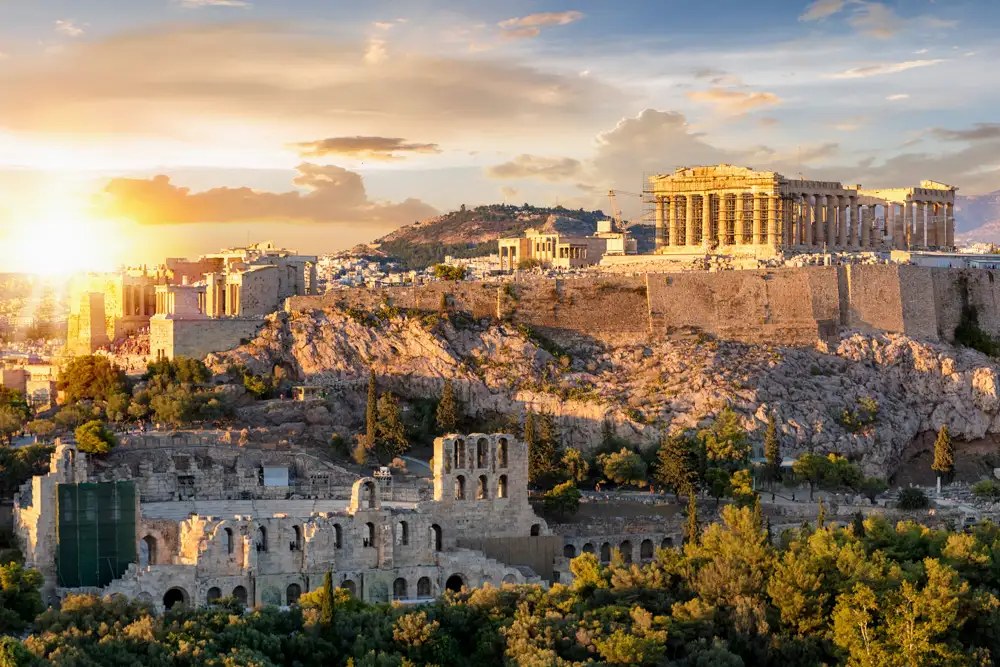
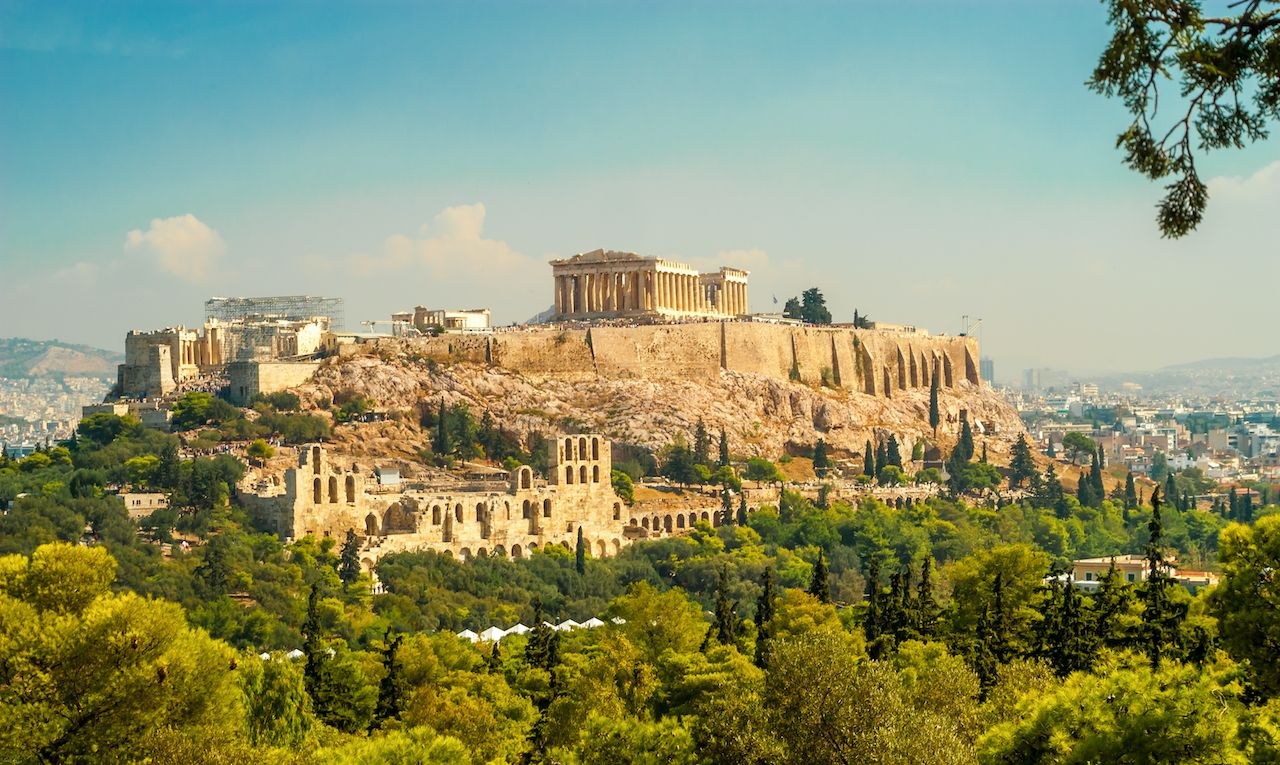
After you step off · near Rome
You end in a different port — stay on, and add what is within reach before you fly home.