Your cruise
Seabourn Pursuit · 22-night Mediterranean cruise, Rio de Janeiro to Genoa
Apr 20 – May 12 · 22 nights ·
Day 1 Rio de Janeiro (board) · Day 2–3 at sea · Day 4 Bahia de Salvador · Day 5 at sea · Day 6 Recife · Day 7 Natal(Rio Grande do Norte) · Day 8–11 at sea · Day 12 Praia · Day 13 Mindelo · Day 14–15 at sea · Day 16 Santa Cruz de Tenerife · Day 17 Arrecife · Day 18 at sea · Day 19 Tangier · Day 20 at sea · Day 21 Mahon · Day 22 at sea · Day 23 Genoa (step off)
What you do Wander Salvador's golden UNESCO World Heritage heart with a master local storyteller. Cobblestone squares, gilded baroque churches, and living Afro-Brazilian culture — all at your own pace, with zero crowds and total depth.
What to expect Ivan leads you through the labyrinthine cobblestone alleys of Pelourinho, the 17th-century colonial district that is the soul of Afro-Brazilian civilisation. You'll step inside the dazzling Church and Convent of São Francisco, said to hold the largest quantity of gold of any church in the Americas. Expect impromptu encounters: a mestre playing berimbau on a sunny square, a candomblé percussion circle, a local artist with a studio door ajar. The narrative covers the brutal history of slavery alongside the extraordinary cultural resilience that made Salvador what it is today.
Good to know Half-day tours fit comfortably within a port call; confirm your ship's all-aboard time and request a morning start to beat the midday heat. Ivan operates exclusively private and small-group experiences — book at least 2 weeks in advance. The Pelourinho district is a 10-minute taxi ride from the cruise terminal.
Versus the ship tour A fully private, pace-your-own experience with one of Salvador's most celebrated cultural interpreters — intimate access to hidden courtyards, local artists' studios, and capoeira circles that large groups never see.
What you do Step inside what many call the most opulent church in the Americas — walls and ceilings smothered in over 800 kg of hand-carved, gilded jacaranda wood. A private guided visit unlocks every gilded detail and the story behind it.
What to expect The moment the heavy wooden door swings open, the interior hits you like a fever dream of gold — every surface carved with angels, vines, and saints, all leaf-gilded by enslaved artisans in the 18th century. Your guide contextualises the brutal paradox: this breathtaking beauty was financed entirely by colonial wealth and enslaved labour. The adjoining cloister features stunning azulejo tile panels depicting the life of São Francisco. Spend as long as you wish in the sacristy, where precious reliquaries and vestments are displayed.
Good to know Arrive at opening (07:00) for the fewest visitors and the best light streaming through the nave. Smart attire required — shoulders and knees covered. Located in the Pelourinho, 10 minutes by taxi from the port. Book your private guide via Ivan Bahia Guide or ToursByLocals in advance.
Versus the ship tour Entry is limited and timed; a pre-arranged private guide means you move at your own contemplative pace inside the nave — no rushing through in a line, and no competing audio guides drowning out the silence.
What you do The definitive private panoramic of Brazil's first colonial capital — from the clifftop Cidade Alta to the waterfront Cidade Baixa, riding the iconic Elevador Lacerda, visiting Bonfim Church and the Mercado Modelo.
What to expect Your day begins at the cruise terminal, where your guide collects you in a private air-conditioned vehicle. You ride the legendary Elevador Lacerda — the Art Deco cliff elevator linking the upper and lower cities — with your guide narrating 500 years of history from its panoramic platform. Stops include the Basílica do Senhor do Bonfim (Salvador's most beloved pilgrimage church), the Dique do Tororó lake with its towering orixá sculptures, and the Mercado Modelo, where you can taste acarajé — the famous black-eyed pea fritters declared Intangible Cultural Heritage by UNESCO. The afternoon is flexible: Rio Vermelho neighbourhood, Porto da Barra beach, or a final sundowner over the bay.
Good to know Full-day format works for calls of 8+ hours; confirm your all-aboard time so your guide can plan accordingly. Request a morning pickup directly from the cruise pier. Book at least 1–2 weeks ahead as Sayuri's calendar fills quickly.
Versus the ship tour A deeply personal, fully private day with a vetted local expert who tailors every stop to your interests — no fixed group timeline, no unnecessary stops, and insider access to neighbourhood details most visitors never encounter.
book direct with ToursByLocals – Sayuri K. Private Salvador Guide → · the full guide →
What you do Sail the vast, turquoise Baía de Todos os Santos aboard a private catamaran to the emerald islands of Frades and Itaparica — crystalline natural pools, pristine beaches, and fresh seafood, all with live Bahian music on deck.
What to expect Cast off from the historic waterfront of Salvador's lower city and sail into the Baía de Todos os Santos, the largest bay in Brazil and one of the most beautiful in the world. As the city skyline fades, the crew pours caipirinha cocktails while a musician plays samba and forró on deck. On Ilha dos Frades, you'll swim in clear, warm natural pools with colourful fish below your feet. Itaparica offers a charming colonial village, hammock beaches, and a legendary riverside restaurant serving moqueca de peixe — Bahian fish stew — made with fresh catch and coconut milk. The return sail at golden hour, city silhouetted against a burning sky, is unforgettable.
Good to know The full island tour takes 7–8 hours; confirm with Saveiros that it aligns with your all-aboard time. A boarding fee of BRL 20 in Salvador plus a BRL 35 Ilha dos Frades entrance fee applies. The Saveiros dock is a 5-minute taxi from the cruise terminal at the Comércio waterfront.
Versus the ship tour A private charter means your own pace, your own anchorage, and a crew dedicated entirely to your group — you choose when to swim, snorkel, and feast on grilled fish, rather than following a mass-tour schedule.
book direct with Saveiros Tour Salvador (Official Boat Operator) → · the full guide →
What you do Drive the stunning Coconut Coast 80 km north of Salvador to Praia do Forte — a pristine village beach with the TAMAR Project's legendary sea-turtle conservation sanctuary and reef snorkelling in gin-clear water.
What to expect A private air-conditioned vehicle whisks you north along the Estrada do Coco — the Coconut Road — flanked by Atlantic rainforest and palm groves. Arriving in the car-free village of Praia do Forte, you'll visit the TAMAR base, where researchers share the work protecting five endangered sea-turtle species along 1,100 km of Brazilian coastline. Watch hatchlings in nursery pools and, seasonally (November–March), witness nesting or releases on the beach at dusk. After TAMAR, snorkel the natural reef pools, then settle into one of the village's open-air seafood restaurants for a long, languid lunch of grilled lobster and cold Brahma.
Good to know Allow at least 7–8 hours for the round trip; best for port calls with a late all-aboard (19:00 or later). Book your private vehicle via a certified local operator (tourHQ Salvador) to pair with the TAMAR visit. TAMAR is open daily 09:00–17:30; arrive before noon to avoid day-tripper crowds.
Versus the ship tour TAMAR is the world's most important sea-turtle conservation project; seeing nesting tanks, juvenile pools, and rescued loggerhead turtles with a specialist naturalist guide gives you context and access that a generic beach excursion simply cannot.
book direct with Projeto TAMAR (Official Sea Turtle Conservation Centre) → · the full guide →
What you do Learn the sacred Bahian kitchen — acarajé, moqueca, and vatapá — in the home of a Bahian culinary master, paired with an intimate introduction to the living rhythms and ritual of Candomblé, the heartbeat of Afro-Brazilian spirituality.
What to expect Your morning begins at the Mercado São Miguel, selecting fresh ingredients with your host — malagueta chillies, dried shrimp, fresh coconut, and dende palm oil — while she explains their Yoruba origins and ritual significance in Candomblé offerings. Back in her beautifully tiled kitchen, you cook from scratch: crispy acarajé stuffed with vatapá and caruru, a rich moqueca de camarão simmered in coconut milk and tomatoes, and a quindim egg-yolk coconut dessert. The class concludes with a long, convivial lunch at her table, accompanied by stories of the terreiros (Candomblé houses) and the extraordinary survival of West African spiritual traditions in Brazil. Optional afternoon: a respectful, invited visit to a local terreiro to hear the drums.
Good to know Classes run 09:00–13:30 and fit neatly into a standard port call. The market and kitchen are in the Barra/Rio Vermelho area, a 15-minute taxi from the cruise pier. Book at least 1 week ahead as groups are kept intentionally small (max 8 guests). Inform your host of any dietary restrictions at booking.
Versus the ship tour You're not a tourist watching a demonstration — you're at the stove, grinding dendê palm oil, frying acarajé beside the cook, and sitting down to eat what you made. This is as close as a visitor gets to the intimate domestic heart of Bahian culture.
book direct with Cursos de Culinária Bahiana – Casa de Tereza (Official) → · the full guide →
What you do Rio's three crown jewels — Christ the Redeemer, Sugarloaf Mountain, and the Selarón Steps — in a single, seamlessly paced private day. A licensed local expert curates every moment, from sunrise crowds to golden-hour cable car rides.
What to expect Your private air-conditioned vehicle collects you at the cruise terminal and whisks you to the iconic Selarón Steps, where the artist Jorge Selarón's 215 mosaic-tiled risers cascade down Lapa in a blaze of colour. From there, ascend Corcovado by rack railway to stand at the feet of the 38-metre Cristo Redentor as the city unfolds 710 metres below. The afternoon belongs to Sugarloaf, riding two consecutive gondolas to the 396-metre summit for a panorama that takes in Guanabara Bay, Copacabana, and the Atlantic horizon. Lunch at a curated local restaurant is included, and your guide personally adjusts the itinerary around your all-aboard time.
Good to know Pre-book well in advance — private days fill up fast in peak season (Dec–Mar). Confirm your all-aboard time with the guide at booking so the schedule is built around it. Christ the Redeemer tickets should be pre-purchased online to skip the booth queue. Comfortable walking shoes essential; the steps at Corcovado are steep.
Versus the ship tour Entirely private — your guide, your pace, zero queuing with strangers. A licensed cultural expert weaves the history, politics, and art of each site into an unhurried narrative you simply cannot get in a crowd.
What you do Trade the tourist rack railway for a lush 90-minute jungle trail through Tijuca Forest, arriving at Cristo Redentor breathless and triumphant — before the day-trippers arrive. One of Rio's great bucket-list physical experiences.
What to expect Your expert naturalist guide meets you at the port and transfers you to Parque Lage, a neo-romantic 19th-century estate at the forest's edge. The trail climbs steadily through dense canopy — strangler figs, bromeliads, and the calls of toucans accompany your ascent. At the summit, the outstretched arms of Cristo Redentor frame a 360-degree panorama: Guanabara Bay glittering to the east, Ipanema and Copacabana arcing south, and the Tijuca massif rolling away to the west. The descent is by rack railway, so your legs get the reward without the repeat effort.
Good to know Moderate fitness required — ~4 km uphill on uneven forest paths. Departs early morning (07:00 recommended) to beat both heat and crowds; confirm timing against your all-aboard. Wear trail shoes, bring a light rain layer, water, and sunscreen. Trail can be muddy after rain.
Versus the ship tour This is the insider approach — starting from the fairytale Parque Lage mansion and ascending through Atlantic rainforest with capuchin monkeys overhead. Arriving on foot before the cable cars start running means you often have the terrace nearly to yourself.
book direct with Do Brazil Right – Shore Excursions → · the full guide →
What you do Ascend Sugarloaf by gondola as the sun melts into the Atlantic and Rio's lights begin to glitter below — with a private guide, reserved cable car access, and chilled champagne on the summit. Simply one of the most spectacular sunsets on Earth.
What to expect Your private vehicle collects you from the pier and drives the scenic bayside road to Praia Vermelha, where the cable car base station sits against a dramatic granite wall. The first gondola glides to Morro da Urca (215 m) for cocktails on an open-air terrace with views of Botafogo Bay. The second gondola carries you to the Sugarloaf summit itself, where your guide points out every landmark — the twin humps of the Two Brothers, the long sweep of Ipanema beach, and the Cristo Redentor glowing on Corcovado opposite. As darkness falls, Rio transforms into a carpet of lights stretching to the horizon.
Good to know Sunset timing shifts seasonally — confirm exact departure time with your guide against your all-aboard (typically 17:30–18:30 ascent works for most ships). Pre-purchase cable car tickets online at bondinho.com.br to skip queues. Light jacket recommended at the summit — the Atlantic breeze picks up after dark.
Versus the ship tour A private guide secures your gondola timing to land on the 396-metre summit precisely at golden hour — the moment when the bay turns copper and the city's mosaic of favelas, beaches, and skyscrapers is lit from below. Champagne is waiting.
book direct with Rio Private Guide – Alan Denis → · the full guide →
What you do Plunge into the world's largest urban rainforest on an open-top 4×4 Jeep, hunting hidden waterfalls, rare orchids, and monkeys in the canopy above Rio's skyline. Thrilling, beautiful, and utterly unlike any city tour.
What to expect The Jeep departs the port and within 20 minutes you're deep in Tijuca National Park — 32 square kilometres of restored Atlantic rainforest that once covered the entire city. Your naturalist driver-guide navigates steep cobbled tracks to the Cascatinha Taunay waterfall, where you can swim in a cool natural pool. The trail continues to the Vista Chinesa pagoda, an incongruous 1920s belvedere perched above the south zone with jaw-dropping views of Lagoa Rodrigo de Freitas and the beaches beyond. Look up: squirrel monkeys and toucans are reliable sightings year-round.
Good to know Half-day format (4 hrs) makes it very manageable against an all-aboard. Bring insect repellent, swimwear if you want to dip at the waterfall, and a light layer. Jeep seats are open-air — sunscreen essential. Available year-round but forest is most dramatic and green after rain.
Versus the ship tour An open-sided Jeep lets you lean into the forest rather than observe it through glass — guides stop at unmarked trails, hidden cascades, and viewpoints that only locals know. Small groups of 6 maximum mean the guide is always within earshot.
book direct with Do Brazil Right – Shore Excursions → · the full guide →
What you do Explore the birthplace of samba and the heart of Afro-Brazilian heritage — the Saúde docklands 'Pequena África', the Valongo Wharf UNESCO site, and the bohemian arches of Lapa — with a cultural historian as your guide.
What to expect Your expert cultural guide leads you from the port through the revitalised Saúde neighbourhood — Rio's 'Little Africa' — where the Valongo Wharf, the largest disembarkation point for enslaved Africans in the Americas, is now a haunting and essential UNESCO World Heritage Site. The route winds through Gamboa to the Praça Mauá waterfront plaza, past the Museum of Tomorrow, then south into the Lapa arches district, where the Selarón Steps cascade down in their famous mosaic splendour. At every turn your guide connects architecture, music, and history — from candomblé to capoeira — with the living culture of modern Rio.
Good to know Entirely walkable — flat terrain, approximately 5 km total. Wear comfortable shoes and light, breathable clothing. Best done in the morning before heat peaks. The Selarón Steps are at the end of the route — a natural finale. Confirm all-aboard time with guide; the 4-hour format leaves a comfortable buffer.
Versus the ship tour This is the Rio that doesn't make the postcard — the cobbled alleyways where samba was born, the 19th-century wharf where millions of enslaved Africans arrived, and the street-art-covered neighbourhood of Lapa, all interpreted by a guide with deep academic and community roots.
What you do Walk the hallowed turf, dressing rooms, and players' tunnel of Maracanã — South America's most iconic football cathedral — with a private guide who unlocks areas closed to the public, and a lifetime of stories about the Maracanazo, Pelé, and the 2014 World Cup.
What to expect Your guide meets you at the port and transfers you directly to the Zona Norte neighbourhood where Maracanã rises like a concrete colosseum. Inside, the private route takes you through the players' dressing rooms (still bearing the scent of decades of drama), the athletes' tunnel where legends have walked, and out onto the pitch itself — 78,000 seats surrounding you in silence. Your guide narrates defining moments: the 1950 World Cup 'Maracanazo' defeat, Pelé's 1,000th goal, and the stadium's reinvention for 2014. A visit to the onsite Hall of Fame and the club merchandise boutique rounds out a deeply Rio experience.
Good to know Tours run most mornings when no match is scheduled — verify match schedule before booking as stadium access changes on game days. Allow 2.5–3 hours including transfer from port. The stadium is a 20-minute drive from the cruise terminal. Combine with a lunch stop in the Santa Teresa neighbourhood on the return for a perfect half-day.
Versus the ship tour A private local guide who lives and breathes football takes you beyond the standard visitor path — into the press box, the VIP areas, and pitch-side — bringing the stadium's seismic moments to life with personal storytelling that no group tour can match.
book direct with Tours by Locals – Rio de Janeiro Private Guides → · the full guide →
What you do Wander Salvador's golden UNESCO World Heritage heart with a master local storyteller. Cobblestone squares, gilded baroque churches, and living Afro-Brazilian culture — all at your own pace, with zero crowds and total depth.
What to expect Ivan leads you through the labyrinthine cobblestone alleys of Pelourinho, the 17th-century colonial district that is the soul of Afro-Brazilian civilisation. You'll step inside the dazzling Church and Convent of São Francisco, said to hold the largest quantity of gold of any church in the Americas. Expect impromptu encounters: a mestre playing berimbau on a sunny square, a candomblé percussion circle, a local artist with a studio door ajar. The narrative covers the brutal history of slavery alongside the extraordinary cultural resilience that made Salvador what it is today.
Good to know Half-day tours fit comfortably within a port call; confirm your ship's all-aboard time and request a morning start to beat the midday heat. Ivan operates exclusively private and small-group experiences — book at least 2 weeks in advance. The Pelourinho district is a 10-minute taxi ride from the cruise terminal.
Versus the ship tour A fully private, pace-your-own experience with one of Salvador's most celebrated cultural interpreters — intimate access to hidden courtyards, local artists' studios, and capoeira circles that large groups never see.
What you do Step inside what many call the most opulent church in the Americas — walls and ceilings smothered in over 800 kg of hand-carved, gilded jacaranda wood. A private guided visit unlocks every gilded detail and the story behind it.
What to expect The moment the heavy wooden door swings open, the interior hits you like a fever dream of gold — every surface carved with angels, vines, and saints, all leaf-gilded by enslaved artisans in the 18th century. Your guide contextualises the brutal paradox: this breathtaking beauty was financed entirely by colonial wealth and enslaved labour. The adjoining cloister features stunning azulejo tile panels depicting the life of São Francisco. Spend as long as you wish in the sacristy, where precious reliquaries and vestments are displayed.
Good to know Arrive at opening (07:00) for the fewest visitors and the best light streaming through the nave. Smart attire required — shoulders and knees covered. Located in the Pelourinho, 10 minutes by taxi from the port. Book your private guide via Ivan Bahia Guide or ToursByLocals in advance.
Versus the ship tour Entry is limited and timed; a pre-arranged private guide means you move at your own contemplative pace inside the nave — no rushing through in a line, and no competing audio guides drowning out the silence.
What you do The definitive private panoramic of Brazil's first colonial capital — from the clifftop Cidade Alta to the waterfront Cidade Baixa, riding the iconic Elevador Lacerda, visiting Bonfim Church and the Mercado Modelo.
What to expect Your day begins at the cruise terminal, where your guide collects you in a private air-conditioned vehicle. You ride the legendary Elevador Lacerda — the Art Deco cliff elevator linking the upper and lower cities — with your guide narrating 500 years of history from its panoramic platform. Stops include the Basílica do Senhor do Bonfim (Salvador's most beloved pilgrimage church), the Dique do Tororó lake with its towering orixá sculptures, and the Mercado Modelo, where you can taste acarajé — the famous black-eyed pea fritters declared Intangible Cultural Heritage by UNESCO. The afternoon is flexible: Rio Vermelho neighbourhood, Porto da Barra beach, or a final sundowner over the bay.
Good to know Full-day format works for calls of 8+ hours; confirm your all-aboard time so your guide can plan accordingly. Request a morning pickup directly from the cruise pier. Book at least 1–2 weeks ahead as Sayuri's calendar fills quickly.
Versus the ship tour A deeply personal, fully private day with a vetted local expert who tailors every stop to your interests — no fixed group timeline, no unnecessary stops, and insider access to neighbourhood details most visitors never encounter.
book direct with ToursByLocals – Sayuri K. Private Salvador Guide → · the full guide →
What you do Sail the vast, turquoise Baía de Todos os Santos aboard a private catamaran to the emerald islands of Frades and Itaparica — crystalline natural pools, pristine beaches, and fresh seafood, all with live Bahian music on deck.
What to expect Cast off from the historic waterfront of Salvador's lower city and sail into the Baía de Todos os Santos, the largest bay in Brazil and one of the most beautiful in the world. As the city skyline fades, the crew pours caipirinha cocktails while a musician plays samba and forró on deck. On Ilha dos Frades, you'll swim in clear, warm natural pools with colourful fish below your feet. Itaparica offers a charming colonial village, hammock beaches, and a legendary riverside restaurant serving moqueca de peixe — Bahian fish stew — made with fresh catch and coconut milk. The return sail at golden hour, city silhouetted against a burning sky, is unforgettable.
Good to know The full island tour takes 7–8 hours; confirm with Saveiros that it aligns with your all-aboard time. A boarding fee of BRL 20 in Salvador plus a BRL 35 Ilha dos Frades entrance fee applies. The Saveiros dock is a 5-minute taxi from the cruise terminal at the Comércio waterfront.
Versus the ship tour A private charter means your own pace, your own anchorage, and a crew dedicated entirely to your group — you choose when to swim, snorkel, and feast on grilled fish, rather than following a mass-tour schedule.
book direct with Saveiros Tour Salvador (Official Boat Operator) → · the full guide →
What you do Drive the stunning Coconut Coast 80 km north of Salvador to Praia do Forte — a pristine village beach with the TAMAR Project's legendary sea-turtle conservation sanctuary and reef snorkelling in gin-clear water.
What to expect A private air-conditioned vehicle whisks you north along the Estrada do Coco — the Coconut Road — flanked by Atlantic rainforest and palm groves. Arriving in the car-free village of Praia do Forte, you'll visit the TAMAR base, where researchers share the work protecting five endangered sea-turtle species along 1,100 km of Brazilian coastline. Watch hatchlings in nursery pools and, seasonally (November–March), witness nesting or releases on the beach at dusk. After TAMAR, snorkel the natural reef pools, then settle into one of the village's open-air seafood restaurants for a long, languid lunch of grilled lobster and cold Brahma.
Good to know Allow at least 7–8 hours for the round trip; best for port calls with a late all-aboard (19:00 or later). Book your private vehicle via a certified local operator (tourHQ Salvador) to pair with the TAMAR visit. TAMAR is open daily 09:00–17:30; arrive before noon to avoid day-tripper crowds.
Versus the ship tour TAMAR is the world's most important sea-turtle conservation project; seeing nesting tanks, juvenile pools, and rescued loggerhead turtles with a specialist naturalist guide gives you context and access that a generic beach excursion simply cannot.
book direct with Projeto TAMAR (Official Sea Turtle Conservation Centre) → · the full guide →
What you do Learn the sacred Bahian kitchen — acarajé, moqueca, and vatapá — in the home of a Bahian culinary master, paired with an intimate introduction to the living rhythms and ritual of Candomblé, the heartbeat of Afro-Brazilian spirituality.
What to expect Your morning begins at the Mercado São Miguel, selecting fresh ingredients with your host — malagueta chillies, dried shrimp, fresh coconut, and dende palm oil — while she explains their Yoruba origins and ritual significance in Candomblé offerings. Back in her beautifully tiled kitchen, you cook from scratch: crispy acarajé stuffed with vatapá and caruru, a rich moqueca de camarão simmered in coconut milk and tomatoes, and a quindim egg-yolk coconut dessert. The class concludes with a long, convivial lunch at her table, accompanied by stories of the terreiros (Candomblé houses) and the extraordinary survival of West African spiritual traditions in Brazil. Optional afternoon: a respectful, invited visit to a local terreiro to hear the drums.
Good to know Classes run 09:00–13:30 and fit neatly into a standard port call. The market and kitchen are in the Barra/Rio Vermelho area, a 15-minute taxi from the cruise pier. Book at least 1 week ahead as groups are kept intentionally small (max 8 guests). Inform your host of any dietary restrictions at booking.
Versus the ship tour You're not a tourist watching a demonstration — you're at the stove, grinding dendê palm oil, frying acarajé beside the cook, and sitting down to eat what you made. This is as close as a visitor gets to the intimate domestic heart of Bahian culture.
book direct with Cursos de Culinária Bahiana – Casa de Tereza (Official) → · the full guide →
What you do Glide between two UNESCO-worthy cities — baroque Olinda on its hilltop and canal-laced Recife Antigo — with a dedicated English-speaking guide and private vehicle. A rare chance to read 500 years of colonial Brazil at your own pace.
What to expect Your private guide and air-conditioned vehicle collect you dockside and whisk you first to Recife Antigo, where the original Dutch and Portuguese grid meets the sea at Marco Zero. You cross the iconic bridges to Casa da Cultura — a former jail reborn as a craft market — before heading north to Olinda, a UNESCO World Heritage hilltop town of whitewashed churches, mango trees and sweeping Atlantic views. The pace is entirely yours: pause for a coconut water, photograph the azulejo-tiled facades, or step inside the 17th-century Sé Cathedral. An optional catamaran ride on the Capibaribe River can be added for a waterside finale.
Good to know The full tour runs approximately 5–6 hours, comfortably within a typical port day. Pre-book directly with Gray Line Recife and confirm your all-aboard time so they can plan the return leg. Private transfers back to the port are included.
Versus the ship tour Fully private, English-guided, with a flexible itinerary tailored to your interests — linger at Marco Zero Square, duck into the Casa da Cultura, and climb Olinda's cobblestones without a crowd dictating your clock.
What you do Travel in private style to Brazil's most celebrated beach, Porto de Galinhas, where at low tide the coral reefs form warm, jewel-coloured natural pools teeming with fish. A bucket-list swim accessible only by traditional jangada raft.
What to expect The 70-km drive south to Porto de Galinhas takes roughly 90 minutes in a private, air-conditioned SUV, passing sugar-cane fields and mangrove estuaries. On arrival, your guide arranges your jangada — the flat-bottomed wooden raft unique to this coast — and a local fisherman poles you out to the natural pools, knee-deep warm water over coral gardens alive with colourful reef fish. You can snorkel, wade or simply float while the Atlantic horizon glitters. Lunch at a recommended seafood restaurant on the beachfront follows, with time to stroll the village and browse artisan stalls before the return journey.
Good to know Tide timing is critical — the pools are only accessible at low tide. Book early and share your port's all-aboard time so the operator confirms the ideal departure window. Bring reef-safe sunscreen, a rash guard, and water shoes. Jangada rides cost approx. BRL 30–50 per person, paid locally to the fishermen's cooperative.
Versus the ship tour A dedicated private vehicle — no shared coach stops — means you arrive as the tide drops and the pools are at their most vivid. Your guide stays with you all day, curating lunch at a top beachfront restaurant and timing the jangada ride for the optimal reef window.
book direct with Recife Private Tours (TripAdvisor-verified local operator) → · the full guide →
What you do Step inside one of Latin America's greatest private museums — a mock medieval castle housing an extraordinary collection of Dutch Golden Age paintings, 3,000 pieces of arms and armour, and Frans Post's iconic 17th-century Brazilian landscapes — all set in 50 acres of Atlantic forest.
What to expect Your private vehicle delivers you to the forested estate in the Várzea neighbourhood, where a neo-Gothic castle rises improbably from the tropical greenery. Inside, gallery after gallery reveals the world's largest Frans Post collection — luminous 17th-century paintings that capture Brazil as the Dutch colonists first saw it. The armory is staggering: 3,000 swords, shields, helmets and crossbows displayed with museum precision. The adjacent Pinacoteca building holds 19th-century European and Brazilian masters. Between galleries, wander shaded paths past lily ponds and sculpture gardens — a serene counterpoint to the treasure within.
Good to know The institute is closed on Mondays; opening hours are Tuesday–Sunday 13:00–17:00 (afternoons only). Arrive promptly as visitor numbers are managed carefully. Combine with a morning Recife Antigo walk for a full, well-paced port day. Pre-arrange private transfer to ensure a timely return to port.
Versus the ship tour The institute is capped on visitor numbers and exudes the hush of a great European private collection — an entirely different register from any city-bus tour. Combine with a private transfer and a knowledgeable local guide for a curated, unhurried experience of art most travellers never discover.
book direct with Instituto Ricardo Brennand (official) → · the full guide →
What you do Board a catamaran at Praia dos Carneiros — a near-deserted coconut-fringed beach south of Recife — to anchor over translucent natural pools where warm Atlantic water meets a coral reef. One of Brazil's most achingly beautiful and uncrowded beach days.
What to expect The journey south from Recife port takes roughly two hours, arriving at Carneiros in time for the morning tide. The Bora Bora catamaran glides out to the natural pools where you can snorkel, swim or simply drift in the warm, gin-clear shallows. The reef here is remarkably intact, with sea turtles occasionally spotted in deeper water. A beachside lunch of freshly caught fish, farofa and ice-cold coconut water follows before an afternoon return. En route, the driver often stops at a roadside açaí stall — the perfect finale.
Good to know The experience runs approximately 8 hours, so confirm your port's all-aboard time before booking — an early morning departure is essential. Bring reef-safe sunscreen and a dry bag. Book the catamaran slot in advance, especially during high season (December–March), as spaces are limited.
Versus the ship tour The catamaran carries a small number of guests, meaning you anchor at the reef in genuine tranquility — no crowds, just turquoise water, soft sand and the sound of the Atlantic. A beach lunch of fresh grilled fish and caipirinha is served on board or at a simple local restaurant steps from the shore.
book direct with Bora Bora Catamaran Carneiros (official operator, listed on Expedia as 'Praia dos Carneiros Tour with Catamaran – Bora Bora') → · the full guide →
What you do Journey north to Maragogi — nicknamed 'the Brazilian Caribbean' for its impossibly clear water and powder-white sand — and swim the Galés marine sanctuary, where natural pools over a living reef rival anywhere in the tropics. Utterly unmissable.
What to expect Depart at first light in a private, climate-controlled vehicle for the approximately 2.5-hour drive north along the Alagoas coast. At Maragogi, a small motor boat takes you 3 km offshore to the Galés marine sanctuary, where at low tide the reef creates natural aquariums up to 2 metres deep, warm and teeming with parrotfish, surgeonfish and sea turtles. Your guide ensures you reach the pools at optimal tide. Lunch at a beachfront restaurant in Maragogi follows — whole grilled lobster and fresh ceviche are the order of the day — before the scenic coastal return. Only possible on port days with an early all-aboard (19:00 or later).
Good to know This excursion requires a long port day (depart by 07:00, return by 18:00) — verify your ship's schedule before booking. Tide tables are essential; the operator will confirm the best reef-access window. Entry to the Galés sanctuary is managed by the local fishermen's association and is paid in cash (BRL) on site. Bring water shoes, reef-safe sunscreen and a waterproof camera.
Versus the ship tour The 130-km drive north is long but the reward is world-class: Maragogi's Galés pools are among the most biodiverse and clear in the South Atlantic. A private vehicle means a flexible schedule — arrive as the reef opens, spend maximum time in the water, and return at a pace that suits your port call.
book direct with Recife Private Tours / local Maragogi reef operators (verified via TripAdvisor & FindMyExcursions) → · the full guide →
What you do Thunder across the monumental golden dunes of Genipabu in a private open buggy, then ride a dromedary at the water's edge. Brazil's most iconic coastal dune landscape — raw, cinematic, and completely unforgettable.
What to expect Your private buggy departs directly from the port transfer point and speeds north along the coast to the vast Genipabu dune field, where drifts soar up to 30 metres above the Atlantic. You'll choose between 'with emotion' (steep descents, airtime) or the more leisurely scenic route — both are spectacular. A stop at the freshwater lagoon for a swim, plus the legendary dromedary ride along the shoreline, complete the morning. A chilled caipirinha awaits at a dune-top bar with panoramic ocean views.
Good to know Genipabu is approximately 30 km north of the port — allow 25 minutes transfer each way. Full-day format comfortably fits within a standard all-aboard window. Book the private option (not shared) well in advance in high season. Sunscreen, sunglasses and a hat are essential — the dune glare is intense.
Versus the ship tour A fully private buggy for your group only — no convoy, no strangers. Your driver chooses the best dune runs and hidden lagoon stops at your pace, with cold drinks and full commentary on the region's extraordinary coastal geology.
book direct with Brazil Nature Tours (Natal) → · the full guide →
What you do Plunge into the Parrachos de Maracajaú, Brazil's finest nearshore reef system, teeming with sea turtles, rays and technicolour reef fish. A private guided dive just 7 km offshore — one of South America's great underwater bucket-list moments.
What to expect A private transfer whisks you 65 km north of Natal to the coastal village of Maracajaú, where your certified dive guide briefs you aboard a nimble speedboat. The Parrachos reef rises to just 1–3 metres below the surface at low tide, producing startling visibility and warmth (28 °C year-round). You'll drift over gardens of brain coral, finger coral and sea fans while green sea turtles graze beneath you. Two dives are typically included; a fresh coconut and light seafood snack on the return journey seal the experience.
Good to know Conditions are best at low tide — confirm tidal times with the operator when booking. Non-divers can snorkel the same site. The drive from port is approximately 1 hour; plan for a full-day outing to be comfortable. Dive certification required; the operator can arrange a certified discovery dive (baptism) for beginners.
Versus the ship tour Small-group, expert-led dives with certified PADI guides who know every coral head and cleaning station on the reef. Snorkellers are accommodated on the same boat, making it ideal for mixed-ability groups who want the very best access — not a crowded day-tripper pontoon.
book direct with Brazil Nature Tours (Natal) → · the full guide →
What you do Stand at the base of Natal's most iconic landmark — the 120-metre Morro do Careca sand dune plunging directly into the Atlantic — then explore the elegant promenade and artisan market of Ponta Negra Beach at your own refined pace.
What to expect Your private guide meets you at the pier and transfers you directly to Ponta Negra, Natal's most photogenic and socially vibrant beach neighbourhood. The walk along the esplanade delivers sweeping views of the Morro do Careca, a protected dune formation that is no longer climbed — making the vista itself the spectacle. Your guide narrates the formation of Rio Grande do Norte's extraordinary coastal dune belt and points out the artisan stalls selling lace (Natal's famous rendeiras craft). The morning ends with a cold tapioca crepe at a beachside café.
Good to know Ponta Negra is approximately 12 km from the Natal cruise terminal — a short transfer. The walk is mostly flat and paved, suitable for all mobility levels. Morro do Careca is a protected environmental area; climbing is prohibited. Book your private guide at least 2 weeks ahead — top-rated local guides fill quickly on port days.
Versus the ship tour A one-on-one or small-party private guide — a local expert who grew up in Natal — means the itinerary is shaped entirely around your interests. Linger over the dune panorama, skip the tourist traps, and discover the Ponta Negra neighbourhood's best açaí bar and seafood kiosk on your guide's personal recommendation.
book direct with ToursByLocals – Natal Private Guides → · the full guide →
What you do Walk the star-shaped ramparts of Brazil's oldest surviving Portuguese fort, then immerse yourself in the priceless anthropological collections of the Câmara Cascudo — a two-stop private tour that reveals 500 years of Brazilian civilisation in one morning.
What to expect The Forte dos Reis Magos (Fort of the Three Wise Men), completed in 1598, occupies its own coral reef island at the mouth of the Potengi River — your guide narrates the fort's role in Dutch and Portuguese colonial rivalry as you walk its five-pointed bastion walls above the crashing Atlantic. From there, the private car transfers you to the Museu Câmara Cascudo, one of Brazil's great anthropological museums, housing Amerindian ceremonial objects, palaeontological finds and a spellbinding collection of Northeastern popular culture. Lunch at a private table at a traditional Natal restaurant follows, on your guide's personal recommendation.
Good to know The fort is walking distance from the cruise pier — under 2 km. The museum is a 10-minute drive inland. Allow a full morning: 3–4 hours for both sites plus lunch. The fort is exposed to the sun; wear a hat and sunscreen. Pre-book your private guide to secure the best historians on port-call days.
Versus the ship tour Your private guide — typically an art historian or cultural specialist — unlocks the narrative behind each cannon, each indigenous artefact, and each colonial-era map in a way that a group tour simply cannot. This is deep, personalised cultural immersion at an unhurried luxury pace.
book direct with ToursByLocals – Natal Private Guides → · the full guide →
What you do Journey to the mythical iron-rich lagoon whose amber-red waters genuinely resemble the famous soft drink, then follow the wild south coast to secluded Love Beach (Praia do Amor) — one of Brazil's most photographed surf coves. Utterly otherworldly.
What to expect Your private air-conditioned vehicle heads south from Natal, passing the dune-fringed coast to Lagoa de Jacumã, where the water's extraordinary tea-red hue — caused by naturally high concentrations of iron and iodine from the surrounding vegetation — makes every photograph look filtered. A zipline over the lagoon is optional (highly recommended). The route continues to Praia do Amor near Pipa, where dramatic red-ochre cliffs frame a perfect horseshoe of surf; the viewpoint at sunset (or mid-afternoon light) is breathtaking. A seafood lunch at a clifftop restaurant overlooking the Atlantic is included in premium itineraries.
Good to know This is a full-day excursion — allow 8–9 hours. Jacumã is approximately 70 km south of Natal; Pipa is a further 20 km. Confirm your all-aboard time and build in 90 minutes' return buffer. Zipline over the lagoon is operated on-site; book the private tour in advance and mention you want it included. Bring reef-safe sunscreen — the lagoon ecosystem is fragile.
Versus the ship tour A private vehicle and guide for your party only, covering the most visually spectacular stretch of Rio Grande do Norte's coastline south of Natal — including the Cola-coloured lagoon and the clifftop Love Beach viewpoint that appear on every Brazilian travel bucket list. No large groups, no rushed schedule.
book direct with GetYourGuide – Natal: Pipa, Cacimbinhas & Love Beach Full-Day Tour → · the full guide →
What you do Sit down to a bespoke private dining experience curated by one of Natal's leading culinary guides — shrimp moqueca, sun-dried carne de sol, tapioca in all its forms, and rare Northeastern cachaças paired and explained course by course. The ultimate taste of Brazil's north.
What to expect Your guide Leandro — a Rio Grande do Norte native and food specialist — meets you at the pier and walks you through the flavour DNA of Northeastern Brazil over a two-hour leisurely lunch or early dinner at a hand-picked restaurant (typically a refined regional kitchen in Ponta Negra or the historic centre). Dishes are chosen to reflect the state's extraordinary larder: Atlantic shrimp, sun-cured meats from the sertão (hinterland), cassava in a dozen guises, and tropical fruits you may never have encountered. A guided tasting of artisanal cachaça and Northeastern craft beer rounds out the table. Between courses, Leandro narrates the cultural and geographic stories behind each dish.
Good to know This experience runs approximately 3–4 hours and can be scheduled for lunch (ideal for port days) or early evening if your all-aboard time permits. Dietary requirements (vegetarian, shellfish allergy) should be communicated at booking — Leandro will customise accordingly. Ponta Negra restaurants are 12 km from the pier; the historic centre options are walkable. Pre-book at least 2 weeks ahead as Leandro's calendar fills on port days.
Versus the ship tour Guided by a local culinary expert who personally selects the restaurant, negotiates the private table, and narrates every ingredient's provenance — from artisanal Mossoró salt to wild-caught lagosta (lobster) — this is a genuine insider's table that independent travellers rarely discover. Small, private, and deeply personal.
book direct with ToursByLocals – Leandro B., Rio Grande do Norte Fine Dining Guide → · the full guide →
What you do A private, chauffeur-guided full-day journey across São Vicente's dramatic contrasts — colonial Mindelo streetscapes, the lunar moonscape of Calhau, Monte Verde's summit, and hidden fishing villages. The island's soul, distilled into one extraordinary day.
What to expect Your private guide collects you at the pier and sweeps you through Mindelo's pastel-hued centre before climbing the switchbacks to Monte Verde, the island's highest point at 750 m, where the Atlantic sprawls in every direction. You descend into the raw, volcanic badlands framing Calhau beach — otherworldly and almost entirely untouched. A visit to the tiny fishing hamlet of São Pedro, where sea turtles patrol shallow turquoise waters, rounds out a genuinely cinematic day. Lunch is taken at a locally loved restaurant chosen by your guide.
Good to know Full-day tours run approximately 6–8 hours, comfortably within the typical all-aboard window. Pre-book directly via the Facebook page or WhatsApp contact listed. Confirm your ship's departure time when booking so the guide calibrates the return.
Versus the ship tour An intimate private vehicle and local guide means the itinerary bends entirely to you — linger at Monte Verde's panorama, detour to a fisherman's cove, or stop for grogue at a village distillery. No crowds, no fixed pace, just pure São Vicente.
What you do Trek to the windswept 750 m summit of Monte Verde — São Vicente's volcanic crown — for a 360° panorama spanning ocean, desert plains, and distant Santo Antão island. One of the Atlantic's most dramatic viewpoints, earned on foot.
What to expect The trail begins in the cooler morning air, winding through scrubby vegetation and exposed lava ridges as the city of Mindelo shrinks below. At the summit, on clear days, the silhouette of Santo Antão rises from the sea like a mirage — a shot that defines any Cape Verde visit. Your guide shares the legend of Monte Verde as a navigation landmark for trans-Atlantic sailors for centuries. The descent follows an alternate ridge trail, offering entirely new perspectives on the island's patchwork of green valleys and golden desert.
Good to know Allow approximately 3–4 hours round-trip including transfer. Wear sturdy walking shoes and bring sun protection — the ridge is fully exposed. Book directly and confirm the morning slot to allow a comfortable return to port. Light layers recommended as summit winds can be brisk even in summer.
Versus the ship tour A small-group ascent with a knowledgeable local naturalist who narrates the island's volcanic geology, endemic flora, and the cultural significance of the mountain to Mindelenses — layers a large coach transfer simply cannot offer.
What you do Walk in the footsteps of the 'Barefoot Diva' — a deeply personal journey through the streets, haunts, and museum of Cape Verde's most celebrated soul, Cesária Évora, brought alive by a guide steeped in morna music tradition.
What to expect The tour opens at the Núcleo Museológico Cesária Évora, a lovingly curated museum inside her former family home, filled with personal photographs, costumes, gold records, and instruments. Your guide — often a morna musician themselves — recounts her rise from Mindelo's backstreet taverns to the concert halls of Paris. You then walk to the People's Palace (Palácio do Povo), the colonial landmark that anchors the city's cultural identity, and through the atmospheric backstreets where Cesária performed as a young woman. The tour closes with a live morna performance at a local venue over a glass of Cape Verdean punch.
Good to know Duration approximately 4 hours. The museum is a short walk from the cruise pier. Book in advance as small-group slots fill quickly on port days. Afternoon departures allow the live music finale — confirm scheduling when booking.
Versus the ship tour Morna — Cape Verde's melancholic, UNESCO-listed musical soul — is not background noise here; it is the entire story. A local music-specialist guide connects Cesária's biography to the living culture of Mindelo's bars and plazas in a way that is genuinely moving.
book direct with Nucleo Museologico Cesaria Evora (Official Museum) → · the full guide →
What you do Slip into the crystalline shallows of São Pedro bay and share the water with graceful sea turtles in one of the Atlantic's most reliable turtle-encounter sites. A rare, intimate wildlife moment just minutes from Mindelo.
What to expect A short transfer south along São Vicente's coast brings you to the sheltered arc of São Pedro, a village beach beloved by windsurfers and, more importantly, resident loggerhead and green sea turtles that feed in the bay year-round. Your guide briefs the group on respectful wildlife interaction before you wade in — within minutes, turtles glide past with serene indifference to your presence. The water is warm, calm, and brilliantly clear, making this accessible even for novice snorkellers. After the swim, the bay's palms and soft sand invite a leisurely dry-off before the return to port.
Good to know Duration approximately 3 hours including transfer. All snorkel equipment provided. No experience necessary. Book early on port call days — this is the island's most sought-after water experience. Transfer departs from Mindelo port; confirm exact meeting point at booking.
Versus the ship tour Small groups of no more than 8 guests per session ensure minimal disturbance to the turtles and maximum personal time in the water — a conservation-conscious experience that feels genuinely wild rather than performative.
book direct with Atlantur Viagens e Turismo → · the full guide →
What you do As the heat softens and Mindelo's lantern-lit plazas fill with music, join a curated evening walk through the city's finest cachupa kitchens, rum bars, and live morna venues — a sensory immersion into Cape Verde's vibrant nocturnal soul.
What to expect The tour begins at Praça Nova as the square fills with locals, and your guide leads you through the illuminated colonial streetscape past the Torre de Belém replica and the African Market's evening traders. First stop is a family kitchen renowned for cachupa rica — the slow-cooked corn and bean stew that is Cape Verde's culinary heartbeat — paired with local Strela beer. A grogue (sugar-cane rum) tasting at a specialist bar follows, before the evening peaks at a live morna session in a candlelit venue where the music physically aches with saudade. A perfect, unhurried finale to any port day.
Good to know Evening departure — confirm your ship's all-aboard time carefully; this tour suits later departure ships. Duration approximately 3–3.5 hours. Group size strictly limited. Comfortable walking shoes and a light layer for the evening breeze recommended. Book directly well in advance of your port call date.
Versus the ship tour An evening ashore in Mindelo is one of the great hidden gifts of a Cape Verde port call. This small-group walk — led by a local food and culture specialist — unlocks restaurants and bars that most visitors never find, with tastings pre-arranged and tables secured.
book direct with Atlantur Viagens e Turismo → · the full guide →
What you do Board the inter-island ferry from Mindelo to Cape Verde's most breathtaking island, Santo Antão, and hike the legendary Ribeira Grande valley — a UNESCO-recognised landscape of cathedral gorges, lush terraces, and ancient stone paths.
What to expect The 35-minute ferry crossing from Porto Novo delivers you to an island that feels geographically and emotionally worlds apart from São Vicente — fertile, mountainous, and jaw-dropping. Your private guide navigates the winding road to Paul Valley, where ancient cobbled levada trails thread between banana groves, papaya trees, and terraced plots cultivated for centuries. The trek descends through Ribeira Grande's gorge walls, which rise hundreds of metres on both sides, to the Atlantic coast, where fishermen haul in their morning catch. A local lunch of fresh fish, grilled octopus, and catchupa at a hillside restaurant is the perfect punctuation before the return ferry.
Good to know This is a full-day excursion of approximately 8 hours — essential to confirm your ship's departure time is late enough (typically 18:00 or later). Ferry schedules are twice daily; your operator books the appropriate crossings. Moderate fitness required for the trail. Pre-book well in advance as ferry capacity is limited on port call days.
Versus the ship tour Santo Antão's interior is one of the Atlantic islands' last great wild landscapes — dramatic beyond expectation and almost entirely unvisited by cruise passengers. A private guided crossing and expert local trekking guide transforms this into a bucket-list expedition rather than a simple day trip.
book direct with Atlantur Viagens e Turismo → · the full guide →
What you do Ascend Spain's highest peak through a UNESCO World Heritage volcanic landscape, riding the Teide cable car to 3,555 m for panoramic views across all seven Canary Islands. An absolute bucket-list spectacle of raw, otherworldly beauty.
What to expect The ascent winds through pine forests and stark lava fields before reaching the Cañadas caldera — an alien plateau of red and ochre rock. The cable car lifts you above the clouds to the crater rim at 3,555 m, where the views on a clear day stretch to Morocco. With a summit permit you walk the final 200 m to the true peak — a moment few visitors ever reach. Allow a full morning; altitude can be felt, so take it slowly.
Good to know Cable car tickets and summit permits MUST be pre-booked online — they sell out days/weeks ahead. The drive from Santa Cruz port is ~1 h each way. All-aboard times typically allow a full day; confirm yours and hire a private driver or taxi for flexibility. Wear layers — it is cold and windy at altitude even in summer.
Versus the ship tour Book the cable car + optional summit permit directly with the official park operator for guaranteed timed access — slots sell out weeks in advance. A private vehicle transfer from the port lets you linger at the Roques de García formations and La Tarta viewpoint at your own pace, with no group to rush you.
What you do Plunge into one of Europe's last primeval laurisilva forests — a UNESCO Biosphere Reserve of mist-draped ravines and Guanche-era trails just 30 minutes from the port. An intimate, expert-led private hike through living prehistory.
What to expect Your guide drives you up into the Macizo de Anaga massif, where ancient dragon trees and tree-heathers drip with mossy silence. Trails wind between hamlets of whitewashed houses that appear unchanged for centuries. Dramatic mirador viewpoints open onto jagged ridgelines plunging into the Atlantic. The return journey passes through the charming fishing village of San Andrés, with time to admire Playa de las Teresitas if you wish.
Good to know Book well in advance to secure your preferred date. The park is only ~30 min from the cruise terminal — ideal even on shorter port calls. Wear sturdy walking shoes and bring a light waterproof layer; the forest canopy can be damp. Confirm all-aboard time with your guide so they build in a buffer.
Versus the ship tour A certified private local guide collects you directly from the port, tailors the route to your fitness level, and narrates the park's geology, endemic flora, and Guanche heritage — knowledge impossible to replicate in a large coach group. No fixed pace, no strangers.
book direct with ToursByLocals — John R. (Santa Cruz de Tenerife private guide) → · the full guide →
What you do The channel between Tenerife and La Gomera is one of the world's premier cetacean corridors — home to resident pilot whales and bottlenose dolphins year-round. A private luxury catamaran delivers an intimate encounter that feels like the ocean belongs to you.
What to expect You depart from the sheltered marina, heading into the deep blue channel where pilot whales are spotted on the vast majority of trips. The crew are marine-biology trained and maintain respectful distances in line with Canarian law. Dolphins frequently bow-ride alongside the hull. Between sightings there is time to snorkel over volcanic rock gardens or simply recline on the deck with a chilled glass of wine as Teide rises behind you.
Good to know Los Cristianos is approximately 1 h from Santa Cruz port by taxi or car — factor this into your day. Half-day charters (3–4 h on the water) comfortably fit most port schedules. Book the charter at least 2–3 weeks ahead. Confirm all-aboard time with your charter captain before departure.
Versus the ship tour Fully private charter means the captain adjusts the itinerary to wherever the cetaceans are — no crowd, no timetable. Snorkelling gear, paddleboards, and a catered lunch or tapas spread are typically included, turning a wildlife excursion into a full luxury sea day.
What you do The aristocratic town of La Orotava is Tenerife's most beautiful colonial gem — cobbled streets, baroque mansions and breath-taking views of the Orotava Valley and Teide. A private guided journey through the island's golden interior and north coast.
What to expect The drive north from Santa Cruz sweeps through the Esperanza forest and then descends into the lush Orotava Valley, where the scale of the banana and flower plantations is staggering. In town, a local guide leads you through the Casa de los Balcones, its carved wooden balconies an icon of Canarian architecture. The Hijuela del Botánico garden offers a moment of shaded tranquility. The journey back via the Mirador Humboldt offers arguably the finest vista on the island.
Good to know La Orotava is approximately 45 min–1 h from the Santa Cruz terminal. A full-day private tour comfortably covers the town, the viewpoints, and a leisurely lunch in a local restaurant. Confirm return timing with your guide to ensure you are back at the terminal with ample time before all-aboard.
Versus the ship tour Your private local guide unlocks the hidden courtyards of La Orotava's noble houses — interiors rarely seen on group tours — and adapts every stop to your interests, from artisan lace-making workshops to the 16th-century Church of the Conception.
book direct with Withlocals — Private Tour Guides Santa Cruz de Tenerife → · the full guide →
What you do Explore three of Santa Cruz's finest architectural and cultural landmarks on foot — Santiago Calatrava's swooping Auditorio, the vibrant colonial Mercado de Nuestra Señora de África, and the extraordinary Palmetum botanical garden. A sophisticated half-day in a city often overlooked.
What to expect Begin at the Auditorio — its white concrete shell is most dramatic in morning light and it is less than 10 minutes' walk from the cruise terminal. Head north to the Mercado de África, a covered colonial market buzzing with islanders buying tropical fruit, fresh fish, and artisan cheeses; the flower hall below is a riot of colour and scent. Finish at the Palmetum, a landscaped garden on reclaimed land housing one of the world's most complete palm collections, with lagoon views and shaded benches.
Good to know All three sites are within easy walking distance of each other and the cruise terminal — this excursion requires no transport. The market is most lively on Saturday mornings. Palmetum opens daily; arrive early to avoid midday heat. Allow 3–4 h total. A private city guide can be hired through Withlocals or ToursByLocals for added depth.
Versus the ship tour Walking these three landmarks independently — or with a private guide from the port — gives you a genuinely unhurried morning: lingering over exotic palms from five continents, bargaining for saffron and Mojo Rojo at the market's spice stalls, and photographing the Auditorio's wave-like silhouette against the Atlantic light.
book direct with Jardín Botánico del Palmetum (official) & Mercado de Nuestra Señora de África → · the full guide →
What you do Step inside the finest museum in the Canary Islands, housed in a stunning 18th-century former civil hospital, to encounter the island's pre-Hispanic Guanche culture through remarkable mummies, ceramics and astronomical artefacts. A deeply moving and scholarly experience.
What to expect The permanent galleries trace Tenerife's natural history from its volcanic origins through its pre-Hispanic Guanche civilisation, displaying naturally mummified bodies, painted skulls, and finely incised pottery that speak to a sophisticated people erased by the Spanish conquest. The natural history wing showcases the extraordinary biodiversity of the Canary Islands — endemic species found nowhere else on Earth. The courtyard of the 18th-century building is a serene, photogenic retreat from the city.
Good to know MUNA is a 15-minute walk from the cruise terminal or a short taxi ride. Open Tue–Sun; confirm hours before your visit. Tickets can be purchased online via the official Volcano Teide ticketing platform. Allow 2–3 h for a thorough visit. Pair with the nearby Plaza de España and a coffee on the terrace for a perfect late-morning ashore.
Versus the ship tour MUNA holds the most important collection of Guanche mummies and funerary objects in the world — artefacts you simply cannot encounter anywhere else. The museum's scale and scholarship reward a slow, self-guided visit; the colonial building itself is a listed treasure. Pre-booking a private guide through the museum or ToursByLocals elevates this into a genuinely profound cultural encounter.
book direct with Museo de Naturaleza y Arqueología (MUNA) — official → · the full guide →
What you do Walk the edge of a still-active volcanic landscape frozen in time since the 1730s eruptions. A private guide unlocks the science, drama, and eerie beauty of Lanzarote's most iconic natural wonder — utterly bucket-list.
What to expect You'll ride through the Montañas del Fuego, where guides pour water into fissures to produce instant geysers of steam — the earth here sits at 400°C just metres below. The 'camel-back' lava fields stretch to the horizon in burnt ochres and blacks, interrupted only by wind-sculpted cinder cones. A specialist naturalist guide narrates 300 years of eruption history and explains how life is slowly, impossibly, reclaiming the rock. The excursion typically pairs with El Golfo green lagoon for a full volcanic circuit.
Good to know Timanfaya is 45 minutes from the port by private vehicle — confirm your all-aboard time and allow 30 minutes' buffer. The park's inner road requires the official coach, but a private guide maximises your free time at the perimeter viewpoints. Book well ahead in high season; spaces are capped.
Versus the ship tour A private or small-group format means you linger at viewpoints others rush past, with an expert guide who decodes the geology and volcanic mythology — no megaphone, no crowds, your own pace through one of Europe's most surreal landscapes.
What you do Descend into a volcanic lava tube transformed by visionary artist César Manrique into one of the world's most extraordinary subterranean concert halls and gardens. A knowledgeable guide brings the artistry and geology to vivid life.
What to expect You descend through a lava tunnel into a cathedral-like cave where a saltwater lagoon harbours the hypnotic Munida iris — the blind, albino crab found nowhere else on earth. The cave opens into Manrique's white-washed garden of tropical plants and black lava, then into a 600-seat concert hall of jaw-dropping beauty carved entirely from volcanic rock. Your guide weaves together Manrique's philosophy of harmonising art and nature with the island's geological story. The ascent takes you through the Casa de los Volcanes science exhibition.
Good to know Jameos del Agua is about 30 minutes north of Arrecife port. Combined tickets with the nearby Cueva de los Verdes offer excellent value. Go early — the albino crabs retreat when the caves get busy. Pre-book your guided slot to guarantee entry.
Versus the ship tour An expert-led private visit lets you arrive at opening before day-trippers flood in, enjoying the albino blind crabs of the underground lagoon and Manrique's breathtaking auditorium in near-silence — a privilege impossible on a rushed group itinerary.
book direct with Centro de Arte, Cultura y Turismo – Jameos del Agua (Official) → · the full guide →
What you do Explore the world's most extraordinary wine landscape — individual vines sheltered in hand-dug volcanic pits across a black lava plain — then taste the crisp, mineral Malvasía whites that grow nowhere else on earth.
What to expect La Geria is one of viticulture's great spectacles: thousands of black volcanic 'zoccos' (crescent walls) dotting the hillside, each sheltering a single vine from Atlantic winds. El Grifo's museum traces 250 years of winemaking on the island, and the guided tasting pairs their flagship Malvasía — honeyed, volcanic, utterly distinctive — with local cheeses and mojo sauces. The bodega's original 18th-century press room is a living piece of Canarian heritage. The drive through the valley alone, framed by Timanfaya's cone, is worth the journey.
Good to know La Geria is about 25 minutes from port. El Grifo's museum and tasting room is open daily; book private tours directly via their website. Combine with a stop at Yaiza village for lunch — the island's prettiest whitewashed square. Allow a minimum of 3 hours for the full experience.
Versus the ship tour A private visit to El Grifo — the Canaries' oldest operating winery — includes a cellar tour with the winemaker, a curated tasting of rare aged expressions, and unhurried time to absorb the UNESCO-recognised landscape that inspired Manrique himself.
book direct with Bodega El Grifo (Lanzarote's oldest winery, est. 1775 – Official) → · the full guide →
What you do Cross to La Graciosa — a pristine, car-free island of white sand dunes, turquoise shallows, and no paved roads — for a day of barefoot luxury that feels like the Atlantic's best-kept secret.
What to expect The fast ferry from Órzola (40 minutes by car from port) drops you in the tiny village of Caleta del Sebo, population 700. From here, hire a bicycle or join a small guided 4x4 excursion to the wildly beautiful Playa de las Conchas on the north shore, framed by the Monte Corona volcano. Fresh grilled fish, Canarian wrinkled potatoes, and mojo verde at a harbourside table is lunch as it should be. The island's emptiness — no hotels beyond small guesthouses, no traffic — is its defining luxury.
Good to know Allow yourself the full port day for this one — factor the 40-minute drive to Órzola, 20-minute ferry each way, plus 5–6 hours on the island. Book the return ferry the moment you arrive to secure your seat. First ferry around 09:00; last return approx. 18:00 — check the Líneas Romero timetable and confirm your ship's all-aboard time before committing.
Versus the ship tour La Graciosa is a protected marine reserve and Spain's newest and least-developed island. The absence of cars, the translucent waters of Playa de las Conchas, and the village's salt-of-the-earth fish restaurants create an escapism that feels genuinely remote — yet it's only 20 minutes by ferry.
book direct with Líneas Romero (Official ferry operator to La Graciosa) → · the full guide →
What you do Board a real certified submarine — not a glass-bottom boat — and descend 30 metres into the Atlantic to drift past volcanic reefs, sea turtles, rays, and technicolour reef fish in climate-controlled comfort.
What to expect You board a tender at Puerto de Naos Marina, which ferries you out to the waiting submarine. Once submerged, the 45-minute dive takes you across a volcanic reef landscape at 20–30 metres, where moray eels lurk in lava crevices, angel sharks rest on sand, and shoals of bream drift past your porthole. The on-board marine biologist commentary (in multiple languages) turns the experience into a masterclass in Atlantic ecosystems. Surface with a glass of cava — this is Lanzarote as seen by almost no one.
Good to know The submarine operates from Playa Blanca marina, about 45 minutes south of Arrecife — arrange private transfers from port. Departures run several times daily; morning slots offer the clearest visibility. Suitable for all ages and non-swimmers. Book directly via the Sub Lanzarote website well in advance as capacity is strictly limited.
Versus the ship tour This is a genuine certified submarine carrying up to 28 passengers with individual porthole seats, diving to depths no snorkel or semi-sub can reach. The volcanic seabed geology — lava formations, black sand valleys — combined with abundant Atlantic marine life makes every dive uniquely spectacular.
What you do Step inside the actual home that César Manrique — Lanzarote's greatest artist and visionary — built within five volcanic bubbles, an architectural masterpiece that defined the island's identity and protected it from overdevelopment.
What to expect You enter through Manrique's 1960s studio, hung with his vibrant abstract canvases that bridge Abstract Expressionism and Canarian identity. The tour descends into the volcanic bubble rooms — each one a different colour, naturally air-conditioned by the lava, with circular windows framing the landscape like paintings. The garden, centred on a pool perched over a lava flow, is one of the Canary Islands' most photographed spaces. The permanent collection includes Miró, Picasso, and Fernández alongside Manrique's own bold, joyful works.
Good to know The Foundation is 15 minutes from Arrecife port in Tahíche — easily reached by taxi or private transfer. Open Monday to Saturday from 10:00; book timed entry online to avoid queues. Pair with a visit to the Cactus Garden (Jardín de Cactus) in Guatiza, another Manrique masterwork, 10 minutes further north, for a complete Manrique day.
Versus the ship tour The Foundation is housed in Manrique's actual live-in studio — five naturally formed lava bubbles interconnected as rooms, each painted in a signature bold colour, opening onto a black lava garden with a pool. A private guide reveals the philosophy, the art, and the man himself in a way no audio guide can replicate.
book direct with Fundación César Manrique (Official) → · the full guide →
What you do Step inside Tangier's living history on a private guided tour of the Kasbah, labyrinthine Medina, and the only US National Historic Landmark on foreign soil. An intimate, expert-led journey through the city's legendary cosmopolitan soul.
What to expect Your licensed private guide meets you portside and leads you up through the Medina's ancient souks to the 15th-century Kasbah and its museum of Moroccan arts. You'll then visit the Tangier American Legation — a stunning Andalusian palace and the USA's first diplomatic property abroad — before descending through the storied Petit Socco square. The pace is entirely yours: linger, photograph, and absorb the extraordinary layering of Arab, Berber, Jewish, and European cultures that define Tangier.
Good to know Book directly at tangier-private-tours.com well in advance — private guides fill fast on port days. The Kasbah Museum entrance is approx. MAD 20 extra. All-aboard is typically 6–7 hours after docking; a private half-day tour comfortably fits within 4–5 hours. Wear comfortable walking shoes; Medina streets are cobbled and steep.
Versus the ship tour Fully tailored, private expert guide sets the pace entirely around you — no crowds, no rushing, lingering time in the Kasbah alleyways and the extraordinary American Legation museum that mass tours skip past.
book direct with Tangier Private Tours (tangier-private-tours.com) → · the full guide →
What you do Escape to Morocco's most photogenic mountain town — a maze of indigo-washed alleys draped in bougainvillea. This private day trip from Tangier is a once-in-a-lifetime visual and cultural immersion in the Rif Mountains.
What to expect A luxury private transfer whisks you through the dramatic Rif Mountain landscape to Chefchaouen — roughly 2 hours each way. Your guide leads you through the electric-blue Medina, past the Plaza Uta el-Hammam and its 15th-century kasbah, into artisan-lined lanes selling hand-woven wool and argan products. You'll have ample time to photograph the legendary blue-washed stairways, sample local Rif cuisine at a quality restaurant, and browse the vibrant weekly market if timing aligns. The return journey offers a scenic mountain sunset back to port.
Good to know This is a full-day excursion — typically 9–10 hours. Confirm your ship's all-aboard time carefully; this works best with a late-evening departure. Book private transfer well in advance. Entrance to the Chefchaouen Kasbah is approx. MAD 10. Bring cash (dirhams) for artisan purchases.
Versus the ship tour A private vehicle and expert guide means you arrive in Chefchaouen ahead of day-trippers, enjoy unhurried exploration of the most photogenic corners, and have the flexibility to linger in a rooftop café over mint tea before the crowds arrive.
book direct with Tangier Private Tours (tangier-private-tours.com) → · the full guide →
What you do Stand at the dramatic meeting point of the Atlantic and Mediterranean, descend into the mythical Caves of Hercules, and ride a camel along a wild Atlantic beach. Tangier's most iconic coastal experience, done privately and at leisure.
What to expect Your guide drives you through the lush Perdicaris forest to Cap Spartel — the northwesternmost tip of mainland Africa — where the historic lighthouse presides over one of the world's great meeting-of-seas views. You descend into the Caves of Hercules, ancient sea-carved chambers steeped in Phoenician, Roman, and mythological history, where the Atlantic light through the famous 'Africa-shaped' aperture is simply magical. A camel ride along the wild Atlantic beach follows, a genuinely extraordinary moment on Africa's edge. Return via the scenic coastal corniche.
Good to know Hercules Caves admission is approx. EUR 8 per person, payable on site — bring cash. Camel ride is typically included in private tour price; confirm when booking. Cap Spartel is 14 km from port — easily reached in 20 minutes by private car. A half-day excursion comfortably fits a 4-hour window. Best light for photography is mid-morning.
Versus the ship tour A private guide and vehicle eliminates the coach-tour bottleneck at both Cap Spartel and the caves, giving you time to truly absorb the geology, mythology, and breathtaking coastal panoramas rather than shuffling through with a crowd.
book direct with Tangier Private Tours (tangier-private-tours.com) → · the full guide →
What you do The definitive, unhurried immersion in Tangier's legendary history — from its ancient Kasbah and Phoenician roots to the clifftop café where the Rolling Stones and the Beats once held court. A VIP full-day private journey through layers of empire and bohemia.
What to expect Your licensed guide begins at the Grand Socco, Tangier's historic meeting point of old and new, before plunging into the Medina's sensory labyrinth of spice stalls, leather workshops, and silver filigree jewellers. The Kasbah's panoramic terrace reveals sweeping views across the Strait of Gibraltar to the Spanish coast — on clear days, Europe feels touchably close. A visit to Café Hafa, the legendary clifftop terraced institution founded in 1921 with its UNESCO-celebrated sea views, is the perfect mid-tour pause over traditional Moroccan mint tea. The afternoon includes the St. Andrew's Church — an extraordinary fusion of Gothic and Islamic architecture — and the Mendoubia Gardens.
Good to know Book through GetYourGuide for transparent pricing; confirm private option at checkout for a premium experience. The Grand Tour typically runs 4–6 hours. Café Hafa is cash-only; bring small dirhams. Wear light, breathable layers — Tangier can be warm and the Medina involves significant walking. Grand Socco is a 10-minute walk or short taxi from the port.
Versus the ship tour Expert local guides bring the city's extraordinary literary and political past vividly to life — from the International Zone intrigues to the Beat Generation's Tangier — with insider access to hidden riads and artisan workshops rarely included on group tours.
book direct with GetYourGuide – Tangier Grand Tour (local licensed operators) → · the full guide →
What you do Discover Asilah, Morocco's most elegant whitewashed coastal town — a Portuguese-walled Medina adorned with world-class murals, elite galleries, and an achingly beautiful Atlantic rampart walk. The most refined and underrated day trip from Tangier.
What to expect A private luxury transfer takes you 45 km south along Morocco's gorgeous Atlantic coast to Asilah — a fortified town of dazzling whitewashed walls built by the Portuguese in the 15th century. Your guide walks you through the stunning rampart-encircled Medina, past vivid open-air murals left by the renowned Asilah Festival artists, to the clifftop Raissouni Palace terrace with its postcard Atlantic views. Time is yours to browse the exceptional artisan boutiques — leather, ceramics, Berber jewellery — and take lunch at one of the seafront restaurants serving the freshest grilled Atlantic fish in Morocco. A beach camel ride at Cap Spartel is easily combined on the return.
Good to know Asilah is approx. 45 minutes from Tangier port by private car. Combine with a Cap Spartel stop on the return for an exceptional full-day itinerary. Best visited on a Friday or Saturday when the weekly market adds colour. Bring dirhams for artisan shopping; cards rarely accepted in boutiques. Confirm all-aboard time — full day itinerary needs 7–8 hours.
Versus the ship tour Asilah's intimate scale and artistic soul reward those who arrive privately and slowly — a small-group or private tour means you can linger in gallery courtyards, pause on the Medina ramparts above the crashing Atlantic, and explore without any time pressure.
book direct with Tangier Private Tours (tangier-private-tours.com) → · the full guide →
What you do Escape into Tangier's extraordinary secret: a lush, wild cork-oak and eucalyptus forest reserve tumbling down to the Strait of Gibraltar, teeming with Barbary macaques and rare birds. A refined, private nature experience far from the port crowds.
What to expect Just 5 km from the port, Parc Perdicaris (rated 4.5 on Tripadvisor) is a hauntingly beautiful nature reserve protecting a rare Atlantic forest of cork oak, wild olive, and giant cacti, home to Barbary macaques, Egyptian mongooses, and over 100 bird species. Your private guide leads you along shaded forest trails to dramatic clifftop viewpoints over the Strait, recounting the extraordinary 1904 Perdicaris kidnapping that brought US gunboats to Tangier. A luxury Moroccan picnic — pastilla, fresh fruit, Moroccan pastries, and mint tea — is laid out in a forest clearing, making this a sensory counterpoint to the city's intensity. Easily combined with Cap Spartel, just 3 km further west.
Good to know Park entry is approx. MAD 20 per person; a private guide is essential to find the best viewpoints and wildlife spots. Best visited in the morning for birdwatching. A half-day excursion (3–4 hours) easily combined with Cap Spartel and Hercules Caves for a superb full coastal morning. Wear closed walking shoes; forest paths can be uneven. Advance booking essential.
Versus the ship tour A private naturalist-informed guide turns Perdicaris — Tangier's most underrated gem — into a genuine wildlife and history encounter, combining the legendary Raissouni story (the 1904 kidnapping that sparked an international crisis) with birdwatching and a curated forest picnic.
book direct with Tangier Private Tours (tangier-private-tours.com) → · the full guide →
What you do Glide by private catamaran into Minorca's UNESCO-protected coastline, anchoring in crystalline coves unreachable by road. Snorkel, swim, and sip cava as the Balearic sun sets over limestone cliffs — pure bucket-list.
What to expect Board a luxury catamaran from Mahon harbour and set sail along the rugged southern coast, stopping at two or three turquoise inlets invisible from shore. Snorkelling gear, paddleboards, fresh fruit and local wine are all provided on deck. Your skipper doubles as a marine naturalist, sharing the ecology and geology of this Biosphere Reserve coastline. Return to port sun-kissed and relaxed, with memories of water you'll struggle to find elsewhere in the Mediterranean.
Good to know Half-day charters (4 hrs) comfortably beat a 6 pm all-aboard. Pre-book directly well in advance in summer — private dates go fast. Departs Moll de Llevant, a 5-minute walk from cruise terminal.
Versus the ship tour Exclusive small-group or fully private charter means you anchor in secluded coves that larger vessels cannot reach — no crowds, your own pace, and a crew entirely focused on your experience.
What you do Walk among megalithic taulas and talayots that predate Rome by 3,000 years on a private guided tour of Minorca's most iconic prehistoric monuments — a UNESCO World Heritage landscape unlike anywhere in Europe.
What to expect Your expert guide collects you from the port in a private vehicle and drives you first to Talati de Dalt, where a giant taula (T-shaped megalith) stands eerily intact amid wild olive trees. Next, Naveta des Tudons — a Bronze Age collective tomb shaped like an upturned boat — delivers a visceral sense of antiquity that few travellers ever experience. Your guide contextualises Minorca's Talayotic Culture, recently inscribed as a UNESCO World Heritage Site. The unhurried private format means you linger as long as you wish.
Good to know Both sites are inland, 6–15 km west of Mahon; private transfer included. Naveta des Tudons entry is EUR 3 pp. Morning departures recommended to avoid midday heat. Easily back for a 5 pm all-aboard.
Versus the ship tour A private expert archaeologist-guide unlocks the symbolism, rituals and civilisations behind the stones — far beyond a standard site visit — with no coach crowds and total flexibility of pace.
What you do Step inside Destilerías Xoriguer, the last traditional gin distillery in Spain, and discover why Mahon gin has a protected geographical designation — a rare, hands-on tasting of a 300-year-old Balearic tradition.
What to expect Enter the 18th-century distillery on Mahon's working harbour, where wine-spirit-based gin is still fired in wood-burning copper pot stills — a technique unique in all of Europe. Your master distiller guide explains the British naval history that gave birth to Minorca's gin culture, then pours a progressive tasting from the flagship Xoriguer Gin through to the aromatic herbal liqueurs. The distillery's harbourfront shop offers bottles unavailable outside the island. A 90-minute experience that is equal parts history, craft and pleasure.
Good to know Located directly on Moll de Llevant — literally 5 minutes' walk from the cruise pier. Open Mon–Fri and Sat mornings; pre-book private sessions to guarantee your preferred time slot. Perfect first or last stop of the day.
Versus the ship tour A private booking secures an intimate, guided tour of the copper stills with a master distiller, plus a curated tasting of the full range — including aged and herb-infused expressions rarely poured for walk-in visitors.
book direct with Destilerías Xoriguer (official) → · the full guide →
What you do Explore the colossal 19th-century Fortaleza de La Mola, the fortress that sealed Mahon's legendary natural harbour — one of the Mediterranean's finest defensive works, with sweeping panoramas straight from a Jules Verne novel.
What to expect Drive or taxi 7 km along the dramatic northern headland to reach the fortress, which guards the entrance to what many regard as the finest natural harbour in the Mediterranean. A knowledgeable local guide leads you through star-shaped bastions, subterranean ammunition stores and officers' quarters frozen in Victorian-era time. The views from the cape — across the harbour mouth to open sea — are nothing short of cinematic. The fortress also inspired Jules Verne's 'Hector Servadac'; your guide brings the literary connection to life.
Good to know Taxi from cruise port approx EUR 15 each way (15 min). Allow 2–2.5 hrs. Open daily; last admission 90 min before closing. Combine with a harbour lunch at nearby Cala Pedrera for a perfect half-day. Comfortably back for a 5 pm all-aboard.
Versus the ship tour Arriving independently with a private guide ensures unhurried access to the underground tunnels, gun emplacements and secret chambers — places a group tour moves past in minutes — with the entire harbour mouth as your private backdrop.
book direct with Fortaleza de La Mola (official) → · the full guide →
What you do Paddle by sea kayak through a dramatic limestone gorge into Cala Galdana — Minorca's most beautiful natural bay — then snorkel Posidonia seagrass meadows teeming with Mediterranean marine life. Wilderness and wonder in equal measure.
What to expect Transfer 45 minutes west to the Barranco de Algendar, Minorca's most spectacular ravine, where you launch kayaks into sheltered green waters canopied by soaring cliffs draped in wild figs. Paddle through the gorge as it opens dramatically into the pearl-white crescent of Cala Galdana. Snorkelling stops reveal vibrant Posidonia meadows — a UNESCO-protected habitat — with octopus, sea bream and starfish. Your naturalist guide narrates the geology and ecosystem throughout. A gourmet picnic on a private beach completes the morning.
Good to know All equipment and transfer from Mahon port included. Minimum fitness required — moderate paddling over 2–3 hours. Morning departures (8:30 am) beat the sun and crowds. Back in Mahon well before a 5 pm all-aboard. Book private slot for just your party.
Versus the ship tour Small groups of maximum 8 and an expert naturalist guide mean you access sea caves and hidden arches that motorised craft cannot enter — a completely different, intimate relationship with this protected coastline.
What you do Drift along the deepest natural harbour in the Mediterranean aboard a restored traditional Minorcan llaut, with local charcuterie, Menorca cheese, and chilled Pomada cocktails as golden hour paints the harbour walls amber.
What to expect Step aboard an impeccably restored Minorcan wooden fishing boat and slip out into the 6 km-long harbour, gliding past golden-stone Georgian townhouses, the 18th-century British-built hospital island of Illa del Rei, and the crenellated walls of Sant Felip. Your skipper moors in a quiet inlet as the sun descends, uncorking local Menorca DOP cheese, sobrasada on pan de cristal, and the island's iconic Pomada (gin and lemon). The harbour at golden hour is arguably the most beautiful scene in the Balearics. A perfect, unhurried finale to a day ashore.
Good to know Departs from Moll de Llevant, steps from the cruise terminal. Sunset cruises 2–2.5 hrs; confirm departure time aligns with your all-aboard (ideal for ships departing 9 pm or later). Private charter guarantees departure time of your choice. Book directly via the website.
Versus the ship tour A private traditional vessel keeps your group utterly intimate, with a local skipper who grew up on this harbour narrating its layered history — British, Ottoman, pirate and beyond — from the waterline, not a lecture hall.
What you do Walk 10-15 minutes from your berth to the Porto Antico ferry kiosk by Renzo Piano's Biosfera and board a real Genoese ferry line that glides 70 minutes down the Riviera past Camogli and San Fruttuoso to Portofino's pastel, superyacht-studded harbor -- the postcard image of coastal Italy. Arriving by sea is the most beautiful possible approach, and you can add the boat-or-hike-only San Fruttuoso abbey on the same route. Last return boats leave Portofino around 4:50pm, so it fits a port day with margin -- but confirm your ship's all-aboard against that schedule before you commit.
What to expect A 10–15 minute walk from your berth leads to the Porto Antico ferry kiosk beside Renzo Piano's Biosfera, where you board a genuine Genoese ferry line for a 70-minute glide down the Riviera. The boat drifts past the picturesque villages of Camogli and San Fruttuoso, offering unfolding coastal views before arriving in Portofino's iconic harbor—pastel-painted buildings, superyachts, and the Mediterranean in postcard perfection. Arriving by sea gives you the most beautiful possible approach to this legendary destination. The return journey reverses the scenic route, with the last boat departing Portofino around 4:50pm.
Good to know Depart Porto Antico around 9:00am (seasonal, March–October) and plan your full port day against a 4:50pm last return boat—confirm your ship's all-aboard time before committing, and build in at least 30–45 minutes buffer to make it back safely. The round-trip ferry costs roughly €26–28pp ($28–30) to Portofino, a fraction of the ship's €130–180pp coach excursion, giving you full control of your schedule. You can combine the ferry with a hike or boat-only visit to the San Fruttuoso abbey (€24 round-trip to that stop; abbey entry is a separate small ticket). Wear comfortable walking shoes, bring sun protection and a light layer for the sea breeze, and have euros or a card ready at the kiosk—no advance booking required, but arriving by 8:45am secures a spot on the 9:00am departure.
Versus the ship tour DIRECT WINS BIG. The ship's Portofino & Santa Margherita coach excursion runs $130-180pp; the direct ferry is ~$28pp round-trip -- you save roughly $100-150 per person AND arrive the scenic way by water instead of by bus. The only thing the ship buys you is a guaranteed-back-to-the-vessel guarantee; here YOU own the clock, so build in buffer against that ~4:50pm last boat.
What you do Pesto alla Genovese was invented in this city in the 1500s, and hand-grinding Ligurian basil, pine nuts and olive oil in a marble mortar is Genoa's defining edible ritual. In Enrica Monzani's home kitchen -- a licensed Ligurian culinary leader and cookbook author -- you make fresh pasta and pesto by hand (focaccia and focaccia di Recco on the baking class), then sit down to eat exactly what you cooked on the terrace. You leave knowing the genuine recipe, not a tourist approximation.
What to expect You arrive at Enrica Monzani's home kitchen in Genoa and roll up your sleeves to hand-grind Ligurian basil, pine nuts, and olive oil in a marble mortar—the authentic ritual that birthed pesto alla Genovese in the 1500s. Over 3.5 hours, you shape fresh pasta by hand, craft pesto from scratch, and optionally browse the local market for ingredients. The class culminates on the terrace where you sit down to eat exactly what you cooked, tasting genuine recipes rather than tourist approximations. You leave with both a full meal and the knowledge to recreate it at home.
Good to know Book direct by email with A Small Kitchen in Genoa (Enrica Monzani) well ahead—spaces are small and private. The 3.5-hour class fits comfortably into a 6–8 hour port window if you depart the ship within the first hour; allow 30–45 minutes buffer to return by tender before all-aboard. Wear casual, kitchen-ready clothes you don't mind getting flour on, and bring comfortable walking shoes if you opt for the market visit. Pricing ranges from EUR 160–200 (~$172–215) depending on the menu chosen; confirm exact timing and directions from the pier when you book.
Versus the ship tour ROUGHLY EVEN ON PRICE -- BUT DIRECT WINS ON QUALITY. The ship's 'Taste of Genoa' cooking/tasting runs $100-140pp, modestly cheaper on the sticker. For the extra ~$30-70 you get a tiny private class in a real local's kitchen instead of a 30-person demo, and the flexibility to book direct. If you only want a cheap nibble, the ship or a few-euro DIY focaccia tasting beats both -- this card is for someone who wants to actually cook.
book direct with A Small Kitchen in Genoa (Enrica Monzani) → · the full guide →
What you do Italy's largest aquarium and one of Europe's biggest -- 12,000+ animals across ~600 species, housed in Renzo Piano's iconic ship-shaped pavilion right on the Porto Antico waterfront. It's the single attraction Genoa is most famous for, it's self-guided and pace-flexible, and it sits a flat 10-15 minute walk from the cruise berth. This is your low-risk, near-port safety net: no transfers, fixed price, and you're never far from the ship.
What to expect You'll walk 10–15 minutes flat through Porto Antico to reach Renzo Piano's striking ship-shaped pavilion, where a self-guided path unfolds through 12,000+ animals across roughly 600 species—schools of rays gliding overhead, massive tanks of Mediterranean fish, and intimate chambers of seahorses and jellyfish. The pacing is entirely yours: linger in front of a tank for five minutes or twenty, circle back to favorites, and spend as long as you want absorbing the scale and detail that make this Italy's flagship aquarium. The indoor, climate-controlled environment means you move at leisure without time pressure, and the iconic architecture itself—Piano's ship design reflected in the waterfront setting—frames each viewing moment. You'll typically spend 90 minutes to 3 hours inside, then reverse the 15-minute walk back to your berth, never far from the ship.
Good to know Book entry online in advance (EUR 26–33 at gate, EUR 36 for flexible annual pass) and save $30–55 per person versus the ship's $60–90 markup. Depart the pier within the first 2–3 hours of your port window to allow a comfortable 90-minute to 2-hour aquarium visit plus return buffer; the walk is straightforward and flat, with no transfers needed. Bring only light clothing and perhaps a camera—the aquarium is indoors and climate-controlled, and there's no complex logistics or guides to coordinate. No advance booking is strictly required if you're willing to pay gate price, but online purchase guarantees entry and locks in the lowest rate.
Versus the ship tour DIRECT WINS. The ship sells aquarium entry as a $60-90pp excursion; a gate ticket booked direct is ~$28-36pp -- you save roughly $30-55 per person for the identical experience, on a 10-minute walk you'd make anyway. The ship adds nothing but a markup and a guided escort you don't need for a self-paced indoor attraction.
book direct with Acquario di Genova (Costa Edutainment) → · the full guide →
What you do The Galata is the largest maritime museum in the Mediterranean -- fitting for the birthplace of Columbus and a once-mighty seafaring republic -- but the unmissable hook is outside on the water: the Nazario Sauro S-518, an actual decommissioned submarine moored as the museum's waterfront. You climb down inside and walk the real boat compartment by compartment, not a model. It's deeply on-theme for a cruise traveler and sits right on the Porto Antico, steps from the ship.
What to expect You walk straight from the pier into the Porto Antico and enter the Galata Maritime Museum, where you move at your own pace through galleries celebrating Mediterranean seafaring history. The real experience waits outside: you descend a gangway into the Nazario Sauro S-518, a decommissioned WWII submarine, and walk the actual cramped compartments—torpedo room, control center, crew quarters—for roughly 20-25 minutes, imagining the lives of submariners in a vessel that feels authentically confined. After surfacing, you can spend as long as you'd like in the museum's indoor exhibits, which pair perfectly with the submarine context. It's a self-contained, walkable loop that never feels rushed and keeps you steps from your ship the entire time.
Good to know Book your combined ticket (€19 adults, ~$21) directly online at Galata Museo del Mare before arrival to skip queues; add the €1 smartphone audio guide for deeper context as you move through the museum. The walk from your berth to the Porto Antico is 5–10 minutes on flat ground with clear signage, so you can leave the ship 4–5 hours into port and still have 2–3 hours to explore comfortably. Plan to be back aboard 30 minutes before all-aboard time; the submarine is outdoors and weather-dependent (no cover while boarding), so check conditions and dress accordingly. Bring comfortable shoes for uneven decking around the waterfront, and note that the submarine's interior is genuinely narrow—not recommended if you have mobility limitations or claustrophobia.
Versus the ship tour DIRECT WINS, AND SHIPS RARELY OFFER IT. Cruise lines seldom sell this specific submarine experience, so booking direct is usually your only route -- and at ~$21pp all-in it's one of the best-value marquee things you can do in Genoa. Walkable from the berth, fixed price, no transfer risk.
book direct with Galata Museo del Mare (Mu.MA) → · the full guide →
What you do The five rainbow fishing villages of Monterosso, Vernazza, Corniglia, Manarola and Riomaggiore -- stacked on UNESCO cliffs above the sea -- are arguably the most photographed coastline in Italy and a textbook bucket-list item. On a tight port day you do NOT want to gamble on DIY regional trains: a licensed local guide-driver (Enrica's A Small Kitchen team runs small-group/private Cinque Terre days) builds the whole day around your ship's all-aboard time and gets you back. This is the ambitious 'spend your one big day here' option.
What to expect You'll spend the day island-hopping across five UNESCO-cliffside villages—Monterosso, Vernazzo, Corniglia, Manarola, and Riomaggiore—each stacked vertically above the sea with the kind of pastel architecture that dominates Italy's most-photographed coastlines. Your licensed local guide-driver (Enrica's A Small Kitchen team) choreographs the whole rhythm around your ship's all-aboard time, steering you through the villages, arranging train or boat passes between them, and managing entries so you're not left guessing at station queues. Expect a mix of walking the steep village streets, pausing at viewpoints for the postcard shots, and moving between towns by regional train or coastal boats—the day has real momentum built in. You're back at the pier with guaranteed buffer time; there's no gambling on regional train schedules.
Good to know Book by email directly with A Small Kitchen before sailing to confirm your per-person rate, group size, and exact pickup time from the Genoa port; confirm which train/boat passes and village entries are included vs. extra. Your guide-driver picks you up at the pier (timing locked to your ship's schedule) and typically returns you 90–120 minutes before all-aboard to give you a real safety margin. Bring comfortable walking shoes, sun protection, and small cash for any village vendors or meals not covered in the package; the villages have limited ATMs. Train and boat passes between the five villages are often not included in the ~€140–200 base price, so clarify what's covered and budget an extra €15–30pp for transport within Cinque Terre.
Versus the ship tour MIXED -- READ THE TRADE. The ship's Cinque Terre excursion is $180-250pp; a private licensed guide-driver at ~$150-220pp is similar-to-cheaper with a far smaller group and a guaranteed-return promise tied to your ship. Pure DIY by train is only ~$30-40pp but carries real all-aboard risk on a long mainland day -- if you're confident and budget-driven, DIY wins on price; if you want the safety net for the same money as the ship, go direct private.
book direct with A Small Kitchen in Genoa (licensed guide-driver day) → · the full guide →
Before you sail · near Rio de Janeiro
Fly in at least a day early — every seasoned cruiser does, so a delay never costs you the ship. This is what is worth that day within reach of the port.
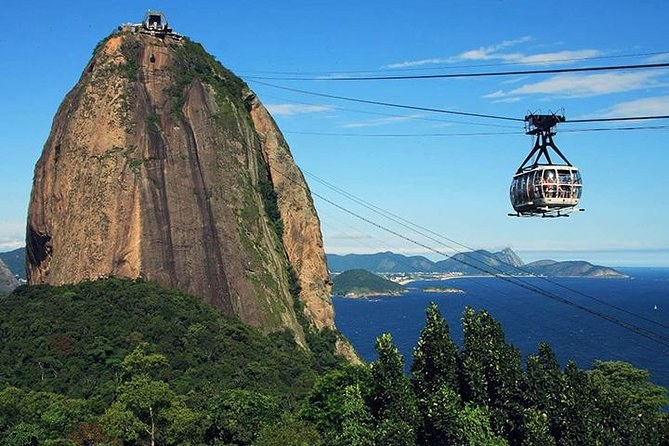 4 mi from Rio de JaneiroSugar Loaf Mountain (Pão de Açúcar)
 5 mi from Rio de JaneiroChrist the Redeemer
 After you step off · near Genoa
You end in a different port — stay on, and add what is within reach before you fly home.