Your cruise
Seven Seas Grandeur · 14-night Mediterranean cruise, Panama City to Miami
Mar 31 – Apr 14 · 14 nights ·
Day 1–2 Panama City (board) · Day 2 Kiel Canal · Day 3 Cartagena · Day 4 Santa Marta · Day 5 Oranjestad · Day 6 Willemstad · Day 7 Kralendijk · Day 8 Willis Island · Day 9 St. Georges · Day 10 Castries · Day 11 Gustavia · Day 12 Tortola · Day 13–14 Willis Island · Day 15 Miami (step off)
What you do Walk Kiel's storied waterfront and wartime heritage with a passionate local guide — uncovering hidden layers of the city's Hanseatic past, naval legacy, and postwar reinvention on a bespoke private tour tailored entirely to you.
What to expect Your local guide — humorous, knowledgeable, and deeply rooted in Kiel — leads you at your own pace through the old Altstadt footprint, the dramatic Kiel Fjord promenade, and past landmarks steeped in Hanseatic and naval history. Expect vivid storytelling: the bombing of 1944, the sailors' revolt of 1918, and the maritime soul that rebuilt this city from rubble. Stops are chosen to match your interests — whether that's architecture, wartime history, or the vibrant sailing culture that makes Kiel world-famous. The 90-minute format is perfectly calibrated for a port day, leaving ample time to explore independently afterward.
Good to know Pre-book directly via the Kiel Walking Tours website. The terminal is centrally located; the tour departs from the city centre, a short taxi or walk away. Confirm your all-aboard time and allow 30 minutes' buffer. Private tours are available on request for any group size.
Versus the ship tour This is a fully private, fluent-English expert guide experience — no coach, no crowds, no fixed script. Your guide adapts the narrative to your interests, pausing wherever curiosity strikes, revealing layers of Kiel that mass tours simply never reach.
What you do Board a classic paddle steamer on the legendary Nord-Ostsee-Kanal — the world's busiest artificial waterway — for a gliding journey between two seas, complete with expert maritime commentary and fine regional food.
What to expect Step aboard a lovingly preserved paddle steamer and settle onto the open deck as the canal's extraordinary parade of container ships, tankers, and sailing vessels glides past at arm's reach — a perspective no road or cycle path can match. Expert guides narrate the canal's construction history, its strategic WWI and WWII significance, and the engineering genius of its locks. Regional specialities and cold Schleswig-Holstein beer are served onboard, making this as much a culinary moment as a scenic one. The gentle rhythm of the paddle wheel, the low green banks, and the sheer scale of passing vessels create an unforgettable, utterly unhurried atmosphere.
Good to know Sailings depart from Kiel-Holtenau, approximately 10 minutes by taxi from the cruise terminal. Book the earliest sailing to maximise your time. Confirm your all-aboard time before booking — a partial canal cruise of 2–3 hours is feasible on a typical port day. Bring a light jacket; deck sailing can be breezy.
Versus the ship tour The historic paddle steamer experience is an intimate, slow-travel immersion into one of the world's great engineering feats — 98 km of precision-engineered canal connecting the North Sea to the Baltic. Insightful onboard commentary and al fresco deck viewing make this bucket-list for any serious maritime traveller.
book direct with Nord-Ostsee-Kanal (NOK) Boat Tours → · the full guide →
What you do Stand atop Germany's most powerful maritime monument and descend into a real WWII submarine — the U-995 — at the wind-swept shores of the Kiel Fjord, where the sea meets one of Europe's most moving acts of remembrance.
What to expect The sweeping 72-metre tower rewards those who climb it with a 360-degree panorama across the Kiel Fjord, the Baltic, and the distant Danish coast — a view that contextualises the enormous strategic importance of this waterway. Below, the subterranean hall of honour commemorates over 30,000 German sailors lost at sea, and the solemn atmosphere is genuinely moving. Steps away, the U-995 is the last surviving Type VIIC U-boat in the world — you clamber through its impossibly cramped torpedo room, engine compartment, and conning tower exactly as her wartime crew did. Allow 2.5–3 hours to do both justice. The adjacent Laboe beach is among the finest on the Baltic — golden, wide, and uncrowded — ideal for a restorative stroll before heading back.
Good to know Laboe is 20 km north of Kiel; take the scenic Kieler Förde passenger ferry (approx. EUR 10 return, departs central Kiel) or a private taxi (approx. EUR 30 one way). Tickets are purchased on-site; no advance booking required, but weekends in summer can be busy — arrive early. Allow 30–40 minutes for the ferry crossing each way and plan your all-aboard time carefully.
Versus the ship tour The Laboe Naval Memorial is one of the most architecturally arresting monuments in Northern Europe — a 72-metre ship's-bow tower rising from the Baltic shore. Paired with the chance to walk through a genuine, unrestored WWII submarine, this is a profoundly affecting, expert-curated encounter with naval history that no museum replica can replicate.
What you do Step into 500 years of northern German rural life at Schleswig-Holstein's extraordinary open-air museum — 60 original farmsteads, windmills, and craftsmen's workshops spread across 90 pastoral hectares just outside Kiel, alive with artisans and farm animals.
What to expect Wander at will through a landscape of thatched farmhouses, watermills, and timber-framed barns, each authentically furnished and staffed by costumed craftspeople demonstrating skills from bread-baking to coopering. The scale is extraordinary — 60 original structures transported here from across the region, arranged in a rolling parkland that feels genuinely lived-in rather than curated. In summer, horse-drawn carts, farm animals, and seasonal festivals add an irresistibly warm, sensory quality. The on-site inn serves hearty Schleswig-Holstein farmhouse cooking: expect smoked eel, Grünkohl, and freshly baked rye bread alongside regional beers. Allow a full 2.5–3 hours; it rewards a slow, exploratory pace.
Good to know Molfsee is approximately 6 km south of Kiel city centre — a 15-minute taxi ride (approx. EUR 15 one way) from the cruise terminal. Tickets purchased on-site; no advance booking required. Open daily from April through October; check the official website for seasonal craft demonstration schedules and special event days. A perfect pairing with a morning city walk.
Versus the ship tour Molfsee is one of the oldest and most celebrated open-air museums in Germany, yet it remains unhurried and genuinely immersive — a working landscape museum where blacksmiths, bakers, and weavers demonstrate centuries-old crafts in authentic, relocated buildings. It is the antithesis of a roped-off display, offering total freedom to wander, touch, and taste.
book direct with Freilichtmuseum Molfsee – Landesmuseum für Volkskunde (Official) → · the full guide →
What you do Escape to Falckensteiner Strand — Kiel's most beautiful arc of Baltic beach — for a sun-drenched afternoon of golden sand, crystalline fjord water, and the extraordinary spectacle of giant cruise ships and sailing yachts gliding past just offshore.
What to expect Arrive at Falckensteiner Strand — a long, fine-sand beach framed by pine trees and the shimmering Kiel Fjord — and settle into a classic Strandkorb beach chair with a panoramic view across one of Europe's most active sea lanes. The spectacle of ocean-going vessels, naval vessels, and racing sailboats passing within touching distance is uniquely thrilling and utterly Kiel. Your private guide shares the sailing heritage of this Olympic city (Kiel hosted the 1972 Munich Olympics sailing events), points out the Laboe Memorial on the far shore, and recommends the finest beach kiosk for fresh Brötchen, smoked fish, and cold Baltic Sea beer. The water is bracing but swimmable in summer; the atmosphere is relaxed, elegant, and entirely local.
Good to know Falckensteiner Strand is approximately 10 km northeast of the cruise terminal — a 15-minute taxi ride (approx. EUR 20 one way). The beach itself is free to access; Strandkorb hire is approx. EUR 8–12 for a half-day. A private guide from Kiel Walking Tours adds expert narration and local curation — book directly. This excursion is ideal as a relaxed afternoon option after a morning city or canal experience.
Versus the ship tour Falckensteiner Strand combines the rare pleasure of a genuinely beautiful, uncrowded Baltic beach with one of the world's most dramatic maritime backdrops — freighters, sailing yachts, and ferries gliding silently through the fjord just metres away. A private guide adds local context, curates the best beachside Strandkorb (wicker beach chair) spot, and introduces you to the sailing culture that defines Kiel's identity.
book direct with Kiel Walking Tours – Private Half-Day Fjord & Beach Experience → · the full guide →
What you do Watch colossal ships navigate the engineering marvel of the 20th century from the Miraflores Locks Visitor Centre — up close, with a private expert guide decoding every moment. This is the definitive Panama bucket-list experience.
What to expect Stand metres from the lock gates as Panamax and New Panamax vessels — some longer than three football fields — glide silently through. Your guide explains the lock's water-recycling chambers, the history of the canal's construction, and the geopolitical impact it still carries today. The four-level visitor centre includes an IMAX-style film, scale models, and a rooftop terrace that delivers the most visceral perspective of all. Time your visit for a scheduled transit and the spectacle is unforgettable.
Good to know Transit schedules are published by the ACP and peak lockings often happen mid-morning — ideal for a port day. Pre-book a private guide via the official visitor centre or a vetted local operator to avoid queues. Allow 2.5–3 hours; Miraflores is 10 km from the cruise terminal, approx. 20 min by private transfer.
Versus the ship tour A private bilingual guide means you understand exactly what you're watching — the lock mechanics, the engineering history, the tonnage of each vessel — rather than absorbing it from a distance. Small-group access to the upper observation deck gives unobstructed, photography-perfect sightlines.
book direct with Miraflores Visitor's Center (Panama Canal Authority – ACP) → · the full guide →
What you do Wander the cobbled lanes of Panama City's UNESCO-listed old quarter — baroque churches, French colonial mansions, rooftop bars overlooking the Pacific — with a private cultural historian who brings every crumbling façade to life.
What to expect Begin at Plaza de la Independencia, the heart of Panama's 1821 independence proclamation, before weaving through plazas framed by restored French and Spanish colonial buildings. Your guide leads you to hidden viewpoints where the glittering skyscrapers of the banking district rise behind colonial rooftops — one of the most photogenic juxtapositions in all of Latin America. Seek out the hauntingly beautiful ruins of the old Santo Domingo Church, where a flat arch has stood without a keystone for over 300 years. End with a private tasting of ceviche and patacones at a curated local spot.
Good to know Casco Viejo is approx. 8 km from the Balboa cruise terminal — 15 min by private car. Morning light is ideal for photography and temperatures are cooler; aim to finish by noon. Book a private guide directly through a certified local operator to ensure access to interior landmark sites.
Versus the ship tour Moving at your own pace through this intimate neighbourhood — pausing for a cortado at a boutique café, stepping inside the gilded Metropolitan Cathedral, lingering on a terrace above the skyline — is a world away from a coach tour. A private guide offers the political and cultural backstory that transforms a pretty stroll into genuine understanding.
book direct with Panama Tour Site – Casco Viejo Private Tour → · the full guide →
What you do Glide deep into Gatún Lake — the vast artificial reservoir at the heart of the Panama Canal — on a private boat, spotting howler monkeys, sloths, toucans and caimans in one of the most biodiverse jungles on Earth.
What to expect Board a sleek, private launch from the shores of Gatún Lake and motor into jungle-fringed channels created when the canal was flooded in 1913. Howler monkeys crash through the canopy overhead while white-faced capuchins eye you curiously from the branches. Your naturalist guide scans the waterline for caimans and freshwater turtles while toucans and kingfishers flash between the trees. On Monkey Island — a forest fragment surrounded by the lake — three species of primate have created one of the most accessible wildlife-watching sites in Central America.
Good to know Gatún Lake is on the Atlantic side of the canal — best suited for ships transiting or docking at Cristóbal/Colón, though reachable by private transfer (approx. 1.5 hrs from Panama City). Bring binoculars, reef-safe sunscreen, and light rain gear. Book a private naturalist boat in advance; morning departures see the most wildlife activity.
Versus the ship tour A private naturalist-guided boat — not a crowded pontoon — means you drift silently into channels where wildlife is undisturbed. Your guide identifies species by sound before you see them, and the itinerary flexes around each sighting rather than a rigid schedule.
book direct with AdventureSmith Explorations – Panama Private Tours → · the full guide →
What you do Explore the hauntingly beautiful ruins of the original Panama City — founded in 1519, it was the oldest continuously inhabited European settlement on the Pacific coast of the Americas, destroyed by Henry Morgan in 1671.
What to expect Stand inside the crumbling stone cathedral tower that still dominates the skyline, the same tower from which fleeing residents watched Henry Morgan's buccaneers set fire to the city in 1671. Your private guide traces the city's street plan through the excavated foundations, revealing the King's Bridge — once the departure point for gold-laden mule trains heading to the Atlantic — and the remnants of convents, slave quarters, and merchant houses. The adjacent museum provides exquisite context with artefacts, maps, and colonial-era art. The Pacific Bay backdrop and dramatic ruins make this one of the most photogenic sites in all of the Americas.
Good to know Panamá Viejo is 7 km east of the city centre — 15 min by private transfer from the Balboa terminal. The site is open from 8:00 AM; visit early before heat builds. Pre-book a certified guide through the official site foundation for the deepest historical expertise. Allow 2–2.5 hours.
Versus the ship tour A private archaeologist-led tour of these UNESCO World Heritage ruins transforms weathered stone towers into vivid storytelling — the pirate raid, the gold convoys, the birth of a transcontinental trade route — in a way that self-guided visits simply cannot match.
book direct with Panama Interoceanic Canal Museum / Panama Viejo Archaeological Site → · the full guide →
What you do Trek the forested trails of Ancon Hill — rising directly above Panama City — with a private naturalist guide at golden hour, emerging above the canopy to a panorama of the canal, the Pacific, and the glittering skyline below.
What to expect Begin your ascent through dense tropical forest alive with the calls of toucans and parakeets, your guide pausing to spotlight a sloth camouflaged in the cecropia trees or a troupe of tamarins threading the understorey. The trail rises steeply but rewards you within 45 minutes with a summit panorama that defies belief: the full sweep of the Panama Canal entrance, the Bridge of the Americas arcing over the Pacific approach, and the glass towers of Panama City glittering in the morning light. Ancon Hill is also a site of political significance — it was the last piece of the former Canal Zone returned to Panamanian sovereignty in 1999.
Good to know The hill is 2 km from the Balboa cruise terminal — walkable or a very short transfer. Start by 6:30 AM for sunrise and wildlife at peak activity, and to be back aboard with time to spare. Wear trail shoes and light breathable layers. Entrance is free; a private guide fee applies.
Versus the ship tour Ancon Hill is a protected reserve that rewards those who go with a naturalist — harpy eagles, Geoffrey's tamarins, and three-toed sloths inhabit this urban jungle, and knowing where to look is everything. The sunrise panorama — canal, Pacific, skyline, rainforest — is one of the most layered and extraordinary views in all of Central America.
book direct with AdventureSmith Explorations – Panama Private Tours → · the full guide →
What you do The complete Panama City private immersion: Miraflores Locks, Casco Viejo's colonial streets, Panamá Viejo's ruins, and a curated lunch — crafted as a bespoke, unhurried journey for discerning travelers who want the full picture in a single day.
What to expect Your private air-conditioned vehicle and expert guide collect you dockside and deliver a perfectly paced arc through Panama City's greatest hits. Watch a Panamax freighter squeeze through the Miraflores Locks with inches to spare, then step back five centuries amid the stone ruins of Panamá Viejo. Lunch at a handpicked Casco Viejo restaurant — perhaps a terrace overlooking the Pacific — before a golden-hour stroll through the quarter's restored plazas, boutique art galleries, and baroque churches. Your guide threads the political, architectural, and human stories into a single compelling narrative that spans 500 years of history.
Good to know Ideal for first-time visitors who want depth rather than breadth on a single port day. Private format means the pace is entirely yours — linger where you love it, move on when you're ready. Book well in advance as private vehicles fill quickly on busy port days. Confirm all-aboard time with your guide and build in a 90-minute buffer.
Versus the ship tour This is Panama City distilled into one seamless, private narrative — a bilingual expert guide, a dedicated vehicle, and an itinerary that bends to your interests rather than a preset timetable. Three of the city's defining UNESCO and heritage sites in one elegant arc.
book direct with The Panama Tour Site – Private City & Canal Tour → · the full guide →
What you do Walk Kiel's storied waterfront and wartime heritage with a passionate local guide — uncovering hidden layers of the city's Hanseatic past, naval legacy, and postwar reinvention on a bespoke private tour tailored entirely to you.
What to expect Your local guide — humorous, knowledgeable, and deeply rooted in Kiel — leads you at your own pace through the old Altstadt footprint, the dramatic Kiel Fjord promenade, and past landmarks steeped in Hanseatic and naval history. Expect vivid storytelling: the bombing of 1944, the sailors' revolt of 1918, and the maritime soul that rebuilt this city from rubble. Stops are chosen to match your interests — whether that's architecture, wartime history, or the vibrant sailing culture that makes Kiel world-famous. The 90-minute format is perfectly calibrated for a port day, leaving ample time to explore independently afterward.
Good to know Pre-book directly via the Kiel Walking Tours website. The terminal is centrally located; the tour departs from the city centre, a short taxi or walk away. Confirm your all-aboard time and allow 30 minutes' buffer. Private tours are available on request for any group size.
Versus the ship tour This is a fully private, fluent-English expert guide experience — no coach, no crowds, no fixed script. Your guide adapts the narrative to your interests, pausing wherever curiosity strikes, revealing layers of Kiel that mass tours simply never reach.
What you do Board a classic paddle steamer on the legendary Nord-Ostsee-Kanal — the world's busiest artificial waterway — for a gliding journey between two seas, complete with expert maritime commentary and fine regional food.
What to expect Step aboard a lovingly preserved paddle steamer and settle onto the open deck as the canal's extraordinary parade of container ships, tankers, and sailing vessels glides past at arm's reach — a perspective no road or cycle path can match. Expert guides narrate the canal's construction history, its strategic WWI and WWII significance, and the engineering genius of its locks. Regional specialities and cold Schleswig-Holstein beer are served onboard, making this as much a culinary moment as a scenic one. The gentle rhythm of the paddle wheel, the low green banks, and the sheer scale of passing vessels create an unforgettable, utterly unhurried atmosphere.
Good to know Sailings depart from Kiel-Holtenau, approximately 10 minutes by taxi from the cruise terminal. Book the earliest sailing to maximise your time. Confirm your all-aboard time before booking — a partial canal cruise of 2–3 hours is feasible on a typical port day. Bring a light jacket; deck sailing can be breezy.
Versus the ship tour The historic paddle steamer experience is an intimate, slow-travel immersion into one of the world's great engineering feats — 98 km of precision-engineered canal connecting the North Sea to the Baltic. Insightful onboard commentary and al fresco deck viewing make this bucket-list for any serious maritime traveller.
book direct with Nord-Ostsee-Kanal (NOK) Boat Tours → · the full guide →
What you do Stand atop Germany's most powerful maritime monument and descend into a real WWII submarine — the U-995 — at the wind-swept shores of the Kiel Fjord, where the sea meets one of Europe's most moving acts of remembrance.
What to expect The sweeping 72-metre tower rewards those who climb it with a 360-degree panorama across the Kiel Fjord, the Baltic, and the distant Danish coast — a view that contextualises the enormous strategic importance of this waterway. Below, the subterranean hall of honour commemorates over 30,000 German sailors lost at sea, and the solemn atmosphere is genuinely moving. Steps away, the U-995 is the last surviving Type VIIC U-boat in the world — you clamber through its impossibly cramped torpedo room, engine compartment, and conning tower exactly as her wartime crew did. Allow 2.5–3 hours to do both justice. The adjacent Laboe beach is among the finest on the Baltic — golden, wide, and uncrowded — ideal for a restorative stroll before heading back.
Good to know Laboe is 20 km north of Kiel; take the scenic Kieler Förde passenger ferry (approx. EUR 10 return, departs central Kiel) or a private taxi (approx. EUR 30 one way). Tickets are purchased on-site; no advance booking required, but weekends in summer can be busy — arrive early. Allow 30–40 minutes for the ferry crossing each way and plan your all-aboard time carefully.
Versus the ship tour The Laboe Naval Memorial is one of the most architecturally arresting monuments in Northern Europe — a 72-metre ship's-bow tower rising from the Baltic shore. Paired with the chance to walk through a genuine, unrestored WWII submarine, this is a profoundly affecting, expert-curated encounter with naval history that no museum replica can replicate.
What you do Step into 500 years of northern German rural life at Schleswig-Holstein's extraordinary open-air museum — 60 original farmsteads, windmills, and craftsmen's workshops spread across 90 pastoral hectares just outside Kiel, alive with artisans and farm animals.
What to expect Wander at will through a landscape of thatched farmhouses, watermills, and timber-framed barns, each authentically furnished and staffed by costumed craftspeople demonstrating skills from bread-baking to coopering. The scale is extraordinary — 60 original structures transported here from across the region, arranged in a rolling parkland that feels genuinely lived-in rather than curated. In summer, horse-drawn carts, farm animals, and seasonal festivals add an irresistibly warm, sensory quality. The on-site inn serves hearty Schleswig-Holstein farmhouse cooking: expect smoked eel, Grünkohl, and freshly baked rye bread alongside regional beers. Allow a full 2.5–3 hours; it rewards a slow, exploratory pace.
Good to know Molfsee is approximately 6 km south of Kiel city centre — a 15-minute taxi ride (approx. EUR 15 one way) from the cruise terminal. Tickets purchased on-site; no advance booking required. Open daily from April through October; check the official website for seasonal craft demonstration schedules and special event days. A perfect pairing with a morning city walk.
Versus the ship tour Molfsee is one of the oldest and most celebrated open-air museums in Germany, yet it remains unhurried and genuinely immersive — a working landscape museum where blacksmiths, bakers, and weavers demonstrate centuries-old crafts in authentic, relocated buildings. It is the antithesis of a roped-off display, offering total freedom to wander, touch, and taste.
book direct with Freilichtmuseum Molfsee – Landesmuseum für Volkskunde (Official) → · the full guide →
What you do Escape to Falckensteiner Strand — Kiel's most beautiful arc of Baltic beach — for a sun-drenched afternoon of golden sand, crystalline fjord water, and the extraordinary spectacle of giant cruise ships and sailing yachts gliding past just offshore.
What to expect Arrive at Falckensteiner Strand — a long, fine-sand beach framed by pine trees and the shimmering Kiel Fjord — and settle into a classic Strandkorb beach chair with a panoramic view across one of Europe's most active sea lanes. The spectacle of ocean-going vessels, naval vessels, and racing sailboats passing within touching distance is uniquely thrilling and utterly Kiel. Your private guide shares the sailing heritage of this Olympic city (Kiel hosted the 1972 Munich Olympics sailing events), points out the Laboe Memorial on the far shore, and recommends the finest beach kiosk for fresh Brötchen, smoked fish, and cold Baltic Sea beer. The water is bracing but swimmable in summer; the atmosphere is relaxed, elegant, and entirely local.
Good to know Falckensteiner Strand is approximately 10 km northeast of the cruise terminal — a 15-minute taxi ride (approx. EUR 20 one way). The beach itself is free to access; Strandkorb hire is approx. EUR 8–12 for a half-day. A private guide from Kiel Walking Tours adds expert narration and local curation — book directly. This excursion is ideal as a relaxed afternoon option after a morning city or canal experience.
Versus the ship tour Falckensteiner Strand combines the rare pleasure of a genuinely beautiful, uncrowded Baltic beach with one of the world's most dramatic maritime backdrops — freighters, sailing yachts, and ferries gliding silently through the fjord just metres away. A private guide adds local context, curates the best beachside Strandkorb (wicker beach chair) spot, and introduces you to the sailing culture that defines Kiel's identity.
book direct with Kiel Walking Tours – Private Half-Day Fjord & Beach Experience → · the full guide →
What you do Cartagena's first-century-BC Roman theatre lay hidden under the old town until 1988, and the only way in is a brilliant architectural sequence designed by Pritzker laureate Rafael Moneo: you pass through the Palacio Pascual de Riquelme, descend past Carthaginian and Roman strata, then emerge into the vast tiered cavea that once seated 6,000. It is the single most unmissable thing in the city and a five-minute walk from the pier. Few Roman theatres in the world are entered through a museum that tells the full layered story of the stone before you stand in it.
What to expect Allow 60-90 minutes for the full route through the museum's two buildings, the connecting tunnel under Calle Comedias, and out into the theatre itself. Interpretation is excellent and bilingual, with recovered marble, statuary and the reconstructed scaenae frons columns. The cavea is open-air and the pale stone throws heat, so morning light is kinder and better for photos. Wear proper shoes for the worn steps.
Good to know From the cruise terminal walk to Plaza del Ayuntamiento at the foot of Calle Mayor; the museum entrance is right there, about 400 m. Buy online or at the desk; queues are short outside July-August. Easily done independently with hours to spare against any all-aboard. Official tourist guides enter free, so a private guide adds no ticket cost.
Versus the ship tour Cruise lines fold the theatre into a guided 'Roman Cartagena' walking tour at roughly EUR 50-80 per person. The site itself is EUR 7 and a five-minute stroll from the ship, so booking direct is the clear winner; the only thing the ship adds is a guide's narration, which a EUR 7 audio guide or a private guide (below) replaces for a fraction of the group-tour price.
book direct with Museo del Teatro Romano de Cartagena (official) → · the full guide →
What you do Beyond the theatre, Cartagena hides one of Europe's largest urban Roman archaeological parks at Cerro del Molinete, 26,000 sq m where you walk original Roman streets past the Forum, the thermal baths, the banqueting Atrium with surviving wall paintings, and a rare Sanctuary of Isis. Paired with the Punic Wall, this is the only place in Spain telling the Carthaginian-to-Roman story on its own ground. A licensed local guide turns scattered ruins into the living capital of Hannibal's Iberia and Augustus's Carthago Nova.
What to expect The Molinete museum's three floors of 300-plus artefacts set up the open-air park, where elevated walkways let you look down on streets, mosaics and the baths. It is genuinely atmospheric and far quieter than the theatre. A good guide ties Molinete, the Punic Wall and the Decumanus together into one walk of about two hours, mostly flat with some ramps. Shade is limited, so carry water in summer.
Good to know All sites are within the compact old town, 5-10 minutes on foot from the pier. Pre-book a licensed guide in advance (Cartagena's official guide association or a reputable operator such as Mediterranean Cartagena Tours); confirm they hold the regional guide licence so they enter the monuments free. Comfortably finished within a half-day port call.
Versus the ship tour The ship's archaeology-focused walking tours run about EUR 60-80 per person. For a couple or a family a privately hired licensed guide at ~EUR 130 plus EUR 10 of tickets each often costs less per head and is infinitely more flexible on pace and depth; book direct. The ship only earns its markup here for solo travellers who want company.
book direct with Cartagena Puerto de Culturas (official site & ticketing) + a licensed private guide → · the full guide →
What you do Cartagena is one of the Mediterranean's great natural war harbours, ringed by coastal batteries, and the most evocative way to feel that is the official harbour boat out to the Fuerte de Navidad, a beautifully restored 1860s casemated fort guarding the harbour mouth. You cruise past the Spanish Navy arsenal and the gun batteries on the headlands, then disembark to walk the bunkers, handle a period cannon and stand on the terrace where the whole bay opens beneath you. It is the city's military soul, reachable only by water.
What to expect The boat moves at an easy 2.5 knots with multilingual narration, passing castles, lighthouses, the Navy arsenal and the cruise terminal itself from the water. At the fort you get roughly 45 minutes to explore casemates, an interactive artillery display and the panoramic terrace before the return leg. The whole round trip with the fort visit runs about 1.5-2 hours. Sea conditions inside the sheltered bay are usually calm.
Good to know The departure quay on Gisbert Street is a 3-4 minute walk from the cruise terminal. Sailings are roughly hourly in summer (11:00-19:30) and reduced off-season, so check the day's timetable on arrival and reserve via reservas@puertoculturas.com or +34 968 500 093 if your call is short. Confirm a return slot that clears your all-aboard with margin.
Versus the ship tour Cruise-line 'panoramic harbour cruise' excursions are typically EUR 50-70 per person for essentially this same bay loop with commentary. The official boat at EUR 10 including fort entry is one of the best-value bucket-list experiences in any Spanish port; book direct without hesitation.
book direct with Cartagena Puerto de Culturas - Barco Turístico (official) → · the full guide →
What you do When Cartagena's mining wealth peaked around 1900, architect Víctor Beltrí lined Calle Mayor with riotous Art Nouveau facades, and walking it is like strolling a small Barcelona: the Gran Hotel, the Casino, Casa Cervantes, Casa Maestre and the Palacio Aguirre. Pair the architecture with a guided tapas crawl through the historic bars for the region's catch and the famed huerta de Europa produce, and you have the city's living present rather than only its Roman past. This is the elegant, sensory side of Cartagena most cruisers miss.
What to expect Calle Mayor is pedestrianised and flat, an easy 1-2 hour amble past the showpiece facades, with the Gran Hotel's corner dome the standout. A good tapas tour threads emblematic bars near San Francisco square for things like local prawns, marinated fish and the Murcian michirones, paired with Jumilla or Bullas wines. Pace is leisurely and social. Midday is liveliest; some bars rest mid-afternoon.
Good to know Everything is within the old town, a few minutes from the pier; no transport needed. Pick up the free modernista route map at the City Hall tourist office on arrival. Pre-book the tapas tour as small-group slots sell out on cruise days, and confirm the finish time against all-aboard. Cartagena lunches start late by northern standards, so an early-afternoon slot suits a port call best.
Versus the ship tour The ship's 'Taste of Tapas' style tours run roughly EUR 70-90 per person. A direct-booked local gastronomy walk at EUR 45-60 covers the same modernista landmarks with better food stops and smaller groups; book direct. If you only want the architecture, do it free and self-guided and spend the savings on a long lunch.
book direct with Local licensed gastronomy operator (e.g. the Cartagena guided tapas & modernista walk) - book the official tour direct → · the full guide →
What you do The hill above the old town has been fortified since Roman times, and the medieval Castillo de la Concepción crowns it inside the green Parque Torres. A glass-fronted panoramic lift saves the 45-metre climb and delivers you to the single best viewpoint in Cartagena: the Roman theatre below, the modernista rooftops, the Navy arsenal and the whole amphitheatre of the bay laid out at once. It is the photograph that explains why every empire wanted this harbour.
What to expect The panoramic lift rises in a minute from Gisbert Street to a footbridge into Parque Torres, where peacocks roam the gardens. The castle keep houses a compact Interpretation Centre on the city's 13-century military story, with preserved Roman cisterns and capitals. Most visitors spend 45-60 minutes including time on the ramparts for the views. The terraces are open and breezy, ideal near sunset if your ship sails late.
Good to know The lift's lower station on Gisbert Street is a few minutes from the cruise terminal and sits right beside the harbour-boat quay, so the two pair perfectly in one outing. Buy the combined lift-plus-castle ticket. The walk down through the park back to the old town is pleasant and downhill if you'd rather not lift both ways.
Versus the ship tour This is rarely sold as a standalone ship excursion; when bundled into a city tour the lift and castle are a minor add-on to a EUR 50-80 package. Independently it is EUR 6 and a short walk, so there is no reason not to do it direct. No remote-access or timing argument favours the ship here.
book direct with Cartagena Puerto de Culturas - Castillo de la Concepción & Ascensor Panorámico (official) → · the full guide →
What you do Forty minutes north-east of the port lies the Mar Menor, the largest saltwater lagoon in Europe, a warm shallow inland sea fringed by the La Manga sandbar and the wetlands of San Pedro del Pinatar, where for centuries people have coated themselves in the mineral-rich mud said to ease aches and skin. Floating in water so dense and calm it feels otherworldly, with flamingos in the nearby salt pans, is a genuinely different Spanish coast from the cruise-port bustle. It is the one bucket-list experience here that the distance makes worth a ship excursion.
What to expect Expect about 40 minutes each way by road, then time at La Manga's twin seafronts or at the Lo Pagán / San Pedro del Pinatar salt-marsh boardwalks for the mud baths and birdlife. The lagoon water is bath-warm, very shallow and extraordinarily buoyant; the grey mud is smeared on, dried in the sun, then rinsed in the sea. Bring a swimsuit you don't mind staining and water shoes for the muddy shallows. Note the lagoon has faced ecological stress in recent years, so conditions vary by season.
Good to know Because of the drive and tight cruise timing, this is the one excursion to pre-book rather than improvise. If going independent, arrange a private driver-guide in advance and build in a generous return buffer; do not attempt it by taxi-and-hope on a short call. Pack a towel, sun protection and a change of clothes, and combine with the Roman theatre on the way back as the ship itinerary does.
Versus the ship tour This is the honest exception to the book-direct rule. The Mar Menor is 40 minutes out with no quick public-transport link from the pier, so the ship's coach handles the distance and, crucially, guarantees you are back before all-aboard. Take the ship tour for peace of mind, or hire a private licensed driver-guide direct if you want flexibility and there are 3-4 of you to share the car. Either way the transport markup is genuinely earned here.
book direct with Norwegian Cruise Line (and most lines) - 'La Manga & Roman Theatre' shore excursion, or a private licensed driver-guide → · the full guide →
What you do Penetrate the Sierra Nevada jungle to reach the ancient Teyuna citadel — Colombia's most awe-inspiring archaeological site, older than Machu Picchu. Stone terraces cascade through cloud-draped rainforest on a private, expert-led single-day expedition.
What to expect Depart the port at dawn by private 4WD into the Sierra Nevada foothills, then trek through dense cloud-forest trails to the 1,000-year-old Teyuna terraces. Your archaeologist-trained guide narrates the Tairona civilization's cosmology at every carved stone platform and ceremonial circle. A picnic lunch is served overlooking the jungle canopy before the return descent. You are back aboard well before all-aboard.
Good to know Depart no later than 06:30 from port; round trip runs ~10–11 hours so confirm all-aboard allows this. Wear sturdy trail shoes and bring insect repellent. Pre-book the private vehicle transfer — public access involves long shared minibuses. Entry to the Sierra Nevada indigenous reserve is included in guided packages.
Versus the ship tour A private bilingual guide keeps the pace entirely yours, with exclusive stops at indigenous Kogi communities and stone stairways most visitors never linger on. This is genuine jungle archaeology — not a bus tour.
book direct with Visit Santa Marta (official tourism portal) → · the full guide →
What you do Board a private sailboat at Santa Marta's marina and glide along the Caribbean coast into Tayrona National Park — Colombia's most spectacular stretch of coastline, where jungle meets turquoise sea. Snorkel coral gardens and anchor at secluded beaches inaccessible by road.
What to expect Cast off from the Santa Marta marina in the morning breeze, sails up as the Sierra Nevada peaks come into view behind you. The captain anchors in calm, crystalline coves inside Tayrona for two snorkeling sessions over thriving coral heads. A cold-lunch spread of fresh ceviche and tropical fruit is served on deck before a final beach stop on white sand framed by coconut palms. The sail back into port at golden hour is a moment to savour.
Good to know The marina is a 10-minute taxi from the cruise terminal. Depart by 08:00 to maximise beach time; typical return is 16:00–17:00. Bring reef-safe sunscreen, a dry bag for valuables, and a light cover-up. Pre-book the private charter at least two weeks ahead in high season (Dec–Mar).
Versus the ship tour Arriving by sailboat grants access to coves that day-trippers and overland buses simply cannot reach. A small group of 8 or fewer means unhurried snorkeling, cold drinks on deck, and a floating lunch anchorage that feels utterly private.
book direct with Visit Santa Marta (official tourism portal) → · the full guide →
What you do Ascend from the Caribbean coast into the cool, mist-wrapped hills of Minca for a private immersion in single-origin coffee and artisan cacao — grown on the slopes of the Sierra Nevada, among the world's most biodiverse mountain ranges. Taste, roast, and grind alongside the farmers themselves.
What to expect Your guide collects you from port and winds up a lush mountain road to Minca village (45 min). At a family-run finca you walk the coffee rows, learn to identify ripe cherries, and process a small batch by hand. A dedicated chocolate session follows — from raw cacao pod to refined bar — with a tasting paired to the estate's micro-lot espresso. Lunch is a farm-to-table spread on a terrace overlooking the Caribbean shimmer far below.
Good to know Minca is roughly 45 minutes from port by private 4WD — essential, as the road is steep and winding. Tour runs approx. 6–7 hours; confirm departure by 08:30. Bring a light layer — Minca is noticeably cooler than the coast. Book directly via the Visit Santa Marta portal or a vetted local operator.
Versus the ship tour A private vehicle and local expert mean you visit working fincas that don't open to groups — cupping sessions are intimate, stories are personal, and the pace lets you linger over a hand-poured pour-over with the view of the valley stretched below.
book direct with Visit Santa Marta (official tourism portal) → · the full guide →
What you do Explore one of South America's oldest colonial cities with a private expert historian — from the 1531 cathedral to Simón Bolívar's final home, Quinta de San Pedro Alejandrino, where the Liberator drew his last breath. Intimate, unhurried, and deeply resonant.
What to expect Begin at the Catedral Basílica de Santa Marta — the oldest in Colombia — before weaving through the Parque de los Novios and the pastel-painted streets of the Centro Histórico. Your guide narrates four centuries of conquest, rebellion, and independence at each landmark. The centrepiece is Quinta de San Pedro Alejandrino: a beautifully preserved hacienda estate where Bolívar's private chambers, personal artefacts, and the Altar de la Patria memorial pavilion make for a genuinely moving final act.
Good to know The historic centre is a 15-minute walk or 5-minute taxi from the cruise pier — one of the most port-proximate excursions on this list. Tour runs 3–4 hours; ideal for a late-morning departure. Wear comfortable shoes on cobblestones. Book a private guide rather than joining a group walk for the full luxury experience.
Versus the ship tour A private historian-guide unlocks hidden courtyards, reads colonial facades like manuscripts, and curates the story arc from Spanish conquest to Bolívar's deathbed — context that a large-group walk simply cannot deliver.
book direct with Visit Santa Marta (official tourism portal) → · the full guide →
What you do As the Sierra Nevada turns amber and the Caribbean catches fire, board a private sailboat for a golden-hour cruise around Santa Marta's dramatic bay. Champagne, fresh fruit, and a sunset so theatrical it feels staged — this is the evening-departure excursion worth staying for.
What to expect Depart the marina as the heat of the day softens and the light turns golden. The skipper navigates out past the lighthouse point as the twin backdrops of the Sierra Nevada and the Caribbean merge in the dusk. Chilled beverages — rum cocktails, local beers, or sparkling wine — are served on deck as the city lights begin to flicker on. It's a supremely relaxed two hours, ideal as a finale to a full day ashore.
Good to know Sunset departures are typically 16:30–17:00; confirm all-aboard time allows a 19:00–19:30 return to port. The marina is 10 minutes by taxi from the cruise terminal. This excursion pairs beautifully with the Minca or historic-centre tour earlier in the day. Book the private charter in advance — these small vessels fill quickly in high season.
Versus the ship tour Exclusive use of the vessel means you control the pace, the playlist, and the anchorage point — a genuinely private floating terrace with a 360° panorama of one of Colombia's most photogenic coastlines.
book direct with Visit Santa Marta (official tourism portal) → · the full guide →
What you do Just minutes from port, the tiny fishing village of Taganga is one of the Caribbean's best-kept diving secrets — crystal visibility, healthy coral walls, and a relaxed vibe that feels a world away from mass tourism. A twin-tank dive here is a bucket-list afternoon for underwater enthusiasts.
What to expect A 15-minute taxi ride brings you to Taganga's picturesque harbour, where the dive boat departs for sites like El Bajo and La Aguja — walls draped in sea fans, patrolled by schools of snapper and the occasional nurse shark. Two dives of 45–50 minutes each explore contrasting terrain: a coral-encrusted plateau followed by a dramatic drop-off. Surface intervals are spent with cold agua de coco on the boat, the village's colourful fishing fleet all around you.
Good to know Taganga is 15 minutes by taxi from the cruise terminal (~COP 15,000–20,000). Dives depart at 09:00 and 14:00; the morning session allows comfortable return before a 17:00 all-aboard. Bring your dive certification card (PADI Open Water or equivalent required). Reef-safe sunscreen only, please. Pre-book at least 48 hours ahead as spaces are limited.
Versus the ship tour Poseidon is one of the Caribbean coast's most established PADI dive operations, with small groups capped at 6 divers per guide — giving each diver genuine one-on-one attention on the reef and the flexibility to extend dives when conditions are perfect.
book direct with Poseidon Dive Center Taganga → · the full guide →
What you do An immersive, bespoke private tour of Curaçao's greatest highlights — from Willemstad's UNESCO streetscapes to secluded beaches and hidden local gems — guided by a certified local expert at your own pace.
What to expect Your private guide tailors every stop to your interests — Punda's candy-coloured colonial facades, the swing of the Queen Emma pontoon bridge, the Floating Market, and the wild western shore. Ride in a comfortable, air-conditioned vehicle with cold drinks on hand. Pace is entirely yours: linger at a landhuis plantation house or dash to a clifftop viewpoint. The guide's insider commentary transforms a sightseeing drive into a genuine cultural immersion.
Good to know Full-day tours run approximately 7 hours, fitting comfortably within a typical port call. Pre-book directly to secure your preferred guide and confirm the all-aboard time so the itinerary can be reverse-engineered from it. Small-group and fully private options available.
Versus the ship tour Fully customisable itinerary with a certified local guide who speaks island history from the inside — no fixed coach schedule, no crowds, just your group and a passionate Curaçaoian storyteller unlocking places most visitors never find.
book direct with Dundu Tours (certified local guide, Willemstad) → · the full guide →
What you do Descend into Curaçao's most spectacular limestone cave system, where million-year-old stalactites, indigenous Arawak petroglyphs and rare owl colonies await beneath the island's sun-baked surface.
What to expect A knowledgeable guide escorts you through a series of cathedral-like chambers draped in stalactites and stalagmites, some illuminated in subtle lighting that heightens the drama. Rare Screech Owls roost in the upper vaults — spot them with the guide's torch. Arawak rock art etched centuries ago lines the walls of the deepest gallery. The temperature drops noticeably underground, a welcome relief from the Caribbean sun. The circuit takes around 45 minutes and covers easy-to-navigate pathways.
Good to know Located roughly 15 minutes north of the cruise terminal by taxi (approx. USD 20–25 each way). First tour opens at 09:00; last entry mid-afternoon. Wear comfortable closed-toe shoes; the cave is mildly humid. Combine with a beach stop at Mambo Beach for a perfect half-day.
Versus the ship tour An expert cave naturalist leads groups of no more than 15 people through chambers cruise passengers rarely see; the small group means the guide can illuminate every petroglyph and geological formation without rushing.
book direct with Hato Caves (official site) → · the full guide →
What you do Step inside the 17th-century Chobolobo plantation house — the only authentic home of Senior's original Curaçao Liqueur — for an intimate guided tour of copper pot stills and a refined tasting of the island's most iconic spirit.
What to expect A charming estate guide walks you through the sun-drenched courtyard of the ochre-painted plantation manor, past gleaming copper stills and drying racks of laraha orange peel — the bitter local fruit that gives the liqueur its unmistakable flavour. The tasting room presents six signature expressions: the cobalt Blue, the classic Triple Sec, and limited aged varieties. The guide pairs each pour with history, and the gift shop stocks reserve bottles unavailable elsewhere. The whole visit takes about one hour.
Good to know Located in Salinja, approximately 10 minutes from the pier by taxi (around USD 15 each way). Open Monday–Saturday; confirm hours for your port day. Pre-booking a private group tasting is strongly recommended for a fully personalised experience.
Versus the ship tour The distillery is housed in a living heritage landmark; a guided visit moves well beyond a souvenir-shop experience, placing the liqueur's 150-year story in the context of island trade, Dutch colonialism and the laraha orange grove that makes it unique.
book direct with Curaçao Liqueur Distillery – Senior & Co. (official) → · the full guide →
What you do Explore the world-class Kura Hulanda Museum — a hauntingly beautiful open-air complex built into a restored 18th-century slave-trading quarter — with a specialist guide who brings its profound African diaspora collection to vivid, personal life.
What to expect Set within a restored warren of 18th-century Otrobanda buildings, the museum unfolds across shaded courtyards and intimate gallery rooms. Your guide navigates the collection with authority — from West African kingdoms and the brutal Middle Passage to Curaçao's role as a major slave-trade hub and the Afro-Caribbean culture that rose from it. The on-site sculpture garden and Mesopotamian antiquities collection add unexpected layers of depth. Allow at least 90 minutes; the experience is quietly transformative.
Good to know Located in the Otrobanda district — a 10-minute walk or short taxi ride from the cruise terminal. Combine with a stroll through Otrobanda's street-art murals. Private guide booking is highly recommended; contact the museum directly to arrange. Open daily from 09:00.
Versus the ship tour This is one of the most important and emotionally powerful museums in the Caribbean — a UNESCO-recognised site that demands a knowledgeable guide to fully appreciate its 3,000-piece collection spanning pre-Columbian artefacts to trans-Atlantic slave trade documents.
What you do Enjoy an exclusive dolphin interaction in open-water lagoon conditions at Curaçao's premier marine attraction, then snorkel a vibrant coral reef teeming with tropical fish — all in one unforgettable half-day session.
What to expect After a trainer-led briefing on dolphin biology and behaviour, you enter the warm lagoon water for a 30-minute interaction: dorsal-fin ride, foot push, and free swim alongside Atlantic bottlenose dolphins. The experience is conducted with clear animal-welfare standards. Post-swim, grab your snorkel gear and walk straight onto the Sea Aquarium's house reef — one of the most accessible and healthy coral gardens on the island, with sea turtles, angelfish and moray eels routinely spotted. Sun loungers and a beachside restaurant complete the experience.
Good to know Located on Bapor Beach, approximately 15 minutes east of the cruise pier by taxi (around USD 20). Dolphin Swim slots fill weeks in advance — book directly on the Sea Aquarium website as soon as your port date is confirmed. Minimum age/height restrictions apply for the dolphin program.
Versus the ship tour The Dolphin Swim program limits each session to a handful of participants alongside a professional marine trainer, creating a genuinely intimate encounter — not a mass-pool experience. The adjacent reef snorkel is directly off the beach, meaning no boat transfer and immediate access to pristine coral.
book direct with Curaçao Sea Aquarium (official) → · the full guide →
What you do Conquer the 372-metre summit of Mount Christoffel — Curaçao's highest point — on a guided early-morning ascent through a national park that shelters white-tailed deer, rare orchids and the endemic Curaçao white-tailed hawk.
What to expect Your certified park guide meets you at the entrance at first light and leads you up a rugged volcanic trail through sun-bleached cacti forests and limestone outcrops. The ascent takes about 1.5 hours; the 360-degree summit panorama — turquoise sea on all sides, Venezuela faint on the southern horizon — is the reward. On the descent, your guide identifies white-tailed deer grazing in the scrub, the endangered Curaçao White-tailed Hawk overhead, and a kaleidoscope of native orchids clinging to the rocks. The park also offers gentler nature trails for those who prefer a flat wildlife walk.
Good to know Located 45 minutes west of Willemstad — a taxi or pre-arranged transfer is essential (approx. USD 50–60 each way). The summit trail closes at 10:00 sharp, so a very early departure from the ship is required; confirm your all-aboard time carefully. Wear sturdy shoes, bring at least 1.5 litres of water, and apply high-SPF sunscreen before arrival.
Versus the ship tour The summit hike is strictly guided, early-morning only (trail closes at 10:00 to beat the heat), meaning you share the mountain with very few others — a rare solitude in the Caribbean. The park's certified naturalist guides spot endemic wildlife invisible to the untrained eye.
book direct with Christoffelpark (official) → · the full guide →
What you do Slip into the glowing waters off uninhabited Klein Bonaire and witness the magical blue bioluminescence lighting up one of the Caribbean's most pristine marine reserves. A bucket-list night snorkel in a UNESCO-protected reef.
What to expect Board Woodwind's comfortable sailing catamaran from the Kralendijk waterfront, steps from the cruise pier. Snorkel guides accompany every guest into the luminous water, pointing out coral formations, sea turtles, and — after dark — the ethereal blue glow of bioluminescence swirling around you. The small group size means unhurried time in the water and personal attention from guides who know every coral head by heart.
Good to know Book directly and well in advance — Woodwind's small-group slots fill quickly. The Klein Bonaire crossing is a short 10-minute boat ride. Confirm the all-aboard time with your ship and choose the earlier departure; Woodwind can advise on timing. Snorkel equipment is included.
Versus the ship tour Woodwind runs intimate, expert-guided small-group trips with multiple on-water guides — including the owner — to Klein Bonaire's protected reef. Access to this uninhabited island sanctuary at night, surrounded by bioluminescent plankton, is an experience impossible to replicate anywhere else in the Caribbean.
book direct with Woodwind Bonaire (local expert catamaran & snorkel operator) → · the full guide →
What you do Wade among wild pink flamingos at the salt flats, then plunge into turquoise shallows to snorkel alongside hawksbill sea turtles grazing on seagrass — all in a single unforgettable half-day on Bonaire's spectacular south coast.
What to expect Your private vehicle collects you at the pier and heads south past the iconic pink salt pyramids to the vast solar salt pans, home to one of the Caribbean's largest wild flamingo colonies. You'll photograph the birds at close, respectful range. Next, your guide leads you to a calm, sheltered snorkel spot where hawksbill and green sea turtles feed on seagrass beds in just a few feet of crystal-clear water — no boat needed. The return includes a stop at the historic White Slave huts for a photo.
Good to know Flamingos are most active in the early morning; request a morning departure to maximise the colony sighting. Bring reef-safe sunscreen, water shoes, and a camera. Shekhinah's private format means the itinerary flexes around your all-aboard time — confirm your ship's departure before booking.
Versus the ship tour Shekhinah is a local Bonairean expert running genuinely private, bespoke tours — your group only, your pace. The guide's intimate knowledge of the flamingo colony timing and the exact turtle snorkel sites is the difference between a glimpse and a genuine wildlife encounter.
book direct with Shekhinah Tours Bonaire (local private guide) → · the full guide →
What you do Explore Bonaire's wild, rugged northern interior — a vast national park of volcanic cliffs, flamingo lagoons, and hidden beaches — on a fully private guided safari with a local naturalist. The island's greatest natural drama, all to yourself.
What to expect Depart the pier in a private air-conditioned vehicle heading north into the 13,500-acre Washington Slagbaai National Park. Your naturalist guide pauses at Goto Lake — a flamingo and parrot hotspot — then navigates dramatic coastal tracks to Boca Slagbaai, a turquoise cove perfect for a private snorkel. Interpretive stops explain the island's geology, flora, and Arawak heritage. The pace is leisurely and entirely yours to direct.
Good to know The national park charges a separate entrance fee (approx. USD 45 per person; confirm on-site). Unpaved roads mean a 4WD vehicle is essential — your guide provides this. Allow at least 4 hours; confirm with your guide that the return fits your ship's all-aboard time. Bring water and sturdy closed-toe shoes.
Versus the ship tour A private local guide navigates the unpaved tracks of Washington Slagbaai — a UNESCO Biosphere Reserve — stopping at flamingo pools, ancient indigenous cave paintings, dramatic sea cliffs, and secluded snorkel bays that group tours rush past. This is Bonaire as few visitors ever see it.
book direct with Shekhinah Tours Bonaire (local private guide) → · the full guide →
What you do Paddle a transparent kayak through Bonaire's ancient mangrove forest, peering through the hull at fish, rays, and juvenile sea turtles below — then snorkel a hidden reef teeming with Caribbean marine life. A serene, small-group eco-luxury experience.
What to expect Your guide meets you near the pier and leads a short transfer to the mangrove launch point. You glide silently through cathedral-like mangrove channels in a see-through kayak, spotting juvenile fish, rays, and starfish in the gin-clear shallows below. After the kayak segment, the group moves to a sheltered reef for a guided snorkel among coral gardens, trumpetfish, and the occasional turtle. The experience closes with cold drinks and a debrief on Bonaire's marine conservation ethos.
Good to know No prior kayaking experience needed — the clear-bottom kayaks are stable and easy to paddle. Duration is approximately 2.5–3 hours; slots are limited to keep groups small. Book directly in advance. Reef-safe sunscreen is mandatory and may be provided; confirm at booking.
Versus the ship tour Clear-bottom kayaks turn the mangrove waterway into a living aquarium beneath you — an optical wonder unavailable on any boat tour. The small group size and expert naturalist guide reveal the ecological secrets of one of the Caribbean's most intact mangrove systems, with unhurried time at both the kayak and snorkel sections.
What you do Descend into Bonaire's dramatic limestone cave system with a local expert guide, then snorkel a secret sea cave pool carved by millennia of waves — an exhilarating combination of geology, history, and underwater wonder found nowhere else on the island.
What to expect Your guide collects you from the pier and drives to Bonaire's rugged limestone coastline, where dramatic blow holes and sea caves have been sculpted by centuries of surf. You'll scramble, climb, and squeeze through narrow cave passages (light equipment provided), pausing to examine ancient cave paintings and extraordinary stalactite formations. The finale is a snorkel in a luminous sea cave pool where light filters in through submerged openings, illuminating coral and fish in vivid colour.
Good to know A moderate level of fitness is required — there is some climbing and crawling involved. Wear sturdy shoes and a swimsuit under quick-dry clothing. Duration is approximately 2–3 hours. Confirm the exact operator and booking link on-site or via your ship's destination desk; government-regulated guide rates on the island are approximately USD 25 at point of booking for basic cave access.
Versus the ship tour A specialist local guide leads you through passages adorned with stalactites and ancient Arawak petroglyphs, then into sea-fed cave pools for a snorkel that feels like discovering a secret world. The intimate group size and expert geological and cultural commentary elevate this far beyond a standard cave visit.
book direct with Bonaire Cave Tours (local specialist guide) → · the full guide →
What you do Set sail on a luxury catamaran to the pristine reefs of Klein Bonaire, snorkel some of the Caribbean's clearest waters, then feast on a freshly grilled BBQ aboard as the island's turquoise coastline frames the horizon — the definitive Bonaire sea day.
What to expect Step aboard Woodwind's immaculate catamaran at the Kralendijk waterfront and sail the short crossing to Klein Bonaire's marine park, where visibility often exceeds 30 metres. Multiple certified guides enter the water with guests, pointing out eagle rays, parrotfish, elkhorn coral, and resident sea turtles. After two snorkel sites, cold drinks flow and the crew fires up the BBQ for a freshly grilled lunch enjoyed on deck with trade winds cooling the afternoon. Sailing back into Kralendijk harbour with full bellies and salty hair is pure Caribbean perfection.
Good to know Woodwind is explicitly cruise-passenger friendly and tracks all-aboard times carefully — confirm your ship's deadline at booking and they will plan accordingly. Snorkel equipment is included. Book well in advance as this is one of Bonaire's most sought-after half-day experiences. Departures are typically morning; the excursion runs approximately 3.5–4 hours.
Versus the ship tour Woodwind's owner-operated catamaran is a beloved Bonaire institution, renowned for its expert guides, unhurried pace, and genuinely small groups. The on-board BBQ using fresh local ingredients and the personal attention of the crew — including the owner herself — make this feel like a private charter, not a tour.
book direct with Woodwind Bonaire (local expert catamaran operator) → · the full guide →
What you do Board a rigid inflatable Zodiac for a close-up circumnavigation of one of the Coral Sea's most remote specks of land. Drift alongside vast nesting colonies of red-footed boobies, frigatebirds and brown noddies — a wildlife spectacle almost no traveller on earth ever witnesses.
What to expect Your Zodiac departs the ship's swim platform and skirts the island's entire coastline at water level, giving you eye-to-eye encounters with seabird colonies that number in the tens of thousands. The guide pauses the engine so you can hear the cacophony of calls and photograph birds in undisturbed flight. Shallow coral gardens glow electric beneath the hull as you round each headland. The round trip typically takes 90–120 minutes, leaving ample buffer before all-aboard.
Good to know Pre-book directly via email well in advance — this is a tender-only island and Zodiac capacity is strictly capped. Wear non-marking soles, bring a hat and reef-safe sunscreen. Confirm your ship's all-aboard time and allow 30 minutes' return buffer.
Versus the ship tour An intimate, expert-led small-group Zodiac — never more than 12 guests — means you can idle silently within metres of nesting birds and low reef outcrops that larger vessels simply cannot access, guided by a marine biologist who narrates every species in real time.
What you do Slip beneath the surface of some of the least-dived water on the planet — the Coral Sea surrounding Willis Island, hundreds of kilometres from the nearest coast. Visibility regularly exceeds 30 metres, revealing walls of hard coral, reef sharks, giant trevally and undisturbed sea-turtle feeding grounds.
What to expect Guests kit up in a purpose-equipped dive room and giant-stride into waters of extraordinary clarity. The reef structures here are pristine — no bleaching, no crowds — and the sheer biomass of pelagic life reflects the island's status as a protected marine reserve. Drift snorkelling across shallow coral plateaus, you are likely to encounter hawksbill turtles grazing, schools of chevron barracuda and the flash of a reef whaler in the blue. Safety divers and guides remain in the water throughout.
Good to know Swimming competency is required; full snorkel equipment is provided. Confirm landing and in-water permissions with the Australian Bureau of Meteorology station keeper in advance — access can be subject to weather and conservation protocols. Bring a rash vest for UV protection.
Versus the ship tour Mike Ball operates the definitive liveaboard expeditions to the Coral Sea's outer reefs, with certified dive guides who have logged thousands of hours specifically on these formations. Group size is tightly managed, and every dive brief is site-specific — the antithesis of a mass-market snorkel.
book direct with Mike Ball Dive Expeditions (Townsville/Cairns — Coral Sea specialists) → · the full guide →
What you do Step ashore — one of only a handful of visitors ever permitted — and receive a private briefing inside Australia's most remote operational weather station. The data collected here has guided cyclone warnings across Queensland for over a century; it is a living piece of scientific history.
What to expect After a short Zodiac transfer to the beach, you walk across the coral-rubble islet — the entire thing is barely 400 metres across — to the weatherboard station compound. The duty meteorologist explains the island's role in tracking Coral Sea cyclogenesis, shows you the instrument arrays and balloon launch facilities, and fields questions with refreshing candour. The sense of absolute remoteness — no roads, no shops, just science and sea — is profoundly affecting. Visits are brief (30–45 minutes) out of respect for operations.
Good to know Landing is at the discretion of BOM and sea conditions; it is never guaranteed. Wear closed shoes for the coral-rubble foreshore. Do not touch or enter any instrument enclosures. This is one of cruising's rarest privileges — treat it accordingly.
Versus the ship tour Landing on Willis Island is granted to very few vessels per year and always requires advance coordination with the BOM. The briefing is delivered by the station's resident meteorologist — one of Australia's most isolated postings — lending an authenticity and depth no third-party guide could replicate.
What you do Join a dedicated marine naturalist on a slow, deliberate circuit of Willis Island's offshore waters — prime habitat for dwarf minke whales, spinner dolphins, red-tailed tropicbirds and occasional whale sharks. This is expedition-grade wildlife observation in one of Earth's most intact marine environments.
What to expect The excursion runs in the calm conditions that typically prevail in the lee of the island, with the naturalist briefing the group on cetacean behaviour before departure. Spinner dolphins frequently bow-ride the vessel's wake, while tropicbirds trace lazy arcs overhead trailing their extraordinary white tail streamers. In season (June–September), dwarf minke whales approach curious vessels with remarkable boldness. The naturalist's running identification and ecological commentary transforms an already astonishing scene into a masterclass in Coral Sea ecology.
Good to know Bring image-stabilised binoculars if you own them — loaner binoculars are available but limited. A polarised lens filter dramatically improves underwater wildlife sighting from the deck. Morning cruises yield the best light and the calmest seas.
Versus the ship tour Coral Expeditions' marine naturalists carry years of Coral Sea field experience and use hydrophones and binoculars to locate and interpret marine megafauna well beyond what a casual deck scan achieves. Groups are capped at 20, ensuring every guest has unobstructed sightlines and personalised commentary.
book direct with Coral Expeditions (Australia's premium expedition cruise specialist) → · the full guide →
What you do Combine world-class snorkelling with a dedicated underwater photography tuition session led by a professional marine photographer. The pellucid, undisturbed waters around Willis Island provide a studio backdrop that professionals travel half a year to reach — and you are already here.
What to expect After a 20-minute on-deck briefing covering exposure, buoyancy control for photography and coral-safe positioning, the group enters the water with the lead photographer. Each participant is given real-time feedback via underwater slates and post-dive screen reviews. The reef here hosts nudibranchs, juvenile turtles and extraordinary soft-coral detail that rewards close, patient framing. By the final dive, guests leave with a curated set of images that would pass muster in any travel magazine.
Good to know Bring your own mirrorless or compact camera with an underwater housing if possible; hire housings are limited. Basic snorkel competency required. Maximum group size of 6 is strictly enforced — book your place the moment you board the ship.
Versus the ship tour A professional marine photographer leads groups of no more than six, providing personalised composition coaching in real time — in the water, beside you. The combination of tuition and a location almost nobody else will ever photograph makes every frame genuinely irreplaceable.
What you do Rise before the rest of the ship and join an ornithologist-guide for a dawn landing on Willis Island — arguably the most exclusive birdwatching address in the Southern Hemisphere. The island hosts one of Australia's largest documented seabird colonies, and first light is when it erupts into extraordinary life.
What to expect The Zodiac lands on the coral-rubble beach just as the sky softens to indigo. Within seconds, frigatebirds begin their courtship displays, inflating scarlet throat pouches while brown boobies jostle on nesting scrapes metres from your feet. The ornithologist narrates the scene with infectious expertise, calling species by name as they lift and wheel overhead in their thousands. The island's absolute silence — broken only by wind and wings — produces a meditative quality that experienced travellers consistently describe as one of cruising's most affecting moments.
Good to know Landing is subject to BOM approval and sea-state — pre-register your interest at the expedition desk on day one of the voyage. Wear dark, non-reflective clothing to avoid disturbing nesting birds. Carry a long lens (200mm+ equivalent) for perched-bird shots. Soft-soled shoes protect both the coral-rubble substrate and your footing.
Versus the ship tour A qualified ornithologist leads a structured census-style walk, naming every species, explaining colony dynamics and pointing out nesting behaviours that an untrained eye would miss entirely. The pre-sunrise timing means you experience the island in its rawest, most atmospheric state — long before the day-trippers (there are none) arrive.
book direct with Coral Expeditions (Australia's premium expedition cruise specialist) → · the full guide →
What you do A fully bespoke, private island tour led by a vetted local expert — Grand Etang rainforest, Concord Falls, spice estates, chocolate, rum, and stunning viewpoints, all at your pace. The ultimate way to experience Grenada's layered beauty.
What to expect Your private driver-guide collects you steps from the pier and crafts the day around you — rainforest hikes to hidden waterfalls, a visit to a working spice estate, a chocolate factory tasting, and a panoramic lunch stop overlooking the Caribbean. The pace is entirely yours: linger at a viewpoint, duck into a local rum shop, or add a beach stop before heading back. Expect frank, warm storytelling from someone who genuinely loves showing off their island.
Good to know Book directly with the operator and confirm your all-aboard time so your guide plans the return accordingly. Private vehicles fit 2–6 guests. Arrange in advance to secure the best guides, especially on busy port days.
Versus the ship tour Completely private — your group, your itinerary, your stops. A knowledgeable local driver-guide tailors every moment to your interests, with no strangers, no rushing, and no missed gems.
book direct with Grand Tours Grenada (Call the Boss Taxi) → · the full guide →
What you do Dive into Grenada's soul on a full-day immersion — Concord Waterfall, the House of Chocolate, River Antoine Rum Distillery, and a nutmeg processing station. The Spice Isle in one unforgettable, flavour-soaked day.
What to expect The day begins with a scenic drive through the Grand Etang rainforest to Concord Falls, where you can swim beneath a 65-foot cascade. Next, the House of Chocolate in St. George's offers a bean-to-bar tasting masterclass. River Antoine Estate — one of the oldest working rum distilleries in the Caribbean — is a living museum of water-wheel-powered production, and the afternoon ends at a nutmeg cooperative where the island's most famous export is cracked, graded, and packed by hand. A lush, layered day that engages every sense.
Good to know Full-day tours typically run 6–7 hours; confirm your all-aboard time when booking. Wear comfortable walking shoes and bring a swimsuit for the waterfall. Pre-book; small-group slots fill fast on peak port days.
Versus the ship tour Small-group intimacy (typically 6–12 guests) means genuine interaction with artisan producers, unhurried tastings, and a guide passionate enough to walk you behind the scenes at a 200-year-old rum distillery.
book direct with GetYourGuide (local Grenada operators via direct listing) → · the full guide →
What you do Snorkel the world's first underwater sculpture park — Jason deCaires Taylor's hauntingly beautiful submerged figures off Molinière Bay. A UNESCO-recognised site unlike anything else in the Caribbean.
What to expect Board a purpose-fitted snorkel vessel from St. George's harbour and cruise north along Grenada's lush coastline to Molinière Bay. Once anchored above the sculptures, a guide briefs you on Taylor's artistic vision and the marine life now thriving around each figure. Beneath the surface, more than 65 life-cast human forms are draped in coral, sponge, and darting reef fish — eerily beautiful and completely unlike any dive or snorkel you've done before. The return leg offers rum punch and a second snorkel stop at a pristine reef.
Good to know 4 hours total; departs from the Carenage (inner harbour), minutes from the cruise pier. Basic snorkel gear included; bring an underwater camera or GoPro. Non-swimmers can view from a glass-bottom section on some vessels — confirm when booking.
Versus the ship tour Small-boat access means you're in the water quickly, with a guide who knows every sculpture's story and the coral that has colonised them — a genuinely artistic and ecological experience rather than a crowded reef stop.
book direct with Expedia Experiences – Grenada Snorkel Cruise (local boat operator) → · the full guide →
What you do A curated 6-hour small-group journey through Grenada's culinary and natural heritage — chocolate-making, rum tasting, spice gardens, and a rainforest waterfall, with a local guide who makes every stop feel personal.
What to expect Your local guide picks you up at the pier and threads together Grenada's greatest hits with genuine insider context. You'll visit a working chocolate estate, learn to temper a bar from scratch, and taste Grenada's celebrated 100% cacao. A rum distillery visit includes a barrel-side tasting of aged expressions. The afternoon takes you into the rainforest to a waterfall where you can swim, before a spice garden tour rounds off the day with nutmeg, mace, cinnamon, and turmeric straight from the source.
Good to know 6-hour duration; confirm your all-aboard time and your guide will plan accordingly. Pickup available from the cruise terminal. Wear layers — rainforest micro-climates can be cool. Book early; this top-rated tour sells out quickly.
Versus the ship tour Rated 4.6 stars from 156 reviews, this small-group format (pickup available from the port) delivers genuine local expertise and flexible pacing — not a conveyor-belt tourist circuit.
book direct with GetYourGuide (vetted Grenada local operators) → · the full guide →
What you do Walk the ramparts of 18th-century Fort Frederick above St. George's — cannon emplacements, sweeping harbour views, and the story of the 1983 Revolution told by a passionate local historian. History that genuinely crackles.
What to expect Your private guide leads you up through St. George's Georgian streetscape — the Carenage, the coloured warehouses, York House — to Fort Frederick, built by the French in 1779 and later seized by the British. From the battlements, the view across the harbour and the Grenadines is jaw-dropping. The guide brings alive the 1983 Revolution and the US intervention with personal, nuanced storytelling. From the fort, the walk continues through the town market and a working spice shop before returning to the pier.
Good to know Fort Frederick is a 15–20 minute uphill walk from the Carenage; wear comfortable shoes. Duration approximately 2.5–3 hours — well suited for a morning call before an afternoon beach stop. Confirm your guide and timing at least 48 hours in advance.
Versus the ship tour Fully private, led by a licensed local historian — not a script-reader. You set the pace, ask every question, and get the frank, unvarnished story of Grenada's colonial, revolutionary, and post-invasion history.
book direct with ToursbyLocals – Grenada Private Guides → · the full guide →
What you do A private transfer to Grenada's legendary Grand Anse — two miles of talcum-white sand and impossibly turquoise water, consistently ranked among the Caribbean's finest beaches. Pure, unhurried luxury.
What to expect Grand Anse Beach stretches for two miles south of St. George's — calm, clear, warm water sheltered from Atlantic swell, and a crescent of fine white sand backed by low-key beach bars and a handful of discreet resorts. A 10-minute private taxi ride from the pier drops you directly onto the sand. For something even more secluded, ask your driver to continue to Mourne Rouge (Magazine Beach), a smaller, quieter cove just beyond — fewer visitors and a reef just offshore perfect for mask-and-snorkel. Return on your own schedule.
Good to know Grand Anse is 3 km from the cruise pier; taxis queue right outside the terminal. Negotiate and confirm the return pick-up time and price before you go. Build in a 45-minute buffer before all-aboard for the return drive and security re-boarding. Sunlounger rental approx. USD 5–10 on the beach.
Versus the ship tour A private taxi means door-to-sunlounger service, zero waiting, and a driver who'll collect you exactly when you're ready — and who can recommend the right beach bar or snorkel rental on arrival.
book direct with Grand Tours Grenada (Call the Boss Taxi – Beach Transfer) → · the full guide →
What you do St. Lucia's most celebrated private island tour, covering the Pitons, Sulphur Springs, Diamond Falls, a rum distillery, and a beachside lunch — all with a born-and-raised Lucian guide who treats you like family.
What to expect Your private driver-guide collects you at the pier and leads you south through lush valleys to the twin Piton peaks for world-class photo stops. You'll descend into the Sulphur Springs volcanic crater for a warm mineral mud bath, then rinse off under Diamond Botanical Waterfalls. A full Creole lunch is served at a local restaurant before stops at a rum distillery and a black-sand beach on the return to Castries.
Good to know Book directly via the Cosol Tours website or WhatsApp. The full-day tour runs ~7–8 hours — confirm your ship's all-aboard time before departure. Private vehicle fits up to 6; larger groups accommodated with advance notice. Pre-booking is essential — this operator fills up fast in peak season.
Versus the ship tour Fully private, pace-your-own itinerary with a legendary local host — breakfast, lunch, rum punch, and 7 curated stops included. No crowds, no rushing, just St. Lucia the way insiders experience it.
book direct with Cosol Tours (official) → · the full guide →
What you do Glide down St. Lucia's dramatic west coast by luxury catamaran, anchoring beneath the UNESCO-listed Pitons for snorkelling over vivid coral reefs before a volcanic mud bath at Sulphur Springs — a true Caribbean bucket-list day.
What to expect You board the spacious catamaran right from Castries harbour and sail past Marigot Bay and Anse Cochon, watching the Pitons rise dramatically out of the sea. The crew drops anchor at a prime snorkel site where sea turtles and rainbow fish are common sightings. After a warm mineral mud bath ashore, lunch and unlimited rum punch are served on deck as you sail back in the golden afternoon light.
Good to know Book directly on the Sea Spray Cruises website. The full-day trip departs ~8:30 AM and returns ~4:30 PM — verify against your ship's all-aboard. Bring reef-safe sunscreen, a dry bag, and a change of clothes for the mud bath. Snorkel gear is provided on board.
Versus the ship tour A sleek, well-appointed catamaran with an open bar, freshly prepared Creole lunch on board, and snorkel stops that rival any dive resort — all in a lively but intimate group of fellow travellers rather than a packed tour bus.
book direct with Sea Spray Cruises St. Lucia (official) → · the full guide →
What you do Canter along the shoreline of one of St. Lucia's most scenic stretches of coast on a private horseback ride with the island's most trusted equestrian outfitter — an utterly romantic, bucket-list Caribbean moment.
What to expect You're paired with a gentle, well-schooled horse suited to your riding level and led by a passionate local guide along a stunning coastal trail that winds between coconut palms and the turquoise Caribbean Sea. The highlight is a barefoot gallop along the waterline — salt spray, golden sand, and the Pitons on the horizon. After the ride, you're welcome to cool off in the sea before heading back.
Good to know Book directly by contacting Sandy Hoofs via their website or phone. Rides depart from Gros Islet, approximately 20–25 minutes from Castries port by taxi. Private half-day slots are limited — reserve well in advance. Closed-toe shoes recommended; long trousers advised for comfort in the saddle.
Versus the ship tour A fully private ride — just your party and a knowledgeable local guide — at a pace that lets you soak in the scenery rather than keep up with a large group. Horses are well-matched to rider experience.
book direct with Sandy Hoofs St. Lucia (official) → · the full guide →
What you do Trek through St. Lucia's ancient volcanic rainforest with an expert naturalist guide, discovering rare endemic birds, medicinal plants, and cascading jungle waterfalls — a breathtaking contrast to the beach and a genuine eco-luxury experience.
What to expect The trail winds through lush tropical gardens and old-growth forest above Soufriere, with interpretive stops covering indigenous Arawak history, exotic spice plants, and the island's dramatic geology. At the summit viewpoint, both Pitons fill your entire field of vision in a photograph that simply cannot be faked. Your guide points out hummingbirds, St. Lucia warblers, and — if you're lucky — the endangered St. Lucia Parrot in the canopy above.
Good to know Combine this with the Sulphur Springs and Diamond Falls for a full southern St. Lucia day. Hire a private taxi or arrange with Cosol Tours or a ToursByLocals guide to cover the ~1.5-hour drive from Castries to Soufriere. Wear sturdy closed-toe shoes and bring insect repellent and water. Allow at least 1.5 hours for the trail itself.
Versus the ship tour A private naturalist guide — not a generic escort — who can identify the St. Lucia Parrot (the rare national bird), interpret the volcanic geology, and tailor the pace entirely to your group. The Tet Paul trail also delivers the single best ground-level Pitons panorama on the island.
What you do Immerse yourself in the vibrant heart of St. Lucia's culinary culture on this intimate guided food tour through Castries Market — tasting street Creole dishes, fresh tropical fruit, and locally made rum right where the islanders shop and cook.
What to expect You begin at Castries Central Market's vibrant spice and produce halls, meeting the farmers and fishmongers who've supplied the island for generations. Your guide leads you through 6–8 tastings: saltfish accras, green fig salad, cocoa tea, fresh soursop juice, pepper sauce, and a knock-back of Chairman's Reserve rum. The pace is relaxed and deeply social — you leave feeling like a local, and likely with a bag of spices for home.
Good to know Lucian Food Tours departs right in Castries — ideal for port days as no transfer is needed. Tours run ~2.5–3 hours; check current schedule and book directly on their website. Saturday mornings coincide with the busiest, most colourful market day. Inform the operator of any dietary restrictions at booking.
Versus the ship tour Led by a born-and-raised Lucian food expert who takes you behind the stalls the average tourist walks past — to the vendors, the recipes, and the stories that make St. Lucian cuisine so distinct. Small-group format (max 12) ensures genuine access and conversation.
book direct with Lucian Food Tours (official) → · the full guide →
What you do St. Lucia sits on a deep-sea canyon that's one of the Caribbean's richest cetacean corridors — join a specialist marine-wildlife cruise for close encounters with sperm whales, spinner dolphins, and flying fish in their natural open-ocean habitat.
What to expect You depart Vigie Marina just north of Castries and head offshore into the 300-metre-deep submarine canyon where resident sperm whales are sighted year-round. The captain cuts engines near sightings and deploys a hydrophone so you can hear the whale clicks echoing through the hull — extraordinary. Pods of spinner dolphins frequently bow-ride alongside the boat, and on lucky mornings, a breaching humpback or pilot whale makes an appearance.
Good to know Morning departures (~7:30 AM) give the best sea conditions and sighting probability. Pre-book directly via Hackshaw's website or phone. The trip returns well before midday, leaving the afternoon free for a beach or town visit. Bring sea-sickness tablets if you're sensitive — the open-ocean swells can be lively. Private charter enquiries via direct contact on their website.
Versus the ship tour A specialist naturalist-led vessel — not a party boat — with onboard hydrophone equipment to detect whale song, and a crew whose entire passion is marine wildlife. The private charter option means you set the pace and linger as long as the sighting warrants.
What you do Cruise every curve of St. Barts' 21 sq km in a chic open-top convertible Mini Moke — from Gustavia's red-roofed harbor to the salt ponds of Salines, hidden fishing villages, and the emerald heights above Colombier. The island's full palette in one unforgettable morning.
What to expect Pick up your convertible Moke steps from the Gustavia pier and follow a curated route through St. Jean's turquoise bay, the salt marshes at Gouverneur, and the scenic ridge road above Colombier — arguably the best vista on the island. Villages like Corossol and Lorient reveal the island's authentic Norman-Creole heritage, far from the boutique strip. Return at your own pace, with time to browse rue de la République before all-aboard.
Good to know Book directly at voy12.com well in advance — Mokes sell out on port days. The full loop takes approximately 2.5–3 hours; all-aboard is typically 5–6 hours after docking, leaving ample time. Driving is on the right; an international licence is accepted.
Versus the ship tour Self-driven in a classic open-top Mini Moke, you set the pace — stop for a swim at Salines, pause for a photo at Lorient, or linger over a rosé at a hillside café. No group timeline, no waiting — just you, the breeze, and the most stylish island in the Caribbean.
book direct with Ferry Voyager – St. Barths Tours → · the full guide →
What you do Sail by private catamaran to Anse Colombier — St. Barts' most beautiful and famously road-inaccessible beach, once the playground of David Rockefeller — for champagne-on-anchor, snorkelling on pristine coral, and total privacy. The ultimate luxury St. Barts moment.
What to expect Depart Gustavia harbour and round the dramatic northwestern headland, watching the island's volcanic ridgeline rise above you. Anchor in the protected cove at Colombier — turquoise water over white sand, ringed by cactus-studded cliffs. Snorkel gear is provided; expect sea turtles, barracuda, and fan corals. The crew serves chilled Champagne and local snacks on deck before the sail back to Gustavia.
Good to know Depart from the Gustavia public dock; transfers are not required. A half-day charter comfortably fits within a standard port call. Book well ahead for peak season (December–April). Bring reef-safe sunscreen, a hat, and a cover-up — shade on the water is limited.
Versus the ship tour Colombier is accessible only by boat or a steep 30-minute coastal hike — no roads, no crowds, no beach vendors. A private charter means the vessel, the itinerary, and the pace are entirely yours: drop anchor, snorkel the crystal-clear cove, and sip Champagne on the trampoline netting as the superyachts drift past.
book direct with Boomerang St. Barths (Private Charter) → · the full guide →
What you do Climb to the twin sentinels of Gustavia's colonial past — the cannon-lined ramparts of Fort Karl and the candy-striped lighthouse — for sweeping 360° views over the harbour, the superyacht-dotted bay, and the surrounding islets. St. Barts' history and its most spectacular panorama, combined.
What to expect Ascend the short path above Gustavia's waterfront to Fort Karl, where cannons still point seaward and the walls frame a postcard view of the harbour below. Continue to the restored lighthouse for a 360° panorama stretching to St. Martin and Saba on clear days. A knowledgeable local guide contextualises the island's unique history as a Swedish colony — the only Caribbean island ever governed by Sweden — and its Norman-Creole cultural roots.
Good to know Both sites are within easy walking distance (10–15 min on foot) of the Gustavia cruise dock — no taxi required. Morning light is best for photography. Wear comfortable walking shoes; the path is paved but steep in sections. Combine with a stop at the St. Barth Municipal Museum (free) on the harbour at the base of the hill.
Versus the ship tour Both sites are a short uphill walk from the Gustavia pier — no transfer required — and free to explore independently. Yet the story they tell (Swedish colonial rule, Napoleonic-era fortifications, and the island's improbable French-Swedish-Creole heritage) is best unlocked with a local guide who brings the cannon emplacements and 18th-century ramparts to vivid life.
book direct with St. Barth Tourism Office (self-guided / Office du Tourisme de Saint-Barthélemy) → · the full guide →
What you do Spend your port day at St. Jean Beach — St. Barts' most vibrant and scenic stretch of sand, split by the Eden Rock headland and framed by the legendary airstrip — with a premium beach club day pass covering sunbeds, watersports, and a long rosé lunch. The quintessential St. Barts afternoon.
What to expect Settle onto a plush sunbed on the soft sand of St. Jean, with the translucent turquoise bay stretching before you and the Eden Rock headland rising dramatically to one side. Watch light aircraft skim the rooftops on their final approach — a bona-fide bucket-list spectacle — while you sip chilled Rémy Martin cocktails. SUP boards, snorkel gear, and windsurfing lessons are bookable on the beach. Linger over grilled whole fish or lobster at the beachside restaurant before a leisurely taxi back to the ship.
Good to know Taxi from Gustavia harbour to St. Jean takes approx. 10 minutes; agree a return time with your driver (EUR 10–15 each way). Day pass sunbeds should be pre-booked directly — they go fast on days when multiple ships are in port. Allow 30 minutes' buffer for the return trip to Gustavia before all-aboard.
Versus the ship tour St. Jean is only a 10-minute taxi ride from Gustavia, but feels worlds away — a chic crescent of golden sand where local St. Barts life mixes effortlessly with the yachting crowd. Tom Beach's beach club is intimate, stylish, and beloved by in-the-know visitors for its unpretentious luxury: great music, excellent food, and unobstructed views of low-flying aircraft on approach to Gustaf III Airport.
What you do Step inside Gustavia's most exceptional private gallery — Kalinas & Tainos — where museum-grade pre-Columbian artefacts, rare Caribbean antiques, and contemporary island art are curated with the eye of a collector. A deeply personal, beautifully unexpected cultural encounter steps from the harbour.
What to expect Tucked into a colonial-era building on Gustavia's main street, the gallery is an extraordinary cabinet of curiosities: pre-Columbian ceramic vessels, carved zemis, colonial-era maps of the Lesser Antilles, and contemporary paintings by local Caribbean artists. The owner is renowned for their warmth and encyclopaedic knowledge — this is as much a private audience as a gallery visit. Serious collectors will find pieces unavailable anywhere else in the Caribbean.
Good to know Located on the Gustavia waterfront — a 2-minute walk from the cruise pier. Open during standard Gustavia shopping hours (approx. 9:00–12:30 and 14:00–17:00, Mon–Sat; always confirm ahead). No reservation required, but a private appointment for serious collectors can be arranged. Bring a tote bag — you may well leave with something extraordinary.
Versus the ship tour Rated 4.7 out of 5 with 56 reviews and consistently cited as one of the most surprising discoveries in Gustavia, this gallery offers something no tour bus stops for: a genuine conversation with the owner-curator about the indigenous Kalinago and Taíno peoples of the Caribbean, and a collection of pre-Columbian objects that would not look out of place in a Paris ethnographic museum.
book direct with Kalinas & Tainos Gallery → · the full guide →
What you do Walk ten minutes from the Gustavia pier to Shell Beach — a uniquely beautiful cove carpeted entirely in pearlescent shells, backed by the iconic La Plage beach bar — for crystalline snorkelling, a Champagne lunch, and the kind of Instagram-proof beauty that defines St. Barts. No taxi, no transfer, no waiting.
What to expect Stroll through Gustavia's charming back streets past the Swedish-era wall and Fort Oscar to reach this sheltered cove, where the seafloor glitters with millions of tiny shells. The water is calm and gin-clear, ideal for snorkelling (gear available to hire nearby). Settle in at La Plage for a long lunch — the whole grilled fish, lobster, and tuna tartare are house specialities — and watch the superyachts drift in and out of the harbour entrance. This is the effortless, unhurried pace that makes St. Barts the most coveted island in the Caribbean.
Good to know A 10-minute walk from the Gustavia pier along the waterfront — no transport needed. Arrive early to secure a sunbed at La Plage (no pre-booking for walk-ins; private reservations recommended in high season). Snorkelling is best in the morning before afternoon winds pick up. Easy to self-time: the walk back to the ship takes under 15 minutes.
Versus the ship tour Shell Beach is the only beach on St. Barts within walking distance of the cruise pier — and its remarkable carpet of naturally occurring shells makes it unlike any beach in the Caribbean. La Plage is the beach bar of choice for the Gustavia yachting set: impeccable lobster salads, cold rosé, and an effortlessly chic crowd, all without leaving the immediate harbour area.
What you do Sail to the legendary Soggy Dollar Bar — birthplace of the Painkiller cocktail — then anchor off pristine Sandy Spit for snorkelling and a swim. Pure Caribbean bucket-list magic on a six-hour private charter.
What to expect Your day begins at Road Town dock, where you board a sleek powerboat or catamaran and skim across the Sir Francis Drake Channel toward Jost Van Dyke. At Sandy Spit you drop anchor in crystal-clear turquoise water for snorkelling and a proper Caribbean swim. The afternoon is spent at the world-famous Soggy Dollar Bar — cash your first Painkiller rum cocktail by swimming ashore just as sailors have done for decades. The return journey offers open-water views of the BVI's outer islands as the sun begins its descent.
Good to know Tour duration is approximately 6 hours — confirm your all-aboard time and allow a 30-minute buffer. Book directly with Chillout Charters BVI and request the cruise-ship departure time package. Bring reef-safe sunscreen, a dry bag, and cash (USD) for the Soggy Dollar.
Versus the ship tour A fully private or intimate small-group sail keeps the pace entirely yours — linger at the Soggy Dollar, wade ashore to Sandy Spit, snorkel off the bow. No crowded coach, no ticking clock until you choose.
What you do Journey by private powerboat to Virgin Gorda's iconic Baths — a cathedral of ancient granite boulders, sea-carved grottoes, and luminous tidal pools. One of the Caribbean's most arresting geological wonders, best experienced before the day-tripper crowds arrive.
What to expect A high-performance powerboat departs Road Town and crosses the Sir Francis Drake Channel to Virgin Gorda's southern tip in under an hour. You wade ashore and pick your way through a labyrinth of enormous volcanic boulders, discovering hidden sea pools and caverns lit by shafts of tropical light. Your captain holds the boat in a private anchorage while you explore at leisure — there is no rush, no group to keep pace with. After The Baths, many charters stop at a secluded snorkelling spot on the return passage.
Good to know The Baths require a short swim from the dinghy or wade from the beach — water shoes are strongly recommended. The NPS charges a small USD $3 beach access fee payable on site. Book directly with Chillout Charters and confirm cruise all-aboard time; the round trip is typically 5–6 hours.
Versus the ship tour Arriving by private powerboat means you reach The Baths ahead of the midday surge, with a knowledgeable captain who knows exactly where to anchor for the most dramatic entry into the boulder grottos.
What you do Ascend to the highest point in the BVI — 1,716 ft above the Caribbean — through ancient mahogany rainforest draped in hanging vines and alive with birdsong. A rare, crowd-free escape into untouched wilderness minutes from the cruise pier.
What to expect Your private guide collects you dockside and drives up into Tortola's verdant interior, the road narrowing as palms give way to towering mahogany and stranger figs. The main trail winds through one of the last stands of original Caribbean rainforest in the BVI, with interpretive stops at centuries-old trees and native flora. At the summit ridge, the view stretches across the Sir Francis Drake Channel to St. John, St. Thomas, and a scatter of outer islands. The descent follows a quieter path, often passing flowering bromeliads and tree ferns rarely seen at sea level.
Good to know Wear closed-toe trail shoes and light moisture-wicking clothing. The hike itself is 1–2 hours at a relaxed pace; total excursion with transport is approximately 3 hours. Book directly with Stoutt's and confirm departure against your all-aboard time — the park entrance is a 20-minute drive from Road Town.
Versus the ship tour A private guide with deep local knowledge of the island's ecology and history transforms this hike into a genuine immersion — identifying endemic orchids, tracing old plantation paths, and pausing at panoramic viewpoints over both the Atlantic and Caribbean.
What you do Step inside the 18th-century Callwood Rum Distillery — one of the oldest operating pot-still distilleries in the Caribbean — then weave through local markets and heritage rum bars on a private foodie journey through Tortola's creole soul.
What to expect The tour begins at the Callwood Distillery in Cane Garden Bay, a working copper pot-still operation unchanged in its fundamentals since the 1700s. Your guide walks you through the fermentation vats of locally grown sugarcane and molasses, then pours a straight measure of aged rum directly from the barrel — raw, unfiltered, and extraordinary. The route continues through Cane Garden Bay village to sample local craft beers, saltfish johnnycakes, and roti from trusted family kitchens. The return journey traces the ridge road above Road Town for sweeping views over the harbour.
Good to know Callwood is a working distillery, not a tourist attraction, so private access is the only way to experience it properly. Wear comfortable walking shoes; cobblestones can be slippery. Total duration approximately 3.5–4 hours. Book directly with Stoutt's well in advance, particularly on busy port days.
Versus the ship tour This is a private, locally guided experience led by someone who grew up on the island — opening doors at Callwood that a group tour simply cannot, with tastings poured from barrels that have sat undisturbed since the colonial era.
What you do Descend on the RMS Rhone — a 310-ft Royal Mail Ship sunk in an 1867 hurricane and rated among the Top 10 wreck dives in the world. An underwater cathedral of encrusted iron, swarming with marine life, accessible only by boat from Tortola.
What to expect The powerboat ride south along Tortola's coast to Salt Island takes roughly 30 minutes, passing Norman Island and Peter Island en route. At the wreck site, your divemaster briefs the group on the Rhone's dramatic sinking story before descending to the stern section (80 ft) and the shallower bow (30 ft) — each teeming with glassy sweepers, French angelfish, and hawksbill turtles threading through the encrusted rigging. The wreck's enormous propeller and intact porthole windows are highlights no wreck diver forgets. A surface interval on the boat allows time to debrief, snack, and surface-snorkel the shallower sections.
Good to know Open Water certification required; Advanced recommended for the deeper stern section. Bring your certification card. Total excursion is approximately 4–5 hours. The RMS Rhone is a protected BVI National Park — no touching or collecting. Book directly and confirm all-aboard clearance well ahead of your cruise date.
Versus the ship tour Diving the Rhone with a specialist local operator means small groups, expert BVI-certified divemasters who know every hull section, and the flexibility to linger in the hauntingly beautiful bow section rather than following a rigid group timeline.
What you do Uncover Tortola's layered story — from Arawak settlements and sugar plantation ruins to British colonial forts and vibrant Afro-Caribbean culture — on a deeply personal private tour led by a BVI-born historian and storyteller.
What to expect The tour opens at Road Town's centuries-old Sunday Morning Well and moves through the historic quarter, where your guide traces the island's story from pre-Columbian Ciboney peoples through the sugar plantation era to Emancipation. You visit the remains of a colonial sugar mill and great house, standing amid cane fields that once drove the Atlantic economy. The route climbs to Fort Recovery — a 17th-century Dutch fortification with panoramic harbour views — before descending to a local rum shop for a cold Painkiller and conversation about modern BVI identity. Every stop is anchored by genuine scholarship and personal narrative.
Good to know Duration is approximately 3–4 hours, making it comfortably compatible with most port calls. Wear comfortable walking shoes; some sites involve uneven ground. Book directly with Caribbean Historical Tours and provide your all-aboard time at booking so the itinerary can be tailored accordingly.
Versus the ship tour Born-and-raised BVI guides bring personal family histories, archival photographs, and access to plantation-era ruins not on any standard itinerary — this is living history, not a rehearsed script.
book direct with Caribbean Historical Tours, LLC → · the full guide →
What you do Glide out onto Biscayne Bay aboard a double-decker boat for a fully-narrated 90-minute loop past the downtown skyline, Fisher Island and the palm-studded mansions of Star Island, with the captain calling out celebrity-owned homes tied to names like Gloria Estefan and Shaquille O'Neal. It departs from Bayside Marketplace, minutes from PortMiami, so you're on the water almost as soon as you step off the ship. This is the postcard Miami-from-the-water image first-timers come for, and the short run leaves the rest of the day wide open.
What to expect You board a double-decker vessel at Bayside Marketplace and spend 90 minutes gliding across Biscayne Bay while a bilingual narrator points out downtown Miami's skyline, Fisher Island, and the iconic palm-lined mansions of Star Island—including celebrity homes tied to Gloria Estefan and Shaquille O'Neal. The climate-controlled interior and open-air upper deck let you choose your vantage; many guests spend the voyage shifting between both to capture the postcard Miami-from-the-water views. The captain's real-time commentary transforms what could be a passive boat ride into a guided tour of architectural and cultural landmarks. By trip's end, you've absorbed the essential Miami skyline and still have most of your port day free.
Good to know Arrive at Miamarina (401 Biscayne Blvd, Bayside Marketplace) 30–45 minutes early to check in; the site sits only minutes from PortMiami, so budget 10–15 minutes walking from the cruise terminal. The 90-minute cruise fits easily into a 6–8 hour port window, leaving you 4+ hours for lunch or additional exploring. Bring cash if you want onboard drinks from the mojito bar, and wear sunscreen or a hat since the open-air upper deck offers full sun exposure. Book this excursion direct through Miami Skyline Cruises rather than your cruise line to save ~$23 per person versus the bundled ship price.
Versus the ship tour Direct wins big. The cruise line sells the bay sightseeing piece bundled around ~$51 per person (and up to $114 in airboat combos). The exact same Millionaire's Row bay cruise is $28 direct here, roughly $23 per person saved with no aggregator markup.
What you do Skim across the open sawgrass on an airboat hunting for wild alligators, herons and egrets in the one truly world-unique landscape on Miami's doorstep. Back on land your ticket adds an alligator/wildlife show, a jungle trail and observation exhibits, so it fills a real chunk of the day. This is the South Florida moment cruisers most regret skipping, run by an authorized Everglades National Park concession operating since 1968.
What to expect You'll skiff across open sawgrass on a 30–40 minute airboat hunt for wild alligators, herons, and egrets in the Everglades' one-of-a-kind landscape. Once back on land, you'll step into a live alligator and wildlife show, then explore a jungle trail and observation exhibits—a full immersion into South Florida's most iconic ecosystem. The day pulses between adrenaline on the water and intimate wildlife encounters on foot, filling a substantial chunk of your port time with the authentic Everglades moment most cruisers regret missing.
Good to know Plan 5–6 hours door-to-door; the park sits 45 minutes west of port with no public transit, so book a private driver or rideshare before you go and budget $60–$90 round-trip (direct booking beats the ship's price only if you split transportation among 3–4 people). Secure a driver who guarantees your return time to avoid missing the ship, and confirm your rideshare pickup well before your airboat slot to avoid delay on the way back. Bring sunscreen, a hat, and closed-toe shoes for the boat and jungle trail; water shoes or sandals that won't fly off in the wind are ideal.
Versus the ship tour Mixed. On the ride alone, direct ($49) beats Carnival's $64.99 airboat. BUT the ship's price includes round-trip transport; book direct and you must add a rideshare/car each way (the park is 45 min out with no transit). Budget about $60-$90 round-trip in rideshare on top, so direct only wins if you split a car among 3-4 people. PORT-DAY FLAG: plan ~5-6 hrs door-to-door; use a private driver who guarantees you back to the ship.
book direct with Everglades Safari Park → · the full guide →
What you do Most visitors never realize there's a national park snorkeling reef right at Miami's edge. Sail out over the northernmost Florida Keys reefs to drift among tropical fish, rays and sea turtles in turquoise shallows, with a guide teaching the park's habitats and history. The Coconut Grove departure keeps you closer to the port than the Homestead trips, making it the port-day-friendly way to get one genuine on-the-water adventure.
What to expect You'll depart from Dinner Key Marina in Coconut Grove and sail out over the northernmost Florida Keys reefs, where you'll drift among tropical fish, rays, and sea turtles in turquoise shallows while a guide interprets the park's habitats and marine life. The 3.5-hour experience includes your choice of reef, shipwreck, or mangrove snorkel sites—each revealing a different slice of Biscayne National Park's ecosystem. Most of the action happens in the water; expect calm instruction-based snorkeling rather than a rushed tour, with time to orient yourself to the underwater landscape before exploring freely. You'll return to Coconut Grove with the salt still on your skin and a genuine national park experience—not a cruise-line bay jaunt—under your belt.
Good to know Book directly with the Biscayne National Park Institute (not through an aggregator) to secure the 3.5-hour Snorkeling from Coconut Grove trip at $115 per person—this duration and departure point are designed to fit a port day, with transfers included. Plan for 3.5 hours on the water plus 1–1.5 hours for transfers from the cruise pier to Dinner Key Marina, leaving you a comfortable buffer for a typical 6–8 hour port window; skip the full-day option unless snorkeling is your only priority. Bring reef-safe sunscreen, a rash guard or lightweight cover-up, a towel, and water shoes or reef booties; the park and operator will provide snorkel gear but confirm ahead if you need prescription mask options. Return timing is tight on a short port day, so confirm the exact departure time when booking and plan to be back at the pier with 30–45 minutes to spare.
Versus the ship tour No true ship equivalent. The cruise lines don't sell an in-park national-park reef snorkel from Miami at all, their water tours top out at bay sightseeing and airboat combos. This is the one signature snorkel here, and the only way to do it is direct with the park's own concessionaire. PORT-DAY FLAG: the 3.5-hr trip plus transfers fits a port day; skip the 6-hr full-day option unless this is your only outing.
book direct with Biscayne National Park Institute → · the full guide →
What you do Eat your way through the cultural heart of Cuban Miami: a real Cuban sandwich, a jolt of cafecito and a mojito, while you watch cigars hand-rolled and dominoes slammed down in Maximo Gomez Park. A guide threads the history of exile, music and food through every stop along Calle Ocho. The tastings add up to a full meal plus drinks, an immersive, distinctly-Miami experience you can't replicate anywhere else, and it's an easy ride from the port.
What to expect Your guide escorts you through the vibrant streets of Calle Ocho, stopping to taste authentic Cuban sandwiches, croquetas, and pastries that build into a full meal—all while live music and the clatter of dominoes frame the scene at Maximo Gomez Park. You'll watch cigar rollers at work, their hands moving with practiced precision, before pausing for shots of cafecito and sipping a mojito at a neighborhood spot where locals gather. The walk threads Miami's Cuban exile history and food culture through each block, turning lunch into an immersive lesson on why this neighborhood is the real heart of Cuban America. Roughly 2.5 to 3 hours of steady walking and tasting, paced to savor both the food and the stories.
Good to know Book directly with Miami Culinary Tours (not the cruise line) to save $60+ per person—tours run roughly $69 versus $132+ through the ship. Calle Ocho is an easy, short ride from the port, so plan to depart within an hour of disembark and return comfortably 30–45 minutes before all-aboard. Bring small cash for tips and incidentals, wear comfortable walking shoes, and eat lightly before departure since the tastings amount to a full meal. Confirm your exact tour time and departure point with the operator when booking, as walking tours run on tight schedules and late arrivals will cost you stops.
Versus the ship tour Direct wins decisively. The cruise line charges $132+ for its Little Havana/mojito outing (and private versions run $162). The same Calle Ocho food-and-culture walk with the original operator is ~$69 direct, well over $60 per person saved.
What you do Tour the most opulent historic estate in Miami: an early-20th-century Italian Renaissance-style villa built as industrialist James Deering's winter home, with lavishly furnished rooms opening onto formal European gardens that run down to Biscayne Bay. A National Historic Landmark and one of the city's most photogenic spots, it's self-paced and close to the port near Coconut Grove, so it slots neatly into a half-day on shore.
What to expect You'll arrive at an early-20th-century Italian Renaissance villa—James Deering's former winter palace—where lavishly appointed rooms open directly onto formal European gardens that descend to Biscayne Bay, giving you a tangible sense of early-Miami opulence. The self-paced experience lets you linger in ornate interiors or photograph the manicured grounds at your own tempo. A short walk from Coconut Grove and the port itself, the estate unfolds as a series of intimate spaces rather than a sprawling museum; you'll move between decorated rooms and out onto the bayfront gardens in a natural rhythm. This is a half-day anchor—intimate, photogenic, and complete within 2–3 hours if you're deliberate.
Good to know Book timed-entry tickets direct on Vizcaya's official site before you dock to guarantee your preferred window and avoid queues. The estate sits close to the port near Coconut Grove, making it walkable or a quick taxi ride—buying direct at $25 per adult cuts the cruise-line markup entirely and gives you full control over timing. Plan for 2–3 hours on-site within your 6–8 hour port window, leaving a solid 90-minute buffer before all-aboard. Bring sunscreen and comfortable shoes for the gardens; there's no air conditioning between outdoor rooms, so dress for tropical sun.
Versus the ship tour Direct is the only sensible route. Cruise lines rarely package Vizcaya, and when a city tour drives past it you'd still pay $35-$70 for sightseeing that may not include entry. At $25 booked direct you control your own timing and skip the bus markup entirely.
book direct with Vizcaya Museum and Gardens → · the full guide →
What you do Walk the world's largest concentration of 1920s-40s Art Deco architecture with a guide from the nonprofit that literally saved and landmarked the district. Over two hours along Ocean Drive you learn to actually read the pastel hotels and neon instead of just photographing them, ending right in the heart of South Beach for lunch and beach time. It's the low-risk, easy-to-reach alternate if the bay, Everglades or reef don't fit your day.
What to expect You'll spend two immersive hours walking Ocean Drive with a trained guide from the Miami Design Preservation League—the nonprofit that saved these buildings—learning to decode the geometric patterns, pastel façades, and neon signage of the world's largest Art Deco district instead of just snapping photos. The walk moves at a contemplative pace through 1920s-40s hotels and landmarks, ending at the Art Deco Museum before you're released into the heart of South Beach for lunch, shopping, and beach time. The rhythm feels like a masterclass rather than a tourist blur: you're stationary for observation, walking short blocks for transition, absorbing stories that transform what you see into architecture you actually understand. This is the substance play—manageable distance, genuine expertise, and the flexibility to linger at the beach afterward or grab food on your own terms.
Good to know The 10:30am daily departure from the Art Deco Welcome Center (1001 Ocean Drive) gives you a tight but workable 6–7 hour window: book a rideshare from the port now (15–20 minutes, ~$15–20 each way), arrive by 10:15am, walk until 12:30pm, then own your afternoon. Plan to be back at the pier by 5:30–6pm for a typical evening departure, leaving 3+ hours of buffer for beach/lunch, transit back, and security. Bring sunscreen, comfortable walking shoes, and a light layer—you're outside for two straight hours on exposed Ocean Drive. Book direct through MDPL online ($35 adults, $30 seniors/students/veterans with ID); no need to pre-book the walk itself, but confirming your rideshare timing the morning of prevents last-minute scrambling.
Versus the ship tour Direct wins on substance and price. The ship's Miami city/hop-on tour is $69.99 and just rolls past the district; this definitive 2-hour guided Deco walk from the people who landmarked it is $35 direct, half the cost and far more depth, though you arrange your own ride to South Beach (short rideshare from the port).
book direct with Miami Design Preservation League (MDPL) → · the full guide →
Before you sail · near Panama City
Fly in at least a day early — every seasoned cruiser does, so a delay never costs you the ship. This is what is worth that day within reach of the port.
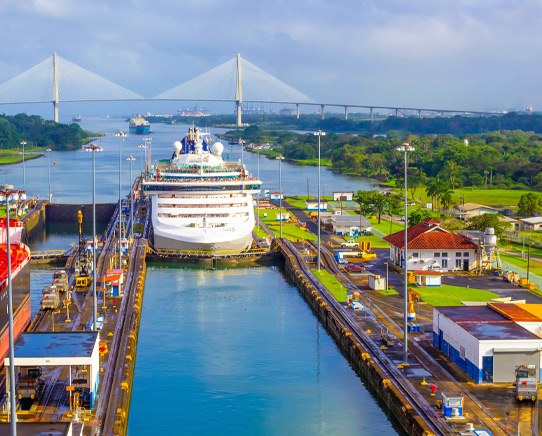 0 mi from Panama CityPanama Canal Tour
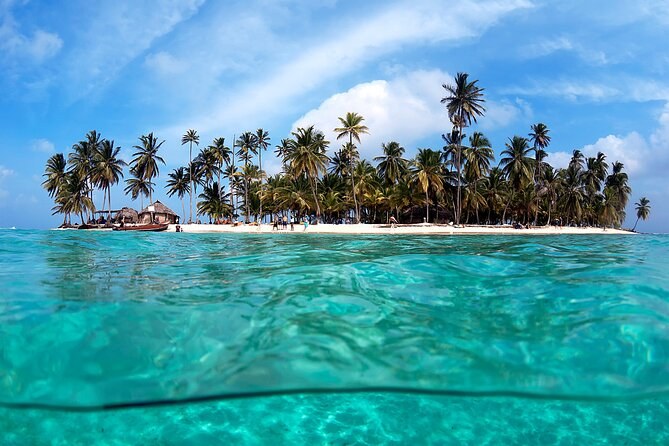 0 mi from Panama CitySan Blas Islands Day Trip
 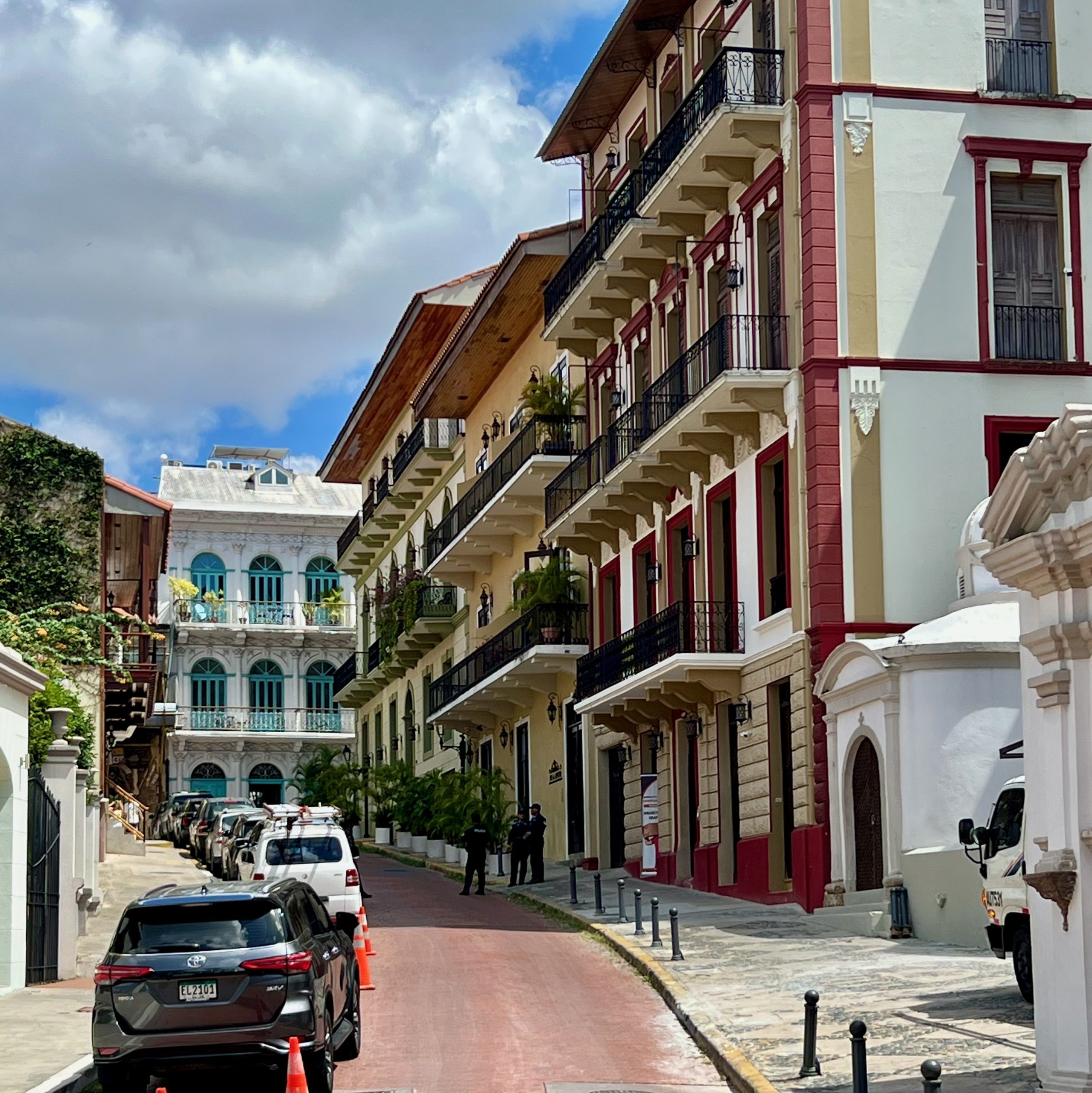 11 mi from Panama City · land adventureBalboa & Beyond: Panama's Wild, Cultured Other Side
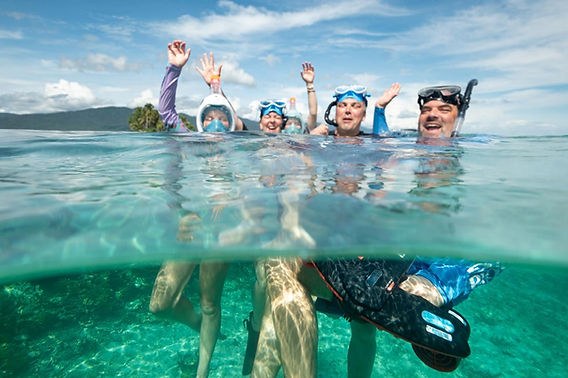 11 mi from Panama City · land adventureSan Blas Islands: Molas, Medicine Men & Midnight Snorkels
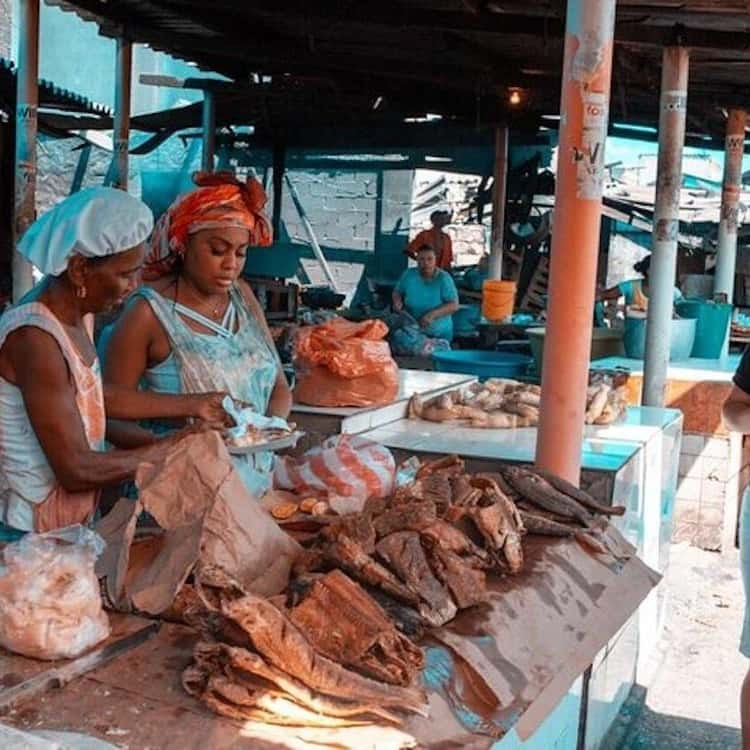 291 mi from Panama City · land adventureCartagena's Caribbean Edge: Mud Volcanoes, Maroon Villages & Market Chaos
 After you step off · near Miami
You end in a different port — stay on, and add what is within reach before you fly home.