New Island Nature Reserve: Rockhopper & Albatross Colony Walk
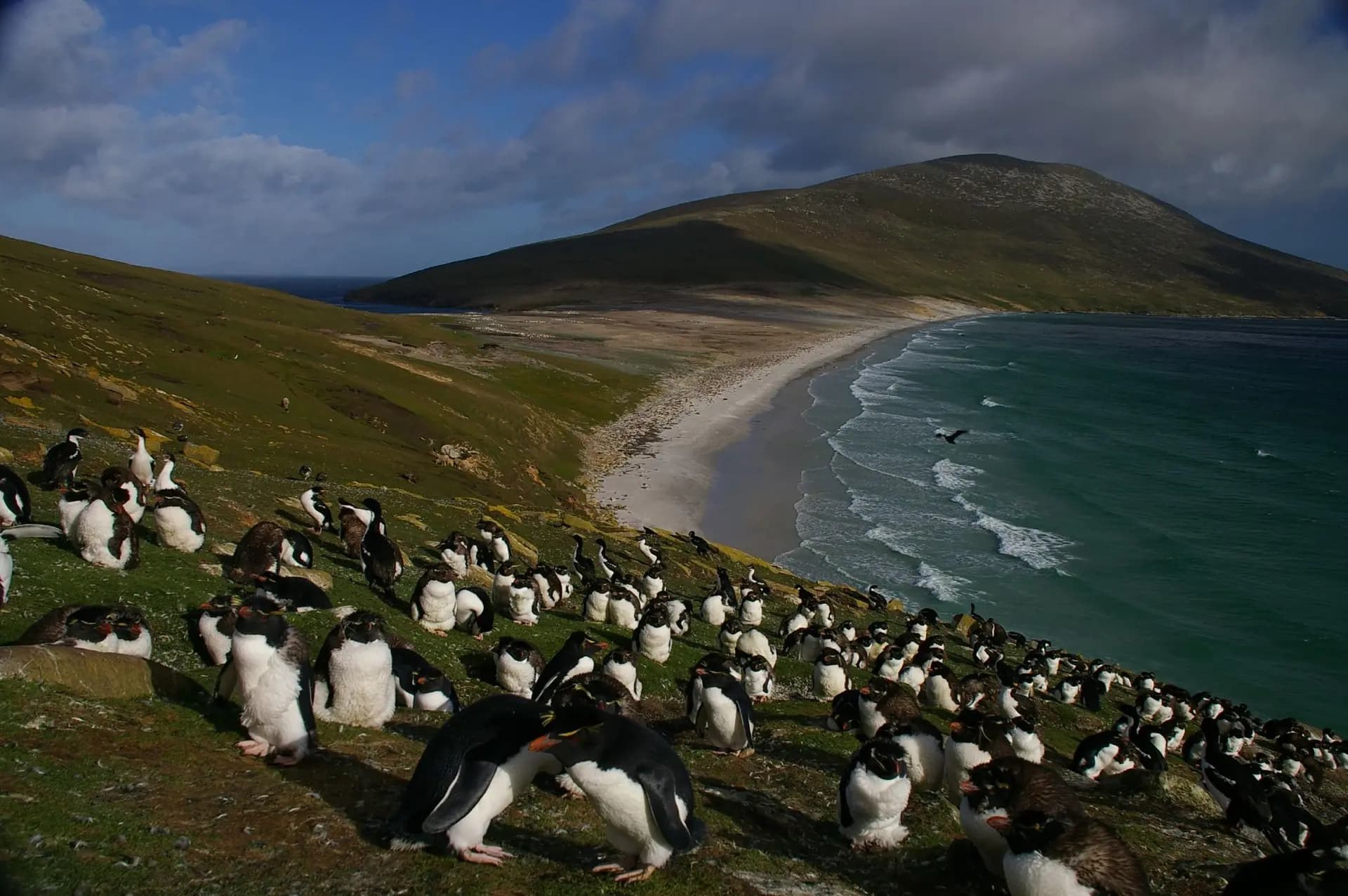
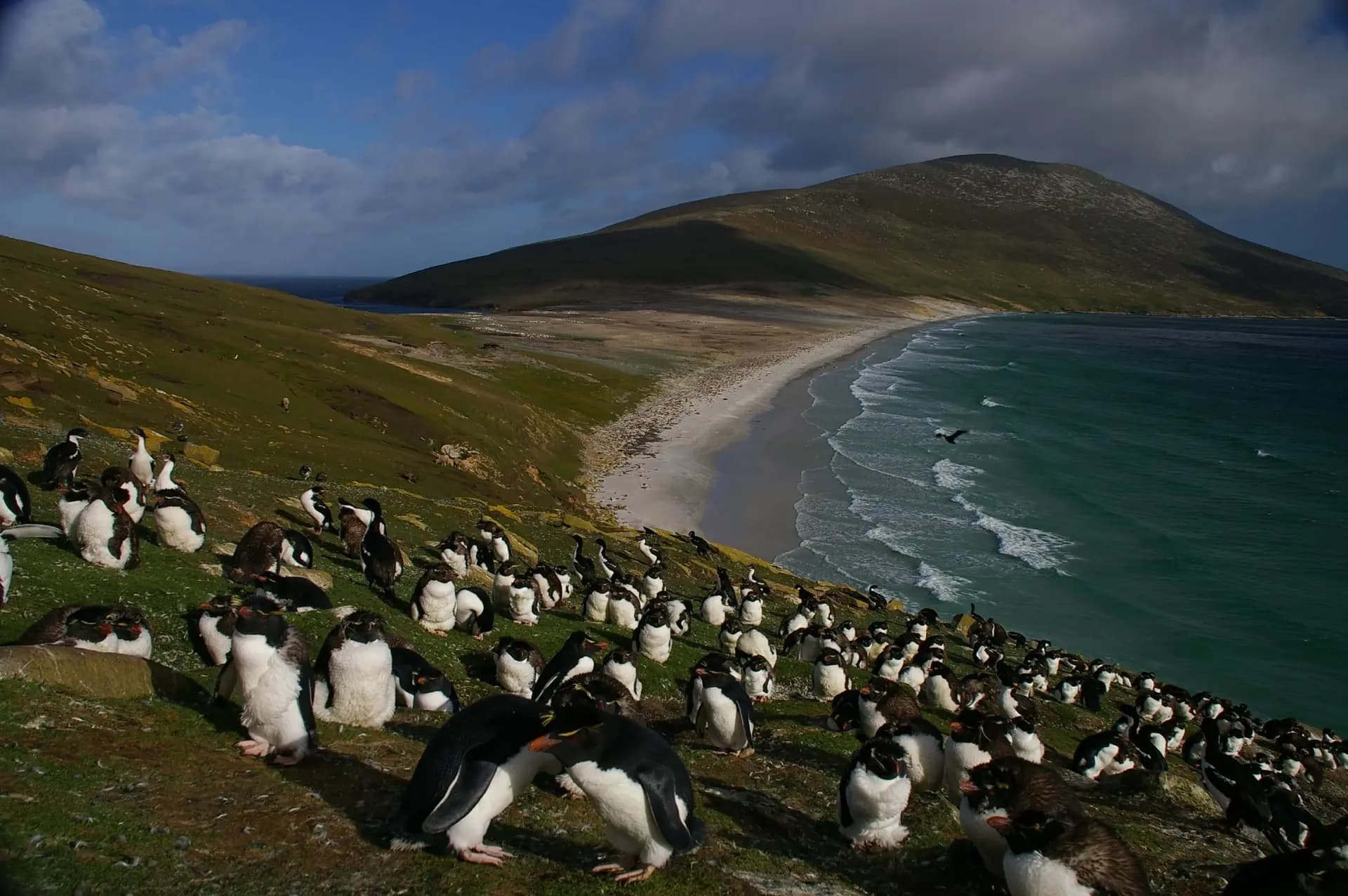
Walk unfenced cliffs where black-browed albatross and southern rockhopper penguins nest side by side, with striated caracaras circling overhead.
Your cruise
Jan 21 – Feb 8 · 18 nights ·
Day 1 Puerto Williams (board) · Day 2 at sea · Day 3 New Island · Day 3 West Point · Day 4 Port Stanley · Day 5–6 at sea · Day 7 South Georgia · Day 8 South Georgia · Day 9 South Georgia · Day 10–11 at sea · Day 12 Elephant Island · Day 13 Antarctic Sound · Day 14–15 Antarctic Peninsula · Day 16 South Shetland Islands · Day 17 Drake Passage · Day 18 Puerto Williams · Day 19 Puerto Williams (step off)
What you do Walk unfenced cliffs where black-browed albatross and southern rockhopper penguins nest side by side, with striated caracaras circling overhead.
What to expect You land by Zodiac at Coffin's Harbour or Ship Harbour and walk out along tussac-covered cliffs. A resident warden points out nesting behaviour, chick stages, and the resident caracaras that will happily inspect your boots. The colony is one of the most accessible mixed albatross-penguin sites in the South Atlantic, with birds often just a few metres from the path.
Good to know Landing is weather-dependent and via small boat only; wear waterproof boots. Time on the island is usually 3-4 hours — build in a buffer before all-aboard as Zodiac operations can be slow in swell.
Versus the ship tour Trust wardens who live on the island year-round give an unhurried, expert-led walk to the colony rather than a fixed-time group march, timed to light and bird activity.
book direct with New Island Conservation Trust → · the full guide →
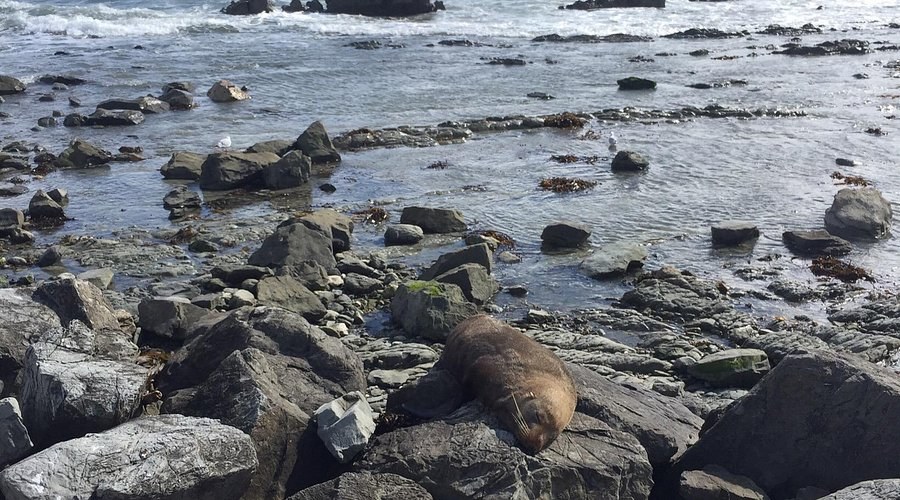
What you do A quieter, off-track walk past a fur seal wallow and gentoo penguin loafing groups on New Island's western shore, away from the main albatross path.
What to expect A short scramble over tussac grass brings you to a rocky cove where southern sea lions and fur seals haul out, largely undisturbed since so few visitors detour this way. Gentoo penguins waddle between the cove and their inland colony. It's the New Island a naturalist would actually choose to linger on.
Good to know Only feasible if your ship's call allows 4+ hours ashore; confirm route options with the warden the moment you land.
Versus the ship tour Ask the warden for the westward route instead of the main colony trail — almost every visitor takes the same photo at the same albatross site, this doesn't.
book direct with New Island Conservation Trust → · the full guide →
What you do Wander the abandoned 1908 Norwegian whaling station and the restored Barnard House, New Island's oldest surviving dwelling, guided by the Trust's own historian-warden.
What to expect You walk past rusting whale-oil cookers and collapsed try-pots on the shoreline, then up to Barnard House, a small museum of Falklands settler and whaling life. The warden explains how the island shifted from a whaling outpost to one of the world's most important seabird sanctuaries.
Good to know Combine with the albatross walk in the same landing — the settlement is a short walk from the main jetty, so it doesn't cost extra time ashore.
Versus the ship tour Told by the people who live in and maintain the buildings, not a scripted stop — the whaling station rusts in near-total isolation with no other visitors around.
book direct with New Island Conservation Trust → · the full guide →
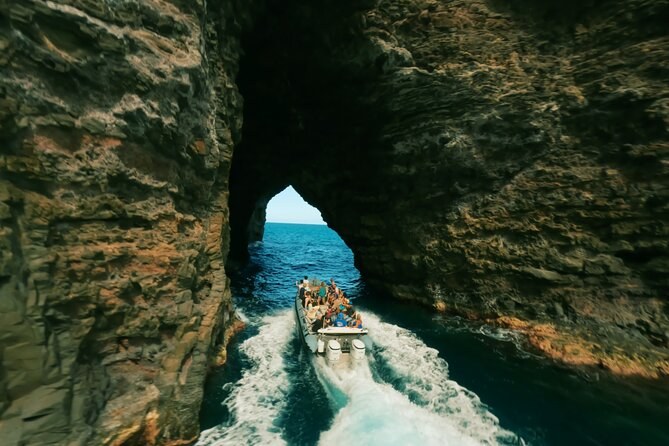
What you do A slow, low-to-the-water pass along New Island's dramatic western cliffs and sea caves, watching for whales, dolphins and diving seabirds from the water.
What to expect Zodiacs thread beneath towering cliffs riddled with caves and arches on the island's exposed western side, an area no shore walk reaches. Peale's dolphins sometimes ride the bow wave, and you get a seabird's-eye view of the albatross colony from below the nesting cliffs.
Good to know Conditions-dependent; the western coast is exposed to Southern Ocean swell so this only runs in calm weather. Warm layers and waterproofs essential even in summer.
Versus the ship tour Small boat, naturalist-narrated, focused entirely on the coastline's geology and wildlife rather than a shore landing itinerary.
book direct with Expedition ship's own Zodiac fleet operated by onboard naturalist guides → · the full guide →
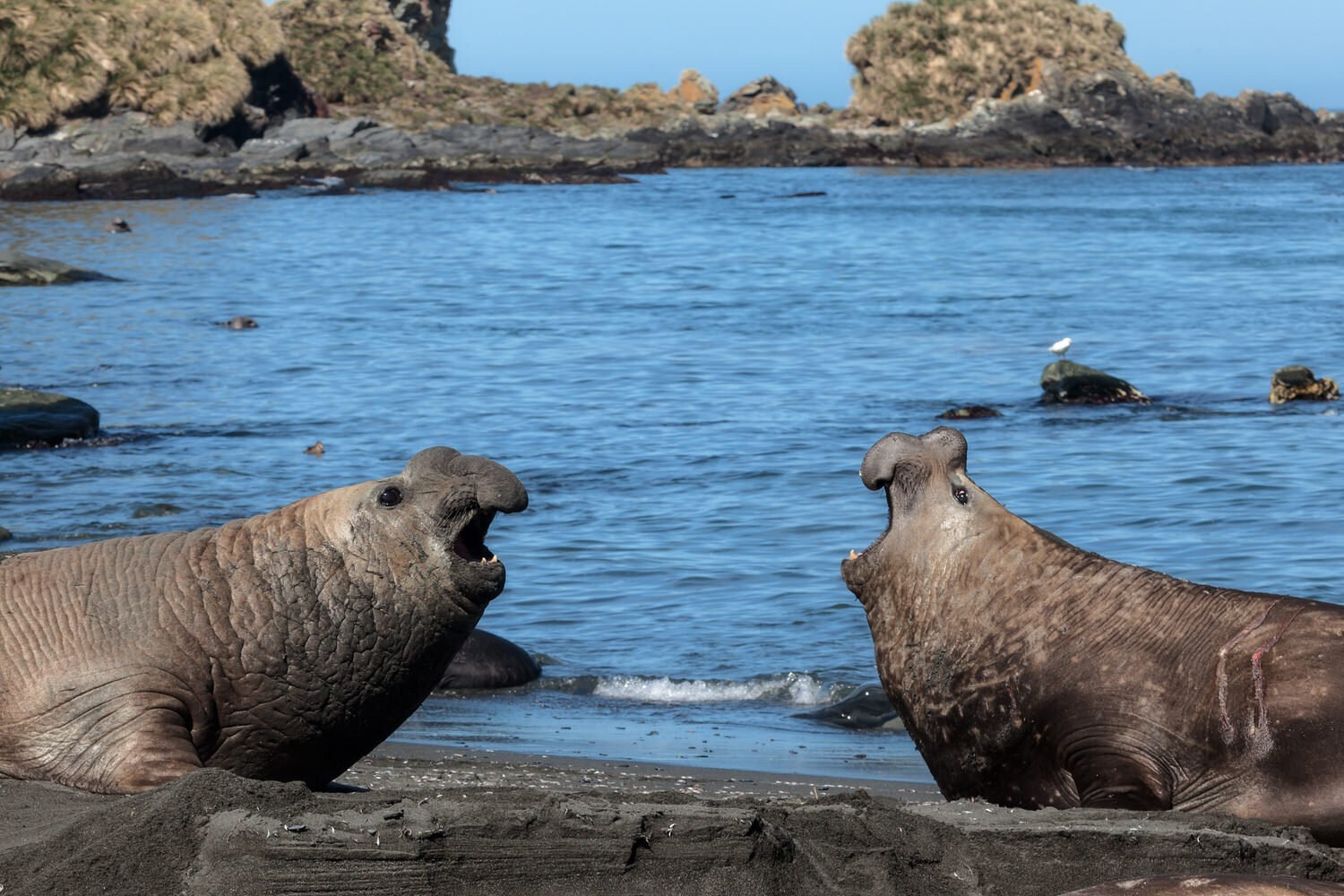
What you do Sit quietly at a respectful distance from a haul-out of elephant seals and fur seals at Ship Harbour, a spot far fewer visitors reach on a short call.
What to expect A flattish walk from the jetty leads to a shingle beach where southern elephant seals bask and occasionally spar, with fur seals working the surf line nearby. Because it's a short detour from the main path, most groups skip it entirely in favour of the albatross colony.
Good to know Give haul-outs a wide, quiet berth; elephant seals can move surprisingly fast if startled. Best in the austral spring/summer breeding season.
Versus the ship tour This isn't the headline colony everyone photographs — it's the beach the warden will send only those who ask, and where you're likely to be the only people there.
book direct with New Island Conservation Trust → · the full guide →
What you do A one-on-one or small-group walk timed around golden-hour light, led by a resident naturalist who knows exactly where the albatross pairs are displaying that day.
What to expect The warden walks you to whichever part of the colony has the best activity and light that day — courting albatross pairs, chicks being fed, or caracaras squabbling over scraps — and lets you set the pace rather than following a set loop. It's the difference between a snapshot and a genuinely considered image of one of the world's great seabird spectacles.
Good to know Must be arranged by email well before your cruise date, since the Trust has very limited staff and landing slots on call days; not guaranteed for all ship visits.
Versus the ship tour Arranged privately ahead of the call by emailing the Trust — a bespoke, unhurried pace built around light and animal behaviour rather than a fixed group schedule.
book direct with New Island Conservation Trust (arranged in advance with the wardens) → · the full guide →
What you do Hike into the world's southernmost trekking circuit with a Yaghan-country guide — jagged peaks, wind-carved lenga forest, and a silence found almost nowhere else.
What to expect You start at dawn from the trailhead above town, climbing through native lenga forest into open alpine terrain with views over the Beagle Channel and toward Cape Horn. Your guide reads the notoriously fast-changing weather and adjusts the route in real time. Expect scree, wind, and total isolation — this is genuine backcountry, not a groomed path. You return by late afternoon having stood somewhere very few travelers ever reach.
Good to know Full day, 7-9 hours; requires solid fitness and layered wind/waterproof clothing. Book at least a few days ahead so the guide can plan around weather. Confirm return timing against your ship's all-aboard with real margin — this is not a trip to cut close.
Versus the ship tour Small-group or fully private, paced to your fitness, led by a guide who has summited the full 5-day circuit dozens of times and knows exactly which day-hike window gives the best light on the peaks.
What you do A small anthropological museum devoted to the Yaghan people, the world's southernmost indigenous culture — the single best hour for understanding what this place actually is.
What to expect Photographs, bark canoes, harpoons, and ceremonial objects trace the Yaghan from pre-contact life through the near-erasure that followed European arrival. Wall text is candid about that history rather than sanitized. The museum is small enough to take slowly — 45 minutes to an hour is plenty, and it rewards quiet attention over a rushed pass-through.
Good to know Located a short walk from the pier in town center; open weekday mornings and afternoons, hours can shift seasonally so confirm before you go. Pair it with a walk through the town itself — it's a five-minute stroll to see the actual settlement, not a manufactured attraction.
Versus the ship tour No crowds, no script — just you, the exhibits, and often a curator or Yaghan descendant willing to talk if you ask. This is the human context that makes everything else you see in Puerto Williams make sense.
book direct with Museo Antropológico Martín Gusinde → · the full guide →
What you do A private boat out into the Beagle Channel to sea lion colonies and seabird rookeries, at the unhurried pace only a small private craft allows.
What to expect You leave from the small craft harbor and cross toward Lobos Island, where South American sea lions haul out in loud, chaotic colonies along the rocks. Cormorants, skuas, and steamer ducks work the shoreline at Pájaros Island nearby. The channel itself, framed by the Dientes peaks, is as much the show as the wildlife. Expect cold spray and a guide who knows the animals' patterns well enough to time the approach.
Good to know Runs 2.5-3 hours; dress for open water and wind even on a calm day. Best booked directly a few days ahead since boat capacity is small. Time your return with real buffer before reboarding.
Versus the ship tour A private or near-private zodiac rather than a packed excursion boat means your skipper can idle beside a colony as long as the light and animals cooperate, and swing past channel scenery en route.
What you do A half-day trek to a hanging glacier and its iceberg-flecked lake, close enough to town for a half-day but wild enough to feel like Patagonia's edge.
What to expect The route climbs steadily through beech forest and open peat bog before reaching the lake, where small icebergs calved from Vinciguerra drift in blue-green water. The glacier itself sits above, streaked and crevassed against the ridgeline. It's a genuine trek — muddy, occasionally steep — but shorter and more accessible than the full Dientes circuit.
Good to know About 4-5 hours round trip; waterproof boots matter far more than technical gear here. Confirm pickup timing from the pier area directly with the operator, and build in a margin for the return before all-aboard.
Versus the ship tour Small-group, expert-led trek with a guide who explains the glacier's retreat and the peat-bog ecosystem underfoot, rather than a quick photo-stop drive-by.
What you do A private 4x4 run along the island's last stretch of road, tracing the Beagle Channel to the literal end of civilization on Isla Navarino.
What to expect The gravel road hugs the Beagle Channel coastline west of town, with Argentina's Ushuaia visible across the water and the Darwin Range beyond. You pass small Yaghan and Chilean settlements before reaching Puerto Navarino, a handful of buildings marking the end of the road system on the island. Condors and caracaras are common along the route, and your guide narrates the region's remote settlement history.
Good to know Roughly 3-4 hours round trip on unpaved road; a private vehicle is the only sensible way to do this given how few people are ever out here. Book ahead since vehicles and guides are limited on the island.
Versus the ship tour Private vehicle and guide means you stop wherever the channel views or a condor sighting demands, rather than following a fixed group itinerary.
What you do A steep, short climb straight above town to a viewpoint over the Beagle Channel, Ushuaia, and the Dientes peaks — best done early before the wind picks up.
What to expect The trail climbs hard through lenga forest for about an hour, gaining real elevation fast, before opening onto a wind-scoured ridge marking the start of the Dientes circuit. From the top, the entire Beagle Channel spreads out with Ushuaia visible across the water and the jagged Dientes ridge behind you. It's steep enough to feel earned but short enough to fit before a mid-morning excursion or lunch.
Good to know About 2-3 hours round trip; trailhead is a short taxi ride from the pier. Go as early as your ship's schedule allows — the wind here is a genuine factor by midday, not a minor annoyance.
Versus the ship tour A private early-morning start with a local guide gets you the summit in calm light, before the afternoon wind that regularly hits 40+ knots makes the ridge unpleasant.
What you do Walk unfenced cliffs where black-browed albatross and southern rockhopper penguins nest side by side, with striated caracaras circling overhead.
What to expect You land by Zodiac at Coffin's Harbour or Ship Harbour and walk out along tussac-covered cliffs. A resident warden points out nesting behaviour, chick stages, and the resident caracaras that will happily inspect your boots. The colony is one of the most accessible mixed albatross-penguin sites in the South Atlantic, with birds often just a few metres from the path.
Good to know Landing is weather-dependent and via small boat only; wear waterproof boots. Time on the island is usually 3-4 hours — build in a buffer before all-aboard as Zodiac operations can be slow in swell.
Versus the ship tour Trust wardens who live on the island year-round give an unhurried, expert-led walk to the colony rather than a fixed-time group march, timed to light and bird activity.
book direct with New Island Conservation Trust → · the full guide →
What you do A quieter, off-track walk past a fur seal wallow and gentoo penguin loafing groups on New Island's western shore, away from the main albatross path.
What to expect A short scramble over tussac grass brings you to a rocky cove where southern sea lions and fur seals haul out, largely undisturbed since so few visitors detour this way. Gentoo penguins waddle between the cove and their inland colony. It's the New Island a naturalist would actually choose to linger on.
Good to know Only feasible if your ship's call allows 4+ hours ashore; confirm route options with the warden the moment you land.
Versus the ship tour Ask the warden for the westward route instead of the main colony trail — almost every visitor takes the same photo at the same albatross site, this doesn't.
book direct with New Island Conservation Trust → · the full guide →
What you do Wander the abandoned 1908 Norwegian whaling station and the restored Barnard House, New Island's oldest surviving dwelling, guided by the Trust's own historian-warden.
What to expect You walk past rusting whale-oil cookers and collapsed try-pots on the shoreline, then up to Barnard House, a small museum of Falklands settler and whaling life. The warden explains how the island shifted from a whaling outpost to one of the world's most important seabird sanctuaries.
Good to know Combine with the albatross walk in the same landing — the settlement is a short walk from the main jetty, so it doesn't cost extra time ashore.
Versus the ship tour Told by the people who live in and maintain the buildings, not a scripted stop — the whaling station rusts in near-total isolation with no other visitors around.
book direct with New Island Conservation Trust → · the full guide →
What you do A slow, low-to-the-water pass along New Island's dramatic western cliffs and sea caves, watching for whales, dolphins and diving seabirds from the water.
What to expect Zodiacs thread beneath towering cliffs riddled with caves and arches on the island's exposed western side, an area no shore walk reaches. Peale's dolphins sometimes ride the bow wave, and you get a seabird's-eye view of the albatross colony from below the nesting cliffs.
Good to know Conditions-dependent; the western coast is exposed to Southern Ocean swell so this only runs in calm weather. Warm layers and waterproofs essential even in summer.
Versus the ship tour Small boat, naturalist-narrated, focused entirely on the coastline's geology and wildlife rather than a shore landing itinerary.
book direct with Expedition ship's own Zodiac fleet operated by onboard naturalist guides → · the full guide →
What you do Sit quietly at a respectful distance from a haul-out of elephant seals and fur seals at Ship Harbour, a spot far fewer visitors reach on a short call.
What to expect A flattish walk from the jetty leads to a shingle beach where southern elephant seals bask and occasionally spar, with fur seals working the surf line nearby. Because it's a short detour from the main path, most groups skip it entirely in favour of the albatross colony.
Good to know Give haul-outs a wide, quiet berth; elephant seals can move surprisingly fast if startled. Best in the austral spring/summer breeding season.
Versus the ship tour This isn't the headline colony everyone photographs — it's the beach the warden will send only those who ask, and where you're likely to be the only people there.
book direct with New Island Conservation Trust → · the full guide →
What you do A one-on-one or small-group walk timed around golden-hour light, led by a resident naturalist who knows exactly where the albatross pairs are displaying that day.
What to expect The warden walks you to whichever part of the colony has the best activity and light that day — courting albatross pairs, chicks being fed, or caracaras squabbling over scraps — and lets you set the pace rather than following a set loop. It's the difference between a snapshot and a genuinely considered image of one of the world's great seabird spectacles.
Good to know Must be arranged by email well before your cruise date, since the Trust has very limited staff and landing slots on call days; not guaranteed for all ship visits.
Versus the ship tour Arranged privately ahead of the call by emailing the Trust — a bespoke, unhurried pace built around light and animal behaviour rather than a fixed group schedule.
book direct with New Island Conservation Trust (arranged in advance with the wardens) → · the full guide →
What you do Walk to the Devil's Nose cliffs where black-browed albatross and rockhopper penguins nest side by side in tussac grass. One of the most intimate wildlife encounters left on earth.
What to expect You land by Zodiac at the tiny settlement, then walk roughly 30-40 minutes across sheep pasture and tussac to the cliff-top colony. Albatross pairs clatter bills overhead while rockhoppers scramble past on their commute to the sea. The Napier family, who have farmed the island for generations, often greet visitors and can point out nesting pairs and chicks depending on season.
Good to know Landing is entirely weather- and Zodiac-dependent; wear waterproof boots and windproof layers. Best October-March when albatross are nesting; time your return to the settlement carefully against your ship's last tender.
Versus the ship tour The colony sits an easy walk from the settlement with no barriers, no boardwalks, no crowds — just you a few feet from nesting albatross pairs preening each other.
book direct with West Point Island (Napier family, owners) → · the full guide →
What you do A homemade tea laid out by the island's farming family — the real texture of Falklands life, not a staged show. Cakes, scones, and unhurried conversation about running a farm at the edge of the world.
What to expect After the colony walk, visitors gather in the settlement's small sitting room or garden for tea, sandwiches, and homemade cake. The family is happy to talk about sheep farming, the island's history, and life with a population sometimes under ten people.
Good to know Cash only (GBP), and numbers are limited so it suits small groups best; this pairs naturally with the albatross walk earlier in the visit.
Versus the ship tour This is a private home, not a tourist café — you're a guest at the family's own table, hearing first-hand what it takes to farm 2,000 sheep on a windswept island with no roads to anywhere else.
book direct with West Point Island Settlement (Napier family) → · the full guide →
What you do A quiet, self-paced coastal ramble through dense tussac grass — a habitat that has vanished from most of the Falklands but survives here, sheltering birds you won't see from any ship deck.
What to expect The undulating path skirts pasture before dropping toward the cliffs, tussac towering overhead in places. Striated caracaras (the world's rarest bird of prey by some counts) are notoriously curious here and often approach walkers.
Good to know Sturdy waterproof footwear essential; ground is boggy in places. Allow 1.5-2 hours round trip and watch the tide/Zodiac schedule closely.
Versus the ship tour No trail markers, no other visitors on the path — just wind, seabirds, and one of the last intact tussac ecosystems in the archipelago.
book direct with West Point Island (self-guided, landowner permission) → · the full guide →
What you do A slow Zodiac run along the cliffs beneath the albatross colony, watching birds wheel and land at eye level from the water — a totally different vantage than the clifftop walk.
What to expect Departing from the settlement's cove, the Zodiac hugs the coastline beneath tussac-covered slopes, pausing under the colony for birds returning from fishing trips. Sea lions and occasional Commerson's dolphins are seen along this stretch.
Good to know Weather-dependent and not always offered; ask on landing. Bring a dry bag for cameras — spray is constant.
Versus the ship tour Small Zodiac groups of six to eight let you drift right beneath the nesting cliffs, seeing the colony's scale from below in a way the clifftop path can't show.
book direct with Expedition team arranged via West Point Island landing operator → · the full guide →
What you do A private, unhurried session with a Falklands-based naturalist guide who knows exactly where the light and the birds align on West Point that day.
What to expect Your guide positions you low and downwind of nesting albatross for portraits, then times the walk back to catch caracaras at their most active. Expect detailed natural history commentary throughout, well beyond what a general landing talk offers.
Good to know Book ahead through the island's tour coordination since guide availability is limited and tied to ship schedules; bring a telephoto lens.
Versus the ship tour A private guide adjusts pace entirely around light and animal behaviour rather than a group timetable, which is what separates a good photo and a bucket-list one.
book direct with Falklands Nature (independent local naturalist guides) → · the full guide →
What you do A short, candid look at the working wool shed that has sustained West Point's single family for generations — an honest glimpse of Falklands rural economy, not a museum piece.
What to expect A brief walk through the shearing shed and outbuildings, with the family explaining the annual shearing cycle, wool export logistics, and what daily life demands in one of the most remote inhabited places in the world.
Good to know Best combined with tea and the albatross walk as part of a single visit; shed access depends on the family's availability that day.
Versus the ship tour This is a functioning shed on a working farm, explained by the people who actually run it, not a re-created heritage display.
book direct with West Point Island Settlement (Napier family) → · the full guide →
What you do Ride deep into the Falklands' wild coastline in a private 4×4 to reach Bertha's Beach — a pristine arc of white sand hosting the Falklands' most accessible, photogenic Gentoo penguin colony. A bucket-list wildlife encounter at the end of the world.
What to expect Your guide collects you at the port in a dedicated 4×4 and navigates a mix of tarmac and rugged off-road tracks to reach Bertha's Beach, named for a historic shipwreck visible at low tide. On the wide, wind-sculpted strand you'll walk among hundreds of Gentoo penguins — curious, fearless, and utterly unhurried. Your guide provides naturalist commentary on behaviour, breeding cycles, and Falklands ecology. Snacks and water are included; the return journey follows the scenic coastline back to Stanley in time for all-aboard.
Good to know Pre-book directly before your ship arrives — private slots sell out fast on busy port days. Allow 4–5 hours. Wear waterproof layers and sturdy footwear; the beach can be boggy. Snack and water provided; port pick-up and drop-off included.
Versus the ship tour Fully private 4×4 vehicle with a professional English-speaking local guide means you set the pace — linger with the penguins as long as you wish, with no coach group crowding the beach around you.
book direct with Top Private Tours Falklands (Local Expert) → · the full guide →
What you do Walk a legendary minefield-turned-wildlife-sanctuary to encounter Magellanic penguins burrowing in the dunes at Gypsy Cove, then continue to Yorke Bay's bone-white beach for close-up encounters with Gentoo colonies — two species, one extraordinary morning.
What to expect You depart Stanley in a private van and reach Gypsy Cove within minutes — a sheltered bay where Magellanic penguins nest in grass-covered burrows just metres from the path, indifferent to onlookers. Your guide explains how the surrounding beach, still off-limits due to Argentine mines from 1982, has accidentally become a perfect wildlife sanctuary. The convoy then rolls on to Yorke Bay for Gentoos on a spectacular white-sand beach, with the chance to spot upland geese, steamer ducks, and black-crowned night herons en route. The return offers panoramic views across Stanley Harbour and the rusting hulks of historic sailing ships.
Good to know Book well ahead via Tripadvisor message or email — Lucky Private Tour operates in small groups only and fills quickly on ship-call days. Tours typically run 3–4 hours. Minefield perimeter fencing is clearly marked and safe; stay on designated paths. Dress in windproof layers.
Versus the ship tour Small private group with Glenn and team — veteran local guides who share intimate knowledge of Falklands wildlife, history, and landscape, moving at your pace rather than a timed group itinerary.
book direct with Lucky Private Tour Falklands → · the full guide →
What you do Journey across the dramatic moorland battlefields of Goose Green, Mount Longdon, and Tumbledown with a specialist local guide whose family lived through the 1982 conflict — a deeply moving, once-in-a-lifetime immersion into modern military history.
What to expect Leaving Stanley by 4×4, you cross rolling Camp landscape to Goose Green and Darwin, site of the first major land battle of the war. Your guide shares first-hand community accounts of the Argentine occupation and the British Task Force's advance, standing on the very ridgelines where paratroopers fought. Memorial crosses, rusting materiel, and Argentine cemeteries provide sombre, powerful context. You return via the outskirts of Stanley to view the Liberation Monument and 1982 Mine Clearance memorial before arriving back at the pier. A full-day commitment, but the most historically resonant experience in the South Atlantic.
Good to know Full-day tours (7–8 hours) require an early departure — confirm all-aboard time with your ship and communicate it to your operator. Some tracks are rough; 4×4 essential. Book via the official Falkland Islands Tourism operator directory at falklandislands.com well in advance.
Versus the ship tour Access to Darwin and Goose Green — well beyond Stanley town — is only possible by private vehicle. A guide with personal and family ties to the conflict brings history alive in a way no standard group tour can replicate.
book direct with Falkland Islands Tour Guides (Official Local Operators) → · the full guide →
What you do Explore the remarkably intact Victorian capital of the Falklands on foot with a local historian — a colourful mile of painted iron-clad houses, the world's most southerly Anglican cathedral, and the iconic rusting iron sailing ships rotting majestically in the harbour.
What to expect Beginning at the historic Government Pier, your guide leads you along Ross Road — the heart of Stanley — past colourful corrugated-iron homes and the landmark Whalebone Arch (formed from two blue whale jawbones). You step inside Christ Church Cathedral, the world's southernmost Anglican cathedral, before reaching the museum where Falklands War artefacts and natural history exhibits provide rich context. The walk ends at the harbour's edge where the iron hulks of 19th-century sailing ships — including SS Great Britain's sister vessels — list in the shallows, slowly becoming part of the landscape. Allow time for Stanley's independent boutiques and a warming cup of tea.
Good to know Walking tours typically run 2–3 hours and operate in nearly all weather — dress in windproof, waterproof layers regardless of forecasts. The route is mostly flat and paved. Book via falklandislands.com's local operator directory before your port call.
Versus the ship tour An intimate, on-foot exploration led by a local resident who can unlock the stories behind every facade — the whaling era, the wool trade, and the quiet daily life of one of the world's most remote communities.
book direct with Falkland Islands Tour Guides (Official Local Operators) → · the full guide →
What you do Fly by light aircraft to Sea Lion Island — the Falklands' premier wildlife destination — to witness Southern elephant seals, sea lions, five penguin species, and nesting black-browed albatross on a single pristine island. The ultimate Falklands wildlife day.
What to expect A short transfer takes you to Stanley Airport where you board a FIGAS Islander aircraft for the flight south over tussac grass islands and sapphire channels. Landing on the grass airstrip, a lodge guide meets you for a full circuit of the island — elephant seals hauled out by the hundred on kelp-strewn beaches, Rockhopper, Magellanic, Gentoo, King, and Macaroni penguins within walking distance of each other, and black-browed albatross gliding on permanent six-foot wingspans overhead. Lunch at the Sea Lion Island Lodge is included. The return flight completes an utterly extraordinary day at the southern edge of the world.
Good to know This excursion requires early coordination with FIGAS (falklandislands.com) and Sea Lion Island Lodge well before your cruise departs — flight seats are very limited. Weather can delay small aircraft; confirm all-aboard time with your ship and allow a generous buffer. Not suitable for guests with severe mobility limitations.
Versus the ship tour Sea Lion Island is unreachable overland — the 20-minute flight in a small Islander aircraft is itself a bucket-list experience, offering aerial views of the archipelago. Visitor numbers are strictly limited, ensuring utterly crowd-free encounters with mega-fauna.
book direct with FIGAS – Falkland Islands Government Air Service → · the full guide →
What you do Drive to the wind-scoured eastern tip of East Falkland to stand at Cape Pembroke Lighthouse — the most easterly point of the Falklands, with the Atlantic stretching unbroken to South Georgia — and explore dramatic coastal scenery teeming with birds and marine wildlife.
What to expect Your private van departs Stanley and rolls east along a mix of sealed and gravel tracks through open moorland carpeted in white grass and cushion plant. Arriving at Cape Pembroke, the 1855 lighthouse stands sentinel above dramatic quartzite ridges tumbling into a cold, green sea. Your guide explains the lighthouse's role in guiding vessels around the treacherous eastern approaches to Stanley, and the extraordinary ornithology of the headland — giant petrels, rock shags, and Falkland thrushes are common sightings. On clear days, views extend south along the coastline past Yorke Bay to distant hills still marked on maps by the names of 1982 battles. A shorter half-day option that pairs beautifully with an afternoon in Stanley town.
Good to know A 2–3 hour half-day excursion — ideal as a morning or afternoon addition alongside a Stanley town walk. Tracks to the lighthouse can be muddy; wear waterproof footwear. Wind at the cape is often fierce — bring a windproof jacket regardless of sunshine in the harbour. Book via Lucky Private Tour on Tripadvisor.
Versus the ship tour The drive out to Cape Pembroke is through open Camp — the vast, treeless Falklands interior — with knowledgeable local guides pointing out upland geese, Falklands skuas, and peregrine falcons that most visitors never notice from a coach window.
book direct with Lucky Private Tour Falklands → · the full guide →
What you do Set foot on one of the world's most remote and storied beaches — the exact shingle spit where 22 men survived 105 days awaiting rescue in 1916. An expert polar historian guides you through Shackleton's extraordinary story on the ice itself.
What to expect Your zodiac crunches onto the same grey-pebble beach where Shackleton's men hauled out after months adrift. A dedicated polar historian narrates the survival story with the glaciated cliffs of Cape Wild as your backdrop. You stand beside the iconic bronze bust of Wild himself, placed here as a permanent tribute. The sheer remoteness — no other human settlement for hundreds of miles — makes the silence electrifying.
Good to know Landings at Point Wild depend entirely on sea conditions; fewer than 1 in 30 attempts succeed, so treat any landing as a rare gift. Expedition ships carry zodiacs staffed by certified polar guides. Waterproof expedition boots and layered, windproof clothing are essential. All-aboard times are strictly observed — typically 1–2 hours ashore when conditions allow.
Versus the ship tour Expert polar historian guides a small zodiac group of 10–12 ashore, allowing unhurried time at the bronze bust of Shackleton and the exact landing site — a level of intimacy and dwell time impossible with larger groups.
book direct with Intrepid Travel (Antarctica Expedition) → · the full guide →
What you do Paddle a sea kayak at water level through cathedral-blue icebergs while chinstrap penguins porpoise alongside your hull — the most viscerally intimate way to experience Elephant Island's wild coastline.
What to expect Launching from the expedition vessel in a double sea kayak, you glide between grounded bergs that tower overhead in impossible shades of turquoise and white. Chinstrap penguins treat your kayak as just another floating object, surfacing inches away. Your guide navigates you along the cliff-lined coast, pausing to observe leopard seals hauled out on ice floes. The scale of the Antarctic wilderness is nowhere more tangible than from the cockpit of a kayak.
Good to know Pre-registration on the vessel is required — spots fill immediately at embarkation. No prior kayaking experience is necessary but a basic fitness level is expected. Full dry-suit and all safety gear is provided. Sessions run approximately 2.5 hours; participants must weigh under 110 kg. Check weather window with your expedition guide the night before.
Versus the ship tour A maximum of 8 paddlers per session with a certified polar sea-kayaking guide keeps this profoundly quiet and personal — engines off, just paddles, ice, and wildlife at eye level.
book direct with Adventure Life (Antarctica Expeditions) → · the full guide →
What you do Walk the rocky shoreline of Elephant Island's largest accessible chinstrap colony — tens of thousands of birds nesting within arm's reach — led by a certified polar naturalist who decodes every behaviour in real time.
What to expect The sound hits you first — a wall of braying, clicking, and flipper-slapping that announces the colony long before you see it. Your naturalist positions the group downwind of the nesting birds, then talks you through courtship displays, creche behaviour, and the ecological pressures facing sub-Antarctic penguins. Occasional macaroni penguins — with their vivid golden crests — weave through the crowd. Giant petrels wheel overhead, adding a raw, predatory edge to the scene.
Good to know IAATO regulations require all visitors to stay 5 metres from wildlife; your naturalist manages this carefully so as not to disturb nesting birds. Rubber boots with steel-reinforced soles are recommended over rocky terrain. Landings are zodiac-wet, meaning you will step into shallow water. Bring binoculars and a 300mm+ lens for photography — longer is better here.
Versus the ship tour Groups are capped at 10 per naturalist guide, ensuring you spend unhurried, narrated time at the colony perimeter rather than moving through in a stream. The guide's field expertise transforms observation into genuine wildlife education.
book direct with Swoop Antarctica (Expedition Cruise) → · the full guide →
What you do Leap into the sub-zero Southern Ocean off Elephant Island — one of the planet's most dramatic and remote swim locations — a bragging-rights ritual that fewer people have done than have summited Everest.
What to expect Dressed in nothing but a swimsuit (and possibly a kilt, per tradition), you stand at the platform of an expedition vessel anchored in the shadow of Elephant Island's glaciers — sea temperature around -1°C. The leap is two seconds of breathtaking cold followed by an adrenaline surge unlike anything else. The medical team is on standby and a warming shot of whisky or hot chocolate follows immediately. Your certificate of completion awaits back aboard.
Good to know Participation is entirely voluntary and requires a brief health declaration. The plunge is conducted with safety lines and immediate recovery by zodiac. Participants with cardiovascular conditions should consult a physician beforehand. Typically held mid-afternoon when the ship is at anchor in the most sheltered position achievable. A favourite moment for expedition photographers — alert a fellow passenger in advance.
Versus the ship tour Facilitated by the ship's certified safety and medical team in a controlled, roped environment at anchor, this is the rawest, most personal rite-of-passage Antarctica offers — no crowds, pure elemental drama.
book direct with Polartours (Antarctica Expeditions) → · the full guide →
What you do Spend two immersive hours by zodiac with a professional Antarctic photography guide navigating Elephant Island's most dramatic glacial faces, iceberg gardens, and coastal light — returning with images worthy of National Geographic.
What to expect Departing the ship before breakfast to catch the low polar light, your zodiac driver manoeuvres silently alongside towering ice cliffs streaked in cerulean and ivory. The photographer-guide coaches you on exposure settings for high-contrast ice, composition with wildlife, and capturing the scale of Antarctic geography. You drift under calving glacier faces, where the groaning and cracking of ancient ice provides a dramatic natural soundtrack. Post-session image review and editing tips are offered in the ship's lecture theatre.
Good to know Suitable for all camera levels from mirrorless to iPhone — the guide adapts coaching to your equipment. A telephoto lens of at least 200mm and a polarising filter are strongly recommended. Bring a dry-bag for your gear; spray is inevitable. Pre-register with the expedition team at embarkation as places are strictly limited to 8 per session.
Versus the ship tour A professional photographer-naturalist leads a group of no more than 8, moving at a photographer's pace — stopping, repositioning, waiting for light — rather than a fixed itinerary schedule. Rare access to angles and moments that larger groups cannot reach.
book direct with Adventure Life (Antarctica Expeditions) → · the full guide →
What you do Join a working marine biologist on the vessel's bridge deck as the ship cruises Elephant Island's krill-rich waters — prime feeding grounds for humpback, fin, and minke whales — contributing real data to citizen-science research.
What to expect You're handed a data sheet, binoculars, and a brief on cetacean identification as the vessel enters the nutrient-rich upwelling zone north of Elephant Island. The marine biologist walks you through blow identification, surfacing patterns, and how to log a sighting to the global database. Humpbacks are the star — their 40-tonne bubble-net lunges through krill clouds rank among Antarctica's greatest wildlife spectacles. Occasional blue whale sightings have been reported in these waters, making every horizon-scan thrilling.
Good to know The survey runs from the open bridge or bow deck — dress in full expedition gear with windproof outer layers as wind chill at sea can be severe. Binoculars are provided but personal 8×42 or 10×42 optics are recommended. The session runs regardless of weather, as cetaceans are often most active in choppy conditions. Data contributed is submitted to the SORP (Southern Ocean Research Partnership) after the voyage.
Versus the ship tour Direct access to the ship's resident marine biologist for a dedicated 3-hour survey session, using the same data sheets and protocols as professional cetacean researchers — a genuine behind-the-scenes scientific experience unavailable through any standard programme.
book direct with Intrepid Travel (Antarctica Expedition) → · the full guide →
What you do Step onto the volcanic black-sand shore of Half Moon Island and walk quietly among thousands of chinstrap penguins nesting beneath jagged peaks.
What to expect You'll board a Zodiac in layers of expedition gear, land on crunching volcanic sand, and follow marked paths past skuas and chinstraps mid-molt or mid-courtship. The naturalist explains breeding cycles and points out fur seals resting nearby. Weather can shift fast, so guides adjust timing on the spot for the calmest light and safest footing.
Good to know Landings are weather-dependent and typically happen from a Zodiac shuttle, not a pier — wear waterproof boots and expect to be back aboard with a hard cutoff before the tide or wind changes.
Versus the ship tour Small Zodiac groups of 10, led by a polar naturalist who paces the walk around penguin behavior rather than a schedule, giving you long unhurried stretches alone with the colony.
book direct with Oceanwide Expeditions (expedition team, Zodiac landing) → · the full guide →
What you do Walk the black sand caldera of an active volcano past rusting whaling-era boilers and the shell of a British research base, one of Antarctica's strangest historic sites.
What to expect The Zodiac lands you on warm-to-the-touch black sand inside the collapsed caldera. You'll pass rusted oil tanks, a graveyard, and an abandoned aircraft hangar as the guide recounts the 1969 eruption that forced evacuation. Some operators offer a brief polar plunge here in the geothermally warmed shallows.
Good to know Landing is contingent on volcanic and weather conditions and can be cancelled same-day; bring a swimsuit under your gear if you want the option of the polar dip.
Versus the ship tour A historian-guide walks you through the abandoned Hektor whaling station and hangar ruins at a pace built for storytelling, not a checklist — you're standing inside a live volcano's flooded crater with almost no other humans in sight.
book direct with Oceanwide Expeditions / Antarctica21 expedition team (shore landing) → · the full guide →
What you do Visit the restored 1944 British base, now a living museum and the world's southernmost post office, staffed each summer by a small UK Antarctic Heritage Trust team.
What to expect You'll tender in among a working gentoo colony nesting around the historic huts, tour preserved 1940s living quarters and radio room, then mail a postcard that genuinely gets postmarked here. Staff are candid and happy to talk at length if the crowd is small.
Good to know Visitor numbers are capped daily by the Heritage Trust to protect the site, so landings are pre-scheduled by expedition staff — buy postcards early as stock is limited and postage takes months to arrive.
Versus the ship tour The handful of Heritage Trust staff who winter over the accounts give a first-person account of daily life at 64°S you won't get from a signboard, and gentoo penguins nest right beside the building.
book direct with UK Antarctic Heritage Trust (Port Lockroy) → · the full guide →
What you do Paddle a sea kayak through drifting brash ice beneath the Antarctic Peninsula's steep glaciated cliffs, then land beside the largest gentoo penguin rookery in the region.
What to expect You'll launch from a Zodiac staging point into flat, mirror-still water studded with blue-white ice chunks, paddling close to towering cliffs as guides watch for wildlife and shifting ice. Landward, you'll walk among thousands of gentoos and their chicks on the rocky slopes above the beach.
Good to know Kayak spots are limited and usually must be pre-booked before the voyage departs; conditions can cancel paddling on short notice in favor of a Zodiac cruise instead.
Versus the ship tour Groups capped at around 8-10 kayakers with a dedicated guide, gliding silently past calving glacier faces and resting leopard seals at water level rather than viewing them from a deck rail.
book direct with Expedition kayak team (e.g. Oceanwide Expeditions kayak program) → · the full guide →
What you do Set foot on the actual Antarctic continent (not just the islands) at this glacier-ringed bay, and watch for calving ice from a quiet vantage above the beach.
What to expect You'll land on a narrow beach patrolled by gentoos, then climb a snow path to a viewpoint overlooking the bay and the Fournier glacier face. Guides watch the ice front for movement and keep the group at a safe, informed distance. The silence between calving events is as memorable as the events themselves.
Good to know This is a genuine mainland landing (rare on South Shetland-focused itineraries) — footwear traction and layered clothing matter since the climb can be slick.
Versus the ship tour A short guided climb up the ridge above the gentoo colony puts you well above the crowd line at the beach, with a naturalist timing the stop for the best chance of hearing the glacier crack and calve.
book direct with Expedition landing team (Oceanwide Expeditions / similar operators) → · the full guide →
What you do Wander a low, tundra-like island between two colonies — gentoo and chinstrap penguins on one side, wallowing elephant seals on the other — with almost no elevation to climb.
What to expect You'll walk a soft, mossy path past nesting skuas and scattered whale bones to a beach where multi-ton elephant seals lie in loose piles, occasionally rearing up to challenge each other. Penguins from both species porpoise in the shallows nearby. The naturalist keeps the group moving in a loose loop so everyone gets close, quiet time at both colonies.
Good to know Landing craft numbers are limited, so groups rotate in shifts — arrive at the gangway promptly when your shift is called to maximize time ashore before the return cutoff.
Versus the ship tour Often one of the first landings of a voyage, done early and unhurried while numbers are low, letting you sit quietly at a respectful distance as elephant seals bellow and spar.
book direct with Expedition naturalist team (Oceanwide Expeditions landing program) → · the full guide →
Tick anything you want and it joins your total above at about $245 a head. Every one is booked direct with the operator.
SkipThe "penguin postcard" spot at the main jetty photo point — it's the first thing every group crowds around for five minutes, but the real experience is the unhurried walk to the cliffs beyond, where the albatross and rockhoppers actually nest.
Walk unfenced cliffs where black-browed albatross and southern rockhopper penguins nest side by side, with striated caracaras circling overhead.
A quieter, off-track walk past a fur seal wallow and gentoo penguin loafing groups on New Island's western shore, away from the main albatross path.
Wander the abandoned 1908 Norwegian whaling station and the restored Barnard House, New Island's oldest surviving dwelling, guided by the Trust's own historian-warden.
A slow, low-to-the-water pass along New Island's dramatic western cliffs and sea caves, watching for whales, dolphins and diving seabirds from the water.
Sit quietly at a respectful distance from a haul-out of elephant seals and fur seals at Ship Harbour, a spot far fewer visitors reach on a short call.
A one-on-one or small-group walk timed around golden-hour light, led by a resident naturalist who knows exactly where the albatross pairs are displaying that day.