Your cruise
Star Legend · 6-night Mediterranean cruise, Piraeus (Athens) to Civitavecchia (Rome)
Aug 5 – Aug 11 · 6 nights ·
Day 1 Piraeus (Athens) (board) · Day 2 Corinth · Day 2 Glx · Day 3 Fiskardo · Day 4 Galle · Day 5 Reggio Calabria · Day 6 Sorrento · Day 7 Civitavecchia (Rome) (step off)
What you do A licensed guide walks you through the greatest medieval fortress in Greece before tour buses arrive, when the light and silence make its scale sink in.
What to expect You drive up the switchback road to 575m as the site opens, well ahead of coach groups still finishing breakfast in Athens. Your guide traces the fortress's changing hands from antiquity through the Ottomans using the actual walls as the text. You wander the upper citadel's chapel ruins and cisterns at your own pace, then descend before the midday heat and crowds arrive.
Good to know Wear real shoes — the terrain is uneven rock and loose gravel. Best done as the very first stop of the day, before Ancient Corinth below, and allow 2-2.5 hours including drive time.
book direct with Olympic Tours (licensed private guiding services) → · the full guide →
What you do Walk the Roman agora, the Fountain of Peirene and the seven surviving Doric columns of Apollo's temple with a private archaeologist-guide as the site unlocks.
What to expect Your guide meets you at the site gate right at opening and threads through the agora before heat and tour groups build. You stand at the Bema, the elevated speaker's platform tied to the Apostle Paul's trial before Gallio, and hear it in context rather than as a footnote. The seven Doric columns of the 6th-century-BC Temple of Apollo anchor the visit, and the small on-site museum rounds it out with sculpture straight from the excavation.
Good to know Site opens 8:00 (winter) or 8:30, closes mid-afternoon — go first, not last. Combine with the Archaeological Museum ticket, included in general admission.
book direct with TourHQ Private Local Guides, Ancient Corinth → · the full guide →
What you do See the 6.4km cut sea-level canal from the sinking road bridge, then actually pass through it on a small chartered boat rather than just photographing it from above.
What to expect You start at the submersible road bridge and watch it lower into the seabed for a passing vessel — a genuinely strange piece of engineering. Then you board a small boat at Isthmia and motor the full length of the canal, walls rising vertically on either side, built in the 1890s on a route Nero himself once tried to dig. It's a 45-60 minute transit, quiet and dramatic in a way no viewing platform captures.
Good to know Canal transits depend on shipping traffic and sea conditions — book with flexibility built in. Time this early or mid-morning; it pairs well before or after Ancient Corinth.
book direct with Corinth Canal Cruises (local canal-transit boat operators, Isthmia harbor) → · the full guide →
What you do Enter the Lion Gate and Grave Circle A of Agamemnon's citadel with a specialist guide who separates Homeric legend from what Schliemann's dig actually found.
What to expect Roughly 90 minutes from Corinth, you pass beneath the famous Lion Gate relief into a Bronze Age citadel that predates classical Greece by a millennium. Your guide walks you through Grave Circle A, where Schliemann found the gold mask he wrongly attributed to Agamemnon, then down into the corbel-vaulted Treasury of Atreus. It's dense, layered history delivered by someone who can field real questions rather than recite a script.
Good to know This is a full-day add-on (6-8 hours total with Corinth) — confirm it fits your ship's all-aboard time before booking. Bring water and a hat; the site has little shade.
book direct with Athens Tours (Viator-affiliated licensed guide network) — Ancient Corinth & Mycenae Private Tour → · the full guide →
What you do Skip the tourist tavernas near the port and taste Agiorgitiko reds in the vineyards of Nemea, with a temple to Zeus as your backdrop.
What to expect You drive south into rolling vine country that most cruise days never reach at all. A host walks you through the estate's Agiorgitiko and Assyrtiko, explaining Nemea's particular terroir and its ancient reputation — the valley is named for the site of Heracles' first labor. Lunch is simple, local, and unhurried: grilled meats, regional cheese, olive oil pressed nearby.
Good to know Best paired as an afternoon stop after a morning at Ancient Corinth/Acrocorinth. Roughly 45 minutes each way from the port — build in drive time against your return.
book direct with Semeli Estate (Nemea, family-run winery) → · the full guide →
What you do Cross the canal to Loutraki, the spa town locals actually go to — a palm-lined promenade, warm mineral springs, and zero cruise crowds.
What to expect A short drive over the canal brings you to a proper Greek resort town with a long palm-fringed seafront where locals walk, swim, and drink coffee. The municipal thermal baths draw on natural mineral springs long reputed for their restorative properties. It's a low-key, restorative hour or two that shows you how Corinthians actually spend a weekend, rather than another checklist ruin.
Good to know Good as a decompression stop after a morning of ruins and heat. The promenade and beach need no booking; the baths are walk-in with modest entry fees.
book direct with Municipal Thermal Baths of Loutraki → · the full guide →
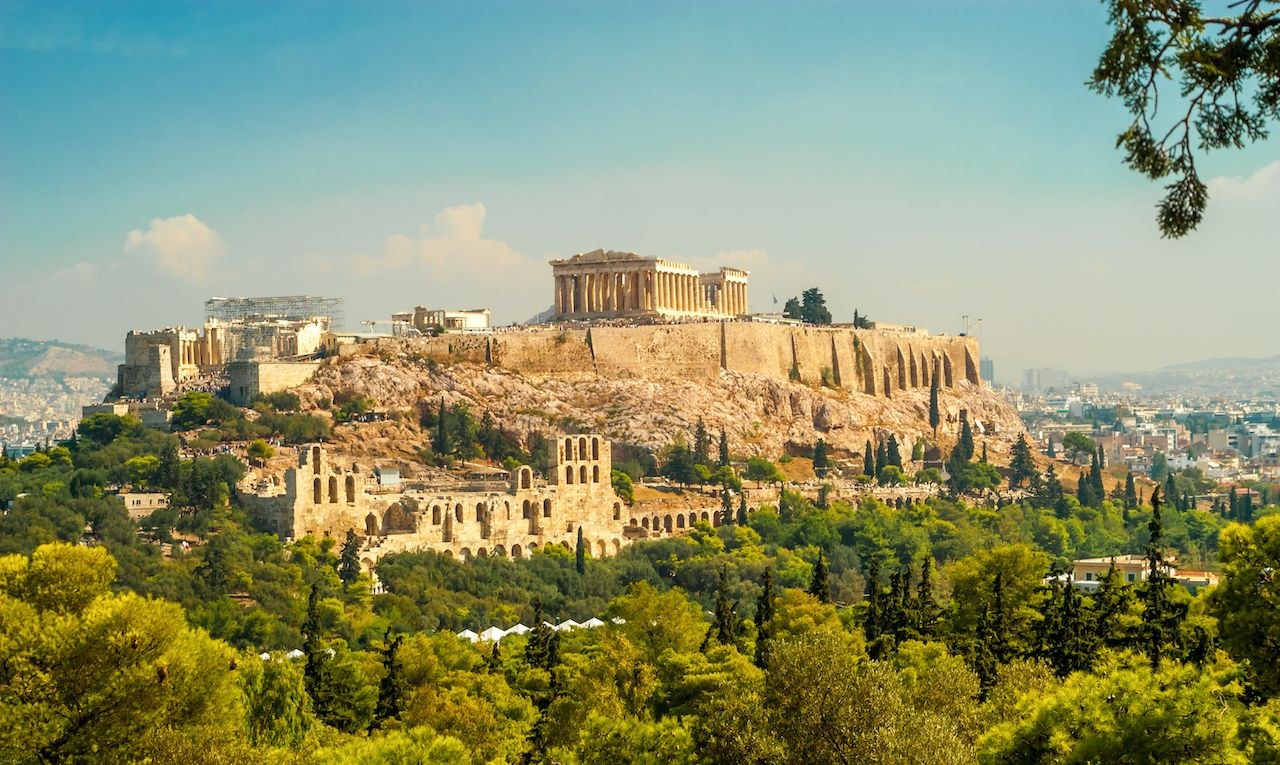
What you do Climb the Sacred Rock with a licensed Athens guide and stand beneath the Parthenon, the single most iconic monument of Western civilization, while the marble turns into the living story of Pericles, Athena and the birth of democracy. Skip-the-line entry is the whole game on a port day, sparing you the brutal midday ticket queue. Pair it with the Bernard Tschumi-designed Acropolis Museum at the foot of the hill, where the original Caryatids and Parthenon frieze sit under glass with the temple in view.
What to expect You arrive at the Acropolis via a 30–45 minute metro or taxi ride from Piraeus and walk straight past the ticket queues with your skip-the-line pass—a critical edge on a port day. Your licensed guide leads you up the Sacred Rock, the marble facades shifting beneath your feet as the Parthenon rises above you, the physical anchor of Western democracy. You stand beneath the temple while its architects, Athena's priests, and Pericles become tangible; the tour typically runs 2–2.5 hours on the hill. If time permits, descend to the Bernard Tschumi-designed Acropolis Museum at the foot, where the original Caryatids and Parthenon frieze rest under glass with the temple framed in the window behind them—the monument visible from the artifact's own display case.
Good to know Book your skip-the-line guided tour (EUR 110–119 all-in) or self-guided entry (EUR 30 site pass only) in advance to lock pace and avoid midday queues. From Piraeus, allow 45 minutes each way by taxi (EUR ~30) or metro; budget 2.5–3 hours on the Acropolis itself, plus museum time if included, leaving a 1.5–2 hour safety buffer before all-aboard. Wear sun protection and comfortable shoes on marble stone; bring water and consider a light jacket if museum time is planned. Confirm your tour operator's meeting point and boarding time the evening before to eliminate port-day confusion.
What you do Drive the turquoise Athens Riviera south to the very tip of Attica, where a gleaming white 5th-century-BC Doric temple stands on a cliff dropping straight into the Aegean. Lord Byron carved his name into a column here; the columns framing the open sea are one of Greece's signature images and the best 'escape the city crowds' move that still fits a half-day. About 4 hours door to door.
What to expect You drive south along the turquoise Athens Riviera, the coastal sprawl gradually giving way to open sea views as you approach the tip of Attica. At Cape Sounion, a gleaming white 5th-century-BC Doric temple materializes on a cliff edge, its columns framing a sheer drop into the Aegean—the view that inspired Lord Byron to carve his name into the stone. You'll have time to walk among those iconic columns, absorb the wind and the signature Greek light, and understand why this is the escape-the-city move that doesn't require a full day. The whole experience moves door-to-door in approximately 4 hours, with the bulk of time at the temple itself.
Good to know Book transfers direct with Athens Walking Tours (~EUR 46 pp) and add temple entry separately (~EUR 10) to avoid cruise-line bundling that inflates the cost to $209–240 for a half-day outing. Aim for a departure within the first 2 hours of your port window to secure the 4-hour round trip plus buffer time before all-aboard. Temple entry is not included in transfer pricing, so bring cash or be prepared to purchase on-site. The coastal drive means no special gear required, but bring sunscreen and a hat—you'll be exposed on the cliff top, with few shade options at the temple itself.
What you do Trade marble and crowds for the Aegean blue: a half-day catamaran along the Athens Riviera and Saronic coast with swim-and-snorkel stops, a meal and wine aboard. Boats leave from Alimos and Flisvos marinas close to Piraeus, making this the rare genuinely premium on-the-water experience that comfortably fits a port-day clock. Pick an operator that guarantees you back before all-aboard.
What to expect You'll board a semi-private catamaran at Alimos or Flisvos marina—a short ride from Piraeus—and spend your half-day gliding along the Aegean's brilliant blue coastline, pausing at protected swim-and-snorkel spots where the water is clear and calm. Between swims, you'll lounge on deck with wine and a meal included, absorbing the Athens Riviera and Saronic coast views at a pace only a small catamaran allows. Unlike the ship's mega-boat island circuit, this is genuinely intimate: no crowds, no forced itinerary, just the rhythm of the sea. You'll be back at the pier with time to spare before all-aboard.
Good to know Departures are half-day sails (check your operator's exact schedule to confirm return time fits your ship's all-aboard). Alimos and Flisvos marinas are close to Piraeus but you'll need a quick taxi or arranged transfer from the port—factor 15–20 minutes each way. Book semi-private slots ahead, especially June–August, as they fill quickly and pricing rises (EUR 125–135 pp depending on season). Bring reef-safe sunscreen, water shoes, and a light layer; snorkel gear is provided, and meal + wine are aboard.
What you do Thread the historic Plaka backstreets into the roaring Varvakios Agora meat-and-fish market, stopping for spanakopita, loukoumades, Greek coffee, cheeses, olive oil, honey and wine. Repeatedly rated among Europe's best culinary experiences, it delivers the flavors-and-neighborhood immersion a first-timer remembers as vividly as the ruins, all on foot in the old town. ~4 hrs, small group, tastings included.
What to expect You'll spend roughly 4 hours threading through the narrow, winding backstreets of historic Plaka on foot, pausing at local favorites for spanakopita, loukoumades, Greek coffee, and tastings of cheeses, olive oil, honey, and wine. The real anchor is the Varvakios Agora—the roaring central meat-and-fish market—where vendors call out their wares and you'll sample directly in the chaos of neighborhood commerce. Rather than stand-and-listen, you move continuously through old-town streets, tasting as you go, absorbing the rhythm of daily Athenian life in a small group setting. It's the kind of immersive, on-foot culinary walk that stays vivid in memory alongside the ruins.
Good to know Book directly with Athens Walks before the port day to secure your spot in the small group and confirm start time—all tastings are included in the ~$75 pp price, so no hidden costs. Plan on a 4-hour window starting within 1–2 hours of disembark to leave a comfortable buffer (the Plaka walk is entirely walkable from Piraeus pier, though confirm exact meeting point when you book). Wear comfortable walking shoes and bring a small daypack or crossbody bag for any purchases or water; the market and Plaka streets are pedestrian-only and shaded, but summer heat can build. Return to the pier with at least 90 minutes before all-aboard to account for the walk back and any lingering in the market.
What you do Three classic Saronic Gulf islands in one day, including car-free, donkey-and-cobblestone Hydra, one of the most photogenic harbors in Greece. Swimming, Greek music and a buffet lunch aboard deliver the 'Greek islands' taste without flying to the Cyclades. CLOCK WARNING: this is an ~11-hour day departing ~08:15 from Piraeus, so it only works if your ship has a very long call or overnights, and only with an operator that guarantees you back to the ship.
What to expect You'll depart Piraeus around 08:15 on a full-day voyage across the Saronic Gulf, visiting three islands in succession: first the car-free, donkey-cobbled harbor of Hydra, one of Greece's most photogenic ports, where narrow whitewashed streets climb steeply from the waterfront; then Poros, where you'll have time to explore; and finally Aegina. The day anchors around a leisurely Greek buffet lunch served aboard the boat, punctuated by swimming stops and live Greek music that delivers the classic island experience without the flight to the Cyclades. You'll return to Piraeus in late afternoon, having absorbed the full sensory rhythm of island life—water, light, local flavor, and Greek hospitality—all from a single excursion boat.
Good to know This is an ~11-hour commitment departing ~08:15, so it only works if your ship has a very long port call or overnight stay; on a standard 8-hour call, the risk of missing the ship outweighs the ~$40–70 savings versus booking through your cruise line. Book ahead with Athens One Day Cruise (direct ~EUR 131/$142 pp with lunch, versus ship ~$179–199) or confirm your operator guarantees return to the pier with time to spare. Bring sun protection, swimwear, and cash for any extras; wear comfortable walking shoes for Hydra's steep cobblestones. The departure point is directly from Piraeus; allow buffer time to clear the pier and reach the boat dock, and verify exact embarkation details with your chosen operator 24 hours before.
What you do The low-risk fallback if a long excursion feels too tight: a fixed-fare taxi or the metro straight to the Acropolis, self-guided entry to the Parthenon, then an easy downhill wander through Plaka's old-town lanes. No tour commitment, no fixed return time, and you control exactly when you head back to Piraeus, which is the safest play for a short port call.
What to expect You'll take a fixed-fare taxi or the metro from Piraeus straight to the Acropolis, where you'll climb through the ancient Parthenon and surrounding monuments at your own pace with a self-guided audio tool or printed map. From the summit, you'll head downhill into Plaka's narrow, winding old-town lanes—a maze of tavernas, neoclassical townhouses, and small shops—wandering for as long as you'd like before strolling back to the port on your own timeline. The whole rhythm is yours: no group delays, no narrated patter, just you, 2,500-year-old stone, and the freedom to linger or move on whenever you choose.
Good to know For a 6–8 hour port call, budget ~45 minutes each way for transit (taxi or metro), 2–2.5 hours at the Acropolis, and 1.5–2 hours wandering Plaka, leaving a 60–90 minute buffer to return to Piraeus before all-aboard. Book your taxi in advance or use the metro (€4 round trip); Acropolis entry is €30 (expect a queue, especially mid-morning). Wear comfortable walking shoes, bring water, and download a self-guided audio app or grab a printed site map beforehand. Plan to be back at the pier at least an hour before your ship's departure time—this is not a ship-sponsored excursion, so you alone are responsible for making the sailing.
book direct with Athens Half-Day Sightseeing (Athens Walking Tours - audio/self-guided) → · the full guide →
What you do A licensed guide walks you through the greatest medieval fortress in Greece before tour buses arrive, when the light and silence make its scale sink in.
What to expect You drive up the switchback road to 575m as the site opens, well ahead of coach groups still finishing breakfast in Athens. Your guide traces the fortress's changing hands from antiquity through the Ottomans using the actual walls as the text. You wander the upper citadel's chapel ruins and cisterns at your own pace, then descend before the midday heat and crowds arrive.
Good to know Wear real shoes — the terrain is uneven rock and loose gravel. Best done as the very first stop of the day, before Ancient Corinth below, and allow 2-2.5 hours including drive time.
book direct with Olympic Tours (licensed private guiding services) → · the full guide →
What you do Walk the Roman agora, the Fountain of Peirene and the seven surviving Doric columns of Apollo's temple with a private archaeologist-guide as the site unlocks.
What to expect Your guide meets you at the site gate right at opening and threads through the agora before heat and tour groups build. You stand at the Bema, the elevated speaker's platform tied to the Apostle Paul's trial before Gallio, and hear it in context rather than as a footnote. The seven Doric columns of the 6th-century-BC Temple of Apollo anchor the visit, and the small on-site museum rounds it out with sculpture straight from the excavation.
Good to know Site opens 8:00 (winter) or 8:30, closes mid-afternoon — go first, not last. Combine with the Archaeological Museum ticket, included in general admission.
book direct with TourHQ Private Local Guides, Ancient Corinth → · the full guide →
What you do See the 6.4km cut sea-level canal from the sinking road bridge, then actually pass through it on a small chartered boat rather than just photographing it from above.
What to expect You start at the submersible road bridge and watch it lower into the seabed for a passing vessel — a genuinely strange piece of engineering. Then you board a small boat at Isthmia and motor the full length of the canal, walls rising vertically on either side, built in the 1890s on a route Nero himself once tried to dig. It's a 45-60 minute transit, quiet and dramatic in a way no viewing platform captures.
Good to know Canal transits depend on shipping traffic and sea conditions — book with flexibility built in. Time this early or mid-morning; it pairs well before or after Ancient Corinth.
book direct with Corinth Canal Cruises (local canal-transit boat operators, Isthmia harbor) → · the full guide →
What you do Enter the Lion Gate and Grave Circle A of Agamemnon's citadel with a specialist guide who separates Homeric legend from what Schliemann's dig actually found.
What to expect Roughly 90 minutes from Corinth, you pass beneath the famous Lion Gate relief into a Bronze Age citadel that predates classical Greece by a millennium. Your guide walks you through Grave Circle A, where Schliemann found the gold mask he wrongly attributed to Agamemnon, then down into the corbel-vaulted Treasury of Atreus. It's dense, layered history delivered by someone who can field real questions rather than recite a script.
Good to know This is a full-day add-on (6-8 hours total with Corinth) — confirm it fits your ship's all-aboard time before booking. Bring water and a hat; the site has little shade.
book direct with Athens Tours (Viator-affiliated licensed guide network) — Ancient Corinth & Mycenae Private Tour → · the full guide →
What you do Skip the tourist tavernas near the port and taste Agiorgitiko reds in the vineyards of Nemea, with a temple to Zeus as your backdrop.
What to expect You drive south into rolling vine country that most cruise days never reach at all. A host walks you through the estate's Agiorgitiko and Assyrtiko, explaining Nemea's particular terroir and its ancient reputation — the valley is named for the site of Heracles' first labor. Lunch is simple, local, and unhurried: grilled meats, regional cheese, olive oil pressed nearby.
Good to know Best paired as an afternoon stop after a morning at Ancient Corinth/Acrocorinth. Roughly 45 minutes each way from the port — build in drive time against your return.
book direct with Semeli Estate (Nemea, family-run winery) → · the full guide →
What you do Cross the canal to Loutraki, the spa town locals actually go to — a palm-lined promenade, warm mineral springs, and zero cruise crowds.
What to expect A short drive over the canal brings you to a proper Greek resort town with a long palm-fringed seafront where locals walk, swim, and drink coffee. The municipal thermal baths draw on natural mineral springs long reputed for their restorative properties. It's a low-key, restorative hour or two that shows you how Corinthians actually spend a weekend, rather than another checklist ruin.
Good to know Good as a decompression stop after a morning of ruins and heat. The promenade and beach need no booking; the baths are walk-in with modest entry fees.
book direct with Municipal Thermal Baths of Loutraki → · the full guide →
What you do See Myrtos Beach's white cliffs from the water at dawn, then anchor in a quiet cove near Assos before the day-trippers arrive. This is Kefalonia's postcard shot, experienced instead of photographed from a bus layby.
What to expect You board at Fiskardo's old harbour and sail south along the coast as the light turns the limestone cliffs gold. The skipper cuts the engine near secluded swimming spots inaccessible by road, and there's time to snorkel off the boat. Lunch is often a simple spread of local cheese, bread and wine eaten at anchor. You're back in Fiskardo by early afternoon.
Good to know Book the earliest morning departure to beat both the heat and the coach tours that arrive at Myrtos by mid-morning; bring reef shoes for the pebbly entry points.
What you do Glide by rowboat across Melissani's underground lake when the midday sun hasn't yet hit the collapsed cave roof, then descend into Drogarati's cathedral-like chamber. Both are genuinely singular geology, not manufactured spectacle.
What to expect A local oarsman rows you slowly across the sunken lake inside Melissani, pointing out where the cave roof collapsed thousands of years ago. At Drogarati, a short walk down leads to a vast chamber occasionally used for its acoustics. Both stops together take under two hours including transfer.
Good to know Go first thing — the light shaft into Melissani is best between 11am-1pm but the crowds are worst then too, so an early private driver who times it right is worth arranging in advance.
What you do Walk the one part of Kefalonia the 1953 earthquake spared — pastel Venetian houses, a ruined lighthouse, and a working harbour that looks the same as it did two centuries ago. This is the neighbourhood a local would actually send you to.
What to expect Starting at the harbour, you wander past 18th and 19th-century merchant houses that survived the earthquake that flattened the rest of the island. The path leads out to the old lighthouse ruin at the point, with views across to Ithaca. It's a 45-60 minute unhurried loop, best done right after the ship docks or right before all-aboard when the day-trippers have thinned out.
Good to know Go at 8am or after 5pm for the best light and fewest people; wear proper shoes as parts of the lighthouse path are uneven rock.
book direct with Self-guided with Fiskardo Village Heritage Trail (local municipal signage) → · the full guide →
What you do Climb the pine-shaded path to the abandoned Venetian fortress above Assos for a view over two seas, guided by someone who actually grew up on this coast rather than reading from a script.
What to expect You're driven the short, scenic route to Assos, a tiny peninsula village connected by a narrow isthmus. From there it's a moderate 30-40 minute walk up through pine forest to the ruined 16th-century Venetian fortress walls, largely empty of other visitors. The guide points out the isthmus beaches below and shares stories of the village's fishing and shipping past before you descend for a coffee by the harbour.
Good to know Wear proper walking shoes and bring water; the fortress has no shade and no facilities. Private group pricing means it's most efficient booked with 2-4 other couples from your ship.
What you do Cover the island's spread-out highlights — Myrtos viewpoint, Melissani, Assos, and a mountain village lunch — in one unhurried day with a private driver, rather than piecing it together yourself.
What to expect Your driver collects you at the port and the day unfolds at your pace: a stop at the cliff-top viewpoint above Myrtos Beach, the boat ride across Melissani lake, a wander through Assos, and lunch in a mountain village like Agia Efimia away from the tourist strip. It's a comprehensive but personal introduction to an island too large to see any other way in a single day.
Good to know Confirm your ship's all-aboard time with the operator in advance so the itinerary is built backward from it; this is best for parties of 2-4 wanting a fully private day.
book direct with Kefalonia Tours (Full-Day Private Sightseeing) → · the full guide →
What you do Swim and snorkel the clear, less-visited coves just south of Fiskardo's harbour, reachable on foot or by a short kayak paddle, where the water is calm and genuinely transparent.
What to expect You rent gear right at the Fiskardo waterfront and paddle south past the lighthouse toward Foki beach, a small pine-backed cove popular with locals rather than cruise groups. The water here is exceptionally clear, with rocky ledges good for snorkeling. It's an easy, low-key few hours that shows the coastline the way islanders actually use it.
Good to know Foki Beach can also be reached by a short walk or taxi if you'd rather skip the paddle; go before noon for the calmest water and best visibility.
What you do Pace the 17th-century Dutch-built ramparts of Galle Fort — a UNESCO World Heritage Site — as the Indian Ocean blazes gold at sunset. A resident expert guide unlocks the fort's layered Portuguese, Dutch, and British stories behind every cannon and cobblestone.
What to expect Your private guide meets you at the fort's iconic arch gateway and leads you through time-worn lanes past the Dutch Reformed Church, the National Maritime Museum, and the Galle Lighthouse. As twilight approaches, you ascend the broad coral-and-granite ramparts for uninterrupted panoramas of the southern Sri Lankan coastline. The small-group format means unhurried conversation, candid photography, and spontaneous detours into gem dealers and spice traders that larger tours simply bypass. The evening closes with a recommended table at one of the fort's heritage dining rooms.
Good to know Galle Port is a 5-minute tuk-tuk or taxi ride from the fort's main gate (approx. USD 2–3). Pre-book your private guide at least 48 hours ahead; sunset timing (6–6:30 pm year-round) fits comfortably within most all-aboard windows. Wear flat, non-slip shoes for the rampart walk.
book direct with Withlocals Galle Private Guides → · the full guide →
What you do Board a private open-top 4×4 for a thrilling early-morning game drive in Yala — home to the world's highest density of wild leopards. Elephants, sloth bears, crocodiles, and hundreds of bird species complete a wildlife spectacle unlike anywhere in Asia.
What to expect Depart Galle at dawn for the 2.5-hour drive east to Yala Block I — the park's most biodiverse zone. Your naturalist-driver scouts fresh pug marks and bird alarms to position you ahead of the action. A morning golden light safari (6–10 am) is prime leopard time; you may also encounter wild elephants bathing, painted storks nesting, and mugger crocodiles basking along the Menik River. A gourmet picnic breakfast is served in a scenic clearing. Afternoon return allows comfortable arrival before all-aboard.
Good to know Round trip from Galle port is approximately 5–6 hours of driving; plan for a 5 am departure to maximise wildlife activity and return by early afternoon. Yala park entry fee (approx. USD 25/person) is included by most operators — confirm at booking. Wear muted, earth-toned clothing.
book direct with GoWithGuide — Galle Private Tours → · the full guide →
What you do Duck into the fort's hidden kitchens, spice merchants, and artisan cafés on a private culinary walking tour led by a local food expert. Hoppers, kottu roti, buffalo curd, and rare Ceylon cinnamon tastings paint the most delicious portrait of Sri Lankan culture imaginable.
What to expect Your host meets you at the fort gate and leads you through a curated sequence of seven to nine tastings — crispy papadum with pol sambol, hand-rolled string hoppers, freshly ground cinnamon bark, and a finale of single-origin Ceylon tea paired with coconut treacle. Along the way you'll visit the Dutch Reformed Church spice market and a fourth-generation cinnamon dealer whose family has traded within the fort walls for centuries. The tour is intentionally unhurried — conversation, context, and seconds are all encouraged. Vegetarian, vegan, and gluten-free variants available on request.
Good to know Tours typically run 3–3.5 hours; an ideal morning excursion with easy return to port. Galle Fort is a 5-minute taxi ride from the cruise terminal (approx. USD 2–3). Book at least 24 hours ahead and flag any dietary requirements. Come hungry — this is a meal, not a snack.
book direct with GetYourGuide — Galle Neighborhood Food Tours → · the full guide →
What you do Witness the iconic stilt fishermen of Koggala — one of Sri Lanka's most photographed and rarest living traditions — then visit a working sea turtle hatchery where you may release a hatchling into the Indian Ocean. A morning of pure, unscripted wonder.
What to expect Your guide collects you from Galle port for the short coastal drive east to Koggala lagoon, arriving as the rising sun silhouettes the stilts against the sea — a photograph you will never delete. Your guide explains the generations-old technique and introduces you to the fishermen personally. The adjacent sea turtle hatchery is a government-partnered conservation project where staff walk you through the incubation process; if hatchlings are ready, you'll carry one to the water's edge and release it. The return journey passes a working cinnamon plantation and a colonial-era tea bungalow for a mid-morning refreshment stop.
Good to know Stilt fishermen are most active at dawn and late afternoon — confirm your guide will target the early session. The full excursion runs approximately 4 hours. Turtle hatchling releases cannot be guaranteed (nature's schedule), but the hatchery visit is always worthwhile. Light beach footwear recommended.
book direct with Tripadvisor Experiences — Galle Shore Excursions → · the full guide →
What you do Glide the atmospheric lanes of UNESCO-listed Galle Fort and its surrounding coastal roads on a vintage-style electric bike, guided by a local expert who reveals the fort's hidden gems at a leisurely, thoroughly luxurious pace.
What to expect Meet your local guide at the fort's north gate, where gleaming retro e-bikes are fitted and adjusted to your height. The 3–4 hour circuit weaves through the fort's grid of Dutch-era streets — past the Groote Kerk (Dutch Reformed Church), the old Government House, and secret garden squares — before rolling out along the southern coastal road with the Indian Ocean breaking alongside you. Your guide narrates the layered colonial history with the ease of someone who grew up in these streets. The route finishes with a stop at the fort's most celebrated ice-cream parlour, Isle of Gelato, before a gentle coast back to the gate.
Good to know E-bikes require no cycling fitness — the electric assist handles any gradient. Galle Port to the fort gate is a 5-minute ride (tuk-tuk approx. USD 2–3). Tours run morning and afternoon; the morning slot offers cooler temperatures and better light for photography. Helmets provided; no prior e-bike experience needed.
book direct with CruiseSheet Galle — Bike Tour Operators → · the full guide →
What you do Stand face-to-face with two of the ancient world's greatest masterpieces — the Riace Bronzes — guided by a dedicated archaeologist in a private session at Italy's finest Magna Graecia museum. An utterly unmissable encounter with 2,500-year-old Greek genius.
What to expect Your expert guide meets you at Piazza De Nava, steps from the port, and escorts you through the museum's chronological galleries before arriving at the climate-controlled hall housing the Bronzes. You'll examine the warriors' inlaid ivory eyes, copper lips, and silver teeth up close — details invisible in photographs. The guide contextualises the entire Magna Graecia civilisation that produced them, making the encounter genuinely transformative. Allow 2.5–3 hours for a thorough private visit.
Good to know The museum is a 5-minute walk from the port — no transfer needed. Book your private licensed guide in advance via the Reggio Calabria tourist guide association or a local concierge. Museum is open Tue–Sun; confirm all-aboard time and allow 30 minutes' buffer. Admission tickets purchased at door or via CoopCulture online.
book direct with MArRC – Museo Archeologico Nazionale di Reggio Calabria (official) → · the full guide →
What you do Perched between Homer's mythical Scylla and Charybdis, the clifftop castle town of Scilla and its jewel-like fishermen's quarter Chianalea are among the most photogenic sights in all of southern Italy — best savoured privately, without bus-tour crowds.
What to expect The 30-minute coast road drive from Reggio to Scilla is spectacular in itself, hugging the Strait of Messina with Sicily floating in the distance. In Chianalea, your guide leads you through labyrinthine lanes to secret viewpoints above the turquoise water. You'll climb to the Ruffo Castle for sweeping panoramas over the strait and then descend to the beach for a granita di limone at a legendary bar. The intimacy of private access lets you absorb the village's timeless rhythm at leisure.
Good to know Scilla is approx. 30 km north of port — allow 1 hour each way in summer traffic. A half-day (4–5 hrs) is comfortably achievable within most all-aboard windows. Pre-book your private guide; the castle has a small admission fee of approx. EUR 3. Wear comfortable shoes for cobblestones.
book direct with Calabria Escapes (local private tour operator, Reggio Calabria) → · the full guide →
What you do Walk what D'Annunzio called 'the most beautiful kilometre in Italy' — Reggio's flower-lined seafront promenade — then explore the Duomo and Aragonese Castle with a local expert who brings the city's layered Greek, Roman, and Norman past vividly to life.
What to expect Starting at Piazza De Nava (steps from the port), your guide walks you south along the palm and magnolia-lined Lungomare, with its unobstructed views across the Strait to Sicily's volcanic silhouette. You'll visit the Duomo's Romanesque interior and the atmospheric ruins of the Greek walls and Roman thermal baths woven into the city's urban fabric. The Castello Aragonese provides a dramatic finale with rooftop views. The pace is leisurely, the insights deep, and the coffee stop obligatory.
Good to know Meeting point is Piazza De Nava, a 3-minute walk from the cruise terminal. The full loop is easily completed in 2.5–3 hours. Wear flat shoes; Reggio's streets are largely level but some sites have uneven surfaces. Book the private option (not shared) for the true luxury experience.
book direct with GetYourGuide – Reggio Calabria Private Guided City Highlights Walking Tour → · the full guide →
What you do The clifftop town of Tropea — with its Norman cathedral suspended above amber sea-stacks and its famous red onions celebrated across Italy — is one of Calabria's crown jewels. A private car and expert guide make this 90-km coastal drive a seamless, revelatory journey.
What to expect Your air-conditioned private vehicle follows the Tyrrhenian coast north through the 'Coast of the Gods,' with your guide narrating the geology, history, and folklore en route. In Tropea, you'll wander the cliff-edge streets, visit the Santa Maria dell'Isola sanctuary, and take in one of the most photographed seascapes in Italy. Lunch at a recommended local restaurant features the celebrated Tropea red onion in every course — a genuine gastronomic revelation. The return journey hugs a different stretch of coastline for fresh views.
Good to know Allow 8–9 hours for a full Tropea day — verify your all-aboard time carefully and confirm with your operator. Tropea is approx. 90 km north of Reggio (1.5 hrs by car). Pre-book well in advance in summer; this excursion is highly sought after. Bring swimwear if the itinerary includes beach time.
book direct with My Bella Vita Travel (Southern Italy small-group & private specialist) → · the full guide →
What you do Reggio Calabria sits directly across the Strait from Sicily, making it one of the world's most convenient launchpads for a summit ascent of Mount Etna — Europe's largest active volcano. A private volcanologist-guide and 4x4 transfer make this a bucket-list experience of rare intensity.
What to expect A private transfer takes you to the Reggio Calabria ferry terminal for the 20-minute crossing to Messina, then a scenic drive to Etna's northern or southern slopes. Your guide leads you through lunar lava landscapes to the 3,000m+ summit zone, where sulphurous steam vents, cinder cones, and vast craters create a primordial spectacle unlike anything in Europe. The views on a clear day extend to the Aeolian Islands, Calabria, and beyond. This is a physically rewarding, intellectually extraordinary day.
Good to know This is a full-day excursion (9–10 hours) — confirm your ship's all-aboard time is sufficient. Sturdy hiking boots, warm layers, and sun protection are essential regardless of season. Summit access depends on volcanic activity; your guide will have the most current information. Book private to guarantee the guide's full attention and flexibility.
book direct with Etna Experience (official Etna guide specialists, Catania/Etna Nord) → · the full guide →
What you do Calabria's cuisine is one of Italy's most underrated and fiercely local — bergamot liqueurs, 'Nduja, swordfish from the Strait, and Cirò wines demand a guided tasting with a passionate local expert. This intimate food walk is a passport into the soul of the region.
What to expect Your guide leads you through the Mercato Centrale and along the Corso Garibaldi, stopping at a salumeria for 'Nduja tasting on warm bread, a historic bar for bergamot granita, and a enoteca for a structured tasting of Calabrian DOC wines including Cirò Rosso and Greco di Bianco. At each stop, the guide contextualises the ingredient within Calabrian history and culture. The experience concludes with a sit-down antipasto spread at a recommended local restaurant. Portions are generous; arrive hungry.
Good to know The food walk starts near Piazza De Nava, a 3-minute walk from port, and takes 3–3.5 hours. Notify your operator of any dietary restrictions in advance. The bergamot tasting alone — Reggio produces 95% of the world's supply — justifies the excursion. Book the private version for a fully customised pace and stops.
book direct with GetYourGuide – Reggio Calabria City Tour & Riace Bronze Museum with Tasting → · the full guide →
What you do Walk the ghost streets of a city frozen in 79 AD with a private archaeologist as your guide. This is one of the most viscerally moving archaeological sites on earth — and private access transforms it from a crowd-filled ruin into a deeply personal encounter with antiquity.
What to expect Your expert archaeologist meets you at Sorrento port and transfers you by private vehicle to Pompeii's Porta Marina entrance. Inside, you move fluidly through the forum, the lupanar, the baths and the haunting plaster-cast victims, with scholarly context that makes the tragedy breathtakingly real. The private format means you can ask questions freely and dwell wherever moves you most. Return transfer to Sorrento is included, leaving you time to explore the town before all-aboard.
Good to know Pompeii is approximately 30 minutes from Sorrento by private car. Pre-book at least 2–3 weeks ahead — private archaeologist slots are limited. Wear comfortable walking shoes and bring sun protection; the site is largely unshaded. Allow 4–5 hours total including transfers.
What you do Charter a private wooden gozzo or sleek motorboat from Sorrento's Marina Piccola, glide to Capri, slip inside the electric-blue sea cave, and anchor beside the iconic Faraglioni sea stacks for a private swim. This is the Amalfi Coast at its most glamorous.
What to expect Depart Marina Piccola aboard your private vessel as the morning light turns the sea gold. Your skipper navigates the spectacular coastline to Capri, where a rowboat tender ferries you inside the Blue Grotto as bioluminescent blue light floods the cave walls. Back on board, you anchor in a secluded cove beneath the Faraglioni for swimming and snorkelling. A cooler stocked with local wine, limoncello and Campanian snacks is typically included. The skipper brings you home with time to spare before all-aboard.
Good to know Capri is roughly 50 minutes by boat from Sorrento. Blue Grotto entry depends on sea conditions and tidal height — your skipper will advise on the day. Book at least 3–4 weeks in advance in high season (May–September). Departure from Marina Piccola, a short taxi ride from the port tender landing.
What you do Ride the world's most spectacular coastal road in a private luxury Mercedes, stopping for espresso in pastel-stacked Positano, hilltop garden concerts in Ravello, and an ancient cathedral in Amalfi. The views alone justify the journey.
What to expect Your private Mercedes departs Sorrento and immediately joins the SS163 — a ribbon of tarmac cut into vertical cliffs above a turquoise sea. In Positano you descend to the beach-front piazza for coffee and boutique browsing among the bougainvillea-draped lanes. Ravello rewards you with the Villa Cimbrone's 'Terrace of Infinity', an impossibly beautiful clifftop garden. In Amalfi town, the gilded Duomo di Sant'Andrea commands the main piazza. Your driver waits throughout and returns you to Sorrento port in time for all-aboard.
Good to know The coastal road is narrow and sometimes congested in peak summer — start early (by 8:00–8:30am) to beat traffic. Pre-book a restaurant in Positano or Ravello for lunch: Ristorante Max in Positano is a reliable luxury choice. The full circuit takes 7–8 hours; confirm your all-aboard time with the operator when booking.
What you do Plunge into the sun-warmed cobblestone lanes of Sorrento's centro storico with a local food guide, tasting gnocchi alla sorrentina, buffalo mozzarella, and hand-pressed olive oil before mastering limoncello from grove to glass. Southern Italy's flavours at their most authentic.
What to expect Begin in the vivid Mercato di Sorrento, where your guide navigates the stalls with the ease of a local, explaining seasonal produce and regional cured meats. Wind through Via San Cesareo's aromatic alleyways, pausing at a centuries-old pastificio for a freshly made gnocchi tasting with rich, slow-simmered tomato and fior di latte. A family-run limoncello distillery reveals the entire process — Sorrento's legendary sfusato lemons, cold-pressed zest, grain spirit — before you mix your own bottle to take home. Finish with a gelato from the old town's most revered gelateria.
Good to know The tour operates entirely on foot within Sorrento's centro storico — no transport needed from the port tender pier. The full experience runs 3–4 hours, leaving plenty of time for independent exploration or a second outing. Book the private format for the most flexible pacing. Comfortable walking shoes are essential on the cobblestones.
What you do Combine a guided walk through Pompeii's ruins with a summit ascent of the volcano that destroyed it — standing on the crater rim of Vesuvius is a primal, once-in-a-lifetime experience that perfectly bookends the ancient city below.
What to expect Your small-group departs Sorrento port by private minibus and reaches Pompeii for a 2-hour guided tour emphasising the most evocative stories — the gladiators, the bakeries, the heartbreaking casts. After a traditional Neapolitan lunch, you ascend the volcano's southern flank on a well-marked path through lava fields and sparse Mediterranean scrub. At the crater's edge — 1,281 metres above sea level — the view sweeps across the Bay of Naples and, on clear days, to Capri and Ischia. Your guide explains Vesuvius's geological history and its still-active status. Return to Sorrento allows a late-afternoon stroll before all-aboard.
Good to know The Vesuvius summit path is approximately 860 metres of well-maintained gravel track (30–40 minutes each way); sturdy shoes are essential and layers are recommended — the summit is significantly cooler and windier than the coast. The full day runs approximately 9 hours; confirm your all-aboard time is no earlier than 7:00pm. Book online with instant confirmation.
book direct with Viator (local operator: City Wonders / licensed Campania guides) → · the full guide →
What you do Follow a dramatic coastal path from Sorrento's cliffs to a natural sea pool set within the crumbling ruins of a Roman villa — the former pleasure baths of Queen Giovanna. Swim in translucent green water surrounded by 2,000-year-old stonework for an experience that feels entirely your own.
What to expect Your guide leads you westward along Sorrento's clifftop, past fragrant lemon groves and prickly pear hedges, with panoramic views opening across the Bay of Naples towards Vesuvius. The path descends to the Punta del Capo headland where the skeletal arches of the Villa di Pollio Felice frame the sea. A natural rock channel connects the open sea to the sheltered pool: the water here is strikingly clear, protected from swell, and perfect for snorkelling among the ancient foundations. A local expert provides historical context for both the Roman villa and the medieval legend of Queen Giovanna herself. Return on the same scenic path in roughly 2 hours total.
Good to know The trail is 3–4 km return with some uneven terrain and a stepped descent to the water — wear grippy shoes and bring a swimsuit, towel and water. There is no entry fee to the site itself; you pay for the guided walk. Best visited in the morning before the summer heat peaks. Departs directly from Sorrento town centre, a short walk from the port tender landing — no transport needed.
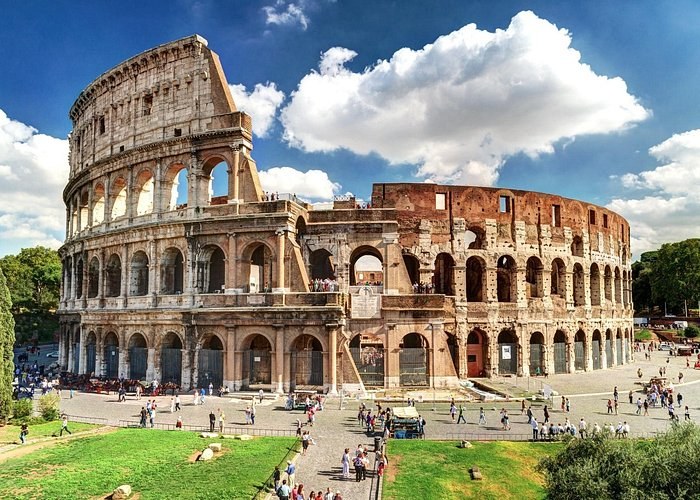
What you do This is the definitive Rome bucket-list day: Michelangelo's Sistine Chapel ceiling and Last Judgment, the Vatican Museums, St. Peter's Square, plus the Colosseum and Roman Forum — all in one 9-hour private run from the pier. Your driver collects you ship-side in a Mercedes and the 'privilege' skip-the-line tickets to both the Vatican and Colosseum mean you walk past the 2-hour queues that would otherwise eat your port day. Note this is a private-driver tour, not a guided one: you explore the interiors at your own pace (audio guides sold inside).
What to expect A private Mercedes collects you pier-side at Civitavecchia and you begin a 9-hour immersion in Rome's iconic landmarks, moving at your own pace rather than a group's rhythm. You skip past the 2-hour queues at the Vatican Museums to explore Michelangelo's Sistine Chapel ceiling and Last Judgment, then wander St. Peter's Square (basilica entry is free but has its own queue). After lunch flexibility, you drive to the Colosseum and Roman Forum, again with skip-the-line privilege tickets that let you move straight inside while standard visitors wait. Throughout, your private driver and personal vehicle—not a 50-person bus—keep you on your schedule, though you explore each site's interiors independently with optional audio guides available for purchase.
Good to know The full excursion runs 9 hours; plan to depart the pier by 8:00 AM at the latest to ensure a comfortable return before your ship's evening departure. Your private driver meets you ship-side at Civitavecchia—confirm the exact return-time guarantee and buffer window when booking, as this operator runs cruisers daily but you'll want that back-to-ship safety net in writing. Bring comfortable walking shoes, sunscreen, and cash or cards for lunch and optional audio guides inside the museums (not included in the EUR 187.50 price). Book skip-the-line tickets in advance as part of your package; they're your main time-saver advantage over the cruise line's group tours, which run $220–$320 per person for the same sites.
book direct with Discovery Guided Tours → · the full guide →
What you do The reason cruise lines stop here at all: a private deluxe vehicle whisks you from the pier to the Trevi Fountain, Pantheon, Spanish Steps, Piazza Navona, St. Peter's Square and the Colosseum, dropping you as close as Rome's traffic limits allow at each. It's the maximize-a-tight-window play — a first-timer who sails past Rome without standing at the Trevi would genuinely regret it. Be clear-eyed: this is a driver, not a licensed guide, so it's exterior views, photo stops and walk-up landmarks, no museum interiors.
What to expect Your driver collects you pier-side at 8:00 AM in a private deluxe vehicle and begins threading Rome's narrow streets, stopping at the Trevi Fountain, Pantheon, Spanish Steps, Piazza Navona, St. Peter's Square, and Colosseum views—you step out, snap photos, walk up to the exteriors and iconic squares, then move on. This is drive-and-stroll geography, not museum interiors: you'll see Rome's greatest hits from street level and courtyard vistas, with your driver dropping you as close as traffic allows at each landmark. The rhythm is constant but unhurried—a masterclass in first-timer coverage, punctuated by photo moments and the low hum of rolling between sites. You're back at the pier by 5:00–5:30 PM, having touched eight of Rome's most recognizable monuments without boarding a 50-seat coach.
Good to know Pickup is pier-side at 8:00 AM sharp with return by 5:00–5:30 PM, giving you roughly 8 hours door-to-door; factor in Rome's traffic and the driver will optimize stops, so expect less than 30 minutes at each landmark unless you request longer. No entrance tickets, meals, or guide services are included—this is a driver-only arrangement, so museum and basilica interiors are on your own dime and time; bring cash and book ahead if you want to step inside St. Peter's or the Colosseum. All tolls, parking, and taxes are covered in the quoted price (EUR 650–750 per vehicle for up to 7 guests, ~EUR 107–163 per person), and the driver speaks English. Book directly with RomeCabs in advance; a solo traveler or couple may find the ship's motorcoach tour or Trenitalia train equally priced or cheaper per head, so confirm group size before committing.
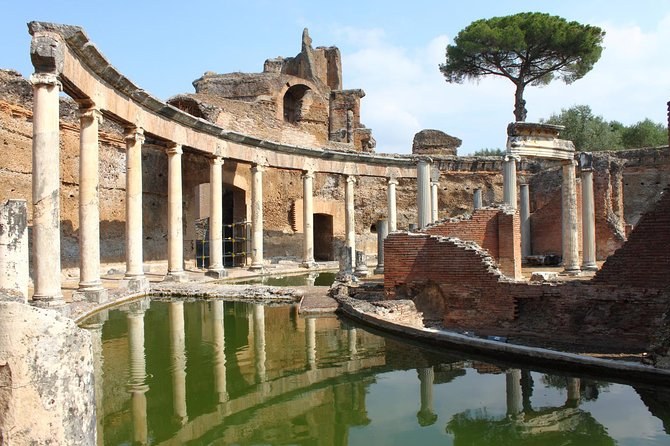
What you do For travelers who've already 'done' central Rome, this is the equally unforgettable alternative: Villa d'Este's 51 fountains, 64 waterfalls and 220 basins — all gravity-fed, not a single pump — paired with Emperor Hadrian's sprawling 2nd-century imperial estate. An expert private guide actually walks the gardens and ruins with you, and the crowds are a fraction of the Vatican's. A 9-hour day, pier to pier.
What to expect You'll spend the morning and early afternoon in two staggered acts: first, Villa d'Este's terraced Renaissance gardens, where your expert guide walks you through cascading fountains, 220 basins, and 64 waterfalls—all fed by gravity alone, no pumps needed—then a private car transfer inland to Emperor Hadrian's 2nd-century sprawl, where crumbling villas, temples, and theaters unfold across 30 acres of archaeological theatre. The rhythm is unhurried; you're with a licensed English-speaking expert, not herded through a coach crowd, so you'll actually absorb the history and architecture as you walk. By late afternoon, your driver returns you to the Civitavecchia pier, completing the 9-hour door-to-door arc.
Good to know Pickup from Civitavecchia pier is included; plan for a private car departure roughly 3–4 hours after ship arrival to allow for disembarkation and meet your guide. Both villas are outdoor, terraced sites with significant walking and uneven ground—wear comfortable shoes and bring sun protection and water. Book at least 48–72 hours ahead; the price (EUR 869 minimum, ~$475 per couple) drops per person as group size grows, and slots are limited to preserve the "expert guide + small party" promise. Confirm your ship's all-aboard time with the concierge and allow a 30–45-minute buffer before boarding to account for Civitavecchia pier return traffic.
book direct with Through Eternity Tours → · the full guide →
What you do Walk intact ancient streets, an amphitheater, taverns, bath-house mosaics and three-story Roman apartment blocks at the buried port city of Ostia Antica — the marquee 'lost Roman city' with a fraction of Rome's crowds. It's far closer to Civitavecchia than the actual Pompeii (which is impractical from this port), and this private full-day pairs it with the Etruscan necropolis at Cerveteri. Pier-side Mercedes pickup, full day, back in time for the ship.
What to expect You'll be picked up pier-side in a private deluxe Mercedes and driven to Ostia Antica, where you'll walk intact ancient streets lined with taverns, bath houses, and remarkably preserved three-story Roman apartment blocks, culminating at the amphitheater — a far less crowded alternative to Pompeii. The day then pivots to Cerveteri's Etruscan necropolis, where you explore burial sites and artifacts from Rome's pre-imperial neighbors. Throughout, you're moving at your own pace in private transport rather than herded with a group, though your driver handles logistics rather than narrating the ruins themselves. The rhythm is unhurried full-day immersion: ancient streets in the morning, a site transition at midday, and Etruscan tombs in the afternoon, returning to the pier in time to reboard.
Good to know Book ahead with Stefano Rome Tours and confirm pier pickup timing to ensure you clear the ship's all-aboard (driver will know the buffer). Entrance tickets to both Ostia Antica and Cerveteri are not included in the EUR 590 vehicle fee—budget ~EUR 18 per site and purchase at the gate or ahead online to save time. Bring a robust audio guide app (like the official Ostia Antica app) or printed site guide, since the driver is not a licensed in-site interpreter. With a full day in the field, wear comfortable walking shoes, sunscreen, and a hat; both sites are largely open-air and can be hot, especially in summer months.
What you do Skip the 1.5-hour each-way push to Rome and explore the port town nearly every cruiser blows past: Michelangelo's harbor fortress (Forte Michelangelo), one of Italy's largest open-air markets, fresh Tyrrhenian seafood and the seafront Pirgo promenade. A relaxed small-group walk with local tastings along the way — the low-stress, low-risk safety net when you want to be steps from the ship.
What to expect You'll join a small-group walk that begins steps from the pier and moves at a leisurely pace through Civitavecchia's historic center, anchored by visits to the Renaissance Forte Michelangelo and one of Italy's largest open-air markets alive with local vendors and produce. Along the way, you'll pause for fresh Tyrrhenian seafood tastings and other local bites, absorbing the rhythm of a working port town most cruisers skip. The walk concludes on the waterfront Pirgo promenade, where you'll have absorbed three hours of culture and flavor without the fatigue of a long coach transfer. It's the opposite of the Rome sprint—an immersive, low-pressure exploration of the places locals actually go.
Good to know The entire excursion unfolds within walking distance of your ship, so there's zero transfer time and minimal risk of running late; plan for the three-hour guided walk to fit comfortably in a 6–8 hour port window. Book ahead through DriverInRome to secure your spot in a small group, and wear comfortable walking shoes—you'll be on foot the whole time through cobblestone streets and market areas. Bring cash (EUR) for any additional purchases at the market or for tips, and check departure times with the operator to give yourself at least an hour buffer before all-aboard. The price of approximately EUR 75 per person (€82 USD) includes all tastings, so budget only for optional extras and gratuity.
Before you sail · near Athens
Fly in at least a day early — every seasoned cruiser does, so a delay never costs you the ship. This is what is worth that day within reach of the port.

After you step off · near Rome
You end in a different port — stay on, and add what is within reach before you fly home.