Your cruise
Seabourn Quest · 53-night Northern Europe cruise, Valparaiso (Santiago) to Cape Town
Feb 5 – Mar 29 · 53 nights ·
Day 1 Valparaiso (Santiago) (board) · Day 2 at sea · Day 3 Puerto Montt · Day 4 Castro · Day 4 at sea · Day 5 Puerto Chacabuco · Day 6 at sea · Day 7 Pio Xi (Bruggen) Glacier · Day 7 at sea · Day 8 Amalia (Skua) Glacier · Day 8 at sea · Day 9 Punta Arenas · Day 9 STRAIT OF MAGELLAN · Day 10 at sea · Day 11 Garibaldi Glacier · Day 12 Ushuaia · Day 13–14 at sea · Day 15 The Seabourn Antarctic Experience (day 1) · Day 16 The Seabourn Antarctic Experience (day 2) · Day 17 The Seabourn Antarctic Experience (day 3) · Day 18 The Seabourn Antarctic Experience (day 4) · Day 19 The Seabourn Antarctic Experience (day 5) · Day 20–21 at sea · Day 22 The Seabourn Falkland Island Experience (day 1) · Day 23 The Seabourn Falkland Island Experience (day 2) · Day 24 Stanley · Day 25–27 at sea · Day 28 Montevideo · Day 29–30 Buenos Aires · Day 31–37 at sea · Day 37 Inaccessible Island · Day 38 Nightingale Island · Day 39–44 at sea · Day 45 Richards Bay · Day 46 Maputo · Day 47 at sea · Day 48 Durban · Day 49 at sea · Day 50 Port Elizabeth · Day 51 Mossel Bay · Day 52 at sea · Day 53–54 Cape Town (step off)
What you do Ascend the flanks of the iconic snow-capped Osorno Volcano and stand beside the thundering turquoise cascades of Petrohué Falls inside Vicente Pérez Rosales National Park — Chile's oldest. A private guided day that distills the raw Andean drama of the Lake District into one unforgettable journey.
What to expect Your private guide collects you dockside and whisks you along the shores of Lake Llanquihue with Osorno's perfect cone as your constant companion. At the national park, you hike the short trail to Petrohué Falls where the Petrohué River churns through ancient black-lava channels into brilliant aquamarine pools. The ascent toward the Osorno ski station rewards you with vertiginous views across multiple Andean lakes. Midday, pause for a lakeside picnic or artisan lunch before returning in time for all-aboard.
Good to know Pre-book well in advance for port days — this is the single most sought-after private excursion in Puerto Montt. The drive is ~1.5 hrs each way; all-aboard is typically 18:00. Wear waterproof layers — the falls generate considerable mist and the volcano elevation can be cool even in summer.
Versus the ship tour Fully private vehicle and guide — your timetable, your pace. You linger at the falls or the volcano viewpoint as long as you wish, with no coach crowds obscuring the glacial blue water and volcanic cones that define this landscape.
book direct with Ports of Call Tours (Puerto Montt local specialist) → · the full guide →
What you do Cross to the mythical Chiloé Archipelago — a UNESCO-studded world of stilted palafito houses, painted wooden churches, and shamanic folklore unlike anywhere else in South America. A full-day immersion into one of Chile's most distinctive living cultures.
What to expect A short ferry crossing to Chiloé sets the adventurous tone before you reach Castro, the island's colourful capital, where palafito stilt-houses glow in ochre, indigo, and coral above the tidal flats. The Jesuit church of San Francisco — one of 16 UNESCO World Heritage wooden churches — rises dramatically over the central plaza. In Dalcahue's artisan market, browse intricate Chiloé wool weavings directly from the makers. Lunch features the legendary curanto, a slow-cooked feast of shellfish, smoked meats, and potato bread unique to the island.
Good to know Departs from Puerto Montt pier; the ferry crossing at Pargua takes ~30 min. Full-day tour runs ~10–11 hours — confirm all-aboard time with your ship and choose a morning-departure option. Bring Chilean pesos for the market.
Versus the ship tour Small-group format keeps the experience intimate — you explore Castro's famous waterfront palafitos and the polychrome UNESCO church at human scale, with a knowledgeable guide who weaves Huilliche mythology and island gastronomy into every stop.
book direct with GetYourGuide (local Chiloé operator via direct platform) → · the full guide →
What you do Trace the emerald shore of Lake Llanquihue through two of Chile's most beautiful lakeside towns — the Germanic rose-garden village of Frutillar and the sophisticated 'City of Roses,' Puerto Varas — with Osorno and Calbuco volcanoes perfectly mirrored in the water. A refined circuit through Chile's Lake District at its most photogenic.
What to expect The journey hugs the western shore of Lake Llanquihue, where 19th-century German colonists built timber houses that still stand beneath permanent Andean snow caps. In Frutillar, the open-air German Colonial Museum and lakeside promenade command unobstructed views of Osorno Volcano. Puerto Varas's casas alemanas, artisan chocolate shops, and café culture give the tour a deliciously unhurried afternoon rhythm. Your guide curates the route to your pace, ensuring you're back dockside with time to spare.
Good to know Puerto Varas is just 20 km from Puerto Montt — the drive is easy and direct. The tour runs ~5–6 hours comfortably. Ask your guide to include the Plaza de Armas rose gardens and a stop at a local craft chocolatier for a memorable souvenir.
Versus the ship tour Private vehicle and vetted local guide means spontaneous detours — a lakefront café in Puerto Varas, a hidden volcanic-ash beach, or extended time at Frutillar's Teatro del Lago — without the rigidity of a group coach. Pricing is per tour, not per person, making it exceptional value for couples and small families.
book direct with ToursByLocals – Puerto Montt Private Guides → · the full guide →
What you do Trek deep into a primeval rainforest of alerce trees — the 'redwoods of the Andes' — some living for over 3,000 years and among the oldest living organisms on Earth, protected inside a CONAF national park just 45 minutes from port. For the discerning traveller who wants a genuine wilderness encounter, not a viewpoint.
What to expect The park's trail network winds through dense Valdivian temperate rainforest where the humidity is palpable and silence is broken only by rushing streams and birdcall. Ancient alerce trunks — some over 4 metres in diameter — tower overhead in cathedral-like groves; your guide reveals their growth rings and the conservation battles that saved them. Emerald lagoons and suspension bridges add drama to the trail, and the cloud-forest light makes for extraordinary photography. This is one of the least-visited gems near Puerto Montt, delivering genuine solitude.
Good to know Park is ~45 km from the port (~45-min drive). Wear proper waterproof hiking boots and layers — the Valdivian rainforest is lush because it is wet. A half-day option (4–5 hrs total) fits comfortably within most all-aboard windows. CONAF park entry fee is payable at the gate in cash.
Versus the ship tour A private naturalist guide brings the forest alive — pointing out the moss-draped millennia-old alerce trunks, Andean kingfishers, and endemic Valdivian flora that a standard group tour walks past. You set the hiking pace and depth.
book direct with ToursByLocals – Puerto Montt Private Guides → · the full guide →
What you do Combine the waterfall spectacle of Petrohué with a curated tasting of southern Chilean wines and smoked regional delicacies in the lakeside towns of Puerto Varas and Frutillar — a gourmet and scenic fusion that is the definitive Lake District experience for the food-forward traveller.
What to expect The morning begins at Petrohué Falls, where you walk the lava-rock trail to the rushing turquoise cascades inside Vicente Pérez Rosales National Park. The afternoon shifts to the cultured lakeside world of Puerto Varas, where German-heritage architecture and a thriving artisan food scene intersect. A hosted tasting introduces you to the under-the-radar wines of the Los Lagos region alongside house-smoked meats, artisan cheeses, and freshly baked küchen. The guide's bilingual narrative weaves together geology, immigration history, and terroir seamlessly.
Good to know Available as a small-group shared tour or private upgrade — choose private for the most immersive experience. Tour duration is approximately 8 hours; confirm your ship's all-aboard before booking. Dietary requirements can usually be accommodated with advance notice.
Versus the ship tour The wine-and-gastronomy layer elevates this beyond a standard falls trip — tastings are hosted at a lakeside venue with Osorno Volcano framed in the window, pairing Patagonian pinot noir and cold-smoked salmon with the dramatic scenery outside.
book direct with Viator – Local Puerto Montt Operator (Shore Excursion: Petrohué Falls, German Cities & Wine) → · the full guide →
What you do Dive into the sensory theatre of Angelmo — Puerto Montt's legendary waterfront fish market and artisan stall quarter — on a guided walking immersion that reveals the smoked meats, giant barnacles, sea urchin ceviche, and handwoven crafts that define southern Chilean coastal culture. The port's most authentic half-day experience.
What to expect Angelmo's wooden pier is lined with boats unloading the morning catch as vendors lay out centolla king crab, locos (abalone), and baskets of sea urchin — a photographer's and gastronome's paradise in equal measure. Your guide leads you through the covered market's smoky interior, explaining preparations and introducing you to the women who have run stalls for generations. A short walk inland reveals the Av. Angelmó handicraft corridor, where Mapuche weavings, lapis lazuli jewellery, and Chiloé wooden sculptures make for meaningful, locally-made souvenirs. The half-day format leaves the afternoon free for a longer excursion or leisurely exploration.
Good to know Angelmo is within walking distance (~2 km) of the cruise pier — no transfer needed. The market is liveliest before midday; aim for a 09:00 start. Bring small bills in Chilean pesos for tastings and craft purchases. This pairs beautifully as a morning warm-up before an afternoon excursion to Petrohué or Chiloé.
Versus the ship tour A private local guide navigates you past the tourist-facing stalls to the fishermen's own tables, introducing you by name to vendors and ensuring you taste the real thing — picorocos (giant barnacles), curanto, and milcao — rather than the sanitised version.
book direct with GoWithGuide – Local Puerto Montt Private Guides → · the full guide →
What you do Explore Valparaíso's UNESCO-listed hillside barrios with a private local expert — riding century-old funiculars, decoding world-class murals, and drinking in panoramic Pacific views from secret miradores that groups never reach.
What to expect Your guide meets you at the port and leads you through Cerro Alegre and Cerro Concepción on foot, boarding the original Ascensor Reina Victoria and Ascensor El Peral funiculars. You'll pause at Mirador Paseo Gervasoni for sweeping harbour views before weaving through painted alleyways where internationally renowned muralists have turned retaining walls into open-air galleries. The tour finishes with a glass of local craft beer or pisco sour at a hilltop bar of your choosing.
Good to know Pre-book at least two weeks ahead — private guides fill quickly on port days. The port is in Valparaíso itself so transfer is minimal. All-aboard times are typically 18:00; a 4–5 hour tour is comfortable. Wear grippy shoes — the cerro cobblestones are steep and uneven.
Versus the ship tour Entirely private — just your group and a hand-picked local historian-guide. The itinerary bends to your curiosity: linger in a cerro café, detour to a lesser-known viewpoint, or duck into an artisan workshop. No queues, no megaphone, no strangers.
book direct with ToursByLocals – Private Valparaíso Guide → · the full guide →
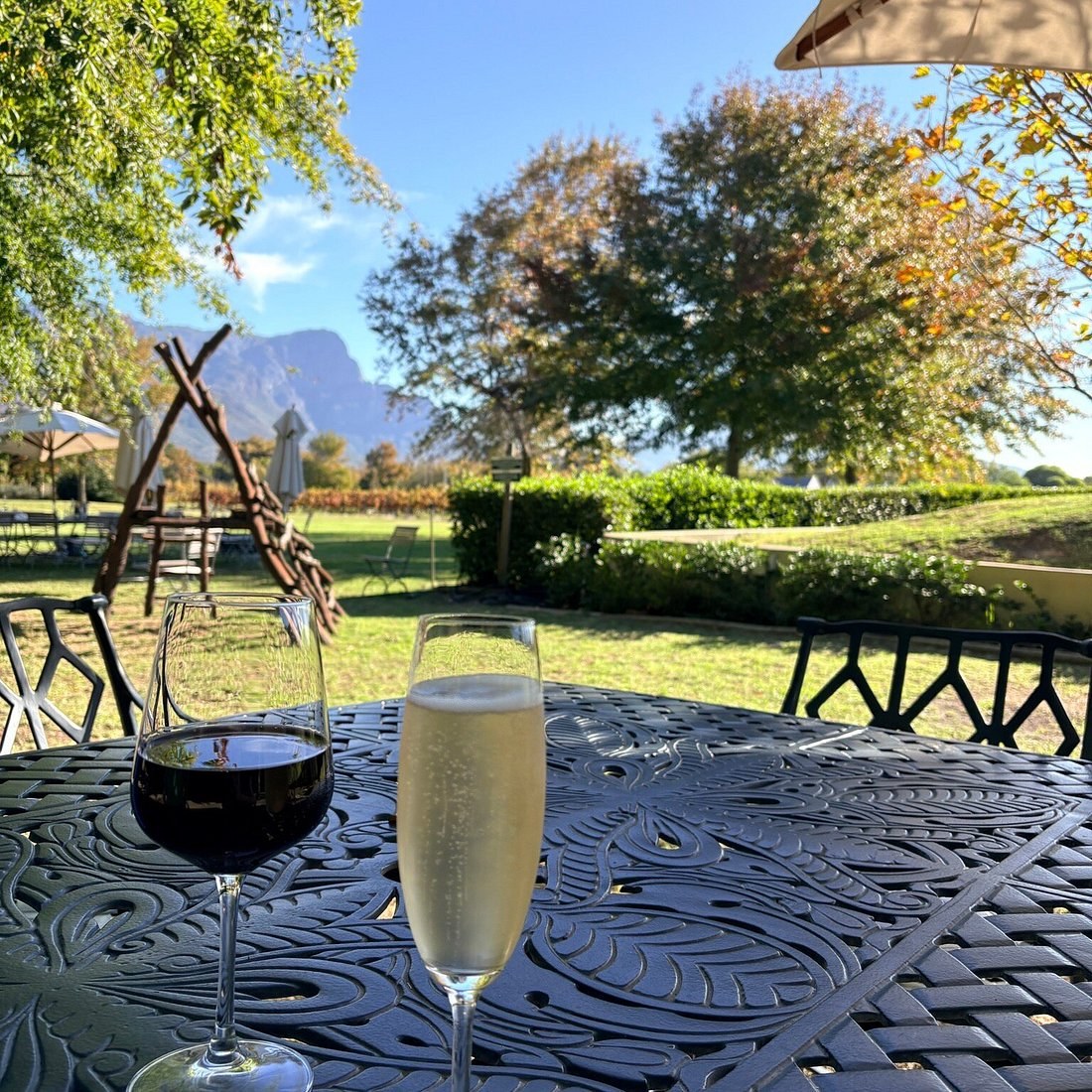
What you do Chile's coolest coastal wine valley sits just 30 minutes from the port, producing world-class Sauvignon Blanc and Pinot Noir. A private, chauffeured half-day visits two boutique wineries unavailable on group itineraries, with barrel-room access and a seated, paired tasting.
What to expect You're collected dockside in a luxury vehicle and driven south through rolling vineyard landscapes to Casablanca Valley — one of South America's most celebrated cool-climate wine regions. At the first estate you descend into the barrel room for a vertical tasting with the winemaker or cellar manager. The second stop is a boutique family winery with an organic vineyard walk before a paired lunch or afternoon tasting spread on a shaded terrace. Your guide contextualises each varietal against Chile's geography and the valley's Pacific-cooled terroir.
Good to know The valley is approximately 30–40 minutes from Valparaíso port by private car. Pre-book direct and confirm your port arrival time so pick-up can be timed precisely. Allow 5–6 hours total; well within a standard port day. Designated driver included — no self-driving required.
Versus the ship tour Small-group, private vehicle with a sommelier-trained guide who sources access to family-owned boutique bodegas — properties that do not appear on mass-market itineraries. Tastings are seated, unhurried, and paired with local charcuterie and artisan cheeses.
book direct with GoWithGuide – Private Casablanca Valley Wine Tour → · the full guide →
What you do Visit the most theatrical of Pablo Neruda's three houses — a soaring, ship-inspired home clinging to a Valparaíso hillside — then explore the bohemian neighbourhood around it with a literary-focused private guide.
What to expect Enter Neruda's wildly personal five-story tower home, where each floor reveals another obsession: vintage maps, hand-painted glassware, a carousel horse, and a writing desk aimed at the harbour. Your guide reads passages from his poems in the very rooms that inspired them. After the house, you walk through Cerro Florida's painted laneways and visit a local ceramic atelier where artisans craft Neruda-inspired pottery. The panorama from Neruda's living room window — the entire bay of Valparaíso spread below — is one of the great views in South America.
Good to know La Sebastiana is open Tue–Sun 10:00–18:00. Timed-entry tickets sell out on busy port days — book the official entry online in advance at fundacionneruda.org. Pair with a private guide booked through GoWithGuide or ToursByLocals for the full literary experience. A 15-minute taxi from the port costs approx. CLP 4,000.
Versus the ship tour La Sebastiana is a genuine bucket-list literary landmark — Neruda designed every eccentric room himself, filling it with ship figureheads, a miniature bar-car, and kaleidoscopic Pacific views. A private literary guide layers in the poetry and the man behind the myth, turning a museum visit into a profound cultural encounter.
book direct with Fundación Pablo Neruda – La Sebastiana (Official) → · the full guide →
What you do The definitive coastal sweep of Chile's Riviera: UNESCO-listed Valparaíso's painted hills, Viña del Mar's belle époque boulevards and casino, and the glamorous beach resort of Reñaca — all in a private, chauffeured vehicle with a local expert at your side.
What to expect Starting from the port, your guide leads you first through Valparaíso's historic quarter — Plaza Sotomayor, the naval monument, and a funicular ascent to Cerro Alegre. You then drive north along the coastal road to Viña del Mar, passing the iconic flower clock and Wulff Castle before walking the palm-lined Avenida Libertad. The tour continues to Reñaca, one of Chile's most fashionable beach resorts, where a reserved table at a terrace restaurant overlooking Playa de Reñaca awaits. The return journey follows the Pacific cliffs as the afternoon light turns the ocean gold.
Good to know Full-day tour runs approximately 8–10 hours — confirm all-aboard time with the ship and plan for a 17:00 return at the latest. Book Nomades directly at nomades.com for the guided group version, or request a private vehicle upgrade when booking. Port is in Valparaíso city centre — no transfer needed to start.
Versus the ship tour This privately arranged version moves at a leisurely luxury pace: long stops at Mirador 21 de Mayo, a stroll through Viña's rose garden, a seafood lunch on the Reñaca esplanade, and time to browse Valparaíso's artisan fairs without being hurried. The guide curates the stops to your interests.
book direct with Nomades Chile – Valparaíso & Viña del Mar Day Tour → · the full guide →
What you do Valparaíso is the gateway to one of South America's most vibrant capitals. A private full-day with a handpicked local guide unlocks Santiago's Mercado Central, the bohemian Barrio Lastarria, Cerro San Cristóbal, and a pisco sour masterclass — a world away from the standard bus tour.
What to expect A private transfer (90 minutes) from Valparaíso port brings you to the capital in time for a morning market immersion at Mercado Central, where your guide navigates the freshest shellfish counters and arranges a chef's table lunch. The afternoon moves through Barrio Bellavista for street art and Pablo Neruda's La Chascona house, then up Cerro San Cristóbal by funicular for panoramic Andes views. The day closes with a tutored pisco sour session at a craft distillery before a private transfer back to the ship.
Good to know This is a long day — depart port by 08:00 and plan to return by 18:30. Confirm all-aboard time carefully and share it with your guide. Santiago is 130 km (80 miles) from Valparaíso port; private transfer is essential. Pre-book at least 3 weeks in advance as private Santiago guides are in high demand on port days.
Versus the ship tour Entirely private with a local guide who lives and breathes Santiago — expect access to the wholesale side of Mercado Central, a craft pisco bodega in Barrio Italia, and a rooftop vista that most visitors never find. The pace is yours: linger over a long lunch of fresh sea bass ceviche, or browse independent bookshops in Lastarria.
book direct with ToursByLocals – Private Santiago City Tour → · the full guide →
What you do Slip out onto the jade-green Pacific and see Valparaíso's iconic painted hillsides from the water — the perspective that inspired every sailor who ever anchored here. Watch wild sea lions lounge on the breakwater and glide past the historic fleet of warships in the naval port.
What to expect Small launches depart from Muelle Prat, just steps from the port gates, gliding out into Valparaíso Bay with an English-speaking skipper who narrates the city's history as a 19th-century maritime powerhouse. You circle the naval base where Chilean frigates and the heritage tall ship Esmeralda are moored, before drifting to the rocky breakwater colonies where dozens of South American sea lions bask in the sun. On the return, the full panorama of Cerros Alegre, Concepción, Panteón, and Florida unfolds like a living postcard.
Good to know Launches depart from Muelle Prat continuously through the day — no advance booking needed for standard tours, but private charters should be arranged 24–48 hours ahead. The pier is a 5-minute walk from the cruise terminal. Tours last 45–60 minutes, making this an ideal first or last activity of the port day. Bring a light layer — the bay breeze can be cool even in summer.
Versus the ship tour The bay boat tour offers a perspective of Valparaíso's UNESCO cerros that no hilltop walk can match — the entire amphitheatre of colour-washed houses cascading to the waterfront, seen from the very sea that made the city legendary. It's intimate, unhurried, and genuinely photogenic in a way that stops you mid-breath.
book direct with Puerto de Valparaíso – Official Port Boat Tours → · the full guide →
What you do Ascend the flanks of the iconic snow-capped Osorno Volcano and stand beside the thundering turquoise cascades of Petrohué Falls inside Vicente Pérez Rosales National Park — Chile's oldest. A private guided day that distills the raw Andean drama of the Lake District into one unforgettable journey.
What to expect Your private guide collects you dockside and whisks you along the shores of Lake Llanquihue with Osorno's perfect cone as your constant companion. At the national park, you hike the short trail to Petrohué Falls where the Petrohué River churns through ancient black-lava channels into brilliant aquamarine pools. The ascent toward the Osorno ski station rewards you with vertiginous views across multiple Andean lakes. Midday, pause for a lakeside picnic or artisan lunch before returning in time for all-aboard.
Good to know Pre-book well in advance for port days — this is the single most sought-after private excursion in Puerto Montt. The drive is ~1.5 hrs each way; all-aboard is typically 18:00. Wear waterproof layers — the falls generate considerable mist and the volcano elevation can be cool even in summer.
Versus the ship tour Fully private vehicle and guide — your timetable, your pace. You linger at the falls or the volcano viewpoint as long as you wish, with no coach crowds obscuring the glacial blue water and volcanic cones that define this landscape.
book direct with Ports of Call Tours (Puerto Montt local specialist) → · the full guide →
What you do Cross to the mythical Chiloé Archipelago — a UNESCO-studded world of stilted palafito houses, painted wooden churches, and shamanic folklore unlike anywhere else in South America. A full-day immersion into one of Chile's most distinctive living cultures.
What to expect A short ferry crossing to Chiloé sets the adventurous tone before you reach Castro, the island's colourful capital, where palafito stilt-houses glow in ochre, indigo, and coral above the tidal flats. The Jesuit church of San Francisco — one of 16 UNESCO World Heritage wooden churches — rises dramatically over the central plaza. In Dalcahue's artisan market, browse intricate Chiloé wool weavings directly from the makers. Lunch features the legendary curanto, a slow-cooked feast of shellfish, smoked meats, and potato bread unique to the island.
Good to know Departs from Puerto Montt pier; the ferry crossing at Pargua takes ~30 min. Full-day tour runs ~10–11 hours — confirm all-aboard time with your ship and choose a morning-departure option. Bring Chilean pesos for the market.
Versus the ship tour Small-group format keeps the experience intimate — you explore Castro's famous waterfront palafitos and the polychrome UNESCO church at human scale, with a knowledgeable guide who weaves Huilliche mythology and island gastronomy into every stop.
book direct with GetYourGuide (local Chiloé operator via direct platform) → · the full guide →
What you do Trace the emerald shore of Lake Llanquihue through two of Chile's most beautiful lakeside towns — the Germanic rose-garden village of Frutillar and the sophisticated 'City of Roses,' Puerto Varas — with Osorno and Calbuco volcanoes perfectly mirrored in the water. A refined circuit through Chile's Lake District at its most photogenic.
What to expect The journey hugs the western shore of Lake Llanquihue, where 19th-century German colonists built timber houses that still stand beneath permanent Andean snow caps. In Frutillar, the open-air German Colonial Museum and lakeside promenade command unobstructed views of Osorno Volcano. Puerto Varas's casas alemanas, artisan chocolate shops, and café culture give the tour a deliciously unhurried afternoon rhythm. Your guide curates the route to your pace, ensuring you're back dockside with time to spare.
Good to know Puerto Varas is just 20 km from Puerto Montt — the drive is easy and direct. The tour runs ~5–6 hours comfortably. Ask your guide to include the Plaza de Armas rose gardens and a stop at a local craft chocolatier for a memorable souvenir.
Versus the ship tour Private vehicle and vetted local guide means spontaneous detours — a lakefront café in Puerto Varas, a hidden volcanic-ash beach, or extended time at Frutillar's Teatro del Lago — without the rigidity of a group coach. Pricing is per tour, not per person, making it exceptional value for couples and small families.
book direct with ToursByLocals – Puerto Montt Private Guides → · the full guide →
What you do Trek deep into a primeval rainforest of alerce trees — the 'redwoods of the Andes' — some living for over 3,000 years and among the oldest living organisms on Earth, protected inside a CONAF national park just 45 minutes from port. For the discerning traveller who wants a genuine wilderness encounter, not a viewpoint.
What to expect The park's trail network winds through dense Valdivian temperate rainforest where the humidity is palpable and silence is broken only by rushing streams and birdcall. Ancient alerce trunks — some over 4 metres in diameter — tower overhead in cathedral-like groves; your guide reveals their growth rings and the conservation battles that saved them. Emerald lagoons and suspension bridges add drama to the trail, and the cloud-forest light makes for extraordinary photography. This is one of the least-visited gems near Puerto Montt, delivering genuine solitude.
Good to know Park is ~45 km from the port (~45-min drive). Wear proper waterproof hiking boots and layers — the Valdivian rainforest is lush because it is wet. A half-day option (4–5 hrs total) fits comfortably within most all-aboard windows. CONAF park entry fee is payable at the gate in cash.
Versus the ship tour A private naturalist guide brings the forest alive — pointing out the moss-draped millennia-old alerce trunks, Andean kingfishers, and endemic Valdivian flora that a standard group tour walks past. You set the hiking pace and depth.
book direct with ToursByLocals – Puerto Montt Private Guides → · the full guide →
What you do Combine the waterfall spectacle of Petrohué with a curated tasting of southern Chilean wines and smoked regional delicacies in the lakeside towns of Puerto Varas and Frutillar — a gourmet and scenic fusion that is the definitive Lake District experience for the food-forward traveller.
What to expect The morning begins at Petrohué Falls, where you walk the lava-rock trail to the rushing turquoise cascades inside Vicente Pérez Rosales National Park. The afternoon shifts to the cultured lakeside world of Puerto Varas, where German-heritage architecture and a thriving artisan food scene intersect. A hosted tasting introduces you to the under-the-radar wines of the Los Lagos region alongside house-smoked meats, artisan cheeses, and freshly baked küchen. The guide's bilingual narrative weaves together geology, immigration history, and terroir seamlessly.
Good to know Available as a small-group shared tour or private upgrade — choose private for the most immersive experience. Tour duration is approximately 8 hours; confirm your ship's all-aboard before booking. Dietary requirements can usually be accommodated with advance notice.
Versus the ship tour The wine-and-gastronomy layer elevates this beyond a standard falls trip — tastings are hosted at a lakeside venue with Osorno Volcano framed in the window, pairing Patagonian pinot noir and cold-smoked salmon with the dramatic scenery outside.
book direct with Viator – Local Puerto Montt Operator (Shore Excursion: Petrohué Falls, German Cities & Wine) → · the full guide →
What you do Dive into the sensory theatre of Angelmo — Puerto Montt's legendary waterfront fish market and artisan stall quarter — on a guided walking immersion that reveals the smoked meats, giant barnacles, sea urchin ceviche, and handwoven crafts that define southern Chilean coastal culture. The port's most authentic half-day experience.
What to expect Angelmo's wooden pier is lined with boats unloading the morning catch as vendors lay out centolla king crab, locos (abalone), and baskets of sea urchin — a photographer's and gastronome's paradise in equal measure. Your guide leads you through the covered market's smoky interior, explaining preparations and introducing you to the women who have run stalls for generations. A short walk inland reveals the Av. Angelmó handicraft corridor, where Mapuche weavings, lapis lazuli jewellery, and Chiloé wooden sculptures make for meaningful, locally-made souvenirs. The half-day format leaves the afternoon free for a longer excursion or leisurely exploration.
Good to know Angelmo is within walking distance (~2 km) of the cruise pier — no transfer needed. The market is liveliest before midday; aim for a 09:00 start. Bring small bills in Chilean pesos for tastings and craft purchases. This pairs beautifully as a morning warm-up before an afternoon excursion to Petrohué or Chiloé.
Versus the ship tour A private local guide navigates you past the tourist-facing stalls to the fishermen's own tables, introducing you by name to vendors and ensuring you taste the real thing — picorocos (giant barnacles), curanto, and milcao — rather than the sanitised version.
book direct with GoWithGuide – Local Puerto Montt Private Guides → · the full guide →
What you do Venture beyond Castro into Chiloé's misty, mythic hinterland — fishing hamlets, ancient wooden churches, and wild Pacific coastline on a curated small-group full-day tour. This is the Chiloé that most visitors never see.
What to expect Departing Castro port, your guide drives you through rolling hills draped in quilincha ferns to reach remote coastal villages where hand-painted wooden churches still anchor community life. You'll watch local fishermen haul in their catch, taste smoked salmon and milcao (potato bread) at a family kitchen, and walk windswept black-sand beaches with views of the Gulf of Ancud. The return route skirts the island's interior wetlands, rich with shorebirds and the low afternoon light that makes Chiloé so hauntingly beautiful.
Good to know Full day: 6–8 hours. Bring layers — coastal Chiloé is cool and can be wet year-round. Confirm the operator's all-aboard guarantee before booking. Runs in small groups; book early for port-day dates.
Versus the ship tour A small-group format (rarely more than 8 guests) means personal attention, spontaneous stops at roadside artisan stalls, and genuine interaction with Chilote fishing families in villages that larger coaches cannot reach.
book direct with Viator – Local Operator: Coastal Villages Tour of Chiloé from Castro → · the full guide →
What you do Reach the rarely visited Lemuy Island by ferry across the Dalcahue Channel — Chiloé's most atmospheric outer island, famous for ancient UNESCO churches, garlic farms, and living Chilote folklore. Utterly off the beaten track.
What to expect A scenic drive from Castro brings you to the Dalcahue ferry crossing, where the gulf opens up and Lemuy's green hills emerge through morning mist. On the island you'll visit the Ichuac and Detif wooden churches — both UNESCO-listed — before walking to a working garlic farm, where Lemuy's legendary ajo chilote has been cultivated for 400 years. Lunch is a home-cooked curanto (a feast of shellfish, pork, and potato breads slow-cooked over hot stones), the definitive Chilote experience. The afternoon returns via Dalcahue's artisan market.
Good to know Allow 6–8 hours for the full experience. Curanto lunch is included in most packages — confirm dietary requirements. Ferry crossings are weather-dependent; the operator will advise on the day.
Versus the ship tour Lemuy sees almost no international cruise visitors — you experience an island frozen in a quieter century, guided by a local who grew up with the island's legends of brujos (warlocks) and ghost ships, making this a profoundly authentic encounter.
book direct with Viator – Local Operator: Lemuy Island Tour from Castro → · the full guide →
What you do Explore Chiloé's extraordinary 'Stone Forest' reserve — a surreal landscape of ancient volcanic rock formations erupting from dense native temperate rainforest. One of southern Chile's best-kept secrets, best experienced with an expert naturalist guide.
What to expect The journey from Castro winds through farmland and into the cool, cathedral-like Valdivian rainforest, where lichen-draped coigüe trees tower over moss-carpeted trails. The reserve's signature rock pillars — shaped by millennia of volcanic activity and erosion — rise dramatically from the forest floor, creating natural viewpoints over the island's rolling green interior. Your naturalist guide explains the geology, points out Chiloé woodpeckers and austral parakeets in the canopy, and shares Huilliche plant lore at every turn. The pace is unhurried and deeply immersive.
Good to know 4–6 hours round trip from Castro. Wear sturdy walking shoes and waterproof layers — the forest floor is damp year-round. This is a moderate-level walk; not suitable for guests with mobility limitations.
Versus the ship tour A specialist naturalist guide interprets the rare geology and endemic flora of Chiloé's temperate rainforest in a way no generic group tour can match — identifying medicinal plants used by the Huilliche for centuries and pinpointing endemic bird species along quiet trails.
book direct with Viator – Local Operator: Bosque Piedra Reserve Tour → · the full guide →
What you do Paddle the mirror-calm inner channels of Chiloé by sea kayak, drifting past palafitos, kelp forests, and nesting cormorants at water level — the single most intimate way to experience this archipelago's legendary beauty.
What to expect After a safety and paddling briefing at the waterfront, you launch from Castro's harbour and head south along the shoreline, where the palafitos of Gamboa cast long reflections into the still water. The guide leads you into sheltered kelp-forested coves alive with sea otters, shags, and the occasional Magellanic penguin passing through on migration. The pace is relaxed — you pause to float, photograph, and simply absorb one of Patagonia's most painterly landscapes from its most privileged vantage point. Hot tea and local pastries are served on a shingle beach before the return paddle.
Good to know Morning departures recommended for the calmest water and best light. All equipment and dry bags provided. No prior kayaking experience required. Allow 3–4 hours; confirm exact all-aboard time with the operator.
Versus the ship tour The kayak perspective is simply unavailable from a coach window or a ship's deck — you glide silently beneath the stilts of working palafitos, startle a black-necked swan, and paddle into sea caves that no motorised vessel can reach, guided by a certified sea-kayak instructor with deep local knowledge.
book direct with Viator – Local Operator: Kayaking in Chiloé Island → · the full guide →
What you do Sail deep into Laguna San Rafael National Park aboard a catamaran to stand face-to-face with an ancient tidewater glacier. Floating blue icebergs, condors overhead, and the thunderous crack of calving ice make this the defining Patagonian moment.
What to expect Board a comfortable catamaran from Puerto Chacabuco and sail the Moraleda Channel, scanning for dolphins, sea lions, and Andean condors en route. Arrive at the San Rafael Lagoon to drift among luminous blue icebergs calved from the glacier's 45-metre face. Your onboard guide explains the glacier's millennia-old history while a warm Chilean lunch is served. The return journey at golden hour, with the Andes reflected in glassy water, is nothing short of extraordinary.
Good to know This is a full-day excursion (~13 hours) — confirm your ship's all-aboard time before booking. Book directly well in advance as capacity is strictly limited. Dress in windproof, waterproof layers; the glacier creates its own microclimate. Binoculars are essential.
Versus the ship tour A full 13-hour immersive expedition on a dedicated vessel, giving you unhurried time at the glacier face — far beyond a quick port stop. Expert naturalist guides narrate the ecology while you sip pisco sour with glacier ice in hand.
What you do Explore the pristine trails of Patagonia National Park on a private guided trek, encountering pumas, huemul deer, condors, and sweeping steppe vistas. Restored ranchlands reborn as wilderness make this one of conservation's greatest triumphs.
What to expect Your private guide collects you at the pier and transfers you to Patagonia National Park's less-visited northern sectors. Trek along trails flanked by lenga beech forest and open steppe, pausing for birdwatching at viewpoints that reward with panoramas of the Cochrane River valley. Your guide shares the remarkable rewilding story — former cattle estancia transformed back to wilderness by Tompkins Conservation. A packed gourmet picnic in the wild is the perfect finale before returning to port.
Good to know Allow ~5–6 hours total including transfers. Sturdy hiking boots and wind layers are essential. Pre-book your private guide at least 2 weeks ahead. Park entry fees are typically included in private tour rates — verify when booking.
Versus the ship tour Exclusively private, tailored to your pace and interests, led by a bilingual naturalist who knows every trail, puma print, and endemic bird call. Small groups mean you move silently through the landscape — the way wildlife encounters should happen.
What you do Wind along the legendary Cuesta Caracoles mountain switchbacks to the charming regional capital of Coyhaique for a classic Chilean lamb asado lunch. Dramatic Andean gorges, crystal rivers, and authentic Patagonian hospitality at every turn.
What to expect Depart the pier in a private, climate-controlled vehicle as your guide narrates the Aysén Region's frontier history. The Cuesta Caracoles route delivers a thrilling ascent through vertical rock walls and plunging river gorges, with stops for photography at the finest viewpoints. In Coyhaique, explore the German-settler Plaza de Armas before sitting down to a traditional whole-lamb asado at a local estancia — slow-roasted over open coals, served with pebre and fresh bread. Return relaxed and full, with the Andes glowing in the afternoon light.
Good to know Tour is ~5 hours — well within standard port times. Top Private Tours offers a full refund if your ship cannot dock. Book directly online; English, French, and Spanish guides available. Confirm the asado lunch inclusion when reserving.
Versus the ship tour A fully private vehicle and bilingual local guide — no coach, no crowds. Your guide curates the stops: iconic hairpin bends, roadside waterfalls, and a hand-picked family estancia for the slow-roasted asado, complete with Chilean wine.
What you do Discover Parque Aiken del Sur, a stunning private botanical park just minutes from the pier, bursting with native Patagonian flora, thundering waterfalls, and hanging rope bridges over emerald gorges. A hidden gem accessible only to those who seek it.
What to expect Step through the park's gates into a cathedral of temperate rainforest, where trails wind past cascading waterfalls, fern grottos, and viewpoints over the Aysén Fjord. Cross swaying rope bridges above rushing streams and pause to learn how indigenous Tehuelche people once inhabited this landscape. A private guide tailors the walk to your fitness level and interests, whether botany, photography, or pure immersion in silence. The park's proximity to the pier means you can linger longer and still return with ease.
Good to know Only 3 km from the pier — reachable by short taxi or on foot for the adventurous. Allow 2–3 hours for a thorough visit. Wear waterproof shoes; trails can be slippery near the waterfalls. Entry is modest; a guided experience elevates the visit significantly — enquire directly about private guide availability.
Versus the ship tour Just 3 km from the pier — ideal for those who want depth over distance. The park's private status keeps crowds minimal, and a dedicated guide unlocks the ecology of the temperate rainforest, from carnivorous plants to millenary coigüe trees.
What you do Embark on an immersive full-day private expedition through the Aysén Biosphere Reserve — turquoise glacial rivers, ancient forests, and remote valleys that few travellers ever reach. This is Patagonia as it was, untouched and breathtaking.
What to expect Your expedition departs the pier in a high-clearance private vehicle, heading deep into the Aysén Biosphere Reserve — a UNESCO-recognised wilderness of staggering scale. Stops include viewpoints over the turquoise Aysén River, hidden waterfall hikes, and encounters with native fauna in old-growth coigüe forest. A gourmet picnic is served at a remote riverside location with panoramic mountain views. The return traces the Carretera Austral, one of the world's great scenic roads, with your guide recounting the extraordinary story of how this route was carved through impenetrable Patagonian wilderness.
Good to know Full-day tour — verify your ship's all-aboard time before booking. Patagonia Shorex specialises in cruise passengers and will coordinate timing to your port schedule. Waterproof layers, trekking poles, and sun protection are all recommended. Book well in advance for private configuration.
Versus the ship tour Tailor-made for small groups or private parties, led by specialist wilderness guides who venture far beyond the standard routes. The itinerary is shaped around you — your pace, your passions, your defining Patagonian moments.
book direct with Patagonia Shorex Tours → · the full guide →
What you do Journey to the Aysén Region's cultural heart — the frontier town of Coyhaique — through a landscape of waterfalls, rope bridges, and German-settler heritage. End the day with legendary Streuselkuchen cake at a traditional local café.
What to expect Your local guide leads a curated journey through the Aysén valley, stopping at roaring waterfalls where spray catches the Patagonian light and at a rope bridge that rewards the brave with a view straight down to a milky turquoise river. In Coyhaique, stroll the pioneer-era Plaza de Armas and hear how European settlers shaped this remote region. The tour culminates at a beloved local bakery where Streuselkuchen — a German crumble cake that became a Patagonian institution — is served warm with Chilean coffee. A deeply authentic farewell to the Aysén Region.
Good to know At ~4 hours, this fits comfortably within most port schedules. Reviewers consistently praise the value and the expertise of local guides. Waterproof outer layers are wise even in summer. Confirm the exact meeting point at the pier when booking directly.
Versus the ship tour A local expert-led experience that weaves together landscape, history, and gastronomy in a way no generic coach tour can. Groups are kept deliberately small, allowing genuine interaction with local culture and unhurried stops at the most photogenic spots.
book direct with Puerto Chacabuco Tours → · the full guide →
What you do Journey deep into Chilean Tierra del Fuego to stand among the world's southernmost King Penguin colony — thousands of iridescent birds nesting in raw Patagonian wilderness. A true once-in-a-lifetime encounter at the end of the Earth.
What to expect Depart early by private vehicle through the dramatic landscapes of Chilean Tierra del Fuego, crossing grasslands and ancient lenga beech forests. Arrive at the King Penguin Park where a resident naturalist leads you through the colony at a leisurely pace, explaining the ecology and extraordinary life cycle of these regal birds. The journey back includes stops at scenic Patagonian viewpoints, often with condor sightings. A gourmet picnic lunch featuring local Patagonian produce is typically included.
Good to know Full-day tour runs approximately 10–12 hours; confirm all-aboard time with ship and book this as a priority — the round-trip to Tierra del Fuego is only feasible on a full-day port call. Pre-book at least 4–6 weeks in advance as spaces are strictly limited.
Versus the ship tour Small-group expedition format with expert Patagonian naturalist guides ensures intimate access to the colony — no crowds, no rushing, with time to observe mating displays and chick-rearing up close.
book direct with Tangol Tours Punta Arenas → · the full guide →
What you do Sail across the fabled Strait of Magellan to Isla Magdalena, home to over 120,000 Magellanic penguins — one of the densest colonies in South America. Walk freely among thousands of waddling birds utterly unbothered by human presence.
What to expect Board a dedicated expedition vessel at Punta Arenas port and cross the legendary Strait of Magellan — the same waters Magellan himself navigated in 1520. The 90-minute crossing delivers spectacular sea views and frequent dolphin and seabird sightings. On Magdalena, a marked trail winds through the colony where penguins nest right at your feet; a CONAF ranger provides fascinating ecological commentary. The return journey at golden-hour light is simply magical.
Good to know Tours run approximately 4–5 hours total; departures are weather-dependent on the strait. Book direct well in advance for the November–March nesting season. Dress in warm, windproof layers — the strait can be brisk even in summer.
Versus the ship tour The private small-group boat experience gives you maximum time ashore on the island — linger at burrow level with nesting pairs, photograph chicks at close range, and savour the haunting beauty of the strait without a regimented group timeline.
book direct with Tangol Tours Punta Arenas → · the full guide →
What you do Witness one of the planet's most jaw-dropping landscapes — the soaring granite towers, electric-blue lakes, and sweeping Patagonian steppe of Torres del Paine — on a private, chauffeur-driven full-day expedition from Punta Arenas.
What to expect Your private guide and luxury vehicle collect you from the pier for the 2.5-hour scenic transfer north through Patagonian steppe under vast open skies. Inside the park, the day is yours to design — classic stops include the emerald waters of Lago Pehoé, the turquoise Río Serrano, and the iconic silhouette of the three granite Torres. Wildlife encounters — guanacos, rheas, Andean condors, and pumas if fortune smiles — are a constant companion. A gourmet picnic or estancia lunch can be arranged on request.
Good to know The round trip is approximately 5 hours of driving total; confirm your ship's all-aboard time carefully and communicate it to Swoop to build your itinerary accordingly. This is only viable on full-day port calls. Book months in advance — bespoke private days fill early in the austral summer.
Versus the ship tour A fully bespoke private itinerary with an ex-guide expedition leader means stops are tailored entirely to your interests — whether that's wildlife photography at Lago Grey, a short hike to the Base of the Towers, or a private lakeside lunch. Zero compromise, total flexibility.
What you do Hike to the hauntingly beautiful San Isidro Lighthouse — a historic beacon perched at the very tip of the Brunswick Peninsula where the Strait of Magellan meets the wild Patagonian sky. One of the most atmospheric walks at the bottom of the world.
What to expect Transfer from the port through the outskirts of Punta Arenas and into the raw wilderness of the Brunswick Peninsula. The guided coastal trek winds through wind-sculpted native forest and open headlands, with the strait glittering below and, on clear days, the mountains of Tierra del Fuego visible across the water. Arriving at the red-and-white striped San Isidro Lighthouse — still operational — feels like reaching the edge of the Earth itself. The guide shares tales of maritime disasters, early settlers, and the lighthouse keepers who lived in total isolation here for years.
Good to know Trek duration is approximately 3–4 hours including transfers; suitable for moderate fitness levels. Wear sturdy, waterproof hiking boots and wind-proof layers. Generally compatible with a half-day port call, but confirm your all-aboard time. Ideal for late October through March.
Versus the ship tour Expert local naturalist guides bring the extraordinary history of Magellan's passage and the lighthouse keepers' isolated existence to vivid life, while leading you along coastal trails teeming with black-necked swans, Patagonian foxes, and endemic flora that no bus tour ever reaches.
book direct with Tangol Tours Punta Arenas → · the full guide →
What you do Step aboard full-scale replicas of the ships that changed world history — Magellan's Victoria, Darwin's Beagle, and Shackleton's James Caird — then explore Punta Arenas's extraordinary Salesian Museum chronicling the lost cultures of Patagonia's indigenous peoples.
What to expect Begin at the Nao Victoria Museum on the Punta Arenas waterfront, where you board three meticulously crafted full-scale ship replicas at anchor. Your historian guide narrates the voyages with cinematic detail — the terror of the strait, the survival of Shackleton's crew. A short transfer brings you to the Salesian Museum, whose vaulted halls hold natural history collections, indigenous textiles, ceremonial objects, and photographic archives of the now-vanished Fuegian peoples. The final stop is the iconic Plaza de Armas and the gilded Braun-Menéndez mansion, testament to the extraordinary wool-baron wealth that built this city.
Good to know Easily achievable in 3–4 hours, making it perfect for shorter port calls. The Nao Victoria Museum is a short walk or taxi from the pier. Book a private guide through a local operator such as Tangol or tourHQ for a curated narrative experience rather than self-guided. Open daily in the austral summer season.
Versus the ship tour A private expert historian guide transforms these museums from sightseeing stops into profound immersive experiences — boarding the replica Victoria, you feel viscerally the audacity of the first circumnavigation; the Salesian collections of Selknam and Kawésqar artefacts are among the most important in the southern hemisphere.
What you do Discover the bold, singular flavours of Patagonian cuisine — king crab, centolla, lamb slow-roasted asado-style, and wild calafate berry sweets — through a hands-on cooking class led by a local chef, preceded by a guided tour of the city's vivid municipal market.
What to expect Your local guide leads you through the Mercado Municipal, introducing you to the fishmongers hauling in the morning's centolla (Patagonian king crab) catch and the butchers preparing grass-fed Magallanes lamb. Moving to the kitchen, a professional Patagonian chef guides you through preparing two or three signature regional dishes — typically including a centolla starter, a lamb main, and a calafate berry dessert. The class concludes with a convivial shared meal accompanied by Chilean wine, and recipes to take home.
Good to know Classes typically run 3–3.5 hours and can be scheduled to fit morning or early-afternoon port calls. Private group bookings are recommended for a fully bespoke menu — contact Nomades or a local culinary operator directly to arrange. The market is at its most vibrant before midday.
Versus the ship tour This intimate, small-group culinary experience with a local chef and market guide offers the kind of genuine human connection and flavour revelation that defines luxury travel — you leave not just fed, but genuinely understanding what makes Patagonian food culture so distinctive and irreplaceable.
book direct with Nomades Travel Punta Arenas → · the full guide →
What you do Wade ashore on a wild island inhabited by thousands of Magellanic and Gentoo penguins — one of the rarest wildlife landings in the Southern Hemisphere. A private catamaran transfer and expert naturalist guide make this utterly bucket-list.
What to expect A private catamaran glides through the Beagle Channel past sea-lion colonies and cormorant rookeries before anchoring off Isla Martillo. Guests don waterproof boots and wade the shallows onto the beach, where Magellanic and Gentoo penguins are utterly unbothered by visitors. Your naturalist explains breeding behaviour, conservation challenges and the island's ecology. The return journey takes in the iconic Les Eclaireurs Lighthouse, perfectly golden in the afternoon light.
Good to know Landings are permit-controlled and close out weeks in advance — book the moment your itinerary is confirmed. Waterproof boots and splash pants are provided; bring layers. Typical duration is 4–5 hours; check your ship's all-aboard time and allow 30 minutes to return to the pier from the dock.
Versus the ship tour Martillo Island landings are strictly limited by permit — only small groups may wade ashore rather than view from a boat. A specialist naturalist guide narrates every step among the colony, giving you an intimate, unhurried encounter that large-group operators simply cannot provide.
What you do Sail the legendary Beagle Channel on a private or small-group catamaran, drifting past sea-lion haul-outs and the flame-red Les Eclaireurs Lighthouse — the iconic 'Lighthouse at the End of the World'. Raw Patagonian scenery at its most cinematic.
What to expect You board a sleek, well-appointed catamaran at the Ushuaia pier and ease into the steel-blue waters of the Beagle Channel, framed by snow-capped Fuegian peaks on both shores. The boat idles beside a vast sea-lion colony on a rocky islet where bulls bellow and pups play in the kelp. Rounding toward Les Eclaireurs, the red-and-white lighthouse emerges from mist — a genuinely spine-tingling moment. Steaming cormorant colonies and Imperial shags round out the wildlife count before you glide back to port.
Good to know The full navigation lasts approximately 2.5–3 hours, making it ideal for calls with a tighter schedule. Book private charter well in advance for peak season (November–March). Dress in serious windproof and waterproof layers — conditions on the Channel can change in minutes.
Versus the ship tour Tres Marias runs intimate vessels with a maximum of 12 passengers, allowing you to move freely on deck, linger at each wildlife stop, and enjoy unhurried commentary from a bilingual naturalist — a world away from crowded catamaran decks.
book direct with Tres Marias Excursiones → · the full guide →
What you do Explore the southernmost national park on Earth — ancient lenga-beech forests, beaver-dammed rivers and the raw shore of Lapataia Bay — in total privacy with a dedicated Fuegian naturalist. Darwin walked these same trails in 1833.
What to expect Your private guide collects you dockside and drives the 12 km into the park, stopping first at Laguna Verde where flamingos occasionally feed in season. Ancient southern-beech forest closes over the trail as you hike to the río Lapataia delta, carpeted in wildflowers. Lunch is taken overlooking Lago Roca — still, mirror-calm and ringed by mountains. The afternoon leads to Lapataia Bay, where the famous 'Fin del Mundo' sign marks the absolute southern end of the Pan-American Highway — a photograph worth crossing an ocean for.
Good to know Park entry (approx. ARS 5,000 / USD 5–7) is typically included in guided rates — confirm with operator. Full day runs 6–7 hours; verify your all-aboard time and book a private transfer for flexibility. November–March is peak season; book at least 4–6 weeks ahead.
Versus the ship tour A private vehicle and expert naturalist means you set the pace — lingering on a beaver dam, watching a Magellanic woodpecker, or simply standing in silence at Lapataia Bay where Route 3, the longest road in Argentina, ends at the edge of the ocean.
What you do Board the Tren del Fin del Mundo, the world's southernmost steam railway, chugging through pristine sub-Antarctic wilderness along the same route once used by Fuegian prisoners to haul timber. History, steam and scenery in one unforgettable ride.
What to expect The vintage steam locomotive departs from the station at the park entrance and winds 7 km through lenga-beech forests and over the Río Pipo gorge, with a bilingual on-board commentary narrating the haunting history of the Presidio prisoners who built this line. Stops include a reproduction of the original prisoner camp, where guides explain the brutal penal colony era. The final arrival inside Tierra del Fuego National Park drops you at the trailhead for Lapataia Bay — combine with a park exploration for a perfect full day.
Good to know First Class and private carriages sell out weeks ahead in high season — book directly via the official site. Round-trip journey is approximately 1 hour 30 minutes; one-way ticket (ending inside the park) saves time if combining with a park hike. Transfer from the Ushuaia pier to the station is approximately 20 minutes by private car.
Versus the ship tour Booking First Class or a private carriage directly with the railway grants access to a dedicated panoramic coach with wider seats, waiter service for hot drinks, and priority boarding — a markedly different experience from a crowded tourist wagon.
book direct with Tren del Fin del Mundo (Official) → · the full guide →
What you do Hike through peat bogs and wind-sculpted lenga-beech forest to a breathtaking emerald-green glacial lake — one of Patagonia's most photogenic hidden gems, virtually unknown to mass tourism. A private guide turns every step into a lesson in Fuegian ecology.
What to expect Your guide leads you across a wooden boardwalk over quaking peat bogs before the trail climbs gently into primeval beech forest draped in old-man's-beard lichen. After roughly 90 minutes of moderate hiking the trees part to reveal Laguna Esmeralda — a glacier-fed lake of impossible turquoise set against a wall of hanging ice and granite. You'll pause here for a hot Thermos of mate and medialunas as the glacier calves quietly overhead. The return through forest feels entirely different in the afternoon light.
Good to know The round-trip hike is approximately 9 km (5.5 miles) with 200 m elevation gain — suitable for moderately active travellers. Allow 4–5 hours total including transfers. Waterproof hiking boots are essential; operator provides trekking poles. Depart port early to maximise time and beat any afternoon weather.
Versus the ship tour Laguna Esmeralda sits outside the National Park and is rarely offered by large group operators — a private guide keeps the group small (2–6 people), moving at your own pace and stopping to examine native flora, peat formations and Andean condor sightings.
What you do Venture deep into the Fuegian Andes aboard a luxury 4×4, tracing a dramatic off-road pass to two remote glacial lakes invisible from any public road — Lago Escondido (Hidden Lake) and vast Lago Fagnano, straddling the Argentine-Chilean border.
What to expect Your private 4×4 leaves Ushuaia and climbs immediately onto a rough mountain track through dense southern-beech forest, cresting a rocky ridge for a jaw-dropping panorama of Lago Escondido shimmering 400 metres below. The descent brings you to a private lakeside lodge for a long, indulgent lunch of king crab, lamb asado and Patagonian wine. The afternoon continues east to the vast blue expanse of Lago Fagnano — 100 km long and flanked by Andean peaks — where condors soar on thermals above the shore. The return at dusk, with the Beagle Channel glittering below Ushuaia, is simply unforgettable.
Good to know Allow a full day — this excursion runs 7–8 hours. Confirm your ship's all-aboard time before booking; private 4×4 gives maximum flexibility to adjust timing. Roads can be muddy post-rain; the 4×4 handles it but wear sturdy shoes. Book 4–6 weeks ahead in peak season (December–February).
Versus the ship tour The unpaved off-road pass to Lago Escondido is inaccessible to standard coaches — only high-clearance 4×4 vehicles make the climb. A private vehicle means your group alone reaches the secret overlook above the Hidden Lake, one of the most dramatic viewpoints in all of Patagonia.
What you do Walk within touching distance of Gentoo penguins at Yorke Bay, explore the haunting Lady Elizabeth shipwreck, and discover iconic Stanley landmarks — all on a fully private guided tour tailored to your pace.
What to expect Your private guide collects you from the tender pier and whisks you first to Yorke Bay, where hundreds of Gentoo penguins waddle past with zero concern for your presence. Next, you pick your way around the rust-red wreck of the Lady Elizabeth, a Victorian iron-hulled barque beached since 1936 and one of the Southern Ocean's most photogenic shipwrecks. A swing through Gypsy Cove adds Magellanic penguins in their burrows, before a stroll through colourful Stanley itself — the Totem Pole, the whalebone arch, and Christ Church Cathedral all feature. The guide's personal Falklands history — many are families who lived through 1982 — lends every stop extraordinary depth.
Good to know Book well in advance as private guide availability is limited on multi-ship days. Full tour runs 3–4 hours; confirm the precise all-aboard time with your guide so you return with comfort to spare. Tender port — allow 20 minutes each way.
Versus the ship tour Completely private with an expert local guide who adjusts every stop to your group's interests — no queuing, no rushed crowd, and unhurried time at the penguin colony to absorb one of the world's most surreal wildlife encounters.
book direct with Stanley Lucky Private Tours (Falkland Islands Tourism) → · the full guide →
What you do Stand eye-to-eye with charismatic King and Rockhopper penguins at Bluff Cove Lagoon — one of the only places on Earth where both species breed side-by-side on a private working farm.
What to expect A Land Rover transfer across open Camp (the local name for Falklands countryside) brings you to a secluded lagoon where King penguins — in their full iridescent breeding plumage — tower alongside the punk-crested Rockhoppers. Guides keep groups small and patient, allowing the penguins to approach you rather than the reverse. After wildlife time, warm up in the farm's peat-fire tearoom with homemade cakes and the quintessential Falklands hospitality that money rarely buys. The vast, treeless landscape under a sky that goes on forever is as bucket-list as the birds themselves.
Good to know Bluff Cove is roughly 18 km from Stanley; the farm transfer is included. Wear weatherproof layers — wind-chill can be ferocious even on clear days. Pre-booking is essential; spaces fill quickly on cruise-call days.
Versus the ship tour Access is limited to small groups at a time, preserving a genuinely intimate experience; the farm family who own the land act as hosts, giving you the rare sensation of visiting a private Falklands homestead rather than a tourist site.
What you do Walk the frozen ground of the 1982 Falklands War battlefields with a guide who lived through the conflict, visiting memorials on Mount Longdon, Tumbledown and Wireless Ridge — a profoundly moving, once-in-a-lifetime pilgrimage.
What to expect Your guide drives you out of Stanley along the same roads that Argentine and British forces fought over in June 1982, stopping at the Argentine cemetery — one of the conflict's most quietly affecting memorials — before ascending to the rocky ridgeline of Mount Longdon, scene of one of the war's fiercest battles. Memorials, personal stories, and still-visible earthworks make history viscerally present. Wireless Ridge and Tumbledown complete the circuit, with panoramic views over Stanley Harbour rewarding the short hike. The guide's personal connection to events gives every location a human weight that is genuinely rare in battlefield tourism anywhere in the world.
Good to know Terrain is uneven and exposed — sturdy walking boots and windproof outerwear are essential. Half-day tours (2.5–3 hrs) fit comfortably within a typical port call. Book directly to secure a guide with personal Falklands War connection.
Versus the ship tour Expert local guides — several of whom are veterans or whose families were directly affected by the 1982 conflict — provide testimony and insight that no guidebook can replicate, turning a historical tour into a deeply personal and emotional experience.
What you do Photograph the majestic iron hull of the Lady Elizabeth — the Falklands' most iconic wreck — then follow the wild coastline to Gypsy Cove, where Magellanic penguins nest in sandy burrows against a backdrop of startling turquoise water.
What to expect The Lady Elizabeth, beached in Whalebone Cove since 1936, is one of the Southern Ocean's most hauntingly beautiful shipwrecks — her rusted iron ribs rising from the shingle against a backdrop of harbour and sky. Your guide walks you around the full hull at low tide, sharing her extraordinary history as a Cape Horn cargo vessel. The coastal path onward to Gypsy Cove winds past mine-field warning signs (a sobering 1982 legacy) to a pristine sandy bay where Magellanic penguins pop in and out of burrows with cheerful indifference. The combination of industrial wreck, war history, and wildlife in a single walk is quintessentially Falklands.
Good to know The walk from Stanley to Gypsy Cove is approx. 3 km each way on mixed terrain. A guide can arrange a vehicle for the return if needed. Best in morning light for photography. Mine-field perimeters are clearly fenced — stay on marked paths.
Versus the ship tour Small-group and private options move at a photographer's pace, with no pressure to hurry past the wreck or the wildlife — guides know the best light angles and tidal timings for extraordinary images.
book direct with tourHQ Stanley Local Guides → · the full guide →
What you do Discover the improbably charming capital of the Falklands on a curated heritage walk: the colourful painted-iron houses, the whalebone arch, Christ Church Cathedral, and the Falkland Islands Museum — a compact world utterly unlike anywhere else.
What to expect Stanley is one of those rare capitals that rewards slow, curious wandering. The whalebone arch on Ross Road — jawbones of two Blue Whales — frames a view of the harbour that has graced a thousand postcards. Christ Church Cathedral, the southernmost Anglican cathedral in the world, is a serene and beautiful stop. The Falkland Islands Museum, housed in a charming period building on Holdfast Road, contains a remarkably personal collection: portraits of pioneer settlers, Falklands-built vessels, and a moving 1982 gallery with original artefacts. The candy-coloured corrugated-iron homes, each with its own kitchen garden, make every street a photograph.
Good to know The museum is a short walk from the tender landing point — ideal for passengers who prefer a gentle pace. Combine with a stop at the Global Odyssey or Capstan Gift Shop for authentic Falklands wool products. Allow 2–2.5 hours for museum plus heritage walk.
Versus the ship tour Self-paced or guide-led access to the museum's extraordinary collection — penguin specimens, 1982 war artefacts, and the only surviving example of a Falklands kelp-and-peat cottage interior — gives genuine cultural depth unavailable on a brief bus circuit.
What you do Conquer Mount William — a key 1982 battlefield peak — for breathtaking 360° panoramas over Stanley Harbour, the South Atlantic, and the vast Falklands Camp: the ultimate active adventure for those who want to earn their view.
What to expect Mount William (150 m) looks modest on paper, but the quartzite ridge walk over classic Falklands 'stone runs' — rivers of ancient fractured rock flowing silently down the hillside — is otherworldly. Your guide narrates the battle fought here on the night of 13–14 June 1982, when British paratroopers and marines took the summit in darkness. From the top, Stanley Harbour glitters below, the open South Atlantic stretches to the horizon, and on clear days you can pick out the white dots of penguin colonies far below. The descent skirts a 1982 Argentine trench system, making the whole experience as educational as it is exhilarating.
Good to know Moderate fitness required — rocky, uneven terrain with some steep sections. Hiking boots, wind/waterproof jacket, and layers are non-negotiable. Transport from the tender pier to the trailhead is included. Allow 3.5–4 hours total; verify all-aboard time before booking.
Versus the ship tour A genuine summit hike on a real battlefield ridge, led by guides who combine fitness and military history expertise — an adrenaline-and-insight combination that a bus tour simply cannot deliver.
What you do Step inside Montevideo's legendary iron-and-glass market for a private guided experience culminating in a tableside asado feast — Uruguay's greatest culinary ritual. This is bucket-list South American dining, done properly.
What to expect Arrive at the ornate 19th-century cast-iron market as the grills roar to life and smoke fills the nave with the intoxicating scent of wood-fired beef. Your guide explains the cuts — entraña, vacío, chorizo — as Uruguayan grill culture unfolds around you. Settle at a reserved table at one of the legendary parrillas for a full asado lunch paired with Tannat wine. Finish with a stroll through the adjoining antique vendors and street performers outside.
Good to know The market is a short taxi ride (5–10 min, ~USD 5) from the cruise terminal. Confirm your reservation 48 hours ahead. All-aboard times in Montevideo are typically mid-to-late afternoon — a morning arrival leaves ample time for a leisurely 2-hour lunch.
Versus the ship tour A private local expert navigates you through the market's smoky parrillas, introduces you to the pit masters, and secures the best table — no queue, no rush, no group of 40 strangers.
book direct with VerdeAzul Private Guide Uruguay → · the full guide →
What you do Ascend the iconic Palacio Salvo — once the tallest building in South America — for a guided tour through its Art Deco interiors and a breathtaking panorama across Montevideo and the Río de la Plata. An unmissable icon of the city.
What to expect Enter through the grand portal on Plaza Independencia and ascend through the Palacio's extraordinary Art Deco corridors, lined with original tilework and wrought-iron detailing. Your guide reveals the building's legendary history — Mario Paysée Reyes's visionary design, the rumoured ghost stories, the literary salons of the 1930s. Emerge onto the rooftop terrace for sweeping 360-degree views of the old city, the rambla coastline, and the immense estuary beyond. On clear days, the view stretches to Argentina.
Good to know The Palacio sits directly on Plaza Independencia, a 15-minute taxi from the port (~USD 6). Book in advance as guided tour slots fill quickly on cruise days. Allow 1.5 hours total. Wear comfortable shoes for the tower climb.
Versus the ship tour Official guided access takes you beyond the lobby into the building's storied history — its bohemian past as artist studios, a hotel, and Uruguay's cultural heartbeat — with expert storytelling unavailable on self-guided visits.
book direct with Palacio Salvo (Official Tours) → · the full guide →
What you do Journey to Uruguay's most celebrated winery — Bodega Juanicó, founded in 1830 — for an exclusive private tour through colonial cellars, a barrel-room tasting, and a premium lunch pairing showcasing the world-class Tannat grape. A wine lover's bucket-list afternoon.
What to expect A scenic 45-minute private transfer carries you through Uruguay's rolling countryside to the estate, where a family winemaker or sommelier greets you personally. Walk through the original stone bodega, dating to 1830, and descend into candlelit barrel rooms breathing with aging Tannat. The tasting focuses on premium and reserve expressions — bold, velvety, and utterly distinct from any European variety. Lunch is served under the pergola: artisan charcuterie, local cheeses, and a three-course menu matched to cellar selections.
Good to know Arrange private round-trip transfers from the cruise terminal through VerdeAzul or your hotel concierge (approx. USD 60–80 each way for a private vehicle). Book the bodega experience directly via their website well in advance — cruise-day slots are limited. Total excursion time: 4–5 hours.
Versus the ship tour Access to the historic 19th-century barrel cellars and a sommelier-led tasting of reserve and single-vineyard Tannats rarely available in standard tours — paired with a gourmet lunch among the vines.
book direct with Bodega Juanicó (Familia Deicas) → · the full guide →
What you do Explore Montevideo's stunning Old City with a private expert guide — colonial plazas, Art Deco facades, hidden courtyards — culminating in a behind-the-scenes tour of the magnificent Teatro Solís, South America's oldest active opera house.
What to expect Begin at the ornate Puerta de la Ciudadela, the last remnant of the colonial fortress, and wind through the cobblestone streets of Ciudad Vieja past the Metropolitan Cathedral, Palacio Taranco, and the neoclassical Municipal Palace. Your expert guide narrates the city's architectural evolution — Spanish colonial to Art Deco to Modernist — with anecdotes that bring each façade to life. Arrive at Teatro Solís for a guided backstage tour: the gilded auditorium, the painted ceiling, the original machinery beneath the stage. End at a nearby café for mate and medialunas.
Good to know Ciudad Vieja is a 10-minute taxi from the port (~USD 5). Teatro Solís guided tours run on a fixed schedule — confirm times when booking your private guide. Allow 3–4 hours total. Wear flat shoes; cobblestones are uneven.
Versus the ship tour An architect or cultural historian guide — not a generalist — brings the layers of Montevideo's built heritage alive, accessing courtyards and building interiors closed to casual visitors, and timing the visit to the city's own rhythm.
book direct with ToursByLocals — Private Montevideo Guides → · the full guide →
What you do Glide along Montevideo's magnificent 22 km Rambla — one of the world's great urban waterfronts — on a private guided cycling journey from the Old City to Pocitos Beach, taking in the full sweep of the Río de la Plata at its most luminous.
What to expect Mount a quality city bike and set off along the broad seaside promenade as the Río de la Plata shimmers in the morning light — so vast it resembles an ocean horizon. Your guide narrates the neighbourhoods as they unfold: the fortified walls of the Old Port, the elegant Parque Rodó, the sun-drenched strand of Pocitos packed with joggers and mate-sipping retirees. Stop at a beachside café for a coffee and medialunas before looping back through the leafy Punta Carretas neighbourhood. The total route is approximately 12–15 km at a leisurely pace.
Good to know Orange Bike is a short taxi from the port (~USD 5). Morning departures (8–9 am) are recommended for cooler temperatures and the best light on the water. Allow 3 hours. Excursion is weather-dependent — confirm the morning of your port call.
Versus the ship tour The Rambla is impossible to appreciate from a motor coach — cycling its full coastal arc at your own pace, stopping for mate with locals at sunrise, is the authentic Montevideo experience that most visitors simply never get.
What you do Dive deep into Montevideo's greatest cultural secret — its UNESCO-recognised Carnival and Afro-Uruguayan Candombe tradition — with a private museum visit and a live drum circle immersion in the historic Barrio Sur. Utterly unique and completely unforgettable.
What to expect Begin at the Museo del Carnaval on the Rambla, where extraordinary costumes, elaborate comparsa floats, and archival film transport you into the world of Montevideo's legendary 40-day Carnival — the longest in the world. Your guide contextualises the African roots of Candombe and the neighbourhood histories of Barrio Sur and Palermo. Walk into the neighbourhood to witness a genuine tamboril drum rehearsal in a street or courtyard, and — if the group is welcoming — try your hand at the rhythm that has echoed through these streets for two centuries. End with a glass of Medio y Medio sparkling wine at a local bodegón.
Good to know The Museo del Carnaval is on the waterfront Rambla, a 10-minute taxi from the port (~USD 5). Drum rehearsals are most active on weekend afternoons — time your port call accordingly. This experience is profoundly authentic; dress casually and respectfully. Allow 3–4 hours total.
Versus the ship tour A guide with deep roots in the Afro-Uruguayan community provides access to the Barrio Sur drum rehearsals and introduces you to Candombe musicians — an encounter with living culture, not a staged performance.
book direct with ToursByLocals — Private Montevideo Guides → · the full guide →
What you do Step inside one of the world's top five opera houses, where gilded tiers, a sky-blue ceiling and acoustics second to none have awed audiences since 1908. A private guided tour reveals backstage secrets before you take your seat for a world-class performance.
What to expect Your bilingual expert guide leads you through the ornate foyers, the seven-tier auditorium dripping in red velvet and gold leaf, and the vast underground workshops where set designers and seamstresses craft every production by hand. You'll hear fascinating stories of the divas, scandals and triumphant premieres that shaped Argentina's cultural identity. In the evening, take your premium seat and let a world-class company perform beneath the magnificent painted dome. The standing ovation will give you goosebumps.
Good to know Book guided tours and performance tickets directly on the official website well in advance — top performances sell out months ahead. The theatre is a 20-minute taxi or Uber from the Puerto Madero cruise terminal. Check all-aboard time carefully; a daytime tour works easily for a port day, while an evening performance suits overnight calls.
Versus the ship tour Exclusive behind-the-scenes access to rehearsal halls, costume workshops and the main stage — a perspective almost no visitor secures — followed by a live ballet, opera or orchestral concert in one of the planet's most breathtaking acoustic spaces.
book direct with Teatro Colón (official) → · the full guide →
What you do Learn the languid drama of the tango with a private maestro before a gourmet Argentine dinner and a world-class milonga show at Buenos Aires' most storied venue. This is tango as a living art form, not a tourist spectacle.
What to expect Arrive early for a private or semi-private tango lesson in a mirrored studio, where a professional dancer breaks down the embrace, the pause, the pivoting drama of each step. The colonial-stone main hall fills with candlelight as a full orchestra of bandoneons, violins and piano strikes up the first compás. Six to eight elite dancers command the floor in a two-hour show of classic and contemporary tango, followed by a three-course asado-inspired dinner with premium Malbec. The intimacy of the venue means every table has a front-row feel.
Good to know Book dinner + show directly on the website; request a private lesson by emailing the venue. The San Telmo location is a 15-minute taxi from the cruise terminal. Evening shows suit overnight or late-departure port calls — confirm all-aboard time before booking.
Versus the ship tour El Viejo Almacén is the authentic 1860s colonial warehouse where tango was born — one of the very few venues where dancers, bandoneonists and singers are career artists, not performers on a circuit. A private lesson with an in-house maestro before the show transforms you from spectator to participant.
book direct with El Viejo Almacén (official) → · the full guide →
What you do Wander the marble city of the dead alongside a local historian who unlocks the stories of Argentina's oligarchs, generals and one legendary First Lady. Continue into elegant Palermo for boutique-lined streets and a table at a celebrated wine bar.
What to expect Your guide meets you at the ornate entrance to Recoleta Cemetery and navigates its labyrinthine avenues of mausoleums — grand neo-Gothic chapels and Art Deco tombs jostling for eternity. You'll pause at Evita Perón's understated tomb and hear the full, complex story that Hollywood simplified. Strolling into Palermo, the city transforms: jacaranda-shaded streets, independent design boutiques, and a curated stop at a wine bar for an Argentine varietal tasting paired with local charcuterie. The pace is entirely yours — nothing is rushed.
Good to know Book directly on the BuenosTours website and specify private if you prefer a solo-group experience. Wear comfortable walking shoes; the cemetery's cobblestone lanes are uneven. The route is roughly 4–5 hours and easily completed before a late-afternoon all-aboard.
Versus the ship tour BuenosTours' expert-led small-group and private walks are conversational and unhurried — guides are historians and cultural insiders who read the city's architecture, social tensions and politics with the fluency of a native novel. This is Buenos Aires understood, not just seen.
What you do Lose yourself in the kaleidoscopic corrugated-iron streetscape of Caminito before weaving through the cobblestoned artisan stalls and tango buskers of San Telmo's legendary Sunday fair — curated with a private guide who knows every back alley.
What to expect You arrive at Caminito as the morning light floods the vivid zigzag of zinc facades — Maria positions you for the photographs that don't appear on postcards. She introduces you to local artists selling in the street-level galleries and explains how this working-class barrio became Argentina's most painted neighbourhood. In San Telmo, the Sunday fair's hundreds of stalls overflow with silverwork, Art Deco porcelain and vintage leather; Maria steers you away from tourist trinkets to the antique dealers serious collectors frequent. The tour ends with a cortado and medialunas at a corner café that has served the neighbourhood for decades.
Good to know The Sunday San Telmo Fair operates 10:00–17:00 — this excursion is best on Sundays. Book directly via the Go Ask a Local website. La Boca has a concentrated tourist zone; staying with a local guide is both the safest and richest way to explore. Allow 4–5 hours; taxis back to the cruise terminal take approximately 15 minutes.
Versus the ship tour Maria is a lifelong Porteña whose insider knowledge transforms a walk through La Boca and San Telmo into a layered cultural narrative — from immigrant Italian dock workers painting their houses in leftover ship paint, to the milongas where tango evolved in tenement courtyards. You move at your own pace, off the tourist current.
book direct with Go Ask a Local – Maria's Private Buenos Aires Tours → · the full guide →
What you do Escape the city entirely on a private launch into the Paraná Delta — an Amazonian labyrinth of willow-shaded waterways, weekend villas and rowing clubs just 30 km from the capital. Lunch aboard or at a delta restaurant as the current does the work.
What to expect A private transfer north from Puerto Madero delivers you to the Tigre waterfront in under an hour. Your boat glides into channels shaded by ceibo trees and trailing willows, past brightly painted weekend houses accessible only by water. The captain points out native birds — kingfishers, herons, monk parakeets — as you drift deeper into the labyrinth. Lunch at a riverside restaurant means grilled river fish, provoleta and cold Torrontés as speedboats and kayakers pass in the dappled light. The return journey offers a completely different perspective of the channels as the afternoon light turns amber.
Good to know The Tigre Delta excursion takes approximately 6–7 hours return including transfer; confirm all-aboard time before booking. Apply sunscreen and bring a light layer — the delta breeze on the water can be cool even in summer. Book the private boat option directly by contacting Shore Excursions Group or a local Tigre operator for the most exclusive experience.
Versus the ship tour A private launch gives you total control of pace and itinerary — your captain navigates narrow channels the larger excursion boats cannot reach, and you stop where you choose: a riverside fruit vendor, a 19th-century rowing club, a vine-covered restaurant on stilts. The delta reveals an Argentina almost no cruise passenger sees.
book direct with Shore Excursions Group – Tigre Delta & River Cruise → · the full guide →
What you do Ride out to a working Pampas estancia for a full-day immersion in gaucho culture: watch expert horsemen perform, try a polo lesson, and feast on a traditional wood-fired asado with unlimited Malbec beneath an open sky.
What to expect A private transfer (approx. 90 minutes) delivers you through the flat, endless horizon of the Pampas to La Mimosa's white-painted colonial ranch house. Gauchos in traditional bombachas and berets demonstrate horsemanship with staggering precision, and guests are warmly invited to ride alongside. A polo introduction on gentle horses is led by an estancia instructor. The centrepiece is the asado: whole ribs, chorizo, morcilla and sweetbreads char-grilled over quebracho embers, served with chimichurri, salads and flowing Malbec at long communal tables. The afternoon slows to the rhythm of the Pampas — folk music, mate, and the longest horizon you've ever seen.
Good to know Transfer to La Mimosa takes approximately 90 minutes each way — this is a full-day excursion best suited to port days with a late-evening all-aboard. Book directly on the La Mimosa website and arrange private transfers through your concierge for maximum comfort. Wear closed-toe shoes for riding; bring sunscreen and a hat.
Versus the ship tour La Mimosa is a genuine working estancia — not a theatrical set piece — where third-generation gauchos demonstrate real skills honed over lifetimes: lazo work, doma (horse-breaking), and the intricate footwork of malambo. The wood-fired asado served in the open air under ombú trees is the finest meal most guests eat in Argentina.
book direct with Estancia La Mimosa (official) → · the full guide →
What you do Drift beneath cathedral-like basalt cliffs that plunge 300 m straight into the South Atlantic — a perspective no road or trail can ever give. This is the defining image of Inaccessible Island, best absorbed at water level.
What to expect Board an inflatable Zodiac and skirt the island's entire perimeter, pausing where waterfalls thread down black volcanic rock directly into the ocean. Your naturalist guide identifies nesting seabirds on near-vertical ledges — petrels, albatrosses, and the endemic Inaccessible Island rail peering from tussock grass above. The boat slows to a near-stop at the most dramatic headlands so guests can photograph without motion blur. Time on the water typically runs 2–3 hours, weather and swell permitting.
Good to know Zodiac access is entirely weather-dependent; the South Atlantic swell can be considerable. Wear layered, wind- and spray-proof clothing. This experience is built into small-ship expedition itineraries that include Inaccessible Island — confirm the all-aboard time with your ship's expedition team as schedules flex with conditions.
Versus the ship tour Expert polar guides provide live geological and ecological commentary at each cliff face; the small Zodiac group (max 10) means intimate access to sea caves and waterfall cascades invisible from a ship's deck.
book direct with Oceanwide Expeditions (Official Expedition Operator) → · the full guide →
What you do Seek out the Inaccessible Island rail — the world's smallest flightless bird and found nowhere else on Earth — alongside millions of nesting petrels, rockhopper penguins, and wandering albatrosses on their ancestral breeding grounds.
What to expect A specialist ornithologist leads a shoreline and lower-slope search for the rail — a bird so shy and so rare that a sighting demands patience, silence, and expert eyes scanning the tussock grass. Rockhopper penguin colonies occupy every available rocky ledge, entirely unbothered by careful observers. Atlantic yellow-nosed and Tristan albatrosses wheel overhead in near-constant display. The guide maintains a running checklist and provides optical equipment for distant sightings.
Good to know Inaccessible Island is a UNESCO World Heritage Site and a strict nature reserve; all wildlife interactions must follow the expedition naturalist's guidelines. Bring your own binoculars (8×42 minimum) and a telephoto lens. The rail is most active in low tussock at the island's coastal margins; early-morning Zodiac landings maximise sighting probability.
Versus the ship tour Guided by ornithologists with specialist knowledge of South Atlantic endemics, the group is strictly limited to protect the UNESCO World Heritage Site; most birdwatchers wait years for this tick.
book direct with Oceanwide Expeditions (Official Expedition Operator) → · the full guide →
What you do Step ashore on one of the planet's most protected and rarely visited UNESCO World Heritage Sites — a 6-million-year-old extinct volcano in the heart of the South Atlantic — guided by an expert volcanologist-naturalist.
What to expect A wet-landing Zodiac brings guests ashore at the island's narrow boulder beach — one of very few accessible points on the entire coastline. A volcanologist-naturalist traces the island's dramatic origins, pointing out columnar basalt formations, ancient lava flows frozen mid-cascade, and the plateau rim towering 449 m above. The group moves slowly, pausing at rock specimens and fossil-rich outcrops. No more than a handful of outsiders set foot here each year, making every moment quietly extraordinary.
Good to know Landings require calm sea states and are never guaranteed; a contingency Zodiac cruise is always planned. Wear waterproof ankle-height boots for the wet landing. The site is a strict nature reserve — nothing may be collected or disturbed. Confirm permit status with your expedition operator prior to sailing.
Versus the ship tour Landings are permitted only under strict conservation permit conditions; your guide is an accredited naturalist with formal clearance, making this one of the most exclusive terrestrial touchpoints in the world.
book direct with Oceanwide Expeditions (Official Expedition Operator) → · the full guide →
What you do Work alongside a professional expedition photographer in one of the most dramatic and least-photographed seascapes on the planet — sheer basalt ramparts, penguin colonies, and the mercurial light of the South Atlantic all in a single frame.
What to expect The expedition photographer briefs guests on camera settings before the Zodiac departs, accounting for spray, motion, and the island's signature dramatic overcast. At each cliff station the group pauses for a composition debrief — foreground sea, mid-ground rock, and the wheeling albatross above. Golden-hour light (when it breaks through South Atlantic cloud) transforms the basalt into copper and amber. An evening image-review session onboard rounds out the day.
Good to know Bring a waterproof camera bag or dry pouch — salt spray is significant. A 100–400 mm zoom is ideal for wildlife; a wide-angle lens is essential for the cliffs. The photography workshop places are strictly limited to keep Zodiac groups intimate — enquire well in advance of sailing.
Versus the ship tour A dedicated ship's photographer — expert in polar and remote-island conditions — coaches guests on Zodiac stability, low-light settings, and wildlife-approach ethics in real time, yielding images that outlast any memory.
book direct with Oceanwide Expeditions (Official Expedition Operator) → · the full guide →
What you do Drift silently alongside a thriving rockhopper penguin colony on the island's wave-lashed rock shelves — one of the most characterful and energetic penguin species, performing acrobatic leaps centimetres from your Zodiac.
What to expect Rockhoppers are fearless and curious; at water level they hop to the ledge edge and peer back at the Zodiac with evident interest. The guide narrates breeding cycles, population trends, and the colony's remarkable isolation — these birds have never known a land predator. Sub-Antarctic fur seals often share the same rocky outcrops, adding to the spectacle. The Zodiac lingers as long as conditions allow, giving every guest ample time for photography and pure wonder.
Good to know Rockhopper colonies are loudest and most active mid-morning; aim to be on the water by 09:00. Keep voices low and avoid sudden movements. Warm, windproof layers are essential — wind chill at water level can be severe even in the southern summer. Check with your expedition team for the most current colony locations, as access points vary by swell direction.
Versus the ship tour The small Zodiac group (max 10 guests) can hold station inches from the colony shelf while larger vessels must keep distance; the naturalist guide identifies individual behaviours — courtship, creching chicks, territorial sparring — in real time.
book direct with Oceanwide Expeditions (Official Expedition Operator) → · the full guide →
What you do Before — or after — approaching Inaccessible Island, immerse yourself in the living history of the Tristan da Cunha settlement: the world's most remote inhabited island community, whose ancestors named and studied Inaccessible Island for over two centuries.
What to expect The settlement of Edinburgh of the Seven Seas is home to fewer than 250 people, all of whom share just eight surnames — a community unchanged in its essential character for generations. A local heritage guide walks guests through the museum's collection of artefacts related to Inaccessible Island: shipwreck salvage, early ornithological specimens, and the journals of the 1922–23 Shackleton-Rowett expedition. The briefing transforms the view of Inaccessible Island from a distant cliff into a living story. Fresh-baked local goods at the community café complete the visit.
Good to know Tristan da Cunha does not have an airport — access is by sea only, and the harbour is weather-dependent. Landing permits must be arranged well in advance through the island administration. The community is welcoming but private; always ask permission before photographing residents. Combine with an Inaccessible Island Zodiac cruise on the same expedition call for the full context of both islands.
Versus the ship tour Access to the island's community museum and locally guided historical walks is arranged directly with the island administration — the guides are descendants of the original settlers, offering an irreplaceable first-person oral history of Inaccessible Island's exploration, shipwrecks, and scientific expeditions.
book direct with Tristan da Cunha Island Tourism (Official) → · the full guide →
What you do Step ashore one of the most wildlife-dense islands on Earth and walk among millions of nesting Great Shearwaters — the world's largest colony. This expert-guided experience is as close to a David Attenborough moment as travel gets.
What to expect You step ashore via Zodiac onto volcanic black-sand terrain carpeted in shearwater burrows, their occupants calling in an extraordinary cacophony. A specialist naturalist guide leads you at a slow, respectful pace through the colony, pausing to explain the birds' extraordinary 14,000 km migration to Newfoundland. The sheer scale — birds launching from every rock and tussock — produces photographs and memories that are genuinely unrepeatable. Landings last approximately 2–3 hours and group sizes are strictly capped.
Good to know Landing is weather- and swell-dependent; confirm with the expedition team the morning of port call. Wear sturdy waterproof ankle boots — terrain is uneven volcanic rock. All-aboard times on Nightingale are strict; keep a 45-minute buffer. Pre-register interest with Oceanwide well in advance as naturalist-guided slots are finite.
Versus the ship tour Landings are strictly limited by the Tristan da Cunha Conservation Department, making every group tiny by necessity — raw, unmediated access to 3+ million nesting shearwaters with a dedicated ornithologist guide who narrates nesting behaviour, burrow ecology and the birds' epic transatlantic migration story.
book direct with Oceanwide Expeditions (official Nightingale Island landing operator) → · the full guide →
What you do The critically endangered Tristan Albatross nests on Nightingale and Inaccessible Islands — and nowhere else on the planet. A specialist-led guided session to observe these magnificent birds with a 3-metre wingspan is among the rarest wildlife encounters in the world.
What to expect Your ornithologist guide leads a small group of no more than 8–10 guests through the island's tussock grass highlands to locate active albatross nesting sites. You observe courtship displays and chick-rearing behaviour at respectful distances using high-quality binoculars. The guide explains the ongoing conservation battle against invasive mice, giving the experience a powerful emotional dimension beyond pure wildlife spectacle. Expect 2 hours on the ground with extraordinary photographic opportunities.
Good to know This excursion is entirely subject to landing conditions and conservation authority approval on the day. Bring a telephoto lens (200mm+) for best photography results. Layers are essential — Southern Atlantic weather changes rapidly. Book your voyage berth as early as possible; Nightingale landings are among the rarest in expedition cruising.
Versus the ship tour Access to Tristan Albatross nesting grounds is governed by strict conservation permits — fewer than a few hundred travellers worldwide witness this each year. Polartours' resident ornithologist provides context on the species' critical endangerment (fewer than 5,000 individuals remain), making this a profoundly moving, once-in-a-lifetime encounter.
book direct with Polartours (official Nightingale Island expedition operator) → · the full guide →
What you do Board a rigid inflatable Zodiac for a full circumnavigation of Nightingale Island's dramatic sea-cliff coastline — caves, sea stacks, penguin-dotted ledges and wheeling albatross overhead, all from the waterline. Utterly spectacular and completely inaccessible on foot.
What to expect Zodiacs launch directly from your vessel and hug the coastline, weaving between cathedral-scale basalt columns and into partially submerged lava tubes. Rockhopper Penguins eye you curiously from ledges just metres away, while Great Shearwaters and Tristan Albatross wheel overhead. The guide pauses the craft at key geological formations to explain the island's volcanic origins. The two-hour circuit delivers the island's entire dramatic profile in a single, unforgettable sweep.
Good to know Sea conditions must be Beaufort 3 or below for safe Zodiac operation; the morning briefing will confirm. Wear the waterproof suit and life jacket provided — spray is inevitable and part of the adventure. Secure cameras with a wrist or neck strap. This is one of the most popular and limited-capacity experiences; register interest immediately upon embarkation.
Versus the ship tour The Zodiac drops right to water level at sea arches and sea caves that no larger vessel could approach — you are nose-to-beak with roosting Northern Rockhopper Penguins on their ledges, and the scale of the volcanic cliffs can only be appreciated from this vantage point. Expert naturalist guides narrate throughout.
book direct with Seabourn Ventures (official Seabourn expedition experience, Nightingale Island) → · the full guide →
What you do Nightingale Island shelters one of the Southern Atlantic's most accessible Northern Rockhopper Penguin colonies. Walk to the colony's edge with a specialist guide and watch these charismatic, red-eyed characters at remarkably close range — a scene of pure, joyful wildness.
What to expect A short guided walk across Nightingale's volcanic terrain brings you to the colony, where hundreds of Rockhoppers nest in dense, raucous clusters. The naturalist points out individual pair-bonds, explains the species' steep population decline, and positions the group for optimal photography without disturbing the birds. The penguins' comical personality — fearless, curious, entirely unbothered by your presence — makes this unmistakably one of the trip's headline moments. Allow 90 minutes on site.
Good to know Wear layers and waterproof trousers — the terrain is damp and wind is persistent. Keep a minimum 1-metre distance from nesting birds as required by Tristan da Cunha conservation rules. Closed-toe, grippy footwear is essential on the rocky approach path. Combine with the shearwater colony visit for a full-island wildlife circuit.
Versus the ship tour The Northern Rockhopper is globally Endangered — this is one of only a handful of places on Earth to encounter them. The small group size (capped at 10) and the guide's deep behavioural knowledge transforms a wildlife sighting into a genuine conservation story. You stay long enough to observe preening, squabbling and the birds' improbable hop-and-scramble up cliff faces.
book direct with Oceanwide Expeditions (official Nightingale Island landing operator) → · the full guide →
What you do One of the most remote short hikes on the planet — a guided trail across Nightingale Island's tussock grass highlands and volcanic plateau, with panoramic South Atlantic views in every direction and wildlife underfoot at every step.
What to expect The trail climbs from the landing beach through dense tussock grass — a habitat that rustles and heaves with burrowing shearwaters even by day. The plateau opens to extraordinary 360-degree Atlantic panoramas, with Inaccessible Island visible to the north and, on clear days, Tristan da Cunha's volcanic cone on the horizon. Your guide narrates the island's ecology and its extraordinary conservation story. The hike is moderate in fitness demand but challenging underfoot; allow 2–2.5 hours.
Good to know Bring trekking poles if possible — tussock grass hides uneven ground. Weather can change within minutes; a lightweight waterproof jacket is non-negotiable. This excursion must be arranged via the Tristan da Cunha Island authority and is only available when a landing is permitted. Combine with wildlife sessions for a full-day island programme.
Versus the ship tour All access to Nightingale Island requires a local or approved guide — this is not a trail you can simply walk unescorted. The guide's knowledge of the island's ecology, geology and conservation history is unmatched, and the experience of standing on an island visited by fewer than a few hundred people per year is a form of privilege that no amount of money can manufacture elsewhere.
book direct with Tristan da Cunha Island Tourism (official government tourism authority) → · the full guide →
What you do Nightingale Island is arguably the finest wildlife photography location in the South Atlantic — millions of seabirds, endemic penguins and a staggeringly dramatic volcanic landscape. A specialist photography guide maximises your time and compositions in this once-in-a-lifetime setting.
What to expect Your photography guide selects landing timing around the best natural light conditions and leads a maximum of 6 guests to the island's most visually extraordinary locations: the shearwater colony at dawn light, the rockhopper ledges, the basalt sea-cliff backdrops. The guide advises on settings, compositional framing and ethical wildlife photography practice. The session is unhurried — you stay at each location until the shots are made, not until a schedule dictates. Participants leave with a portfolio of images from one of the world's least-photographed wild places.
Good to know Bring your longest telephoto lens for albatross and penguin shots, plus a wide-angle for the landscape. Weather sealing on camera gear is strongly advised — salt spray and sudden rain are real risks. Confirm the photography-specific session in advance of arrival; slots are extremely limited. A solid tripod or monopod dramatically improves results in the island's persistent wind.
Versus the ship tour A dedicated expedition photography guide — rather than a general naturalist — positions you for the light, the behaviour and the composition that casual visitors simply don't achieve. On an island this remote and this rarely visited, coming away with exceptional images is an act of profound storytelling; this guide makes it possible.
book direct with Polartours (official Nightingale Island expedition operator) → · the full guide →
What you do Track the Big Five — lion, elephant, buffalo, leopard, and rhino — inside Africa's oldest proclaimed game reserve, guided by an expert ranger in a private, air-conditioned 4x4. This is the birthplace of rhino conservation and one of the continent's most thrilling wildlife encounters.
What to expect Your ranger meets you portside and transfers you in a luxury air-conditioned 4x4 for the scenic 90-minute drive north into KwaZulu-Natal's premier wilderness. Morning game drives in Hluhluwe-iMfolozi yield the highest Big Five density in the region, with white rhino sightings almost guaranteed. A bush lunch break under fever trees adds to the atmosphere before an afternoon circuit through the iMfolozi section. You return to the ship with time to spare, dust on your boots and extraordinary wildlife photographs.
Good to know Full-day excursion: approx. 10–11 hours. Departs port at ~07:00; returns by ~17:30 — well before standard all-aboard. Pre-book directly; small groups fill fast on port days. Bring sunscreen, neutral-coloured clothing, and a zoom lens.
Versus the ship tour Intimate groups of just 2–6 guests mean your guide tracks animals at your pace, not a crowd's. Expert rangers share deep ecological knowledge of the reserve they work in daily, and private vehicles allow off-road positioning for unobstructed, unhurried sightings.
book direct with Heritage Tours & Safaris (Richards Bay) → · the full guide →
What you do Glide across the UNESCO World Heritage St Lucia Estuary — Africa's largest estuarine system — past wallowing hippo pods and basking Nile crocodiles on a private guided boat safari. The sheer density of mega-fauna at the water's edge is unlike anywhere else on Earth.
What to expect A 30-minute transfer from Richards Bay brings you to the charming lakeside village of St Lucia, the gateway to the iSimangaliso Wetland Park. Aboard a flat-bottomed game-viewing vessel, your naturalist guide narrates as hippo families surface metres away and massive crocs haul onto sun-baked banks. The estuary is also a birdwatcher's paradise — saddle-billed storks, African fish eagles and goliath herons are regulars. After the safari, explore St Lucia's boardwalk and dine on fresh seafood before the transfer back.
Good to know Half-day option (5–6 hours total) fits comfortably within port hours. Estuary boat departs approximately every 90 minutes from 08:00. Private charter should be pre-booked at least 48 hours ahead. iSimangaliso park entry fee (~ZAR 280/USD 15 pp) is additional.
Versus the ship tour The estuary boat operates in strictly limited numbers under a national park concession, keeping the experience intimate. Private charters allow the skipper to linger at hippo pools and position for perfect wildlife photography without a fixed timetable.
What you do Experience a true luxury Big Five safari on Manyoni Private Game Reserve — 23,000 hectares of unspoiled Zululand bush, home to the endangered black rhino and free-roaming wild dog. This is Big Five game viewing with five-star service, away from any crowds.
What to expect Your private field guide collects you at the port in a comfortable safari vehicle for the transfer into the reserve. Open-sided Land Cruisers allow 360-degree sightings as your guide reads tracks and calls, building suspense before each encounter. A bush breakfast or sundowner (depending on timing) is served in the wild — linen napkins, fresh coffee, birdsong as the soundtrack. Manyoni's anti-poaching programme means rhino here are remarkably relaxed, allowing close, extended sightings.
Good to know Full-day excursion (~10 hours from port). Pre-booking is essential; Manyoni limits daily day-visitor numbers to protect the guest experience. Taxes and fees calculated at checkout. Wear earth tones; avoid strong fragrances.
Versus the ship tour Manyoni is a private reserve — no public roads, no self-drive traffic, only expert field guides in open Land Cruisers. Black rhino and wild dog sightings are genuinely rare globally, yet Manyoni's conservation success makes them realistic. The standard is luxury lodge, not day-tripper.
What you do Wander the ethereal boardwalk through Mtunzini's ancient raffia palm forest — the southernmost palm grove of its kind in Africa — and scan the mangrove channels for the rare palm-nut vulture. This intimate nature walk is one of South Africa's best-kept secrets.
What to expect Mtunzini village is a lush, colonial-era coastal hamlet fringed by one of South Africa's most unusual forests. The elevated boardwalk threads through towering raffia palms — their fronds the longest of any plant on earth — and descends to the Umlalazi estuary mangroves. Kingfishers dart through mangrove roots, and if you're quiet, the distinctive silhouette of the palm-nut vulture drifts overhead. The atmosphere is utterly tranquil; a world-class nature experience requiring nothing more than comfortable shoes and curiosity.
Good to know 45-minute drive from Richards Bay port. Half-day excursion — easily done in 3–4 hours including transfers. Combine with a seafood lunch at one of Mtunzini's overlooking-estuary restaurants. No pre-booking needed for self-guided boardwalk entry; arrange a local birding guide in advance for best sightings.
Versus the ship tour Mtunzini is just 45 minutes from Richards Bay yet feels like a world apart — no coaches, no crowds. The palm-nut vulture nests here and almost nowhere else in KwaZulu-Natal, making it an obsession for serious birders and nature lovers alike.
What you do Step inside a living Zulu homestead and engage directly with the most celebrated warrior culture in African history — beadwork demonstrations, traditional dance, ancestral storytelling, and a home-cooked feast. This is the soul of KwaZulu-Natal, experienced with genuine hospitality.
What to expect Arriving at DumaZulu, you are welcomed with a traditional greeting ceremony before your host guides you through a working Zulu homestead. Watch master beadworkers create intricate jewellery that communicates identity, status, and love in coded colours. Zulu warriors demonstrate ukugiya — the celebratory dance — with thunderous energy, and you are invited to try the steps yourself. Lunch is a traditional spread of samp, amasi, nyama and seasonal vegetables, eaten communally under a thatched indlu.
Good to know Approximately 45 minutes from Richards Bay port. Half-day excursion (3–4 hours); easily combined with the Mtunzini forest walk. Book the cultural lunch in advance to guarantee the full experience. Respectful dress appreciated; photography welcomed with permission.
Versus the ship tour DumaZulu is a living cultural village, not a staged show — residents are genuine community members sharing their heritage on their own terms. Expert cultural hosts explain the deep symbolism behind every ceremony, craft, and custom, giving discerning travellers real insight rather than a surface-level performance.
book direct with Dumazulu Cultural Village → · the full guide →
What you do Drift along Richards Bay's glittering inner harbour and estuary channels aboard a private boat as bottlenose dolphins bow-ride ahead of you and the African sun ignites the water in gold. A world-class sundowner experience minutes from the cruise terminal.
What to expect Stepping aboard just metres from the cruise terminal, you leave the industrial port behind almost instantly as the boat enters the serene inner estuary. Bottlenose dolphins are frequent visitors to the bay and often escort the vessel, leaping through the bow wave on cue. Pelican Island looms ahead, crowded with its namesake birds alongside cormorants and African spoonbills. As the sun drops toward the Zululand horizon, the light turns extraordinary — a perfect conclusion to a Richards Bay port day.
Good to know Departures available Friday, Saturday, and Sunday (confirm current schedule via WhatsApp). The cruise terminal is within walking distance — zero transfer time needed. Private charters can be arranged on weekday port calls with advance notice. Bring a light layer for the estuary breeze at dusk.
Versus the ship tour A private charter with Dockside means the boat, the skipper, and the entire estuary are yours alone — no schedule, no strangers, no rush. Bottlenose and humpback dolphins frequent the bay year-round, and the birdlife along the mangrove edges — including pelicans on Pelican Island — is extraordinary from the water.
What you do Venture into Mozambique's most accessible wilderness — the Maputo Special Reserve — on a private safari tracking elephants, hippos, crocodiles, and giraffes through pristine coastal bush. A bucket-list encounter with Africa's Big Wild, just 80 km from port.
What to expect Your private 4x4 departs Maputo port early, reaching the Reserve's game-rich interior within 90 minutes. Morning hours are prime for elephant and hippo sightings along the Futi Corridor wetlands. A light bush lunch is served in the field, often with birdsong as the only soundtrack. Your guide delivers the reserve's ecology and conservation story with genuine passion before returning you to port well before all-aboard.
Good to know Depart port by 07:00 to maximise game time; typical all-aboard for Maputo calls is 18:00, allowing a comfortable return. Pre-book private vehicle and guide at least 2 weeks ahead. Bring sun protection, binoculars, and layers — it can be cool in the early morning vehicle.
Versus the ship tour Fully private vehicle and guide means you linger at sightings as long as you wish — no rushing a herd of elephants so a group of 40 can catch the bus. Expert trackers bring the bush alive with detail no group tour can match.
What you do Walk the labyrinthine lanes of Mafalala — the cradle of Mozambican music, poetry, and resistance — guided by a community historian whose family has lived here for generations. This is the living heartbeat of Maputo that no vehicle tour can touch.
What to expect You'll weave through colourful corrugated-iron streets where Nobel laureate José Craveirinha once wrote his revolutionary verse and Eusébio — the great footballer — kicked his first ball. Stops include a traditional healer's workspace, a local music rehearsal space, and a home kitchen where matapa (cassava leaf stew) may be bubbling on the stove. The tour culminates at a community art wall that doubles as an open-air gallery, with works for sale directly from the artists.
Good to know Tours typically run 09:00–12:00; the port is a short taxi ride away. Wear comfortable closed-toe shoes and modest clothing. Book directly via the association's website or email at least one week in advance. Cash (Mozambican Metical or USD) welcomed for art purchases.
Versus the ship tour Small-group, community-led access to homes, studios, and gathering places that are simply closed to outsider vehicles. Your guide grew up here — the stories are first-hand, not scripted.
What you do Explore Maputo's astonishing layered identity — colonial Modernist boulevards, the Eiffel-attributed Iron House, the art-deco Railway Station, and the ancient Fortress — on a fully private, bespoke half-day city tour with a handpicked local expert guide.
What to expect Begin at the Maputo Central Railway Station, one of Africa's most beautiful buildings, its wedding-cake façade glowing in the morning light. Move to the Casa de Ferro (Iron House), allegedly pre-fabricated by Gustave Eiffel's atelier and shipped from Lisbon — a jaw-dropping curiosity. The Fortaleza de Nossa Senhora da Conceição reveals four centuries of maritime history through its cannon-lined ramparts. Your guide rounds the tour with a walk through Praça da Independência and the Cathedral before a stop at the FEIMA craft market for artisan shopping.
Good to know A half-day tour (4–5 hrs) fits comfortably within any port call. Request an 08:30 start to avoid midday heat. The guide meets you dockside. Pre-booking 1–2 weeks ahead is recommended; the platform holds payment securely and cancellation is flexible.
Versus the ship tour Every itinerary is yours alone — no strangers, no fixed script. Your local guide adjusts pace and depth to your interests, whether that's architectural detail, political history, or simply lingering over a bica at a pavement café on Avenida Julius Nyerere.
book direct with Tours by Locals – Maputo Private Guides → · the full guide →
What you do Cross the border into South Africa's legendary Kruger National Park for a full day of Big Five game viewing — lion, leopard, elephant, rhino, and buffalo — on a private open-sided safari vehicle with a professional ranger. The world's most famous safari reserve, accessed in a single port day.
What to expect Depart port at 05:30 for the 90-minute drive to the Kruger Komatipoort gate; the early start places you in the park at first light, when predators are most active. Your ranger reads tracks, dung, and broken branches to lead you to sightings the self-drive tourists drive straight past. A packed gourmet lunch is enjoyed at a waterhole picnic spot. Expect to re-enter Mozambique by late afternoon, arriving back at port by 19:00.
Good to know Confirm your ship's all-aboard time before booking — Maputo calls can vary. Bring your passport (border crossing required). An early 05:30 departure is non-negotiable for Kruger access; arrange a port-side car service the evening before. USD or ZAR cash useful for park curio shops.
Versus the ship tour A private or small-group open-backed safari vehicle with a qualified Kruger ranger — not a minibus — means you stop for every sighting, track animals off the main roads, and experience the silence of the bush between encounters.
book direct with Kruger Park Day Trips (Maputo-based specialist operator) → · the full guide →
What you do Zip through Maputo's sensory markets and street-food scenes aboard a classic tuk-tuk — from the chaotic, fragrant Mercado Central to the seafront Fish Market (Mercado de Peixe) — tasting piri-piri prawns, matapa, and freshly grilled espetada at each stop.
What to expect Your guide picks you up from the port and weaves immediately into the colour storm of the Mercado Central — piled high with tropical fruit, dried fish, and hand-dyed capulanas. The tuk-tuk threads down to the Mercado de Peixe on the seafront, where the morning's catch is grilled on open charcoal and the city's best piri-piri prawns are served at plastic tables with ice-cold 2M beer. A final swing past the Tunduru Botanical Gardens offers a moment of lush colonial-era calm before the return to port.
Good to know The Fish Market is most vibrant before noon — a 09:00 start is ideal. Tour runs approximately 3 hours. Wear light breathable clothing and bring small-denomination USD or Meticais for market purchases. The tuk-tuk is open-air; sun protection is essential.
Versus the ship tour The tuk-tuk format grants you access to narrow market lanes and waterfront alleys that a full-size coach can never reach, with a local guide narrating every stall, spice, and story in real time.
book direct with GetYourGuide – Tuk Tuk Maputo City Tour (local operator partner) → · the full guide →
What you do Discover Mozambique's natural world inside one of Africa's finest Manueline-style buildings — the Natural History Museum — then wander the fragrant colonial-era Tunduru Botanical Gardens with a private art and history guide. Intimate, intellectual, and utterly unhurried.
What to expect The Natural History Museum's magnificent 1913 Manueline façade — all maritime stonework and twisted columns — is one of Maputo's most photogenic buildings, and the interior doesn't disappoint: beautifully curated taxidermy, geological specimens, and ethnographic artefacts tell Mozambique's layered story. Your guide then leads you a short walk to the walled Tunduru Botanical Gardens, planted in 1885, where jacarandas and traveller's palms shade meandering paths and local artists sometimes set up easels in the dappled light. It is one of Maputo's most peaceful corners and a wonderful counterpoint to the city's kinetic energy.
Good to know The museum is typically closed on Mondays — confirm the day of your port call before booking. Allow 3–4 hours for both sites. The port is walkable (20 min) or a short taxi ride. Book your private guide via TourHQ at least one week ahead, specifying your language preference and focus (art, history, or natural history).
Versus the ship tour A private local guide with an art or natural-history specialism unlocks the museum's extraordinary diorama collection — including a full elephant skeleton and Mozambican fauna — with context and passion that a self-guided visit simply cannot deliver.
book direct with TourHQ – Maputo Private Local Guides → · the full guide →
What you do Conquer the legendary Sani Pass in a private 4x4, climbing to the highest pub in Africa at 2,874m on the Lesotho border. Breathtaking switchbacks, cascading mountain streams, and Basotho culture at the summit make this an unforgettable bucket-list ascent.
What to expect Depart Durban early for the 3-hour drive south to the base of the pass, then tackle 9km of legendary unpaved switchbacks in a high-clearance 4x4. At the top, visit the iconic Sani Mountain Lodge — the highest pub in Africa — for warming Basotho sorghum beer and panoramic Drakensberg views. A Basotho cultural encounter with local villagers adds rare authenticity before you wind back down the escarpment. Allow a full day; the drive alone rewards every minute.
Good to know This is a full-day excursion (approx. 12–14 hours); confirm your ship's all-aboard time carefully and book well in advance for port days. South African and Lesotho border crossings require your passport — carry it. Pre-book directly with Sani Pass Tours to secure a private vehicle.
Versus the ship tour Private 4x4 vehicle with an expert mountain guide means you stop where you want — for photography, wildlife, or Basotho village encounters — at a pace no large group can match. The summit moment, standing on the Lesotho plateau in thin mountain air, is genuinely once-in-a-lifetime.
book direct with Sani Pass Tours & Transfers → · the full guide →
What you do Explore South Africa's first UNESCO World Heritage Site — iSimangaliso Wetland Park — on a private guided safari blending big game, hippo-filled lakes, leatherback turtle shores, and the Indian Ocean in one spectacular landscape.
What to expect Head north from Durban through sugar-cane country to the park entrance at St Lucia, where the world's largest estuarine system unfolds. Open-vehicle game drives reveal elephant, buffalo, leopard, rhino, crocodile, and hundreds of bird species in a mosaic of wetland, forest, and savanna. An optional boat cruise on Lake St Lucia brings you nose-to-nose with hippos and Nile crocodiles. The return journey skirts the KwaZulu-Natal coast with views of the warm Indian Ocean all the way back to port.
Good to know Allow 10–12 hours for the full experience; confirm your all-aboard time before booking. The park entry fee (ZAR 232 per person) is typically included — confirm with the operator. Book the private vehicle option for maximum flexibility and quality guiding.
Versus the ship tour A private expert naturalist guide tailors every game drive to your interests — birding, big game, or the surreal sight of hippos wallowing metres from the Indian Ocean surf. Small groups mean unhurried stops and deeply informed wildlife commentary that transforms sightings into stories.
What you do Journey into the Valley of a Thousand Hills for an intimate Zulu cultural experience at PheZulu Safari Park — traditional dancing, village life, and a game drive through KwaZulu-Natal's rolling green heartland, all within easy reach of the port.
What to expect A scenic 45-minute drive from the port delivers you to a dramatic ridge overlooking the Valley of a Thousand Hills. The Zulu cultural village experience includes a high-energy traditional dance performance, a guided walk through a living homestead, and explanations of customs from beadwork to ancestor veneration. The reptile park introduces Africa's most iconic snakes and lizards up close, followed by an open-vehicle game drive alongside white rhino, zebra, and giraffe. The whole excursion runs 4–5 hours, making it perfect for port days.
Good to know Only 45 minutes from Durban's cruise terminal — ideal if you have a shorter port window. Book directly through PheZulu's website to confirm availability on your ship's port date. Combine with a Victoria Street Market stop en route back to the port for a perfect half-day.
Versus the ship tour PheZulu is run by a Zulu family with deep roots in the valley — the cultural presentations are genuine, not staged for mass tourism. The dramatic hilltop setting above the Valley of a Thousand Hills is one of the most visually arresting landscapes in KwaZulu-Natal.
What you do Soar above Durban's iconic arch at Moses Mabhida Stadium on the SkyRide gondola, then take the ultimate plunge — an abseil or Big Swing drop from 106m above the pitch for the most dramatic city panorama in South Africa.
What to expect The SkyRide gondola glides up the iconic white arch of the stadium, cresting at 106m above the pitch with 360-degree views of the city, harbour, and Indian Ocean coastline. Thrill-seekers can then strap in for the Big Swing — a 220m pendulum arc through the interior of the stadium arch — or opt for a controlled abseil down the outer curve. The stadium precinct itself is architecturally stunning, and a stroll through the People's Park alongside offers café stops and local artisan stalls.
Good to know Located just 2.5km from the cruise terminal — a short taxi or rideshare ride. Book the Big Swing or abseil directly on the stadium website well in advance, as slots fill on port days. Allow 2–3 hours for the full experience, easily combined with a Golden Mile beach walk.
Versus the ship tour Moses Mabhida's arch is Durban's defining landmark — a 2010 FIFA World Cup icon. The combination of the gondola's sweeping panorama of the Golden Mile, the Indian Ocean, and the Berea ridge, plus the optional adrenaline of the Big Swing, delivers a uniquely layered Durban experience unavailable anywhere else.
What you do Descend into the largest aquarium in the Southern Hemisphere and dive with ragged-tooth sharks, turtles, and rays in a 1.2-million-litre open-ocean tank — the most thrilling marine encounter in Durban, steps from the beach.
What to expect Check in at the spectacular shipwreck-themed entrance and descend through recreated hull sections to the open-ocean tank. Certified divers enter the 1.2-million-litre tank alongside ragged-tooth (sand tiger) sharks, green turtles, giant rays, and thousands of reef fish with expert Marine World divemasters at your side. Non-divers enjoy spectacular shark-tunnel walkways and the adjacent Wet 'n Wild water park — a full resort experience on Durban's Golden Mile beachfront. The dolphin and seal shows round out the day for families.
Good to know uShaka is 2km from the cruise terminal along the Golden Mile — walkable or a quick rideshare. Pre-book the Shark Dive experience directly on the uShaka website (PADI Open Water certification required); general admission is walk-up. Allow 4–6 hours for the full complex.
Versus the ship tour The chance to dive with ragged-tooth sharks in a controlled, expert-led environment — inside a shipwreck-themed aquarium built into a Bali Hai-style Durban beachfront complex — is genuinely unique to this destination. The scale and theatrical design of the venue elevate this far beyond a standard aquarium visit.
What you do Hop aboard Durban Tourism's iconic open-top Ricksha Bus to sweep through the city's most vivid neighbourhoods, then plunge into the aromatic labyrinth of Victoria Street Market — the greatest Indian spice bazaar in sub-Saharan Africa.
What to expect Board the distinctive open-top Ricksha Bus at the beachfront terminus for a hop-on, hop-off circuit of Durban's highlights — the Golden Mile, City Hall, the Indian Quarter, and the Botanic Gardens. Disembark at Victoria Street Market to wander a dazzling maze of 180 stalls piled with Durban curry spices, saffron, basmati, tropical fruits, and hand-carved curios. Lunch on a legendary Durban bunny chow — a hollowed-out loaf of bread filled with fragrant mutton or bean curry — at one of the market's original eateries. The bus returns you to the beachfront in time for a sunset stroll along the Golden Mile.
Good to know Tickets effective 1 July 2025–30 June 2026 at ZAR 110 adult / ZAR 56 child; book at visitdurban.travel or pay on board. The market is a 5-minute walk from the City Hall bus stop. This is a relaxed half-day excursion — ideal if your port window is shorter. Keep cash (Rands) handy for market purchases.
Versus the ship tour The Ricksha Bus is Durban Tourism's own curated circuit — it covers the Golden Mile, the Indian Quarter, the Berea, and the beachfront in a single elegant loop. Combining it with a self-guided deep-dive into Victoria Street Market, where third-generation spice merchants compete for your attention, delivers the authentic, layered soul of Durban that no coach tour can replicate.
book direct with Durban Tourism (Ricksha Bus) → · the full guide →
What you do Track the Big Five on a ranger-led 4x4 safari through Schotia — the Eastern Cape's most celebrated private reserve — then dine under the African stars. This is the rare Big Five experience within easy reach of the port, delivered in intimate small-group style.
What to expect Board an open Land Rover at the reserve gate and spend two game drives tracking lion prides, white rhino and tower-ing giraffe across 1,200 hectares of pristine bushveld. Between drives, a traditional bush dinner is served around a fire under a canopy of stars — a moment of genuine wilderness immersion. Rangers share deep ecological knowledge, making this as educational as it is thrilling. The reserve is just 72 km from the port, ensuring comfortable timing around your all-aboard.
Good to know Pre-book directly on the Schotia Safaris website. The drive from the port is approximately 70 minutes; arrange a private transfer for comfort. Full-day and half-day options exist — confirm the half-day for cruise itineraries. Closed footwear and neutral-coloured clothing recommended.
Versus the ship tour Schotia is a fully private, malaria-free reserve with resident lion, elephant, rhino, buffalo and leopard. Game drives are in open 4x4 vehicles with expert field rangers, limited to small groups — giving guests true predator sightings without the crowds of a national park.
What you do South Africa's third-largest national park and the only place on Earth where you can see the Big Seven in one region. A private guided safari puts you face-to-trunk with the world's densest elephant population plus lion, buffalo, rhino and leopard — a bucket-list wildlife encounter an hour from the ship.
What to expect Depart the port in a comfortable, air-conditioned safari vehicle for the scenic 70 km drive to Addo. Once inside the park, your dedicated naturalist guide navigates known elephant corridors and watering holes where mega-herds congregate. Lion, black rhino, spotted hyena and over 400 bird species round out a full morning of extraordinary wildlife theatre. A gourmet picnic lunch is included before a leisurely afternoon return, leaving ample time before all-aboard.
Good to know Book via Calabash Tours' website; private departures should be reserved at least 2–4 weeks in advance. The park entrance fee (~ZAR 392 per person) is additional. Wear light layers — mornings are cool, afternoons warm. Request the earliest possible departure to maximise game viewing in prime morning light.
Versus the ship tour Calabash is a long-established, award-winning Eastern Cape specialist offering fully private and small-group departures with expert naturalist guides. Their intimate approach — maximum 6 guests per vehicle — guarantees unhurried time at every sighting and personalised commentary that transforms a game drive into a masterclass.
What you do Algoa Bay is one of the world's premier marine wildlife spectacles — home to Southern right and humpback whales, vast superpods of bottlenose dolphins and the world's largest colony of African penguins on Bird Island. A zodiac-assisted landing on the island seals it as a true bucket-list moment.
What to expect Step aboard a sturdy yet comfortable rigid inflatable and head out into the shimmering bay where common and bottlenose dolphins regularly bow-ride alongside the vessel. Between October and January, humpback and Southern right whales breach spectacularly. Bird Island — a protected sanctuary — hosts up to 75,000 Cape gannets and thousands of endangered African penguins waddling the shoreline. An on-board marine biologist narrates every sighting with infectious expertise. The port is walkable from the quay, making logistics effortlessly simple.
Good to know Departs from the Shark Rock Pier, walking distance from the cruise terminal. Mornings typically offer the calmest seas — book the earliest available departure. Whales are seasonal (Oct–Jan peak); dolphins and penguins are year-round. Dress in windproof layers and apply sunscreen. Book directly via Raggy Charters' website.
Versus the ship tour Raggy Charters is the undisputed authority on Algoa Bay marine wildlife, operating for over two decades with marine biologists on board. Their small, purpose-built vessels allow intimate, low-impact encounters — guests often find themselves surrounded by hundreds of dolphins or just metres from breaching whales.
What you do A beautifully manicured, Big Five-stocked private reserve just 20 minutes from the port — ideal for guests seeking luxury wildlife encounters without a long drive. White rhino, giraffe, cheetah and over 400 species roam the park's lush terrain alongside prolific birdlife.
What to expect Your private ranger collects you at the gate and heads directly to the areas most active that morning — cheetah on open grassland, white rhino browsing in thicket, or a tower of giraffe against the blue sky. The reserve's compact size means sightings are virtually guaranteed within the first 30 minutes. A sumptuous bush breakfast is served in a scenic clearing, making this a sensory experience as much as a wildlife one. The relaxed pace means there is always time to step out and photograph before heading back to port with hours to spare.
Good to know Just 20 km from the cruise terminal; a taxi or Uber ride is under 20 minutes. Book the private guided safari (not the self-drive option) for the full luxury experience. Morning departures (7:30–8:00 am) coincide with peak animal activity. Book directly via the Kragga Kamma website.
Versus the ship tour Kragga Kamma's proximity to the port (20 minutes) combined with its well-maintained luxury safari infrastructure makes it the most time-efficient wildlife experience available — yet it never feels rushed. Private game drives with resident rangers offer front-row encounters with cheetah, white rhino and prolific plains game at close range.
book direct with Kragga Kamma Game Park → · the full guide →
What you do Port Elizabeth's Route 67 is one of South Africa's great public art trails — 67 monumental works celebrating Mandela's 67 years of service, winding through the city's historic heart to the iconic Donkin Reserve lighthouse and pyramid. A knowledgeable private guide transforms it into a profound cultural and historical journey.
What to expect Begin at the foot of the hill and ascend through 67 extraordinary artworks — mosaics, sculptures, weavings and murals — each narrating a chapter of South Africa's path to freedom. At the summit, the Donkin Reserve rewards you with panoramic views over Algoa Bay and the rust-red rooftops of the Victorian city. Your guide weaves personal stories, local legends and political history into every stop. The route concludes near the historic Port Elizabeth Opera House — one of Africa's oldest surviving theatres — and the colourful Victorian terraces of Donkin Street, perfect for a final photograph.
Good to know The Donkin Reserve is a short 10-minute taxi or Uber ride from the cruise terminal, or walkable (20 minutes) for energetic guests. Wear comfortable walking shoes — the route involves a steady uphill climb. Morning tours are cooler and the light is superb for photography. Book directly through Blue Pebbles Tours.
Versus the ship tour Blue Pebbles Tours specialises in authentic, small-group and private cultural tours of the Eastern Cape led by deeply passionate local guides. This is not a whistle-stop city overview — the guide connects each artwork, monument and street corner to the living history of South Africa's democratic journey, creating emotional resonance that lingers long after departure.
What you do The Eastern Cape coastline around Port Elizabeth is a sweep of pristine golden beaches, dramatic surf breaks and rich marine heritage. A private guided coastal tour takes in Hobie Beach, King's Beach, the iconic Campanile bell tower and the legends of the sardine run — a liquid spectacle unlike anywhere else on earth.
What to expect Your guide whisks you along the beachfront boulevard, pausing at Hobie Beach — famous for its calm, warm waters and vibrant kitesurfing scene — before continuing to the windswept drama of King's Beach with its sweeping views of Algoa Bay. A stop at the historic Campanile tower, built to commemorate the 1820 British Settlers, provides context for the city's colonial and multicultural heritage. The guide then reveals the extraordinary story of the annual sardine run — the greatest marine migration on the planet — which sees billions of sardines, followed by sharks, dolphins and whales, pass these very shores each June and July. The tour finishes with a walk along the famous Boardwalk promenade, ideal for a final espresso or sundowner.
Good to know The tour departs from and returns to the cruise terminal. Half-day format (3–4 hours) fits comfortably within a typical port call. For June–July arrivals, ask Calabash about sardine run viewing packages — they are extraordinary. Book directly via the Calabash Tours website.
Versus the ship tour Calabash's private coastal tours are personalised entirely around guest interests — whether that is lingering at a surf break, exploring the Victorian harbour precinct or hearing the jaw-dropping science behind the annual sardine run that turns the ocean silver. The small-group format and expert local guide elevate this far beyond a standard city drive.
What you do Descend into the deep blue off Mossel Bay and come face-to-face with a Great White Shark in a certified cage dive. This is one of the world's most thrilling wildlife encounters — raw, humbling, and utterly unforgettable.
What to expect Board a purpose-built vessel from the Mossel Bay harbour and motor out to prime shark grounds. A certified dive master briefs the group before you enter the steel cage, which is lowered alongside the boat as chum draws the sharks close. Non-divers can observe from the deck with excellent sightlines. The crew's running commentary on Great White ecology turns a thrill into a masterclass.
Good to know Departures are typically 07:00–09:00 — confirm timing against your all-aboard. Book directly at least 2–3 weeks ahead as slots sell out fast. No diving certification required. Bring a change of clothes and a waterproof camera.
Versus the ship tour White Shark Africa is the benchmark operator in Mossel Bay, rated 4.4 across 480+ reviews. Small, expert-led boats with marine biologists on board ensure both safety and extraordinary insight into Great White behaviour — a once-in-a-lifetime proximity no surface excursion can replicate.
What you do Walk through a cave system where Homo sapiens sheltered 164,000 years ago, eating shellfish and crafting the world's earliest known pigment. Rated 4.8 across 269 reviews, this is archaeology at its most visceral and profound.
What to expect A knowledgeable guide escorts you along a dramatic coastal boardwalk above sheer sea cliffs to Pinnacle Point Cave 13B, where ochre pigment use and heat-treated silcrete tools rewrote the timeline of human cognition. The guide contextualises each artefact layer with narrative that makes 164,000 years feel tangible. The return walk commands sweeping Indian Ocean panoramas, often with dolphins below.
Good to know The site is approximately 6 km from the harbour — a short taxi or pre-arranged transfer. Tours run at set intervals; arrive 15 minutes early. Wear comfortable closed-toe shoes for the boardwalk. Morning slots avoid afternoon heat and crowds.
Versus the ship tour Expert archaeologist-guides lead intimate groups through the actual excavation site — not a reconstruction. The clifftop setting above the Indian Ocean, with endemic fynbos underfoot and whales offshore in season, layers natural grandeur onto intellectual awe.
What you do Embark on a luxury open-vehicle game drive through one of the Garden Route's premier private reserves, tracking the Big Five in malaria-free wilderness just 45 minutes from the port. A genuine African safari without a long-haul flight.
What to expect Transfer through lush Garden Route scenery to a sweeping private reserve where lion, elephant, rhino, leopard and buffalo roam freely. Your ranger reads the bush with practiced precision, pausing at each encounter for photographs and storytelling. The lodge setting — with its panoramic koppie views — adds a cinematic quality to even a half-day visit. Refreshments are served in the bush.
Good to know Transfer time is approximately 45 minutes each way — factor this against all-aboard. Pre-book directly with the lodge to secure small-group vehicle allocation. Neutral-coloured clothing recommended. Binoculars worth bringing.
Versus the ship tour A private, malaria-free Big Five reserve with exclusive-feel game drives in small vehicles — the ranger-to-guest ratio means personalised tracking and unhurried time with each sighting, a world away from crowded park experiences.
What you do Glide through the indigenous forest canopy on a series of exhilarating ziplines, with sweeping views of the Garden Route coastline far below. Rated 4.7 across 67 reviews — an adrenaline highlight that doubles as a scenic masterpiece.
What to expect After a safety briefing and harness fitting by certified guides, you launch along a sequence of increasingly thrilling ziplines strung between towering trees and rocky outcrops. Midway platforms offer pauses to absorb the Garden Route forest stretching to the sea. Guides are expert, encouraging, and generous with local ecological knowledge. The finale line delivers a rush of speed with a perfect ocean backdrop.
Good to know Located within 20 minutes of the harbour — easy to manage against all-aboard. Book in advance as morning slots fill quickly. Minimum weight 30 kg, maximum 120 kg. Wear closed-toe shoes and comfortable active wear. Not recommended for guests with serious back or heart conditions.
Versus the ship tour SA Forest Adventures operates the only true forest canopy zipline in the area, threading cables through ancient indigenous trees. The combination of adrenaline, forest immersion and coastal panoramas — all within 20 minutes of the harbour — makes this an outsized adventure for the time invested.
book direct with SA Forest Adventures – Mossel Bay Zipline → · the full guide →
What you do Ascend to the historic Cape St. Blaize Lighthouse for panoramic Indian Ocean views, then descend for a curated craft gin tasting at the Cape St. Blaize Distillery — two of Mossel Bay's most iconic experiences, perfectly paired.
What to expect The lighthouse perches at the tip of the headland with jaw-dropping views across Mossel Bay, Diaz Beach and the open Indian Ocean — whale sightings are common in season. The distillery, a short walk away, pours a curated flight of four gins alongside expert tasting notes on the local botanicals. The setting is intimate and unhurried, perfect for a sophisticated mid-morning experience.
Good to know Both venues are within a 10-minute walk or short taxi from the harbour — extremely port-friendly. No advance booking required for the lighthouse. Distillery tastings benefit from a reservation, especially in peak season. Combine with the St. Blaize coastal trail for a fuller morning.
Versus the ship tour The distillery's small-batch gins are crafted from local fynbos botanicals — a distinctly South African product you can taste, understand and take home. Combined with the lighthouse's 360° coastal panorama, this pairing is a luxurious, leisurely way to absorb the essence of the Cape.
What you do Explore the world-class museum complex that houses a full-scale replica of Bartolomeu Dias's 15th-century caravel — the ship that rounded the Cape and changed history. Rated 4.5 across 731 reviews, this is Mossel Bay's cultural crown jewel.
What to expect Stroll through linked museum buildings that chart Portuguese exploration, Khoikhoi heritage and the natural history of the Garden Route coast. The centrepiece is a breathtaking replica caravel moored in its own great hall — you can board and stand on the deck that sailed from Lisbon in 1487. The iconic Post Office Tree in the gardens, used by sailors to leave messages for homebound ships, is one of the oldest landmarks in South Africa. A knowledgeable private guide weaves these threads into compelling narrative.
Good to know Located in the heart of the harbour precinct — an easy 5-minute walk from the cruise terminal. Book a private guide through the museum directly for the richest experience. Allow 1.5–2 hours. Combine with the nearby Diaz Beach for a complete morning of culture and coastline.
Versus the ship tour A private guide unlocks the layered story of the Age of Exploration from a distinctly African perspective — the indigenous Khoikhoi encounter, the Post Office Tree, the ancient shell midden — giving context that transforms a museum visit into a genuine historical revelation.
book direct with Bartolomeu Dias Museum Complex → · the full guide →
What you do Ascend one of the Seven Natural Wonders of the World with a private guide, ride the revolving cable car, and survey 1,000 km of coastline from the summit plateau. This is Cape Town's defining bucket-list moment.
What to expect Your guide collects you portside and drives via the scenic lower cable station approach. At the top, spend up to 90 minutes exploring the plateau's lunar rock formations and indigenous proteas, with Table Bay and Robben Island spread below. The revolving cable car provides 360° views on the descent. The whole experience is unhurried and entirely at your own pace.
Good to know Cable car operates weather-permitting — confirm on the morning. Book cable car tickets at tablemountain.net to avoid queues. Allow 3–4 hours total. The V&A Waterfront is a short drive back to port.
Versus the ship tour A private guide tailors the summit walk to your pace, shares the geology, fynbos ecology, and panoramic lore that a group tour rushes past — and knows exactly when to position you for the iconic Atlantic-and-City shot.
book direct with Cape Town Tour Guide (official private guide service) → · the full guide →
What you do Cross Table Bay to the island where Nelson Mandela was imprisoned for 18 years. A former political prisoner leads you through the maximum-security cellblock — one of the most profoundly moving experiences on the planet.
What to expect The 30-minute ferry departs the V&A Waterfront (a 10-minute walk from the cruise terminal) and crosses to the island. A bus tour covers the island's lime quarry and political exile sites before an ex-prisoner leads the cellblock tour, pausing at Nelson Mandela's actual cell. The emotional resonance is unlike anywhere else in Africa. The return ferry gives views of the full Cape Town mountain backdrop.
Good to know Ferries depart at set times (09:00, 11:00, 13:00); pre-book well in advance as tours sell out weeks ahead, especially on cruise days. Total duration is approximately 3.5 hours. Confirm your ship's all-aboard time — the 09:00 departure is safest.
Versus the ship tour The guides here are survivors, not historians — their personal testimony in Mandela's cell block transforms a museum visit into a living, breathing witness to the triumph of the human spirit.
book direct with Robben Island Museum (official operator) → · the full guide →
What you do A full-day private odyssey along one of the world's great coastal drives — Chapman's Peak, the Cape of Good Hope, and a penguin colony at Boulders Beach. This is the definitive Cape Town bucket-list route.
What to expect Depart the V&A Waterfront and wind south along the Atlantic Seaboard past Clifton's white-sand coves. Chapman's Peak Drive — a cliff-carved corniche — delivers jaw-dropping ocean panoramas. At Cape Point, hike to the lighthouse perch where two oceans meet. Then on to Simon's Town's Boulders Beach, where 3,000 African penguins waddle within arm's reach. The return leg traces the False Bay coastline through charming fishing villages.
Good to know Full-day tour — allow 8–9 hours. Cape Point entry is additional. Pre-book Boulders Beach (SANParks) online. Depart by 08:00 to make the most of the light and return comfortably before all-aboard.
Versus the ship tour Private vehicle means you linger at Chapman's Peak as long as the light is golden, skip the crowds at Boulders Beach, and stop spontaneously at Kalk Bay Harbour for a freshly grilled fish lunch — a pace no group coach can match.
book direct with Cape Town Tour Guide (official private guide service) → · the full guide →
What you do Journey 45 minutes into the Cape Winelands' UNESCO-listed landscape of oak-lined streets, Cape Dutch manor houses, and world-class Chenin Blanc and Pinotage estates — a sensory masterpiece for the discerning palate.
What to expect Your driver-guide whisks you through the Helshoogte Pass into Stellenbosch, where whitewashed Cape Dutch gables frame centuries of viticulture. Visit two to three handpicked estates — perhaps Meerlust, Rust en Vrede, or Delaire Graff — for tutored tastings of benchmark South African wines. Pair with artisan cheeseboards or a light estate lunch. The drive through vine-quilted valleys is as intoxicating as the wine itself.
Good to know A half-day tour (5 hours) fits comfortably within a port call. Pre-book estate tastings directly to secure a slot — Delaire Graff and Rust en Vrede are particularly sought-after. Stellenbosch is 50 km from the cruise terminal.
Versus the ship tour A private guide accesses first-growth estates not open to bus groups — think cellar-door tastings with the winemaker present, shaded terraces overlooking the Drakenstein Mountains, and itineraries built entirely around your wine preferences.
book direct with Cape Town Tour Guide (official private guide service) → · the full guide →
What you do The smartest independent way to see Cape Town's iconic landmarks — from the V&A Waterfront and Bo-Kaap to Kirstenbosch Gardens — with a premium combo ticket that includes the Table Mountain cable car ascent.
What to expect Buses depart the V&A Waterfront (a 10-minute walk from the cruise terminal) every 20 minutes on two routes covering 26 stops. The premium open-top double-decker comes with audio commentary in 16 languages. Hop off at the lower cable station for the Table Mountain ascent included in your combo ticket, then reboard for the Camps Bay and Sea Point route back. The Bo-Kaap stop delivers some of Cape Town's most photogenic streetscapes.
Good to know Buy tickets online in advance at citysightseeing.co.za to skip the queue. Cable car is weather-dependent — check the morning of. A full loop without stopping takes 2.5 hours; plan 5–6 hours for 4–5 hop-offs. Buses run until approximately 17:00.
Versus the ship tour Complete freedom to set your own agenda — step off at Bo-Kaap's cobblestoned rainbow houses for as long as you wish, linger over the Company's Garden's squirrels and roses, or spend an extra hour at Kirstenbosch. No fixed itinerary, no waiting for others.
book direct with City Sightseeing Cape Town (official operator) → · the full guide →
What you do Face the ocean's apex predator from inside a submerged cage off the world's most celebrated Great White hotspot, Dyer Island — a raw, adrenaline-charged bucket-list encounter that redefines your relationship with the sea.
What to expect A 2-hour transfer from Cape Town brings you to the small fishing harbour of Gansbaai. After a marine biologist briefing aboard a purpose-built shark vessel, you anchor at Shark Alley — a narrow channel between Dyer Island and Geyser Rock, home to 60,000 Cape fur seals. Wetsuits on, the cage is lowered, and Great Whites glide past within metres. Even observers on deck experience extraordinary close encounters. A warm lunch and debrief complete the expedition.
Good to know Full-day commitment: depart port by 06:00, return by 17:00 — verify against your ship's all-aboard time. Transfer from Cape Town adds ~2 hours each way. Pre-book directly with Marine Dynamics as capacity is strictly limited. No diving experience required; cage diving is surface-level.
Versus the ship tour Marine Dynamics is the scientific and conservation leader in Gansbaai — a team of researchers and marine biologists who turn the boat briefing into a masterclass on Great White behaviour, shark ID, and ocean ecology. The 45-person maximum boat keeps the experience intimate.
book direct with Marine Dynamics Shark Tours (official operator) → · the full guide →
Before you sail · near Santiago
Fly in at least a day early — every seasoned cruiser does, so a delay never costs you the ship. This is what is worth that day within reach of the port.
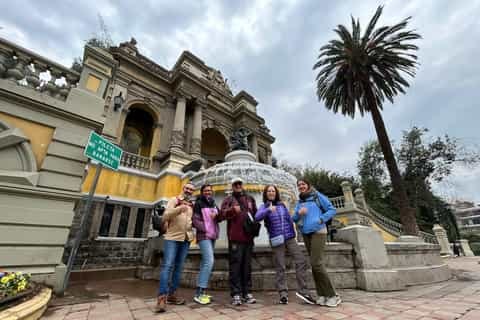 1 mi from SantiagoMuseo Chileno de Arte Precolombino
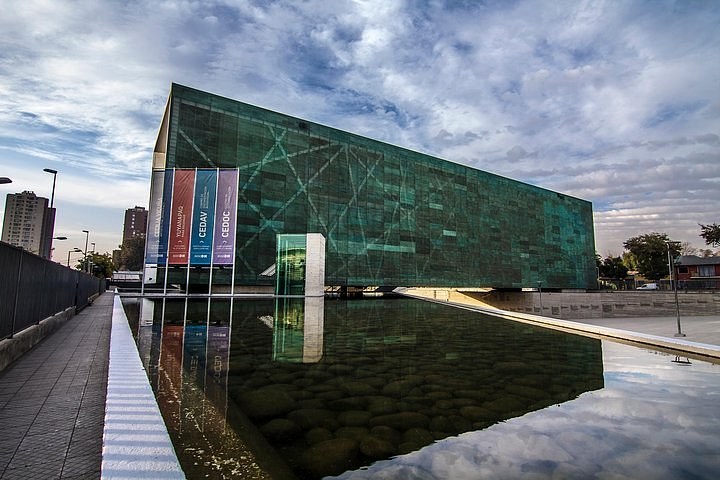 2 mi from SantiagoMuseo de la Memoria y los Derechos Humanos
 After you step off · near Cape Town
You end in a different port — stay on, and add what is within reach before you fly home.