Your cruise
Silver Endeavour · 23-night Northern Europe cruise, Buenos Aires to Dakar
Mar 25 – Apr 17 · 23 nights ·
Day 1 Buenos Aires (board) · Day 2 Montevideo · Day 3 Punta del Este · Day 4–5 at sea · Day 6 Paranagua · Day 7 Paraty · Day 8 Rio de Janeiro · Day 9 at sea · Day 10 Houtman Abrolhos · Day 11 Porto Seguro · Day 12–13 at sea · Day 14 Natal(Rio Grande do Norte) · Day 15–18 at sea · Day 19 Aberdeen · Day 20 Tokeh · Day 21–23 Bijagos Archipelago · Day 24 Dakar (step off)
What you do Step inside Montevideo's legendary iron-and-glass market for a private guided experience culminating in a tableside asado feast — Uruguay's greatest culinary ritual. This is bucket-list South American dining, done properly.
What to expect Arrive at the ornate 19th-century cast-iron market as the grills roar to life and smoke fills the nave with the intoxicating scent of wood-fired beef. Your guide explains the cuts — entraña, vacío, chorizo — as Uruguayan grill culture unfolds around you. Settle at a reserved table at one of the legendary parrillas for a full asado lunch paired with Tannat wine. Finish with a stroll through the adjoining antique vendors and street performers outside.
Good to know The market is a short taxi ride (5–10 min, ~USD 5) from the cruise terminal. Confirm your reservation 48 hours ahead. All-aboard times in Montevideo are typically mid-to-late afternoon — a morning arrival leaves ample time for a leisurely 2-hour lunch.
Versus the ship tour A private local expert navigates you through the market's smoky parrillas, introduces you to the pit masters, and secures the best table — no queue, no rush, no group of 40 strangers.
book direct with VerdeAzul Private Guide Uruguay → · the full guide →
What you do Ascend the iconic Palacio Salvo — once the tallest building in South America — for a guided tour through its Art Deco interiors and a breathtaking panorama across Montevideo and the Río de la Plata. An unmissable icon of the city.
What to expect Enter through the grand portal on Plaza Independencia and ascend through the Palacio's extraordinary Art Deco corridors, lined with original tilework and wrought-iron detailing. Your guide reveals the building's legendary history — Mario Paysée Reyes's visionary design, the rumoured ghost stories, the literary salons of the 1930s. Emerge onto the rooftop terrace for sweeping 360-degree views of the old city, the rambla coastline, and the immense estuary beyond. On clear days, the view stretches to Argentina.
Good to know The Palacio sits directly on Plaza Independencia, a 15-minute taxi from the port (~USD 6). Book in advance as guided tour slots fill quickly on cruise days. Allow 1.5 hours total. Wear comfortable shoes for the tower climb.
Versus the ship tour Official guided access takes you beyond the lobby into the building's storied history — its bohemian past as artist studios, a hotel, and Uruguay's cultural heartbeat — with expert storytelling unavailable on self-guided visits.
book direct with Palacio Salvo (Official Tours) → · the full guide →
What you do Journey to Uruguay's most celebrated winery — Bodega Juanicó, founded in 1830 — for an exclusive private tour through colonial cellars, a barrel-room tasting, and a premium lunch pairing showcasing the world-class Tannat grape. A wine lover's bucket-list afternoon.
What to expect A scenic 45-minute private transfer carries you through Uruguay's rolling countryside to the estate, where a family winemaker or sommelier greets you personally. Walk through the original stone bodega, dating to 1830, and descend into candlelit barrel rooms breathing with aging Tannat. The tasting focuses on premium and reserve expressions — bold, velvety, and utterly distinct from any European variety. Lunch is served under the pergola: artisan charcuterie, local cheeses, and a three-course menu matched to cellar selections.
Good to know Arrange private round-trip transfers from the cruise terminal through VerdeAzul or your hotel concierge (approx. USD 60–80 each way for a private vehicle). Book the bodega experience directly via their website well in advance — cruise-day slots are limited. Total excursion time: 4–5 hours.
Versus the ship tour Access to the historic 19th-century barrel cellars and a sommelier-led tasting of reserve and single-vineyard Tannats rarely available in standard tours — paired with a gourmet lunch among the vines.
book direct with Bodega Juanicó (Familia Deicas) → · the full guide →
What you do Explore Montevideo's stunning Old City with a private expert guide — colonial plazas, Art Deco facades, hidden courtyards — culminating in a behind-the-scenes tour of the magnificent Teatro Solís, South America's oldest active opera house.
What to expect Begin at the ornate Puerta de la Ciudadela, the last remnant of the colonial fortress, and wind through the cobblestone streets of Ciudad Vieja past the Metropolitan Cathedral, Palacio Taranco, and the neoclassical Municipal Palace. Your expert guide narrates the city's architectural evolution — Spanish colonial to Art Deco to Modernist — with anecdotes that bring each façade to life. Arrive at Teatro Solís for a guided backstage tour: the gilded auditorium, the painted ceiling, the original machinery beneath the stage. End at a nearby café for mate and medialunas.
Good to know Ciudad Vieja is a 10-minute taxi from the port (~USD 5). Teatro Solís guided tours run on a fixed schedule — confirm times when booking your private guide. Allow 3–4 hours total. Wear flat shoes; cobblestones are uneven.
Versus the ship tour An architect or cultural historian guide — not a generalist — brings the layers of Montevideo's built heritage alive, accessing courtyards and building interiors closed to casual visitors, and timing the visit to the city's own rhythm.
book direct with ToursByLocals — Private Montevideo Guides → · the full guide →
What you do Glide along Montevideo's magnificent 22 km Rambla — one of the world's great urban waterfronts — on a private guided cycling journey from the Old City to Pocitos Beach, taking in the full sweep of the Río de la Plata at its most luminous.
What to expect Mount a quality city bike and set off along the broad seaside promenade as the Río de la Plata shimmers in the morning light — so vast it resembles an ocean horizon. Your guide narrates the neighbourhoods as they unfold: the fortified walls of the Old Port, the elegant Parque Rodó, the sun-drenched strand of Pocitos packed with joggers and mate-sipping retirees. Stop at a beachside café for a coffee and medialunas before looping back through the leafy Punta Carretas neighbourhood. The total route is approximately 12–15 km at a leisurely pace.
Good to know Orange Bike is a short taxi from the port (~USD 5). Morning departures (8–9 am) are recommended for cooler temperatures and the best light on the water. Allow 3 hours. Excursion is weather-dependent — confirm the morning of your port call.
Versus the ship tour The Rambla is impossible to appreciate from a motor coach — cycling its full coastal arc at your own pace, stopping for mate with locals at sunrise, is the authentic Montevideo experience that most visitors simply never get.
What you do Dive deep into Montevideo's greatest cultural secret — its UNESCO-recognised Carnival and Afro-Uruguayan Candombe tradition — with a private museum visit and a live drum circle immersion in the historic Barrio Sur. Utterly unique and completely unforgettable.
What to expect Begin at the Museo del Carnaval on the Rambla, where extraordinary costumes, elaborate comparsa floats, and archival film transport you into the world of Montevideo's legendary 40-day Carnival — the longest in the world. Your guide contextualises the African roots of Candombe and the neighbourhood histories of Barrio Sur and Palermo. Walk into the neighbourhood to witness a genuine tamboril drum rehearsal in a street or courtyard, and — if the group is welcoming — try your hand at the rhythm that has echoed through these streets for two centuries. End with a glass of Medio y Medio sparkling wine at a local bodegón.
Good to know The Museo del Carnaval is on the waterfront Rambla, a 10-minute taxi from the port (~USD 5). Drum rehearsals are most active on weekend afternoons — time your port call accordingly. This experience is profoundly authentic; dress casually and respectfully. Allow 3–4 hours total.
Versus the ship tour A guide with deep roots in the Afro-Uruguayan community provides access to the Barrio Sur drum rehearsals and introduces you to Candombe musicians — an encounter with living culture, not a staged performance.
book direct with ToursByLocals — Private Montevideo Guides → · the full guide →
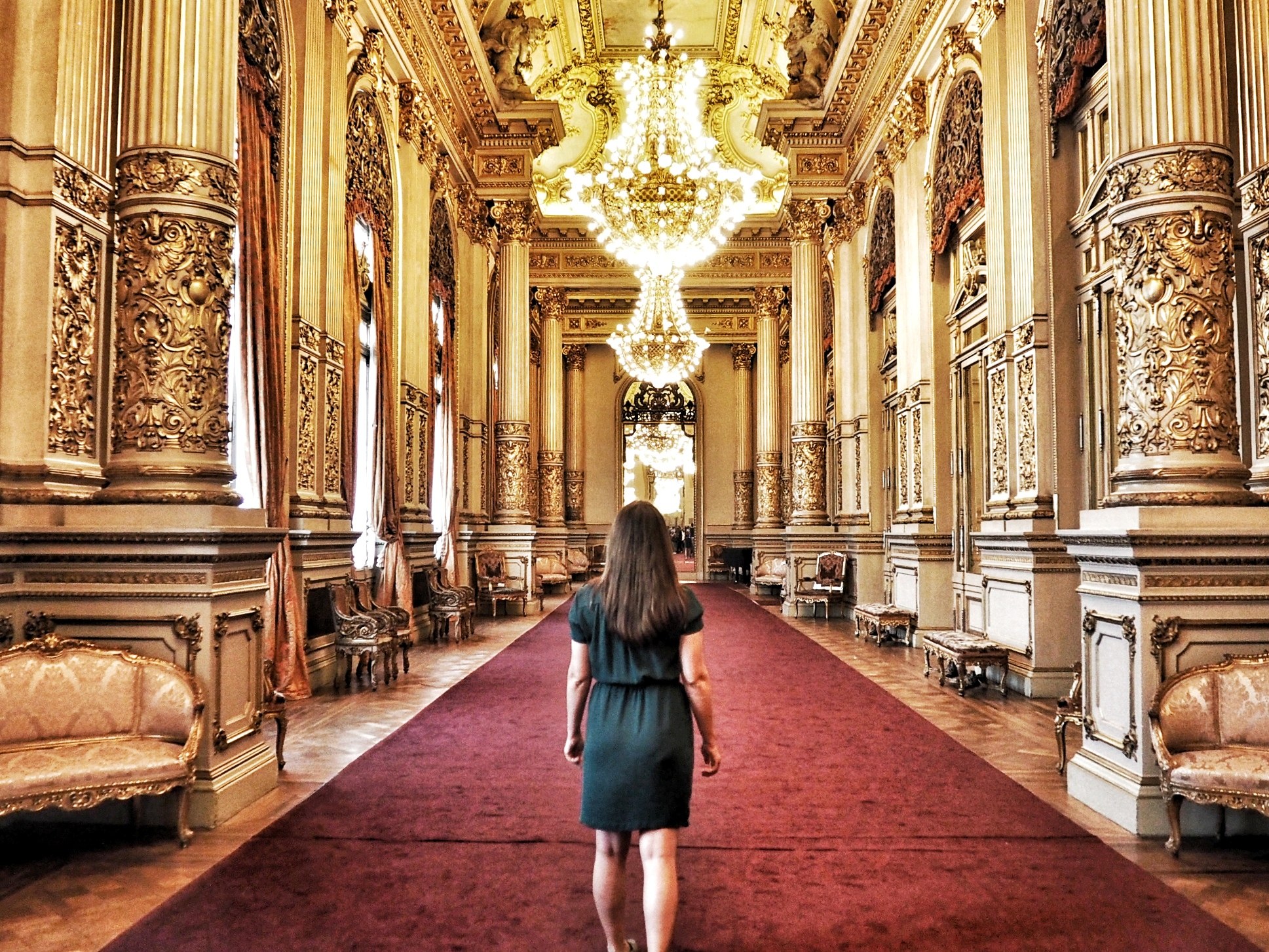
What you do Step inside one of the world's top five opera houses, where gilded tiers, a sky-blue ceiling and acoustics second to none have awed audiences since 1908. A private guided tour reveals backstage secrets before you take your seat for a world-class performance.
What to expect Your bilingual expert guide leads you through the ornate foyers, the seven-tier auditorium dripping in red velvet and gold leaf, and the vast underground workshops where set designers and seamstresses craft every production by hand. You'll hear fascinating stories of the divas, scandals and triumphant premieres that shaped Argentina's cultural identity. In the evening, take your premium seat and let a world-class company perform beneath the magnificent painted dome. The standing ovation will give you goosebumps.
Good to know Book guided tours and performance tickets directly on the official website well in advance — top performances sell out months ahead. The theatre is a 20-minute taxi or Uber from the Puerto Madero cruise terminal. Check all-aboard time carefully; a daytime tour works easily for a port day, while an evening performance suits overnight calls.
Versus the ship tour Exclusive behind-the-scenes access to rehearsal halls, costume workshops and the main stage — a perspective almost no visitor secures — followed by a live ballet, opera or orchestral concert in one of the planet's most breathtaking acoustic spaces.
book direct with Teatro Colón (official) → · the full guide →
What you do Learn the languid drama of the tango with a private maestro before a gourmet Argentine dinner and a world-class milonga show at Buenos Aires' most storied venue. This is tango as a living art form, not a tourist spectacle.
What to expect Arrive early for a private or semi-private tango lesson in a mirrored studio, where a professional dancer breaks down the embrace, the pause, the pivoting drama of each step. The colonial-stone main hall fills with candlelight as a full orchestra of bandoneons, violins and piano strikes up the first compás. Six to eight elite dancers command the floor in a two-hour show of classic and contemporary tango, followed by a three-course asado-inspired dinner with premium Malbec. The intimacy of the venue means every table has a front-row feel.
Good to know Book dinner + show directly on the website; request a private lesson by emailing the venue. The San Telmo location is a 15-minute taxi from the cruise terminal. Evening shows suit overnight or late-departure port calls — confirm all-aboard time before booking.
Versus the ship tour El Viejo Almacén is the authentic 1860s colonial warehouse where tango was born — one of the very few venues where dancers, bandoneonists and singers are career artists, not performers on a circuit. A private lesson with an in-house maestro before the show transforms you from spectator to participant.
book direct with El Viejo Almacén (official) → · the full guide →
What you do Wander the marble city of the dead alongside a local historian who unlocks the stories of Argentina's oligarchs, generals and one legendary First Lady. Continue into elegant Palermo for boutique-lined streets and a table at a celebrated wine bar.
What to expect Your guide meets you at the ornate entrance to Recoleta Cemetery and navigates its labyrinthine avenues of mausoleums — grand neo-Gothic chapels and Art Deco tombs jostling for eternity. You'll pause at Evita Perón's understated tomb and hear the full, complex story that Hollywood simplified. Strolling into Palermo, the city transforms: jacaranda-shaded streets, independent design boutiques, and a curated stop at a wine bar for an Argentine varietal tasting paired with local charcuterie. The pace is entirely yours — nothing is rushed.
Good to know Book directly on the BuenosTours website and specify private if you prefer a solo-group experience. Wear comfortable walking shoes; the cemetery's cobblestone lanes are uneven. The route is roughly 4–5 hours and easily completed before a late-afternoon all-aboard.
Versus the ship tour BuenosTours' expert-led small-group and private walks are conversational and unhurried — guides are historians and cultural insiders who read the city's architecture, social tensions and politics with the fluency of a native novel. This is Buenos Aires understood, not just seen.
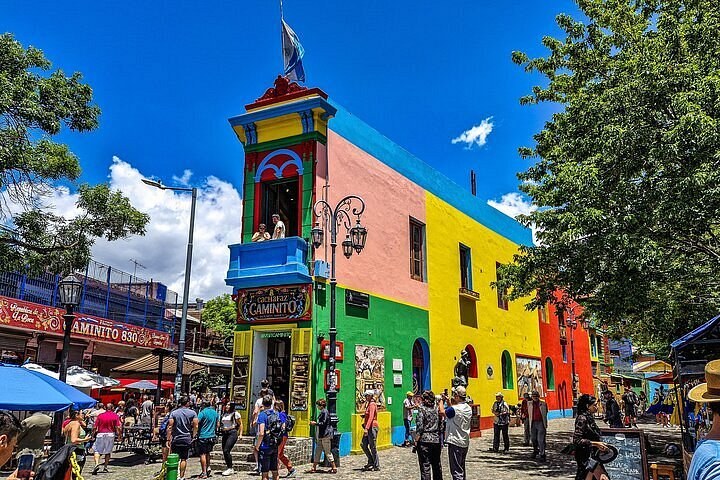
What you do Lose yourself in the kaleidoscopic corrugated-iron streetscape of Caminito before weaving through the cobblestoned artisan stalls and tango buskers of San Telmo's legendary Sunday fair — curated with a private guide who knows every back alley.
What to expect You arrive at Caminito as the morning light floods the vivid zigzag of zinc facades — Maria positions you for the photographs that don't appear on postcards. She introduces you to local artists selling in the street-level galleries and explains how this working-class barrio became Argentina's most painted neighbourhood. In San Telmo, the Sunday fair's hundreds of stalls overflow with silverwork, Art Deco porcelain and vintage leather; Maria steers you away from tourist trinkets to the antique dealers serious collectors frequent. The tour ends with a cortado and medialunas at a corner café that has served the neighbourhood for decades.
Good to know The Sunday San Telmo Fair operates 10:00–17:00 — this excursion is best on Sundays. Book directly via the Go Ask a Local website. La Boca has a concentrated tourist zone; staying with a local guide is both the safest and richest way to explore. Allow 4–5 hours; taxis back to the cruise terminal take approximately 15 minutes.
Versus the ship tour Maria is a lifelong Porteña whose insider knowledge transforms a walk through La Boca and San Telmo into a layered cultural narrative — from immigrant Italian dock workers painting their houses in leftover ship paint, to the milongas where tango evolved in tenement courtyards. You move at your own pace, off the tourist current.
book direct with Go Ask a Local – Maria's Private Buenos Aires Tours → · the full guide →
What you do Escape the city entirely on a private launch into the Paraná Delta — an Amazonian labyrinth of willow-shaded waterways, weekend villas and rowing clubs just 30 km from the capital. Lunch aboard or at a delta restaurant as the current does the work.
What to expect A private transfer north from Puerto Madero delivers you to the Tigre waterfront in under an hour. Your boat glides into channels shaded by ceibo trees and trailing willows, past brightly painted weekend houses accessible only by water. The captain points out native birds — kingfishers, herons, monk parakeets — as you drift deeper into the labyrinth. Lunch at a riverside restaurant means grilled river fish, provoleta and cold Torrontés as speedboats and kayakers pass in the dappled light. The return journey offers a completely different perspective of the channels as the afternoon light turns amber.
Good to know The Tigre Delta excursion takes approximately 6–7 hours return including transfer; confirm all-aboard time before booking. Apply sunscreen and bring a light layer — the delta breeze on the water can be cool even in summer. Book the private boat option directly by contacting Shore Excursions Group or a local Tigre operator for the most exclusive experience.
Versus the ship tour A private launch gives you total control of pace and itinerary — your captain navigates narrow channels the larger excursion boats cannot reach, and you stop where you choose: a riverside fruit vendor, a 19th-century rowing club, a vine-covered restaurant on stilts. The delta reveals an Argentina almost no cruise passenger sees.
book direct with Shore Excursions Group – Tigre Delta & River Cruise → · the full guide →
What you do Ride out to a working Pampas estancia for a full-day immersion in gaucho culture: watch expert horsemen perform, try a polo lesson, and feast on a traditional wood-fired asado with unlimited Malbec beneath an open sky.
What to expect A private transfer (approx. 90 minutes) delivers you through the flat, endless horizon of the Pampas to La Mimosa's white-painted colonial ranch house. Gauchos in traditional bombachas and berets demonstrate horsemanship with staggering precision, and guests are warmly invited to ride alongside. A polo introduction on gentle horses is led by an estancia instructor. The centrepiece is the asado: whole ribs, chorizo, morcilla and sweetbreads char-grilled over quebracho embers, served with chimichurri, salads and flowing Malbec at long communal tables. The afternoon slows to the rhythm of the Pampas — folk music, mate, and the longest horizon you've ever seen.
Good to know Transfer to La Mimosa takes approximately 90 minutes each way — this is a full-day excursion best suited to port days with a late-evening all-aboard. Book directly on the La Mimosa website and arrange private transfers through your concierge for maximum comfort. Wear closed-toe shoes for riding; bring sunscreen and a hat.
Versus the ship tour La Mimosa is a genuine working estancia — not a theatrical set piece — where third-generation gauchos demonstrate real skills honed over lifetimes: lazo work, doma (horse-breaking), and the intricate footwork of malambo. The wood-fired asado served in the open air under ombú trees is the finest meal most guests eat in Argentina.
book direct with Estancia La Mimosa (official) → · the full guide →
What you do Step inside Montevideo's legendary iron-and-glass market for a private guided experience culminating in a tableside asado feast — Uruguay's greatest culinary ritual. This is bucket-list South American dining, done properly.
What to expect Arrive at the ornate 19th-century cast-iron market as the grills roar to life and smoke fills the nave with the intoxicating scent of wood-fired beef. Your guide explains the cuts — entraña, vacío, chorizo — as Uruguayan grill culture unfolds around you. Settle at a reserved table at one of the legendary parrillas for a full asado lunch paired with Tannat wine. Finish with a stroll through the adjoining antique vendors and street performers outside.
Good to know The market is a short taxi ride (5–10 min, ~USD 5) from the cruise terminal. Confirm your reservation 48 hours ahead. All-aboard times in Montevideo are typically mid-to-late afternoon — a morning arrival leaves ample time for a leisurely 2-hour lunch.
Versus the ship tour A private local expert navigates you through the market's smoky parrillas, introduces you to the pit masters, and secures the best table — no queue, no rush, no group of 40 strangers.
book direct with VerdeAzul Private Guide Uruguay → · the full guide →
What you do Ascend the iconic Palacio Salvo — once the tallest building in South America — for a guided tour through its Art Deco interiors and a breathtaking panorama across Montevideo and the Río de la Plata. An unmissable icon of the city.
What to expect Enter through the grand portal on Plaza Independencia and ascend through the Palacio's extraordinary Art Deco corridors, lined with original tilework and wrought-iron detailing. Your guide reveals the building's legendary history — Mario Paysée Reyes's visionary design, the rumoured ghost stories, the literary salons of the 1930s. Emerge onto the rooftop terrace for sweeping 360-degree views of the old city, the rambla coastline, and the immense estuary beyond. On clear days, the view stretches to Argentina.
Good to know The Palacio sits directly on Plaza Independencia, a 15-minute taxi from the port (~USD 6). Book in advance as guided tour slots fill quickly on cruise days. Allow 1.5 hours total. Wear comfortable shoes for the tower climb.
Versus the ship tour Official guided access takes you beyond the lobby into the building's storied history — its bohemian past as artist studios, a hotel, and Uruguay's cultural heartbeat — with expert storytelling unavailable on self-guided visits.
book direct with Palacio Salvo (Official Tours) → · the full guide →
What you do Journey to Uruguay's most celebrated winery — Bodega Juanicó, founded in 1830 — for an exclusive private tour through colonial cellars, a barrel-room tasting, and a premium lunch pairing showcasing the world-class Tannat grape. A wine lover's bucket-list afternoon.
What to expect A scenic 45-minute private transfer carries you through Uruguay's rolling countryside to the estate, where a family winemaker or sommelier greets you personally. Walk through the original stone bodega, dating to 1830, and descend into candlelit barrel rooms breathing with aging Tannat. The tasting focuses on premium and reserve expressions — bold, velvety, and utterly distinct from any European variety. Lunch is served under the pergola: artisan charcuterie, local cheeses, and a three-course menu matched to cellar selections.
Good to know Arrange private round-trip transfers from the cruise terminal through VerdeAzul or your hotel concierge (approx. USD 60–80 each way for a private vehicle). Book the bodega experience directly via their website well in advance — cruise-day slots are limited. Total excursion time: 4–5 hours.
Versus the ship tour Access to the historic 19th-century barrel cellars and a sommelier-led tasting of reserve and single-vineyard Tannats rarely available in standard tours — paired with a gourmet lunch among the vines.
book direct with Bodega Juanicó (Familia Deicas) → · the full guide →
What you do Explore Montevideo's stunning Old City with a private expert guide — colonial plazas, Art Deco facades, hidden courtyards — culminating in a behind-the-scenes tour of the magnificent Teatro Solís, South America's oldest active opera house.
What to expect Begin at the ornate Puerta de la Ciudadela, the last remnant of the colonial fortress, and wind through the cobblestone streets of Ciudad Vieja past the Metropolitan Cathedral, Palacio Taranco, and the neoclassical Municipal Palace. Your expert guide narrates the city's architectural evolution — Spanish colonial to Art Deco to Modernist — with anecdotes that bring each façade to life. Arrive at Teatro Solís for a guided backstage tour: the gilded auditorium, the painted ceiling, the original machinery beneath the stage. End at a nearby café for mate and medialunas.
Good to know Ciudad Vieja is a 10-minute taxi from the port (~USD 5). Teatro Solís guided tours run on a fixed schedule — confirm times when booking your private guide. Allow 3–4 hours total. Wear flat shoes; cobblestones are uneven.
Versus the ship tour An architect or cultural historian guide — not a generalist — brings the layers of Montevideo's built heritage alive, accessing courtyards and building interiors closed to casual visitors, and timing the visit to the city's own rhythm.
book direct with ToursByLocals — Private Montevideo Guides → · the full guide →
What you do Glide along Montevideo's magnificent 22 km Rambla — one of the world's great urban waterfronts — on a private guided cycling journey from the Old City to Pocitos Beach, taking in the full sweep of the Río de la Plata at its most luminous.
What to expect Mount a quality city bike and set off along the broad seaside promenade as the Río de la Plata shimmers in the morning light — so vast it resembles an ocean horizon. Your guide narrates the neighbourhoods as they unfold: the fortified walls of the Old Port, the elegant Parque Rodó, the sun-drenched strand of Pocitos packed with joggers and mate-sipping retirees. Stop at a beachside café for a coffee and medialunas before looping back through the leafy Punta Carretas neighbourhood. The total route is approximately 12–15 km at a leisurely pace.
Good to know Orange Bike is a short taxi from the port (~USD 5). Morning departures (8–9 am) are recommended for cooler temperatures and the best light on the water. Allow 3 hours. Excursion is weather-dependent — confirm the morning of your port call.
Versus the ship tour The Rambla is impossible to appreciate from a motor coach — cycling its full coastal arc at your own pace, stopping for mate with locals at sunrise, is the authentic Montevideo experience that most visitors simply never get.
What you do Dive deep into Montevideo's greatest cultural secret — its UNESCO-recognised Carnival and Afro-Uruguayan Candombe tradition — with a private museum visit and a live drum circle immersion in the historic Barrio Sur. Utterly unique and completely unforgettable.
What to expect Begin at the Museo del Carnaval on the Rambla, where extraordinary costumes, elaborate comparsa floats, and archival film transport you into the world of Montevideo's legendary 40-day Carnival — the longest in the world. Your guide contextualises the African roots of Candombe and the neighbourhood histories of Barrio Sur and Palermo. Walk into the neighbourhood to witness a genuine tamboril drum rehearsal in a street or courtyard, and — if the group is welcoming — try your hand at the rhythm that has echoed through these streets for two centuries. End with a glass of Medio y Medio sparkling wine at a local bodegón.
Good to know The Museo del Carnaval is on the waterfront Rambla, a 10-minute taxi from the port (~USD 5). Drum rehearsals are most active on weekend afternoons — time your port call accordingly. This experience is profoundly authentic; dress casually and respectfully. Allow 3–4 hours total.
Versus the ship tour A guide with deep roots in the Afro-Uruguayan community provides access to the Barrio Sur drum rehearsals and introduces you to Candombe musicians — an encounter with living culture, not a staged performance.
book direct with ToursByLocals — Private Montevideo Guides → · the full guide →
What you do A fully private, door-to-door tour of Punta del Este's most iconic landmarks — Los Dedos, the Peninsula, the lighthouse, and La Barra — at your own pace with a dedicated expert guide.
What to expect Your private bilingual guide meets you dockside and whisks you away in a comfortable air-conditioned vehicle. You'll photograph the world-famous La Mano (Los Dedos) sculpture on Playa Brava, stroll the charming peninsula streets, and climb to the historic lighthouse for panoramic Atlantic views. The route extends to La Barra's bohemian art galleries and the iconic curved bridge — a favourite among architects and designers. Throughout, your guide weaves in the social history and glamour that make Punta del Este South America's most exclusive resort city.
Good to know Tour runs approximately 4 hours — comfortably within most port schedules. Pre-book directly and confirm your ship's all-aboard time so the guide can tailor the return. Port of Punta del Este is compact; transfer to the city center is under 10 minutes.
Versus the ship tour Fully private vehicle and guide exclusively for your group — you set the pace, linger where you wish, and never share the experience with strangers. Port pickup is included, making logistics seamless.
book direct with Top Private Tours Uruguay → · the full guide →
What you do Visit Carlos Páez Vilaró's legendary whitewashed cliff-top sanctuary — part studio, part museum, part hotel — and stay for the magical sunset ritual that draws luminaries from across the globe.
What to expect Casapueblo rises above Punta Ballena like a Mediterranean dream sculpted by hand — every curve, every wall was shaped personally by the celebrated Uruguayan artist. The museum rooms display Vilaró's vivid paintings, sculptures, and the extraordinary story of his son's survival in the Andes crash of 1972 (the inspiration for the film 'Alive'). Wander at your own pace through labyrinthine white corridors before settling on the panoramic terrace with a signature Medio y Medio cocktail. As the sun drops, a staff member reads the poetic dedication to the light — one of South America's most moving travel rituals.
Good to know Casapueblo is 12 km west of Punta del Este; arrange a private transfer or taxi (approx. 20 min). The sunset ritual is the highlight — time your visit for late afternoon. Check your ship's all-aboard time carefully; sunset in austral summer is around 8 pm, which may be tight. A daytime visit to the museum alone is also deeply worthwhile.
Versus the ship tour No group tour can replicate the unhurried hour at Casapueblo's cliff-edge terrace, drink in hand, watching the sun melt into the Río de la Plata while a staff member recites Páez Vilaró's famous sunset poem — an intimate ritual performed every single evening.
book direct with Casapueblo Official (Museo Taller Carlos Páez Vilaró) → · the full guide →
What you do An exclusive art lover's circuit pairing the Ralli Museum's world-class Latin American & Surrealist collection with Atchugarry Foundation's breathtaking marble sculpture park set in 120 acres of Atlantic forest.
What to expect The Ralli Museum houses an extraordinary permanent collection of Latin American masters — Botero, Dalí, and Miró among them — displayed in five elegant villas set within manicured gardens. Your guide then drives you deep into the native forest of Punta del Este's hinterland to Fundación Atchugarry, where soaring white marble sculptures emerge from trees and meadows in a way that feels genuinely spiritual. Pablo Atchugarry's studio is on-site, and your guide can often arrange an informal glimpse of works in progress. This is Punta del Este as very few visitors ever experience it.
Good to know Both venues are open Tuesday–Sunday; confirm hours seasonally. The combined visit takes 3–4 hours. Located 10–15 km from the port — private transfer is the only practical option and is included with Top Private Tours. Pre-book well in advance as private guide slots fill quickly in peak season (Dec–Feb).
Versus the ship tour Both institutions are free-entry and rarely crowded — the magic lies in having a knowledgeable private art guide who contextualises Pablo Atchugarry's monumental marble works in their natural setting, turning a gallery visit into a genuinely moving experience.
book direct with Top Private Tours Uruguay → · the full guide →
What you do Wind along the dramatic Atlantic coastline from Punta del Este's famous beaches to the bohemian enclave of La Barra, pausing for a long, languid lunch at one of Uruguay's most celebrated beachfront restaurants.
What to expect Beginning at the iconic La Mano sculpture on Playa Brava — the outstretched fingers rising from the sand that have become the symbol of Punta del Este — your guide drives you east along Ruta Interbalnearia, with rolling dunes, pine forests, and thundering Atlantic surf as your backdrop. La Barra is a chic, sun-bleached village beloved by architects, artists, and Buenos Aires' elite weekenders. Browse local design boutiques, cross the famous undulating bridge, and settle into a long lunch of fresh calamari, Uruguayan chivito, and Tannat wine. The return drive along the calmer Mansa coast provides a beautiful contrast.
Good to know La Barra is approximately 15 km east of the port — about 25 minutes by private vehicle. Allow 4–5 hours for the full experience. Book your guide through Tours by Locals and request a reservation at Awa Hotel's restaurant or Parador La Huella (José Ignacio, slightly further, worth it) for the finest dining.
Versus the ship tour Your private local guide knows exactly which table at which restaurant captures the best light and the freshest catch — Uruguay's grass-fed beef and Atlantic seafood are world-class, and this experience is curated, not rushed.
book direct with Tours by Locals Uruguay → · the full guide →
What you do Watch a boisterous sea lion colony bask at the working port, then climb the peninsula's 19th-century lighthouse for sweeping 360° views where the Atlantic meets the Río de la Plata.
What to expect Punta del Este's working fishing port harbours a thriving, permanently resident colony of South American sea lions (lobos marinos), lounging on the docks with magnificent indifference to human admirers. Your expert naturalist guide explains their social behaviour and seasonal patterns before leading you on foot through the narrow streets of the historic peninsula — the oldest part of the city, lined with elegant early 20th-century villas. The 1877 lighthouse stands at the very tip, and the climb rewards you with a dazzling panorama: to one side the wild Playa Brava, to the other the calm Playa Mansa, and the vast estuary stretching towards Buenos Aires. Finish with a coffee on Gorlero Avenue, the resort's elegant main promenade.
Good to know This is one of the most walkable and rewarding self-guided or small-group experiences in port. The lighthouse and port are both within 1.5 km of the pier. The sea lions are present year-round. Wear comfortable walking shoes and sunscreen. All-aboard is easily manageable.
Versus the ship tour A small-group format means you linger at the sea lion colony as long as you wish and receive detailed natural history commentary — not the whistle-stop glance from a larger coach tour.
book direct with Shore Excursions Group – Punta del Este Highlights → · the full guide →
What you do Venture into the rolling Uruguayan countryside to a boutique olive estate, discover the craft of cold-press extra-virgin olive oil, and sit down to an intimate farm-to-table tasting paired with local cheeses and Tannat wine.
What to expect Leaving the glamour of the coast behind, your private vehicle heads inland into the soft hills of Maldonado Department, where ancient olive groves shimmer silver in the southern sun. The estate owner — often a passionate family producer — walks you through the grove, explains the varietals (Arbequina, Frantoio, Picual), and demonstrates the cold-press process that gives Uruguayan oils their distinctive grassy, peppery character. The tasting table is laid with fresh bread, local cheeses, charcuterie, and glasses of deep Tannat — Uruguay's flagship red grape — to round out the flavours. You'll leave with a bottle of oil you simply cannot buy anywhere else in the world.
Good to know Estates are 20–40 minutes from the port; a private guide and vehicle are essential. Best booked at least two weeks ahead through Tours by Locals, specifying an olive oil or agri-tourism focus. Allow 3–4 hours. Confirm all-aboard time with your guide at the outset.
Versus the ship tour Uruguay produces some of the southern hemisphere's finest olive oils, yet almost no visitors experience it at source. A private guide ensures this is an intimate, hands-on tasting — not a commercial operation — with direct access to the estate owners and their story.
book direct with Tours by Locals Uruguay → · the full guide →
What you do Board the legendary Serra Verde Express in a private Gold-Class cabin and descend the Serra do Mar escarpment — one of the world's great rail journeys — through Atlantic Forest, waterfalls, and sheer canyon walls to the cosmopolitan city of Curitiba.
What to expect The 3-hour descent from Paranaguá hugs the cliffs of the Serra do Mar, crossing 13 tunnels and 30 bridges through UNESCO-listed Atlantic Forest. Gold Class passengers enjoy priority boarding, curated Brazilian snacks, and a private viewing platform at the most dramatic viaducts. Arriving in Curitiba, the afternoon is yours to explore the Oscar Niemeyer Museum or the Botanical Garden before the return journey. The return leg at golden hour, with mist rolling through the gorges, is utterly unforgettable.
Good to know Book Gold Class directly on the Serra Verde Express website well in advance — it sells out weeks ahead. The full round-trip is roughly 8–9 hours; confirm your ship's all-aboard time before booking. Departures are from Paranaguá station, a short taxi ride from the cruise pier.
Versus the ship tour Gold Class carriages offer panoramic windows, table service, and dedicated attendants — a level of intimacy and comfort that transforms a scenic railway into a true luxury event. Only a handful of seats exist per departure.
What you do Escape to Ilha do Mel — a car-free Atlantic paradise — by private chartered vessel from Paranaguá Bay. Explore the mystical Gruta das Encantadas sea caves and climb to the 19th-century Lighthouse of the Shells for panoramic views over the Paraná coast.
What to expect Your private launch crosses Paranaguá Bay, dolphins often riding the bow wave en route to this protected island reserve. At the Gruta das Encantadas, your guide leads you into glittering sea caverns carved into basalt — legend says mermaids still dwell here. The walk to the Lighthouse of the Shells (Farol das Conchas, 1872) rewards with sweeping views across the bay and open Atlantic. A leisurely lunch of fresh grilled fish at a beachside shack on Praia da Fortaleza rounds out the morning before your private return transfer.
Good to know Boat crossing is approximately 90 minutes each way; coordinate departure with your all-aboard time (allow a 90-min buffer). The island has no cars — only walking trails — so wear comfortable shoes. Pre-book your private boat charter directly with Gregtur to secure the vessel and guide.
Versus the ship tour A private boat means you set the pace — linger inside the enchanted sea caves at low tide when the light turns jade, and reach the lighthouse trail before day-trippers arrive. No queues, no crowds, just the raw Atlantic Forest island as it should be experienced.
What you do Uncover one of Brazil's best-preserved colonial waterfronts on a private expert-led walking tour of Paranaguá's 17th-century centro histórico — from baroque churches and gold-rush merchants' mansions to the legendary Municipal Coffee Market on the waterfront.
What to expect Begin at the 1746 Igreja de São Benedito, one of the few churches in Brazil built by and for enslaved Africans, its interior glowing with azulejo tiles. Stroll the cobbled Rua da Praia past Portuguese colonial townhouses to the Mercado Municipal do Café — a stunning 1909 Art Nouveau building where you'll taste freshly roasted Paraná coffee. The Museu de Arqueologia e Etnologia (Federal University of Paraná) reveals 5,000 years of coastal indigenous culture. End at the 17th-century fountain — the oldest in Brazil still in its original location — for a private caipirinha toast.
Good to know The historic quarter is walkable from the cruise pier in under 10 minutes. A private half-day tour (3–4 hours) fits comfortably within a typical port call. Book Gregtur directly and request an English-speaking historian-guide. Wear light breathable clothing; the waterfront can be humid.
Versus the ship tour A certified local historian-guide unlocks stories that no audio guide can replicate — the slave trade that built these mansions, the Jesuit smuggling routes, the coffee barons who shaped Brazil's economy — all in the unhurried intimacy of a private tour.
What you do Journey inland to Vila Velha State Park — Paraná's most dramatic natural wonder — where 300-million-year-old sandstone towers sculpted by wind and rain rise above the plateau, and emerald-green Furnas sinkholes plunge 100 metres into the earth.
What to expect A 90-minute private transfer through Paraná's highland plateau brings you to the park entrance at first light. The Arenitos (sandstone towers) trail winds past formations that resemble a camel, a map of Brazil, and a sleeping giant — your guide reveals the folklore of each. The Furnas sinkholes are jaw-dropping: descend by cable car or staircase to floating pontoons on their glassy floors. A packed gourmet picnic lunch amid the formations, arranged by Gregtur, elevates the experience before your scenic return to the port.
Good to know Vila Velha is approximately 130 km from Paranaguá (90 min each way). This is a full-day excursion (8–9 hours) — confirm your all-aboard time carefully. The park trail involves moderate walking on uneven terrain; bring sturdy walking shoes and sun protection. Pre-book Gregtur well in advance for private vehicle and licensed guide.
Versus the ship tour A private vehicle and expert guide means you reach the Furnas at sunrise, when the light transforms the lagoon water to liquid turquoise, hours before independent visitors arrive. Your guide interprets the geological and indigenous history of these formations with a depth impossible in a group setting.
What you do Dive deep into the soul of Paranaguá's food culture with a private culinary guide — from the bustling Mercado Municipal do Café to a back-street restaurant serving barreado, the slow-cooked beef stew that is Paraná's greatest gastronomic secret.
What to expect Your morning begins at the Art Nouveau Mercado Municipal do Café, sampling single-origin Paraná espresso alongside traders who've worked the stalls for generations. Your guide then leads you through the waterfront fish market — prawns, robalo, and tainha fresh off the bay boats. The centrepiece is a private table at a renowned local restaurant for barreado: meltingly tender beef, banana-farinha, and rice, eaten as it has been for three centuries. Pair with a chilled Paraná craft beer or a classic caipirinha of local cachaça.
Good to know The market and restaurants are within easy walking distance of the cruise pier. A half-day (3–4 hours) is sufficient for the full experience. Barreado restaurants fill quickly at lunch — have your Gregtur guide pre-reserve the table when booking. Inform the operator of any dietary restrictions at time of booking.
Versus the ship tour A private local culinary guide takes you to family-run establishments and market stalls that cater exclusively to Paranaguenses — no tourist menus, no rushed buffets. Barreado is traditionally sealed in clay and slow-cooked for 24 hours; your guide knows exactly which kitchen does it best.
What you do Visit the most revered Marian shrine in southern Brazil — the 17th-century Santuário de Nossa Senhora do Rocio — on a private guided excursion combining spiritual heritage, baroque art, and sweeping panoramic views over Paranaguá Bay and the Atlantic Forest.
What to expect A short private transfer (8 km) brings you to the hilltop sanctuary, a striking white baroque basilica whose twin towers preside over the Paraná coast. Inside, your guide reveals ex-voto rooms lined with thousands of offerings — painted canvases, model ships, crutches — each a story of miraculous intervention. The collection dates to the 1600s and rivals any museum of popular faith in South America. The esplanade viewpoint offers a breathtaking panorama of the bay, the islands, and the Serra do Mar in the distance — a perfect photography moment in the golden morning light.
Good to know The sanctuary is 8 km from the cruise pier; a private transfer is included with Gregtur. Half-day (2.5–3 hours) including travel fits well within a standard port call. Dress modestly for entry (shoulders and knees covered). The sanctuary is busiest on Sundays and feast days — a private guide navigates access smoothly regardless.
Versus the ship tour A private guide provides rich context on the 400-year pilgrimage tradition, the indigenous and Afro-Brazilian syncretic history woven into the shrine's devotion, and access to the less-visited upper esplanade viewpoint — a perspective over the bay that few visitors ever find.
What you do Sail a private schooner across the jewel-green waters of Paraty Bay, dropping anchor at secluded islands, crystalline coves and snorkel-perfect coral gardens that day-trippers never reach. This is the quintessential Paraty experience — unhurried, sun-drenched and utterly breathtaking.
What to expect Your private schooner departs Paraty Wharf and weaves through more than 60 emerald islands, stopping at four to five spots chosen by your captain for swimming, snorkelling and beach-combing. A freshly prepared on-board lunch of grilled fish, tropical fruits and caipirinhas is served at anchor. The crew provides snorkel gear and stand-up paddleboards, and the final return leg offers a golden-hour view of the colonial skyline you will never forget.
Good to know Confirm your all-aboard time and request a departure no later than 09:00 to allow a full five-to-six hours afloat with comfortable buffer. Pre-book directly via Paraty Tours; private charters sell out weeks in advance in peak season (December–March). Wear reef-safe sunscreen and bring a light cover-up.
Versus the ship tour A fully private vessel means you set the pace, choose your anchorages and linger as long as you like — no crowds, no shared deck, and a dedicated crew attending only to you.
What you do Step inside one of South America's best-preserved colonial towns with an expert private guide who unlocks the stories behind the cobblestone lanes, gold-rush-era churches and baroque mansions of Paraty's UNESCO-listed historic centre. A living 18th-century stage set unlike anywhere else in Brazil.
What to expect Your guide meets you dockside and leads you through car-free cobbled streets paved with stones that flood at high tide by design — a centuries-old drainage system still functioning today. You enter the Igreja de Santa Rita (1722), the oldest church in Paraty, and explore the Casa da Cultura, gaining insight into how Paraty served as the principal export port for Brazilian gold and later coffee. The tour weaves through artisan ateliers and finishes with a private cachaça tasting at a historic distillery, pairing aged spirits with local cheese and honey.
Good to know The historic centre is flat and fully pedestrianised, but cobblestones are uneven — wear closed-toe shoes or sturdy sandals. Tours typically last two to three hours, leaving ample time before all-aboard. Check tide tables: flooded streets at high tide are atmospheric but require waterproof footwear.
Versus the ship tour A private licensed historian-guide means the narrative is calibrated entirely to your interests — architecture, colonial trade, pirate lore, or all three — with no rushing between photo stops.
What you do A private 4×4 Jeep expedition through Atlantic Forest trails to Paraty's legendary natural waterfall slides — including the famous Tobogã rock toboggan — and the seven cascading pools of Sete Quedas. Pure exhilaration wrapped in jungle grandeur.
What to expect Your open-top Jeep departs directly from the port area and climbs into the Serra do Mar, crossing rivers and rainforest tracks before reaching Cachoeira do Tobogã — a smooth granite chute worn by water over millennia, used as a natural slide into a cool emerald pool. From there you hike a short trail to Sete Quedas, a series of seven tiered waterfalls perfect for a restorative swim. Your guide shares the ecology of the Atlantic Forest and points out endemic birds, bromeliads and orchids along the way. The return Jeep ride offers sweeping panoramas of Paraty Bay.
Good to know Wear a swimsuit under light clothes and bring a dry bag for valuables. Water shoes or old trainers are recommended — the rock slides are slippery. Tours run approximately three to four hours; confirm your all-aboard time when booking. Pre-book at least 48 hours in advance, as private Jeep slots are limited.
Versus the ship tour Small private group departures with a local naturalist guide who knows the forest paths, the best pools to swim in, and how to time arrival before the day-trip crowds. Access to secondary trails and hidden falls not on the standard circuit.
What you do Glide by private boat into Saco do Mamanguá, a breathtaking 14-kilometre fjord of still, mirror-like water enclosed by vertical Atlantic Forest mountains — Brazil's sole tropical fjord and one of the most strikingly beautiful waterways in South America.
What to expect Your private motorboat departs Paraty Wharf and heads south along the Costa Verde coastline before entering the narrow mouth of the fjord, where the forest closes in on both sides and the water turns glassy and dark green. You anchor in a secluded cove to swim and kayak, surrounded by primary Atlantic Forest teeming with toucans and howler monkeys. A small traditional fishing village, Pouso da Cajaíba, provides the opportunity to taste local smoked fish and fresh coconut water served by families who have lived here for generations. The return journey in late afternoon bathes the fjord walls in amber light.
Good to know This is a full-day excursion (approx. seven hours); confirm ship all-aboard time carefully and arrange a 08:00 departure. Bring reef-safe sunscreen, insect repellent for the forest stops, and a dry bag. Cell coverage is minimal inside the fjord — a feature, not a bug. Advance booking essential.
Versus the ship tour Mamanguá is entirely off the beaten path — no organised mass tourism, no jet-skis, just silence, forest, and the reflections of mountains in perfect water. A private charter gets you there with time to truly absorb it.
What you do Journey to a working 17th-century sugar-cane estate along Brazil's historic Caminho do Ouro (Gold Trail) for an intimate private tour of one of Paraty's oldest artisanal cachaça distilleries, followed by a farm-to-table lunch that celebrates the flavours of the Costa Verde.
What to expect A private vehicle collects you from the dock and follows a stretch of original 18th-century gold-paved trail through the Atlantic Forest to Fazenda Murycana, a beautifully preserved colonial farm with original ox-powered mill still in use. The owner walks you through the entire artisanal process — from hand-cut cane to copper pot-still — before guiding a structured tasting of four to six aged cachaças, explaining terroir and barrel selection with the rigour of a fine-wine producer. A long, leisurely lunch of traditional Costa Verde dishes — moqueca, rice, farofa and tropical fruits — is served on the estate's shaded veranda, accompanied by cachaça cocktails and fresh juice.
Good to know Fazenda Murycana is approximately 15 minutes from the historic centre by car. Reserve transportation in advance through Paraty Tours or your hotel. The full experience runs three to four hours — pair with a morning historic-centre walk for a perfect day ashore. Not suitable for guests unable to manage short unpaved paths.
Versus the ship tour Access to a private estate not open to casual walk-ins — the family owners lead the tour themselves, sharing four centuries of distilling heritage, and the tasting pairs aged cachaças with house-made preserves in a setting of absolute colonial authenticity.
What you do Escape to Trindade, the wild Atlantic Forest coastline village south of Paraty, and hike to Lagoinha do Leste — a breathtaking lagoon-and-beach combination backed by mountain forest that consistently ranks among Brazil's most beautiful and untouched beaches.
What to expect Your 4×4 transfers you to Trindade, a bohemian coastal village 25 km south of Paraty, then your guide leads a 45-minute forest trail through primary Atlantic Forest — alive with butterflies, golden-lion tamarins and endemic birds — to the spectacular Lagoinha do Leste, a freshwater lagoon separated from a pounding surf beach by a narrow strip of pure white sand. You swim in both the calm lagoon and, conditions permitting, the open Atlantic, with the dramatic Serra do Mar mountains as a backdrop. On the return, your guide stops at Praia do Sono lookout for one of the most photogenic panoramas on the Costa Verde coast.
Good to know Allow four to five hours for the full experience. Wear light hiking shoes, reef-safe sunscreen and bring plenty of water — the trail is moderate but exposed in places. Depart no later than 09:00 to ensure comfortable return before all-aboard. Book at least 48 hours in advance; group size capped at six for this private format.
Versus the ship tour A small private group with a naturalist guide means you hike at your own pace, learn the Atlantic Forest ecology in depth, and arrive at a near-deserted beach that rewards the effort — a beach that cannot be reached by any boat.
What you do Rio's three crown jewels — Christ the Redeemer, Sugarloaf Mountain, and the Selarón Steps — in a single, seamlessly paced private day. A licensed local expert curates every moment, from sunrise crowds to golden-hour cable car rides.
What to expect Your private air-conditioned vehicle collects you at the cruise terminal and whisks you to the iconic Selarón Steps, where the artist Jorge Selarón's 215 mosaic-tiled risers cascade down Lapa in a blaze of colour. From there, ascend Corcovado by rack railway to stand at the feet of the 38-metre Cristo Redentor as the city unfolds 710 metres below. The afternoon belongs to Sugarloaf, riding two consecutive gondolas to the 396-metre summit for a panorama that takes in Guanabara Bay, Copacabana, and the Atlantic horizon. Lunch at a curated local restaurant is included, and your guide personally adjusts the itinerary around your all-aboard time.
Good to know Pre-book well in advance — private days fill up fast in peak season (Dec–Mar). Confirm your all-aboard time with the guide at booking so the schedule is built around it. Christ the Redeemer tickets should be pre-purchased online to skip the booth queue. Comfortable walking shoes essential; the steps at Corcovado are steep.
Versus the ship tour Entirely private — your guide, your pace, zero queuing with strangers. A licensed cultural expert weaves the history, politics, and art of each site into an unhurried narrative you simply cannot get in a crowd.
What you do Trade the tourist rack railway for a lush 90-minute jungle trail through Tijuca Forest, arriving at Cristo Redentor breathless and triumphant — before the day-trippers arrive. One of Rio's great bucket-list physical experiences.
What to expect Your expert naturalist guide meets you at the port and transfers you to Parque Lage, a neo-romantic 19th-century estate at the forest's edge. The trail climbs steadily through dense canopy — strangler figs, bromeliads, and the calls of toucans accompany your ascent. At the summit, the outstretched arms of Cristo Redentor frame a 360-degree panorama: Guanabara Bay glittering to the east, Ipanema and Copacabana arcing south, and the Tijuca massif rolling away to the west. The descent is by rack railway, so your legs get the reward without the repeat effort.
Good to know Moderate fitness required — ~4 km uphill on uneven forest paths. Departs early morning (07:00 recommended) to beat both heat and crowds; confirm timing against your all-aboard. Wear trail shoes, bring a light rain layer, water, and sunscreen. Trail can be muddy after rain.
Versus the ship tour This is the insider approach — starting from the fairytale Parque Lage mansion and ascending through Atlantic rainforest with capuchin monkeys overhead. Arriving on foot before the cable cars start running means you often have the terrace nearly to yourself.
book direct with Do Brazil Right – Shore Excursions → · the full guide →
What you do Ascend Sugarloaf by gondola as the sun melts into the Atlantic and Rio's lights begin to glitter below — with a private guide, reserved cable car access, and chilled champagne on the summit. Simply one of the most spectacular sunsets on Earth.
What to expect Your private vehicle collects you from the pier and drives the scenic bayside road to Praia Vermelha, where the cable car base station sits against a dramatic granite wall. The first gondola glides to Morro da Urca (215 m) for cocktails on an open-air terrace with views of Botafogo Bay. The second gondola carries you to the Sugarloaf summit itself, where your guide points out every landmark — the twin humps of the Two Brothers, the long sweep of Ipanema beach, and the Cristo Redentor glowing on Corcovado opposite. As darkness falls, Rio transforms into a carpet of lights stretching to the horizon.
Good to know Sunset timing shifts seasonally — confirm exact departure time with your guide against your all-aboard (typically 17:30–18:30 ascent works for most ships). Pre-purchase cable car tickets online at bondinho.com.br to skip queues. Light jacket recommended at the summit — the Atlantic breeze picks up after dark.
Versus the ship tour A private guide secures your gondola timing to land on the 396-metre summit precisely at golden hour — the moment when the bay turns copper and the city's mosaic of favelas, beaches, and skyscrapers is lit from below. Champagne is waiting.
book direct with Rio Private Guide – Alan Denis → · the full guide →
What you do Plunge into the world's largest urban rainforest on an open-top 4×4 Jeep, hunting hidden waterfalls, rare orchids, and monkeys in the canopy above Rio's skyline. Thrilling, beautiful, and utterly unlike any city tour.
What to expect The Jeep departs the port and within 20 minutes you're deep in Tijuca National Park — 32 square kilometres of restored Atlantic rainforest that once covered the entire city. Your naturalist driver-guide navigates steep cobbled tracks to the Cascatinha Taunay waterfall, where you can swim in a cool natural pool. The trail continues to the Vista Chinesa pagoda, an incongruous 1920s belvedere perched above the south zone with jaw-dropping views of Lagoa Rodrigo de Freitas and the beaches beyond. Look up: squirrel monkeys and toucans are reliable sightings year-round.
Good to know Half-day format (4 hrs) makes it very manageable against an all-aboard. Bring insect repellent, swimwear if you want to dip at the waterfall, and a light layer. Jeep seats are open-air — sunscreen essential. Available year-round but forest is most dramatic and green after rain.
Versus the ship tour An open-sided Jeep lets you lean into the forest rather than observe it through glass — guides stop at unmarked trails, hidden cascades, and viewpoints that only locals know. Small groups of 6 maximum mean the guide is always within earshot.
book direct with Do Brazil Right – Shore Excursions → · the full guide →
What you do Explore the birthplace of samba and the heart of Afro-Brazilian heritage — the Saúde docklands 'Pequena África', the Valongo Wharf UNESCO site, and the bohemian arches of Lapa — with a cultural historian as your guide.
What to expect Your expert cultural guide leads you from the port through the revitalised Saúde neighbourhood — Rio's 'Little Africa' — where the Valongo Wharf, the largest disembarkation point for enslaved Africans in the Americas, is now a haunting and essential UNESCO World Heritage Site. The route winds through Gamboa to the Praça Mauá waterfront plaza, past the Museum of Tomorrow, then south into the Lapa arches district, where the Selarón Steps cascade down in their famous mosaic splendour. At every turn your guide connects architecture, music, and history — from candomblé to capoeira — with the living culture of modern Rio.
Good to know Entirely walkable — flat terrain, approximately 5 km total. Wear comfortable shoes and light, breathable clothing. Best done in the morning before heat peaks. The Selarón Steps are at the end of the route — a natural finale. Confirm all-aboard time with guide; the 4-hour format leaves a comfortable buffer.
Versus the ship tour This is the Rio that doesn't make the postcard — the cobbled alleyways where samba was born, the 19th-century wharf where millions of enslaved Africans arrived, and the street-art-covered neighbourhood of Lapa, all interpreted by a guide with deep academic and community roots.
What you do Walk the hallowed turf, dressing rooms, and players' tunnel of Maracanã — South America's most iconic football cathedral — with a private guide who unlocks areas closed to the public, and a lifetime of stories about the Maracanazo, Pelé, and the 2014 World Cup.
What to expect Your guide meets you at the port and transfers you directly to the Zona Norte neighbourhood where Maracanã rises like a concrete colosseum. Inside, the private route takes you through the players' dressing rooms (still bearing the scent of decades of drama), the athletes' tunnel where legends have walked, and out onto the pitch itself — 78,000 seats surrounding you in silence. Your guide narrates defining moments: the 1950 World Cup 'Maracanazo' defeat, Pelé's 1,000th goal, and the stadium's reinvention for 2014. A visit to the onsite Hall of Fame and the club merchandise boutique rounds out a deeply Rio experience.
Good to know Tours run most mornings when no match is scheduled — verify match schedule before booking as stadium access changes on game days. Allow 2.5–3 hours including transfer from port. The stadium is a 20-minute drive from the cruise terminal. Combine with a lunch stop in the Santa Teresa neighbourhood on the return for a perfect half-day.
Versus the ship tour A private local guide who lives and breathes football takes you beyond the standard visitor path — into the press box, the VIP areas, and pitch-side — bringing the stadium's seismic moments to life with personal storytelling that no group tour can match.
book direct with Tours by Locals – Rio de Janeiro Private Guides → · the full guide →
What you do See the impossible blue-and-turquoise coral maze from the air — the view that made this place 'Australia's Galapagos', over reefs and wrecks invisible from any boat deck.
What to expect You lift off from Geraldton airport and within minutes the ocean floor turns visible in bands of jade, cobalt and white sand. Your pilot banks low over the Easter Group's lagoons, the Batavia wreck site, and thousands of nesting seabirds on Pelsaert Island. Flights run about an hour and often extend into a fly-and-snorkel combination if conditions allow. It's the single best way to understand the scale of the 122-island archipelago in one sitting.
Good to know Book directly with Shine Aviation before your cruise date — flights depend on wind and fill fast in peak (Sept-Nov) season. Confirm return timing against your ship's all-aboard, as charter flights can run long if weather shifts.
Versus the ship tour A small Cessna with 3-5 passengers and a pilot who narrates the wrecks, lagoons and rookeries below — nothing about this is a queue-and-shuffle experience.
What you do Fly out over the reef, then step off a private vessel straight into some of the clearest, least-dived snorkeling water in Australia, guided by a marine naturalist.
What to expect After the short charter flight in, you board a purpose-built dive/snorkel vessel with a handful of other guests. The crew reads conditions and moves between reef passes, wreck sites and sea lion colonies, stopping wherever the wildlife is best that morning. Lunch is fresh local seafood eaten on deck, anchored in a lagoon so still it looks unreal. You fly back to Geraldton in the late afternoon, salt-crusted and sated.
Good to know Pre-book at least a few weeks ahead — weather cancellations are common and operators keep a standby list. Bring reef-safe sunscreen and a rash vest; the sun here is unforgiving even on overcast days.
Versus the ship tour Combines a scenic flight with a small-group boat charter — no mass tender lines, and guides who know exactly which coral bommies hold turtles and sea lions that day.
What you do Stand on the tiny coral cay where the 1629 Batavia wreck's survivors turned to mutiny and massacre — one of the most extraordinary and least-known stories in maritime history.
What to expect Your boat anchors off Beacon Island, once called 'Batavia's Graveyard'. A historian guide walks the group across the low coral outcrop, pointing out foundation stones from the survivors' shelters and explaining the mutiny, trials and executions that followed the wreck. You'll also see fragments of the wreck itself, some still visible in shallow water nearby. It's a sobering, vivid contrast to the archipelago's beauty elsewhere.
Good to know This runs as part of specific Eco Abrolhos day or multi-day cruises with a historian aboard — confirm the guide is scheduled for your date, as not every departure carries one. Sturdy reef shoes recommended for the uneven coral rock.
Versus the ship tour A maritime historian walks you across the actual massacre site and wreck debris field, not a museum diorama — the kind of storytelling that turns a beach walk into a haunting afternoon.
book direct with Eco Abrolhos (Guest Speaker Program) → · the full guide →
What you do Slip into the water alongside curious wild Australian sea lions and pods of bottlenose dolphins in one of the few places on earth where this happens unscripted.
What to expect The boat idles near a known sea lion haul-out reef and the crew watches for the animals' interest before anyone enters the water. Curious young sea lions often approach snorkelers directly, twisting and diving around you for the sheer play of it. Dolphin encounters are less guaranteed but frequent on the transit out. Water clarity in the outer reef passes regularly exceeds 20 metres.
Good to know Wildlife interactions are weather- and animal-dependent, never guaranteed — operators are honest about this upfront. Best booked as first activity of the day, when the animals are most active and boat traffic is lowest.
Versus the ship tour Capped at a handful of guests per boat, with a dive instructor reading sea lion behaviour in real time so you approach respectfully and get properly close.
What you do For those with more than a port day: sleep aboard between the Wallabi, Easter and Pelsaert groups, pulling cray pots and walking uninhabited cays few visitors ever reach.
What to expect Mornings might mean a guided walk on a pearling-era settlement ruin, afternoons a snorkel over a coral garden, evenings hauling a cray pot for that night's dinner grilled on deck under an unpolluted sky. The vessel moves between all three island groups over five days, a scale of access day-trippers never get. Cabins are simple but comfortable, built for a working expedition, not a cruise ship.
Good to know This requires flexibility around your cruise itinerary — best suited to guests extending their stay in Geraldton before or after the ship. Book calendar slots months ahead; departures are limited and seasonal (roughly March-October).
Versus the ship tour A working eco-cruise with a marine biologist and crayfisherman aboard, not a resort boat — days are shaped by tides and wildlife, not a fixed itinerary.
What you do A quiet, free evening walk to Western Australia's tallest lighthouse and the wind-sculpted dunes beside it, timed to the coast's famous doctor breeze and sunset light.
What to expect You walk from central Geraldton or drive five minutes to Point Moore, where the striped lighthouse stands against low scrub and Indian Ocean swell. Locals fish and walk dogs along the point at dusk, and there's no barrier or crowd between you and the tower's base. It's a grounding, unglamorous contrast to the archipelago's wilder scenery — the mainland town this whole adventure launches from.
Good to know Time it for an hour before sunset; the light and the sea breeze both peak then. No booking needed, and it pairs easily with dinner back in town before returning to the ship.
Versus the ship tour No tour bus, no group — just a short walk along a working lighthouse coastline at the hour locals actually go, when the light turns the red-and-white tower gold.
book direct with Self-guided (City of Greater Geraldton) → · the full guide →
What you do Thunder across the monumental golden dunes of Genipabu in a private open buggy, then ride a dromedary at the water's edge. Brazil's most iconic coastal dune landscape — raw, cinematic, and completely unforgettable.
What to expect Your private buggy departs directly from the port transfer point and speeds north along the coast to the vast Genipabu dune field, where drifts soar up to 30 metres above the Atlantic. You'll choose between 'with emotion' (steep descents, airtime) or the more leisurely scenic route — both are spectacular. A stop at the freshwater lagoon for a swim, plus the legendary dromedary ride along the shoreline, complete the morning. A chilled caipirinha awaits at a dune-top bar with panoramic ocean views.
Good to know Genipabu is approximately 30 km north of the port — allow 25 minutes transfer each way. Full-day format comfortably fits within a standard all-aboard window. Book the private option (not shared) well in advance in high season. Sunscreen, sunglasses and a hat are essential — the dune glare is intense.
Versus the ship tour A fully private buggy for your group only — no convoy, no strangers. Your driver chooses the best dune runs and hidden lagoon stops at your pace, with cold drinks and full commentary on the region's extraordinary coastal geology.
book direct with Brazil Nature Tours (Natal) → · the full guide →
What you do Plunge into the Parrachos de Maracajaú, Brazil's finest nearshore reef system, teeming with sea turtles, rays and technicolour reef fish. A private guided dive just 7 km offshore — one of South America's great underwater bucket-list moments.
What to expect A private transfer whisks you 65 km north of Natal to the coastal village of Maracajaú, where your certified dive guide briefs you aboard a nimble speedboat. The Parrachos reef rises to just 1–3 metres below the surface at low tide, producing startling visibility and warmth (28 °C year-round). You'll drift over gardens of brain coral, finger coral and sea fans while green sea turtles graze beneath you. Two dives are typically included; a fresh coconut and light seafood snack on the return journey seal the experience.
Good to know Conditions are best at low tide — confirm tidal times with the operator when booking. Non-divers can snorkel the same site. The drive from port is approximately 1 hour; plan for a full-day outing to be comfortable. Dive certification required; the operator can arrange a certified discovery dive (baptism) for beginners.
Versus the ship tour Small-group, expert-led dives with certified PADI guides who know every coral head and cleaning station on the reef. Snorkellers are accommodated on the same boat, making it ideal for mixed-ability groups who want the very best access — not a crowded day-tripper pontoon.
book direct with Brazil Nature Tours (Natal) → · the full guide →
What you do Stand at the base of Natal's most iconic landmark — the 120-metre Morro do Careca sand dune plunging directly into the Atlantic — then explore the elegant promenade and artisan market of Ponta Negra Beach at your own refined pace.
What to expect Your private guide meets you at the pier and transfers you directly to Ponta Negra, Natal's most photogenic and socially vibrant beach neighbourhood. The walk along the esplanade delivers sweeping views of the Morro do Careca, a protected dune formation that is no longer climbed — making the vista itself the spectacle. Your guide narrates the formation of Rio Grande do Norte's extraordinary coastal dune belt and points out the artisan stalls selling lace (Natal's famous rendeiras craft). The morning ends with a cold tapioca crepe at a beachside café.
Good to know Ponta Negra is approximately 12 km from the Natal cruise terminal — a short transfer. The walk is mostly flat and paved, suitable for all mobility levels. Morro do Careca is a protected environmental area; climbing is prohibited. Book your private guide at least 2 weeks ahead — top-rated local guides fill quickly on port days.
Versus the ship tour A one-on-one or small-party private guide — a local expert who grew up in Natal — means the itinerary is shaped entirely around your interests. Linger over the dune panorama, skip the tourist traps, and discover the Ponta Negra neighbourhood's best açaí bar and seafood kiosk on your guide's personal recommendation.
book direct with ToursByLocals – Natal Private Guides → · the full guide →
What you do Walk the star-shaped ramparts of Brazil's oldest surviving Portuguese fort, then immerse yourself in the priceless anthropological collections of the Câmara Cascudo — a two-stop private tour that reveals 500 years of Brazilian civilisation in one morning.
What to expect The Forte dos Reis Magos (Fort of the Three Wise Men), completed in 1598, occupies its own coral reef island at the mouth of the Potengi River — your guide narrates the fort's role in Dutch and Portuguese colonial rivalry as you walk its five-pointed bastion walls above the crashing Atlantic. From there, the private car transfers you to the Museu Câmara Cascudo, one of Brazil's great anthropological museums, housing Amerindian ceremonial objects, palaeontological finds and a spellbinding collection of Northeastern popular culture. Lunch at a private table at a traditional Natal restaurant follows, on your guide's personal recommendation.
Good to know The fort is walking distance from the cruise pier — under 2 km. The museum is a 10-minute drive inland. Allow a full morning: 3–4 hours for both sites plus lunch. The fort is exposed to the sun; wear a hat and sunscreen. Pre-book your private guide to secure the best historians on port-call days.
Versus the ship tour Your private guide — typically an art historian or cultural specialist — unlocks the narrative behind each cannon, each indigenous artefact, and each colonial-era map in a way that a group tour simply cannot. This is deep, personalised cultural immersion at an unhurried luxury pace.
book direct with ToursByLocals – Natal Private Guides → · the full guide →
What you do Journey to the mythical iron-rich lagoon whose amber-red waters genuinely resemble the famous soft drink, then follow the wild south coast to secluded Love Beach (Praia do Amor) — one of Brazil's most photographed surf coves. Utterly otherworldly.
What to expect Your private air-conditioned vehicle heads south from Natal, passing the dune-fringed coast to Lagoa de Jacumã, where the water's extraordinary tea-red hue — caused by naturally high concentrations of iron and iodine from the surrounding vegetation — makes every photograph look filtered. A zipline over the lagoon is optional (highly recommended). The route continues to Praia do Amor near Pipa, where dramatic red-ochre cliffs frame a perfect horseshoe of surf; the viewpoint at sunset (or mid-afternoon light) is breathtaking. A seafood lunch at a clifftop restaurant overlooking the Atlantic is included in premium itineraries.
Good to know This is a full-day excursion — allow 8–9 hours. Jacumã is approximately 70 km south of Natal; Pipa is a further 20 km. Confirm your all-aboard time and build in 90 minutes' return buffer. Zipline over the lagoon is operated on-site; book the private tour in advance and mention you want it included. Bring reef-safe sunscreen — the lagoon ecosystem is fragile.
Versus the ship tour A private vehicle and guide for your party only, covering the most visually spectacular stretch of Rio Grande do Norte's coastline south of Natal — including the Cola-coloured lagoon and the clifftop Love Beach viewpoint that appear on every Brazilian travel bucket list. No large groups, no rushed schedule.
book direct with GetYourGuide – Natal: Pipa, Cacimbinhas & Love Beach Full-Day Tour → · the full guide →
What you do Sit down to a bespoke private dining experience curated by one of Natal's leading culinary guides — shrimp moqueca, sun-dried carne de sol, tapioca in all its forms, and rare Northeastern cachaças paired and explained course by course. The ultimate taste of Brazil's north.
What to expect Your guide Leandro — a Rio Grande do Norte native and food specialist — meets you at the pier and walks you through the flavour DNA of Northeastern Brazil over a two-hour leisurely lunch or early dinner at a hand-picked restaurant (typically a refined regional kitchen in Ponta Negra or the historic centre). Dishes are chosen to reflect the state's extraordinary larder: Atlantic shrimp, sun-cured meats from the sertão (hinterland), cassava in a dozen guises, and tropical fruits you may never have encountered. A guided tasting of artisanal cachaça and Northeastern craft beer rounds out the table. Between courses, Leandro narrates the cultural and geographic stories behind each dish.
Good to know This experience runs approximately 3–4 hours and can be scheduled for lunch (ideal for port days) or early evening if your all-aboard time permits. Dietary requirements (vegetarian, shellfish allergy) should be communicated at booking — Leandro will customise accordingly. Ponta Negra restaurants are 12 km from the pier; the historic centre options are walkable. Pre-book at least 2 weeks ahead as Leandro's calendar fills on port days.
Versus the ship tour Guided by a local culinary expert who personally selects the restaurant, negotiates the private table, and narrates every ingredient's provenance — from artisanal Mossoró salt to wild-caught lagosta (lobster) — this is a genuine insider's table that independent travellers rarely discover. Small, private, and deeply personal.
book direct with ToursByLocals – Leandro B., Rio Grande do Norte Fine Dining Guide → · the full guide →
What you do Journey deep into Royal Deeside for a private guided tour of Balmoral Castle — the Scottish retreat of the British Royal Family since Queen Victoria. Walk the same Highland landscapes that captivated monarchs for over 170 years, then explore the Cairngorms-framed valley at your own aristocratic pace.
What to expect Your private guide collects you at the port and whisks you westward along the Dee Valley, one of Scotland's most breathtaking river corridors. At Balmoral you'll explore the castle ballroom — the only room open to the public — stuffed with royal portraits, Landseer paintings, and Highland tartan. The gardens and estate grounds unfurl beneath the Cairngorm hills. The return journey winds through Ballater and Aboyne, with stops tailored entirely to your interests.
Good to know Balmoral Castle is open to visitors typically April–July; confirm seasonal dates before booking. Allow 8–9 hours in total. Pre-book the private guide well in advance as summer slots fill fast. Aberdeen harbour to Balmoral is approx. 1 hour each way — factor into all-aboard time.
Versus the ship tour Fully private vehicle and expert local guide means you set the pace — linger at Crathie Kirk, stop at whisky-steeped villages en route, and arrive at Balmoral with no crowds or coach-tour rush.
book direct with Grampian Escapes & Tours → · the full guide →
What you do Perched on a sheer 160-ft sea stack above the North Sea, Dunnottar is one of the most dramatic castle ruins on earth — the real hiding place of the Scottish Crown Jewels. Pair it with the charming harbour town of Stonehaven for a quintessential Aberdeenshire morning that belongs on every bucket list.
What to expect The 25-minute drive south from Aberdeen delivers you to a castle so cinematic it inspired the animated film Brave. A steep coastal path descends to the gatehouse, and from there you roam the sprawling ruins: the Watchtower, the drawing room where Mary Queen of Scots once slept, and the eerily intact chapel. Afterwards, wander Stonehaven's stone harbour, pick up a world-famous Stonehaven deep-fried Mars bar, and browse the independent boutiques at leisure.
Good to know Castle open year-round, but the coastal path can be slippery in wet weather — wear sturdy shoes. Dunnottar is 15 miles south of Aberdeen; allow 3–4 hours total. Taxis or private transfers are the smoothest option. Book entry tickets online to save queuing at the gate.
Versus the ship tour The clifftop approach on foot — wind in your face, waves crashing below — is an experience no coach window can replicate. Arrive early via private transfer to beat the day-trip crowds and have the ruins almost to yourself.
book direct with Dunnottar Castle (Official) → · the full guide →
What you do Aberdeenshire boasts more castles per square mile than anywhere in Scotland. This private expert-guided half-day sweeps you through the finest — Crathes, Drum, and Fraser — each a different century, each set in spectacular Highland scenery.
What to expect Crathes Castle is a National Trust for Scotland gem: a 16th-century tower house rising from ancient yew hedges, its painted ceilings among the finest in Scotland. Drum Castle nearby is one of the oldest tower houses in the country, with origins tracing to Robert the Bruce himself. Castle Fraser, a Z-plan masterpiece, rounds out the triumvirate with great hall grandeur and sweeping parkland. Your guide weaves in clan histories, Jacobite intrigue, and ghost stories throughout.
Good to know Crathes and Drum are National Trust for Scotland properties — NTS membership grants free entry. Half-day tours typically run 4–5 hours, making them comfortable within most port schedules. Book your private vehicle well ahead in peak summer season. Comfortable walking shoes recommended for garden grounds.
Versus the ship tour A dedicated local expert curates the itinerary around your group's passions — whether that's heraldry, gardens, or architecture — and grants the flexibility to linger wherever the magic happens, with no fixed coach schedule.
book direct with Grampian Escapes & Tours → · the full guide →
What you do The world's greatest whisky-producing region, Speyside, lies just 90 minutes from Aberdeen. A private luxury tour whisks you to iconic distilleries — Glenfiddich, The Macallan, or Cardhu — for rare behind-the-scenes access, expert tutored tastings, and the heady scent of angels' share in the air.
What to expect Your expert guide navigates the rolling Speyside glens, pausing at picturesque villages and cooperages along the way. At Glenfiddich you descend into the world's most-visited distillery for a warehouse tasting straight from the cask. The Macallan's stunning architectural visitor centre offers one of Scotland's most prestigious whisky experiences. Expert commentary on malt character, terroir, and the illicit whisky smuggling history of these hills makes every dram taste richer.
Good to know Distillery tours should be pre-booked directly — The Macallan Estate Experience from GBP 75pp; Glenfiddich from GBP 20pp. Speyside is approx. 90 mins from Aberdeen; allow a full day. Designated driver is included in all private tour packages. Buy bottles at distillery prices for significant savings on retail.
Versus the ship tour Private access means you can choose your own distilleries, book exclusive experiences like cask sampling or blending masterclasses unavailable on group tours, and travel in absolute comfort without a rigid timetable.
book direct with Grampian Escapes & Tours → · the full guide →
What you do The Moray Firth is home to the UK's largest resident population of bottlenose dolphins — some of the biggest in the world — plus harbour porpoises, grey seals, and abundant seabirds. A dedicated wildlife boat offers a privileged front-row seat to nature at its most exhilarating.
What to expect Based in Inverness (1.5 hrs from Aberdeen) or reachable via private coastal transfer, Dolphin Spirit's RIBs and wildlife vessels head into the sheltered Firth where dolphins bow-ride, breach, and socialise alongside the boat. Qualified marine biologists narrate every sighting with precision. On a good day, the leaping acrobatics of these massive bottlenoses — some over 12 feet long — are genuinely jaw-dropping. Seals haul out on sandbanks just metres from the bow.
Good to know Departures run April–October from Inverness Harbour; combine with a private transfer and a visit to Inverness or Culloden Battlefield for a full luxury day out. Book the boat directly online and secure a front-facing seat. Waterproof jacket and layers essential even in summer. Confirm all-aboard time allows for the 3-hour round transfer.
Versus the ship tour Small, purpose-built vessels carry far fewer passengers than any large charter, allowing naturalist guides to manoeuvre intimately alongside wildlife and deliver genuinely expert, personalised commentary — a world away from a crowded deck.
book direct with Dolphin Spirit (Official Moray Firth Wildlife Centre) → · the full guide →
What you do Aberdeen's own hidden treasures reward those who explore on foot with a knowledgeable local guide. Medieval Old Aberdeen, the world-class Maritime Museum, and the enchanting fishermen's village of Footdee (Fittie) deliver centuries of granite-city soul in a single immersive morning.
What to expect Your guide leads you first into cobblestoned Old Aberdeen, past the twin-towered St Machar's Cathedral (dating to 1136) and the magnificent crown-spired gateway of King's College, founded in 1495. The Aberdeen Maritime Museum — perched over the working harbour — tells the story of the North Sea oil boom and the city's fishing heritage through extraordinary artefacts and a towering oil platform model. The tour culminates in Footdee: a labyrinth of 19th-century fishermen's cottages whose residents still decorate their yards with extraordinary nautical folk art, just steps from where your ship is docked.
Good to know Footdee is a 10-minute walk from the cruise terminal — ideal for a swift independent visit if time is short. The full private walking tour is best done in the morning before the afternoon crowds. Aberdeen Maritime Museum is free and excellent; allow 45 minutes. Book your private guide at least one week ahead via the website.
Versus the ship tour A dedicated local expert shapes the entire experience around your group — skipping well-trodden routes, unlocking local stories, and moving at a sophisticated traveller's pace with no microphone-wielding crowd management.
book direct with Walking Tours in Aberdeen (WalkingtToursin.com – local private guides) → · the full guide →
What you do A private, expert-led walk through this rainforest sanctuary rehabilitating orphaned and rescued chimps — Sierra Leone's most important conservation story, told by the people living it.
What to expect You'll drive up into the forested hills above Freetown to the sanctuary gates, then walk the enclosure trails as keepers explain each chimp's rescue story. Feeding time draws the animals close, and staff discuss the sanctuary's fight against bushmeat and pet trades. It's roughly 45-60 minutes from Tokeh by road, so this fills most of a day.
Good to know Requires an early start since it's over an hour each way from Tokeh; book the private slot at least a few days ahead and confirm return timing against all-aboard.
Versus the ship tour Arranged privately with advance notice, you get a keeper-led walk past the enclosures at feeding time, well ahead of any day-tripper crowds, with real time to talk conservation with the staff who know each chimp by name.
book direct with Tacugama Chimpanzee Sanctuary (official) → · the full guide →
What you do Join a small local fishing crew as they haul in nets on the sand at dusk — an unscripted, working-village moment on one of West Africa's most beautiful beaches.
What to expect Arrive at the beach as the fishing canoes return, help (or watch) as the community hauls the day's catch, and hear from the crew about tides, seasons and the trade. Fresh fish is often grilled right there afterward. The light on Tokeh's white sand at this hour is extraordinary.
Good to know Best timed for late afternoon; coordinate through the resort a day ahead so a crew and translator are expecting you. Casual dress, and bring cash for the tip/purchase of fish.
Versus the ship tour This isn't a staged 'village visit' — you're standing beside the same fishermen who feed the town, joining the net-pull if you want, with a resort host translating and easing introductions.
book direct with Tokeh Beach Fishing Community (arranged via Tokeh Beach Resort) → · the full guide →
What you do A hands-on, one-on-one cooking session learning cassava leaf stew, groundnut soup and jollof from a celebrated local culinary expert.
What to expect You'll start with a short market stop to pick ingredients, then move into a home kitchen setting for a guided, hands-on cook of two or three classic Sierra Leonean dishes. Expect real conversation about family recipes and Sierra Leonean food history throughout. The meal is eaten together at the end.
Good to know Held in Freetown, roughly an hour from Tokeh by road — plan for a half-day and confirm transport back in time for all-aboard. Book several days ahead as slots are limited.
Versus the ship tour This is a private kitchen session, not a demo — you shop, chop, and cook alongside Susan, tasting and adjusting as you go, finishing with a proper sit-down meal you made yourself.
book direct with Susan Senesie Cooking Experience → · the full guide →
What you do A private boat trip up the Sierra Leone River to the ruins of a former British slave-trading fort — one of the most sobering, important historical sites in West Africa.
What to expect You'll board a small private boat from near Freetown for the roughly hour-long river crossing to the island. On arrival, your guide walks you through the crumbling fort walls, slave houses and cemetery, explaining the island's central role in the transatlantic slave trade and its documented links to Gullah Geechee ancestry. It's atmospheric, quiet, and genuinely moving.
Good to know This is a full-day undertaking from Tokeh given river transit times; only feasible on a long port call. Wear sturdy shoes for uneven ruins and bring water and sun protection.
Versus the ship tour A private charter boat and a historian guide mean you walk the ruins alone, at your own pace, hearing the fort's direct ties to Gullah communities in the American South rather than a rushed group recitation.
book direct with Visit Sierra Leone (accredited local historian-guides) → · the full guide →
What you do A private walking tour through Freetown's Krio heritage district — clapboard 'Krio' houses, Cotton Tree, and the old Law Courts — told through the lens of the city's founding by freed slaves.
What to expect You'll walk narrow streets past surviving 19th-century Krio timber houses, stop at the iconic Cotton Tree (a living symbol of the city's founding), and pass through the old colonial core. Your guide threads in the story of the Freed Slaves who founded Freetown and how that history shapes the city today. Markets and street life fill in around the formal stops.
Good to know Freetown is roughly an hour from Tokeh; go in the morning to avoid midday heat and traffic, and confirm return timing carefully against all-aboard.
Versus the ship tour A historian walks you street by street at a human pace through the actual neighbourhood freed settlers built, rather than a bus-window glimpse of the same landmarks.
book direct with Sierra Leone Heritage Guides → · the full guide →
What you do A quiet, guided paddle and snorkel session in the calm water off Tokeh Beach before the day's heat and crowds arrive — the cleanest, simplest way to feel this coastline.
What to expect You'll set out from the resort's beach at first light in a kayak or on foot into the shallows with a guide, snorkeling over the nearshore reef where visibility and calm water are best. Fish life is modest but the setting — palm-backed white sand, still air, no other boats — is the real draw. It typically runs 90 minutes to two hours.
Good to know Request the earliest available slot when booking; gear is provided but bring reef-safe sunscreen and water shoes for the rocky patches.
Versus the ship tour Booked as a private early-morning session with a single guide, you get glassy water and a stretch of empty sand entirely to yourselves rather than a shared group outing later in the day.
book direct with Tokeh Beach Resort Water Sports Desk → · the full guide →
What you do Step onto UNESCO-listed Gorée Island, the most haunting and historically significant site in West Africa. Walk through the Door of No Return at the House of Slaves and absorb centuries of human history with a private expert guide.
What to expect Board the government ferry from Dakar's port for the short 20-minute crossing to Gorée. Your private guide leads you through the cobblestone lanes, the Gorée Castle, the History Museum, and finally the House of Slaves — pausing at the Door of No Return for a moment of profound reflection. Afternoons on Gorée are magical: hibiscus-pink colonial facades, cannonball-smooth boulders, and local artists selling work in open courtyards. The island is car-free, gloriously quiet, and utterly unlike anywhere else on earth.
Good to know Ferry departs from the pier adjacent to Dakar cruise terminal — a short walk. Crossings run frequently; the last return ferry is well before any standard all-aboard. Pre-book your private guide in advance; the island can be busy mid-morning. Wear comfortable walking shoes — cobblestones throughout.
Versus the ship tour A private or small-group guide unlocks the island's deeper narrative — from the colourful bougainvillea-draped mansions to the harrowing slave dungeons — at a contemplative pace impossible in a crowd. Your guide brings personal, scholarly context to the Door of No Return that transforms a visit into a genuinely moving, bucket-list experience.
book direct with Teranga Tour Guide (Blek Niang – local expert) → · the full guide →
What you do Ascend the tallest statue in Africa — taller than the Statue of Liberty — for a private guided summit visit and sweeping panoramas across Dakar, the Atlantic, and the Cape Verde Peninsula. An unmissable architectural marvel and cultural statement.
What to expect Rising 49 metres from the top of one of Dakar's twin volcanic hills (Les Mamelles), the bronze monument depicts an African family striding boldly into the future. Your guide interprets the iconography and the political context as you ascend via internal stairs and lift to the crown viewing platform. The 360° view takes in the Atlantic Ocean, the lighthouse of Phare des Mamelles, and Dakar's entire sprawling skyline. On clear days you can see across to Gorée Island. Allow time to photograph the monument from below at the ornamental plaza.
Good to know Located approximately 15 minutes by private car from the cruise terminal. Best visited in the morning for clear skies and cooler temperatures. The climb inside the statue involves narrow stairs — not suitable for those with mobility concerns. Combine with a lunch at the nearby Phare des Mamelles restaurant for a seamless luxury half-day.
Versus the ship tour Pairing an official entry ticket with a pre-arranged private cultural guide means you receive the full ideological and artistic story behind Senegalese President Wade's extraordinary commission — the symbolism, the controversy, and the triumph — rather than a surface-level photo stop. The rooftop panorama at sunset is a true bucket-list moment.
What you do Witness one of nature's most surreal palettes — a bubblegum-pink lake whose salinity rivals the Dead Sea — on a private full-day excursion to Lac Rose. Swim in the hyper-saline waters, meet salt harvesters, and explore a Serer fishing village.
What to expect Your air-conditioned private vehicle collects you at the cruise terminal and heads northeast along the Dakar Peninsula, passing through traditional Lebou fishing villages en route (approx. 45 minutes). At the lake, your guide introduces you to the Serer salt workers who wade chest-deep, their skin coated in shea butter as protection. You can float in the extraordinary saline water yourself — a weightless, otherworldly experience. A freshwater rinse, a traditional lunch of thiéboudienne (Senegalese fish rice) at a lakeside restaurant, and a short walk through the adjacent Serer village complete the day.
Good to know Full-day excursion — confirm your ship's all-aboard time and allow at least 90 minutes for the return drive. The lake's pinkest hues appear in dry season (November–June) when salinity peaks. Bring a swimsuit, sunscreen, and sandals you don't mind getting salty. Do not wear jewellery into the water — high salinity is corrosive.
Versus the ship tour A private full-day transfer ensures you arrive at Lac Rose before the day-tripper crowds turn the shore busy, and your guide connects you with the actual salt harvesters — a community whose traditions stretch back generations. Floating effortlessly in the pink water, surrounded by salt pyramids and baobab trees, is a once-in-a-lifetime image.
book direct with Teranga Tour Guide (Blek Niang – local expert) → · the full guide →
What you do Immerse yourself in Dakar's vibrant creative soul on a private guided walk through the legendary Soumbedioune artisan market and the city's thriving gallery district, meeting master craftspeople and contemporary Senegalese artists in their studios.
What to expect Begin at the Soumbedioune beachside market, where fishermen haul in the morning catch alongside stalls heaped with bronze sculptures, indigo textiles, carved baobab wood, and glittering jewellery. Your guide steers you to the authentic craftspeople — and away from the tourist hustle — explaining the cultural provenance of each tradition. The route continues to Dakar's gallery strip, stopping at the celebrated Sand Painting Gallery (a Dakar institution) and a contemporary art space in the Plateau neighbourhood. Finish with a café touba — Senegal's spiced coffee — at a local terrace café.
Good to know Half-day excursion — easily paired with the African Renaissance Monument for a full day ashore. Market mornings (before noon) are liveliest. Bring CFA francs in small denominations for purchases. Wear light clothing — Dakar's humidity can be high. Your guide will handle any overzealous vendors diplomatically.
Versus the ship tour Your private local guide has personal relationships with the artists and artisans — bypassing the tourist-facing stalls to take you inside working studios where sculptors, sand painters, and weavers create extraordinary pieces. You shop (if you choose) at genuine local prices with cultural context, not from a curated gift shop.
book direct with ToursByLocals – Dakar Local Experts → · the full guide →
What you do Glide silently through the UNESCO Saloum Delta's labyrinthine mangrove channels aboard a traditional wooden pirogue, spotting flamingos, pelicans, and dolphins, then step ashore to walk among the delta's ancient, cathedral-like baobab forests.
What to expect Transfer by private vehicle south from Dakar (approx. 2 hours) to the delta embarkation point, where your hand-crafted wooden pirogue and expert naturalist await. The two-hour cruise weaves through channels flanked by ancient mangrove roots, with sightings of pink-backed pelicans, African spoonbills, and — if the season favours — bottlenose dolphins riding the bow. You step ashore on a shell-mound island (created over millennia by the Serer people) for a guided walk among giant baobabs, some over 800 years old. A fresh seafood lunch at a riverside eco-lodge precedes the return journey.
Good to know This is a full-day excursion (approx. 8 hours including transfers). It is best suited to ships with a late afternoon all-aboard. Confirm departure time with your operator. Bring binoculars, insect repellent, a sun hat, and a light layer for the pirogue. Wildlife sightings are most abundant November–April. Advance booking is essential.
Versus the ship tour The Saloum Delta is one of West Africa's last great wilderness secrets — a private pirogue with a specialist naturalist guide means you slip into channels where larger craft cannot go, arriving at shell-mound islands and mangrove bird rookeries in near-total silence. Lunch at a boutique delta lodge elevates this to a genuine luxury safari experience.
What you do Gain rare privileged access to one of Africa's most important new museums — the Museum of Black Civilisations — with a private curator-led tour through 14,000 square metres of Pan-African art, artefacts, and civilisational heritage spanning 5,000 years.
What to expect Your private vehicle delivers you to the museum's striking circular facade — modelled on a traditional African hut writ monumental — in central Dakar. The curator opens collections across six permanent thematic wings: African origins of humanity, ancient Egyptian civilisation, the trans-Saharan trade world, the Diaspora, resistance and liberation, and contemporary African expression. Highlights include original artefacts repatriated from European collections, rare Dogon ceremonial masks, and an extraordinary photographic archive of 20th-century African independence movements. The visit concludes in the museum's rooftop café with views over Dakar's Plateau.
Good to know Located in the Plateau district, approximately 10 minutes by private car from the cruise terminal. Allow 2–3 hours for a thorough private tour. The museum is air-conditioned throughout — a welcome retreat on hot days. Photography is permitted in most galleries. Advance contact with the museum's education department is recommended to arrange a private curator; allow at least one week's notice.
Versus the ship tour Opened in 2018 and still little-known on international circuits, this pan-African museum rivals the British Museum in ambition and the Smithsonian in scale — but with a fraction of the crowds. A private curator delivers a scholarly yet passionate interpretation of exhibits impossible to access through a standard group visit, from ancient Malian manuscripts to contemporary Afrofuturist installations.
Before you sail · near Buenos Aires
Fly in at least a day early — every seasoned cruiser does, so a delay never costs you the ship. This is what is worth that day within reach of the port.