Your cruise
Seven Seas Mariner · 32-night Australia & South Pacific round trip from Sydney
Jan 18 – Feb 19 · 32 nights ·
Day 1 Sydney (board) · Day 2 Willis Island · Day 3 Brisbane · Day 4 Willis Island · Day 5 Airlie Beach · Day 6 Townsville · Day 7 Kiel Canal · Day 8 Cairns · Day 9–11 Willis Island · Day 12 Darwin · Day 13–14 Willis Island · Day 15 Broome · Day 16 Willis Island · Day 17 Exmouth · Day 18 Willis Island · Day 19 Geraldton · Day 20 Perth (Fremantle) · Day 21 Willis Island · Day 22 Albany · Day 23–24 Willis Island · Day 25 Adelaide · Day 26 Kangaroo Island · Day 27 Willis Island · Day 28 Melbourne · Day 29 Willis Island · Day 30 Hobart · Day 31 Willis Island · Day 32 Eden · Day 33 Sydney (step off)
What you do Board a rigid inflatable Zodiac for a close-up circumnavigation of one of the Coral Sea's most remote specks of land. Drift alongside vast nesting colonies of red-footed boobies, frigatebirds and brown noddies — a wildlife spectacle almost no traveller on earth ever witnesses.
What to expect Your Zodiac departs the ship's swim platform and skirts the island's entire coastline at water level, giving you eye-to-eye encounters with seabird colonies that number in the tens of thousands. The guide pauses the engine so you can hear the cacophony of calls and photograph birds in undisturbed flight. Shallow coral gardens glow electric beneath the hull as you round each headland. The round trip typically takes 90–120 minutes, leaving ample buffer before all-aboard.
Good to know Pre-book directly via email well in advance — this is a tender-only island and Zodiac capacity is strictly capped. Wear non-marking soles, bring a hat and reef-safe sunscreen. Confirm your ship's all-aboard time and allow 30 minutes' return buffer.
Versus the ship tour An intimate, expert-led small-group Zodiac — never more than 12 guests — means you can idle silently within metres of nesting birds and low reef outcrops that larger vessels simply cannot access, guided by a marine biologist who narrates every species in real time.
What you do Slip beneath the surface of some of the least-dived water on the planet — the Coral Sea surrounding Willis Island, hundreds of kilometres from the nearest coast. Visibility regularly exceeds 30 metres, revealing walls of hard coral, reef sharks, giant trevally and undisturbed sea-turtle feeding grounds.
What to expect Guests kit up in a purpose-equipped dive room and giant-stride into waters of extraordinary clarity. The reef structures here are pristine — no bleaching, no crowds — and the sheer biomass of pelagic life reflects the island's status as a protected marine reserve. Drift snorkelling across shallow coral plateaus, you are likely to encounter hawksbill turtles grazing, schools of chevron barracuda and the flash of a reef whaler in the blue. Safety divers and guides remain in the water throughout.
Good to know Swimming competency is required; full snorkel equipment is provided. Confirm landing and in-water permissions with the Australian Bureau of Meteorology station keeper in advance — access can be subject to weather and conservation protocols. Bring a rash vest for UV protection.
Versus the ship tour Mike Ball operates the definitive liveaboard expeditions to the Coral Sea's outer reefs, with certified dive guides who have logged thousands of hours specifically on these formations. Group size is tightly managed, and every dive brief is site-specific — the antithesis of a mass-market snorkel.
book direct with Mike Ball Dive Expeditions (Townsville/Cairns — Coral Sea specialists) → · the full guide →
What you do Step ashore — one of only a handful of visitors ever permitted — and receive a private briefing inside Australia's most remote operational weather station. The data collected here has guided cyclone warnings across Queensland for over a century; it is a living piece of scientific history.
What to expect After a short Zodiac transfer to the beach, you walk across the coral-rubble islet — the entire thing is barely 400 metres across — to the weatherboard station compound. The duty meteorologist explains the island's role in tracking Coral Sea cyclogenesis, shows you the instrument arrays and balloon launch facilities, and fields questions with refreshing candour. The sense of absolute remoteness — no roads, no shops, just science and sea — is profoundly affecting. Visits are brief (30–45 minutes) out of respect for operations.
Good to know Landing is at the discretion of BOM and sea conditions; it is never guaranteed. Wear closed shoes for the coral-rubble foreshore. Do not touch or enter any instrument enclosures. This is one of cruising's rarest privileges — treat it accordingly.
Versus the ship tour Landing on Willis Island is granted to very few vessels per year and always requires advance coordination with the BOM. The briefing is delivered by the station's resident meteorologist — one of Australia's most isolated postings — lending an authenticity and depth no third-party guide could replicate.
What you do Join a dedicated marine naturalist on a slow, deliberate circuit of Willis Island's offshore waters — prime habitat for dwarf minke whales, spinner dolphins, red-tailed tropicbirds and occasional whale sharks. This is expedition-grade wildlife observation in one of Earth's most intact marine environments.
What to expect The excursion runs in the calm conditions that typically prevail in the lee of the island, with the naturalist briefing the group on cetacean behaviour before departure. Spinner dolphins frequently bow-ride the vessel's wake, while tropicbirds trace lazy arcs overhead trailing their extraordinary white tail streamers. In season (June–September), dwarf minke whales approach curious vessels with remarkable boldness. The naturalist's running identification and ecological commentary transforms an already astonishing scene into a masterclass in Coral Sea ecology.
Good to know Bring image-stabilised binoculars if you own them — loaner binoculars are available but limited. A polarised lens filter dramatically improves underwater wildlife sighting from the deck. Morning cruises yield the best light and the calmest seas.
Versus the ship tour Coral Expeditions' marine naturalists carry years of Coral Sea field experience and use hydrophones and binoculars to locate and interpret marine megafauna well beyond what a casual deck scan achieves. Groups are capped at 20, ensuring every guest has unobstructed sightlines and personalised commentary.
book direct with Coral Expeditions (Australia's premium expedition cruise specialist) → · the full guide →
What you do Combine world-class snorkelling with a dedicated underwater photography tuition session led by a professional marine photographer. The pellucid, undisturbed waters around Willis Island provide a studio backdrop that professionals travel half a year to reach — and you are already here.
What to expect After a 20-minute on-deck briefing covering exposure, buoyancy control for photography and coral-safe positioning, the group enters the water with the lead photographer. Each participant is given real-time feedback via underwater slates and post-dive screen reviews. The reef here hosts nudibranchs, juvenile turtles and extraordinary soft-coral detail that rewards close, patient framing. By the final dive, guests leave with a curated set of images that would pass muster in any travel magazine.
Good to know Bring your own mirrorless or compact camera with an underwater housing if possible; hire housings are limited. Basic snorkel competency required. Maximum group size of 6 is strictly enforced — book your place the moment you board the ship.
Versus the ship tour A professional marine photographer leads groups of no more than six, providing personalised composition coaching in real time — in the water, beside you. The combination of tuition and a location almost nobody else will ever photograph makes every frame genuinely irreplaceable.
What you do Rise before the rest of the ship and join an ornithologist-guide for a dawn landing on Willis Island — arguably the most exclusive birdwatching address in the Southern Hemisphere. The island hosts one of Australia's largest documented seabird colonies, and first light is when it erupts into extraordinary life.
What to expect The Zodiac lands on the coral-rubble beach just as the sky softens to indigo. Within seconds, frigatebirds begin their courtship displays, inflating scarlet throat pouches while brown boobies jostle on nesting scrapes metres from your feet. The ornithologist narrates the scene with infectious expertise, calling species by name as they lift and wheel overhead in their thousands. The island's absolute silence — broken only by wind and wings — produces a meditative quality that experienced travellers consistently describe as one of cruising's most affecting moments.
Good to know Landing is subject to BOM approval and sea-state — pre-register your interest at the expedition desk on day one of the voyage. Wear dark, non-reflective clothing to avoid disturbing nesting birds. Carry a long lens (200mm+ equivalent) for perched-bird shots. Soft-soled shoes protect both the coral-rubble substrate and your footing.
Versus the ship tour A qualified ornithologist leads a structured census-style walk, naming every species, explaining colony dynamics and pointing out nesting behaviours that an untrained eye would miss entirely. The pre-sunrise timing means you experience the island in its rawest, most atmospheric state — long before the day-trippers (there are none) arrive.
book direct with Coral Expeditions (Australia's premium expedition cruise specialist) → · the full guide →
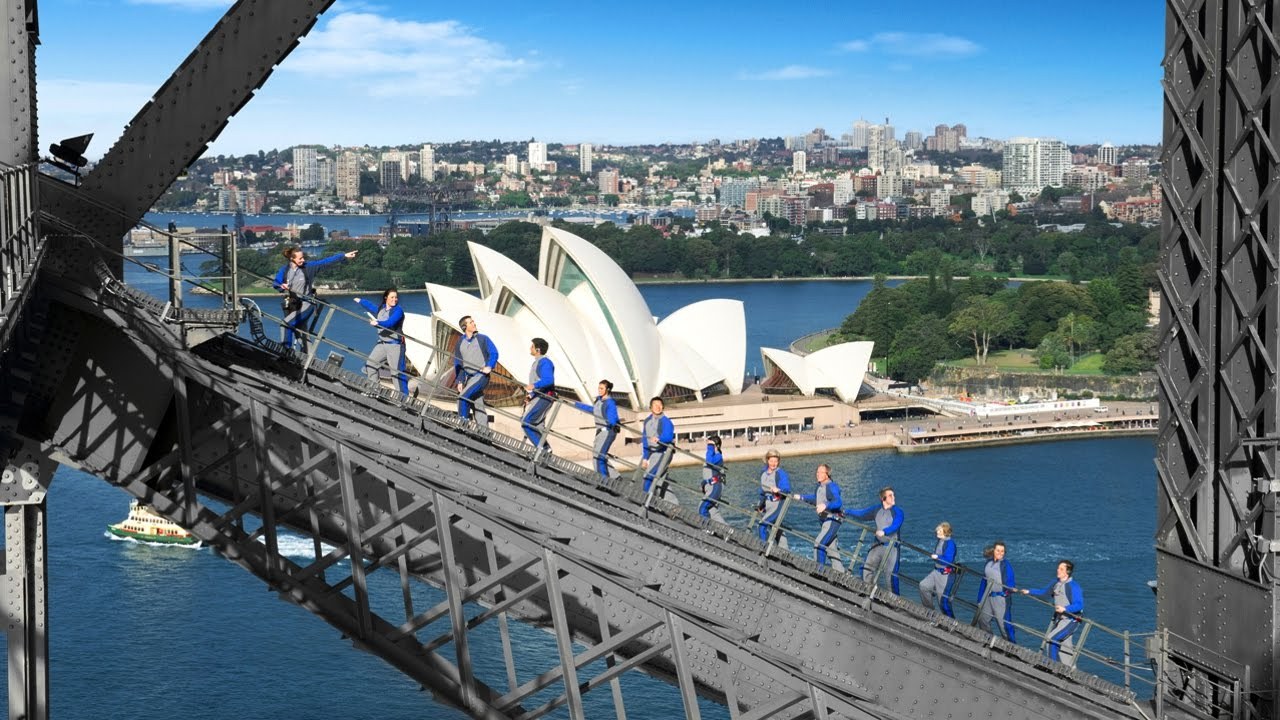
What you do Scale the iconic steel arches of Sydney Harbour Bridge on foot and stand atop one of the world's greatest structures. At dawn or dusk, the harbour, Opera House, and city skyline ignite in extraordinary colour — a once-in-a-lifetime panorama.
What to expect After a thorough induction and suiting-up in the BridgeClimb boiler suit, you ascend through the inner arch, across the upper chord, and onto the very summit 134 metres above Sydney Harbour. Your guide weaves stories of the bridge's construction and the city's history throughout the 2–3.5 hour climb. At the summit, panoramic views stretch from the Blue Mountains to the Pacific Ocean. Twilight and Dawn climbs reward you with the sky transforming from gold to deep purple over the Opera House sails.
Good to know Departs from 3 Cumberland Street, The Rocks — a short 10-minute walk or 5-minute taxi from the Overseas Passenger Terminal (OPT). Pre-book well in advance (at least 2–3 weeks); popular climb times sell out fast. All-aboard times are tight; choose a morning summit climb to allow ample buffer. Alcohol restrictions apply 8 hours before climbing. Lockers provided for belongings.
Versus the ship tour Small groups of just 12 climbers per guide mean you move at a considered pace with expert commentary, and the exclusive Summit and BridgeClimb Express options give private or semi-private experiences unavailable anywhere else on earth.
book direct with BridgeClimb Sydney (official) → · the full guide →
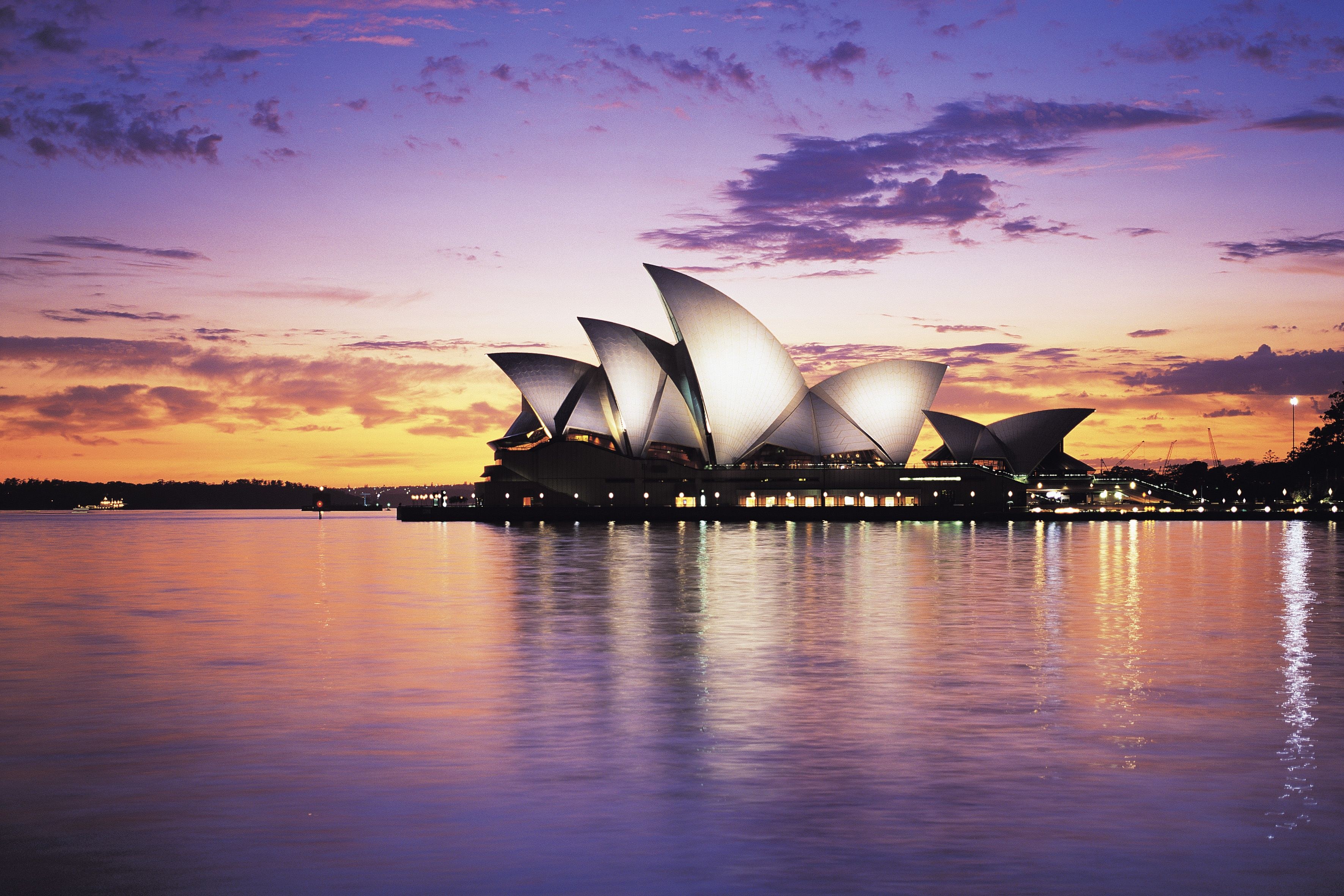
What you do Go beyond the sails and into the beating heart of Jørn Utzon's masterpiece. The premium backstage experience reveals grand concert halls, hidden green rooms, and the engineering genius behind the world's most recognisable building.
What to expect Your expert guide escorts you through the stage door and behind the velvet curtains, tracing the building's turbulent conception and Utzon's revolutionary geometric tile system. You'll stand on the Concert Hall stage gazing out into 2,700 empty seats, explore the intimate Joan Sutherland Theatre, and hear tales of the world's greatest performers who have graced these boards. The tour culminates with champagne and harbour views from the exclusive Green Room terrace. Even the standard guided tour, with its superb docents, far exceeds a self-guided walk.
Good to know The Opera House is a 5-minute walk from the OPT at Circular Quay. Backstage Tours depart at 7:00 am daily (before public opening) — ideal for early port arrivals. Standard guided tours run throughout the day; book the 10:00 am slot to maintain an all-aboard buffer. Pre-booking is essential; backstage slots are extremely limited. Smart-casual attire encouraged.
Versus the ship tour The Backstage Tour is strictly limited to 10 guests and grants access to rehearsal studios, the stars' dressing rooms, and the Concert Hall stage itself — spaces closed to the general public entirely.
book direct with Sydney Opera House (official) → · the full guide →
What you do Trade the megaship for a sleek private yacht and sail Sydney Harbour at your own pace, threading between the Opera House, Harbour Bridge, and hidden coves. This is Sydney as only a privileged few experience it — from the water, in silence.
What to expect You board from the National Maritime Museum at Darling Harbour and glide onto one of the world's great natural harbours. Under full sail (when winds allow) or motor, the skipper navigates past Fort Denison, Double Bay, Watsons Bay, and the dramatic Heads where the Pacific meets the harbour. Onboard, locally sourced antipasto, chilled wines, and Champagne are served on the sundeck. The perspective from the water onto the city's skyline — with the Bridge and Opera House framed together — is simply unmatched.
Good to know Darling Harbour is approximately 15 minutes by taxi or a scenic 20-minute walk from the OPT. Private charters can be tailored to depart from and return to Circular Quay, directly adjacent to the OPT — confirm at booking. Request a morning or mid-morning departure to allow a generous all-aboard buffer. Book 2–4 weeks ahead for private charters, especially on weekends.
Versus the ship tour A private charter means the skipper shapes the itinerary entirely around you — a longer linger beneath the Bridge, a swim stop in a secluded bay, or a chilled Champagne moment framed perfectly by the Opera House.
What you do Venture 90 minutes west into a UNESCO World Heritage wilderness of sheer sandstone cliffs, eucalyptus forest, and cascading waterfalls. The iconic Three Sisters rock formation and valley views from Echo Point are genuinely awe-inspiring.
What to expect Your guide collects you in a luxury vehicle from the OPT and narrates the drive through western Sydney suburbs as the landscape transforms dramatically into rugged wilderness. At Katoomba, you're rewarded with the Three Sisters and the vast 1,000-metre-deep Jamison Valley. A guided forest walk reveals ancient Aboriginal rock art and extraordinary birdlife. Lunch is taken at a renowned Blue Mountains restaurant or the grand Hydro Majestic Hotel, with sweeping valley panoramas. The scenic railway (the world's steepest) or Scenic Skyway glass-floored cable car are optional thrills.
Good to know Allow a full day — departure by 8:00 am and return by 5:00 pm is typical, so confirm your all-aboard time before booking; this excursion is best suited to ports with a late afternoon or evening departure. Your Sydney Guide offers guaranteed on-time return. Layers are essential — the mountains run 5–8°C cooler than Sydney city. Book at least 2 weeks ahead for private vehicles.
Versus the ship tour A private or small-group local expert crafts the day around your interests — whether that means a guided bush walk to secluded lookouts, a heritage lunch at Hydro Majestic, or time in the charming village of Leura — with the flexibility no large coach tour can offer.
book direct with Your Sydney Guide (official) → · the full guide →
What you do Walk Australia's most celebrated coastal trail — six kilometres of dramatic cliff tops, secret coves, and ocean pools between Bondi and Coogee — then settle into a private chef-curated picnic overlooking the Pacific. Iconic, elemental, unforgettable.
What to expect Your guide accompanies you from Bondi Beach — with its famous sweep of white sand and the bronzed surf culture that defines Sydney — south along cliff-top paths that reveal jaw-dropping views at every turn. Rest at the serene Gordons Bay and the historic Clovelly Beach ocean pool before descending to Coogee's broad bay. En route, a cliff-top picnic is laid out: locally smoked salmon, artisan cheeses, seasonal fruit, and chilled Hunter Valley whites or sparkling water, with nothing but ocean horizon before you. The guide shares stories of the Gadigal and Bidjigal peoples whose land this has always been.
Good to know Transfer from the OPT to Bondi takes approximately 25–30 minutes by taxi or private car. The full walk takes 3–4 hours at a relaxed pace; plan for a 9:00 am departure to allow an easy return by 3:00 pm. Wear comfortable walking shoes and sunscreen; the exposed headlands offer no shade. Daily Sydney Tours can arrange private transport for the return journey from Coogee.
Versus the ship tour A private guide calibrates the pace and depth of the experience — sharing the history of the ocean baths, the Aboriginal heritage of the headlands, and the living culture of Bondi — while a local chef picnic elevates it far beyond a simple walk.
book direct with Daily Sydney Tours (official) → · the full guide →
What you do Sydney's world-class zoo sits on a harbourside escarpment with views that rival the city's finest restaurants. Go beyond the gates with a VIP Wildlife Retreat experience for intimate, expert-led encounters with koalas, wombats, and iconic Australian fauna.
What to expect A short, scenic 12-minute Taronga Ferry from Circular Quay delivers you directly to the lower wharf, already with stunning harbour views. The VIP keeper-led experience takes you into animal areas closed to the public — hand-feeding a koala, walking among free-range kangaroos, and learning the rehabilitation stories of each resident. The zoo's elevated setting means the Harbour Bridge and Opera House form a backdrop to almost every enclosure. Afterwards, lunch at the Harbourview Café — with arguably the finest unobstructed harbour panorama in Sydney — is the perfect finale.
Good to know The Taronga Ferry departs Circular Quay (Wharf 2), a 5-minute walk from the OPT — ferry journey is 12 minutes and is itself a scenic delight. Book VIP experiences directly with Taronga well in advance (2–3 weeks minimum); these sell out quickly. General admission is available on the day but VIP experiences are not. Allow at least 4 hours; last ferry back to Circular Quay runs early evening.
Versus the ship tour The VIP 'Wild Australia' and 'Keeper for a Day' experiences are strictly limited to 6–8 guests and place you inside enclosures with koalas and nocturnal animals under the guidance of specialist keepers — access simply not available on any standard visit.
book direct with Taronga Zoo Sydney (official) → · the full guide →
What you do Board a rigid inflatable Zodiac for a close-up circumnavigation of one of the Coral Sea's most remote specks of land. Drift alongside vast nesting colonies of red-footed boobies, frigatebirds and brown noddies — a wildlife spectacle almost no traveller on earth ever witnesses.
What to expect Your Zodiac departs the ship's swim platform and skirts the island's entire coastline at water level, giving you eye-to-eye encounters with seabird colonies that number in the tens of thousands. The guide pauses the engine so you can hear the cacophony of calls and photograph birds in undisturbed flight. Shallow coral gardens glow electric beneath the hull as you round each headland. The round trip typically takes 90–120 minutes, leaving ample buffer before all-aboard.
Good to know Pre-book directly via email well in advance — this is a tender-only island and Zodiac capacity is strictly capped. Wear non-marking soles, bring a hat and reef-safe sunscreen. Confirm your ship's all-aboard time and allow 30 minutes' return buffer.
Versus the ship tour An intimate, expert-led small-group Zodiac — never more than 12 guests — means you can idle silently within metres of nesting birds and low reef outcrops that larger vessels simply cannot access, guided by a marine biologist who narrates every species in real time.
What you do Slip beneath the surface of some of the least-dived water on the planet — the Coral Sea surrounding Willis Island, hundreds of kilometres from the nearest coast. Visibility regularly exceeds 30 metres, revealing walls of hard coral, reef sharks, giant trevally and undisturbed sea-turtle feeding grounds.
What to expect Guests kit up in a purpose-equipped dive room and giant-stride into waters of extraordinary clarity. The reef structures here are pristine — no bleaching, no crowds — and the sheer biomass of pelagic life reflects the island's status as a protected marine reserve. Drift snorkelling across shallow coral plateaus, you are likely to encounter hawksbill turtles grazing, schools of chevron barracuda and the flash of a reef whaler in the blue. Safety divers and guides remain in the water throughout.
Good to know Swimming competency is required; full snorkel equipment is provided. Confirm landing and in-water permissions with the Australian Bureau of Meteorology station keeper in advance — access can be subject to weather and conservation protocols. Bring a rash vest for UV protection.
Versus the ship tour Mike Ball operates the definitive liveaboard expeditions to the Coral Sea's outer reefs, with certified dive guides who have logged thousands of hours specifically on these formations. Group size is tightly managed, and every dive brief is site-specific — the antithesis of a mass-market snorkel.
book direct with Mike Ball Dive Expeditions (Townsville/Cairns — Coral Sea specialists) → · the full guide →
What you do Step ashore — one of only a handful of visitors ever permitted — and receive a private briefing inside Australia's most remote operational weather station. The data collected here has guided cyclone warnings across Queensland for over a century; it is a living piece of scientific history.
What to expect After a short Zodiac transfer to the beach, you walk across the coral-rubble islet — the entire thing is barely 400 metres across — to the weatherboard station compound. The duty meteorologist explains the island's role in tracking Coral Sea cyclogenesis, shows you the instrument arrays and balloon launch facilities, and fields questions with refreshing candour. The sense of absolute remoteness — no roads, no shops, just science and sea — is profoundly affecting. Visits are brief (30–45 minutes) out of respect for operations.
Good to know Landing is at the discretion of BOM and sea conditions; it is never guaranteed. Wear closed shoes for the coral-rubble foreshore. Do not touch or enter any instrument enclosures. This is one of cruising's rarest privileges — treat it accordingly.
Versus the ship tour Landing on Willis Island is granted to very few vessels per year and always requires advance coordination with the BOM. The briefing is delivered by the station's resident meteorologist — one of Australia's most isolated postings — lending an authenticity and depth no third-party guide could replicate.
What you do Join a dedicated marine naturalist on a slow, deliberate circuit of Willis Island's offshore waters — prime habitat for dwarf minke whales, spinner dolphins, red-tailed tropicbirds and occasional whale sharks. This is expedition-grade wildlife observation in one of Earth's most intact marine environments.
What to expect The excursion runs in the calm conditions that typically prevail in the lee of the island, with the naturalist briefing the group on cetacean behaviour before departure. Spinner dolphins frequently bow-ride the vessel's wake, while tropicbirds trace lazy arcs overhead trailing their extraordinary white tail streamers. In season (June–September), dwarf minke whales approach curious vessels with remarkable boldness. The naturalist's running identification and ecological commentary transforms an already astonishing scene into a masterclass in Coral Sea ecology.
Good to know Bring image-stabilised binoculars if you own them — loaner binoculars are available but limited. A polarised lens filter dramatically improves underwater wildlife sighting from the deck. Morning cruises yield the best light and the calmest seas.
Versus the ship tour Coral Expeditions' marine naturalists carry years of Coral Sea field experience and use hydrophones and binoculars to locate and interpret marine megafauna well beyond what a casual deck scan achieves. Groups are capped at 20, ensuring every guest has unobstructed sightlines and personalised commentary.
book direct with Coral Expeditions (Australia's premium expedition cruise specialist) → · the full guide →
What you do Combine world-class snorkelling with a dedicated underwater photography tuition session led by a professional marine photographer. The pellucid, undisturbed waters around Willis Island provide a studio backdrop that professionals travel half a year to reach — and you are already here.
What to expect After a 20-minute on-deck briefing covering exposure, buoyancy control for photography and coral-safe positioning, the group enters the water with the lead photographer. Each participant is given real-time feedback via underwater slates and post-dive screen reviews. The reef here hosts nudibranchs, juvenile turtles and extraordinary soft-coral detail that rewards close, patient framing. By the final dive, guests leave with a curated set of images that would pass muster in any travel magazine.
Good to know Bring your own mirrorless or compact camera with an underwater housing if possible; hire housings are limited. Basic snorkel competency required. Maximum group size of 6 is strictly enforced — book your place the moment you board the ship.
Versus the ship tour A professional marine photographer leads groups of no more than six, providing personalised composition coaching in real time — in the water, beside you. The combination of tuition and a location almost nobody else will ever photograph makes every frame genuinely irreplaceable.
What you do Rise before the rest of the ship and join an ornithologist-guide for a dawn landing on Willis Island — arguably the most exclusive birdwatching address in the Southern Hemisphere. The island hosts one of Australia's largest documented seabird colonies, and first light is when it erupts into extraordinary life.
What to expect The Zodiac lands on the coral-rubble beach just as the sky softens to indigo. Within seconds, frigatebirds begin their courtship displays, inflating scarlet throat pouches while brown boobies jostle on nesting scrapes metres from your feet. The ornithologist narrates the scene with infectious expertise, calling species by name as they lift and wheel overhead in their thousands. The island's absolute silence — broken only by wind and wings — produces a meditative quality that experienced travellers consistently describe as one of cruising's most affecting moments.
Good to know Landing is subject to BOM approval and sea-state — pre-register your interest at the expedition desk on day one of the voyage. Wear dark, non-reflective clothing to avoid disturbing nesting birds. Carry a long lens (200mm+ equivalent) for perched-bird shots. Soft-soled shoes protect both the coral-rubble substrate and your footing.
Versus the ship tour A qualified ornithologist leads a structured census-style walk, naming every species, explaining colony dynamics and pointing out nesting behaviours that an untrained eye would miss entirely. The pre-sunrise timing means you experience the island in its rawest, most atmospheric state — long before the day-trippers (there are none) arrive.
book direct with Coral Expeditions (Australia's premium expedition cruise specialist) → · the full guide →
What you do Hold a koala, hand-feed kangaroos, and meet over 100 Australian species at the world's largest koala sanctuary. An intimate, expert-led private experience that puts you nose-to-nose with Australia's most iconic wildlife.
What to expect Set on a lush riverside property 12 km from the port, Lone Pine is home to over 70 koalas and 100-plus native species. Your private guide navigates you through dingo, Tasmanian devil, and platypus habitats with expert commentary. The iconic koala cuddle photo is a genuine once-in-a-lifetime memento. Conclude with kangaroo feeding in open grasslands as wallabies bound around you.
Good to know A 30-minute taxi or rideshare from the Portside Wharf cruise terminal (approx. AUD 40 each way). Pre-book koala holds online as slots sell out weeks in advance. Allow 3–4 hours; well within all-aboard time for most sailings.
Versus the ship tour Skip the crowds with a dedicated private wildlife guide who curates behind-the-scenes encounters — koala holding, wombat meet-and-greets, and a Spirits of the Sky free-flight raptor show — all at a leisurely, unhurried pace.
book direct with Lone Pine Koala Sanctuary (official) → · the full guide →
What you do Ascend into the UNESCO-listed Gondwana Rainforest canopy at O'Reilly's, walk the famous treetop suspension bridges, and descend into an ancient cave alive with glittering native glow worms. Pure, jaw-dropping wilderness just 90 minutes from Brisbane.
What to expect The scenic drive through the McPherson Ranges is an experience in itself, arriving at the World Heritage–listed Green Mountains plateau. Your naturalist guide leads you across suspension bridges swaying 30 metres above the forest floor, with panoramic escarpment views. After a gourmet lunch at the heritage retreat, a twilight glow worm cave tour reveals a galaxy of bioluminescent larvae — one of Queensland's most magical spectacles. King parrots and rosellas feed from your hand throughout the day.
Good to know Best booked via O'Reilly's directly or through a private charter from Brisbane (approx. 90 min each way). Confirm all-aboard time carefully — depart Brisbane port by 7:30 am for a full day. Wear closed-toe shoes; the rainforest can be damp.
Versus the ship tour A small-group expert naturalist guide leads you through the ancient Gondwana rainforest, revealing hidden wildlife — pythons, lyrebirds, vivid parrots — and geological wonders that only intimate guided groups ever witness.
book direct with O'Reilly's Rainforest Retreat (official) → · the full guide →
What you do Cross Moreton Bay by high-speed catamaran to a pristine island paradise, snorkel the legendary Tangalooma Wrecks teeming with tropical fish, and sandboard down towering desert dunes. One of Queensland's most spectacular day escapes.
What to expect The 75-minute high-speed catamaran crossing from Brisbane reveals the sparkling Moreton Bay Marine Park. At Tangalooma, don your snorkel gear and glide over 15 sunken vessels, now a kaleidoscopic artificial reef. A 4WD bus whisks you inland to the island's vast sand dunes for exhilarating sandboarding runs. Gourmet lunch is served beachside with unbroken views of the bay. The return journey at sunset is pure Queensland gold.
Good to know The catamaran departs from Holt Street Wharf, Pinkenba — a 15-minute taxi from Portside Wharf. Book directly with Tangalooma Resort; day-cruise packages sell out months ahead. Confirm departure/return times align with your ship's all-aboard.
Versus the ship tour Access an island accessible only by sea, with world-class snorkelling over deliberately sunken WWII-era wrecks now colonised by coral and reef fish — an underwater spectacle most visitors never find. Add dolphin feeding at dusk if your schedule allows.
book direct with Tangalooma Island Resort (official) → · the full guide →
What you do Step into Steve Irwin's legendary Australia Zoo on the Sunshine Coast — home to the world-famous Crocoseum, tigers, cheetahs, and 1,200 animals. An adrenaline-charged, conservation-driven wildlife spectacular unlike anywhere on earth.
What to expect An hour north of Brisbane along the Sunshine Coast hinterland, Australia Zoo sprawls across 700 acres of world-class zoological parkland. The iconic Crocoseum show — with massive saltwater crocodiles and free-flight birds of prey — is genuinely unmissable. VIP guests enjoy exclusive keeper access, skipping all queues to meet the Zoo's most prized residents up close. Steve Irwin's conservation legacy infuses every encounter with genuine purpose and passion.
Good to know Located in Beerwah, approximately 1 hour from Portside Wharf by private transfer. Pre-book VIP experiences directly via the Australia Zoo website — they sell out rapidly. Allow 5–6 hours; arrange a private car transfer for the most efficient timing.
Versus the ship tour The VIP Wildlife Warrior upgrade grants behind-the-scenes access to private animal encounters — hand-feed a cheetah, get up close with a tiger cub, or join a keeper for a personal crocodile feeding — experiences unavailable to general admission guests.
book direct with Australia Zoo (official) → · the full guide →
What you do Sweep up to Brisbane's iconic summit lookout for panoramic city-and-bay views, wander the exquisite Botanic Gardens, then sink a cold craft beer at Queensland's legendary XXXX Brewery — the ultimate Brisbane afternoon in one curated arc.
What to expect Your air-conditioned minibus climbs to the Mount Coot-tha Summit Lookout, where a 270° panorama takes in the CBD skyline, Moreton Bay, and the hinterland ranges on a clear day. A leisurely stroll through the lush 52-hectare Botanic Gardens follows, past Japanese gardens and rare tropical specimens. The afternoon culminates at the heritage-listed XXXX Brewery in Milton — Queensland's oldest and most beloved brewery — with a behind-the-scenes tour and a generous tasting paddle.
Good to know Urban Tours Brisbane departs from central Brisbane, a short taxi from Portside Wharf. The XXXX Brewery tour runs at set times — book directly at xxxx.com.au for guaranteed spots. Allow 5 hours total; comfortably within most all-aboard windows.
Versus the ship tour Urban Tours Brisbane's intimate small-group format (max 12 guests) means genuine local commentary, unhurried stops, and access to the lookout at the golden hour that larger coaches can never time. The guide's neighbourhood insider knowledge transforms a sightseeing loop into a genuine story of Brisbane.
book direct with Urban Tours Brisbane (official) → · the full guide →
What you do Lift off in a private helicopter over lush hinterland ranges, landing at a boutique estate winery for an exclusive barrel-room tasting before swooping into ancient rainforest valleys — Queensland's most indulgent afternoon.
What to expect Your dedicated pilot departs the helipad and traces the Great Dividing Range northward, banking over volcanic crater lakes and cascading waterfalls invisible from any road. A private landing at a Scenic Rim boutique winery is met by the winemaker personally, who leads an intimate seated barrel tasting of reserve wines paired with local artisan cheese. The return flight dips low over ancient Gondwana rainforest canopy as the sun turns the ranges gold. A chilled bottle of estate sparkling wine awaits back at the helipad.
Good to know Flexible departure times; the 13:00 slot captures the best afternoon light over the ranges. Weight and weather conditions may affect scheduling — operator will contact you 24 hours prior. Transfers from the pier to the helipad can be arranged directly with Nautilus. Book at least three weeks ahead.
Versus the ship tour A private helicopter means zero strangers, zero fixed itinerary, and the freedom to linger over a bottle of single-vineyard Shiraz at altitude while a world-class landscape unfolds below — the very definition of bespoke luxury travel.
book direct with Nautilus Aviation (official) → · the full guide →
What you do Glide along the Brisbane River on the iconic CityCat ferry, explore South Bank's lush parklands and man-made Streets Beach, then settle in for a long, exquisite lunch at the award-winning Howard Smith Wharves precinct beneath the Story Bridge.
What to expect Step aboard the beloved CityCat catamaran at Portside Wharf for a scenic river glide past mangroves, glittering glass towers, and riverside parks to South Bank. Wander the Parklands' rainforest walk and snap a selfie at the famous Streets Beach — a real sandy beach in the city centre. Cross the Goodwill Bridge on foot to Howard Smith Wharves, where restaurants like Greca and Felons Brewing Co. serve outstanding food with front-row Story Bridge views. As the afternoon sun drops, the entire precinct glows gold.
Good to know The CityCat departs directly from Portside Wharf — no transfer needed, making this the easiest and most elegant self-guided excursion from the ship. Reserve lunch at Howard Smith Wharves well in advance via their website. The precinct is a 10-minute walk or short Uber from South Bank CityCat stop.
Versus the ship tour This is Brisbane as Brisbanites actually live it — the river, the food scene, the languid subtropical afternoons. Howard Smith Wharves is home to a curated collection of Brisbane's finest restaurants, positioned directly beneath the Story Bridge with unmatched views, offering a dining experience that defines the city's contemporary luxury culture.
book direct with Howard Smith Wharves (official dining & precinct) → · the full guide →
What you do Sail to the world's most spectacular silica-sand beach and witness the swirling tidal art of Hill Inlet Lookout — a double-header that defines the Whitsundays. This is the one experience every visitor to Airlie Beach must do.
What to expect Board a high-speed sailing catamaran from Coral Sea Marina and skim across the Coral Sea to Whitehaven Beach, where 7 km of 98% pure silica sand squeaks underfoot and the water runs an impossible shade of aquamarine. Hike to Hill Inlet Lookout for the iconic swirling sandbars view, then snorkel pristine fringing reef with expert marine naturalists before sailing home. Catering, snorkelling gear, and a cold drink on the return leg are all included.
Good to know Pre-book directly with Cruise Whitsundays well in advance — this tour sells out. Departures are from Coral Sea Marina, a short transfer from the cruise tender wharf. Confirm the all-aboard time with your ship and choose the morning departure to guarantee ample time back at port.
Versus the ship tour A full-day sailing and reef combo aboard a premium vessel, combining snorkelling the Great Barrier Reef with exclusive beach and lookout time at Hill Inlet — the turquoise-and-white swirl viewpoint that appears in every Whitsundays photograph ever taken.
What you do Bank over the impossibly heart-shaped coral formation at the Great Barrier Reef from a seaplane or helicopter — one of the most photographed natural wonders on earth and utterly impossible to reach any other way.
What to expect You're collected from Airlie Beach's Whitsunday Airport or the seaplane base and climb into a de Havilland Beaver or Cessna Caravan to soar over the 74 Whitsunday Islands. The pilot circles Heart Reef — a naturally formed coral heart — at low altitude before sweeping across the turquoise shallows of Whitehaven Beach. Longer flights include a champagne beach landing on a private sandbar. The entire journey is intimate, with commentary from experienced pilot-guides who know these waters intimately.
Good to know Weight limits apply per aircraft; book early as seating is very limited. Allow at least 30 minutes travel time from the tender wharf to the seaplane base. The 60-minute flight with beach landing is the recommended luxury option. Morning departures offer the calmest conditions and best light for photography.
Versus the ship tour A small-aircraft experience limited to just a handful of passengers, giving every seat a window and every guest an unobstructed panorama. The seaplane's low altitude and slow speed over the reef creates a once-in-a-lifetime aerial perspective no boat can replicate.
book direct with Air Whitsunday Seaplanes → · the full guide →
What you do Sail aboard Camira, one of the world's fastest sailing catamarans and former America's Cup support vessel, to Whitehaven Beach — a bucket-list sail on an iconic racing yacht with a small, convivial group.
What to expect Step aboard this legendary 24-metre catamaran at Coral Sea Marina and feel her accelerate under full canvas as the crew hoists the sails. The crossing to Whitehaven Beach is exhilarating, with spray on the bow and a skipper who narrates the sailing history of the vessel. Snorkelling gear, a light lunch, and refreshments are provided on board. On the return leg, guests are invited to take the helm or simply recline on the trampoline deck and watch the islands slip by.
Good to know Departs Coral Sea Marina — arrange a taxi or water taxi from the tender pier in advance. Book directly with Cruise Whitsundays and specify the Camira (not the ferry fleet). This is a weather-dependent sailing experience; in strong winds she goes even faster. Confirm departure time matches your all-aboard schedule.
Versus the ship tour Camira carries a strictly limited number of guests, creating a genuine sailing adventure rather than a ferry transfer. Her racing pedigree means she flies across the water under full sail — guests can even help crew her — before anchoring in the translucent shallows of Whitehaven for swimming and snorkelling.
What you do Explore the hidden Airlie Beach hinterland with a passionate local expert — spotting wildlife, hiking to Cedar Creek Falls, and uncovering scenic lookouts most visitors never find. A rare, unhurried encounter with tropical Queensland.
What to expect Your guide collects you near the waterfront and whisks you into the lush Conway National Park rainforest, where wallabies, kookaburras, and — if you're lucky — platypus are spotted along shaded creek trails. The centrepiece is Cedar Creek Falls, a multi-tiered cascade with a natural rock swimming hole you'll likely have almost entirely to yourselves. Scenic lookouts over the Whitsunday Passage and Coral Sea round out a genuinely diverse three-hour adventure. The commentary is warm, witty, and deeply local.
Good to know Tours run approximately 3 hours — ideal for cruise schedules. Book in advance via the Driftwood Tours website; private tours are available for couples or families. Wear closed-toe shoes and bring insect repellent. The guide can meet you near the tender pier by arrangement.
Versus the ship tour Driftwood is run by local guides with deep personal knowledge of the Whitsunday hinterland — wildlife corridors, hidden lookouts, and off-track waterfall pools that simply don't appear on any map. Groups are kept deliberately small so every guest gets genuine one-on-one time with the guide.
What you do Hurl yourself from 15,000 ft above the Whitsunday Islands and freefall over one of the most jaw-dropping coastlines on earth — a 60-second adrenaline rush followed by a paragliding descent above the reef and islands.
What to expect After a thorough briefing with your APFA-certified tandem instructor, you board a light aircraft and climb above the brilliant blues of the Coral Sea. At 15,000 ft the door opens and the Whitsunday Islands lay out beneath you like a living map. Sixty seconds of freefall at 220 km/h gives way to a serene canopy ride with unobstructed 360-degree reef views. Landing is on the grass airfield just minutes from town. The whole experience runs approximately 2–3 hours from check-in to landing.
Good to know Maximum weight limit of 100 kg applies. Book directly with Skydive Airlie Beach and request the earliest jump slot of the day to guarantee return by all-aboard. The drop zone is a short taxi from the tender pier. Wear comfortable, close-fitting clothes and lace-up shoes. The video/photo package is worth every cent.
Versus the ship tour This is not a tour — it is a transformative experience. The 15,000 ft altitude gives a full panorama stretching from the outer Great Barrier Reef to the Conway Range, making it the most dramatic vantage point in Queensland. Professionally filmed packages mean you relive every second.
What you do End your Airlie Beach day the only way a luxury traveller should — aboard a private sailing catamaran as the sun melts into the Coral Sea, casting the 74 Whitsunday Islands in gold and rose. Canapes, champagne, and complete seclusion included.
What to expect Your private catamaran departs Coral Sea Marina in the late afternoon and glides out past Boathaven Bay into the open Passage. The crew sets sail toward Pioneer Bay and the outer island silhouettes, adjusting course to chase the best light. Chilled Whitsunday wines, locally sourced canapes, and fresh prawns are served on deck as the sky ignites. The skipper and one crew member are on hand but pleasingly discreet. You're back at the marina well before all-aboard, sun-kissed and unhurried.
Good to know Sunset sails typically depart 4:30–5:00 pm — confirm this fits your ship's all-aboard time before booking. Private charters must be pre-arranged at least 48–72 hours in advance via Sailing Whitsundays. Coral Sea Marina is a 5-minute taxi from the tender wharf. Dress is smart-casual resort wear; temperatures are warm but bring a light layer for the sail back.
Versus the ship tour A private charter means the boat, the itinerary, and the sunset are yours alone. No crowds, no announcements — just the sound of the hull through the water, the clink of champagne glasses, and arguably the most beautiful evening light show in the southern hemisphere.
book direct with Sailing Whitsundays (Charter Division) → · the full guide →
What you do Explore the jewel of the Coral Sea on a passionate local expert-led small-group tour of Magnetic Island — spotting wild koalas, rock wallabies and sea eagles while uncovering WWII history. The ultimate bucket-list day from Townsville.
What to expect Board the SeaLink ferry from the Townsville terminal and meet your guide on Magnetic Island — a place where 70% of the land is protected National Park. Wind through eucalypt-scented trails spotting wild koalas dozing overhead, wallabies bounding across rocky headlands, and vivid sea eagles soaring above Horseshoe Bay. Your guide weaves in the island's fascinating WWII naval history, pointing out submerged relics and forgotten bunkers. The tour wraps with time to swim in gin-clear water before the return ferry.
Good to know SeaLink ferry departs Townsville terminal (5 min from cruise wharf); round-trip ferry ticket ~AUD 36 purchased separately at sealinkqld.com.au. Tour duration approx 4–5 hrs. Book the guided tour direct at magneticislandtours.net.au. Confirm all-aboard time and allow 30 min buffer for ferry return.
Versus the ship tour Intimate small-group size with a passionate local guide who knows every koala haunt and secret bay — you move at a discerning traveller's pace, not a crowd's. Access to hidden spots and spontaneous wildlife encounters most visitors never find.
What you do Descend on the SS Yongala — a 110-metre ocean liner lost in 1911 and now rated among the world's top ten wreck dives. Massive bull sharks, giant grouper, sea turtles and manta rays make this a once-in-a-lifetime underwater pilgrimage.
What to expect Transfer by purpose-built dive vessel from Townsville's harbour, cruising ~90 minutes south to the protected wreck site. A thorough dive briefing covers the Yongala's tragic history and the extraordinary marine life that has colonised every surface. Two dives explore the full length of the wreck — bull sharks circle languidly, enormous Queensland grouper hover at the bow, and hawksbill turtles glide past encrusted portholes. Surface intervals are spent under the tropical sun with lunch on deck before the leisurely return to port.
Good to know Certified divers only (PADI Open Water minimum); must present dive certification. Departs Townsville Breakwater Marina — approx 10 min by taxi from cruise terminal. Full day: depart ~7:30 am, return ~5 pm. Book direct well in advance as space is strictly limited. Check all-aboard time carefully; request an early slot.
Versus the ship tour Expert dive guides with intimate knowledge of the wreck's most dramatic swim-throughs and the timing of apex predator sightings — this is an uncrowded, expertly managed dive with maximum bottom time and briefings that go far beyond the basics.
What you do Australia's best interactive wildlife experience, just 20 minutes from the cruise terminal. Hand-feed kangaroos, hold a koala, and watch expert rangers handle massive saltwater crocodiles in a lush tropical sanctuary — deeply personal and expertly narrated.
What to expect Set among 11 acres of tropical rainforest, the sanctuary houses 60+ native species in meticulously natural habitats. Stroll boardwalks past sleepy koalas, then join a ranger for an intimate feeding session where kangaroos press their velvet muzzles into your hand. The saltwater crocodile show is equal parts thrilling science lecture and jaw-dropping spectacle — rangers explain ancient predator behaviour while a 4-metre croc surges from the waterhole. VIP encounters allow close-contact moments with wombats, snakes and freshwater crocodiles for those wanting the full tactile experience.
Good to know Located 17 km south of Townsville on Bruce Highway — taxi or pre-booked transfer approx 20 min, AUD 45–55 each way. Open daily 8 am–4 pm. Crocodile shows run at set times; check schedule on arrival. Pre-book VIP encounters online at billabongsanctuary.com.au. Allow 2.5–3 hrs on site.
Versus the ship tour Unhurried, self-paced immersion in genuine Australian wildlife — with optional VIP encounters that put you nose-to-beak with wombats, cassowaries and freshwater crocs. Ranger presentations are world-class, not theatrical.
What you do Glide across the glittering Coral Sea aboard a private sailing charter as the sun melts behind Magnetic Island in a blaze of gold and crimson. Champagne, canapés, and an unobstructed Townsville skyline — this is the quintessential tropical luxury moment.
What to expect Step aboard a beautifully maintained sailing vessel at Townsville's marina as the afternoon heat softens into golden hour. Your skipper navigates past the Cleveland Bay seagrass beds — often accompanied by dolphins bow-riding alongside — before settling at anchor for the sunset panorama. Magnetic Island silhouettes dramatically against the amber sky while chilled sparkling wine and fresh local nibbles are served on deck. As stars begin to emerge over the Coral Sea, the gentle sail back to the marina delivers one of tropical Queensland's most serene, memorable evenings.
Good to know Marina is a 5–10 min taxi from the cruise terminal. Sunset sails typically depart 5 pm and return by 7:30 pm — confirm your all-aboard time before booking. Private charters can be tailored to timing. Book direct at townsvillesailing.com.au. Bring a light layer for the return sail.
Versus the ship tour A true private charter option means your group sets the pace — anchor where you wish, sip champagne as the sun drops behind Magnetic Island, and experience the Coral Sea on your terms with an experienced local skipper as your host.
book direct with Townsville Sailing & Charters → · the full guide →
What you do Ascend Townsville's iconic red granite monolith with a knowledgeable local guide and be rewarded with sweeping 360° views across the Coral Sea, Magnetic Island and the tropical coastline — a defining Townsville experience, entirely on foot.
What to expect The trail winds up 286 metres of ancient pink granite through dry tropical scrub alive with rock wallabies and vivid butterfly species. Your guide narrates the Wulgurukaba people's deep connection to the rock, the wartime significance of the hill as a lookout, and the unique geology that makes Castle Hill glow blood-red at dusk. The summit view is simply spectacular — Magnetic Island floats on a turquoise sea, Ross Creek threads through the city below, and on clear days the Great Barrier Reef shimmers on the horizon. The descent offers a different perspective, cooling into shaded sections perfect for spotting native birds.
Good to know Castle Hill is 1.5 km from the cruise terminal — walkable or a short taxi ride. Free public access at all hours; guided tours must be pre-booked. Allow 1.5–2 hrs total. Wear supportive shoes and bring water and sunscreen. Morning departure recommended for cooler temperatures and best light.
Versus the ship tour A local guide transforms this granite monolith into a story — the geology, the Aboriginal heritage, the colonial history and the ecological quirks of the rock wallabies that call it home. The summit view at this altitude with no crowds is extraordinary.
book direct with Townsville North Queensland (Tourism & Guide Network) → · the full guide →
What you do Step inside Townsville's world-class Museum of Tropical Queensland to encounter the actual artefacts recovered from HMS Pandora — the ship sent to capture the Bounty mutineers — alongside breathtaking Great Barrier Reef natural history. Unmissable, and 5 minutes from the pier.
What to expect Enter through the dramatic Pandora gallery where original bronze cannons, navigational instruments and personal effects retrieved from the seabed tell the extraordinary story of the ship tasked with hunting the Bounty mutineers — and her fatal end on the Great Barrier Reef. The Reef gallery immerses visitors in a spectacular recreation of coral ecosystems, explaining the science behind one of Earth's greatest natural wonders with the clarity only Queensland Museum's reef specialists can deliver. Indigenous Wulgurukaba and Bindal cultural galleries offer a profoundly moving account of North Queensland's First Nations heritage through art, artefact and oral history. The entire experience is air-conditioned, beautifully curated, and perfectly paced for a two-hour cultural immersion.
Good to know Located on Flinders Street, a 5-minute walk from the cruise terminal. Open daily 9:30 am–5 pm. No pre-booking required for general admission; check site for guided tours and special exhibitions. Excellent museum café on site for a post-visit lunch. Ideal for a morning visit combined with an afternoon excursion.
Versus the ship tour The only museum in the world housing actual artefacts from HMS Pandora, presented in gallery spaces with curatorial depth that rewards slow, contemplative exploration — a rare intellectual and cultural luxury steps from the cruise wharf.
What you do Walk Kiel's storied waterfront and wartime heritage with a passionate local guide — uncovering hidden layers of the city's Hanseatic past, naval legacy, and postwar reinvention on a bespoke private tour tailored entirely to you.
What to expect Your local guide — humorous, knowledgeable, and deeply rooted in Kiel — leads you at your own pace through the old Altstadt footprint, the dramatic Kiel Fjord promenade, and past landmarks steeped in Hanseatic and naval history. Expect vivid storytelling: the bombing of 1944, the sailors' revolt of 1918, and the maritime soul that rebuilt this city from rubble. Stops are chosen to match your interests — whether that's architecture, wartime history, or the vibrant sailing culture that makes Kiel world-famous. The 90-minute format is perfectly calibrated for a port day, leaving ample time to explore independently afterward.
Good to know Pre-book directly via the Kiel Walking Tours website. The terminal is centrally located; the tour departs from the city centre, a short taxi or walk away. Confirm your all-aboard time and allow 30 minutes' buffer. Private tours are available on request for any group size.
Versus the ship tour This is a fully private, fluent-English expert guide experience — no coach, no crowds, no fixed script. Your guide adapts the narrative to your interests, pausing wherever curiosity strikes, revealing layers of Kiel that mass tours simply never reach.
What you do Board a classic paddle steamer on the legendary Nord-Ostsee-Kanal — the world's busiest artificial waterway — for a gliding journey between two seas, complete with expert maritime commentary and fine regional food.
What to expect Step aboard a lovingly preserved paddle steamer and settle onto the open deck as the canal's extraordinary parade of container ships, tankers, and sailing vessels glides past at arm's reach — a perspective no road or cycle path can match. Expert guides narrate the canal's construction history, its strategic WWI and WWII significance, and the engineering genius of its locks. Regional specialities and cold Schleswig-Holstein beer are served onboard, making this as much a culinary moment as a scenic one. The gentle rhythm of the paddle wheel, the low green banks, and the sheer scale of passing vessels create an unforgettable, utterly unhurried atmosphere.
Good to know Sailings depart from Kiel-Holtenau, approximately 10 minutes by taxi from the cruise terminal. Book the earliest sailing to maximise your time. Confirm your all-aboard time before booking — a partial canal cruise of 2–3 hours is feasible on a typical port day. Bring a light jacket; deck sailing can be breezy.
Versus the ship tour The historic paddle steamer experience is an intimate, slow-travel immersion into one of the world's great engineering feats — 98 km of precision-engineered canal connecting the North Sea to the Baltic. Insightful onboard commentary and al fresco deck viewing make this bucket-list for any serious maritime traveller.
book direct with Nord-Ostsee-Kanal (NOK) Boat Tours → · the full guide →
What you do Stand atop Germany's most powerful maritime monument and descend into a real WWII submarine — the U-995 — at the wind-swept shores of the Kiel Fjord, where the sea meets one of Europe's most moving acts of remembrance.
What to expect The sweeping 72-metre tower rewards those who climb it with a 360-degree panorama across the Kiel Fjord, the Baltic, and the distant Danish coast — a view that contextualises the enormous strategic importance of this waterway. Below, the subterranean hall of honour commemorates over 30,000 German sailors lost at sea, and the solemn atmosphere is genuinely moving. Steps away, the U-995 is the last surviving Type VIIC U-boat in the world — you clamber through its impossibly cramped torpedo room, engine compartment, and conning tower exactly as her wartime crew did. Allow 2.5–3 hours to do both justice. The adjacent Laboe beach is among the finest on the Baltic — golden, wide, and uncrowded — ideal for a restorative stroll before heading back.
Good to know Laboe is 20 km north of Kiel; take the scenic Kieler Förde passenger ferry (approx. EUR 10 return, departs central Kiel) or a private taxi (approx. EUR 30 one way). Tickets are purchased on-site; no advance booking required, but weekends in summer can be busy — arrive early. Allow 30–40 minutes for the ferry crossing each way and plan your all-aboard time carefully.
Versus the ship tour The Laboe Naval Memorial is one of the most architecturally arresting monuments in Northern Europe — a 72-metre ship's-bow tower rising from the Baltic shore. Paired with the chance to walk through a genuine, unrestored WWII submarine, this is a profoundly affecting, expert-curated encounter with naval history that no museum replica can replicate.
What you do Step into 500 years of northern German rural life at Schleswig-Holstein's extraordinary open-air museum — 60 original farmsteads, windmills, and craftsmen's workshops spread across 90 pastoral hectares just outside Kiel, alive with artisans and farm animals.
What to expect Wander at will through a landscape of thatched farmhouses, watermills, and timber-framed barns, each authentically furnished and staffed by costumed craftspeople demonstrating skills from bread-baking to coopering. The scale is extraordinary — 60 original structures transported here from across the region, arranged in a rolling parkland that feels genuinely lived-in rather than curated. In summer, horse-drawn carts, farm animals, and seasonal festivals add an irresistibly warm, sensory quality. The on-site inn serves hearty Schleswig-Holstein farmhouse cooking: expect smoked eel, Grünkohl, and freshly baked rye bread alongside regional beers. Allow a full 2.5–3 hours; it rewards a slow, exploratory pace.
Good to know Molfsee is approximately 6 km south of Kiel city centre — a 15-minute taxi ride (approx. EUR 15 one way) from the cruise terminal. Tickets purchased on-site; no advance booking required. Open daily from April through October; check the official website for seasonal craft demonstration schedules and special event days. A perfect pairing with a morning city walk.
Versus the ship tour Molfsee is one of the oldest and most celebrated open-air museums in Germany, yet it remains unhurried and genuinely immersive — a working landscape museum where blacksmiths, bakers, and weavers demonstrate centuries-old crafts in authentic, relocated buildings. It is the antithesis of a roped-off display, offering total freedom to wander, touch, and taste.
book direct with Freilichtmuseum Molfsee – Landesmuseum für Volkskunde (Official) → · the full guide →
What you do Escape to Falckensteiner Strand — Kiel's most beautiful arc of Baltic beach — for a sun-drenched afternoon of golden sand, crystalline fjord water, and the extraordinary spectacle of giant cruise ships and sailing yachts gliding past just offshore.
What to expect Arrive at Falckensteiner Strand — a long, fine-sand beach framed by pine trees and the shimmering Kiel Fjord — and settle into a classic Strandkorb beach chair with a panoramic view across one of Europe's most active sea lanes. The spectacle of ocean-going vessels, naval vessels, and racing sailboats passing within touching distance is uniquely thrilling and utterly Kiel. Your private guide shares the sailing heritage of this Olympic city (Kiel hosted the 1972 Munich Olympics sailing events), points out the Laboe Memorial on the far shore, and recommends the finest beach kiosk for fresh Brötchen, smoked fish, and cold Baltic Sea beer. The water is bracing but swimmable in summer; the atmosphere is relaxed, elegant, and entirely local.
Good to know Falckensteiner Strand is approximately 10 km northeast of the cruise terminal — a 15-minute taxi ride (approx. EUR 20 one way). The beach itself is free to access; Strandkorb hire is approx. EUR 8–12 for a half-day. A private guide from Kiel Walking Tours adds expert narration and local curation — book directly. This excursion is ideal as a relaxed afternoon option after a morning city or canal experience.
Versus the ship tour Falckensteiner Strand combines the rare pleasure of a genuinely beautiful, uncrowded Baltic beach with one of the world's most dramatic maritime backdrops — freighters, sailing yachts, and ferries gliding silently through the fjord just metres away. A private guide adds local context, curates the best beachside Strandkorb (wicker beach chair) spot, and introduces you to the sailing culture that defines Kiel's identity.
book direct with Kiel Walking Tours – Private Half-Day Fjord & Beach Experience → · the full guide →
What you do Race 90 minutes to three pristine outer reef sites aboard Silverswift — the fastest, most exclusive vessel to the ribbon reefs. Dive or snorkel alongside giant clams, sea turtles and coral gardens untouched by crowds. A once-in-a-lifetime immersion in the world's greatest living structure.
What to expect Depart Cairns marina at 8 am and reach the vivid outer ribbon reefs by mid-morning. Three reef sites — each selected for clarity and marine diversity — offer multiple guided dives or unlimited snorkel time. A hot buffet lunch is served on deck between dives, with a marine biologist narrating the ecosystem throughout. Back in port by 5 pm, well before any all-aboard.
Good to know Pre-book dives and wetsuit hire directly on the Quicksilver website to secure space — introductory dive spots fill weeks ahead. Bring only reef-safe sunscreen; regular sunscreen is prohibited on board. Port departs from Cairns Marlin Marina, approximately 10 minutes from the cruise terminal.
Versus the ship tour Silverswift carries a maximum of 44 passengers to outer ribbon reef sites rarely visited by larger vessels — the uncrowded, high-visibility water and expert marine biologist guides set this apart as the true bucket-list reef experience.
book direct with Silversonic / Quicksilver Group (official) → · the full guide →
What you do Glide silently above the ancient Wet Tropics rainforest canopy in a gondola, then thunder back through mountain tunnels on a heritage steam train. This iconic dual journey between Cairns and the rainforest village of Kuranda is the defining tropical Queensland experience.
What to expect The 7.5 km Skyrail ascent pauses at two rainforest stations with elevated boardwalks through World Heritage jungle — listen for cassowaries below. In Kuranda village, explore the original markets and the butterfly sanctuary before boarding the heritage Kuranda Scenic Railway. The train winds through 15 hand-cut tunnels and past Barron Gorge Falls on a 34 km descent back to Cairns, a journey unchanged since 1891.
Good to know The Smithfield Skyrail terminal is 15 km north of the Cairns cruise terminal — pre-arrange a taxi or shuttle. Allow a full day (6–7 hours). Pre-purchase combo tickets online to avoid queues; gondola departure times can be reserved in advance.
Versus the ship tour Booking direct means you travel at your own pace — linger as long as you wish in the mid-station rainforest boardwalks, choose your own gondola, and spend unhurried time in Kuranda village before the scenic railway descent.
book direct with Skyrail Rainforest Cableway (official) → · the full guide →
What you do Come face-to-face with massive saltwater crocodiles, koalas, cassowaries and tree kangaroos at the iconic Hartley's Crocodile Adventures, set in a stunning lagoon habitat 40 minutes north of Cairns. This world-class wildlife park offers encounters simply not found anywhere else on earth.
What to expect Board a flat-bottomed boat and cruise through a natural lagoon as enormous saltwater crocodiles surface alongside you — your guide narrates 25 years of crocodile research with vivid expertise. Back on land, scheduled feeding demonstrations reveal the explosive power of these prehistoric predators. Koala and cassowary encounters are included, and the property's lush tropical gardens make for spectacular wildlife photography.
Good to know Hartley's is 40 km north of Cairns on the Captain Cook Highway — a 40-minute taxi or hire car drive. The park opens at 8:30 am; arrive early to catch the 9 am crocodile show. Allow 3–4 hours, leaving plenty of time before all-aboard.
Versus the ship tour Hartley's is owner-operated by passionate wildlife specialists — the crocodile boat cruise into the lagoon is an intimate, expert-narrated encounter with apex predators in naturalistic surrounds that no zoo in the world can replicate.
book direct with Hartley's Crocodile Adventures (official) → · the full guide →
What you do Journey deep into the oldest rainforest on earth — older than the Amazon — where the reef meets the rainforest at Cape Tribulation. A small-group 4WD day into the Daintree is Cairns' most extraordinary land-based adventure, accessible only to those who venture 1.5 hours north.
What to expect A 4WD vehicle collects you from the Cairns marina and heads north through Port Douglas to the Daintree River ferry crossing. Guided rainforest walks reveal 135-million-year-old ecosystems — your naturalist identifies medicinal plants used by the Eastern Kuku Yalanji people for millennia. The journey culminates at Cape Tribulation beach, where World Heritage reef and rainforest collide in one breathtaking panorama. A tropical lunch is included.
Good to know This is a full-day excursion (approx. 10–11 hours) — confirm your cruise all-aboard time is no earlier than 6 pm before booking. The Daintree River ferry runs daily. Small group sizes mean dates sell out quickly; book at least 4–6 weeks ahead.
Versus the ship tour Groups are capped at small numbers, giving each guest genuine time with an expert naturalist guide — spotting Boyd's forest dragons, rare orchids and ancient fan palms at a leisurely pace that large-group tours simply cannot offer.
What you do Join a Kuku Yalanji Elder-led ceremony and guided walk through sacred Mossman Gorge, gaining rare intimate insight into the world's oldest living culture on its own ancestral country.
What to expect A Welcome to Country smoking ceremony opens the walk, cleansing guests and setting a tone of profound respect. Your Kuku Yalanji guide leads you through emerald rainforest to the sacred gorge, explaining plant medicines, Dreamtime stories, and traditional hunting techniques with quiet authority. Swimming in the crystal-clear rock pools of the Mossman River is included. A traditional damper and tea ceremony concludes the experience at the Gorge Centre.
Good to know Dreamtime Walks depart at 08:00, 10:00, 11:30, 13:00, and 14:30 — multiple slots fit around any all-aboard time. Shuttle from Mossman Gorge Centre car park is mandatory (AUD 8.60 return). Pre-book online; private group bookings available. Wear comfortable walking shoes and insect repellent.
Versus the ship tour This experience is guided exclusively by Kuku Yalanji Traditional Owners — not outside operators — meaning the cultural knowledge shared is direct, authoritative, and deeply personal. Small group sizes (max 10) allow genuine Elder–guest dialogue impossible on larger tours.
book direct with Mossman Gorge Centre (official — Kuku Yalanji owned & operated) → · the full guide →
What you do A 45-minute high-speed catamaran ride whisks you to Fitzroy Island — a pristine National Park island ringed by fringing coral reef and blanketed in tropical rainforest. Snorkel directly from the beach, hike to a lighthouse with sweeping Coral Sea views, or simply unwind in paradise.
What to expect Step off the catamaran onto a beach of golden sand fringed by coral just metres from shore. Snorkel among sea turtles and reef fish in calm, crystal-clear water, or take the lighthouse hike for 360° views over the Coral Sea. The resort's beachfront restaurant serves fresh coral trout for lunch. Afternoon catamarans return to Cairns marina with time to spare before all-aboard.
Good to know The Fitzroy Island ferry departs daily from Cairns Reef Fleet Terminal (adjacent to the cruise terminal). Last return ferry is typically 4:30 pm — check the current schedule when booking. Pre-book snorkel gear online to avoid the desk queue on arrival.
Versus the ship tour Fitzroy's fringing reef is snorkelled directly from the beach — no tender, no large pontoon, no crowds. The island's National Park status protects extraordinary coral health, and the Fitzroy Island Resort's beach facilities ensure a genuinely luxurious, unhurried day.
book direct with Fitzroy Island Resort / Raging Thunder (official ferry) → · the full guide →
What you do Discover two of Tropical North Queensland's most spectacular natural secrets — the thundering cascades of Josephine Falls and the sacred, emerald gorge of Babinda Boulders. Lush, crowd-free and purely wild, this is the rainforest experience that most visitors to Cairns never find.
What to expect Head south from Cairns through cane fields and jungle to Josephine Falls, where a short rainforest walk leads to a multi-tiered cascade pouring into a natural rock slide pool — swim in one of Queensland's most spectacular freshwater settings. Continue to the Babinda Boulders, a sacred gorge carved from ancient granite where the emerald creek winds between towering boulders draped in ferns. Your guide provides cultural context, picnic provisions, and full commentary throughout.
Good to know Total journey is approximately 5–6 hours, making it ideal for ships with an all-aboard of 5 pm or later. Wear quick-dry swimwear and water shoes. Water levels at both sites vary seasonally — the operator will advise on swimming conditions at the time of booking.
Versus the ship tour A private or small-group departure means you have the natural swimming holes almost entirely to yourselves — your local guide shares the cultural significance of the Babinda Boulders to the Yirrganydji people and knows the exact spots for the best photographs and the calmest swimming.
book direct with Cairns Discovery Tours (official) → · the full guide →
What you do Descend into a perspex cylinder and come face-to-face with a 5-metre saltwater crocodile — the apex predator of the Top End. Nothing on Earth replicates this heart-stopping, bucket-list plunge into croc territory.
What to expect You'll suit up in a full wetsuit before being lowered in a transparent acrylic cylinder into the enclosure alongside a massive saltwater crocodile. The croc investigates, lunges and circles inches from your face — separated only by a few centimetres of crystal-clear perspex. Sessions last 15 minutes and include a professional underwater photo package. The facility also houses giant crocs, fish tanks, and a reptile house worth exploring before or after.
Good to know Crocosaurus Cove is located in the Darwin CBD on Mitchell Street — a 10-minute taxi from the cruise terminal. Pre-book well in advance; sessions sell out. All-aboard is typically 5–6 pm; a morning session leaves ample time. Minimum age 15; no heart conditions.
Versus the ship tour This is one of the world's most audacious wildlife encounters — a private perspex cage lowered directly into a live croc enclosure. No zoo fence, no glass wall; pure adrenaline with world-class safety, right in Darwin's CBD.
book direct with Crocosaurus Cove (official) → · the full guide →
What you do Board a purpose-built river cruise on the Adelaide River and watch wild saltwater crocodiles launch their full bodies from the water to snatch bait. This iconic Top End spectacle is one of Australia's most photographed wildlife moments.
What to expect The purpose-built vessel drifts along the mangrove-lined Adelaide River, roughly 60 km from Darwin. Guides use suspended bait to coax enormous wild saltwater crocs — some over 4 metres — to leap clear of the water alongside the boat. Each crocodile has a name and history told by guides who know every animal individually. The surrounding wetlands teem with birdlife, including jabiru storks and sea eagles, making the cruise a superb wildlife experience beyond just the crocs.
Good to know The Adelaide River is approximately 60 km from the cruise terminal — arrange a private transfer or join a small-group tour that includes transport (The Croc Bus is a popular option). Cruises depart multiple times daily; the 9 am session suits cruise schedules perfectly. Book direct on the operator's website. Allow 3.5–4 hours return including transit.
Versus the ship tour Wild crocodiles, not a theme park — the Adelaide River hosts the world's highest density of saltwater crocs in their natural habitat. The intimate, flat-bottomed vessel gets extraordinarily close, and knowledgeable local guides narrate each croc by name.
book direct with Adelaide River Queen Jumping Crocodile Cruises (official) → · the full guide →
What you do Swim beneath thundering cascades at Wangi Falls and Florence Falls, and marvel at towering magnetic termite mounds in one of the Northern Territory's most spectacular — yet intimate — national parks, just 90 minutes from Darwin.
What to expect Depart Darwin in a comfortable 4WD vehicle and wind through savannah woodland to Litchfield's legendary magnetic termite mounds — eerie, cathedral-like structures aligned perfectly north–south. Continue to Buley Rockhole, a series of natural rock pools perfect for a cool soak, then on to the majestic Wangi Falls with its jade-green plunge pool framed by monsoon forest. A gourmet picnic lunch is served amid the bush before returning via Florence Falls for one final swim. Expert naturalist commentary transforms every stop into a genuine discovery.
Good to know Full-day tours depart around 7–7:30 am from Darwin CBD and return by 5:30 pm — confirm all-aboard timing with your ship. No national park entry fee required. Bring a swimsuit, sunscreen and sturdy footwear. Private full-day charters are available for an exclusive experience — enquire directly with Ethical Adventures.
Versus the ship tour Ethical Adventures runs genuinely small groups — typically no more than 10 guests — with qualified naturalist guides who go beyond the highlights to explain the geology, Indigenous history and unique ecology. The pace is unhurried and thoroughly immersive.
book direct with Ethical Adventures (official small-group eco tours) → · the full guide →
What you do Darwin's harbour sunsets are legendary — vivid oranges, pinks and purples igniting one of the world's most dramatic tropical skies. Toast them from the deck of a luxury catamaran with a buffet dinner and live entertainment.
What to expect Step aboard the spacious three-deck catamaran at Stokes Hill Wharf — a short stroll from the cruise terminal — and secure a prime position on the open upper deck as the vessel glides into the harbour. As the sun melts into the Timor Sea in an explosion of colour, waitstaff bring around Territory-inspired canapés before the buffet is declared open. Fresh barramundi, tropical salads and Northern Territory specialities feature prominently. Live music sets the mood as darkness falls and the city lights reflect across the glassy water.
Good to know Departures are typically at 6:30 pm — verify your ship's all-aboard time before booking, as this works best on late all-aboard nights. Boarding is at Stokes Hill Wharf, a 5–10 minute walk from the cruise terminal. Book in advance, especially during peak season (May–October). Smart-casual dress recommended.
Versus the ship tour Darwin's harbour is best experienced from the water — the city's skyline, mangroves and vast open bay converge into something truly cinematic at golden hour. This three-deck catamaran offers open-air upper deck seating, a generous Territory-inspired buffet and a genuinely festive local atmosphere.
book direct with Darwin Harbour Cruises (official) → · the full guide →
What you do Journey by ferry to the Tiwi Islands — home to one of Australia's most vibrant and distinctive Indigenous cultures — and spend a full day with Tiwi artists, elders and guides in a rare, respectful and deeply moving cultural exchange.
What to expect Board the high-speed ferry at Darwin's Cullen Bay Marina for the 2.5-hour crossing to Bathurst Island. On arrival, Tiwi guides lead you through workshops in the celebrated pukumani pole carving tradition and introduction to Tiwi painting — vivid, geometric art that commands prices at leading Australian galleries. Lunch is a relaxed, communal affair with local flavours before visiting the historic Catholic mission buildings and the island's remarkable arts centre. The guides' warmth and storytelling offer a window into a living culture that has flourished in isolation for thousands of years.
Good to know This is a full-day experience; the ferry departs Cullen Bay Marina (15 min from the cruise terminal by taxi) early morning and returns mid-to-late afternoon — confirm all-aboard clearance with the operator at time of booking. Numbers are limited; book well in advance. Culturally respectful attire (covered shoulders and knees) is appreciated.
Versus the ship tour Access to the Tiwi Islands requires a permit — this operator is Tiwi-owned and operated, giving guests an authentic, insider experience that is simply not available to independent travellers. It is one of Australia's most exclusive and meaningful cultural encounters.
What you do Cruise between towering 1.8-billion-year-old sandstone gorge walls on the Katherine River, swim in a freshwater oasis at Edith Falls, and be humbled by Jawoyn rock art in one of Australia's most awe-inspiring ancient landscapes.
What to expect Depart Darwin before dawn in a comfortable vehicle, driving south through the savannah to Nitmiluk (Katherine Gorge) National Park — a UNESCO-recognised landscape of extraordinary beauty. A flat-bottomed boat glides you between the sheer ochre-red gorge walls as your guide recounts Jawoyn Dreaming stories embedded in the rock. After a gourmet bush lunch, the tour heads north to Edith Falls — a series of pristine rock pools and cascades where you can swim in crystalline freshwater surrounded by monsoon forest. The return journey under a vast Territory sunset sky is a fitting close to an epic day.
Good to know Katherine Gorge is approximately 3 hours from Darwin — this is a long full-day tour (departs ~6:30 am, returns ~7 pm). Confirm your ship's all-aboard time before booking; it suits itineraries with a 8–9 pm all-aboard. Comfortable walking shoes, swimwear, sunscreen and a hat are essential. Small-group departures fill quickly in peak season.
Versus the ship tour Gecko Canoeing's guides are specialists in the Katherine region — many have decades of experience and deep relationships with the Jawoyn Traditional Owners. Their small groups (max 10–12) allow for personalised storytelling, unhurried swimming stops and access to gorge sections that larger groups never reach.
book direct with Gecko Canoeing & Trekking (official) → · the full guide →
What you do Sway atop a camel along 22km of pristine white sand as the Indian Ocean blazes crimson — Broome's most iconic, bucket-list moment. No sunset in Australia rivals Cable Beach at dusk, and there is only one way to experience it properly.
What to expect You are fitted to your own camel by a handler who takes the time to introduce you to your animal by name. The procession moves south along the shoreline as the light turns gold, then copper, then deep rose — guides pause the train at the best vantage points for photography. The return leg is timed precisely so you watch the last sliver of sun drop below the horizon before being helped to dismount. The whole experience feels ceremonial rather than touristy.
Good to know Sunset rides operate seasonally (April–October) and sell out weeks in advance — pre-book online. Cable Beach is a 10-minute taxi ride from Broome Port; taxis and rideshares meet ships on arrival. Confirm your ship's all-aboard time against the ride's finish time, allowing 30 minutes to return to port.
Versus the ship tour Small camel trains of just 8–10 guests ensure a genuinely intimate, unhurried pace along the waterline — guides narrate the Kimberley's tidal drama and the pearling history that shaped the town as the sun melts into the sea.
book direct with Red Sun Camels (Cable Beach) → · the full guide →
What you do On select full-moon nights, the receding tidal flats of Roebuck Bay reflect the rising moon into a shimmering golden staircase — one of Australia's most extraordinary natural phenomena. It is fleeting, it is tidal, and it is utterly unforgettable.
What to expect Your guide collects you from the port and drives to Town Beach, where local stalls and food vendors create a festive but intimate atmosphere. As the full moon crests the horizon over Roebuck Bay's mudflats, the golden reflection cascades across the ripples in a staircase formation that climbs all the way to the shore. The guide points out the best vantage positions and handles timing so you never miss the peak. You return to the ship with the night still warm and the image burned into memory.
Good to know This phenomenon occurs on only 3 nights per month (March–October) — check the official Broome Staircase to the Moon calendar before sailing. If your port day aligns, this excursion must be the absolute priority. Private pick-up from the ship dock is available; confirm your ship's late all-aboard time in advance.
Versus the ship tour Broome and Around runs dedicated, small-group evening tours timed precisely to the moon's rise, with a guide who explains the tidal science and Yawuru cultural significance of this event — context that transforms a pretty light-show into something deeply meaningful.
What you do Australia's most celebrated pearl farm opens its working tidal creek exclusively to guided groups — watch master pearl farmers 'seed' live oysters, then select and try on South Sea pearls worth tens of thousands of dollars. Broome built its soul on this industry.
What to expect A scenic 38km drive north of Broome through pindan scrub brings you to a working pearl lease on a pristine tidal creek. A guide explains the 2–3 year life cycle of Pinctada maxima oysters aboard a flat-bottomed boat as you drift past rows of submerged cages. On shore, a pearl farmer performs a live nucleation, inserting a nucleus into an oyster with surgical precision. You then enter the showroom, where finished pearls — from pale rose to deep gold — are laid out, and guides help you understand lustre, shape, and value. There is no pressure to purchase, though many guests do.
Good to know The tour departs from central Broome (hotel/port transfers available — confirm at booking). Allow 4–5 hours total including transfers. The farm is a designated Heritage site; photography of the live seeding is warmly encouraged. Book directly to secure preferred departure times.
Versus the ship tour The experience is run entirely by the farming family's own expert guides — people who seed and harvest these pearls year-round. The intimate boat cruise on Willie Creek, the live seeding demonstration, and the chance to handle finished South Sea strands worth a fortune make this intellectually and aesthetically thrilling.
What you do A full-day 4WD journey up the Dampier Peninsula to Cape Leveque — where rust-red pindan cliffs plunge into water so turquoise it looks digitally enhanced. This remote, sacred landscape at the very tip of the peninsula is Broome's greatest full-day escape.
What to expect Departing port early, your guide navigates the corrugated red-dirt Broome-Cape Leveque Road through monsoon vine thickets and paperbark flats. Stops at Lombadina or Kooljaman reveal Indigenous community art, handcrafted jewellery, and seafood smoked over mangrove wood. At Cape Leveque itself the view is staggering: a narrow headland with the Timor Sea on one side and the Indian Ocean on the other, fringed by sand the colour of icing sugar. A beach picnic lunch is included before the return journey south. Guides tailor stops to wildlife sightings — sea eagles, monitor lizards, and dugong are all possible.
Good to know This is a full-day commitment — depart by 7:30am and return by 4:30–5:00pm. Confirm your ship's all-aboard time is 5:30pm or later. Wear light, breathable clothing; the Kimberley heat is intense. Bring a hat, reef-safe sunscreen, and water shoes for beach wading. Book well ahead as departures are limited.
Versus the ship tour A small-group 4WD format means access to tracks sealed vehicles cannot reach, with a guide who holds relationships with the Bardi Jawi Traditional Owners — lending cultural depth and access that a large bus tour simply cannot replicate.
What you do At Gantheaume Point, 130-million-year-old sauropod and theropod footprints are embedded in the tidal platform — among the oldest and best-preserved dinosaur tracks on Earth. A knowledgeable local guide brings the Cretaceous drama to vivid, spine-tingling life.
What to expect The short walk from the carpark descends through dramatic red sandstone formations streaked with ochre and cream, arriving at a wave-cut platform that stretches into the Indian Ocean. At the right tidal moment, the footprints — some over 60cm across — emerge from the rock, perfectly three-dimensional. Your guide crouches beside each print, reconstructing the animal's gait and the shallow coastal forest that surrounded it. Nearby, concrete casts placed higher on the rocks allow close-up inspection regardless of tide. The scenery — cliffs, turquoise water, white sand — is extraordinary in its own right.
Good to know The natural tracks are only visible at very low tide (less than 0.5m); the concrete casts are always accessible. Check tide tables before confirming your timing — guides do this automatically. Gantheaume Point is 7km from the port; transfers are included in the Broome and Around tour. Wear sturdy shoes suitable for uneven rock.
Versus the ship tour A specialist local guide interprets the tracks in their geological and Yawuru cultural context — explaining which species made them, how they were preserved, and what the landscape looked like when dinosaurs waded here. Visiting only at the correct low-tide window is essential, and guides time this perfectly.
What you do Roebuck Bay is one of the world's great shorebird staging posts — up to 300,000 migratory waders from Siberia and Alaska pause here each year. The Broome Bird Observatory's expert guides reveal this astonishing, under-the-radar wildlife spectacle in intimate detail.
What to expect Your guide meets you at the Observatory, a serene research station surrounded by mangroves 25km from Broome, and sets the scene with a brief introduction to the East Asian-Australasian Flyway and the epic journeys these birds have made. Walking the shoreline, telescopes are trained on roosting flocks of Great Knot, Red-necked Stint, and Bar-tailed Godwit — the last of which makes a non-stop 12,000km flight from Alaska. As the tide pushes the birds off the flats, the sky erupts in a coordinated murmuration of shorebirds that is, by any measure, one of nature's great sights. The guide identifies species, explains conservation pressures, and answers every question with infectious expertise.
Good to know Peak season is August–October when northward migration is underway; visits outside this window still offer rich birdlife. Tours must be pre-booked directly with the Observatory. A 4WD transfer from port to the Observatory (25km of partly unsealed road) should be arranged in advance — ask the Observatory for recommended local transfer operators. Wear neutral colours and bring binoculars if you own them.
Versus the ship tour The Observatory's resident ornithologists — some of Australia's foremost shorebird experts — lead tours in groups of rarely more than 8, with high-powered telescopes set up at precisely the right tidal moment when tens of thousands of birds lift off the flats in coordinated, rolling flocks that darken the sky.
book direct with Broome Bird Observatory → · the full guide →
What you do Slip into the warm, crystalline waters of Ningaloo Reef and glide alongside the world's largest fish — the gentle, magnificent whale shark. A spotter aircraft locates the animals; you simply drop in and swim. Utterly bucket-list.
What to expect Depart the marina aboard a purpose-built, shade-decked vessel while a spotter plane flies ahead scanning for whale sharks. Once located, a marine biologist briefs you on approach technique, then small groups of six slip quietly into the water alongside animals that can reach 12 metres. Between encounters, world-class snorkelling over the Ningaloo lagoon fills the hours. A freshly catered lunch is served on deck with cold drinks.
Good to know Seasonal: March–July (peak) with some encounters possible to August. Departs Exmouth Marina — approximately 10 minutes from the cruise tender dock. Book well in advance as whale-shark season coincides with peak cruise calls. Confirm all-aboard time with your ship; full-day tours run roughly 7 am–3:30 pm, comfortably within a standard port day.
Versus the ship tour Boutique boat numbers are strictly capped, ensuring each guest has genuine, unhurried time in the water with the shark — no crowded splashing. A dedicated marine biologist guides every encounter, and an aircraft spotter maximises your time swimming rather than searching.
book direct with Ningaloo Whale Sharks (Three Islands Whale Shark Dive) → · the full guide →
What you do Board a premium sailing catamaran for an exclusive guided snorkel through Ningaloo Reef's UNESCO-listed coral gardens — manta rays, sea turtles, and reef sharks beneath glass-clear water. The finest reef experience in Australia outside the Barrier Reef.
What to expect Sail out of the sheltered Exmouth lagoon with the Ningaloo fringing reef visible beneath the hull. Your guide leads you through bommies alive with Maori wrasse, hawksbill turtles, and squadrons of batfish. Scuba divers can explore the outer reef wall while snorkellers float the coral garden above. Premium grazing platters, chilled Western Australian wines, and reef-safe sunscreen are provided.
Good to know Half-day morning departures (approx. 7:30 am–12:30 pm) suit most cruise schedules. Full-day options available; confirm all-aboard time. Wetsuit hire and all snorkel/dive gear included. Private charter option guarantees the boat exclusively for your group. Book direct at least 4–6 weeks ahead for cruise-season dates.
Versus the ship tour Guests are limited to a maximum of 16 aboard a sleek sailing catamaran, delivering a genuinely intimate reef experience with no resort-boat crowds. Certified dive guides provide personalised attention, and the vessel anchors at sites chosen for conditions on the day rather than fixed moorings.
What you do A private 4WD guide whisks you through the rugged red gorges of Cape Range National Park to legendary Turquoise Bay — consistently ranked among Australia's most beautiful beaches. Snorkel the drift, walk the gorges, see rock wallabies.
What to expect Wind through the pale limestone ranges of Cape Range in an air-conditioned 4WD, stopping at Charles Knife Gorge for panoramic views over Exmouth Gulf. At Turquoise Bay your guide marks the drift-snorkel entry point and accompanies you as you're carried over iridescent coral by a gentle current. A packed gourmet lunch is enjoyed in the shade of the dunes. The return drive passes Yardie Creek gorge, where you scan for rare black-footed rock wallabies on the ochre cliffs.
Good to know Cape Range is 50 km from the marina — plan for a full morning and early-afternoon return. National park entry fees (AUD 17 per person) apply and are typically included by operators. Confirm vehicle pick-up at the cruise tender dock. Low-tide timing at Turquoise Bay is critical — your guide will plan accordingly.
Versus the ship tour A licensed local guide reveals the park's hidden gorge walks, wildlife spots, and secret lookouts that self-drivers routinely miss. Departures are timed to reach Turquoise Bay at low tide — the only window for the famous drift snorkel — something fixed group tours cannot always guarantee.
What you do Between August and October, Ningaloo hosts migrating humpback whales and permits the world's rarest tourism activity: in-water encounters with these 40-tonne giants. A marine biologist guides you into the blue alongside mothers and calves.
What to expect A spotter plane tracks the humpbacks across the deep-blue Ningaloo waters while your expert crew prepares the small group. When conditions align, you roll into the water in groups of four, meeting a whale eye-to-eye — an experience most marine biologists describe as life-changing. The operator's naturalist provides a full briefing on humpback behaviour. Luxury refreshments and a freshly prepared lunch are served on deck between encounters.
Good to know Seasonal: August–October only. This is one of Australia's most rapidly selling-out wildlife experiences — book 3–6 months in advance. Departs Exmouth Marina. Check your cruise call date against the season window carefully; if dates align, prioritise this over almost anything else.
Versus the ship tour Exmouth holds one of only two permits in the world allowing guests to swim with humpback whales. Strict government regulations cap group entries at four swimmers per whale — making this arguably the most exclusive wildlife encounter on Earth.
book direct with Ningaloo Whale Sharks (Three Islands Whale Shark Dive) → · the full guide →
What you do Paddle a sit-on-top sea kayak across the mirror-flat Ningaloo lagoon, trailing your fingers above coral gardens and dropping anchor — quite literally — to snorkel with turtles and reef fish in waters of impossible blue.
What to expect Your guide leads you across the sheltered inner lagoon, reading the tide and light to find the best coral for the day. Turtles are an almost-daily sighting; on calm mornings, dugongs graze the seagrass beds below your hull. Multiple snorkel stops reveal parrotfish, giant clams, and reef sharks in the shallows. The session concludes with cold tropical refreshments on a secluded sandbar — your own private slice of Ningaloo.
Good to know Departs directly from Exmouth's Tantabiddi boat ramp (approx. 40 minutes from the marina) or from the town beach by arrangement. Half-day morning tours (7 am–noon) fit comfortably within a cruise port call. All equipment, wetsuit rash guards, and reef-safe sunscreen provided. Suitable for all fitness levels — no kayaking experience needed.
Versus the ship tour Maximum 10 guests per departure means the reef feels entirely yours. Kayaks access shallow, protected bommies that larger vessels cannot reach — putting you snorkelling over pristine coral untouched by resort-boat anchors. The pace is entirely unhurried.
What you do Drift by flat-bottomed boat through the stunning, vertically walled Yardie Creek gorge — the only permanent freshwater creek in Cape Range — then walk its ochre rim in search of the critically rare black-footed rock wallaby.
What to expect Board a small, canopied boat at the creek mouth where turquoise salt water meets fresh, and glide between 30-metre canyon walls stained in layers of red, ochre and gold. Your guide narrates the geology and Malgana Aboriginal heritage of the gorge while sharp-eyed passengers spot fairy martins nesting in cliff-face hollows. After the boat tour, take the easy 2 km rim walk for elevated gorge views and almost-certain sightings of the endearing black-footed rock wallabies bounding across the rocks below.
Good to know Yardie Creek is at the southern end of Cape Range, approximately 65 km from Exmouth Marina — combine with a Cape Range 4WD tour (see above) for efficiency. Boat tours depart at set times daily; the 10 am departure suits most cruise schedules. Wear sturdy footwear for the gorge rim walk. Bring sun protection — shade is limited on the walk.
Versus the ship tour The gorge is accessible only by this permitted boat — there is no other way to see the full canyon walls and their ancient rock art. Numbers are naturally limited by the small vessel, and the wildlife sightings here, particularly the wallabies, are near-guaranteed.
What you do Soar over the legendary Abrolhos Islands — a UNESCO-listed coral archipelago 60km offshore — then snorkel crystalline waters teeming with marine life. This is Geraldton's single most bucket-list experience, inaccessible any other way in a day.
What to expect Board a light aircraft at Geraldton Airport for a breathtaking aerial crossing of the Coral Coast before touching down on one of the 122 islands. Snorkel alongside sea lions, vivid coral gardens and the ghost of the 1629 Batavia wreck. A knowledgeable guide narrates the islands' dramatic history throughout. Return flight delivers you back to Geraldton well before all-aboard.
Good to know Pre-book well in advance — seats are strictly limited. Geraldton Airport is approximately 10 minutes by taxi from the cruise terminal. Confirm exact departure time against your ship's all-aboard and allow 90 minutes buffer. Bring reef-safe sunscreen, a towel and a hat.
Versus the ship tour A private charter or intimate small-group scenic flight drops you onto a remote coral island where almost no other visitor sets foot — pristine reef snorkelling, endemic wildlife and 400-year-old Dutch shipwreck history in one extraordinary day.
book direct with Shine Aviation (Geraldton Airport) → · the full guide →
What you do Stand at Australia's most poignant WWII memorial, perched on a clifftop above the Indian Ocean, guided by expert volunteers who bring the 1941 tragedy viscerally to life. An emotional and unforgettable piece of living history.
What to expect The memorial complex commands sweeping clifftop views over the Indian Ocean — a setting of genuine grandeur. A volunteer guide walks you through the Pool of Remembrance, the Dome of Souls with its 645 seagull sculptures and the bronze Waiting Woman, pausing to tell personal stories of the crew. The 10:30 am guided session fits neatly into a morning ashore. Combine with Point Moore Lighthouse just below for a full clifftop circuit.
Good to know Guides depart promptly at 10:30 am; arrive by 10:15 am. A taxi or rideshare from the pier takes roughly 10 minutes. No booking required for the guided tour — just turn up. Wear comfortable shoes and bring water; the clifftop can be windy and warm.
Versus the ship tour Thirty deeply knowledgeable volunteer guides — many with personal connections to the 645 men lost — lead intimate, unhurried tours that go far beyond any self-guided visit, sharing details that never appear in plaques or brochures.
book direct with Geraldton Voluntary Tour Guides → · the full guide →
What you do A full-day private or small-group journey north to Kalbarri's ancient red gorges, a flamingo-pink salt lake and carpets of Wildflower Coast blooms — landscapes that look almost too cinematic to be real.
What to expect Head north along the Coral Coast Highway, stopping first at a surreal pink salt lake whose colour intensifies in morning light. Continue into Kalbarri National Park, where the Murchison River has carved 400-million-year-old red gorge walls that you walk along the rim of for staggering views. A seasonal wildflower stop — carpets of everlastings, kangaroo paw and banksias — adds vibrant colour. Return to Geraldton in time for all-aboard with stories you'll tell for years.
Good to know Book directly with Midwest Adventure Tours and confirm your ship's all-aboard time when reserving — they are familiar with cruise schedules. Best wildflower colour runs August–October. Bring a hat, sunscreen and walking shoes. Pick-up from the cruise terminal can be arranged.
Versus the ship tour Cameron and his team are local experts praised by Tripadvisor reviewers for outstanding guiding in exactly this region — Kalbarri, Pink Lake and the Pinnacles in a single day, with genuine storytelling about the geology, Indigenous culture and ecology that brings the landscape alive.
book direct with Midwest Adventure Tours → · the full guide →
What you do Step aboard a guided boat tour of one of Australia's busiest fishing ports, drifting past trawlers, bulk carriers and the historic wharf precinct with expert local commentary — a uniquely maritime perspective on Geraldton.
What to expect Departing from 65 Bayly Street West, the tour glides through the inner harbour past the commercial fishing fleet, one of the largest rock lobster fleets in the world. Guides explain the port's history, its Indigenous Yamatji connections and the multi-million-dollar lobster industry that drives the region. The compact format means plenty of time to explore the foreshore and Fisherman's Wharf precinct afterwards. A relaxed, genuinely local experience with a wonderful sense of place.
Good to know Check the Visit Geraldton website for current tour days and departure times as schedules vary seasonally. The departure point is within easy walking distance of the cruise terminal. Combine with the WA Museum Geraldton nearby for a full cultural morning.
Versus the ship tour An intimate on-water vantage point reveals the working soul of this extraordinary fishing port — rock lobster boats, grain loaders and the industrial ballet of a major Indian Ocean hub — with local guides who know every vessel and every story.
book direct with Visit Geraldton / Geraldton Port Authority → · the full guide →
What you do Geraldton's twin cultural crown jewels — a soaring Byzantine-Romanesque cathedral designed by Monsignor John Hawes and a world-class maritime museum housing Batavia and HMAS Sydney artefacts — make for an enriching, air-conditioned morning in the heart of the city.
What to expect Begin at St Francis Xavier Cathedral, one of Australia's most architecturally distinctive churches, where Hawes's distinctive dome, hand-painted murals and luminous stained glass reward an unhurried wander. A short stroll along the revitalised foreshore leads to the Museum of Geraldton, where the Batavia gallery immerses you in one of history's most dramatic maritime disasters. The HMAS Sydney exhibition, with personal effects of the 645 crew, is profoundly moving. Both are walkable from the pier.
Good to know The museum is open daily; confirm hours on the WA Museum website before your visit. Both sites are within 15–20 minutes' walk of the cruise terminal or a short taxi ride. Combine with the On-Water Port Tour for a complete half-day itinerary. The cathedral welcomes visitors but requests quiet respectful visits.
Versus the ship tour The WA Museum Geraldton houses actual recovered artefacts from the 1629 Batavia shipwreck — cannons, coins, skeletons — alongside the definitive HMAS Sydney exhibition, offering unmatched depth that transforms both the clifftop memorial visit and the broader Coral Coast story.
book direct with Museum of Geraldton (Western Australian Museum) → · the full guide →
What you do Venture south to one of Western Australia's best-preserved 19th-century pastoral homesteads, set in sweeping Wildflower Coast countryside — a rare, unhurried glimpse of frontier colonial life far from the tourist trail.
What to expect The drive south from Geraldton passes through low scrub and farmland that bursts with wildflowers in season, setting the mood before the homestead's stone walls come into view. A guided walk reveals original stone cottages, a blacksmith's forge, a vintage winery and domestic outbuildings frozen in the 1880s. The pastoral silence and the scale of the surrounding landscape — endless sky, red earth — are profoundly evocative. A wonderful counterpoint to the coastal and maritime experiences elsewhere in port.
Good to know Oakabella is approximately 40 minutes' drive south of Geraldton — arrange a private car or hire a local driver/guide for the half-day return journey. Confirm opening hours and tour availability directly with Oakabella before your cruise calls. Best combined with a morning stop at Point Moore Lighthouse on the return to port. Allow at least 4–5 hours total.
Versus the ship tour Oakabella is a living heritage property — stone cottages, working outbuildings and century-old garden — still privately managed, meaning access is intimate and personal rather than mass-market. Cruise Critic reviewers consistently single it out as Geraldton's most underrated gem.
What you do Pedal a sun-drenched island paradise 19 km off Fremantle, meet the world's happiest animal — the quokka — and snorkel in water so clear it defies belief. Pure Western Australia bucket-list magic.
What to expect The sleek high-speed catamaran from Fremantle B-Shed deposits you on the island in 30 minutes. Collect your hire bike and strike out on the coastal circuit past turquoise bays — The Basin, Little Salmon, Parakeet Bay — each more jewel-like than the last. Snorkel directly off the beach over vibrant coral gardens, then reward yourself with a long lunch at Rottnest Hotel's heritage veranda. Quokkas wander freely through the settlement; selfies are inevitable and entirely shameless.
Good to know Ferries depart Fremantle B-Shed (5-min taxi from the cruise terminal). First sailing ~7:30 am; last return ~5:30 pm — well clear of typical all-aboard times. Pre-book ferry + bike online to guarantee allocation in peak season (Oct–Apr). Pack reef-safe sunscreen and a reusable water bottle.
Versus the ship tour Arrive first-light from Fremantle B-Shed, securing premium hire bikes before crowds arrive. With no private cars on the island, the entire 3,800-hectare paradise becomes yours to explore at your own unhurried pace — hidden bays, coral reefs, and quokka encounters at every turn.
book direct with Rottnest Express (Official Island Ferry) → · the full guide →
What you do Descend by candlelight into the hand-hewn limestone water tunnels carved by convicts beneath a UNESCO World Heritage gaol. One of Australia's most spine-tingling and authentic heritage experiences.
What to expect Your expert guide leads a small group through the enormous limestone Gatehouse Complex before descending into the convict-dug tunnels, torch in hand, as stories of colonial hardship and ingenuity echo off the walls. Back above ground, the cell blocks tell the full arc of incarceration from 1855 to 1991 — some of Australia's most notorious criminals held here. The Torchlight evening tour (select nights) transforms the entire prison into something genuinely eerie and unforgettable. Allow 1.5–2 hours.
Good to know Fremantle Prison is a 10-minute walk or quick taxi from the cruise terminal on The Terrace. Tunnels Tours run at set times and sell out fast — book directly at fremantleprison.com.au well in advance. Wear closed-toe shoes; the tunnels are wet underfoot. Gatehouse entry is free for independent browsing.
Versus the ship tour The Tunnels Tour — only available in small groups with a specialist guide — takes you 20 metres underground into passages built entirely by convict labour, still dripping and atmospheric. It is the most intimate and exclusive access offered at a World Heritage Site that few visitors ever experience at this depth.
book direct with Fremantle Prison (Official) → · the full guide →
What you do Glide along the glittering Swan River past Kings Park and Perth's gleaming skyline while savouring a long Western Australian lunch — local wines, fresh seafood, and sunshine on the water.
What to expect Board at Barrack Street Jetty in the heart of Perth (reached by 30-min train from Fremantle) or from Fremantle itself. The vessel glides beneath the Narrows Bridge, past the Royal Perth Yacht Club, and out toward the western suburbs as a two-course menu of WA produce — think Shark Bay prawns, local wines, and Margaret River cheeses — arrives at your window table. The skyline at midday, framed by the river and the Kings Park escarpment, is the defining Perth postcard. Return to Fremantle with the afternoon to spare.
Good to know Direct train from Fremantle Station to Perth City takes 30 min (AUD $5.40); Barrack Street Jetty is a 10-min walk. Lunch cruises typically depart 12:30 pm and return ~3:00 pm. Pre-book online and request a window table. Confirm all-aboard time and allow 60 min back to port.
Versus the ship tour A dedicated river cruise rather than a drive-by sightseeing stop — you spend 2.5 hours actually on the water, glass in hand, watching the city and Kings Park cliffs reveal themselves from the best possible vantage point. Local Western Australian wines and fresh regional produce make this a genuine dining event, not just transport.
book direct with Captain Cook Cruises Perth → · the full guide →
What you do Explore one of the world's great urban wild spaces — 400 hectares of native bushland and manicured gardens perched above Perth's skyline — with a private expert guide who unlocks its indigenous stories and botanical secrets.
What to expect Your local guide collects you dockside and drives to Kings Park in under 20 minutes, arriving before coach groups. Walk the Federation Walkway — a canopy bridge through towering eucalypts with views across the river to the city — then meander through the Botanic Garden where wildflowers (spectacular Aug–Oct) or ancient grass trees frame the path. Indigenous Noongar plant stories and colonial history are woven throughout. The panoramic viewing platform delivers Perth's most photographed skyline view. Return at your pace with optional stops in Fremantle.
Good to know Arrange private pick-up directly from the Fremantle Passenger Terminal. Half-day tours return by early afternoon, giving comfortable all-aboard margin. Spring (Sep–Oct) is peak wildflower season — book months ahead. Kings Park itself has no entry fee; the cost is for the private guide and vehicle.
Versus the ship tour A private vehicle and specialist guide means the visit is shaped entirely around you — unhurried stops at the Federation Walkway treetop bridge, the State War Memorial at dawn light, and the Botanic Garden's 3,000 native species. No group timelines, no bus queues; just deep, curated access to a place that rewards slow, knowledgeable exploration.
What you do Hand-feed kangaroos, hold a koala, and come nose-to-nose with wombats and Tasmanian devils at one of Australia's finest private wildlife parks — an intimate, unhurried encounter that zoos simply cannot replicate.
What to expect Set in the lush Swan Valley just 30 minutes from Fremantle, Caversham houses more than 200 native species across beautifully landscaped grounds. The open kangaroo and wallaby paddock lets you walk freely among mobs and hand-feed at close range. Scheduled keeper talks — wombats, Tasmanian devils, reptiles — run throughout the day and add expert context. The koala cuddle session (pre-bookable) is the undisputed highlight: a genuine, unhurried hold with a professional photo included. Allow 2–3 hours.
Good to know Located in Whiteman Park, Swan Valley — ~30 min from Fremantle by private transfer or rideshare. Open daily 9:00 am–5:00 pm. Book the koala experience in advance at cavershamwildlife.com.au as sessions sell out. Combine with a Swan Valley wine lunch for a seamless full-morning excursion before returning to port.
Versus the ship tour The park's deliberately small scale — it is a private family operation, not a theme park — means animals are relaxed and accessible at arm's length. The koala holding experience and open kangaroo paddock deliver the defining Australian wildlife moments in a genuinely unhurried, personal setting that larger attractions cannot match.
book direct with Caversham Wildlife Park (Official) → · the full guide →
What you do Join a maximum 10-guest boutique tour through Swan Valley — Perth's celebrated backyard wine region — for cellar-door tastings, artisan produce, and a long lunch at a heritage estate, all guided by a passionate local insider.
What to expect A comfortable, intimate vehicle collects the group in Fremantle and heads northeast into the Swan Valley, Australia's second-oldest wine region, where heritage vineyards and artisan producers line a lush river corridor. The morning rotates through two or three boutique cellar doors — Margaret River and Swan Valley varieties, guided by your host's expert pairing notes — before a proper sit-down lunch at a historic estate restaurant. An afternoon chocolate and honey tasting at artisan Swan Valley producers adds a sweet finale before the leisurely return to Fremantle. Expect genuine conversation, generous pours, and a pace that feels more like a private gathering than a tour.
Good to know Pick-up from Fremantle cruise terminal can be arranged directly with Best of Perth Tours. Full-day tours return to Fremantle by 5:00–5:30 pm — confirm all-aboard time and advise the operator at booking. Spaces are extremely limited (max 10); reserve well in advance, especially for summer and autumn sailings.
Versus the ship tour Strictly capped at 10 guests, this is not a coach tour — it is a curated tasting journey with a guide who knows the winemakers personally. Access to boutique cellar doors that don't open to large groups, private chocolate and nougat tastings, and a relaxed estate lunch distinguish this completely from a generic excursion.
What you do Set sail into Discovery Bay on a dedicated wildlife cruise through the same waters where humpback and southern right whales once fell to Albany's fleet — now a sanctuary where they, dolphins, and seabirds reign supreme.
What to expect Board a purpose-built vessel from Albany's historic waterfront and head into the sheltered waters of King George Sound and Discovery Bay. Knowledgeable local guides call out humpbacks, bottlenose dolphins, New Zealand fur seals, and abundant seabirds as you cruise past dramatic granite headlands. The pace is unhurried — the skipper will linger wherever wildlife demands. A warm onboard briefing on the ecology of the Sound sets the scene before you even leave the dock.
Good to know Cruises typically run 2–3 hours; confirm the morning departure to protect your all-aboard margin. Book directly via the operator's website to secure a spot — numbers are deliberately kept small. Bring a light layer; the Sound can be breezy even on sunny days.
Versus the ship tour Small-vessel intimacy means you're at water level with wildlife — no crowds, no PA system drowning out the whale song. Expert naturalist commentary transforms every sighting into a genuine story of the Southern Ocean.
What you do Step aboard the last whale chaser in the Southern Hemisphere at Cheynes Beach Whaling Station — now Whale World — and walk the decks of an industry that shaped Albany, surrounded by extraordinarily preserved artefacts and confronting, unforgettable storytelling.
What to expect Whale World sprawls across the original 1978 Cheynes Beach station on the shores of Frenchman Bay, 20 minutes from the port. The centrepiece is the 1,200-tonne Cheynes IV whale chaser — climb aboard for a guided tour of her four decks and feel the sheer industrial power that hunted blue and sperm whales. A 4D cinema experience and a restored humpback skeleton add layers of awe. The museum's curation is world-class: honest, moving, and deeply Antipodean.
Good to know Allow at least 2.5–3 hours to do the site justice. Taxis and rideshares take about 20 minutes from the cruise terminal; the site has ample parking if you hire a car. Pre-purchase tickets online to avoid queues at peak season (Oct–Apr).
Versus the ship tour The site operates its own expert-guided deck tours of the Cheynes IV, giving you genuine access to engine rooms, harpoon decks, and processing areas that reveal the full scale — and moral complexity — of the last whaling station to operate in Australia.
What you do Perched on Mount Clarence overlooking King George Sound — the very anchorage where the ANZAC convoy assembled in 1914 — this world-class memorial assigns you a personal soldier's story and guides you through the full arc of Gallipoli with breathtaking views as your backdrop.
What to expect The architecturally striking centre sits where Australian and New Zealand troops last saw their homeland before sailing for Gallipoli. Upon entry, you receive a card identifying a real ANZAC soldier or nurse whose journey you follow through the exhibition. Soaring glass walls frame the Sound below — the same view 41,000 troops saw on 1 November 1914. The centrepiece is an immersive 360° audiovisual experience recreating the convoy's departure. Plan to spend 90 minutes minimum; many visitors find themselves staying far longer.
Good to know Mount Clarence is a 10-minute drive from the port; taxis are readily available. The centre opens at 9 am daily. A café on site serves excellent coffee. Purchase tickets online to guarantee entry on busy ship days.
Versus the ship tour The personalised 'character card' system — where each visitor follows a real individual who sailed from this bay — creates a deeply intimate, one-of-a-kind emotional engagement that no group bus tour can replicate. The 360° Sound panorama of the departing fleet is genuinely spine-tingling.
book direct with National ANZAC Centre Albany → · the full guide →
What you do Drift up the tranquil Kalgan River into the heart of Western Australia's south coast wilderness on this beloved four-hour cruise — spotting black swans, sea eagles, kangaroos on the banks, and rare orchids amid ancient granite country.
What to expect Departing from Emu Point, the Kalgan Queen glides upriver through a landscape that changes character every bend — open estuary giving way to narrow channels fringed with ancient paperbarks and granite outcrops. Black swans are virtually guaranteed; white-bellied sea eagles, ospreys, pelicans, and kangaroos are regular companions. Morning tea is included on board, served as the scenery unfolds. The four-hour duration is perfectly paced, with the skipper stopping the engines whenever wildlife demands silence.
Good to know Departs daily at 10 am from Emu Point boat ramp — approximately 12 minutes from the cruise terminal by taxi. The cruise returns by 2 pm, allowing comfortable time before all-aboard. Book directly in advance; this is one of Albany's most popular experiences and fills quickly on ship days.
Versus the ship tour The Kalgan River is one of the most biodiverse waterways in WA, and this is the only cruise that penetrates deep into the estuary — a world of mirror-calm water, towering paperbarks, and wildlife so close you can hear the wingbeats. The commentary is delivered by passionate local guides who have worked this river for decades.
What you do Walk a jaw-dropping 40-metre cantilevered steel skywalk anchored to a 1.1-billion-year-old granite dome in the Porongurup National Park — with 360° views stretching from the Southern Ocean to the Stirling Ranges and jarrah forest below your feet.
What to expect A 45-minute drive east of Albany leads into the Porongurup Range, a granite island rising from the coastal plain. The trail to Castle Rock winds through towering karri trees before the granite dome emerges dramatically from the forest. Chains assist the final ascent onto the dome, where the stainless-steel skywalk cantilevers out over a sheer drop — the views on a clear day are staggering. Allow 3–4 hours return for the walk, which is moderately challenging but well within reach of any fit traveller.
Good to know Best visited early morning for clear views before sea breeze cloud builds. Hire a car from Albany for independence — the range is 40 minutes from port. Wear sturdy shoes; the granite can be slippery after rain. Pack water and a light layer. Combine with a stop at one of the Porongurup wine estates on the return journey.
Versus the ship tour The Granite Skywalk atop Castle Rock is one of the most extraordinary viewpoints in Australia — a marriage of human engineering and billion-year-old geology that very few cruise itineraries feature. The surrounding karri and marri forest walk to reach it is itself a bucket-list experience in WA's ancient landscape.
What you do Navigate one of Australia's most dramatic coastal loops — from the Gap and Natural Bridge to Blowholes and Misery Beach in Torndirrup National Park — on this self-paced drive through raw Southern Ocean landscapes that defy every superlative.
What to expect The drive begins just 15 minutes south of the port, entering Torndirrup National Park along a ridge of ancient granite. The Gap is a sheer-sided chasm where 20-metre Southern Ocean swells surge and thunder — a visceral, humbling experience. The Natural Bridge is a sculpted granite arch worn smooth by millennia of wave action. Misery Beach, despite its name, is a perfect white-sand crescent of extraordinary beauty, sheltered from the fury just metres away. Each stop is connected by an easy coastal loop of no more than 30 minutes total driving.
Good to know Hire a car at the port for full flexibility — the loop takes 3–4 hours including stops and photography. Stay well back from unfenced cliff edges; the Southern Ocean's king waves are unpredictable and extremely dangerous. Best in the morning when light is golden on the granite. The drive pairs perfectly with a stop at Whale World on the return to the ship.
Versus the ship tour Torndirrup is one of the most geologically violent and visually spectacular coastlines in the world — granite cliffs plunging 25 metres into Southern Ocean swells, natural rock bridges, and blowholes that erupt without warning. A self-guided format lets you linger at each jaw-dropping lookout for as long as wonder demands.
What you do Glide through Australia's most revered wine region in a private small-group setting, tasting icon Shiraz and Riesling at boutique cellar doors before a long, indulgent lunch at a vineyard estate restaurant.
What to expect Your day begins with a scenic 1-hour drive through the rolling Barossa ranges before arriving at your first boutique cellar door for a hosted tasting of small-batch, estate-grown wines. You'll visit three to four producers across the valley, with your guide providing context on each family's legacy and winemaking philosophy. A long, leisurely lunch at a premium vineyard restaurant anchors the day — think wood-fired lamb, local cheeses, and matched Barossa vintages. The return journey winds through picturesque Seppeltsfield Road, lined with 160-year-old date palms.
Good to know Barossa Valley is approximately 70 km from the cruise terminal at Outer Harbor — allow 1 hour each way. Departures are timed to your ship's all-aboard. Pre-book well in advance; small-group spots fill fast on popular sailing dates.
Versus the ship tour An intimate, unhurried pace with a maximum of 8–12 guests means you're welcomed behind closed cellar doors rarely opened to large groups — and the gourmet lunch is a true sit-down affair at a winery estate, not a boxed meal on a bus.
book direct with Bos Tours Adelaide Shore Excursions → · the full guide →
What you do Fly or ferry to Kangaroo Island for an immersive encounter with wild Australian sea lions on a pristine beach, followed by the surreal granite formations of Remarkable Rocks inside Flinders Chase National Park.
What to expect Board the Sealink ferry from Cape Jervis (or a light aircraft for the premium option) and cross to Australia's third-largest island. At Seal Bay Conservation Park, your certified naturalist guide walks you onto the beach where wild Australian sea lions rest, play, and nurse pups just metres away. Remarkable Rocks delivers one of the most otherworldly landscapes in the Southern Hemisphere — towering orange lichen-clad granite boulders balanced above sheer coastal cliffs. A private gourmet picnic lunch with local KI produce, honey, and wine is served in the national park. Wallabies, echidnas, and goannas are virtually guaranteed sightings en route.
Good to know This is a full-day excursion (10–11 hours); confirm your ship's all-aboard allows sufficient time. Pre-book the Sealink ferry or light aircraft well ahead. A day at Kangaroo Island is best suited to port days where all-aboard is 9 pm or later.
Versus the ship tour Access to sea lion colonies at Seal Bay is strictly controlled — only a licensed guide can lead you onto the beach among these endangered animals. Small-group wilderness touring means you linger as long as the wildlife warrants, not as long as a schedule dictates.
book direct with Exceptional Kangaroo Island → · the full guide →
What you do Journey 40 minutes south of Adelaide into McLaren Vale's sun-drenched wine country for an intimate tasting journey through boutique shiraz and grenache estates, crowned by a private chef-prepared lunch overlooking the vines.
What to expect Your guide collects you from Outer Harbor and drives you south through the rolling Fleurieu Peninsula to McLaren Vale, one of Australia's most celebrated wine regions. Visits to two or three elite small-batch producers include hosted tastings in private barrel rooms and conversation with the winemakers themselves where possible. The centrepiece is lunch at a premium estate — seasonal menus featuring hand-picked vegetables, locally caught seafood, and a matched flight of the region's finest reds. A stop at a boutique cold-press olive oil producer adds a sensory dimension unique to this valley.
Good to know McLaren Vale is approximately 45 minutes from Outer Harbor — logistics are very manageable for a half-day or full-day itinerary. Pre-book to secure the private estate lunch, which requires advance notice from the producer.
Versus the ship tour McLaren Vale's proximity to the coast and the diversity of its micro-climates make it a connoisseur's alternative to the Barossa. Private access to family-owned estates — including behind-the-scenes barrel hall visits — is simply not possible on a large-group format.
book direct with Bos Tours Adelaide Shore Excursions → · the full guide →
What you do Explore Australia's oldest surviving German settlement tucked into the fragrant Adelaide Hills, sampling artisan cheeses, handcrafted chocolates, local wines, and authentic German cuisine in a beautifully preserved 19th-century streetscape.
What to expect The Adelaide Hills rise to 700 metres just 30 minutes from the port, and the temperature drops, the light softens, and the pace slows entirely. Hahndorf's main street is a living museum of 1839 German Lutheran architecture, lined with specialty providores, art studios, and cellar doors. Your guide curates a tasting trail: farmhouse cheese at Udder Delights, handmade chocolate, a German-style long lunch at The Hahndorf Inn, and wines at a Hills boutique cellar door. A scenic drive through the Hills' apple orchards and forest reserves frames the journey beautifully.
Good to know Hahndorf is 35 minutes from Outer Harbor. This excursion pairs well with a morning at Adelaide Central Market if your all-aboard is late evening. Pre-booking the lunch sitting is strongly recommended, especially on weekends.
Versus the ship tour The full-day Hills version combines Hahndorf's artisan village charm with a deeper exploration of the Adelaide Hills wine region — cool-climate Pinot and Chardonnay from boutique producers rarely reached on shorter itineraries.
book direct with Bos Tours Adelaide Shore Excursions → · the full guide →
What you do Step behind the counters of the Southern Hemisphere's largest undercover fresh produce market with an expert food guide, tasting your way through artisan stalls in an immersive, intimate morning experience.
What to expect The Adelaide Central Market has operated continuously since 1869 and remains the beating culinary heart of a city obsessed with food. Your expert guide threads you through 70-plus stalls, pausing at each curated stop for a tasting and the story behind the producer. Highlights typically include a South Australian charcuterie and cheese specialist, a heritage bakery, an artisan coffee roaster, and a seafood vendor showcasing the extraordinary cold-water produce of the Southern Ocean. The tour concludes with time to shop independently — ideal for picking up local produce, preserves, or gifts to take aboard.
Good to know The Market is in the Adelaide CBD — approximately 30 minutes by taxi or rideshare from Outer Harbor. Tours typically run in the morning (9–11 am) when the market is at its vibrant best. Pre-book directly via the Market's website; group sizes are kept small.
Versus the ship tour The official Market's own guided tour gets you in early — before the crowds — with a guide who knows every vendor personally. You taste things that never make it to a supermarket shelf: hand-stretched buffalo mozzarella, single-origin roasted coffee, rare Australian cheeses, and freshly shucked Coffin Bay oysters.
What you do Drop into the deep blue waters of the Spencer Gulf in a professional steel cage and come face-to-face with the ocean's apex predator — the Great White Shark — in one of only a handful of places on Earth where this is possible.
What to expect A scenic flight from Adelaide to Port Lincoln (included in most packages) sets the tone — the Spencer Gulf glittering below as you approach one of Australia's most productive marine ecosystems. On board the purpose-built MV Calypso Star, your crew chummes the water and, once Great Whites arrive, guests rotate into the submerged steel cage in small groups. The sharks — typically 3–5 metres in length — cruise past within touching distance, their power and scale utterly unforgettable. Non-diving guests observe from the deck with equally dramatic proximity. Marine biologist commentary provides context that transforms the encounter from thrill-seeking into genuine wildlife education.
Good to know Port Lincoln is a 45-minute flight from Adelaide Airport — factor in transfers from Outer Harbor (approximately 30 minutes to airport). This is a full-day commitment (depart ~6 am, return ~7 pm). Only viable for late all-aboard port days. No diving experience is required; all safety equipment is provided. Book directly with Calypso Star well in advance — expeditions are in high demand.
Versus the ship tour Calypso Star is the original and definitive Great White shark cage diving operator in Australia, running expeditions since 1993 with an unmatched safety record and a team of marine biologists on board — this is bucket-list wildlife at its most primal and exclusive.
What you do A bespoke, gourmet-catered private tour covering Seal Bay, Remarkable Rocks & Flinders Chase with an expert local guide. Arguably the finest single day possible on the island — intimate, unhurried, and extraordinary.
What to expect Your private guide collects you from the pier and sets the pace entirely around your group. You'll walk the Seal Bay boardwalk alongside wild Australian sea lions with a ranger, then stand atop the wind-sculpted granite domes of Remarkable Rocks as the Southern Ocean crashes below. A gourmet spread using local KI produce — island cheese, charcuterie, and wine — is laid out at a scenic stop. The day closes at Admiral's Arch, where New Zealand fur seals bask beneath a naturally formed rock tunnel.
Good to know Pre-book well in advance — private departures fill quickly around cruise calls. The guide monitors all-aboard times and will return you to the pier with time to spare. Seal Bay requires a national park pass (included by most operators).
Versus the ship tour Groups capped at just a handful of guests, with a deeply knowledgeable local guide who unlocks off-the-beaten-path moments, gourmet picnic lunches, and unhurried time at each site — the very definition of slow, luxury travel.
book direct with Exceptional Kangaroo Island → · the full guide →
What you do Walk among a wild colony of rare Australian sea lions on one of the most pristine beaches in the Southern Hemisphere. Ranger-guided access brings you within metres of pups, bulls, and mothers in their natural habitat.
What to expect An accredited park ranger leads your small group down the dune path onto the pristine, ivory arc of Seal Bay. You'll spend 45 minutes on the sand, patiently observing sea lions resting, socialising, and nursing pups at close — but respectful — range. The ranger narrates their behaviour, diving rhythms, and conservation story with genuine passion. It is one of the only places on Earth where you can walk freely among a wild, unmanaged sea lion colony.
Good to know Book the first or second morning session to avoid midday heat. The park is about 60 km from the Penneshaw pier — arrange private transfers or a hire vehicle. The guided beach tour must be pre-booked online; self-guided boardwalk access is available but far less rewarding.
Versus the ship tour Only a small number of guests per guided session are permitted on the beach at one time, creating an intimate, almost private wildlife encounter. Accredited park rangers provide expert natural-history commentary you simply won't find on a larger coach tour.
book direct with Seal Bay Conservation Park (DEW South Australia — official) → · the full guide →
What you do Scramble across gravity-defying granite boulders perched on a cliff above the Southern Ocean, then walk through an ancient basalt arch alive with fur seals. Two of Australia's most photographed natural wonders in one wild half-day.
What to expect You arrive at Remarkable Rocks — 500-million-year-old granite domes streaked with orange lichen — as morning light sets them ablaze in amber and rust. Your guide shares the geological story of these surreal formations while you scramble, photograph, and simply marvel. A short drive brings you to Admiral's Arch: a wave-carved tunnel at the headland tip where dozens of New Zealand fur seals bask on the rocks below a hanging garden of stalactites. The roar of the Southern Ocean is visceral and unforgettable.
Good to know Flinders Chase is 100 km from Penneshaw — allow at least 2.5 hours' drive time round trip. Wear sturdy shoes; the rocks can be slippery. Pre-book your private guide and confirm your all-aboard time clearly so the itinerary is tailored around it.
Versus the ship tour A private guide means you arrive before the crowds, linger as long as you wish on the rocks, and receive genuine geological and ecological context — not a rushed photo stop. Itinerary is flexible to your pace.
book direct with Kangaroo Island Trails (Private Tours) → · the full guide →
What you do Seek out wild koalas dozing in manna gums, then join an expert guide after dusk to spotlight possums, wallabies, echidnas, and more in their natural bush habitat. One of the most magical wildlife evenings in Australia.
What to expect Your guide leads you through the sanctuary's eucalyptus groves in the late afternoon, pausing beneath trees where koalas sleep curled in the forks of branches just metres above. As dusk falls, the forest transforms: spotlights pick out the reflective eyes of brushtail possums, Tammar wallabies graze in the clearings, and echidnas trundle along the sandy tracks. The sanctuary's private land means wildlife density here is exceptional, and the absence of light pollution makes the Southern Sky above utterly breathtaking.
Good to know The evening tour timing works best for cruise passengers on late-afternoon or overnight calls — confirm your ship's all-aboard time before booking. The sanctuary is on the island's south coast (~110 km from Penneshaw); arrange private transfers. Book directly on the Hanson Bay website.
Versus the ship tour Small, intimate guided groups through private sanctuary land — no public access without a tour. The nocturnal experience in particular is genuinely rare: spotlighting wildlife in undisturbed bush with a passionate expert is something very few visitors ever experience.
book direct with Hanson Bay Wildlife Sanctuary → · the full guide →
What you do Stand in the open air as wedge-tailed eagles, owls, falcons, and kites fly just centimetres overhead in one of Australia's most celebrated birds-of-prey shows. An adrenaline-tinged, deeply moving encounter with apex aerial hunters.
What to expect You settle into an open-air amphitheatre carved into native bushland as the show begins with the soft hoot of a barn owl gliding silently overhead. Handlers release a succession of raptors — each with its own story — culminating in the awe-inspiring flight of a wedge-tailed eagle, Australia's largest bird of prey, which sweeps low enough for you to feel the rush of its wings. Commentary is expert, passionate, and laced with real conservation urgency. There is an optional 'meet the reptiles' add-on for those who dare.
Good to know Shows run at set times throughout the day — check the schedule and book ahead to guarantee your preferred session. Located near Seal Bay in the island's central south, making it an ideal pairing with a Seal Bay visit. Allow 90 minutes including the reptile encounter.
Versus the ship tour Raptor Domain's expert handlers offer genuine education and conservation insight alongside the spectacle. Unlike zoo encounters, the birds fly free in open bush air directly above and around the audience — a visceral, once-in-a-lifetime moment.
What you do Discover Kangaroo Island's remarkable cool-climate wines at one of its most acclaimed boutique wineries, then follow with a tasting at the island's celebrated artisan distillery. A connoisseur's afternoon on one of Australia's most exciting emerging wine frontiers.
What to expect Bay of Shoals' cellar door overlooks American River and the tranquil inland waterway that gives the wine its unique terroir — crisp Rieslings, structured Shiraz, and estate-grown Cabernet poured in a beautifully unhurried setting. A short drive brings you to Kangaroo Island Spirits, where the distiller explains how native botanicals — lemon myrtle, Samphire, native juniper — are woven into world-class gins and liqueurs. The island's purity of air, water, and botanical life is tasted in every glass.
Good to know Both venues are near Kingscote, making this an ideal combination for a self-guided or privately chauffeured afternoon. Arrange a private driver or join a small-group food & wine tour (Exceptional Kangaroo Island also offers this itinerary). Purchase bottles to take home — both ship internationally.
Versus the ship tour Tasting directly with the winemaker or distiller — not through a coach-group tour — means genuine conversation, unreleased vintages, and the kind of behind-the-scenes access that money can rarely buy. Kangaroo Island Spirits' GingerJack gin and eucalyptus liqueur are cult items among serious spirits collectors.
What you do Ride one of the world's great coastal drives in a private vehicle, arriving at the 12 Apostles at golden hour when the limestone stacks glow amber above the Southern Ocean. This is the definitive Victorian bucket-list day.
What to expect Your private driver-guide collects you dockside and heads west along the cliff-hugging Shipwreck Coast. You'll walk the rainforest boardwalk at Kennett River to spot wild koalas, then stand on the platform at the 12 Apostles as the stacks emerge from morning mist. Lunch is taken at a locally loved restaurant in Lorne or Apollo Bay rather than a tourist canteen. The return run north through the Otway Ranges gives you rolling green hills, Cape Otway Lighthouse, and a glass of regional wine on the way back.
Good to know The Great Ocean Road runs roughly 220 km west of Port Melbourne — allow a full day (10–11 hrs). Melbourne's cruise terminal is at Station Pier, Port Melbourne; pre-book the pick-up directly for dockside collection. Confirm all-aboard time with your ship and build in a 90-min buffer for the return leg.
Versus the ship tour A fully private vehicle means you stop at every viewpoint — Loch Ard Gorge, Gibson Steps, London Arch — on your own schedule, with a dedicated local guide whose commentary goes far beyond the standard script. No waiting, no crowds.
book direct with Melbourne Private Tours → · the full guide →
What you do Watch hundreds of Little Penguins waddle ashore at dusk on Phillip Island — one of Australia's most extraordinary wildlife spectacles — then encounter koalas and wallabies in the wild on the same day.
What to expect The island sits roughly 90 minutes southeast of Melbourne, and the journey itself delivers sweeping views of Westernport Bay. Arrive in time to explore the Koala Conservation Reserve, where treetop boardwalks bring you eye-to-eye with wild koalas. As the sun sets over Summerlands Beach, the first penguins surface from the surf — then hundreds follow in wave after wave, shuffling past your boots to their burrows. Guides narrate the science and conservation story in real time.
Good to know Photography with flash is strictly prohibited — a phone-torch mode is fine. Book the Ranger Guided Sunset Tour well in advance as capacity is tiny. Phillip Island is about 140 km from Station Pier; pair with a private transfer for door-to-door comfort and to guarantee all-aboard timing.
Versus the ship tour The Ranger Guided Sunset Tour is capped at a tiny group of just 15 guests, placing you on a private boardwalk section away from the main stand. You'll be close enough to hear the penguins breathe — an intimacy impossible in the larger arena.
book direct with Phillip Island Nature Parks (official) → · the full guide →
What you do Victoria's premier cool-climate wine region unfolds just 60 minutes from the dock — Pinot Noir, Chardonnay, and sparkling Blanc de Blancs poured against a backdrop of rolling vine-covered hills and misty mountain ranges.
What to expect A luxury vehicle collects you at Station Pier and heads into the Dandenong Ranges and on to the Yarra Valley floor. Three or four handpicked estates await, each with a dedicated tasting hosted by the winemaker or cellar-door expert. Lunch is a long table affair at a vineyard restaurant, with matched wines and local produce — think truffle, farmhouse cheese, and smoked duck. The late-afternoon return passes through Healesville township, with time to browse if you wish.
Good to know The Yarra Valley is approximately 75 km northeast of Port Melbourne — typically a 60–75 min drive. An all-day private tour comfortably returns before standard all-aboard times; confirm your ship's schedule when booking. Cellar doors at top estates can sell out; the operator pre-books all tasting slots.
Versus the ship tour Private bookings allow you to choose boutique family estates — De Bortoli, Healesville's TarraWarra, Yering Station — rather than high-volume cellar doors. Your guide tailors the itinerary around your palate, and a gourmet winery lunch is a leisurely, unhurried affair.
book direct with Melbourne Private Tours → · the full guide →
What you do Step inside the Melbourne Cricket Ground — the spiritual home of Australian sport and one of the world's greatest stadiums — for an expert-led behind-the-scenes tour of spaces that are closed on match days.
What to expect You enter the ground through the members' gates and are led by an expert guide — many are former players or lifelong MCG insiders — deep into the stadium's working heart. The Long Room is lined with Victorian-era cricket portraits; the players' rooms still carry the electric feeling of a dressing room on game day. The Australian Sports Museum, included in the premium experience, houses the Ashes Urn, Don Bradman's baggy green, and Cathy Freeman's Sydney 2000 Olympic torch suit. The 100,024-seat bowl seen from the boundary is staggering.
Good to know Tours depart daily and run approximately 75 minutes (standard) or 2 hours (premium). The MCG is a 20-minute tram ride from the CBD and about 35 minutes from Station Pier via taxi or rideshare. Pre-book online — popular time slots sell out. If the ship calls during the AFL season (March–September), try to coincide with a match-day afternoon for the full atmosphere.
Versus the ship tour Access to the player change rooms, the MCC Long Room (one of cricket's most hallowed spaces), the boundary rope, and the coaches' race is available only on guided tours — areas the general public never enters on event days. A small-group format means personal access and real conversation with your guide.
book direct with Melbourne Cricket Ground (official) → · the full guide →
What you do Duck into the graffiti-splashed secret laneways that made Melbourne famous, sampling world-class espresso, hawker-style dumplings, and craft chocolate with a local foodie guide who knows every hidden door.
What to expect The walk threads through Degraves Street, AC/DC Lane, and Caledonian Lane — Melbourne's famous outdoor gallery — before surfacing at the Queen Victoria Market for its extraordinary multicultural food hall. You'll pull espresso at a third-wave roastery, fold your own bao, spoon through a Cantonese dumpling tasting, and finish with single-origin chocolate in a hidden arcade. Your guide weaves in the city's gold-rush history, its immigrant food culture, and the civic pride that makes Melbourne consistently rank as one of the world's most liveable cities.
Good to know The walk covers approximately 3–4 km over 3.5 hours and is mostly flat — comfortable walking shoes required. Station Pier is a 15-minute taxi or rideshare to the CBD start point. Ideal for half-day port calls; the morning departure is best before the markets grow busy. Book directly with Local Way Tours to secure small-group placement.
Versus the ship tour Small groups of eight or fewer mean you slip through Hosier Lane and Centre Place without the tour-bus scrum. The guide is a Melbourne local with genuine relationships at each stop — you taste what the city's residents actually eat, not the tourist-facing version.
What you do Ride to Level 88 of the Eureka Tower and step onto The Edge — a glass cube that cantilevers you 300 metres above Melbourne's glittering skyline — for a perspective on the city that simply cannot be replicated at street level.
What to expect The lift rockets to Level 88 in under 40 seconds, its interior darkened; the doors open to a 360-degree panorama of Melbourne laid out in every direction. Interactive displays map every neighbourhood, from the Royal Botanic Gardens to the MCG. The Edge cube slides out on the south face — the floor, walls, and ceiling are pure glass, offering an unobstructed view straight down to the Yarra River below. Allow an hour here, then combine with the walkable Southbank Promenade, Crown entertainment precinct, and Federation Square steps away.
Good to know Pre-book The Edge online as timed sessions sell out, especially on clear days and weekends. The Eureka Tower is on Riverside Quay, Southbank — 35 minutes from Station Pier via taxi or rideshare, and easily walkable from the CBD. Combine with the Laneways Food Walk (morning) for a superb full-day itinerary. Not suitable for those with severe vertigo.
Versus the ship tour The Edge experience — a solid glass room that slides out from the building's face — gives you the sensation of standing in mid-air above the entire Port Phillip Basin. On a clear day you can see the mouth of the bay, the Dandenong Ranges, and your ship at Station Pier below. It is visceral, intimate, and unforgettable.
book direct with Melbourne Skydeck at Eureka Tower (official) → · the full guide →
What you do Skim past towering sea cliffs, sea caves, and colonies of seabirds and seals aboard a high-speed Zodiac on one of the world's great wildlife cruises. Bruny Island's wild southern coastline is as raw and remote as anywhere on Earth.
What to expect Board a purpose-built adventure vessel from Bruny Island's Adventure Bay and spend three hours threading through sea caves, beneath 300-metre dolerite cliffs, and around colonies of Australian fur seals and little penguins. Your guide narrates the ecology, geology, and Aboriginal history with genuine authority. Spot white-bellied sea eagles wheeling overhead and dolphins surfing the bow wake. The pace is exhilarating but the stops are generous — cameras out for every dramatic formation.
Good to know Bruny Island is a 35-minute drive from Hobart then a short ferry crossing — allow 30 minutes each way for transfers. The cruise itself runs approximately 3 hours. Pre-book well in advance as this tour sells out quickly. Confirm your all-aboard time and build in buffer for the ferry; departures are timed for morning sailings.
Versus the ship tour Small-group Zodiac with a maximum of 22 guests and a specialist naturalist guide — an intimate, expert-led encounter with the Roaring Forties coastline that large vessels simply cannot access.
book direct with Pennicott Wilderness Journeys → · the full guide →
What you do Glide through the pristine waters of Freycinet National Park aboard a luxury vessel, landing on the powder-white crescent of Wineglass Bay — one of the world's top ten beaches. Untouched wilderness, turquoise water, and absolute silence await.
What to expect Board a sleek, small expedition vessel and cruise past dramatic pink granite headlands draped in native bush. Your naturalist guide shares the ecology and geology of Freycinet as dolphins frequently bow-ride alongside. Step ashore onto the impossibly white sand of Wineglass Bay for a private beach landing, swimming, and unhurried exploration. Return journey includes sparkling Tasmanian wine and local produce on deck.
Good to know Freshwater Cove is the gateway port for Freycinet Peninsula — allow 15 minutes transfer to the Freycinet Adventure wharf. Half-day tours run approximately 3.5 hours; pre-book directly as small-group spaces sell out weeks in advance. All-aboard is typically generous from this port.
Versus the ship tour Small-vessel access lands you directly on Wineglass Bay's sand — a perspective only possible by sea. Intimate group sizes (max 12) mean you experience one of Australia's most iconic beaches in near-solitude, guided by a Freycinet naturalist.
What you do Descend into David Walsh's subterranean masterpiece — the southern hemisphere's most provocative private art museum, carved into a Triassic sandstone cliff above the Derwent River. A world-class cultural encounter unlike any other museum on Earth.
What to expect Arrive by the MONA ROMA ferry — a sleek catamaran departing from Brooke Street Pier — and spend at least three hours navigating three floors of subterranean galleries via the 'O' app, your personalised digital guide that lets you love or 'art wank' each piece. The permanent collection alone spans ancient Egyptian mummies, provocative contemporary installations, and a machine that produces and eats its own faeces. Book a private guided experience for curatorial insight and behind-the-scenes access. End with lunch at The Source restaurant, where seasonal Tasmanian produce meets the drama of the riverside setting.
Good to know Brooke Street Pier is a 15-minute walk from the cruise terminal — very manageable. Allow a minimum of 4 hours total including the ferry (25 mins each way). Ferries run regularly; the last return is mid-afternoon so confirm timing against your all-aboard. Book private guided sessions directly through the MONA website well ahead.
Versus the ship tour MONA is entirely unique — a billionaire's personal collection of art about sex and death, staged in jaw-dropping underground galleries. There is no comparable museum experience in the Southern Hemisphere, and the ferry journey up the Derwent is itself part of the spectacle.
book direct with Museum of Old and New Art (MONA) → · the full guide →
What you do A private guided walk through Freycinet National Park along the Hazards Beach Circuit — ancient pink granite peaks, hidden coves, and wallabies grazing at your feet. This is Tasmania's most spectacular coastal wilderness, walked at your own pace.
What to expect Your guide leads you through heath and coastal eucalypt forest to the summit lookout over Wineglass Bay — the postcard panorama every photographer chases. Descend to Hazards Beach, a remote shoreline where Australian fur seals and shorebirds share the white sand. A lavish Tasmanian picnic — local cheeses, smoked salmon, Pinot Noir — is served at a clifftop perch. The return loop reveals ever-changing granite scenery and abundant wildlife.
Good to know Moderate fitness required; approximately 5–6 km on well-maintained National Park trails. Wear sturdy walking shoes and sun protection. Pre-book at least 2–3 weeks ahead; private departures leave from the park's main car park, a short taxi ride from the pier.
Versus the ship tour Exclusively private or micro-group (2–4 guests) with a certified Tasmanian wilderness guide, granting unhurried access to viewpoints and secluded beaches that large walking groups never reach. Gourmet Tasmanian picnic included at a clifftop location selected for the best views.
book direct with Freycinet Experience Walk (official) → · the full guide →
What you do Step inside the most intact convict settlement in the world — a UNESCO World Heritage site of breathtaking beauty and haunting history set on the wild Tasman Peninsula. One of the world's great heritage experiences.
What to expect Your private vehicle departs Hobart and winds along the dramatic Tasman Peninsula, stopping at the tessellated pavement and the blowhole for a taste of the wild coastline before arriving at Port Arthur. Your expert guide brings the convict era to life in vivid, unfiltered detail — the discipline, the despair, and the extraordinary architecture. Explore the Penitentiary, the church ruins, and the haunting Separate Prison at your own pace. A harbour cruise to the Isle of the Dead is included in site admission. The return journey via the Coal Mines Historic Site adds a rarely visited layer.
Good to know Port Arthur is a 1.5-hour drive from Hobart. Plan for a full day — 8 to 9 hours from the cruise terminal. Confirm your all-aboard time carefully; most itineraries allow for this on full port days. Book Tasmanian Private Tours directly; groups are capped at 8 for genuine exclusivity.
Versus the ship tour A fully accredited private guide of up to 8 guests means you move at your own pace through the ruins, chapel, and solitary confinement cells without a crowd — a genuinely contemplative encounter with one of history's most compelling stories.
book direct with Tasmanian Private Tours → · the full guide →
What you do Drift across the glittering Great Oyster Bay on a private charter, tasting freshly harvested Freycinet Peninsula oysters paired with award-winning Tasmanian cool-climate wines — a floating feast in one of Australia's most breathtaking settings.
What to expect Board a private vessel directly from the farm's jetty on the shores of Great Oyster Bay, framed by the Hazards Mountains. Your host dives down to pull fresh Pacific oysters from the leases as you watch, then teaches you to shuck at the rail. A guided tasting follows — matched with Tasmanian Riesling, Pinot Gris, and Sparkling — as you drift over mirror-flat water. Platters of smoked salmon, local cheeses, and sourdough round out the experience.
Good to know The farm is approximately 20 minutes' drive from Freshwater Cove; a private transfer can be arranged directly with the operator. Confirm your all-aboard time and allow 3 hours for the full experience. Book well in advance for cruise-day availability.
Versus the ship tour Direct access to a working oyster farm run by the same family for two generations — you shuck and taste oysters minutes from harvest. Paired with curated Tasmanian wines by a dedicated sommelier guide, this is a provenance-to-palate luxury that no group tour replicates.
book direct with Freycinet Marine Farm (official) → · the full guide →
What you do Ride to the summit of the 1,270-metre peak that watches over Hobart like a guardian — the panorama from the top spans the Derwent estuary, the patchwork of the city, and on a clear day, the distant peaks of the Tasmanian wilderness. Utterly unforgettable.
What to expect Your guide collects you from the pier in a premium vehicle and winds up the 22-kilometre mountain road through eucalyptus forest and alpine scrub, narrating the cultural and geological story of 'kunanyi' as you climb. At the summit the view is staggering — the entire Derwent Valley unfolds below while Antarctic winds race across the dolerite plateau. Descend into the Battery Point precinct for a walk through Hobart's Georgian streetscapes, then finish at Salamanca Place for a perfectly timed coffee or a glass of Tasmanian sparkling. The mountain can wear cloud at the summit — your guide will advise in real time on conditions.
Good to know The summit can be 10–15°C cooler than Hobart's waterfront; bring a warm layer even in summer. Half-day tours run approximately 4 hours from the pier — ideal for ships with a lunchtime all-aboard. Book directly with Tours Around Tasmania and specify your all-aboard time so the itinerary is planned around it.
Versus the ship tour A private luxury vehicle with a knowledgeable local guide allows you to linger at the summit lookout, stop at the Organ Pipes rock formation, and tailor the pace entirely to you — no group schedule, no rushed turnaround.
What you do Paddle a two-person sea kayak through glassy, gin-clear bays at the base of the Hazards — Freycinet's signature pink granite range — at the magical golden hour when the park belongs entirely to you and the wildlife.
What to expect Glide silently through Coles Bay at first light as the Hazards blush pink and gold above you. Your guide leads you through sheltered coves and around granite headlands, pointing out wildlife and geological features that hikers above never see. You land on a secluded pocket beach for a Tasmanian breakfast spread — local honey, smoked meats, fruit, and coffee from a thermos — then paddle back through warming morning light. The experience is as meditative as it is spectacular.
Good to know No kayaking experience needed; full safety briefing and gear provided. Sunrise tours depart early — confirm timing with the operator to align with port arrival. A short transfer from Freshwater Cove pier to the launch point takes approximately 15 minutes.
Versus the ship tour A fully private, expert-guided kayak from the park's most scenic launch point, with no other groups on the water. Your guide — a certified sea-kayak leader with deep marine ecology knowledge — positions you for encounters with little penguins, dolphins, and sea eagles from water level.
What you do Explore Hobart's Georgian sandstone waterfront, the vibrant Salamanca arts precinct, and the intimate laneways of Battery Point with a private expert guide who has lived and breathed this city for decades. Stylish, unhurried, and deeply local.
What to expect Begin at the waterfront where your guide sets the scene: Hobart is Australia's second-oldest city, and its compact streets are layered with Indigenous, convict, and maritime history. Stroll through Salamanca Place — arguably Australia's finest row of colonial sandstone warehouses — now alive with galleries, distilleries, and artisan food producers. Weave into Battery Point's crooked Georgian lanes, pausing at Arthur's Circus and the village green. Sample Tasmanian cheeses, whisky, or fresh oysters at a hand-picked local producer. End at a rooftop bar with harbour views for a glass of Tassie pinot — the perfect finale.
Good to know The cruise terminal at Macquarie Wharf is a 10-minute walk from Salamanca Place — this tour is perfectly calibrated for a port day. Half-day format (3–4 hours) suits most port schedules comfortably. If your ship is in on a Saturday, Salamanca Market (one of Australia's finest) coincides beautifully — mention this when booking.
Versus the ship tour A fully private tour with a passionate local expert — not a scripted group walk — meaning you discover the hidden laneways, the best artisan producers, and the real stories behind Hobart's convict-built sandstone that no standard tour reveals.
What you do A bespoke private vehicle tour combining Freycinet National Park's wildlife — kangaroos, wallabies, wombats, and sea eagles — with a curated tasting at one of Tasmania's acclaimed cool-climate East Coast wineries.
What to expect Your private vehicle collects you dockside and sweeps along the stunning Tasman Highway toward the Freycinet Peninsula, pausing at known wildlife clearings where Bennett's wallabies and wombats are regularly spotted in daylight hours. A stop at a lookout above the Great Oyster Bay is followed by an intimate hosted tasting at a boutique East Coast winery, where the winemaker often pours personally. The return journey includes commentary on Tasmania's remarkable geological and convict history.
Good to know Fully flexible — the itinerary adapts to your all-aboard time. Ideal for guests who want comfort, air-conditioned transport, and no walking commitment. Book as a private group (up to 6) for best value and exclusive access. Pre-booking essential.
Versus the ship tour A bespoke itinerary crafted around your schedule, with a private driver-guide who has spent decades navigating this stretch of the East Coast. Access to wildlife hotspots off the public trail and a hosted tasting at a boutique winery — not open to walk-ins — sets this apart entirely.
book direct with East Coast Wine Tours Tasmania (official) → · the full guide →
What you do Come face-to-face with the Tasmanian Devil — the world's largest surviving carnivorous marsupial — at the island's leading wildlife rescue sanctuary, just 25 minutes from the pier. A genuine conservation encounter that no zoo in the world can replicate.
What to expect A guided walking tour of this 30-hectare sanctuary introduces you to Tasmania's iconic fauna — Tasmanian Devils snarling and wrestling over food, free-roaming eastern grey kangaroos that approach for a scratch, echidnas snuffling through leaf litter, and rare eastern quolls. Opt for the private keeper experience and you'll enter the Devil enclosure for a one-on-one briefing from a wildlife carer who knows each animal by name. The sanctuary's conservation mission is front and centre — this is storytelling about survival as much as it is wildlife watching. Wombat cuddle sessions (subject to availability) are a highlight for many guests.
Good to know Bonorong is 25 km north of Hobart — approximately a 25-minute drive. Take a taxi or pre-book a private transfer from the pier. The general guided tour runs 1.5 hours; the keeper experience adds additional time. Allow 3.5 hours return for the full experience including travel, leaving ample buffer for most port schedules. Book the keeper experience directly on the Bonorong website well in advance — places are very limited.
Versus the ship tour Bonorong is a genuine working rescue centre for injured and orphaned native wildlife — not a performance venue. The private keeper experience gives you personal, unhurried time with Tasmanian Devils, wombats, and eastern quolls guided by the sanctuary's own wildlife specialists.
book direct with Bonorong Wildlife Sanctuary → · the full guide →
What you do Walk the ancient country of the Oyster Bay Tribespeople with a culturally informed guide, uncovering 40,000 years of Indigenous connection to the Freycinet Peninsula — middens, ochre sites, and Dreamtime stories woven into the granite and sea.
What to expect Your culturally trained guide leads a small group (max 8) through coastal heath and shoreline, pausing at ancient shell middens that mark thousands of years of habitation. Stories of the Oyster Bay people — their seasonal movements, their intimate knowledge of this coastline — bring the landscape to life in ways that no geology or wildlife tour can. The walk concludes at a sheltered bay with Tasmanian bush tea and local damper bread, shared in contemplative quiet.
Good to know Approximately 2.5–3 hours duration on easy, flat terrain. A short transfer from Freshwater Cove pier is required. This experience operates in small groups only — pre-booking several weeks ahead is strongly advised. Respectful attire and listening are encouraged; photography at certain sites may be restricted out of cultural respect.
Versus the ship tour Guided by a specialist with deep knowledge of Palawa (Tasmanian Aboriginal) heritage, this walk reframes the landscape entirely — you see it not as a postcard but as living Country. Access to interpretation sites and storytelling unavailable on any standard nature tour makes this profoundly moving.
book direct with Freycinet National Park — Parks & Wildlife Tasmania (official) → · the full guide →
What you do Set sail on Twofold Bay — one of Australia's deepest natural harbours and legendary orca hunting ground — for a guided whale-watching cruise. Humpbacks, southern rights, and dolphins frequent these waters, making every voyage genuinely unmissable.
What to expect Board a purpose-built catamaran at Eden Wharf and glide into the deep blue of Twofold Bay, historically one of the world's great whaling grounds. A certified marine naturalist guides commentary, explaining why this bay once drew killer whales (orcas) to cooperate with human whalers — a phenomenon unique on earth. Humpback and southern right whales are regularly sighted on their annual migration, alongside bottlenose dolphins that bow-ride the vessel. The skipper manoeuvres quietly alongside wildlife, giving every guest unobstructed views from open decks.
Good to know Cruises typically depart Eden Wharf mid-morning; confirm departure time against your all-aboard. Book directly via the Cat Balou website well in advance — seasonal whale-watch departures sell out fast. Dress in warm layers; the bay can be breezy even on fine days.
Versus the ship tour Intimate small-vessel experience with a passionate naturalist skipper who knows these exact waters; maximum capacity keeps it exclusive and you're on the water — not watching it from a coach window.
What you do Step inside one of Australia's most extraordinary museums, home to 'Old Tom' — the skeleton of the famous orca who led a pack to herd baleen whales into the bay for human hunters. This is a genuinely unique chapter of natural and colonial history found nowhere else on earth.
What to expect The centrepiece is Old Tom's actual skeleton, preserved in remarkable condition, his teeth worn down from holding the ropes of whaling boats — physical proof of the legendary 'Law of the Tongue' pact between man and orca. Expert guides walk you through archival photographs, harpoons, logbooks, and whale bones that tell the complete story of Twofold Bay's whaling era from the 1840s to 1930. The museum is compact but extraordinarily rich; a private or guided session ensures you absorb every layer without being rushed. Finish on the outdoor deck for sweeping views over the very bay where history unfolded.
Good to know The museum is a short, flat walk from Eden Wharf — easily self-guided or paired with a pre-booked private guide. Open daily; pre-arrange a private guided session by emailing the museum directly. Allow 90 minutes minimum for a meaningful visit.
Versus the ship tour The museum's own expert guides unlock stories that go far beyond the display labels — the extraordinary interspecies hunting partnership, the politics of the bay's whaling families, and the science behind Old Tom's famous worn teeth.
book direct with Eden Killer Whale Museum (official) → · the full guide →
What you do Journey deep into the wild Beowa National Park to the remote Green Cape Lighthouse, perched on dramatic sea cliffs at the southernmost point of NSW's Ben Boyd National Park. Prolific wildlife, towering eucalypt forests, and crashing Southern Ocean views combine for a jaw-dropping half-day.
What to expect Your experienced local guide collects you from the wharf in a high-clearance 4WD vehicle, heading south through the ancient eucalypt woodlands of Beowa National Park with commentary on Aboriginal history, flora, and endemic wildlife. At Davidson Whaling Station ruins, hear the haunting story of Ben Boyd's colonial ambitions before arriving at the 1883-built Green Cape Lighthouse, where sweeping views stretch across the Tasman Sea. Keep eyes peeled for eastern grey kangaroos, wombats, sea eagles, and — in season — whale spouts on the horizon. The return journey traces the rugged coastline with stops at dramatic sea-cliff lookouts.
Good to know Tours depart Eden Wharf and are typically 4–5 hours, so confirm your all-aboard time allows a buffer. Maximum 8 guests per vehicle. Book directly via Sapphire Coast Tours website. Wear comfortable walking shoes and bring sun protection.
Versus the ship tour A small-group, expert-guided 4WD format gets you to clifftop vantage points and secluded lookouts that are inaccessible by standard vehicle — and the guide's knowledge of local fauna, flora, and lighthouse history elevates every stop.
What you do Hike to Boyd's Tower — a towering 1847 sandstone folly built by eccentric entrepreneur Ben Boyd that was never lit — perched on sea cliffs above a wild, whale-rich coastline. One of NSW's most photogenic heritage landmarks, surrounded by pristine national park wilderness.
What to expect The coastal trail winds through heathland alive with honeyeaters and wallabies before delivering you to the red-sandstone tower rising 21 metres above sheer ocean cliffs — the views across Twofold Bay toward Eden are simply spectacular. The structure itself is a colonial curiosity: Ben Boyd intended it as a lighthouse to guide ships to his whaling empire, but it was never approved. Interpretive signage and, on ranger-led days, expert storytelling bring the saga vividly to life. On calm days, whales can be spotted from the clifftops below the tower.
Good to know A taxi or rideshare from Eden Wharf to Boydtown takes approximately 10–15 minutes. The round-trip coastal walk is approximately 2 km; allow 2 hours including the tower and cliff viewpoints. Check the NSW National Parks website for ranger-guided walk schedules. Wear sturdy shoes.
Versus the ship tour Self-paced immersion in a UNESCO-listed coastal wilderness; the walk from Boydtown to Boyd's Tower along raw sea cliffs gives you views and solitude that no group bus can replicate.
What you do Go behind the oyster lease at Broadwater, one of the Sapphire Coast's most celebrated producers, for an on-the-water farm tour and premium tasting of freshly harvested Pacific and Sydney rock oysters. Pure, cold, pristine — a true farm-to-fork luxury encounter.
What to expect Hop aboard a flat-bottomed farm boat and glide through the serene Broadwater estuary, where your host — a working oyster farmer — explains the years-long cultivation process and the unique tidal flows that give Sapphire Coast oysters their celebrated minerality. You'll pull bags directly from the water and shuck your own with guidance, tasting Sydney rock and Pacific oysters paired with a crisp local white wine or sparkling. The surrounding estuary is rich with birdlife — pelicans, black swans, and sea eagles are regular visitors. The intimacy and freshness of the experience is genuinely second to none.
Good to know Broadwater is approximately 20–30 minutes' drive from Eden Wharf — arrange a hire car or local taxi in advance. Tours are small-group (typically 8–12 guests maximum) and seasonal; book directly via the Broadwater Oysters website well before your cruise date. Confirm all-aboard time allows a 3-hour window.
Versus the ship tour You taste oysters seconds after they leave the water, guided by the grower themselves — an authentic, intimate encounter with one of Australia's finest aquaculture regions that no restaurant setting can replicate.
What you do Glide the spectacular Sapphire Coast shoreline on a premium e-bike, tracing clifftop paths from Eden Wharf to golden Aslings Beach and up to Eden Lookout at Rotary Park — panoramic views over Twofold Bay, the Tasman Sea, and the hinterland unfold at every turn.
What to expect Mount a high-quality e-bike from the Eden waterfront and set off along the flat coastal path to Aslings Beach, a pristine arc of golden sand sheltered by headlands — ideal for a barefoot stroll or a swim if the weather obliges. The route then climbs effortlessly to Rotary Park and the Eden Lookout, where the panoramic view over deep-blue Twofold Bay — framed by national park wilderness to the south — is one of the most breathtaking on the NSW coast. Local guides on the escorted option share stories of orca hunts, pioneering whalers, and the bay's rich Aboriginal heritage. The entire circuit is do-able in 2–3 hours, leaving time for a coffee at the wharf.
Good to know Hire is available directly from the Eden waterfront — a short walk from the cruise terminal. Book e-bikes in advance for your port day, especially on weekends, as availability is limited. The circuit is largely flat to gently undulating; suitable for all fitness levels. Allow 2.5–3 hours for the full coastal loop.
Versus the ship tour E-bikes let you cover the full Eden headland circuit — beach, lookout, lighthouse walk, and waterfront — at your own pace and without breaking a sweat, accessing viewpoints that coach tours cannot stop at.
Before you sail · near Sydney
Fly in at least a day early — every seasoned cruiser does, so a delay never costs you the ship. This is what is worth that day within reach of the port.