Your cruise
Oceania Sirena · 39-night Mediterranean cruise, Istanbul to Lisbon
Nov 12 – Dec 21 · 39 nights ·
Day 1 Istanbul (board) · Day 2 Bozcaada · Day 3 Mykonos · Day 4 Piraeus (Athens) · Day 5 Gythion · Day 6 Katakolon (Olympia) · Day 7 Igoumenitsa · Day 8 Kotor · Day 9 Dubrovnik · Day 10 Zadar · Day 11 Venice · Day 12 Koper · Day 13 Rijeka · Day 14 Split · Day 15 Bari · Day 16 Corfu · Day 17 Crotone · Day 18 Valletta · Day 19 Messina · Day 20 Naples · Day 21 Civitavecchia (Rome) · Day 22 Bastia · Day 23 Florence · Day 24 La Spezia (Cinque Terre) · Day 25 Toulon · Day 26 Palamos · Day 27 Palma de Mallorca · Day 28 Barcelona · Day 29 Alicante · Day 30 Almeria · Day 31 Gibraltar · Day 32 Casablanca · Day 33 Agadir · Day 34 Arrecife · Day 35 Las Palmas · Day 36 Santa Cruz de Tenerife · Day 37 Santa Cruz de La Palma · Day 38 Funchal · Day 39 at sea · Day 40 Lisbon (step off)
What you do Bozcaada's volcanic soil produces some of Turkey's most distinctive wines, and Corvus is the island's flagship estate. A private cellar tour and guided vertical tasting with the winemaker is a once-in-a-lifetime Aegean moment.
What to expect A short taxi ride (~10 min) takes you into the island's rolling vine-covered interior to Corvus's stone estate. You'll tour the fermentation cellar and barrel room before sitting down to a structured tasting of four to six wines — including their flagship Karalahna red and aromatic Çavuş white, both made from indigenous Anatolian grape varieties. The winemaker or estate sommelier narrates the terroir story. A platter of local cheeses and charcuterie accompanies the tasting. Bottles may be purchased and shipped.
Good to know Contact Corvus directly via their website to arrange a private estate session — these are separate from drop-in tastings and require advance booking. Taxi from port costs approx. TRY 200–300 each way. Allow 2 hours for the full experience.
Versus the ship tour Direct access to the winemaker or head sommelier, a cellar walk among barrels, and the option to taste library vintages unavailable anywhere else — an experience calibrated entirely to your palate.
What you do The definitive Bozcaada experience in a single bespoke day — a private expert guide escorts you from the medieval castle through the aromatic wine country to the Aegean's most beautiful beach. Nothing is rushed; everything is curated.
What to expect Your guide meets you dockside and begins with a deep dive into Bozcaada Castle, then drives you through the island's patchwork of rose gardens and vineyards to Corvus Winery for a tasting. After lunch at a harbourside meyhane (your guide recommends the freshest catch of the day), the afternoon is spent at Ayazma Beach — a long arc of golden sand backed by fragrant pine trees, with water so clear it reads turquoise from a distance. The guide returns you to the pier with time to spare.
Good to know Book directly via the Project Expedition link; the operator coordinates a licensed local guide and private vehicle. Full-day tours run approximately 6–7 hours — ideal for ports with a 7–8 hour call. Confirm all-aboard time at booking.
Versus the ship tour A fully private vehicle and guide from pier to pier means the itinerary bends to your wishes — linger at the castle ramparts, request an extra vineyard stop, or spend an extra hour at Ayazma's crystalline shallows.
book direct with Project Expedition – Private Bozcaada Shore Excursion → · the full guide →
What you do Stand beneath the largest free-standing dome of the ancient world inside a building that served as the planet's grandest cathedral for 900 years and its grandest mosque for 500 more. A licensed guide unlocks what the average visitor walks past: the 9th-century apse mosaics, the marble Omphalion where Byzantine emperors were crowned, and the layered Christian-and-Islamic iconography that exists nowhere else on earth. This is the single most consequential building in Istanbul and arguably in the eastern Mediterranean.
What to expect Foreign visitors use a dedicated tourist entrance separate from worshippers and pass through mandatory security screening. The main prayer floor is carpeted and partly screened for prayer; tourists are routed to the upper gallery for the famous Deesis and imperial mosaics. Shoulders and knees must be covered and women need a headscarf (free scarves are available at the door). Allow 60-90 minutes inside.
Good to know From Galataport the T1 tram from Tophane reaches Sultanahmet in ~15-20 minutes; Hagia Sophia is a 3-minute walk from the Sultanahmet stop. Buy the timed entry online in advance to avoid the queue. Closed to tourists during the five daily prayer windows and Friday midday prayer, so a licensed guide who times your visit around them is worth it. Comfortably back aboard for any all-aboard after ~16:00.
Versus the ship tour Cruise lines bundle Hagia Sophia into a full-day 'Classic Istanbul' tour at roughly USD 150-200 per person. Booking direct is dramatically cheaper: the EUR 25 entry plus a shared private guide for your party costs a fraction of that, and you skip the 40-person coach. Book direct here unless your ship's tender timing is unusually tight.
book direct with Hagia Sophia Grand Mosque (official ticketing, muze.gen.tr) → · the full guide →
What you do Cruise the only strait on earth that splits a city across two continents, gliding past the marble Dolmabahce Palace, the Ottoman waterfront mansions (yali), the fortress of Rumeli Hisari, and beneath two intercontinental bridges. On a private yacht you set the pace, the route and the soundtrack, with tea or champagne in hand as the minarets of the skyline drift by. Doing this on your own chartered boat rather than a packed 200-seat tour ferry is the difference between a postcard and a memory.
What to expect You board at a marina near the European shore; the captain runs the classic strait route and can pause for photos at the bridges and palaces. Crew serve refreshments; many operators allow you to bring your own champagne or arrange catering. Sunset departures are the prized slot and book out first. Two hours is enough to reach Rumeli Hisari and back at an unhurried pace.
Good to know Confirm the boarding marina relative to Galataport when you book; some launch points are a short taxi from the cruise terminal. Pre-book the exact departure time and request a sunset slot if your ship overnights. Bring layers, the strait is breezy even in summer. Galataport itself sits right at the mouth of the Bosphorus, so transfer times are short.
Versus the ship tour Cruise lines sell a shared Bosphorus 'cruise' as part of a coach tour, typically USD 80-120 per person on a large group boat. For a couple or a family, a private charter direct is a clear luxury upgrade and, split across your party, competitive per head while giving you the whole boat. Book direct.
book direct with Bosphorus Yacht (Zoe Yacht, official) → · the full guide →
What you do Walk the ceremonial spine of imperial Istanbul: the Sultanahmet (Blue) Mosque with its cascade of domes and 20,000 hand-painted Iznik tiles, the ancient Hippodrome where Byzantine chariots once raced around a 3,500-year-old Egyptian obelisk, and then descend into the Basilica Cistern, a sunken sixth-century forest of 336 columns lit like an underground cathedral with two enigmatic Medusa heads at its feet. Three civilizations, Roman, Byzantine and Ottoman, layered within a 10-minute walk.
What to expect The Blue Mosque is an active place of worship: shoes off, modest dress, headscarf for women, and it closes to tourists during the five daily prayers, so timing matters. The Basilica Cistern's atmospheric Night Shift (after 19:30) is the connoisseur's slot, quieter and more theatrically lit, but tickets are sold only same-day at the door. The Hippodrome is open public space between the two.
Good to know All three sit within a few minutes of each other in Sultanahmet, a 15-20 minute tram ride from Galataport via the Tophane T1 stop. Cistern accepts card or Istanbulkart only, no cash. Carry a scarf for the mosque. If your ship overnights, the Cistern Night Shift is a standout; otherwise do the cluster mid-morning before the mosque's midday prayer closure.
Versus the ship tour These exact sites form the backbone of the ship's USD 150-200 'Highlights of Istanbul' coach day. On your own the hard costs are tiny (the mosque is free, the cistern under EUR 40) and the walking distances are minimal, so book direct and pocket the difference. The ship tour only earns its markup if you have a very short port call and want the door-to-door coach.
What you do Walk the seat of Ottoman power for nearly 400 years, set on the point where the Bosphorus meets the Golden Horn. Beyond the four courtyards lie the two rooms that make it bucket-list: the Harem, the labyrinth of tiled private chambers where the sultan, his mother and his concubines lived, and the Imperial Treasury, home to the 86-carat Spoonmaker's Diamond and the emerald-studded Topkapi Dagger. The terrace views over the strait are the finest in the old city.
What to expect The palace is large and the Harem and Treasury draw the longest lines, so go early. Crucially, Topkapi is closed on Tuesdays, a frequent trap for cruise passengers, so check your port day. The Harem requires the combined ticket; don't assume your Museum Pass covers it (it doesn't). Budget 2-3 hours to do it justice.
Good to know Topkapi sits beside Hagia Sophia in Sultanahmet, so pair them in one morning, 15-20 minutes from Galataport by T1 tram. Pre-book the timed combined ticket online to skip the queue. Wear comfortable shoes; the courtyards are cobbled and spread out. Be back at the tram with a buffer for all-aboard.
Versus the ship tour Topkapi is the costliest single entry of the Sultanahmet sites, and ship tours fold it into the same USD 150-200 day. Buying direct at ~EUR 54 with the Harem included is far better value, and a private guide for the palace helps you prioritize in the limited port window. Book direct; only default to the ship tour in a very tight call.
book direct with Topkapi Palace Museum (official ticketing, muze.gen.tr) → · the full guide →
What you do Take the full hammam ritual in a 1556 bathhouse designed by the great Ottoman architect Mimar Sinan and commissioned by Suleiman the Magnificent's queen, Hurrem Sultan, on the ancient site of the Baths of Zeuxippus, steps from Hagia Sophia. You are scrubbed on a heated marble platform (gobektasi) beneath a star-pierced dome, foam-washed, and massaged in a 470-year-old monument. It is the single most sensory, most distinctly Ottoman experience in the city, and a sublime antidote to a day on your feet.
What to expect You're given a pestemal (cotton wrap) and slippers; the ritual moves from the warm dome to the heated marble slab where an attendant performs the kese exfoliation and an olive-oil-soap foam massage, finishing with a rinse and tea in the cool room. Separate men's and women's sections, same-sex attendants. The experience runs roughly 60-90 minutes depending on package. It is touristy but the building and the ritual are genuinely historic.
Good to know Located in Sultanahmet directly between Hagia Sophia and the Blue Mosque, easy to slot after morning sightseeing, 15-20 minutes from Galataport by tram. Book your time slot online in advance, especially on overnight port days. Bring nothing; towels, wrap and slippers are provided. Allow drying/relaxing time before heading back to the ship.
Versus the ship tour Cruise lines rarely offer a historic hammam as a standalone excursion, and when bundled it carries a steep per-person markup over the spa's own rates. Book direct with the bathhouse: you choose your ritual tier and time, and the heritage of this specific Sinan-built hamam is the whole point. There is no equivalent the ship can sell you better.
book direct with Ayasofya Hurrem Sultan Hamami (official) → · the full guide →
What you do Eat your way through Istanbul with the company that wrote the book on its food, tracing the Grand Bazaar and Spice Bazaar and then ferrying across the Bosphorus to the Asian-side market streets of Kadikoy. You meet the masters behind the counters, the kokorec grillers, the pickle makers, the borek bakers, and eat roughly a dozen specialties most cruise passengers never find. Crossing between continents for lunch is a bucket-list flourish only Istanbul can offer.
What to expect Expect a 6-hour-plus walk with a serious eater's pace, plenty of standing and walking, and a small group of fellow food travelers. The route weaves through the Grand Bazaar's 4,000 shops and the Spice Bazaar before a public-ferry hop to Kadikoy's market lanes. You will eat a lot; come hungry and wear walking shoes. Tours sell out, so book well ahead.
Good to know Confirm the meeting point relative to Galataport; the Grand Bazaar end is a short tram ride away. This is a full-day commitment, so it suits an overnight call or a long port day; check it fits inside your all-aboard before booking. Cancel up to 24 hours ahead for a full refund. The Grand Bazaar is closed Sundays, which affects scheduling.
Versus the ship tour Ship 'taste of Istanbul' excursions are large-group, lighter on access, and typically priced USD 120-180 per person. Culinary Backstreets caps groups at seven and delivers genuine local access, so booking direct buys you a smaller, deeper, better experience for a similar or lower price. Book direct.
book direct with Culinary Backstreets (official) → · the full guide →
What you do Bozcaada's volcanic soil produces some of Turkey's most distinctive wines, and Corvus is the island's flagship estate. A private cellar tour and guided vertical tasting with the winemaker is a once-in-a-lifetime Aegean moment.
What to expect A short taxi ride (~10 min) takes you into the island's rolling vine-covered interior to Corvus's stone estate. You'll tour the fermentation cellar and barrel room before sitting down to a structured tasting of four to six wines — including their flagship Karalahna red and aromatic Çavuş white, both made from indigenous Anatolian grape varieties. The winemaker or estate sommelier narrates the terroir story. A platter of local cheeses and charcuterie accompanies the tasting. Bottles may be purchased and shipped.
Good to know Contact Corvus directly via their website to arrange a private estate session — these are separate from drop-in tastings and require advance booking. Taxi from port costs approx. TRY 200–300 each way. Allow 2 hours for the full experience.
Versus the ship tour Direct access to the winemaker or head sommelier, a cellar walk among barrels, and the option to taste library vintages unavailable anywhere else — an experience calibrated entirely to your palate.
What you do The definitive Bozcaada experience in a single bespoke day — a private expert guide escorts you from the medieval castle through the aromatic wine country to the Aegean's most beautiful beach. Nothing is rushed; everything is curated.
What to expect Your guide meets you dockside and begins with a deep dive into Bozcaada Castle, then drives you through the island's patchwork of rose gardens and vineyards to Corvus Winery for a tasting. After lunch at a harbourside meyhane (your guide recommends the freshest catch of the day), the afternoon is spent at Ayazma Beach — a long arc of golden sand backed by fragrant pine trees, with water so clear it reads turquoise from a distance. The guide returns you to the pier with time to spare.
Good to know Book directly via the Project Expedition link; the operator coordinates a licensed local guide and private vehicle. Full-day tours run approximately 6–7 hours — ideal for ports with a 7–8 hour call. Confirm all-aboard time at booking.
Versus the ship tour A fully private vehicle and guide from pier to pier means the itinerary bends to your wishes — linger at the castle ramparts, request an extra vineyard stop, or spend an extra hour at Ayazma's crystalline shallows.
book direct with Project Expedition – Private Bozcaada Shore Excursion → · the full guide →
What you do A 30-minute boat from the Old Port lands you on uninhabited Delos, an entire UNESCO World Heritage island that is one vast archaeological site -- the mythological birthplace of Apollo and the sacred heart of the ancient Cyclades. You walk the Terrace of the Lions, mosaic-floored merchant villas, the theatre and temples with the Aegean all around, led by a certified archaeologist on a wireless headset. This is the single regret-if-you-miss-it thing in Mykonos, and the ~10:00 departure returning ~13:30 fits a port window with margin.
What to expect A 30-minute boat ride from Mykonos's Old Port delivers you to the uninhabited island of Delos, where you step directly into an open-air museum spanning temples, the iconic Terrace of the Lions, and mosaic-floored merchant villas—all set against the Aegean backdrop. Your certified archaeologist guide, reachable via wireless headset, walks you through the birthplace of Apollo and the sacred heart of the ancient Cyclades, making the scattered stone and marble come alive with myth and trade-route history. The rhythm is unhurried: excavated streets reveal theatres and sanctuaries in layers, with time to linger at the most striking mosaics and sculptures. You return by approximately 13:30, leaving the afternoon for Mykonos town or the ship.
Good to know Depart around 10:00 from the Old Port to fit comfortably within a typical 6–8 hour port window with a safety margin back to the ship. Book directly with Delos Tours (not the ship's concierge desk) for €79 adult tickets—a savings of roughly $49 per person versus the ship's €134 option, and the certified guide justifies the cost over a DIY boat-only visit. The round-trip boat and UNESCO site entry with museum access and skip-the-line access are all included; bring sun protection, water, and comfortable walking shoes for uneven archaeological terrain. Plan to be back at the Old Port by 13:30, allowing 45 minutes to return to the ship before a typical 14:00–14:30 departure buffer.
Versus the ship tour The ship charges $134 for the same guided Delos boat (its private version up to $225). Book direct for ~$85 -- a ~$49/head saving -- or DIY the round-trip boat + entry for ~EUR 45 if you skip the guide. Direct wins clearly; the guide is genuinely worth it here, so the guided direct ticket is the call.
book direct with Delos Tours (Passenger Vessels of Mykonos-Delos JV) → · the full guide →
What you do A half-day catamaran (roughly 09:30-14:30) that swims and snorkels the empty turquoise coves of uninhabited Rhenia, sails scenically past Delos with captain commentary, and serves a cooked lunch on deck. Semi-private (small group) keeps the deep-blue Cycladic sailing-day feeling that no land tour delivers, with port pickup included. This is the quintessential Greek-islands-on-the-water day if you'd rather sail and swim than walk ruins.
What to expect You'll board a semi-private catamaran at 09:30 for a half-day sailing adventure across the Cycladic waters. The boat glides scenically past the ancient ruins of Delos while the captain shares its history, then anchors in the turquoise coves of uninhabited Rhenia for swimming and snorkeling in crystalline water—far from the crowds at Mykonos's shore beaches. Around midday, the crew serves a cooked lunch on deck as you sail back, giving you the deep-blue Greek-islands-on-the-water experience that land tours simply cannot match. You'll return to port by 14:30, having swum pristine waters and absorbed the rhythm of a traditional sailing day.
Good to know Departure is 09:30, so plan port pickup from the pier (transfer included) with a buffer of at least 30 minutes before departure to reach the operator's location in Mykonos town. The half-day duration wraps by 14:30, giving you a 6–8 hour window and a comfortable margin before the ship's all-aboard; confirm exact return time with the operator. Bring swimwear, a towel, sunscreen, and water shoes for rocky cove entry; a waterproof bag for valuables is practical since you'll be in the water. Email Mykonos Dolphin directly to verify the specifics of lunch and any open-bar inclusions, as these details vary by boat size (Lagoon 38/40 at €120 or Lagoon 44 at €140 per person).
Versus the ship tour The ship's South Coast Cruise is $147 and stays on the south beaches; this direct semi-private adds Rhenia swimming and a Delos sail-by for ~$130 -- about $17 cheaper with more inclusions. Confirm lunch/open-bar specifics by email, since the site lists them per-boat. Direct wins on both price and access.
book direct with Mykonos Dolphin (Dolphin Navigation) → · the full guide →
What you do Mykonos's south coast is the famous beach scene -- Paradise and Super Paradise's legendary party sands, the calmer golden bays of Elia and Agrari -- and the scenic local way to reach them is the little wooden caiques, not a road taxi. One flat all-day pass hops you boat-to-boat between Ornos, Platis Gialos, Paraga, Paradise, Super Paradise, Agrari and Elia, boarding every 10-15 minutes with no booking needed. Base yourself at the Platis Gialos dock (easy bus from town).
What to expect You'll arrive at the Platis Gialos dock via a short local bus ride from town and board one of Mykonos's iconic wooden caiques—small, characterful water taxis that have ferried island-goers since 1968. With your all-day pass, you become the architect of your own beach day: hop on every 10-15 minutes to island-hop between seven legendary south-coast stops, from the party sands of Paradise and Super Paradise to the serene golden bays of Elia and Agrari. Each caique crossing is brief and scenic, letting you spend as little or as long as you want at each beach—working your way through multiple swimming spots, tavernas, and coastal moods all in one day. The rhythm is entirely yours: swim, move, explore, repeat, with no tour guide clock dictating when you leave.
Good to know Catch a local bus from the ship's town drop-off to Platis Gialos dock (the main hub and easiest boarding point) and buy your EUR 20 all-day pass directly at the pier—no advance booking needed. Plan to depart the dock with at least 90 minutes before all-aboard to account for the return bus ride and any final swim. Bring cash (euros) for the pass, sunscreen, a lightweight cover-up, and a waterproof bag, as the wooden boats are open-air and direct sun exposure is relentless between stops. The caiques run on local rhythm, so confirm the last return departure from your final beach to avoid cutting the buffer too close.
Versus the ship tour The ship's town-plus-beach combo runs $78 and pins you to one beach on its clock. At ~$22 for unlimited beach-hopping all day, the water taxi is the highest-value experience at this port by a wide margin -- direct wins overwhelmingly. The only catch is you arrange your own bus to the dock.
book direct with Mykonos Sea Transfer (the island's original sea-taxi family, since 1968) → · the full guide →
What you do Out in Ano Mera, VIOMA is Mykonos's organic farm-and-vineyard (since 1994), where you sit among vine-covered fields for a guided tasting of the house wines paired with aged Gruyere, olives and bread. A free guided vineyard walk at 14:15 takes you through the aromatic gardens, wood-fired oven house and animal pens before the tasting. It's the calm, rooted, food-and-wine counterpoint to the beach-club scene.
What to expect You'll head out to Ano Mera and step into a working Cycladic vineyard where the pace slows immediately—walk through aromatic gardens and past the wood-fired oven house and animal pens on a guided tour at 14:15, then settle among the vine-covered fields for a guided tasting of three house wines paired with aged Gruyere, olives, and bread. The experience is rooted and unhurried, a deliberate contrast to Mykonos's beach-club energy. You're tasting wines in the place they're grown, with the vines and the terroir physically around you.
Good to know VIOMA is open May–October except Wednesdays, 12:00–17:00; call or book ahead to confirm the per-person tasting price and secure your spot. Arrange a taxi from the pier to Ano Mera (roughly 15–20 minutes); plan to arrive by 14:00 to join the guided vineyard walk at 14:15, then allow 90 minutes for the tasting and meze. Budget 5–6 hours total if using SeaBus + self-guided town exploration to round out your port day, leaving a 2-hour buffer before all-aboard. For larger groups (up to 6), private farm tours are available from EUR 100—confirm when you call.
Versus the ship tour The ship's Walking Tour with Wine Tasting is $175 (private cooking version up to $276) -- a free town walk plus a ~EUR 22 tasting, marked up hard. Book the VIOMA tasting direct and the same wine experience lands well under $100/head; pair it with the free SeaBus + self-guided Chora and you replicate the whole ship tour for roughly half. Direct wins, but call ahead to lock the price and a taxi out to Ano Mera.
book direct with Mykonos Vioma Organic Farm → · the full guide →
What you do The irreducible Mykonos that lives on every postcard -- the 16th-century Kato Mili windmills on the hill, the colorful overhanging houses of Little Venice, the sculptural white Panagia Paraportiani church, and the bougainvillea maze of Chora. From the Tourlos cruise terminal the SeaBus drops you at the Old Port in about 8-12 minutes, and the wandering itself is free. This is the low-risk near-port fallback that fits any clock and never leaves you stranded from the ship.
What to expect You'll ride the SeaBus from Tourlos cruise terminal to Mykonos's Old Port in 8-12 minutes, arriving in the heart of Chora. From there, the wandering is yours: climb toward the iconic Kato Mili windmills on the hill, lose yourself in the narrow whitewashed lanes lined with bougainvillea, pause at the sculptural white Panagia Paraportiani church, and absorb the candy-colored overhanging houses of Little Venice that define every postcard image of the island. The rhythm is entirely self-directed—there are no admission fees to Chora itself, so you move at your own pace, lingering where the light hits or the mood strikes.
Good to know The SeaBus departs every 15 minutes on ship arrival and costs just EUR 2 (~$2.20) each way, making a round trip roughly EUR 4; budget 4-5 hours total to explore Chora without rushing, leaving comfortable buffer time to catch a return bus back to Tourlos before all-aboard. Wear sturdy walking shoes for the steep hill to the windmills and narrow, uneven Venetian streets; bring sun protection and water, as the white stone reflects intense midday heat and there's little shade in the maze. Skip the ship's $57 Old Town walking tour—you'll see the same landmarks independently for a fraction of the cost, and a guide adds negligible value in a town with no paid entry and straightforward navigation.
Versus the ship tour The ship's Old Town walking tour is $57 for a town that has no admission and sits a short SeaBus hop from the pier. A guide adds little here -- skip it: take the EUR 2 SeaBus and wander for free, or add the VIOMA tasting above. This is the rare card where independent isn't just cheaper, it's effectively free; the ship's only edge is a guided narration most first-timers won't miss.
What you do Climb the Sacred Rock with a licensed Athens guide and stand beneath the Parthenon, the single most iconic monument of Western civilization, while the marble turns into the living story of Pericles, Athena and the birth of democracy. Skip-the-line entry is the whole game on a port day, sparing you the brutal midday ticket queue. Pair it with the Bernard Tschumi-designed Acropolis Museum at the foot of the hill, where the original Caryatids and Parthenon frieze sit under glass with the temple in view.
What to expect You arrive at the Acropolis via a 30–45 minute metro or taxi ride from Piraeus and walk straight past the ticket queues with your skip-the-line pass—a critical edge on a port day. Your licensed guide leads you up the Sacred Rock, the marble facades shifting beneath your feet as the Parthenon rises above you, the physical anchor of Western democracy. You stand beneath the temple while its architects, Athena's priests, and Pericles become tangible; the tour typically runs 2–2.5 hours on the hill. If time permits, descend to the Bernard Tschumi-designed Acropolis Museum at the foot, where the original Caryatids and Parthenon frieze rest under glass with the temple framed in the window behind them—the monument visible from the artifact's own display case.
Good to know Book your skip-the-line guided tour (EUR 110–119 all-in) or self-guided entry (EUR 30 site pass only) in advance to lock pace and avoid midday queues. From Piraeus, allow 45 minutes each way by taxi (EUR ~30) or metro; budget 2.5–3 hours on the Acropolis itself, plus museum time if included, leaving a 1.5–2 hour safety buffer before all-aboard. Wear sun protection and comfortable shoes on marble stone; bring water and consider a light jacket if museum time is planned. Confirm your tour operator's meeting point and boarding time the evening before to eliminate port-day confusion.
Versus the ship tour DIRECT WINS. The ship's 'Acropolis & Plaka' half-day runs ~$159.99 pp (Carnival; RCI/Celebrity $150-180). A guided skip-the-line tour books direct at ~$110-119 all-in, and a self-guided half-day (taxi ~EUR 30 each way + EUR 30 entry) lands under $70. Savings of roughly $40-50 pp guided, ~$90 if you DIY the entry and just want the rock.
What you do Drive the turquoise Athens Riviera south to the very tip of Attica, where a gleaming white 5th-century-BC Doric temple stands on a cliff dropping straight into the Aegean. Lord Byron carved his name into a column here; the columns framing the open sea are one of Greece's signature images and the best 'escape the city crowds' move that still fits a half-day. About 4 hours door to door.
What to expect You drive south along the turquoise Athens Riviera, the coastal sprawl gradually giving way to open sea views as you approach the tip of Attica. At Cape Sounion, a gleaming white 5th-century-BC Doric temple materializes on a cliff edge, its columns framing a sheer drop into the Aegean—the view that inspired Lord Byron to carve his name into the stone. You'll have time to walk among those iconic columns, absorb the wind and the signature Greek light, and understand why this is the escape-the-city move that doesn't require a full day. The whole experience moves door-to-door in approximately 4 hours, with the bulk of time at the temple itself.
Good to know Book transfers direct with Athens Walking Tours (~EUR 46 pp) and add temple entry separately (~EUR 10) to avoid cruise-line bundling that inflates the cost to $209–240 for a half-day outing. Aim for a departure within the first 2 hours of your port window to secure the 4-hour round trip plus buffer time before all-aboard. Temple entry is not included in transfer pricing, so bring cash or be prepared to purchase on-site. The coastal drive means no special gear required, but bring sunscreen and a hat—you'll be exposed on the cliff top, with few shade options at the temple itself.
Versus the ship tour DIRECT WINS BIG. Cruise lines almost never sell Sounion standalone, burying it inside a $209-240 full-day package. Booked direct the coastal half-day is ~$61 all-in (group versions elsewhere ~$77). If your ship only offers it bundled, you're paying a $130+ premium for the convenience of one bus.
What you do Trade marble and crowds for the Aegean blue: a half-day catamaran along the Athens Riviera and Saronic coast with swim-and-snorkel stops, a meal and wine aboard. Boats leave from Alimos and Flisvos marinas close to Piraeus, making this the rare genuinely premium on-the-water experience that comfortably fits a port-day clock. Pick an operator that guarantees you back before all-aboard.
What to expect You'll board a semi-private catamaran at Alimos or Flisvos marina—a short ride from Piraeus—and spend your half-day gliding along the Aegean's brilliant blue coastline, pausing at protected swim-and-snorkel spots where the water is clear and calm. Between swims, you'll lounge on deck with wine and a meal included, absorbing the Athens Riviera and Saronic coast views at a pace only a small catamaran allows. Unlike the ship's mega-boat island circuit, this is genuinely intimate: no crowds, no forced itinerary, just the rhythm of the sea. You'll be back at the pier with time to spare before all-aboard.
Good to know Departures are half-day sails (check your operator's exact schedule to confirm return time fits your ship's all-aboard). Alimos and Flisvos marinas are close to Piraeus but you'll need a quick taxi or arranged transfer from the port—factor 15–20 minutes each way. Book semi-private slots ahead, especially June–August, as they fill quickly and pricing rises (EUR 125–135 pp depending on season). Bring reef-safe sunscreen, water shoes, and a light layer; snorkel gear is provided, and meal + wine are aboard.
Versus the ship tour DIRECT-ONLY niche. Cruise lines rarely offer a small-catamaran sail here; their on-water option is the big Saronic island bus-boat. At ~$135 pp semi-private this is a premium experience, not a savings play, but it's the only way to get the relaxed Aegean-blue day, and it beats the ship's ~$180-200 mega-boat island cruise on quality if not headline price.
What you do Thread the historic Plaka backstreets into the roaring Varvakios Agora meat-and-fish market, stopping for spanakopita, loukoumades, Greek coffee, cheeses, olive oil, honey and wine. Repeatedly rated among Europe's best culinary experiences, it delivers the flavors-and-neighborhood immersion a first-timer remembers as vividly as the ruins, all on foot in the old town. ~4 hrs, small group, tastings included.
What to expect You'll spend roughly 4 hours threading through the narrow, winding backstreets of historic Plaka on foot, pausing at local favorites for spanakopita, loukoumades, Greek coffee, and tastings of cheeses, olive oil, honey, and wine. The real anchor is the Varvakios Agora—the roaring central meat-and-fish market—where vendors call out their wares and you'll sample directly in the chaos of neighborhood commerce. Rather than stand-and-listen, you move continuously through old-town streets, tasting as you go, absorbing the rhythm of daily Athenian life in a small group setting. It's the kind of immersive, on-foot culinary walk that stays vivid in memory alongside the ruins.
Good to know Book directly with Athens Walks before the port day to secure your spot in the small group and confirm start time—all tastings are included in the ~$75 pp price, so no hidden costs. Plan on a 4-hour window starting within 1–2 hours of disembark to leave a comfortable buffer (the Plaka walk is entirely walkable from Piraeus pier, though confirm exact meeting point when you book). Wear comfortable walking shoes and bring a small daypack or crossbody bag for any purchases or water; the market and Plaka streets are pedestrian-only and shaded, but summer heat can build. Return to the pier with at least 90 minutes before all-aboard to account for the walk back and any lingering in the market.
Versus the ship tour DIRECT WINS. The ship's food/wine tour runs ~$134.99 pp (Carnival) and independent group food walks elsewhere run $135-183. This direct small-group market-and-Plaka walk at ~$75 pp undercuts the ship by roughly $60 for a far more authentic, on-foot experience. (If you only want a quick pour, a basic Piraeus wine tasting is ~$30-35 and beats everything on price alone.)
What you do Three classic Saronic Gulf islands in one day, including car-free, donkey-and-cobblestone Hydra, one of the most photogenic harbors in Greece. Swimming, Greek music and a buffet lunch aboard deliver the 'Greek islands' taste without flying to the Cyclades. CLOCK WARNING: this is an ~11-hour day departing ~08:15 from Piraeus, so it only works if your ship has a very long call or overnights, and only with an operator that guarantees you back to the ship.
What to expect You'll depart Piraeus around 08:15 on a full-day voyage across the Saronic Gulf, visiting three islands in succession: first the car-free, donkey-cobbled harbor of Hydra, one of Greece's most photogenic ports, where narrow whitewashed streets climb steeply from the waterfront; then Poros, where you'll have time to explore; and finally Aegina. The day anchors around a leisurely Greek buffet lunch served aboard the boat, punctuated by swimming stops and live Greek music that delivers the classic island experience without the flight to the Cyclades. You'll return to Piraeus in late afternoon, having absorbed the full sensory rhythm of island life—water, light, local flavor, and Greek hospitality—all from a single excursion boat.
Good to know This is an ~11-hour commitment departing ~08:15, so it only works if your ship has a very long port call or overnight stay; on a standard 8-hour call, the risk of missing the ship outweighs the ~$40–70 savings versus booking through your cruise line. Book ahead with Athens One Day Cruise (direct ~EUR 131/$142 pp with lunch, versus ship ~$179–199) or confirm your operator guarantees return to the pier with time to spare. Bring sun protection, swimwear, and cash for any extras; wear comfortable walking shoes for Hydra's steep cobblestones. The departure point is directly from Piraeus; allow buffer time to clear the pier and reach the boat dock, and verify exact embarkation details with your chosen operator 24 hours before.
Versus the ship tour DIRECT WINS on price, SHIP WINS on safety. Booked direct this is ~$142 pp with lunch (some local operators ~$99-130) versus the ship's ~$179-199 for the identical boat and islands - a ~$40-70 saving. BUT on a standard port call the 11-hour runtime risks missing the ship; if you're not overnighting, the cruise line's version (or skipping it) is the safer call despite the markup.
What you do The low-risk fallback if a long excursion feels too tight: a fixed-fare taxi or the metro straight to the Acropolis, self-guided entry to the Parthenon, then an easy downhill wander through Plaka's old-town lanes. No tour commitment, no fixed return time, and you control exactly when you head back to Piraeus, which is the safest play for a short port call.
What to expect You'll take a fixed-fare taxi or the metro from Piraeus straight to the Acropolis, where you'll climb through the ancient Parthenon and surrounding monuments at your own pace with a self-guided audio tool or printed map. From the summit, you'll head downhill into Plaka's narrow, winding old-town lanes—a maze of tavernas, neoclassical townhouses, and small shops—wandering for as long as you'd like before strolling back to the port on your own timeline. The whole rhythm is yours: no group delays, no narrated patter, just you, 2,500-year-old stone, and the freedom to linger or move on whenever you choose.
Good to know For a 6–8 hour port call, budget ~45 minutes each way for transit (taxi or metro), 2–2.5 hours at the Acropolis, and 1.5–2 hours wandering Plaka, leaving a 60–90 minute buffer to return to Piraeus before all-aboard. Book your taxi in advance or use the metro (€4 round trip); Acropolis entry is €30 (expect a queue, especially mid-morning). Wear comfortable walking shoes, bring water, and download a self-guided audio app or grab a printed site map beforehand. Plan to be back at the pier at least an hour before your ship's departure time—this is not a ship-sponsored excursion, so you alone are responsible for making the sailing.
Versus the ship tour DIRECT WINS on price and flexibility. The ship's escorted Acropolis & Plaka half-day is ~$159.99 pp; doing it yourself is ~$50-70 pp and you keep full control of your return time. Trade-off: no guide narration and you carry your own clock - acceptable for the Acropolis, which is straightforward to navigate solo.
book direct with Athens Half-Day Sightseeing (Athens Walking Tours - audio/self-guided) → · the full guide →
What you do Glide by wooden punt through a labyrinth of illuminated stalactite caverns flooded by a prehistoric river — one of Europe's most dramatic underground spectacles. A true bucket-list wonder of the Southern Peloponnese.
What to expect A private vehicle collects you from the port and winds through the wild Mani landscape to Vlychada. You board a flat-bottomed punt and are poled through corridors of rose-pink and ivory stalactites reflected in perfectly still water — 40 minutes of pure awe. A 10-minute walk brings you back to daylight through a separate gallery. En route, your guide narrates the deep Mani history of blood feuds, tower villages, and Byzantine survival.
Good to know Pre-book as cave entry tickets are strictly capacity-controlled — walk-ins are routinely turned away in season. Allow 3.5–4 hours total from port. All-aboard is typically early evening; a morning departure is strongly advised.
Versus the ship tour Fully private transfer and guide so you arrive early — before the day-tripper rush — and linger as long as permitted. Your guide contextualises the Neolithic human remains found here, transforming a scenic boat ride into a profound archaeological encounter.
What you do Stand inside a real, UNESCO-listed Byzantine ghost city clinging to a Taygetos mountainside, then walk the agora of ancient Sparta — two lost civilisations in a single extraordinary day from port.
What to expect Departing port by luxury coach, you reach Sparta in under an hour to view the archaeological site and museum before heading uphill to Mystras. The fortified Byzantine capital — abandoned in 1832 — cascades down a rocky spur: intact frescoed churches, a despot's palace, and sweeping views of the Evrotas valley reward every step. A leisurely lunch break in a local taverna is included before the return drive along the dramatic Laconian coast.
Good to know 6-hour tour; wear sturdy, flat shoes — Mystras involves steep cobbled paths. Book well in advance in peak season (May–September). All-aboard comfortably met with 30+ minutes to spare.
Versus the ship tour Skip-the-line entry is pre-secured, and the group caps at 16 — meaning you wander Mystras's frescoed palace-churches and cobbled lanes at your own contemplative pace, not shuffled through in a crowd. The guide specialises in Byzantine art history, making the faded frescoes inside the Pantanassa Convent come alive.
book direct with Greek Travelling (Semi-Private Shore Excursions) → · the full guide →
What you do Penetrate the brooding Deep Mani — Greece's most untamed peninsula — on a private guided tour past mediaeval tower-house fortresses, cliff-edge chapels, and electric-blue coves that most visitors never reach.
What to expect Your guide collects you at the tender pier and heads south into the Mani heartland, where every village is a stone fortress and the landscape turns lunar. You visit the atmospheric ghost-village of Vathia with its cluster of 18th-century tower-houses, pause at panoramic capes above the sea, and explore tiny frescoed churches that have stood for a millennium. The return route follows the eastern coast, offering entirely different light and seascape.
Good to know Half- or full-day versions available; the full day (6–7 hrs) is strongly recommended for genuine immersion. Roads are narrow and winding — those prone to motion sickness should sit up front. Pre-book private transfer directly with operator.
Versus the ship tour A private or semi-private vehicle means spontaneous stops at roadside Byzantine chapels, a tasting of locally-pressed Mani olive oil, and unhurried time in the tower-village of Vathia — a place that rewards slow wandering, not rushed photo stops.
book direct with Olympic Traveller (Private Shore Tours, Gythion) → · the full guide →
What you do Cross the causeway to a medieval Byzantine fortress-town marooned on a sea rock — car-free, honey-stoned, and barely changed since the 13th century. One of Greece's most intoxicating hidden treasures.
What to expect The 90-minute drive east along the Laconian coast is itself scenic, tracing olive groves and Byzantine chapels. At Monemvasia you pass through the single narrow gate into the lower town: bougainvillea-draped lanes, Venetian mansions, and the magnificent domed Cathedral of Christ in Chains. Your guide leads you up to the haunting upper acropolis — roofless Byzantine churches and Venetian ramparts with a 360° sea panorama. Optional lunch at a renowned castle-town restaurant rounds off the morning.
Good to know Allow 6 hours minimum; flat shoes are essential — the upper town path is steep loose stone. Pre-book private tour; the Monemvasia causeway road can be busy in high summer. Confirm all-aboard time with ship before booking a full-day version.
Versus the ship tour A private vehicle and an expert local guide mean you arrive ahead of day-trippers, climb to the dramatically ruined upper town at your own pace, and linger over lunch at a terrace restaurant with views of the open Aegean — an experience impossible to rush or replicate on a group coach.
book direct with Niki Olympic Tours (Private Shore Excursions, Gythion) → · the full guide →
What you do Walk the pine-shaded causeway to the islet where Paris and Helen of Troy are said to have spent their first night — then stroll Gythion's Venetian-era paralia for aperitivo with a lighthouse view. Effortlessly elegant and self-guided.
What to expect A five-minute stroll from the tender pier leads across the causeway to Marathonisi, a pine-cloaked islet barely 300m across. The 18th-century Tzanetakis Tower houses a small but absorbing museum of local history. You circumnavigate the island on a shaded path, passing the lighthouse at its tip before returning to the promenade. The pastel-painted neoclassical facades of the Paralia — Gythion's main seafront — are best photographed in the late-afternoon light, with kafeneions ready for an Assyrtiko or a Mani olive-oil tasting.
Good to know Easily combined with a visit to the Ancient Theatre of Gythion (free entry, 10-min walk). No pre-booking needed. Nearest taxi rank is at the harbour square for any onward trip. Allow 2–3 hrs total.
Versus the ship tour Completely independent, unhurried, and free of group dynamics — you set the pace entirely. The combination of mythological resonance, a working lighthouse, the Tzanetakis Tower museum, and one of Greece's most photogenic waterfronts makes this the perfect golden-hour finale to any port day.
book direct with Gythion Municipality (self-guided; Archaeological Museum of Kranae Island on-site) → · the full guide →
What you do Sink into a sun-lounger on Gythion's finest sandy beach, then sit down to a guided tasting of PDO Mani olive oil and local honey — among Greece's most acclaimed artisan produce — at a family estate minutes from shore.
What to expect Just 2km from the tender pier, Mavrovouni's kilometre-long arc of sand and shallow turquoise water is among the finest beaches in Laconia — well-serviced with sun-beds and clear water warm enough for swimming from May to October. After a leisurely beach break, your driver takes you inland for a private visit to a Mani olive grove and press, where the family explains the ancient cultivation of the Koroneiki olive and pours their cold-pressed oil alongside aged local wine and preserved olives. A deeply flavoured, sensory farewell to the Peloponnese.
Good to know Beach towels and sunscreen essential. Book the olive estate visit in advance through Private Shore Trips to confirm family host availability. The beach is walkable from the tender dock if you prefer full independence; combine with the estate visit for the full luxury experience.
Versus the ship tour A private vehicle and English-speaking guide take you directly to Mavrovouni's quietest stretch, then on to a small family olive estate where you taste single-varietal Koroneiki oils and local thyme honey with warm sourdough — an intimate, sensory experience unavailable on any group itinerary.
book direct with Private Shore Trips (Customised Gythion Shore Excursions) → · the full guide →
What you do Walk the sacred ground where the ancient Games were born, guided by a vetted local expert at your own pace. Stand in the original stadium, explore the Temple of Zeus, and unlock stories no audio guide can tell.
What to expect Your licensed local guide meets you at the port or the site entrance and leads you through the Archaeological Site and Museum of Ancient Olympia with skip-the-line access. You'll stand inside the original 5th-century BC stadium, explore the colossal Temple of Zeus, and view the peerless statue of Hermes of Praxiteles in the museum. The tour moves entirely at your pace — linger where you wish, ask every question that comes to mind, and enjoy a deeply personal connection with one of the ancient world's most sacred places.
Good to know Ancient Olympia is a 35–45 min drive from Katakolon port. Book well in advance for summer sailings as top guides fill quickly. Typical all-aboard times allow for 4–5 hours at the site comfortably; confirm your ship's schedule with your guide when booking. Entrance tickets (EUR 20 pp, combined site & museum) are paid separately on arrival.
Versus the ship tour Fully bespoke itinerary shaped entirely around your interests — no fixed script, no crowded coach, no rush. Your private guide adjusts the depth, pace, and focus to you, turning a sightseeing stop into a genuine scholarly encounter with antiquity.
book direct with ToursByLocals – Private Olympia Guides → · the full guide →
What you do A premium semi-private tour (maximum 25 guests) of Ancient Olympia with skip-the-line tickets included and an official licensed guide — the gold standard for those who want expert depth without going fully private.
What to expect Round-trip transfers from Katakolon port are included, making this seamlessly simple from the moment you step ashore. Your official licensed guide escorts you through the Archaeological Site — the Altis sanctuary, the ruins of the Temple of Hera, the Philippeion, and the ancient stadium — before moving into the outstanding Archaeological Museum to see the Hermes of Praxiteles and the breathtaking Zeus pediment sculptures. The intimate group size means genuine two-way dialogue with your guide throughout. A polished, comprehensive, fuss-free Olympia experience.
Good to know Skip-the-line tickets are pre-included — simply show up. Round-trip transfers from port are bundled in the price. Pre-book online as departures on busy port days sell out. Tour duration is approximately 5 hours, well within standard all-aboard windows.
Versus the ship tour Groups capped at just 25 people ensure an intimate, conversational experience with your guide — far removed from the mass-tour atmosphere. All-inclusive pricing with skip-the-line tickets means zero queuing and zero logistical faff on port day.
What you do Journey into the heart of the Peloponnese olive groves for an immersive agrotourism experience — tasting estate olive oil, local honey, and regional wine amid the ancient landscape that has nourished Greece for millennia.
What to expect After departing Katakolon, your small group is taken to a traditional Peloponnese estate where you'll tour the olive groves and production facilities, learning the art of cold-press extra-virgin olive oil from producers whose families have worked this land for generations. A guided tasting of olive oils, local thyme honey, and regional wines follows — paired with artisan breads and regional produce. The tour combines Ancient Olympia highlights with this authentic agrotourism dimension, giving the day both cultural and gastronomic richness. Approximately 5.5 hours total.
Good to know Departs from Katakolon port; max 19 persons so early booking is essential. Wear comfortable walking shoes for both the estate and the archaeological site. Check the tour's current departure schedule against your ship's all-aboard time when booking.
Versus the ship tour Capped at just 19 participants, this intimate small-group experience takes you off the tourist trail and onto a working estate — a rare sensory encounter with Peloponnesian food culture that most visitors entirely miss.
What you do Explore over 300 fully working reconstructions of ancient Greek machines — from Archimedes' screw to the Antikythera mechanism — in Katakolon's extraordinary, walkable museum. A jaw-dropping intellectual adventure steps from the port.
What to expect Step inside the Museum of Ancient Greek Technology and encounter a world where ancient ingenuity comes to life: functioning reconstructions of automata, musical instruments, astronomical devices, war machines, and domestic tools — all built to the exact ancient specifications documented by Hero of Alexandria, Archimedes, and Ktesibios. Rated 4.7 on TripAdvisor with over 240 reviews, it consistently surprises even seasoned travellers. The adjacent Museum of Ancient Greek Musical Instruments (also rated 4.5) is a perfect companion visit. Both museums together take around 1.5–2 hours and are an effortless, deeply rewarding port-day experience.
Good to know Located right in Katakolon village — a 5-minute walk from the cruise pier, no transfer needed. Open daily during cruise season. A private guided session can be arranged for small groups by contacting the museum directly. Ideal pairing: visit the museum in the morning, then take the scenic TRAINOSE heritage railway to Olympia (departures from Katakolon station).
Versus the ship tour This world-class museum is literally a 5-minute walk from the dock and requires no transfer — yet it contains one of the most intellectually dazzling collections in Greece. Its interactive, working reconstructions make it unlike any other museum experience in the Mediterranean.
book direct with Museum of Ancient Greek Technology (Kostas Kotsanas Museum) → · the full guide →
What you do Board the historic narrow-gauge railway directly from Katakolon port and ride through the olive-grove-carpeted Peloponnese countryside to Ancient Olympia — a scenic, romantic, and utterly unhurried way to reach one of the ancient world's great sites.
What to expect The narrow-gauge Katakolon–Pyrgos–Olympia railway is a living piece of Greek railway heritage, winding through the fertile western Peloponnese with views of olive groves, citrus orchards, and traditional villages. The journey to Olympia takes approximately 45–55 minutes and deposits you close to the archaeological site. Spend several hours exploring the ruins and museum at your own pace before boarding the return service. The leisurely rhythm of train travel gives the day an unhurried, exploratory feel that sets it apart entirely from a coach excursion.
Good to know The station is a short walk from the Katakolon cruise pier. Check the current seasonal timetable carefully — services are limited and coordinating return trains with your ship's all-aboard time is essential. Confirm schedules at the station or via Hellenic Train's website before sailing. Combine with a private licensed guide at the site for maximum depth.
Versus the ship tour Arriving at Olympia by the heritage railway — through rolling groves and quiet villages — is a poetic contrast to arriving by coach. It's one of the most atmospheric and distinctive ways to experience the Peloponnese landscape, beloved by independent travellers in the know.
book direct with Hellenic Train (TRAINOSE) – Katakolon–Pyrgos–Olympia Line → · the full guide →
What you do A rich 5.5-hour guided immersion combining Ancient Olympia's archaeological highlights with a curated tasting of the region's finest honey, wine, and olive oil — direct from the producers in the Peloponnese heartland.
What to expect The tour opens with a guided visit to the Archaeological Site and Museum of Ancient Olympia, covering the sacred Altis precinct, the iconic stadium, and the museum's masterworks. The experience then transitions to a local estate for guided tastings of the region's celebrated products: cold-pressed extra-virgin olive oil from century-old trees, raw thyme and wildflower honeys, and estate-bottled Peloponnese wines. Knowledgeable local guides contextualise each product within the history and geography of the region, making the tasting as educational as it is pleasurable. Duration approximately 5.5 hours.
Good to know At USD 80 all-inclusive this is excellent value for a full-day guided experience with tastings. Book in advance via Expedia's activities portal to secure your place. Comfortable flat shoes recommended for the archaeological site. Duration of 5.5 hours fits comfortably within most Katakolon all-aboard windows — always verify against your specific ship schedule.
Versus the ship tour This all-inclusive format removes every logistical headache — transfers, tastings, and guidance in a single price. The agrotourism element takes guests into a side of the Peloponnese that pure archaeological tours never reach: the living landscape of Greek food production.
book direct with Expedia Local Experiences – Olympia Agrotourism Tour → · the full guide →
What you do Stand atop the legendary rock pillars of Meteora, where centuries-old monasteries cling impossibly to the clifftops. A private transfer and licensed monastic guide make this one of Greece's most awe-inspiring bucket-list days.
What to expect Your private air-conditioned vehicle collects you directly at the port and whisks you inland through the dramatic Epirus and Thessaly landscapes to Meteora. You ascend to monasteries such as Great Meteoron and Varlaam, where your licensed guide illuminates centuries of Byzantine spirituality and the extraordinary feat of their construction. The group's small size means you linger where you wish — at a cliff-edge viewpoint, inside a frescoed chapel — without a crowd pressing behind you. The return journey brings you comfortably back before all-aboard.
Good to know Journey is approximately 2.5 hours each way; confirm your all-aboard time and discuss the schedule with the operator at booking. Pre-book well in advance as private vehicle slots fill quickly in peak season. Modest dress (covered shoulders and knees) is required inside monasteries — wraps are usually provided on-site.
Versus the ship tour Exclusively private, door-to-door from the port, with a maximum of 7 guests. A licensed guide gains access inside the active monasteries — a level of intimacy and depth impossible in a large-group setting. Daily departures with free cancellation up to 24 hours prior.
book direct with Visit Meteora (official Meteora tour specialist) → · the full guide →
What you do Sail the dazzling Ionian on a private yacht to Paxos and Antipaxos — home to Vrika Beach's turquoise shallows, the legendary Blue Caves, and the vine-draped village of Gaios. This is Greece at its most cinematically perfect.
What to expect Your private yacht departs Igoumenitsa harbour and glides south through the Ionian to Antipaxos, where Vrika Beach's crystalline water lives up to every superlative. You then explore the electric-blue sea caves that pierce the limestone coastline — best appreciated from the water at close range. A stop in the elegant Venetian port of Gaios on Paxos allows for a leisurely lunch of fresh-caught fish and local wine. The return sail at golden hour, with the Epirus mountains turning amber, is simply unforgettable.
Good to know Full-day excursion; confirm exact duration against your all-aboard time. Bring reef-safe sunscreen, a hat, and a light cover-up. Snorkelling equipment is typically provided. Book well ahead in July–August when private yachts are in high demand.
Versus the ship tour A fully private vessel means the itinerary bends to your wishes — longer at the Blue Caves, a secluded anchorage at Vrika, an unhurried lunch in Gaios. No shared deck, no scheduled departure from the beach until you're ready.
book direct with Ionian Sea Private Cruises (local Igoumenitsa-based operator, also listed on Expedia as 'Ionian Sea: Private Cruise to Paxos, Antipaxos & Blue Caves') → · the full guide →
What you do Glide through the emerald islets of Syvota — one of the Ionian's best-kept secrets — and drop anchor in the legendary Blue Lagoon for swimming in waters that rival the Caribbean. Just 25 minutes from Igoumenitsa port.
What to expect The short transfer to Syvota village sets the tone: a harbour lined with fishing boats and tavernas draped in bougainvillea. Your wooden caïque slips between pine-clad islets, pausing so you can swim in the improbably clear Blue Lagoon — the kind of water that makes you question whether the colour is real. The skipper knows every hidden cove and anchors in spots most visitors never find. Back in Syvota village, a table at a waterfront taverna awaits with grilled octopus and Epirus white wine.
Good to know Syvota is approximately 25 km (20 min by taxi) from Igoumenitsa port — taxis are readily available at the terminal. Half-day format fits comfortably within most port calls; verify all-aboard before booking. Bring swimwear, towel, and cash for the taverna.
Versus the ship tour The Syvota archipelago is reached in under 30 minutes from the cruise dock — making it the most time-efficient luxury escape on offer. Small traditional wooden boats weave between islets inaccessible to larger vessels, delivering you to the Blue Lagoon's glassy heart.
book direct with Syvota Boat Tours (local Syvota harbour operator running the 1-hour and half-day cruise programmes) → · the full guide →
What you do Descend to the mythological Underworld on a full-day 4×4 expedition — trekking the sacred Acheron River springs, exploring the ancient Oracle of the Dead, and traversing the rugged Souli gorge country of Epirus.
What to expect The day begins with a 4×4 climb into the mountains of Thesprotia, arriving at the crystal-cold springs where the River Acheron — Homer's gateway to Hades — bubbles from the earth. You wade upstream through its icy narrows, surrounded by towering cliffs and plane trees. The route then descends to the eerie Necromanteion, the ancient Oracle of the Dead, where pilgrims once communed with the underworld — a site of spine-tingling atmosphere. The final stretch takes you through the gorges of the Souliotes, the legendary freedom fighters of Epirus, with your guide bringing their story vividly to life.
Good to know 8-hour duration — confirm against your ship's all-aboard time before booking. Wear sturdy, water-friendly footwear and bring a change of clothes for the river wade. Sunscreen and a light waterproof layer are essential. Pre-book as private jeep slots are limited.
Versus the ship tour This is off-road, expert-led access to three mythological and historical sites in a single extraordinary day — traversing terrain that no standard coach tour can reach. The jeep format means hidden trails, riverside wading, and a guide steeped in the legends of ancient Epirus.
book direct with Epirus Adventure Tours (Igoumenitsa-based jeep & trekking specialist, listed on Expedia and Travelocity as 'Acheron River Springs, Necromanteion and Souli Jeep Tour') → · the full guide →
What you do Step into Corfu's UNESCO-listed Old Town with a private local guide — navigating Venetian campaniles, Byzantine lanes, and secret food haunts that reveal the island's extraordinary layered history in just a few hours.
What to expect A short, scenic ferry crossing to Corfu Town is itself part of the pleasure, with the Old Town's Venetian campanile rising theatrically from the sea. Your private guide leads you through the Liston's elegant arcades — modelled on Paris's Rue de Rivoli — and down lanes so narrow two people can barely pass. You taste your way through the market and hidden tavernas: Sofrito, Pastitsada, and the island's famous kumquat preserve. The twin fortresses that bracket the city — Old and New — frame a history of Venetian, French, and British rule that makes Corfu unlike anywhere else in Greece.
Good to know Ferry from Igoumenitsa to Corfu takes approximately 90 minutes (budget accordingly vs. all-aboard). A half-day tour fits within most port call windows, but confirm timing carefully. Pre-book your private guide at least 2 weeks ahead in summer. Comfortable walking shoes essential — the old town's cobblestones are beautiful but uneven.
Versus the ship tour Corfu Town is just a short ferry crossing from Igoumenitsa, and a private guide — rather than a group tour — means you set the pace entirely. Hidden eateries serving Sofrito (the island's defining slow-cooked beef dish), the back alleys the Venetians built, and the rooftop views that never appear in guidebooks.
book direct with Corfu Private Guide (local expert guides operating from Corfu Town; featured on TripAdvisor's Top Private Tours from Igoumenitsa listings) → · the full guide →
What you do Discover the extraordinary and little-known wines of Epirus at Zervas Winery — a boutique family estate producing Greece's finest Debina whites and Vlachiko reds, with a private tasting guided by the winemaker amid the Igoumenitsa hinterland.
What to expect The estate sits in the gentle hills behind the coast, an easy 20-minute taxi ride from the port — a world away from the harbour bustle. The winemaker walks you through the vineyards, explaining how the cool Epirus microclimate and ancient indigenous varieties — particularly the crisp Debina and the robust Vlachiko — produce wines of rare character. In the barrel room, a guided tasting is accompanied by local mezze: aged Epirus cheeses, smoked meats, and honey. The session is unhurried, convivial, and a genuine discovery — the kind of experience that makes a port call unforgettable.
Good to know Approximately 20–25 min by taxi from Igoumenitsa port; taxis are available at the terminal. A 2–3 hour visit fits comfortably within most port call schedules — confirm all-aboard time. Contact the estate directly by email or phone to arrange a private tasting session; advance booking of at least 48 hours is appreciated.
Versus the ship tour Epirus wines are virtually unknown outside Greece — Zervas is one of the region's defining producers, and a private session with the winemaker offers genuine behind-the-scenes access to the cellar, the vineyards, and the indigenous grape varieties that make this terroir so compelling.
book direct with Zervas Winery (family estate, Igoumenitsa region — listed on TripAdvisor as a top Igoumenitsa winery & vineyard experience) → · the full guide →
What you do Hike the ~1,350 ancient stone steps that zig-zag up the mountainside to the fortress at roughly 1,200 ft, where the whole red-roofed UNESCO Old Town and the fjord-like bay open up beneath you. This is THE iconic Kotor image and the single thing first-timers most regret skipping. The trailhead is inside the walled town a few minutes from the ship, so it's fully independent of the cruise line; allow 1.5-2.5 hrs round trip and go early to beat the heat and crowds.
What to expect You'll walk straight out of the pier through the UNESCO Old Town's cobbled streets toward the North Gate, where the ancient stone staircase suddenly reveals itself—1,350 steps zig-zagging steeply up the mountainside. As you climb, the red-roofed town shrinks beneath you and the fjord-like bay opens wider with each switchback, the final push rewarding you with the San Giovanni Fortress at roughly 1,200 feet, where the entire Kotor landscape spreads below in one breathtaking vista. The descent mirrors the ascent in reverse, and the whole circuit—climb, rest at the fortress, descent—flows naturally over 1.5 to 2.5 hours depending on your pace and photography stops.
Good to know Start within the first 90 minutes of docking to beat the heat and crowds on the exposed staircase; the trailhead sits just 5 minutes from the ship inside the walled town, with no booking needed—simply pay 8–15 EUR at the official municipal booths near the North Gate or behind St. Mary's church when you arrive. Bring plenty of water, sunscreen, and sturdy shoes with good grip for the stone steps, and plan to be back at the pier with a comfortable 30-minute buffer before all-aboard. Skip the cruise line's Old Town walking tours ($72–74, which don't even include the walls) and handle this entirely on your own for $9–17 total, walking directly from the ship with no intermediaries.
Versus the ship tour The ship's Old Town walking tours run $72-74 and DON'T even include the wall climb. The walls are a pay-at-the-gate $9-17 do-it-yourself climb 5 minutes from the pier, so there's nothing to book and nothing the cruise line can sell you here. Direct wins outright: save the full $72+ and just walk over.
book direct with Kotor City Walls / San Giovanni Fortress (official municipal ticket booths in the Old Town) → · the full guide →
What you do A fast open-boat run down Boka Bay to swim inside the Blue Cave (Plava Spilja), where sunlight refracts up through the water into an electric glow, with a stop at the islet church of Our Lady of the Rocks. It's the marquee on-water experience of the bay and fits a port-day window easily. Book the early slot to leave buffer before all-aboard.
What to expect You'll board a speedboat at the Central Park dock and make a fast, open-air run down Boka Bay toward the Blue Cave (Plava Spilja), where you'll slip into the grotto and swim in water that glows with an electric blue refracted light from the sun—the signature moment of the bay. From there, the boat carries you to the islet church of Our Lady of the Rocks for a second stop, then completes the circuit with a pass-by of the submarine base. The full loop runs 3 hours, with the rhythm of transit punctuated by two distinct water stops and the maritime scenery of the bay as your constant backdrop.
Good to know Book the early excursion slot to give yourself a comfortable buffer before all-aboard; the 3-hour duration fits easily into a 6–8-hour port day. The dock is a 5-minute walk from the cruise terminal, so you can time your departure independently without waiting for a ship shuttle. Bring swimwear under your clothes, reef shoes or water sandals, sunscreen, and a towel; safety gear is provided. Book directly with Montenegro Submarine ($49 per person) rather than through the ship ($89–100) to save $40–50 per person while controlling your own schedule.
Versus the ship tour The ship sells the identical Blue Cave run for $89-100. This Kotor-based operator does the same route, 3 min from the terminal, for $49 -- you save roughly $40-50 per person and depart on your own schedule.
What you do Cruise up the bay to Perast, the most beautiful Baroque village on Boka -- a car-free waterfront of Venetian palazzos -- then hop the short boat out to Our Lady of the Rocks, a man-made island church built by sailors over centuries and lined with votive silver tablets. It's the bay's signature culture-over-swimming outing and a gentler, lower-risk alternative to the full Blue Cave run, with a short, near-port itinerary that's easy to fit before all-aboard.
What to expect You depart from Njegoseva 34 in the Old Town and cruise up the Bay of Kotor to Perast, a car-free waterfront village of honey-colored Venetian palazzos rising from the Adriatic. Once there, you have time to wander the narrow streets and absorb the Baroque architecture before a short boat hop takes you out to Our Lady of the Rocks, a man-made island church where centuries of seafaring tradition manifest in glimmering votive silver tablets lining the walls. The rhythm is unhurried—boat, village stroll, island visit, boat back—making it feel less like a checklist and more like a local's afternoon discovery.
Good to know The entire excursion runs ~3 hours, easily fitting into a 6–8 hour port day; depart early to avoid a tight turnaround. The departure point is walking distance from the Old Town pier, but confirm exact directions with Sea Stars when you book (small groups up to 12 mean you can call ahead). Budget ~3 EUR in cash for island-church entry, paid on-site. Book direct with Sea Stars rather than through the ship—you'll pay $22–35 per person instead of $100–112, saving $70–90 and gaining flexibility with a local licensed skipper.
Versus the ship tour The ship charges $100 (by land) or $112 (by sea) for this same Perast / Our Lady of the Rocks visit. Booked direct it's a ~$22-35 boat trip -- you save roughly $70-90 per person for an experience that's a short hop from the pier.
What you do Paddle the glassy, mountain-walled bay at water level -- past the village of Muo, hidden swim coves and old stone churches -- the most active, low-key-adventurous way to feel the fjord-like setting Kotor is famous for. No experience needed, launches minutes from the Old Town, and easily fits a half-day port window for travelers who'd rather be on the water under their own power than packed into a tour boat.
What to expect You'll launch from the Kotor waterfront minutes from the Old Town and paddle at water level through the glassy, mountain-walled bay—the fjord-like setting Kotor is famous for—passing the village of Muo, hidden swim coves, and old stone churches. The rhythm is deliberate and active: you control the pace under your own power, spotting details and choosing where to linger that a motorboat simply won't allow. No experience is needed; a local guide can lead the way for the full immersion, or go self-guided if you prefer total freedom. It's a low-key adventure that feels intimate with the landscape rather than rushed through it.
Good to know The $44 guided trip or ~$11 self-guided rental fits easily into a half-day port window (6–8 hours); plan 2–3 hours on the water and account for a buffer to return to the pier well before all-aboard. Both options include kayak, paddle, and safety gear provided at launch. Book the guided tour ahead if possible to secure a local guide and avoid wait times during peak cruise arrivals. Wear water shoes or sandals you can paddle in, bring sun protection and a light layer, and expect to get wet—though the protected bay conditions are calm and forgiving for beginners.
Versus the ship tour Cruise lines rarely offer a true small-group kayak here -- their water excursions are the $89-100 motorboat runs. At $44 direct this is a different, more active experience the ship doesn't really replicate, and it's cheaper than the ship's boat tours to boot.
What you do The definitive 'see the real Montenegro in one day' loop: up the famous 25-hairpin serpentine for the most dramatic bay panorama in the country, into Lovcen National Park, the old royal capital Cetinje, and the birthplace village of Njegusi for farm-smoked prsut, cheese and rakija. Best for travelers who want mountains, history and a culinary stop over the water -- but it's a long inland day, so this is for ports with a late all-aboard only.
What to expect You'll ascend the famous 25-hairpin serpentine road with jaw-dropping views of Kotor Bay unfolding beneath you, then enter Lovcen National Park to explore Montenegro's dramatic mountain landscape. From there, the tour routes through Cetinje, the old royal capital, before descending into Njegusi—a birthplace village where you'll taste farm-smoked prsut, local cheese, and rakija in their source. The rhythm is mountains-to-history-to-table: a full sensory loop through inland Montenegro that brings the country's geography, heritage, and culinary tradition into sharp focus in a single day.
Good to know Departs Kotor Old Town at 9:00 AM and returns around 7:30 PM (roughly 13 hours total), so book only if your ship's all-aboard is significantly later and the operator guarantees return timing to the pier. Budget ~$18 cash for park and mausoleum entries plus ~€20 for lunch, which are not included in the $76 per-person tour price. Mini-bus transport and English guide are included, as is a Lake Skadar boat ride. This is an inland mountain day—not a casual excursion—so wear sturdy shoes, bring sun protection, and confirm your ship's evening schedule before committing.
Versus the ship tour TIME WARNING: this tour returns ~7:30 PM (up to 13 hrs) -- only book it if your ship's all-aboard is well after that, and use an operator that guarantees you back to the ship. On price the ship charges $59 for a partial version and $120+ for the full day; this direct full-day is ~$76, saving $40+ on the comparable flagship tour while covering more ground.
book direct with 360 Monte (Gray Line Montenegro) → · the full guide →
What you do Sail through 89 otherworldly limestone islands of Kornati National Park and anchor in the dramatic cliffs of Telašćica Nature Park. This is Croatia's most spectacular seascape — raw, silent, and utterly bucket-list.
What to expect Depart Zadar's harbour on a sleek wooden or motor yacht and cruise south into the Kornati archipelago, a UNESCO-recognised chain of bare, sculpted islands rising from electric-blue water. Drop anchor at will in secret coves for swimming and snorkelling over Posidonia meadows. Continue to Telašćica to see the sheer 160-metre cliffs and the famous saltwater lake warmed to near-spa temperature. Return with local wine and grilled fish on deck as the sun drops toward the Adriatic.
Good to know Full-day tours run 8–10 hours; confirm all-aboard time and allow 30 minutes to return to the ship. Pre-book a private charter weeks in advance in peak season (July–August). National Park entrance fee ~EUR 17 pp is usually included — confirm when booking.
Versus the ship tour Small-group or fully private charter means you anchor where you choose, swim in turquoise coves in total silence, and spend as long as you like in the salt lake at Telašćica — with no crowds and a skipper who knows every hidden bay.
book direct with Zadar Tourist Board Licensed Excursion Operators → · the full guide →
What you do Walk the legendary boardwalks above and behind sixteen cascading turquoise lakes deep in Croatia's karst interior. Plitvice is a UNESCO World Heritage site and one of Europe's most breathtaking natural wonders — unmissable from Zadar.
What to expect A comfortable 1.5-hour drive through Dalmatian highlands brings you to the park entrance. Your expert guide leads you across the iconic wooden boardwalks suspended just above milky-turquoise water, past Veliki Slap — Croatia's tallest waterfall at 78 metres — and through beech forest alive with birdsong. A short boat ride crosses the largest lake before looping back through the upper terraces. Lunch at a local restaurant near the park is typically included on full-day private tours.
Good to know Round trip from Zadar is ~3 hrs driving; allow a full day (10–11 hrs total). Park entry is EUR 27 pp in peak season (June–Sept) — confirm inclusion. Book private transfers well in advance; this is Croatia's single most visited site.
Versus the ship tour A private or small-group transfer (max 8 guests) means a licensed naturalist guide walks every boardwalk with you, explains the living travertine formations, and keeps you away from the massed tour-bus crowds that flood the site midday.
book direct with Tour Travel & More (Private Zadar Excursions) → · the full guide →
What you do Unravel 3,000 years of layered history — Roman forum, Romanesque cathedrals, Venetian gates and Hitchcock's 'most beautiful sunset' — on a private walk through Zadar's extraordinary peninsula old town.
What to expect Begin at the magnificent Land Gate — Zadar's Venetian triumphal arch — and weave through marble-paved lanes past the 9th-century Church of St Donat, built directly atop Roman columns still visible inside. Your guide reveals the Forum's 2,000-year-old stones, the soaring bell tower of St Anastasia's Cathedral (climb for Adriatic panoramas), and the hidden squares locals love. End at the waterfront promenade where the Sea Organ plays its hauntingly beautiful wind-powered notes and the solar-powered Greeting to the Sun pulses with light.
Good to know The port is a 10-minute walk from the old town gate; no transfers needed. Cathedral tower climb ~EUR 3 extra. Morning start recommended to avoid midday heat. The tour is entirely flexible — tell your guide your interests in advance.
Versus the ship tour A fully private licensed guide tailors the pace, depth, and stories to you — ducking into the medieval church of St Donat, lingering at the Roman Forum, and timing the Sea Organ and Greeting to the Sun at the golden hour that Alfred Hitchcock famously called the world's finest sunset.
book direct with Tour Travel & More (Private Zadar Excursions) → · the full guide →
What you do Glide between the unspoiled islands of Ugljan, Osljak, and Pašman on a premium small-group yacht, snorkelling crystalline Adriatic coves and sipping unlimited local Croatian wine. Pure Dalmatian dolce vita.
What to expect Cast off from Zadar's old harbour and skim across the channel to the green island of Ugljan, stopping at a secluded cove for a first snorkel in gin-clear water over sea grass and colourful wrasse. Continue to tiny Osljak — Croatia's smallest inhabited island — for a stroll through its single village. Anchor again at a sheltered bay off Pašman for a long swim and an unhurried spread of local cheese, prosciutto, and as much Croatian white wine as you care to enjoy. Return to Zadar sun-warmed and deeply relaxed.
Good to know Typically 5–6 hours; confirm exact all-aboard time. Bring reef-safe sunscreen, a hat, and a light cover-up. Snorkelling gear is included; fins available on request. Book 2–3 weeks ahead in July and August.
Versus the ship tour With a maximum of 12 guests on a sleek private-style vessel, you get the intimate pace of a private charter: hidden coves the big boats can't reach, gear provided, and a skipper-guide who pours the local wine and tells you which underwater spot has the clearest vis.
book direct with Zadar Tourist Board Licensed Excursion Operators → · the full guide →
What you do Visit Croatia's oldest royal city — tiny, walled Nin — its miraculous white-sand beach, therapeutic salt pans, and Europe's smallest cathedral, then return through Zadar on an exclusive private tour steeped in early Croatian history.
What to expect Cross the historic stone bridge into walled Nin, a jewel-box island town encircled by glassy lagoons. Your guide walks you through the pre-Romanesque Church of the Holy Cross — 9th century and just 24 metres long, yet precisely aligned with the solstice sun — and the remains of a Roman temple. Wade barefoot through the healing salt-mud of Nin's lagoon, a tradition dating back centuries. Then continue into Zadar's old town for the Roman Forum, St Donat's Church, and the Sea Organ before returning to the ship.
Good to know Nin is 15 km north of Zadar — a 20-minute private transfer. Combine seamlessly with a Zadar old town walk in a single half-day. Bring a swimsuit if you want to try the salt-mud therapy. Allow 5–6 hours total.
Versus the ship tour A private expert guide connects Nin's status as Croatia's first royal city with the Zadar story — context and depth impossible in a group setting — and includes the therapeutic salt-mud lagoon, a stop that larger tours skip entirely.
book direct with Tour Travel & More (Private Zadar & Nin Tour) → · the full guide →
What you do Raft through the stunning limestone gorge of the Zrmanja River — one of Dalmatia's best-kept secrets — where emerald waterfalls, canyon walls, and total wilderness create a once-in-a-lifetime adrenaline experience.
What to expect A scenic 1-hour drive north of Zadar delivers you to the put-in point on the Zrmanja, where your expert river guide fits you with a wetsuit, helmet, and paddle. The river winds through soaring limestone walls draped in greenery, past the famous Bergud waterfall where you can leap into the pool below. Sections of gentle floating alternate with exhilarating small rapids, and the translucent turquoise water reveals the river bed metres below. A barbecue lunch on the canyon bank caps the experience before the drive back to Zadar.
Good to know Suitable for fit adults and teenagers; no prior rafting experience needed. Transfer + activity is approx. 6–7 hours total — check all-aboard time carefully. All equipment (wetsuit, helmet, paddle, life jacket) is included. Minimum age typically 12.
Versus the ship tour A small-group adventure with certified guides means you navigate wild canyon sections and hidden waterfalls entirely off the mass-tourism trail — Zrmanja is consistently rated Croatia's most dramatic river landscape and rarely visited by cruise passengers.
book direct with Zadar Tourist Board Licensed Excursion Operators → · the full guide →
What you do Step behind the velvet rope into rooms closed to ordinary visitors — the Inquisitors' Chamber, the torture chamber, the Bridge of Sighs from the inside. Venice's power, secrets, and splendour unfold in one extraordinary private tour.
What to expect Your guide leads a small group through the ornate Council of Ten chambers before descending into the infamous Piombi prison beneath the lead roof, where Casanova famously escaped. You cross the Bridge of Sighs from inside — the only visitors who do — looking down onto the canal tourists photograph from below. The tour concludes in the Grand Council Hall, where Tintoretto's Paradise, the world's largest oil painting, fills an entire wall.
Good to know Secret Itineraries tours are capped at ~20 guests and sell out weeks ahead — pre-book online immediately after boarding. The palace is a 15-minute water taxi or vaporetto ride from the cruise terminal (Piazzale Roma or Marittima). All-aboard times vary; confirm with your ship and plan to depart the palace by 90 minutes before all-aboard.
Versus the ship tour The 'Secret Itineraries' tour accesses rooms permanently closed to self-guided visitors — the Doge's private apartments, the lead-roofed prisons, and Casanova's actual cell — with an expert guide keeping the group intimate and the storytelling cinematic.
book direct with Palazzo Ducale – Musei Civici Veneziani (official) → · the full guide →
What you do Enter one of the world's most ravishing opera houses — rebuilt three times yet still dripping in gold-leaf and velvet — for a live performance or a privileged guided tour of its storied interior. La Fenice is Venice's soul made audible.
What to expect The gilded, horseshoe-shaped auditorium — destroyed by fire in 1996 and painstakingly restored — seats just 1,000 guests, making every seat intimate. A daytime guided tour reveals the royal box, backstage machinery, and the Archive of Venice's operatic history; an evening performance wraps you in live orchestra, aria, and candlelight reflected off centuries of gold leaf. The house that premiered Verdi's Rigoletto and La Traviata remains one of the most emotionally charged rooms on earth.
Good to know Evening performances are ideal for overnight port calls; daytime tours (approx. 45 min) suit a single-day call — check the schedule at teatrolafenice.it and book tickets directly. La Fenice is a 10-minute water taxi from Piazzale Roma. Smart-casual dress minimum; black tie welcomed for evening performances.
Versus the ship tour A live evening at La Fenice — Venice's legendary opera house — is a once-in-a-lifetime cultural moment. The official box office gives access to premium seats and private box bookings unavailable through any packaged tour.
book direct with Fondazione Teatro La Fenice (official) → · the full guide →
What you do Glide across the Venetian Lagoon to Murano's legendary glass furnaces and Burano's riot of candy-coloured fishermen's houses on a fully private boat — no queues, no crowds, your own pace. Two islands, one unforgettable morning on the water.
What to expect Your skipper threads the lagoon past fishing islands and open water before docking at Murano, where a master glassblower at a historic fornace demonstrates the ancient art of Venetian glass — and you may purchase directly from the artisans, bypassing tourist shops entirely. Burano follows: 45 minutes on its wildly photogenic lanes, pastel houses reflected in still canals, perhaps a plate of risotto di gò at a waterfront trattoria. The return journey hugs the northern lagoon, the Venice skyline glittering ahead.
Good to know Book the water taxi directly via motoscafivenezia.it, specifying your cruise terminal (Stazione Marittima or San Basilio). A 4-hour round trip is comfortable; 5 hours gives leisure on both islands. Confirm all-aboard time before booking — lagoon travel is weather-dependent.
Versus the ship tour A private water taxi means you depart when you choose, linger at each island as long as you like, and return directly to the cruise terminal — no scheduled coach, no group herding. The boat itself, a gleaming mahogany Riva-style vessel, is half the experience.
What you do The shimmering, Byzantine heart of Venice — 8,000 square metres of gold mosaic ceiling, the Pala d'Oro altarpiece, and the stolen bones of St. Mark himself — seen at your own pace with expert skip-the-line entry. Essential, extraordinary, irreplaceable.
What to expect You step from the chaos of Piazza San Marco into a hushed cavern of candlelight and gold — nearly every surface above you ablaze with mosaic narrative spanning 900 years of Byzantine craftsmanship. The Pala d'Oro, an altarpiece encrusted with 1,927 precious gems and 255 enamel panels, stuns even the most well-travelled guest. Climbing to the Loggia dei Cavalli places you eye-to-eye with the famous gilded bronze horses and rewards you with the most photographed view in Venice: the entire piazza laid out below.
Good to know Shoulders and knees must be covered — carry a scarf. Bags larger than A4 must be checked (free) at the Ateneo San Basso nearby. Timed entry slots sell out days in advance in summer; book the moment your itinerary is confirmed. St. Mark's Square is a 15-min walk or 5-min water taxi from Piazzale Roma.
Versus the ship tour Booking directly through the official portal secures timed, priority entry — avoiding the legendary queue that can stretch two hours in peak season. The treasury and Pala d'Oro add-ons reveal artefacts most visitors never see.
book direct with Basilica di San Marco (official ticket portal) → · the full guide →
What you do Escape Venice into the rolling UNESCO-listed Conegliano Valdobbiadene hills for a private guided drive through ancient Prosecco estates, cellar tours, and vineyard lunches poured straight from the source. This is Italian la dolce vita at its most authentic.
What to expect A private air-conditioned vehicle collects you at the terminal and ascends into the Valdobbiadene hills, where the vine-draped terraces are so steep they are worked by hand. A family-run producer opens their cantina exclusively for your group — oak-barrel ageing rooms, riddling racks, the cellar cool against the summer heat — before you sit down to a tasting of five or six cuvées alongside local charcuterie and cheese. Lunch at a hilltop agriturismo follows, with panoramic views across the Dolomite foothills. You are back at the terminal well before all-aboard.
Good to know Book via discoveryguidedtours.com specifying your all-aboard time; they specialise in cruise-timed itineraries and monitor ship schedules. The round trip is approximately 2 hrs driving total; allow 5–6 hours door-to-door. Flat, comfortable shoes recommended for cellar floors.
Versus the ship tour This is a fully private, chauffeured experience that takes you deep into UNESCO-listed wine country just 80 km from Venice — an utterly different landscape to the city, and one almost never seen by cruise passengers.
book direct with Discovery Guided Tours Venice → · the full guide →
What you do Peel back the tourist surface of Venice with a private local guide navigating the sestieri most visitors never reach — unmarked campi, Gothic courtyards, the Jewish Ghetto, and bacari where Venetians drink ombra wine at noon. The real Venice, exclusively yours.
What to expect You meet your guide at a quiet campo away from the cruise crowds and immediately step off the map — into Cannaregio's lace-curtained calli, the medieval Jewish Ghetto (the world's oldest, established 1516), and hidden Renaissance courtyards where locals hang laundry above carved stone wellheads. A mid-morning sosta at a standing bacaro introduces you to cicchetti — Venice's answer to tapas — and a glass of local Soave. The tour threads back through Castello and Dorsoduro, revealing architectural details and neighbourhood gossip that no app or audio guide could deliver.
Good to know Private tours are fully customisable — request a focus on art, architecture, food, or history when booking at venicewalksandtours.it. Venice's cobbled calli require comfortable walking shoes; avoid luggage. Tours depart from agreed central meeting points a short vaporetto ride from the cruise terminals.
Versus the ship tour Lucia is a licensed Venetian guide and passionate local who designs entirely bespoke routes — no set script, no tourist trail. The experience is calibrated to your interests, your pace, and the neighbourhoods that genuinely move you.
book direct with Venice Walks & Tours (Lucia – local expert guide) → · the full guide →
What you do Descend into Europe's most dramatic underground world — 24km of cathedral-like caverns — then stand before Predjama, a medieval castle impossibly built into a clifftop cave. A once-in-a-lifetime double act that defines Slovenia.
What to expect A scenic 45-minute drive through the Karst plateau delivers you to Postojna, where an electric train whisks you deep underground into a glittering labyrinth of galleries. Your expert guide points out the resident olm — the pale, cave-dwelling 'human fish' — before you surface for lunch. The afternoon is spent at Predjama Castle, a 16th-century fortress wedged into a 123-metre cliff face, with secret tunnels and bandit-lord legends at every turn.
Good to know Caves are a constant 8°C — bring a layer. Allow 5–6 hours total; most ships offer an all-aboard of 18:00–19:00, giving comfortable return time. Pre-book your private guide slot well in advance in peak summer.
Versus the ship tour Private or small-group departure means your own pace inside the caves, your own guide narrating the stalactite formations, and no jostling with mass-market crowds at one of Europe's most-visited underground wonders.
book direct with Koper Tours (kopertours.eu) → · the full guide →
What you do Iconic emerald-green lake with a fairytale island church, then a stroll through Ljubljana's baroque riverside — Slovenia's two crown jewels in one sweeping private day. Genuinely among the most photogenic landscapes in Europe.
What to expect The two-hour drive northwest into the Julian Alps is a destination in itself, revealing karst gorges and alpine meadows. At Bled, a traditional wooden pletna boat rows you to the island church where you ring the wishing bell. In Ljubljana, your guide navigates the car-free Old Town — dragon bridges, open-air market, and castle funicular — before a leisurely lunch on the Ljubljanica riverbank.
Good to know Ljubljana is approx. 120km from Koper; allow a full 9–10 hours. Traffic through Ljubljana can be heavy in summer afternoons — a private driver allows route flexibility. Confirm all-aboard time with your ship before booking.
Versus the ship tour A private vehicle and dedicated local guide means you arrive at Bled before the tour-bus surge, take a gondola (pletna) to the island at your leisure, and linger over Ljubljana's Triple Bridge as long as you wish — no fixed group timings.
book direct with Koper Tours (kopertours.eu) → · the full guide →
What you do Walk suspended bridges over an underground canyon so vast it dwarfs any cathedral — Škocjan's Silent Cave and Murmuring Cave are a UNESCO World Heritage marvel and, for many, the more breathtaking of Slovenia's two great cave systems.
What to expect A knowledgeable park ranger leads you through the Dry Cave's extraordinary stalactite chambers before the path descends dramatically into the Murmuring Cave — a 2km underground canyon with the Reka River roaring 150 metres below. The swinging Hanke Bridge above the gorge is genuinely vertiginous and utterly exhilarating. The tour ends in sunlight via a natural collapsed doline, a finale as theatrical as the caves themselves.
Good to know Tours depart at fixed times (check official site for schedule); cave temperature is 12°C — bring a light jacket. The park is a 45-minute drive from Koper port; combine with a Lipica Stud Farm visit for a full Karst day. Book official entry tickets in advance in July–August.
Versus the ship tour Škocjan admits visitors only in small guided groups, ensuring an intimate, almost sacred atmosphere inside the caverns. At just 45 minutes from Koper's port, it is also the most time-efficient world-class experience available from this port.
book direct with Škocjan Caves Park (Official) → · the full guide →
What you do The birthplace of the legendary white Lipizzaner horses — the same bloodline that performs in Vienna — set on a 300-year-old estate in the stony Karst plateau, just 25 minutes from Koper port. An equestrian bucket-list experience with deep Habsburg soul.
What to expect Step into a world of Habsburg splendour as pure-white horses train in an open-air arena framed by ancient oak forest. The guided stable tour reveals the meticulous breeding records dating to 1580 and introduces you to foals at various training stages. If timed with a Classical Riding Show, you witness the choreographed haute école movements — pirouettes, levades, and caprioles — that made Vienna's Spanish Riding School world-famous.
Good to know Check the official website for the Classical Riding Show calendar (shows are not daily). The farm is 25km from Koper — easily paired with Škocjan Caves for a full Karst region day. Book show tickets in advance online; the farm sells out on cruise-port days.
Versus the ship tour The official stud farm offers private riding lessons and behind-the-scenes stable access that goes far beyond the standard visitor circuit — you can arrange a personal introduction to trainers and the horses in their stalls, a truly exclusive equestrian encounter.
book direct with Kobilarna Lipica (Official Stud Farm) → · the full guide →
What you do Venetian-Gothic architecture spilling down a perfect Adriatic promontory — Piran is arguably the most beautiful small town on the entire northern Adriatic. A private expert-led walk through its labyrinthine medieval streets is the finest way to experience it.
What to expect The 30-minute coastal drive south from Koper already charms, arriving at the tip of Piran's slim peninsula. Your guide leads you through impossibly narrow alleys — impossibly narrow, yet lined with ochre-washed Renaissance facades — to the clifftop Church of St George for panoramic Adriatic views. Tartini Square, one of the most elegant piazzas in Central Europe, is the centrepiece, before a tasting of local Malvazija wine and Piranese prosciutto at a family-run konoba.
Good to know Piran is 30km from Koper port (approx. 30–35 min). Combine with Portorož's salt pans for a full coastal half-day. All-aboard allows a comfortable morning departure. Parking in Piran is restricted — a guided transfer is strongly advisable.
Versus the ship tour A private guide unlocks the stories behind the lion-carved palazzi, the Tartini Square fountains, and the ancient salt-pans of Sečovlje — context that transforms a pretty town into a living chapter of Venetian maritime history.
book direct with Koper Tours (kopertours.eu) → · the full guide →
What you do Taste award-winning Refošk and Malvazija wines at Vinakoper's cellars — the finest winery on the Slovenian coast — then walk five minutes to Koper's magnificent Venetian Praetorian Palace and medieval Tito Square. The ultimate port-day luxury for the time-conscious.
What to expect Vinakoper's sommelier-guided tasting showcases the distinctive mineral terroir of Istrian Refošk (a bold, earthy red) alongside the coastal Malvazija — both produced from vines grown on the sun-baked red Karst soil just kilometres away. The premium reserve flight includes aged expressions rarely seen outside Slovenia. After the tasting, your guide walks you through Koper's Old Town — the Byzantine Cathedral of the Assumption, the arcade-lined Praetorian Palace, and the Renaissance Loggia — all within a self-contained UNESCO-worthy quarter.
Good to know Vinakoper is walkable from the port terminal. Book the cellar tour in advance, especially on summer cruise days. Pairing this with a Piran afternoon makes an excellent full-day itinerary. The Koper Old Town walk adds just 1–1.5 hours and requires no transfer.
Versus the ship tour Vinakoper sits within a 10-minute walk of the cruise pier, making this a rare opportunity to enjoy an unhurried, expert-led wine tasting in a working cooperative cellar without burning a single hour of your port day on transfers.
What you do Descend into the largest cave system in Europe — 24km of subterranean cathedrals alive with stalactites — then visit a castle literally built into a cliff face. An otherworldly double-bill that simply cannot be replicated anywhere else on earth.
What to expect Board a miniature electric train that whisks you deep into a glittering underworld of 5-metre stalactites and 100,000-year-old formations. Your guide narrates the cave's wartime and scientific history at a pace you set. Emerging back into daylight, a 15-minute drive brings you to Predjama Castle, a Renaissance fortress wedged dramatically into a 123-metre cliff — the world's largest cave castle. Finish with a glass of local Teran wine before the return journey to Rijeka.
Good to know Postojna is approximately 1 hour 15 minutes from Rijeka port by private car. Book the combo ticket online in advance — cave timed-entry slots sell out weeks ahead in summer. Allow 4–5 hours on site; total excursion is 7–8 hours. Check your ship's all-aboard time carefully and build in a 90-minute buffer.
Versus the ship tour Arriving early via private transfer means beating the day-tour crowds into the cave's electric railway. A private licensed guide unlocks the geology and the legend of the cave's human cannonfish — detail lost entirely on a large coach excursion.
book direct with Postojna Cave Park (official) → · the full guide →
What you do Croatia's crown jewel — 16 turquoise terraced lakes linked by thundering waterfalls and ancient boardwalks through primeval forest. A UNESCO World Heritage Site so impossibly beautiful it feels painted. A non-negotiable bucket-list experience from Rijeka.
What to expect After a scenic 2-hour private transfer through the Lika highlands, you step onto the world-famous boardwalks that skim the surface of electric-blue Jezero Prošćansko. An electric boat glides you silently across the Great Lake as waterfalls cascade on all sides. The panoramic train sweeps you through forest between the upper and lower lake clusters. Your private guide reads the ecosystem — pointing out endemic trout hovering in crystal water, the tufa-building algae that creates new waterfalls over decades. Back in Rijeka by early evening.
Good to know Approximately 2 hours from Rijeka by private transfer. Full excursion is 10 hours — confirm all-aboard time before booking. Park entry tickets must be booked online in advance (summer slots sell out 2–3 weeks ahead). Wear comfortable walking shoes; some sections involve steps and uneven terrain. The Tripadvisor-listed day tour from Rijeka starts from approx. USD 131/person.
Versus the ship tour A private vehicle means you depart the port at dawn, arriving before the main coach wave — golden-hour light on the lower lakes is transformative. Your guide tailors the route to your pace, lingering where the photography or the stillness demands it.
book direct with Plitvice Lakes National Park (official) → · the full guide →
What you do Croatia's largest island is a sun-drenched labyrinth of hidden coves, a luminous Blue Cave, and medieval Venetian hilltowns. A private boat excursion weaves through four islands in a single gilded day — the definitive Kvarner Bay experience.
What to expect Your private captain departs Rijeka's waterfront and sets course across the deep blue Kvarner Gulf, pulling into the glowing sea-cave known as the Blue Cave on Krk's coastline — bioluminescent light turns the water an electric cobalt. You anchor in secret pebble bays, snorkel over Posidonia meadows, and dock briefly in Krk Town's Venetian walled harbour for coffee and local honey liqueur. The return leg hugs uninhabited islets where falcons nest in the karst cliffs.
Good to know Departs directly from Rijeka cruise port area — minimal transit time. Private boat tours should be arranged directly with the operator in advance; availability is limited in peak July–August. Confirm exact all-aboard time with your ship; most itineraries run 6–8 hours. Bring sunscreen, a hat and a light layer — sea breeze can be cool even in summer.
Versus the ship tour Private skippered vessel means the captain anchors in bays no larger vessel can reach, adjusting the route to wind, light and your wishes. Swim stops, snorkel breaks and a seafood lunch on deck are decided by you — the consummate private maritime experience.
book direct with Captain Bobo Private Boat Tours (Rijeka) → · the full guide →
What you do The Venetian-pink hilltop town of Rovinj and the 1st-century Roman arena at Pula — two icons of the Istrian Riviera — in one breathtaking private day. A collision of la dolce vita and ancient empire on the Adriatic.
What to expect Your guide collects you dockside and drives the scenic Istrian coast to Rovinj, where cobblestone lanes scented with lavender wind up to the Church of St Euphemia — panoramas across 14 offshore islands reward the climb. Lunch at a curated konoba features hand-rolled fuži pasta with black truffle and local Malvazija wine. The afternoon pivots to Pula's astonishing 1st-century amphitheatre — sixth largest in the Roman world — where your guide resurrects gladiatorial combat in vivid detail. Return along the Kvarner coast as the Adriatic turns to copper.
Good to know Rovinj is approximately 1.5 hours from Rijeka; Pula adds another 30 minutes. Full day is 9–10 hours — verify all-aboard time. Book ToursByLocals guide at least 2–3 weeks ahead in summer. Pula Arena entry is separate; book timed tickets online at arena-pula.hr to skip queues.
Versus the ship tour A licensed private guide fluent in Istrian history navigates both towns on foot at your pace — no marshalling, no waiting. Access to a table at a family-run konoba in Rovinj's old town for a truffle-laced lunch is arranged in advance, impossible to replicate on a group excursion.
book direct with ToursByLocals – Licensed Istria Guides (Ivana D. & associates) → · the full guide →
What you do Croatia's grandest 19th-century resort town meets wild Kvarner coastline: stroll the imperial Lungomare promenade past Habsburg villas, then paddle kayaks through sea caves and beneath limestone cliffs — all within 20 minutes of the port.
What to expect Begin the morning with a leisurely stroll along Opatija's legendary 12km Lungomare — a Habsburg-era seafront path edged with magnolias, grand hotels and the iconic bronze 'Maiden with the Seagull' sculpture. After coffee at a terrace café overlooking the Kvarner Bay, your certified kayak guide fits you out and leads a small group beneath dramatic limestone cliffs, through sea caves dripping with mineral formations and into hidden emerald bays inaccessible by foot. The return paddle hugs the coastline as yachts glide past the Učka mountain backdrop.
Good to know Opatija is just 15 minutes by taxi or local bus from Rijeka cruise terminal — one of the closest excursions on this list. Kayak tours run approximately 3 hours; pair with the Lungomare walk for a relaxed 5-hour morning. No experience required, but a moderate fitness level is recommended. Book kayak slots in advance via GetYourGuide — summer dates fill quickly.
Versus the ship tour Small-group kayaking (max 8 paddlers) with a certified sea guide means you squeeze through sea arches and into hidden grottos that rigid-hull vessels cannot enter — intimate, thrilling and wildly photogenic. The proximity to port makes this uniquely flexible for cruise timetables.
book direct with GetYourGuide – Opatija Cliffs & Caves Kayak (local operator) → · the full guide →
What you do Plunge into the ancient oak forests of Motovun with a third-generation truffle hunter and trained Lagotto hounds to unearth the 'white diamond' of gastronomy — the Istrian white truffle. End around a farmhouse table with a feast you will talk about for years.
What to expect Your private guide drives you through the rolling Istrian hills to the medieval hilltop village of Motovun, where a truffle-hunting family meets you at the forest edge with their Lagotto Romagnolo hounds. The dogs work the undergrowth with extraordinary focus while your hunter explains centuries of tradition, ecology and the global truffle economy. When the dog freezes and begins to scrape — you kneel, dig and hold a truffle worth its weight in silver. Back at the family farmhouse, the matriarch transforms your finds into a multi-course seasonal lunch paired with Motovun Teran red wine poured freely from a ceramic jug.
Good to know Motovun is approximately 1.5–2 hours from Rijeka by private car. Plan for a full day of 8–9 hours including lunch — confirm all-aboard time before booking. Truffle season peaks October–January (white) and May–November (black), though tours run year-round. Book your ToursByLocals guide at least 3–4 weeks ahead; this experience has very limited private slots.
Versus the ship tour Completely private, family-hosted experience — you are not one of 40 tourists watching a demonstration. You hold the lead, follow the dog's nose into the forest, and dig up your own truffle. The farmhouse meal that follows is off any public menu: eggs with fresh-shaved white truffle, truffle-infused olive oil, and aged sheep's cheese with honey.
book direct with ToursByLocals – Licensed Istria Guides (Truffle Experience) → · the full guide →
What you do An hour's drive inland from Bari sits one of the oldest continuously inhabited settlements on Earth: a honey-colored amphitheater of cave-dwellings, rock churches and tumbling staircases carved into a ravine, used as a stand-in for ancient Jerusalem in Mel Gibson's Passion and the Bond film No Time To Die. Once a national shame, the Sassi are now a UNESCO World Heritage Site and were European Capital of Culture in 2019, and walking them at golden hour with a guide who can read the strata of 9,000 years is the single most extraordinary thing you can do from this port. This is the bucket-list anchor of any Bari call.
What to expect Expect steep, uneven stone steps and a lot of climbing between the two Sassi districts (Caveoso and Barisano), so proper shoes matter. Your guide leads you through a furnished cave-house (Casa Grotta) showing how families lived alongside their animals until the 1950s, plus the frescoed rupestrian churches of Madonna de Idris and San Giovanni Monterrone. The light on the tufa stone is unforgettable at any hour. Most door-to-door tours give you a couple of free hours for lunch overlooking the ravine.
Good to know Matera is ~66 km / 1 hour by road from Bari port; there is no quick walk-back option, so this is a full-day commitment. Pre-book the round-trip tour the moment your itinerary is confirmed (small minibuses sell out on cruise days). Wear flat, grippy shoes, bring water and a sun layer, and confirm your operator's return time has a comfortable buffer before all-aboard. If you'd prefer your own pace, prestige operators run private Matera days from Bari with archaeologist guides for ~EUR 180-250/person.
Versus the ship tour Cruise lines typically run a combined Matera + Alberobello full-day shore excursion at roughly USD 230-270/person. For Matera alone, booking the Pugliamare door-to-door tour direct at ~EUR 100 wins clearly on both price and intimacy (small minibus vs. full motorcoach). Honest caveat: Matera is a 1-hour drive each way and timing against all-aboard is tight, so if you only sail in for a short day, the ship's escorted transport does remove the risk of a missed-train scramble. With a normal 8-10 hour port day, book direct.
book direct with Pugliamare (round-trip from Bari w/ guide) or Sassi di Matera (official licensed guides, once in town) → · the full guide →
What you do Alberobello is a fairy-tale UNESCO World Heritage hillside of over 1,500 trulli — whitewashed conical drystone houses topped with grey limestone cones and painted with mysterious symbols, found nowhere else on the planet at this density. Wandering the Rione Monti and the quieter, more authentic Rione Aia Piccola with a guide who can explain the mortarless drystone craft and the tax-dodging origins of the roofs is genuinely one-of-a-kind. It pairs naturally with Matera on a single inland day, making for the ultimate double-UNESCO Puglia bucket-list run.
What to expect Rione Monti is the photogenic, busier zone with trulli now housing boutiques and ceramics shops; cross to Rione Aia Piccola for the lived-in, residential trulli that feel untouched. You'll see the two-story Trullo Sovrano and the trullo-shaped Church of Sant'Antonio. The cobbled lanes are charming but uneven. Mornings are noticeably calmer than mid-afternoon when day-trippers peak.
Good to know Alberobello is ~55 km / ~1 hour from Bari port and ~45 min from Matera, which is why the two are so commonly combined into one inland day. Pre-book the combined tour to lock your transport. Bring cash for the small ceramics and food artisans, wear flat shoes for cobbles, and keep one eye on the clock — combined days are long, so confirm a generous return buffer before all-aboard.
Versus the ship tour The cruise line's combined Matera+Alberobello day runs ~USD 230-270/person; the equivalent direct combined tour (Pugliamare) is roughly half that. Book direct unless you want zero logistical responsibility on a short call. Alberobello alone is also a doable self-guided stop, but a licensed guide is what turns a pretty photo-op into an understanding of why these roofs exist — well worth the modest direct fee.
book direct with Alberobello.com (official town tourism portal, licensed local guides) / Pugliamare combined UNESCO tour → · the full guide →
What you do Polignano a Mare is the cliff-top jewel of the Adriatic — whitewashed houses balanced on a sheer limestone bluff above impossibly turquoise water, including the famous Grotta Palazzese sea cave beneath the legendary cliff-side restaurant. Boarding a small skippered boat at San Vito and threading the coastal grottoes — Grotta Palazzese, Grotta delle Rondinelle and more — then dropping anchor for a swim in the clearest water in Puglia and a Prosecco-and-taralli aperitivo on deck, is the most purely joyful, luxurious thing to do near Bari. It is the Puglia of the postcards.
What to expect Departure is from the small harbor at San Vito, about 10 minutes from Polignano's center, beneath a 10th-century Benedictine abbey. The skipper noses the open boat into the sea caves, the water shifting from sapphire to glassy aqua, and on calm days you'll anchor for a swim. The onboard aperitivo of taralli and Prosecco is the signature touch. Allow extra time afterward to walk Polignano's old town and the Lama Monachile cove viewpoint.
Good to know Polignano is ~36 km / 30-40 min south of Bari port; you'll need a pre-arranged transfer or driver to reach the San Vito launch, so factor that into your all-aboard math. Boats run roughly March-October and are weather-dependent — confirm the morning of. Bring a swimsuit, towel, reef-safe sunscreen and a light cover-up. Pre-book the slot; cruise-day boats fill fast.
Versus the ship tour Lines like MSC sell a Polignano caves boat excursion (often bundled with the Castellana Caves) at a meaningful premium per person. Booking the same caves-and-aperitivo boat direct with Pugliamare at EUR 35/person — or splurging on a private boat at ~EUR 300 for your group — is both cheaper and far more intimate (10-person open boat vs. a packed party vessel). Book direct; just leave yourself transfer time, as Polignano is a 30-40 min drive from the port.
book direct with Pugliamare (official local maritime operator) → · the full guide →
What you do The one bucket-list experience that needs no transfer: Bari's medieval old town begins barely 300 m from the cruise terminal. Behind its labyrinth of whitewashed lanes you'll find the Basilica di San Nicola (holding the relics of the original Saint Nicholas, a major Orthodox and Catholic pilgrimage site), the Norman-Swabian castle, and the unmissable Strada delle Orecchiette (Strada Arco Basso), where local nonne sit outside their doorways hand-shaping the region's signature 'little ear' pasta all day long. A licensed street-food walk turns it into a feast.
What to expect The old town is a genuine working neighborhood — laundry overhead, kids playing, and the pasta-makers at Strada Arco Basso shaping orecchiette on wooden boards outside their homes (buy a bag, and note tourist-facing stalls aren't always the real deal). Inside San Nicola, the crypt holding the saint's relics is moving and quietly grand. Food tours typically fold in panzerotti, focaccia barese, burrata, taralli and a gelato finish. Lanes are flat but cobbled.
Good to know Bari Vecchia is a 10-min walk from the terminal; the Basilica di San Nicola is ~20 min on foot. No transport needed, making this the safest pick if your call is short or tenders are slow. Dress modestly to enter the basilica (shoulders/knees covered). Carry small cash for street food. Food tours often start late afternoon, so confirm timing fits a daytime port call, or do the old town self-guided in the morning.
Versus the ship tour Cruise lines rarely sell a strong Bari-city walking tour because the old town is so close, and any ship transfer here is pure markup for a 10-minute walk. Skip the ship entirely for this one: stroll in yourself, or book a licensed local food guide direct for the orecchiette street and the basilica. This is the easy, low-risk, high-reward excursion to pair with a half-day elsewhere.
book direct with Velo Service / Do Eat Better Experience (licensed Bari Vecchia food walks) → · the full guide →
What you do Rising alone on a hilltop in the Murge, Castel del Monte is the enigmatic 13th-century octagonal castle built by Emperor Frederick II — eight sides, eight octagonal towers, eight rooms per floor, its geometry so deliberate it appears on the Italian one-cent coin and is a UNESCO World Heritage Site. There's no other medieval building like it in Europe: part hunting lodge, part mathematical riddle, with no clear military or residential purpose. For travelers drawn to history and mystery over crowds, it's a haunting, uncrowded alternative to the Matera-Alberobello circuit.
What to expect The castle sits ~18 km from Andria with no town around it — just the stark octagonal silhouette against open countryside. Inside, the proportions and the way light moves through the eight rooms are the whole experience; bring curiosity about the symbolism rather than expecting furnishings. A mandatory shuttle runs from the lower parking area up to the castle itself. Crowds are light compared with Puglia's headline sites.
Good to know Castel del Monte is ~60 km / ~1 hour northwest of Bari port, so you'll need a private transfer or driver-guide for the day. Buy timed entry in advance via the official Aditus site, especially on free-entry dates (it gets busy). Wear sturdy shoes for the hilltop approach, and confirm your driver's return timing against all-aboard. First Sunday of the month is free entry but markedly busier.
Versus the ship tour Cruise lines seldom feature Castel del Monte (it loses out to the headline Matera/Alberobello combo), so there's usually no ship equivalent — which is exactly its appeal. Book the EUR 7 ticket direct through the official Aditus office and arrange a private driver-guide; you'll trade a few euros of convenience for a near-empty UNESCO monument. Best for repeat visitors or history lovers who've already done the Sassi.
book direct with Aditus Culture (official ticket office) / Andria tourism licensed guides → · the full guide →
What you do Climb into a small 9-seat speedboat and skim the emerald cliffs of Paleokastritsa, Corfu's most celebrated coastline, nosing into the glowing Blue Caves and sea grottoes before swim stops at Paradise and Yali beaches. Cliffs, a 13th-century clifftop monastery overhead, and water so clear it looks lit from below — this is the island's single most photogenic stretch of sea. Two hours on the water; pair with a port taxi to fit a 6-8 hr window.
What to expect You'll board a sleek 9-seat speedboat and glide along Paleokastritsa's emerald cliffs for roughly two hours, with the 13th-century clifftop monastery framing the skyline overhead. The boat noses directly into the glowing Blue Caves and hidden sea grottoes—the water so clear it appears to glow from within—before the skipper drops anchor at Paradise and Yali beaches for swim stops where you can slip straight into the crystalline water. Between the cave passages and beach swims, you'll have plenty of time to photograph Corfu's most celebrated and photogenic coastline. The experience feels intimate and unhurried in a small boat rather than crowded into a wooden tour barge.
Good to know Book a departure time (10:00, 12:30, 15:00, or sunset) that allows 2 hours on the water plus a port taxi transfer each way—doable within a 6–8 hour window if you arrange transport immediately upon disembarking. The operator charges only €50 (~$54) per adult versus $104–166 on the cruise line's Paleokastritsa trip, but you must budget separately for a taxi from the pier to the speedboat dock. Bring swimwear, sunscreen, and a waterproof camera or phone case; the onboard shower and WC are basic but available if needed. Confirm your departure time and meet the operator on time, as this is a small private-feel boat with no backup tour slots.
Versus the ship tour Direct wins big. The cruise line's Paleokastritsa caves boat trip runs $104-166; Vive Corfu's private-feel speedboat into the same caves is ~$54 — roughly $50-110 less per person, in a 9-seat boat instead of a packed wooden tour barge. Honest caveat: if you only want the cave glimpse and not the swim, a walk-up wooden cave boat at Paleokastritsa beach is ~15 EUR ($16) — cheapest of all, but you'd need your own transport to the beach and there's no guaranteed seat.
What you do Walk the largest living medieval town in Greece: a UNESCO-listed warren of Venetian 'kantounia' lanes opening onto the French-built Liston arcade and the Spianada, the biggest square in the Balkans. Duck into the gold-and-silver St. Spyridon church holding the island's patron saint, then climb the Venetian Old Fortress on its sea-promontory for the postcard panorama back over the red roofs. The port is ~2 miles out; the #15 bus or a short taxi drops you in the heart of it.
What to expect You'll walk into a time-locked Venetian maze: narrow 'kantounia' lanes suddenly open onto the grand French-built Liston arcade and the Spianada—the Balkans' largest square. Step inside the glittering St. Spyridon church to see the relics of the island's patron saint gleaming in gold and silver. Climb the stone ramparts of the Venetian Old Fortress perched on its sea-promontory for postcard views back over the terracotta roofs and harbour. It's intimate, flat, and walkable in 2–3 hours, with no queues or crowds.
Good to know The port sits ~2 miles from the Old Town; catch the #15 bus or a 10-minute taxi to drop you in the heart of it. Most visitors skip guides entirely and self-navigate the compact, well-signposted lanes for free; if you want local history, Corfu Walking Tours offers a 2-hour cultural walk for ~EUR 35–50 (about half the ship's tour desk price). Old Fortress entry is EUR 6–10, paid at the gate. Budget 3–4 hours total to enjoy the town and fortress; allow 45 minutes to taxi back and clear the pier before all-aboard.
Versus the ship tour The honest answer: skip the tour desk entirely. The ship sells a Corfu Old Town walking tour for $79-99; the Old Town is compact, signposted and a flat 10-minute taxi from the pier, so most first-timers do it free and self-guided. If you want a licensed local guide for the history, Corfu Walking Tours is ~$40-55 — still about half the ship's price and not a bus-herd of 40.
What you do Stand at the tip of the Kanoni peninsula for the single most-photographed scene on Corfu: the tiny whitewashed 17th-century Vlacherna Monastery on its own islet at the end of a slim stone causeway, with cypress-covered Mouse Island (Pontikonisi) and its 13th-century chapel floating just beyond. Walk the causeway to the monastery for free, and a little shuttle boat ferries across to Mouse Island in about five minutes. It's only ~20 minutes from the port — an easy, low-risk independent stop.
What to expect You'll arrive at Kanoni's viewpoint and find yourself face-to-face with Corfu's most iconic postcard scene: the whitewashed 17th-century Vlacherna Monastery perched on its own islet, connected by a narrow stone causeway you can walk across for free. From there, a short shuttle boat ferries you out across calm blue water to Mouse Island in about five minutes, where a 13th-century chapel sits among cypress trees—a journey that feels suspended between sky and sea. The rhythm is unhurried: wander the monastery, take your photos, ferry out and back, then either taxi straight back to port or extend the morning into Old Town or an olive-grove tasting with a private guide. It's a low-intensity, high-reward stop that reads in photographs as though you've traveled far deeper into Greece than you actually have.
Good to know From the port, a taxi to Kanoni costs EUR 10–15 each way and takes roughly 20 minutes—budget 45 minutes to an hour round-trip for transport alone. The causeway walk and monastery are free; Mouse Island shuttle runs a few euros. If booking a private half-day through The Corfu Experience (€80–130 pp), include Old Town and oil tasting, and request pickup directly from your ship—this compresses your logistics and undercuts the ship's longer panoramic coach tour. Plan to depart port 2–2.5 hours into your port day and return by the 4–5 hour mark, leaving a safe 90-minute buffer before all-aboard.
Versus the ship tour Both directions matter. As a standalone view, do it yourself by taxi for the price of the fare — the ship folds Kanoni into a $79-139 panoramic bus tour where you get a brief photo stop. But if you want a guided half-day that also covers Old Town and a tasting with port pickup, The Corfu Experience's private tour (~$80-130) undercuts the ship's panoramic coach and you're in a private car, not a 40-seat bus.
What you do Sail south from Corfu to its sister islands: into the dramatic Ipapanti and Ahai sea caves of Paxos, a long swim stop off Antipaxos in some of the most luminous turquoise water in Greece, and free time in the pretty harbor village of Gaios. The boat leaves straight from the main Port of Corfu, so cruise passengers can walk on independently. This is the definitive Ionian-blue bucket-list day — but it's a full 9 hours, only viable on a long port call.
What to expect Depart Corfu Main Port at 08:20 and sail south to Paxos, entering the cathedral-like Ipapanti and Ahai sea caves—dramatic rock formations rising straight from the Ionian. You'll swim in luminous turquoise water off Antipaxos, one of the clearest bathing stops in Greece, with time to float and drift in the mineral-bright shallows. The rhythm then shifts to the pretty harbor village of Gaios for free time to explore tavernas, cafés, and waterfront shops. Return to port by 18:00, nine hours of island-hopping with an onboard multilingual guide and two cave-entry fees included.
Good to know This is a 9-hour commitment (08:20–18:00), so only book if your ship's all-aboard time is safely after 18:30; confirm the return time the morning of departure since it's an independent day cruise with no ship-side buffer. Walk straight from Corfu Main Port to the Ionian Cruises vessel—no coach transfer needed, though one is available for EUR 8 extra. Bring swimwear, sunscreen, a towel, and water; the boat provides the guide and cave access, but you'll want cash or cards for lunch and drinks in Gaios. Since this is a local operator, double-check your ship's phone number the night before so you can call if the boat runs late—you are entirely responsible for getting back in time.
Versus the ship tour Direct and cheap, with a clock warning. No cruise line sells this exact southern-islands day at a comparable price — Ionian Cruises departs the port itself at ~$49, and it's the biggest, longest-running local fleet. The catch: 08:20-18:00 is a 9-hour commitment. ONLY book this if your ship's all-aboard is comfortably after 18:30, and confirm the return time the day-of; a day cruise is independent, so there's no ship to hold the gangway for you.
What you do Thread the UNESCO Old Town's open market and family-run shops on a small-group tasting walk built around the flavors that make Corfu distinct from mainland Greece — above all the kumquat, the little citrus turned into liqueur and sweets you'll find nowhere else in Greece quite like this. Along the way: spinach-and-cheese pies, olive oil and honey, traditional butter pudding, halva and a Corfiot meze with ouzo, each stop chosen for its community story. It doubles as a cultural walk, so you get the Old Town and the island's taste in one outing.
What to expect You'll thread the UNESCO-listed Old Town's narrow streets and open market with your English-speaking local guide and up to 7 other guests, stopping at family-run shops to taste kumquat liqueur and sweets—the island's signature flavor you won't find elsewhere in Greece. At each stop you'll discover the community story: spinach-and-cheese pies, single-estate olive oils, local honey, traditional butter pudding, halva, and a Corfiot meze paired with ouzo. The rhythm alternates between walking and lingering—sensory pauses in intimate, heritage-listed shops rather than a rushed circuit. Over 2.5 hours, the Old Town's layered history and Corfu's distinct culinary identity unfold side by side.
Good to know Corfu Walking Tours operates this excursion daily; book ahead to secure a spot in the small semi-private group, as the 2.5-hour window fills quickly. The walk departs from the Old Town (a short walk or taxi ride from the cruise pier); plan to be back at the ship 30–45 minutes before departure to account for any delays. Wear comfortable walking shoes suitable for uneven Old Town cobblestones and narrow lanes, and bring a small bag if you plan to purchase kumquat liqueur or local products at the shops. The EUR 90 price includes all listed tastings; no additional spending is required during the tour itself.
Versus the ship tour The rare case where the gap is small. Old Town food-tasting walks run high on both sides — the ship's tasting/food tour is $87-139, and quality independent food walks land ~$97-125. So you're saving modestly (and getting a max-8 group instead of a larger ship party) rather than slashing the price. If saving money is the priority, do a free self-guided Old Town walk and buy kumquat liqueur at a market shop yourself; book this only if you specifically want a guided tasting.
What you do Corfu's most famous palace is the 1890 neoclassical summer villa of Empress Elisabeth ('Sissi') of Austria, set on a hill ~10 km south of the Old Town with the celebrated 'Dying Achilles' statue and gardens sweeping out over the Ionian. It's the classic first-timer marquee — but see the big caveat before you commit a half-day. Reachable by taxi or local bus as a short add-on rather than a destination in itself right now.
What to expect You'll take a taxi or hop the green local bus south from the Old Town, arriving at the hilltop palace within 15–20 minutes to explore the celebrated Imperial Gardens and the iconic 'Dying Achilles' statue overlooking the Ionian Sea. The palace itself—a neoclassical 1890 Austro-Hungarian retreat of Empress Sissi—remains closed for restoration with no confirmed reopening, so you're walking the grounds and exterior with sweeping views rather than touring interiors. Most visitors spend 45 minutes to an hour here before heading back to town, making this a quick, scenic add-on rather than a full half-day commitment. It's the marquee Corfu landmark, but best treated as a low-risk supplement to exploring the Old Town itself.
Good to know Gardens entry costs around EUR 8 per adult (roughly $9) at the gate; hours are daily 08:00–16:00. Taxi from the port runs EUR 25–35 round trip, or take the local green bus from the Old Town for less. Verify the palace interior is actually open before booking any ship excursion claiming "Achilleion Palace" tours (the flagship ship tours at $99–159 sell the same gardens-only experience)—independent operators run identical Old Town + gardens combos for EUR 46–75, making a DIY approach far cheaper. Build in at least 2–2.5 hours total (transit, entry, walk-around, return) to stay comfortably ahead of all-aboard.
Versus the ship tour Use this as the low-risk alternate, not the headliner. IMPORTANT 2026 CAVEAT: the palace interior has been closed for restoration since 2021 with no confirmed reopening date — currently only the Imperial Gardens, exterior and statues are open. The ship's flagship 'Achilleion & Corfu Town' tour ($99-159) is the single most-sold Corfu excursion, but it's selling you a palace whose inside you can't enter; independent operators run the same gardens-plus-Old-Town combo for ~$46-75. Verify the interior is actually open before paying anyone for it — otherwise treat it as a quick EUR 8 gardens stop, not a half-day.
book direct with Achilleion Palace (state museum) → · the full guide →
What you do Stand before Magna Graecia's last surviving column at the Temple of Hera Lacinia, then ascend to the fairy-tale hilltop fortress of Santa Severina — two of Calabria's most stirring sights, entirely privately guided from the port.
What to expect Your guide meets you dockside and whisks you first to the Capo Colonna Archaeological Park, where the lone Doric column of Hera Lacinia rises against the Ionian Sea — once a landmark for ancient Greek sailors. The park's on-site museum holds exquisite votive offerings and statuary excavated from the sanctuary. After lunch, you continue inland to medieval Santa Severina: its Norman-Byzantine castle, Byzantine baptistery, and cobbled piazza feel utterly removed from the modern world. The return is timed carefully to your all-aboard.
Good to know Capo Colonna is ~20 min drive from port; Santa Severina ~45 min. Pre-book directly and confirm your ship's all-aboard time so the guide can plan accordingly. Comfortable walking shoes essential — cobblestones throughout Santa Severina.
Versus the ship tour Port pickup included, professional local guide exclusively yours all day, and a full refund guarantee if your vessel can't berth — rare peace of mind for a private experience of this depth.
What you do Unlock the secrets of ancient Kroton — one of the mightiest cities of Magna Graecia — with a private archaeologist guide in a world-class museum steps from the port. Home to the famed Hera Lacinia votive treasure, this is antiquity at its most visceral.
What to expect The National Archaeological Museum of Crotone (rated 4.4 on TripAdvisor with 205 reviews) holds the finest collection of Magna Graecia antiquities in Calabria. Your private expert leads you through gold votive offerings, bronze statuettes, and painted ceramics recovered from the Temple of Hera Lacinia, explaining Kroton's extraordinary athletic and philosophical legacy. The pacing is entirely yours — no group to chase. After the museum, stroll the adjacent Lungomare Cristoforo Colombo with your guide for sweeping Ionian Sea views.
Good to know The museum is a short walk or taxi from the cruise terminal. Pre-arrange your private guide via TourHQ before sailing. Museum typically open 9:00–20:00; verify seasonal hours. All-aboard timing is comfortable for a half-day.
Versus the ship tour A specialist archaeologist — not a generalist guide — narrates the collection with scholarly depth, connecting each artifact to the city Pythagoras called home and the athletes who dominated the ancient Olympics.
book direct with TourHQ Crotone Local Guides → · the full guide →
What you do Set sail from Crotone aboard a private yacht along one of Italy's most unspoiled coastlines, dropping anchor in turquoise Ionian coves invisible from shore. The light here — crystalline, golden — is unlike anywhere else in the Mediterranean.
What to expect Crotone's harbour opens directly onto the Ionian Sea, and a private morning or afternoon sail reveals a coast of chalk-white cliffs, hidden sea caves, and gin-clear water teeming with marine life. Your skipper navigates to secluded anchoring spots for swimming and snorkelling, and a cooler stocked with local wine, 'nduja-laced snacks, and Calabrian cheese comes standard on luxury charters. The Capo Colonna headland, crowned by its ancient column, is dramatically visible from the water — a perspective no land tour can replicate.
Good to know Confirm departure and return times align with your all-aboard. Half-day charters (3–4 hours) comfortably fit a port day. Bring reef-safe sunscreen and a hat; the Ionian sun is intense. Pre-book at least two weeks ahead in peak season (June–September).
Versus the ship tour A small private vessel means you choose the pace — swim when you want, anchor where you want, sip Calabrian wine on deck with the Temple of Hera Lacinia's silhouette on the horizon.
book direct with GetYourGuide Crotone Sailing Experiences → · the full guide →
What you do Peer through glass-bottom panels into the Capo Rizzuto Marine Protected Area — one of Italy's largest — then slip into the water to snorkel above Posidonia meadows and ancient amphora fragments. A bucket-list encounter with the Ionian's living seabed.
What to expect The Capo Rizzuto Marine Reserve stretches south of Crotone and encompasses dramatic underwater rock formations, Posidonia oceanica beds, and — thrillingly — ancient Greek and Roman amphorae lying exactly where they sank. The glass-bottom boat glides silently above these seabeds before mooring at a prime snorkelling spot, where guides point out resident marine life. The water clarity here regularly exceeds 20 metres. On board, a naturalist provides context on the reserve's extraordinary biodiversity.
Good to know Isola Capo Rizzuto is ~30 min drive or direct boat transfer from Crotone port. Excursions typically run 2.5–3 hours. All equipment provided. Non-swimmers can enjoy the full experience via the glass-bottom viewing panels. Pre-book; places are strictly limited by the marine reserve.
Versus the ship tour Access to a marine protected area means wildlife density — octopus, sea bream, starfish — that unprotected coastline simply cannot match. Small boats carry very few passengers, so the underwater viewing is intimate and unhurried.
book direct with GetYourGuide Crotone Marine Excursions → · the full guide →
What you do Walk in the footsteps of Pythagoras through the historic center of one of Magna Graecia's greatest cities — from the brooding Castle of Charles V to the glittering Cathedral of Santa Maria Assunta — with a private local guide who brings every stone to life.
What to expect Your guide meets you at the port and leads you up through the atmospheric medieval quarter to the Castle of Charles V, whose bastions survey the entire Gulf of Taranto. Inside, the city's layered history — Greek, Roman, Byzantine, Norman, Spanish — unfolds through expert storytelling. The Cathedral of Santa Maria Assunta conceals a breathtaking Madonna icon venerated since the Byzantine era. Piazza Pitagora, the elegant heart of the modern city, makes a perfect final stop for an espresso before returning dockside.
Good to know The historic center is walkable from the cruise terminal (~10 min on foot). Tour duration 2–3 hours. Cathedral entry is free; dress modestly (shoulders and knees covered). Book the private option to guarantee your preferred departure time.
Versus the ship tour Entirely private, set at your pace, with a guide whose family roots are in Crotone — the anecdotes about Pythagoras's school, the city's Olympic champions, and the Spanish fortifications are simply not in any guidebook.
book direct with GetYourGuide – Crotone Private Guided Walking Tour → · the full guide →
What you do Pair Calabria's most dramatic hilltop medieval village with an exclusive tasting at Ceraudo — the celebrated estate whose Dattilo restaurant holds a Michelin star. A private, unhurried immersion in the flavours and history of this extraordinary corner of the deep south.
What to expect A private driver-guide collects you from the port and winds inland through olive groves and sunflower fields to Santa Severina, a Byzantine-Norman hilltop citadel of almost hallucinatory beauty. Your guide narrates its layered history — Greek, Byzantine, Norman, Aragonese — as you explore the castle and domed baptistery. The afternoon moves to the Ceraudo estate in the Strongoli hills, where the Gaglioppo and Pecorello grapes produce wines of genuine international distinction. A guided cellar tour leads to a structured tasting paired with estate-cured charcuterie and local cheeses.
Good to know Santa Severina is ~45 min from port; Ceraudo Winery (Strongoli) is ~30 min from Crotone. Confirm tasting times directly with Ceraudo (+39 0962 865613) as slots are limited. Full refund available if ship cannot dock. Ideal for a full port day of 8+ hours.
Versus the ship tour Access to Ceraudo — Calabria's most lauded wine estate and home to a Michelin-starred restaurant — is an insider connection that transforms a scenic country drive into a genuinely rare gastronomic event.
book direct with Top Private Tours – Crotone Shore Excursion: Santa Severina & Wine Tasting → · the full guide →
What you do A 5-10 minute walk from the cruise terminal opens onto the most gob-smacking high-Baroque interior in the Mediterranean: every surface drips carved gold, the floor is a carpet of 400 inlaid-marble knight tombs, and the Oratory holds the only painting Caravaggio ever signed -- the monumental 'Beheading of Saint John the Baptist.' Skipping this is effectively skipping Valletta. Buy the timed ticket online to skip the line; closed Sundays, last admission ~16:15, no flip-flops or sleeveless tops.
What to expect A 5–10 minute walk from the cruise terminal deposits you directly into the Mediterranean's most opulent high-Baroque interior, where every wall surface glows with carved gilt and the floor unfolds as a 400-tomb marble knight cemetery beneath your feet. The Oratory—the cathedral's crown jewel—holds Caravaggio's only signed painting, the monumental 'Beheading of Saint John the Baptist,' a work of such scale and darkness it stops visitors mid-breath. You'll move through the museum galleries and side chapels at your own pace (audio guide included), absorbing gold, frescoed vaults, and religious devotion rendered in stone and paint. Total immersion time is typically 90 minutes to 2.5 hours, depending on your appetite for the collections and crowds.
Good to know Buy your timed-entry ticket online via showshappening.com before the ship docks to skip queues; the cathedral closes Sundays and stops admissions around 16:15, so morning visits are safest. Allow 3–4 hours round-trip including the walk and 90–150 minutes inside; you'll be back aboard with a comfortable buffer in a standard 6–8 hour port window. Dress code: no flip-flops or sleeveless tops (bring a light cover-up). At EUR 15 (~USD 16) per adult with audio guide and Oratory entry included, this self-guided option saves USD 45–75 per person versus the ship's bundled walking tour.
Versus the ship tour The ship sells a 3-4 hr 'Best of Malta'/Valletta walking tour at $60-$90pp that bundles this EUR 15 entry with the free Upper Barrakka Gardens. Buy the cathedral ticket yourself for ~$16 and walk the rest free -- you save roughly $45-$75pp. This is also the low-risk safety net: minutes from the gangway, no transfer risk, back aboard easily.
book direct with St John's Co-Cathedral Foundation (official, books direct via its showshappening.com ticketing) → · the full guide →
What you do Glide beneath the colossal honey-coloured bastions of Valletta and the Three Cities in a brightly painted, gondola-like dghajsa -- a boat design tracing to Phoenician times. The Grand Harbour is one of the world's great natural deep-water harbours and the stage of the 1565 Great Siege; seeing it from the water at the foot of the fortifications, with the Three Cities marina and Fort St Angelo sliding past, is the single image the port is famous for.
What to expect You board a brightly painted dghajsa—a traditional gondola-like boat whose design traces back to Phoenician times—and glide slowly beneath the colossal honey-coloured bastions of Valletta and the Three Cities. The Grand Harbour unfolds around you: Fort St Angelo and the Three Cities marina slide past as you see the very stage of the 1565 Great Siege from the water, at the foot of the fortifications. The ~35-minute private tour captures the single image the port is famous for—the world's great natural deep-water harbour seen from the intimate vantage of a traditional wooden boat, not a modern tour launch. If you extend with the EUR 8 water-taxi crossing, you can drift across to Birgu or Senglea and wander the quieter Three Cities on your own pace.
Good to know Book the dghajsa direct with Grand Harbour Tours Malta (family-run operator based in Senglea) to save ~$20–$50pp versus the ship's 'Two Harbours' cruise, and budget ~EUR 25–28 (~USD 28–31pp) for the full private 35-minute tour, or ~EUR 8pp for the heritage water-taxi crossing alone. The operator is walkable from the cruise pier; confirm exact meeting point and departure time when booking to ensure a 30–45 minute buffer before all-aboard. Wear sun protection and bring cash (EUR preferred) as the family-run operator may not accept cards; the boat is open-air and the harbour crossing takes 35 minutes, so plan accordingly for your 6–8 hour port window.
Versus the ship tour The ship's 'Two Harbours' scenic boat cruise runs $50-$80pp. Booking the same authentic dghajsa direct is ~$28-$31pp -- you save roughly $20-$50pp, get a more iconic traditional boat (not a tour launch), and can tack on the cheap EUR 8 water-taxi to wander the quieter Three Cities on your own.
book direct with Grand Harbour Tours Malta (family-run dghajsa operator, Senglea) → · the full guide →
What you do A small traditional fishing boat threads into a string of natural sea caves on the south coast where sunlight refracts off the white sandy seabed and turns the water an electric, almost luminous blue. It's one of Malta's signature natural wonders; pair the ~20-25 min ride with the clifftop Blue Grotto viewpoint for the classic photo. Go in the morning for the best light and calmest sea -- about 25-30 min from the port, easy to combine with Hagar Qim temples or Marsaxlokk.
What to expect You'll board a small traditional fishing boat and thread into a succession of natural sea caves along Malta's south coast, where sunlight refracts off the white sandy seabed and transforms the water into an almost luminous electric blue—one of Malta's signature sights. The boat ride lasts 20–25 minutes and moves at a gentle pace that lets you absorb the strange, otherworldly light show as it bounces off the cave walls. After returning to the harbor, climb to the clifftop Blue Grotto viewpoint for the classic postcard perspective of the same caves from above. The whole experience unfolds in roughly an hour, leaving time to either relax at the harbor kiosk or combine it with nearby Hagar Qim temples or the Marsaxlokk fishing village.
Good to know Depart the pier early in the morning for the best sunlight and calmest sea conditions; the boat ride takes about 25–30 minutes to reach from the port. Buy tickets on-site at the Wied iz-Zurrieq harbor kiosk in cash only (€10 per adult, €5–6 for children)—do not pre-book, as weather can cancel departures without refund. Allow 2–2.50 euros for a public bus return to the port if doing this independently, and factor in a comfortable 90-minute buffer before ship departure to account for buses and harbor congestion. Bring cash, sunscreen, and a light waterproof layer if sensitive to spray; the boat has no canopy.
Versus the ship tour The ship's 'Blue Grotto & Marsaxlokk' scenic tour is $90-$130pp -- and the heart of it is this exact EUR 10 boat ride reached by a public bus. A $70pp independent group tour exists, but if you're comfortable on the bus (~EUR 2-2.50) the DIY version costs about $13 all-in. Honest flag: weather can cancel the boats, so don't book a no-refund private transfer around it; the ship tour's one merit is it guarantees you back aboard.
book direct with Licensed fishermen's boat co-operative at Wied iz-Zurrieq (tickets at the harbour kiosk) → · the full guide →
What you do Malta's spell-binding former capital is a walled, car-free medieval-and-Baroque hilltown of golden limestone, hushed alleys, and a dramatic bastion belvedere looking out over half the island (the Game of Thrones gate is here too). About 30 min from the port; a local guide unlocks the Knights' history, the cathedral, and neighbouring Rabat with St Paul's Catacombs. Unforgettable in the early evening once the coach crowds clear -- which suits a cruise day perfectly.
What to expect You'll ascend into Malta's former capital through narrow, hushed alleyways of golden limestone, passing the iconic Game of Thrones gate as your guide unlocks centuries of Knights' history within cathedral walls. The rhythm builds toward the dramatic bastion belvedere—a sudden opening where half the island spreads beneath you. You'll drift into neighbouring Rabat to explore St Paul's Catacombs, then drift back through medieval streets that empty of coach crowds by evening, giving you that magical "Silent City" moment the tour is named for. The whole flow is unhurried walking and history, ideally timed for late afternoon when day-trippers thin out.
Good to know From the port, a EUR 2–2.50 public bus reaches Mdina in about 30 minutes; book a local guide like Colour my Travel (€25–35pp) ahead to guarantee unlocked sites and context, or navigate free. Cathedral entry runs about €10, St Paul's Catacombs costs extra, but the walled town itself is free to roam. Plan for 4–5 hours in Mdina and Rabat to avoid rushing the experience, leaving 90 minutes to return to the ship. Wear comfortable walking shoes (medieval streets are cobbled and hilly) and bring water; the ship's guided tour costs nearly triple the DIY approach but includes door-to-door transport if schedule is tight.
Versus the ship tour The ship's 'Silent City'/Mdina & Rabat tour is $79.99-$110pp. A direct local guided walk is ~$27-$38pp (save ~$45-$75pp), or go fully DIY by the EUR 2-2.50 public bus for under $20 since the old town is free to wander. Verdict: clear direct win unless you specifically want door-to-door coach transfer.
book direct with Colour my Travel (award-winning local walking-tour operator) → · the full guide →
What you do Descend into a 5,000-year-old underground temple and necropolis carved out of solid rock -- a UNESCO World Heritage site and one of the rarest things you can do on Earth, including the eerie acoustic 'Oracle Room.' Just outside Valletta in Paola; flat closed shoes required. Only 80 visitors are admitted per day to protect the microclimate, so it is genuinely once-in-a-lifetime.
What to expect You descend into a 5,000-year-old underground temple carved from solid rock, moving through passages and chambers of a UNESCO World Heritage site while the acoustic properties of the "Oracle Room" envelope you in an eerie, almost sacred silence. The Hypogeum functions as both temple and necropolis, and the layered stone walls, shaped entirely by hand millennia ago, create an intimate sense of stepping directly into Neolithic history. With only 80 visitors admitted daily, the experience avoids the crush of mass tourism—you move at a measured pace with a small group, absorbing the raw power of one of Earth's rarest archaeological spaces. Paola lies just outside Valletta, making the journey short, but the psychological weight of standing underground in a 5,000-year-old chamber lingers long after you ascend back into daylight.
Good to know Book immediately once your itinerary is confirmed through Heritage Malta directly (the sole authorised seller); standard admission is EUR 35 per adult, but same-day last-minute tickets (EUR 50) are sold from Fort St Elmo on arrival if advance slots are sold out. Wear flat, closed shoes with good grip, as the carved stone floors can be uneven and damp; the site is climate-controlled to preserve the microclimate, so layers are useful despite the Mediterranean setting. Allow 2–2.5 hours at the site itself, but factor in 30–45 minutes each way for transport from the cruise pier to Paola, plus 30 minutes arrival buffer—aim to depart the ship no more than 5–6 hours before your return time. Do not rely on cruise-line excursions; no ship operator can secure tickets due to the 80-per-day cap, making this a direct-book-only experience.
Versus the ship tour No ship excursion offers the Hypogeum -- the 80-per-day cap makes it impossible to block-book, so this is a direct-only experience with no cruise-line equivalent. The catch is scarcity, not price: tours sell out weeks to months ahead, so reserve the instant your itinerary is fixed, or chase the few same-day last-minute tickets (EUR 50) sold from Fort St Elmo on arrival.
book direct with Heritage Malta (national agency; the ONLY authorised seller -- book direct, never via resellers) → · the full guide →
What you do The Caribbean-in-the-Med: a sheltered cove off tiny Comino with blindingly white sand and surreal turquoise shallows -- the most photographed swim spot in the Maltese islands and the bucket-list snorkel for anyone who wants beach-paradise scenery. A full-fleet day cruise sails you out, anchors for swimming, and brings you back.
What to expect You'll join Captain Morgan Cruises' full-fleet day boat for a scenic sail to tiny Comino, where the ship anchors in the sheltered cove of the Blue Lagoon—a postcard-perfect swim spot with blindingly white sand and surreal turquoise shallows that look more Caribbean than Mediterranean. The rhythm is unhurried: board in Valletta, sail out (long transfer), anchor and swim or snorkel among the most photographed waters in the Maltese islands, then sail back. Bring an underwater camera; this is the bucket-list snorkel stop, and the clarity and color are surreal. Lunch and bar service are available onboard depending on your package tier.
Good to know This excursion requires a long in-port window (8+ hours minimum) because Comino is a lengthy transfer and the lagoon becomes crushingly crowded by midday. Book direct with Captain Morgan (roughly EUR 30–50 / USD 33–55 per person) rather than through the ship's organized tour (USD 120–180pp) for significant savings, but confirm return timing to ensure you're back well before all-aboard. Bring reef-safe sunscreen, a rash guard or wetsuit, and secure any valuables in your cabin; the boat has an onboard bar but limited shade. If your ship's port window is under 8 hours or tight for timing, consider the Grand Harbour dghajsa or Blue Grotto instead, with an operator that guarantees your return before departure.
Versus the ship tour The ship's full-day Gozo/Comino tour is $120-$180pp; a direct Comino day cruise is ~$33-$55pp -- a large saving. But be honest about the clock: Comino is a long transfer and gets crushed at midday, so this only fits ships with a long in-port window (8+ hrs). If your day is tight, take the Grand Harbour dghajsa or Blue Grotto instead, and use an operator that guarantees you back before all-aboard.
What you do Climb to the 3rd-century BC Teatro Antico, carved into the hillside so its broken stage columns frame Etna's smoking cone and the Ionian Sea behind them — the single most photographed view in Sicily and the reason cruise lines stop in Messina at all. Reach it fully independently: ~45-60 min train from Messina Centrale (a flat 10-15 min walk from the pier) to Taormina-Giardini, then the local bus or ASM cable car up the cliff. Buy a timed entry ticket on the official park site to skip the queue, and leave time to walk Corso Umberto to the Piazza IX Aprile terrace.
What to expect Walk flat to Messina Centrale (10–15 min) and board a regional train to Taormina-Giardini (45–60 min), watching the Ionian coast unfold through the windows. From the station, ride the ASM cable car or local bus up the cliff to the ancient hilltop town, then climb into the 3rd-century BC Teatro Antico—a Greek amphitheatre carved into the mountainside where broken stage columns perfectly frame Mount Etna's smoking cone and the sea beyond, the single most photographed view in Sicily. Spend your middle hours walking the elegant Corso Umberto through town and lingering on the Piazza IX Aprile terrace for the same iconic vistas before reversing the journey back to the pier.
Good to know Buy a timed entry ticket (€14 adults, free under 18, €5 EU 18–25) on the official Parco Archeologico di Naxos e Taormina website before departure to skip queues; the site is open 9:00–16:00 daily. Plan for a 6–7 hour window: 10–15 min walk to the train station + 45–60 min train + cable car/bus + 2–3 hours exploring the theatre and town + reverse travel = roughly 5–6 hours, leaving a 1–2 hour buffer to dress, return to the pier, and re-board. Round-trip train costs €10–16; bring small cash or a card accepted in Italy, and wear comfortable shoes for the steep Taormina hillside and the theatre's ancient stone steps. Skip the cruise line's coached tours (€80–160) unless anxious about the train; this DIY route costs ~€30 total and delivers the same iconic experience.
Versus the ship tour Huge DIY win. The theatre ticket is €14 and the round-trip regional train is ~10-16 euro, so the whole marquee day runs ~$30 self-guided. The ship's 'Taormina On Your Own' coach transfer (free time, no guide, no theatre entry) is $80-110 pp, and its guided 'Best of Taormina' is $120-160 pp — roughly 4-10x the train-plus-ticket cost for the same sight. Only book the ship's version if you're anxious about the train and want the guaranteed coach back to the pier.
book direct with Parco Archeologico di Naxos e Taormina (official ticket office) → · the full guide →
What you do Stand on the smoking flanks of Europe's most active volcano: a Land Rover collects you at the Messina cruise terminal and grinds across old and new lava flows and ancient forest before you helmet up, flick on a flashlight and walk into a genuine lava cave. It's the visceral, hands-on counterpart to Taormina's man-made wonder — far more memorable than viewing Etna from a coach window, and the natural-wonder bucket-list moment of the whole port.
What to expect A Land Rover collects you directly at Messina cruise terminal and climbs across raw volcanic terrain—weaving through old and new lava flows and ancient forests before you arrive at Mount Etna's flanks. You'll helmet up, switch on a flashlight, and enter an authentic lava cave on foot, exploring the tunnels created by Europe's most active volcano. The experience unfolds as a visceral, hands-on journey across smoking slopes and through geological time, culminating in roughly 45 minutes of easy hiking and genuine cave immersion—far more intimate than viewing Etna from a coach window.
Good to know The full excursion runs 6–7 hours all-inclusive (round-trip pickup, guide, 4x4, helmet, flashlight, cave entry), with lunch not included—pack a snack. Book directly with Go-Etna and request written confirmation of the all-aboard time to ensure the operator commits to your ship's departure schedule. The small-group 4x4 format saves $55–120 per person versus the ship's larger coach tour while delivering superior access to the lava. Allow a 1–2 hour buffer before final ship departure when scheduling your return pickup time.
Versus the ship tour Direct wins on both price and intimacy. The ship's flagship full-day 'Mt. Etna & Taormina' combo runs $199-265 pp in a big coach group; Go-Etna's dedicated 4x4 with port pickup is ~$145 pp, saving roughly $55-120 pp while putting you on the lava in a small vehicle instead of a 50-seat bus. Confirm the all-aboard time when you book and ask them to commit to it in writing.
book direct with Go-Etna (Etna 4x4 Excursions) → · the full guide →
What you do A pilgrimage for any film lover: a minivan runs you from the pier into the medieval hilltop hamlets of Savoca and Forza d'Agro, which stood in for 'Corleone' in Coppola's trilogy. You sit at Bar Vitelli where Michael asks for Apollonia's hand, ride a three-wheeled Ape Calessino through Savoca's lanes, and — distinctively — go inside the privately owned Castello degli Schiavi, the Corleone residence that only a handful of operators are permitted to enter.
What to expect Your minivan departs the pier and climbs into the Sicilian hills toward the medieval stone villages of Savoca and Forza d'Agro, the actual film sets where Coppola shot scenes from *The Godfather* trilogy. You'll stop at Bar Vitelli to sit where Michael proposed to Apollonia, then ride a three-wheeled Ape Calessino through Savoca's narrow lanes before entering Castello degli Schiavi—the privately owned palace that served as the Corleone compound and is accessible only to a select few tour operators. The day unfolds as a blend of film pilgrimage and immersion in authentic medieval hillside hamlets, with a licensed English guide contextualizing each location.
Good to know Book directly with Sicily Active (not through your cruise line) to guarantee access to Castello degli Schiavi's interior; the standard ship version typically excludes the castle. The full excursion runs 8 hours including pier pickup and drop-off, with a stated safety-margin return well before all-aboard. Minivan capacity is small (minimum 4 passengers), so book ahead; the Ape Calessino ride through Savoca's tight streets requires reasonable mobility and comfort in tight spaces. Wear comfortable walking shoes for steep village lanes and bring sun protection and water—the hilltop locations offer limited shade.
Versus the ship tour This one is close — book direct for the access, not the price. Cruise lines (e.g. NCL) sell a Savoca/Forza d'Agro 'Godfather' coach tour in a similar band, but the standard ship version typically does NOT include going inside Castello degli Schiavi. Sicily Active's €169 buys the palace interior, the Ape ride and a max-flexible small group, with a stated safety-margin return before all-aboard. If you only want the villages and not the castle, the ship's group tour may edge it on raw cost.
What you do Glide around Isola Bella, the WWF-reserve islet known as the 'Pearl of the Ionian,' on a small boat capped at 12 guests — nosing into the Blue Grotto and Lovers' Cave, drink in hand, with a swim stop in glassy turquoise water under the Taormina cliffs. It's the relaxed, postcard counterpoint to a culture-heavy day and an easy add-on after a morning at the Greek Theatre, since it leaves from Giardini Naxos right below town.
What to expect You'll board a small boat (max 12 guests) at Giardini Naxos and spend roughly two hours gliding around Isola Bella, the protected WWF-reserve islet, nuzzling into the Blue Grotto and Lovers' Cave with a drink in hand. The rhythm is leisurely: navigate the sea caves, then drop anchor in glassy turquoise water beneath the Taormina cliffs for a swim stop where you can float under the dramatic limestone face. This is postcard-perfect relaxation, designed as the aesthetic counterweight to a heavier cultural morning—no rushing, no crowds beyond your small group, just the gentle rock of the boat and the Ionian light.
Good to know Departures run every hour from 10:00–18:00 March through November, so you can pair a morning at Taormina's Greek Theatre with a 14:00–16:00 boat slot and still make your ship. Get from the pier to Giardini Naxos by local train (cheap, direct, ~10 min downhill from town), and meet the operator at their departure point near Restaurant La Sirena; book the €25 pp boat segment locally rather than through the ship to save dramatically. Plan a 60–90 minute buffer back to the pier post-swim to account for the train journey and shower time—you'll be wet and sun-soaked.
Versus the ship tour Direct is dramatically cheaper. The ship's bundled 'Taormina by Land & Sea / Isola Bella' combo is $160-200 pp; booked locally the boat segment alone is just €25 pp, which you pair with the cheap train down to Giardini Naxos. You lose the ship's coach hand-holding, so this is best for confident DIY travelers — but on price it isn't close.
What you do If you'd rather not leave Messina, build your day around 12:00 noon in Piazza Duomo, a few minutes' walk from the pier. The Cathedral bell tower holds the largest mechanical-astronomical clock in the world (Ungerer of Strasbourg, 1933): on the stroke of noon a golden lion roars, a bronze rooster crows and flaps, and tiers of gilded figures wheel into a 12-minute spectacle set to Schubert's Ave Maria. Watch it free from the square, then climb inside to see the gears and a rooftop view over the Strait.
What to expect Walk straight from the cruise pier to Piazza Duomo in a few minutes and position yourself in the square by 11:45 a.m. to secure a good vantage point. At noon, watch the world's largest mechanical-astronomical clock spring to life: a golden lion roars, a bronze rooster crows and flaps its wings, and gilded figures wheel through a 12-minute spectacle choreographed to Schubert's Ave Maria. After the show concludes, climb the bell tower (€5 pp) to see the intricate gear mechanisms up close and enjoy a rooftop view across the Strait of Messina, or combine the tower with the Cathedral Treasury (€7.50) for deeper historical context.
Good to know The entire excursion is a zero-risk, near-port itinerary: the cathedral and noon show are a 5-minute walk from the cruise terminal, and you can return to the ship within minutes if needed. Arrive at the square by 11:45 a.m.—the free outdoor show requires no tickets or advance booking, but crowds gather quickly. Plan 30–45 minutes for the tower climb and gears viewing, or up to 90 minutes if adding the Treasury visit. Bring comfortable walking shoes, sunscreen, and a camera; no advance reservations are necessary for the free noon show, though groups may contact MessinArte directly if seeking a paid guide narration.
Versus the ship tour Skip the ship tour here. Cruise lines sell a 2.5-3 hr 'Messina City Highlights / Walking' tour at $60-90 pp, but the cathedral, the noon clock show and the lungomare are all an easy stroll from the dock and cost nothing to nothing-much. This is the zero-risk, can't-miss-the-ship fallback — pay a guide only if you specifically want the narration.
book direct with MessinArte soc. coop. (Cathedral bell tower & treasury) → · the full guide →
What you do Walk the stone streets of a complete Roman city flash-frozen by Vesuvius in 79 AD: the forum, frescoed villas, the brothel, and the haunting plaster casts of the dead. This is the single reason this port exists, and a licensed archaeologist is what turns acres of rubble into a vivid murder-mystery of the ancient world. Pompeii is ~30-40 min from the terminal by direct Circumvesuviana train or transfer, so it fits a 6-8 hr window with margin; the 2-hr guided slot leaves time for the train both ways.
What to expect You'll walk the stone streets of Pompeii as they were in 79 AD—through the forum, past frescoed villas, the brothel, and the haunting plaster casts of bodies caught mid-life when Vesuvius erupted. Your licensed archaeologist guide transforms acres of rubble into a vivid forensic narrative, making the ancient world click into place over two focused hours. The group stays small (max 20 people), and if you're 10 or more, everyone gets a headset so even the back rows catch every detail. You'll move at the pace of someone who understands what you're seeing, not rushing—the difference between walking through a ruin and reading a murder mystery written in stone.
Good to know Book directly on Askos's FareHarbor site and meet at Porta Marina Superiore; the Pompeii Express skip-the-line ticket is included in the €49.50 price, saving you entry fees. Allow 30–40 minutes by direct Circumvesuviana train each way from the terminal (~€3 return), plus the 2-hour guided tour, leaving comfortable margin in a 6–8 hour port window. Your only logistical job is booking the train or arranging a private transfer yourself—the ship's Pompeii tours cost $100–160 pp for the same archaeologist experience, making direct booking roughly half the price and worth the self-transfer effort. Build in at least a 30-minute buffer before all-aboard; trains are frequent and reliable, but the walk back to the pier matters.
Versus the ship tour Direct wins big. The cruise line's guided Pompeii tour runs $100-160 pp; Askos delivers the same licensed-archaeologist, skip-the-line experience for ~$54 all-in -- roughly half. Even the ship's no-guide 'Pompeii on your own' transfer is $60-80 and still makes you pay the ~EUR 18 entry separately. Only catch: you arrange your own train/transfer (~EUR 3 each way), which is the trade for saving $50-100 per person.
What you do Climb the only active volcano on mainland Europe and look straight down into the steaming crater, with the whole Bay of Naples spread out behind you. Pair it with Pompeii and you see the killer and its victim in a single day -- the definitive Naples story. The walk from the bus drop-off to the crater rim is a moderate 20-40 min on a well-graded gravel path; entry is a fixed timed slot that genuinely sells out.
What to expect You'll shuttle from Ercolano or Pompeii up the volcanic slope to the Parco Nazionale del Vesuvio trailhead, then walk a moderate 20–40 minutes on a well-graded gravel path toward the crater rim. As you climb, the Bay of Naples spreads out behind you; when you reach the rim at your assigned timed slot, you'll stand on the edge and gaze straight down into the steaming crater of mainland Europe's only active volcano. The view backward anchors the entire Naples story—the killer and its victim in one frame, Vesuvius and the cities it buried now visible in a single glance.
Good to know Pre-booking on the official Vivaticket system is COMPULSORY—slots cap at 60 people per 10 minutes and routinely sell out; do not rely on gate sales. The EUR 10 official Gran Cono crater-trail ticket plus booking fee (~EUR 11.68 total) is far cheaper than ship bundled excursions at $150+, but add ~EUR 22 for the shuttle from Ercolano/Pompeii station. Plan arrival at your assigned timed slot with at least 2–3 hours buffer before all-aboard; shuttle transit and the 20–40 minute walk must fit within a realistic 6–8 hour port window. Wear sturdy shoes suitable for gravel paths and bring water and sun protection—the crater rim is fully exposed.
Versus the ship tour No real ship equivalent sells Vesuvius alone -- it's bundled into $150+ combo drives. Buying the EUR 10 official timed ticket direct and adding a ~EUR 22 shuttle is the cheapest serious bucket-list item at this port. Critical: book on the National Park's official Vivaticket system in advance, NOT at the gate -- slots cap at 60 people per 10 minutes and routinely sell out.
book direct with Parco Nazionale del Vesuvio (official ticket via Vivaticket) → · the full guide →
What you do Circle the Bay's glamour island by boat -- past the towering Faraglioni rock stacks, with swim stops in impossibly blue water -- then slip into the Blue Grotto, a sea cave where light refracts through an underwater opening to glow electric blue. It's a genuine once-in-a-lifetime sight, plus free time in Capri town. Honest caveat: the Grotto is the most weather-dependent thing on this list and can close on rough seas; tours run from Sorrento (hydrofoil from Naples), so this is a fuller-day commitment with a tighter return.
What to expect You'll board a small boat from Sorrento (accessible by hydrofoil from Naples) and cruise the Bay of Naples past the dramatic Faraglioni rock stacks rising from impossibly blue water, with planned swim stops to snorkel in those electric-colored seas. The journey culminates in a slip into the Blue Grotto, a sea cave where refracted light transforms the water into an otherworldly glow—a sight rarely forgotten. After the grotto, you'll have free time to explore the charming piazzas and boutiques of Capri town before returning. The rhythm is unhurried but full: roughly 7–8 hours door-to-door, with the boat's English-speaking skipper setting the pace and prosecco or soft drinks on hand.
Good to know Depart early enough to catch the hydrofoil from Naples to Sorrento (book this leg yourself or confirm timing with MBS directly), as the excursion is a full-day commitment with a tight return window to your ship. Budget EUR 18 for Blue Grotto entry and EUR 15 for an assistance fee—both paid on-site upon arrival, not upfront. Book directly through mbsblucharter.com rather than third-party portals: you'll save roughly EUR 50 per person compared to capri.com or cruise-line intermediaries. Essential caveat: the Blue Grotto closes on rough seas, so confirm weather and grotto access 24 hours before departure; bring a light layer, reef-safe sunscreen, and a waterproof phone pouch for snorkel stops.
Versus the ship tour Direct wins, and booking the operator's own page beats the middleman too. The cruise line's Capri boat excursion is $160-260 pp; MBS direct is ~$108 + ~$36 in on-site fees. Worth noting: the SAME MBS tour is listed at EUR 151 on the capri.com booking portal -- going to mbsblucharter.com directly saves ~EUR 50 per person over the portal price.
What you do Ride one of the world's most spectacular roads: cliffside hairpins above the Tyrrhenian Sea, the pastel cascade of Positano, the cathedral square of Amalfi, the gardens of Ravello. A licensed local driver who specializes in cruisers is the right way to do this independently -- they guarantee you back to the ship on time, which the public SITA bus cannot. Best for travelers who prize scenery and photo stops over deep on-foot exploration, since road time is significant.
What to expect Your private driver collects you from the Naples pier in a comfortable vehicle and navigates the Amalfi Coast's famous cliffside hairpins—a white-knuckle ribbon of road hugging the Tyrrhenian Sea—stopping as you choose in pastel-tiered Positano for photos, the cathedral square of Amalfi for wandering, and the terraced gardens of Ravello for views that justify every hairpin turn. Road time is substantial, so the rhythm favors scenic pauses and photo stops over lengthy on-foot exploration; you're trading deep walking for the thrill of one of the world's most visually spectacular drives, with a licensed local specialist handling every curve. The day unfolds at your pace: pick villages, pick lunch spots, linger where the light is best—then your driver guarantees you back at the ship on time, a promise the public SITA buses cannot make.
Good to know Book directly with AmalfiDriver.com (Josef, +39 338 545 3310 or booking@amalfidriver.com) well ahead of your Naples port day; a full-day (8-hour) private vehicle runs approximately €600–750 (~$90–130 per person for a family or small group), split among your party. Expect pickup within 30–45 minutes of your pier arrival; budget your return to the ship with a 90-minute buffer before departure to account for Naples traffic. Bring sun protection, comfortable walking shoes for the village stops (though less critical than on a hiking excursion), and cash or cards for lunch and café stops—the operator handles only the car and driving. Explicitly confirm the on-time-return guarantee when you book; this cruise-specialist operator's promise to land you back on schedule is the competitive edge over cheaper or ad-hoc options.
Versus the ship tour Direct wins on both price and flexibility. The ship's Amalfi/Sorrento panoramic drive is $150-250 pp on a big motorcoach; a private car split across 4 people lands near $90-130 pp and goes where YOU want. Use a cruise-specialist operator that explicitly guarantees the on-time return -- that on-time promise is the whole reason to pay for private over the bus on a port day.
book direct with AmalfiDriver.com (Taurino Transfer Tour) → · the full guide →
What you do Drop 40 meters beneath the chaos of the old city into 2,400 years of hidden Naples: Greco-Roman aqueducts and cisterns, a buried Roman theater, and WWII bomb shelters, explored by narrow candle-lit passages. It's the city's signature 'secret,' completely weather-proof, and pairs perfectly with a pizza lunch above ground. Fully walkable from the port -- no transfer, no train, hard to mess up your all-aboard time.
What to expect You descend 40 meters into candlelit passages beneath Naples' old city, moving through 2,400 years of layered history: Greco-Roman aqueducts and cisterns that still hold their original stone, a buried Roman theater emerging from the dark, and concrete WWII bomb shelters where locals sheltered during air raids. The roughly 90-minute guided walk is fully navigable—narrow but walkable—and afterward you resurface into the modern chaos of the centro storico, ideally heading straight to a nearby pizzeria while the underground air still clings to your clothes. It's completely weather-proof, so rain or scorching sun above ground doesn't matter; the temperature below stays stable year-round.
Good to know Book directly with Associazione Napoli Sotterranea (official state concession No. 2524) rather than street resellers, as other "underground" tickets offer inferior or duplicate routes; departures run roughly hourly in English and Italian, so you can flexibly slip away from the pier for a 90-minute visit and still have time for lunch and shopping. The meeting point—Piazza San Gaetano 68-69, Via dei Tribunali, beside Basilica di San Paolo Maggiore—is a five-minute walk from the cruise port with zero transfers or trains needed. At ~EUR 15 per person, plan for a 2.5–3 hour total absence from the ship (visit + walk back + buffer), leaving you 3–4 hours for the surface city if your port window is 6–8 hours; wear comfortable, flat shoes suitable for narrow stone passages and carry a light layer, as the underground is cool and damp even in summer.
Versus the ship tour This is your low-risk safety net, not a ship line item -- cruise excursions don't sell it, so the only comparison is to look-alikes on the street. Several other 'underground' tickets resell a different or inferior route; book the OFFICIAL Associazione Napoli Sotterranea (state concession No. 2524) on the URL above. At ~$16 and a five-minute walk from the ship, it's the most foolproof culture hit in Naples.
book direct with Associazione Napoli Sotterranea (official, Concession No. 2524) → · the full guide →
What you do Naples invented pizza, and this is the one place on Earth you can eat a true wood-fired Margherita in the city UNESCO honored for the art of the 'pizzaiuolo.' A local guide leads a crawl through the UNESCO historic center -- Piazza Bellini, Piazza Dante, family-run Pizzeria Attanasio -- with six-plus pizza styles and drinks along the way. Zero transfer, fully walkable from the port: the highest-reward, lowest-logistics option for cruisers who want to stay in the city.
What to expect You'll walk through the UNESCO-designated historic center of Naples with a local guide, moving between family-run pizzerias and piazzas—Piazza Bellini, Piazza Dante, Pizzeria Attanasio—stopping to eat and drink your way through six-plus authentic wood-fired pizza styles. Between stops, you're immersed in the streets where pizza was invented, learning the tradition of the 'pizzaiuolo' while tasting each pie fresh from the oven. Along the way you'll drink two cocktails (limoncello spritz and classic spritz) plus wine or beer and finish with chocolate dessert—this is a full seated meal, not a tasting crawl. The entire experience is fully walkable from the port with zero transfers, keeping logistics simple and time in the city unbroken.
Good to know The standard departure is 5:00 pm, so confirm this clears your all-aboard time before booking—if your ship's final boarding is tight, choose the cruise line's daytime food tour instead. The tour is 3.5 hours, meaning you'll return to the port around 8:30 pm; plan your port day accordingly and allow buffer time for the walk back to the pier. Direct booking is required through Eating Europe's website, not the ship; groups max out at 12 people, so book early if traveling with others. Bring only what you need (light wallet, phone, comfortable walking shoes) since you'll be navigating narrow historic streets and stopping frequently to eat and drink.
Versus the ship tour Roughly a wash on price, with direct winning on authenticity. The cruise line's food/wine experience is ~$90-150 pp (Carnival's verified at $99.99); Eating Europe is ~$75 for a real guided meal through the actual birthplace. ONE WARNING that overrides the savings: the standard departure is 5:00 pm -- only book if that clears your all-aboard time, otherwise take the ship's daytime food tour or skip it.
What you do This is the definitive Rome bucket-list day: Michelangelo's Sistine Chapel ceiling and Last Judgment, the Vatican Museums, St. Peter's Square, plus the Colosseum and Roman Forum — all in one 9-hour private run from the pier. Your driver collects you ship-side in a Mercedes and the 'privilege' skip-the-line tickets to both the Vatican and Colosseum mean you walk past the 2-hour queues that would otherwise eat your port day. Note this is a private-driver tour, not a guided one: you explore the interiors at your own pace (audio guides sold inside).
What to expect A private Mercedes collects you pier-side at Civitavecchia and you begin a 9-hour immersion in Rome's iconic landmarks, moving at your own pace rather than a group's rhythm. You skip past the 2-hour queues at the Vatican Museums to explore Michelangelo's Sistine Chapel ceiling and Last Judgment, then wander St. Peter's Square (basilica entry is free but has its own queue). After lunch flexibility, you drive to the Colosseum and Roman Forum, again with skip-the-line privilege tickets that let you move straight inside while standard visitors wait. Throughout, your private driver and personal vehicle—not a 50-person bus—keep you on your schedule, though you explore each site's interiors independently with optional audio guides available for purchase.
Good to know The full excursion runs 9 hours; plan to depart the pier by 8:00 AM at the latest to ensure a comfortable return before your ship's evening departure. Your private driver meets you ship-side at Civitavecchia—confirm the exact return-time guarantee and buffer window when booking, as this operator runs cruisers daily but you'll want that back-to-ship safety net in writing. Bring comfortable walking shoes, sunscreen, and cash or cards for lunch and optional audio guides inside the museums (not included in the EUR 187.50 price). Book skip-the-line tickets in advance as part of your package; they're your main time-saver advantage over the cruise line's group tours, which run $220–$320 per person for the same sites.
Versus the ship tour Direct wins decisively. The cruise lines' marquee 'Best of Rome / Ultimate Rome' Vatican+Colosseum day runs $220-$320 pp, and on premium lines higher — this private, skip-the-line equivalent is ~$205 pp with your own vehicle and no 50-person bus. You save roughly $50-$120 per person and skip the group-pace bottleneck. The one thing the ship guarantees that you're trading away: a step-on licensed guide inside the sites and a back-to-ship promise (this operator runs cruisers daily but confirm the return-time guarantee when booking).
book direct with Discovery Guided Tours → · the full guide →
What you do The reason cruise lines stop here at all: a private deluxe vehicle whisks you from the pier to the Trevi Fountain, Pantheon, Spanish Steps, Piazza Navona, St. Peter's Square and the Colosseum, dropping you as close as Rome's traffic limits allow at each. It's the maximize-a-tight-window play — a first-timer who sails past Rome without standing at the Trevi would genuinely regret it. Be clear-eyed: this is a driver, not a licensed guide, so it's exterior views, photo stops and walk-up landmarks, no museum interiors.
What to expect Your driver collects you pier-side at 8:00 AM in a private deluxe vehicle and begins threading Rome's narrow streets, stopping at the Trevi Fountain, Pantheon, Spanish Steps, Piazza Navona, St. Peter's Square, and Colosseum views—you step out, snap photos, walk up to the exteriors and iconic squares, then move on. This is drive-and-stroll geography, not museum interiors: you'll see Rome's greatest hits from street level and courtyard vistas, with your driver dropping you as close as traffic allows at each landmark. The rhythm is constant but unhurried—a masterclass in first-timer coverage, punctuated by photo moments and the low hum of rolling between sites. You're back at the pier by 5:00–5:30 PM, having touched eight of Rome's most recognizable monuments without boarding a 50-seat coach.
Good to know Pickup is pier-side at 8:00 AM sharp with return by 5:00–5:30 PM, giving you roughly 8 hours door-to-door; factor in Rome's traffic and the driver will optimize stops, so expect less than 30 minutes at each landmark unless you request longer. No entrance tickets, meals, or guide services are included—this is a driver-only arrangement, so museum and basilica interiors are on your own dime and time; bring cash and book ahead if you want to step inside St. Peter's or the Colosseum. All tolls, parking, and taxes are covered in the quoted price (EUR 650–750 per vehicle for up to 7 guests, ~EUR 107–163 per person), and the driver speaks English. Book directly with RomeCabs in advance; a solo traveler or couple may find the ship's motorcoach tour or Trenitalia train equally priced or cheaper per head, so confirm group size before committing.
Versus the ship tour Direct wins on access, ties or beats on price depending on group size. The ship's guided 'City in a Day / Panoramic Rome' coach tour is $110-$170 pp; split a EUR 650-750 car across 4-7 people and you land around $115-$175 pp with door-to-landmark drops a 50-seat bus can't do. For a solo or couple it's a wash on price — but you get a private car and your own timing. If you only want a cheap motorcoach drop-and-roam, the ship's 'Rome On Your Own' transfer ($60-100 pp) or the Trenitalia train (~$11 RT) is far cheaper than any private car — say so and don't overpay for a driver you don't need.
What you do For travelers who've already 'done' central Rome, this is the equally unforgettable alternative: Villa d'Este's 51 fountains, 64 waterfalls and 220 basins — all gravity-fed, not a single pump — paired with Emperor Hadrian's sprawling 2nd-century imperial estate. An expert private guide actually walks the gardens and ruins with you, and the crowds are a fraction of the Vatican's. A 9-hour day, pier to pier.
What to expect You'll spend the morning and early afternoon in two staggered acts: first, Villa d'Este's terraced Renaissance gardens, where your expert guide walks you through cascading fountains, 220 basins, and 64 waterfalls—all fed by gravity alone, no pumps needed—then a private car transfer inland to Emperor Hadrian's 2nd-century sprawl, where crumbling villas, temples, and theaters unfold across 30 acres of archaeological theatre. The rhythm is unhurried; you're with a licensed English-speaking expert, not herded through a coach crowd, so you'll actually absorb the history and architecture as you walk. By late afternoon, your driver returns you to the Civitavecchia pier, completing the 9-hour door-to-door arc.
Good to know Pickup from Civitavecchia pier is included; plan for a private car departure roughly 3–4 hours after ship arrival to allow for disembarkation and meet your guide. Both villas are outdoor, terraced sites with significant walking and uneven ground—wear comfortable shoes and bring sun protection and water. Book at least 48–72 hours ahead; the price (EUR 869 minimum, ~$475 per couple) drops per person as group size grows, and slots are limited to preserve the "expert guide + small party" promise. Confirm your ship's all-aboard time with the concierge and allow a 30–45-minute buffer before boarding to account for Civitavecchia pier return traffic.
Versus the ship tour Mixed verdict, lean ship for small parties. The cruise lines' 'Beauty of Tivoli / Villa d'Este' countryside tour runs $150-$260 pp and other independents (Discovery Guided Tours) sell a Tivoli day from ~$115 pp — so this premium private option is meaningfully pricier per head for a couple (~$475 pp). What you're buying is a genuine licensed guide actually leading you through both UNESCO sites and a private car, versus a coach. If budget is the driver, the ship tour or a cheaper shared independent is the honest call; book this only if private + expert-guided is the point.
book direct with Through Eternity Tours → · the full guide →
What you do Walk intact ancient streets, an amphitheater, taverns, bath-house mosaics and three-story Roman apartment blocks at the buried port city of Ostia Antica — the marquee 'lost Roman city' with a fraction of Rome's crowds. It's far closer to Civitavecchia than the actual Pompeii (which is impractical from this port), and this private full-day pairs it with the Etruscan necropolis at Cerveteri. Pier-side Mercedes pickup, full day, back in time for the ship.
What to expect You'll be picked up pier-side in a private deluxe Mercedes and driven to Ostia Antica, where you'll walk intact ancient streets lined with taverns, bath houses, and remarkably preserved three-story Roman apartment blocks, culminating at the amphitheater — a far less crowded alternative to Pompeii. The day then pivots to Cerveteri's Etruscan necropolis, where you explore burial sites and artifacts from Rome's pre-imperial neighbors. Throughout, you're moving at your own pace in private transport rather than herded with a group, though your driver handles logistics rather than narrating the ruins themselves. The rhythm is unhurried full-day immersion: ancient streets in the morning, a site transition at midday, and Etruscan tombs in the afternoon, returning to the pier in time to reboard.
Good to know Book ahead with Stefano Rome Tours and confirm pier pickup timing to ensure you clear the ship's all-aboard (driver will know the buffer). Entrance tickets to both Ostia Antica and Cerveteri are not included in the EUR 590 vehicle fee—budget ~EUR 18 per site and purchase at the gate or ahead online to save time. Bring a robust audio guide app (like the official Ostia Antica app) or printed site guide, since the driver is not a licensed in-site interpreter. With a full day in the field, wear comfortable walking shoes, sunscreen, and a hat; both sites are largely open-air and can be hot, especially in summer months.
Versus the ship tour Direct wins, with a caveat. Most ships barely offer Ostia Antica, and comparable 'scenic/ruins' ship days run $150-$260 pp — splitting EUR 590 across 4-7 people lands at ~$90-$160 pp plus ~EUR 18 site tickets. You get a near-empty Roman city and a private car well under the ship's countryside price. Trade-off: it's a driver, not a step-on guide inside the ruins, so bring a good audio guide or app if you want the narration the ship's guided tour would include.
What you do Skip the 1.5-hour each-way push to Rome and explore the port town nearly every cruiser blows past: Michelangelo's harbor fortress (Forte Michelangelo), one of Italy's largest open-air markets, fresh Tyrrhenian seafood and the seafront Pirgo promenade. A relaxed small-group walk with local tastings along the way — the low-stress, low-risk safety net when you want to be steps from the ship.
What to expect You'll join a small-group walk that begins steps from the pier and moves at a leisurely pace through Civitavecchia's historic center, anchored by visits to the Renaissance Forte Michelangelo and one of Italy's largest open-air markets alive with local vendors and produce. Along the way, you'll pause for fresh Tyrrhenian seafood tastings and other local bites, absorbing the rhythm of a working port town most cruisers skip. The walk concludes on the waterfront Pirgo promenade, where you'll have absorbed three hours of culture and flavor without the fatigue of a long coach transfer. It's the opposite of the Rome sprint—an immersive, low-pressure exploration of the places locals actually go.
Good to know The entire excursion unfolds within walking distance of your ship, so there's zero transfer time and minimal risk of running late; plan for the three-hour guided walk to fit comfortably in a 6–8 hour port window. Book ahead through DriverInRome to secure your spot in a small group, and wear comfortable walking shoes—you'll be on foot the whole time through cobblestone streets and market areas. Bring cash (EUR) for any additional purchases at the market or for tips, and check departure times with the operator to give yourself at least an hour buffer before all-aboard. The price of approximately EUR 75 per person (€82 USD) includes all tastings, so budget only for optional extras and gratuity.
Versus the ship tour No real ship equivalent, and that's the point. Cruise lines don't sell a Civitavecchia-town tour because they want you on the $60-320 Rome excursions — so this isn't a price-beat, it's a different (and far cheaper) day for travelers who don't want a 3-hour round-trip. At ~$82 pp with food included and zero risk of missing the ship, it's the honest pick for repeat Italy visitors, slow-pace travelers, or anyone who'd rather not gamble a tight Rome turnaround. If it's your first time in Italy, though, do Rome — this is the alternate, not the headline.
What you do Blast across Corsica's turquoise west coast to Scandola — a UNESCO World Natural Heritage site of volcanic red cliffs — then lunch in the car-free village of Girolata. This is Corsica at its most impossibly beautiful, and it's only reachable by sea.
What to expect Depart from Ajaccio or Porto by powerful RIB, cutting through emerald water to the Scandola Reserve where osprey nest on blood-red volcanic peaks. The skipper idles into sea grottoes and below sheer cliffs before anchoring off Girolata — a perfect horseshoe bay with no road access. Lunch at a waterfront auberge on grilled fish and Corsican charcuterie, then a leisurely return cruise past the Calanques of Piana.
Good to know Scandola is on the west coast (~3 hrs from Bastia by road/transfer). Pre-arrange a private transfer or hire a car to reach the departure port. Book the private RIB charter well in advance as summer dates fill fast. Check your ship's all-aboard time — this is a full-day experience of 7–8 hrs.
Versus the ship tour A small semi-rigid RIB gets into sea caves, beneath the towering porphyry cliffs of Scandola, and through passages impossible for larger vessels — pure intimacy with one of Europe's last true wildernesses. Girolata lunch stops anchor the day in authentic Corsican village life.
book direct with Nave Va (Scandola Boat Tours, Corsica) → · the full guide →
What you do Witness the Calanques de Piana — UNESCO-listed orange granite needles plunging vertically into the sea — from a powerful RIB that threads through spires, arches, and hidden coves. One of the most dramatic coastal landscapes on the planet.
What to expect Departing from Porto's tiny harbour under the shadow of the Genoese tower, the RIB accelerates south along cliffs that shift from burnt orange to deep crimson as the light changes. Your expert skipper navigates into narrow chimneys of rock before opening up to the open sea at Capo Rosso. Swimming stops in translucent water are built into the itinerary, and the return leg bathes the spires in afternoon gold.
Good to know Porto is approximately 2.5 hrs by road from Bastia — a private car or taxi transfer is recommended for comfort. Half-day tours typically run 3–4 hrs; combine with Scandola for a full-day. Bring reef shoes, sunscreen, and a light windproof jacket for the RIB crossing.
Versus the ship tour The semi-rigid RIB format — small, low, and fast — allows your skipper to glide beneath overhanging granite towers and into sea caves sealed off to larger craft. No crowd, no commentary track: just raw geology and crystalline water at arm's length.
What you do Circle the entire Cap Corse peninsula — Corsica's extraordinary 'finger' of wild mountains, Genoese towers, and fishing villages — in a private minibus with a specialist local guide. This is the island's most cinematic drive, and it starts right from Bastia port.
What to expect The route hugs 130 km of coastline through maquis-scented air, past 14th-century Genoese watchtowers, the ochre-painted harbour of Macinaggio, and the vertigo-inducing village of Nonza perched above a black-pebble beach. Your guide weaves in the history of Corsican independence, viticulture, and seafaring at every stop. A long lunch of terrine de figatellu and Cap Corse Mattei aperitif at a village auberge is the culinary highlight.
Good to know This is one of the very few bucket-list excursions that departs directly from Bastia port — no transfer needed. The full loop is 130 km and takes 7–8 hrs; confirm the itinerary covers both the eastern and western coasts. Booking directly with the operator secures a smaller group and more flexible stops.
Versus the ship tour A private or small-group minibus stops on YOUR schedule — the clifftop Genoese tower you want to photograph, the secret pebble cove your guide knows, the village bar where the patron pours his own myrtle liqueur. The peninsula rewards lingering, not ticking.
book direct with CruiseSheet / Cap Corse Minibus Excursions (Bastia) → · the full guide →
What you do Unlock the layered history of Bastia's medieval old town and Genoese citadel with a private local historian as your guide — from the baroque splendour of Saint-Jean-Baptiste to the cliff-top Palais des Gouverneurs with its panoramic sea views.
What to expect Begin at the Vieux Port where centuries of seafaring history are written into the faded ochre facades, then climb into Terra Vecchia's labyrinth of Baroque oratories — the luminous Oratoire de l'Immaculée Conception is a particular highlight. Your guide leads you through the fortified gate into Terra Nova and up to the Palais des Gouverneurs, where the panorama across the Ligurian Sea on a clear day reaches the coast of Italy. The tour ends with a tasting of Mattei Cap Corse liqueur in its historic Bastia home.
Good to know Starts and ends at Bastia port — no transfer needed. Duration is typically 2.5–3 hrs, leaving generous time before all-aboard. Pre-book well in advance as private slots are limited. Wear comfortable walking shoes; the citadel streets are cobbled and steep in places.
Versus the ship tour Entirely private — your group, your pace, your questions. A specialist local historian brings the Genoese Republic's grip on Corsica to life through stories no guidebook contains, and accesses the intimate interiors and hidden courtyards that crowd-led tours rush past.
book direct with ToursByLocals (Bastia Private Guides) → · the full guide →
What you do Combine the rose-granite beauty of Île Rousse with a private visit to a Patrimonio AOC estate — Corsica's oldest wine appellation — for a guided cellar tour and seated tasting of the island's finest Nielluccio reds and Vermentino whites.
What to expect The drive west from Bastia crosses the Col de Teghime — a ridge with dizzying views down to both coasts — before dropping into the amphitheatre of Patrimonio's limestone vineyards. Your estate visit begins with a walk through gnarly old-vine Nielluccio parcels, then moves to a cool barrel cellar for a structured tasting of four to six wines paired with Corsican charcuterie, brocciu cheese, and chestnut cake. The return leg detours through Île Rousse's pink granite piazza for a Corsican coffee and market browse.
Good to know Patrimonio is only 20 km from Bastia — one of the shortest transfers of any excursion. The full experience runs 5–6 hrs, comfortably within most port windows. Confirm with the operator which estate is visited; Domaine Gentile and Clos Marfisi are among the most acclaimed. Designated-driver arrangements are standard on private tours.
Versus the ship tour Access to a private estate tasting room — not a tourist wine bar — where the winemaker or estate manager personally guides you through the appellation's character. Patrimonio's ancient Nielluccio vines produce wines found nowhere else on earth; this is as terroir-specific as fine wine travel gets.
book direct with CruiseSheet / Île Rousse & Wine Excursions (Bastia) → · the full guide →
What you do Sail north from Bastia's Vieux Port on a luxury catamaran to the jewel-like fishing village of Erbalonga as the cliffs glow gold, sipping Corsican rosé with the scent of maquis on the sea breeze. An utterly romantic send-off from the island.
What to expect Glide out of the old port on a sleek catamaran as the afternoon sun softens, tracing the rocky shoreline north past ancient Genoese towers. The anchor drops off Erbalonga, a village of pastel houses stacked around a ruined tower on a rocky promontory, for a swim in glassy water before the canapés and Corsican wines are served on deck. The return sail into Bastia at dusk, with the lights of the citadel reflected on the water, is the perfect final frame for a day in Corsica.
Good to know Departs directly from Bastia's Vieux Port — a short walk from the cruise terminal. Evening departure typically at 17:30–18:00; confirm timing against your ship's all-aboard. This excursion is ideal on late-departure or overnight port calls. Dress with a light layer for the return sail as the sea breeze freshens after sunset.
Versus the ship tour The catamaran's wide deck and low freeboard create an intimate, social atmosphere that feels nothing like a sightseeing boat. The golden-hour light on Erbalonga's Genoese tower and the first pour of chilled Nielluccio rosé as Bastia's silhouette recedes is a moment that defines the entire voyage.
What you do Step inside the world's greatest Renaissance art collection with a private expert guide who unlocks the stories behind Botticelli, Leonardo, and Michelangelo. Skip every queue and experience the Uffizi at a discerning, unhurried pace.
What to expect Your guide meets you at the Uffizi's private entrance and leads you through masterpieces including Botticelli's Birth of Venus and Primavera, Caravaggio's shadowy dramas, and Raphael's luminous portraits. The narrative goes deep into Renaissance patronage, politics, and technique — context that transforms paintings into stories. With a small private group, you choose the pace and can ask anything. The exit drops you onto the Piazzale degli Uffizi steps for a perfect Arno view.
Good to know Florence is about 80 km from Livorno cruise port — allow 1.5 hrs each way by private transfer. Pre-book the private transfer and museum entry simultaneously; last entry must be at least 2.5 hrs before your all-aboard time. The Uffizi is closed on Mondays.
Versus the ship tour A licensed art historian leads a fully private group — no strangers, no rushing — with pre-booked priority access that bypasses queues entirely, and the flexibility to linger in front of the works that move you most.
book direct with Avventure Bellissime (Tours Italy) → · the full guide →
What you do Ascend Brunelleschi's impossible dome — the engineering marvel that defined the Renaissance — and emerge 463 steps later above the Florence skyline. One of the most visceral, bucket-list moments in all of Italy.
What to expect Begin at the Baptistery's gilded bronze doors — Michelangelo called them the 'Gates of Paradise' — before stepping inside the cathedral to tilt your head back at the Last Judgment fresco ringing the dome's interior. The climb winds through narrow double-shell passages Brunelleschi designed in 1420, with jaw-dropping close-up views of the frescoes before you emerge onto the lantern balcony. The 360° panorama of Florence's terracotta rooftops, the Arno, and the Tuscan hills is utterly unforgettable.
Good to know Timed-entry slots for the Dome sell out weeks in advance — book the moment your itinerary is confirmed. The PassePartout ticket covers the Baptistery, Museum, and Santa Reparata as well. Wear comfortable shoes; the spiral staircase is narrow. The Baptistery is a short walk from the Dome.
Versus the ship tour Booking direct with the official Opera di Santa Maria del Fiore secures a timed entry slot to the Dome — the single most in-demand ticket in Florence — ensuring you ascend at the exact window that fits your port day, with no wasted waiting time.
book direct with Opera di Santa Maria del Fiore (Official Duomo) → · the full guide →
What you do Stand before Michelangelo's David — the most celebrated sculpture in Western art — with a private guide who reveals what tourist crowds miss entirely. An intimate, deeply moving experience that justifies the voyage.
What to expect Pre-booked timed entry means you walk straight past the queue into the Accademia's barrel-vaulted Tribune, where David presides at the far end — the theatre of the approach is intentional and breathtaking. Your guide walks you around the full 360°, explaining the impossible technical feat of carving a 5-metre figure from a single 'ruined' block, and points to the details — the oversized hands, the taut neck veins — that signal imminent action. The unfinished 'Prisoners' lining the corridor provide unforgettable context: figures struggling to emerge from marble, as if Michelangelo left them as a philosophical statement.
Good to know The Accademia is closed on Mondays. Entry tickets must be pre-booked separately at tickets.uffizi.it; timed slots go fast in high season. Combine with Uffizi or the Duomo for a full Florence art day — the two are a 10-minute walk apart.
Versus the ship tour Silvia Segoni is a licensed Florentine guide whose deep specialism in Renaissance sculpture transforms a visit to the David from a photo stop into a life-changing encounter. Completely private, at your own pace, with intellectual depth that group tours cannot match.
book direct with Silvia Segoni — Unconventional Florence Private Guide → · the full guide →
What you do The ultimate Tuscany port day: a private chauffeured tour that takes in Florence's Renaissance heart and Pisa's miraculous Campo dei Miracoli — two UNESCO World Heritage Sites in one extraordinary day.
What to expect Your private driver collects you dockside at Livorno and heads first to Pisa, arriving before the day-tripper crowds to see the Leaning Tower, the Duomo, and the ethereally beautiful Baptistery on the emerald lawn of the Campo dei Miracoli. Then it's on to Florence for a curated walk: Piazza della Signoria, Ponte Vecchio's medieval goldsmith shops, and the Duomo's façade, with time to enter a gallery of your choice. A stop for a proper Florentine lunch — ribollita, bistecca, Chianti Classico — is woven into the day at your guide's trusted local trattoria.
Good to know This is a full-day excursion — depart Livorno by 8:00 am and return by 6:00 pm. Confirm your all-aboard time before booking. All transfers are door-to-port, so there is zero risk of missing the ship. Pre-book Leaning Tower of Pisa entry (opapisa.it) if you wish to climb it.
Versus the ship tour A fully private vehicle and licensed local expert means your group sets the pace, chooses the stops, and is never absorbed into a large coach. The itinerary is tailored to your interests on the day — a luxury impossible in any group setting.
book direct with Avventure Bellissime (Tours Italy) → · the full guide →
What you do Explore Florence's fortress-palace with a private guide through its secret corridors, then climb the medieval tower for a rooftop panorama that rivals the Duomo. The insider Medici experience that most visitors never discover.
What to expect Your licensed guide opens the door to Palazzo Vecchio's lesser-known story: the secret studiolo of Francesco I, the hidden staircase behind a painted wall panel, and the Medici's private apartments that were deliberately concealed from public view. The Salone dei Cinquecento — the vast hall decorated with Vasari's battle frescoes — is among the grandest interior spaces in Italy. The tower climb (200 steps) delivers a sensational close-up view over Piazza della Signoria and across the Florentine roofline, all the way to Fiesole's hills. Descend into the Piazza to admire the outdoor sculpture gallery — including a copy of David — at your leisure.
Good to know Palazzo Vecchio is open daily; the tower has restricted capacity so pre-book. Located in Piazza della Signoria, it is perfectly positioned as part of a broader Florence walking day. Combine with a Uffizi visit just steps away.
Versus the ship tour The 'Secret Passages' route — through hidden staircases and concealed rooms used by the Medici — is only accessible with a pre-booked private guide, making this an experience entirely unavailable to independent walk-in visitors.
What you do Escape Florence for the vine-covered hills of Chianti Classico — a private estate visit with barrel-cellar tour, extra-virgin olive oil tasting, and a long Tuscan lunch paired with outstanding estate-bottled wines.
What to expect Your private vehicle glides through the postcard scenery of the Chianti Classico DOCG zone — cypress avenues, golden wheat fields, ancient stone farmhouses — to arrive at a storied estate where Sangiovese vines have been cultivated for generations. A guided cellar walk reveals the craft behind Chianti Classico, Riserva, and Gran Selezione designations, with comparative tastings straight from the barrel and bottle. The estate's olive press produces some of Tuscany's finest DOP extra-virgin oil, tasted alongside house-made bruschetta. Lunch is a leisurely, convivial affair: house-cured salumi, fresh pici pasta, and slow-roasted meats, paired with three or four estate wines. You leave with a very different understanding of — and palate for — Tuscany.
Good to know Half-day from Florence or full-day from Livorno port. If departing from Livorno, combine with a morning in Florence and head to Chianti for the afternoon. Confirm return timing against your all-aboard. Guests should advise dietary restrictions at booking; the estate accommodates gracefully.
Versus the ship tour Access to a working family-owned Chianti Classico estate — not a tourist facility — where the winemaker or estate owner personally hosts the tasting. Small private groups only, with a sit-down multi-course Tuscan lunch and wines chosen to match each dish.
book direct with Avventure Bellissime (Tours Italy) → · the full guide →
What you do A fully private, door-to-dock experience combining a scenic minivan transfer with a classic wooden ferryboat gliding past all five cliff-hugging villages. The ultimate unhurried way to absorb Cinque Terre's colour and drama in one golden day.
What to expect Your private driver-guide collects you steps from the ship and whisks you by air-conditioned minivan to the first village. You then board a traditional ferryboat to drift along the coastline, stopping at Riomaggiore, Manarola, Vernazza, and Monterosso. Each village stop is timed around you — linger over a glass of Sciacchetrà at a harbour-front enoteca or pick up locally made pesto without clock-watching. Return transfer to the ship is included, keeping all-aboard stress firmly at bay.
Good to know Book well in advance in peak season (May–Sep); private groups sell out weeks ahead. Ferryboat service can be weather-dependent — the operator will adapt the itinerary. Allow a full day; confirm the exact all-aboard time with the operator when booking.
Versus the ship tour Fully private — just your group, a dedicated English-speaking guide, and a minivan that picks up directly at the cruise terminal. The ferryboat leg gives you the only perspective of Cinque Terre that hikers never see: the sheer painted cliffs from the sea.
What you do Walk the jewel villages of Vernazza and Manarola with a local expert guide, uncovering medieval watchtowers, secret viewpoints, and the living culture of Ligurian fishing life. Widely regarded as the two most photogenic villages in all of Italy.
What to expect Begin in Vernazza, arguably the most stunning of the five villages, climbing to the Doria Castle belvedere for a panorama that stops conversations mid-sentence. Descend through cobblestone lanes to the little harbour for an espresso at a seafront café. Travel by train to Manarola — one stop, three minutes — and wind along the main caruggio to the famous clifftop viewpoint above the marina, painted houses tumbling into the turquoise sea below. Your guide weaves in the history of the Cinque Terre National Park, the terraced viticulture, and the anchovy-fishing traditions that shaped this coastline.
Good to know Wear comfortable flat-soled shoes; some cobbled lanes are steep. Trains run every 20–30 min and the Cinque Terre Train Card (EUR 17.30/adult, 1-day) covers all inter-village journeys. Book at least 2 weeks ahead for summer dates.
Versus the ship tour Led by Umberto Cattani — a professional licensed guide and Cinque Terre native — this is pure insider knowledge: the hidden belvedere above Vernazza's castle that crowds never find, the best hour to visit Manarola for that iconic sunset-palette photograph, and the trattorias reserved for locals.
book direct with CTTours – Cinque Terre Private Tours (Umberto Cattani) → · the full guide →
What you do Trek the legendary Sentiero Azzurro — Cinque Terre's iconic coastal Blue Trail — with an expert naturalist guide. Dramatic clifftop paths, wild macchia, and postcard sea views stitch all five villages together in one unforgettable traverse.
What to expect Set out early from Riomaggiore and follow the cliff-edge path northward, the Ligurian Sea shimmering hundreds of metres below. The trail between Corniglia and Vernazza is among the most breathtaking in the Mediterranean — fragrant with rosemary and sea salt, punctuated by ancient dry-stone walls draped in cactus and wild capers. Your guide paces the group to allow time in each village: a focaccia stop in Corniglia, a swim break at Monterosso's sandy beach. The Train Card ensures a comfortable return by rail when legs are ready to rest.
Good to know Some trail sections (notably Riomaggiore–Manarola Via dell'Amore) may require advance timed-entry booking; check the park website before departure. Wear proper hiking shoes and carry water. The full traverse is approximately 12 km; a guide can tailor a shorter section if preferred. Cards purchased online at cinqueterre.eu.com.
Versus the ship tour Access to the Sentiero Azzurro requires the official Cinque Terre Card issued by the National Park — this is the authentic, park-managed experience, not a repackaged product. A park-approved naturalist guide reveals the endemic flora, terraced vineyard history, and the ecology of this UNESCO World Heritage coastline.
book direct with Cinque Terre National Park (Official) → · the full guide →
What you do An elegantly paced private tour from La Spezia cruise port combining train travel, a scenic boat ride along the Riviera di Levante, and free time to savour the villages at leisure — with a dedicated guide managing every logistics detail.
What to expect Your private guide meets you at the La Spezia cruise terminal and leads you to the regional train for a short scenic ride to Riomaggiore. Explore the marina and the colourful stacked houses before boarding a classic wooden ferryboat that glides up the coast past Manarola and Corniglia. Disembark at Vernazza for a guided walk to the castle lookout and time for lunch at a harbour trattoria. The guide handles all tickets and connections, and ensures you return to the ship with time to spare.
Good to know Boat services are seasonal (typically Apr–Oct) and weather-dependent; the operator will substitute a train leg if needed. Trains from La Spezia Centrale to Riomaggiore take approximately 12 minutes. Pre-book online; private tours require at least 48 hours' notice.
Versus the ship tour The tour is built specifically for cruise passengers — the guide times every village visit and boat departure against your all-aboard, so you never feel rushed. The inclusion of a boat ride adds a cinematic dimension: Cinque Terre seen from the water, its pastel towers rising above sea cliffs, is the image that defines the Italian Riviera.
What you do Spend a morning in the kitchen of a Ligurian chef, hand-crafting the region's three legendary sauces — pesto Genovese, salsa di noci, and trofie al pesto — using fragrant local basil, olive oil, and Ligurian pine nuts. A hands-on, delicious immersion.
What to expect Conveniently hosted near the La Spezia port, the class begins with a market walk to select the day's ingredients — ultra-fragrant Ligurian basil, aged Parmigiano, and extra-virgin olive oil cold-pressed from local Taggiasca olives. Back in the kitchen, the chef guides you through pounding pesto by hand in the traditional marble mortar, rolling trofie pasta, and preparing a focaccia al formaggio. The session concludes with a convivial lunch at a laid table, local white wine flowing freely. You return to the ship with a full stomach, a new skill, and a jar of your own pesto.
Good to know Classes typically run 3–4 hours, comfortably fitting a morning port call. Confirm start time aligns with your all-aboard; the cooking school is within 15 minutes of the cruise terminal. Small groups of 6–10 ensure personal attention. Book at least one week in advance.
Versus the ship tour A small-group or private kitchen experience with a professional Ligurian cook — not a demonstration, but a true hands-on class where you use a marble mortar and pestle as generations have before you. You sit down to eat what you've made, paired with regional Vermentino, and leave with the recipe and a jar of your own pesto.
book direct with Bella Italia Tour – Cooking Classes from La Spezia → · the full guide →
What you do Board a private motor yacht and cruise the storied Gulf of Poets to the UNESCO-listed village of Portovenere, the sea caves of Lord Byron, and the island of Palmaria — the Cinque Terre coast's most exclusive and least-crowded alternative.
What to expect Your private captain navigates out of La Spezia harbour into the glittering Gulf of Poets, the Apuan Alps snow-capped on the horizon. Drop anchor off Palmaria for a private swim in crystalline water before cruising to Portovenere's extraordinary coloured tower-houses, stacked like dominoes along the promontory. Walk to the Church of San Pietro — perched on a wind-scoured headland above crashing surf — then descend to the harbour for grilled branzino and Ligurian white wine at a seafront restaurant. The captain returns you to La Spezia with the timing you choose.
Good to know Charter the vessel directly through Navigazione Golfo dei Poeti or arrange a private motor boat via the La Spezia harbour office. Budget travellers can take the public ferry (EUR 12 return) and do Portovenere independently — but the private charter is the luxury choice. Portovenere is approximately 20 minutes by boat from La Spezia.
Versus the ship tour Portovenere is where poets — Byron, Shelley, D.H. Lawrence — sought inspiration, and it remains serenely uncrowded compared to the Cinque Terre villages. A private charter means you set the pace: swim in the sapphire water off Palmaria Island, explore the sea cave (Grotta Arpaia) that Byron reportedly swam to, and arrive at Portovenere's striped medieval church of San Pietro when the tour buses have gone.
book direct with Navigazione Golfo dei Poeti (Ferry & Charter – La Spezia) → · the full guide →
What you do Soar above Toulon's grand naval harbour by cable car to the 584m summit of Mont Faron — a sensational Provençal panorama, rare big cats at the zoo, and a moving WWII liberation museum, all in one dramatic morning.
What to expect Board the historic cable car at the base station just 10 minutes from the port for a near-vertical, 6-minute ascent to the limestone summit plateau. The views over Toulon's vast natural harbour, the Îles d'Hyères and the Massif des Maures are among the finest on the entire Côte d'Azur. Explore the summit zoo — home to lions, tigers and leopards in spacious Provençal scrubland — and spend quiet, unhurried time in the WWII Provence Landing memorial. Descend in time for a long, relaxed port-side lunch.
Good to know Cable car opens daily from 10:00; first ride up by 10:30 gives you the summit virtually to yourself. The base station is a short taxi or 20-min walk from the cruise terminal. No pre-booking required for the cable car, but check seasonal closure dates on the official website. All-aboard is typically 17:00–18:00 — you'll be back with hours to spare.
Versus the ship tour The cable car itself is the moment — a silent, glass-enclosed ascent above terracotta rooftops and the entire naval harbour. At the top, the Mémorial du Débarquement de Provence gives WWII history extraordinary weight with its panoramic backdrop, while the big-cat enclosures are genuinely rare in this region. It is intimate, un-crowded at opening time, and entirely at your own pace.
book direct with Téléphérique du Mont Faron (official) → · the full guide →
What you do Slip into turquoise fjord-like inlets that can only be reached by sea — crystal-clear, UNESCO-protected waters framed by white limestone cliffs plunging 400 metres into the Mediterranean. A private charter is the only way to linger here without the crowds.
What to expect Board your chartered vessel from La Seyne-sur-Mer or Toulon marina and cruise west along the Var coastline before entering the Calanques National Park, where the sea turns an almost implausible shade of cobalt. The skipper drops anchor inside towering chalk walls and you swim, snorkel or simply float above posidonia seagrass meadows teeming with sea bream and octopus. A gourmet charcuterie and cheese board with chilled local Bandol rosé is served on deck. The return leg hugs the dramatic corniche coast back to port.
Good to know Book the private charter well in advance — peak-season dates fill quickly. The boat departs from Toulon Vieille Darse or La Seyne, roughly 5–10 minutes from the cruise terminal by taxi. Bring reef-safe sun cream; the park enforces environmental rules. Half-day returns you to port by early afternoon with time to explore Toulon's old town.
Versus the ship tour A private or semi-private boat charter means you anchor in the most spectacular calanques — En-Vau, Port-Pin, Sugiton — with no coaches, no queues and no timetable other than your own. Your skipper knows the secret anchorages and the best snorkelling ledges, and you eat lunch on deck with cold rosé and a view that belongs on a postcard.
What you do The world's most glamorous fishing village, up close and personal — luminous harbour, ochre lanes, the Musée de l'Annonciade Impressionist collection, and the legendary Place des Lices market, all explored privately at a discerning pace.
What to expect Your bilingual private guide and driver collects you from the cruise terminal for the scenic 60-km coastal transfer to St. Tropez. Stroll the Vieux Port at its photogenic best, watching the superyachts jostle with centuries-old fishing boats. Enter the Musée de l'Annonciade — housed in a converted chapel — for an intimate viewing of one of France's finest Post-Impressionist collections. Wander the cobbled alleys of La Ponche, discover hidden chapels and artisan boutiques, and lunch at a guide-recommended bistro on the port before the scenic return drive.
Good to know Departure from Toulon port by 09:00 is recommended to beat tourist coaches into the village. The Musée de l'Annonciade is closed on Tuesdays — confirm your port day before booking. Return journey to the terminal takes approximately 75 minutes. Pre-book via Provence Private Tour with your exact port date to secure your preferred guide.
Versus the ship tour A private, licensed guide removes all the guesswork — you arrive before the day-trippers, spend exactly as long as you wish on the Annonciade's jaw-dropping Signac and Matisse canvases, take a pastis on the Place des Lices like a local, and leave when you choose. The expert commentary on the village's transformation from sleepy port to global byword for glamour is genuinely fascinating.
What you do Europe's most spectacular canyon — 700-metre limestone walls, a river of impossible emerald green, and hairpin corniche roads above the void. A private guided day here is a once-in-a-lifetime Provençal landscape experience that most Mediterranean cruisers never even attempt.
What to expect Your private driver-guide collects you at the port early for the 1.5-hour transfer north into the Var hinterland and up to the Verdon plateau. Drive the legendary Route des Crêtes along the southern rim of the gorge, stopping at the Belvédère de la Mescla and the Palud-sur-Verdon viewpoints for photography that needs no filter. A leisurely Provençal lunch at a farmhouse auberge with local wine is included. In the afternoon, walk a short section of the Sentier Martel trail above the canyon floor before the scenic return to Toulon.
Good to know This is a full-day excursion — depart by 08:30 and return to port by 17:30–18:00. Comfortable walking shoes and a light layer (the plateau is cooler than the coast) are essential. Pre-booking directly with Bonjour Provence is required; availability is limited for private departures. Best April–October.
Versus the ship tour Bonjour Provence's small-group and private specialists know the Verdon intimately — which belvedere gives the most vertiginous drop, where to stop for Provençal lunch above the gorge, and how to time the Route des Crêtes before the crowds arrive. The scale of the canyon, utterly silent except for the wind and the river 700m below, is genuinely humbling and impossible to replicate anywhere else on a Mediterranean itinerary.
book direct with Bonjour Provence Tours → · the full guide →
What you do Perched on a rocky hilltop above the vines, Le Castellet is one of Provence's most perfectly preserved medieval villages — stone ramparts, a Romanesque chapel, and sweeping views to the sea — paired with a private tasting at a celebrated Bandol domaine.
What to expect Depart the port on a 30-minute private transfer inland to the Bandol wine country, arriving at Le Castellet village as morning mist lifts off the vines. Your guide leads you through the 11th-century ramparts, the Place de la Mairie with its plane trees, and the ancient chapel with its carved Provençal altar. Then descend to a family-owned Bandol domaine for an exclusive cellar tour and tasting of their aged reds, elegant whites and celebrated rosé, accompanied by local charcuterie and tapenade. Return to the port in time for a Toulon harbour lunch.
Good to know Le Castellet is just 30 km from the port — an easy half-day. The Circuit Paul Ricard racing track is nearby if your group includes motorsport enthusiasts (can be added). Bandol wine is not widely exported, so this is a genuine chance to buy at cellar-door prices. Book directly with Bonjour Provence well in advance for domaine access.
Versus the ship tour Bandol is one of France's most underrated appellations — its Mourvèdre-driven reds age for decades, and its rosés are a cut above the generic Côte de Provence pink. A private guide navigates you through the mediaeval lanes of Le Castellet with genuine historical knowledge, then secures access to a domaine cellar for an unhurried tasting with the winemaker — the kind of personal access that simply isn't available on a group itinerary.
book direct with Bonjour Provence Tours → · the full guide →
What you do Delve into the sun-drenched soul of Toulon — a private walking tour through the authentic Basse-Ville, the Cours Lafayette provençal market, the naval cathedral, and a curated sequence of artisan food tastings that reveal this proudly local city at its most delicious.
What to expect Begin steps from the cruise terminal at Toulon's magnificent Arsenal Vieux Port — your guide sets the scene with the city's four centuries of naval dominance. Thread through the aromatic lanes of the Basse-Ville to the Cours Lafayette, where your guide introduces you to stallholders offering tastings of Provençal olives, tapenade, cured meats and lavender honey. Visit the Cathédrale Sainte-Marie-de-la-Seds and the beautifully restored Place Puget with its dolphin fountain before finishing with a pastis or chilled rosé at a terrace café. The city feels entirely your own.
Good to know The Cours Lafayette market operates every morning and is at its vibrant peak 08:00–12:00 — this tour is best started at 09:00. The terminal is a 5-minute walk from the start point. Wear comfortable shoes; the old-town lanes are cobbled. Bring a small bag — your guide will help you select the perfect Provençal picnic or gifts to take back aboard.
Versus the ship tour An official, licensed Toulon guide — not a reseller — who was born and raised in the Var brings the city's extraordinary naval history and market culture to life with stories you will not read in any guidebook. The Cours Lafayette market is one of the finest daily produce markets in Provence; your guide knows every stallholder and will steer you to the truffle honey, the aged Banon cheese and the socca that locals actually eat. It is the city seen from the inside.
What you do Walk the very cobblestones that doubled as Braavos and King's Landing in Game of Thrones Season 6, guided by a local expert through Girona's impossibly preserved Roman walls, Jewish Quarter, and Gothic cathedral. A private tour that fuses cinematic magic with two millennia of living history.
What to expect Your guide meets you dockside at Palamos port and whisks you 45 minutes to Girona in a luxury vehicle. The walking tour threads through the iconic stone staircase of the Cathedral, the Call (medieval Jewish Quarter), the Arab Baths, and the landmark Game of Thrones filming locations — all with rich storytelling. The final stretch along the ancient city walls delivers panoramic views across the terracotta rooftops. Door-to-door return ensures a relaxed all-aboard.
Good to know Tour runs approximately 5 hours; plenty of buffer before a standard all-aboard. Book the private format directly with Top Private Tours — they offer a full refund if the ship cannot dock. Comfortable walking shoes are essential on cobblestones.
Versus the ship tour Fully private group with your own licensed local guide and dedicated driver — linger as long as you wish in the Jewish Quarter, step into the cathedral cloister without the crowds, and move at a pace that lets the history sink in rather than rush past it.
book direct with Top Private Tours – Palamos → · the full guide →
What you do Plunge into the surrealist universe of Salvador Dalí at his Teatro-Museo in Figueres — the world's largest Surrealist artwork — before exploring Girona's medieval splendour, all in a private chauffeured experience from the port. The ultimate Costa Brava cultural double-header.
What to expect The journey begins in Figueres at the extraordinary Teatro-Museo Dalí, where your guide unlocks the symbolism inside Dalí's own designed masterpiece — from the Mae West room to the jewellery collection. You then continue to Girona for a curated walk of its cathedral, Jewish Quarter, and Roman walls. The guide weaves personal anecdotes and art history into every stop. A chauffeured return brings you comfortably back to the port.
Good to know Combined Figueres + Girona runs approximately 6–7 hours; confirm ship schedule to ensure comfortable return. Dalí Museum entry is included. Pre-booking is essential as private slots fill quickly in peak season (June–September).
Versus the ship tour An expert local guide navigates you through both Figueres and Girona with deep contextual knowledge of Dalí's life and Catalan culture — no mass-group dynamics, no hurried queue shuffling, just immersive private access at your own rhythm.
book direct with Project Expedition – Palamos Private Tours → · the full guide →
What you do Discover Bell-Lloc, the architecturally breathtaking Pritzker Prize–adjacent winery designed by RCR Arquitectes, hidden in a forest just inland from Palamos. An intimate private tasting of their celebrated Empordà wines in one of the most beautiful cellars in Europe is a true bucket-list moment.
What to expect You descend into a subterranean cellar carved into the earth and clad in rusted Corten steel, designed by local architectural heroes RCR Arquitectes. A knowledgeable sommelier-host leads you through the estate's philosophy — sustainable viticulture, indigenous varietals, and terroir expression. The tasting typically includes three to four wines paired with local artisan products. The surrounding forest setting is serene and utterly removed from the tourist trail.
Good to know Bell-Lloc is just 15 minutes from Palamos port — a short private taxi or pre-arranged car transfer. Visits are strictly by appointment only; book well in advance directly with the winery. Wear smart-casual attire appropriate for a luxury estate visit.
Versus the ship tour Bell-Lloc is a small-production, design-icon estate that receives visitors exclusively by appointment — this is not a mass-tourism stop. The combination of extraordinary Pritzker-winning underground architecture and handcrafted Empordà wine makes it one of the most rarefied experiences on the Costa Brava.
book direct with Bell-Lloc Winery (official) → · the full guide →
What you do Glide along the wild Costa Brava coastline by private boat as the sun dips behind the cork-oak cliffs, toasting with local Cava as you anchor in pristine coves inaccessible by land. The Costa Brava is most breathtaking from the water — and this is the most elegant way to experience it.
What to expect Departing directly from Palamos harbour, your skipper navigates south along the Costa Brava's dramatic cliffs, pausing at emerald-green coves like Cala Estreta and S'Alguer — rated among Spain's most beautiful inlets. Cava is served as the sun begins its descent, and the boat anchors for a tranquil floating moment in the stillness. The return sail through the last light of day delivers one of the most photographed horizons on the Mediterranean.
Good to know Sunset tours depart approximately 1.5–2 hours before dusk; verify departure time against your ship's all-aboard. Private charter options allow complete flexibility. Bring a light layer — sea breezes pick up after sunset. Book the private format for a truly exclusive experience.
Versus the ship tour Small-boat format means you access hidden sea caves and secluded coves that larger vessels simply cannot reach. A glass of Cava at the golden hour, with the Pyrenean foothills glowing behind the cliffs, is a moment no land-based excursion can replicate.
book direct with GetYourGuide – Palamos Boat Experiences (local operators) → · the full guide →
What you do Hike the legendary Camí de Ronda — a medieval coastal path once patrolled by Catalan customs guards — from Palamos to Platja de Castell, one of Spain's last undeveloped beaches, through cliff-top pines and turquoise coves. Raw, spectacular, and gloriously crowd-free.
What to expect The trail begins steps from Palamos port and winds north through fragrant pine forest, past the Iberian ruins of Sant Esteve de Mar castle, and along dramatic limestone cliffs above coves of crystalline water. The 4 km route to Platja de Castell takes roughly 1.5 hours at a leisurely pace, with multiple spots to swim in sea-glass-clear water. A local guide enriches the walk with stories of the coast's fishing heritage, flora, and the Bronze Age village at the beach's edge.
Good to know Wear proper trail footwear and bring swimwear — the coves demand a dip. The walk from port takes under 10 minutes to reach the trailhead. Allow 3–4 hours round trip with swimming stops. Pre-arrange a local guide through Palamos tourist office or local operators for the full context.
Versus the ship tour Platja de Castell is a beach so pristine that local residents successfully campaigned to keep it free from development — there is no hotel, no beach bar, just wild dunes, a Bronze Age settlement, and the Mediterranean. Arriving on foot via the Camí de Ronda is the only authentic way to experience it.
book direct with Corredor Mató – Costa Brava Guided Experiences → · the full guide →
What you do Experience the living soul of Palamos at its world-class Fishing Museum, then witness one of the Mediterranean's most theatrical fish auctions as the day's catch of prized Palamos red prawns — the most coveted in Spain — is sold in a frenzy of bids. Viscerally authentic and utterly unique.
What to expect The museum, set dramatically on the working harbour, traces the 500-year fishing heritage of Palamos through beautifully curated exhibits including a restored fishing boat you can board. The adjoining fish auction (Llotja) bursts to life in the late afternoon as the trawlers return — the auctioneer's rapid-fire Catalan, the gleaming red prawns under fluorescent lights, and the buyers' paddles create an electric atmosphere. Afterwards, stroll the harbour for a plate of grilled gambes de Palamos at a quayside restaurant.
Good to know The fish auction typically takes place between 5–6 PM — check the exact schedule with the museum when booking. The museum is a 5-minute walk from the cruise pier. Combined museum + auction guided visits must be pre-booked directly with the Museu de la Pesca. Pair with a sunset dinner at a harbour restaurant for a perfect full afternoon.
Versus the ship tour The Palamos red prawn (gamba de Palamos) is legendary across Spain's finest restaurants — here you witness the very auction where Michelin-starred chefs' buyers compete for it. The museum's immersive fishing vessel exhibits and the live auction combine for a cultural experience found nowhere else on the Costa Brava.
book direct with Museu de la Pesca, Palamos (official) → · the full guide →
What you do Palma's defining sight: a colossal Gothic sandstone cathedral right on the waterfront, with one of the world's largest rose windows that throws a famous color-and-light show across the nave (Gaudi reworked the interior). The seasonal rooftop terrace tour (May-Oct, ~215 steps) walks you out among the flying buttresses and bells with the whole Bay of Palma spread below — the first-timer's signature Palma photo. It's a flat 10-15 min walk from the cruise shuttle drop.
What to expect You walk 10–15 minutes from the cruise shuttle drop straight to the waterfront cathedral, its colossal Gothic sandstone facade dominating the harbor view. Inside, Gaudí's reworked interior unfolds beneath one of the world's largest rose windows, which bathes the nave in a famous color-and-light show. If you've booked the rooftop terraces tour, you climb ~215 steps out among the flying buttresses and bells, with the entire Bay of Palma spreading below in that signature first-timer's photograph. A leisurely pace—cathedral interior plus rooftop—takes 1.5–2 hours total.
Good to know Book the rooftop terrace tour (EUR 20–30, May–Oct only) on the Cathedral of Mallorca's official website before sailing; summer slots sell out 2–3 weeks ahead. Standard cathedral admission alone is EUR 10 (plus museum access). The round trip walk from pier to cathedral and back is 20–30 minutes; allow 2–3 hours total for a full visit, leaving a comfortable 2-hour buffer before all-aboard. Bring water, sunscreen, and comfortable shoes for the 215 rooftop steps; the terraces are exposed, so dress for strong Mediterranean sun and occasional wind off the bay.
Versus the ship tour The ship's 'City of Palma' coach+walk tour runs $70-85 pp and mostly drops you at this same cathedral. Walk it yourself in 15 min and pay EUR10-30 direct — you save ~$50-70 pp and get the rooftop the bus tour skips. Direct wins decisively.
book direct with Cathedral of Mallorca (Catedral de Mallorca / La Seu) → · the full guide →
What you do Mallorca's most celebrated cavern near Porto Cristo: a vast illuminated forest of stalactites that opens onto Lake Martel, one of the largest underground lakes on earth. Every visit includes a live classical concert played by musicians on lantern-lit boats gliding across the water in the dark, then your own short boat ride. It's genuinely unlike anything else in the Med.
What to expect You'll journey to Porto Cristo on Mallorca's east coast to enter a cathedral of stone—a vast cavern ringed with illuminated stalactites that descend like a petrified forest. The experience pivots on an unforgettable moment: classical musicians glide across Lake Martel, one of earth's largest underground lakes, performing by lantern light while you watch from the cavern floor in near-total darkness. After their concert, you board your own small boat for a short float across the glassy black water, surrounded by the otherworldly glow of the cave's own geology. It is genuinely unlike anything else in the Mediterranean.
Good to know The cave is 1+ hour each way from Palma's port by taxi or transfer (EUR130–160 round trip split among your group, or ~EUR48–60pp via an independent transfer tour like No Frills); book entry online up to 30 days ahead to secure your time slot and lock in the EUR18 door price (~$20 adult). Budget 6–8 hours total: travel time both ways plus 45–60 minutes inside the cave itself. Bring a light jacket or sweater—underground caves run cool year-round. Skip the ship's tour ($89–108pp) unless you cannot gather a group for independent transport; the EUR18 entry fee means the ship charges ~5x markup, and even with a private transfer you'll save ~$40 per person.
Versus the ship tour The ship's 'Caves of Drach' tour is $89-108 pp; the cave door price is only EUR18 (~$20), so the ship charges ~5x. BUT the cave is ~1 hr+ each way on the east coast — factor a taxi/transfer (~EUR130-160 round trip split among your group, or ~EUR48-60 pp on an independent transfer tour like No Frills). Net: independent transfer tour still beats the ship by ~$40 pp; only take the ship version if you can't assemble a group and want the back-to-ship guarantee for a far-side-of-the-island drive.
What you do The signature scenic ride Mallorca is famous for: a polished-wood electric train running since 1912, climbing north out of Palma through almond and olive groves, 13 tunnels and the Serra de Tramuntana mountains into the orange-grove valley of Soller in about an hour. Connect to the open-sided vintage tram that rattles down to seaside Port de Soller. It boards at Plaza de Espana, a short taxi from the pier.
What to expect You'll board the polished-wood electric train at Plaza de Espana and climb north for roughly an hour through a dramatic landscape of almond and olive groves, threading through 13 mountain tunnels as you ascend toward the Serra de Tramuntana peaks. The train opens into the bright orange-grove valley of Soller, where you'll switch to an open-sided vintage tram—a delightful rattle downhill toward the glittering Mediterranean. After time to explore Port de Soller's seaside charm and perhaps a café break, you'll reverse the journey: tram back up, train back down through the tunnels into Palma. The rhythm is unhurried and picturesque, with natural breaks built in for photos and wandering.
Good to know Buy tickets online up to 7 days ahead to secure your preferred departure, ideally an early morning slot to maximize your Soller dwell time within a 6–8 hour port window. Take a taxi from the cruise pier to Plaza de Espana (a short ride), allowing 15–20 minutes to clear the ship and reach the station. The round-trip train alone takes roughly 2 hours; add 45 minutes for the tram and 1.5–2 hours in Port de Soller for a comfortable margin back to the ship. Off-peak pricing (EUR32, ~$35) may offer savings if your schedule allows; the combo ticket for train + Port de Soller tram is EUR40 (~$43).
Versus the ship tour The ship's 'Island Tour by Train, Tram & Boat' is $149-172 pp. Doing the train+tram tickets yourself is ~EUR40 (~$43) — roughly 4x cheaper, saving ~$110-130 pp. The only thing the ship buys you is a guaranteed return; with an early start the DIY round trip has ample margin. Direct/DIY wins big.
book direct with Ferrocarril de Soller (Tren de Soller) → · the full guide →
What you do The Serra de Tramuntana is a UNESCO World Heritage landscape, and this is the classic Mallorca road trip a first-timer regrets skipping: Valldemossa (the honey-stone village where Chopin and George Sand wintered), the artists' clifftop hamlet of Deia, and citrus-scented Soller, strung along a dramatic coastal mountain road. A private guide with door-to-door Palma pickup makes the whole loop port-day-safe.
What to expect You'll be picked up at the pier or your hotel and driven into the Serra de Tramuntana, a UNESCO World Heritage landscape, beginning in Valldemossa—the honey-stone village where Chopin and George Sand once wintered. From there you'll wind a dramatic coastal mountain road to Deia, a clifftop artists' hamlet, then descend to citrus-scented Soller where the road flattens and the pace eases. The excursion strings these three villages together in one classic Mallorca loop, moving at your own rhythm in a private vehicle rather than jostling 40 others on a coach.
Good to know The excursion runs 6–6.5 hours total; book the private operator (not the ship's coach option) only if your ship guarantees return time, since you cannot afford delays on this length of tour. Door-to-door Palma pickup from the pier means no separate transport hassle, but confirm your exact pickup time and location with Premier Tours Mallorca the morning of departure. Optional lunch costs an additional €30 and should be arranged ahead. Bring sun protection and comfortable walking shoes for village exploration, and plan to be back at the pier with at least a 30–45 minute buffer before all-aboard.
Versus the ship tour The ship's premium 'Exclusive Soller and Valldemossa' runs up to $169 pp and its basic version $60 pp. This private door-to-door tour (~$180 pp solo, ~$145 in a group of 4) is at rough parity with the ship's premium tour but gets you a private vehicle and your own pace instead of a 40-seat coach. Honest call: if you're price-sensitive and don't mind a coach, the ship's $60 mid-tier version is the value play here — this card wins on experience, not on dollars.
book direct with Premier Tours Mallorca → · the full guide →
What you do Mallorca's turquoise coves and glass-clear water are the reason many people come, and the easiest way to reach them is by sea. This small-group sailing catamaran (max 12) departs La Lonja marina, a short walk from the cruise area — welcome drink, Mallorcan tapas, snorkel gear and SUP boards included — with swim stops in coves like Portals Vells that you can't reach on foot. A relaxed, scenic counterpoint to the city sights.
What to expect After a short walk from the cruise pier to La Lonja marina, you'll board an intimate catamaran with no more than 12 guests. The four-hour sail drifts you through Mallorca's turquoise coves with a welcome drink in hand and Mallorcan tapas to graze on—the boat becomes a floating social space as much as a vessel. The rhythm centers on swim and snorkel stops at secluded spots like Portals Vells, unreachable by foot, where you'll slip into glass-clear water with included snorkel gear or paddle out on a SUP board. It's a leisurely, scenic counterpoint to city exploration—more floating than rushing.
Good to know Book directly with SailPalma by Omare Yachting to confirm the exact rate (~$70–120 pp) and your back-aboard time before committing. The marina is a short walk from the cruise area, but allow buffer time to locate La Lonja and be on the boat 15 minutes early. A four-hour sail fits comfortably into a typical 6–8 hour port window; confirm your ship's all-aboard time and plan for at least 30–45 minutes to return to the pier. Bring reef-safe sunscreen, a light layer for the wind at sea, and a water shoe or sandal—snorkel gear and SUP boards are supplied.
Versus the ship tour The ship's 'Catamaran Coastal Cruise & Swim' is $90-130 pp on a large packed boat. This direct small-group sail (max 12) lands at roughly $70-120 pp — similar-to-cheaper price but far fewer people and food/SUP included. Direct wins on both price and quality; confirm the exact rate and your back-aboard timing when you book direct.
book direct with SailPalma by Omare Yachting → · the full guide →
What you do A 14th-century hilltop fortress (begun 1300 by King Jaume II) that's unique in Spain for being entirely circular, ringed by a moat on a pine-covered hill above the bay. The rooftop walkway gives arguably the best panorama in Palma — old town, cathedral and harbor laid out below — and the inner two-tier arcaded courtyard is a striking medieval set piece. Cheap, quick (60-90 min), and a short taxi from the port.
What to expect You'll taxi up a pine-covered hill to a strikingly circular 14th-century fortress ringed by a moat, then climb to the rooftop walkway where the panorama unfolds: the old town, the cathedral, and the entire bay spread below. The inner courtyard—a two-tier arcaded medieval space—is a striking photogenic set piece worth lingering in. The visit itself is intimate and self-paced, rarely crowded, taking 60–90 minutes total. Finish at the City History Museum inside the castle to deepen the context before heading back to port.
Good to know Taxi from the cruise pier costs EUR 12–15 each way; the EUR 4 adult ticket requires no advance booking. Plan to leave the ship 3–3.5 hours before all-aboard to give yourself 90 minutes on-site plus travel buffer—the round trip taxi time is roughly 30–40 minutes total. Bring comfortable walking shoes for the hill and stairs, sunscreen for the rooftop, and small change or a card for the ticket window. Free admission on Sunday afternoons (EU citizens pay EUR 2 year-round), so timing your port day accordingly is a money-saver if available.
Versus the ship tour No ship tour sells this as a standalone — it usually appears only as a brief photo-stop on a $70-85 pp coach tour. Self-driving by taxi (~EUR12-15 each way) plus a EUR4 ticket is the low-risk, near-port safety net if you want a marquee view and the cathedral on the same day without committing to a long mainland excursion. Direct/DIY wins overwhelmingly.
What you do Step inside the most famous unfinished building on earth, where Gaudi's stone forest of columns explodes into a kaleidoscope of stained-glass light that moves across the floor through the day. Add the tower ticket to ride the lift up a spire and walk back down the dizzying spiral stair with the city at your feet. Buy a strict timed entry slot, go early in your port window, and you'll beat both the queue and the midday glare.
What to expect You'll enter Gaudí's masterpiece and encounter a forest of soaring stone columns that dissolve into kaleidoscopic stained-glass light, shifting across the basilica floor as the sun moves through the day. If you book tower access, you'll ride the lift up a spire and descend the dizzying spiral staircase with Barcelona spreading below you. The unfinished vastness—both earthbound and dreamlike—fills the space in a way photographs cannot capture, and the audioguide walks you through every sculptural detail as you move through the nave.
Good to know Book a strict timed entry slot directly from the official Basilica de la Sagrada Familia site before your port day and go early in your window to beat both queues and harsh midday glare. Basic entry (EUR 26) includes the audioguide app; add EUR 10 for tower access (EUR 36 total) if you want the climb. Get there by taxi, metro, or ship-organized transport—the official tickets skip the reseller markup and save you $40–130 per person versus ship packages. Allow 2–3 hours inside the basilica itself, plus buffer time for entry and return, leaving at least 30–45 minutes to get back to the pier before all-aboard.
Versus the ship tour Direct wins overwhelmingly. The ship charges $75-170pp for guided/skip-line Sagrada Familia + Park Guell combos; the official tower ticket is ~$40pp and the basic ~$28pp. Same building, same skip-the-queue timed entry, for a fraction of the price. You save roughly $40-130pp and keep the audioguide. The only thing the ship adds is a bus and a guide reciting what the EUR 26 audioguide already tells you.
book direct with Basilica de la Sagrada Familia (official) → · the full guide →
What you do Ride out of the city to the serrated, otherworldly rock massif of Montserrat, ride the rack railway up the cliff face, and stand before the Black Madonna in the Benedictine basilica. If your day lands on a weekday you may catch the Escolania boys' choir, one of Europe's oldest. A guided coach handles the logistics and the timing so you are not gambling your ship's all-aboard on Spanish regional rail.
What to expect You'll depart Barcelona Nord by guided coach around 9:00am and ride into the otherworldly rock massif of Montserrat, where jagged peaks rise like a serrated fortress. At the foot of the cliffs, you'll board the rack railway that climbs the steep face, delivering you to the Benedictine basilica where the Black Madonna awaits in her shrine. A guide walks you through the sacred basilica, and if your excursion lands on a weekday, you may catch the Escolania boys' choir—one of Europe's oldest—singing in the morning service. The return coach departs mid-afternoon, arriving back at the port by around 4:15pm, giving you time to decompress before all-aboard.
Good to know Book the EUR 68.40 online rate with Catalunya Bus Turistic (Barcelona Turisme) well ahead to lock savings over cruise-line pricing ($25–185 cheaper per person). Confirm your ship's all-aboard time before booking—this ~7.25-hour excursion ends mid-afternoon, and the guided coach is your guaranteed return to port, so no gambling on Spanish regional rail. Wear sturdy walking shoes and bring layers, as the monastery sits at altitude and morning temperatures vary; the rack railway is steep but brief. Meet at Barcelona Nord bus station; your operator handles all transport and timing from city to mountain and back to the pier.
Versus the ship tour Direct wins clearly. Cruise-line Montserrat tours run $98-149pp and one premium-line passenger reported $259pp; this licensed multi-year operator delivers the same mountain, basilica and museum for ~$74pp, saving $25-185pp. PORT-DAY FLAG: this is a half-day, ~7.25hr round trip ending mid-afternoon, so confirm it lands inside your all-aboard. If you want the absolute floor and can self-navigate, the official Tot Montserrat ticket (EUR 71.50, adds the cable-car/lunch buffet and all funiculars) does it DIY by train, but you lose the guide and the guaranteed coach back to the port.
book direct with Catalunya Bus Turistic (Barcelona Turisme) → · the full guide →
What you do Climb to Gaudi's fairytale hillside park where the famous serpentine bench snakes in broken-tile mosaic around a terrace with the whole city and the sea spread below. The gingerbread gatehouses, the mosaic lizard fountain and the columned Hypostyle Hall make this the most photographed open-air Gaudi work in Barcelona. Book a timed slot for the Monumental Zone and arrive within your 30-minute entry grace window.
What to expect You'll arrive at Park Güell's Monumental Zone within a timed 30-minute entry window and climb the hillside into Gaudí's dreamlike landscape of gingerbread gatehouses and winding mosaic pathways. The iconic serpentine bench—snaking in broken-tile mosaics—curves around a terrace with sweeping views of Barcelona and the sea below, a photographer's paradise at every turn. You'll wander through the columned Hypostyle Hall and encounter the whimsical mosaic lizard fountain, experiencing the most photographed open-air Gaudí work in the city. The rhythm builds from initial climb to breathless overlook moment, then the slower, meditative wandering among the ceramic-clad structures and panoramic terraces.
Good to know Book your timed slot for the Monumental Zone well ahead (€18pp includes all Gaudí works and terraces, VAT included). Budget a taxi or bus both ways from the pier—the site is uphill and slightly off the metro—and plan to spend 1.5–2 hours at the park itself, leaving 2–3 hours total for transport buffers in a 6–8 hour port window. Arrive at the pier-side transport with at least 90 minutes before your ship departure to clear the security buffer. Bring sun protection and comfortable climbing shoes; if Sagrada Familia is also on your list, prioritize that cathedral over this one due to time constraints.
Versus the ship tour Direct wins big. The ship folds Park Guell into Gaudi tours priced $75-170pp; the official monument ticket is ~$20pp. Even adding a EUR 13 taxi up the hill you are far under the ship rate, saving $50-150pp. Honest caveat: it's uphill and a bit off the metro, so budget a taxi/bus each way and a firm timed slot. If you only have time for one Gaudi stop, prioritize Sagrada Familia over this one.
book direct with Park Guell (official, Barcelona City Council) → · the full guide →
What you do Slip out of the old harbor under sail on a real catamaran and see Barcelona's skyline, the Barceloneta beaches and the working port from the water, with a full bar aboard if you want a vermouth in hand. It is the rare port-day activity that starts steps from where most ships dock, so there is almost no travel time eating into your clock. Quiet, scenic, and an easy reset between the heavier Gaudi and mountain days.
What to expect You slip out of Port Vell under sail on a real catamaran, watching Barcelona's skyline recede as you glide past the Barceloneta beaches and the working harbor—all from the water, in the rare quiet that comes when most port-goers are queuing for cable cars. The 1.5-hour sail (or longer for Jazz options) unfolds at the pace of the breeze, with an onboard bar letting you nurse a vermouth while the city rises behind you. This is atmosphere and scenery: the kind of reset day that earns its place *between* the heavier Gaudi museum runs and mountain climbs, not as a standalone centerpiece.
Good to know The catamaran departs directly from Colon/Port Vell—steps from where most cruise ships dock—so there is almost no travel time; you can be aboard within 10–15 minutes of leaving the ship. Book the 1.5-hour Catamaran Sail & Skyline (EUR 18.50pp) or upgrade to Jazz & Chill Out (EUR 22.50pp) or Sunset Jazz (EUR 28pp) directly with Catamaran Orsom to save 50–80% versus ship-sold harbor alternatives. Plan to return well within a 6–8 hour port window, leaving ample buffer for any delays; bring sunscreen, sunglasses, and a light layer for wind on the water, and confirm departure times when booking to align with your ship's all-aboard.
Versus the ship tour Direct wins, roughly half price. Ship-sold harbor sails run $60-80pp and multi-element 'land/sea/air' packages hit $214pp; ORSOM's direct sail is ~$20-31pp, a $40-180pp saving. It departs right at Port Vell so you skip the bus shuffle. Honest note: this is scenery and atmosphere, not a bucket-list 'must,' so slot it only after you've locked the marquee sights.
What you do Drive into the Penedes vineyards, taste across varieties at the Torreblanca winery, then get hands-on at ArtCava to riddle and cork your own bottle of cava to take home as the rare souvenir you actually made. It is Spain's sparkling-wine heartland and a genuine craft experience rather than a pour-and-go tasting. A real port-day alternative to another church or museum.
What to expect You'll board a coach at Barcelona Nord around 9:00am and drive into the Penedes vineyards, Spain's sparkling-wine heartland, for a vineyard walk and guided tasting across varieties at Torreblanca winery. From there, you'll move to ArtCava for a hands-on workshop where you'll ridge and cork your own bottle of cava—a genuine craft experience, not a pour-and-go tasting—before heading back to the pier by approximately 2:15pm with a bottle you've made yourself as your souvenir.
Good to know The entire excursion runs ~5.25 hours round-trip, departing Barcelona Nord and returning early afternoon, which fits comfortably within most all-aboard windows—but confirm your sailing time and treat the coach's return as your hard deadline. Price is EUR 104pp online (EUR 116 regular) and includes round-trip coach, vineyard walk, tastings at two wineries, the guided ArtCava tour, your make-your-own-cava workshop, and the bottle to take home. Book online in advance to lock in the EUR 104 rate rather than pay the regular price at the port. Bring comfortable walking shoes for the vineyard and ArtCava, stay hydrated between tastings, and allow 15–20 minutes buffer time to clear the coach and return to your ship.
Versus the ship tour Direct wins, ~$75-80pp. The cruise line's Cava + tapas + vineyard and Familia Torres winery tours run $186-195pp; this is ~$113pp for two wineries plus a hands-on workshop and a bottle, a saving of about $75pp. PORT-DAY FLAG: ~5.25hr round trip returning early afternoon, comfortably inside most all-aboards, but confirm against your sailing time and treat the coach's return as your hard deadline.
book direct with Catalunya Bus Turistic (Barcelona Turisme) → · the full guide →
What you do Walk the famous La Boqueria market with a chef, then cook a real Catalan paella and a couple of tapas by hand before sitting down to eat what you made with sangria in hand. It's three hours, minutes off La Rambla, and a low-stress way to take Barcelona home in your hands rather than your camera roll. The near-port safety net if a long mountain or vineyard run feels too tight against your all-aboard.
What to expect You'll start at La Boqueria market with a chef guide introducing the vibrant produce and Catalan ingredients, then move to the kitchen to roll up your sleeves and cook a real paella and two tapas by hand under instruction. The rhythm flows from market sensory overload—color, noise, vendors—to focused, measured cooking where you learn technique in a small group. After three hours of chopping, stirring, and tasting, you sit down to eat what you've made with sangria in hand, transforming the morning's market finds into your own meal.
Good to know Sessions run at 10:30, 13:00, 16:00, and 18:45; a 10:30 start gives you a full 6+ hours back on ship before evening all-aboard, while the 13:00 slot works if your port window is shorter. The venue is central, just minutes off La Rambla near Liceu metro—walkable from the pier or a quick taxi, with minimal coach risk. Book ahead through Cook & Taste to secure your time slot and session; the EUR 72 price includes all instruction, equipment, recipes, and beverages, so there are no surprise costs. Plan to return to the ship by your all-aboard time with a 30–45 minute buffer built in; the class ends by its scheduled time (e.g., 13:45 for the 10:30 session), leaving you a safe window to walk or cab back to the pier.
Versus the ship tour Direct wins, $50-115pp. The ship's tapas/food/wine tours run $128-195pp; this hands-on class is ~$79pp, a $50-115pp saving, and you actually cook rather than just follow a guide between bars. As a safety-net it is unbeatable for the clock: it's central, short, and books in fixed time slots, so you can pick the session that fits your remaining port hours with zero coach risk.
book direct with Cook & Taste (Barcelona Cooking Classes) → · the full guide →
What you do Ascend Alicante's iconic 9th-century Moorish fortress for panoramic Mediterranean views, then wind through the whitewashed lanes of the Santa Cruz quarter with a private certified guide. A cinematic, story-rich encounter with 2,500 years of layered history.
What to expect Your private guide meets you at the cruise terminal and leads you up through the ancient Barri Vell (Santa Cruz quarter), sharing the Moorish, Aragonese and Bourbon chapters written into every stone. At the summit, the entire Costa Blanca unfolds — the port, the old town's terracotta roofscape, and the blue arc of the Mediterranean. Descend through hidden stairways to the Esplanada de España for a celebratory horchata or cava at a terrace café.
Good to know Castle is a 20-min walk or short taxi from the pier; the free elevator from Postiguet Beach saves the steepest climb. Book the private tour at least 48 hours ahead. Typical duration 3–3.5 hrs — comfortably within all-aboard windows.
Versus the ship tour Fully private, pace-your-own format with a certified local historian — no crowds, no commentary through a megaphone. The guide unlocks lesser-known battlements and courtyard stories unavailable on standard visits.
book direct with Ali-Oli Tours Alicante → · the full guide →
What you do Glide through fragrant orange groves and dramatic mountain gorges to the medieval cliffside village of Guadalest, then cool off beneath the cascading Algar waterfalls — one of Spain's most spectacular inland day trips from the coast.
What to expect Leave the coast behind as your driver winds into the Sierra de Aitana, arriving at Guadalest — a Moorish castle-village perched impossibly on a rock pinnacle above a turquoise reservoir. Your guide recounts the earthquake of 1748 that shaped its current form and points out the bell tower marooned on a separate crag. After exploring the village's artisan honey and almond stalls, you descend to the Algar waterfalls to wade through natural rock pools fed by crystalline spring water — a genuinely magical contrast to the morning's stone ramparts.
Good to know Full-day excursion (approx. 7 hrs); confirm all-aboard time with ship. Private pick-up from the cruise terminal included. Wear water shoes for Algar. Pre-book at least 48 hrs in advance — private slots fill fast on port days.
Versus the ship tour A chauffeured private vehicle and expert local guide means you linger at Guadalest's castle reservoir — where the water reflects cobalt blue — and swim at Algar on your own schedule, with no group waiting.
book direct with Ali-Oli Tours Alicante → · the full guide →
What you do Sail to Spain's only inhabited fortified island — a UNESCO marine reserve — aboard a premium catamaran, snorkel the crystalline waters of the Costa Blanca's richest reef, and lunch on freshly caught fish in a harbourside restaurant.
What to expect Step aboard the catamaran just steps from the cruise pier and skim across impossibly clear water to Tabarca in under an hour. Snorkel straight off the boat over the protected reef — sea bream, octopus and starfish are abundant. Ashore, stroll the car-free cobblestone streets of the tiny walled town, peer into the 18th-century church of San Pedro y San Pablo, then settle into a harbour restaurant for the island's signature caldero (rice in rich fish broth) paired with local Alicante white wine.
Good to know Catamaran departs Alicante port — a 5-min walk from the cruise terminal. Round-trip journey approx. 1.5 hrs total; plan 4–5 hrs on island. Book the catamaran online in advance on busy summer port days. Check all-aboard time carefully — last afternoon catamaran typically departs Tabarca by 17:30.
Versus the ship tour Tabarca's marine reserve is one of the Mediterranean's finest snorkel spots, with posidonia sea-grass meadows and extraordinary fish life — and the island's fortified 18th-century streets see virtually no mass tourism before midday.
What you do Uncover Alicante's hidden culinary and architectural soul on this intimate small-group tour starting at the Central Market — sampling local cheeses, jamón, turrón and vermut — before weaving through secret baroque courtyards and Moorish alleyways.
What to expect The morning begins inside the magnificent Modernista Mercat Central, where your guide introduces you to vendors selling fragrant local almonds, saffron, and hand-sliced jamón ibérico. The route threads through baroque church plazas, past the MACA contemporary art façade, and into the atmospheric Barri Vell, where hidden patios open unexpectedly between whitewashed walls. Each stop pairs a new neighbourhood with a new tasting — Alicante's signature moscatel wine, artisan turrón (nougat), and crisp pan tumaca — finishing with a cold vermut on a sun-drenched terrace.
Good to know Meeting point is the Mercat Central, approx. 10-min walk from the cruise terminal. Tour runs approx. 2.5–3 hrs. Inform the operator of dietary restrictions at booking. Available most port days; advance booking strongly recommended.
Versus the ship tour Limited to a genuine small group, led by a passionate local foodie-historian who sources from the very stallholders in the Mercat Central — this is authentic Alicantino eating culture, not a catered coach-tour lunch.
What you do Explore one of Spain's most celebrated regional museums — a three-time 'European Museum of the Year' finalist — on a private guided tour that transforms Alicante's 7,000-year story from Iberian settlements to Moorish courts into vivid, personal narrative.
What to expect Your private guide accompanies you through six chronological galleries, each recreating a chapter of Alicante's past: a Bronze Age settlement complete with mock excavation pit, a Phoenician trading harbour, a Roman forum and an evocative Moorish medina. The museum's theatrical design means you don't just look at artefacts — you walk into reconstructed worlds. The rooftop terrace offers a quiet panorama over the castle and old town to close the visit.
Good to know MARQ is a 15-min taxi ride from the cruise terminal (approx. EUR 8). Open Tue–Sat 10:00–19:00, Sun 10:00–14:00; closed Mondays. Allow 2–2.5 hrs. Book the private guide separately via Ali-Oli Tours and purchase museum tickets at the door or online via the MARQ website.
Versus the ship tour The MARQ's immersive themed galleries — using dramatic lighting, replica excavation sites and cinematic displays — are best absorbed slowly with a specialist guide who contextualises each era with living stories, not placards.
book direct with MARQ – Museo Arqueológico Provincial de Alicante (official) → · the full guide →
What you do Step into Spain's most overlooked Modernista gem — the Casa-Museo Modernista — then tour a boutique Vinalopó valley winery for a private cellar visit and seated tasting of award-winning Monastrell reds, paired with local charcuterie.
What to expect Your chauffeured vehicle delivers you 25 km inland to Novelda, where the extraordinary Casa-Museo Modernista — a swirling confection of ceramic tilework, wrought iron and stained glass that rivals anything in Barcelona — stands almost entirely crowd-free. Your guide narrates the building's art nouveau genesis before you walk the fragrant saffron-growing plains to a family-owned Vinalopó winery. In the barrel cellar, the winemaker presents a private tasting of Monastrell, Fondillón (Alicante's ancient oxidative wine) and a rosado, accompanied by cured meats and local cheese.
Good to know Approx. 4.5 hrs total; private pick-up from the cruise terminal included. Confirm all-aboard time. Fondillón is a rare, aged wine style unique to Alicante — ask your guide about its 16th-century royal history. Pre-book at least 48 hrs in advance.
Versus the ship tour Novelda's Casa-Museo Modernista is a genuine Gaudí-era treasure virtually unknown outside Spain — combined with a private winery session in a region producing some of the peninsula's most characterful reds, this is a connoisseur's half-day with zero crowds.
book direct with Quality Guided Tours Alicante → · the full guide →
What you do Step inside the Nasrid Palaces of Granada's legendary Alhambra on a fully private guided tour — one of the world's great UNESCO monuments, just 1.5 hrs from Almeria's port. Intricate Moorish stucco, mirrored pools, and the sublime Generalife rose gardens await.
What to expect A dedicated driver-guide collects you dockside and whisks you through Andalusia's olive groves to Granada. Inside the Alhambra, your expert unpacks eight centuries of Nasrid artistry — carved honeycomb ceilings, the Court of the Lions, the whispering Hall of the Ambassadors. The Generalife's terraced water gardens are a serene finale before the scenic return to port.
Good to know The round-trip is approximately 7 hours; confirm your all-aboard time and book at least 4–6 weeks ahead as Alhambra timed-entry tickets sell out months in advance. Pickup is directly from Almeria cruise port.
Versus the ship tour Skip-the-line timed-entry tickets are pre-secured, your guide is a licensed Granada expert, and the private pace means you linger inside the Nasrid Palaces as long as the magic demands — not on a group schedule.
book direct with Spain Day Tours (Almeria Shore Excursion specialists) → · the full guide →
What you do Paddle and snorkel through the volcanic coves of Cabo de Gata-Níjar Natural Park — Spain's last great wild coastline, and the most biodiverse marine reserve on the Mediterranean. Crystal-clear water, hidden sea arches, and near-zero crowds make this unmissable.
What to expect Meet your guide at the park's edge — just 30 minutes from port — and launch into gin-clear water alongside ancient volcanic cliffs. You'll paddle through sea arches, slip into hidden grottoes, and snorkel over posidonia meadows teeming with octopus and rainbow wrasse. The pace is relaxed and the scenery is frankly cinematic.
Good to know Duration approx. 3 hours; departs from Playa de los Muertos or La Isleta del Moro — arrange a taxi or private transfer from port (~EUR 25–30 each way). Book directly via their website or TripAdvisor listing well ahead in peak summer season.
Versus the ship tour Expert local naturalist guides lead small groups (max 8) through coves that are only accessible by sea, revealing underwater volcanic rock gardens invisible from any road or beach promenade.
What you do Discover Almeria's two most dramatic layers of history back-to-back: the immense 10th-century Moorish Alcazaba fortress rising above the city, then the eerie network of underground Civil War air-raid shelters hidden beneath its streets — all with a private local expert.
What to expect Your guide meets you steps from the gangway. The Alcazaba's three walled precincts unfold above you — Moorish gardens, a ruined royal palace, and panoramic views across the port to Africa on a clear day. Below the city, the Refugios reveal a haunting labyrinth of tunnels built to shelter 40,000 civilians from aerial bombardment in 1937, still lit by their original dim bulbs.
Good to know Both sites are walkable from the cruise pier — no transfer needed. The full experience runs 3–4 hours, leaving ample time to explore Almeria's cathedral or paseo before all-aboard. Pre-book the private guide to guarantee availability.
Versus the ship tour A single private guide connects the Islamic golden age and the Spanish Civil War in one intellectually rich arc — the kind of layered storytelling only a dedicated local historian can deliver, at a pace that is entirely yours.
book direct with VIP Malaga Tours (Private tours from Almeria) → · the full guide →
What you do Descend into the Pulpí Geode — a cathedral-sized cavity lined with selenite crystals up to 2 metres long, ranking among the geological wonders of the planet. Entry is strictly controlled and timed, making this one of Spain's most exclusive natural experiences.
What to expect A short transfer (~1 hour from port) delivers you to the semi-arid mining town of Pulpí. A geologist guide escorts you through a series of mine tunnels before you emerge into the geode itself: a 10-metre-long, 2-metre-high egg of perfect gypsum crystals. The temperature plunges to 18°C and the silence is absolute — prepare to be awestruck.
Good to know Entry slots are released months in advance and sell out fast; book the official timed ticket at geodepulpi.es immediately upon knowing your port date. Arrange a private driver from the port (~EUR 60–80 round-trip for the car). Bring a light layer — it is cool inside.
Versus the ship tour Access is capped at tiny groups per slot — sometimes as few as 10 people — and the experience of standing inside a glittering, temperature-controlled crystal womb 50 metres underground is genuinely unlike anything else in Europe.
What you do Walk the very desert sets where Sergio Leone filmed 'The Good, the Bad and the Ugly' and Clint Eastwood became a legend — Fort Bravo is a fully preserved Western frontier town in the spectacular Tabernas Desert, Europe's only true desert.
What to expect The Tabernas Desert unfolds like a John Ford landscape, 30 minutes from port. At Fort Bravo, dusty main streets, a saloon, a sheriff's office, and a Mexican cantina are all meticulously maintained as working film sets. Live gunfight shows and horseback displays fill the day; knowledgeable staff share behind-the-scenes stories of Leone, Eastwood, and the dozens of classics filmed here.
Good to know Allow 2.5–3 hours on site; combine with a scenic Tabernas Desert drive. A taxi or private transfer from the port is approximately EUR 20–25 each way. Check the Fort Bravo website for show times before you visit — performances run at set hours.
Versus the ship tour Unlike a generic sightseeing stop, Fort Bravo's costumed live performances and genuine film-location atmosphere transform the visit into an immersive cinematic experience — you are literally standing on one of cinema history's most iconic stages.
What you do Venture off the tourist trail with Costa Almeria Tours' acclaimed 'Secret Spain' experience — a private journey through olive groves and boutique bodegas to taste the region's extraordinary D.O. Almería wines and single-estate oils, guided by a passionate local expert.
What to expect Your guide — a local with deep roots in the region — drives you into Almeria's sun-scorched interior, past greenhouse seas and almond terraces, to visit a working olive mill and a boutique bodega producing Tempranillo and Airén under Almeria's fierce sun. Tastings are generous, education is genuine, and the landscape alone is worth the journey.
Good to know Pickup is arranged directly from the cruise port. Tours are bespoke and small-group — contact the operator well in advance to tailor the itinerary and confirm timing against your all-aboard. Ideal for a half-day; pairs beautifully with a port-side afternoon in Almeria's old town.
Versus the ship tour This is the insider's Almeria — off-road, small-group, and deeply local. The operator's contacts open doors to family estates that don't advertise to the public, and the tastings include producers virtually unknown outside Andalusia.
book direct with Costa Almeria Tours / Secret Spain → · the full guide →
What you do A private licensed-guide taxi whisks you to every iconic summit stop — St. Michael's Cave, the Ape's Den, the Great Siege Tunnels, and a sweeping panorama spanning two continents. Gibraltar's legendary Rock, explored in total comfort at your own pace.
What to expect Your driver-guide collects you at the port and pilots you in a private air-conditioned taxi to the Upper Rock's headline attractions. At St. Michael's Cave you descend into a cathedral of stalactites lit in spectral colours; at the Ape's Den you come face-to-face with Europe's only wild primates. The Great Siege Tunnels reveal 18th-century military ingenuity carved into living rock. Every viewpoint — Africa visible across just 14 kilometres of shimmering Strait — feels personal rather than packaged.
Good to know Pre-book directly via toursofgibraltar.com to secure your preferred departure time. The Upper Rock opens at 09:00; aim for an early slot to beat the midday heat. Nature Reserve entry is included in the taxi-tour rate. The full circuit takes roughly 2.5–3 hours, leaving ample time before all-aboard.
Versus the ship tour A fully private, licensed local driver-guide means zero crowds, spontaneous stops, and insider commentary you simply cannot get on a group coach. The taxi pauses exactly where you want — for the perfect photograph of the Strait or an unhurried conversation with a Barbary macaque.
book direct with Tours of Gibraltar (official licensed operators) → · the full guide →
What you do Glide 412 metres above sea level in a modern cable car, then stand on the Rock's summit with Spain behind you and Morocco ahead — a perspective that has awed explorers for centuries. Europe and Africa, framed in one extraordinary viewpoint.
What to expect The sleek gondola lifts you from the town centre terminus in just six minutes, trading the bustle of Main Street for 360-degree silence at the summit. On a clear day the Atlas Mountains of Morocco hang on the horizon and the Costa del Sol curves away to the north-east. Barbary macaques roam freely near the top station — calm, curious, and utterly memorable. Descend on foot via the Nature Reserve paths or ride back down and explore the cable car's mid-station Ape's Den.
Good to know The cable car operates from approximately 09:30; first cars fill quickly on cruise days, so arrive early. Buy tickets in advance at naturereserve.gi to skip the queue. The summit can be breezy — bring a light layer. Allow at least 1.5–2 hours for the full experience.
Versus the ship tour Riding the cable car independently gives you as long as you wish at the summit — no timed group departure, no waiting. Pair it with a walk through the wild Upper Rock trails for a sensory experience that is genuinely unrepeatable.
book direct with Gibraltar Cable Car (official operator) → · the full guide →
What you do Venture deep into 50+ km of tunnels blasted through the Rock — used in both the Great Siege of Gibraltar (1779–83) and WWII — with a private expert guide illuminating stories of strategy, courage, and engineering genius.
What to expect You enter the Upper Rock's military network through passages that feel unchanged since 1782, the cool darkness broken only by period artillery still trained on phantom siege lines. Your guide connects the 18th-century Great Siege galleries to the vast WWII extension — 50 km of secret infrastructure that housed an entire underground garrison. The infamous WWII 'Fortress Gibraltar' command rooms, bakeries, and hospitals carved into solid limestone make this one of the most astonishing subterranean sites in Europe. Emerge blinking into sunlight with a profoundly different sense of why this tiny territory has been contested for three centuries.
Good to know Wear comfortable, enclosed shoes — the rock floor is uneven. The tunnels maintain a constant cool temperature (~18°C), so a light jacket is worthwhile. Book a morning slot to beat tour groups; toursofgibraltar.com allows customisation of the full itinerary around the tunnels.
Versus the ship tour A private licensed historian-guide turns the tunnels from a self-guided walk into a gripping narrative — identifying original cannon emplacements, explaining the wartime ops rooms, and sharing the little-known WWII role that historians argue helped turn the tide in the Mediterranean.
book direct with Tours of Gibraltar (official licensed operators) → · the full guide →
What you do The Strait of Gibraltar is home to three resident dolphin species year-round — join a small-boat safari into the Bay of Algeciras for intimate, unhurried encounters with common, bottlenose, and striped dolphins in their open-water habitat.
What to expect Departing from Gibraltar's marina, the boat crosses into the protected waters of the Strait — one of the world's most reliable dolphin corridors. Common and bottlenose dolphins regularly bow-ride and leap alongside; on lucky days striped and pilot whales are also spotted. The naturalist on board provides live commentary on dolphin behaviour, feeding strategies, and the extraordinary oceanography of the Strait. The return journey offers superb sea-level views of the Rock's southern face, rarely seen from land.
Good to know Departure times vary by cruise call; pre-book via naturereserve.gi as soon as your itinerary is confirmed — these small-boat safaris sell out quickly on busy port days. Bring sunscreen and a windproof layer; the Strait can be brisk even in summer. Duration approximately 1.5 hours.
Versus the ship tour Small specialist vessels carry far fewer passengers than the large whale-watching catamarans, meaning every guest has unobstructed rail access and the captain can position the boat precisely where the dolphins are active — not where the schedule dictates.
book direct with Gibraltar Nature Reserve (official dolphin safari partner) → · the full guide →
What you do Conquer Gibraltar's legendary terrain on a premium electric bike — sweeping from sea-level fortifications to Upper Rock viewpoints, through the Nature Reserve and down to Europa Point, Africa shimmering just across the water.
What to expect Premium Bosch-motor e-bikes are fitted and briefed at the start point before your small group sets off with a knowledgeable local guide. The route threads through Gibraltar's historic fortifications, climbs into the Nature Reserve past Barbary macaque territory, and rolls out to Europa Point — the southernmost tip of Europe — with its red-and-white lighthouse and mesmerising strait panorama. The electric assist means even the steep rock roads feel effortless, leaving energy to absorb every detail of this extraordinary microstate. The three-hour circuit covers the island's greatest hits without the crowds.
Good to know Tours operate in small groups; book directly at buytickets.gi to secure your slot. Wear comfortable clothing and closed-toe shoes. Helmets are provided. A reasonable level of fitness is helpful but the e-assist makes this accessible for most travellers. Departs from the town centre — a short walk or taxi from the port.
Versus the ship tour The e-bike format gives active, discerning travellers access to corners of the Rock that coaches can never reach — hidden sea-battery ramparts, the fragrant upper scrubland, and the dramatic southern face — all at a pace that allows genuine discovery rather than a tickbox circuit.
book direct with Gibraltar EBike Tours (official operator) → · the full guide →
What you do From the ancient Moorish Castle — a Berber watchtower guarding Gibraltar since the 8th century — to Europa Point's lighthouse at the edge of the known world, this private guided journey weaves 1,400 years of Phoenician, Moorish, Spanish, and British history into one unforgettable afternoon.
What to expect The tour opens at the Moorish Castle, whose Tower of Homage has dominated Gibraltar's skyline since 711 AD — your guide unpacks the Reconquista sieges, the Ottoman threat, and the remarkable preservation story. The route continues south through the winding streets of the Upper Town before arriving at Europa Point, where the Ibrahim-al-Ibrahim Mosque (a gift from King Fahd of Saudi Arabia) and the striped Trinity Lighthouse stand side by side — an extraordinary tableau of faith and navigation. Your guide closes with the view: on a clear day Morocco is close enough to feel touchable across the cobalt Strait. Few experiences in the Mediterranean deliver this density of living history in under three hours.
Good to know Request a morning departure to enjoy Europa Point before the southerly wind picks up. The Moorish Castle exterior is always accessible; interior access is subject to opening hours — your guide will confirm. Tours of Gibraltar can combine this cultural circuit with the Great Siege Tunnels or St. Michael's Cave for a full-day private programme.
Versus the ship tour A private licensed guide — not a coach narrator — walks with you inside the Moorish Castle's Tower of Homage, interprets the Arabic inscriptions, and then drives you to Europa Point to stand at the precise spot where the Mediterranean meets the Atlantic. The pace, the depth, and the access are yours alone.
book direct with Tours of Gibraltar (official licensed operators) → · the full guide →
What you do Step inside one of the world's great religious monuments with a private licensed guide — then explore the Art Deco boulevards, Royal Palace, and Quartier Habous at your own pace. An intimate, unhurried encounter with Casablanca's layered identity.
What to expect Your private guide meets you portside and whisks you first to the Hassan II Mosque, where official guided access takes you into the breathtaking prayer hall — the world's largest with an ocean-opening floor. From there, wind through the Quartier Habous, a 1930s Moroccan-French new medina of honey-coloured arches and artisan stalls, then sweep past the neo-Moorish facades of Mohammed V Square. The tour wraps in the Corniche, where the Atlantic horizon closes the story perfectly.
Good to know Hassan II Mosque is closed to non-Muslims on Fridays — plan accordingly. Mosque guided tours run roughly 09:00–10:30 and 14:00–15:30; book ahead on the official mosque site (fmh2.ma) to secure your slot. Allow ~5–6 hours total; well within typical all-aboard windows.
Versus the ship tour A vetted local expert shapes the itinerary entirely around your group — no fixed coach stops, no waiting for 40 strangers. You move at a discerning traveller's pace through every neighbourhood, with stories that go far beyond the guidebook.
book direct with Tours By Locals – Casablanca Private Guides → · the full guide →
What you do The Hassan II Mosque rises over the Atlantic on a promontory built for eternity — its 210-metre minaret the tallest on earth. The official guided interior tour is the only way non-Muslims may enter, and it is genuinely unmissable.
What to expect An official foundation guide leads a small group through the vast prayer hall, its retractable roof open to the sky above 25,000 worshippers. Zellige tilework, hand-carved cedarwood, and Italian marble stretch in every direction; the glass floor panels reveal the Atlantic beneath your feet. The tour continues through the hammams, the ablution halls, and the museum-quality lower level. The experience closes with unobstructed views of the sea terrace — the most photogenic spot in Casablanca.
Good to know Tours depart at set times (typically 09:00, 10:00, 11:00, 14:00 & 15:00). Closed Fridays and during prayer times. Modest dress mandatory — shoulders and knees covered; scarves available at the entrance. Book your slot on fmh2.ma well in advance as timed entries sell out. Port to mosque is a ~15-minute taxi ride (approx. MAD 40).
Versus the ship tour Booking direct through the mosque foundation guarantees your timed slot inside the genuine monument, guided by the foundation's own certified historians — the deepest, most authoritative interpretation of this architectural wonder available.
book direct with Fondation de la Mosquée Hassan II (fmh2.ma — Official) → · the full guide →
What you do A private guided culinary walk through the Marché Central, the Habous souks, and hidden neighbourhood kitchens — tasting pastilla, msemen, argan-drizzled dishes, and Moroccan pastries at addresses only locals know. Casablanca on a plate.
What to expect The tour opens at Marché Central, Casablanca's beautiful 1930s covered market, where the guide introduces you to the spice merchants, fishmongers, and olive vendors who set the city's culinary tempo. You then thread through the Quartier Habous — stopping for hot harira soup, almond-stuffed briouat, and honeyed chebakia from family bakeries. A street corner serves the city's best msemen (griddle-fried flatbread) with argan oil and amlou paste. The finale is a glass of Moroccan mint tea with a pastry-maker who learned the craft from his grandfather.
Good to know Best undertaken in the morning when the market is at its freshest. Allow 3–4 hours. Inform your guide of any dietary restrictions at booking. The Marché Central is a short taxi ride from the port (MAD 30–40). The tour ends within easy reach of the port for all-aboard compliance.
Versus the ship tour A private local food guide with deep neighbourhood knowledge — not a set menu at a tourist restaurant, but a curated sequence of stops chosen for quality and authenticity. You eat where Casablancais eat, at a pace that allows conversation with the cooks.
book direct with GoWithGuide – Casablanca Local Food Guides → · the full guide →
What you do Casablanca holds one of the world's finest intact collections of 1920s–1940s Art Deco architecture — a secret rival to Miami's South Beach. A licensed architectural guide decodes this extraordinary streetscape alongside the neo-Moorish Habous quarter.
What to expect Beginning at Mohammed V Square, your guide unveils the neoclassical post office, the Mauresque courthouse, and the sweeping colonnaded facades that have earned Casablanca UNESCO recognition discussions. You move into the Quartier Habous — designed in the 1930s to blend French urban planning with traditional medina architecture — discovering a royal patisserie, a cedar-carved bookbinder, and the Royal Palace's ceremonial gates. The tour closes with an aperitif stop at one of the district's historic café terraces, surveying the cityscape over a glass of freshly squeezed orange juice.
Good to know A morning start (08:30–09:00) avoids midday heat and catches the best light on the pale stone facades. Allow 3–4 hours. Comfortable walking shoes essential — the route covers roughly 4 km on foot. Taxis from the port to Mohammed V Square cost approx. MAD 35–45.
Versus the ship tour A specialist guide with architectural expertise and a genuine passion for Casablanca's Belle Époque and Mauresque layers — the kind of interpretation that turns a walk down a boulevard into a masterclass in colonial history, modernism, and Moroccan identity.
book direct with Typically Morocco Tours (Tripadvisor-verified, official) → · the full guide →
What you do Cruise the sweeping Atlantic Corniche by private car with a local expert — past the sea-facing terraces of Ain Diab, the rock pools of the coastline, and the iconic silhouette of Hassan II Mosque reflected in the ocean. Casablanca's most cinematic vista.
What to expect Your driver-guide collects you from the port and heads straight for the Corniche de Casablanca — a palm-lined seafront boulevard that unfolds like a Moroccan Riviera. You pause at the best vantage point for the Hassan II Mosque framed by ocean spray, then continue to the Ain Diab beach clubs, where Casablanca's stylish set spend their weekends. A stop at a sea-terrace café for fresh seafood brochettes and Moroccan mint tea rounds out the coastal experience before a leisurely return to port.
Good to know Ideal in the afternoon when the western light catches the Atlantic. Allow 3–4 hours. The Corniche is roughly 5 km from the cruise terminal — easily combined with a morning mosque visit. Inform your guide of any café or restaurant preferences and they will pre-arrange a preferred table.
Versus the ship tour A private car and guide means you stop where the light is perfect, linger at your favourite terrace café, and absorb the Atlantic panorama at your own rhythm — with none of the time pressure of a group coach.
book direct with GoWithGuide – Casablanca Private Drivers & Guides → · the full guide →
What you do When Casablanca is your port but Marrakech is on your bucket list — this private full-day transfer makes it possible. The Pink City's labyrinthine medina, intoxicating souks, and the cobalt-blue Majorelle Garden await, just 2.5 hours away by train or private car.
What to expect Depart at dawn by private car for the Atlas foothills road to Marrakech, arriving in time to explore Djemaa el-Fna as the square awakens. Your guide navigates the souk labyrinth — spice stalls, lantern-makers, leatherworkers — then leads you to the cobalt serenity of the Majorelle Garden (entry ~MAD 150). A private rooftop riad lunch follows before a late-afternoon wander through the mellah (Jewish quarter) and the Ben Youssef Medersa. Return to Casablanca in comfortable time for all-aboard.
Good to know Majorelle Garden should be pre-booked online (jardinmajorelle.com) to guarantee entry — it sells out. Depart by 07:00 to maximise time in Marrakech. Return journey is approximately 2.5 hours; verify your all-aboard time and build in a 2-hour buffer. This is a full-day commitment — best for longer port calls (8+ hours in port).
Versus the ship tour A private vehicle and expert guide means no group transfers, no rushed schedules — you decide how long you linger in a souk alley or over a rooftop lunch. This is the unhurried, immersive Marrakech experience that a day-tripper deserves.
book direct with Typically Morocco Tours (Tripadvisor-verified, official) → · the full guide →
What you do Venture into the emerald gorges and natural rock pools of Paradise Valley, a hidden Berber oasis carved into the Anti-Atlas Mountains. Swim under towering palms, meet Amazigh villagers, and lunch on a traditional tagine — Morocco's most breathtaking inland secret.
What to expect A licensed guide collects you at the port and drives through argan-tree groves and Berber villages before the valley reveals itself in a sweep of turquoise pools and pink granite. You swim, hike the terraced banks, and share mint tea with locals. A generous home-cooked lunch of slow-cooked lamb tagine and fresh salads is served under palm canopy. The return journey traces the Atlantic coastline for golden-hour views.
Good to know Full-day tour runs 8–9 hrs; confirm your ship's all-aboard time and request a port-departure pickup. Bring a swimsuit, reef shoes, and sun protection. Pre-book at least 48 hrs ahead — private slots fill fast on port days.
Versus the ship tour Private vehicle and licensed Amazigh guide means you linger at the most photogenic rock pools, eat at a family-run mountain table, and take the scenic back route home — entirely at your own pace with no crowd pressure.
What you do Climb the floodlit ramparts of the 16th-century Kasbah of Agadir Oufella as the Atlantic catches fire below. Walk haunted lanes destroyed by the 1960 earthquake and hear the city's layered story — Berber, Portuguese, and Moroccan — from a licensed local historian.
What to expect Your guide meets you at the Kasbah gate and leads you through the reconstructed medina interior, pausing at the Arabic inscription above the original gate — 'Fear God and honour the King.' The terrace unveils a 180° panorama: the Atlantic, the port, and 10 km of crescent beach. At dusk the ramparts glow amber and the city lights begin to pulse below. The descent winds through argan scrub alive with birdsong.
Good to know The Kasbah is a 15-min taxi or private-car ride from the port (approx. MAD 30–50 each way). Sunset timing varies by season — check civil-twilight time vs your all-aboard. Wear flat, closed shoes; the cobblestones are uneven.
Versus the ship tour A private licensed historian rather than a group leader gives you unhurried access to the earthquake memorial and the panoramic ramparts — most visitors rush past both — plus the story of Agadir's remarkable post-1960 rebirth told by someone whose family lived it.
book direct with Agadir Oufella (official site) → · the full guide →
What you do Race a quad across coastal dunes north of Taghazout as the Saharan light turns gold, then swap wheels for a sandboard and carve the same slopes at speed. The evening closes around a candle-lit Moroccan dinner with live Gnawa music under the stars.
What to expect A 4x4 transfer whisks you north along the coast to the Taghazout dune belt, arriving as the afternoon light goes amber. A certified guide fits your quad helmet and walks you through handling before you set off across the ridgelines. Sandboards are waxed and ready on the steepest face. After the final run, lanterns mark the path to a low Berber tent where harira soup, b'stilla, slow lamb, and pastilla au lait are served course by course. Gnawa musicians close the evening.
Good to know Evening tour typically departs port at 4 pm and returns by 10 pm — verify against your ship's overnight schedule. Closed-toe shoes and long trousers recommended for quad riding. Book at least 3 days ahead; operators confirm port-pickup logistics on booking.
Versus the ship tour Small groups of max 8 guarantee genuine dune space, a personal safety briefing, and the freedom to attempt multiple sandboard runs — plus a sit-down dinner that's a real Moroccan feast, not a buffet.
What you do Surrender to Morocco's oldest wellness ritual: a full black-soap kessa scrub, rose-water steam, and a 60-minute argan-oil massage performed by trained therapists in a marble-tiled hammam setting. Pure, unhurried luxury — the perfect counterpoint to a sea day.
What to expect Your driver collects you dockside and delivers you to a spa where cool zellij tiles and cedar woodwork set the mood immediately. A therapist guides you through the hammam sequence: warm room to open pores, a vigorous kessa exfoliation with savon beldi, a rhassoul clay mask, and finally the argan oil massage on a heated marble slab. Mint tea and Moroccan pastries are served in the relaxation lounge before the return transfer. You leave the port again feeling three years younger.
Good to know The full experience lasts approx. 2.5 hrs including transfers. Bring a swimsuit or hammam shorts (provided if forgotten). Avoid heavy eating immediately before. Book at least 48 hrs ahead so the spa can hold a private slot on port-call day.
Versus the ship tour Private transfer, a dedicated therapist per guest, and a curated menu of argan-based treatments sourced from a women's Amazigh cooperative — an experience that honours Moroccan craft rather than replicate it.
book direct with Pure Morocco Tours (Agadir Luxury Hammam with Transfer) → · the full guide →
What you do Spend a luxurious half-day watching world-class surfers ride Atlantic swells from a cliffside café in Taghazout, then return to Agadir's vast Souk El Had for hand-ground spices, Amazigh jewellery, and argan oil direct from a cooperative.
What to expect Your private guide drives the spectacular coastal road north to Taghazout, stopping at the headland where a small café serves fresh-pressed orange juice and argan amlou (almond-honey dip) while surfers carve the famous Anchor Point break below. After a leisurely lunch of grilled fish at a harbourside restaurant, the afternoon is spent in Souk El Had — 6,000 stalls condensed into a labyrinth of colour, scent, and craft. Your guide negotiates fair prices and translates the stories behind each artisan's work.
Good to know Half-day tour (4–5 hrs) easily fits most port schedules; confirm your all-aboard and the guide will plan backward from it. The souk is busiest and most atmospheric on Sundays. Bring MAD cash for market purchases — most artisan stalls don't take cards.
Versus the ship tour A vetted, English-speaking local guide curates the souk experience — navigating you past tourist traps to the spice merchants and argan cooperatives where producers speak directly to you about their craft.
book direct with ToursByLocals — Agadir Private Guides → · the full guide →
What you do Walk through a lush Andalusian garden where 300 Nile crocodiles bask alongside flamingos and exotic birds, then step into the Medina Polizzi — a hand-built artisan village that is itself a living work of art. Two of Morocco's most unexpected treasures, side by side.
What to expect Your guide opens with the Crocoparc, a surprisingly lush botanical garden where Nile crocodiles lounge on sun-warmed banks and a suspension bridge crosses directly above them — hearts will race. Flamingos, tortoises, and parrots fill the surrounding gardens. The Medina Polizzi next door was built entirely by Moroccan craftsmen using traditional techniques; its painted riads, mosaic fountains, and arched souks feel like a film set, except everything is real and for sale. A mint-tea tasting closes the loop before your return to port.
Good to know Both sites are in northern Agadir, approx. 20 min from the port by private car. Allow 3–4 hrs for a relaxed visit of both. Crocoparc feeding times (usually mid-morning) are the most spectacular — ask your guide to time the visit accordingly. Book the private guide 48 hrs ahead.
Versus the ship tour A private local guide contextualises both sites — the ecological story of sub-Saharan crocodiles in Morocco and the decade-long human labour behind every mosaic tile in the Medina — elevating what could be a tick-box visit into genuine cultural immersion.
book direct with Withlocals — Private Agadir Tours → · the full guide →
What you do Walk the edge of a still-active volcanic landscape frozen in time since the 1730s eruptions. A private guide unlocks the science, drama, and eerie beauty of Lanzarote's most iconic natural wonder — utterly bucket-list.
What to expect You'll ride through the Montañas del Fuego, where guides pour water into fissures to produce instant geysers of steam — the earth here sits at 400°C just metres below. The 'camel-back' lava fields stretch to the horizon in burnt ochres and blacks, interrupted only by wind-sculpted cinder cones. A specialist naturalist guide narrates 300 years of eruption history and explains how life is slowly, impossibly, reclaiming the rock. The excursion typically pairs with El Golfo green lagoon for a full volcanic circuit.
Good to know Timanfaya is 45 minutes from the port by private vehicle — confirm your all-aboard time and allow 30 minutes' buffer. The park's inner road requires the official coach, but a private guide maximises your free time at the perimeter viewpoints. Book well ahead in high season; spaces are capped.
Versus the ship tour A private or small-group format means you linger at viewpoints others rush past, with an expert guide who decodes the geology and volcanic mythology — no megaphone, no crowds, your own pace through one of Europe's most surreal landscapes.
What you do Descend into a volcanic lava tube transformed by visionary artist César Manrique into one of the world's most extraordinary subterranean concert halls and gardens. A knowledgeable guide brings the artistry and geology to vivid life.
What to expect You descend through a lava tunnel into a cathedral-like cave where a saltwater lagoon harbours the hypnotic Munida iris — the blind, albino crab found nowhere else on earth. The cave opens into Manrique's white-washed garden of tropical plants and black lava, then into a 600-seat concert hall of jaw-dropping beauty carved entirely from volcanic rock. Your guide weaves together Manrique's philosophy of harmonising art and nature with the island's geological story. The ascent takes you through the Casa de los Volcanes science exhibition.
Good to know Jameos del Agua is about 30 minutes north of Arrecife port. Combined tickets with the nearby Cueva de los Verdes offer excellent value. Go early — the albino crabs retreat when the caves get busy. Pre-book your guided slot to guarantee entry.
Versus the ship tour An expert-led private visit lets you arrive at opening before day-trippers flood in, enjoying the albino blind crabs of the underground lagoon and Manrique's breathtaking auditorium in near-silence — a privilege impossible on a rushed group itinerary.
book direct with Centro de Arte, Cultura y Turismo – Jameos del Agua (Official) → · the full guide →
What you do Explore the world's most extraordinary wine landscape — individual vines sheltered in hand-dug volcanic pits across a black lava plain — then taste the crisp, mineral Malvasía whites that grow nowhere else on earth.
What to expect La Geria is one of viticulture's great spectacles: thousands of black volcanic 'zoccos' (crescent walls) dotting the hillside, each sheltering a single vine from Atlantic winds. El Grifo's museum traces 250 years of winemaking on the island, and the guided tasting pairs their flagship Malvasía — honeyed, volcanic, utterly distinctive — with local cheeses and mojo sauces. The bodega's original 18th-century press room is a living piece of Canarian heritage. The drive through the valley alone, framed by Timanfaya's cone, is worth the journey.
Good to know La Geria is about 25 minutes from port. El Grifo's museum and tasting room is open daily; book private tours directly via their website. Combine with a stop at Yaiza village for lunch — the island's prettiest whitewashed square. Allow a minimum of 3 hours for the full experience.
Versus the ship tour A private visit to El Grifo — the Canaries' oldest operating winery — includes a cellar tour with the winemaker, a curated tasting of rare aged expressions, and unhurried time to absorb the UNESCO-recognised landscape that inspired Manrique himself.
book direct with Bodega El Grifo (Lanzarote's oldest winery, est. 1775 – Official) → · the full guide →
What you do Cross to La Graciosa — a pristine, car-free island of white sand dunes, turquoise shallows, and no paved roads — for a day of barefoot luxury that feels like the Atlantic's best-kept secret.
What to expect The fast ferry from Órzola (40 minutes by car from port) drops you in the tiny village of Caleta del Sebo, population 700. From here, hire a bicycle or join a small guided 4x4 excursion to the wildly beautiful Playa de las Conchas on the north shore, framed by the Monte Corona volcano. Fresh grilled fish, Canarian wrinkled potatoes, and mojo verde at a harbourside table is lunch as it should be. The island's emptiness — no hotels beyond small guesthouses, no traffic — is its defining luxury.
Good to know Allow yourself the full port day for this one — factor the 40-minute drive to Órzola, 20-minute ferry each way, plus 5–6 hours on the island. Book the return ferry the moment you arrive to secure your seat. First ferry around 09:00; last return approx. 18:00 — check the Líneas Romero timetable and confirm your ship's all-aboard time before committing.
Versus the ship tour La Graciosa is a protected marine reserve and Spain's newest and least-developed island. The absence of cars, the translucent waters of Playa de las Conchas, and the village's salt-of-the-earth fish restaurants create an escapism that feels genuinely remote — yet it's only 20 minutes by ferry.
book direct with Líneas Romero (Official ferry operator to La Graciosa) → · the full guide →
What you do Board a real certified submarine — not a glass-bottom boat — and descend 30 metres into the Atlantic to drift past volcanic reefs, sea turtles, rays, and technicolour reef fish in climate-controlled comfort.
What to expect You board a tender at Puerto de Naos Marina, which ferries you out to the waiting submarine. Once submerged, the 45-minute dive takes you across a volcanic reef landscape at 20–30 metres, where moray eels lurk in lava crevices, angel sharks rest on sand, and shoals of bream drift past your porthole. The on-board marine biologist commentary (in multiple languages) turns the experience into a masterclass in Atlantic ecosystems. Surface with a glass of cava — this is Lanzarote as seen by almost no one.
Good to know The submarine operates from Playa Blanca marina, about 45 minutes south of Arrecife — arrange private transfers from port. Departures run several times daily; morning slots offer the clearest visibility. Suitable for all ages and non-swimmers. Book directly via the Sub Lanzarote website well in advance as capacity is strictly limited.
Versus the ship tour This is a genuine certified submarine carrying up to 28 passengers with individual porthole seats, diving to depths no snorkel or semi-sub can reach. The volcanic seabed geology — lava formations, black sand valleys — combined with abundant Atlantic marine life makes every dive uniquely spectacular.
What you do Step inside the actual home that César Manrique — Lanzarote's greatest artist and visionary — built within five volcanic bubbles, an architectural masterpiece that defined the island's identity and protected it from overdevelopment.
What to expect You enter through Manrique's 1960s studio, hung with his vibrant abstract canvases that bridge Abstract Expressionism and Canarian identity. The tour descends into the volcanic bubble rooms — each one a different colour, naturally air-conditioned by the lava, with circular windows framing the landscape like paintings. The garden, centred on a pool perched over a lava flow, is one of the Canary Islands' most photographed spaces. The permanent collection includes Miró, Picasso, and Fernández alongside Manrique's own bold, joyful works.
Good to know The Foundation is 15 minutes from Arrecife port in Tahíche — easily reached by taxi or private transfer. Open Monday to Saturday from 10:00; book timed entry online to avoid queues. Pair with a visit to the Cactus Garden (Jardín de Cactus) in Guatiza, another Manrique masterwork, 10 minutes further north, for a complete Manrique day.
Versus the ship tour The Foundation is housed in Manrique's actual live-in studio — five naturally formed lava bubbles interconnected as rooms, each painted in a signature bold colour, opening onto a black lava garden with a pool. A private guide reveals the philosophy, the art, and the man himself in a way no audio guide can replicate.
book direct with Fundación César Manrique (Official) → · the full guide →
What you do Ascend to Gran Canaria's iconic volcanic monolith — a 65-metre basalt needle at 1,813 m — through cloud-forest trails and the achingly pretty village of Tejeda. This is the island's single most dramatic landscape, full stop.
What to expect Your private driver-guide collects you portside and winds south through the dramatic caldera interior, stopping at panoramic miradors before the short hike to Roque Nublo's base. The views sweep from the Atlantic to Teide on a clear day. You return via Tejeda for local wine and almond sweets before a scenic descent back to Las Palmas.
Good to know Pre-book directly with Shore Emotion to secure a private vehicle. The round trip takes 5–6 hours; confirm your ship's all-aboard time and request an adjusted itinerary if needed. Wear sturdy walking shoes and a windproof layer — the summit is brisk even in summer.
Versus the ship tour A private 4×4 expedition means you reach the trailhead before day-trippers arrive, linger as long as you wish at the summit viewpoint, and drop into Tejeda's artisan honey and marzipan shops at your own pace — unhurried, unscripted, and utterly unforgettable.
book direct with Shore Emotion (Private 4×4 Tour) → · the full guide →
What you do Ranked among Europe's finest aquariums, Poema del Mar is an architectural and marine marvel just steps from the port — its centrepiece a 33-million-litre deep-ocean tank inspired by an underwater volcano. A private guide transforms it into an intimate marine biology masterclass.
What to expect Move through immersive biotopes replicating the Canarian coastline, tropical reefs, and open ocean, culminating in the spectacular 8-metre-deep tunnel beneath the main tank. The private guide narrates the conservation mission behind each habitat. Conclude with a coffee at the aquarium's sky-view terrace overlooking the harbour.
Good to know The aquarium is a 5-minute walk from the cruise terminal — ideal if time ashore is limited. Book private guided slots directly via the official website. Open daily; morning slots offer the quietest experience. Allow 2–2.5 hours.
Versus the ship tour Early-access or private-guided entry means you experience the cathedral-like deep-ocean atrium before crowds gather, with a marine biologist on hand to explain the ecosystems — a level of intimacy impossible in a general admission queue.
book direct with Poema del Mar (Official) → · the full guide →
What you do The largest botanical garden in Spain and the finest in the Macaronesian islands — 27 hectares of dragon trees, giant Canarian palms, endemic laurel forest, and cliff-face cactus gardens carved into a ravine. With a private botanist-guide, it becomes a living encyclopedia of island evolution.
What to expect Your guide leads you through the Dragon Tree Forest, the Macaronesian laurel collection, and the spectacular cliff gardens, pausing to explain the unique adaptations of each species. The garden's upper terraces reveal sweeping views across the Guiniguada ravine. The experience is as much philosophy as botany — an intimate meditation on isolation and evolution.
Good to know Located 20 minutes by taxi from the port (approx. EUR 15 each way). Arrange private guided tours via the official website's contact form well in advance. Best visited in the morning before the heat peaks. Wear comfortable walking shoes; the terrain includes steps and slopes.
Versus the ship tour A specialist botanist guide reveals the garden's endemic secrets — plants found nowhere else on Earth — and narrates the 10,000-year story of island colonisation by seed, wind, and wave. The ravine setting is dramatic in any season and virtually unknown to most visitors.
book direct with Jardín Botánico Canario Viera y Clavijo (Official) → · the full guide →
What you do The smartest, most flexible way to cover Las Palmas's greatest hits — from the golden arc of Las Canteras beach and the art nouveau Santa Catalina Park to the UNESCO-listed Vegueta quarter — on a panoramic open-top double-decker with live or audio commentary in multiple languages.
What to expect Board steps from the cruise terminal and ascend to the open-top deck for unobstructed panoramas as you loop through the city's 14 key stops. Hop off at Playa de las Canteras — one of Europe's great urban beaches — for a swim or a seafood lunch, then re-board to continue to Vegueta. The live English-speaking guide on select departures adds rich local colour.
Good to know Book online directly with City Sightseeing for e-ticket access and to guarantee a morning departure. The full loop takes approximately 75 minutes non-stop. The cruise terminal stop is the logical starting and ending point, making it effortless to return for all-aboard.
Versus the ship tour The freedom to hop off at Las Canteras for a swim, linger over lunch at a harbour-front terrace, and re-board at will is the luxury of time — a complete, self-directed exploration of the city's full sweep, from colonial quarter to Atlantic beachfront, on your own schedule.
book direct with City Sightseeing Las Palmas (Official) → · the full guide →
What you do Gran Canaria's wine culture is one of the Atlantic's best-kept secrets — volcanic soils, ancient listán negro vines, and trade-wind-cooled microclimates produce wines of extraordinary character. A private visit to Bodega San Juan, one of the island's most respected producers, is a connoisseur's revelation.
What to expect Your host walks you through the estate's volcanic vineyards before descending into the cellar to explore fermentation and ageing techniques unique to the Canary Islands' appellation. The tasting table features five to seven estate wines, each paired with local Canarian specialities — Flor de Guía cheese, sobrasada, and mojo-dressed bread. The session closes with an exclusive bottle selection for purchase.
Good to know Located approximately 30 minutes from the port; arrange private taxi transfer in advance (approx. EUR 30–40 each way). Contact Bodega San Juan directly to reserve a private session — group sizes are intentionally small. Allow 2.5–3 hours. Confirm all-aboard time before booking and build in comfortable transfer time.
Versus the ship tour An intimate, private cellar tour with the winemaker or estate guide — exploring volcanic terroir, pre-phylloxera vine stocks, and traditional Canarian winemaking — followed by a curated tasting of estate wines paired with local charcuterie and cheeses. This is the island's most authentic sensory experience.
What you do Ascend Spain's highest peak through a UNESCO World Heritage volcanic landscape, riding the Teide cable car to 3,555 m for panoramic views across all seven Canary Islands. An absolute bucket-list spectacle of raw, otherworldly beauty.
What to expect The ascent winds through pine forests and stark lava fields before reaching the Cañadas caldera — an alien plateau of red and ochre rock. The cable car lifts you above the clouds to the crater rim at 3,555 m, where the views on a clear day stretch to Morocco. With a summit permit you walk the final 200 m to the true peak — a moment few visitors ever reach. Allow a full morning; altitude can be felt, so take it slowly.
Good to know Cable car tickets and summit permits MUST be pre-booked online — they sell out days/weeks ahead. The drive from Santa Cruz port is ~1 h each way. All-aboard times typically allow a full day; confirm yours and hire a private driver or taxi for flexibility. Wear layers — it is cold and windy at altitude even in summer.
Versus the ship tour Book the cable car + optional summit permit directly with the official park operator for guaranteed timed access — slots sell out weeks in advance. A private vehicle transfer from the port lets you linger at the Roques de García formations and La Tarta viewpoint at your own pace, with no group to rush you.
What you do Plunge into one of Europe's last primeval laurisilva forests — a UNESCO Biosphere Reserve of mist-draped ravines and Guanche-era trails just 30 minutes from the port. An intimate, expert-led private hike through living prehistory.
What to expect Your guide drives you up into the Macizo de Anaga massif, where ancient dragon trees and tree-heathers drip with mossy silence. Trails wind between hamlets of whitewashed houses that appear unchanged for centuries. Dramatic mirador viewpoints open onto jagged ridgelines plunging into the Atlantic. The return journey passes through the charming fishing village of San Andrés, with time to admire Playa de las Teresitas if you wish.
Good to know Book well in advance to secure your preferred date. The park is only ~30 min from the cruise terminal — ideal even on shorter port calls. Wear sturdy walking shoes and bring a light waterproof layer; the forest canopy can be damp. Confirm all-aboard time with your guide so they build in a buffer.
Versus the ship tour A certified private local guide collects you directly from the port, tailors the route to your fitness level, and narrates the park's geology, endemic flora, and Guanche heritage — knowledge impossible to replicate in a large coach group. No fixed pace, no strangers.
book direct with ToursByLocals — John R. (Santa Cruz de Tenerife private guide) → · the full guide →
What you do The channel between Tenerife and La Gomera is one of the world's premier cetacean corridors — home to resident pilot whales and bottlenose dolphins year-round. A private luxury catamaran delivers an intimate encounter that feels like the ocean belongs to you.
What to expect You depart from the sheltered marina, heading into the deep blue channel where pilot whales are spotted on the vast majority of trips. The crew are marine-biology trained and maintain respectful distances in line with Canarian law. Dolphins frequently bow-ride alongside the hull. Between sightings there is time to snorkel over volcanic rock gardens or simply recline on the deck with a chilled glass of wine as Teide rises behind you.
Good to know Los Cristianos is approximately 1 h from Santa Cruz port by taxi or car — factor this into your day. Half-day charters (3–4 h on the water) comfortably fit most port schedules. Book the charter at least 2–3 weeks ahead. Confirm all-aboard time with your charter captain before departure.
Versus the ship tour Fully private charter means the captain adjusts the itinerary to wherever the cetaceans are — no crowd, no timetable. Snorkelling gear, paddleboards, and a catered lunch or tapas spread are typically included, turning a wildlife excursion into a full luxury sea day.
What you do The aristocratic town of La Orotava is Tenerife's most beautiful colonial gem — cobbled streets, baroque mansions and breath-taking views of the Orotava Valley and Teide. A private guided journey through the island's golden interior and north coast.
What to expect The drive north from Santa Cruz sweeps through the Esperanza forest and then descends into the lush Orotava Valley, where the scale of the banana and flower plantations is staggering. In town, a local guide leads you through the Casa de los Balcones, its carved wooden balconies an icon of Canarian architecture. The Hijuela del Botánico garden offers a moment of shaded tranquility. The journey back via the Mirador Humboldt offers arguably the finest vista on the island.
Good to know La Orotava is approximately 45 min–1 h from the Santa Cruz terminal. A full-day private tour comfortably covers the town, the viewpoints, and a leisurely lunch in a local restaurant. Confirm return timing with your guide to ensure you are back at the terminal with ample time before all-aboard.
Versus the ship tour Your private local guide unlocks the hidden courtyards of La Orotava's noble houses — interiors rarely seen on group tours — and adapts every stop to your interests, from artisan lace-making workshops to the 16th-century Church of the Conception.
book direct with Withlocals — Private Tour Guides Santa Cruz de Tenerife → · the full guide →
What you do Explore three of Santa Cruz's finest architectural and cultural landmarks on foot — Santiago Calatrava's swooping Auditorio, the vibrant colonial Mercado de Nuestra Señora de África, and the extraordinary Palmetum botanical garden. A sophisticated half-day in a city often overlooked.
What to expect Begin at the Auditorio — its white concrete shell is most dramatic in morning light and it is less than 10 minutes' walk from the cruise terminal. Head north to the Mercado de África, a covered colonial market buzzing with islanders buying tropical fruit, fresh fish, and artisan cheeses; the flower hall below is a riot of colour and scent. Finish at the Palmetum, a landscaped garden on reclaimed land housing one of the world's most complete palm collections, with lagoon views and shaded benches.
Good to know All three sites are within easy walking distance of each other and the cruise terminal — this excursion requires no transport. The market is most lively on Saturday mornings. Palmetum opens daily; arrive early to avoid midday heat. Allow 3–4 h total. A private city guide can be hired through Withlocals or ToursByLocals for added depth.
Versus the ship tour Walking these three landmarks independently — or with a private guide from the port — gives you a genuinely unhurried morning: lingering over exotic palms from five continents, bargaining for saffron and Mojo Rojo at the market's spice stalls, and photographing the Auditorio's wave-like silhouette against the Atlantic light.
book direct with Jardín Botánico del Palmetum (official) & Mercado de Nuestra Señora de África → · the full guide →
What you do Step inside the finest museum in the Canary Islands, housed in a stunning 18th-century former civil hospital, to encounter the island's pre-Hispanic Guanche culture through remarkable mummies, ceramics and astronomical artefacts. A deeply moving and scholarly experience.
What to expect The permanent galleries trace Tenerife's natural history from its volcanic origins through its pre-Hispanic Guanche civilisation, displaying naturally mummified bodies, painted skulls, and finely incised pottery that speak to a sophisticated people erased by the Spanish conquest. The natural history wing showcases the extraordinary biodiversity of the Canary Islands — endemic species found nowhere else on Earth. The courtyard of the 18th-century building is a serene, photogenic retreat from the city.
Good to know MUNA is a 15-minute walk from the cruise terminal or a short taxi ride. Open Tue–Sun; confirm hours before your visit. Tickets can be purchased online via the official Volcano Teide ticketing platform. Allow 2–3 h for a thorough visit. Pair with the nearby Plaza de España and a coffee on the terrace for a perfect late-morning ashore.
Versus the ship tour MUNA holds the most important collection of Guanche mummies and funerary objects in the world — artefacts you simply cannot encounter anywhere else. The museum's scale and scholarship reward a slow, self-guided visit; the colonial building itself is a listed treasure. Pre-booking a private guide through the museum or ToursByLocals elevates this into a genuinely profound cultural encounter.
book direct with Museo de Naturaleza y Arqueología (MUNA) — official → · the full guide →
What you do Descend into the raw, still-steaming aftermath of the 2021 Tajogaite eruption with a licensed local volcanologist guide. Walk across sculpted lava fields and peer into craters that reshaped an entire coastline — a once-in-a-generation landscape unlike anywhere else on Earth.
What to expect Your guide meets you dockside and drives you up into the Cumbre Vieja ridge, where the 2021 eruption buried entire neighbourhoods under metres of black lava. You'll hike the official Tajogaite route, pausing at dramatic viewpoints where rivers of solidified rock meet the Atlantic. The guide narrates the human and geological story with insider detail that no signpost could provide. Groups never exceed 8, so you set the pace and ask every question you have.
Good to know Book directly via the Graja Tours cruise-guest page; they tailor departure times around your ship's all-aboard. Wear sturdy closed-toe shoes and bring sun protection — the lava fields offer zero shade. Pre-booking is essential as availability fills quickly on port days.
Versus the ship tour Graja Tours caps groups at just 8 people, collects you directly from the port, and is led by deeply knowledgeable local naturalist guides — the intimacy and expert interpretation transform a volcano walk into a profound, unrepeatable experience.
book direct with Graja Tours – Hiking on La Palma → · the full guide →
What you do Explore one of the best-preserved Renaissance towns in all of Spain on an exclusive private guided walk through cobblestone streets, hidden squares, and grand colonial balconies. With a certified local expert entirely at your disposal, this is the definitive way to read a city that once rivalled Seville in wealth.
What to expect You'll stroll the elegant Calle O'Daly, dubbed the most beautiful street in the Canary Islands, admiring the carved wooden balconies that define La Palma's architectural soul. The guide unlocks the stories behind the 16th-century Iglesia El Salvador, the Portuguese-influenced facades, and the tucked-away plazas tourists simply walk past. The tour flows naturally from the seafront Avenida Marítima — with its painted balconies — to the cathedral square, weaving history, art, and anecdote together seamlessly. It ends wherever suits you, leaving time to linger at a local café on your own terms.
Good to know The port is a short, flat walk from the historic centre — no transfer needed. Book direct with La Palma Natural and request a start time that gives you at least 2 hours before all-aboard. Comfortable walking shoes advised; cobblestones can be uneven.
Versus the ship tour A certified official guide who devotes the entire experience exclusively to your party — no queuing, no crowd management, just genuine one-on-one storytelling in the streets of a UNESCO-listed townscape at a pace that suits you.
book direct with La Palma Natural – Guided Tours → · the full guide →
What you do La Palma holds the distinction of being one of the world's best stargazing destinations, protected by law as an International Starlight Reserve. Visit the Ojos al Cielo astronomy museum for an expert-guided tour of the island's legendary skies and telescope installations — a genuinely awe-inspiring encounter with the cosmos.
What to expect The museum brings La Palma's world-famous astronomical heritage to life through guided exhibits, scale models of the cosmos, and high-quality telescopic demonstrations. Guides explain why international observatories chose this island's peaks for their most powerful instruments and how the island's strict lighting laws preserve the darkest skies in Europe. Even during daylight hours, solar observation sessions offer a mesmerising look at our own star. It's a deeply enriching, unhurried experience that pairs beautifully with a morning in the historic town.
Good to know The museum is located in Santa Cruz de La Palma itself, making it easily walkable from the cruise terminal. Book tickets in advance via the official channel to guarantee entry on your port day. Allow approximately 1.5–2 hours for the full guided experience.
Versus the ship tour An intimate, expert-narrated experience inside a dedicated astronomy centre — combining science, culture, and the extraordinary clarity of La Palma's protected skies in a way that is utterly unique to this island.
book direct with Ojos al Cielo Museum (Official) → · the full guide →
What you do Disappear into a primeval laurel forest that has survived since the Tertiary era — a UNESCO Biosphere Reserve so lush, so silent, and so otherworldly that it feels like stepping inside a living myth. This is old-growth wilderness of the rarest kind, guided by a local expert who knows every fern and waterfall by name.
What to expect Your guide collects you at the port and drives north along La Palma's dramatic coastline before ascending into the forest of Los Tilos, where moss-draped laurel trees form cathedral-like canopies above crystal streams. You'll walk shaded paths through a landscape essentially unchanged since before the ice ages, spotting endemic Canary Island chaffinches, Bolle's pigeons, and rare ferns at every turn. The guide contextualises the forest's extraordinary ecological significance — and its recent vulnerability — with quiet authority. Emerge refreshed, humbled, and with photographs that don't look real.
Good to know Port pickup is included — essential as Los Tilos is about 25 km north of Santa Cruz. Wear light layers; the forest is noticeably cooler and can be misty. Graja Tours coordinates timing with your ship's schedule, so confirm all-aboard before booking.
Versus the ship tour Maximum 8 guests, port pickup, and a naturalist guide who reads the forest — its endemic birds, its cloud-fed streams, its ancient trees — in a way that turns a walk into a genuine ecological revelation.
book direct with Graja Tours – Hiking on La Palma → · the full guide →
What you do Stand at the rim of one of the largest erosion calderas on the planet — a vertiginous natural amphitheatre 9 km wide and nearly 2,000 m deep, draped in Canarian pine and threaded with silver waterfalls. This private island tour delivers the single most spectacular viewpoint in the entire Canary Islands.
What to expect Your private driver-guide picks you up at the port and winds up through pine-scented switchbacks to the Cumbrecita viewpoint, where the full immensity of the Caldera de Taburiente National Park opens before you without warning. The silence is profound; the scale is almost incomprehensible. Your guide shares the volcanic geology and the caldera's Guanche indigenous heritage while you absorb the panorama at your own pace. On the descent, stops at traditional villages and viewpoints over the Atlantic add further texture to an already extraordinary morning.
Good to know Access to the Cumbrecita viewpoint is restricted and requires timed entry — your guide manages this. Confirm port pickup timing against your all-aboard; the round trip takes approximately 4–5 hours. A light jacket is recommended at altitude even in summer.
Versus the ship tour A private vehicle and guide means you spend as long as you like at the Mirador de la Cumbrecita — no herding, no schedule dictated by others. The caldera view on a clear day is one of the most jaw-dropping sights in all of Atlantic Europe.
book direct with La Palma Transfer & Tours → · the full guide →
What you do Make a private pilgrimage to La Palma's most sacred and magnificent treasure: the 15th-century Sanctuary of Nuestra Señora de las Nieves, housing a breathtaking Flemish silver altarpiece and the beloved statue of the Virgin that presides over the island's faith. Quietly extraordinary, and almost unknown beyond the island.
What to expect Your private guide leads you to the sanctuary set in a lush valley just outside the capital, explaining the island's deep Marian devotion and the extraordinary story of the triptych altarpiece — a Flemish masterwork gifted during La Palma's 16th-century golden age as one of Spain's wealthiest ports. Inside, gilded altars and centuries of votive offerings speak to generations of islanders' faith. The guide then walks you through the surrounding traditional quarter, where whitewashed houses and ancient fig trees complete a scene of rare, unhurried beauty. It is one of those quietly unforgettable encounters that lingers long after the ship has sailed.
Good to know The sanctuary is approximately 2–3 km from the port; your private guide arranges transport. The church is open to visitors but the private guided experience requires pre-booking via ToursByLocals. Dress modestly (covered shoulders and knees) as this is an active place of worship.
Versus the ship tour A private local expert grants you unhurried, personal access to a sanctuary of immense spiritual and artistic importance — one rarely given its due — with the depth of commentary that only a trusted local historian can provide.
book direct with ToursByLocals – Santa Cruz de La Palma Private Guides → · the full guide →
What you do Trek the legendary high-altitude trail linking Madeira's two highest peaks above the clouds. One of Europe's most dramatic mountain walks — raw volcanic terrain, sweeping Atlantic panoramas, and total wilderness at 1,800 m.
What to expect A private 4WD picks you up at the port and climbs into the clouds to Pico do Arieiro (1,818 m). Your guide leads you along the sculpted lava ridge, through tunnels carved into the rock face, to the island's highest point at Pico Ruivo. The views — layers of cloud below, endless Atlantic above — are unlike anywhere else in Europe. A warm local lunch is arranged in a mountain village before your return descent.
Good to know The walk is 9 km one-way and takes 4–5 hours; weather can change rapidly, so a certified guide is essential. Book at least 2 weeks ahead as small-group slots fill fast. All-aboard is typically 18:00; a half-day version returns comfortably by 16:00.
Versus the ship tour Small groups of no more than 8 with a native-born mountain guide who reads the weather windows perfectly — you depart at dawn to catch the cloud inversion and have the ridge to yourselves before day-trippers arrive.
What you do Glide up by cable car to the dazzling Monte Palace tropical garden, then hurtle back down through cobbled streets in a hand-steered wicker toboggan — Madeira's most exhilarating and quintessentially local tradition.
What to expect The Teleférico glides smoothly over red-roofed quintas and banana groves to Monte village. Spend an hour exploring Monte Palace's tiered gardens — Japanese pagodas, African sculptures, and sweeping Funchal bay views. Then two white-suited 'carreiros' guide your wicker basket-sled down 2 km of steep cobbled lanes at exhilarating speed — a tradition unchanged since 1850. Finish with a bica and pastel de nata at a Monte café before strolling back down.
Good to know Cable car opens at 09:00; go early on port days. The toboggan ends in Livramento, a short taxi back to the waterfront. Allow 3 hours total. Pre-book the cable car online to skip queues.
Versus the ship tour Book the first cable car of the morning to arrive at Monte Palace gardens before the crowds, linger among 100,000 exotic plants and hand-painted azulejo panels, and take the toboggan run on your own schedule — a completely self-directed, unhurried luxury experience.
book direct with Teleféricos da Madeira (official) → · the full guide →
What you do Madeira sits on one of the world's most biodiverse whale migration corridors. Sail aboard a premium vessel with marine biologist guides in search of sperm whales, pilot whales, and acrobatic Atlantic spotted dolphins.
What to expect Depart Funchal marina aboard a sleek catamaran equipped with underwater microphones to detect whale song. Your marine biologist narrates every sighting — sperm whales are resident year-round, while Bryde's whales, bottlenose, and spotted dolphins make regular appearances. Chilled Madeiran wine and local snacks are served on the return leg as the volcanic cliffs of the island's south coast glow in the afternoon light. Rated #1 wildlife experience in Madeira on Tripadvisor.
Good to know Tours depart at 09:00 and 14:00, each lasting approximately 3 hours — either slot returns well before a typical 18:00 all-aboard. Booking directly guarantees best availability; reserve 1–2 weeks in advance for port days. Sea-sickness tablets recommended for sensitive guests.
Versus the ship tour VipDolphins operates purpose-built catamarans with on-board marine biologists and real-time hydrophone listening equipment — sightings are guided by science, not luck, and encounters are genuinely intimate with small passenger numbers.
book direct with VipDolphins Madeira (official) → · the full guide →
What you do Step inside one of the world's great fortified wine estates — a 200-year-old merchant lodge in the heart of Funchal — for a private tasting masterclass led by a dedicated sommelier. The only way to truly understand Madeira wine.
What to expect Pass through the cobbled courtyard of the Adegas de São Francisco into centuries of winemaking history. Your sommelier leads you through sun-drenched lofts where Madeira wine undergoes its unique estufagem heating process. The tasting progresses from a crisp 5-year Sercial to a complex, caramel-laced 15-year Malmsey. Private bookings include back-vintage library wines unavailable on the standard tour. The lodge shop offers bottles to take back aboard.
Good to know The lodge is a 10-minute walk from the cruise pier — no transfers needed. Standard tours run daily; private masterclasses must be arranged 48 hours in advance via the website. Allow 90 minutes for the premium experience. Closed Sundays.
Versus the ship tour A private booking gains you exclusive access to the atmospheric 17th-century lodge, barrel-ageing cellars, and a sommelier-guided flight of rare vintage Madeiran wines — an experience reserved for serious collectors and connoisseurs.
book direct with Blandy's Wine Lodge (official) → · the full guide →
What you do Escape the crowds on a private 4WD expedition through Madeira's dramatic interior — ancient laurel forest, secret levada paths, clifftop villages, and viewpoints that no coach tour can reach.
What to expect Your guide collects you dockside in an open-top 4WD and heads north through the UNESCO-listed Laurisilva forest — a primeval laurel jungle that has survived since the Tertiary era and drips with ferns and mosses. Stops include the vertiginous Balcões viewpoint, a walk along an irrigation levada channel through the mountains, the colourful terraced village of Santana, and the dramatic sea cliffs at Ponta de São Lourenço. Lunch is at a local quinta restaurant, wine included. Return to port by 17:30.
Good to know Full-day runs 08:30–17:30 — confirm your all-aboard time before booking. Private bookings are entirely flexible on duration. Layers essential; the north of the island is significantly cooler and often misty. Book directly via email or phone for private group pricing.
Versus the ship tour A private Jeep safari with a native Madeiran guide means the itinerary bends entirely to your interests — linger at a miradouro, wade a levada channel, or stop spontaneously at a hillside adega for poncha. No fixed stops, no microphone commentary, no waiting.
What you do Uncover 600 years of Atlantic trading history in Funchal's cobbled old quarter, finishing at the legendary Farmers' Market — a riot of exotic tropical fruits, endemic island flowers, and espadarte swordfish. Pure Madeira, unfiltered.
What to expect Begin at the 15th-century Sé Cathedral, one of Portugal's finest Manueline monuments, before weaving through the cobbled Zona Velha (Old Town). Your guide explains the hand-painted tile murals adorning every doorway — a living outdoor gallery created by local artists. At Mercado dos Lavradores, you taste a custard-apple, handle a bird-of-paradise flower, and watch fishermen unload scabbardfish that will be on restaurant tables by noon. End with a tasting of regional poncha at a historic bar.
Good to know The market is at its most vibrant 08:00–13:00 Friday and Saturday — try to schedule your port call accordingly. The circuit is 3–4 hours and entirely walkable from the cruise pier (15 minutes on foot). Private guides on ToursByLocals are vetted locals; select a guide with history or culinary specialist credentials for the richest experience.
Versus the ship tour A dedicated local historian-guide leads at a genuinely unhurried pace — into the Sé Cathedral's Manueline interior, along the hand-painted azulejo alleyways of Rua de Santa Maria, and into the market's fish hall where few tourists venture. Stories, context, and insider access that no group tour provides.
book direct with ToursByLocals – Funchal Private Guides → · the full guide →
What you do Climb to the candy-colored Pena Palace, a Romanticist fairytale castle floating on a forested peak above Sintra, then stand at Cabo da Roca, the westernmost cliff of continental Europe, before the seaside polish of Cascais. It's a UNESCO-listed day you physically cannot do from Lisbon's center on foot, and the single experience a first-timer most regrets skipping. The guided van solves Sintra's brutal timed-entry queues and, critically, guarantees you back to the ship.
What to expect You'll ascend into the forested hills above Sintra to explore the candy-colored Pena Palace, a Romanticist fairytale castle perched on a peak with sweeping views across the landscape. From there, the van carries you to Cabo da Roca, the windswept westernmost cliff of continental Europe, where you can stand at the edge and take in the Atlantic. You'll finish in the seaside polish of Cascais before returning to the ship, completing a full arc of Sintra's dramatic geography in a single morning and afternoon—a journey impossible to accomplish on foot from Lisbon's center.
Good to know This 8-hour small-group van tour includes Pena Palace timed-entry tickets and Lisbon pickup/return from the pier, eliminating the brutal entry queues that plague independent visitors. Book this operator specifically because they guarantee return to the ship; the cruise line's own coach options run 5–7 hours at nearly double the price. Depart early enough to be back well before your ship's evening departure, and bring layers and comfortable walking shoes for steep palace grounds and coastal winds.
Versus the ship tour The ship's 5-hr Sintra/Cascais coach is $129.99 and the 7-hr lunch version is $174.99. Direct is ~$88 in a small van vs a full coach, saving roughly $40-$85 per person AND skipping the entry-queue problem. This is a 8-hour mainland item: only book it on a standard call if your ship is in port well past mid-afternoon, and use this operator specifically because it guarantees the return.
What you do Lisbon was built to be seen from its river, and a small boat delivers the money shot: the red 25 de Abril Bridge (the city's Golden Gate twin), the Cristo Rei statue on the far bank, Belem Tower and the pastel hills tumbling to the water. Two relaxed hours with a drink in hand is the perfect bookend before sailaway. Pick the sunset departure if your ship leaves late.
What to expect You'll board a small boat at the riverside dock near the city center and spend two hours on the water, drink in hand, as Lisbon unfolds in front of you. The route showcases the red 25 de Abril Bridge—Lisbon's iconic rival to the Golden Gate—then glides past the historic Belem Tower and the Christ the King statue (Cristo Rei) rising from the far bank. Pastel-colored hills tumble down to the waterline, and the boat's intimate scale delivers the views that made Lisbon built to be seen from its river. If your ship departs in the evening, the sunset tour transforms the same skyline into burnished gold and rose.
Good to know The dock sits right in town, minimizing back-to-ship risk; plan for a 2-hour cruise within a 6–8 hour port window, leaving time to return before sailaway. Book direct with Tagus Cruises (€38–€45 per person, depending on day or sunset slot) rather than through the ship's add-ons (which cost €73–€100), saving €30–€55 per person for the same experience. The tour is fully inclusive—skipper, drinks, and taxes are built in—and runs on fixed daily departures; reserve ahead to secure your preferred time slot, especially if timing a sunset departure with your ship's schedule.
Versus the ship tour This is the single biggest markup gap at Lisbon. Cruise-line river/sunset water add-ons run ~$80-$110 per person; booking direct at ~$41-$49 saves roughly $40-$60 each for the same skyline. Direct wins decisively. The only edge the ship has is a back-to-ship guarantee, but the dock is right in town, so the risk is minimal.
What you do Alfama is the medieval Moorish heart of Lisbon, a tangle of staircases, laundry-strung alleys and miradouro viewpoints far too steep to cover on foot in a port-day window. An open electric tuk-tuk hauls you up to Castelo de Sao Jorge, Portas do Sol and Santa Luzia for the iconic red-roof-and-river panoramas. The cruise dock literally sits at the foot of Alfama, so this is the lowest-risk, walk-off-and-go option of the day.
What to expect You'll board an open electric tuk-tuk at the cruise dock—no shuttle, no fuss—and climb the steep medieval alleys of Alfama as the vehicle winds through a tangle of laundry-strung staircases and narrow cobbled streets. The route hauls you up to three iconic miradouro (viewpoint) stops: Castelo de Sao Jorge, Portas do Sol, and Santa Luzia, each delivering panoramic shots of Lisbon's signature red rooftops spilling down to the river. At each vantage, you'll have time to photo and breathe the sea-salt air before the tuk-tuk descends back through the Moorish quarter to the dock. The whole rhythm unfolds in 1–2 hours depending on which tour you choose, leaving you with hours to explore Belem or the city on foot.
Good to know The cruise dock sits at Alfama's literal foot, so you walk off the ship and onto a tuk-tuk—book direct with Tuk On Me (operator RNAAT 485/2014 registered with Turismo de Portugal) to lock in €15–€30 per person rather than the ship's €104.99 coach. In a 6–8 hour port window, the 1–2 hour tuk-tuk tour leaves ample buffer time; simply confirm your return time with the driver to ensure you're back at the dock with 30+ minutes before all-aboard. Wear comfortable shoes for the few steps between tuk-tuk stops, bring sunscreen and a hat for the open-air exposure at each viewpoint, and have small euro bills or a card ready for the operator if paying on-site rather than pre-booking.
Versus the ship tour The ship's 3.5-hr Panoramic Lisbon & Belem coach is $104.99. A focused Alfama/viewpoints tuk-tuk at $16-$32 covers the most photogenic, hardest-to-walk part of the city for a fraction of that. Direct wins on price and access. Fair caveat: the ship coach also tacks on Belem, so if Belem is a must-see for you, pair this tuk-tuk with a short ride or walk out there yourself.
What you do Portuguese food is a bucket-list draw in its own right, and a small-group walk is the fastest way to taste the canon: bacalhau (salt cod), petiscos (Portuguese tapas), a bifana pork sandwich, regional cheeses and a shot of sour-cherry ginjinha, learning the city through its makers. This operator works real everyday neighborhoods like Campo de Ourique and Mouraria rather than tourist traps, capped at 12 people. Best for travelers who want depth over a checklist.
What to expect You'll join a small group of no more than 12 people for a walking tour through authentic Lisbon neighborhoods—Campo de Ourique and Mouraria—guided by local food experts who know the real makers and spots. The tour flows as a series of tastings and stops: bacalhau (salt cod), petiscos (Portuguese tapas), a bifana pork sandwich, regional cheeses, and a shot of sour-cherry ginjinha, with drinks included throughout. Rather than hitting tourist checkboxes, you're learning the city's food culture through the people who've shaped it, moving at a conversational pace through working neighborhoods. The whole experience runs 3 to 3.5 hours—intimate, depth-focused, and flavored with real Lisbon rhythm.
Good to know This tour costs ~$76 per person and is offered by Taste of Lisboa Food Tours; book directly with the operator rather than through the cruise line to lock in the small-group cap and local-neighborhood routing. Plan for a 3–3.5 hour excursion, leaving you a comfortable 2.5–3 hour buffer to return to the ship within a typical 6–8 hour port window. Wear comfortable walking shoes suitable for navigating neighborhood streets, and bring cash or confirm card acceptance at each stop, as smaller vendors may have payment limitations. No special advance preparation is needed beyond booking, though arriving 10–15 minutes early at the meeting point in central Lisbon helps you settle in before the group departs.
Versus the ship tour Cruise-line tapas/Fado evenings run ~$70-$100 per person. Direct here is ~$76 for a genuinely local, small-capped walk, so it's roughly even on price but you get a max-12 group in real neighborhoods instead of a tour-bus crowd. Honest call: if you only want a quick cheap taste, a $23-$30 highlights snack-and-wine walk on a marketplace site beats both this and the ship on price; this card is the depth pick, not the budget one.
book direct with Taste of Lisboa Food Tours → · the full guide →
Before you sail · near Istanbul
Fly in at least a day early — every seasoned cruiser does, so a delay never costs you the ship. This is what is worth that day within reach of the port.
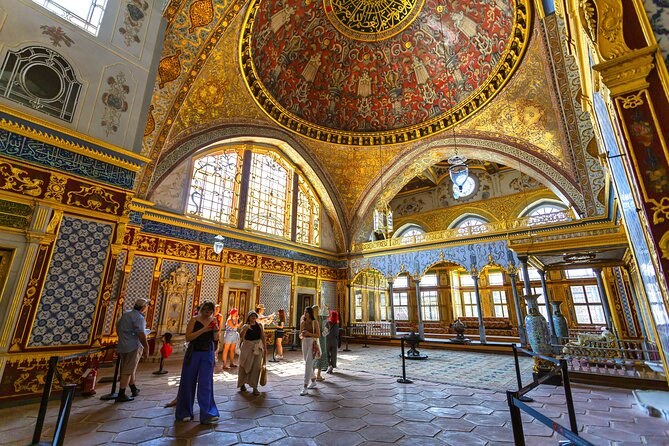 2 mi from IstanbulTopkapi Palace Secret Rooms + Palace Historian Guide
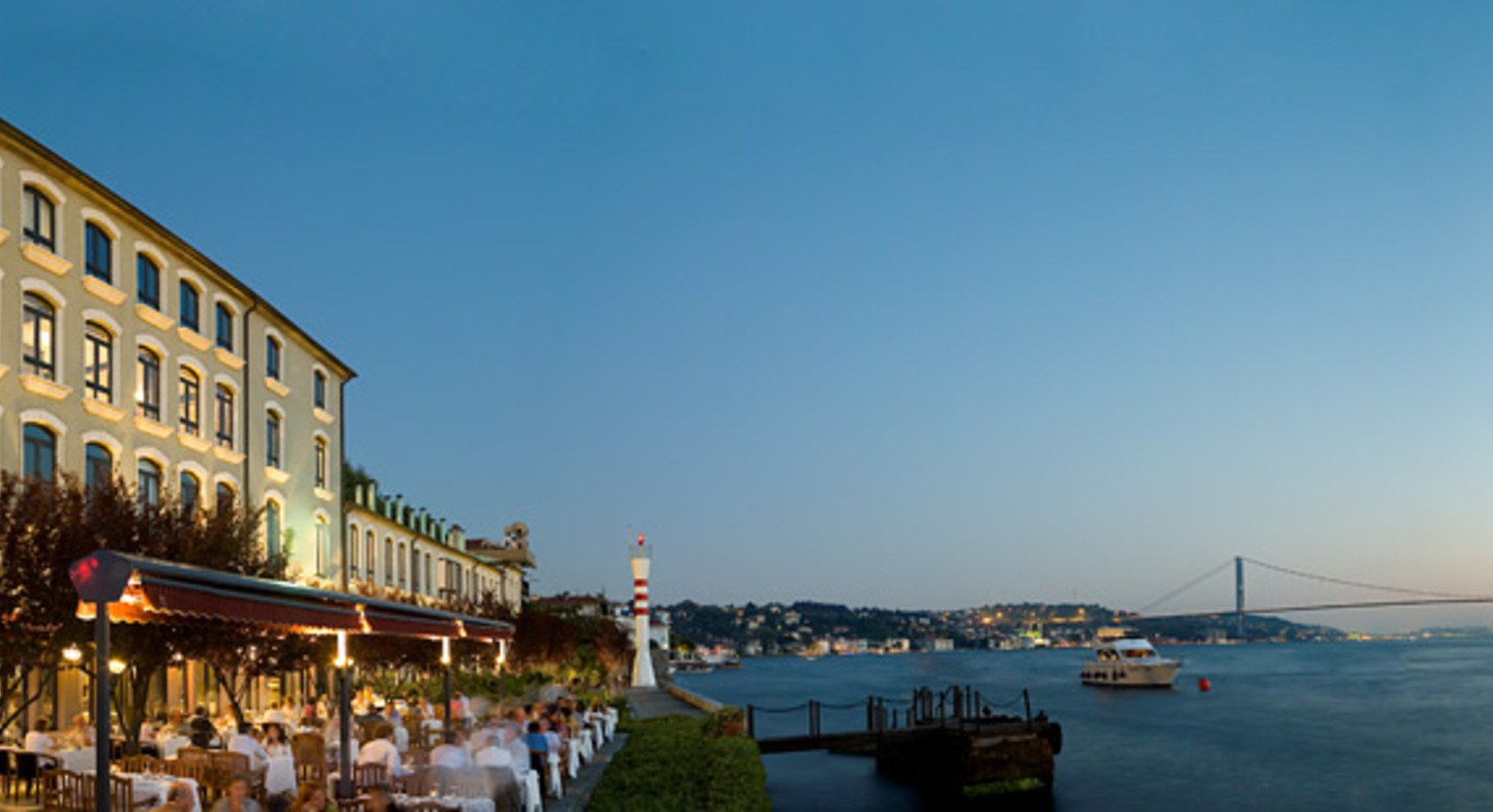 6 mi from IstanbulSumahan on the Water - Architectural Residency & Dinner
 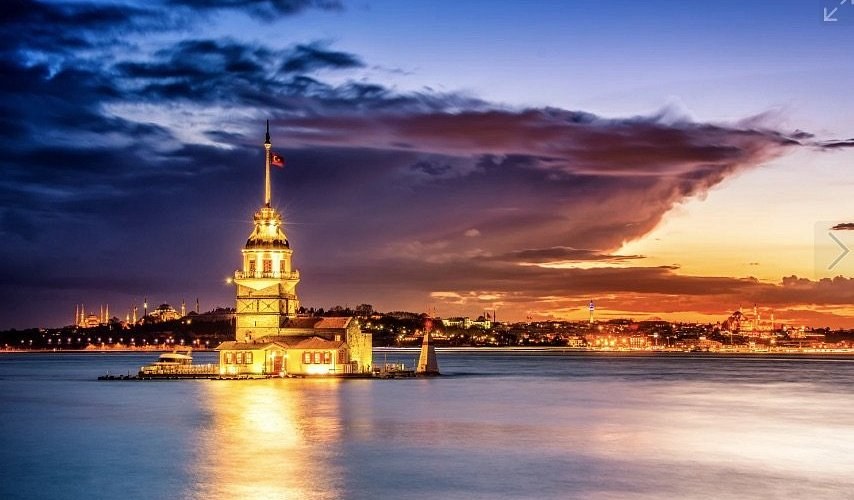 21 mi from Istanbul · land adventureBosphorus Currents: Fortresses, Kebab Masters and Island Ferries
 After you step off · near Lisbon
You end in a different port — stay on, and add what is within reach before you fly home.
 14 mi from LisbonSintra Day Trip - Pena Palace
 13 mi from LisbonConvent of the Capuchos Cork Lining & Underground Network
 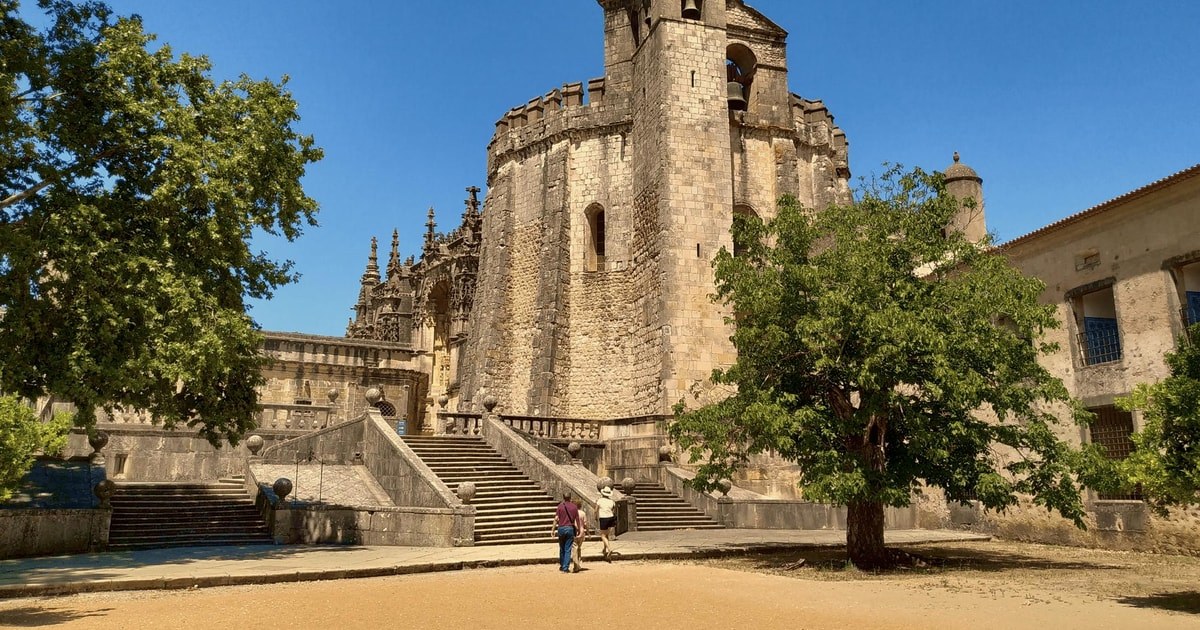 4 mi from Lisbon · land adventureTemplar Stone, Atlantic Cliffs, and Pastel Custard in Lisbon
 4 mi from Lisbon · land adventureSintra's Forests, Palaces & Coast: A Portuguese Masterpiece