Your cruise
Azamara Journey · 47-night Northern Europe cruise, Barcelona to Stockholm
Jun 6 – Jul 23 · 47 nights ·
Day 1 Barcelona (board) · Day 2 Valencia · Day 3 Cartagena · Day 4 Malaga · Day 5 Gibraltar · Day 6–8 Seville · Day 9 Portimao · Day 10 Lisbon · Day 11 Leixoes (Oporto) · Day 12 at sea · Day 13 Bilbao · Day 14 Pasajes · Day 15–16 Bordeaux · Day 17 at sea · Day 18 Saint Malo · Day 19 Le Havre (Paris) · Day 20 Dover (London) · Day 21 Amsterdam · Day 22 at sea · Day 23 Rosendal · Day 24 Olden · Day 25 Alesund · Day 26 at sea · Day 27 Svolvaer · Day 27 Trollfjord · Day 28 Tromso · Day 29 Honningsvag (North Cape) · Day 29–30 at sea · Day 30 Alta · Day 31 Harstad · Day 32 Bodo · Day 33 Trondheim · Day 34 Kristiansund · Day 35 at sea · Day 36 Arendal · Day 37 Skagen · Day 38 Copenhagen · Day 39 Warnemunde · Day 40 Ronne · Day 41 Gdansk · Day 42 Klaipeda · Day 43 Riga · Day 44 at sea · Day 45 Tallinn · Day 46 Helsinki · Day 47–48 Stockholm (step off)
What you do Step inside Santiago Calatrava's blinding-white, sci-fi City of Arts and Sciences and into the Oceanografic, the biggest aquarium in Europe, where a glass tunnel puts sharks and rays gliding over your head and beluga whales, sea lions and a dolphin lagoon fill nine themed marine worlds. It is the single most photographed image of Valencia and the closest marquee sight to the cruise terminal, about 12-20 minutes by bus line 95 or a ~12-15 euro taxi. For a first-timer with one port day, this is the regret-if-you-miss-it stop.
What to expect You arrive at Santiago Calatrava's gleaming City of Arts and Sciences and step into the Oceanografic, Europe's largest aquarium, where a glass tunnel frames sharks and rays gliding silently overhead. From there you move through nine themed marine worlds—beluga whales, sea lions, and a dolphin lagoon punctuate the journey—each zone a deeper plunge into underwater spectacle. The dolphin and sea-lion shows provide the natural rhythm breaks and peak photo moments. It's an immersive, self-paced flow from zone to zone, capped by the single most photographed image Valencia offers.
Good to know Book your ticket direct online (EUR 35.90–43.05 adult; combo packages with Hemisferic IMAX and Science Museum run EUR 44–51.25) and allow 2.5–4 hours inside the aquarium to cover all zones and catch both shows comfortably. From the cruise terminal, take line 95 bus (12–20 minutes) or a taxi (~EUR 12–15) directly to the City of Arts and Sciences; the walk from either drop-off to Oceanografic is short and self-evident. Plan to be back at the pier 90 minutes before all-aboard, and bring a camera—the underwater glass tunnels and Calatrava architecture demand it.
Versus the ship tour DIRECT WINS BIG. Lines like Celebrity and Royal Caribbean sell a city-visit-plus-Oceanografic tour at $95-130 pp; the aquarium ticket booked direct is only ~$39-46, so even with a taxi you save roughly $50-80 pp and skip the bus-herd pacing. The only thing the ship adds is guided transfer, which the line-95 bus or a short cab replaces for a few euros.
book direct with Oceanografic Valencia (Ciutat de les Arts i les Ciencies) → · the full guide →
What you do Glide out across the mirror-still freshwater lagoon in a traditional flat-bottomed albuferenc wooden boat, poled and motored past herons, reed beds and the rice paddies that actually gave the world paella, best at the golden-hour light Valencia is famous for. This is the postcard the cathedral and aquarium can't replicate, and at roughly 25 minutes from the port it pairs perfectly with an authentic paella lunch in the El Palmar village beside the dock.
What to expect You'll travel roughly 25 minutes from the port to El Palmar village and board a traditional flat-bottomed wooden boat, poled and motored across the mirror-still freshwater Albufera Lagoon. As you glide past herons, reed beds, and the rice paddies that gave paella to the world, golden-hour light transforms the landscape into postcard perfection—a natural experience the cathedral and aquarium cannot match. The shared lagoon ride lasts about 45 minutes, immersing you in the serene working wetlands that define this region. Pair it seamlessly with an authentic paella lunch at a village restaurant beside the dock, creating a complete sensory journey of Valencia's most authentic culinary and natural heritage.
Good to know Book directly with Paseos en Barca El Besso (WhatsApp/phone +34 678 336 181 or their website) for a standard ~45-minute ride at EUR 5 adult/EUR 3 child, or opt for a sunset/longer ride at EUR 7—a fraction of cruise-line bundled tour pricing. From the pier, take a taxi to El Palmar dock (roughly 25 minutes); consider hiring the same taxi to wait, or arrange round-trip transport through an independent port-gate operator for ~€75–85 to include boat and paella. Book your boat slot and paella restaurant reservation in advance to secure timing, and budget 4–5 hours total (transport, boat, meal, return) to maintain a safe buffer before all-aboard. Bring sun protection and a camera for golden-hour shots, and note that the boat is weather-dependent; confirm departures the morning of your port day.
Versus the ship tour DIRECT IS A FRACTION OF THE PRICE. The boat ride itself is ~5 euros booked directly with the barquero; cruise lines bundle it into 'Old Quarter and Albufera with paella' tours at $90-130 pp. If you want the whole package handled, an independent port-gate operator does boat + paella + round-trip transport for ~$82-92 pp and still beats the ship by $20-50. But the boat alone, self-driven by taxi, is the budget bucket-list steal of the port.
book direct with Paseos en Barca El Besso → · the full guide →
What you do Shop for ingredients at the 1928 Modernista Central Market with a Valencian chef, then learn to build the genuine article over fire, rice, chicken, rabbit and garrofo beans, never chorizo, and eat your own creation with regional wine and tapas. It is a hands-on, take-home-a-skill experience run by a real local operator, and the ~3.5-hour morning format slots cleanly inside a 6-8 hour port day for foodies who want to do more than sightsee.
What to expect You'll start with a guided walk through the soaring Modernista halls of the 1928 Central Market, learning to spot authentic paella ingredients alongside your Valencian chef before heading to the cooking space. There you'll work hands-on—building genuine paella over fire with rice, chicken, rabbit, and garrofo beans (never the tourist shortcut of chorizo). As the dish comes together, you'll taste regional wine and tapas, then sit down to eat the paella you've just made. The morning format flows as a natural arc from market discovery to skill-building to meal, completing in roughly 3.5 hours.
Good to know The ~3.5-hour morning class fits neatly into a 6–8 hour port day, leaving buffer time for tender queues and the walk back to the pier. Book directly with Sea Saffron (not the cruise line) to confirm pickup logistics from the Valencia port and confirm whether transportation is included. Wear closed-toe shoes suitable for standing in a market and near an open fire, and bring an appetite—you'll finish with your own cooked paella plus wine service. Reserve ahead, especially for weekend calls, since local operators fill faster than ship-sponsored alternatives.
Versus the ship tour DIRECT WINS. Cruise-line culinary excursions run $130-225 pp (tapas-and-wine city tours up to $221-226, cooking classes ~$139); Sea Saffron's hands-on class with market tour is ~$80 booked direct, saving $50-145 pp, and you deal with a genuinely Valencian operator instead of a contracted group bus.
What you do In its own Gothic side chapel the cathedral guards the agate cup the Vatican recognizes as the most credible candidate for the Holy Grail of the Last Supper, the spiritual heart of the Old Town. Then climb the 207 spiraling steps of the Miguelete bell tower for the definitive 360-degree panorama over Valencia's terracotta rooftops and domes. Compact, walkable and self-paced, it anchors any Old Town port-day plan.
What to expect You'll start in Valencia's compact Old Town, entering the Gothic cathedral to view the agate Holy Grail cup in its own chapel—a profound, quieter moment amid the architectural grandeur—before moving through the Treasury and museum at your own pace with an audioguide. Then you'll face the decision: take the 207 spiraling steps of the Miguelete bell tower for an unobstructed 360-degree panorama of terracotta rooftops and domes, or linger in the historic center's walkable streets. The rhythm is entirely self-directed; you move when you want, rest when you want, and the compact geography keeps you anchored without feeling rushed.
Good to know The cathedral and tower entry (~$12–14 total) should be booked direct at the official site or purchased at the door to avoid ship markups. Budget 2.5–3 hours for the full cathedral experience plus the tower climb; the Old Town is a flat, easy 10–15 minute walk from the cruise pier, leaving you 2–3 hours for additional wandering or a cafe stop. Build in a 30-minute buffer to return to the ship; bring comfortable walking shoes, sunscreen, and a small day bag, as the tower climb is tight and steep. Book ahead online only if you're visiting during peak season (May–September) to guarantee entry slots.
Versus the ship tour DIRECT WINS, AND IT'S SELF-GUIDED. Lines sell a Valencia City Highlights / panoramic Old Town tour at $70-95 pp; the cathedral and tower booked direct total ~$12-14 pp, and the historic center is an easy self-guided walk. The ship only adds a guide and coach transfer, worth it solely if you want zero logistics, otherwise you're paying $60+ extra for narration.
book direct with Catedral de Valencia (Basilica Metropolitana) → · the full guide →
What you do After a 1957 flood Valencia rerouted its river and turned the 9 km dry riverbed into one of Europe's great urban parks, a green ribbon winding under the city's historic stone bridges from the Old Town all the way to the City of Arts and Sciences. Rent a bike and ride the traffic-free corridor to string nearly every major sight together, the smartest, most local way to cover a lot of Valencia on a short port day.
What to expect You'll rent a bike at Valencia Bikes and pedal the 9 km traffic-free ribbon of the Turia Gardens, a green corridor that winds under historic stone bridges from the Old Town through the city's lush heart straight to the City of Arts and Sciences. Along the way you'll string together nearly every major sight—medieval plazas, arched architecture, and Calatrava's futuristic complex—without fighting traffic or crowds. The route flows as a seamless scenic loop, each landmark appearing naturally as you glide beneath centuries-old bridges and through sun-dappled parks. It's the closest thing to a personal-guided tour you'll get without paying for one, but entirely at your own pace and on your own discovery.
Good to know Rent your bike early to maximize daylight and give yourself 4–5 hours to ride the gardens, explore the Old Town, and visit the City of Arts and Sciences without rushing. The rental fee (~$13–16 including helmet and lock) is non-negotiable, so budget that upfront; guided tours are available at higher rates if you prefer narration. Allow at least 90 minutes buffer to return the bike, walk back to the pier, and clear security before all-aboard. Bring water, sunscreen, and check that the bike's brakes and tires work before leaving the rental shop—the route is flat and safe, but you'll be exposed to Valencia's sun for hours.
Versus the ship tour DIRECT WINS for the self-reliant. The ship's panoramic city tours run $70-110 pp; a half-day bike for ~$15 lets you self-connect the Old Town, Turia park and the Calatrava complex in one scenic loop, saving $55+ pp. Choose the ship only if you can't ride or want a guided narrative; otherwise the bike is the better-value, more memorable way to see the city.
What you do When you want an easy, low-stress port day, Malvarrosa and Las Arenas beaches sit minutes from the cruise terminal: a wide golden-sand strip backed by a palm-lined promenade of paella-and-seafood chiringuitos, with the America's Cup marina alongside. It is the closest open-water relaxation to the ship, no operator or booking needed, and you can be back aboard fast if the clock gets tight.
What to expect You arrive at a wide, palm-lined golden-sand beach moments from the cruise terminal, where the shoreline stretches lazily between the chiringuitos (casual seafood bars) lining the promenade and the sleek white yachts of the America's Cup marina. The rhythm is unhurried: claim a spot on the sand or rent a sunbed, order fresh paella or grilled fish from one of the beachfront shacks, and drift between the water and a cold horchata as the Mediterranean wind dries your shoulders. The Malvarrosa and Las Arenas beaches feel both Mediterranean-postcard authentic and entirely low-key—no crowds, no tours, just sand, salt water, and the gentle hum of port-city life just behind you.
Good to know A taxi from the terminal costs $12–15 each way, or take the city tram for a few euros—both get you beachside in minutes, leaving a full 5–6 hours to swim, eat, and lounge within a 6–8 hour port window. Sunbed and parasol rentals (around $5–10) are available on-site and require no advance booking. Build in a 30–45 minute buffer before all-aboard to account for a taxi queue or tram wait on the return trip, and bring cash or a card accepted at the chiringuitos if you plan to eat; sunscreen and a light cover-up are essential, as the beach offers limited shade beyond parasol rentals.
Versus the ship tour SKIP THE SHIP HERE. Cruise lines sell a Valencia Beaches / scenic coastal drive at $70-110 pp, but Malvarrosa is essentially in the port's backyard and free to enjoy; a taxi or tram gets you there for under $20 round trip. This is the no-regret fallback if a marquee tour sells out or you simply want sand and a cold horchata without spending a cent on an excursion.
What you do Step inside the most famous unfinished building on earth, where Gaudi's stone forest of columns explodes into a kaleidoscope of stained-glass light that moves across the floor through the day. Add the tower ticket to ride the lift up a spire and walk back down the dizzying spiral stair with the city at your feet. Buy a strict timed entry slot, go early in your port window, and you'll beat both the queue and the midday glare.
What to expect You'll enter Gaudí's masterpiece and encounter a forest of soaring stone columns that dissolve into kaleidoscopic stained-glass light, shifting across the basilica floor as the sun moves through the day. If you book tower access, you'll ride the lift up a spire and descend the dizzying spiral staircase with Barcelona spreading below you. The unfinished vastness—both earthbound and dreamlike—fills the space in a way photographs cannot capture, and the audioguide walks you through every sculptural detail as you move through the nave.
Good to know Book a strict timed entry slot directly from the official Basilica de la Sagrada Familia site before your port day and go early in your window to beat both queues and harsh midday glare. Basic entry (EUR 26) includes the audioguide app; add EUR 10 for tower access (EUR 36 total) if you want the climb. Get there by taxi, metro, or ship-organized transport—the official tickets skip the reseller markup and save you $40–130 per person versus ship packages. Allow 2–3 hours inside the basilica itself, plus buffer time for entry and return, leaving at least 30–45 minutes to get back to the pier before all-aboard.
Versus the ship tour Direct wins overwhelmingly. The ship charges $75-170pp for guided/skip-line Sagrada Familia + Park Guell combos; the official tower ticket is ~$40pp and the basic ~$28pp. Same building, same skip-the-queue timed entry, for a fraction of the price. You save roughly $40-130pp and keep the audioguide. The only thing the ship adds is a bus and a guide reciting what the EUR 26 audioguide already tells you.
book direct with Basilica de la Sagrada Familia (official) → · the full guide →
What you do Ride out of the city to the serrated, otherworldly rock massif of Montserrat, ride the rack railway up the cliff face, and stand before the Black Madonna in the Benedictine basilica. If your day lands on a weekday you may catch the Escolania boys' choir, one of Europe's oldest. A guided coach handles the logistics and the timing so you are not gambling your ship's all-aboard on Spanish regional rail.
What to expect You'll depart Barcelona Nord by guided coach around 9:00am and ride into the otherworldly rock massif of Montserrat, where jagged peaks rise like a serrated fortress. At the foot of the cliffs, you'll board the rack railway that climbs the steep face, delivering you to the Benedictine basilica where the Black Madonna awaits in her shrine. A guide walks you through the sacred basilica, and if your excursion lands on a weekday, you may catch the Escolania boys' choir—one of Europe's oldest—singing in the morning service. The return coach departs mid-afternoon, arriving back at the port by around 4:15pm, giving you time to decompress before all-aboard.
Good to know Book the EUR 68.40 online rate with Catalunya Bus Turistic (Barcelona Turisme) well ahead to lock savings over cruise-line pricing ($25–185 cheaper per person). Confirm your ship's all-aboard time before booking—this ~7.25-hour excursion ends mid-afternoon, and the guided coach is your guaranteed return to port, so no gambling on Spanish regional rail. Wear sturdy walking shoes and bring layers, as the monastery sits at altitude and morning temperatures vary; the rack railway is steep but brief. Meet at Barcelona Nord bus station; your operator handles all transport and timing from city to mountain and back to the pier.
Versus the ship tour Direct wins clearly. Cruise-line Montserrat tours run $98-149pp and one premium-line passenger reported $259pp; this licensed multi-year operator delivers the same mountain, basilica and museum for ~$74pp, saving $25-185pp. PORT-DAY FLAG: this is a half-day, ~7.25hr round trip ending mid-afternoon, so confirm it lands inside your all-aboard. If you want the absolute floor and can self-navigate, the official Tot Montserrat ticket (EUR 71.50, adds the cable-car/lunch buffet and all funiculars) does it DIY by train, but you lose the guide and the guaranteed coach back to the port.
book direct with Catalunya Bus Turistic (Barcelona Turisme) → · the full guide →
What you do Climb to Gaudi's fairytale hillside park where the famous serpentine bench snakes in broken-tile mosaic around a terrace with the whole city and the sea spread below. The gingerbread gatehouses, the mosaic lizard fountain and the columned Hypostyle Hall make this the most photographed open-air Gaudi work in Barcelona. Book a timed slot for the Monumental Zone and arrive within your 30-minute entry grace window.
What to expect You'll arrive at Park Güell's Monumental Zone within a timed 30-minute entry window and climb the hillside into Gaudí's dreamlike landscape of gingerbread gatehouses and winding mosaic pathways. The iconic serpentine bench—snaking in broken-tile mosaics—curves around a terrace with sweeping views of Barcelona and the sea below, a photographer's paradise at every turn. You'll wander through the columned Hypostyle Hall and encounter the whimsical mosaic lizard fountain, experiencing the most photographed open-air Gaudí work in the city. The rhythm builds from initial climb to breathless overlook moment, then the slower, meditative wandering among the ceramic-clad structures and panoramic terraces.
Good to know Book your timed slot for the Monumental Zone well ahead (€18pp includes all Gaudí works and terraces, VAT included). Budget a taxi or bus both ways from the pier—the site is uphill and slightly off the metro—and plan to spend 1.5–2 hours at the park itself, leaving 2–3 hours total for transport buffers in a 6–8 hour port window. Arrive at the pier-side transport with at least 90 minutes before your ship departure to clear the security buffer. Bring sun protection and comfortable climbing shoes; if Sagrada Familia is also on your list, prioritize that cathedral over this one due to time constraints.
Versus the ship tour Direct wins big. The ship folds Park Guell into Gaudi tours priced $75-170pp; the official monument ticket is ~$20pp. Even adding a EUR 13 taxi up the hill you are far under the ship rate, saving $50-150pp. Honest caveat: it's uphill and a bit off the metro, so budget a taxi/bus each way and a firm timed slot. If you only have time for one Gaudi stop, prioritize Sagrada Familia over this one.
book direct with Park Guell (official, Barcelona City Council) → · the full guide →
What you do Slip out of the old harbor under sail on a real catamaran and see Barcelona's skyline, the Barceloneta beaches and the working port from the water, with a full bar aboard if you want a vermouth in hand. It is the rare port-day activity that starts steps from where most ships dock, so there is almost no travel time eating into your clock. Quiet, scenic, and an easy reset between the heavier Gaudi and mountain days.
What to expect You slip out of Port Vell under sail on a real catamaran, watching Barcelona's skyline recede as you glide past the Barceloneta beaches and the working harbor—all from the water, in the rare quiet that comes when most port-goers are queuing for cable cars. The 1.5-hour sail (or longer for Jazz options) unfolds at the pace of the breeze, with an onboard bar letting you nurse a vermouth while the city rises behind you. This is atmosphere and scenery: the kind of reset day that earns its place *between* the heavier Gaudi museum runs and mountain climbs, not as a standalone centerpiece.
Good to know The catamaran departs directly from Colon/Port Vell—steps from where most cruise ships dock—so there is almost no travel time; you can be aboard within 10–15 minutes of leaving the ship. Book the 1.5-hour Catamaran Sail & Skyline (EUR 18.50pp) or upgrade to Jazz & Chill Out (EUR 22.50pp) or Sunset Jazz (EUR 28pp) directly with Catamaran Orsom to save 50–80% versus ship-sold harbor alternatives. Plan to return well within a 6–8 hour port window, leaving ample buffer for any delays; bring sunscreen, sunglasses, and a light layer for wind on the water, and confirm departure times when booking to align with your ship's all-aboard.
Versus the ship tour Direct wins, roughly half price. Ship-sold harbor sails run $60-80pp and multi-element 'land/sea/air' packages hit $214pp; ORSOM's direct sail is ~$20-31pp, a $40-180pp saving. It departs right at Port Vell so you skip the bus shuffle. Honest note: this is scenery and atmosphere, not a bucket-list 'must,' so slot it only after you've locked the marquee sights.
What you do Drive into the Penedes vineyards, taste across varieties at the Torreblanca winery, then get hands-on at ArtCava to riddle and cork your own bottle of cava to take home as the rare souvenir you actually made. It is Spain's sparkling-wine heartland and a genuine craft experience rather than a pour-and-go tasting. A real port-day alternative to another church or museum.
What to expect You'll board a coach at Barcelona Nord around 9:00am and drive into the Penedes vineyards, Spain's sparkling-wine heartland, for a vineyard walk and guided tasting across varieties at Torreblanca winery. From there, you'll move to ArtCava for a hands-on workshop where you'll ridge and cork your own bottle of cava—a genuine craft experience, not a pour-and-go tasting—before heading back to the pier by approximately 2:15pm with a bottle you've made yourself as your souvenir.
Good to know The entire excursion runs ~5.25 hours round-trip, departing Barcelona Nord and returning early afternoon, which fits comfortably within most all-aboard windows—but confirm your sailing time and treat the coach's return as your hard deadline. Price is EUR 104pp online (EUR 116 regular) and includes round-trip coach, vineyard walk, tastings at two wineries, the guided ArtCava tour, your make-your-own-cava workshop, and the bottle to take home. Book online in advance to lock in the EUR 104 rate rather than pay the regular price at the port. Bring comfortable walking shoes for the vineyard and ArtCava, stay hydrated between tastings, and allow 15–20 minutes buffer time to clear the coach and return to your ship.
Versus the ship tour Direct wins, ~$75-80pp. The cruise line's Cava + tapas + vineyard and Familia Torres winery tours run $186-195pp; this is ~$113pp for two wineries plus a hands-on workshop and a bottle, a saving of about $75pp. PORT-DAY FLAG: ~5.25hr round trip returning early afternoon, comfortably inside most all-aboards, but confirm against your sailing time and treat the coach's return as your hard deadline.
book direct with Catalunya Bus Turistic (Barcelona Turisme) → · the full guide →
What you do Walk the famous La Boqueria market with a chef, then cook a real Catalan paella and a couple of tapas by hand before sitting down to eat what you made with sangria in hand. It's three hours, minutes off La Rambla, and a low-stress way to take Barcelona home in your hands rather than your camera roll. The near-port safety net if a long mountain or vineyard run feels too tight against your all-aboard.
What to expect You'll start at La Boqueria market with a chef guide introducing the vibrant produce and Catalan ingredients, then move to the kitchen to roll up your sleeves and cook a real paella and two tapas by hand under instruction. The rhythm flows from market sensory overload—color, noise, vendors—to focused, measured cooking where you learn technique in a small group. After three hours of chopping, stirring, and tasting, you sit down to eat what you've made with sangria in hand, transforming the morning's market finds into your own meal.
Good to know Sessions run at 10:30, 13:00, 16:00, and 18:45; a 10:30 start gives you a full 6+ hours back on ship before evening all-aboard, while the 13:00 slot works if your port window is shorter. The venue is central, just minutes off La Rambla near Liceu metro—walkable from the pier or a quick taxi, with minimal coach risk. Book ahead through Cook & Taste to secure your time slot and session; the EUR 72 price includes all instruction, equipment, recipes, and beverages, so there are no surprise costs. Plan to return to the ship by your all-aboard time with a 30–45 minute buffer built in; the class ends by its scheduled time (e.g., 13:45 for the 10:30 session), leaving you a safe window to walk or cab back to the pier.
Versus the ship tour Direct wins, $50-115pp. The ship's tapas/food/wine tours run $128-195pp; this hands-on class is ~$79pp, a $50-115pp saving, and you actually cook rather than just follow a guide between bars. As a safety-net it is unbeatable for the clock: it's central, short, and books in fixed time slots, so you can pick the session that fits your remaining port hours with zero coach risk.
book direct with Cook & Taste (Barcelona Cooking Classes) → · the full guide →
What you do Step inside Santiago Calatrava's blinding-white, sci-fi City of Arts and Sciences and into the Oceanografic, the biggest aquarium in Europe, where a glass tunnel puts sharks and rays gliding over your head and beluga whales, sea lions and a dolphin lagoon fill nine themed marine worlds. It is the single most photographed image of Valencia and the closest marquee sight to the cruise terminal, about 12-20 minutes by bus line 95 or a ~12-15 euro taxi. For a first-timer with one port day, this is the regret-if-you-miss-it stop.
What to expect You arrive at Santiago Calatrava's gleaming City of Arts and Sciences and step into the Oceanografic, Europe's largest aquarium, where a glass tunnel frames sharks and rays gliding silently overhead. From there you move through nine themed marine worlds—beluga whales, sea lions, and a dolphin lagoon punctuate the journey—each zone a deeper plunge into underwater spectacle. The dolphin and sea-lion shows provide the natural rhythm breaks and peak photo moments. It's an immersive, self-paced flow from zone to zone, capped by the single most photographed image Valencia offers.
Good to know Book your ticket direct online (EUR 35.90–43.05 adult; combo packages with Hemisferic IMAX and Science Museum run EUR 44–51.25) and allow 2.5–4 hours inside the aquarium to cover all zones and catch both shows comfortably. From the cruise terminal, take line 95 bus (12–20 minutes) or a taxi (~EUR 12–15) directly to the City of Arts and Sciences; the walk from either drop-off to Oceanografic is short and self-evident. Plan to be back at the pier 90 minutes before all-aboard, and bring a camera—the underwater glass tunnels and Calatrava architecture demand it.
Versus the ship tour DIRECT WINS BIG. Lines like Celebrity and Royal Caribbean sell a city-visit-plus-Oceanografic tour at $95-130 pp; the aquarium ticket booked direct is only ~$39-46, so even with a taxi you save roughly $50-80 pp and skip the bus-herd pacing. The only thing the ship adds is guided transfer, which the line-95 bus or a short cab replaces for a few euros.
book direct with Oceanografic Valencia (Ciutat de les Arts i les Ciencies) → · the full guide →
What you do Glide out across the mirror-still freshwater lagoon in a traditional flat-bottomed albuferenc wooden boat, poled and motored past herons, reed beds and the rice paddies that actually gave the world paella, best at the golden-hour light Valencia is famous for. This is the postcard the cathedral and aquarium can't replicate, and at roughly 25 minutes from the port it pairs perfectly with an authentic paella lunch in the El Palmar village beside the dock.
What to expect You'll travel roughly 25 minutes from the port to El Palmar village and board a traditional flat-bottomed wooden boat, poled and motored across the mirror-still freshwater Albufera Lagoon. As you glide past herons, reed beds, and the rice paddies that gave paella to the world, golden-hour light transforms the landscape into postcard perfection—a natural experience the cathedral and aquarium cannot match. The shared lagoon ride lasts about 45 minutes, immersing you in the serene working wetlands that define this region. Pair it seamlessly with an authentic paella lunch at a village restaurant beside the dock, creating a complete sensory journey of Valencia's most authentic culinary and natural heritage.
Good to know Book directly with Paseos en Barca El Besso (WhatsApp/phone +34 678 336 181 or their website) for a standard ~45-minute ride at EUR 5 adult/EUR 3 child, or opt for a sunset/longer ride at EUR 7—a fraction of cruise-line bundled tour pricing. From the pier, take a taxi to El Palmar dock (roughly 25 minutes); consider hiring the same taxi to wait, or arrange round-trip transport through an independent port-gate operator for ~€75–85 to include boat and paella. Book your boat slot and paella restaurant reservation in advance to secure timing, and budget 4–5 hours total (transport, boat, meal, return) to maintain a safe buffer before all-aboard. Bring sun protection and a camera for golden-hour shots, and note that the boat is weather-dependent; confirm departures the morning of your port day.
Versus the ship tour DIRECT IS A FRACTION OF THE PRICE. The boat ride itself is ~5 euros booked directly with the barquero; cruise lines bundle it into 'Old Quarter and Albufera with paella' tours at $90-130 pp. If you want the whole package handled, an independent port-gate operator does boat + paella + round-trip transport for ~$82-92 pp and still beats the ship by $20-50. But the boat alone, self-driven by taxi, is the budget bucket-list steal of the port.
book direct with Paseos en Barca El Besso → · the full guide →
What you do Shop for ingredients at the 1928 Modernista Central Market with a Valencian chef, then learn to build the genuine article over fire, rice, chicken, rabbit and garrofo beans, never chorizo, and eat your own creation with regional wine and tapas. It is a hands-on, take-home-a-skill experience run by a real local operator, and the ~3.5-hour morning format slots cleanly inside a 6-8 hour port day for foodies who want to do more than sightsee.
What to expect You'll start with a guided walk through the soaring Modernista halls of the 1928 Central Market, learning to spot authentic paella ingredients alongside your Valencian chef before heading to the cooking space. There you'll work hands-on—building genuine paella over fire with rice, chicken, rabbit, and garrofo beans (never the tourist shortcut of chorizo). As the dish comes together, you'll taste regional wine and tapas, then sit down to eat the paella you've just made. The morning format flows as a natural arc from market discovery to skill-building to meal, completing in roughly 3.5 hours.
Good to know The ~3.5-hour morning class fits neatly into a 6–8 hour port day, leaving buffer time for tender queues and the walk back to the pier. Book directly with Sea Saffron (not the cruise line) to confirm pickup logistics from the Valencia port and confirm whether transportation is included. Wear closed-toe shoes suitable for standing in a market and near an open fire, and bring an appetite—you'll finish with your own cooked paella plus wine service. Reserve ahead, especially for weekend calls, since local operators fill faster than ship-sponsored alternatives.
Versus the ship tour DIRECT WINS. Cruise-line culinary excursions run $130-225 pp (tapas-and-wine city tours up to $221-226, cooking classes ~$139); Sea Saffron's hands-on class with market tour is ~$80 booked direct, saving $50-145 pp, and you deal with a genuinely Valencian operator instead of a contracted group bus.
What you do In its own Gothic side chapel the cathedral guards the agate cup the Vatican recognizes as the most credible candidate for the Holy Grail of the Last Supper, the spiritual heart of the Old Town. Then climb the 207 spiraling steps of the Miguelete bell tower for the definitive 360-degree panorama over Valencia's terracotta rooftops and domes. Compact, walkable and self-paced, it anchors any Old Town port-day plan.
What to expect You'll start in Valencia's compact Old Town, entering the Gothic cathedral to view the agate Holy Grail cup in its own chapel—a profound, quieter moment amid the architectural grandeur—before moving through the Treasury and museum at your own pace with an audioguide. Then you'll face the decision: take the 207 spiraling steps of the Miguelete bell tower for an unobstructed 360-degree panorama of terracotta rooftops and domes, or linger in the historic center's walkable streets. The rhythm is entirely self-directed; you move when you want, rest when you want, and the compact geography keeps you anchored without feeling rushed.
Good to know The cathedral and tower entry (~$12–14 total) should be booked direct at the official site or purchased at the door to avoid ship markups. Budget 2.5–3 hours for the full cathedral experience plus the tower climb; the Old Town is a flat, easy 10–15 minute walk from the cruise pier, leaving you 2–3 hours for additional wandering or a cafe stop. Build in a 30-minute buffer to return to the ship; bring comfortable walking shoes, sunscreen, and a small day bag, as the tower climb is tight and steep. Book ahead online only if you're visiting during peak season (May–September) to guarantee entry slots.
Versus the ship tour DIRECT WINS, AND IT'S SELF-GUIDED. Lines sell a Valencia City Highlights / panoramic Old Town tour at $70-95 pp; the cathedral and tower booked direct total ~$12-14 pp, and the historic center is an easy self-guided walk. The ship only adds a guide and coach transfer, worth it solely if you want zero logistics, otherwise you're paying $60+ extra for narration.
book direct with Catedral de Valencia (Basilica Metropolitana) → · the full guide →
What you do After a 1957 flood Valencia rerouted its river and turned the 9 km dry riverbed into one of Europe's great urban parks, a green ribbon winding under the city's historic stone bridges from the Old Town all the way to the City of Arts and Sciences. Rent a bike and ride the traffic-free corridor to string nearly every major sight together, the smartest, most local way to cover a lot of Valencia on a short port day.
What to expect You'll rent a bike at Valencia Bikes and pedal the 9 km traffic-free ribbon of the Turia Gardens, a green corridor that winds under historic stone bridges from the Old Town through the city's lush heart straight to the City of Arts and Sciences. Along the way you'll string together nearly every major sight—medieval plazas, arched architecture, and Calatrava's futuristic complex—without fighting traffic or crowds. The route flows as a seamless scenic loop, each landmark appearing naturally as you glide beneath centuries-old bridges and through sun-dappled parks. It's the closest thing to a personal-guided tour you'll get without paying for one, but entirely at your own pace and on your own discovery.
Good to know Rent your bike early to maximize daylight and give yourself 4–5 hours to ride the gardens, explore the Old Town, and visit the City of Arts and Sciences without rushing. The rental fee (~$13–16 including helmet and lock) is non-negotiable, so budget that upfront; guided tours are available at higher rates if you prefer narration. Allow at least 90 minutes buffer to return the bike, walk back to the pier, and clear security before all-aboard. Bring water, sunscreen, and check that the bike's brakes and tires work before leaving the rental shop—the route is flat and safe, but you'll be exposed to Valencia's sun for hours.
Versus the ship tour DIRECT WINS for the self-reliant. The ship's panoramic city tours run $70-110 pp; a half-day bike for ~$15 lets you self-connect the Old Town, Turia park and the Calatrava complex in one scenic loop, saving $55+ pp. Choose the ship only if you can't ride or want a guided narrative; otherwise the bike is the better-value, more memorable way to see the city.
What you do When you want an easy, low-stress port day, Malvarrosa and Las Arenas beaches sit minutes from the cruise terminal: a wide golden-sand strip backed by a palm-lined promenade of paella-and-seafood chiringuitos, with the America's Cup marina alongside. It is the closest open-water relaxation to the ship, no operator or booking needed, and you can be back aboard fast if the clock gets tight.
What to expect You arrive at a wide, palm-lined golden-sand beach moments from the cruise terminal, where the shoreline stretches lazily between the chiringuitos (casual seafood bars) lining the promenade and the sleek white yachts of the America's Cup marina. The rhythm is unhurried: claim a spot on the sand or rent a sunbed, order fresh paella or grilled fish from one of the beachfront shacks, and drift between the water and a cold horchata as the Mediterranean wind dries your shoulders. The Malvarrosa and Las Arenas beaches feel both Mediterranean-postcard authentic and entirely low-key—no crowds, no tours, just sand, salt water, and the gentle hum of port-city life just behind you.
Good to know A taxi from the terminal costs $12–15 each way, or take the city tram for a few euros—both get you beachside in minutes, leaving a full 5–6 hours to swim, eat, and lounge within a 6–8 hour port window. Sunbed and parasol rentals (around $5–10) are available on-site and require no advance booking. Build in a 30–45 minute buffer before all-aboard to account for a taxi queue or tram wait on the return trip, and bring cash or a card accepted at the chiringuitos if you plan to eat; sunscreen and a light cover-up are essential, as the beach offers limited shade beyond parasol rentals.
Versus the ship tour SKIP THE SHIP HERE. Cruise lines sell a Valencia Beaches / scenic coastal drive at $70-110 pp, but Malvarrosa is essentially in the port's backyard and free to enjoy; a taxi or tram gets you there for under $20 round trip. This is the no-regret fallback if a marquee tour sells out or you simply want sand and a cold horchata without spending a cent on an excursion.
What you do Cartagena's first-century-BC Roman theatre lay hidden under the old town until 1988, and the only way in is a brilliant architectural sequence designed by Pritzker laureate Rafael Moneo: you pass through the Palacio Pascual de Riquelme, descend past Carthaginian and Roman strata, then emerge into the vast tiered cavea that once seated 6,000. It is the single most unmissable thing in the city and a five-minute walk from the pier. Few Roman theatres in the world are entered through a museum that tells the full layered story of the stone before you stand in it.
What to expect Allow 60-90 minutes for the full route through the museum's two buildings, the connecting tunnel under Calle Comedias, and out into the theatre itself. Interpretation is excellent and bilingual, with recovered marble, statuary and the reconstructed scaenae frons columns. The cavea is open-air and the pale stone throws heat, so morning light is kinder and better for photos. Wear proper shoes for the worn steps.
Good to know From the cruise terminal walk to Plaza del Ayuntamiento at the foot of Calle Mayor; the museum entrance is right there, about 400 m. Buy online or at the desk; queues are short outside July-August. Easily done independently with hours to spare against any all-aboard. Official tourist guides enter free, so a private guide adds no ticket cost.
Versus the ship tour Cruise lines fold the theatre into a guided 'Roman Cartagena' walking tour at roughly EUR 50-80 per person. The site itself is EUR 7 and a five-minute stroll from the ship, so booking direct is the clear winner; the only thing the ship adds is a guide's narration, which a EUR 7 audio guide or a private guide (below) replaces for a fraction of the group-tour price.
book direct with Museo del Teatro Romano de Cartagena (official) → · the full guide →
What you do Beyond the theatre, Cartagena hides one of Europe's largest urban Roman archaeological parks at Cerro del Molinete, 26,000 sq m where you walk original Roman streets past the Forum, the thermal baths, the banqueting Atrium with surviving wall paintings, and a rare Sanctuary of Isis. Paired with the Punic Wall, this is the only place in Spain telling the Carthaginian-to-Roman story on its own ground. A licensed local guide turns scattered ruins into the living capital of Hannibal's Iberia and Augustus's Carthago Nova.
What to expect The Molinete museum's three floors of 300-plus artefacts set up the open-air park, where elevated walkways let you look down on streets, mosaics and the baths. It is genuinely atmospheric and far quieter than the theatre. A good guide ties Molinete, the Punic Wall and the Decumanus together into one walk of about two hours, mostly flat with some ramps. Shade is limited, so carry water in summer.
Good to know All sites are within the compact old town, 5-10 minutes on foot from the pier. Pre-book a licensed guide in advance (Cartagena's official guide association or a reputable operator such as Mediterranean Cartagena Tours); confirm they hold the regional guide licence so they enter the monuments free. Comfortably finished within a half-day port call.
Versus the ship tour The ship's archaeology-focused walking tours run about EUR 60-80 per person. For a couple or a family a privately hired licensed guide at ~EUR 130 plus EUR 10 of tickets each often costs less per head and is infinitely more flexible on pace and depth; book direct. The ship only earns its markup here for solo travellers who want company.
book direct with Cartagena Puerto de Culturas (official site & ticketing) + a licensed private guide → · the full guide →
What you do Cartagena is one of the Mediterranean's great natural war harbours, ringed by coastal batteries, and the most evocative way to feel that is the official harbour boat out to the Fuerte de Navidad, a beautifully restored 1860s casemated fort guarding the harbour mouth. You cruise past the Spanish Navy arsenal and the gun batteries on the headlands, then disembark to walk the bunkers, handle a period cannon and stand on the terrace where the whole bay opens beneath you. It is the city's military soul, reachable only by water.
What to expect The boat moves at an easy 2.5 knots with multilingual narration, passing castles, lighthouses, the Navy arsenal and the cruise terminal itself from the water. At the fort you get roughly 45 minutes to explore casemates, an interactive artillery display and the panoramic terrace before the return leg. The whole round trip with the fort visit runs about 1.5-2 hours. Sea conditions inside the sheltered bay are usually calm.
Good to know The departure quay on Gisbert Street is a 3-4 minute walk from the cruise terminal. Sailings are roughly hourly in summer (11:00-19:30) and reduced off-season, so check the day's timetable on arrival and reserve via reservas@puertoculturas.com or +34 968 500 093 if your call is short. Confirm a return slot that clears your all-aboard with margin.
Versus the ship tour Cruise-line 'panoramic harbour cruise' excursions are typically EUR 50-70 per person for essentially this same bay loop with commentary. The official boat at EUR 10 including fort entry is one of the best-value bucket-list experiences in any Spanish port; book direct without hesitation.
book direct with Cartagena Puerto de Culturas - Barco Turístico (official) → · the full guide →
What you do When Cartagena's mining wealth peaked around 1900, architect Víctor Beltrí lined Calle Mayor with riotous Art Nouveau facades, and walking it is like strolling a small Barcelona: the Gran Hotel, the Casino, Casa Cervantes, Casa Maestre and the Palacio Aguirre. Pair the architecture with a guided tapas crawl through the historic bars for the region's catch and the famed huerta de Europa produce, and you have the city's living present rather than only its Roman past. This is the elegant, sensory side of Cartagena most cruisers miss.
What to expect Calle Mayor is pedestrianised and flat, an easy 1-2 hour amble past the showpiece facades, with the Gran Hotel's corner dome the standout. A good tapas tour threads emblematic bars near San Francisco square for things like local prawns, marinated fish and the Murcian michirones, paired with Jumilla or Bullas wines. Pace is leisurely and social. Midday is liveliest; some bars rest mid-afternoon.
Good to know Everything is within the old town, a few minutes from the pier; no transport needed. Pick up the free modernista route map at the City Hall tourist office on arrival. Pre-book the tapas tour as small-group slots sell out on cruise days, and confirm the finish time against all-aboard. Cartagena lunches start late by northern standards, so an early-afternoon slot suits a port call best.
Versus the ship tour The ship's 'Taste of Tapas' style tours run roughly EUR 70-90 per person. A direct-booked local gastronomy walk at EUR 45-60 covers the same modernista landmarks with better food stops and smaller groups; book direct. If you only want the architecture, do it free and self-guided and spend the savings on a long lunch.
book direct with Local licensed gastronomy operator (e.g. the Cartagena guided tapas & modernista walk) - book the official tour direct → · the full guide →
What you do The hill above the old town has been fortified since Roman times, and the medieval Castillo de la Concepción crowns it inside the green Parque Torres. A glass-fronted panoramic lift saves the 45-metre climb and delivers you to the single best viewpoint in Cartagena: the Roman theatre below, the modernista rooftops, the Navy arsenal and the whole amphitheatre of the bay laid out at once. It is the photograph that explains why every empire wanted this harbour.
What to expect The panoramic lift rises in a minute from Gisbert Street to a footbridge into Parque Torres, where peacocks roam the gardens. The castle keep houses a compact Interpretation Centre on the city's 13-century military story, with preserved Roman cisterns and capitals. Most visitors spend 45-60 minutes including time on the ramparts for the views. The terraces are open and breezy, ideal near sunset if your ship sails late.
Good to know The lift's lower station on Gisbert Street is a few minutes from the cruise terminal and sits right beside the harbour-boat quay, so the two pair perfectly in one outing. Buy the combined lift-plus-castle ticket. The walk down through the park back to the old town is pleasant and downhill if you'd rather not lift both ways.
Versus the ship tour This is rarely sold as a standalone ship excursion; when bundled into a city tour the lift and castle are a minor add-on to a EUR 50-80 package. Independently it is EUR 6 and a short walk, so there is no reason not to do it direct. No remote-access or timing argument favours the ship here.
book direct with Cartagena Puerto de Culturas - Castillo de la Concepción & Ascensor Panorámico (official) → · the full guide →
What you do Forty minutes north-east of the port lies the Mar Menor, the largest saltwater lagoon in Europe, a warm shallow inland sea fringed by the La Manga sandbar and the wetlands of San Pedro del Pinatar, where for centuries people have coated themselves in the mineral-rich mud said to ease aches and skin. Floating in water so dense and calm it feels otherworldly, with flamingos in the nearby salt pans, is a genuinely different Spanish coast from the cruise-port bustle. It is the one bucket-list experience here that the distance makes worth a ship excursion.
What to expect Expect about 40 minutes each way by road, then time at La Manga's twin seafronts or at the Lo Pagán / San Pedro del Pinatar salt-marsh boardwalks for the mud baths and birdlife. The lagoon water is bath-warm, very shallow and extraordinarily buoyant; the grey mud is smeared on, dried in the sun, then rinsed in the sea. Bring a swimsuit you don't mind staining and water shoes for the muddy shallows. Note the lagoon has faced ecological stress in recent years, so conditions vary by season.
Good to know Because of the drive and tight cruise timing, this is the one excursion to pre-book rather than improvise. If going independent, arrange a private driver-guide in advance and build in a generous return buffer; do not attempt it by taxi-and-hope on a short call. Pack a towel, sun protection and a change of clothes, and combine with the Roman theatre on the way back as the ship itinerary does.
Versus the ship tour This is the honest exception to the book-direct rule. The Mar Menor is 40 minutes out with no quick public-transport link from the pier, so the ship's coach handles the distance and, crucially, guarantees you are back before all-aboard. Take the ship tour for peace of mind, or hire a private licensed driver-guide direct if you want flexibility and there are 3-4 of you to share the car. Either way the transport markup is genuinely earned here.
book direct with Norwegian Cruise Line (and most lines) - 'La Manga & Roman Theatre' shore excursion, or a private licensed driver-guide → · the full guide →
What you do Drive ~2 hours inland to the Alhambra, the UNESCO-listed Moorish palace-city that is the single most famous monument in Spain: the honeycombed Nasrid Palaces, the Court of the Lions, and the water-gardens of the Generalife terraced above Granada. A licensed guide walks you through the skip-the-line Nasrid entry (the tickets that sell out weeks ahead and are capacity-controlled by the half-hour), then you get free time in Granada's old town. This is the regret-if-you-miss-it day trip from Malaga.
What to expect You'll spend roughly two hours in an air-conditioned coach traveling inland from Málaga to Granada, then enter the Alhambra with a skip-the-line guide who navigates you through the honeycombed Nasrid Palaces and the iconic Court of the Lions before you explore the terraced water-gardens of the Generalife at your own pace. After the guided palace tour, you'll have free time to wander Granada's atmospheric old town—wandering narrow streets, browsing local shops, or grabbing tapas—before the coach returns you to the port. The rhythm is structured (guided palace tour in the morning, unstructured afternoon) with a full 10–11 hours allocated, giving you real breathing room to absorb both the monument and the city.
Good to know The skip-the-line Nasrid Palaces entry ticket (EUR 23 extra, ~$25) must be pre-booked weeks ahead and is capacity-controlled by half-hour time slots—don't assume walk-up availability. Port pickup and drop-off are included, and the operator guarantees 100% on-time return with no charge if the ship doesn't dock, so you're protected on timing. Bring comfortable walking shoes, sunscreen, and a hat: the palace interiors are cool but the Generalife gardens and Granada's old town are open-air and can be hot. Book your excursion directly with Spain Day Tours rather than through the cruise line to save $90–150 per person compared to ship-sold Alhambra tours.
Versus the ship tour Direct wins big. Cruise lines sell the full guided Alhambra + Generalife day at $180-250 pp with entry and guide included; booking direct lands at ~$122 pp all-in (EUR 89 + EUR 23 entry), saving roughly $90-150 per person -- the largest dollar gap at this port. One caveat: the ship's bare 'Granada On Your Own' coach transfer ($84.99, NO ticket or guide) is fair value ONLY if you can self-secure an Alhambra slot and just want guaranteed sail-away return; for almost everyone the guided direct booking is the better deal.
book direct with Spain Day Tours (Malaga shore-excursion specialist, port pickup/drop-off) → · the full guide →
What you do Walk the boardwalk bolted to a vertical cliff face 100 meters above the Guadalhorce gorge -- once dubbed the most dangerous path in the world, now safely rebuilt into a one-way, ~3-hour, 7.7km clifftop traverse through the El Chorro canyon. It is the marquee adrenaline experience of Andalusia and the photo a thrill-seeker pictures when they think of inland Malaga. Children under 8 cannot enter; bring ID.
What to expect You'll depart the Malaga port and travel 58km inland through Andalusian countryside (roughly 1.5 hours each way) to arrive at El Chorro canyon. Once there, you'll join the one-way boardwalk bolted directly to a near-vertical cliff face 100 meters above the Guadalhorce gorge, traversing 7.7km of clifftop switchbacks through narrowing canyon walls over approximately 3 hours. The walkway—once infamously branded the world's most dangerous path—now feels secure and rebuilt, yet the exposure and soaring views remain visceral and unforgettable. By day's end you'll reverse the journey back to port, consuming your entire port day but delivering the singular adrenaline landmark of inland Malaga.
Good to know Book a guaranteed round-trip shuttle package (EUR 60–80) from a cruise operator or the official ticket office to lock in your on-time return to ship; the 1.5-hour each-way commute leaves zero margin for missing sail-away. Reserve entry tickets (EUR 10–18) weeks ahead, as they sell out regularly. Bring your passport or ID (required for entry), wear sturdy hiking shoes and sun protection, and confirm your shuttle departure time before boarding the tender—treat the return buffer as sacred, since missing the ship carries infinitely more risk than the reconstructed cliff itself. A full-day independent package (guides + transport) costs ~€77–81 per person versus ~€190 via cruise line.
Versus the ship tour Direct wins. Cruise lines fold El Chorro into a scenic '4x4 Andalusia Adventure' type day at ~$189.99 pp; an independent full-day Caminito del Rey guided package runs ~$77-81 pp, saving roughly $60-110 per person. If you only book the bare EUR 10 entry you save even more, but you take on the transport-and-timing risk yourself -- worth it only if you arrange a guaranteed-return shuttle, since missing sail-away is the real danger here, not the cliff.
book direct with Caminito del Rey official ticket office (UTE Caminito del Rey) → · the full guide →
What you do Climb Malaga's signature sight: a hilltop fortress-palace of horseshoe arches, courtyards, fountains and terraced gardens, crowned by the Gibralfaro castle ramparts with a 360-degree panorama over the city, the port and the Mediterranean. It is the one image a first-timer pictures when they think of Malaga, and it is a flat ~15-20 minute walk from the cruise terminal -- the perfect low-risk anchor for a port day. Buy at the gate, the ticket machines, or the official site on arrival.
What to expect From the cruise terminal, a flat 15–20 minute walk brings you to the Alcazaba's gates, where you'll climb through a fortress-palace of horseshoe arches, fountains, and terraced gardens layered up the hillside. If you continue to the Gibralfaro castle ramparts at the summit, you'll stand under 360-degree views of Malaga's city, port, and Mediterranean shoreline—the iconic image that defines the destination. The rhythm is self-paced: wander the courtyards and gardens, rest on terraces, take time at the top, then walk back down; budget 2–3 hours total, all on foot, with no guides or fixed schedules to follow.
Good to know Buy tickets on arrival at the gate, ticket machines, or the official website (EUR 7 for Alcazaba alone, EUR 10 for both Alcazaba + Gibralfaro); free entry every Sunday from 14:00 onward if your port day lands there. Summer hours are 9:00–20:00 (last entry 19:00), winter 9:00–18:00, so plan your walk to leave the ship by mid-morning in an 8-hour port window, giving you 2–3 hours inside, 45 minutes for transit to and from the terminal, and a safe 2-hour buffer to return before all-aboard. Bring water and comfortable walking shoes, as the climb to Gibralfaro is steady uphill terrain; no advance booking is needed for self-guided entry.
Versus the ship tour Direct wins overwhelmingly, and this is also your safety-net card. The ship's 'Malaga Overview' walking tour ($89.99 pp) only shows you the Alcazaba EXTERIOR plus a guided promenade stroll -- the old town is a 10-15 minute flat walk from the pier, so you are paying 2-4x for a guide to point at a fortress you can enter yourself for ~$11. Skip the ship tour and walk in. The only thing the ship adds is narration; an audio guide or a self-led visit gives you the same monument for a tenth of the price.
book direct with Alcazaba y Castillo de Gibralfaro (official municipal ticket office, Ayuntamiento de Malaga) → · the full guide →
What you do Andalusia is the cradle of flamenco, and Kelipe -- a working flamenco school and arts center open since 2001 -- is Malaga's most respected room for the genuine article: an intimate 90-minute show of live cante, guitar and improvised dance (full soleá and bulerías), not a tourist 'greatest hits' revue. Seeing flamenco performed in its homeland, steps from the Alcazaba, is a bucket-list cultural moment. Best for ships with a late departure or an overnight in port, since shows start at 20:00.
What to expect You'll have the afternoon and early evening free to explore Malaga's center on foot—wander the historic streets, visit the nearby Alcazaba, or grab a leisurely coffee before heading to Kelipe Centro de Arte Flamenco. At 19:30, you'll take your seat in an intimate 90-minute room where live cante (singing), guitar, and improvised dance unfold without artifice—full soleá and bulerías performed by working artists in their own school, not a polished tourist revue. The show runs 20:00–21:30, and one drink is included; the energy is concentrated and authentic, a cultural moment grounded in Andalusian tradition steps from the ancient Alcazaba.
Good to know Book your ticket directly on Kelipe's website ahead of time (€35 adults, €25 ages 13–18, €15 ages 4–12, one drink included); shows run Wednesday–Sunday, doors at 19:30. The venue is walkable from Malaga's city center and port—allow 15–20 minutes on foot from the pier. This excursion only works if your ship has a late departure or stays overnight; if you disembark at your scheduled time in the late afternoon or early evening, you'll miss the 20:00 start. Bring comfortable walking shoes for the afternoon and dress as you would for an evening cultural event; the venue is casual but genuine.
Versus the ship tour Direct wins, modestly. Cruise lines bundle a city tour + flamenco show ('Charming Malaga & Flamenco') at ~$129.99 pp; the standalone Kelipe ticket is ~$38 and the city walk is free on foot, so booking direct saves roughly $60-80 per person AND gets you into a serious flamenco room rather than a high-capacity tourist tablao. The only reason to take the ship version is the guaranteed return -- and since this is an evening show, it only works if your ship departs late or stays overnight; otherwise skip it.
book direct with Kelipe Centro de Arte Flamenco (independent venue/school, book direct) → · the full guide →
What you do A guided 3.5-hour crawl through the walkable old town and the historic Atarazanas market, eating Malaga's regional signatures with a local insider -- fried pescaito, hand-cut Iberian ham, and the syrupy DO Malaga sweet Moscatel and Pedro Ximenez wines poured in family-run bars. It is the most efficient way to actually taste Andalusia on a tight port day instead of guessing at a menu, all within easy walking distance of the ship.
What to expect Your guide leads you on foot through Malaga's walkable old town and the historic Atarazanas market, stopping at family-run bars and bodegas for regional Andalusian tastings: fried pescaito, hand-cut Iberian ham, and the syrupy DO Malaga sweet wines (Moscatel and Pedro Ximenez) poured by locals. The 3.5-hour rhythm alternates between market exploration and intimate stops where you taste rather than order, letting you absorb the rhythm of how Malagueños actually eat and drink without the guesswork of a menu. This is the most efficient way to genuinely taste Andalusia on a port day while staying within easy walking distance of your ship.
Good to know Book direct on Spain Food Sherpas' site (no cruise-line aggregator) to save $45–50 per person versus ship-sold equivalents; the tour runs daily most days at 3.5 hours (EUR 73, ~$80 pp) and departs from the operator's meeting point near the old town, walkable from the pier. Plan for a 6–7 hour window shore-side to account for transit, the full tour, and a safety buffer back to the ship; bring comfortable walking shoes and small cash for any additional drinks, and note that this is a guided crawl where you taste at curated stops rather than a self-guided wander where drinks cost just a couple of euros.
Versus the ship tour Direct wins. Cruise lines sell a market + tapas + wine culinary experience at $120-130 pp; this licensed local operator's equivalent is ~$80 pp with more and better stops, saving roughly $45-50 per person. Honest counterpoint: if you only want a quick, cheap taste rather than a full guided crawl, you do NOT need any tour at all -- Malaga's center is dense with bodegas you can walk into for a couple of euros a glass, so book this tour for the local guide and the curated stops, not because the food is otherwise out of reach.
book direct with Spain Food Sherpas (Malaga local operator since 2014, book direct) → · the full guide →
What you do A private licensed-guide taxi whisks you to every iconic summit stop — St. Michael's Cave, the Ape's Den, the Great Siege Tunnels, and a sweeping panorama spanning two continents. Gibraltar's legendary Rock, explored in total comfort at your own pace.
What to expect Your driver-guide collects you at the port and pilots you in a private air-conditioned taxi to the Upper Rock's headline attractions. At St. Michael's Cave you descend into a cathedral of stalactites lit in spectral colours; at the Ape's Den you come face-to-face with Europe's only wild primates. The Great Siege Tunnels reveal 18th-century military ingenuity carved into living rock. Every viewpoint — Africa visible across just 14 kilometres of shimmering Strait — feels personal rather than packaged.
Good to know Pre-book directly via toursofgibraltar.com to secure your preferred departure time. The Upper Rock opens at 09:00; aim for an early slot to beat the midday heat. Nature Reserve entry is included in the taxi-tour rate. The full circuit takes roughly 2.5–3 hours, leaving ample time before all-aboard.
Versus the ship tour A fully private, licensed local driver-guide means zero crowds, spontaneous stops, and insider commentary you simply cannot get on a group coach. The taxi pauses exactly where you want — for the perfect photograph of the Strait or an unhurried conversation with a Barbary macaque.
book direct with Tours of Gibraltar (official licensed operators) → · the full guide →
What you do Glide 412 metres above sea level in a modern cable car, then stand on the Rock's summit with Spain behind you and Morocco ahead — a perspective that has awed explorers for centuries. Europe and Africa, framed in one extraordinary viewpoint.
What to expect The sleek gondola lifts you from the town centre terminus in just six minutes, trading the bustle of Main Street for 360-degree silence at the summit. On a clear day the Atlas Mountains of Morocco hang on the horizon and the Costa del Sol curves away to the north-east. Barbary macaques roam freely near the top station — calm, curious, and utterly memorable. Descend on foot via the Nature Reserve paths or ride back down and explore the cable car's mid-station Ape's Den.
Good to know The cable car operates from approximately 09:30; first cars fill quickly on cruise days, so arrive early. Buy tickets in advance at naturereserve.gi to skip the queue. The summit can be breezy — bring a light layer. Allow at least 1.5–2 hours for the full experience.
Versus the ship tour Riding the cable car independently gives you as long as you wish at the summit — no timed group departure, no waiting. Pair it with a walk through the wild Upper Rock trails for a sensory experience that is genuinely unrepeatable.
book direct with Gibraltar Cable Car (official operator) → · the full guide →
What you do Venture deep into 50+ km of tunnels blasted through the Rock — used in both the Great Siege of Gibraltar (1779–83) and WWII — with a private expert guide illuminating stories of strategy, courage, and engineering genius.
What to expect You enter the Upper Rock's military network through passages that feel unchanged since 1782, the cool darkness broken only by period artillery still trained on phantom siege lines. Your guide connects the 18th-century Great Siege galleries to the vast WWII extension — 50 km of secret infrastructure that housed an entire underground garrison. The infamous WWII 'Fortress Gibraltar' command rooms, bakeries, and hospitals carved into solid limestone make this one of the most astonishing subterranean sites in Europe. Emerge blinking into sunlight with a profoundly different sense of why this tiny territory has been contested for three centuries.
Good to know Wear comfortable, enclosed shoes — the rock floor is uneven. The tunnels maintain a constant cool temperature (~18°C), so a light jacket is worthwhile. Book a morning slot to beat tour groups; toursofgibraltar.com allows customisation of the full itinerary around the tunnels.
Versus the ship tour A private licensed historian-guide turns the tunnels from a self-guided walk into a gripping narrative — identifying original cannon emplacements, explaining the wartime ops rooms, and sharing the little-known WWII role that historians argue helped turn the tide in the Mediterranean.
book direct with Tours of Gibraltar (official licensed operators) → · the full guide →
What you do The Strait of Gibraltar is home to three resident dolphin species year-round — join a small-boat safari into the Bay of Algeciras for intimate, unhurried encounters with common, bottlenose, and striped dolphins in their open-water habitat.
What to expect Departing from Gibraltar's marina, the boat crosses into the protected waters of the Strait — one of the world's most reliable dolphin corridors. Common and bottlenose dolphins regularly bow-ride and leap alongside; on lucky days striped and pilot whales are also spotted. The naturalist on board provides live commentary on dolphin behaviour, feeding strategies, and the extraordinary oceanography of the Strait. The return journey offers superb sea-level views of the Rock's southern face, rarely seen from land.
Good to know Departure times vary by cruise call; pre-book via naturereserve.gi as soon as your itinerary is confirmed — these small-boat safaris sell out quickly on busy port days. Bring sunscreen and a windproof layer; the Strait can be brisk even in summer. Duration approximately 1.5 hours.
Versus the ship tour Small specialist vessels carry far fewer passengers than the large whale-watching catamarans, meaning every guest has unobstructed rail access and the captain can position the boat precisely where the dolphins are active — not where the schedule dictates.
book direct with Gibraltar Nature Reserve (official dolphin safari partner) → · the full guide →
What you do Conquer Gibraltar's legendary terrain on a premium electric bike — sweeping from sea-level fortifications to Upper Rock viewpoints, through the Nature Reserve and down to Europa Point, Africa shimmering just across the water.
What to expect Premium Bosch-motor e-bikes are fitted and briefed at the start point before your small group sets off with a knowledgeable local guide. The route threads through Gibraltar's historic fortifications, climbs into the Nature Reserve past Barbary macaque territory, and rolls out to Europa Point — the southernmost tip of Europe — with its red-and-white lighthouse and mesmerising strait panorama. The electric assist means even the steep rock roads feel effortless, leaving energy to absorb every detail of this extraordinary microstate. The three-hour circuit covers the island's greatest hits without the crowds.
Good to know Tours operate in small groups; book directly at buytickets.gi to secure your slot. Wear comfortable clothing and closed-toe shoes. Helmets are provided. A reasonable level of fitness is helpful but the e-assist makes this accessible for most travellers. Departs from the town centre — a short walk or taxi from the port.
Versus the ship tour The e-bike format gives active, discerning travellers access to corners of the Rock that coaches can never reach — hidden sea-battery ramparts, the fragrant upper scrubland, and the dramatic southern face — all at a pace that allows genuine discovery rather than a tickbox circuit.
book direct with Gibraltar EBike Tours (official operator) → · the full guide →
What you do From the ancient Moorish Castle — a Berber watchtower guarding Gibraltar since the 8th century — to Europa Point's lighthouse at the edge of the known world, this private guided journey weaves 1,400 years of Phoenician, Moorish, Spanish, and British history into one unforgettable afternoon.
What to expect The tour opens at the Moorish Castle, whose Tower of Homage has dominated Gibraltar's skyline since 711 AD — your guide unpacks the Reconquista sieges, the Ottoman threat, and the remarkable preservation story. The route continues south through the winding streets of the Upper Town before arriving at Europa Point, where the Ibrahim-al-Ibrahim Mosque (a gift from King Fahd of Saudi Arabia) and the striped Trinity Lighthouse stand side by side — an extraordinary tableau of faith and navigation. Your guide closes with the view: on a clear day Morocco is close enough to feel touchable across the cobalt Strait. Few experiences in the Mediterranean deliver this density of living history in under three hours.
Good to know Request a morning departure to enjoy Europa Point before the southerly wind picks up. The Moorish Castle exterior is always accessible; interior access is subject to opening hours — your guide will confirm. Tours of Gibraltar can combine this cultural circuit with the Great Siege Tunnels or St. Michael's Cave for a full-day private programme.
Versus the ship tour A private licensed guide — not a coach narrator — walks with you inside the Moorish Castle's Tower of Homage, interprets the Arabic inscriptions, and then drives you to Europa Point to stand at the precise spot where the Mediterranean meets the Atlantic. The pace, the depth, and the access are yours alone.
book direct with Tours of Gibraltar (official licensed operators) → · the full guide →
What you do Step inside one of the world's greatest royal palaces — still an official royal residence — with a private official guide who unlocks its labyrinthine Mudéjar halls, hidden gardens, and seven centuries of royal intrigue. An absolute bucket-list crown jewel of Andalusia.
What to expect Your private guide meets you at the Puerta del León and leads you through the Patio de las Doncellas, the opulent Salón de Embajadores, and the terraced gardens where peacocks roam freely. Hidden corners — the Baños de Doña María de Padilla, the secret garden pavilions — are revealed at your own rhythm. The guide contextualises centuries of conquests, dynasties, and architectural layering that self-guided visitors simply miss. Finish in the sun-drenched upper royal apartments for views over the orange-tree courtyards below.
Good to know Pre-book the guide AND timed-entry tickets well in advance — Alcázar slots sell out weeks ahead, especially on port days. Cadiz port is ~1.5 hrs each way to Seville; aim for a 08:00 departure to clear the morning crowds. Confirm your ship's all-aboard time before booking a return slot.
Versus the ship tour A licensed, expert private guide — fluent in the palace's layered Islamic, Gothic, and Renaissance stories — gives you unhurried, personalised access to rooms and gardens that large groups race past. The pace is entirely yours.
book direct with The Magic of Seville – Private Tours → · the full guide →
What you do Climb the mighty Giralda — a former 12th-century Moorish minaret — to gaze over Seville's golden roofscape, then descend into the world's largest Gothic cathedral to stand before Columbus's tomb. Utterly unmissable and visually staggering.
What to expect You ascend the Giralda's 35 brick ramps — no steps, by Moorish design — emerging onto the bell-tower terrace for a 360° panorama over the Alcázar, the River Guadalquivir, and the city's terracotta sea. Inside the cathedral, gilded altarpieces of staggering scale dwarf the faithful. The Treasury and Sacristy house Zurbarán and Murillo masterworks rarely highlighted on standard visits. The guide concludes at the tomb of Christopher Columbus, carried aloft by four royal heralds — a deeply moving finale.
Good to know Timed slots disappear fast on peak port days; book the earliest morning slot available. The cathedral is a 10-min walk from the Alcázar — combine both in a single morning. Dress code enforced: shoulders and knees covered.
Versus the ship tour Booking direct through the cathedral's official platform guarantees your timed-entry slot and the lowest available price — no intermediary markup. Opt for the official guided tour for expert art-historical commentary inside the sacristy and royal chapels.
book direct with Catedraldesevilla Official Tickets (Servitickets) → · the full guide →
What you do Cross the Guadalquivir into Triana — the gritty, soulful neighbourhood that gave flamenco to the world — and witness an intimate tablao performance by professional artists in a venue holding fewer than 50 guests. Raw, spine-tingling, and deeply authentic.
What to expect Your guide walks you across the Isabel II bridge into Triana, narrating the quarter's Romani heritage and its role in forging flamenco from Moorish, Jewish, and Andalusian roots. The performance seats you so close you see the dancer's expression shift with each compás. A guitarist, singer, and two dancers take turns leading — the duende (untranslatable 'spirit') rises as the show builds. Post-show, the guide points you toward Triana's famous ceramic tile workshops and a glass of manzanilla at a local bar.
Good to know Evening tablao shows are most atmospheric but may conflict with all-aboard times — confirm a matinée or late-afternoon performance. Book early as small venues fill quickly. Triana is a 20-min walk or short taxi from Santa Justa station.
Versus the ship tour A small, private-feeling tablao in Triana — the artform's historic birthplace — offers a profoundly different emotional register to hotel-stage shows. The proximity to the performers (feet stamping inches away, guitar resonating in your chest) is simply irreplaceable.
book direct with Sevilla Official Tours (local official guides network) → · the full guide →
What you do Glide across the sweeping azulejo-tiled canals of Plaza de España by rowboat, then wind through the jasmine-scented lanes of the old Jewish Quarter with a private official guide who brings the neighbourhood's layered history vividly to life.
What to expect The tour opens at the semicircular Plaza de España, a jaw-dropping 1929 Exposition masterpiece of brick, azulejo tile alcoves, and bridged canals — each alcove representing a Spanish province. Your guide rows you gently across the moat as morning light turns the tilework gold. The itinerary then threads through the Santa Cruz labyrinth: whitewashed walls dripping with bougainvillea, hidden courtyards, the 14th-century Callejón del Agua. The guide reveals the neighbourhood's transformation from a medieval Jewish aljama, through expulsion, to today's most coveted address. Orange trees line every lane and the scent is extraordinary.
Good to know Plaza de España is a 15-min taxi from Santa Justa station. Combine this tour as a relaxed afternoon complement to a morning Alcázar/Cathedral visit. Wear comfortable walking shoes — cobblestones throughout.
Versus the ship tour A private guide shapes the narrative entirely around your interests — whether Renaissance architecture, Moorish urban planning, or the filming locations of Star Wars and Game of Thrones — at a civilised, unhurried pace.
book direct with The Magic of Seville – Private Tours → · the full guide →
What you do Board a boutique river cruiser on the Guadalquivir — the river that made Seville the gateway to the New World — and drift past the Torre del Oro, the Triana waterfront, and the historic bullfighting arena for a cinematic, feet-up perspective of the city.
What to expect Boarding at the Paseo de Cristóbal Colón quayside, the cruiser slips past the 13th-century Torre del Oro (Tower of Gold), named for the gilded azulejos that once covered it. Commentary traces Seville's role as monopoly port for all Spanish trade with the Americas. The Triana waterfront slides by — ceramic workshops, fishermen's bars, the bridge where gypsies once camped. Rounding the bend, the cathedral's Gothic mass and the Giralda dominate the skyline. Sunset departures turn the river copper-pink and are particularly magnificent.
Good to know Cruises depart regularly throughout the day; check the timetable against your all-aboard time — a 60-min cruise is easily slotted before or after a morning monuments visit. The quay is walkable from the Alcázar and cathedral. Book online in advance to guarantee a spot.
Versus the ship tour The Guadalquivir framed Seville's golden age of exploration — every galleon loaded with New World silver departed from this very quay. Seeing the skyline from the water, with the Torre del Oro glowing at dusk, is the most evocative view the city offers.
What you do Trail an official Seville food guide through the tapas bars of El Arenal and Triana, sampling jamón ibérico, Moorish-spiced cazuelas, and chilled fino sherry at bars where tourists rarely tread. The most delicious two hours Seville can offer.
What to expect The walk begins in El Arenal with a glass of chilled manzanilla and a plate of jamón cortado to order at a marble-topped bar established in the 1930s. The guide leads you to a tile-faced neighbourhood bodega for montaditos (small open sandwiches) topped with Iberian pork loin and roasted peppers. A mid-point stop at a back-street freiduría delivers crispy pescaíto frito — the city's beloved fried fish tradition — straight from the pan. The finale is a tableside tasting of three Jerez sherries, from bone-dry fino to rich, nutty oloroso, paired with aged Manchego. You will leave unable to look at an airport tapas bar the same way again.
Good to know Tours run at lunchtime (13:00) and are perfectly timed for a post-monuments afternoon slot. Group sizes are capped at 10 — book well ahead on port-call days. Inform the operator of any dietary requirements at booking; they accommodate with grace. Bodeguita Romero (Harinas 10, Seville) is also a celebrated standalone stop worth building time for.
Versus the ship tour Devour Tours' guides are trained food journalists and culinary historians — they explain the Moorish spice routes, the sherry DO classifications, and the social ritual of the tapeo with genuine depth, pairing every bite with context that transforms eating into understanding.
book direct with Devour Seville Food Tours → · the full guide →
What you do Slip inside the Algarve's most iconic sea cathedral — Benagil Cave — by private boat, with just your group and a knowledgeable skipper. Golden light pours through the domed skylight onto a secret sand beach: a once-in-a-lifetime tableau.
What to expect Depart Portimão marina by sleek private speedboat, weaving past dramatic ochre cliffs and hidden grottos en route to Benagil. The skipper enters the cave at the optimum tidal moment, positioning you beneath the famous 'eye' opening for maximum golden light. Secondary sea caves, arches and the turquoise waters of Marinha Beach are included on the circuit. The return journey is at your own pace — linger wherever the scenery demands.
Good to know Departs from Portimão marina, a 10-minute walk from the cruise terminal. Morning slots (9–11 am) offer the best interior light. Book well in advance in peak season (June–September). All-aboard times for most Portimão calls are early evening, leaving ample time.
Versus the ship tour Entirely private boat — your group only, no jostling crowds. The skipper anchors inside the cave for an unhurried, photographer's dream moment that large-group tours simply cannot replicate.
book direct with Algarve Cave Captain (private charter specialist) → · the full guide →
What you do Explore the Algarve's most breathtaking coastal sculpture — the golden limestone stacks, arches and grottoes of Ponta da Piedade near Lagos — by private speedboat. Inaccessible on foot, these sea-level wonders glow an extraordinary amber at mid-morning.
What to expect Transfer by private vehicle from Portimão to Lagos marina (approx. 25 minutes), then board a nimble private motorboat skippered by a local who has navigated these waters for years. The boat threads through cathedral-like arches, beneath towering pinnacles and into emerald-lit sea caves that open dramatically to the sky. Photo stops are unlimited — your skipper knows exactly where the light falls best. The return transfer delivers you back to the port relaxed and unhurried.
Good to know Lagos is 25 km / ~25 min by taxi or private transfer from Portimão cruise terminal. Pre-book a return transfer to ensure timely arrival back to port. Avoid choppy-sea days (operator will advise); the experience is weather-dependent. Wear non-slip shoes and bring a light layer for the boat.
Versus the ship tour A private boat means the skipper can duck into every hidden grotto and sea arch at leisure — the kind of slow, intimate coastal exploration that sets this apart as a true luxury moment.
book direct with Lagos Grotto Tours (local direct operator, Lagos marina) → · the full guide →
What you do Step inside the finest Moorish castle in Portugal, set above the orange-grove valleys of Silves. Walk 800-year-old red sandstone ramparts, explore the vaulted cistern, and hear the stories of a city that was once more powerful than Lisbon.
What to expect Your private guide collects you at the cruise terminal and drives inland through the citrus-scented Arade valley to Silves, arriving before the day-tripper crowds. Inside the Moorish castle walls you explore the excavated Almohad cistern, the Moorish gate and the panoramic battlements. Your guide weaves the history of Silves as the Algarve's Moorish capital — al-Gharb — into a vivid narrative. Time permitting, a stop in the cobbled old town for a local medronho or espresso rounds off the experience.
Good to know Silves is approximately 20 km / 30 min from the cruise pier. Allow 3 hours for the full experience. Pre-book the private guide directly to secure the vehicle. The castle is open daily; mid-morning visits avoid peak heat and crowds.
Versus the ship tour A licensed local historian-guide in a private, air-conditioned vehicle means you move at your own pace, skip queues, and get storytelling depth — the human context behind the stones — that transforms a castle visit into genuine immersion.
book direct with ToursByLocals – Rosa D. (Private Portimão Guide) → · the full guide →
What you do Discover that the Algarve is one of Portugal's most exciting emerging wine regions on a private tour of two inland estate wineries, with cellar tours, barrel tastings and a curated regional lunch paired to local vintages.
What to expect A private vehicle collects you dockside and heads into the rolling hills behind Portimão to two distinct Algarve estates — each offering a distinct terroir story, from indigenous Negra Mole and Alicante Bouschet reds to crisp Arinto whites. Cellar tours reveal traditional lagares alongside modern vinification, and the winemaker joins for at least one estate's tasting. Lunch is served under the vine canopy: artisan cheeses, presunto, fresh bread and a three-course meal paired to estate wines. Return in time for your all-aboard with a curated wine selection to take aboard.
Good to know Estates are typically 30–45 min from Portimão by private vehicle. Confirm all-aboard time with the operator at booking — they specialise in cruise-day logistics. Dress smartly casual; light layers for cellar visits. Book 4–6 weeks ahead in summer.
Versus the ship tour A fully private, chauffeur-driven itinerary visiting estates not on any mass-market circuit — with unhurried cellar access, a winemaker meet, and a long, leisurely lunch that lets the afternoon unfold exactly as it should.
book direct with Algarve Wine Tour (direct operator) → · the full guide →
What you do Time your Benagil experience for the magic hour — a sunset cruise along the sculpted Algarve coastline when the cliffs blaze amber and rose, and the cave interior glows in extraordinary warm light. A bucket-list moment for photographers and romantics alike.
What to expect Departing Portimão marina in the early evening, the boat cruises the dramatic coastline as the sun descends — cliffs shifting from white to gold to deep ochre with each passing minute. Entry into Benagil at golden hour floods the domed interior with warm directional light through the skylight, casting extraordinary shadows and reflections on the sand beach below. The skipper pauses for photography and quiet contemplation before returning as the coast turns pink. Complimentary local wine or sparkling water is served on the return leg.
Good to know Check your specific cruise call date: sunset times vary from around 19:30 (winter) to 21:00 (summer). Confirm your all-aboard time is compatible — most Portimão calls allow a late-afternoon sunset departure. Book this one first; it sells out weeks ahead in high season.
Versus the ship tour The sunset timing is everything — this is not a standard daytime run. The low golden light transforms the cave's interior and the cliff faces into something genuinely painterly, and small group sizes mean you experience it in near-silence.
book direct with Algarve Cave Captain (sunset cruise specialist) → · the full guide →
What you do Take the wheel of a high-performance supercar on one of Europe's most celebrated race circuits — the Autodromo Internacional do Algarve, home to MotoGP and Formula racing. A pure adrenaline bucket-list moment, just 15 minutes from the dock.
What to expect A short private transfer from the cruise terminal delivers you to the Portimacão circuit's pit lane, where a briefing and helmet fitting set the scene. Choose from a curated fleet ranging from Porsche GT3s to Ferrari or Lamborghini (availability by season), then take instruction laps before driving solo at speed across the circuit's dramatic hillside layout. The view from the highest point — sweeping Algarve hills in every direction — is as breathtaking as the G-forces. A professional video of your laps is included as a keepsake.
Good to know The circuit is approximately 15 km / 15 min from Portimão port by taxi or private transfer. Pre-book directly on the official site to choose your vehicle and session time. A valid driving licence is required. Allow 2–3 hours for the full experience including transfers.
Versus the ship tour Direct access to the official circuit — no intermediary, no reseller. A professional instructor rides with you, and the track's sweeping elevation changes and FIA-grade tarmac make this an experience reserved for those who demand the very best.
book direct with Autodromo Internacional do Algarve (official operator) → · the full guide →
What you do Climb to the candy-colored Pena Palace, a Romanticist fairytale castle floating on a forested peak above Sintra, then stand at Cabo da Roca, the westernmost cliff of continental Europe, before the seaside polish of Cascais. It's a UNESCO-listed day you physically cannot do from Lisbon's center on foot, and the single experience a first-timer most regrets skipping. The guided van solves Sintra's brutal timed-entry queues and, critically, guarantees you back to the ship.
What to expect You'll ascend into the forested hills above Sintra to explore the candy-colored Pena Palace, a Romanticist fairytale castle perched on a peak with sweeping views across the landscape. From there, the van carries you to Cabo da Roca, the windswept westernmost cliff of continental Europe, where you can stand at the edge and take in the Atlantic. You'll finish in the seaside polish of Cascais before returning to the ship, completing a full arc of Sintra's dramatic geography in a single morning and afternoon—a journey impossible to accomplish on foot from Lisbon's center.
Good to know This 8-hour small-group van tour includes Pena Palace timed-entry tickets and Lisbon pickup/return from the pier, eliminating the brutal entry queues that plague independent visitors. Book this operator specifically because they guarantee return to the ship; the cruise line's own coach options run 5–7 hours at nearly double the price. Depart early enough to be back well before your ship's evening departure, and bring layers and comfortable walking shoes for steep palace grounds and coastal winds.
Versus the ship tour The ship's 5-hr Sintra/Cascais coach is $129.99 and the 7-hr lunch version is $174.99. Direct is ~$88 in a small van vs a full coach, saving roughly $40-$85 per person AND skipping the entry-queue problem. This is a 8-hour mainland item: only book it on a standard call if your ship is in port well past mid-afternoon, and use this operator specifically because it guarantees the return.
What you do Lisbon was built to be seen from its river, and a small boat delivers the money shot: the red 25 de Abril Bridge (the city's Golden Gate twin), the Cristo Rei statue on the far bank, Belem Tower and the pastel hills tumbling to the water. Two relaxed hours with a drink in hand is the perfect bookend before sailaway. Pick the sunset departure if your ship leaves late.
What to expect You'll board a small boat at the riverside dock near the city center and spend two hours on the water, drink in hand, as Lisbon unfolds in front of you. The route showcases the red 25 de Abril Bridge—Lisbon's iconic rival to the Golden Gate—then glides past the historic Belem Tower and the Christ the King statue (Cristo Rei) rising from the far bank. Pastel-colored hills tumble down to the waterline, and the boat's intimate scale delivers the views that made Lisbon built to be seen from its river. If your ship departs in the evening, the sunset tour transforms the same skyline into burnished gold and rose.
Good to know The dock sits right in town, minimizing back-to-ship risk; plan for a 2-hour cruise within a 6–8 hour port window, leaving time to return before sailaway. Book direct with Tagus Cruises (€38–€45 per person, depending on day or sunset slot) rather than through the ship's add-ons (which cost €73–€100), saving €30–€55 per person for the same experience. The tour is fully inclusive—skipper, drinks, and taxes are built in—and runs on fixed daily departures; reserve ahead to secure your preferred time slot, especially if timing a sunset departure with your ship's schedule.
Versus the ship tour This is the single biggest markup gap at Lisbon. Cruise-line river/sunset water add-ons run ~$80-$110 per person; booking direct at ~$41-$49 saves roughly $40-$60 each for the same skyline. Direct wins decisively. The only edge the ship has is a back-to-ship guarantee, but the dock is right in town, so the risk is minimal.
What you do Alfama is the medieval Moorish heart of Lisbon, a tangle of staircases, laundry-strung alleys and miradouro viewpoints far too steep to cover on foot in a port-day window. An open electric tuk-tuk hauls you up to Castelo de Sao Jorge, Portas do Sol and Santa Luzia for the iconic red-roof-and-river panoramas. The cruise dock literally sits at the foot of Alfama, so this is the lowest-risk, walk-off-and-go option of the day.
What to expect You'll board an open electric tuk-tuk at the cruise dock—no shuttle, no fuss—and climb the steep medieval alleys of Alfama as the vehicle winds through a tangle of laundry-strung staircases and narrow cobbled streets. The route hauls you up to three iconic miradouro (viewpoint) stops: Castelo de Sao Jorge, Portas do Sol, and Santa Luzia, each delivering panoramic shots of Lisbon's signature red rooftops spilling down to the river. At each vantage, you'll have time to photo and breathe the sea-salt air before the tuk-tuk descends back through the Moorish quarter to the dock. The whole rhythm unfolds in 1–2 hours depending on which tour you choose, leaving you with hours to explore Belem or the city on foot.
Good to know The cruise dock sits at Alfama's literal foot, so you walk off the ship and onto a tuk-tuk—book direct with Tuk On Me (operator RNAAT 485/2014 registered with Turismo de Portugal) to lock in €15–€30 per person rather than the ship's €104.99 coach. In a 6–8 hour port window, the 1–2 hour tuk-tuk tour leaves ample buffer time; simply confirm your return time with the driver to ensure you're back at the dock with 30+ minutes before all-aboard. Wear comfortable shoes for the few steps between tuk-tuk stops, bring sunscreen and a hat for the open-air exposure at each viewpoint, and have small euro bills or a card ready for the operator if paying on-site rather than pre-booking.
Versus the ship tour The ship's 3.5-hr Panoramic Lisbon & Belem coach is $104.99. A focused Alfama/viewpoints tuk-tuk at $16-$32 covers the most photogenic, hardest-to-walk part of the city for a fraction of that. Direct wins on price and access. Fair caveat: the ship coach also tacks on Belem, so if Belem is a must-see for you, pair this tuk-tuk with a short ride or walk out there yourself.
What you do Portuguese food is a bucket-list draw in its own right, and a small-group walk is the fastest way to taste the canon: bacalhau (salt cod), petiscos (Portuguese tapas), a bifana pork sandwich, regional cheeses and a shot of sour-cherry ginjinha, learning the city through its makers. This operator works real everyday neighborhoods like Campo de Ourique and Mouraria rather than tourist traps, capped at 12 people. Best for travelers who want depth over a checklist.
What to expect You'll join a small group of no more than 12 people for a walking tour through authentic Lisbon neighborhoods—Campo de Ourique and Mouraria—guided by local food experts who know the real makers and spots. The tour flows as a series of tastings and stops: bacalhau (salt cod), petiscos (Portuguese tapas), a bifana pork sandwich, regional cheeses, and a shot of sour-cherry ginjinha, with drinks included throughout. Rather than hitting tourist checkboxes, you're learning the city's food culture through the people who've shaped it, moving at a conversational pace through working neighborhoods. The whole experience runs 3 to 3.5 hours—intimate, depth-focused, and flavored with real Lisbon rhythm.
Good to know This tour costs ~$76 per person and is offered by Taste of Lisboa Food Tours; book directly with the operator rather than through the cruise line to lock in the small-group cap and local-neighborhood routing. Plan for a 3–3.5 hour excursion, leaving you a comfortable 2.5–3 hour buffer to return to the ship within a typical 6–8 hour port window. Wear comfortable walking shoes suitable for navigating neighborhood streets, and bring cash or confirm card acceptance at each stop, as smaller vendors may have payment limitations. No special advance preparation is needed beyond booking, though arriving 10–15 minutes early at the meeting point in central Lisbon helps you settle in before the group departs.
Versus the ship tour Cruise-line tapas/Fado evenings run ~$70-$100 per person. Direct here is ~$76 for a genuinely local, small-capped walk, so it's roughly even on price but you get a max-12 group in real neighborhoods instead of a tour-bus crowd. Honest call: if you only want a quick cheap taste, a $23-$30 highlights snack-and-wine walk on a marketplace site beats both this and the ship on price; this card is the depth pick, not the budget one.
book direct with Taste of Lisboa Food Tours → · the full guide →
What you do A fully private, chauffeur-guided exploration of Porto's UNESCO World Heritage Centre — from the gilded São Bento azulejo panels to a tutored tasting in a historic port wine lodge. The ultimate curated introduction to Portugal's second city.
What to expect Your guide meets you dockside at Leixões and whisks you into Porto's medieval core, pausing at Ribeira's colourful waterfront, the baroque Torre dos Clérigos, and the jaw-dropping azulejo murals of São Bento station. The grand finale is a private tasting room in a historic Vila Nova de Gaia lodge where a sommelier walks you through aged tawny and vintage ports with local charcuterie. With a private vehicle, you're back aboard with time to spare — stress-free and unhurried.
Good to know Book well in advance as private slots fill quickly on peak-season port days. Journey from Leixões to Porto centre is roughly 20–25 minutes by private car. Confirm your ship's all-aboard time with the operator so they can plan the return buffer.
Versus the ship tour Your own licensed guide and private vehicle wait at the pier — no queuing, no group compromise. The itinerary bends to your interests, and the port wine lodge session is led by a specialist, not a generic guide.
What you do Journey into the UNESCO-listed Douro Valley — Europe's oldest demarcated wine region — for a guided quinta tour, terraced-vineyard walk, and a long, leisurely lunch paired with estate wines. A once-in-a-lifetime landscape best seen from inside it.
What to expect The drive east from Porto takes you through olive groves and into the dramatic schist terraces of the Douro gorge — one of the world's great wine landscapes. At a family-owned quinta you tour the adega (wine cellar), walk the vines with an estate guide, and sit down to a four-course regional lunch — bacalhau, roast kid, local cheeses — paired with whites, reds, and a late-harvest dessert wine. The return journey hugs the Douro riverside road as the afternoon light turns the terraces gold.
Good to know This is a full-day excursion — typically 8–9 hours. Confirm the operator's guaranteed return time relative to your all-aboard. The drive is approximately 1.5 hours each way; motion-sickness tablets are advisable for those sensitive on winding mountain roads. Pre-booking is essential.
Versus the ship tour Small groups of eight or fewer mean you're dining with the winemaker, not a crowd. The quinta is selected for quality rather than volume, and lunch is a true farm-to-table affair with wines you can't buy in a shop.
What you do Step inside the world's most beautiful bookshop — Livraria Lello, the neo-Gothic 1906 masterpiece said to have inspired J.K. Rowling — then climb the baroque Torre dos Clérigos for a 360° panorama over Porto's terracotta rooftops and the Douro.
What to expect Livraria Lello's stained-glass ceiling and sweeping double staircase are as breathtaking in person as in every photograph — and the curated selection of Portuguese literature makes the EUR 8 voucher genuinely useful. A ten-minute stroll brings you to the Torre dos Clérigos, Porto's most recognisable silhouette; the 225-step climb rewards you with an unobstructed panorama stretching to the Atlantic on clear days. Together, these two icons make for a perfect self-guided half-morning in the Bairro das Artes.
Good to know Pre-book Lello timed-entry online — walk-up queues can exceed 45 minutes in high season. Both landmarks are within a 5-minute walk of each other in central Porto. Leixões to central Porto by taxi or Uber takes 20–25 minutes (approx. EUR 15–20 one way). Allow 3–4 hours total and return in good time for all-aboard.
Versus the ship tour Pre-booked timed-entry tickets let you walk straight in, bypassing the queues that regularly stretch around the block. You move at your own pace — lingering on that famous red staircase for the photograph you came for.
book direct with Livraria Lello (official) → · the full guide →
What you do Board a sleek private or small-group yacht and sail beneath all six of Porto's iconic bridges on the Douro — sipping chilled Vinho Verde as the city's World Heritage hillsides unfold on both banks. The most elegant way to read Porto's skyline.
What to expect Departing from the Cais da Ribeira pontoon in Porto's historic waterfront, you glide beneath the iconic Dom Luís I iron bridge and onward through the dramatic gorge framed by port wine lodges on the Vila Nova de Gaia side. Your host provides a narrative of each bridge's engineering and history as you sip crisp local wine. The roundtrip cruise takes approximately 50 minutes, leaving ample time to explore Ribeira before returning to Leixões.
Good to know Douro Azul departures run throughout the day from Cais da Ribeira; the six-bridges route takes 50 minutes. Ribeira is 20–25 minutes from Leixões by taxi (approx. EUR 15–20). Book the morning departure to allow time for lunch and exploration before heading back to the port. Check seasonal schedules as winter timetables vary.
Versus the ship tour A private or premium small-group charter means unhurried passage with a knowledgeable host, chilled local wines, and unobstructed sight lines — no jostling for the bow rail. The perspective from the water is one that land-based visitors simply never see.
book direct with Douro Azul (official river cruises) → · the full guide →
What you do Follow a local food expert through Porto's Bolhão Market and hidden tascas, tasting the city's soul — from freshly baked pastéis de nata and presunto to petiscos and vintage port in a backstreet adega that tourists rarely find.
What to expect Your guide leads you through the beautifully restored Mercado do Bolhão — a 19th-century iron market hall reopened after a meticulous restoration — where you meet fishmongers, cheese vendors, and bakers. From there, a series of curated stops in the Baixa and Cedofeita neighbourhoods introduce you to bifanas (spiced pork rolls), bacalhau com natas, local cheeses, and a poured-to-order vintage port. The tour covers roughly 2 km on foot and finishes with a toast in a century-old adega.
Good to know Tours typically run 3–3.5 hours; check departure time to ensure comfortable return to Leixões before all-aboard. The tour starts in central Porto — approx. 20–25 min from Leixões by taxi. Dietary restrictions can usually be accommodated with advance notice. Pre-booking essential as the small-group format sells out days ahead.
Versus the ship tour Groups are capped at a maximum of 12, and the guide is a genuine local food obsessive — the stops are neighbourhood institutions chosen for quality, not footfall, meaning you eat where Portuenses actually eat.
book direct with Secret Food Tours Porto → · the full guide →
What you do A rare, private full-day journey south to fairy-tale Sintra — a UNESCO World Heritage mountain village of Romantic palaces, ancient Moorish ramparts, and wild Atlantic-facing gardens. The Pena Palace alone is worth crossing Portugal for.
What to expect Your private car collects you at Leixões and heads south, arriving in Sintra in approximately three hours. The morning is spent climbing to the wildly colourful Pena Palace — a 19th-century Romanticist confection of Moorish arches, Gothic towers, and Manueline portals perched above the clouds — with your guide providing rich historical context at every turn. The afternoon takes you to the ruined Moorish Castle for sweeping views, then through Sintra village for a pastel de Sintra (almond tart) at Piriquita before the scenic return. This excursion suits a port day of 10+ hours.
Good to know This is a very long day — plan only if your ship is in port for 10–12 hours. Confirm exact all-aboard time with the operator before booking so they can build in a safe return buffer. Pre-book Pena Palace timed-entry online (from EUR 20 per adult) to avoid the ticket queue. Wear comfortable shoes — the palace grounds involve significant uphill walking.
Versus the ship tour A private vehicle and dedicated guide means a door-to-door experience with zero waiting — you arrive at Pena Palace as it opens, ahead of day-trippers, for golden-hour photographs on the battlements with the mist still in the valley below.
What you do Step inside Frank Gehry's titanium masterpiece with a private expert guide who unlocks the stories behind the world's most celebrated contemporary art museum. The outdoor sculptures — Koons' 'Puppy' and Bourgeois' 'Maman' — are as unmissable as the galleries within.
What to expect Your guide meets you at the titanium curves of the riverfront facade and leads you through the permanent collection's crown jewels — Richard Serra's immersive 'The Matter of Time' steel corridors, Rothko's colour fields, and rotating blockbuster temporary exhibitions. Outside, you circle the building to experience it as sculpture: the floral 'Puppy', the brooding spider 'Maman', and the fire-breathing 'Tulips'. Allow at least two hours inside; the museum café overlooking the Nervión is perfect for a post-tour coffee.
Good to know The Guggenheim is a 10-min taxi from the Getxo/Bilbao port tender point. Pre-book timed entry online — weekends and summer sell out. Museum closed Mondays (except July–Aug & holidays). All-aboard is typically early evening, giving ample time for a 3–4 hr visit.
Versus the ship tour A private certified art historian guide means you move at your own pace, linger on the works that move you, and gain context no audio guide can replicate — from Gehry's architectural genius to the Basque identity woven through the collection.
book direct with Guggenheim Museum Bilbao (official) → · the full guide →
What you do Follow the rugged Basque coastline to the sea stack of Gaztelugatxe — 'Dragonstone' from Game of Thrones — then on to the sacred estuary town of Mundaka and Pablo Picasso's immortalised town of Guernica. This is the Basque soul in a single day.
What to expect The morning begins with the serpentine coastal road to Gaztelugatxe, where 241 stone steps wind to a Romanesque hermitage perched above crashing Atlantic waves — the view is simply jaw-dropping and unmistakably Game of Thrones. From there, the fishing village of Mundaka sits at the mouth of Europe's finest left-hand surf break, a natural UNESCO Biosphere. The afternoon is devoted to Guernica: the Basque parliament's 'sacred oak', the moving Peace Museum, and the reproduction of Picasso's mural that makes the horrors of 1937 viscerally real. Your guide contextualises Basque identity and history throughout.
Good to know Gaztelugatxe requires a pre-booked free access permit in peak season (Jun–Sep) — your guide arranges this. Full day runs 8–9 hrs; comfortable walking shoes essential for 241 steps. This is the single most-reviewed Bilbao shore excursion on Cruise Critic.
Versus the ship tour A private chauffeur-guide means you set the pace: linger on the hermitage steps at Gaztelugatxe as the crowds thin, walk Mundaka's harbour at your leisure, and spend real time in Guernica's Peace Museum — not just a photo stop.
book direct with Food Tours Bilbao (Private Guide & Chauffeur) → · the full guide →
What you do Cross into the sun-drenched La Rioja Alavesa wine country — just 90 minutes from Bilbao — for a private tour of a celebrated bodega, barrel-room tastings of Reserva and Gran Reserva Riojas, and a leisurely wander through the walled medieval village of Laguardia.
What to expect Your private chauffeur-guide whisks you south through the Basque hills into the ochre vineyards of Rioja Alavesa, arriving at a family-owned bodega where the winemaker walks you through the estate, fermentation vats, and age-darkened barriquerias. A seated tasting of three to five wines — paired with local cheeses and charcuterie — follows. After lunch, the medieval walled town of Laguardia reveals its secrets: a 12th-century church, underground bodega tunnels carved beneath the houses, and panoramic views over the vine-striped plains to the Sierra Cantabria. The return drive follows the scenic river gorge.
Good to know Bodega visits are appointment-only and must be reserved in advance — your guide handles all logistics. The round trip is approx. 3 hrs driving; allow 6–7 hrs total. Ideal for wine lovers who want depth over breadth. Check all-aboard time and confirm departure by mid-afternoon.
Versus the ship tour Access to boutique, appointment-only bodegas — not the mass-tourism wineries — means you taste with the winemaker, not a tour group. Laguardia's underground wine caves and rooftop views of the Ebro plain are a world apart from a standard wine-and-coach excursion.
book direct with Food Tours Bilbao (Private Guide & Chauffeur) → · the full guide →
What you do Ride the world's oldest transporter bridge — a UNESCO World Heritage Site — across the Nervión estuary, then retreat to a hillside Txakoli bodega for a private tasting of the Basque Country's electric, mineral white wine poured with theatrical flair.
What to expect Built in 1893, the Vizcaya Bridge at Portugalete is an engineering marvel: a gondola suspended from a high iron lattice carries cars and pedestrians across the estuary in 90 seconds. You can also walk the soaring high catwalk for extraordinary views of the Basque coastline and Bilbao's industrial heritage. From there, a short drive into the green hills of Getxo brings you to a boutique Txakoli estate, where the winemaker demonstrates the traditional high-pour technique that aerates the wine into a sparkling, tangy sip — the definitive Basque aperitif. Pair with pintxos on the estate terrace.
Good to know The Vizcaya Bridge is in Portugalete, 12 km from central Bilbao — take a taxi or the Metro Line 1 to Areeta (20 min). Combine both stops in a relaxed half-day (3–4 hrs), leaving time for the Guggenheim or Casco Viejo in the afternoon. The catwalk is not suitable for guests with vertigo.
Versus the ship tour The combination of the gondola crossing and the vertiginous high-level catwalk walk — plus a genuine estate Txakoli tasting poured from a height to oxygenate the wine — is an authentic, unhurried Basque experience you can only do independently.
What you do Travel the spectacular Basque coast east to San Sebastián — arguably Spain's most beautiful city — then on to the fortified fishing village of Hondarribia and the birthplace of Juan Sebastián Elcano, who completed the first circumnavigation of the globe.
What to expect The day opens with San Sebastián's theatrical La Concha bay — one of Europe's great urban beaches — before diving into the tangle of the Parte Vieja old town, where Michelin-starred chefs started their careers at hole-in-the-wall pintxos bars. Your guide steers you past the neo-Gothic cathedral, the Belle Époque Kursaal, and the fish auction house on the harbour. After a leisurely lunch, the drive continues to Hondarribia: a colour-washed fishing port with a 10th-century castle and a Basque-French border atmosphere. The final stop, Getaria, is a tiny clifftop village with the Cristóbal Balenciaga Museum and outstanding grilled fish over open coals.
Good to know San Sebastián is 100 km east of Bilbao (approx. 1 hr 15 min each way). This is a full-day excursion — plan 9–10 hrs. Pre-check your vessel's all-aboard time carefully. The Balenciaga Museum in Getaria (EUR 10) should be pre-booked. Comfortable flat shoes strongly recommended for cobblestone old towns.
Versus the ship tour A private guide means you can linger on La Concha beach, duck into whichever pintxos bar catches your eye in the Parte Vieja, or slow down in Hondarribia's medieval quarter — entirely on your schedule, not a group's.
book direct with Food Tours Bilbao (Private Guide & Chauffeur) → · the full guide →
What you do Plunge into Bilbao's atmospheric medieval quarter with a private expert food guide, bar-hopping through the Siete Calles (Seven Streets) for the city's finest pintxos — the Basque answer to tapas — paired with local Txakoli, cider, and aged Rioja.
What to expect The tour begins at the ornate iron-and-glass La Ribera Market, the largest covered market in Europe, where your guide introduces you to the ingredients that define Basque cuisine: salt cod, Idiazabal cheese, Gernika peppers, and anchovies from the Cantabrian Sea. You then weave through the Casco Viejo's medieval lanes, stopping at four to six hand-picked bars for a pintxo and a glass at each — the variety is extraordinary, from classic tortilla to avant-garde foie with Pedro Ximénez reduction. The guide contextualises every bite with Basque cultural history, finishing at a terrace on Plaza Nueva for a final Txakoli toast.
Good to know The Casco Viejo is a 15-min taxi from the port. Tours run late morning or at midday to coincide with the Basque pintxos culture (bars are at their best 12:00–15:00). Confirm dietary requirements when booking. Allow 3 hrs; easily combined with a Guggenheim visit in the afternoon before all-aboard.
Versus the ship tour Your private guide has personal relationships with the best pintxos bars — the family-run counters heaped with gilda skewers, salt-cod croquetas, and foie pintxos — meaning you skip the tourist traps and eat exactly where Bilbaínos eat.
What you do Wander the impossibly narrow, colour-washed quay of Pasai San Juan with someone who grew up there, learning why Victor Hugo called it the strangest, most charming corner of Spain.
What to expect You start at the tiny passenger ferry that has crossed the harbour mouth for centuries, then thread single-file lanes where houses lean out to almost touch. Your guide points out Victor Hugo's old balcony and the shipwrights' workshops still in use. It ends with a glass of txakoli at a family-run bar on the water.
Good to know Book the morning slot; afternoons the light is flat for photos. Ten-minute taxi from the cruise berth to the San Pedro side, then the little boat ferry across.
Versus the ship tour A resident-led amble at the pace of the fishermen mending nets, not a photo-stop drive-by — you end up invited into a bar no guidebook lists.
book direct with Pasaia Turismo (official municipal guide service) → · the full guide →
What you do Duck through the Parte Vieja's tiled bars with a working Basque chef, tasting the pintxos locals actually order, not the ones under glass for tourists.
What to expect You'll move between five generations of family-run bars, tasting anchovy, txistorra, and seasonal specials paired with local cider and txakoli. The chef translates the unwritten etiquette — how much to order, when to move on. It finishes near the harbour with a view back toward Pasajes.
Good to know 15-minute taxi or local bus from Pasajes port to San Sebastián old town; book the 11am tour to be back for a mid-afternoon all-aboard.
Versus the ship tour Capped at eight guests, with the chef ordering off-menu and explaining Basque technique bar by bar — a real education, not a buffet crawl.
What you do Paddle out past the container docks into open Atlantic swell as the fog lifts off the cliffs — Pasajes is one of the only natural harbours in Spain shaped like a true fjord.
What to expect You launch from a quiet slipway in San Pedro, gliding past working fishing boats and beneath sheer green cliffs. The guide points out the cave-riddled coastline used by smugglers for centuries. You loop back through the narrow harbour mouth as the morning ferry starts its first crossing.
Good to know Wetsuits provided; book the earliest slot for calm water and to be ashore well before ship departure.
Versus the ship tour Small groups of six max, timed to the tide and the first light — you're on the water before the town wakes, with the harbour entirely to yourselves.
What you do Explore the fortified Basque-French border town of Hondarribia, its Gothic quarter and Charles V's castle, on a private walk with a local historian.
What to expect You'll wander cobbled streets between brightly-shuttered wooden balconies to the fortress walls overlooking the Bidasoa River and France beyond. Your guide recounts sieges, smuggling routes, and the pheasant-island treaty ritual still observed today. The walk ends at a quiet riverside terrace for coffee.
Good to know 20-minute taxi from Pasajes; combine with the fishing village walk if time allows, but prioritise this if choosing one.
Versus the ship tour Entirely private, so the pace and depth are yours — the guide unlocks centuries of Franco-Spanish border intrigue that a bus tour rushes past in ten minutes.
book direct with Toursbylocals — Basque Country guides → · the full guide →
What you do Hike the wild clifftop path between Pasajes and San Sebastián for the finest Atlantic panorama on this stretch of coast, away from any tour bus route.
What to expect Starting near Pasai Donibane, you climb through eucalyptus woods onto open headland, with sweeping views back over the fjord-like harbour and out to open ocean. Your guide points out wartime bunkers and rare coastal flora along the ridge. You descend into San Sebastián itself, arriving above La Concha beach.
Good to know Wear proper shoes; moderate fitness needed. Guides can arrange a taxi back to the ship or continue into town for lunch.
Versus the ship tour A private, expert-led trail walk timed for golden light, ending with a view of La Concha bay that most cruise passengers never see.
What you do Walk the reopened farmstead-turned-sculpture-park of Basque master Eduardo Chillida, his monumental steel and stone works set among ancient oaks.
What to expect You wander a restored 16th-century farmhouse and 11 hectares of parkland where massive iron and granite forms sit among the trees. Your guide explains Chillida's relationship to the Basque landscape and his years working in this exact valley. It's unhurried, contemplative, and rarely crowded.
Good to know 25-minute taxi from Pasajes toward Hernani; book the private slot in advance as general entry alone limits guide access to certain works.
Versus the ship tour A private docent unlocks Chillida's thinking on space and gravity, walking you through works most visitors see only from a printed map.
book direct with Museo Chillida Leku (official) → · the full guide →
What you do Journey into the UNESCO-listed village of Saint-Émilion and taste coveted Grand Cru Classé wines inside private château cellars with an expert sommelier guide — a genuinely bucket-list afternoon in the world's most storied wine country.
What to expect Your small group winds through vine-draped hillsides to arrive at classified Saint-Émilion estates, where the winemaker or estate host walks you through the terroir, barrel room, and their philosophy before pouring four to six exceptional vintages. Lunch is often arranged at a stone-walled château table. The medieval village itself — a labyrinth of golden limestone lanes, underground catacombs, and a monolithic church carved into the rock — deserves an hour of wandering before or after. The entire day feels curated, unhurried, and deeply personal.
Good to know Saint-Émilion is approximately 45 minutes by car from Bordeaux port. Book at least 4–6 weeks ahead for private departures. Confirm your all-aboard time (typically 18:00–19:00) and ensure you depart the estate by 16:30. Pre-booking directly with Bordeaux Wine Trails allows full itinerary flexibility.
Versus the ship tour Bordeaux Wine Trails is led by local expert guides who gain private access to family-owned estates rarely open to large groups — unhurried cellar tours, barrel tastings, and personal conversations with winemakers that no bus tour can replicate.
What you do Drive the legendary D2 'Route des Châteaux' through the Médoc, entering the gates of First and Second Growth estates for private tastings — the definitive Bordeaux wine pilgrimage, and utterly unmissable for any serious wine lover.
What to expect The morning opens with a scenic drive north along the Gironde estuary, the vines of the Médoc rolling past your window in perfectly ordered rows. You'll enter two or three château properties where an estate guide leads you through vine-to-bottle story, underground vat rooms, and an intimate seated tasting of three to five classified wines per château. The names on the labels — Mouton, Latour, Léoville — are ones you've read about for years; standing in the chai breathing in barrel-aged Cabernet brings them fully to life. Return to port with time to spare and a well-curated wine selection to ship home.
Good to know The Médoc is 30–60 minutes north of Bordeaux port depending on the château. Half-day tours typically return by 13:00; full-day by 17:00 — well inside any 18:00 all-aboard. Book directly with À La Française; private minibus rates include hotel or port pickup.
Versus the ship tour À La Française limits groups to a genuine small-group experience in a minibus, granting access to prestigious Classified Growths — Pauillac, Margaux, Saint-Julien — that large coaches simply cannot enter. The pace is yours; tastings are never rushed.
book direct with À La Française – Bordeaux Small-Group Wine Tours → · the full guide →
What you do Explore the world's greatest wine civilisation museum inside Bordeaux's iconic wave-shaped landmark, then ascend to the 8th-floor Belvédère for a panoramic glass of fine Bordeaux — a sensory, architectural, and cultural triple hit.
What to expect The Cité du Vin is a shape-shifting architectural marvel on the Garonne's banks — its gold-and-glass form evoking swirling wine in a glass. Inside, 20 themed interactive stations take you from ancient Egypt's wine jars to the Napa Valley, with multi-sensory displays, documentary films, and a spectacular wine-map room. Allow two hours for the full journey before ascending to the glass-walled Belvédère, where your complimentary tasting of a selected wine frames a 360° view of Bordeaux's skyline and river. The museum café and wine shop are excellent for a refined midday pause.
Good to know La Cité du Vin is a 20-minute walk or short taxi/tram ride from the cruise terminal. Tram line B stops directly outside. Pre-purchase tickets on the official website to guarantee entry and skip queues. Open daily from 10:00; plan 2.5–3 hours total.
Versus the ship tour Book skip-the-line tickets directly through the official site and arrive at opening for a crowd-free, self-paced immersion. The Belvédère panorama over the Garonne at golden hour is one of the most photographed moments in Bordeaux — and entirely at your own leisure.
What you do Step inside a vast wartime submarine base transformed into Europe's largest digital art centre — monumental projections of Klimt, Cézanne, or Monet cascading across 12,000 m² of dark water and concrete for a truly otherworldly experience.
What to expect The former German submarine pens of Bordeaux — vast, brutalist, and eerily beautiful — have been reinvented by Culturespaces as a digital art basilica. The main show projects the complete works of a major artist (past editions: Klimt, Monet, Cézanne, Banksy) across walls, floor, and the black mirror of still water below, with music composed to match. The scale is staggering: projections climb 8 metres above reflections that double them. A second, smaller 'Aquarium Numérique' experience runs concurrently. Budget 90 minutes minimum; many visitors stay for two full cycles of the show.
Good to know Bassins de Lumières is located in the Bacalan district, a 5-minute taxi ride or 25-minute walk from the cruise dock. Book tickets online in advance as peak sessions sell out. Check the current exhibition programme on the official site before you go.
Versus the ship tour This is one of Europe's most extraordinary cultural spaces and demands to be experienced without a group schedule. Arriving independently lets you linger inside the cathedral-like bunker as the immersive soundscape and light show wash over you at a contemplative, personal pace.
book direct with Bassins de Lumières (Official – Culturespaces) → · the full guide →
What you do Walk the golden 18th-century streetscape of UNESCO-listed Bordeaux with a vetted private guide — tracing Place de la Bourse, the Miroir d'Eau, Saint-André Cathedral, and the Golden Triangle at your own pace with real insider commentary.
What to expect Your guide meets you dockside or at a central landmark and leads you through Bordeaux's World Heritage streetscape: the theatrical colonnades of Place de la Bourse mirrored in the 3,450 m² Miroir d'Eau; the soaring Gothic nave of Cathédrale Saint-André; the intimate Place du Parlement with its Baroque mansions; and the elegant boutiques of the Quartier des Chartrons. Stories range from Montaigne and Montesquieu to the wine négociants who built this city's fortune. The pace is entirely yours, with time for a café stop and a glass of Bordeaux blanc at a local bar. A stop at the Marché des Capucins can be included for a sensory morning market experience.
Good to know Tours by Locals vets all guides independently; browse Bordeaux profiles and read reviews before booking. Most tours begin at the cruise dock or Place de la Bourse (5-minute taxi). Book at least 1–2 weeks ahead. 3-hour tours fit comfortably within any port day.
Versus the ship tour Every tour is one-on-one with a vetted Bordelais local — a private conversation about the city's mercantile grandeur, slave-trade history, Belle Époque theatre, and contemporary food scene that no script-reading guide can offer. The itinerary bends entirely to your interests.
book direct with Tours by Locals – Bordeaux Private Guides → · the full guide →
What you do Taste Grand Cru Classé de Graves wines at Château Pape Clément — one of the world's oldest continuously producing wine estates, founded in 1300, just 10 minutes from Bordeaux city — a rare blend of history, architecture, and exceptional viticulture.
What to expect The estate's ornate iron gates open onto manicured gardens and a turreted manor where the tour begins with the extraordinary founding story: these vines were planted by Bertrand de Goth, who became Pope Clement V in 1305. A château guide leads you through the barrel cellars, the sculptural chai, and the sensory room before settling you at an oak table for a structured tasting of Grand Cru Classé de Graves reds and the estate's rare white. The prestige experience adds aged vertical vintages and a private reception room. The estate's epicurean shop allows you to take bottles home, beautifully gift-wrapped.
Good to know Château Pape Clément is in Pessac, approximately 10–12 minutes by taxi from the Bordeaux cruise terminal — the closest Grand Cru to port. Book estate tours directly on the château website; prestige tasting slots are limited. Excellent for half a morning, leaving the afternoon free for the city.
Versus the ship tour Pape Clément is the only Grand Cru Classé estate reachable by taxi in under 15 minutes from the Bordeaux cruise terminal — no long coach ride required. The estate's lavish château gardens, working cooperage, and cellar library of rare back-vintages make this a full sensory luxury experience.
book direct with Château Pape Clément (Official) → · the full guide →
What you do Step onto the tidal island of Mont Saint-Michel — a UNESCO World Heritage marvel rising from the bay — on a fully private transfer and guided visit from the Saint-Malo cruise port. This is the single most iconic day trip in all of Brittany, and doing it privately is the only way to do it justice.
What to expect Your private driver-guide collects you directly at the cruise pier and whisks you across the Breton countryside to the bay. As the tide-sculpted silhouette of the abbey grows on the horizon, the anticipation is electric. You wind through the cobbled Grande Rue, past medieval merchants' houses, before ascending to the soaring Gothic abbey church at the summit. The return is timed carefully so you arrive back at the port with comfortable margin before all-aboard.
Good to know Mont Saint-Michel is approximately 55 km (about 55–60 min) from Saint-Malo port. The full excursion runs 5–6 hours — pre-book well in advance as private slots fill fast in summer. Abbey entry is included with Ophorus; confirm this at booking. Wear comfortable shoes — the cobbled ascent is steep.
Versus the ship tour A fully private vehicle and dedicated English-speaking guide means you move at your own pace through the medieval village lanes and the abbey itself — no herding, no waiting, no crowds you can't escape. Your guide's local knowledge unlocks stories and vantage points that a group bus simply cannot offer.
What you do Glide along the wild Breton coastline in a gleaming vintage sidecar, your helmeted driver navigating clifftop roads from the walled city of Saint-Malo to the oyster capital of Cancale. It is the most cinematic, utterly unique way to experience this stretch of the Emerald Coast.
What to expect Kitted out in a leather helmet and goggles, you settle into the sidecar as your expert driver-guide pulls away from intra-muros Saint-Malo. The Emerald Coast unfolds — rugged headlands, sweeping sandy bays, the smell of salt and iodine in the air. In Cancale, you park harborside and taste freshly-opened oysters with a glass of Muscadet, watching the fishing boats bob. The return run along the coastal road at golden hour is pure magic.
Good to know Cancale is approximately 15 km east of Saint-Malo — close enough for a relaxed half-day with all-aboard time to spare. Book your sidecar slot directly and specify the Cancale itinerary. Dress in layers; coastal Brittany is breezy even in summer. Not suitable for passengers with significant mobility limitations.
Versus the ship tour You ride in your own private vintage sidecar — an intimate, wind-in-your-hair experience shared with just one companion — stopping wherever the mood takes you: a granite lookout, a harbour wall, an oyster shack in Cancale where the farmer pulls the shells straight from the sea. It is spontaneous, stylish, and completely personal.
book direct with France Private Guided Tours → · the full guide →
What you do Sail the legendary waters that spawned history's greatest corsairs — Francis Drake's nemesis, the privateers of Saint-Malo — with a passionate local captain who brings every fort, island, and tidal rock to vivid life from the water. The perspective from the sea is the one most visitors never see.
What to expect You board at the Saint-Malo marina and set out into the bay, the granite ramparts rising magnificently behind you. Your captain narrates the corsair history — the audacious raids, the fortified islets of Fort National and Grand Bé — as guillemots wheel overhead. At low tide, the surrounding rock formations and hidden reefs emerge from the sea like a natural fortress. Back ashore with time to explore the old town on foot.
Good to know Trips depart from the Saint-Malo marina, a short walk from the cruise terminal. The excursion is 1h30, leaving plenty of time for the old town afterward. Pre-book online; summer slots sell out. Check weather conditions — trips may be cancelled in strong winds. Comfortable flat shoes and a windproof layer are recommended.
Versus the ship tour A small, intimate vessel with a knowledgeable local captain — not a large tourist ferry — means you get genuine conversation, spontaneous stops, and the rare thrill of sailing close to the fortified islands and sea walls that ring this extraordinary city. Commentary is in both French and English.
book direct with GetYourGuide (local captain operator via Saint-Malo) → · the full guide →
What you do An entirely private, expertly guided 5-hour journey from your cruise berth to the spellbinding tidal island of Mont Saint-Michel, led by an official local guide — the most seamlessly curated way to experience France's most-visited monument outside Paris.
What to expect Your guide meets you at the gangway and you depart immediately in a comfortable private vehicle. En route, your guide sets the scene — the legend of the Archangel Michael, the medieval pilgrimage routes, the engineering marvel of the abbey's construction on a tidal rock. Inside, you visit the Romanesque nave, the Gothic choir, the cloister, and the refectory, lingering in spaces that bus tours race through. Lunch on the ramparts with bay views is a possibility if your all-aboard time allows.
Good to know This tour is designed specifically for cruise passengers — your guide monitors all-aboard times and builds in a safe buffer. Group size of 1–7 is typical for private bookings; larger groups can be accommodated on request. Abbey entry fees (approx. EUR 13 adult) are payable on-site unless pre-arranged. Book as early as possible — summer dates are extremely limited.
Versus the ship tour Your group alone — no strangers, no schedule compromises. Your official local guide accompanies you on-site for a full 3 hours inside the abbey and village, providing art-historical and architectural depth that transforms a sightseeing stop into a genuine cultural revelation. The private vehicle ensures a stress-free, punctual return to port.
book direct with France Private Guided Tours → · the full guide →
What you do Walk the entire circuit of Saint-Malo's 12th-century granite ramparts with a private local expert, commanding sweeping views over the English Channel, the corsair islands, and the rooftops of intra-muros — then descend into the labyrinthine old town for its hidden squares, corsair mansions, and artisan food producers.
What to expect You set off from the old city gate and ascend to the rampart walk, the vast panorama of the bay and the Île de Grand Bé unfolding before you. Your guide recounts the swaggering lives of the city's famous sons — privateer René Duguay-Trouin, writer Chateaubriand — as you pace the ancient walls. Descending into intra-muros, you duck into a Breton crêperie, a chocolatier famed for salted caramel, and the hush of Saint-Vincent Cathedral. The whole experience is leisurely, immersive, and entirely on your terms.
Good to know The cruise terminal is a short walk or taxi ride to the old city walls. A 2-hour private walk fits comfortably within most port calls, leaving time for independent exploration or lunch afterward. Flat, comfortable walking shoes are a must — the rampart stones are uneven. Pre-book at least a week ahead in peak season (June–September).
Versus the ship tour Entirely private — just your party and your expert local guide — with the pace, the route, and the stories tailored to your interests. Your guide's insider knowledge of the corsair history, the wartime reconstruction, and the secret viewpoints elevates this far beyond a self-guided rampart stroll.
book direct with GetYourGuide (local guide via Saint-Malo) → · the full guide →
What you do Trade the tourist trail for the hidden Brittany: ride in a polished vintage sidecar from the walled city of Saint-Malo to the impossibly pretty medieval village of Saint-Suliac, one of France's designated 'Plus Beaux Villages,' perched on the tidal Rance estuary. Authentic, unhurried, and utterly unforgettable.
What to expect Helmeted and goggled, you purr out of Saint-Malo on country lanes that wind through bocage and coastal heath. Saint-Suliac appears like a film set: granite houses tumbling to the Rance, fishing boats tilted on the mud, a granite calvary on the hill above. Your driver-guide shares the village's history — Viking raids, Breton fishing traditions, the wartime years — before a leisurely return via scenic coast roads in time for all-aboard.
Good to know Saint-Suliac is approximately 12 km south of Saint-Malo — a quick and scenic sidecar run. The village itself has very limited tourist infrastructure, which is entirely the point: bring cash for any small purchases. The half-day format is cruise-friendly; discuss your all-aboard time with the operator when booking so they can plan the return accordingly.
Versus the ship tour Saint-Suliac is the Brittany that mass tourism has not yet found — a granite fishing village of flower-draped cottages, a Romanesque church, and a harbour that silts dry at low tide. Arriving in a vintage sidecar is a spectacle in itself; locals wave, children stare, and you feel like a character in a French film rather than a passenger on a port call.
book direct with France Private Guided Tours → · the full guide →
What you do A bespoke, fully private full-day journey from Le Havre to Paris — Eiffel Tower, Notre-Dame, and a 1-hour Seine River Cruise gliding past the Louvre. Pure luxury at your own pace, with a dedicated driver-guide.
What to expect Your private vehicle collects you dockside in Le Havre for a scenic 2-hour transfer into the heart of Paris. A dedicated guide steers you through the Eiffel Tower esplanade, the golden spires of Sainte-Chapelle, and onto a private boarding of the Seine for a 1-hour river cruise past the Louvre and Notre-Dame. The afternoon is yours to savour — a long lunch on a terrace, a stroll through the Marais — before a relaxed return transfer to the ship.
Good to know Le Havre to Paris is roughly 2 hours each way — plan for a 10–11 hour excursion day. Book directly with The Real France® well in advance as private departures fill fast. Confirm your ship's all-aboard time and share it with your guide; they are experienced at cruise turnarounds.
Versus the ship tour Completely private — your group only, your itinerary, your pace. A licensed expert driver-guide shapes the day around you, not a busload of strangers. Stop where you want, linger longer at the Eiffel Tower, skip queues with pre-arranged entry.
What you do Walk the hallowed sands of Omaha Beach, stand in silence at the Normandy American Cemetery, and descend into preserved WWII bunkers with a specialist historian guide — all from Le Havre in a private vehicle.
What to expect Departing Le Havre, your private vehicle heads west along the Normandy coast to the D-Day landing beaches. At Pointe du Hoc, your historian narrates the Ranger assault with the original craters and bunkers as backdrop. Omaha Beach delivers a profound, unhurried moment at the waterline before you ascend to the immaculate rows of the Normandy American Cemetery — 9,388 white marble crosses overlooking the sea. The return journey passes through the charming harbour town of Bayeux, optional stop included.
Good to know The D-Day sites are approximately 60–90 minutes from Le Havre port. A full private tour runs 7–8 hours comfortably. The American Cemetery requires free timed entry — your guide handles this. Wear comfortable, respectful footwear for the beach and cemetery grounds.
Versus the ship tour Expert battlefield historians — not generalist guides — lead every tour. Private access means you set the emotional pace at the Cemetery and can spend as long as needed at each site. Intimate storytelling at the actual bunkers and memorials that larger groups rush past.
What you do Stand atop the legendary chalk arches of Étretat — the same cliffs that mesmerised Monet and Courbet — on a private guided coastal walk just 30 minutes from Le Havre port, with time for a seafront lunch.
What to expect The alabaster cliffs of Étretat rise 70 metres above the English Channel in a series of breathtaking natural arches and needles. Your guide leads you along the clifftop Chemin des Douaniers, pausing at the exact vantage points Monet painted en plein air. The Falaise d'Aval arch — its elephant-trunk profile plunging into turquoise water — is the centrepiece photograph of the Normandy coast. Afterwards, settle into a window table at one of Étretat's celebrated seafood restaurants overlooking the shingle beach.
Good to know Étretat is only 30 minutes from Le Havre — ideal if you prefer a half-day option and want time back in port. The clifftop path involves gentle but uneven terrain; sturdy shoes are essential. Can be combined with an afternoon visit to Le Havre's UNESCO-listed Auguste Perret architecture.
Versus the ship tour A rare half-day luxury option that keeps you close to port yet delivers one of Normandy's most dramatic landscapes. Private guiding means you walk at your own pace, learn the Impressionist history in context, and have a reserved table at a clifftop restaurant — not a rushed buffet.
book direct with Normandie Lovers (Local Expert Tours) → · the full guide →
What you do Bypass the public queues and explore the Louvre's greatest masterpieces — Mona Lisa, Venus de Milo, Winged Victory — with a private art historian guide, then linger in the Richelieu Wing at your own tempo.
What to expect Your private guide meets you at the Carrousel du Louvre entrance, tickets in hand, and whisks you past the queues and into the grand Napoleon Hall. The morning unfolds through the Italian Renaissance galleries — the Mona Lisa at an uncrowded moment — before crossing into the Greek antiquities for Venus de Milo and the soaring Winged Victory of Samothrace. Your guide contextualises each masterwork with the kind of scholarship and storytelling that transforms art into living history. Afterwards, a table at the elegant Café Marly, overlooking the illuminated pyramid, is the perfect close.
Good to know Le Havre to Paris by private transfer is 2 hours; plan a minimum 10-hour day. Pre-book Louvre timed entry at louvre.fr immediately — slots sell out weeks ahead. Café Marly reservations are recommended. The Louvre is closed on Tuesdays.
Versus the ship tour A private art historian navigates the world's largest museum with surgical precision — no wasted time in the wrong wing, no shouting over a group. Pre-booked timed entry means you walk straight past the pyramid queues that can stretch 90 minutes.
book direct with Musée du Louvre (Official) + Private Guide via ToursByLocals → · the full guide →
What you do Discover Honfleur — the jewel of the Normandy coast — with its medieval slate-fronted harbour, the birthplace of Impressionism, and a private tasting of Calvados apple brandy at a centuries-old local distillery.
What to expect The Vieux-Bassin (Old Harbour) of Honfleur is one of France's most painted scenes — tall, narrow 17th-century houses reflected in still water, fishing boats rocking gently at anchor. Your guide leads you through cobbled lanes to the timber-framed Sainte-Catherine church, the largest wooden church in France, built by shipwrights using boat-building techniques. A private visit to a local Calvados producer follows — you'll nose and taste aged expressions of this Norman apple brandy from the barrel in the company of the distiller. Lunch at a harbour-front seafood brasserie seals a perfect morning.
Good to know Honfleur is 30–40 minutes from Le Havre port — a superb half-day option, leaving the afternoon free. Parking near the Vieux-Bassin is limited; your private driver handles logistics entirely. Calvados and Normandy cheeses make exceptional gifts to take back aboard.
Versus the ship tour Just 30 minutes from Le Havre, Honfleur delivers extraordinary beauty and flavour in a compact half-day. A private local guide unlocks the stories behind every façade and arranges a distillery tasting that isn't on any public schedule — intimate, unhurried, and authentically Norman.
book direct with Normandie Lovers (Local Expert Tours) → · the full guide →
What you do Experience the Palace of Versailles beyond the public rooms — a private guided tour of the Grand Apartments, the Hall of Mirrors, and the sculpted Gardens of Le Nôtre, timed to arrive before the crowds.
What to expect Your private vehicle departs Le Havre at first light, arriving at Versailles ahead of the main crowds for a 9am opening. A licensed art historian guide ushers you through the King's and Queen's Grand Apartments — room after room of Baroque excess and royal intrigue — before the Hall of Mirrors delivers its full, breathtaking spectacle. The Gardens of Versailles, designed by André Le Nôtre across 800 hectares, offer a refined post-tour stroll among sculpted topiaries and baroque fountains. Champagne in the Orangerie garden café is the civilised finale before your return transfer.
Good to know Versailles is approximately 2.5–3 hours from Le Havre — a long but wholly worthwhile full-day commitment. Pre-book timed palace entry at chateauversailles.fr; the most popular slots sell out weeks in advance. On Musical Fountain Show days (spring/summer Saturdays), the gardens are spectacularly animated — worth timing your visit around.
Versus the ship tour An early private departure from Le Havre means arriving at Versailles as the gates open — the Hall of Mirrors virtually empty, morning light pouring through 357 arched windows, reflections of gilded chandeliers undisturbed. An experience impossible to replicate later in the day.
What you do Stand atop England's most iconic natural landmark — 300-foot chalk cliffs plunging into the Channel. A private expert guide brings the geology, wartime history, and literary legend to life on a walk that belongs on every bucket list.
What to expect Your private guide collects you directly from Dover port and drives to the National Trust clifftop. You walk the South Foreland path with sweeping views across to France on a clear day. The guide narrates everything from Shakespeare's King Lear to the RAF's Battle of Britain radar stations hidden in the chalk. You finish with time to photograph the iconic lighthouse before returning comfortably to the ship.
Good to know Allow 3–4 hours including travel. Pre-book well in advance as private guides fill up on busy port days. The clifftop path is mostly flat but can be windswept — layers recommended. Confirm your ship's all-aboard time when booking so the guide can plan accordingly.
Versus the ship tour A dedicated private driver-guide collected from the port, your own pace on the clifftop, and deep storytelling about the cliffs' role in wartime Britain — no crowds, no rushing.
What you do Descend into the clandestine WWII tunnels buried beneath Dover Castle — command HQ for the Dunkirk evacuation — then climb the Norman keep for panoramic Channel views. One of England's most dramatic historic sites, right on the port's doorstep.
What to expect The Secret Wartime Tunnels tour takes you deep into chalk-carved galleries where Vice-Admiral Ramsay masterminded Operation Dynamo in 1940, complete with period rooms and dramatic sound effects. Above ground, the Great Tower — built by Henry II — offers jaw-dropping views across the Channel to France. The medieval hall, Roman lighthouse, and Church of St Mary in Castro fill out an extraordinary layered history. Allow a full half-day to do it justice.
Good to know Dover Castle is a 10-minute taxi ride from the cruise terminal. Book advance online tickets to guarantee entry and skip any queue. Timed tunnel entries are limited — book as soon as your port date is confirmed. Wear comfortable shoes; the site covers significant ground. Last admission is typically 5 PM in summer.
Versus the ship tour Book your timed tunnel entry direct with English Heritage so you secure the first morning slot — the tunnels are the centrepiece and sell out fast. No group coach; you explore at your own luxury pace with full access to the keep, tunnels, and medieval hall.
book direct with English Heritage (Dover Castle official) → · the full guide →
What you do Walk in the footsteps of Chaucer's pilgrims to the UNESCO-listed Canterbury Cathedral — England's most sacred site, where Thomas Becket was martyred in 1170. A private guide unlocks the nave, crypt, and stained-glass stories the casual visitor misses entirely.
What to expect Your private guide meets you on arrival and leads you through the Westgate — the largest surviving medieval gateway in England — into the cathedral precincts. Inside, you stand at the exact spot of Becket's murder and descend into one of England's oldest crypts, still fragrant with centuries of candlelight. The guide weaves together Chaucer, the Plantagenets, and the Reformation into a seamless narrative. Post-cathedral, explore the Roman walls, the Beaney museum, and the charming medieval lanes at your leisure.
Good to know Canterbury is approximately 18 miles from Dover port — 25–35 minutes by private car. Allow 4–5 hours minimum. Cathedral admission is separate (approx. GBP 18 adult); book tickets on the cathedral website in advance during peak season. Confirm your ship's all-aboard time with the guide so travel back is timed correctly.
Versus the ship tour A Cambridge or Oxford-educated local guide — expert in medieval ecclesiastical history — meets you privately, tailors the pace to your interests, and reveals the hidden corners (the Black Prince's tomb, the ancient crypt) that group tours rush past.
book direct with ToursByLocals (Canterbury local experts) → · the full guide →
What you do Float across a mirror moat to a castle that rises from a lake like an Arthurian dream. Leeds Castle — 'the loveliest castle in the world' — rewards a private visit with timeless interiors, immaculate gardens, and the rare quiet of a weekday morning.
What to expect Approach across the causeway to a castle that has hosted six medieval queens, including Catherine of Aragon. Inside, the state rooms blend Tudor and Art Deco furnishings in an unexpectedly intimate way. The formal English gardens — including the famous maze and grotto — are immaculate in any season. A leisurely lunch in the Fairfax Hall restaurant (book in advance) or a garden picnic rounds out a quintessentially English afternoon. The falconry display, running daily, is a remarkable bonus.
Good to know Leeds Castle is approximately 30 miles from Dover port (40–50 minutes by private car). Pre-book online entry to save queuing. Falconry displays run at set times — check the schedule on the official website when planning your visit. Allow 4–5 hours on site. Arrange private car transfers back to the ship in advance.
Versus the ship tour Arriving by private car before the day-coach crowds means you have the moat walk, the Gloriette (the castle's oldest wing), and the formal gardens essentially to yourself in the golden morning light — a completely different experience from a group visit.
book direct with Leeds Castle (official) → · the full guide →
What you do When the ship docks in Dover, London is 90 minutes away — and a private chauffeur-guide can deliver Big Ben, Tower Bridge, Buckingham Palace, and the Thames in a single polished day. The ultimate port-to-capital bucket-list excursion.
What to expect Your driver-guide collects you dockside and takes the motorway to London, narrating the Kent countryside en route. In the capital, the pace is yours: linger at Westminster Abbey's Gothic nave, photograph the Palace of Westminster from Westminster Bridge, and walk the South Bank. The Tower of London's Crown Jewels and Traitors' Gate are non-negotiable highlights. Late afternoon, a scenic drive past St Paul's and through the City before the return journey to Dover — timing calibrated precisely to your all-aboard.
Good to know Allow 10–12 hours total — book the earliest possible disembarkation. Pre-book Tower of London tickets online (GBP 34.80 adult) to avoid queues. London congestion charge applies (absorbed by reputable operators). Confirm all-aboard time with your guide before departure — Dover to London is 75–90 minutes in light traffic but can extend. London visits require full-day port calls only.
Versus the ship tour A private chauffeur-guide in a premium vehicle means you set the itinerary — Westminster at dawn before the crowds, a Michelin-recommended lunch, the Crown Jewels at the Tower, and a golden-hour walk across Tower Bridge — all at your own pace.
What you do See the White Cliffs of Dover as every arriving sailor has for centuries — from the water. This 40-minute boat tour departs from the Marina Clock Tower and delivers the most iconic view in England, up close and unhurried.
What to expect Departing from the Marina Clock Tower, the small vessel heads along the base of the chalk cliffs, giving unobstructed views of the white face and its dark flint bands that have guided mariners home for millennia. The commentary covers the geology, the wartime significance, and the cross-Channel swimming tradition. On a clear day, the French coast shimmers in the distance. The short duration makes it ideal as an add-on to a Dover Castle morning or a standalone bucket-list moment.
Good to know Departures run throughout the day from the Marina Clock Tower — check the current season schedule and book ahead during peak summer months. The boat tour is a 10–15 minute walk from the cruise terminal along the seafront. Tours run weather-dependent — confirm on the morning of your call. Dress in windproof layers; it is always cooler on the water.
Versus the ship tour Compact, open-boat intimacy right on Dover's doorstep — no coach journey required. The perspective from sea level, watching the chalk face tower above you, is completely different from any clifftop walk and produces the defining photograph of any Dover port call.
What you do Step through the actual swinging bookcase into the cramped, blacked-out rooms where Anne Frank, her family and four others hid for two years before betrayal. You climb the same steep stairs, see Anne's movie-star magazine clippings still pinned to her bedroom wall, and stand in the very space she wrote the diary in - the single most emotionally powerful 90 minutes anywhere in Amsterdam, and the one site a first-timer regrets missing forever.
What to expect You enter the Anne Frank House through the front door and then step through the actual swinging bookcase that once concealed the hiding place, descending into the cramped, light-blocked rooms where eight people sheltered for two years. You climb the same steep wooden stairs Anne climbed daily, passing her bedroom where her movie-star magazine clippings still cling to the walls, and arrive in the small back room where she wrote her diary—the intimate, confining space that makes the historical weight suddenly visceral. The visit unfolds over 90 minutes of close quarters and emotional intensity, with the physical reality of the hiding place far more powerful than any photograph or film.
Good to know Tickets are released only online every Tuesday at 10am CET for visits exactly six weeks later, and slots sell out quickly—you must book directly at the official annefrank.org the moment your six-week window opens, as the ship cannot secure group slots and lookalike resale sites charge double or deliver nothing. The visit runs 1–1.5 hours, so plan for a 3–4 hour excursion window from the pier including transit time; get there early on port day to avoid the afternoon crowds that build by mid-afternoon. Book any optional 30-minute intro program when you purchase tickets to deepen your understanding of the historical context before entering.
Versus the ship tour Tickets are individual-only, online-only (never sold at the door), released every Tuesday 10am CET for a visit exactly six weeks later. The ship cannot get you a guaranteed group slot here - so direct booking isn't just cheaper, it's the ONLY way in. Book the instant the window opens and use the real annefrank.org; lookalike scam-resale URLs charge double for the same seat or sell nothing.
book direct with Anne Frank House (Anne Frank Stichting) → · the full guide →
What you do Glide the UNESCO-listed 17th-century canal ring on a vintage 1928 electric saloon boat - not a crowded glass-roof barge - with a storytelling local captain narrating the gabled merchant houses, leaning facades, houseboats and 1,500 bridges. Seeing Amsterdam from the water is THE thing the city is famous for, and a small open boat lets you actually hear the stories and slip down canals the big barges can't enter.
What to expect You'll board a intimate 1928 vintage electric saloon boat—never a crowded glass-roofed barge—and glide for 90 minutes through Amsterdam's UNESCO-listed 17th-century canal ring with a local captain who narrates the architecture, history, and waterside life as you pass gabled merchant houses, leaning facades, historic houseboats, and slip under 1,500 bridges. The small boat's open design lets you actually hear the stories and access narrow side canals the mass barges can't fit through, giving you intimate angles on the city that make canal-side Amsterdam real rather than scenic. You'll see why "the water" is what Amsterdam is famous for, moving at the rhythm of the city itself instead of a tour-bus schedule.
Good to know The 90-minute cruise departs from Captain Dave Amsterdam's direct booking site (not the ship); plan to leave the pier 90 minutes before your booked time to allow for transit to the canal dock, with a 45-minute buffer before all-aboard. The early-morning option (EUR 39) includes coffee, tea, and sugar bread; the standard daytime cruise (EUR 42) includes drinks—both max 12 guests, so book directly on their site in advance rather than assuming walk-up availability. Wear layers and bring a camera; Amsterdam's canal breezes cut cooler than on-deck, and the open-boat format means you'll want to move around to find sun or shelter.
Versus the ship tour Direct wins big. The ship sells the canal-boat portion at an effective ~$40-$90/pp - and that's the crowded mass barge. A plain 1-hour walk-up barge is just ~$20 (Stromma/Lovers/Blue Boat leave constantly from Centraal), so if you only want the view, skip the ship and walk up to save 50-75%. For the bucket-list version - tiny historic boat, real local captain - Captain Dave at $46 still beats or matches the ship and is a far better experience.
book direct with Captain Dave Amsterdam → · the full guide →
What you do Pedal an e-bike out of the city through the green polder lowlands of Waterland to Zaanse Schans, where working 17th/18th-century windmills still turn over the river and artisans demo wooden clog-carving and farmhouse cheese-making. It's a double bucket-list hit - the postcard image of Holland plus the iconic 'Dutch travel by bike' experience - all led by a local guide and done comfortably in a half day.
What to expect You'll pedal an e-bike out of Amsterdam's city streets into the serene green polder landscape of Waterland, gliding smoothly through quintessential Dutch countryside before arriving at Zaanse Schans, where 17th and 18th-century windmills still turn over the river in the iconic postcard image of Holland. There you'll watch artisans carve wooden clogs and demonstrate traditional farmhouse cheese-making—dual bucket-list moments—all guided by a local expert who navigates the route and brings the landscape to life. The e-bike does the legwork, making the half-day feel unhurried and immersive rather than rushed, and you'll experience what makes cycling so central to Dutch identity without the fitness barrier of a muscle-powered bike. It's a half-day rhythm: depart, ride, arrive, explore, return—comfortable and compact.
Good to know Book directly with Mike's Bike Tours Amsterdam (operating since 1997) to secure the morning slot and confirm it returns you with a safe margin before all-aboard; the operator will specify exact departure and return times needed for your ship. The tour costs ~€42 including e-bike, guide, ferry, and windmill-village entry, with an additional ~€17.50 site fee (spring 2026 onwards), totaling ~€60–€65 all-in. Wear comfortable clothes and closed-toe shoes suitable for cycling; bring sunscreen and a light layer since the polder winds can be cool even on clear days. Plan for a 6-hour window from pier to pier, departing within 2–3 hours of port arrival to ensure a full experience and safe return buffer before departure.
Versus the ship tour Direct wins. The ship's 'Windmills & Edam' / 'Zaanse Schans, Volendam & Marken' half-day runs ~$125-$160/pp on a coach. The e-bike version direct lands near ~$46 plus the ~$19 site fee (~$65 all-in) - roughly half - and you get the cycling experience the bus tour can't. Cheapest of all if you skip the guide: DIY by train (Centraal to Zaandijk Zaanse Schans, ~17 min, ~EUR 6 each way). Pick a guaranteed-return-time operator since this leaves the port area.
book direct with Mike's Bike Tours Amsterdam → · the full guide →
What you do Tour the original 1867 Heineken brewery on the Amstel - the exact spot this globally famous beer was born - on a self-paced, hands-on journey through the brewing heritage, the immersive motion 'Brew Ride' simulator, tastings, and a rooftop bar overlooking the city. A relaxed, fun, crowd-pleasing port-day icon that pairs perfectly with a canal stroll afterward.
What to expect You'll enter the original 1867 Heineken brewery on the Amstel at your timed slot and move at your own pace through the brewing heritage exhibits, then climb into the immersive motion 'Brew Ride' simulator for a visceral take on the brewing process. Beer tastings punctuate the journey, and if you've booked the rooftop upgrade, you'll finish with a drink in hand overlooking Amsterdam's cityscape. The whole experience unfolds over roughly two hours, giving you time to either linger over another beer or head straight out to pair it with a leisurely canal stroll before returning to the ship.
Good to know Book your timed ticket ahead online during cruise season—it sells out by midday—either direct at Heineken Experience's own site (~€24.95–€29.95) or avoid ship resellers. The brewery is walkable from Amsterdam's port, though confirm the exact pier-to-venue distance with your port agent; allow 15–20 minutes each way plus buffer time. With a 6–8 hour port window, a 2-hour tour leaves comfortable breathing room for transit, a pre-tour coffee, and a 30+ minute canal-side wind-down before heading back; aim to be back at the pier 30 minutes before all-aboard. The experience is fun and photogenic but brand-focused rather than a must-see landmark, so slot it as an add-on around your bigger port plans, not your sole commitment.
Versus the ship tour Direct or nothing - the ship rarely sells this, so booking it yourself at ~$27-$33 is the move (no reseller markup possible). Honest caveat: it's a brand attraction, not a regret-if-you-miss-it landmark, so slot it as a fun add-on around your canal cruise, not your one big port-day commitment. Buy the timed ticket ahead in cruise season; it sells out midday.
What you do Cycle the canals, bridges, Jordaan lanes and Vondelpark with a local guide on the world's premier cycling city's own terms - rolling past the Anne Frank House, Rijksmuseum and hidden courtyards while covering far more ground than walking. It's the most authentic, lowest-stress way to 'get' Amsterdam when you have one port day and don't want to gamble on timed-ticket queues.
What to expect You'll roll through Amsterdam's network of canals and bridges on two wheels with a local guide, pedaling past iconic landmarks—the Anne Frank House, Rijksmuseum, and hidden Jordaan courtyards—at a pace that covers far more ground than walking. The rhythm alternates between gliding along waterfront paths and weaving through narrow lanes, with the guide pointing out the city's authentic character rather than rushing between museum queues. You'll loop through Vondelpark and take in the layered architecture of the city's golden-age buildings reflected in the water. Over ~2.5 hours, you'll experience Amsterdam on its own terms—as locals do—rather than from a coach window.
Good to know Tours depart multiple times daily from the city center near the cruise terminal, a short tram or walk from the pier, allowing you flexibility within a typical 6–8 hour port window; book directly with Mike's Bike Tours Amsterdam (operating since 1997) to secure your spot and bike. The EUR ~37 cost includes the guided tour, bike rental, and local guide—no hidden fees or separate museum-ticket gambles. Plan to return to the ship with at least 90 minutes buffer before all-aboard, giving you time to walk or tram back unhurried. Wear comfortable clothes and flat shoes (cycling in Amsterdam is relaxed), bring a light layer for weather changes, and note that helmets are typically provided or available—confirm when booking if you prefer your own.
Versus the ship tour Direct wins, and it's the safe fallback. The ship's coach 'Panoramic Amsterdam' city orientation runs ~$130-$160/pp (often bundled with a barge cruise); this guided bike tour delivers more of the real city for ~$40 and keeps you a short tram/walk from the ship. If museum tickets sold out before your sailing, this is the no-regret way to still see the headline sights honestly and cheaply.
book direct with Mike's Bike Tours Amsterdam → · the full guide →
What you do Step inside Scandinavia's smallest castle — a 17th-century manor dripping with nobility, surrounded by heritage rose gardens and towering mountain backdrops. A private guided tour unlocks rooms, stories, and perspectives no self-guided visit can match.
What to expect Your guide leads you through oak-panelled salons and the castle's private chapel, recounting the centuries of noble lineage that shaped this extraordinary estate. Afterwards, wander the formal rose garden — one of Norway's finest — framed by Hardangerfjord and snow-capped peaks. The adjacent English-style landscape park is a serene finale before heading back to port.
Good to know Baroniet Rosendal is a 10-minute walk from the cruise quay — easily the most time-efficient bucket-list stop in port. Pre-book guided tours directly on the official website. Guided sessions run at set times; confirm availability for your port day. All-aboard timing is very comfortable even with a leisurely visit.
Versus the ship tour A private or small-group expert guide unlocks the living interiors — ancestral portraits, original furnishings, and the intimate backstory of Norway's only surviving barony — at a pace impossible in a large group.
book direct with Baroniet Rosendal (official) → · the full guide →
What you do Glide across glassy Hardangerfjord waters with the ancient Folgefonna glacier looming above — an utterly primal, bucket-list encounter with Norway's third-largest ice field. Small-group kayaking keeps the experience intimate and the silence profound.
What to expect After a short briefing and fitting, you launch onto the mirror-calm Hardangerfjord with the Folgefonna ice plateau dominating the skyline ahead. Your guide narrates the glacier's slow retreat and the fjord's dramatic geology as you paddle into coves inaccessible by road. The silence — broken only by paddle strokes and distant meltwater — is something you simply cannot replicate anywhere else.
Good to know The Folgefonn Centre is approximately 20 minutes by taxi from the Rosendal quay. Book well in advance for summer sailings as small-group slots fill quickly. Wear layers; bring waterproof gloves. Confirm timing carefully against your vessel's all-aboard call — half-day sessions typically run 3–4 hours.
Versus the ship tour Expert local glacier guides lead small groups only, meaning you paddle at your own rhythm with personalised commentary on glaciology, fjord ecology, and Norse landscape history — genuine wilderness intimacy.
book direct with Folgefonna Nasjonalparkenter (Folgefonn Centre) → · the full guide →
What you do Follow a dramatic valley trail to one of Norway's most spectacularly situated glacier lakes — Bondhusvatnet — fed by ice meltwater tumbling directly from the Folgefonna plateau. Crystal-green water, thundering cascades, and raw Scandinavian wilderness.
What to expect The trail winds gently up Bondhusdalen valley, a corridor of ancient birch forest and rushing glacial streams, before opening onto the impossibly turquoise Bondhusvatnet. Above the far shore, Folgefonna's ice edge hangs suspended — a living reminder of the ice age. Meltwater cascades feed the lake directly; on warm days you can hear ice cracking in the distance. The return walk is equally stunning in reverse light.
Good to know Trailhead is roughly 25–30 minutes by taxi from the Rosendal quay (Sunndal/Bondhusdalen direction). Allow 3–4 hours round trip at a comfortable pace. Wear sturdy hiking shoes and pack layers. Trail is well-marked and manageable for most fitness levels. Check all-aboard time carefully.
Versus the ship tour A private local guide adds geological and ecological depth to the walk, pointing out glacially carved terrain, endemic flora, and the precise moment the valley opens to reveal the lake — a revelation saved for those who know where to pause.
book direct with Hardangerfjord.com / Kvinnherad Tourist Office → · the full guide →
What you do A short but magnificent hike through Hattebergsdalen canyon leads to Hattebergsfossen — a multi-tiered waterfall that plunges in a roaring white curtain through ancient, moss-draped rock. One of Hardangerfjord's most dramatic natural spectacles.
What to expect The path follows the Hattebergselva river upstream through a narrow, cathedral-like gorge where towering rock walls are blanketed in luminous green moss. The sound of the falls builds gradually before the full cascade reveals itself — crashing into a pool surrounded by ancient stone. The mist is tangible and the light, especially on sunny days, refracts into fleeting rainbows. A wooden viewing bridge puts you as close to the torrent as you dare.
Good to know Hattebergsdalen is approximately 15 minutes by taxi from the cruise quay. The walk to the main falls takes 30–45 minutes each way — very manageable with time to spare. Trail can be slippery; wear gripped footwear. Open year-round. An excellent pairing with a Baroniet Rosendal visit for a full port day.
Versus the ship tour A knowledgeable local guide narrates the canyon's ecology and Norse folklore associated with the falls, transforming a beautiful walk into a genuinely enriching cultural and natural experience.
book direct with Hardangerfjord.com / Kvinnherad Tourist Office → · the full guide →
What you do Charter a private vessel on the legendary Hardangerfjord — gliding past orchard-covered hillsides, hanging glaciers, and mirror-still inlets at your own pace. The fjord from the water is an entirely different, infinitely more intimate world.
What to expect From Rosendal's small marina, your private vessel heads out onto the Hardangerfjord's broad, impossibly blue expanse, framed by 1,000-metre peaks streaked with cascading waterfalls. Your skipper navigates to vantage points that reveal the Folgefonna glacier ice tongue and the classic Norwegian fruit-farm shoreline. The silence of the fjord from the water — no engine noise, just the lapping of glacial water — is the purest form of Norwegian luxury.
Good to know Departs directly from Rosendal Marina, steps from the cruise quay — no transfers needed. Book well ahead for summer calls; private charter slots are limited. Coordinate departure and return times precisely to your all-aboard call. Dress warmly even in summer; the fjord breeze is brisk.
Versus the ship tour A private charter means the skipper goes where you direct — hugging glacier waterfalls, drifting into hidden coves, or anchoring for a scenic picnic — entirely on your schedule with zero crowds.
book direct with Rosendal Fjordsenter / Local Hardangerfjord Charter Operators → · the full guide →
What you do Ascend to the surface of the Folgefonna glacier — western Norway's mighty ice plateau — on a private expert-led glacier walk that puts you on 200-metre-deep ancient ice with panoramic views stretching to the sea.
What to expect After a scenic drive up to the glacier access point, your certified guide fits your crampons and leads you across the blue-white ice surface of Folgefonna — a landscape of crevasses, moulins, and wind-sculpted snow ridges. The guide explains glaciology, climate data, and the glacier's ancient ice layers as you walk. On clear days, the view from the plateau encompasses Hardangerfjord all the way to the open sea — utterly unforgettable.
Good to know The glacier access point is approximately 45–60 minutes by taxi/private transfer from the Rosendal quay. This is a half-day commitment — plan timing meticulously against your all-aboard. Minimum fitness level required; not suitable for guests with mobility issues. All glacier equipment is provided. Book directly with the Folgefonn Centre well in advance of your port day.
Versus the ship tour Certified glacier guides from the national park centre lead exclusively small groups with full safety equipment — crampons, ropes, and ice axes — delivering a raw, expert-narrated encounter with living ice that few cruise passengers ever experience.
book direct with Folgefonna Nasjonalparkenter (Folgefonn Centre) → · the full guide →
What you do Hike to the electric-blue snout of Briksdalbreen, one of Norway's most dramatic glacial arms, with a certified mountain guide who reads the ice like a map. This is the definitive Olden bucket-list moment — raw, ancient, and utterly humbling.
What to expect A scenic 45-minute drive up the Oldedalen valley sets the mood before you step onto the trail flanked by tumbling waterfalls. The path winds through birch forest and moraine fields before the turquoise meltwater lake and towering ice face reveal themselves. Your guide contextualises the glacier's dramatic retreat over recent decades, making the beauty bittersweet and unforgettable. Allow approximately 3–4 hours door to dock.
Good to know Book directly via oldencruise.com to secure the glacier shuttle (trollcar) combo. Wear sturdy, waterproof hiking boots — the trail is rocky and often wet. Most ships allow 6–8 hours in Olden, giving comfortable time for this excursion plus a Skylift ride. Pre-book well ahead in summer; peak-season slots fill weeks out.
Versus the ship tour Small-group departures with a certified local glacier guide mean you pause at the viewpoints that matter, not the ones that suit a coach schedule. The guide's glaciology knowledge transforms blue ice into a living story.
book direct with Olden Cruise (oldencruise.com) → · the full guide →
What you do Ascend 1,011 metres in just 5 minutes aboard the world's steepest gondola, rising from the mirror-surface of Lake Lovatnet to the jagged summit of Mt. Hoven. The 360° panorama — fjords, glaciers, and eternal snowfields — is simply without equal in Western Norway.
What to expect The gondola climbs a near-vertical cliff face in a silent, glass-walled cabin — your stomach will flip pleasantly as the fjord shrinks beneath you. At the top, the Hoven restaurant serves locally sourced Norwegian cuisine with what may be the greatest dining view in the country. The marked ridge path to Ramnefjellet rewards those who walk 20 minutes further with absolute solitude and a photographer's dream. The descent is equally theatrical.
Good to know Loen village is 10 km from Olden pier; arrange a taxi or the Olden Adventure shuttle in advance. The Skylift is 10% discounted if you book through Olden Adventure (they handle the logistics). Arrive early — first gondolas are quieter and light is best in the morning. Last gondola down is critical: confirm times against your ship's all-aboard.
Versus the ship tour Booking direct means you choose your own gondola time, linger over the ridge-top infinity edge at your own pace, and combine the visit with the ridge hike or the Via Ferrata — none of which fit a regimented group timetable.
book direct with Loen Skylift AS (official) → · the full guide →
What you do Thunder across the steel-blue surface of Nordfjord at 50+ knots aboard a professional RIB, exploring cascading waterfalls, sheer cliff walls, and hidden coves inaccessible by any other means. The most visceral, adrenaline-charged way to feel the scale of a Norwegian fjord.
What to expect Kitted out in a weatherproof suit and life jacket, you'll sprint out of Olden harbour and into the broader expanse of Nordfjord, one of Norway's longest fjords at 108 km. The skipper cuts the engine beneath Laukifossen waterfall and lets the thundering cascade fill every sense. Rocky outcrops host cormorants and white-tailed eagles; the guide points out each with the ease of someone who has grown up on this water. The return leg hugs the cliff base for a final dramatic flourish.
Good to know Departs directly from Olden cruise pier — no transfer needed. Suits all weather conditions; the gear keeps you dry and warm. Not suitable for guests with severe back problems. Duration is approximately 2 hours, leaving ample time for other activities. Pre-booking essential as RIB capacity is strictly limited.
Versus the ship tour Small groups of 6–10 guests on a single, powerful craft mean the guide can stop precisely where the waterfall mist catches the light, nose the boat into a sea cave, and tailor the route on the fly — a degree of spontaneity impossible on a larger vessel.
What you do Journey by private minibus deep into the Lodalen valley to the emerald shores of Lake Lovatnet and the rarely visited Kjenndalsbreen glacier — a wilder, less-trodden cousin of Briksdal that rewards those willing to seek it out.
What to expect The valley road to Kjenndal is one of the most dramatic in Norway, clinging to the cliff above the impossibly green lake before opening onto a glacial plain. At the valley head, Kjenndalsbreen calves gently into a meltwater river, its crevassed blue face reflected in still water. The surrounding peaks rise over 2,000 metres, and golden eagles are frequently spotted on the thermals. Your guide provides geological and ecological commentary that makes the landscape come alive.
Good to know The Kjenndal road is narrow — only small vehicles can access the innermost valley, which is precisely why it stays uncrowded. Allow 4–5 hours total. Combine with the Loen Skylift on the same day if time permits (Loen is en route). Waterproof footwear recommended for glacier-edge walking. Olden Adventure handles logistics from pier to pier.
Versus the ship tour This is an intimate private valley experience — your own vehicle, your own pace, your own guide — allowing you to stop for photos at every waterfall, wade to the glacier's edge, and have the lakeside virtually to yourself while larger groups crowd Briksdal.
What you do Commission a fully private, bespoke tour of Oldedalen with a dedicated local guide in a premium vehicle — crafting your own itinerary across glacier, valley farm, and waterfall stops that no standard excursion can replicate.
What to expect Your guide meets you at the pier in a comfortable private vehicle and begins with a curated drive through Oldedalen, narrating the valley's Norse history and geological drama. Stops are calibrated to your interests: glacier access, wildflower meadows, the turquoise river at Brenndalselva, or a visit to a local farm producing traditional Norwegian food. The pace is entirely yours — this is bespoke Norway, not a tick-list tour.
Good to know Contact Private Guided Norway directly (via TripAdvisor listing) to discuss your preferences before arrival — they tailor routes specifically. Accommodates solo travellers, couples, and groups up to 7. Confirm the all-aboard time with your guide so the schedule is built around it from the start. Premium service warrants early booking, especially in July and August.
Versus the ship tour An entirely private vehicle and guide means the day bends entirely to your wishes — linger at Briksdal, detour to a mountain farm for local cheese, or simply sit in silence beside a waterfall. For couples, families, or small parties who value depth over breadth, this is the gold standard.
What you do Glide silently along the glassy shores of Lake Oldevatnet on a premium electric bike, with the valley's cathedral walls and cascading waterfalls as your constant companions — the most elegant and independent way to absorb Oldedalen's legendary beauty.
What to expect Modern, well-maintained e-bikes are fitted to each guest at the pier before a gentle warm-up along the riverbank. The route follows the lake's eastern shore, with the snow-capped peaks of Oldeskaret reflected in the water to the left and Laukifossen waterfall thundering into the valley from the right. The guide shares local folklore at natural pauses — the story of the 1936 Loen disaster and the valley's remarkable recovery is particularly poignant. The final stretch through riverside birch forest is serene.
Good to know No prior cycling experience required — the e-assist handles all gradients. Helmets provided. Appropriate for most fitness levels. The 3-hour tour fits comfortably within a standard Olden port call with time to spare. Departs from and returns to the cruise pier. Layers recommended; valley weather can be cooler than the fjord.
Versus the ship tour A small-group, guide-led e-bike format means you cover far more valley than a hiker while staying intimate with the landscape — stopping precisely where a photographer would, not where a coach can park. The electric assist makes the terrain effortless even for those who don't regularly cycle.
book direct with Olden Cruise (oldencruise.com) → · the full guide →
What you do A private chauffeured day along Norway's most dramatic mountain road — 11 hairpin bends, cascading waterfalls, and a UNESCO fjord at the end. Pure Norwegian wilderness, no crowds, all yours.
What to expect Your private driver-guide collects you at the port gate and heads inland through the Sunnmøre Alps to Trollstigen, where 11 gravity-defying hairpin turns wind up a sheer cliff face past the thundering Stigfoss Waterfall. At the summit viewpoint you stand eye-level with peaks and plunging valleys that feel entirely untouched. The route then sweeps toward the UNESCO-listed Geirangerfjord for breathtaking views before a comfortable return to Ålesund well ahead of all-aboard.
Good to know Book directly with Royal Tur Reiser as early as possible — private vehicles fill up months before the cruise season peaks (May–September). Confirm your ship's all-aboard time so the guide can tailor the pace. The road has seasonal closures; the operator will advise on dates.
Versus the ship tour Fully private vehicle and guide exclusively for your group — no waiting, no fixed itinerary, and the ability to stop exactly where you want for photographs. The guide's deep local knowledge turns the landscape into a living story.
book direct with Royal Tur Reiser (local expert, Ålesund) → · the full guide →
What you do Glide silently into the world's most celebrated fjord aboard a hybrid-electric vessel, drifting beneath the Seven Sisters and Bridal Veil waterfalls in near-total quiet. A UNESCO World Heritage masterpiece seen from the water.
What to expect The 90-minute drive from Ålesund port through mountain passes already delivers extraordinary scenery before you even board. Once on the fjord, the boat slips beneath sheer 1,400-metre granite walls draped in ribbons of white water — the Seven Sisters on one side, the Suitor's solitary fall answering from the other. Farm hamlets cling impossibly to ledges above you, accessible only by rope in past centuries. The return journey is equally scenic, arriving back in Ålesund with time to spare.
Good to know The full Ålesund–Geiranger round trip takes approximately 7–8 hours; confirm against your ship's all-aboard time. Book the boat segment in advance for peak summer (June–August). Layers are essential — fjord air is cool even in midsummer.
Versus the ship tour A hybrid-electric boat means almost no engine noise — just water, waterfalls and silence. Small vessel capacity keeps the experience intimate, and the electric motor allows closer approaches to the cliff-face cascades than larger boats can manage.
What you do Climb 418 steps to Ålesund's iconic panoramic viewpoint, then descend into Europe's finest Art Nouveau streetscape with a specialist guide who knows every spire, dragon head and turret. The city from above and from within.
What to expect The guide meets you at the port and leads you through cobbled lanes where every façade is a fin-de-siècle fantasy of towers, ornamental ironwork and maritime motifs. At Fjellstua — reached via 418 stone steps through the hillside park — the reward is a 360-degree panorama over the archipelago, the open Atlantic and the snow-capped Sunnmøre Alps. Back at sea level the guide reveals hidden courtyards, the story of Norway's most dramatic urban renaissance, and the best spots for a coffee break in a beautifully restored Art Nouveau interior.
Good to know The walking tour departs from or near the cruise terminal; confirm the exact meeting point when booking. Wear comfortable, flat-soled shoes for the Fjellstua steps. Allow 3–4 hours total. The Jugendstil (Art Nouveau) Centre museum entry is a worthwhile add-on at approx. NOK 120 (~USD 11).
Versus the ship tour A small-group format (capped numbers) with an architectural specialist means you hear the extraordinary story of the 1904 fire that burned Ålesund to the ground and the Kaiser Wilhelm-funded Art Nouveau rebuild — in precisely the detail a discerning traveller deserves.
book direct with GetYourGuide – Small Group Walking Tour Ålesund (local expert guide) → · the full guide →
What you do Cross to the wild Atlantic island of Godøya for Ålesund's most photogenic lighthouse, dramatic cliff-top scenery and the chance to eat a traditional Norwegian svele pancake with the locals. Utterly untouristy and timelessly beautiful.
What to expect Your private guide collects you dockside and heads through the subsea tunnel to Godøya, a wind-sculpted island where sheep graze above Atlantic surf. The 1876 Alnes Lighthouse stands on a headland of jagged rock with sweeping views out to open ocean — utterly dramatic in any weather. The lighthouse keeper's café serves svele (thick Norwegian pancakes with butter and brown cheese), a local ritual worth savouring. On the return, the guide weaves through Ålesund's island bridges for a final view of the Art Nouveau skyline from the water's edge.
Good to know The round trip from port takes approximately 3–4 hours, making it ideal for pairing with an afternoon in the town centre. The lighthouse café can be busy on summer weekends — your guide will time the visit to avoid the rush. Book private guide in advance for cruise-season dates.
Versus the ship tour Godøya is bypassed by most large-group itineraries, making it genuinely off the beaten path. A private guide drives you across the underwater tunnel to the island, stops wherever the light is best, and introduces you to a Norway that feels entirely authentic.
book direct with ToursByLocals – Private Ålesund Local Guide → · the full guide →
What you do One of Europe's largest saltwater aquariums, set dramatically on the Atlantic shore — home to massive halibut, wolf fish, seals and the wild Norwegian coast in miniature. A world-class marine encounter for curious, unhurried travellers.
What to expect The park's centrepiece is a vast open tank where local Atlantic species — some of extraordinary size — swim at eye level through floor-to-ceiling glass. Seals bask on outdoor rocks with the real Atlantic horizon behind them, blurring the line between exhibit and wilderness. A private naturalist guide explains the fragile ecosystems of the Norwegian Sea with genuine passion. The coastal walking path surrounding the park adds a bracing, scenic bonus that few visitors take the time to explore.
Good to know The park is a 15-minute taxi or 30-minute walk from the cruise pier. Book private guided access directly through the park's website or by email well ahead of your port call. Open daily; feeding shows are timetabled — confirm times when booking. Pair with the Alnes Lighthouse excursion for a full island-and-sea day.
Versus the ship tour The park sits right on the open ocean, architecturally integrated into the rocky coastline — as much a landscape experience as an aquarium. A pre-arranged private guide gives behind-the-scenes access to feeding sessions and ecological context that standard entry does not include.
What you do Explore Ålesund's Art Nouveau highlights, waterfront and the extraordinary open-air Sunnmøre Museum at your own unhurried pace on the city's premium sightseeing bus — the perfect self-curated day for the independent luxury traveller.
What to expect The bus loops through the Art Nouveau town centre, up toward the Fjellstua viewpoint area, along the dramatic waterfront and out to the Sunnmøre Museum — Norway's finest open-air maritime and folk museum. Alight at the museum to walk among Viking-age boat replicas and stave-built farmhouses, then re-board for the coastal stretch back toward the port. The audio guide narrates the 1904 fire, the Art Nouveau rebuild and the city's deep seafaring heritage in seamless detail. The whole loop takes 80 minutes non-stop, but a full day of hopping delivers something far richer.
Good to know The service operates only during cruise ship port calls (April–September) and the first bus typically departs close to the pier. Validate your all-aboard time: the last return bus is timed to ship departures but always allow a buffer. Pre-purchase tickets online via Gray Line to skip any quayside queue.
Versus the ship tour Eight stops, multilingual audio commentary and the freedom to linger exactly where you choose — the Sunnmøre Museum stop rewards those who alight, with 55 historic wooden boats and 40 reconstructed medieval buildings on an open-air waterfront site that most visitors rush past.
book direct with Gray Line Norway / City Sightseeing Ålesund (official) → · the full guide →
What you do A fully private, chauffeur-guided 8-hour odyssey through Lofoten's most jaw-dropping landscapes — from the red fishing huts of Reine to the black-sand arc of Haukland Beach. Your personal local expert shapes every stop around you.
What to expect Your guide collects you at the pier and whisks you south through Lofoten's impossibly scenic E10 road, pausing at Nusfjord's UNESCO-listed fishing village, the crimson-roofed hamlet of Sakrisøy, and the panoramic Reinebringen overlook. Lunch is taken at a locally beloved rorbu restaurant over steaming fish soup and freshly caught skrei. The return leg follows quiet coastal roads past mirror-still fjords and drying cod racks that have stood here for centuries.
Good to know Book well in advance — availability is limited to 1–4 guests per departure. Confirm exact all-aboard time with your ship and ask your guide to build in 30 minutes of buffer. Private vehicle handles all transfers; no public transport needed.
Versus the ship tour Exclusively yours — one vehicle, one expert guide, zero strangers. The itinerary bends to your pace and passions, stopping where the light is perfect and lingering at viewpoints that group buses pass in seconds.
book direct with ToursByLocals – Lofoten VIP Private Guide → · the full guide →
What you do Blast into the narrow, cliff-walled Trollfjord aboard a rigid inflatable boat and drift silently beneath swooping white-tailed sea eagles — among Europe's largest birds of prey. Pure Arctic drama, inches from the rock face.
What to expect Kitted out in a thermal flotation suit, you thunder out of Svolvær harbour and arc north-east into Trollfjord, whose 2 km of sheer granite walls rise 1,000 metres straight from the water. The skipper cuts speed as white-tailed eagles — wingspans exceeding 2.4 m — wheel overhead and plunge for fish. On the return you skim along the outer Vestfjord, spray in your face and the Lofoten Wall serrating the horizon.
Good to know Departures run morning and afternoon from the central Svolvær quay, a 2-minute walk from where cruise tenders land. The 2-hour duration fits easily within a port day. Thermal suits are included; book the morning slot for the best eagle activity.
Versus the ship tour Small RIB boats carry just 8–12 passengers, so the skipper can cut the engine the moment an eagle appears — turning the fjord into a silent wildlife hide. The intimacy and speed of a RIB means you reach the fjord's innermost sanctum that larger vessels cannot enter.
book direct with Lofoten Explorer (official RIB operator, Svolvær harbour) → · the full guide →
What you do Glide into the mythic Trollfjord aboard a zero-emission electric vessel — utterly silent, no exhaust, no vibration — for an almost meditative encounter with Norway's most theatrical canyon. Bucket-list serenity in an otherworldly setting.
What to expect You board a sleek, glass-windowed electric boat at Svolvær's main quay and drift silently north-east into Trollfjord. The guide narrates in hushed tones — the folklore, the geological drama, the extraordinary fact that this slot canyon is just 100 metres wide at its head. Sea eagles are a near-constant presence, and the reflections of vertical granite in the glassy water make every frame a masterpiece. Hot drinks are served on board.
Good to know Duration is approximately 2 hours; rated best in the 10 a.m. slot when mist still clings to the cliffs. Book directly via the operator's Tripadvisor listing to secure seats. Disembarkation is back at the central quay, a short walk from any tender point.
Versus the ship tour The electric propulsion means you hear only the cry of eagles and the drip of snowmelt from the cliffs — an acoustic experience that motorised vessels simply cannot replicate. Rated 4.8/5 across 313 reviews for precisely this ethereal quality.
book direct with Lofoten Island – Silent Trollfjord Cruise (Svolvær) → · the full guide →
What you do Guided by a professional photographer, this small-group tour chases the perfect Lofoten light — at Reine's postcard waterfront, Hamnøy's red rorbu reflections, and Sakrisøy's golden hour silhouettes. Return home with images worthy of National Geographic.
What to expect The tour departs Svolvær and heads south along Route E10, stopping first at Hamnøy bridge for its iconic reflected boathouses, then at Sakrisøy's candy-coloured rorbuer. In Reine the guide positions the group at a secret foreground rock for the classic Reinebringen reflection shot, before heading to Haukland Beach — frequently ranked among Europe's finest — for long-exposure seascape work. Throughout, the guide shares both local history and hands-on photography tips tailored to your camera.
Good to know Bring a wide-angle lens and a polarising filter if you have one. Tour duration is approximately 5–6 hours; confirm departure time is compatible with your all-aboard. Any camera — including a smartphone — is welcome; the guide adapts coaching accordingly.
Versus the ship tour Led by a working professional photographer who knows exactly where and when the light falls on every iconic viewpoint — something no generalist guide can offer. Groups are intentionally tiny so you never queue for a composition.
book direct with Guide to Lofoten (local photography tour expert, Svolvær) → · the full guide →
What you do Explore the 'Venice of Lofoten' — Henningsvær, perched on tiny skerries linked by slender bridges — then walk the storied island of Svinøya in Svolvær, once the nerve-centre of the Arctic cod trade. History, architecture, and frames at every turn.
What to expect Starting on Svinøya island — reachable on foot from Svolvær pier — your guide traces the island's role as Lofoten's original trading hub, pointing out the oldest surviving rorbu buildings and the spot where German forces commandeered the fleet in WWII. A short drive then delivers you to Henningsvær, where narrow lanes wind between yellow and red clapboard houses, artists' galleries, and the celebrated football pitch jutting into the sea. The guide shares the science and folklore of 'skrei' — the migratory Arctic cod that built this civilisation — over a bowl of local fish soup.
Good to know Svinøya is a 10-minute walk from the cruise pier; Henningsvær is 25 minutes by car. Half-day format (3–4 hours) makes this ideal for ships with an early afternoon all-aboard. Wear comfortable walking shoes — cobblestones and wooden boardwalks throughout.
Versus the ship tour A locally born guide unlocks the hidden courtyards, the 19th-century trading posts, and the stories behind the drying racks that mass tours walk straight past. Svinøya's restored fishermen's cabins are rarely included in any other itinerary.
book direct with Guide to Lofoten (local expert, Svolvær-based) → · the full guide →
What you do Hike a wild Arctic coastline of white sand, turquoise water, and granite sea stacks — culminating at Haukland Beach, one of Norway's most achingly beautiful shores. An unhurried, expert-led walk that reveals Lofoten's raw, elemental soul.
What to expect Your guide drives the group from Svolvær westward through Lofoten's mountain-fringed interior before descending to the Utakleiv–Haukland coastal path, where the sea is an improbable Caribbean turquoise even under pewter skies. The walk traces rocky headlands and sweeps of shell-white sand, with the guide narrating the Ice Age geology that carved these forms. At Haukland the group pauses for photography and, weather permitting, a bracing paddle. The return journey follows the scenic coastal road past Nappstraumen tidal strait.
Good to know Moderate fitness required — approximately 3–4 km of walking on mixed terrain. Duration around 4–5 hours from Svolvær pier. Layers are essential year-round; the guide provides weather briefings. Sturdy walking shoes or light hiking boots strongly recommended.
Versus the ship tour A small group, a naturalist guide, and a pace set for wonder rather than efficiency. The guide identifies Arctic flora, seabird colonies, and geological formations en route — context that transforms a beautiful walk into a genuine education.
book direct with Guide to Lofoten (local expert, Svolvær-based) → · the full guide →
What you do A dedicated local aurora expert drives you deep into the Arctic wilderness, away from light pollution, to witness the Northern Lights in real-time. This private chase adapts to cloud cover and solar activity — the ultimate bucket-list sky spectacle.
What to expect Your guide picks you up directly from the cruise pier and begins tracking live aurora and weather data. The route is fluid — you may venture inland toward the Lyngen Alps or along quiet fjord roads to escape cloud cover. When the curtains of green and violet finally ignite overhead, you'll have a fire, hot drinks, and total silence around you. Your guide doubles as a skilled photographer, ensuring you leave with images to match the memory.
Good to know Best October–March when darkness is sufficient. Pre-book well in advance as private slots fill quickly. Confirm your all-aboard time with the ship; most tours run 4–6 hours. Warm layered clothing and sturdy boots essential — the operator typically provides thermal suits.
Versus the ship tour A dedicated private vehicle and expert local guide who monitors aurora forecasts in real time, repositioning throughout the night to find the clearest skies — no crowds, no fixed itinerary, just you and the lights.
What you do Take the reins of your own husky sled team and mush through pristine Arctic wilderness outside Tromsø. Feel the raw exhilaration of driving a pack of champion huskies across snow-covered landscapes — a genuine Arctic adventure.
What to expect After a brief but thorough musher's briefing, you take the reins of your own sled — a team of 6–8 eager Alaskan huskies pulling you through a silent, snow-draped Arctic landscape. The sensation of gliding across frozen terrain with only the sound of paws on snow is utterly otherworldly. Experienced guides accompany the group on sleds of their own, providing safety oversight and fascinating insights into the dogs' lives and training. After the run, you're invited to interact with the pack — puppies included — and warm up with hot Arctic berry juice and a light snack.
Good to know Available November through March/April depending on snow conditions. The centre is approximately 50–60 minutes from the cruise pier — factor in travel time against your all-aboard. Book directly on their website; slots are limited. Thermal suits and gloves provided.
Versus the ship tour You are the musher — not a passenger. The small-group format ensures personal attention from expert guides, and the kennel's championship-level dogs are among the finest working huskies in northern Norway.
book direct with Villmarkssenter (Tromsø Wilderness Centre) → · the full guide →
What you do Board a small vessel into the icy Tromsø fjord to haul up traps teeming with colossal Norwegian King Crab. What you catch, you eat — cooked and served aboard with Arctic accompaniments. A true taste of the High North.
What to expect A small, heated vessel departs from central Tromsø harbour and heads into the fjord, where traps are set in the frigid depths. You'll actively help haul the heavy pots to the surface, marvelling at the sheer size of the spiny red giants inside. The crew steams the crab on board, and you feast on freshly cracked legs with butter and warm bread, accompanied by local drinks. The combination of the catch, the cook, and the Arctic seascape makes this an utterly memorable meal.
Good to know Runs year-round; especially dramatic in winter light. Departs from Tromsø harbour, a short walk or taxi from the cruise pier. Duration approximately 2–3 hours — very manageable against all-aboard times. Dress for cold sea air; outerwear often provided.
Versus the ship tour An intimate small-group boat experience where you actively participate in the haul — pulling the traps, handling living King Crab — then dine on your catch with panoramic fjord views. As close to a private charter feel as a shared experience gets.
What you do Soar above the Arctic capital on the Fjernsynsfjellet cable car for jaw-dropping 360° views of fjords, islands and the Lyngen Alps, then cross the iconic Tromsø Bridge to photograph the Arctic Cathedral — Norway's most striking modern church.
What to expect The Fjellheisen gondola whisks you 421 metres above sea level in under four minutes, depositing you on a plateau where the entire Tromsø archipelago fans out below — a mosaic of dark water, white peaks and the colourful wooden city below. In winter, the landscape is monochromatic and otherworldly; in the Midnight Sun months, the light is liquid gold at every hour. After descending, a short drive or taxi across the famous bridge brings you to the Arctic Cathedral (Ishavskatedralen), whose soaring triangular glass mosaic facade is one of Norway's great architectural achievements. Step inside to see Europe's largest stained-glass window.
Good to know Cable car runs daily; check current timetables at fjellheisen.no. Book cable car tickets online to avoid queues. Both sites are easily self-managed from the pier without a guide. Budget 3–4 hours for both. Cathedral is a 10-minute taxi from the pier independently.
Versus the ship tour Total flexibility and freedom — ride up at sunrise or golden hour for the most dramatic Arctic light, linger as long as you wish on the summit plateau, and combine with a self-guided visit to the Cathedral on your own schedule.
book direct with Fjellheisen (Official Tromsø Cable Car) → · the full guide →
What you do Step inside a traditional Sámi lavvu tent in the Arctic wilderness, feed a herd of reindeer by hand, and hear the ancient stories of the indigenous people of the High North from a genuine Sámi host. Profound, intimate and unlike anything else.
What to expect A short transfer from the cruise pier brings you to a snow-covered clearing where a herd of semi-wild reindeer graze freely. Your Sámi host leads you into the circle, placing pellets in your outstretched palm as the animals nuzzle close — surprisingly gentle and completely immersive. Inside the lavvu (conical tent), a central fire crackles as your host shares the history, mythology, and living traditions of the Sámi people — reindeer herding, joik singing, and the seasonal rhythms of life in the Arctic. You'll sip hot bidos (reindeer soup) and leave with a profound sense of connection to one of the world's oldest nomadic cultures.
Good to know Available year-round but magical in winter snow. Transfer from pier included in most packages — confirm when booking. Duration approx. 2–3 hours. Book directly through VisitTromso.no activity platform. Warm, waterproof footwear essential.
Versus the ship tour Hosted by authentic Sámi families on their own land — not a staged show. The intimate group size and direct host interaction create genuine cultural exchange rarely found on larger tours.
book direct with Visit Tromso / Tromsø Lapland (via VisitTromso.no) → · the full guide →
What you do Speed into the Arctic fjords aboard a powerful RIB (rigid inflatable boat) to seek humpback and sperm whales feeding in the nutrient-rich waters off Tromsø — one of the world's most accessible whale-watching destinations. Raw, close-up and breathtaking.
What to expect Suited up in a full float suit and neoprene balaclava, you board a powerful RIB that thunders out of Tromsø harbour into the open fjord system. The skipper-guide — a trained marine naturalist — navigates to the feeding grounds, cutting the engine when a whale is sighted. The silence that follows a surfacing humpback, its vast back rolling and barnacled flukes lifting clear of the ink-black water, is one of the most breathtaking moments nature can offer. Encounters with pods of orca (killer whales) are also possible November through January. The speed, exposure and intimacy of the RIB make this far more visceral than a traditional whale-watch vessel.
Good to know Peak season November–January for humpback and orca; some whale activity year-round. Duration 3–4 hours — check all-aboard carefully and allow buffer time. Full expedition suits provided. Not suitable for those with severe motion sickness. Pre-book directly; winter slots are in high demand.
Versus the ship tour The nimble RIB format means you can approach wildlife zones inaccessible to larger vessels, getting genuinely close to surfacing whales. Immersive full-body exposure to the Arctic marine environment — sea spray, salt air, and open skies — with a marine-specialist guide.
book direct with Tromsø Arctic Explorers → · the full guide →
What you do Stand at the very top of Europe on a VIP small-group journey to Nordkapp's iconic globe monument. Arctic light, endless ocean, and a guide who brings the wilderness to life — this is the definitive bucket-list moment.
What to expect Your guide meets you dockside in Honningsvåg and leads you on a scenic drive across the island's tundra and fjord landscapes to the 307-metre basalt plateau. At the Cape you stand beside the famous steel globe at the edge of the Arctic Ocean — with nothing between you and the North Pole. Inside the cliffside visitor centre you explore the panoramic hall, a chapel carved into rock, and a film documenting the Cape through the seasons. On the return, stops are made at photogenic viewpoints that larger coaches simply do not pause for.
Good to know Pre-book directly and confirm your ship's all-aboard time — the operator specialises in cruise-guest timing and will pace the tour accordingly. The plateau is exposed to Arctic wind even in summer; pack a windproof layer. Entrance fee to the North Cape plateau (approx. NOK 385 per adult) is typically included — verify at booking.
Versus the ship tour Intimate small-group format — never more than a handful of guests — means you linger at the clifftop in genuine silence, with a local Arctic guide who knows every story behind the plateau. Your pace, your photographs, your moment.
What you do Haul enormous King Crabs from the icy waters of the Barents Sea, then feast on them fresh aboard a traditional vessel. This is an only-in-the-Arctic experience that blends hands-on adventure with an extraordinary seafood meal.
What to expect Board a traditional Norwegian fishing boat in Honningsvåg harbour and set out into the cold, clear waters of the Barents Sea. Working alongside your skipper-guide, you haul up heavy traps containing the spectacular Red King Crab — legs spanning nearly a metre. Back on deck, the crabs are cooked immediately in seawater and served with crusty bread and drawn butter in the open Arctic air. The skipper shares the history of how this Russian immigrant species transformed the local fishing economy — a story as rich as the meal itself.
Good to know Departures are timed to cruise-ship schedules — confirm your all-aboard when booking. The boat is small and authentic; dress in waterproof layers and sturdy footwear. Book well in advance in peak summer season (June–August) as capacity is strictly limited.
Versus the ship tour You are not watching a demonstration — you are pulling the cages yourself in small groups on a working vessel, guided by a local fisherman who reads the sea. The feast that follows, with freshly boiled crab and warm bread, happens right on the water.
What you do A fully private, four-hour guided expedition from Honningsvåg to the North Cape plateau, tailored entirely to your group. Expert narration, flexible stops, and exclusive access to Arctic landscapes most visitors blur past on buses.
What to expect Your private guide collects you directly from the pier in a comfortable vehicle and heads north across the moonscape of Magerøya island — tundra, Arctic foxes, and free-roaming reindeer are regular companions on the road. At the plateau, you have the full North Cape Experience with time to walk to the cliff edge, visit the interior halls, and simply absorb the view of the Arctic Ocean stretching to infinity. The return journey is equally unhurried, with commentary on Sámi culture, local geology, and the extreme life of Norway's far north.
Good to know Start and end times are built around your ship's schedule — communicate your all-aboard time at booking and the guide will plan accordingly. North Cape plateau entrance fee (approx. NOK 385 per adult) is additional. Private format makes this ideal for families or small parties who value flexibility.
Versus the ship tour This is the North Cape on your terms — a private vehicle, a dedicated guide, and an itinerary shaped around your interests. Stop for reindeer on the road, linger at cliff-edge viewpoints, and arrive at the globe when you choose, not when a motorcoach schedule dictates.
What you do Journey beyond the plateau into the living culture of Arctic Norway — visiting the world's northernmost fishing village, meeting a Sámi family on their land, and tasting King Crab direct from the source.
What to expect The morning begins with a scenic drive to Skarsvåg, a tiny, paint-bright village clinging to the Arctic coast at the very top of the world, where your guide introduces the fishing families who have worked these waters for generations. From there, a visit to a Sámi family camp reveals the ancient reindeer-herding culture — you hear joik (traditional song), handle traditional crafts, and learn about the seasonal rhythms that still govern life above the Arctic Circle. King Crab is tasted fresh at the source, and the tour concludes with the ascent to the North Cape plateau itself, so no single highlight is missed.
Good to know A full-day commitment of roughly 6–7 hours — confirm this fits your port schedule. Layered Arctic clothing is essential. Sámi family visits are genuine cultural exchanges, not staged performances; photography is welcomed with permission.
Versus the ship tour This tour goes where standard transfers do not — into Skarsvåg, the northernmost fishing village on earth, and onto Sámi family land for an authentic cultural exchange. The combination of human story, wild landscape, and gourmet crab makes it uniquely rich.
What you do Roar out by RIB to the dramatic sea-stacks of Gjesværstappan Nature Reserve — one of Norway's largest seabird colonies — for an unforgettable close encounter with Atlantic Puffins, White-tailed Eagles, and thousands of nesting seabirds.
What to expect You depart Gjesvær — a tiny coastal village reached by road from Honningsvåg — aboard a powerful, well-equipped RIB inflatable crewed by a local wildlife guide. The 30-minute crossing delivers you to the three towering sea-stacks of Gjesværstappan, a protected reserve hosting over 250,000 breeding pairs of seabirds including the unmistakable Atlantic Puffin. You circle the stacks at close range, watching birds dive, wheel, and nest on ledges just metres away; White-tailed Eagles frequently patrol overhead, scattering clouds of Kittiwakes. The return journey hugs the dramatic coastline, with time to absorb the raw beauty of the Norwegian Arctic shore.
Good to know Season: late May to early August is peak for Puffins. The RIB ride is exhilarating but exposed — waterproof suits are provided, but add warm layers underneath. Journey time from Honningsvåg to Gjesvær is approx. 40 minutes by road; factor this into your port schedule.
Versus the ship tour A nimble RIB gets you right to the base of the stacks — close enough to watch Puffins launch from the cliffs at eye level — in a way no larger vessel can. The guide is a local naturalist who reads the colony's behaviour and positions you for the perfect encounter.
What you do Uncover the remarkable story of Honningsvåg and the North Cape — from the first royal visitors to the Nazi occupation and the town's near-total destruction — at this intimate, award-winning Arctic museum right in the harbour.
What to expect Set in the heart of Honningsvåg's charming harbour district, this compact but compelling museum charts the dramatic human history of the world's northernmost town. Permanent exhibits document the visits of King Oscar II and King Chulalongkorn of Siam — who put North Cape on the Victorian Grand Tour — alongside the brutal reality of World War II, when German forces burned Honningsvåg to the ground during their retreat, leaving only the church standing. Maritime artefacts, photographs, and personal accounts bring the resilience of the local community vividly to life. The museum is an ideal one-hour stop that adds profound depth to the day.
Good to know Located steps from the pier — no transfer required. Open daily during the cruise season (typically May–September). Pair with a stroll around the harbour, a visit to the West of the Moon gallery, and the Bamse wartime dog statue for a complete Honningsvåg town experience. No pre-booking required for individual visitors.
Versus the ship tour A leisurely, self-paced cultural immersion that pairs perfectly with a harbour walk — ideal before or after a larger excursion. The collection is small but deeply curated, offering context that transforms the landscape around you into a living story.
What you do Mush your own team of Arctic huskies through snow-blanketed Finnmark wilderness on a private 4-hour expedition. This is the quintessential Alta bucket-list moment — raw, wild, and completely unforgettable.
What to expect You are introduced to your team of Alaskan and Siberian huskies before harnessing them yourself under guide supervision. The trail winds through ancient spruce forest and frozen river valleys on the Finnmarksvidda plateau. At a wilderness rest stop, you warm up with hot drinks and get to know the dogs up close. The return journey lets more experienced guests take the reins solo.
Good to know Tour departs from Gargia, approx. 30 min from Alta port — arrange private transfer or rental car. Pre-book directly weeks in advance; availability is limited in peak season (Jan–Mar). Confirm all-aboard time with your ship and choose the 4-hour format to return comfortably.
Versus the ship tour Exclusively private — your own sled, your own team, your own pace through the Gargia Valley forest. Expert musher guides offer one-on-one tuition and genuine husky cuddle time, not a convoy experience.
What you do Ride a snowmobile deep into the Arctic plateau under a sky alive with the Aurora Borealis. The combination of speed, silence, and dancing green light is among the most exhilarating experiences on Earth.
What to expect After a safety briefing and snowmobile orientation, your small convoy sets off across the vast Finnmarksvidda — the largest plateau wilderness in Northern Europe. Guides monitor the KP index live and steer toward the clearest skies, stopping at a traditional Sami lavvu (tent) for reindeer stew and hot cloudberry juice. When the lights ignite overhead, guides assist with long-exposure photography. The return ride under the Aurora is simply magical.
Good to know Evening departure typically 7–8 pm; tour lasts 3–4 hours. Thermal snowmobile suits, helmets and boots are provided. A valid driving licence is required to drive solo. Book as far ahead as possible — these sell out weeks before ship arrivals.
Versus the ship tour Small groups of six or fewer guests depart from a private staging point far from light pollution, maximising Aurora visibility. Expert local guides read the geomagnetic forecasts in real time to find the best sky.
book direct with Arctic Adventure Tours Alta → · the full guide →
What you do Glide through the ink-dark Altafjord aboard a heated expedition vessel in search of orcas, humpbacks, and white-beaked dolphins. Norway's fjords are one of the last places on Earth where wild orca pods hunt herring year-round.
What to expect Boarding takes place at the Alta harbour — mere minutes from the cruise pier. The heated cabin means you can observe in total comfort before stepping onto the open deck for unobstructed sightings. Orcas are frequently spotted herding herring in tight baitballs just metres from the bow. The guide provides a full ecological briefing on the fjord ecosystem, Sami coastal culture, and Arctic marine conservation. Hot soup and Norwegian pastries are served on board.
Good to know Tours depart from Alta harbour and last approximately 3 hours — easily managed within a port call. Binoculars provided; bring a good telephoto lens. Check the operator's season dates; prime whale season is November through January.
Versus the ship tour A small-vessel experience with a maximum of 12 guests, providing intimate wildlife proximity impossible from larger boats. Marine biologist guides narrate each sighting and share hydrophone recordings of orca calls in real time.
What you do Explore the largest collection of prehistoric rock art in Northern Europe — 6,000-year-old carvings etched by Arctic hunter-gatherers and now a UNESCO World Heritage Site. With a private archaeologist guide, this becomes a profound human story.
What to expect The Alta Museum sits directly beside the carving fields on a dramatic hillside above the fjord. A private archaeologist takes you along snow-dusted boardwalks past thousands of figures — reindeer, bears, boats, and humans depicted in extraordinary detail. The guide decodes the symbolic language of each panel and contextualises the carvings within global prehistoric art. The indoor exhibition hall houses original artefacts and a stunning scale model of Finnmark's ancient landscape.
Good to know The museum is 3 km from the cruise pier — a short taxi ride. Allow 2–2.5 hours for a private guided visit. Pre-arrange the private guide directly by email with the museum before your cruise. Open year-round; the snow-dusted winter carvings are extraordinarily atmospheric.
Versus the ship tour The museum's own expert archaeologist guides lead private sessions with scholarly depth unavailable on standard tours — interpreting shamanic imagery, migration patterns, and Arctic life across 40+ individual carving sites on a 3 km boardwalk trail.
book direct with Alta Museum (Verdensarvsenter for bergkunst) → · the full guide →
What you do Step into the living culture of the Sami — Scandinavia's indigenous reindeer herders — at an authentic family-run camp outside Alta. Feed a reindeer herd, learn joik (sacred song), and feast inside a lavvu around an open fire.
What to expect A private minibus collects guests from the port and transfers to a family-run reindeer camp on the tundra. The Sami host explains the seasonal migration of their herd in English and Sami, and guests are invited to hand-feed reindeer from traditional leather pouches. Inside the lavvu, a fire crackles as your host prepares bidos — the celebrated Sami reindeer stew — and shares the oral histories of their ancestors. Traditional Sami handicrafts (duodji) are explained and available to purchase directly from the artisan.
Good to know Transfer from port included in most packages; confirm when booking. Dress in very warm layers — the lavvu is heated by fire but outdoor temperatures can reach -15°C. Three-hour duration fits comfortably within most Alta port calls. Advance booking essential.
Versus the ship tour Hosted by a genuine Sami reindeer-herding family — not a re-enactment. The intimacy of a maximum eight-person group and the family's personal storytelling transforms this into a rare cultural exchange rather than a performance.
What you do Embark on a private small-group expedition cruise of the Altafjord — one of Norway's most storied fjords, where WWII battleships once hid and where waterfalls plunge directly into the sea. Dramatic, exclusive, and rarely done right.
What to expect Departing directly from Alta harbour, the expedition boat skirts dramatic cliff faces streaked with mineral colour before entering the inner fjord arms. The guide points out sea eagles nesting on the crags, explains the fjord's glacial formation, and shares the remarkable WWII story of the Tirpitz — Hitler's 'lone wolf' battleship hunted here by British X-craft submarines. Stops are made for photography at cascading waterfalls and at a historic fishing hamlet untouched by tourism. Hot Arctic tea is served on the return leg.
Good to know Tours depart from Alta harbour — a short walk from the cruise pier. Duration is typically 2.5–3 hours; ideal for port calls. Full-body immersion suits or thermal drysuits are provided for open-deck sections. Book directly at least two weeks ahead.
Versus the ship tour A zodiac-style or RIB expedition vessel takes a maximum of 12 guests into narrow inlets and beneath cliffs inaccessible to larger craft. Naturalist guides narrate the fjord's geology, wildlife, and wartime history — including the site where the German battleship Tirpitz sheltered.
What you do Step inside Scandinavia's most important Viking and medieval heritage site on a private guided tour of Trondenes Historical Centre and its 13th-century stone church — the northernmost medieval church in the world. A breathtaking, deeply personal encounter with Norse civilisation.
What to expect Your private expert guide meets you portside and escorts you the short distance to the Trondenes peninsula, where the centre's immersive Viking Age exhibits and reconstructed longhouse bring Norse daily life vividly to life. You then walk to Trondenes Church — built c.1150 and still standing proud — where thick stone walls, painted altarpieces and centuries of silence make for a genuinely moving experience. The guide contextualises everything from the Iron Age to the Hanseatic trade era, weaving archaeology and living culture into a seamless narrative. The final views over the Andfjorden from the churchyard are spectacular.
Good to know Trondenes is approx. 3 km from the port — a short taxi or pre-arranged transfer. Allow 2.5–3 hours. Pre-book a private group tour directly via Explore Harstad to secure a dedicated English-speaking guide. Check all-aboard time carefully; the site closes in the evening.
Versus the ship tour Explore Harstad's professional local guides unlock the full story behind the Viking longhouse reconstructions, Norse artefacts and the hauntingly intact medieval church — the depth of personal narration and unhurried private access is simply unavailable in a large group setting.
book direct with Trondenes Historiske Senter / Explore Harstad → · the full guide →
What you do Descend into the vast Nazi-era fortress on Trondenes and stand beside the Adolf Gun — one of the largest land-based artillery pieces ever built, its 40-metre barrel still intact. A rare, jaw-dropping encounter with WWII history in an extraordinary Arctic setting.
What to expect The Adolf Gun sits on the same Trondenes peninsula as the medieval church, making this a natural and dramatic pairing. Your guide leads you through the immense reinforced tunnels of the German coastal battery, installed in 1942 to command the vital Ofotfjord shipping lanes. The gun itself — a 40.6 cm Krupp cannon — is staggering in scale; standing beneath its barrel is genuinely humbling. The guide brings the wartime atmosphere alive with personal accounts and strategic context, and the panoramic Arctic fjord views from the gun emplacement are an unexpected reward.
Good to know Located on the Trondenes peninsula, easily combined with the Historical Centre. Wear sturdy shoes; the tunnel approach is uneven. Tours run in season — confirm opening hours via Visit Harstad before sailing. Allow 1.5–2 hours on site.
Versus the ship tour A knowledgeable local expert guides you through the underground bunker complex and tunnel network, revealing the strategic and human story behind this colossal weapon — access and insight that only a dedicated guide can provide, not a self-guided walkthrough.
What you do Paddle through glassy Arctic waters in a private small-group sea-kayak expedition around Harstad's stunning island-scattered coastline — gliding past bird cliffs, fishing hamlets and mirror-calm fjords with a certified local guide. Pure, unhurried wilderness.
What to expect Your certified guide provides a thorough safety briefing and fitting at the launch point, then leads the group out onto the sheltered waters of Vågsfjorden at an exploratory pace. The low-profile of the kayak lets you drift within metres of nesting seabirds, seal haul-outs and silent island shores. Depending on conditions and season, the golden Arctic light — or the dance of the midnight sun — turns the fjord into a living painting. A thermos of hot coffee and local treats are served on a secluded beach mid-route.
Good to know Departs from a point close to the town centre. All equipment provided; wear base layers and bring waterproofs. Pre-book directly to confirm availability and small-group size. Allow 3.5–4 hours including briefing. Not suitable for guests with significant mobility limitations.
Versus the ship tour Small-group (max 6–8 paddlers) with a certified Arctic guide who reads the tides, wildlife and light — you stop where others never reach, landing on remote shores for coffee with a view that simply cannot be replicated from a larger vessel.
What you do Conquer Harstad's most iconic summit, Mount Keipen (769 m), guided by a local mountain expert — rewarded with a 360° panorama of the Vesterålen archipelago, snow-capped peaks and Arctic fjords stretching to the horizon. Rated 4.7 stars by hikers.
What to expect The hike to Keipen begins through birch forest before opening onto dramatic open ridgeline with increasingly spectacular views. Your guide narrates the geology, flora and bird life of the sub-Arctic terrain as you ascend — spotting golden eagle and ptarmigan is common in season. The summit rewards with a near-total horizon of island chains, fjords and, in clear conditions, the distant Lofoten peaks. The descent follows an alternative route, maximising the variety of landscape seen in a single hike. Hot drinks and local chocolate are carried by the guide.
Good to know Rated Harstad's top outdoor experience on TripAdvisor. Total duration approx. 4–5 hours including transfer. Guests must be in good physical condition; elevation gain approx. 700 m. Sturdy hiking boots essential — do not wear trainers. Pre-book well in advance in summer as guide availability is limited.
Versus the ship tour Your private certified mountain guide sets the ideal pace for your group, choosing the best route conditions on the day — and the summit view over the islands of northern Norway is one of the most arresting natural spectacles in all of Scandinavia.
What you do Fly across the Harstad archipelago by private RIB to Bjarkøy — the ancestral island of the mighty chieftain Tore Hund, nemesis of St Olav — combining exhilarating Arctic sea passage with deep Viking heritage and island wilderness. A true bucket-list Norse adventure.
What to expect Dressed in provided drysuits, your small private group boards a powerful RIB at Harstad harbour and skims across the fjord toward the island archipelago at thrilling speed. Bjarkøy's dramatic coastline and quiet farmland unfold as you arrive — the island was the base of Tore Hund, the most powerful chieftain in 11th-century Norway and a central figure in the sagas. Your guide walks you through the historical landscape, ancient burial mounds and the island's wild nature, before a RIB return that turns the homeward passage into a scenic Arctic spectacle. Binoculars provided for eagle-watching en route.
Good to know All weatherproof gear provided aboard. Confirm departure point and exact duration with the operator on booking — allow 4–5 hours. Best in calm weather; operators will advise on sea conditions. Ideal for guests who want both adventure and culture in a single experience.
Versus the ship tour The combination of high-speed private RIB transfer, the remoteness of Bjarkøy island and the Norse saga context delivered by a specialist local guide creates an experience of extraordinary intimacy — you are genuinely following in the wake of Viking chieftains.
What you do Dine at Røkenes Gård, a celebrated historic farmstead and guesthouse in the hills above Harstad, where local chefs serve Arctic ingredients — reindeer, wild berries, hand-caught seafood — in an atmosphere of rustic Nordic elegance. The most refined table in northern Norway.
What to expect A short scenic transfer by taxi or private car brings you to the Røkenes estate, framed by mountain views and open farmland. The restaurant occupies a lovingly restored traditional farmhouse where local antiques and hand-woven textiles set an atmosphere of warm Nordic refinement. The seasonal tasting menu showcases the very best of the Harstad region: Arctic char from local rivers, reindeer from inland herds, cloudberries and lingonberries from the surrounding hills, and the freshest seafood from the adjacent fjords. The pace is gloriously slow, the wine list well-considered, and the farm's friendly resident animals make it charming for any accompanying younger guests.
Good to know Rated 4.0 on TripAdvisor with 22 reviews. Reservations are essential — book directly via the Røkenes Gård website well ahead of your port day. Confirm lunch service times against your ship's all-aboard schedule. Transfer from port is approx. 15–20 minutes by taxi.
Versus the ship tour A working historic farm and award-winning restaurant rolled into one: the produce arrives from the surrounding land and sea, the setting is unhurried and deeply atmospheric, and the personal welcome from the family team makes this the kind of table guests write home about.
book direct with Røkenes Gård Restaurant og Gjestehus → · the full guide →
What you do Thunder across Arctic waters on a private RIB to Saltstraumen — the world's strongest maelstrom — where 400 million cubic metres of seawater surge through a narrow strait four times daily, and white-tailed sea eagles circle overhead.
What to expect Your guide briefs you on tidal timing so you arrive precisely when the maelstrom peaks — a wall of white water swirling at up to 20 knots. The RIB skims the edges of the whirlpool as your guide explains the Arctic ecosystem. White-tailed eagles — Europe's largest bird of prey — frequently hunt the churned-up fish, giving extraordinary close-range photography. The return leg follows a scenic coastal route past bird-stacked skerries.
Good to know Saltstraumen is 33 km from Bodø port — around 40 minutes by road or boat. Tours typically run 2–3 hours; check tidal tables when booking as peak current times shift daily. Waterproof gear and flotation suits are provided. Pre-book well in advance in summer; all-aboard times are rarely an issue for a 3-hour tour.
Versus the ship tour A private or maximum-6-guest RIB places you at water level inside the churning vortex — close enough to feel the roar of the current and watch sea eagles dive for fish just metres away. Small group ensures unhurried, expert-narrated access to one of Norway's most dramatic natural phenomena.
What you do Ascend Bodø's iconic home mountain in the glow of the Midnight Sun, reaching a panoramic Arctic summit where the sun hovers above the horizon at midnight, painting fjords, islands and the Lofoten Wall in gold.
What to expect The trail rises steeply through birch scrub and Arctic heather before opening onto bare rock with 360-degree views of the Vestfjorden and the jagged Lofoten peaks on the horizon. Your guide points out Arctic flora, nesting birds and, in the right season, reindeer. At the summit, the Midnight Sun sits just above the sea in a blaze of amber — one of the most photographed moments in Norwegian travel. The descent follows a different ridge, extending the scenery.
Good to know Midnight Sun season runs roughly 4 June – 8 July; outside those dates this is an equally dramatic late-evening golden-hour hike. Rønvikfjellet is 5 km from the port — a short taxi ride. Round trip takes 3–4 hours; sturdy hiking boots and layered clothing essential. Confirm exact all-aboard time and buffer 90 minutes.
Versus the ship tour A private or small-group local guide curates the route for your fitness level, shares the geology and Norse mythology of the landscape, and times the summit arrival for the most luminous hour — an experience defined by stillness, scale and light that no scheduled group tour can replicate.
book direct with Visit Bodø / Local Guide Network (Bodø Guideservice) → · the full guide →
What you do The award-rated 'Magical Saltstraumen Tour' takes a maximum of four guests by private vehicle to the world's mightiest tidal current, with a local expert guide, flexible stops and unhurried time on the viewing bridge as the maelstrom boils beneath your feet.
What to expect Pickup from the port is included; the drive south skirts fjord-edge roads with impromptu photo stops chosen by your guide. At Saltstraumen the standing waves, boils and whirlpools reach their dramatic zenith — the roar is audible from the bridge. Your guide explains how the current sustains one of Norway's richest marine ecosystems. The return can include a stop at a local Arctic seafood shack for fresh cod or king crab.
Good to know Being a private group of up to four, departure timing is flexible — coordinate with your guide to align with the tidal peak on your specific port day. Total duration approximately 4–5 hours. Book direct and early; this small-capacity tour sells out fast in peak season (June–August).
Versus the ship tour Rated 5.0 stars and capped at four guests, this private tour moves entirely at your pace. Your guide knows the tidal schedule intimately, positions you on the bridge at the exact moment the current peaks, and shares ecological and cultural context unavailable in any large-group format.
book direct with Magical Saltstraumen Tour (local operator, bookable via Tripadvisor Experiences) → · the full guide →
What you do A private five-hour Arctic coastal journey to the otherworldly turquoise shores of Mjelle Beach — one of Norway's most photogenic Arctic strands — framed by mountain peaks and translucent sub-zero-blue water.
What to expect Your private vehicle collects you portside and heads west along a scenic coastal road edged with Arctic birch and sea-sculpted rock. Mjelle Beach reveals itself like a secret: powdery white sand, water in shades of Caribbean turquoise (the cold is bracing but the colour is breathtaking), and a backdrop of snow-capped peaks. Your guide shares the folklore of the Salten coast and points out eider ducks, oystercatchers and, in season, nesting eagles. A packed Arctic picnic can be arranged on request.
Good to know Mjelle is roughly 12 km from Bodø port — accessible only by private vehicle or a long hike. The 5-hour duration fits comfortably within a typical Bodø port call; confirm all-aboard time and allow a 30-minute buffer. Light layers and waterproof jacket essential year-round; the beach is best June–August for the full turquoise effect.
Versus the ship tour Entirely private, so the itinerary bends to your wishes — linger longer at the beach, add a coastal walk, or ask your driver-guide to detour via a local reindeer pasture. Mjelle's isolation means you often have the beach to yourselves, a rarity on any shared excursion.
book direct with Arctic Shore Tours Bodø (private operator, listed via Cruise Critic / local booking) → · the full guide →
What you do A dedicated five-hour private wildlife safari through the Salten region's Arctic hinterland — scanning for white-tailed sea eagles, reindeer, otters and Arctic seabirds with an expert naturalist guide.
What to expect The route sweeps through coastal wetlands, mountain plateaus and fjord-edge forests — each habitat home to different Arctic species. White-tailed sea eagles are virtually guaranteed near Saltstraumen; reindeer herds roam the upland plateaus; otters fish the river mouths. Your guide narrates the ecology, conservation challenges and Norse relationship with the natural world. Stops are spontaneous and unhurried — if a golden eagle appears, you stay until it disappears.
Good to know Best season for eagles is year-round; reindeer are most visible May–September on higher ground. The 5-hour tour fits a standard Bodø port call with buffer time. Dress in warm, neutral-coloured layers to avoid startling wildlife. Pre-book as far in advance as possible; private naturalist tours are in limited supply.
Versus the ship tour Your private naturalist guide knows the exact locations where sea eagles nest and where reindeer graze at different seasons — knowledge that transforms a scenic drive into a genuine wildlife encounter. Spotting scopes and high-quality binoculars are provided; the pace is entirely dictated by the wildlife, not a clock.
book direct with Arctic Shore Tours Bodø (private operator, listed via Cruise Critic / local booking) → · the full guide →
What you do Sit down with a local chef or fisherman-host for an intimate Arctic table: live-caught king crab, Lofoten cod, and hand-foraged coastal herbs served with a narrative of Norway's Arctic food culture — a flavour memory that outlasts the voyage.
What to expect Your host meets you portside and walks you to a harbourside venue or a local fisherman's boathouse. The meal opens with house-cured gravlax and Arctic flatbread before moving to freshly split king crab claws served with clarified butter and dill oil. A main of pan-seared skrei cod with coastal herb sauce follows, accompanied by Norwegian aquavit. Your host narrates each course — the fishing quota system, the midnight sun's effect on fish quality, the revival of traditional Sámi food practices.
Good to know Venues are within walking distance or a very short taxi ride from the port. Experience lasts 2–2.5 hours — ideal for guests who want to pair dining with another excursion. Dietary requirements (shellfish allergy, etc.) must be flagged at booking. Lunch seatings are most practical for cruise guests; confirm reservation 48 hours before arrival.
Versus the ship tour An intimate, hosted dining experience with a maximum of eight guests connects you directly to the fishermen, producers and chefs behind the ingredients. The story of Arctic cod, the live king crab tank and the hand-foraged cloudberry dessert are details you simply cannot experience at scale.
book direct with Visit Bodø / Bryggeri & Mat (local Bodø restaurant & experience host) → · the full guide →
What you do Step inside Scandinavia's greatest Gothic cathedral — the ancient coronation church of Norway's kings — with a private guide unlocking its 900-year story. Descend into the Royal Regalia vault, where Norway's crown jewels are displayed in dramatic silence.
What to expect Your expert guide meets you beneath the cathedral's soaring west facade, carved with biblical saints in honey-coloured soapstone. Inside, you trace the pilgrimage route to the silver shrine of St Olav, patron saint of Norway, as afternoon light fractures through restored rose windows. The Regalia vault presents the full Norwegian Crown Jewels — still used for royal ceremonies — in hushed, cathedral-cool chambers. You leave through the archbishop's palace courtyard, with the whole medieval complex to reflect on.
Good to know Nidaros Cathedral is a 15-minute walk from the cruise pier or a 5-minute taxi. Pre-book a licensed private guide through Trondheim For You (trondheimforyou.no) to layer expert narration onto the official ticket. Allow 2–2.5 hours. Cathedral closes by 18:00 in summer — check all-aboard time carefully.
Versus the ship tour A private or small-group guide unlocks hidden iconography, the medieval pilgrimage route and the crypt — layers entirely missed on a self-guided visit. The Regalia vault, housing Norway's actual crown, sceptre and orb, is one of the most emotionally resonant rooms in Scandinavia.
book direct with Nidaros Cathedral (official) → · the full guide →
What you do Explore Trondheim's enchanting old quarter with a hand-picked local guide — cobbled Bakklandet lanes, the iconic Old Town Bridge and the candy-coloured wharfhouses of Nedre Elvehavn. This is the soul of the city, intimate and unhurried.
What to expect You begin at the photogenic Gamle Bybro (Old Town Bridge), its red painted gate towers framing a postcard view of the medieval wharfhouses. Your guide weaves you through Bakklandet's sloping cobblestone streets — one of Norway's best-preserved 18th-century neighbourhoods — stopping at a tiny riverside café for Norwegian pastry and coffee. The route continues past the Nidelva River embankment and the ochre and terracotta merchants' warehouses that once stored goods from across Europe. The final stretch takes in Trondheim's lively market square and the baroque-fronted Royal Residence.
Good to know Meeting point is agreed directly with your guide — typically the Old Town Bridge, a 20-minute walk or 7-minute taxi from the pier. Book well ahead in summer; this boutique operator fills fast. A 2-hour tour is ideal; 3 hours if you want to include Kristiansten Fortress.
Versus the ship tour A genuinely private guide means the pace, the stories and the detours are entirely yours — into the courtyard café your guide has loved for 20 years, across the bridge at the precise golden-hour angle, or lingering in the artisan workshops tucked behind the painted facades.
What you do Walk through 80 authentic historic buildings transplanted from across Trøndelag, spread across a hillside beside a medieval royal fortress. Norway's largest open-air museum brings the Viking age, stave-church era and 19th-century farmsteads vividly to life.
What to expect The hilltop setting alone is spectacular — King Sverre's ruined fortress commands views over Trondheim and the fjord beyond. You wander between original farmhouses, fishing cottages, a rural post office and a dentist's surgery, each period-furnished and many staffed by knowledgeable interpreters in traditional dress. The relocated stave church interior is breathtaking: dark timber, flickering candlelight and medieval carvings. In summer, craftspeople demonstrate blacksmithing, weaving and boat-building in the open courtyards.
Good to know Located 3 km west of the city centre — take a taxi (10 min, approx. NOK 150) or the Gråkallbanen tram from St Olavs gate. Allow 2.5–3 hours minimum. The museum restaurant serves excellent traditional Norwegian lunches — book a table in advance. Open daily in summer from 11:00.
Versus the ship tour The combination of King Sverre's 12th-century stone fortress ruins, a fully furnished stave church and costumed living-history demonstrations creates a multi-sensory Norwegian experience impossible to replicate indoors. A private or small-group guide brings the characters who lived here back to life.
book direct with Sverresborg Trøndelag Folk Museum → · the full guide →
What you do Discover Norway's national museum of musical history inside a Baroque manor house, its collection spanning 2,000 instruments from across five centuries and every corner of the globe. Guided tours end with a live recital performed on the historic instruments — utterly unique.
What to expect The manor sits in landscaped botanical gardens on a peninsula above the Nidelva estuary — one of Trondheim's most beautiful settings. Your guide escorts a small group through chronologically arranged rooms, each showcasing extraordinary instruments: glass harmonicas, enormous barrel organs, Norwegian folk instruments and a concert grand once owned by a 19th-century virtuoso. At each stop, the guide plays — the music filling rooms whose acoustics have changed little in 300 years. The rose garden outside is perfect for a post-tour stroll.
Good to know Guided tours depart at fixed times (check schedule at ringve.no); the 11:00 and 13:00 tours work best for cruise visitors. Allow 2 hours including the gardens. Located 4 km from the pier — taxi recommended (approx. NOK 180, 12 minutes). Book tickets online to guarantee a spot on the guided tour.
Versus the ship tour The guided tour format is mandatory and intimate by design — small groups only, led by a music specialist who plays each instrument as they present it. Hearing a 17th-century harpsichord or a Norwegian Hardanger fiddle performed live in a period manor room is a genuinely rare privilege.
What you do Climb to the 17th-century hilltop fortress that saved Trondheim from Swedish invasion, now perfectly preserved and commanding the finest panoramic views in the city. A private military historian guide unlocks the siege, the cannon batteries and the extraordinary wartime stories.
What to expect The cobbled path up to Kristiansten rewards immediately: from the outer ramparts, the entire city unfolds below — the cathedral spire, the river delta, the fjord and, on clear days, the mountains beyond. Your guide positions you at each cannon tower to narrate the 1718 battle in forensic detail, then leads you inside the round tower keep, unchanged since the 1680s. The eastern bastion offers the single best photograph in Trondheim — city, fjord and fortress wall in one frame. Mornings are best; the light is extraordinary.
Good to know A 25-minute walk from the cruise pier uphill through Bakklandet — the walk itself is scenic. Alternatively, taxi to the base (NOK 120, 8 minutes) and walk the final 10 minutes up. The fortress grounds are always open; interiors open May–September. Combine with a Bakklandet coffee stop on the way back down.
Versus the ship tour The fortress is free and open — but arriving with a specialist guide who brings the 1718 Swedish siege, the WWII German occupation and the execution grounds to vivid life transforms a scenic hilltop into one of the most dramatic historical encounters in Norway.
What you do Board a private vessel and sail the Trondheimsfjord to Munkholmen — an island that has served as monastery, fortress and prison across 1,000 years of Norwegian history. Return with the city skyline and cathedral spire as your backdrop from the water.
What to expect Your private vessel departs from Ravnkloa fish market pier, threading past the colourful harbour and out into the shimmering Trondheimsfjord. On Munkholmen, your guide walks you through the Benedictine monastery foundations (c. 1100), the circular Dutch-built fortress (1658) and the island's 20th-century use as a WWII prisoner camp. The island café serves coffee and open-faced shrimp sandwiches on the terrace facing the mainland. The return crossing at golden hour, with the cathedral and rooftops glowing, is a memory that lingers long after the voyage ends.
Good to know Public ferry departs Ravnkloa (10-minute walk from pier) May–September; first departure 10:00, last return 18:00 — confirm times against all-aboard. For a private charter, contact local operators through Visit Trondheim's recommendations or Trondheim For You. Allow 3 hours total including crossing time. Bring a windproof layer even in summer.
Versus the ship tour Arriving by private charter — rather than the public ferry — means you set your own timetable, linger on the island as long as you wish, and have a skipper who knows the fjord's history intimately. The approach to Munkholmen by water, with Nidaros Cathedral rising behind the city, is among the most cinematic views in Norway.
book direct with Visit Trondheim – Official Tourism (Munkholmen Ferry & Island) → · the full guide →
What you do Traverse Norway's most iconic coastal highway — eight dramatic bridges leaping island to island above crashing Atlantic swells — then scan the skerries for basking seals on a private, expert-guided excursion from Kristiansund.
What to expect Your private guide collects you dockside in a premium vehicle and narrates the geology and fishing heritage as you wind south along the coast. At Storseisundet Bridge — the road's most photographed curve — you step out to feel the spray and frame the shot. A local boat operator takes you close to the seal colonies lounging on wave-washed rocks. The return route winds through the fishing hamlet of Bud for a coffee stop overlooking the open ocean.
Good to know Allow 4–5 hours; Atlantic Ocean Road is 30 km / ~45 min from port. Pre-book your guide via ToursByLocals and confirm the seal-safari add-on when booking. Check your all-aboard time carefully — departures from Kristiansund before 09:00 give the best light.
Versus the ship tour Fully private vehicle and guide means you stop whenever the light is perfect, linger on storm-tossed viewpoints, and join a small-boat seal safari at Eldhusøya — a spontaneous, unhurried pace impossible on a large coach.
book direct with ToursByLocals – Kristiansund Private Guides → · the full guide →
What you do Journey by boat to Grip, Norway's smallest municipality — a cluster of ochre and red fishing cabins wrapped around a 15th-century stave church on a bare Atlantic skerry. One of Norway's most hauntingly beautiful UNESCO-listed heritage sites.
What to expect The 45-minute ferry crossing from Kristiansund harbour threads through a labyrinth of skerries before Grip's tiny, colourful village materialises on the horizon. Ashore, a local guide leads you inside the medieval Grip Stave Church, recounting the storm of 1796 that swept away 30 islanders. You explore the preserved fishermen's rorbuer (cabins), once home to hundreds of seasonal cod workers. The return sail offers panoramic views of the open Atlantic that very few travellers ever see.
Good to know Seasonal sailings typically run May–August; confirm current schedule at gripruta.no. The island is exposed — bring a windproof layer. Total excursion time ~4 hours. Tickets sell out on summer port days; book as soon as your itinerary is confirmed.
Versus the ship tour Grip sees far fewer visitors than mainland Norway's showpiece fjords, giving you an almost private wander through centuries-old streets. The stave church — still standing after 600 years of Atlantic storms — is accessible only by sea, adding genuine expedition drama.
book direct with Gripruta (Official Grip Ferry Service) → · the full guide →
What you do Kristiansund is the world capital of klippfisk (salt-dried cod) — a trade that shaped Atlantic commerce for 400 years. This intimate, expert-guided visit to the iconic museum ends with a genuine tasting of Norway's most prized preserved seafood.
What to expect Set inside a preserved 18th-century warehouse on the waterfront, the museum immerses you in the sights and smells of the clipfish trade — vast drying racks, merchant ledgers, and cooper's tools. Your guide, a specialist in Nordmøre maritime heritage, explains the Portuguese connection that made Kristiansund's cod famous from Lisbon to Rio. The experience concludes with a curated tasting: klippfisk served in the traditional Kristiansund style alongside local accompaniments and a glass of aquavit. The museum is a 10-minute walk from the cruise dock.
Good to know Pre-arrange the private guided tasting session directly with the museum by email. Standard entry NOK 180; ages 18–29 NOK 130; under 18 free. Allow 1.5–2 hours. Combines beautifully with a stroll through the Innlandet old town immediately after.
Versus the ship tour A curator-led session goes far beyond the standard exhibit walk — you handle century-old drying tools, taste award-winning bacalhau preparations, and hear first-hand stories of the salt merchants who made Kristiansund prosperous. Intimate, convivial, and deeply local.
What you do Climb to Kristiansund's rooftop — the historic Varden watchtower — for a 360° panorama of the archipelago city and open Atlantic, then descend into Innlandet, Norway's best-preserved 18th-century timber trading quarter.
What to expect Your guide meets you at the dock and leads you through Kristiansund's distinctive network of islands, connected by the legendary Sundbåten harbour ferry. The Varden hilltop rewards the short climb with sweeping views across the city's four islands, the surrounding fjords, and — on clear days — the open sea to Grip. In Innlandet you trace cobblestoned lanes past 18th-century warehouses, the old customs house, and brightly painted timber homes that survived World War II bombing raids. The guide weaves in stories of the merchant families, the Hanseatic trade networks, and the city's operatic heritage.
Good to know Allow 3–3.5 hours. Wear comfortable walking shoes — cobblestones and a moderate hill climb are involved. The Sundbåten harbour ferry (NOK 30 per ride) is an experience in itself and may be woven into the tour. Book your guide at least 2 weeks ahead for summer calls.
Versus the ship tour A private local historian brings Innlandet's merchant past to life, opening the narrative of each colourful wharf building — stories a self-guided map simply cannot replicate. The Varden ascent, timed for morning light, delivers one of the finest panoramic photographs in western Norway.
book direct with ToursByLocals – Kristiansund Private Guides → · the full guide →
What you do Visit one of Norway's most beautifully sited medieval stave churches — perched above Kvernes fjord on Averøy island — on a private drive that reveals the extraordinary landscapes and Viking-age heritage of the Nordmøre coast.
What to expect Your private vehicle crosses onto Averøy island via the Atlanterhavstunnelen, one of the world's deepest sub-sea road tunnels, before rising to the headland where Kvernes Stave Church commands the fjord below. A specialist guide unlocks the church's history — from its 13th-century origins to the extraordinary carved and painted interior that survives intact. The churchyard's runic and medieval grave markers tell an even older story. On the return, a stop at a coastal viewpoint across Kvernesfjorden frames one of Nordmøre's finest unsung vistas.
Good to know Allow 3 hours return from port. The church is typically open May–September; confirm opening times before your call. Averøy island is also the gateway to the Atlantic Ocean Road — excursions can be combined into a full-day private itinerary with your guide.
Versus the ship tour Private access means you linger inside the 17th-century church interior — with its original painted panels and medieval artefacts — with your own expert, not in a timed group queue. The scenic coastal drive across Averøy adds an entirely unhurried dimension to what would otherwise be a rushed stop.
book direct with ToursByLocals – Kristiansund Private Guides → · the full guide →
What you do Step inside Norway's only surviving 19th-century wooden shipyard — still active, still fragrant with pine resin and tar — for a privileged behind-the-scenes tour of traditional Nordic boatbuilding that is vanishing from the world.
What to expect Mellemværftet sits on the waterfront in central Kristiansund, a cluster of red-painted sheds and slipways that have barely changed since 1876. Your guide walks you through the preserved shipwright's workshop, the rigging loft, and the open slipways where traditional wooden vessels are still repaired and built by hand. The smell of wood shavings, linseed oil, and salt air is intoxicating. Craftsmen on-site are often happy to demonstrate traditional woodworking techniques — adze work, caulking, and steam-bending — making this one of the most tactile cultural experiences in western Norway.
Good to know A 5-minute walk from the cruise dock. Allow 1.5–2 hours. Pre-arrange private guided access with Nordmøre Museum directly. Pairs perfectly with the adjacent Norwegian Clipfish Museum for a full morning of immersive Kristiansund heritage before a waterfront lunch at SMIA Fiskerestaurant next door.
Versus the ship tour Access to the working workshops — where master craftsmen still shape timber hulls using 19th-century tools — is restricted to guided visits, and a private session lets you spend real time with the boatbuilders, asking questions and witnessing living maritime craft at close quarters.
What you do Plunge into Raet National Park's raw coastline — Norway's only coastal national park — scrambling, swimming and cliff-jumping through sea-carved rock channels. A true bucket-list collision of wilderness and adrenaline on the Skagerrak shore.
What to expect Suited up in a wetsuit and helmet, you navigate Raet's jagged granite coast with a certified guide — scrambling over sea-smoothed rocks, slipping through tidal gullies and taking the plunge off ledges into the cold, crystal Skagerrak. The national park's protected waters teem with sea life visible from just beneath the surface. Groups are kept intimate, ensuring personal attention and the freedom to linger in the most spectacular spots. Afterwards, the endorphin rush pairs perfectly with the panoramic coastal views back toward Arendal's archipelago.
Good to know Departs from Færvik, a short taxi ride from the cruise terminal. Wetsuits and all safety gear provided. Pre-book directly as small-group slots fill fast, especially in summer. Allow at least 3 hours; comfortably back before all-aboard.
Versus the ship tour A small-group, guide-led immersion into a protected coastal wilderness that most visitors never access — your guide reads the tides and rock formations like a local, finding passages and pools invisible from any road or boat deck.
book direct with Færvik Coasteering / Raet National Park Experiences → · the full guide →
What you do Pull the oars of a traditional Norwegian gig rowing boat around the storied island of Tromøya, shadowing ancient maritime routes in the sheltered Skagerrak waters. An impossibly atmospheric, muscle-memory link to Norway's seafaring soul.
What to expect You join a small crew aboard a sleek traditional gig boat, guided by an experienced local oarsman who explains the deep-rooted rowing culture of the Aust-Agder coast. The 3-hour session takes you around Tromøya's shoreline, past rocky skerries, hidden coves, and centuries-old boathouses that have witnessed Norway's entire maritime history. The rhythmic pull of the oars, the salt air, and the silence broken only by water — this is meditative luxury at its finest. The guide shares stories of local regattas, Viking-era trade routes, and the island's seafaring families.
Good to know Session runs approximately 3 hours. Departs from Tromøya, accessible by taxi or the short bridge from Arendal centre. Dress in layers; bring waterproof outerwear. Pre-book well in advance — groups capped for authentic experience.
Versus the ship tour A hands-on, small-crew experience that puts you IN the water rather than above it — rowing with local enthusiasts who share the living tradition of gig racing, with intimate island perspectives no larger vessel can access.
book direct with Tromøya Gig Rowing Experience (Arendal Municipality) → · the full guide →
What you do Step into Arendal's UNESCO-worthy wooden townscape with a private local historian as your guide through Tyholmen — Norway's finest preserved 18th-century maritime quarter. Every painted façade and cobbled lane tells a story of merchant gold and tall ships.
What to expect Your private guide leads you through Tyholmen's labyrinth of immaculate wooden houses painted in ochre, white and terracotta — a neighbourhood that once made Arendal the shipping capital of Norway. You'll hear about the merchant dynasties, the tragic fires that threatened the town, and the remarkable community effort that preserved it. The route winds to the iconic Pollen harbour, framed by its distinctive multi-storey wharf buildings, before exploring the old town hall and its storied council chambers. The 1.5–2 hour experience concludes with a curated restaurant recommendation for a leisurely Norwegian lunch.
Good to know Starts and ends in the town centre — just minutes from the cruise pier on foot. Book the private option via the tourism office for a fully tailored itinerary. Request a 1.5- or 2-hour format depending on your all-aboard time.
Versus the ship tour A private, pace-your-own walk with a genuine local authority — not a script, but a conversation — pausing at hidden courtyards, sea captains' homes and the harbourfront Pollen to absorb the town's extraordinary wealth of maritime heritage at exactly your speed.
book direct with Visit Arendal / Local Guides (Arendal Municipality Tourism) → · the full guide →
What you do Cross to the island of Merdø aboard a small ferry and step inside one of Norway's best-preserved merchant captain's homes — an atmospheric time-warp to the golden age of sail. A rare, intimate window into 18th-century coastal life that no amount of money can replicate elsewhere.
What to expect The short ferry from Arendal harbour sets the tone: a gentle chug past skerries and sailboats to a tiny island where time has barely moved. The Merdøgaard estate is the ancestral home of generations of sea captains; rooms are furnished exactly as they were left, from the captain's logbooks to the kitchen hearth. Expert museum staff — often in period dress — bring the family's voyages to life with genuine artefacts and personal letters. Outside, the island's flower meadows, wild paths and driftwood beaches invite a languid stroll before the return ferry. It is small-scale perfection.
Good to know Ferry departs from Arendal's Pollen harbour — a 5-minute walk from the cruise pier. Summer ferry schedule runs regularly; confirm times at kuben.no. Total round-trip is comfortable in 2.5–3 hours. The island has no cars and very few crowds — blissfully peaceful.
Versus the ship tour Merdø is a car-free island — utterly unspoilt — and the museum is a genuine 1700s captain's residence with original interiors, personal artifacts and costumed interpreters who make history viscerally real rather than simply displayed behind glass.
What you do Command a private crewed vessel through Arendal's breathtaking island archipelago — a mosaic of over 100 skerries, fishing hamlets and secret coves in the sheltered Skagerrak. This is quintessential Norwegian coastal luxury on your own terms and your own timetable.
What to expect Your private skipper collects you from the Arendal quay and pilots a comfortable, well-appointed vessel through the outer archipelago, narrating the ecological and historical significance of each island. Stops might include a sun-warmed granite skerry for a swim, the charming wooden cottages of Merdø or Sandøya, and a secluded anchor spot for a onboard light lunch of locally sourced shrimp and flatbread. The Skagerrak light at midday turns the water an impossible shade of turquoise against orange granite — a photographer's dream. Return timing is entirely in your hands.
Good to know Book via a local Arendal expert guide on ToursByLocals for a fully private itinerary. Departure directly from the cruise pier quay. Bring layers — the sea breeze is cool even in summer. Confirm all-aboard time with your guide so the return is timed perfectly.
Versus the ship tour Fully private — you set the pace, choose the islands and anchor wherever you like. A knowledgeable local skipper-guide unlocks the hidden coves, the best swimming rocks and the story of each islet, with no crowds and no fixed itinerary.
book direct with ToursByLocals – Arendal Local Expert Guides → · the full guide →
What you do Sit down to the finest Skagerrak seafood with a local culinary expert — langoustines, hand-caught shrimp and cured fish paired with artisan aquavit in one of Arendal's celebrated waterfront restaurants. The definitive taste of Southern Norway's maritime larder.
What to expect Settled onto the sun-drenched harbour terrace or into the elegant timber-panelled dining room, you are guided through a menu built entirely on the Skagerrak's daily catch — perhaps a plateau of fresh fjord shrimp peeled at the table, pan-seared langoustines with dill butter, or a silken fish soup that distils the entire Norwegian coast into a single bowl. The sommelier's selection of Norwegian craft beers and coastal aquavits elevates every course. The restaurant's 19th-century wooden façade, reflected in the glittering harbour water, makes even the view feel like a dish. Service is warm, unhurried and deeply knowledgeable.
Good to know Madam Reiersen sits directly on Pollen harbour — a 3-minute walk from the cruise pier. Reserve a table in advance, especially for summer calls; the terrace books out weeks ahead. A leisurely lunch runs 90 minutes to 2 hours — factor this into your all-aboard plan.
Versus the ship tour A genuine table at Arendal's most storied waterfront restaurant — an institution in a converted 19th-century wooden building right on Pollen harbour — serving produce landed by local fishermen that same morning, paired with Norwegian natural wines and aquavit.
book direct with Madam Reiersen Restaurant (Arendal's landmark waterfront dining) → · the full guide →
What you do Walk to the very tip of Denmark where the Skagerrak and Kattegat seas visibly clash in swirling currents. One of Scandinavia's most dramatic natural phenomena — you can literally stand with one foot in each sea.
What to expect Your private guide escorts you from the port to Grenen Point, where the two seas visibly collide in turbulent, swirling ridges of water — a sight that photographs cannot fully capture. Board the beloved Sandormen tractor-bus through protected dunes to reach the very tip, then walk the final stretch of golden sand to the point itself. On a clear day, the sea shimmer and the distant silhouette of the Grey Lighthouse behind you create an unforgettable panorama. Your guide shares the geology, folklore, and maritime history that make this corner of Europe genuinely legendary.
Good to know Full refund guaranteed if your ship cannot dock. The walk on the sandbar is flat but sandy — wear comfortable shoes. Allow at least 2.5 hours return from port. Pre-book to secure a private vehicle; slots fill quickly on busy port days.
Versus the ship tour A private guide collects you directly at the cruise pier and takes you at your own pace, lingering at the sandbar's tip and riding the iconic Sandormen tractor-bus through the dunes — no queuing, no fixed group schedule.
book direct with Top Private Tours – Skagen Private Half Day Tour → · the full guide →
What you do Immerse yourself in Denmark's most celebrated artistic movement — the Skagen Painters — inside the museum purpose-built to honour P.S. Krøyer, Anna Ancher, and their circle. The luminous coastal canvases here are bucket-list Scandinavian culture.
What to expect Step into sun-drenched galleries where the Skagen Painters' obsession with Denmark's extraordinary northern light leaps from every canvas — bonfires on the beach, fishermen hauling nets, long midsummer evenings rendered in shimmering gold and blue. The collection spans over 1,800 works and includes the studios of Anna and Michael Ancher. The museum's beautifully landscaped garden contains the graves of several Skagen masters, adding a poignant, personal dimension to the visit. An on-site café with garden terrace makes for a civilised mid-morning pause.
Good to know The museum is a 10-minute taxi or 20-minute walk from the cruise port. Open daily; pre-booking a timed entry or private guided tour is recommended in summer. Allow 1.5–2 hours. Combined visits with Anchers Hus next door are popular — both managed by the same foundation.
Versus the ship tour Visiting independently or with a private guide allows you to spend as long as you wish in front of masterpieces, join an expert curator-led tour, and discover the on-site garden graves of Krøyer and Ancher — intimacy impossible in a large group.
book direct with Skagens Museum (official) → · the full guide →
What you do Explore Scandinavia's largest migrating sand dune — a vast, wind-sculpted desert landscape shifting 15 metres per year across North Jutland. Arriving by private vehicle makes it feel like a private expedition to another world.
What to expect Råbjerg Mile rises some 40 metres and stretches nearly a kilometre wide — a living, breathing desert of pale sand that has been migrating eastward for centuries, swallowing forests and farmsteads in its path. Climbing to the summit rewards you with a 360-degree panorama of heath, forest, and distant sea in every direction. The sheer solitude and otherworldly beauty of the place is profound; on a windy day, the sand streams in golden ribbons across the crests. Your private guide provides the geological and historical context that transforms a beautiful view into a genuinely memorable encounter.
Good to know Wear sturdy, closed shoes — the sand is deep on the climb. Wind can be strong; a light layer is wise. The dune is about 20 km from Skagen port — allow 1 hour minimum at the site. Combine efficiently with a Grenen visit in a half-day private tour.
Versus the ship tour A private door-to-door transfer from the cruise pier (approx. 20 km south) means no coach stops, no waiting — just your group dropped at the dune's base for unhurried exploration of this extraordinary, alien-feeling landscape.
book direct with Top Private Tours – Skagen Private Half Day Tour → · the full guide →
What you do Enter the perfectly preserved home and studio of Anna and Michael Ancher, Denmark's most iconic artistic couple, left almost exactly as it was in their Golden Age heyday. An intimate, deeply moving cultural pilgrimage.
What to expect The butter-yellow house on Markvej is a time capsule: Anna Ancher's studio still holds her easel and pigments; the parlour retains the hand-painted furniture and bohemian clutter of a 19th-century artistic salon. The Anchers were at the heart of the Skagen artist colony that drew painters from across Scandinavia and beyond, and the house breathes that creative energy still. Guided audio tours are excellent, and the garden — where the couple entertained Krøyer, Johansen, and Tuxen — is a lovely place to linger. The combination ticket with Skagens Museum a short walk away makes for a complete, deeply satisfying cultural half-day.
Good to know A 15-minute walk or short taxi from the port. Open May–October; check seasonal hours on the museum website. The house is small — arrive early or late in the port day to avoid any overlap with other visitors. Pre-book combined tickets online.
Versus the ship tour The house receives small numbers at a time, making it an inherently intimate experience — you stand in Anna Ancher's actual studio, surrounded by her brushes, palette, and unfinished canvases, in a way a large-group visit could never replicate.
book direct with Anchers Hus (official – Skagens Museum Foundation) → · the full guide →
What you do Visit the hauntingly beautiful 'Buried Church' — a 14th-century tower rising from the dunes, all that remains of a church swallowed by encroaching sand over centuries. One of Denmark's most surreal and evocative landmarks.
What to expect The lone white tower emerges from rolling dunes like something from a dream — or a cautionary tale. In the 18th century, sand began invading the church so relentlessly that worshippers had to dig their way in; today only the tower survives, and climbing it delivers a sweeping view over dune and sea. The interior displays artefacts from the buried nave and tells the remarkable story of a community's centuries-long battle against the advancing desert. The surrounding dune landscape is hauntingly quiet and photogenic, particularly in the low golden light of a Danish summer afternoon.
Good to know Located about 2 km south of central Skagen — a pleasant 25-minute walk through dune paths, or a short taxi ride. Open daily May–September; the tower climb involves a narrow staircase. Combine naturally with a Råbjerg Mile excursion as both lie south of town.
Versus the ship tour Pairing the church with a knowledgeable private guide transforms what could be a brief photo stop into a rich story of human struggle against nature — the parish that fought the dunes for 200 years before the congregation finally abandoned the nave in 1795.
book direct with Den Tilsandede Kirke – Nationalmuseet (official site) → · the full guide →
What you do Ascend the 46-metre Grey Lighthouse — Denmark's tallest — for a panoramic summit view over the sandscapes of Grenen, the twin seas, and the colourful rooftops of Skagen. A classic, bucket-list Scandinavian coastal moment.
What to expect Built in 1858 and standing 46 metres tall, the Grey Lighthouse is the sentinel of Denmark's northernmost tip, its beam once guiding thousands of vessels through the treacherous meeting point of two seas. The 196-step climb winds through the original cast-iron staircase to an open gallery where the panorama is simply breathtaking — Grenen's curving sand spit below, the two seas streaked with different colours, and on clear days the Swedish coast shimmering on the horizon. The lighthouse keeper's cottage at the base houses a small, well-curated exhibition on the history of North Jutland's seafarers and wreckers. A civilised way to end a port day before returning to the ship.
Good to know Located a 20-minute walk or short taxi ride from port, close to Grenen — combine both in a morning for maximum efficiency. Open daily May–October; the climb requires reasonable fitness (no lift). Wear layers — the gallery at the top is fully exposed to North Sea winds.
Versus the ship tour Visiting under your own steam — or with a private guide — means you choose your moment at the top, staying as long as the view demands, without the time pressure of a large group. On a clear day, Sweden is visible across the Kattegat.
book direct with Skagen Graa Fyr (Fyr og Fyrtårne / official lighthouse site) → · the full guide →
What you do Explore Copenhagen's soul — Nyhavn, Christiansborg, hidden courtyards — with a passionate private guide who tailors every step to you. This is the city as only locals know it: unscripted, unhurried, unforgettable.
What to expect Your guide meets you at the pier and leads you through Nyhavn's candy-coloured townhouses, across the cobbled courtyards of Christiansborg Palace, and into the hidden backstreets of the Latin Quarter. Expect rich storytelling drawn from genuine local knowledge — architecture, royal history, Danish design philosophy, and the best smørrebrød spots. The tour adapts in real time to what captivates you most, making every minute count before all-aboard.
Good to know Book the private tour directly via copenhagenbymie.com well in advance — these slots fill fast in summer. The port (Langelinie or Nordhavn) is a short taxi or rideshare ride to Nyhavn. Tours typically run 2–3 hours, leaving ample time to return to ship.
Versus the ship tour A fully private, bespoke experience led by a deeply knowledgeable local — your pace, your interests, your Copenhagen. No crowds, no scripts, no compromises.
What you do Tour the most magnificent Renaissance castle in Scandinavia, set on three islands in a lake outside Copenhagen. Home to the Museum of National History, its gilded Great Hall and Chapel are utterly breathtaking.
What to expect A 45-minute S-train or private car ride north of Copenhagen delivers you to Hillerød, where Frederiksborg Castle rises from its lake like a fairy tale made stone. Wander through dozens of historically furnished rooms — from the opulent Knights' Hall to the intimate royal chambers — each hung with portraits of Danish monarchs spanning 500 years. The castle's baroque garden, restored to its 1725 layout, is one of Northern Europe's finest formal gardens. The neighbouring town of Hillerød adds a charming lunch stop.
Good to know Allow 4–5 hours round-trip from port. Take the S-train line A from Copenhagen Central Station to Hillerød (approx. 1 hour), or book a private car for comfort. Open daily; booking ahead is recommended in peak season. Check all-aboard time carefully.
Versus the ship tour Arrive at your own pace, linger in the rooms that move you, and explore the formal baroque garden without a group itinerary — this is a genuine royal palace with centuries of Danish history layered into every portrait and tapestry.
What you do See Copenhagen from the water on a private guided harbour cruise past Nyhavn's iconic coloured facades, the Opera House, and the Little Mermaid. The city's architecture is simply stunning from the canals.
What to expect Board at Nyhavn or Gammel Strand and slip beneath the city's iconic low bridges, weaving through canals lined with 17th-century merchants' houses. Your guide narrates the stories behind the Royal Library's 'Black Diamond', the sweeping curves of the Copenhagen Opera House, and the quiet story of the Little Mermaid perched on her harbour rock. On the private charter, you set the agenda — pause for photos, extend a stretch, or request a detour into the inner harbour. It's Copenhagen's best perspective, full stop.
Good to know Canal Tours Copenhagen departs from Nyhavn, a 20-minute walk or short taxi from Langelinie cruise pier. Pre-book the private charter directly via Stromma's website. The Grand Tour runs approx. 1 hour; allow 2.5 hours total including transit.
Versus the ship tour The private charter option delivers an intimate, commentary-rich experience — just your group, gliding beneath low bridges, into hidden canals, and around the harbour at your chosen pace with a knowledgeable skipper.
book direct with Canal Tours Copenhagen (official) → · the full guide →
What you do The seat of Danish democracy and the Royal Family, Christiansborg is one palace where you can climb the free tower, tour the opulent Throne Room, and descend to Viking-age ruins beneath your feet — all in one visit.
What to expect Enter beneath the equestrian statue and take the lift to the free tower for a 360-degree panorama over Copenhagen's copper spires, canals, and the Øresund strait. Descend through the medieval ruins revealing the 12th-century fortress foundations. The Royal Reception Rooms dazzle with monumental tapestries depicting 1,000 years of Danish history, commissioned for the Queen's silver jubilee. A guided tour of the kitchens and stables rounds out a genuinely layered royal visit.
Good to know Book guided tours of the Reception Rooms in advance at denkongeligesamling.dk — slots go quickly in summer. The palace is a 30-minute walk or short taxi from Langelinie pier. Allow 3 hours minimum. The tower is open daily and FREE — never skip it.
Versus the ship tour Christiansborg is the only building in the world housing all three branches of a nation's government, the royal family, AND a supreme court — a living, layered palace with a depth no guided group tour can match. The tower panorama over Copenhagen is unmissable.
book direct with Den Kongelige Samling – Christiansborg Palace (official) → · the full guide →
What you do The garden that inspired Walt Disney, open since 1843 — Tivoli is a living fairytale of illuminated pavilions, world-class restaurants, live music, and just enough theatrical thrill to remind you joy is ageless.
What to expect Step through the wrought-iron gates into a world of manicured gardens, Moorish pavilions, and the scent of roasting almonds. By day, the vintage wooden roller coaster and tranquil lake delight; by evening, 100,000 twinkling lights transform the gardens into pure magic. Dine at one of the park's renowned restaurants — from the legendary Nimb Hotel's brasserie to casual open-air smørrebrød — before catching a free concert at the open-air stage. The atmosphere, whether you're sipping champagne on a terrace or watching the fountain show, is ineffably romantic and sophisticated.
Good to know Tivoli is a 5-minute walk from Copenhagen Central Station, easily reached by taxi or S-train from any cruise pier. Opening hours vary by season — evening sessions (from 18:00) offer the most magical atmosphere. Pre-purchase entry tickets online at tivoli.dk to skip the queue. Check seasonal closure dates (closed Jan–Mar).
Versus the ship tour Tivoli is not a theme park — it's a 180-year-old cultural institution, a garden of lanterns and pantomime, Michelin-starred dining and brass bands, where the city comes to celebrate life. There is nothing else like it on earth.
book direct with Tivoli Gardens (official) → · the full guide →
What you do Dive into the city that rewrote the global food rulebook — from Torvehallerne's artisan stalls to smørrebrød masters and natural wine bars — guided by a local food expert who knows every chef by name.
What to expect Your private guide leads you into Torvehallerne — Copenhagen's stunning covered market — for tastings of smoked fish, seasonal open-faced sandwiches, and Danish craft coffee that will recalibrate your standards. The tour moves through the Meatpacking District (Kødbyen), where butcher-turned-restaurants serve the finest New Nordic small plates, and into a historic smørrebrød restaurant where the craft of the traditional Danish lunch has been elevated to an art form. Expect candid conversations about Danish food philosophy, foraging culture, and why Copenhagen became the world's most exciting culinary capital in barely a decade.
Good to know Book directly with Nordic Insite well in advance — private tours are limited and in high demand from May–September. Torvehallerne is a 20-minute taxi from Langelinie pier. The tour runs approximately 3 hours; build in time for a longer lunch if your all-aboard allows. Communicate any dietary restrictions when booking.
Versus the ship tour A private, expert-led deep-dive into the food culture that produced Noma and a dozen Michelin-starred successors — tasting, learning, and eating like a well-connected local rather than a tourist.
book direct with Nordic Insite – Private Guided Tours Copenhagen → · the full guide →
What you do A chauffeured private day in Berlin — Brandenburg Gate, the Reichstag, Checkpoint Charlie, and the Holocaust Memorial — with a local expert guiding every step. This is the definitive bucket-list reason Warnemünde exists as a cruise port.
What to expect Your private driver collects you dockside and whisks you 2.5 hours to the German capital in comfort. On arrival, a specialist guide walks you through the Brandenburg Gate, the sobering Holocaust Memorial, Checkpoint Charlie, and Museum Island at your own tempo. Lunch is taken at a restaurant of your guide's local choosing — no tourist traps. The return transfer is timed precisely so you're aboard well before all-aboard.
Good to know Berlin is ~2.5 hrs each way; budget 10–11 hours total. Pre-book well in advance — private vehicles fill up fast on busy port days. Confirm your ship's all-aboard time with the operator at booking so the return is built into your itinerary.
Versus the ship tour Fully private vehicle and dedicated local expert mean you set the pace, linger where you choose, and avoid the choreographed herding of large groups. Your guide tailors the narrative — Cold War, WWII, reunification — to your interests.
What you do Fairy-tale Schwerin Castle — Germany's most photogenic palace, set on its own island — paired with the cobbled grandeur of Schwerin's Old Town, all in a private chauffeured tour just 90 minutes from port.
What to expect A private vehicle meets you at the pier and drives you south through the Mecklenburg lake district to Schwerin, arriving at the neo-Gothic palace that inspired a thousand fairy tales. Inside, gilded state rooms and priceless tapestries unfold with your expert guide. The afternoon takes you into Schwerin's charming marketplace and cathedral before a relaxed return to the ship.
Good to know Schwerin Palace entry is approximately EUR 8.50 per adult (payable on site). Allow 6–7 hours total. A much more relaxed pace than the Berlin run — ideal for travelers who prefer atmosphere over distance.
Versus the ship tour Far closer to port than Berlin, Schwerin delivers storybook imagery — turrets, lake reflections, formal gardens — without the marathon travel day. A private guide gives you the full dynastic and artistic context of this UNESCO-nominated palace.
What you do Discover the Hanseatic queen of the Baltic — Lübeck's UNESCO World Heritage brick-gothic skyline, the iconic Holstentor gate, marzipan heritage, and labyrinthine merchant alleyways — on a private expert-led day from the port.
What to expect Your driver collects you at the pier for the scenic hour-and-a-half drive west to Lübeck. A local guide leads you through the Holstentor, across the seven-spired skyline, and into the atmospheric Gänge — the ancient merchants' alleyways. A tasting stop at Niederegger, the city's legendary 200-year-old marzipan house, is a highlight before you browse the St. Mary's Church and Thomas Mann quarter. The return is timed comfortably for all-aboard.
Good to know Lübeck is approx. 1.5 hrs from Warnemünde. Niederegger café is open daily; no reservation needed for a tasting visit. Combined with Schwerin, this can be a dual-destination private day — confirm with the operator.
Versus the ship tour Lübeck rewards slow exploration — hidden courtyards, Buddenbrooks' house, artisan marzipan shops — that only a private, unhurried guide can deliver. You're not shuffled past; you're immersed.
What you do Scale the 1898 red-brick lighthouse for panoramic Baltic views, then wander the flower-decked Alter Strom canal — fishermen's cottages, seafood shacks, and swaying trawlers — in the prettiest port village on the German Baltic coast.
What to expect The lighthouse stands at the tip of the promenade where the Warnow meets the open Baltic — 31 metres of red brick with a tight spiral staircase rewarded by sweeping 360° views over sea and shoreline. Descending, you fold into the Alter Strom: a narrow canal lined with pastel fishing houses converted into oyster bars, smoked-fish stalls, and artisan boutiques. Afternoon light on the water here is extraordinary. The white-sand Strand Warnemünde beach stretches just beyond — bring a towel.
Good to know The lighthouse is a 10-minute walk from the cruise terminal. It opens seasonally (typically 10:00–17:00); check opening times on arrival. This self-guided experience pairs perfectly with a morning before a shore excursion departs or an afternoon return.
Versus the ship tour This is Warnemünde at its most authentic — no coach, no itinerary, just the salt air, the creak of wooden boats, and one of the best lighthouse panoramas on the Baltic. Supremely elegant in its simplicity.
What you do Glide the Warnow River on a private harbour cruise past Rostock's Hanseatic waterfront, then delve into the 13th-century Old Town on foot — St. Mary's Church, the Neuer Markt, and hidden university quarter included.
What to expect A scenic 20-minute S-Bahn ride connects Warnemünde to central Rostock, making this entirely self-sufficient. Board a Weisse Flotte vessel at the Stadthafen quay for a 30-minute cruise along the river, camera ready for tugboats, tall ships, and the old crane skyline. Ashore, the medieval Kröpeliner Strasse pedestrian boulevard leads you to the soaring 14th-century Marienkirche, home to a working astronomical clock with a 100-year calendar. Café stops in the university quarter round out a leisurely morning.
Good to know S-Bahn (S1) runs every 30 mins between Warnemünde and Rostock Hbf; journey ~20 mins, tickets approx. EUR 2.10 each way. Allow 5–6 hours. Marienkirche is open daily; no entry fee for self-guided visits. Harbour cruises run hourly from the Stadthafen quay.
Versus the ship tour The Warnow cruise gives you the industrial and maritime scale of the port from the water — a perspective no walking tour can match — before a human-scale wander through one of Germany's best-preserved Brick Gothic city centres.
What you do The legendary local full-day shore tour — Baltic seaside villages, Mecklenburg countryside, a working farm, smoked fish, and craft schnapps — led by a guide whose intimate regional knowledge is unmatched. The insider's Warnemünde day.
What to expect This curated full-day tour threads through the underexplored Mecklenburg countryside — thatched fishing villages, oak-lined country lanes, and salt-meadow landscapes that most visitors never reach. Your guide weaves together local history, Baltic ecology, and cultural curiosities with a warmth and depth that rewards curious, discerning travellers. A smoked-fish lunch at a traditional Räucherei (smokehouse) and a tasting of regional Kräuterlikör (herbal schnapps) anchor the experience in genuine local flavour. Groups are kept small — intimate, never impersonal.
Good to know Book well ahead — this tour is consistently the first to sell out on busy port days. Departure is from the cruise terminal. Confirm your exact all-aboard time at booking so the guide can guarantee a timely return. Flat, comfortable footwear recommended; no strenuous walking involved.
Versus the ship tour Championed by Rick Steves travellers and seasoned cruise veterans as the single best tour available from this port — small group, deep local knowledge, authentic food stops, and a pace that feels like travelling with a well-connected friend rather than a tourist operation.
What you do A fully tailored private island circuit — round churches, sea-carved cliffs, smoked herring villages — curated around your ship's schedule. The definitive Bornholm day, without compromise.
What to expect Your local expert guide meets you dockside in a private vehicle and leads you through Bornholm's greatest hits — and hidden corners — in a single seamless day. Expect stops at the iconic round churches at Østerlars, the dramatic clifftop fortress ruin of Hammershus, the pastel fishing village of Gudhjem, and the white-sand beach at Dueodde. Pace is entirely yours: linger over a smoked herring lunch at a harbour smokehouse, or push on to squeeze in one more viewpoint. The guide's deep local knowledge elevates every stop from sightseeing to genuine storytelling.
Good to know Book directly via the Visit Bornholm link well in advance — cruise-season slots fill quickly. The tour is structured around your ship's all-aboard time, so share that detail at booking. Groups of up to 8 share the private vehicle.
Versus the ship tour Completely private group of up to 8, pick-up and drop-off at Rønne port, itinerary shaped entirely around your interests and all-aboard time — a rare level of flexibility and personalisation.
book direct with Visit Bornholm (official tourism authority) → · the full guide →
What you do Clamber through northern Europe's largest medieval castle ruin, perched on sheer Baltic cliffs. Hammershus is a jaw-dropping time-capsule of 13th-century power — utterly bucket-list.
What to expect Rising from a 74-metre basalt cliff above crashing Baltic surf, Hammershus is the largest castle ruin in Scandinavia — and one of the most dramatically sited in all of Europe. A private historian guide leads you through the great gate tower, the residential keep, and the curtain walls, painting a vivid picture of medieval sieges, royal exiles, and Hanseatic trade wars. The clifftop trail around the headland rewards with sweeping sea views back toward Sweden on a clear day. The on-site visitor centre offers further context through archaeological finds.
Good to know Hammershus is approx. 35 km north of Rønne — arrange private transfer or combine with a full-island tour. The ruins involve uneven medieval stonework; wear sturdy shoes. Open year-round, no timed entry required. Allow 2–3 hours on site.
Versus the ship tour Walking the windswept ramparts of Hammershus with a specialist historian guide, in a small private group, gives you the freedom to spend as long as you like inside the towers and to hear the stories the standard signage never tells.
What you do Step inside the largest and most spectacular of Bornholm's legendary round churches — a 12th-century whitewashed fortress-church unlike anything else in Scandinavia. Pure cultural magic.
What to expect Bornholm's four round churches are its most iconic symbol, and Østerlars, built around 1150 AD, is the crown jewel. The soaring whitewashed rotunda with its massive central pillar, secret vaulted chambers, and vivid medieval frescoes is both architecturally extraordinary and deeply atmospheric. Your guide explains how local parishioners once stored livestock and provisions — and took armed shelter — inside these very walls during Baltic pirate raids. The surrounding churchyard, dotted with Viking-era rune stones, adds another layer of discovery.
Good to know Located approx. 20 km northeast of Rønne; combine with a private island tour for maximum efficiency. Open May–October, generally 09:00–17:00. The site is compact — allow 45–60 minutes here. Pre-arrange a private guide via Visit Bornholm or a local tour operator.
Versus the ship tour Arriving with a private expert guide who reads the rare Romanesque frescoes and explains the church's dual role as place of worship and military refuge gives you a depth of understanding impossible in a larger group.
book direct with Østerlars Rundkirke (official church) → · the full guide →
What you do Watch centuries-old smoking traditions at a working Bornholm smokehouse, then sit down to a legendary 'Sol over Gudhjem' — a smoked herring dish that is pure Baltic soul on a plate.
What to expect Gudhjem is arguably the most beautiful village on Bornholm: pastel half-timbered houses tumble down a volcanic hillside to a miniature harbour. The Gudhjem Røgeri smokehouse has been curing Baltic herring over alder-wood fires for generations. A guided tour of the smoking chambers reveals the exact art — the timing, the wood, the fish — before you sit down to the house speciality: 'Sol over Gudhjem' (Sun over Gudhjem), a dish of smoked herring, a raw egg yolk, radishes, and chives on rye that has become a national Danish icon. Pair it with a local Bornholmer craft beer or schnapps.
Good to know Gudhjem is approx. 25 km north of Rønne — arrange private transfer or combine with a round-church and Hammershus circuit. The smokehouse is busiest at midday; aim for a late-morning visit. Confirm smokehouse tour availability in advance by email or phone.
Versus the ship tour A private, behind-the-scenes tour of an authentic, multigenerational smokehouse in one of Denmark's most beautiful harbour villages — then eating the freshest smoked herring in the world at a harbourside table is an experience no group excursion can replicate.
What you do Walk barefoot on the finest, whitest sand in the Baltic — Dueodde's legendary beach — then climb Denmark's tallest lighthouse for a panorama stretching to Poland. Breathtaking simplicity.
What to expect Dueodde sits at Bornholm's southernmost tip, where the Baltic's winds have deposited millennia of quartz grains so fine they were historically exported for use in hourglasses. The beach stretches for kilometres, backed by whispering pine forest, with translucent water in shades of Baltic blue. After a barefoot stroll, the red-brick lighthouse rewards the 196-step climb with a 360-degree panorama across the sea. On a clear day Sweden's coast is visible to the north and the German island of Rügen to the south. Simple, glorious, unforgettable.
Good to know Dueodde is approx. 40 km southeast of Rønne — the furthest point on the island, so factor in transfer time. Arrange a private vehicle with driver to manage timing comfortably. The lighthouse is open seasonally (May–October); confirm opening hours in advance. Bring a towel — the swimming is excellent.
Versus the ship tour The combination of a private chauffeured transfer to the island's southern tip and unlimited time on the most extraordinary stretch of sand in the Baltic — with a lighthouse tower to yourself — is the definition of understated luxury.
book direct with Dueodde Fyr (Dueodde Lighthouse — Danish Coastal Authority) → · the full guide →
What you do Bornholm is Denmark's art island, and its glass-blowing ateliers are world-class. A private master class with a resident glass artist — blowing your own Baltic-inspired piece — is a truly unique keepsake.
What to expect Bornholm has been a magnet for Scandinavian artists and craftspeople for over a century, and its glass-blowing tradition is internationally renowned. At Pernille Bülow's sun-drenched studio, you are welcomed into a working atelier rather than a tourist attraction. The master artist guides you — hands-on — through gathering molten glass on the blowpipe, shaping, colouring, and finishing your own piece inspired by the island's sea and light. The studio's gallery of finished works is a feast of colour and form, and your own creation is carefully packed for the journey home.
Good to know The studio is located in Melsted, approx. 25 km from Rønne — combine with the Gudhjem smokehouse lunch for a perfect art-and-food day. Book the private master class well in advance by contacting the studio directly; they are in high demand during cruise season. Closed glass-blowing area is warm — dress in light layers.
Versus the ship tour A private session with one of Bornholm's most celebrated glass artists, working molten glass at a 1,100 °C furnace, is an intimate creative encounter that produces a one-of-a-kind piece you designed yourself — the ultimate luxury souvenir.
book direct with Pernille Bülow Glas (Bornholm glass art studio) → · the full guide →
What you do Step inside Malbork Castle — the largest Gothic fortress on Earth and a UNESCO World Heritage Site — on a private guided tour. Vast halls, amber collections, and 700 years of Teutonic Knights history make this unmissable.
What to expect Your private driver and expert guide collect you at the port in Gdynia and whisk you 60 km south to Malbork. Walk the three tiers of the fortress — the Lower, Middle, and Upper Castles — with a licensed historian at your side. Marvel at the medieval amber collection, the Great Refectory, and the dramatic drawbridge views. The return journey is timed precisely to your ship's all-aboard time.
Good to know Pre-book well in advance as private dates fill fast in summer. Full day; allow 5–6 hours including travel. Castle entry is included in most private packages — confirm when booking. Wear comfortable shoes; cobblestones throughout.
Versus the ship tour A dedicated private guide tailors the pace entirely to your group — linger in the Grand Master's Palace, access quieter courtyards before the crowds, and hear stories no audio-guide can tell. No rushed group corridors.
book direct with Tours in Gdansk (toursingdansk.pl) → · the full guide →
What you do Walk Gdańsk's glorious Royal Route with a private licensed guide, climb St. Mary's Basilica tower for panoramic rooftop views, and explore the world's finest Amber Museum. An intimate deep-dive into Baltic Gold and Gothic grandeur.
What to expect Begin on Długa Street (Long Market), tracing the route Polish kings once processed. Duck into the soaring Gothic nave of St. Mary's Basilica — one of the world's largest brick churches — before climbing its 400-year-old tower for sweeping city views. The nearby Amber Museum inside the historic Torture House holds extraordinary carved amber pieces spanning millennia. Your guide weaves in Gdańsk's role as the Hanseatic League's amber capital throughout.
Good to know Port is in Gdynia (~30 min by taxi or train to Gdańsk Old Town; factor into timing). St. Mary's tower has 409 steps — no lift. Book guide at least 1 week ahead. A 3-hour tour comfortably covers all three highlights.
Versus the ship tour A one-on-one certified expert — fluent in English, French, German, and Russian — sets every beat of the itinerary around your interests. Spend longer anywhere you love; skip anything you don't.
book direct with Private-Guides.com — Andrew, Private Guide Gdańsk → · the full guide →
What you do Descend into one of Europe's most powerful WWII museums — underground, immersive, and deeply moving — with a private historian guide. Admission is free; the experience is priceless. Where the war began, told without flinching.
What to expect The museum's dramatic underground galleries unfold chronologically: pre-war Europe, the blitzkrieg, occupation, the Holocaust, resistance movements, and liberation. Authentic artefacts — tanks, aircraft, diaries, personal objects — are exhibited with cinematic staging. Your private guide connects each chapter to Gdańsk specifically, giving the global story a visceral local heartbeat. Allow 2.5–3 hours to do it justice.
Good to know Free timed-entry tickets MUST be booked online in advance at muzeum1939.pl — they sell out weeks ahead in peak season. The museum is a 15-minute walk from the Old Town. Combine with a Westerplatte visit (site of the war's first shots, 20 min by boat) for a full history day.
Versus the ship tour A private expert contextualises exhibits — from the opening shots fired at Westerplatte to the fall of the Iron Curtain — with personal, nuanced narrative. You move at your own pace through the 5,000 sq m underground exhibition without a group.
book direct with Museum of the Second World War (official) + Tours in Gdansk (private guide add-on) → · the full guide →
What you do Discover Sopot — Poland's glamorous Art Nouveau seaside resort — with a private guide: walk Europe's longest wooden pier, stroll the elegant Monte Cassino promenade, and soak up the Baltic Riviera's belle-époque grandeur.
What to expect Your private vehicle sweeps you to Sopot, where the 511-metre timber pier — the longest in the Baltic — stretches dramatically into the sea. Stroll the famous Monte Cassino pedestrian boulevard, lined with Art Nouveau villas, boutique hotels, and pavement restaurants. Your guide shares the resort's colourful history from its Prussian spa heyday through its Jazz Age glamour. Time permitting, enjoy a seaside lunch or a thermal spa stop at one of Sopot's celebrated wellness hotels.
Good to know Sopot is 20 minutes by car from Gdynia port. Pier entry ~PLN 10. Best combined with Gdynia's Modernist Kamienica Quarter for a polished 'Three Cities' half-day. Confirm all-aboard time and leave a 45-min buffer — Nordic Experience specialises in cruise logistics.
Versus the ship tour Nordic Experience crafts the itinerary around your party — combining Sopot's architectural highlights with time to savour the beach, browse amber boutiques, or linger over coffee at a sea-view café. Completely private, completely unhurried.
book direct with Nordic Experience — Gdańsk Private Shore Excursions → · the full guide →
What you do Follow the trail of Solidarity — the movement that ended communism — through the legendary Lenin Shipyard, the European Solidarity Centre, and the iconic Monument to Fallen Shipyard Workers. Profoundly moving and utterly unique to Gdańsk.
What to expect Stand at Gate No. 2 of the Gdańsk Shipyard, where Lech Wałęsa climbed the fence and ignited a revolution in 1980. Enter the European Solidarity Centre (ECS) — a stunning rust-steel museum built on the shipyard grounds — whose exhibits trace the movement from its first strikes to the fall of the Berlin Wall. Your guide personalises each moment, connecting the global political upheaval to the individuals who lived it. The towering Monument to Fallen Shipyard Workers, with its three steel crosses, is deeply affecting up close.
Good to know The ECS is a 20-minute walk or short taxi from Gdańsk Old Town. Combine with the Old Town Royal Route for a full-day private experience. Book ahead in summer; ECS is popular and timed-entry advisable. Wear comfortable walking shoes.
Versus the ship tour A specialist local guide — many of whom have personal or family connections to the Solidarity movement — brings the story alive with first-hand context impossible to replicate in any exhibit. Intimate, emotional, unforgettable.
book direct with Tours in Gdansk (toursingdansk.pl) → · the full guide →
What you do Cruise the extraordinary 19th-century Elbląg Canal — a UNESCO-listed engineering marvel where boats are hauled overland on rail slipways between lakes. One of the world's most astonishing waterway experiences, rarely seen by Western travellers.
What to expect Board a classic canal boat and drift through serene Masurian lakes, forest-fringed channels, and pastoral Polish countryside. The climax is the inclined plane system: your vessel is floated onto a wheeled cradle and pulled — ship and all — up and over a forested hillside on 19th-century rail tracks. It defies belief every time. Expert commentary explains the 1844 engineering genius behind the system. The return journey by private road transfer makes for a perfectly crafted full day.
Good to know Elbląg is approximately 70 km from Gdańsk/Gdynia — allow a full day. The canal cruise itself takes 4–5 hours; book in advance as sailings are seasonal (May–September only). Pair with a private driver for flexible port-to-port logistics. Żegluga Gdańska operate the official scheduled service; private charters can be arranged for exclusive groups.
Versus the ship tour This is one of Europe's great hidden engineering spectacles — five unique inclined planes where entire vessels are physically lifted and lowered over hills. Almost no mainstream itinerary includes it, making it an extraordinary privilege for the curious luxury traveller.
What you do Journey across the ferry to the Curonian Spit — a razor-thin UNESCO World Heritage peninsula of towering amber sand dunes, ancient fishing villages, and primeval pine forests. Stand atop the Great Dune at Nida and watch two worlds collide: the Curonian Lagoon on one side, the Baltic Sea on the other.
What to expect Your guide meets you dockside and boards the short ferry with you to the Spit. The drive south hugs the lagoon edge, stopping at the Parnidis Dune in Nida — a 52-metre wall of living sand with a monumental sundial at its crest. You'll explore the Thomas Mann Memorial House, stroll cobbled Nida fishing lanes, and taste local smoked fish before returning with time to spare. The light on the lagoon in the afternoon is extraordinary.
Good to know Ferry crossing from Klaipeda to Smiltynė takes ~8 minutes. Allow 6–7 hours for the full Nida run; confirm all-aboard time with your guide upfront. Pre-book well in advance — private vehicles on the Spit require a permit and availability fills fast in season.
Versus the ship tour A fully private vehicle and a vetted local guide mean you linger at the dunes exactly as long as you wish, access quieter viewpoints, and have the story of the Spit told to you personally — no queues, no coach commentary, no compromises on pace.
book direct with ToursByLocals – Klaipeda Private Guides → · the full guide →
What you do Deep in the Lithuanian forest lies a perfectly preserved Soviet-era nuclear missile base — launch pads, bunkers, silos and all — that once held warheads capable of reaching Western Europe. A chilling, utterly unforgettable half-day that exists nowhere else on a Baltic itinerary.
What to expect The drive takes roughly 30 minutes from Klaipeda port into dense forest, where the site emerges without warning — all concrete and camouflage. Your guide walks you through the missile storage tunnels, the command centre, and the eerie open launch pads still pointed skyward. The site is dramatically authentic; nothing has been sanitised for tourists. Decommissioned warhead casings, Soviet-era maps, and declassified briefing documents complete the picture.
Good to know The site is approximately 35 km from Klaipeda; allow 4–5 hours including transfer. Wear comfortable walking shoes — ground is uneven. Confirm availability directly with Nordic Experience and specify your all-aboard time so they can tailor timing accordingly.
Versus the ship tour Access is via private transfer with an expert Cold War historian-guide who brings the bunkers to life with first-hand geopolitical context — far beyond a standard audio tour. Small groups mean you can descend into the actual launch control room and handle period artefacts.
book direct with Nordic Experience Klaipeda Tours → · the full guide →
What you do On the forested dunes of Juodkrantė stands one of the Baltic's most enchanting open-air galleries: over 80 hand-carved wooden sculptures of Lithuanian mythological figures — witches, devils, fairies and giants — hidden among the pines above the lagoon. Surreal, atmospheric, and completely unique.
What to expect After the ferry crossing, you enter the Curonian Spit National Park and wind through Juodkrantė village — famous for its heron and cormorant colony — before ascending the forested Hill of Witches. Each sculpture is a masterwork of chainsaw artistry referencing a specific legend; your guide narrates them with the same drama the stories deserve. The lagoon glitters below through the tree canopy — bring a camera. The pace is leisurely, reflective, and deeply memorable.
Good to know Juodkrantė is 25 km north of Nida, easily combined with a Nida visit for a full-day itinerary. The trail is mostly shaded but the ground is sandy — flat shoes or light trainers are ideal. Morning departures are best to avoid afternoon crowds on the ferry.
Versus the ship tour A small-group or private format with a local guide who knows the folklore behind every carving transforms this from a pleasant woodland walk into a genuine immersion in Lithuanian mythology and Baltic animist tradition — stories that most visitors never hear.
book direct with GetYourGuide – Curonian Spit Day Group Tour (EN) → · the full guide →
What you do Explore the only German-heritage old town in Lithuania — a maze of half-timbered courtyards, Baroque facades, and hidden sculptural treasures like the famous Black Ghost — with a private expert guide, culminating in an intimate amber connoisseur experience at the Amber Queen Museum.
What to expect Your guide begins at Theatre Square, framed by its dramatic statue of Ännchen von Tharau, then weaves through Pilies gatvė's ornate townhouses and the brooding sculpture of the Black Ghost — Klaipeda's beloved mythical protector of sailors. The Castle Museum ruins are visited en route before you step inside the Amber Queen Museum for a curated tasting session of inclusions, jewellery-grade pieces, and cognac-coloured rarities. There is time to purchase direct from the artisans at museum prices.
Good to know Old Town is a 10-minute walk from the cruise terminal — no transfer needed. Allow 3–4 hours for a relaxed private tour. The Amber Queen Museum is best visited on weekdays when the master craftspeople are working. Pre-book your private guide to guarantee English fluency and local expertise.
Versus the ship tour Private pace means you spend as long as you wish in the atmospheric courtyards, hear the full story of Memel (Klaipeda's German past), and receive a personal amber consultation — how to authenticate it, the finest Baltic grades, and the history of the 'Baltic gold' trade — rather than a rushed group walkthrough.
book direct with ToursByLocals – Klaipeda Private Guides → · the full guide →
What you do Lithuania's finest museum lives inside a 19th-century sea fortress on the Curonian Spit — home to dolphins, seals, penguins, and a world-class aquarium. An unmissable spectacle in a jaw-dropping historic setting.
What to expect Set inside a magnificently restored 19th-century sea fortress on the tip of the Curonian Spit, the Lithuanian Sea Museum is the country's most visited attraction — and for excellent reason. Penguins, Baltic seals, a spectacular dolphinarium with resident bottlenose dolphins, and a vast aquarium housing Baltic and tropical species all inhabit the fortress ramparts and moat. The dolphins perform in the open-air pool within the fortress walls — a theatrical setting unlike any standard aquarium. Children and adults alike leave genuinely moved by the closeness of the encounters. Allow at least 2.5 hours to do it justice.
Good to know Take the Smiltynė ferry from the Old Ferry Terminal (5 min, runs every 30 min; passenger ferry is free southbound). The museum is a 10-min walk from the ferry landing. Dolphin shows run at set times — check juru-muziejus.lt for the schedule and pre-book online in peak season. Allow 3 hours total including ferry and walk.
Versus the ship tour Arriving independently gives you the freedom to time the dolphin show, linger at the seal feeding pools, and explore at your own pace — without the choreographed rush of a large coach group. The fortress architecture alone is worth the crossing.
What you do In a palatial 19th-century Neo-Gothic manor set within a vast landscaped botanical park on the Baltic coast, Palanga's Amber Museum houses over 28,000 amber specimens — including extraordinary pieces with 40-million-year-old inclusions. This is amber as high art, housed in surroundings of aristocratic grandeur.
What to expect The 30-minute drive north from Klaipeda delivers you to Palanga, Lithuania's most elegant coastal resort. The Tiškevičiai Palace sits at the end of an avenue of ancient linden trees; inside, amber glows in museum-lit cases — some pieces holding perfectly preserved prehistoric insects, leaves, and even lizards. Your guide interprets the finest specimens and then leads you through the 100-hectare botanical park toward the Baltic shore. Palanga's famous amber beach offers a final, bracing Baltic moment before the return drive.
Good to know Palanga is 28 km north of Klaipeda — approximately 35 minutes by private vehicle. Combine with a Klaipeda Old Town stop on the return for a full-day itinerary. Book your private guide via Nordic Experience and confirm all-aboard time; most cruise calls allow enough time for a 5-hour Palanga excursion.
Versus the ship tour A private guide provides deep curatorial context — the geological story of Baltic amber, the royal courts that prized it, and the science behind the extraordinary insect and plant inclusions — turning a museum visit into a masterclass. The botanical park walk afterwards, with its seafront rose gardens, is a serene luxury conclusion.
book direct with Nordic Experience Klaipeda Tours → · the full guide →
What you do Sweep through Latvia's 'Switzerland' — medieval castle ruins, the legendary Turaida Rose tomb, and the primeval Gauja River valley — in a private vehicle with a local expert. One of the Baltic's most cinematic landscapes, all to yourself.
What to expect Your private guide collects you at the port and whisks you 50 km east into the Gauja National Park. You explore the red-brick Turaida Castle complex and its museum reserve, descend into the valley for the iconic Gutmanis Cave (Latvia's largest), and take in sweeping views of the meandering Gauja. The return journey passes the charming spa town of Sigulda before you arrive back dockside with time to spare.
Good to know Book well in advance for summer calls; confirm all-aboard time with the guide so the itinerary is tailored accordingly. Full-day trip runs approx. 6–7 hours. Pre-book directly via riga-sightseeing.com. Turaida Museum Reserve open daily 10:00–18:00.
Versus the ship tour A fully private itinerary paced entirely to you — linger at the 13th-century Turaida Castle, walk the valley trails, and hear the folklore of the Turaida Rose from a guide who knows these legends intimately. No commentary-in-a-box, no convoy of coaches.
book direct with Riga-Sightseeing.com (Santa Ogrina, vetted local guide) → · the full guide →
What you do Unlock the world's densest Art Nouveau district and a UNESCO-listed medieval core with a private architectural historian. Riga's staggering 800-plus Jugendstil façades — sphinxes, screaming masks, goddesses — demand an expert eye to truly see.
What to expect Beginning in the Alberta Street corridor, your guide narrates Mikhail Eisenstein's flamboyant masterpieces and explains how Riga became Europe's Art Nouveau capital virtually overnight in the early 1900s. You continue into the medieval core, ducking through guild-hall alleyways and pausing at St. Peter's Church for context on the Hanseatic legacy. The tour concludes at Freedom Monument, leaving you well-oriented for independent exploration before all-aboard.
Good to know Request an architect or art historian guide at booking. Three hours covers both districts comfortably; add a House of the Blackheads entry (approx. USD 12 pp) if desired. Wear comfortable shoes — cobblestones throughout. Port is a short taxi ride to the Old Town start point.
Versus the ship tour Your vetted local guide — an architectural specialist — hand-picks the finest Jugendstil façades on Alberta iela, then leads you through cobblestoned Old Town to the House of the Blackheads and the soaring medieval skyline. The pace is yours; the depth is unmatched.
book direct with ToursByLocals – Private Riga Guides → · the full guide →
What you do Cross into Lithuania to witness the Hill of Crosses — 200,000+ crucifixes on a single mound, one of the world's most otherworldly sacred sites — then return via baroque Jelgava Palace. A day that genuinely defies description.
What to expect Departing the port by private or small-group vehicle, you cross the Latvian–Lithuanian border and arrive at the Hill of Crosses near Šiauliai — where generations of pilgrims have placed crucifixes as acts of faith and political resistance. Your guide shares the site's remarkable history of Soviet bulldozers and nocturnal restoration. On the return, you pause at the grandly baroque Jelgava Palace, now the Latvia University of Agriculture but hauntingly beautiful. The route along the Latvian countryside is scenic and relaxed.
Good to know Ensure your passport is accessible — border crossing required. Round trip is approx. 6–7 hours; confirm departure time against your all-aboard. Hill of Crosses entry is free. Best booked as a private tour for a truly unhurried experience; request via Project Expedition's private tour enquiry.
Versus the ship tour The Hill of Crosses is one of Catholic Europe's most visceral, spiritually charged landscapes, and seeing it with a knowledgeable guide who contextualises its defiant Soviet-era history transforms it from curiosity into a profound, once-in-a-lifetime moment.
book direct with Project Expedition – Deluxe Riga Shore Excursions → · the full guide →
What you do Walk a floating boardwalk above a primeval raised bog — a mirror-still, cloud-reflected wilderness — then promenade through Jūrmala's legendary 19th-century wooden villa resort strip. Latvia's wild and cultured sides in a single, unforgettable day.
What to expect A scenic 45-minute drive west brings you to Kemeri National Park, where a 3.4 km wooden boardwalk winds through the Great Kemeri Bog. The raised bog's eerie beauty — sphagnum moss, amber pools, bog pines — is extraordinary in any season. Afterwards, you descend to the Baltic shore at Jūrmala, a 33 km crescent of white-sand beach fringed by elaborately carved wooden villas and fin-de-siècle sanatoria. A stroll along the pedestrian Jomas iela rounds out the afternoon.
Good to know Wear sturdy, waterproof footwear for the boardwalk. The bog walk is approximately 1.5 hours at a gentle pace. Jūrmala is only 25 km from the port, making return logistics simple. Book private transport for the most flexible day; confirm timing against all-aboard.
Versus the ship tour The Kemeri National Park bog boardwalk is one of Latvia's true natural wonders — a surreal, silent landscape of open-water pools and twisted pines — experienced at a leisurely, contemplative pace far removed from city tourism.
book direct with Project Expedition – Riga Shore Excursions → · the full guide →
What you do Descend into the world's largest market under five repurposed Zeppelin hangars with a private food guide — sampling smoked fish, artisan rye bread, forest honey, and amber-coloured Latvian beer. A UNESCO-heritage foodie experience with serious depth.
What to expect Your private guide meets you and leads you through the five pavilions — fish, meat, dairy, vegetables, and the bazaar — explaining how this Soviet-era institution became a living culinary archive. You taste wild-caught smoked sprats, aged Latvian cheese, forest mushroom pickles, dense Rupjmaize rye bread with butter, and sample local Kvass or a well-chosen Latvian beer. The guide contextualises Latvia's food heritage, from its peasant roots to its modern Slow Food revival.
Good to know Market open daily from 07:00; arrive early for peak atmosphere and the freshest fish. Located a 10-minute taxi from the port. Alert your guide to any dietary restrictions at booking. Combine with a brief Old Town stroll — they are adjacent. Allow 2.5–3 hours total.
Versus the ship tour A private guide who knows every vendor — the elderly woman with the best smoked eel, the bakery with 100-year-old rye recipes — turns Riga Central Market from a sightseeing tick into a genuine, flavour-led immersion in Latvian food culture.
book direct with ToursByLocals – Private Riga Guides → · the full guide →
What you do Glide through Riga's historic canal and along the broad Daugava River aboard a private boat, reading the city's medieval skyline, Art Nouveau rooftops, and 19th-century parks from the water — the only vantage point that ties it all together.
What to expect Boarding near the Old Town, your boat traces the elegant arc of the Riga Canal through the verdant Bastion Hill park — beloved by locals — before emerging onto the wide, muscular Daugava. The guide narrates the city's Hanseatic merchant past and points out key landmarks: the Dome Cathedral, the Swedish Gate, the National Library. The 45–60 minute cruise is supremely relaxed, with the Old Town skyline reflected in the water on a clear Baltic day.
Good to know Standard departures run throughout the day; private charters require advance arrangement directly with the operator. The boarding point is a short walk or taxi from the port. Ideal as a first-hour orientation upon arrival, or a golden-hour finale before returning to ship. Layer up — the river breeze is cool even in summer.
Versus the ship tour Seeing Riga from the water is the city's best-kept secret — the Three Brothers medieval ensemble, the Dome Cathedral towers, and the sweeping riverside promenade reveal an entirely different grandeur. A private charter means your own pace, your own commentary, champagne if you wish.
What you do A bespoke private tour through Tallinn's UNESCO-listed medieval Old Town with a dedicated local expert — Town Hall Square, Toompea Castle, Alexander Nevsky Cathedral and hidden courtyards most visitors never find. The ultimate way to absorb 800 years of living history at your own pace.
What to expect Your private guide meets you and whisks you through the Great Coastal Gate and along the medieval town wall, pausing at Kiek in de Kök tower and the atmospheric Bastion Passages beneath. You ascend to Toompea Hill for sweeping panoramas over the terracotta rooftops of the Lower Old Town. The pace is entirely yours — unhurried, insightful and deeply personal, culminating in a walk through St Catherine's Passage with its centuries-old tombstone reliefs.
Good to know Book directly on the Nordic Experience website and request a port pick-up; the Old Town is a 20–30 min taxi ride from the cruise terminal. Pre-book well ahead in summer. Confirm all-aboard time and allow at least 30 min return transfer buffer.
Versus the ship tour Fully private — your guide, your pace, your itinerary. Skip the crowds entirely; linger in St Catherine's Passage or the Masters' Courtyard for as long as you wish. An expert local curates every step, weaving in stories no group tour ever tells.
book direct with Nordic Experience Private Tallinn Tours → · the full guide →
What you do Descend into the eerie, preserved KGB surveillance floor atop the iconic Hotel Viru — Tallinn's chilling Soviet-era secret hidden in plain sight. One of the most hauntingly unique experiences in all of the Baltic States, completely unlike anything else in the city.
What to expect Your guide leads you up to the secret 23rd floor of Hotel Viru, a floor that doesn't officially exist on any hotel plan. The original KGB listening equipment, coded files, and agent paraphernalia remain exactly as they were left when Soviet operatives abandoned the post in 1991. Atmosphere is electric — the combination of dark humour and genuine menace makes for an unforgettable hour. Combine this with the nearby Tallinn Old Town for a full, layered day.
Good to know Tours run at fixed times (typically 14:00 daily; check the Sokos website for current schedule). Book online in advance as group size is strictly limited. Hotel Viru is a 5-min walk from the Old Town — allow 30 min taxi from the cruise port. Cross-reference your all-aboard time carefully.
Versus the ship tour Access to the authentically preserved 23rd floor KGB listening post — still fitted with original surveillance equipment — guided by a specialist historian. This is a small-group, expert-led experience with genuine Cold War artefacts that cannot be replicated anywhere else in Estonia.
What you do The gold-standard small-group shore excursion crafted specifically for cruise guests — seamless port-to-port transfers, a 3-hour expert guided walking tour of Old Town highlights, and 2 hours of curated free time. Polished, punctual and purpose-built for discerning travellers.
What to expect Your guide collects you directly from the cruise terminal and orients you en route to the Old Town. Over three richly narrated hours, you'll walk the medieval town wall, Town Hall Square, Toompea Hill and the Alexander Nevsky Cathedral. Two hours of independent free time follow — perfect for a long lunch at Olde Hansa or a wander through the artisan boutiques of the Masters' Courtyard. Return transfer ensures you're back aboard with time to spare.
Good to know Book directly via Vexperio's website. Tour is designed around cruise ship schedules — confirm your all-aboard time at booking so the operator calibrates the return. Summer availability fills fast; reserve as early as possible.
Versus the ship tour True small-group format with a passionate local expert — never more than a handful of guests, so you get genuine conversation, spontaneous detours and the flexibility to pause at what moves you. Round-trip port transfers included, keeping logistics effortless.
What you do Commission a bespoke private tour with one of Tallinn's most celebrated personal guides — praised effusively by Rick Steves travellers — for an intimate, story-rich exploration of medieval Tallinn tailored entirely to your interests. The most personalised expert lens available in the city.
What to expect Your guide meets you at the port and crafts each moment around your passions — whether that's Estonian history, architecture, Soviet legacy or culinary culture. Expect rich storytelling at every cobblestoned corner, from the haunting Bastion Passages to the gilded onion domes of Alexander Nevsky Cathedral. Private guides at this level open doors — literal and metaphorical — that group tours simply cannot. Every question is welcomed and every detour is possible.
Good to know Contact the operator directly via privatetoursinestonia.com to book and brief them on your interests before arrival. Confirm port pick-up logistics and all-aboard time in advance. Half-day tours (4 hrs) work perfectly for most cruise port calls.
Versus the ship tour A one-on-one or small private-party experience with a deeply knowledgeable local historian-guide who shapes the entire day around you. No fixed script, no rushed itinerary — just genuine, scholarly insight delivered with warmth and flexibility.
book direct with Private Tours in Estonia (Personal Local Guide Service) → · the full guide →
What you do Pair Tallinn's medieval splendour with its thriving craft beer scene on this expertly guided small-group culture and brewery tour — the most convivial and flavour-rich way to experience the city's living culture beyond the postcard sights.
What to expect Your guide walks you through the essential Old Town highlights — Town Hall Square, Toompea, the town wall — before steering you to the bars and taprooms where Tallinn's craft beer revolution is happening. You'll sample distinctive Estonian ales and lagers with expert commentary on local brewing culture and ingredients. The atmosphere shifts from awe-inspiring medieval grandeur to warm, buzzing neighbourhood hospitality — a perfect counterpoint that reveals the city's full character.
Good to know Book directly via the Shore Excursions Group Tallinn page. Confirm group size at booking — smaller groups give a far more premium experience. The tour includes Old Town walking and brewery stops; wear comfortable shoes. Check all-aboard time and confirm the tour return schedule with the operator.
Versus the ship tour An immersive, small-group experience combining expert-guided Old Town highlights with tastings at authentic local craft breweries — giving you the cultural and gastronomic soul of contemporary Tallinn alongside its medieval heritage. Unhurried, convivial and genuinely local.
book direct with Shore Excursions Group — Tallinn Craft Brewery & City Tour → · the full guide →
What you do Ascend the 14th-century Gothic Town Hall Tower — one of the most iconic silhouettes in the entire Baltic — for a breathtaking panoramic reward over Tallinn's terracotta rooftops, spires and medieval skyline. A compact, standalone bucket-list moment in the heart of Old Town.
What to expect Step inside the only surviving Gothic town hall in northern Europe and explore its solemn, medieval-vaulted interior before climbing the narrow tower staircase to emerge onto a dizzying open platform. The 360-degree panorama over the copper spires, pastel facades and winding cobblestone lanes of Old Town is nothing short of spectacular — a postcard come to life. Linger as long as you wish; the square below buzzes with Tallinn's daily theatre of street musicians, flower stalls and café terraces.
Good to know Book online via raekoda.tallinn.ee or purchase tickets on arrival at the Town Hall (Raekoja Plats 1). The square is a 25–30 min taxi ride from the cruise port. Tower access may be seasonal — verify opening hours before your call date. Allow at least 1.5 hrs total; combine easily with a long lunch at Olde Hansa directly on the square.
Versus the ship tour Direct, independent access to a centuries-old Gothic masterpiece at a fraction of any group tour cost — with none of the crowds or time pressure. The tower climb is a rare, unhurried vantage point that frames Tallinn as few visitors ever see it.
book direct with Tallinn Town Hall (Official) → · the full guide →
What you do Step onto a UNESCO World Heritage island fortress rising from the Baltic — six islands of 18th-century ramparts, secret tunnels, and maritime history. A private expert guide transforms this into a living story of empires and resilience.
What to expect Board a classic city ferry from Market Square and sail 15 minutes across Helsinki harbour to this archipelago fortress. Your guide leads you through cannon-lined bastions, vaulted tunnels, and the legendary King's Gate — a dramatic portal built by Sweden in 1753. Pause at the submarine Vesikko for a glimpse of WWII naval history before a leisurely walk along the sea walls with panoramic views back to the Helsinki skyline. The island is gloriously unhurried — a world apart from the city in every sense.
Good to know Ferries depart every 15–40 minutes from Market Square (Kauppatori) — a 5-minute walk from the main cruise terminal. Allow 3–4 hours. Last ferry back is well before any standard all-aboard time. Pre-book a private guide through the official site to avoid waiting.
Versus the ship tour A private or small-group expert guide grants access to the Customs Barracks, military museums, and hidden courtyards at your own pace — far removed from the crowds, with stories that only a specialist can unlock.
book direct with Suomenlinna (Official) → · the full guide →
What you do Immerse yourself in Finland's most iconic ritual at Löyly — a celebrated waterfront sauna pavilion where smoke-scented steam, the crack of birch whisks, and an exhilarating plunge into the Baltic define the Finnish soul.
What to expect Löyly's award-winning timber pavilion hugs the Helsinki shoreline in the Hernesaari district, just 2 km from the cruise terminal. Choose between a smoke sauna and a traditional wood-burning sauna, heating to a cleansing 80–100°C before stepping off the private platform into the Baltic Sea. The ritual is repeated — sauna, swim, sauna, swim — at a pace that is gloriously your own. Afterwards, settle into the restaurant for smoked salmon, gravlax, or reindeer with a glass of local craft beer or aquavit as the harbour light fades.
Good to know Book your sauna slot well in advance online — time slots sell out, especially in summer. A taxi or short tram ride (Tram 9) from the terminal takes 10–15 minutes. Allow 2.5–3 hours. The restaurant does not require a sauna booking — ideal if you prefer to dine only.
Versus the ship tour Löyly is architect-designed, internationally acclaimed, and the most authentic public sauna experience in Helsinki — a ritual that no land-based tour can replicate. Sitting on a private Baltic terrace post-swim, wrapped in a linen towel, is pure bucket-list.
book direct with Löyly Helsinki (Official) → · the full guide →
What you do Escape into Finland's ancient boreal wilderness just 35 km from Helsinki — ancient granite ridges, mirror-still lakes, and whispering pine forests teeming with wildlife. A private naturalist guide makes every moss-covered rock a story.
What to expect A private vehicle collects you from the pier and whisks you 40 minutes to the UNESCO-listed Nuuksio National Park, a landscape sculpted by glaciers and home to Finland's most diverse ecosystem. Your naturalist guide reads the forest like a book — pointing out wolf tracks, eagle nests, and medicinal lichens as you hike a curated trail at a luxury pace. A lakeside coffee break with traditional Finnish pastries is served over a campfire before the return journey, leaving Helsinki's skyline glittering on the horizon.
Good to know Half-day tours (approx. 5 hours door-to-door) fit comfortably within a standard port call. Wear sturdy walking shoes and layers — the forest is cool even in summer. Private transfers from the cruise terminal can be arranged directly with the operator.
Versus the ship tour A private naturalist leads you on trails where brown bears, elk, and golden eagles have right of way — this is Finland's living wilderness, not a city highlight reel. The small-group intimacy and expert ecological insight make it genuinely transformative.
What you do Helsinki is one of Europe's great design capitals — a city where Art Nouveau, Functionalism, and Nordic modernism exist in seamless dialogue. A private architecture expert guides you through the masterpieces that define this visionary city.
What to expect Begin at the neoclassical grandeur of Senate Square, where Helsinki Cathedral commands the skyline, before moving through the Art Nouveau streets of Katajanokka — a neighbourhood that rivals anything in Vienna or Prague. The tour culminates in three architectural wonders: the subterranean Temppeliaukio Church hewn from solid bedrock, the luminous Amos Rex museum with its undulating underground galleries, and Oodi, the Helsinki Central Library — a sweeping, people-first civic masterpiece that has redefined what a public building can be.
Good to know All key landmarks are within walking distance of each other in central Helsinki, a short tram or taxi from the terminal. Book your private guide at least 2 weeks in advance. Temppeliaukio Church charges a small entry fee (approx. EUR 5). Allow 3–3.5 hours for the full circuit.
Versus the ship tour Your private guide — a certified architecture or design specialist — tailors every step to your interests, moving at your pace through Senate Square, Temppeliaukio Rock Church, Amos Rex, and the Oodi Library, with insider context no group tour can match.
book direct with GoWithGuide Finland (Official) → · the full guide →
What you do Glide through Helsinki's stunning harbour archipelago aboard a classic vessel, savouring Nordic delicacies — smoked Baltic herring, artisan rye bread, and Finnish craft spirits — as the city's sea-facing skyline unfolds around you.
What to expect Depart from Market Square's historic kauppatori — Helsinki's culinary and maritime heart since the 18th century — on a beautifully appointed vessel threading through the island-dotted archipelago. Your route passes Suomenlinna's great ramparts, the presidential summer villa on Seurasaari, and clusters of private island saunas, while on board a curated Nordic menu is served: fresh dill gravlax, warm Karelian pies, smoked fish with Nordic mustard, and Finnish berry desserts paired with local craft beer or spirits. Commentary from a knowledgeable host brings the passing landscape to vivid life.
Good to know Cruises depart from Kauppatori (Market Square), steps from the main cruise pier — no transfer needed. Departures run throughout the day in summer; gourmet/dinner sailings typically depart at noon or 18:00. Book the noon departure to fit a standard port call. Duration: 1.5–3 hours depending on cruise type.
Versus the ship tour Aboard a boutique vessel rather than a mass-market boat, you experience Helsinki as its residents do — from the water, at leisure, with a glass of aquavit in hand and the Baltic breeze in your face. The archipelago perspective of the city is irreplaceable.
What you do Just 50 km east of Helsinki lies Porvoo — Finland's second-oldest town, a fairytale of ochre-red riverside warehouses, cobblestone lanes, and a medieval cathedral frozen in amber. This private day trip is an unmissable window into old Finland.
What to expect A private vehicle collects you from the pier and drives 50 minutes along the scenic King's Road to Porvoo, where time slows deliciously. Your guide leads you through the medieval Old Town — its crooked red-ochre warehouses reflected in the Porvoonjoki River have been a painter's motif for centuries. Visit the 15th-century Porvoo Cathedral, browse the workshops of local chocolatiers, silversmiths, and textile artists on the cobbled backstreets, and savour a traditional Finnish lunch at a riverside restaurant before a leisurely return to Helsinki in time for all-aboard.
Good to know Allow 4.5–5 hours door-to-door. This fits most Helsinki port calls comfortably — confirm your all-aboard time before booking. The town is compact and entirely walkable. Porvoo's artisan shops are ideal for high-quality Finnish gifts: Fazer chocolate, Iittala glass, and handmade linen.
Versus the ship tour A private car and expert guide mean you arrive before the day-trippers, linger in the Old Town's artisan studios and chocolate shops at leisure, and hear the stories behind Finland's most photogenic streetscape from someone who truly knows it.
book direct with GoWithGuide Finland (Official) → · the full guide →
What you do Stand face-to-face with the world's best-preserved 17th-century warship — 98% original timber — aboard an expert-led private tour. An utterly unmissable, jaw-dropping encounter with Swedish imperial history.
What to expect You enter a cathedral-like hall where the 69-metre warship towers six storeys above you, cannons still in their ports. Your private guide decodes every gilded figurehead and forensic reconstruction. Smaller rooms display the sailors' personal belongings — dice, combs, a leather shoe — making the 1628 sinking achingly human. Finish on the upper gallery walkway for a panoramic view of the entire hull.
Good to know The museum is on Djurgården island — a short taxi or ferry from the Stockholm Frihamnen cruise terminal. Pre-book your private guide directly on the museum site; slots fill quickly in summer. Allow 90–120 min inside; well within a typical all-aboard window.
Versus the ship tour A private certified guide means unlimited depth — the ship's carved stern galleries, the haunting human skeletons, and the story of Gustav II Adolf's fatal ambition unfold at your pace with no crowd pressure.
book direct with Vasa Museum (official) → · the full guide →
What you do Glide through 30,000 islands of pine-clad skerries on a private charter, toasting with champagne as seals bask and painted wooden cottages drift past. The definitive Stockholm experience — utterly impossible to replicate on land.
What to expect Your chartered boat departs from the heart of Stockholm, passing under historic bridges and out into the open archipelago water. The skipper navigates to lesser-known outer islands where tourist crowds vanish entirely. Lunch can be arranged aboard using seasonal Swedish ingredients — gravlax, crispbread, västerbotten cheese. The return journey offers golden-hour views of the city skyline rising from the water.
Good to know Strömma operates from Strandvägen quay — about 20 min by taxi from Frihamnen terminal. Arrange your charter directly by phone or email well in advance; private charters require at least 48 hours' notice. Confirm your all-aboard time and build in a 90-min buffer for the return transfer.
Versus the ship tour A fully private vessel — your schedule, your pace, your anchorage. Stop to swim off the stern in a secret bay, step ashore on an uninhabited skerry, or simply drift with a glass of Swedish sparkling wine as the skipper shares local lore.
What you do Wander Stockholm's impossibly photogenic medieval island with a local expert guide who unlocks hidden courtyards, royal secrets, and Viking-era street plans invisible to the casual visitor.
What to expect Begin at the Nobel Prize Museum on Stortorget square, where your scholar-guide frames Stockholm's rise as a Baltic power. Wind through Mårten Trotzigs Gränd — Sweden's narrowest alley at just 90 cm — and into quiet inner courtyards where time stands still. Hear the story of the Stockholm Bloodbath of 1520 on the very cobblestones where it unfolded. End at the Royal Palace's outer courtyard in time for the Changing of the Guard.
Good to know Gamla Stan is a 15-min taxi or metro ride from Frihamnen port. Tours run 2–2.5 hours; book the private option for full flexibility. Nobel Prize Museum adult admission is SEK 160, payable separately on arrival.
Versus the ship tour Context scholars are credentialed historians and architects — not tour-script readers. You explore on foot at an intimate pace, ducking into alleys, handling history, and asking every question you've ever wanted answered about Scandinavian medieval life.
book direct with Context Travel (Stockholm expert-led walks) → · the full guide →
What you do Ascend the iconic Blue Tower for a 360° panorama of Stockholm's waterways, then step inside the Gold Hall where Nobel Prize banquets dazzle with 18 million mosaic tiles — a once-in-a-lifetime civic spectacle.
What to expect Your expert municipal guide leads you through the ceremonial Blue Hall — an open-air courtyard of Venetian-inspired brick — where the Nobel Banquet is held each December. The Golden Hall's Byzantine mosaics depict Swedish history floor to ceiling in shimmering gold leaf. Then climb 106 metres up the tower spiral staircase to emerge onto the open terrace with panoramic views across Lake Mälaren and the Old Town rooftops. On a clear day, the archipelago islands shimmer on the horizon.
Good to know City Hall is on Kungsholmen island — a 10-min taxi from the cruise terminal. Tower tours run only in summer (June–August, 9:00–17:15); the interior guided tour runs year-round. Buy tickets at the City Hall Shop on arrival or book ahead online. Allow 90 min in total.
Versus the ship tour Only guided tours access the frescoed interiors — the Blue Hall, the Gold Hall, and the private council chambers. Tower access is separately ticketed and strictly limited by capacity, rewarding those who pre-book with utterly crowd-free rooftop views.
book direct with Stockholm City Hall (Stadshuset) — official → · the full guide →
What you do Step inside the world's most interactive music museum and live out your ABBA fantasy — record with the band, sit in their original costumes, and understand why this small Nordic nation rewired global pop culture.
What to expect Immersive rooms recreate the Polar Music Studios where Waterloo was born, complete with original mixing desks and handwritten lyrics under glass. A hologram stage lets you perform alongside Agnetha, Björn, Benny, and Anni-Frid in real time. The Costume Hall displays 60+ sequinned stage outfits; the attention to Swedish craftsmanship is extraordinary. The adjacent Swedish Music Hall of Fame places ABBA in the broader story of Swedish pop genius.
Good to know Located on Djurgården, a short taxi or hop-on hop-off boat from Frihamnen terminal. Standard tickets can be purchased at the door, but private evening experiences require advance enquiry via the museum's event team. Allow 2 hours for a thorough visit.
Versus the ship tour The museum's private after-hours booking transforms a world-class exhibition into an exclusive personal concert: the dancefloor and hologram stage are yours alone, with a curator guide unlocking behind-the-scenes archives and original stage costumes.
book direct with ABBA The Museum (official) → · the full guide →
What you do Explore one of the world's premier photography museums in a converted art nouveau harbour building, then indulge in a celebrated Nordic brunch — a sensory pairing of visual art and sustainable gastronomy.
What to expect The neoclassical customs house on Södermalm's waterfront opens onto four floors of changing major exhibitions — past shows have featured Annie Leibovitz, Helmut Newton, and Sebastião Salgado. The curation is fearless and emotionally charged; plan to be moved. The rooftop bistro serves a lavish weekend brunch using hyper-local ingredients with sweeping views over Saltsjön bay. The building's design itself — exposed brick, steel staircases, harbour light pouring in — is a masterpiece.
Good to know Fotografiska is on Södermalm's Stadsgårdshamnen quay — roughly 20 min by taxi from Frihamnen terminal. Pre-book the restaurant, especially on weekends; it fills fast. Admission to the gallery can be purchased at the door. Allow 2–3 hours for gallery plus dining.
Versus the ship tour Fotografiska pairs gallery-grade rotating exhibitions by the world's most provocative photographers with a rooftop restaurant that has earned a cult following for its plant-forward Nordic cuisine — an effortlessly sophisticated half-day for the discerning traveller.
book direct with Fotografiska Stockholm (official) → · the full guide →
Before you sail · near Barcelona
Fly in at least a day early — every seasoned cruiser does, so a delay never costs you the ship. This is what is worth that day within reach of the port.
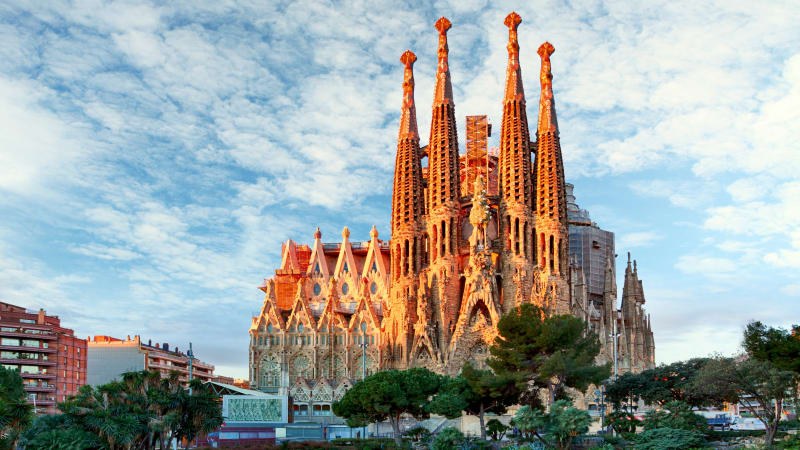 1 mi from BarcelonaSagrada Família
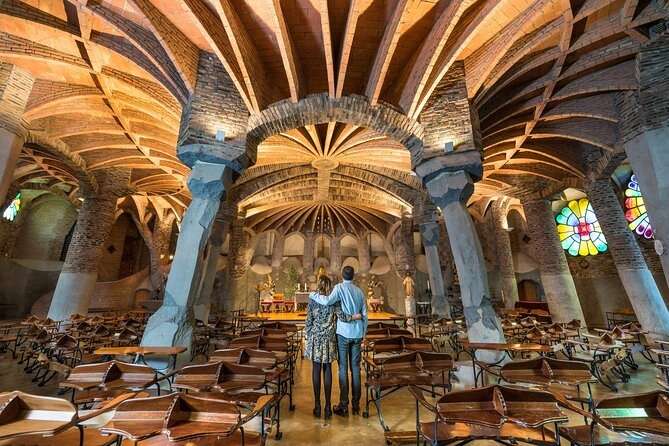 7 mi from BarcelonaColònia Güell Church (Crypt) & Modernist Industrial Site
 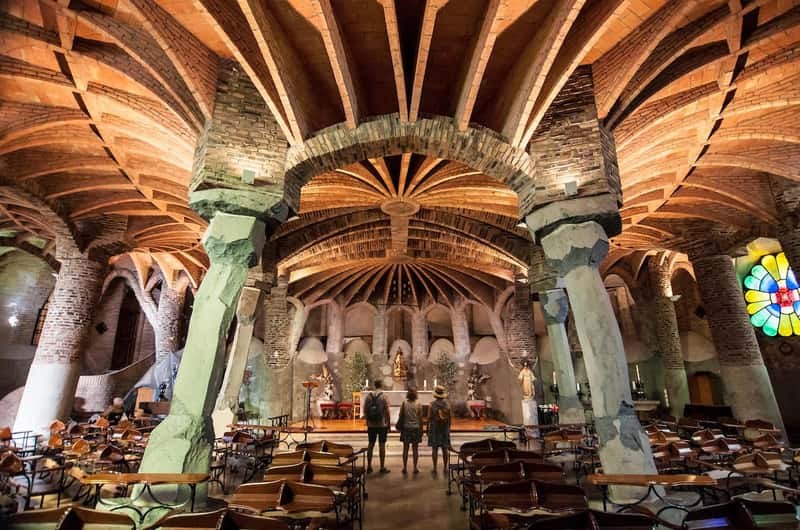 8 mi from Barcelona · land adventureBarcelona Beyond the Crowds: Gaudí, Galician Seafood & Montserrat
 210 mi from Barcelona · land adventureProvence by the Senses: Lavender, Truffles, and Roman Stone
 After you step off · near Stockholm
You end in a different port — stay on, and add what is within reach before you fly home.